Article

GIS Mapping and Breast Cancer Health Care Access Gaps for African American Women

by
Shelley White-Means
1,* and
Adole Muruako
2
1
College of Graduate Health Sciences, University of Tennessee Health Science Center, Memphis, TN 38163, USA
2
Department of Sport Psychology, University of Mississippi, University, MS 38677, USA
*
Author to whom correspondence should be addressed.
Int. J. Environ. Res. Public Health 2023, 20(8), 5455; https://doi.org/10.3390/ijerph20085455

Submission received: 30 December 2022 / Revised: 20 March 2023 / Accepted: 28 March 2023 / Published: 10 April 2023
(This article belongs to the Section Women's Health)

Abstract

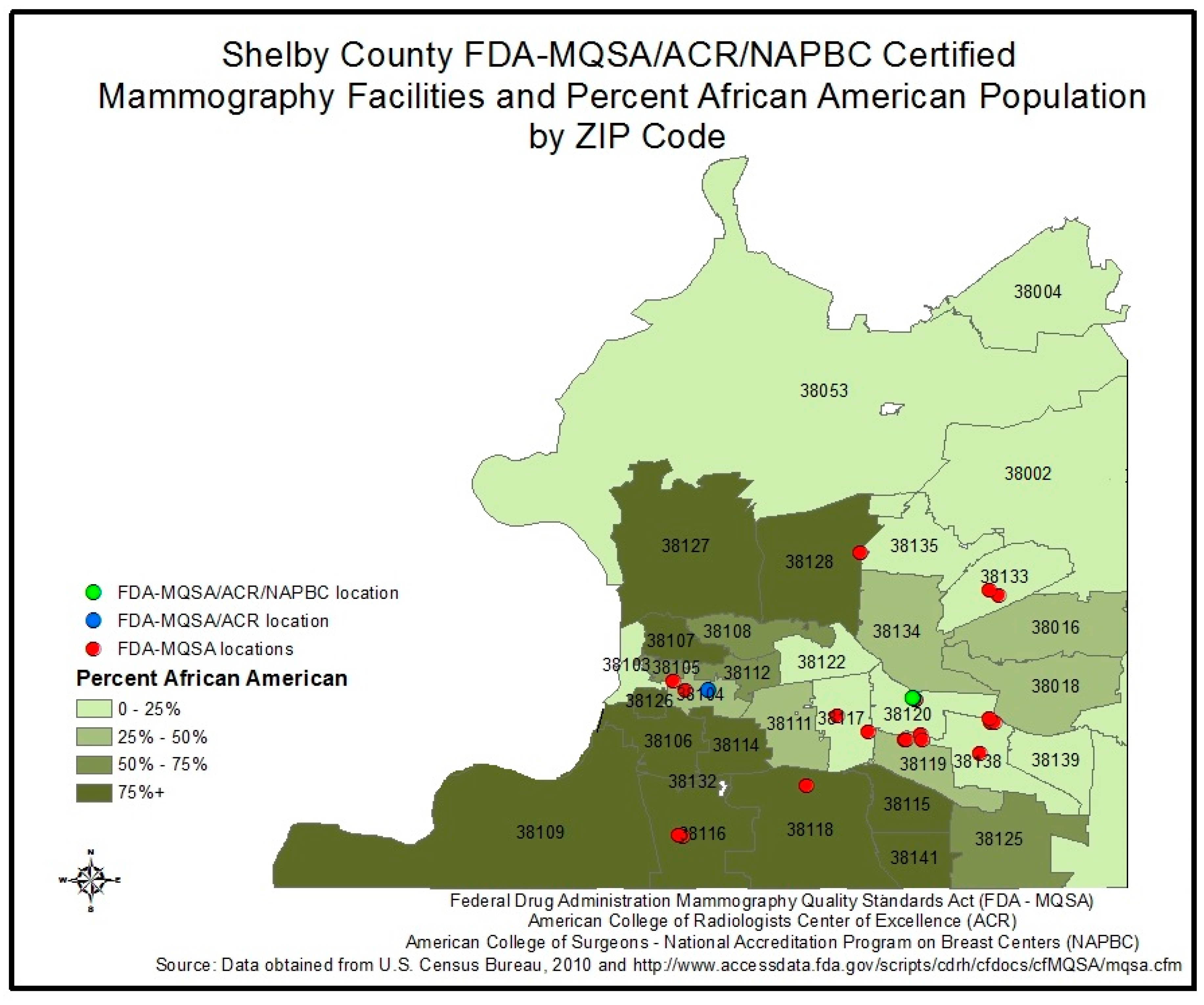
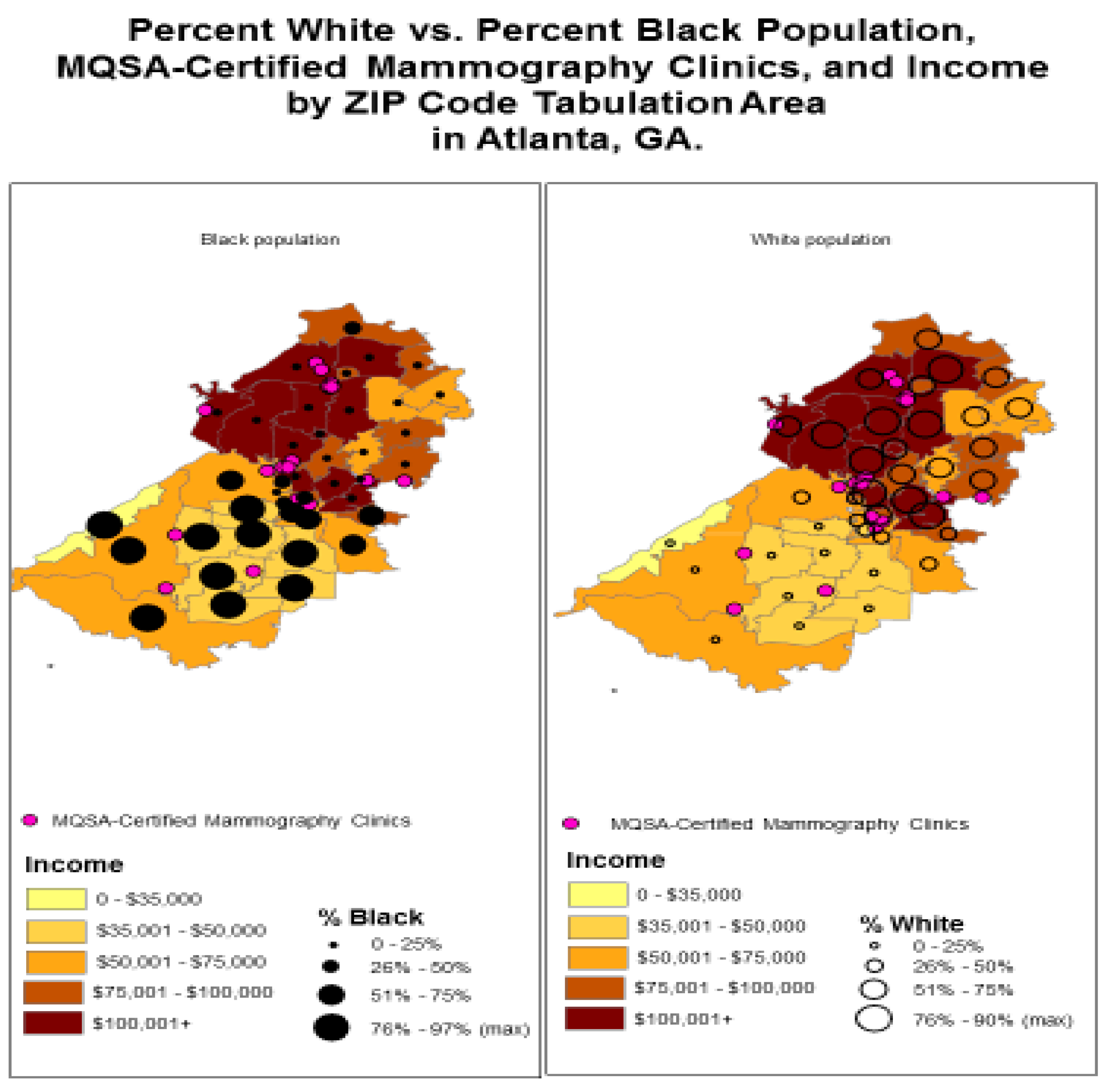
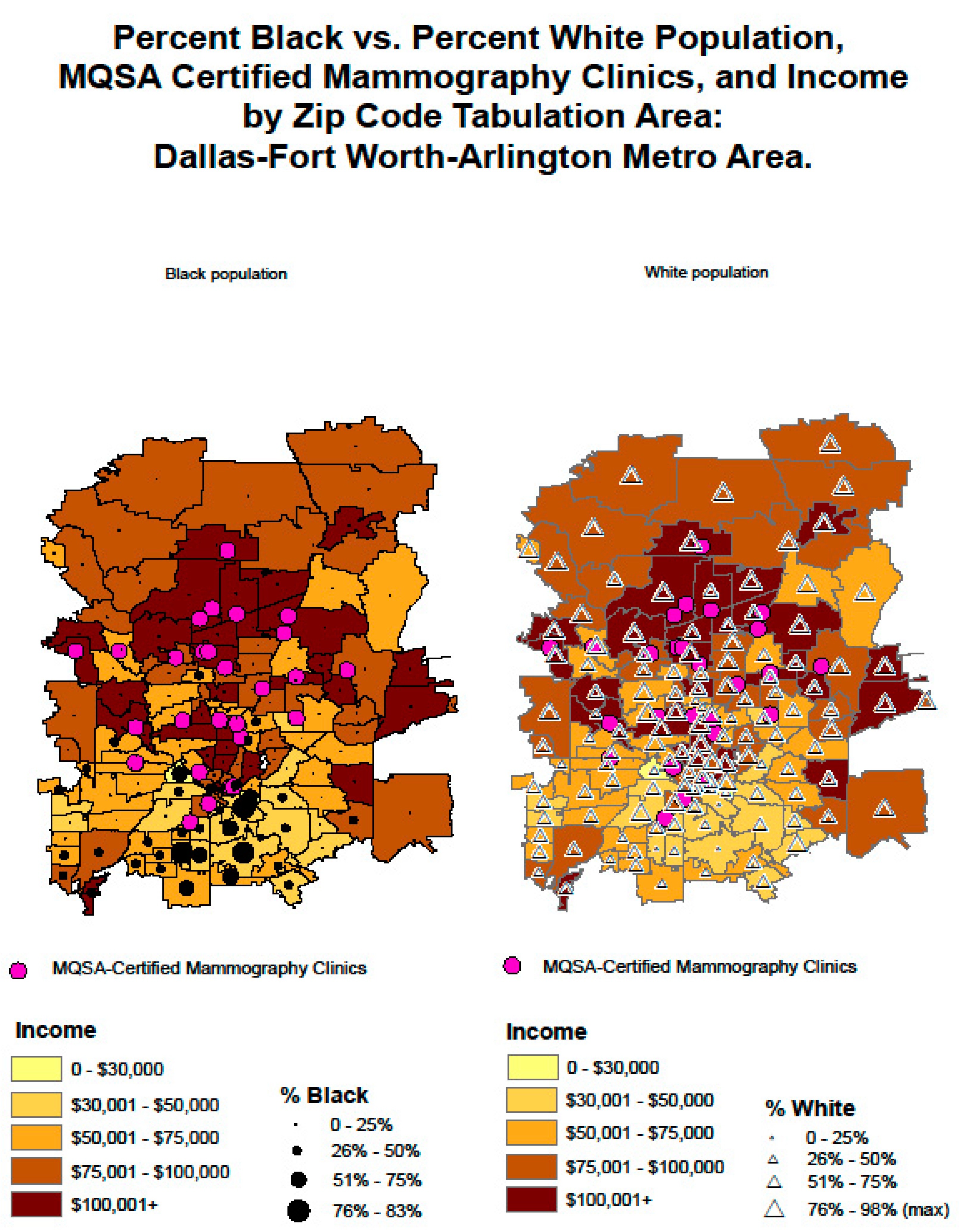
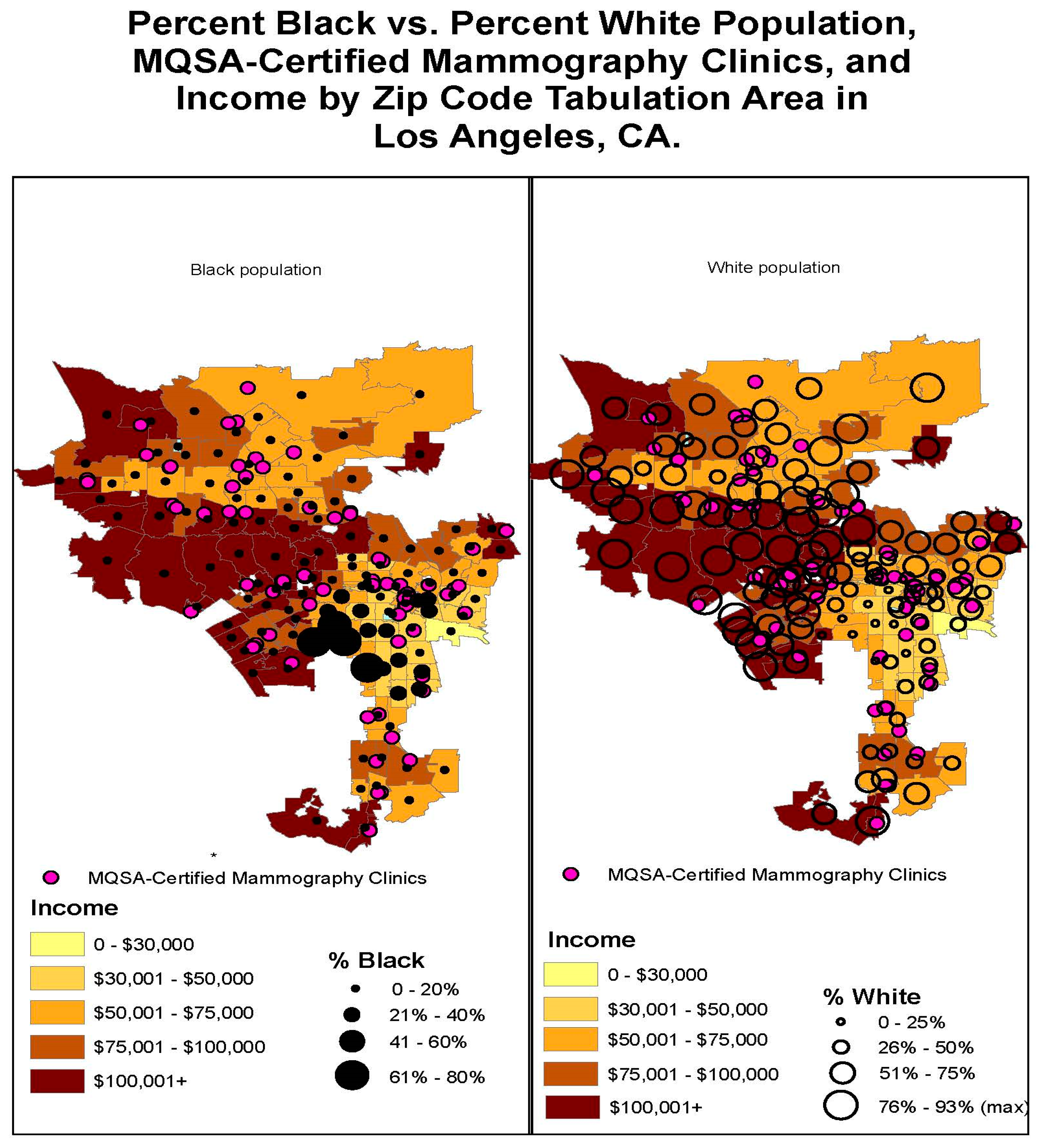
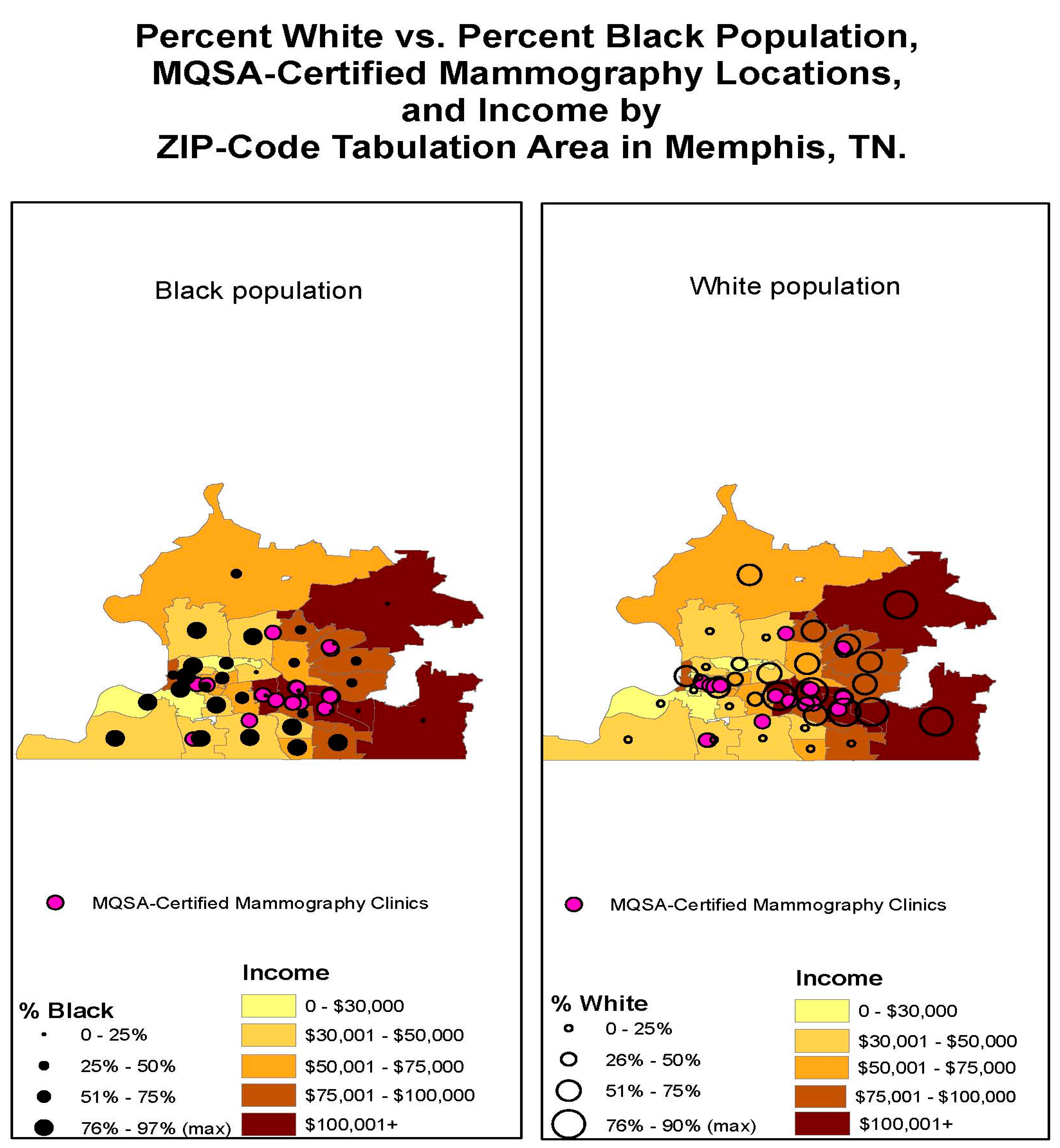
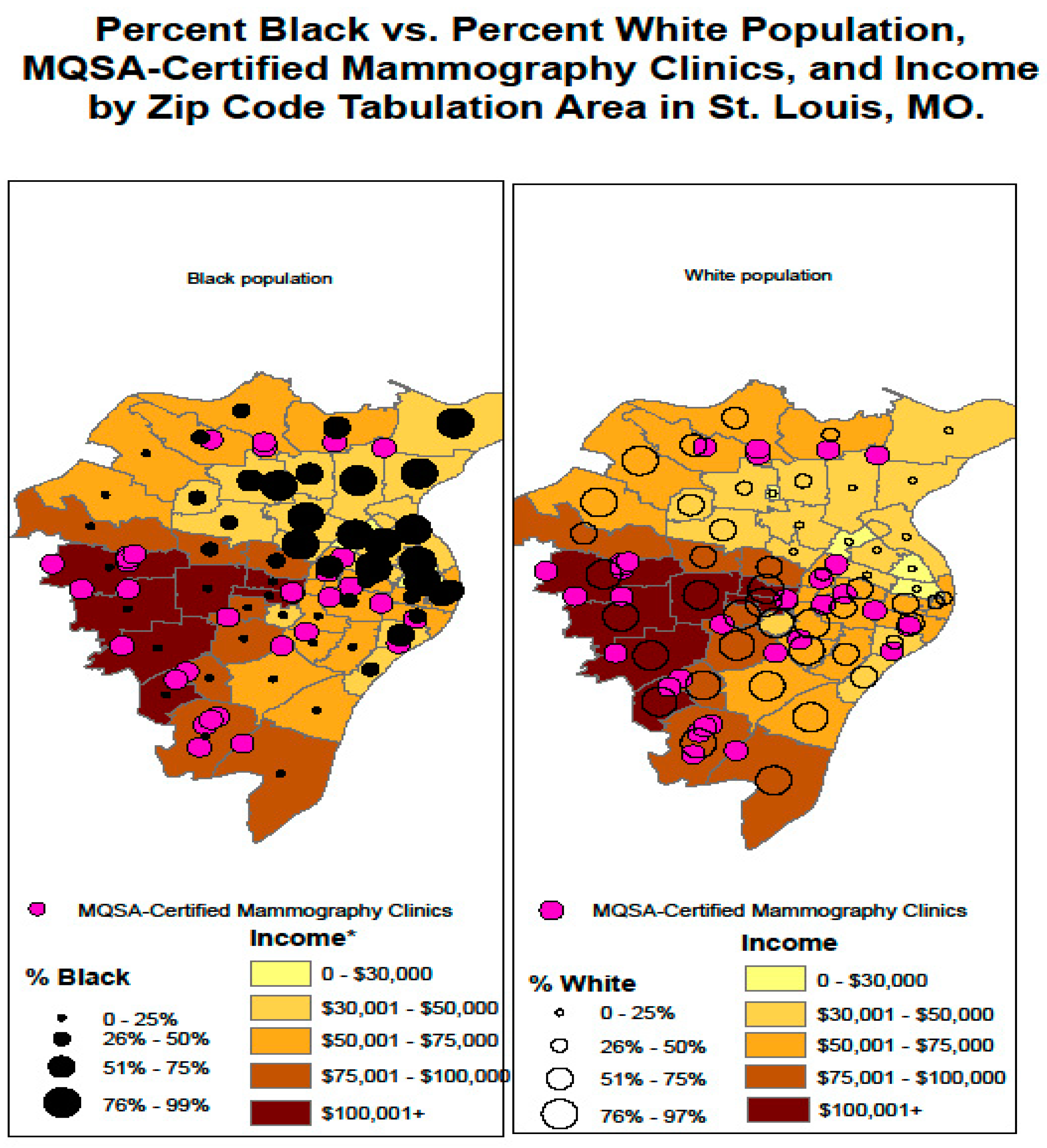
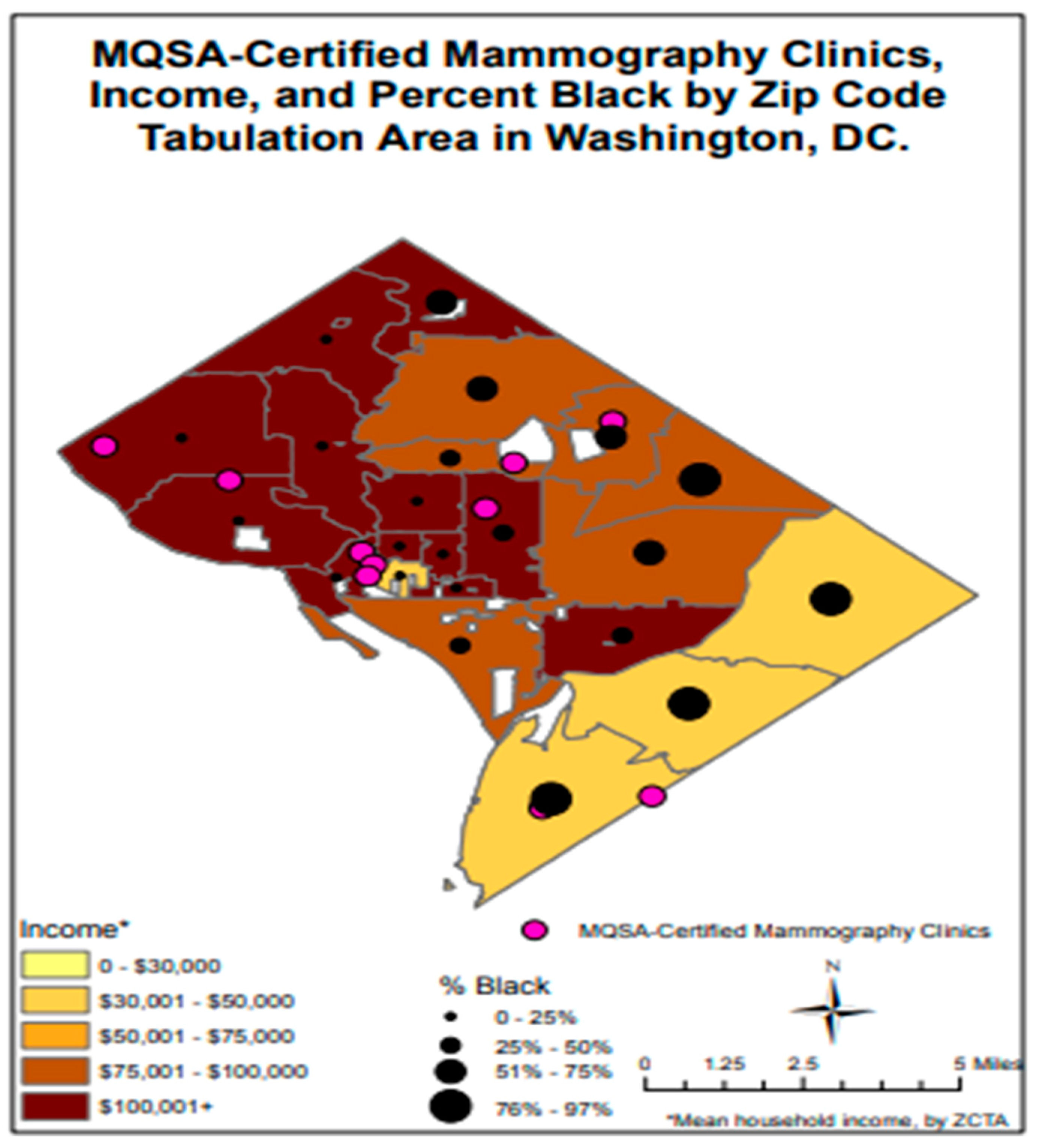
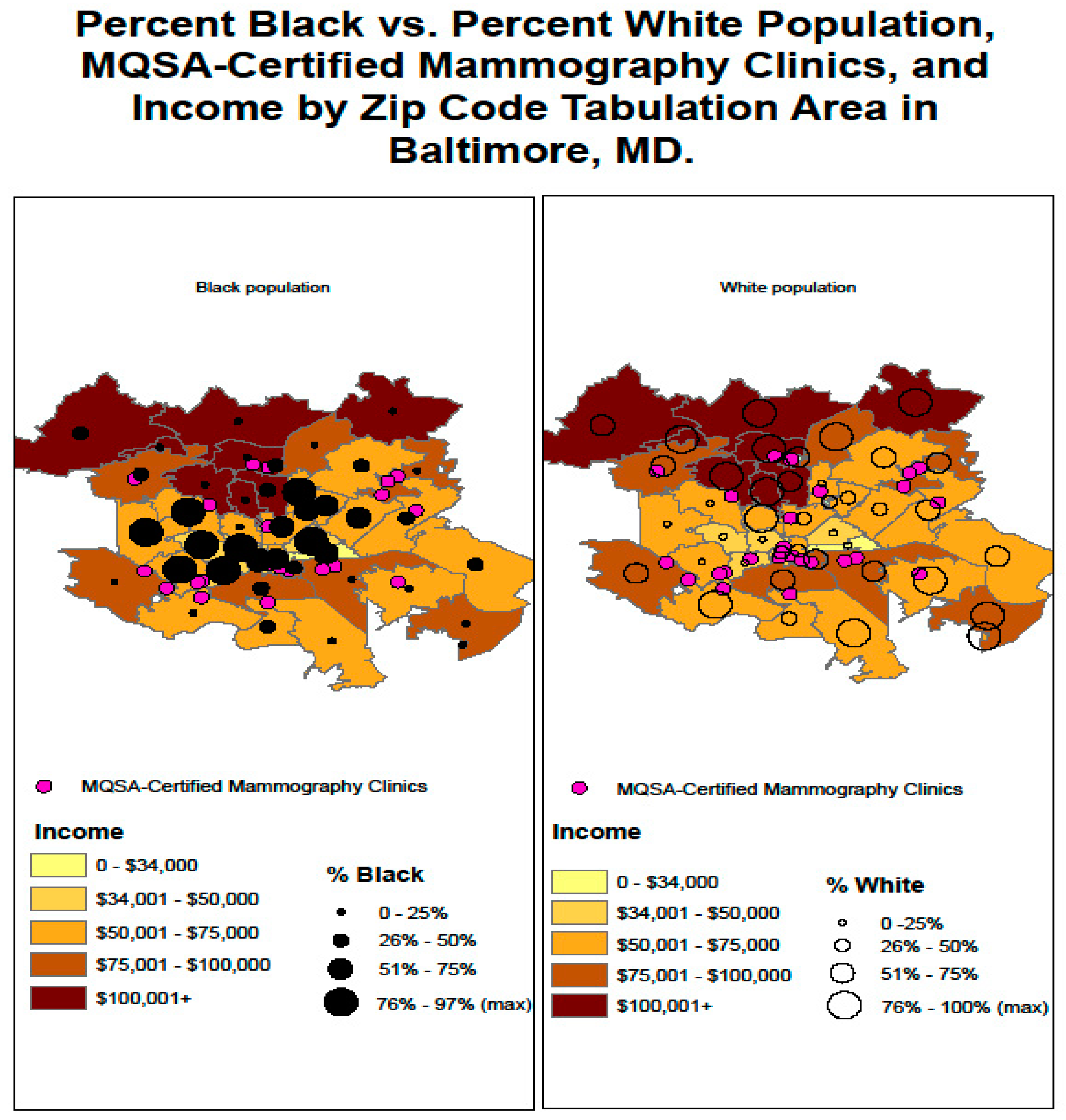
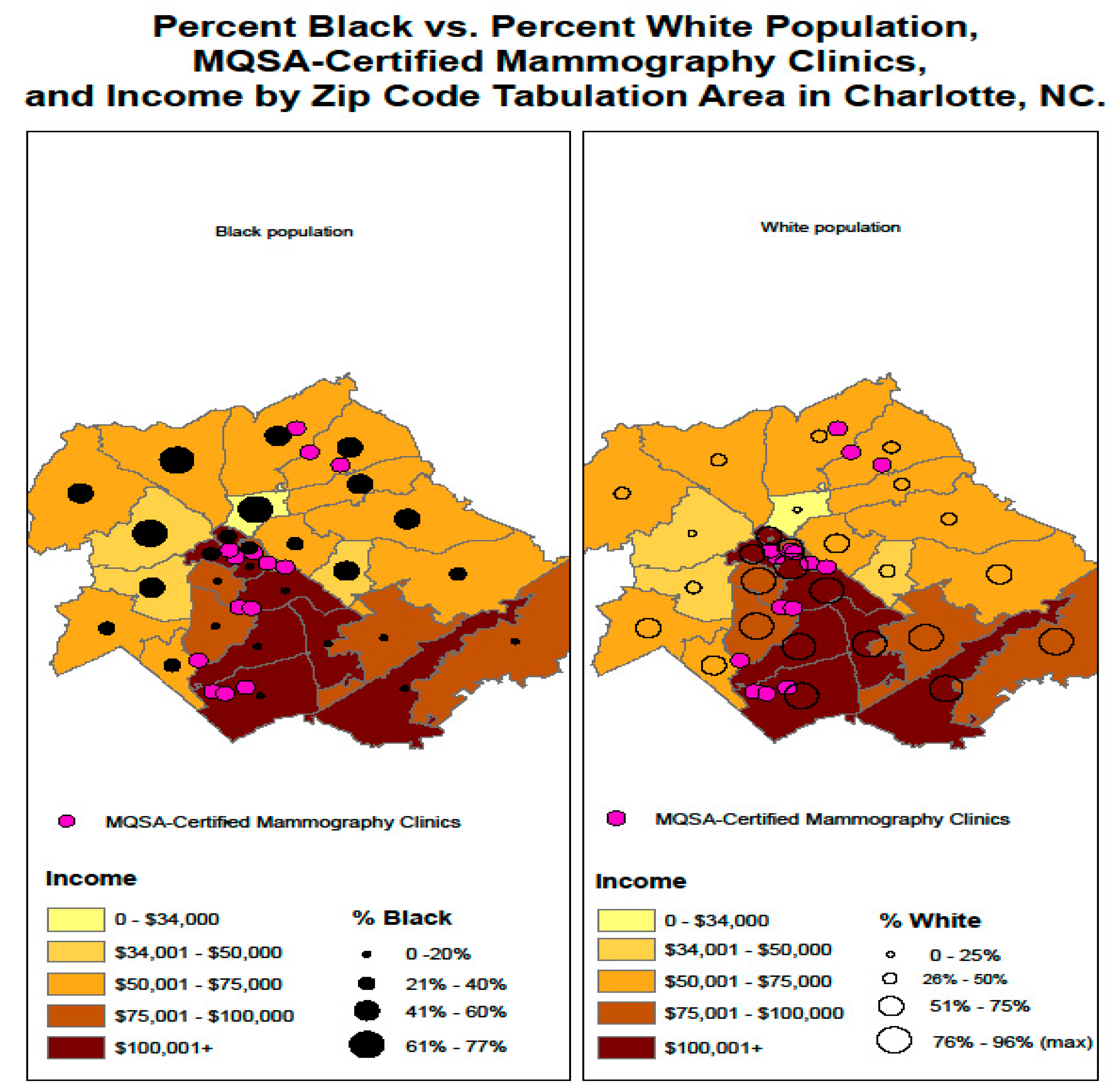
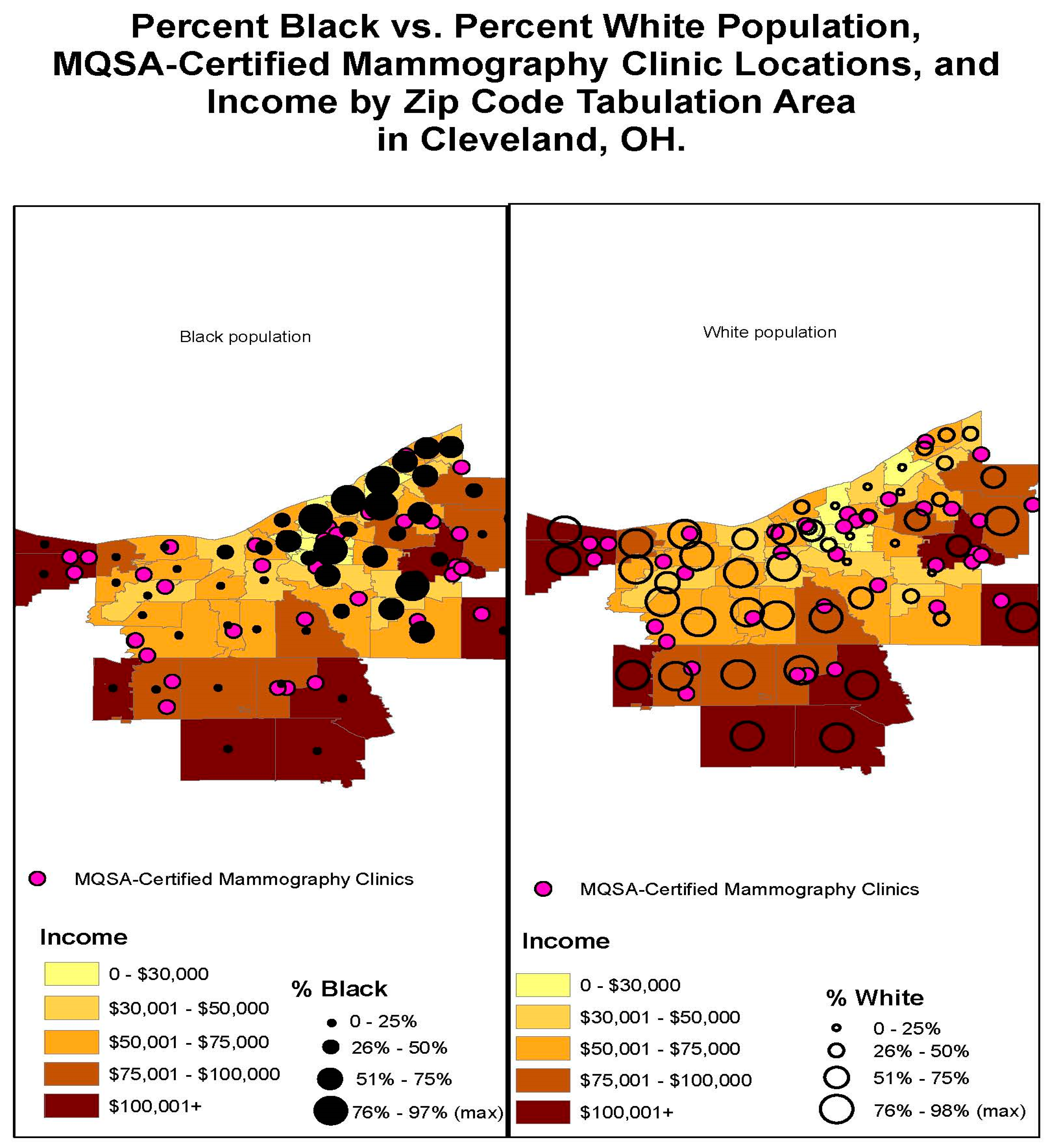
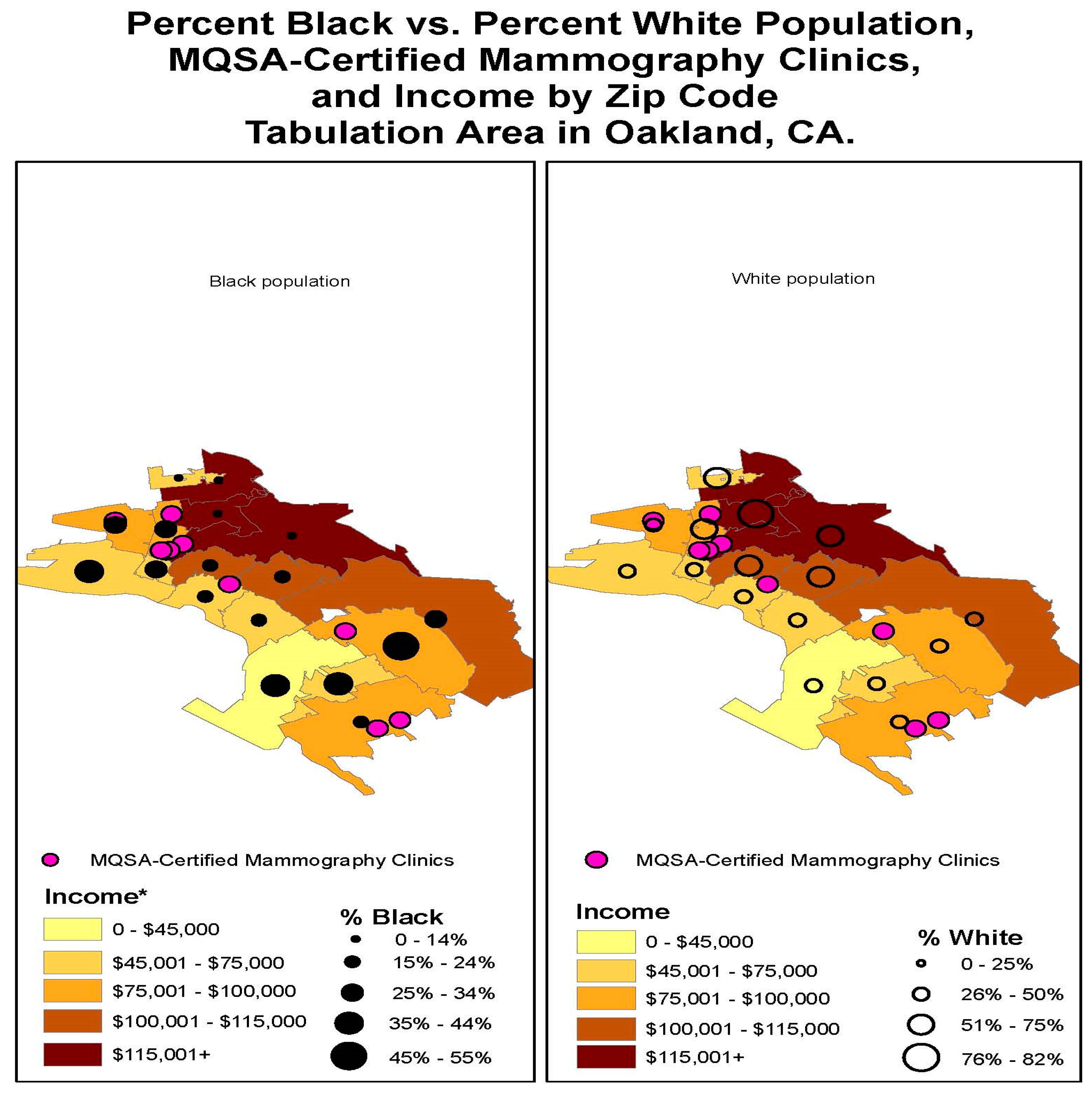
Black women face an unequal opportunity to survive breast cancer compared with White women. One would expect that US metropolitan areas with high percentages of Black people should report similar racial disparities in breast health. Yet, this is not the case. To provide insights about breast cancer disparities in cities with above-average and below-average racial disparities, we use GIS analysis. We depict racial composition and income categories on the same map with mammography facility locations to distinguish unique patterns of mammography access, a critical resource for breast cancer care. Looking more closely at low health disparities cities, a general and consistent pattern arises. Both White and Black people are concentrated in middle-income neighborhoods. Further, MQSA-certified facilities are not clustered in affluent areas but tend to be centrally located in the middle of the city or highly dispersed across the city, regardless of income. Our findings are consistent with the hypothesis that metropolitan areas that have a preponderance of racially segregated low-income Black households—a characteristic of neighborhoods that have experienced a history of racism and disinvestment—are more likely to experience disparities in access to primary breast care than middle-income Black, middle-income White, or high-income White neighborhoods.
Keywords: breast cancer disparities; mammography; racial residential segregation; income disparities; GIS analysis; African American women; structural racism breast cancer disparities; mammography; racial residential segregation; income disparities; GIS analysis; African American women; structural racism