


Abstract
Organized cervical cancer screening programs to promote the early identification of precancerous lesions have proven to be effective in decreasing the burden associated with cervical cancer, but knowledge regarding screening adherence among migrant women compared to that of native women has not been summarized. A systematic search of the literature on PubMed, Scopus and Embase led to the identification of 772 papers that were published up to July 2022 and reported population-based data regarding adherence to cervical screening. The screening participation rates among migrant women, compared to native women, were pooled using a random-effects meta-analysis. A total of 18 papers were included in the review, with most of them being conducted in Europe (83.3%). Overall, migrants showed a significantly lower participation rate compared to native women (OR for screening adherence: 0.54, 95% CI = 0.42–0.70). This discrepancy was especially evident for migrant women from North Africa and Sub-Saharan Africa (OR = 0.47, 95% CI = 0.35–0.63, and OR = 0.35, 95% CI = 0.24–0.49, respectively). The results of this systematic review emphasize the importance of increasing cervical cancer screening adherence among migrant women. A significant heterogeneity in screening adherence was observed based on the country of origin. Interventions aimed at reducing the disparities in screening participation should specifically consider how to improve the recruitment of migrant women.
1. Introduction
Cervical cancer is currently listed as one of the most commonly diagnosed cancers in women worldwide [1]. Numerous types of human papilloma viruses (HPVs) are responsible for common infections in women that may persist or regress spontaneously. Cervical cancer development is linked to persistent infection with the oncogenic types of HPV [2,3]. Individuals are often unaware of the ongoing infection, and precancerous lesions are mostly asymptomatic [4].
Primary prevention strategies include implementing safe sex habits and HPV vaccination; bi-, quadri- and nine-valent HPV vaccines have been progressively developed starting from 2006 [4]. Secondary prevention strategies are focused on the early detection of subclinical forms of pre-cancerous or cancerous lesions [5,6]. Cervical cancer screening has traditionally been based on cytology (Papanicolaou test, also known as Pap smear or smear test). In the presence of positive cytological results, the diagnosis is confirmed by a colposcopy, and appropriate treatment is informed by a biopsy of suspicious lesions for histological diagnosis. Newer screening tests introduced in the last 15 years include visual inspection with acetic acid (VIA) and molecular tests, mainly high-risk HPV DNA-based tests, which are suitable for use in all settings [7]. Screening performed using HPV DNA-based testing ensures a standard screening quality, while showing an increased sensitivity and accuracy compared to cervical cytology, with its high negative predictive value allowing a 5-year screening interval, which is longer than the 3-year interval required for Pap smear [8,9,10]. Following the evidence that underlines that HPV DNA-based testing is more accurate and has better reproducibility than Pap test, most recent European guidelines now recommend using HPV DNA-based testing as a primary screening strategy [10]. Despite the presence of effective screening strategies and the WHO’s recommendations to prioritize cervical cancer screening in women aged 30–49 years [7], two in three women in this age range have never been screened for cervical cancer [11]. Moreover, there are large differences in screening participation rate across different global regions. The rollout of screening is very low in low-income and middle-income countries, where the burden associated with the disease is the highest [11].
The implementation of organized cervical screening programs has proven to be effective in decreasing the burden of the disease and subsequent mortality [12]. Most European countries offer organized free-of-charge screening, whereas in settings in which screening is opportunistic, payment and reimbursement may depend on women’s healthcare insurance [13]. Organized screening programs rely on specific defining elements: a well-identified target population; the implementation of a population-based register; and the existence of quality control procedures, screening pathways and epidemiological monitoring of the effectiveness of the program itself [14]. Organized cervical screening programs are more efficient than opportunistic approaches, and they provide wider coverage by ensuring that invitations to participate reach the target population [9,10]. In countries with organized cervical screening programs, knowledge about the disparities in cervical screening participation among migrants compared with natives is sparse and not summarized yet [15]. Research on this topic is often limited due to missing information regarding the country of origin, as well as cultural and linguistic barriers. When studies rely on surveys to collect information regarding screening participation, a problem is posed by the limited number of subjects investigated and the presence of recall bias [16]. Participation in organized screening programs is offered to both native and migrant women without differences, but many studies have shown that, in various settings, foreign-born women are less likely to take part in cervical screening compared to native women, with subsequent increased risk for late diagnosis of the disease and reduced screening effectiveness [15,16,17].
Our main objective is to summarize current evidence regarding organized cervical screening attendance among migrant women and to compare their participation with that of native women. We also aim to identify migrant subgroups that are characterized by the lowest attendance.
2. Materials and Methods
2.1. Literature Search
A systematic review was conducted following the PRISMA Guidelines for systematic reviews and meta-analyses [18]. PubMed, Scopus and Embase databases were searched from inception up to July 2022. Following the PICO (Population, Intervention, Comparison, Outcome) framework, we intended to evaluate the attendance rate (O) of migrant women with the correct age range for participation (P) in cervical cancer screening programs (I), compared to that of native women with the same characteristics (C), using population-based studies. For each database, the search was conducted using a combination of subject headings and free text words for the population (migrant women) and the outcome considered (cervical cancer screening). Table S1 outlines the search strategy adopted for PubMed, Scopus and Embase databases.
For the purposes of our review, we defined “migrants” as women born in countries different from the one in which the study was conducted, as defined in a review conducted on similar topics [19], as well as women with a different citizenship or mother tongue.
Studies that investigated only refugees and asylum seekers’ participation in cervical screening were excluded from the present review because their characteristics differ greatly from those of other groups of migrants. Subjects who migrate on the basis of socio-economic reasons make a conscious, voluntary choice to leave their country of origin and can eventually return home in safety, if desired [20,21]. On the other hand, refugees and asylum seekers undergo forced migration; during their early resettlement, they experiment unique challenges associated with health care utilization and access, and women forming part of these subgroups show different priority health issues compared to other migrant women [22,23,24].
We excluded from the review studies that presented only self-reported information regarding cervical screening participation obtained through surveys and questionnaires, as self-reporting shows validity issues in determining individuals’ screening history and can lead to an underestimation or an overestimation of screening prevalence, especially in socially disadvantaged subgroups [25]. We also excluded studies that reported participation in cervical screening through self-sampling strategies because these are not included nowadays in all organized screening programs [26]. Moreover, in most of the published studies, self-sampling approaches have been proposed as an alternative screening method for specific subgroups of non-attendees or women who actively decline traditional screening [27,28].
For studies that investigated the same populations, we kept the most recent one or the one with the highest number of participants. The absence of data regarding the native group’s participation in the screening (control group) was considered as an exclusion criterion. Only papers published in English were included. The inclusion and exclusion criteria are fully specified below (Table 1).
Table 1.
Inclusion and exclusion criteria.
This research was conducted in three steps. In the first step, we identified and removed duplicates. In the second step, two reviewers (IR and VT) screened all identified papers independently by title and abstract, selecting only those that focused on cervical cancer screening among migrant women. The third step consisted of an independent screening of the selected papers by full text. At each stage, disagreements between the reviewers were solved by the intervention of a third reviewer (TDZ). After the second stage, all references of the selected studies were also checked for any additional relevant papers. The screening process was conducted using the Covidence software (Covidence systematic review software, Veritas Health Innovation, Melbourne, Australia. Available at www.covidence.org, accessed on 6 October 2022).
2.2. Data Extraction and Statistical Analysis
For each selected paper, the following information were extracted: title, authors, publication year, country, characteristics of the screening program in the selected country, screening compliance definition according to the specific study, characteristics of the study population (inclusion and exclusion criteria, total number of migrants and natives participating in the study, and classification and stratification strategies used to define migrants), rates of participation in cancer screening for natives and migrants (numerator and denominator), migrant categories based on the country of origin, and unadjusted and adjusted odds ratios (ORs) for screening participation for the migrant populations. When the ORs were not readily available, we calculated unadjusted ORs (with relative standard error) for cervical screening participation among migrant women, compared to native women.
To account for the variability in settings and populations investigated in the included studies, we chose a random-effects model for the meta-analysis and pooled unadjusted ORs for screening participation in a forest plot. The heterogeneity among the studies was investigated using I2 statistic and was defined as low, moderate or high using the I2 cut-offs of 25%, 50% and 75%, respectively [29]. Stratified meta-analyses were conducted, with forest plots presenting the information on specific migrant subgroups coming from high migratory pressure countries (HMPCs): Central-Eastern (CE) Europe, Sub-Saharan (SS) Africa, North Africa, Asia and Central-South (CS) America. Stratified analyses for migrants coming from HMPCs were chosen because their socioeconomic characteristics and health habits generally differ greatly from those of migrants coming from low migratory pressure countries (LMPCs) and native subjects [30]. Given the high number of studies conducted in Northern Europe only (Denmark, Sweden, Norway and Finland), this subgroup of studies was also analyzed separately from the others. In the sensitivity analyses, we excluded studies that could be considered as potential outliers after an examination of the studentized residuals.
Meta-regression models and stratified analyses were conducted in an attempt to address the heterogeneity of the included studies. Publication bias was evaluated by checking for the presence of asymmetry in the funnel plot and using the regression test. A p-value < 0.05 was considered statistically significant. Statistical analyses were conducted using R (R Core Team (2022). R is a language and environment for statistical computing. (R Foundation for Statistical Computing, Vienna, Austria. URL https://www.R-project.org/, accessed on 1 December 2022).
3. Results
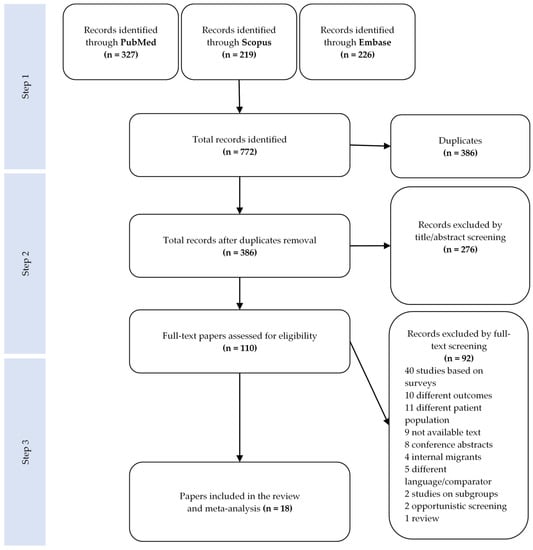
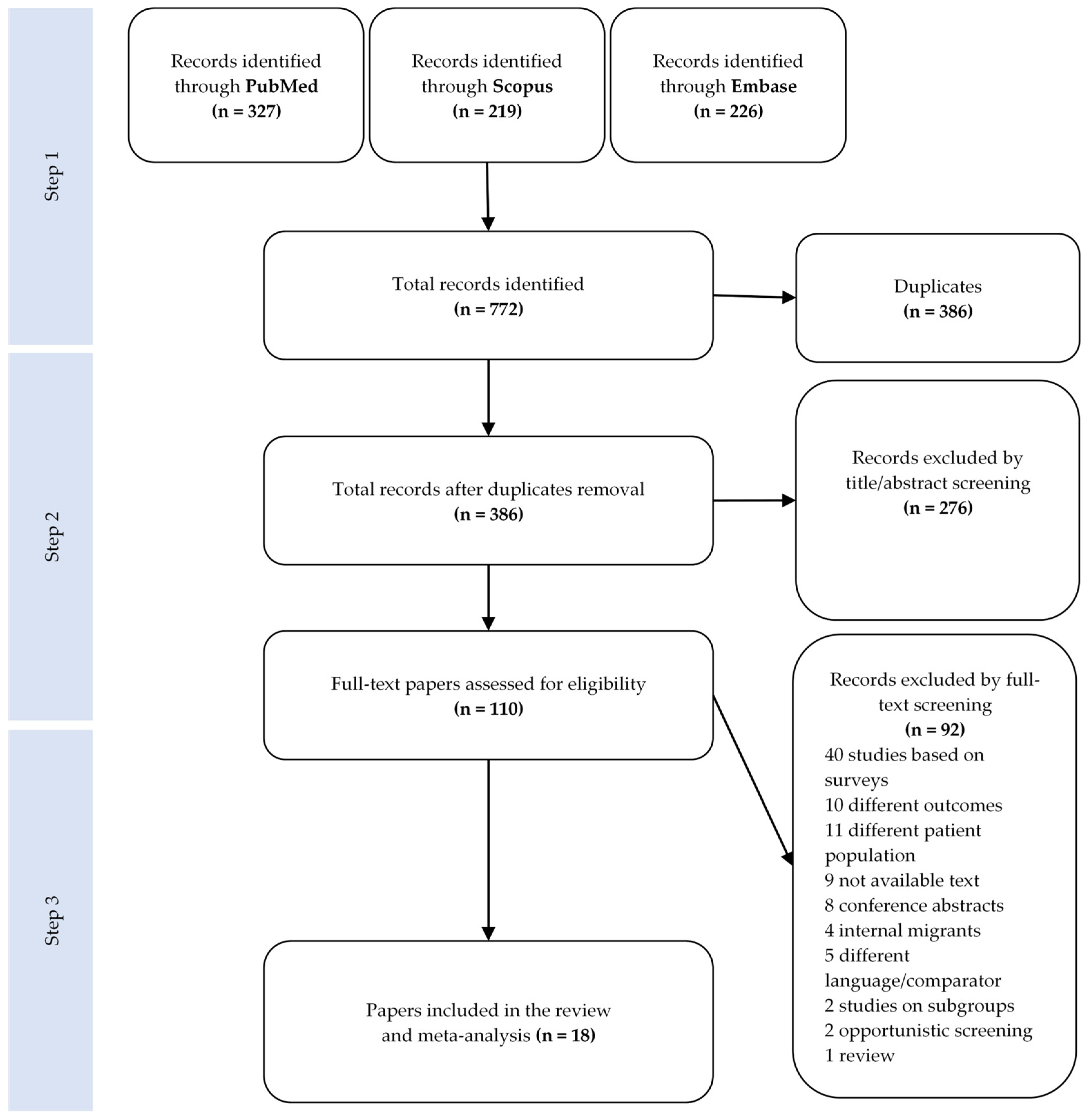
A total of 772 papers were retrieved using the search string. Figure 1 shows the study selection process in detail.
Figure 1.
PRISMA flowchart for the paper selection process.
Full-text screening led to the exclusion of two studies [31,32] conducted on the same populations, which were investigated in more recent publications that were included in the review. A total of 18 papers were selected for the review. The main characteristics of the studies and the screening programs are summarized in Table 2 (more information in Table S2).
Table 2.
Characteristics of the included studies.
Most of the included studies were conducted in Europe (n = 15, 83.3%), while the remaining were conducted in Australia (n = 2, 11.1%) and Canada (n = 1, 5.6%). The migrant populations were classified according to the country of birth/origin (n = 13, 73.7%), mother tongue (n = 2, 10.5%), citizenship (n = 1, 5.3%), or using more than one of these definitions (n = 2, 10.5%). The mean number of migrant women included in the included studies was 126,159 (median = 50,250, range: 1790–500,381), and the mean number of native women included was 678,037 (median = 304,773, range: 789–4,017,764) (Table 3). The mean participation in cervical cancer screening was considerably lower for migrant populations (19.1% versus 62.3% in natives) (Table 3).
Table 3.
Sample sizes for migrants and natives included in the studies.
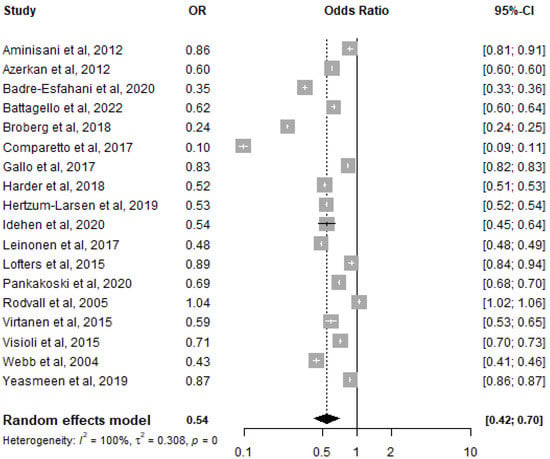
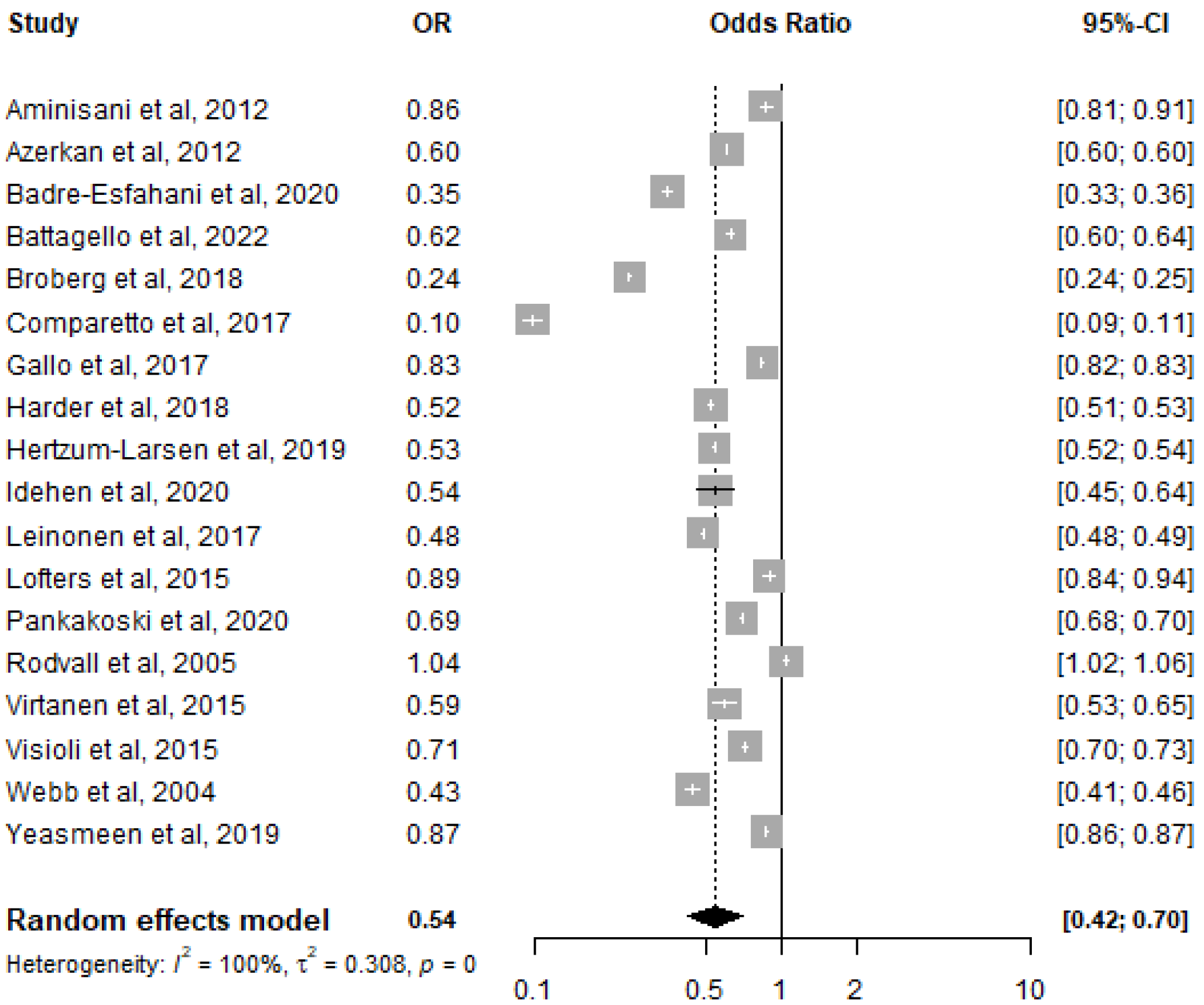
Overall, migrant women had a 46% lower chance of participating in cervical cancer screening (OR: 0.54, 95% CI = 0.42–0.70, I2 = 100%) compared to native women (Figure 2).
Figure 2.
Forest plot for screening participation among all migrant populations, compared to native populations [16,25,33,34,35,36,37,38,39,40,41,42,43,44,45,46,47,48].
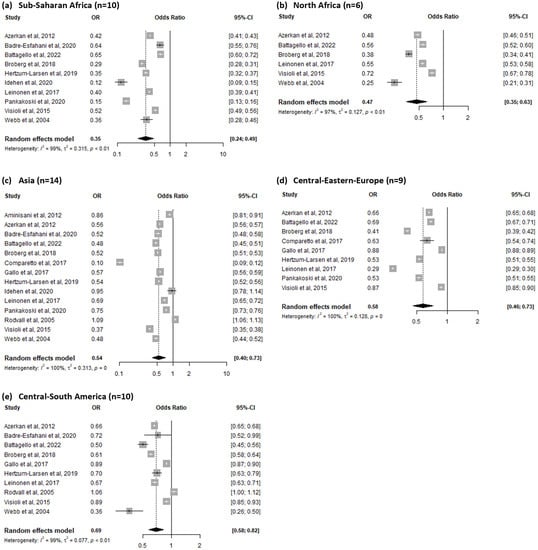
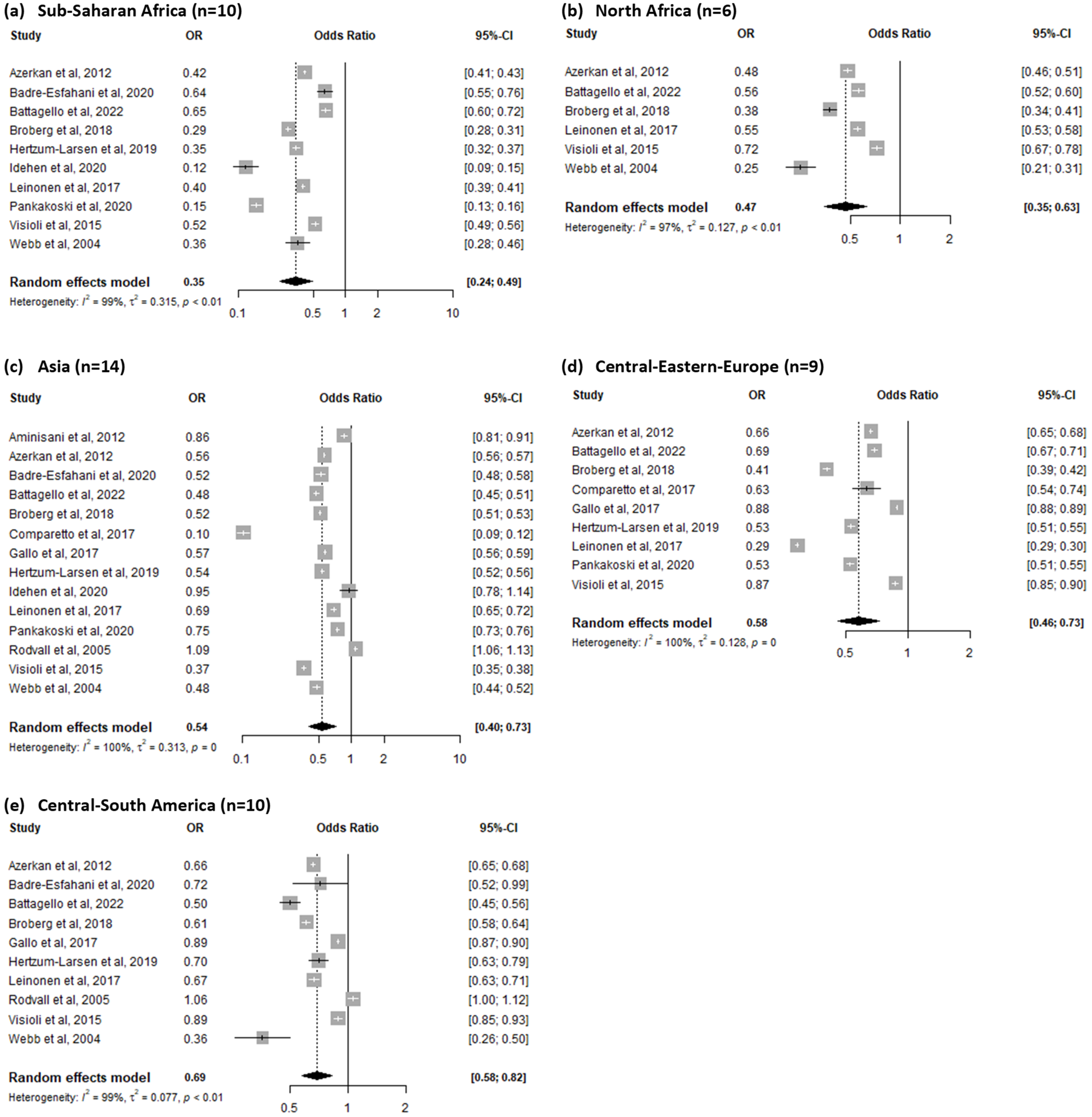
Differences arose when analyses were conducted stratifying migrants according to the macro-areas of origin. The lowest OR for screening participation was observed for women coming from Sub-Saharan Africa (OR = 0.35, 95% CI = 0.24–0.49, I2 = 99%), followed by migrant women from North Africa (OR = 0.47, 95% CI = 0.35–0.63, I2= 97%). Women from Asia showed an OR for screening participation of 0.54 (95%CI = 0.40–0.73, I2= 100%), and those from Central-Eastern Europe had an OR of 0.58 (95% CI = 0.46–0.73, I2= 100%). Finally, women from Central-South America had the highest OR for screening participation, corresponding to 0.69 (95% CI = 0.58–0.82, I2 = 99%) (Figure 3). When analyzing only studies conducted in Northern Europe (Norway, Finland, Denmark, and Sweden) and when conducting the sensitivity analyses, no reduction in the amount of heterogeneity could be observed (Figures S1 and S2). The meta-regression models conducted using the participants’ mean age, the definition of migrant subjects (country of birth/origin, citizenship, mother tongue or more than one of the previous definitions), the type of test used (Pap test only or Pap test and HPV DNA test), or the publication year as covariates did not show a significant reduction in the observed heterogeneity. The funnel plot examination and regression tests did not show asymmetry (Figure S3).
Figure 3.
Forest plot for screening participation among Sub-Saharan African (a), North African (b), Asian (c), Central-Eastern European (d) and Central-South American (e) migrants compared to native populations [16,33,34,35,36,37,38,40,41,42,43,44,46,47].
4. Discussion
Overall, the results confirm that migrant women, irrespective of their country of origin, have a significantly lower adherence to cervical screening compared to native women; screening participation is extremely low for women coming from North and Sub-Saharan Africa and higher for women coming from Central and South America.
The disparities in screening participation could be explained by the presence of several aspects that influence adherence [42]. Studies focused on screening adherence have identified the most common barriers experienced by migrants, including economic, cultural, language, healthcare system-related, knowledge-related and individual-level barriers [49]. Socio-economic status (which compasses income, education and occupational class) could play a relevant role in the lower adherence among migrant groups, as it is known that the health condition of migrants, in comparison to natives, progressively converges toward the health behaviors and epidemiological profiles of the lowest socio-economic groups of the host populations [50]. People with lower socio-economic status show a lower adherence to preventive measures, such as cervical cancer screening [51,52,53]. In countries where screening is opportunistic, financial availability plays a significant role in participation [54]. Organized screening programs are, instead, free of charge or require the payment of a small contribution, and screening adherence should not be affected by income [55]. Although it is true that different economic resources might give access to more timely private services, it is more likely that factors other than income play a major role in determining the disparities in the uptake of cervical cancer screening programs. In fact, a study conducted in England found that ethnicity and education were the most important predictors of adherence to screening, while other indicators of wealth did not significantly affect adherence [56,57].
Among other relevant barriers to cervical screening adherence are the lack of information on screening opportunities and on its importance, the lack of appropriate language skills, and the presence of fear and discomfort related to screening procedures [56,58].
Language and cultural barriers undermine both the access and the quality of health services for migrants [59]. Providing information on cervical cancer screening in several languages and adapting the information for different cultural backgrounds are the means to tailoring screening programs at a relatively low cost. Impersonal communication through printed materials may not work, and community networks may be the most effective way to reach migrants [60].
Different beliefs can also influence participation in screening procedures. Examples of cultural attitudes and beliefs include fatalism, lack of perceived vulnerability, and unfamiliarity with the concept of screening [61], as well as the common thought that the procedure itself may play a role in the risk of cancer development [62].
Among other possible solutions that can improve the adherence of migrants and other deprived groups is the adaptation/modification of screening program organization. The latest WHO recommendations suggest using HPV DNA detection as the primary screening test [7], and it has already been introduced in some countries [35]. This test could increase the compliance of some hard-to-reach populations by reducing the frequency of screening and by allowing self-sampling with less invasive procedures [63]. Although it is not sure whether this new screening tool will reduce existing inequalities, it will probably increase population coverage [7,45].
The studies included in this review reported different levels of attending universal screening programs in the reference group of native women, and there was great variability in the number of participants and in the settings, as well as in the classification of countries used to identify the migrants’ origin.
For all the subgroups investigated, participation is lower compared to that of native women, but the discrepancy is particularly evident for subgroups originating from Sub-Saharan Africa and North Africa, followed by migrants from Asia. Migrants coming from Africa, especially from Sub-Saharan African countries, to higher income countries are found to have the worst health outcomes when compared to natives, for almost any health indicators considered [63,64,65]. Health practices based on the traditional medicine and cultural background of migrants from Africa and Asia may be dissimilar to those of European people and health professionals, and it is essential to take particular care when dealing with these groups [66]. For some migrant groups, a Pap smear may represent an invasive and personal procedure or could be associated with the stigma following oncological diseases [67], thus posing cultural barriers and hindering these women from utilizing screening services [68,69]. In this sense, it has been shown that having a family doctor who is from the same country of origin as the women significantly increases the chance of being screened [64] and that the gender of healthcare professionals impacts the level of screening participation [70]. The evidence suggests that interpreter services, often provided by cultural mediators, as well as the promotion of diversity among health professionals by recruiting staff with varied linguistic and cultural skill, are effective strategies to overcome or at least reduce the disparities in screening participation [50].
Overall, our results show that relevant differences in cervical cancer screening adherence exist among migrant women from different geographical macro-areas. Migrants coming from low migratory pressure countries (LMPCs) were not considered in the stratified analyses because previously published studies show that they are generally characterized by a similar health profile to that of the native populations [71]. These findings underline that migrant women should not be considered as a homogenous group and specific tailored strategies should be implemented to support specific subgroups. The significantly low screening adherence emphasizes the importance for healthcare services to find ways to better engage with migrant groups to address their health needs more appropriately. This includes tackling the barriers that prevent migrant women from accessing preventive care, such as cervical cancer screening programs [50]. It is also essential to train healthcare professionals to increase cultural competence to improve understanding regarding cultural diversity among patients [42].
To our knowledge, this is the first review that systematically summarizes the differences in rates of cervical cancer screening adherence among migrant and native women. The specificity of the inclusion criteria, together with the elevated number of subjects included in the meta-analysis, suggests that our results are robust. Our review is also characterized by some limitations. First, the inclusion of papers written only in English might have led to missing information regarding participation in screening among migrants reported in other languages. Only partial information regarding the migrants’ countries of origin was retrieved from the selected papers as several different classification methods were used to group the migrants. Moreover, the stratified analyses and the meta-regression models that were conducted considering the extracted principal variables did not lead to any reduction the observed heterogeneity, and it was not possible to identify other possible sources that were responsible of the high heterogeneity that was present among our included studies. The generalization of the results obtained from the analyses stratified by the country of origin needs to be interpreted with caution, since certain groups comprise large geographical areas and populations with different health beliefs, such as the group from Asia.
5. Conclusions
In countries with organized cervical screening programs, greater attention needs to be given to migrant women, who have lower participation rates compared to those of native women. A significant variation in screening adherence is observed based on the country of origin. Tailored strategies need to be implemented to adequately address migrants’ needs to increase screening adherence. These populations are at higher risk for late diagnosis of cervical cancer, with subsequent increased mortality risks and poorer health outcomes.
Supplementary Materials
The following supporting information can be downloaded at https://www.mdpi.com/article/10.3390/ijerph20032200/s1, Table S1: Search strings for the selected databases; Table S2: Adherence to cervical screening of migrant and native populations from the included studies; Figure S1: Forest plot presenting studies conducted in North Europe only (Sweden, Norway, Finland and Denmark); Figure S2: Forest plot with exclusion of potential outliers according to an examination of the studentized residuals; Figure S3: Funnel plot for included studies; and Table S3: PRISMA checklist.
Author Contributions
Conceptualization, I.R. and C.C.; methodology, C.C.; software, I.R. and C.C.; validation, C.C. and T.D.Z.; formal analysis, I.R. and C.C.; investigation, I.R., V.T. and T.D.Z.; resources, C.C.; data curation, I.R. and V.T.; writing—original draft preparation, I.R. and C.C.; writing—review and editing, I.R., C.C., T.D.Z. and C.B.A.; visualization, I.R. and C.B.A.; supervision, C.C.; project administration, C.C.; funding acquisition, not applicable. All authors have read and agreed to the published version of the manuscript.
Funding
This research received no external funding.
Institutional Review Board Statement
Not applicable.
Informed Consent Statement
Not applicable.
Data Availability Statement
Not applicable.
Conflicts of Interest
The authors declare no conflict of interest.
References
- Buskwofie, A.; David-West, G.; Clare, C.A. A Review of Cervical Cancer: Incidence and Disparities. J. Natl. Med. Assoc. 2020, 112, 229–232. [Google Scholar] [CrossRef] [Scilit] [PubMed]
- Olusola, P.; Banerjee, H.N.; Philley, J.V.; Dasgupta, S. Human Papilloma Virus-Associated Cervical Cancer and Health Disparities. Cells 2019, 8, 622. [Google Scholar] [CrossRef] [Scilit] [PubMed]
- Wardak, S. Human Papillomavirus (HPV) and Cervical Cancer. Med. Dosw. Mikrobiol. 2016, 68, 73–84. [Google Scholar] [PubMed]
- Kessler, T.A. Cervical Cancer: Prevention and Early Detection. Semin. Oncol. Nurs. 2017, 33, 172–183. [Google Scholar] [CrossRef] [Scilit]
- Kisling, L.A.; Das, J.M. Prevention Strategies. In StatPearls; StatPearls Publishing: Treasure Island, FL, USA, 2022. [Google Scholar]
- Fowler, J.R.; Maani, E.V.; Jack, B.W. Cervical Cancer. In StatPearls; StatPearls Publishing: Treasure Island, FL, USA, 2022. [Google Scholar]
- WHO. Guideline for Screening and Treatment of Cervical Pre-Cancer Lesions for Cervical Cancer Prevention. Available online: https://www.who.int/publications/i/item/9789240030824 (accessed on 28 December 2022).
- Ferroni, E.; Camilloni, L.; Jimenez, B.; Furnari, G.; Borgia, P.; Guasticchi, G.; Giorgi Rossi, P. Methods to increase participation Working Group How to Increase Uptake in Oncologic Screening: A Systematic Review of Studies Comparing Population-Based Screening Programs and Spontaneous Access. Prev. Med. 2012, 55, 587–596. [Google Scholar] [CrossRef] [Scilit] [PubMed]
- Dillner, J. Primary Human Papillomavirus Testing in Organized Cervical Screening. Curr. Opin. Obstet. Gynecol. 2013, 25, 11. [Google Scholar] [CrossRef] [Scilit]
- Maver, P.J.; Poljak, M. Primary HPV-Based Cervical Cancer Screening in Europe: Implementation Status, Challenges, and Future Plans. Clin. Microbiol. Infect. Off. Publ. Eur. Soc. Clin. Microbiol. Infect. Dis. 2020, 26, 579–583. [Google Scholar] [CrossRef] [Scilit]
- Bruni, L.; Serrano, B.; Roura, E.; Alemany, L.; Cowan, M.; Herrero, R.; Poljak, M.; Murillo, R.; Broutet, N.; Riley, L.M.; et al. Cervical Cancer Screening Programmes and Age-Specific Coverage Estimates for 202 Countries and Territories Worldwide: A Review and Synthetic Analysis. Lancet Glob. Health 2022, 10, e1115–e1127. [Google Scholar] [CrossRef] [Scilit]
- Bedell, S.L.; Goldstein, L.S.; Goldstein, A.R.; Goldstein, A.T. Cervical Cancer Screening: Past, Present, and Future. Sex. Med. Rev. 2020, 8, 28–37. [Google Scholar] [CrossRef] [Scilit]
- Reyes-Ortiz, C.A.; Velez, L.F.; Camacho, M.E.; Ottenbacher, K.J.; Markides, K.S. Health Insurance and Cervical Cancer Screening among Older Women in Latin American and Caribbean Cities. Int. J. Epidemiol. 2008, 37, 870–878. [Google Scholar] [CrossRef] [Scilit]
- Williams, J.H.; Carter, S.M.; Rychetnik, L. ‘Organised’ Cervical Screening 45 Years on: How Consistent Are Organised Screening Practices? Eur. J. Cancer 2014, 50, 3029–3038. [Google Scholar] [CrossRef] [Scilit] [PubMed]
- Idehen, E.E.; Koponen, P.; Härkänen, T.; Kangasniemi, M.; Pietilä, A.-M.; Korhonen, T. Disparities in Cervical Screening Participation: A Comparison of Russian, Somali and Kurdish Immigrants with the General Finnish Population. Int. J. Equity Health 2018, 17, 56. [Google Scholar] [CrossRef] [Scilit] [PubMed]
- Aminisani, N.; Armstrong, B.K.; Canfell, K. Participation in Cervical Screening by Older Asian and Middle Eastern Migrants in New South Wales, Australia. Health Promot. Perspect. 2012, 2, 274–286. [Google Scholar] [CrossRef] [Scilit] [PubMed]
- Marques, P.; Nunes, M.; da Luz Antunes, M.; Heleno, B.; Dias, S. Factors Associated with Cervical Cancer Screening Participation among Migrant Women in Europe: A Scoping Review. Int. J. Equity Health 2020, 19, 160. [Google Scholar] [CrossRef] [Scilit]
- Page, M.J.; McKenzie, J.E.; Bossuyt, P.M.; Boutron, I.; Hoffmann, T.C.; Mulrow, C.D.; Shamseer, L.; Tetzlaff, J.M.; Akl, E.A.; Brennan, S.E.; et al. The PRISMA 2020 Statement: An Updated Guideline for Reporting Systematic Reviews. BMJ 2021, 372, n71. [Google Scholar] [CrossRef] [Scilit]
- Bhargava, S.; Moen, K.; Qureshi, S.A.; Hofvind, S. Mammographic Screening Attendance among Immigrant and Minority Women: A Systematic Review and Meta-Analysis. Acta Radiol. 2018, 59, 1285–1291. [Google Scholar] [CrossRef] [Scilit]
- Bradby, H.; Humphris, R.; Newall, D.; Phillimore, J. Definitions of Refugees, Asylum Seekers and Migrants in the Literature; WHO Regional Office for Europe: Copenhagen, Denmark, 2015. [Google Scholar]
- Reeves, M.; de Wildt, G.; Murshali, H.; Williams, P.; Gill, P.; Kralj, L.; Rushby, M. Access to Health Care for People Seeking Asylum in the UK. Br. J. Gen. Pract. J. R. Coll. Gen. Pract. 2006, 56, 306–308. [Google Scholar]
- Bradby, H.; Humphris, R.; Newall, D.; Phillimore, J. Public Health Aspects of Migrant Health: A Review of the Evidence on Health Status for Refugees and Asylum Seekers in the European Region; WHO Regional Office for Europe: Copenhagen, Denmark, 2015. [Google Scholar]
- Kindermann, D.; Zeyher, V.; Nagy, E.; Friederich, H.-C.; Bozorgmehr, K.; Nikendei, C. Predictors of Asylum Seekers’ Health Care Utilization in the Early Phase of Resettlement. Front. Psychiatry 2020, 11, 475. [Google Scholar] [CrossRef] [Scilit]
- Lee, S.K.; Sulaiman-Hill, C.M.R.; Thompson, S.C. Providing Health Information for Culturally and Linguistically Diverse Women: Priorities and Preferences of New Migrants and Refugees. Health Promot. J. Austr. 2013, 24, 98–103. [Google Scholar] [CrossRef] [Scilit]
- Lofters, A.; Vahabi, M.; Glazier, R.H. The Validity of Self-Reported Cancer Screening History and the Role of Social Disadvantage in Ontario, Canada. BMC Public Health 2015, 15, 28. [Google Scholar] [CrossRef] [Scilit]
- Yeh, P.T.; Kennedy, C.E.; de Vuyst, H.; Narasimhan, M. Self-Sampling for Human Papillomavirus (HPV) Testing: A Systematic Review and Meta-Analysis. BMJ Glob. Health 2019, 4, e001351. [Google Scholar] [CrossRef] [Scilit] [PubMed]
- Bennett, K.F.; Waller, J.; Chorley, A.J.; Ferrer, R.A.; Haddrell, J.B.; Marlow, L.A. Barriers to Cervical Screening and Interest in Self-Sampling among Women Who Actively Decline Screening. J. Med. Screen. 2018, 25, 211–217. [Google Scholar] [CrossRef] [Scilit] [PubMed]
- Rebolj, M.; Sargent, A.; Njor, S.H.; Cuschieri, K. Widening the Offer of Human Papillomavirus Self-Sampling to All Women Eligible for Cervical Screening: Make Haste Slowly. Int. J. Cancer, 2022; Epub ahead of print. [CrossRef] [Scilit] [PubMed]
- Higgins, J.P.T.; Thompson, S.G.; Deeks, J.J.; Altman, D.G. Measuring Inconsistency in Meta-Analyses. BMJ 2003, 327, 557–560. [Google Scholar] [CrossRef] [Scilit]
- Pacelli, B.; Zengarini, N.; Broccoli, S.; Caranci, N.; Spadea, T.; Di Girolamo, C.; Cacciani, L.; Petrelli, A.; Ballotari, P.; Cestari, L.; et al. Differences in Mortality by Immigrant Status in Italy. Results of the Italian Network of Longitudinal Metropolitan Studies. Eur. J. Epidemiol. 2016, 31, 691–701. [Google Scholar] [CrossRef] [Scilit] [PubMed]
- Leinonen, M.K.; Campbell, S.; Klungsøyr, O.; Lönnberg, S.; Hansen, B.T.; Nygård, M. Personal and Provider Level Factors Influence Participation to Cervical Cancer Screening: A Retrospective Register-Based Study of 1.3 Million Women in Norway. Prev. Med. 2017, 94, 31–39. [Google Scholar] [CrossRef] [Scilit]
- Badre-Esfahani, S.; Larsen, M.B.; Seibæk, L.; Petersen, L.K.; Blaakær, J.; Støvring, H.; Andersen, B. Non-Adherence To Childhood HPV Vaccination Is Associated With Non-Participation In Cervical Cancer Screening—A Nationwide Danish Register-Based Cohort Study. Clin. Epidemiol. 2019, 11, 969–980. [Google Scholar] [CrossRef] [Scilit]
- Azerkan, F.; Sparén, P.; Sandin, S.; Tillgren, P.; Faxelid, E.; Zendehdel, K. Cervical Screening Participation and Risk among Swedish-Born and Immigrant Women in Sweden. Int. J. Cancer 2012, 130, 937–947. [Google Scholar] [CrossRef] [Scilit]
- Badre-Esfahani, S.; Larsen, M.B.; Seibæk, L.; Petersen, L.K.; Blaakær, J.; Andersen, B. Low Attendance by Non-Native Women to Human Papillomavirus Vaccination and Cervical Cancer Screening—A Danish Nationwide Register-Based Cohort Study. Prev. Med. Rep. 2020, 19, 101106. [Google Scholar] [CrossRef] [Scilit]
- Battagello, J.; Monetti, D.; Rizzato, S.; Rosano, A.; Stocco, C.F.; Zamberlan, S.; Rugge, M.; Zorzi, M. Young Immigrant Women and Cervical Cancer Screening: Participation and Lesions Detected at the First Screening Round. Epidemiol. Prev. 2022, 46, 173–180. [Google Scholar] [CrossRef] [Scilit]
- Broberg, G.; Wang, J.; Östberg, A.-L.; Adolfsson, A.; Nemes, S.; Sparén, P.; Strander, B. Socio-Economic and Demographic Determinants Affecting Participation in the Swedish Cervical Screening Program: A Population-Based Case-Control Study. PLoS ONE 2018, 13, e0190171. [Google Scholar] [CrossRef] [Scilit] [PubMed]
- Comparetto, C.; Epifani, C.; Manca, M.C.; Lachheb, A.; Bravi, S.; Cipriani, F.; Bellomo, F.; Olivieri, S.; Fiaschi, C.; Di Marco, L.; et al. Uptake of Cervical Cancer Screening among the Migrant Population of Prato Province, Italy. Int. J. Gynaecol. Obstet. Off. Organ Int. Fed. Gynaecol. Obstet. 2017, 136, 309–314. [Google Scholar] [CrossRef] [Scilit] [PubMed]
- Gallo, F.; Caprioglio, A.; Castagno, R.; Ronco, G.; Segnan, N.; Giordano, L. Inequalities in Cervical Cancer Screening Utilisation and Results: A Comparison between Italian Natives and Immigrants from Disadvantaged Countries. Health Policy 2017, 121, 1072–1078. [Google Scholar] [CrossRef] [Scilit] [PubMed]
- Harder, E.; Juul, K.E.; Jensen, S.M.; Thomsen, L.T.; Frederiksen, K.; Kjaer, S.K. Factors Associated with Non-Participation in Cervical Cancer Screening—A Nationwide Study of Nearly Half a Million Women in Denmark. Prev. Med. 2018, 111, 94–100. [Google Scholar] [CrossRef] [Scilit]
- Hertzum-Larsen, R.; Kjær, S.K.; Frederiksen, K.; Thomsen, L.T. Participation in Cervical Cancer Screening among Immigrants and Danish-Born Women in Denmark. Prev. Med. 2019, 123, 55–64. [Google Scholar] [CrossRef] [Scilit]
- Idehen, E.E.; Virtanen, A.; Lilja, E.; Tuomainen, T.-P.; Korhonen, T.; Koponen, P. Cervical Cancer Screening Participation among Women of Russian, Somali, and Kurdish Origin Compared with the General Finnish Population: A Register-Based Study. Int. J. Environ. Res. Public. Health 2020, 17, 7899. [Google Scholar] [CrossRef] [Scilit]
- Leinonen, M.K.; Campbell, S.; Ursin, G.; Tropé, A.; Nygård, M. Barriers to Cervical Cancer Screening Faced by Immigrants: A Registry-Based Study of 1.4 Million Women in Norway. Eur. J. Public Health 2017, 27, 873–879. [Google Scholar] [CrossRef] [Scilit]
- Pankakoski, M.; Heinävaara, S.; Anttila, A.; Sarkeala, T. Differences in Cervical Test Coverage by Age, Socioeconomic Status, Ethnic Origin and Municipality Type—A Nationwide Register-Based Study. Prev. Med. 2020, 139, 106219. [Google Scholar] [CrossRef] [Scilit]
- Rodvall, Y.; Kemetli, L.; Tishelman, C.; Törnberg, S. Factors Related to Participation in a Cervical Cancer Screening Programme in Urban Sweden. Eur. J. Cancer Prev. Off. J. Eur. Cancer Prev. Organ. 2005, 14, 459–466. [Google Scholar] [CrossRef] [Scilit]
- Virtanen, A.; Anttila, A.; Luostarinen, T.; Malila, N.; Nieminen, P. Improving Cervical Cancer Screening Attendance in Finland. Int. J. Cancer 2015, 136, E677–E684. [Google Scholar] [CrossRef] [Scilit]
- Visioli, C.B.; Crocetti, E.; Zappa, M.; Iossa, A.; Andersson, K.L.; Bulgaresi, P.; Alfieri, A.; Amunni, G. Participation and Risk of High Grade Cytological Lesions among Immigrants and Italian-Born Women in an Organized Cervical Cancer Screening Program in Central Italy. J. Immigr. Minor. Health 2015, 17, 670–678. [Google Scholar] [CrossRef] [Scilit] [PubMed]
- Webb, R.; Richardson, J.; Esmail, A.; Pickles, A. Uptake for Cervical Screening by Ethnicity and Place-of-Birth: A Population-Based Cross-Sectional Study. J. Public Health Oxf. Engl. 2004, 26, 293–296. [Google Scholar] [CrossRef] [Scilit]
- Yeasmeen, T.; Kelaher, M.; Brotherton, J.M.L.; Malloy, M.J. Understanding the Participation in Cervical Screening of Muslim Women in Victoria, Australia from Record-Linkage Data. J. Cancer Policy 2019, 22, 100201. [Google Scholar] [CrossRef] [Scilit]
- Ferdous, M.; Lee, S.; Goopy, S.; Yang, H.; Rumana, N.; Abedin, T.; Turin, T.C. Barriers to Cervical Cancer Screening Faced by Immigrant Women in Canada: A Systematic Scoping Review. BMC Womens Health 2018, 18, 165. [Google Scholar] [CrossRef] [Scilit] [PubMed]
- Access To Primary Care And Preventative Health Services Of Migrants—Rosano Aldo (Curatore). Libro Springer 05/2018—HOEPLI.it. Available online: https://www.hoepli.it/libro/access-to-primary-care-and-preventative-health-services-of-migrants/9783319736297.html (accessed on 28 December 2022).
- Waller, J.; McCaffery, K.; Wardle, J. Beliefs about the Risk Factors for Cervical Cancer in a British Population Sample. Prev. Med. 2004, 38, 745–753. [Google Scholar] [CrossRef] [Scilit]
- Damiani, G.; Federico, B.; Basso, D.; Ronconi, A.; Bianchi, C.B.N.A.; Anzellotti, G.M.; Nasi, G.; Sassi, F.; Ricciardi, W. Socioeconomic Disparities in the Uptake of Breast and Cervical Cancer Screening in Italy: A Cross Sectional Study. BMC Public Health 2012, 12, 99. [Google Scholar] [CrossRef] [Scilit]
- Zhang, W.; Gao, K.; Fowkes, F.J.I.; Adeloye, D.; Rudan, I.; Song, P.; Jin, M.; Chen, K. Associated Factors and Global Adherence of Cervical Cancer Screening in 2019: A Systematic Analysis and Modelling Study. Glob. Health 2022, 18, 101. [Google Scholar] [CrossRef] [Scilit]
- Walsh, B.; Silles, M.; O’Neill, C. The Importance of Socio-Economic Variables in Cancer Screening Participation: A Comparison between Population-Based and Opportunistic Screening in the EU-15. Health Policy 2011, 101, 269–276. [Google Scholar] [CrossRef] [Scilit]
- Palència, L.; Espelt, A.; Rodríguez-Sanz, M.; Puigpinós, R.; Pons-Vigués, M.; Pasarín, M.I.; Spadea, T.; Kunst, A.E.; Borrell, C. Socio-Economic Inequalities in Breast and Cervical Cancer Screening Practices in Europe: Influence of the Type of Screening Program. Int. J. Epidemiol. 2010, 39, 757–765. [Google Scholar] [CrossRef] [Scilit]
- Marlow, L.A.V.; Waller, J.; Wardle, J. Barriers to Cervical Cancer Screening among Ethnic Minority Women: A Qualitative Study. J. Fam. Plann. Reprod. Health Care 2015, 41, 248–254. [Google Scholar] [CrossRef] [Scilit]
- Moser, K.; Patnick, J.; Beral, V. Inequalities in Reported Use of Breast and Cervical Screening in Great Britain: Analysis of Cross Sectional Survey Data. BMJ 2009, 338, b2025. [Google Scholar] [CrossRef] [Scilit] [PubMed]
- Morrison, T.B.; Flynn, P.M.; Weaver, A.L.; Wieland, M.L. Cervical Cancer Screening Adherence among Somali Immigrants and Refugees to the United States. Health Care Women Int. 2013, 34, 980–988. [Google Scholar] [CrossRef] [Scilit] [PubMed]
- Rechel, B.; Mladovsky, P.; Ingleby, D.; Mackenbach, J.P.; McKee, M. Migration and Health in an Increasingly Diverse Europe. Lancet Lond. Engl. 2013, 381, 1235–1245. [Google Scholar] [CrossRef] [Scilit] [PubMed]
- Simon, J.; Kiss, N.; Łaszewska, A.; Mayer, S. Public Health Aspects of Migrant Health: A Review of the Evidence on Health Status for Labour Migrants in the European Region; WHO Health Evidence Network Synthesis Reports; WHO Regional Office for Europe: Copenhagen, Denmark, 2015; ISBN 9789289051095. [Google Scholar]
- Dunn, S.F.; Lofters, A.K.; Ginsburg, O.M.; Meaney, C.A.; Ahmad, F.; Moravac, M.C.; Nguyen, C.T.J.; Arisz, A.M. Cervical and Breast Cancer Screening After CARES: A Community Program for Immigrant and Marginalized Women. Am. J. Prev. Med. 2017, 52, 589–597. [Google Scholar] [CrossRef] [Scilit]
- Johnson, C.E.; Mues, K.E.; Mayne, S.L.; Kiblawi, A.N. Cervical Cancer Screening Among Immigrants and Ethnic Minorities: A Systematic Review Using the Health Belief Model. J. Low. Genit. Tract Dis. 2008, 12, 232. [Google Scholar] [CrossRef] [Scilit]
- Giorgi Rossi, P.; Baldacchini, F.; Ronco, G. The Possible Effects on Socio-Economic Inequalities of Introducing HPV Testing as Primary Test in Cervical Cancer Screening Programs. Front. Oncol. 2014, 4, 20. [Google Scholar] [CrossRef] [Scilit]
- Vahabi, M.; Lofters, A. Muslim Immigrant Women’s Views on Cervical Cancer Screening and HPV Self-Sampling in Ontario, Canada. BMC Public Health 2016, 16, 868. [Google Scholar] [CrossRef] [Scilit]
- Petrelli, A.; Di Napoli, A.; Agabiti, N.; Barbieri, G.; Bardin, A.; Bargagli, A.M.; Biggeri, A.; Bonvicini, L.; Broccoli, S.; Cacciani, L.; et al. Immigrants’ health and socioeconomic inequalities of overall population residing in Italy evaluated through the Italian network of Longitudinal Metropolitan Studies. Epidemiol. Prev. 2019, 43, 1–80. [Google Scholar] [CrossRef] [Scilit]
- Shewamene, Z.; Dune, T.; Smith, C.A. Acculturation and Use of Traditional Medicine among African Migrant Women in Sydney: A Mixed Method Study. BMC Complement. Med. Ther. 2021, 21, 249. [Google Scholar] [CrossRef] [Scilit]
- Moxham, R.; Moylan, P.; Duniec, L.; Fisher, T.; Furestad, E.; Manolas, P.; Scott, N.; Oam, D.K.; Finlay, S. Knowledge, Attitudes, Beliefs, Intentions and Behaviours of Australian Indigenous Women from NSW in Response to the National Cervical Screening Program Changes: A Qualitative Study. Lancet Reg. Health – West. Pac. 2021, 13, 100195. [Google Scholar] [CrossRef] [Scilit]
- Møen, K.A.; Kumar, B.; Qureshi, S.; Diaz, E. Differences in Cervical Cancer Screening between Immigrants and Nonimmigrants in Norway: A Primary Healthcare Register-Based Study. Eur. J. Cancer Prev. Off. J. Eur. Cancer Prev. Organ. 2017, 26, 521–527. [Google Scholar] [CrossRef] [Scilit] [PubMed]
- Harcourt, N.; Ghebre, R.G.; Whembolua, G.-L.; Zhang, Y.; Osman, S.W.; Okuyemi, K.S. Factors Associated with Breast and Cervical Cancer Screening Behavior among African Immigrant Women in Minnesota. J. Immigr. Minor. Health Cent. Minor. Public Health 2014, 16, 450–456. [Google Scholar] [CrossRef] [Scilit] [PubMed]
- Lofters, A.K.; Moineddin, R.; Hwang, S.W.; Glazier, R.H. Predictors of Low Cervical Cancer Screening among Immigrant Women in Ontario, Canada. BMC Womens Health 2011, 11, 20. [Google Scholar] [CrossRef] [Scilit] [PubMed]
- Malmusi, D.; Borrell, C.; Benach, J. Migration-Related Health Inequalities: Showing the Complex Interactions between Gender, Social Class and Place of Origin. Soc. Sci. Med. 1982 2010, 71, 1610–1619. [Google Scholar] [CrossRef] [Scilit] [PubMed]

Disclaimer/Publisher’s Note: The statements, opinions and data contained in all publications are solely those of the individual author(s) and contributor(s) and not of MDPI and/or the editor(s). MDPI and/or the editor(s) disclaim responsibility for any injury to people or property resulting from any ideas, methods, instructions or products referred to in the content. |
© 2023 by the authors. Licensee MDPI, Basel, Switzerland. This article is an open access article distributed under the terms and conditions of the Creative Commons Attribution (CC BY) license (https://creativecommons.org/licenses/by/4.0/).