


Abstract
A systematic review was conducted on the efficacy of interventions to improve physical activity. PubMed, Scopus and Web of Science were scanned for eligible studies published from 1978 to August 2021, resulting in a total of 52 relevant studies for review. The Downs and Black checklist was used as a quality assessment ool for a risk of bias assessment. The 52 studies were then broadly categorised into three major approach types: informational, behavioural and/or social, as well as direct. Within each major approach, studies were further sub-categorised into more specific intervention types before being assessed for their efficacy and applicability. Overall, the intervention types that seemed to be the most efficacious in increasing physical activity levels were those that involved home-based information provision, community-wide campaigns, incentivised change, individually adapted health behaviour programs, family-based social support interventions and the provision of self-monitoring tools. However, the results must be interpreted holistically, as many of the successful interventions included more than one approach type and success is likely contingent on effectively addressing several concurrent facets. The systematic review is registered on PROSPERO. Registration number: 282752.
1. Introduction
A lack of sufficient physical activity (PA) has been associated with an increased prevalence of noncommunicable diseases (NCD) [1,2]. Sufficient PA has been defined as at least 150–300 min of moderate-intensity PA, 75–150 min of vigorous-intensity PA, or an equivalent combination per week in healthy, adult populations [3]. PA refers to any bodily movement produced by skeletal muscles that result in energy expenditure above the resting metabolic rate, which may be unstructured and everyday life activity, an exercise that includes pre-arranged deliberate and repetitive activity, as well as grassroots sports and competitive sports [4].
Given how cardiovascular disease, hypertension and obesity are some of the leading health issues in Asia [5], and that Southeast Asia is projected to contribute to a quarter of 52 million annual NCD-related deaths by 2030 [6] while concurrently possessing a lower prevalence of sufficient PA compared to the global average [7], it is essential that these concerns are addressed through effective policymaking aimed at raising PA levels.
However, it is important to note that while there has been previous work examining the efficacy of PA interventions in other countries or regions [8,9,10], these may not necessarily work in Southeast Asia due to potential cultural differences and motivations for PA participation [11,12,13]. For example, when compared across cultures, gender may be a potential predictor of PA participation [11]. It may also be particularly pertinent that PA is less culturally acceptable amongst women in such cultures [12] and that several countries within the region have notable proportions of Muslims (e.g., Indonesia, Brunei, Malaysia, Singapore) that may require a different approach to influencing PA participation [13]. Thus, this review will serve to focus specifically on reviewing the efficacy of PA interventions conducted within the Association of Southeast Asian Nations (ASEAN), which includes Brunei, Cambodia, Indonesia, Laos, Malaysia, Myanmar, the Philippines, Singapore, Thailand and Vietnam.
This review will categorise the various interventions described in literature into different categories and evaluate the efficacy of those categories to formulate an idea of an optimal intervention type. Based on the findings, several considerations for future directions will be suggested for research and policymaking with the goal of increasing PA levels in the member states within ASEAN.
2. Materials and Methods
2.1. Search Process and Inclusion Criteria
Following the results of an earlier paper [14] by the same authors, we wanted to further evaluate the efficacy of the experimental studies, in particular. This includes both randomised controlled trials and quasi-experimental study designs; essentially, any study with an intervention aimed at affecting PA levels. To note, while RCTs may be widely regarded as the gold standard for experimental designs [15], it is not often the case that this is the most plausible study design to employ in healthcare settings due to possible ethical [16] or practical concerns, e.g., there is a risk of contamination bias when study participants are within very close geographical and/or social proximity. Thus, we have included quasi-experimental designs in our review as well.
Specifically, the PICO for this review is as follows:
- (a)
- P: Individuals of any age; males and females; from ASEAN countries;
- (b)
- I: Any type of intervention that is aimed at influencing PA levels, regardless of whether the intervention is aimed at influencing it as a primary or secondary variable;
- (c)
- C: Placebo;
- (d)
- O: PA level.
Studies examined in this review were gathered according to the preferred reporting items for systematic reviews and meta-analyses (PRISMA) guidelines. Three electronic databases (i.e., PubMed, Scopus and Web of Science) were searched; from 1998 (when the first paper relevant to the review was published) until 31 August 2021, to identify articles containing the following keywords and combinations:
- (a)
- Physical Activity; AND
- (b)
- Indonesia OR Philippines OR Malaysia OR Singapore OR Laos OR Brunei OR Myanmar OR Burma OR Thailand OR Cambodia OR Vietnam OR ASEAN OR Southeast Asia; AND
- (c)
- Measurement OR Method OR Survey OR Consensus.
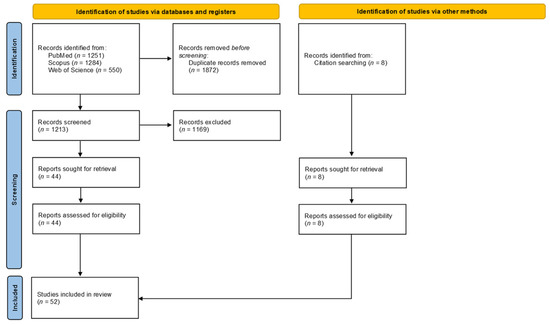
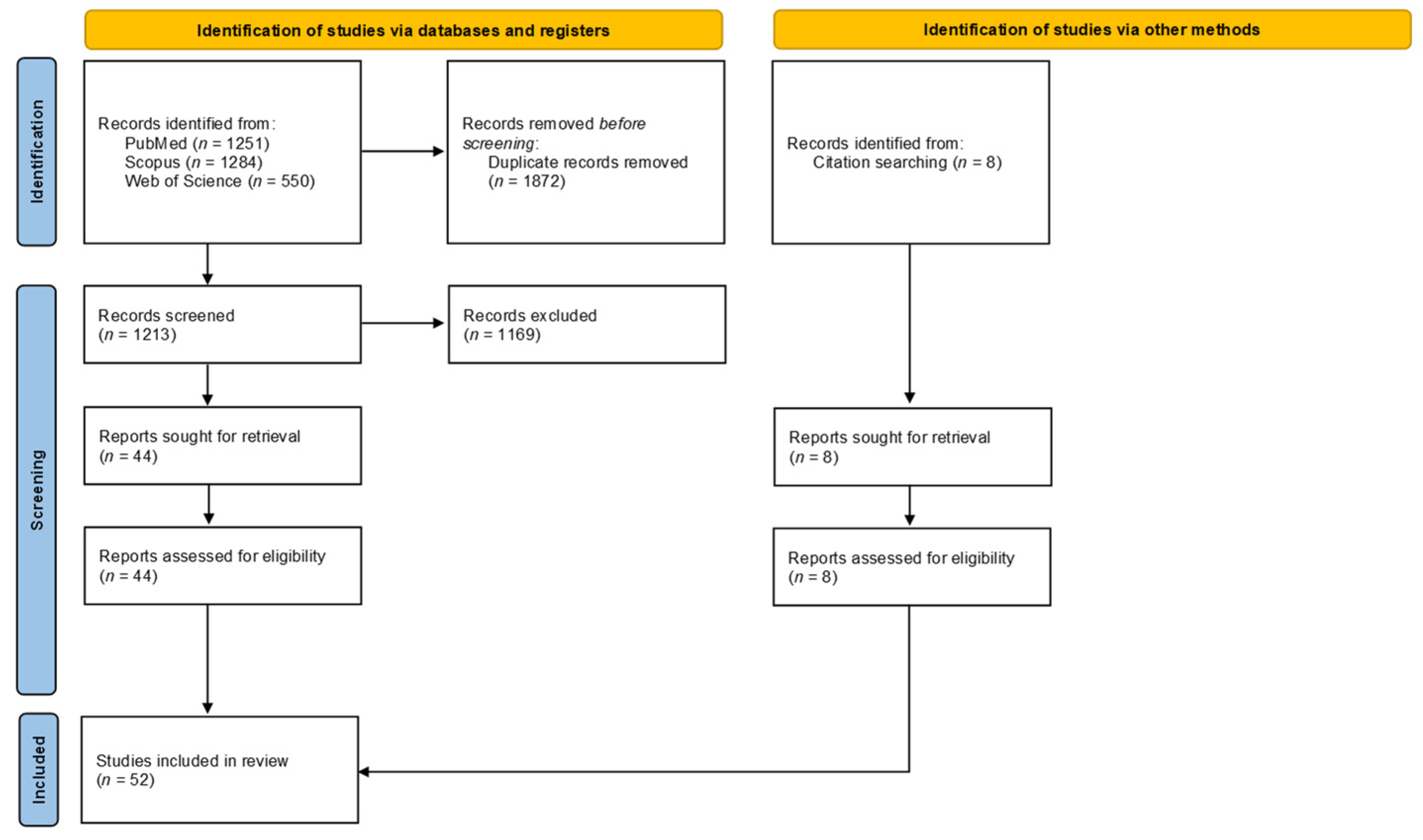
The 52 included studies carried out interventions and measured the PA level change. These studies were published in the English language between 1978 and August 2021. There were initially 1251 articles found on PubMed, 1284 in Scopus and 550 on Web of Science. Rayyan QCRI was used to compile the results and manually resolve the duplicates, resulting in 1213 unique studies. After screening the abstracts for the relevant information, 44 reports were determined to have met the eligibility criteria and were sought for retrieval.
Studies were excluded if they were inaccessible, irrelevant, did not include an intervention, did not include a measurement of PA level change, were conducted in non-ASEAN populations, the PA data between ASEAN and non-ASEAN countries was indiscernible, and were not written in the English language. All 44 reports were retrieved. An additional 8 articles were added through other sources (i.e., through citation searching) for a total of 52 articles included in this review. The PRISMA inclusion/exclusion process [17] is illustrated in Figure 1.
Figure 1.
PRISMA inclusion/exclusion process for the systematic review.
2.2. Quality Assessment and Level of Evidence
The Downs and Black checklist was used to assess the risk of bias. It includes 27 items that measure the quality of the reporting, the external validity, the internal validity (bias and confounding) and the power of a study [18]. A modified version was used here [19] as the information regarding the different levels of power stipulated in the original checklist is often difficult to find. Randomised controlled trials (RCT) would have a maximum possible score of 28, while non-randomised trials would have a maximum possible score of 25. The following scores corresponded with the following quality levels: excellent (26–28); good (20–25); fair (15–19); and poor (≤14). Thus, only RCTs would be able to attain an excellent score. Further, the studies were assigned the following study levels based on the Oxford Centre for Evidence-based Medicine (OCEBM) [20] to assess the level of evidence of the benefits demonstrated by the various interventions: RCTs (Level 2); and non-randomised controlled cohort/follow-up studies (Level 3). However, numerical quality assessment scales such as the Downs and Black checklist may potentially be weaker at identifying studies with an increased risk of bias when only the summary scores are taken into consideration [21]. To this effect, the OCEBM levels of evidence and Downs and Black checklist sub-scores of each study have been provided in Table 1, allowing for a more holistic approach toward assessing the various sub-domains of study quality.
Table 1.
Summary of OCEBM level, Downs and Black checklist sub-scores.
The average Downs and Black checklist score for reporting was 7.8 (1.1) points out of 10, suggesting that a majority of the studies included in the review had generally good reporting practices. The mean external validity score was 1.3 (0.7) out of 3, suggesting that most studies included in the review may have poor generalisability to other settings. The mean internal validity score (bias) was 4.5 (1.0) out of 7, suggesting that most studies may have a fair amount of internal validity pertaining to any bias concerning the measurement of the intervention and PA levels. The mean internal validity score (confounding) was 3.1 (1.5) out of 6, suggesting that most studies may have a fair amount of internal validity pertaining to any type of selection bias that may have been present. The mean power score was 0.5 (0.5) out of 1; approximately half of the studies did not include some type of power calculation, which may have resulted in some of the studies being underpowered and unable to detect the effects they were looking for.
We would like to emphasise that there were a variety of methodologies used for these studies. Beyond the different study designs, there was also the use of different types of both objective and subjective measurement tools as well. For a better idea of how these may affect a study and its findings, please refer to an earlier paper we wrote [14]. These should be taken into consideration along with the OCEBM and risk of bias tools that have been used in this review.
2.3. Selection of Outcomes for Review
A fair number of the studies included in this review measured primary outcomes other than changes in PA levels, with some of the studies not measuring PA as a primary outcome (i.e., their interventions were not directed specifically towards affecting PA levels). For example, nutritional interventions that measured PA as a secondary outcome. However, these studies were still included as there may be relationships that may emerge from the analysis of these studies and shed light on how future interventions may be structured to best increase PA levels. PA levels were measured in a variety of ways, including, but not limited to, weekly step averages, the prevalence of low PA and minutes of PA.
2.4. Determination of Approach Categories
Previous work has established a useful framework for categorising PA interventions and has been adapted for this review [9]. However, instead of the last category of ‘environmental and policy approach’ as defined in that review, we have categorised the third approach as ‘direct’ due to the lack of studies that utilised the policy changes. Thus, the three categories are: (a) informational, (b) behavioural and/or social and (c) direct approaches. Informational approaches focus on promoting PA through the provision of educational material, behavioural and/or social approaches focus on promoting PA by teaching behavioural management skills and/or altering the social environment available to the individual, while direct approaches focus on promoting PA by directly offering increased opportunities to perform PA.
3. Results
The following sections categorise the findings into approaches as per outlined in Section 2.4. For a breakdown of study characteristics, interventions and findings for all studies included in the review, please refer to Table 2.
Table 2.
Breakdown of study characteristics, interventions and findings for all studies included in the review.
3.1. Informational Approaches
Informational approaches generally encompass the provision of educational materials, in the form of brochures, lectures, classes, etc., that may help increase PA levels. For example, the reviewed studies included educational material, such as education sessions on basic diabetes self-management principles (that include increasing PA), education sessions on hypertension self-management, nutrition education sessions and material on how exercises are performed. The educational material is provided with the intent of increasing awareness around the benefits of PA or the modification of certain behavioural risk factors on disease outcomes and lowering the barriers to exercise engagement. The approaches reviewed here are broadly classified into (a) school-based (b) hospital-based (c) home-based (d) community-wide and (e) point-of-decision prompts interventions aimed at increasing information provision. A total of 21 out of the 52 studies included for review utilised an informational approach to affecting PA levels. Of the 21 studies, 14 studies provided evidence for the informational approach to increasing PA levels, while the remaining 7 studies did not.
3.1.1. School-Based Informational Provision
School-based interventions generally involve information provision largely within a school or classroom setting, whether the delivery medium is through physical lectures or technology. There were six studies that utilised this [22,23,24,25,26,27].
Efficacy
Of the six studies that utilised school-based information provision, three provided evidence for the efficacy of the intervention type in increasing PA levels [23,25,27]. This might be explained by the broader coverage of the intervention detailed in [23] as it included teacher and parental involvement in addition to the educational classes, addressing aspects of social support as well. With the other two successful interventions [25,27], while successful, the interventions involved only the regular dissemination of nutrition-related information. The concurrent increase in PA might possibly be explained by participants developing better lifestyle habits in general, i.e., improving PA habits due to the indirect positive influence of improving nutritional status [28]. Whereas [22] only involved displaying exercise videos to the students. Furthermore, while [26] utilised a nutrition intervention similar to [25], using the Malaysian dietary guidelines, only the latter was successful in increasing PA levels. A potential explanation could be the difference between the baseline PA measures for both studies, i.e., the standard deviation for the baseline measures in [26] was highly dispersed while those in [25] were much smaller, potentially leading to a non-significant finding after statistical analysis in the former. While [24] utilised a multicomponent healthy lifestyle program that targeted several facets of the participants’ lifestyle, it was unsuccessful in increasing PA levels.
Applicability
While the current evidence is ambivalent regarding the efficacy of such an intervention type in increasing PA, the evidence here suggests that school-based information provision is a potentially effective method for increasing PA.
3.1.2. Hospital-Based Informational Provision
Hospital-based interventions generally involve information provision largely within a hospital setting. There was one study that utilised this [29].
Efficacy
Of the one study that utilised hospital-based information provision, it provided evidence for the efficacy of the intervention type in increasing PA levels.
Applicability
While the sample size is too small to draw a definitive conclusion, the evidence here suggests that hospital-based information provision is a potentially effective method of increasing PA.
3.1.3. Home-Based Informational Provision
Home-based interventions differ from both school-based and hospital-based interventions in the way the majority of the information is delivered or consumed. While the information may be provided by individuals operating out of schools or hospitals, the participants received or consumed the majority of this information at home. This is an important distinction, as there is an immediate lack of authority that may otherwise influence the way in which the participants behave in response to the information [30], unlike in school-based and hospital-based interventions. The interventions included providing myriad PA-related information, such as through the dissemination of exercise videos, provision of self-management material for metabolic diseases and increasing knowledge of available facilities for PA. There were nine studies that utilised this intervention type [31,32,33,34,35,36,37,38,39].
Efficacy
Of the nine studies that utilised home-based information provision, eight provided evidence for the efficacy of the intervention type in increasing PA levels [31,32,33,34,35,36,37,38], while one did not [39]. Of the eight studies that were successful in increasing PA levels, the interventions included the dissemination of exercise videos [31], a multifactorial falls prevention program [32], self-management material for metabolic diseases [33,38], a combination of PA and dietary guidelines [34,35], and a provision of knowledge on structured outdoor activities [36,37]. Pertaining to the study that was not successful in increasing PA, the intervention involved text messaging that provided instructions on exercise and praise for positive behaviour [39]. Importantly, many of the successful interventions that have been listed here involved a variety of other intervention types in addition to information provision. As detailed above, many interventions involved a more holistic set of information that revolved around managing various aspects of one’s lifestyle, extending beyond just an increase in PA levels, such as the management of metabolic disease parameters, dietary guidelines and eye care habits. Certain studies included some form of familial support as well [36,37]. It is thus unsurprising that, for the one study that was unsuccessful, the intervention was relatively limited in scope.
Applicability
There is a large amount of evidence pointing toward the efficacy of home-based interventions in increasing PA levels, potentially making this a viable intervention style to pursue in future studies or when considering PA-related policymaking. However, it must be noted that for the overwhelming majority of the studies that were successful, there was some form of an additional component to the intervention, whether it was information provided on other aspects of lifestyle or social support.
3.1.4. Community-Wide Campaigns
Community-wide campaigns involve multiple, highly visible interventions that involved many members, beyond the participants themselves, in a community across various sectors. There were four interventions in this review [40,41,42,43] that utilised a community-wide campaign.
Efficacy
Of the four studies that utilised a community-wide campaign approach, three provided evidence for an increase in PA levels [40,41,43], while one did not [42]. Of the studies that were successful, one study provided education, increased access to exercise equipment and social support in the form of walking groups [40], another provided group education sessions with additional individual counselling sessions aimed at behaviour change [41] while the third study involved the participants engaging in myriad activities aimed at both cognitive and physical stimulation [43]. With regards to the study that was unsuccessful in increasing PA levels, there was in fact a significant increase in physical inactivity levels after the 3-year intervention. However, there are several issues with drawing a firm conclusion about the effects of this intervention on affecting PA levels—including that the intervention’s purpose was not limited solely to increasing PA levels, the other interventions may have had a role in affecting PA levels and there may have been confounding factors due to the normal passage of time, given the long duration of the study, which may have affected PA levels regardless of the intervention.
Applicability
The current body of evidence suggests that community-wide campaigns are potentially an effective method for increasing PA levels. However, note that this intervention type tends to be more holistic in nature, going beyond mere information provision and often targeting various aspects of behaviour change as well.
3.1.5. Point-of-Decision Prompts
Point-of-decision prompts are usually signs that are placed near stairs or elevators to encourage individuals to utilise the stairs. The intention is to provide information on a healthier alternative to an established behavioural norm [44]. There was only one intervention in this study that utilised point-of-decision prompts [45].
Efficacy
Of the one study in our review that utilised point-of-decision prompts, it must be noted that the study also compared its efficacy to another intervention that involved providing a weekly 1-h aerobics class. The chosen PA measure was steps in a day. The study provided no evidence that point-of-decision prompts were effective in eliciting an increase in PA, while the other intervention involving an aerobics class did.
Applicability
Applicability cannot be measured if effectiveness was not established.
3.2. Behavioural and Social Approaches
Behavioural and social approaches attempt to affect PA levels by teaching or creating incentive structures to encourage behavioural management skills and/or influencing changes in a person’s social support structure to affect behavioural change. These types of interventions usually encompass counselling sessions for individuals or groups. These approaches include but are not limited to teaching participants self-regulation techniques or techniques to alter self-efficacy with regards to engaging in PA and peer support groups. The approaches reviewed here are broadly classified into (a) peer support, (b) incentivised change, (c) self-regulation strategy, (d) individually adapted health behaviour change program, (e) family-based social support, (f) workplace-based social support, (g) healthcare provider training and (h) self-monitoring tools. A total of 23 out of the 52 studies included for review utilised a behavioural or social approach to affecting PA levels. Of the 23 studies, 16 studies provided evidence for the behavioural or social approach to increasing PA levels, while the remaining 7 studies did not.
3.2.1. Peer Support
Peer support interventions are generally conducted in group settings, where participants may engage in a variety of activities, such as group counselling sessions, peer-led training programs and accountability in front of a group. There were four studies that utilised this [46,47,48,49].
Efficacy
Of the four studies that utilised peer support, one provided evidence for the efficacy of the intervention type in increasing PA levels [48], while the remaining three did not [46,47,49]. Of the one study that was successful in increasing PA levels, the intervention involved monthly meetings where the group would convene and go through their PA log diaries and were provided with motivation to further increase PA. Of the three studies that were unsuccessful in increasing PA levels, one was labelled as such due to the absence of significance testing [47]. With regards to the other two interventions, one involved group lifestyle counselling sessions [46] while another involved training peer leaders before getting them to lead whole and small group peer support programs [49].
Applicability
While the sample size is too small to draw a definitive conclusion, the evidence here suggests that peer support is a potentially effective method for increasing PA.
3.2.2. Incentivised Change
Incentivised change interventions are not just interventions that provide some form of financial incentive for the participants, but interventions that specifically investigate the effect of an incentive or different types of incentives on affecting PA levels. There were three studies that utilised this intervention type [50,51,52].
Efficacy
Of the three studies that utilised incentivised change, all three were successful in increasing PA. In the study [50] that utilised the incentivised change intervention type, there was a comparison between 4 groups; a control group, a group only given a Fitbit pedometer (Fitbit-only), a group given a Fitbit pedometer and whose progress contributed to financial compensation towards a charity organisation (Charity), and another group given a Fitbit pedometer and whose progress contributed to financial compensation towards the participant (Cash). After 12 months, both the Fitbit-only and Charity groups displayed a significantly higher moderate to vigorous PA (MVPA) level than the control group, while the Cash group had a significantly lower MVPA level than the Fitbit-only group. However, in terms of mean daily steps, it was the Fitbit-only and Cash groups that were significantly higher than the control group. Of note, the incentives were given based on a certain number of steps being reached and not MVPA time. In essence, at least when comparing the efficacy of financial incentives, only financial compensation towards the participants themselves was successful in increasing PA levels. In [51], the groups that were given incentives demonstrated greater levels of PA. Further, [52] demonstrated the efficacy of providing financial incentives in increasing the daily step count.
Applicability
The current body of evidence suggests that the provision of financial incentives is effective in increasing PA levels. More importantly, [50] possibly further provides evidence that suggests financial incentives are only effective insofar as the compensation is directed towards the participants themselves, similar to the other two studies reviewed.
3.2.3. Self-Regulation Strategy
Self-regulation strategy interventions attempt to teach participants methods of self-regulation to affect PA levels. Self-regulation involves attempts by an individual to alter one’s responses and inner states [53]. There was one study that utilised this intervention type [54].
Efficacy
Of the one study that utilised this intervention type, it was successful in increasing PA levels, but only in the men within the sample. The success of self-regulation strategies in increasing PA levels is corroborated in other literature for both men and women [55,56]. While there was no significant finding pertaining to PA levels in women, there was a non-significant increasing trend. A larger sample size may have potentially been able to detect a significant finding.
Applicability
While the sample size is too small to draw a definitive conclusion, the evidence here and in the previous literature suggests that self-regulation is potentially an effective strategy for increasing PA levels.
3.2.4. Individually Adapted Health Behaviour Change Program
Individually adapted health behaviour change programs are interventions that attempt to alter participants’ health-related behaviour through teaching behaviour management skills, often based on established health behaviour change models [57,58], to affect PA levels. There were four studies that utilised this intervention type [59,60,61,62].
Efficacy
Of the four studies that utilised this intervention type, three were successful in increasing PA levels [60,61,62], while one was not [59]. Of the three successful interventions, all three utilised some form of combined intervention, with [60] incorporating elements of peer support, and [61,62] incorporating the direct provision of physical training components. Of note, [60] had two intervention groups, one utilising personalised feedback, and another utilising peer support in addition to the personalised feedback. Only the group with additional peer support had a significant increase in PA levels. Regarding the study that was unsuccessful in increasing PA levels, a possible reason could be that the intervention only provided nutrition counselling, which might have been insufficient in affecting PA levels.
Applicability
The sample of studies here points toward the efficacy of individually adapted health behaviour change programs in increasing PA levels. However, it must be noted that all of the studies that were successful in increasing PA levels also included components other than the individually adapted health behaviour change programs.
3.2.5. Family-Based Social Support
Family-based social support interventions attempt to affect participants’ PA levels through the alteration of the familial aspect of their social support structure. There were three studies that utilised this intervention type [63,64,65].
Efficacy
Of the three studies that utilised this intervention type, all three were successful in increasing PA levels [63,64,65]. Of the three successful interventions, one targeted the mothers and sought to provide practical guidelines on childhood obesity management [63], another entailed the parents receiving nutritional education to manage their children’s diet and providing oral nutritional supplements to the children [64], while [65] was also a parent-centric intervention that sought to educate parents on various behavioural strategies aimed at preventing childhood obesity.
Applicability
The sample of studies here points toward the efficacy of family-based social support interventions in increasing PA levels. However, it is important to note that the commonality across the interventions that worked was that they were parent-centric interventions directed toward improving their child’s health outcomes. It may be easier to affect the PA levels of a child under the care of their parent since the latter is able to more strictly control the various lifestyle factors around their child.
3.2.6. Workplace-Based Social Support
Workplace-based social support interventions attempt to affect participants’ PA levels through the alteration of aspects within their workplace. There were two studies that utilised this intervention type [66,67].
Efficacy
Of the two studies that utilised this intervention type, one was successful in increasing PA levels [66], while the other was not [67]. For the intervention that was successful, participants were provided with fitness trackers and involved in sedentary behaviour-reducing activities, while their physical and social environments were adjusted to be more conducive to that. The study that was not successful in affecting PA levels [67] was a workplace health promotion intervention that sought to alter several arms of social support related to the participants.
Applicability
The sample size is too small and the current evidence is ambivalent. Further research in the area is required to ascertain the efficacy of such an intervention on increasing PA levels.
3.2.7. Healthcare Provider Training
Healthcare provider training interventions attempt to affect participants’ PA levels by teaching healthcare providers, who would come into contact with the participants, a variety of skills aimed at improving several aspects of patient care. There was one study that utilised this intervention type [68].
Efficacy
The study that utilised this intervention type was not successful in increasing PA levels. However, of note, the healthcare provider training did not focus solely on improving PA and the related portion of the intervention was mostly about training nurses in motivational conversation to set priorities for self-care and medication adherence.
Applicability
Applicability cannot be determined if there was no evidence of effectiveness.
3.2.8. Self-Monitoring Tools
Self-monitoring tool interventions attempt to affect participants’ PA levels by providing certain tools that may assist in self-monitoring and thus, encouraging PA behaviour. There is some evidence that demonstrates the efficacy of providing participants with self-monitoring tools in increasing motivation to participate in PA, enhancing self-monitoring skills and thus, greater awareness around goal behaviour discrepancy to improve their lifestyles [69,70]. There were four studies that utilised this intervention type [71,72,73,74].
Efficacy
Of the three studies that were successful in using this intervention type, one required the intervention group to use a mobile application for 6 months to track weight twice weekly, their diet and PA daily and to communicate regularly with the research dietitians through the application [72]. Another involved providing the intervention participants with face-to-face counselling on PA, as well as filling out a park-based PA prescription sheet with an outlined goal they had committed to [73]. Finally, the third study that was effective in increasing PA levels using this intervention type provided participants with pedometers to track and provide feedback on their daily step count [74]. While the last study [71] mentioned an increase in the number of weekly recorded pedometer steps from 59,560 to 87,286 after seven weeks of their intervention, there was no significant testing and thus the study was marked as not being effective However, given the study’s results, the success of the intervention by [74] and the similarities across the two interventions, there is reason to believe that the study would have been found to be effective if statistical testing were done.
Applicability
The current body of evidence and previous literature suggests that the use of self-monitoring tools is an effective intervention type to increase PA levels.
3.3. Direct Approaches
Of the eight studies that adopted direct approaches, four provided exercise sessions [75,76,77,78], one provided exercise equipment [79], two provided oral nutritional supplementation [80,81] and the last provided medication [82].
3.3.1. Efficacy
Four of the eight studies were successful in increasing PA levels. Of the four studies that were successful in increasing PA levels, one provided exercise classes [76], one provided increased time to play [78], one provided oral nutritional supplementation [81] and the last provided medication [82]. The remaining four were not successful [75,77,79,80].
3.3.2. Applicability
There seems to be ambivalence regarding the efficacy of such an intervention type on increasing PA levels. There is insufficient evidence to determine the efficacy of direct approaches to increasing PA levels.
4. Discussion
Upon reviewing the articles, it was found that 66.7% of interventions that utilised an informational approach, 69.6% of interventions that utilised a behavioural and/or social approach, and 50% of interventions that utilised a direct approach were successful in increasing PA levels, suggesting a greater efficacy for informational and behavioural and/or social approaches. However, more importantly, many of the interventions that were successful were those that adopted a multi-pronged approach to influencing PA levels instead of just utilising a single approach. The following will discuss these in detail as well as lay out potential future steps to consider.
4.1. Overall Efficacy of Reviewed Interventions
Of the intervention types reviewed, the categories with a sufficient amount of evidence demonstrating efficacy in increasing PA levels include home-based information provision [31,32,33,34,35,36,37,38,39], community-wide campaigns [40,41,42,43], incentivised change [50,51,52], individually adapted health behaviour programs [59,60,61,62], family-based social support interventions [63,64,65] and the provision of self-monitoring tools [71,72,73,74]. However, that does not mean that the other intervention types are necessarily ineffective in increasing PA levels, but that more research may need to be done to ascertain their effect on PA levels. Further, it is worth noting that many of the interventions that were successful in increasing PA levels utilised a combination of intervention types, most commonly some form of information provision and social support. Future national policies that are aimed at increasing PA levels should therefore consider focusing on multicomponent strategies that incorporate elements of information provision and social support. Speaking more broadly, a vision of PA within such societies would therefore be one where interventions to influence PA would not be limited to a single section of an individual’s life and instead permeate the various facets of it (i.e., in the form of environmental changes melded with information provision and social support). For example, this might be in the form of nationwide efforts to increase PA through active commuting by the conversion of car-friendly roads to active commuting-friendly roads that allow safe bicycling, while distributing pamphlets on the benefits of such activity through community centres and hospitals that could be then taken back home for parents to educate their children with.
4.2. The Need to Account for Local Cultural Considerations in PA Promotion Programs
An important aspect for consideration in the promotion of PA in ASEAN is the myriad of potential cultural limitations that may exist. For instance, approximately 42% of the combined population across the ASEAN countries are Muslim [83] and depending on how the religion is practised, there may be additional factors to consider when promoting PA in these societies [13,84,85]. Specifically, the religion itself promotes PA [86] but there may be differences in the ways in which it can be facilitated given certain restrictions within the society, such as stipulations on garb and intermingling between individuals of the opposite sex. Of course, the major religions in ASEAN countries go far beyond that of just Islam. However, it seems to present the most unique challenges to PA promotion and, thus, our decision to focus on this as an example.
As another example, for a country like Myanmar, which has a female labour force of 46% of its population [87], a workplace intervention may not be the most optimal way to broadly target an increase in female PA participation in the country.
Hence, while this review has identified several intervention types that may effectively increase PA levels, the efficacy may be influenced by the cultural contexts in which they are based. Accordingly, policymaking bodies using this information should also consider how different intervention types could, or should not, be used based on other coinciding factors.
4.3. Towards a Potential Addendum for Local PA Guidelines
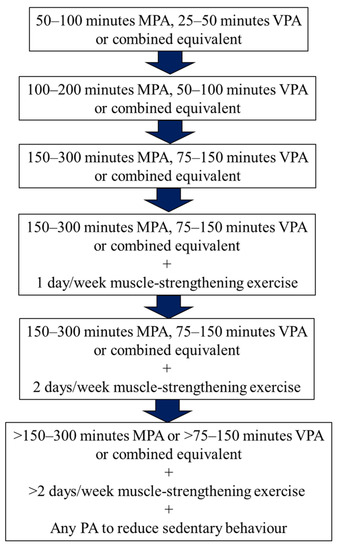
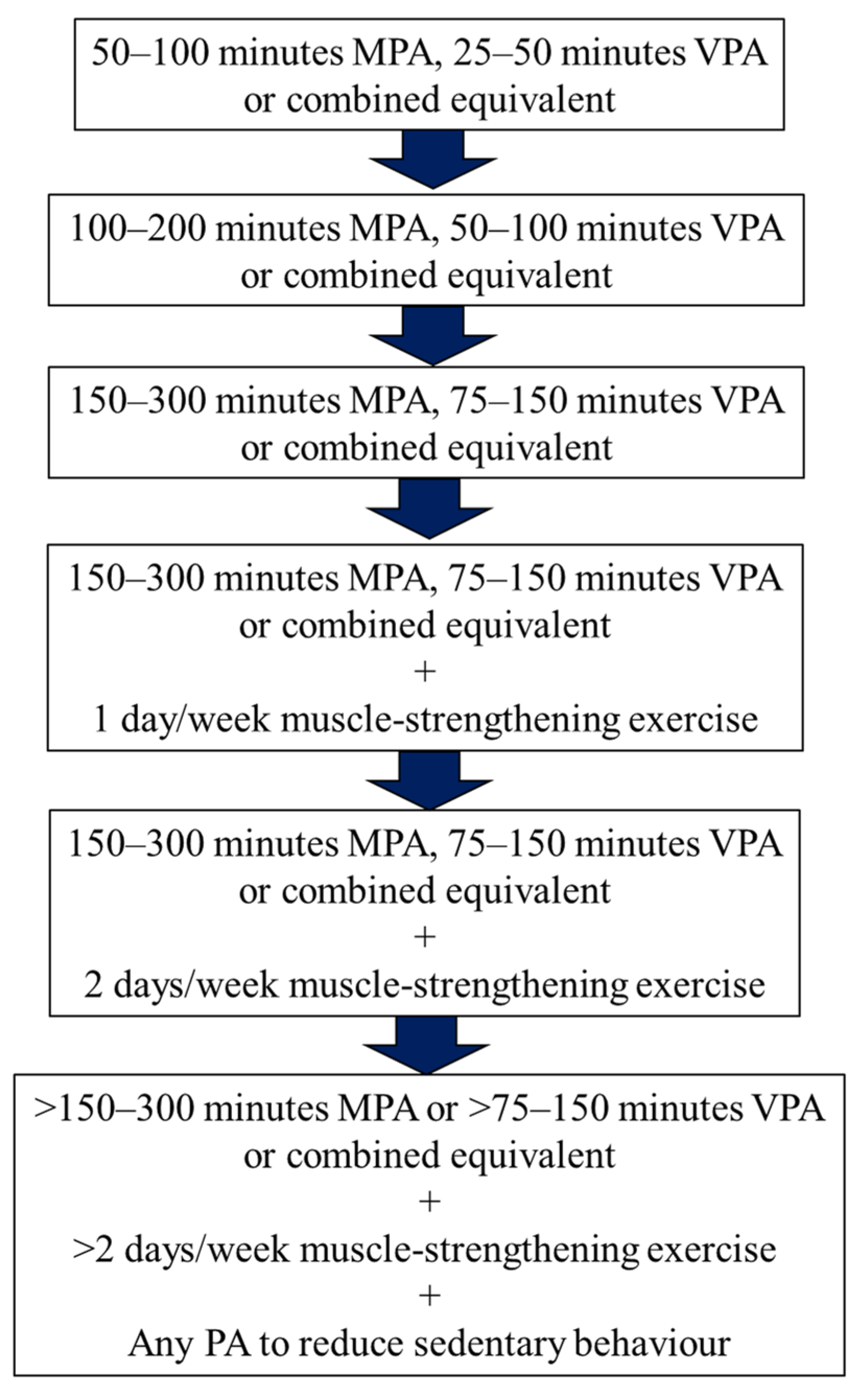
As pointed out in the previous literature, the mere existence of PA guidelines is likely insufficient in effecting change [3] in the PA levels of a population. The same article emphasised the importance of how this information should be communicated and how policies should be implemented to maximise the impact on PA levels. To add to this, it has been shown that commitment declines as a goal either becomes more difficult or is perceived as being more difficult to achieve [88]. For an unfit individual who does not habitually engage in PA, a jump to a goal of 150–300 min of moderate-intensity or 75–150 min of vigorous-intensity PA may be perceivably difficult and potentially cause these individuals to experience reduced goal commitment. Hence, while the World Health Organization (WHO) recognises that all PA in daily life is beneficial [89], it may be prudent if more could be done to establish intermediary steps to encourage goal commitment, to ultimately reap the optimal health benefits associated with reaching the targeted PA levels. An example of such a structure is given in Figure 2. An addendum like this may provide some additional structure for healthcare practitioners to better prescribe progressive increases towards the optimal range.
Figure 2.
Chart demonstrating an example of intermediary steps that can be taken to achieve optimal physical activity goals, as defined by the World Health Organization.
Further, there are many studies that currently classify participants into “in/active” or “having/not met PA guidelines”, which may lack precision in assessing both the current state and progress that participants may have made in a study with regards to achieving sufficient PA levels. For instance, a participant may have gone from minimal amounts of PA to a level just shy of being classified as “active” or “having met PA guidelines” and they would still be considered as not having made any progress due to the dichotomous categorisation. The aforementioned addendum may, therefore, create higher precision in assessing the effect of an intervention on PA levels by establishing standardised, intermediary benchmarks.
5. Strengths and Limitations
The strength of this review is in its ability to provide a different cultural perspective—individuals from different cultures may have distinct reasons for participating in PA and thus respond better to certain intervention types. On the other hand, a limitation of this review is that many of the studies included are non-randomised controlled trials or single-arm studies, which may affect the quality of the findings due to the lack of control. However, as discussed earlier, this is unavoidable in many experimental designs within healthcare. Importantly, this is where the risk of bias assessments is crucial and we encourage readers to scrutinise the findings of the studies within the context established (i.e., using the OCEBM levels and Downs and Black checklist scores we have provided). Further, there were potentially studies that we were unable to include due to our inability to understand the language. If possible, researchers in this field may want to explore the translation of such texts for inclusion in future reviews.
6. Conclusions
Broadly speaking, the review found that interventions that utilised an informational or behavioural and/or social approach were more successful in increasing PA levels, suggesting a greater efficacy for these approaches. However, these results need to be interpreted holistically, as many successful interventions are a combination of intervention types. Further, future policymaking decisions regarding PA interventions should be considered within the potential limits of cultural constraints. It may also be worth considering the establishment of standardised intermediary benchmarks for the optimal ranges of PA goals set by WHO.
Author Contributions
Y.-S.L.: Authorship, data-curation and analysis; M.C.: conceptualisation, authorship, funding acquisition; J.K.: conceptualisation, authorship, supervision. All authors have read and agreed to the published version of the manuscript.
Funding
This research was funded by the International Life Sciences Institute (ILSI) Southeast Asia Region, Food and Nutrients in Health and Disease Science Cluster. ILSI is supported by dues from member companies, chiefly in the food and agricultural industries, and other in-kind support from non-industry sources. Other than the project description, the funders played no part in the analysis. Y.-S.L. is supported by the Nanyang President’s Graduate Scholarship, provided by Nanyang Technological University.
Institutional Review Board Statement
Not applicable.
Informed Consent Statement
Not applicable.
Data Availability Statement
Data is contained within the article.
Acknowledgments
The authors would like to thank ILSI for the funding that supported the systematic review.
Conflicts of Interest
The authors declare that the research was conducted in the absence of any commercial or financial relationships that could be construed as a potential conflict of interest.
References
- Warburton, D.E.R.; Nicol, C.W.; Bredin, S.S.D. Health benefits of physical activity: The evidence. Can. Med. Assoc. J. 2006, 174, 801–809. [Google Scholar] [CrossRef] [Scilit]
- World Health Organization. Global Recommendations on Physical Activity for Health. 2010. Available online: https://www.who.int/publications/i/item/9789241599979 (accessed on 27 August 2021).
- Bull, F.C.; Al-Ansari, S.S.; Biddle, S.; Borodulin, K.; Buman, M.P.; Cardon, G.; Carty, C.; Chaput, J.-P.; Chastin, S.; Chou, R.; et al. World Health Organization 2020 guidelines on physical activity and sedentary behaviour. Br. J. Sports Med. 2020, 54, 1451–1462. [Google Scholar] [CrossRef] [Scilit]
- Condello, G.; Ling, F.C.M.; Bianco, A.; Chastin, S.; Cardon, G.; Ciarapica, D.; Conte, D.; Cortis, C.; De Craemer, M.; Di Blasio, A.; et al. Using concept mapping in the development of the EU-PAD framework (EUropean-Physical Activity Determinants across the life course): A DEDIPAC-study. BMC Public Health 2016, 16, 1145. [Google Scholar] [CrossRef] [Scilit]
- Deloitte. A Perspective of Future Healthcare Landscape in ASEAN and Singapore. 2015. Available online: https://www2.deloitte.com/content/dam/Deloitte/sg/Documents/risk/sea-risk-healthcare-3-0-model.pdf (accessed on 27 August 2021).
- World Health Organization. Noncommunicable Diseases in the South-East Asia (N.D.). Available online: https://www.who.int/southeastasia/health-topics/noncommunicable-diseases (accessed on 27 August 2021).
- World Health Organization. Prevalence of Insufficient Physical Activity among Adults, Data by WHO Region. 2018. Available online: https://apps.who.int/gho/data/view.main.2482?lang=en (accessed on 27 August 2021).
- Coughlin, S.S.; Stewart, J. Use of consumer wearable devices to promote physical activity: A review of health intervention studies. J. Environ. Health Sci. 2016, 2, 1–6. [Google Scholar] [CrossRef] [Scilit]
- Kahn, E.B.; Ramsey, L.T.; Brownson, R.C.; Heath, G.W.; Howze, E.H.; Powell, K.E.; Stone, E.J.; Rajab, M.W.; Corso, P. The effectiveness of interventions to increase physical activity: A systematic review. Am. J. Prev. Med. 2002, 22, 73–107. [Google Scholar] [CrossRef] [Scilit]
- Laplante, C.; Peng, W. A Systematic review of e-health interventions for physical activity: An analysis of study design, intervention characteristics, and outcomes. Telemed. E-Health 2011, 17, 509–523. [Google Scholar] [CrossRef] [Scilit]
- Seo, D.-C.; Torabi, M.R.; Jiang, N.; Fernandez-Rojas, X.; Park, B.-H. Correlates of college students’ physical activity: Cross-cultural differences. Asia Pac. J. Public Health 2009, 21, 421–432. [Google Scholar] [CrossRef] [Scilit]
- Araki, K.; Kodani, I.; Gupta, N.; Gill, D.L. Experiences in sport, physical activity, and physical education among Christian, Buddhist, and Hindu Asian adolescent girls. J. Prev. Med. Public Health 2013, 46 (Suppl. S1), S43–S49. [Google Scholar] [CrossRef] [Scilit]
- Aljayyousi, G.F.; Abu Munshar, M.; Al-Salim, F.; Osman, E.R. Addressing context to understand physical activity among Muslim university students: The role of gender, family, and culture. BMC Public Health 2019, 19, 1452. [Google Scholar] [CrossRef] [Scilit] [PubMed]
- Lee, Y.-S.; Komar, J.; Chia, M. Physical activity measurement methodologies: A systematic review in the association of South East Asian Nations (ASEAN). Sports 2021, 9, 69. [Google Scholar] [CrossRef] [Scilit]
- Barton, S. Which clinical studies provide the best evidence? The best RCT still trumps the best observational study. BMJ 2000, 321, 255–256. [Google Scholar] [CrossRef] [Scilit]
- Nardini, C. The ethics of clinical trials. Ecancermedicalscience 2014, 8, 387. [Google Scholar] [CrossRef] [PubMed]
- Page, M.J.; McKenzie, J.E.; Bossuyt, P.M.; Boutron, I.; Hoffmann, T.C.; Mulrow, C.D.; Shamseer, L.; Tetzlaff, J.M.; Akl, E.A.; Brennan, S.E.; et al. The PRISMA 2020 statement: An updated guideline for reporting systematic reviews. BMJ 2021, 372, 105906. [Google Scholar] [CrossRef] [Scilit]
- Downs, S.H.; Black, N. The feasibility of creating a checklist for the assessment of the methodological quality both of randomised and non-randomised studies of health care interventions. J. Epidemiol. Community Health 1998, 52, 377–384. [Google Scholar] [CrossRef] [Scilit] [PubMed]
- Hooper, P.; Jutai, J.; Strong, G.; Russell-Minda, E. Age-related macular degeneration and low-vision rehabilitation: A systematic review. Can. J. Ophthalmol. 2008, 43, 180–187. [Google Scholar] [CrossRef] [Scilit]
- OCEBM Levels of Evidence Working Group. The Oxford Levels of Evidence 2. 2011. Available online: https://www.cebm.ox.ac.uk/resources/levels-of-evidence/ocebm-levels-of-evidence (accessed on 27 August 2021).
- O’Connor, S.R.; Tully, M.; Ryan, B.; Bradley, J.M.; Baxter, G.D.; McDonough, S.M. Failure of a numerical quality assessment scale to identify potential risk of bias in a systematic review: A comparison study. BMC Res. Notes 2015, 8, 224. [Google Scholar] [CrossRef] [Scilit]
- Rizal, H.; Hajar, M.S.; Muhamad, A.S.; Kueh, Y.C.; Kuan, G. The effect of brain breaks on physical activity behaviour among primary school children: A transtheoretical perspective. Int. J. Environ. Res. Public Health 2019, 16, 4283. [Google Scholar] [CrossRef] [Scilit]
- Mok, W.K.H.; Poh, B.K.; Wee, L.H.; Devanthini, D.G.; Ruzita, A.T. Juara sihat: Assessing the sustained impact of a schoolbased obesity intervention. Med. J. Malays. 2018, 73, 100–105. [Google Scholar]
- Chawla, N.; Panza, A.; Sirikulchayanonta, C.; Kumar, R.; Taneepanichskul, S. Effectiveness of a school-based multicomponent intervention on nutritional status among primary school children in Bangkok, Thailand. J. Ayub. Med. Coll. Abbottabad 2017, 29, 13–20. [Google Scholar]
- Lua, P.L.; Wan Dali, W.P.E.; Shahril, M.R. Multimodal nutrition education intervention: A cluster randomised controlled trial study on weight gain and physical activity pattern among university students in Terengganu, Malaysia. Mal. J. Nutr. 2013, 19, 339–352. [Google Scholar]
- Soon, H.K.; Saad, H.A.; Taib, M.N.M.; Rahman, H.A.; Mun, C.Y. Effects of combined physical activity and dietary intervention on obesity and metabolic parameters in adults with abdominal obesity. Southeast Asian J. Trop. Med. Public Health 2013, 44, 295–308. [Google Scholar] [PubMed]
- Teo, C.; Chin, Y.; Lim, P.; Masrom, S.; Shariff, Z. Impacts of a school-based intervention that incorporates nutrition education and a supportive healthy school canteen environment among primary school children in malaysia. Nutrition 2021, 13, 1712. [Google Scholar] [CrossRef] [Scilit] [PubMed]
- Eaton, C.B.; McPhillips, J.B.; Gans, K.M.; Garber, C.E.; Assaf, A.R.; Lasater, T.M.; Carleton, R.A. Cross-sectional relationship between diet and physical activity in two southeastern new England communities. Am. J. Prev. Med. 1995, 11, 238–244. [Google Scholar] [CrossRef] [Scilit]
- Pichayapinyo, P.; Saslow, L.R.; Aikens, J.E.; Marinec, N.; Sillabutra, J.; Rattanapongsai, P.; Piette, J.D. Feasibility study of automated interactive voice response telephone calls with community health nurse follow-up to improve glycaemic control in patients with type 2 diabetes. Int. J. Nurs. Pract. 2019, 25, e12781. [Google Scholar] [CrossRef] [Scilit]
- Cramer, J.A.; Scheyer, R.D.; Mattson, R.H. Compliance declines between clinic visits. Arch. Intern. Med. 1990, 150, 1509–1510. [Google Scholar] [CrossRef] [Scilit] [PubMed]
- Hidrus, A.; Kueh, Y.C.; Norsaádah, B.; Chang, Y.-K.; Hung, T.-M.; Naing, N.N.; Kuan, G. Effects of brain breaks videos on the motives for the physical activity of Malaysians with type-2 diabetes mellitus. Int. J. Environ. Res. Public Health 2020, 17, 2507. [Google Scholar] [CrossRef] [Scilit]
- Suttanon, P.; Piriyaprasarth, P.; Krootnark, K.; Aranyavalai, T. Effectiveness of falls prevention intervention programme in community-dwelling older people in Thailand: Randomized controlled trial. Hong Kong Physiother. J. 2018, 38, 1–11. [Google Scholar] [CrossRef] [Scilit] [PubMed]
- Yatim, H.M.; Wong, Y.Y.; Lim, S.H.; Hassali, M.A.; Hong, Y.H.; Dali, A.F.; Neoh, C.F. Evaluation of a group-based hypertension self-management education programme among hypertensive community dwellers. Eur. J. Integr. Med. 2018, 24, 79–84. [Google Scholar] [CrossRef] [Scilit]
- Juliana, N.; Shahar, S.; Sahar, M.A.; Ghazali, A.R.; Manaf, Z.A.; Noah, R.M. ‘Her Shape’ intervention programme for obese women with high breast adiposity. Asia Pac. J. Clin. Nutr. 2017, 26, 278–286. [Google Scholar] [CrossRef] [Scilit]
- Ethisan, P.; Chapman, R.; Kumar, R.; Somrogthong, R. Effectiveness of group-mediated lifestyle physical activity (Glpa) program for health benefit in physical activity among elderly people at rural thailand. J. Ayub. Med. Coll. Abbottabad 2015, 27, 292–295. [Google Scholar] [PubMed]
- Ngo, C.S.; Pan, C.-W.; Finkelstein, E.A.; Lee, C.-F.; Wong, I.B.; Ong, J.; Ang, M.; Wong, T.-Y.; Saw, S.-M. A cluster randomised controlled trial evaluating an incentive-based outdoor physical activity programme to increase outdoor time and prevent myopia in children. Ophthalmic Physiol. Opt. 2014, 34, 362–368. [Google Scholar] [CrossRef] [Scilit]
- Finkelstein, E.A.; Tan, Y.-T.; Malhotra, R.; Lee, C.-F.; Goh, S.-S.; Saw, S.-M. A cluster randomized controlled trial of an incentive-based outdoor physical activity program. J. Pediatr. 2013, 163, 167–172.e1. [Google Scholar] [CrossRef] [Scilit]
- Tan, M.Y.; Magarey, J.M.; Chee, S.S.; Lee, L.F. A brief structured education programme enhances self-care practices and improves glycaemic control in Malaysians with poorly controlled diabetes. Health Educ. Res. 2011, 26, 896–907. [Google Scholar] [CrossRef] [Scilit]
- Müller, A.M.; Khoo, S.; Morris, T. Text messaging for exercise promotion in older adults from an upper-middle-income country: Randomized controlled trial. J. Med. Internet Res. 2016, 18, e5. [Google Scholar] [CrossRef] [Scilit]
- Tran, V.D.; James, A.P.; Lee, A.H.; Jancey, J.; Howat, P.A.; Mai, L.T.P. Effectiveness of a community-based physical activity and nutrition behavior intervention on features of the metabolic syndrome: A cluster-randomized controlled trial. Metab. Syndr. Relat. Disord. 2017, 15, 63–71. [Google Scholar] [CrossRef] [Scilit]
- Ibrahim, N.; Moy, F.M.; Awalludin, I.A.N.; Ali, Z.M.; Ismail, I.S. Effects of a community-based healthy lifestyle intervention program (Co-HELP) among adults with prediabetes in a developing country: A quasi-experimental study. PLoS ONE 2016, 11, e0167123. [Google Scholar] [CrossRef] [Scilit]
- Nguyen, Q.N.; Pham, S.T.; Nguyen, V.L.; Weinehall, L.; Wall, S.; Bonita, R.; Byass, P. Effectiveness of community-based comprehensive healthy lifestyle promotion on cardiovascular disease risk factors in a rural Vietnamese population: A quasi-experimental study. BMC Cardiovasc. Disord. 2012, 12, 56. [Google Scholar] [CrossRef] [Scilit]
- Juniarti, N.; Mz, I.A.; Sari, C.W.M.; Haroen, H. The effect of exercise and learning therapy on cognitive functions and physical activity of older people with dementia in indonesia. J. Aging Res. 2021, 2021, 6647029. [Google Scholar] [CrossRef] [Scilit]
- Soler, R.E.; Leeks, K.D.; Buchanan, L.R.; Brownson, R.C.; Heath, G.W.; Hopkins, D.H. Point-of-decision prompts to increase stair use. Am. J. Prev. Med. 2010, 38, S292–S300. [Google Scholar] [CrossRef] [Scilit]
- Chee Huei, P.; Saad, H.A.; Barakatun Nisak, M.Y.; Mohd Nasir, M.T. Effectiveness of physical activity intervention among government employees with metabolic syndrome. J. Exerc. Sci. Fit. 2017, 15, 55–62. [Google Scholar] [CrossRef] [Scilit]
- Pengpid, S.; Peltzer, K.; Jayasvasti, I.; Aekplakorn, W.; Puckpinyo, A.; Nanthananate, P.; Mansin, A. Two-year results of a community-based randomized controlled lifestyle intervention trial to control prehypertension and/or prediabetes in Thailand: A brief report. Int. J. Gen. Med. 2019, 12, 131–135. [Google Scholar] [CrossRef] [Scilit]
- Nguyen, H.L.; Ha, D.A.; Goldberg, R.J.; Kiefe, C.I.; Chiriboga, G.; Ly, H.N.; Nguyen, C.K.; Phan, N.T.; Vu, N.C.; Nguyen, Q.P. Culturally adaptive storytelling intervention versus didactic intervention to improve hypertension control in Vietnam- 12 month follow up results: A cluster randomized controlled feasibility trial. PLoS ONE 2018, 13, e0209912. [Google Scholar] [CrossRef] [Scilit]
- Yaacob, L.H.; Azidah, A.K. Pedometer-based walking intervention with and without group support among sedentary adults in primary care patients in north-east Malaysia: A randomized controlled trial. Bangladesh J. Med. Sci. 2018, 17, 52–57. [Google Scholar] [CrossRef] [Scilit]
- Sanee, A.; Somrongthong, R.; Plianbangchang, S. The positive effects of a peer-led intervention system for individuals with a risk of metabolic syndrome. J. Multidiscip. Healthc. 2017, 10, 293–300. [Google Scholar] [CrossRef] [Scilit] [PubMed]
- Finkelstein, E.A.; Haaland, B.A.; Bilger, M.; Sahasranaman, A.; Sloan, R.A.; Nang EE, K.; Evenson, K.R. Effectiveness of activity trackers with and without incentives to increase physical activity (TRIPPA): A randomised controlled trial. Lancet Diabetes Endocrinol. 2016, 4, 983–995. [Google Scholar] [CrossRef] [Scilit]
- Bilger, M.; Shah, M.; Tan, N.C.; Tan, C.Y.L.; Bundoc, F.G.; Bairavi, J.; Finkelstein, E.A. Process- and outcome-based financial incentives to improve self-management and glycemic control in people with type 2 diabetes in Singapore: A randomized controlled trial. Patient 2021, 14, 555–567. [Google Scholar] [CrossRef] [Scilit] [PubMed]
- Chew, L.; Tavitian-Exley, I.; Lim, N.; Ong, A. Can a multi-level intervention approach, combining behavioural disciplines, novel technology and incentives increase physical activity at population-level? BMC Public Health 2021, 21, 120. [Google Scholar] [CrossRef] [Scilit]
- Baumeister, R.F.; Vohs, K.D. Understanding self-regulation: An introduction. In Handbook of Self-Regulation: Research, Theory, and Applications, 1st ed.; Guilford Press: New York, NY, USA, 2004; p. 1. [Google Scholar]
- Liau, A.K.; Neihart, M.; Teo, C.T.; Goh, L.S.; Chew, P. A Quasi-experimental study of a fitbit-based self-regulation intervention to improve physical activity, well-being, and mental health. Cyberpsychology Behav. Soc. Netw. 2018, 21, 727–734. [Google Scholar] [CrossRef] [Scilit]
- Marquardt, M.K.; Oettingen, G.; Gollwitzer, P.M.; Sheeran, P.; Liepert, J. Mental contrasting with implementation intentions (MCII) improves physical activity and weight loss among stroke survivors over one year. Rehabil. Psychol. 2017, 62, 580–590. [Google Scholar] [CrossRef] [Scilit] [PubMed]
- Michie, S.; Abraham, C.; Whittington, C.; McAteer, J.; Gupta, S. Effective techniques in healthy eating and physical activity interventions: A meta-regression. Health Psychol. 2009, 28, 690–701. [Google Scholar] [CrossRef] [Scilit]
- Bandura, A. Social Foundations of Thought and Action: A Social Cognitive Theory; Prentice-Hall: Englewood Cliffs, NJ, USA, 1986. [Google Scholar]
- Prochaska, J.O.; DiClemente, C.C. The Transtheoretical Approach: Crossing Traditional Boundaries of Change; Dorsey Press: Homewood, IL, USA, 1984. [Google Scholar]
- Karintrakul, S.; Angkatavanich, J. A randomized controlled trial of an individualized nutrition counseling program matched with a transtheoretical model for overweight and obese females in Thailand. Nutr. Res. Pract. 2017, 11, 319–326. [Google Scholar] [CrossRef] [Scilit]
- Sazlina, S.-G.; Browning, C.J.; Yasin, S. Effectiveness of personalized feedback alone or combined with peer support to improve physical activity in sedentary older Malays with type 2 diabetes: A randomized controlled trial. Front. Public Health 2015, 3, 178. [Google Scholar] [CrossRef] [Scilit]
- Suwanpasu, S.; Aungsuroch, Y.; Jitapanya, C. Post-surgical physical activity enhancing program for elderly patients after hip fracture: A randomized controlled trial. Asian Biomed. 2014, 8, 525–532. [Google Scholar] [CrossRef] [Scilit]
- Muda, S.H.; Kadir, A.A. The effectiveness of physical activity counselling in Primary Care Clinic University Science Malaysia Hospital. Int. Med. J. 2006, 13, 249–253. [Google Scholar]
- Haya, M.; Mexitalia, M.; Margawati, A. Effect of maternal health education on physical activity and body mass index of overweight children. Paediatr. Indones. 2016, 56, 73–78. [Google Scholar] [CrossRef] [Scilit]
- Huynh, D.T.T.; Estorninos, E.; Capeding, R.Z.; Oliver, J.S.; Low, Y.L.; Rosales, F.J. Longitudinal growth and health outcomes in nutritionally at-risk children who received long-term nutritional intervention. J. Hum. Nutr. Diet. 2015, 28, 623–635. [Google Scholar] [CrossRef] [Scilit] [PubMed]
- Wafa, S.W.; Talib, R.A.; Hamzaid, N.H.; McColl, J.; Rajikan, R.; Ng, L.O.; Ramli, A.H.; Reilly, J.J. Randomized controlled trial of a good practice approach to treatment of childhood obesity in Malaysia: Malaysian Childhood Obesity Treatment Trial (MASCOT). Pediatr. Obes. 2011, 6, e62–e69. [Google Scholar] [CrossRef] [Scilit]
- Maphong, R.; Nakhonket, K.; Sukhonthasab, S. The effectiveness of two levels of active office interventions to reduce sedentary behavior in office workers: A mixed-method approach. Arch. Environ. Occup. Health 2021, 1–10. [Google Scholar] [CrossRef] [Scilit]
- Zahtamal, Z.; Rochmah, W.; Prabandari, Y.S.; Setyawati, L.K. Effects of multilevel intervention in workplace health promotion on workers’ metabolic syndrome components. Kesmas: Natl. Public Health J. 2017, 11, 198. [Google Scholar] [CrossRef] [Scilit]
- Jafar, T.H.; Tan, N.C.; Allen, J.C.; Pradhan, S.S.; Goh, P.; Tavajoh, S.; Keng, F.M.; Chan, J. Management of hypertension and multiple risk factors to enhance cardiovascular health—A feasibility study in Singapore polyclinics. BMC Health Serv. Res. 2016, 16, 229. [Google Scholar] [CrossRef] [Scilit]
- Bice, M.R.; Ball, J.W.; McClaren, S. Technology and physical activity motivation. J. Sport Exerc. Psychol. 2016, 14, 295–304. [Google Scholar] [CrossRef] [Scilit]
- Duncan, M.; Birch, S.; Woodfield, L. Efficacy of an integrated school curriculum pedometer intervention to enhance physical activity and to reduce weight status in children. Eur. Phys. Educ. Rev. 2012, 18, 396–407. [Google Scholar] [CrossRef] [Scilit]
- Zulkifli, A.F. Student-centered approach and alternative assessments to improve students’ learning domains during health education sessions. Biomed. Hum. Kinet. 2019, 11, 80–86. [Google Scholar] [CrossRef] [Scilit]
- Lim, S.L.; Ong, K.W.; Johal, J.; Han, C.Y.; Yap, Q.V.; Chan, Y.H.; Chooi, Y.C.; Zhang, Z.P.; Chandra, C.C.; Thiagarajah, A.G.; et al. Effect of a smartphone App on weight change and metabolic outcomes in Asian adults with type 2 diabetes. JAMA Netw. Open 2021, 4, e2112417. [Google Scholar] [CrossRef] [Scilit] [PubMed]
- Petrunoff, N.; Yao, J.; Sia, A.; Ng, A.; Ramiah, A.; Wong, M.; Han, J.; Tai, B.C.; Uijtdewilligen, L.; Müller-Riemenschneider, F. Activity in nature mediates a park prescription intervention’s effects on physical activity, park use and quality of life: A mixed-methods process evaluation. BMC Public Health 2021, 21, 204. [Google Scholar] [CrossRef] [Scilit] [PubMed]
- Bin Saad, M.F.; Cheah, W.L.; Hazmi, H. The effects of a 7000-step goal and weekly group walking program for overweight and obese elderly people in Sarawak, Malaysia: A quasi-experimental study. J. Prev. Med. Public Health 2021, 54, 199–207. [Google Scholar] [CrossRef] [Scilit] [PubMed]
- Cheah, W.L.; Chang, C.T.; Helmy, H.; Wan Manan, W.M. An intervention based on the stages of change, health profiles and physical activity levels of overweight and obese adults In Sarawak, Malaysia—A feasibility study. Malays. Fam. Physician 2019, 14, 46–54. [Google Scholar]
- Yahya, N.S.R.N.; Jamaludin, F.I.C.; Firdaus, M.K.Z.H.; Hasan, M.K.C. A feasibility of simulation-based exercise programme for overweight adult in higher learning institutions. Enfermería Clínica 2019, 29, 521–527. [Google Scholar] [CrossRef] [Scilit]
- Widyastuti, K.; Makhabah, D.; Setijadi, A.; Sutanto, Y.; Suradi; Ambrosino, N. Benefits and costs of home pedometer assisted physical activity in patients with COPD. A preliminary randomized controlled trial. Pulmonology 2018, 24, 211–218. [Google Scholar] [CrossRef] [Scilit]
- Chia, M. Play reconsidered, resurrected and repositioned in children: Case study results from Singapore. Sport Sci. 2009, 1, 44–48. [Google Scholar]
- Omar, A.; Husain, M.N.; Jamil, A.T.; Nor, N.S.M.; Ambak, R.; Fazliana, M.; Zamri, N.L.A.; Aris, T. Effect of physical activity on fasting blood glucose and lipid profile among low income housewives in the MyBFF@home study. BMC Women’s Health 2018, 18, 103. [Google Scholar] [CrossRef] [Scilit] [PubMed]
- Nhung, B.T.; Tuyen, L.D.; Linh, V.A.; Nguyen, D.V.; Nga, T.T.; Thuc, V.T.; Yui, K.; Ito, Y.; Nakashima, Y.; Yamamoto, S. Rice bran extract reduces the risk of atherosclerosis in post-menopausal Vietnamese women. J. Nutr. Sci. Vitaminol. 2016, 62, 295–302. [Google Scholar] [CrossRef] [Scilit] [PubMed]
- Ng, T.P.; Feng, L.; Nyunt, M.S.Z.; Feng, L.; Niti, M.; Tan, B.Y.; Chan, G.; Khoo, S.A.; Chan, S.M.; Yap, P.; et al. Nutritional, physical, cognitive, and combination interventions and frailty reversal among older adults: A randomized controlled trial. Am. J. Med. 2015, 128, 1225–1236.e1. [Google Scholar] [CrossRef] [Scilit]
- Hadju, V.; Stephenson, L.S.; Mohammed, H.O.; Bowman, D.D.; Parker, R.S. Improvements of growth, appetite, and physical activity in helminth-infected schoolboys 6 months after single dose of albendazole. Asia Pacific J. Clin. Nutr. 1998, 7, 170–176. [Google Scholar]
- EENI Global Business School. ASEAN Religious Diversity. Strength or Threat? (n.d.). Available online: http://en.reingex.com/ASEAN-Religion.shtml#:%7E:text=About%2042%25%20of%20the%20ASEAN,%25)%20and%20Christianity%20(17%25) (accessed on 27 August 2021).
- Nakamura, Y. Beyond the hijab: Female Muslims and physical activity. Women Sport Phys. Act. J. 2002, 11, 21–48. [Google Scholar] [CrossRef] [Scilit]
- Zaman, H. Islam, well-being and physical activity: Perceptions of Muslim young women. In Researching Women and Sport; Clarke, G., Humberstone, B., Eds.; Palgrave Macmillan: London, UK, 1997; pp. 50–67. [Google Scholar]
- Kahan, D. Islam and physical activity: Implications for American sport and physical educators. J. Phys. Educ. Recreat. Dance 2003, 74, 48–54. [Google Scholar] [CrossRef] [Scilit]
- International Labour Organization. Labor Force Participation Rate, Female (% of Female Population Ages 15+) (Modeled ILO Estimate)|Data. 2021. Available online: https://data.worldbank.org/indicator/SL.TLF.CACT.FE.ZS (accessed on 27 August 2021).
- Erez, M.; Zidon, I. Effect of goal acceptance on the relationship of goal difficulty to performance. J. Appl. Psychol. 1984, 69, 69–78. [Google Scholar] [CrossRef]
- World Health Organisation. Every Move Counts Towards Better Health—Says WHO. 2020. Available online: https://www.who.int/news/item/25-11-2020-every-move-counts-towards-better-health-says-who (accessed on 27 August 2021).

Publisher’s Note: MDPI stays neutral with regard to jurisdictional claims in published maps and institutional affiliations. |
© 2022 by the authors. Licensee MDPI, Basel, Switzerland. This article is an open access article distributed under the terms and conditions of the Creative Commons Attribution (CC BY) license (https://creativecommons.org/licenses/by/4.0/).