Article

Assessing the Equity of Accessibility to Urban Green Space: A Study of 254 Cities in China
1
College of Public Administration, South Central University for Nationalities, Wuhan 430074, China
2
Research Center of Hubei Ethnic Minority Areas Economic and Social Development, South Central University for Nationalities, Wuhan 430074, China
3
College of Public Administration, Huazhong University of Science & Technology, Wuhan 430074, China
4
School of Environmental Science and Engineering, Huazhong University of Science & Technology, Wuhan 430074, China
*
Authors to whom correspondence should be addressed.
Int. J. Environ. Res. Public Health 2022, 19(8), 4855; https://doi.org/10.3390/ijerph19084855

Submission received: 25 February 2022 / Revised: 15 April 2022 / Accepted: 15 April 2022 / Published: 16 April 2022

Abstract

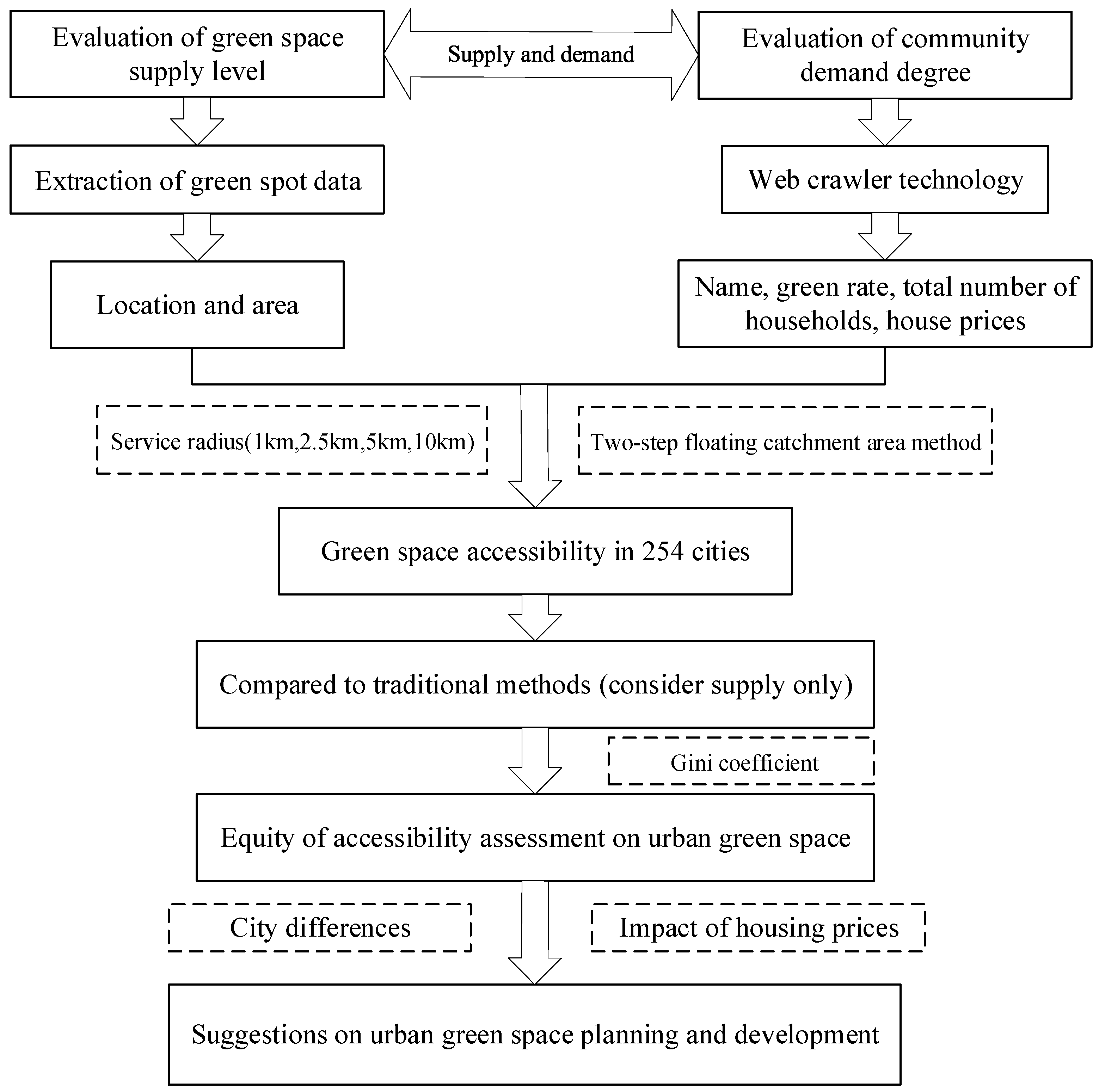
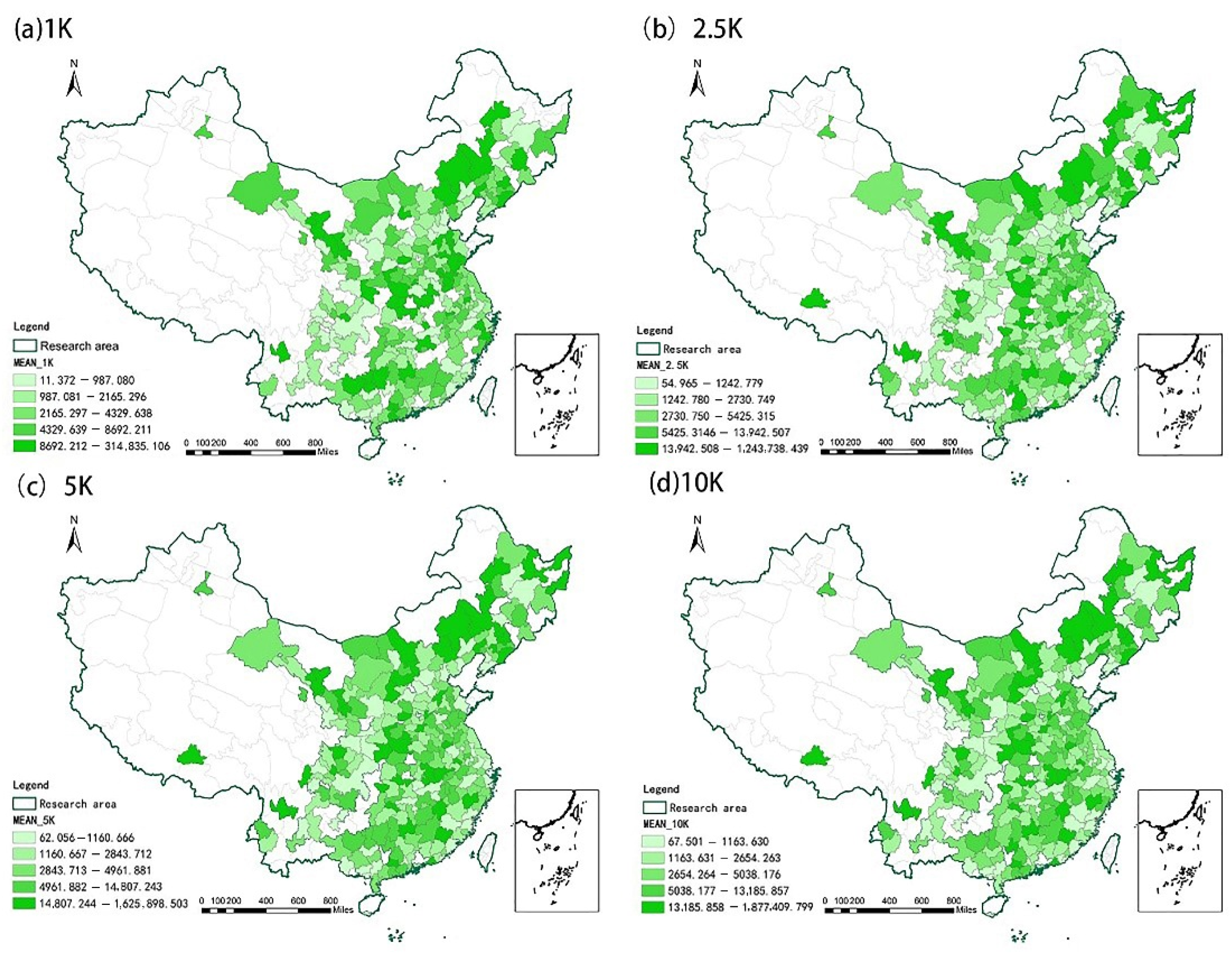
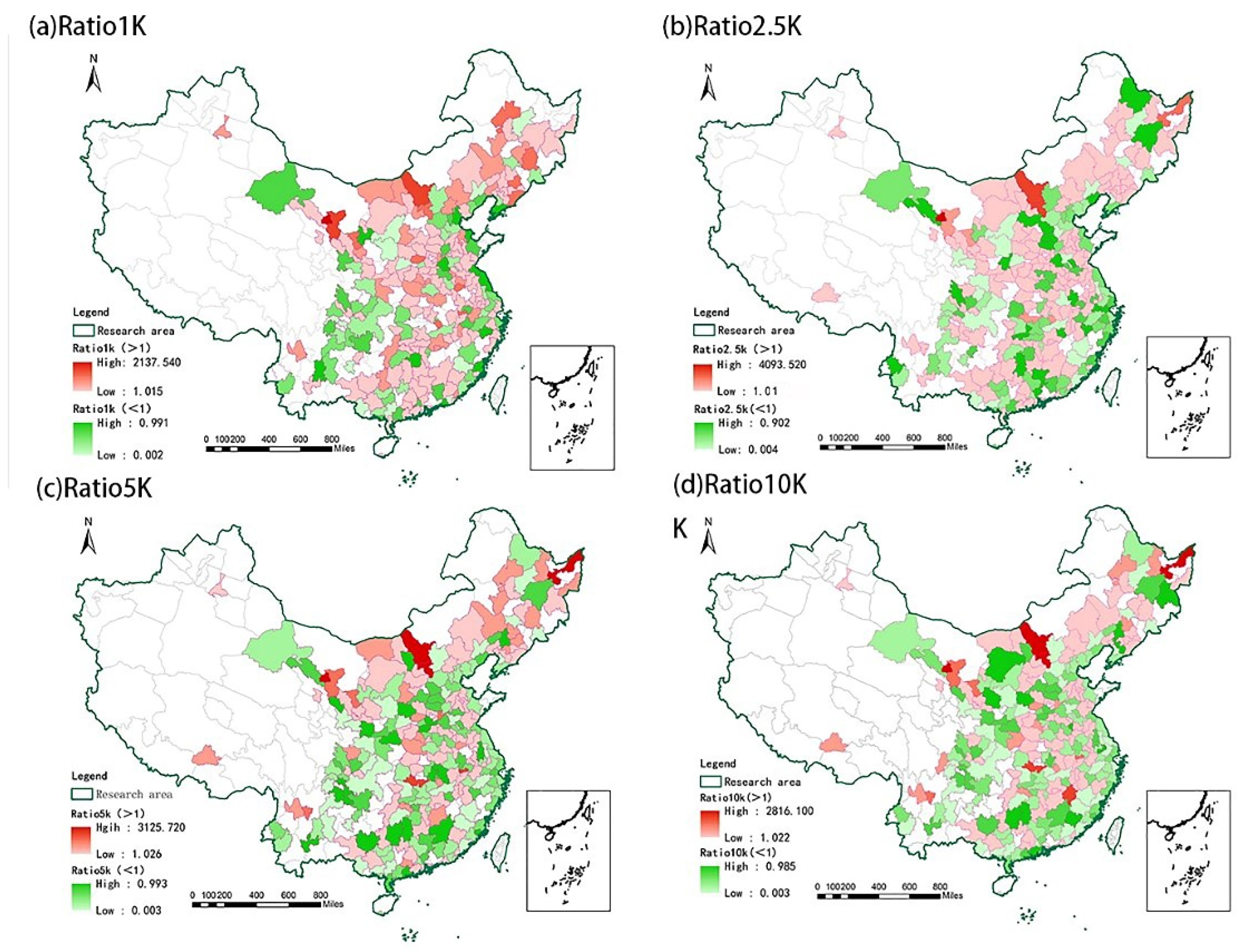
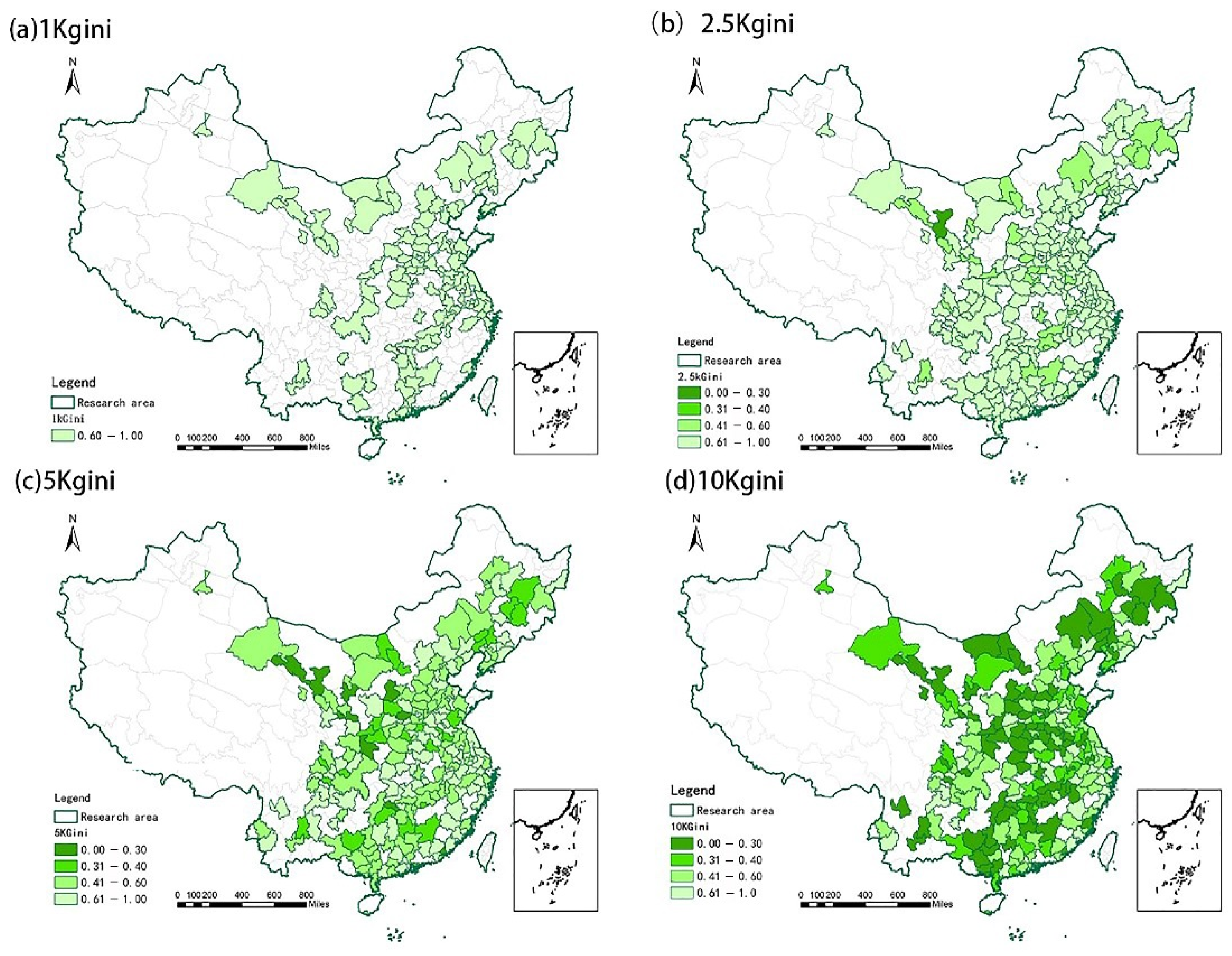
Urban green space has environmental benefits of purifying the air, reducing the heat island effect and providing the social and economic benefits of rest places and social platforms. An integrated and organized green space system is important for fully realizing the positive functions of an urban ecosystem. Previous studies have considered green space supply and demand, but few studies have examined large-scale, diverse and small-scale systems, making it difficult to conduct a comparative study of urban green space accessibility and equity under the same conditions (such as data sources and calculation methods). Using the two-step floating catchment area method, this study evaluates the equity of 254 urban green spaces in China within four ranges of accessibility: 1 km, 2.5 km, 5 km and 10 km. The study also considers urban house price in the research. The results show the following: (1) There are large differences in the accessibility of green space between different cities in China. Within the accessibility threshold of 10 km, the city with the most accessible urban green spaces has an accessibility level that is 27,813 times that of the city with the lowest accessibility. (2) Within the range of walking/cycling, there are significant inequalities in green space access in the 254 cities; the inequality of green space accessibility in most of the studied cities is at the “dangerous” level. (3) The two-step floating catchment area method indicates that the social superiority (high social class) represented by high housing prices is associated with a greater opportunity to access urban green space services. This paper highlights the main problems associated with the accessibility of urban green space in China and proposes targeted development recommendations. These recommendations provide a reference for urban managers to develop effective green space development policies and realize the optimal allocation of urban green space.
Keywords: green space; accessibility analysis; justice; housing price green space; accessibility analysis; justice; housing price