Article

Occurrence and Removal of Triazine Herbicides during Wastewater Treatment Processes and Their Environmental Impact on Aquatic Life

1
Key Laboratory of Analytical Science and Technology of Hebei Province, College of Chemistry and Environmental Science, Hebei University, Baoding 071002, China
2
State Key Laboratory of Environmental Criteria and Risk Assessment, Chinese Research Academy of Environmental Sciences, Beijing 100012, China
*
Author to whom correspondence should be addressed.
Int. J. Environ. Res. Public Health 2022, 19(8), 4557; https://doi.org/10.3390/ijerph19084557

Submission received: 1 March 2022 / Revised: 4 April 2022 / Accepted: 4 April 2022 / Published: 10 April 2022
(This article belongs to the Special Issue Water Pollution: Human Health and Ecological Risks)

Abstract

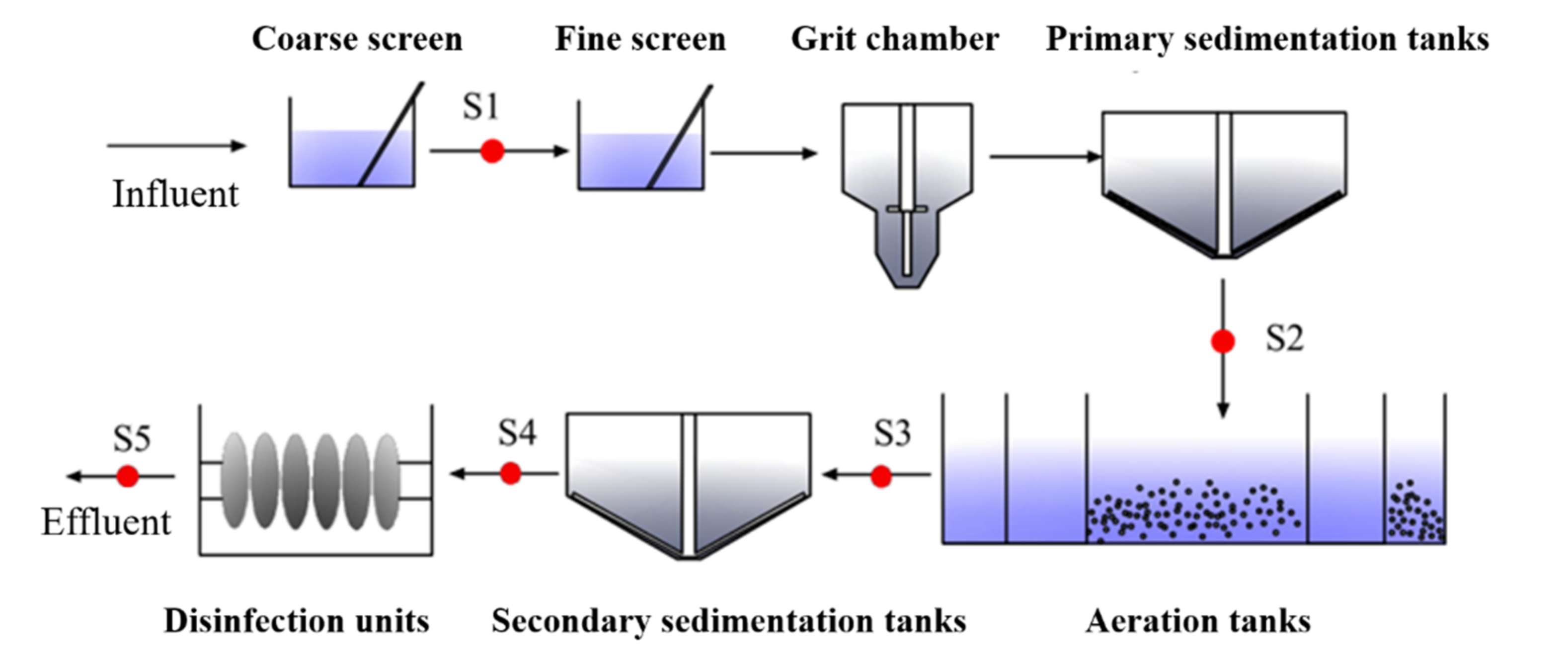
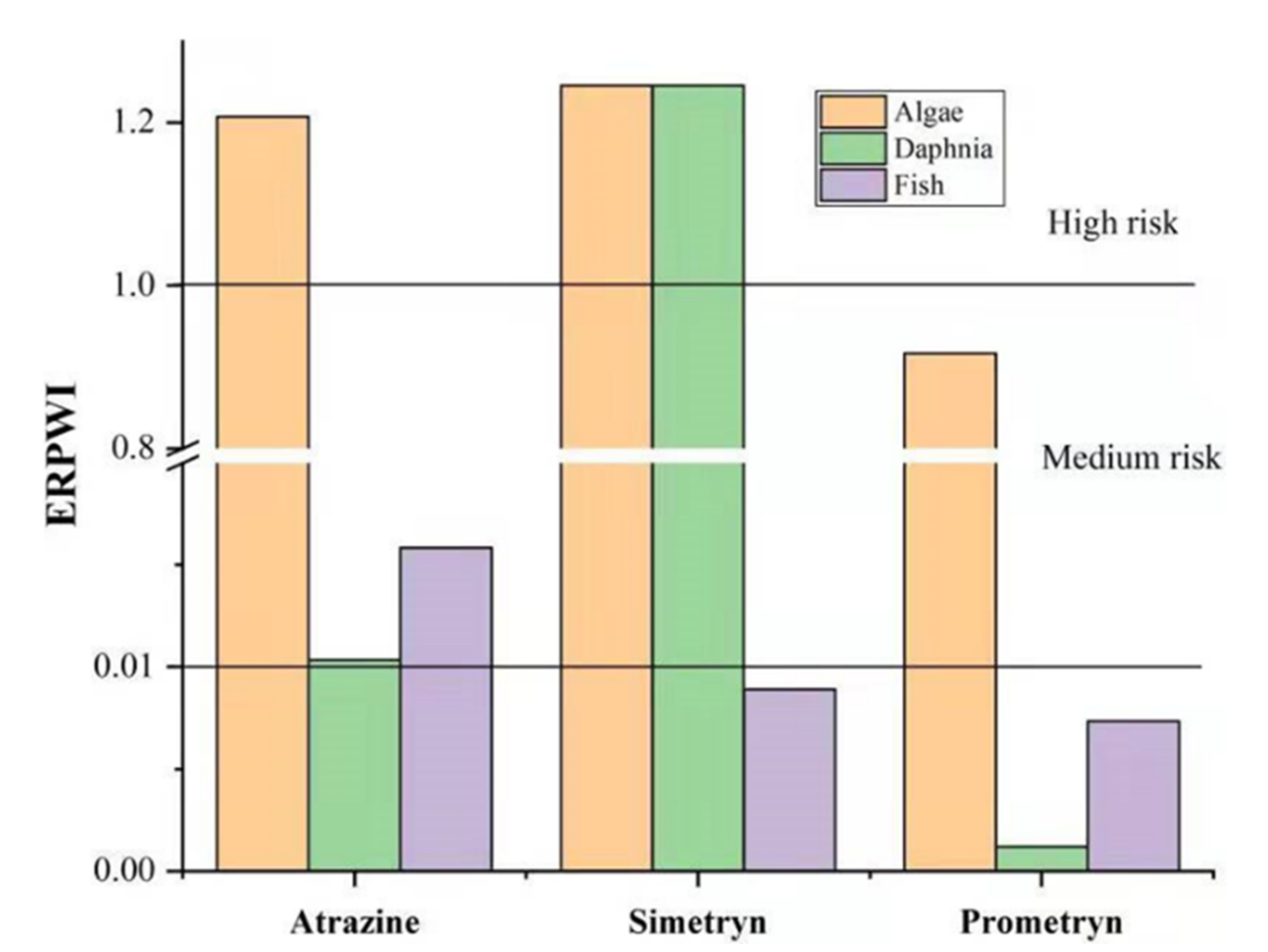
Wastewater treatment plants (WWTPs) represent a major point source for pesticide residue entry to aquatic environment and may threaten ecosystems and biodiversity in urban area. Triazine herbicides should be paid attention to for their ubiquitous occurrence in the environment and long-term residue. The present study aimed to quantify eleven compounds of triazine herbicides during wastewater treatment processes. The solid phase extraction and gas-chromatography mass spectrometry (GC-MS) determination method were developed to identify the target herbicides with approving sensitivity. The pollution levels, removal rates of eleven triazine herbicides along five different treatment stages in WWTP were investigated. The results showed that three herbicides including atrazine, simetryn and prometryn were detected. Their concentrations in influent were among 28.79 to 104.60 ng/L. Their total removal rates from influent to effluent were 14.92%, 10.79% and 4.41%, respectively indicating that they were difficult to be effectively remove during wastewater treatment. Regarding the negative impact of triazine herbicides discharged from WWTPs on downstream water quality and aquatic life, the environmental risks were assessed by calculating the Environmental Relevance of Pesticides from Wastewater Treatment Plants Index (ERPWI) and water cycle spreading index (WCSI). The risk assessment results denoted the possible high risks for atrazine and simetryn to alage, and simetryn concurrently posed a high risk for the daphnia, while prometryn was at medium risk to alage. Atrazine and simetryn in effluent posed high risk for algae, meanwhile, simetryn had high risk for Daphnia. These results suggested a possible threat to the aquatic environment, rendering in this way the ERPWI method as a useful assessment tool. Further extensive study is needed for atrazine and simetryn in order to better understand their migration mechanism in aquatic environment.
Keywords: triazine pesticides; removal; risk evaluation; wastewater treatment plants triazine pesticides; removal; risk evaluation; wastewater treatment plants