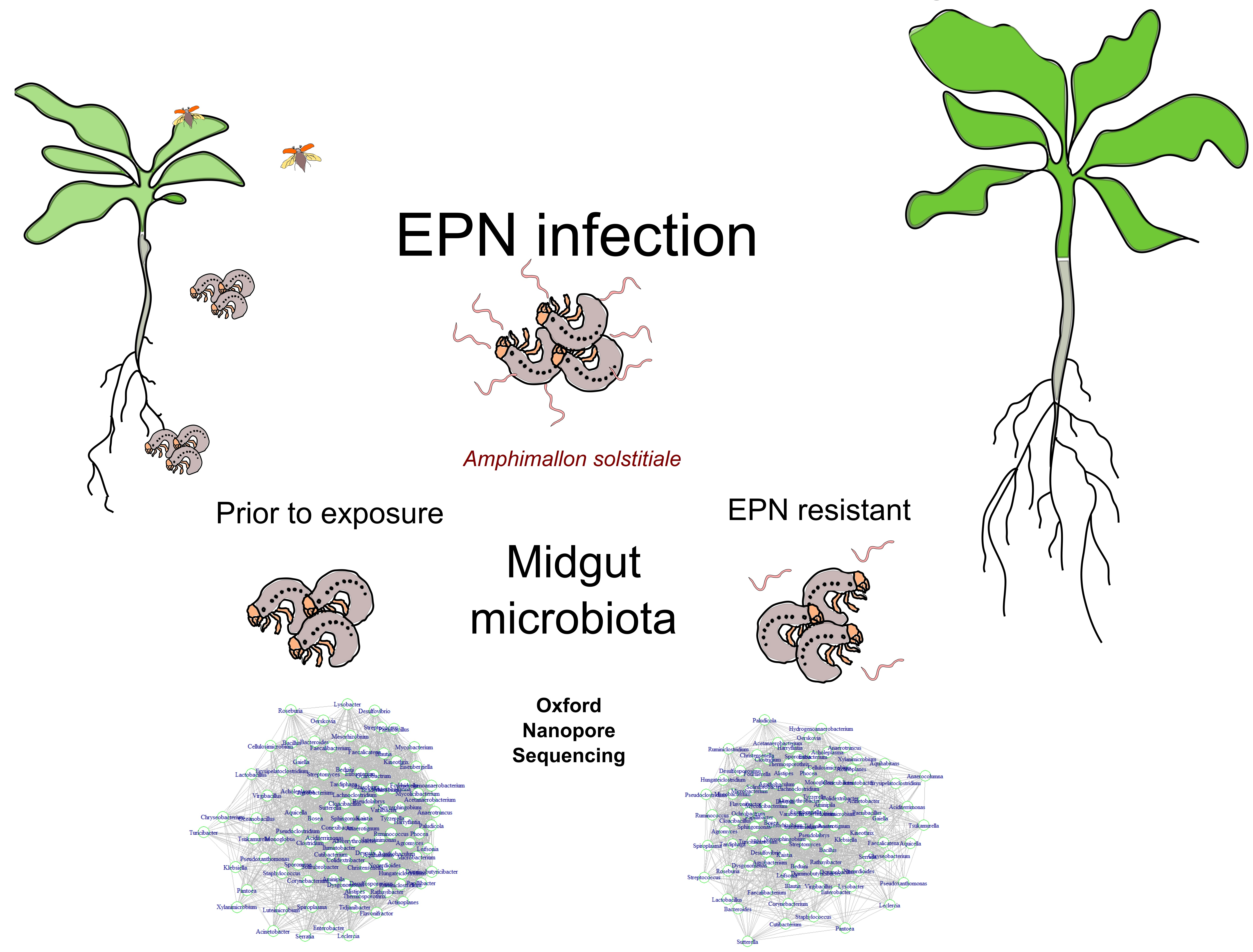
Comparative Nanopore Sequencing-Based Evaluation of the Midgut Microbiota of the Summer Chafer (Amphimallon solstitiale L.) Associated with Possible Resistance to Entomopathogenic Nematodes

 , , , ,
Abstract
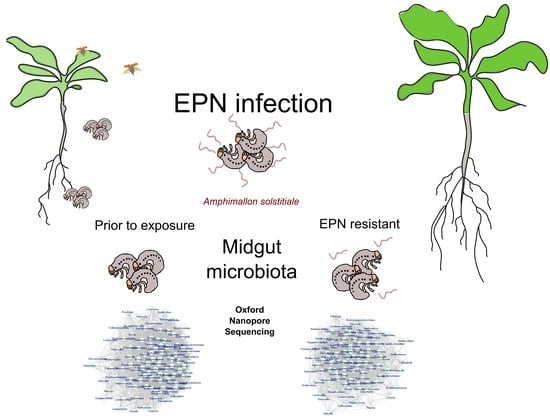
Share and Cite
Sajnaga, E.; Skowronek, M.; Kalwasińska, A.; Kazimierczak, W.; Lis, M.; Jach, M.E.; Wiater, A. Comparative Nanopore Sequencing-Based Evaluation of the Midgut Microbiota of the Summer Chafer (Amphimallon solstitiale L.) Associated with Possible Resistance to Entomopathogenic Nematodes. Int. J. Environ. Res. Public Health 2022, 19, 3480. https://doi.org/10.3390/ijerph19063480
Sajnaga E, Skowronek M, Kalwasińska A, Kazimierczak W, Lis M, Jach ME, Wiater A. Comparative Nanopore Sequencing-Based Evaluation of the Midgut Microbiota of the Summer Chafer (Amphimallon solstitiale L.) Associated with Possible Resistance to Entomopathogenic Nematodes. International Journal of Environmental Research and Public Health. 2022; 19(6):3480. https://doi.org/10.3390/ijerph19063480
Chicago/Turabian StyleSajnaga, Ewa, Marcin Skowronek, Agnieszka Kalwasińska, Waldemar Kazimierczak, Magdalena Lis, Monika Elżbieta Jach, and Adrian Wiater. 2022. "Comparative Nanopore Sequencing-Based Evaluation of the Midgut Microbiota of the Summer Chafer (Amphimallon solstitiale L.) Associated with Possible Resistance to Entomopathogenic Nematodes" International Journal of Environmental Research and Public Health 19, no. 6: 3480. https://doi.org/10.3390/ijerph19063480
APA StyleSajnaga, E., Skowronek, M., Kalwasińska, A., Kazimierczak, W., Lis, M., Jach, M. E., & Wiater, A. (2022). Comparative Nanopore Sequencing-Based Evaluation of the Midgut Microbiota of the Summer Chafer (Amphimallon solstitiale L.) Associated with Possible Resistance to Entomopathogenic Nematodes. International Journal of Environmental Research and Public Health, 19(6), 3480. https://doi.org/10.3390/ijerph19063480