Review

The Transformative Nature of Residential Immersive Life Skills Programs: Integrating Findings from a Five-Year Prospective Study of Program Opportunities, Youth Experiences, and Outcomes


by
Gillian King
1,2,*,
Amy C. McPherson
1,3,
Shauna Kingsnorth
1,2,4 and
Jan Willem Gorter
5,6,7
1
Bloorview Research Institute, 150 Kilgour Road, Toronto, ON M4G 1R8, Canada
2
Department of Occupational Science and Occupational Therapy, University of Toronto, Toronto, ON M5G 1V7, Canada
3
Dalla Lana School of Public Health, University of Toronto, Toronto, ON M5T 3M7, Canada
4
Holland Bloorview Kids Rehabilitation Hospital, Toronto, ON M4G 1R8, Canada
5
Department of Rehabilitation, Physical Therapy Science & Sports, University Medical Center Utrecht, Heidelberglaan 100, 3584 CX Utrecht, The Netherlands
6
Wilhelmina Children’s Hospital, Lundlaan 6, 3584 EA Utrecht, The Netherlands
7
CanChild, Department of Pediatrics, McMaster University, Hamilton, ON L8S 4L8, Canada
*
Author to whom correspondence should be addressed.
Int. J. Environ. Res. Public Health 2022, 19(23), 15865; https://doi.org/10.3390/ijerph192315865

Submission received: 20 September 2022 / Revised: 8 November 2022 / Accepted: 25 November 2022 / Published: 29 November 2022

Abstract

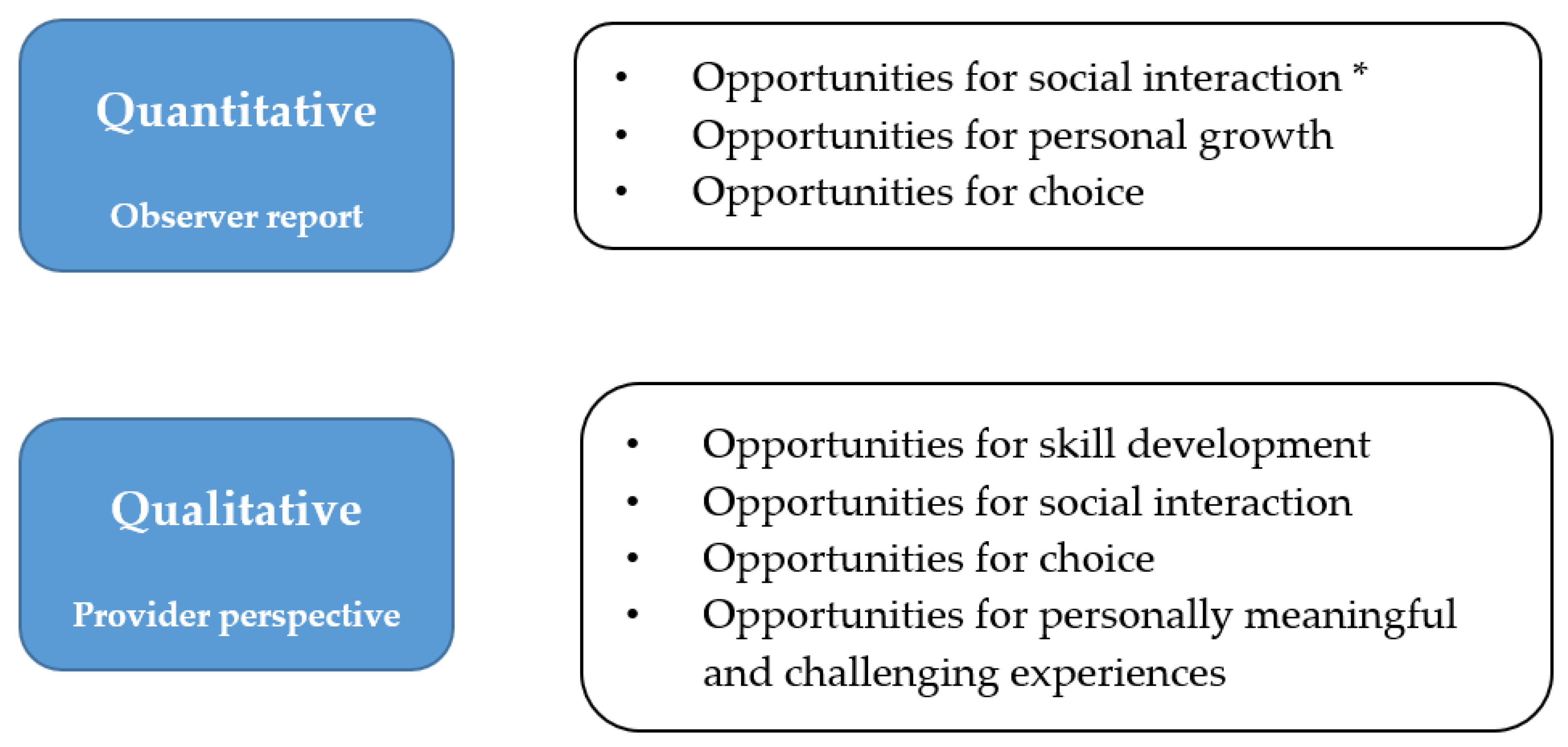
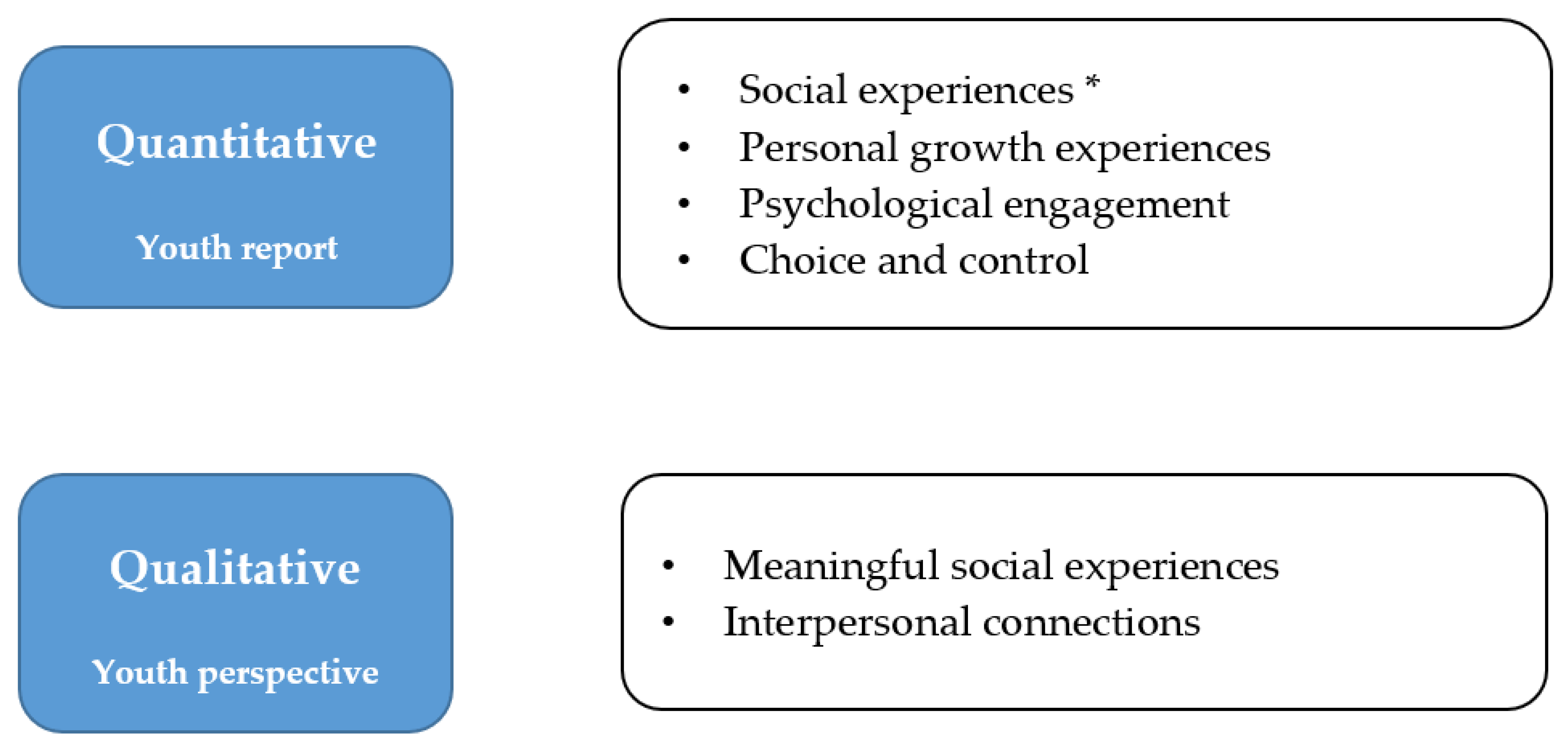
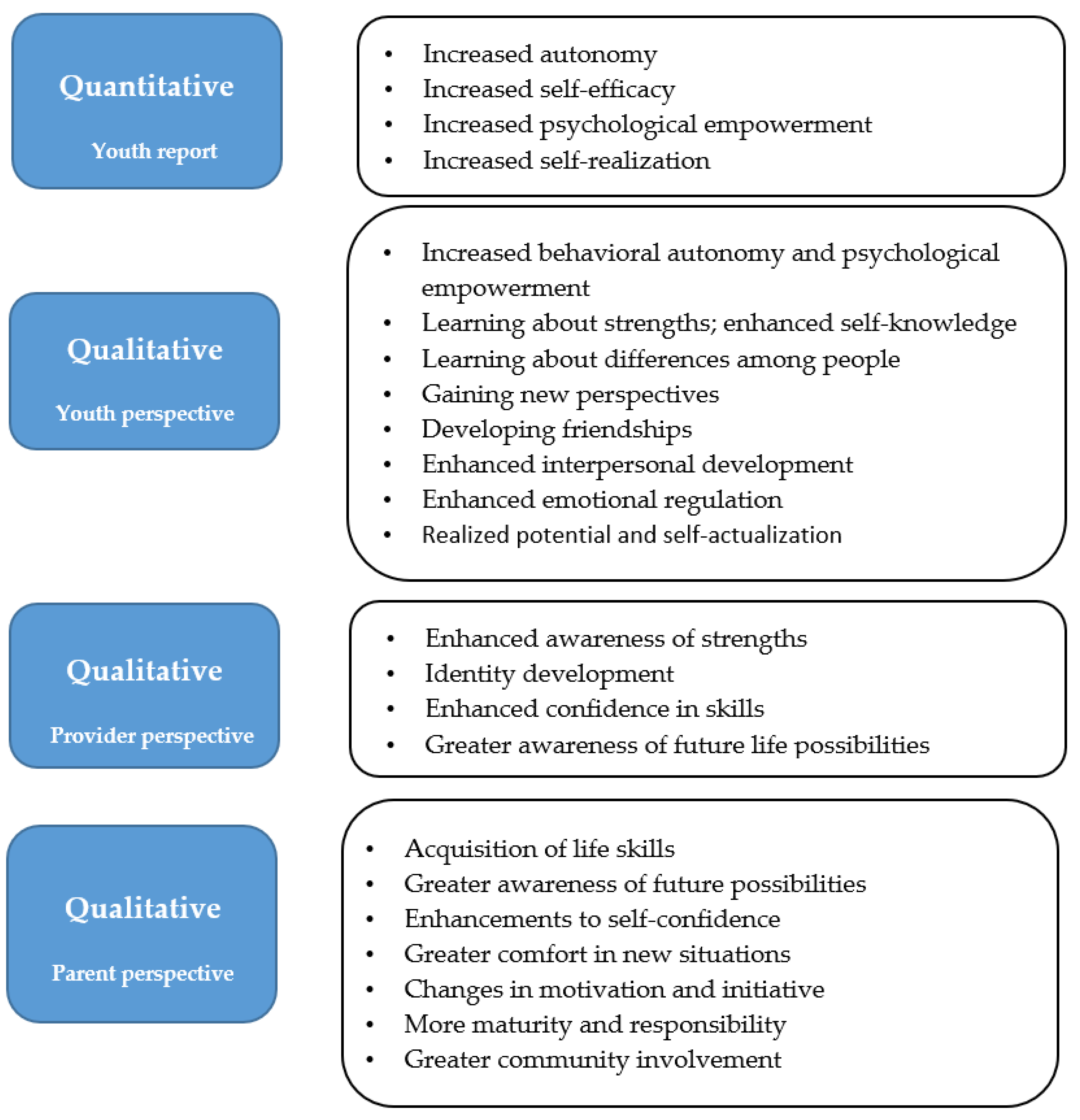
Youth with disabilities often experience limited opportunities to acquire the life skills needed in adulthood. As a result, life skills programs are provided to support life skill development; however, little is known about the active ingredients of these programs, and the sustainability of their effects over time. Accordingly, the aim was to synthesize the findings of a five-year study examining the opportunities, experiences, and outcomes of residential immersive life skills (RILS) programs for youth with disabilities. A multi-method prospective study was conducted involving 38 youth ages 14 to 21 with disabilities (e.g., cerebral palsy, spina bifida) attending one of three RILS programs held over three summers. Program opportunities, youth experiences, and outcomes (self-determination, self-efficacy) were assessed pre- and post-program and 3 and 12 months post-program using standardized questionnaires. Pre-program, 3-month, and 12-month follow-up interviews were held with youth and parents. This research synthesis integrates the findings from nine published articles that used a variety of qualitative, quantitative, and mixed methods approaches. RILS programs provided rich opportunities for youth to experience meaningful social connections, psychological engagement, and choice and control, which were associated with changes over time in multiple domains related to personal growth and preparation for adulthood. Overall, the findings point to the transformative power of RILS programs to propel new life directions for some youth. By creating opportunities for meaningful, challenging, and supportive experiences fulfilling basic needs for relatedness, competency, and autonomy, RILS programs motivate youth to grow and change. More study is needed of program opportunities and capacity-enhancing experiences, as well as longitudinal studies of youth life outcomes. RILS programs have appreciable value in preparing youth for the transition to adult roles and responsibilities.
Keywords: active ingredients; youth with disabilities; evidence summary; participation-level intervention; personal growth; self-determination; transition active ingredients; youth with disabilities; evidence summary; participation-level intervention; personal growth; self-determination; transition