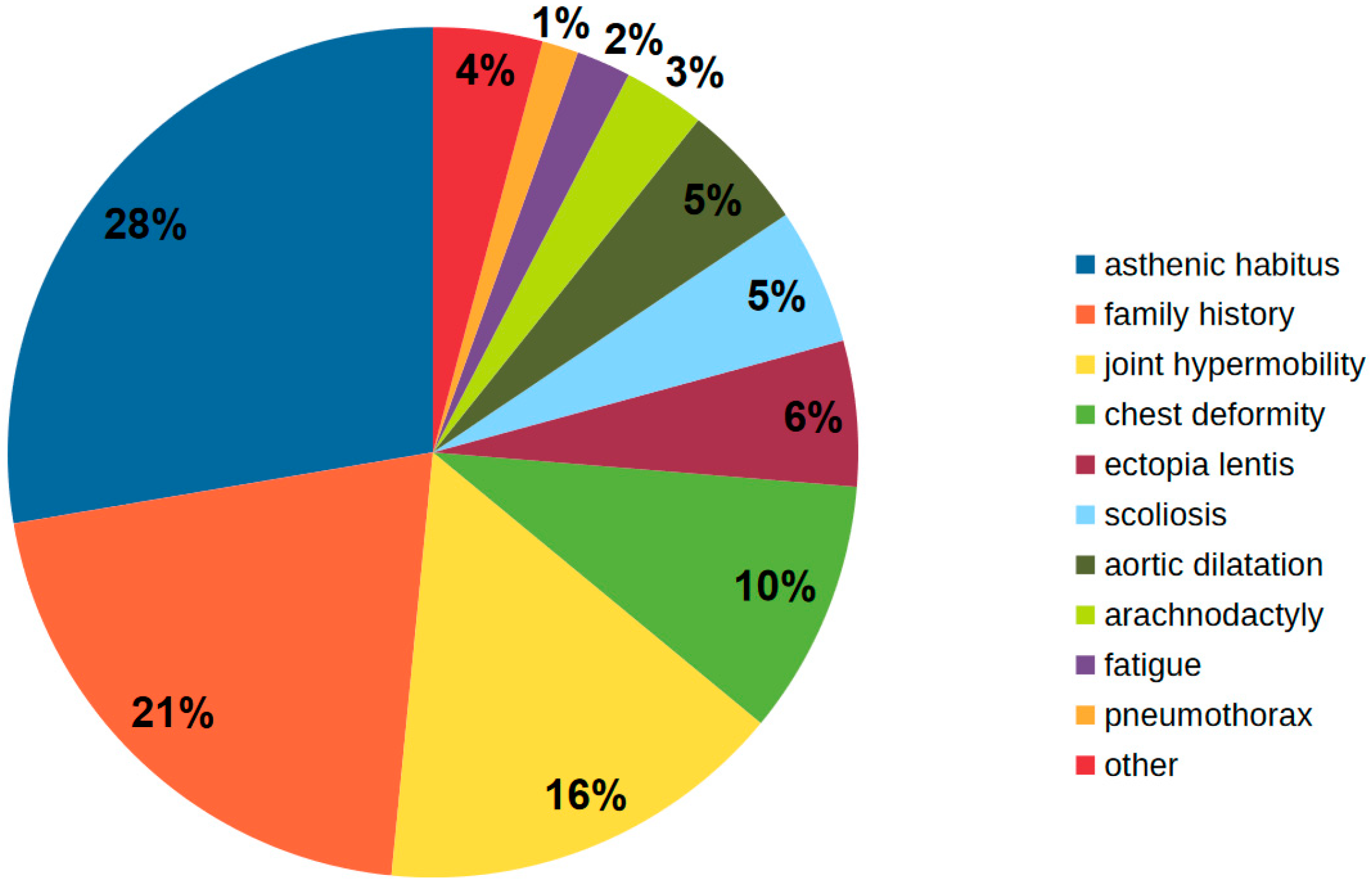
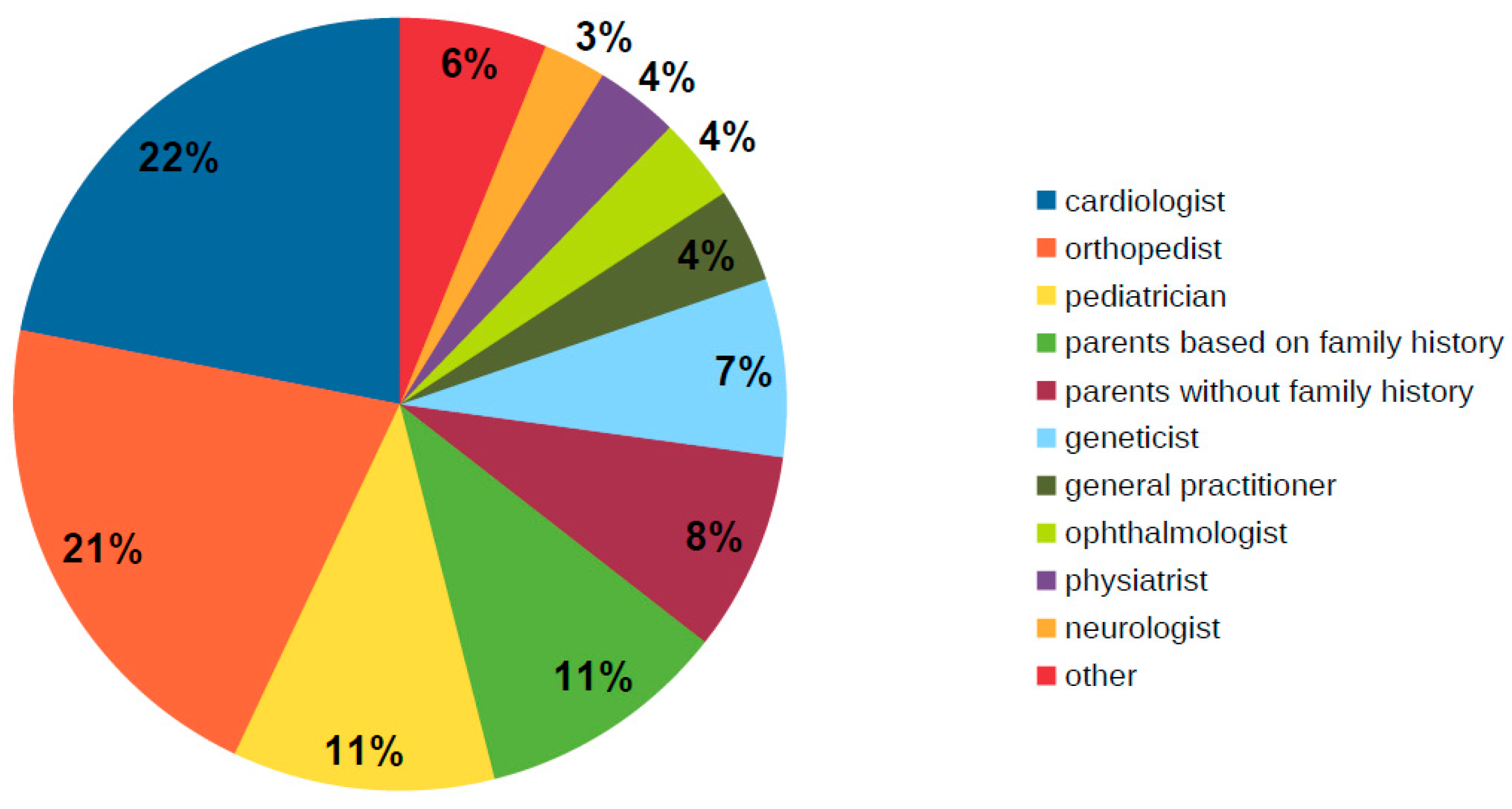
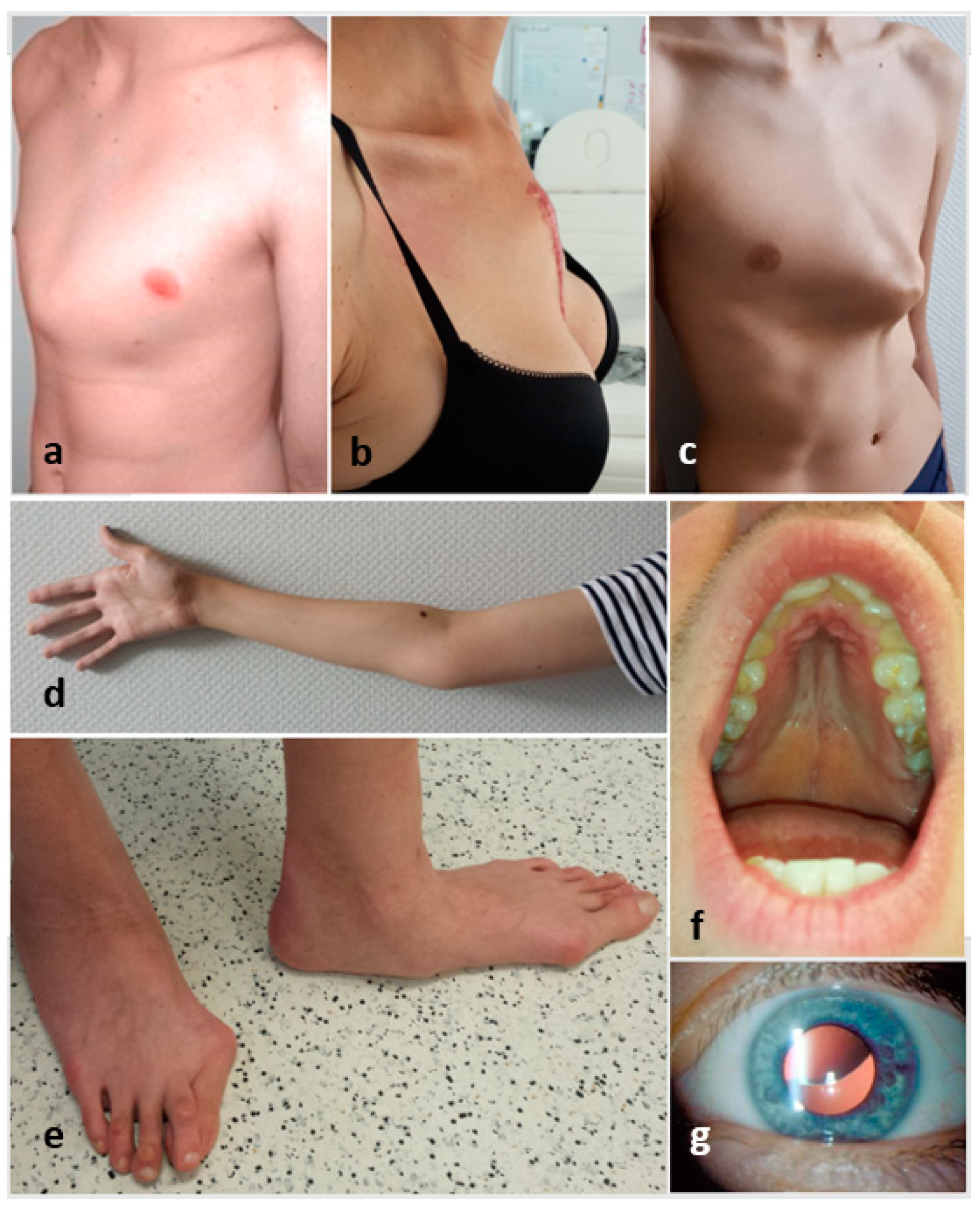
How to Distinguish Marfan Syndrome from Marfanoid Habitus in a Physical Examination—Comparison of External Features in Patients with Marfan Syndrome and Marfanoid Habitus
 , ,
, , Abstract
Share and Cite
Wozniak-Mielczarek, L.; Osowicka, M.; Radtke-Lysek, A.; Drezek-Nojowicz, M.; Gilis-Malinowska, N.; Sabiniewicz, A.; Mielczarek, M.; Sabiniewicz, R. How to Distinguish Marfan Syndrome from Marfanoid Habitus in a Physical Examination—Comparison of External Features in Patients with Marfan Syndrome and Marfanoid Habitus. Int. J. Environ. Res. Public Health 2022, 19, 772. https://doi.org/10.3390/ijerph19020772
Wozniak-Mielczarek L, Osowicka M, Radtke-Lysek A, Drezek-Nojowicz M, Gilis-Malinowska N, Sabiniewicz A, Mielczarek M, Sabiniewicz R. How to Distinguish Marfan Syndrome from Marfanoid Habitus in a Physical Examination—Comparison of External Features in Patients with Marfan Syndrome and Marfanoid Habitus. International Journal of Environmental Research and Public Health. 2022; 19(2):772. https://doi.org/10.3390/ijerph19020772
Chicago/Turabian StyleWozniak-Mielczarek, Lidia, Michalina Osowicka, Alicja Radtke-Lysek, Magda Drezek-Nojowicz, Natasza Gilis-Malinowska, Anna Sabiniewicz, Maksymilian Mielczarek, and Robert Sabiniewicz. 2022. "How to Distinguish Marfan Syndrome from Marfanoid Habitus in a Physical Examination—Comparison of External Features in Patients with Marfan Syndrome and Marfanoid Habitus" International Journal of Environmental Research and Public Health 19, no. 2: 772. https://doi.org/10.3390/ijerph19020772
APA StyleWozniak-Mielczarek, L., Osowicka, M., Radtke-Lysek, A., Drezek-Nojowicz, M., Gilis-Malinowska, N., Sabiniewicz, A., Mielczarek, M., & Sabiniewicz, R. (2022). How to Distinguish Marfan Syndrome from Marfanoid Habitus in a Physical Examination—Comparison of External Features in Patients with Marfan Syndrome and Marfanoid Habitus. International Journal of Environmental Research and Public Health, 19(2), 772. https://doi.org/10.3390/ijerph19020772