Abstract
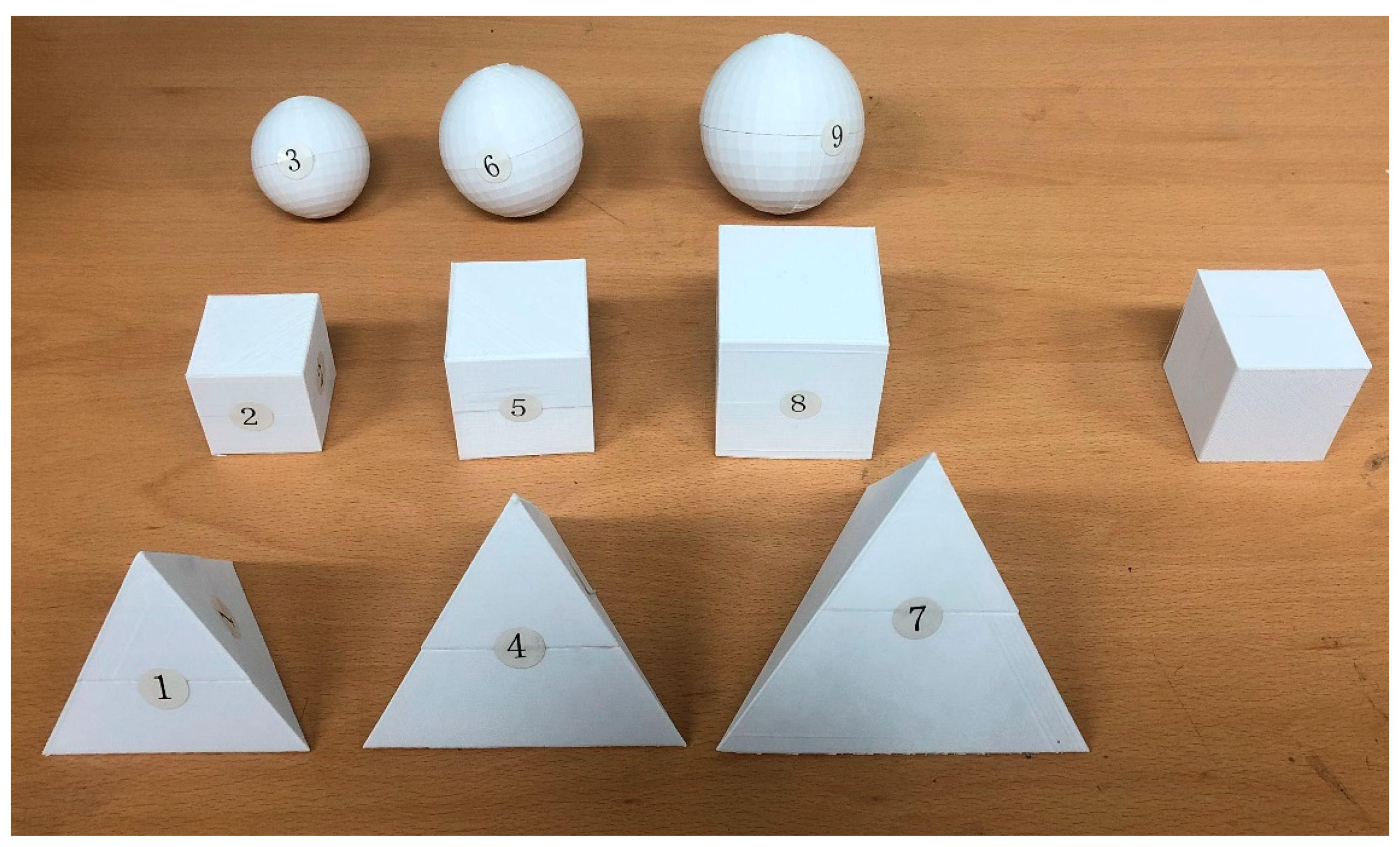
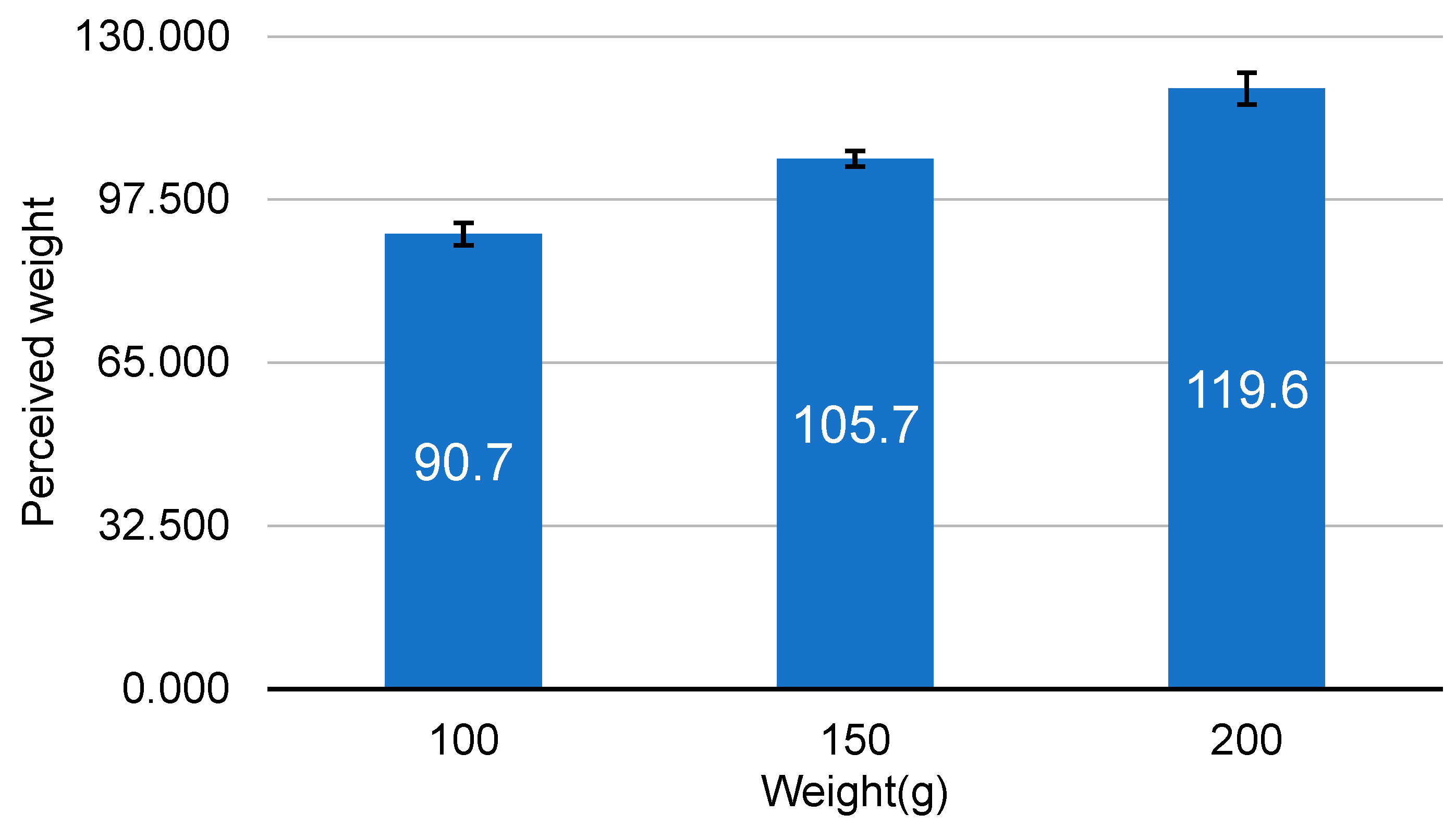
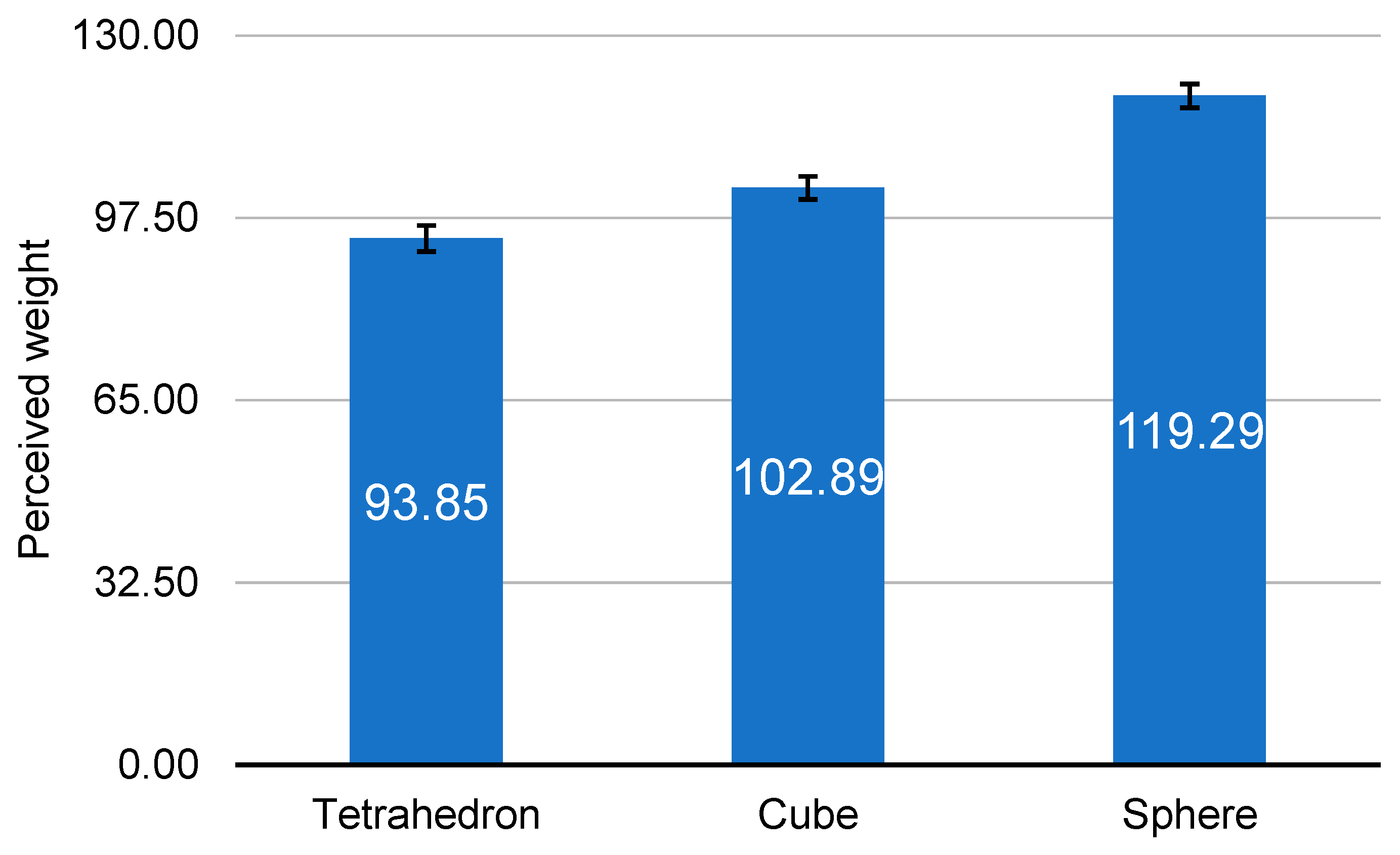
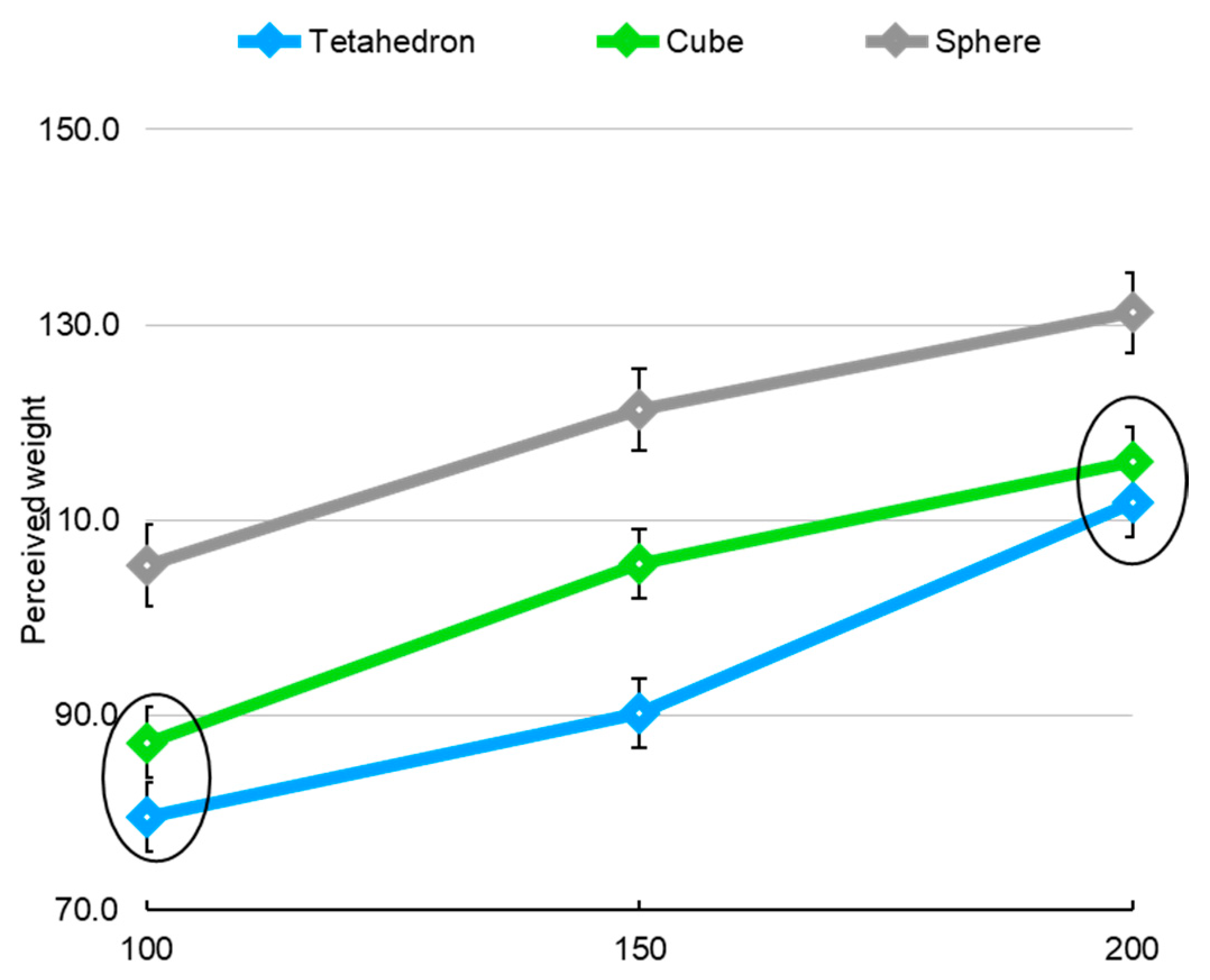
The perceived weight of an object is an important research topic in terms of sensation and perception, and it is known that it has size-weight, color-weight, and material-weight illusions due to the influence of size, color, and material, as well as the weight of the object. Although the physical size of an object is measured by volume, the size of an object that we subjectively feel depends on the shape of the object, even if it has the same volume. Therefore, the shape of the object may determine the perceived size of the object, thereby changing its perceived weight accordingly. These cognitive factors play an important role in the period of rehabilitation therapy after an exacerbation or attack of neurological diseases, such as stroke or Parkinson’s disease, regarding the motor functions of the patient. Moreover, the study of these sensation and perception factors is important for the period of the early development of children, for example, for tracking and correcting fine motor skills. Existing related studies analyzed the perceived weight according to three shapes (tetrahedron, cube, and sphere), but only some shapes showed a difference in the perceived weight. This study attempted to demonstrate the difference in perceived weight according to the shape that has yet to be clearly identified. To this end, this study investigated objects with the same physical size (volume) as in previous studies, but in the shapes of tetrahedron, cube, and sphere. In addition, the volumes of these objects were set to 64,000 cm3, 125,000 cm3, and 216,000 cm3, and their weights were set to be 100 g, 150 g, and 200 g, in proportion to the size of the small, medium, and large volumes, respectively. Thirty-eight college students (21 males, 17 females) participated and the perceived weight of a given object compared to a reference object was evaluated according to the modulus method used for sensory size measurement. The analysis of the experimental data found that both weight (volume) and shape had significant effects on the perceived weight. The results support that the shape of objects also led to the size-weight illusion phenomenon. At the same weight (volume), the perceived weight of an object according to shape decreased significantly in the order of sphere, cube, and tetrahedron. At the same volume level, subjective size according to shape is small in the order of tetrahedron, cube, and sphere. The results of weight perception according to shape in this study showed that the subjective size of an object according to shape had an effect on perceived weight.