Article

Comparative Detection of Immunoglobulin Isotypes and Subclasses against Toxoplasma gondii Soluble Antigen in Serum and Colostrum Samples from Puerperal Women

by
Hellen Dayane Silva Borges
1,
Ana Carolina Morais Oliveira-Scussel
1,2,
Ângela Maria Morais Oliveira
3,
Vânia Olivetti Steffen Abdallah
4,
Ana Cláudia Arantes Marquez Pajuaba
1 and
José Roberto Mineo
1,*
1
Laboratory of Immunoparasitology “Dr. Mário Endsfeldz Camargo”, Institute of Biomedical Sciences, Universidade Federal de Uberlândia, Uberlândia 38405-317, MG, Brazil
2
Biomedicine Teaching Laboratory, Institute of Health Sciences, Federal University of Triângulo Mineiro, Uberaba 38025-180, MG, Brazil
3
Human Milk Bank, The Clinics Hospital of Universidade Federal de Uberlândia, Uberlândia, Minas Gerais, Uberlândia 38405-320, MG, Brazil
4
Department of Pediatrics, The Clinics Hospital, Faculty of Medicine, Universidade Federal de Uberlândia, Uberlândia 38405-320, MG, Brazil
*
Author to whom correspondence should be addressed.
Int. J. Environ. Res. Public Health 2022, 19(13), 7953; https://doi.org/10.3390/ijerph19137953

Submission received: 27 April 2022 / Revised: 17 June 2022 / Accepted: 19 June 2022 / Published: 29 June 2022

Abstract

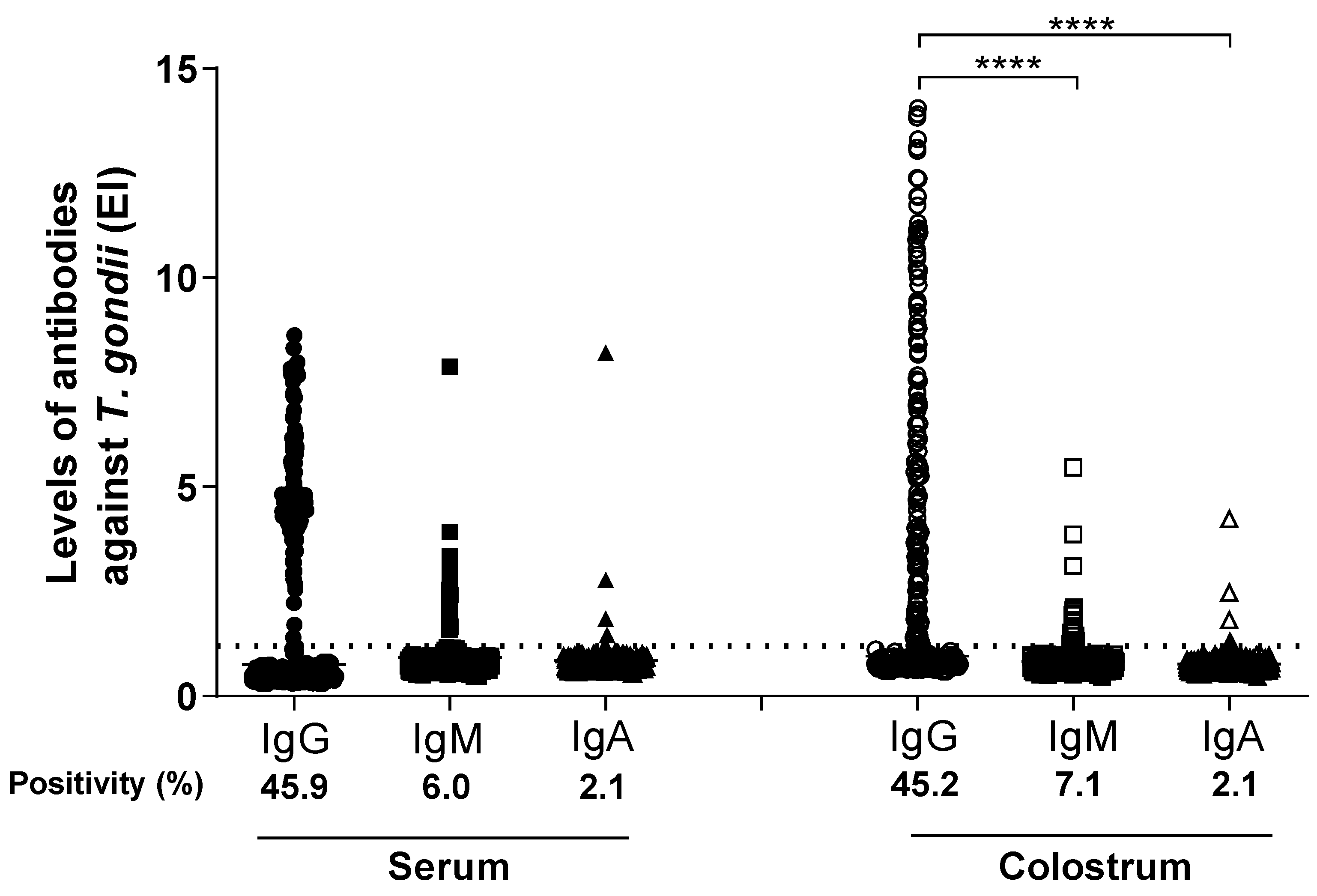
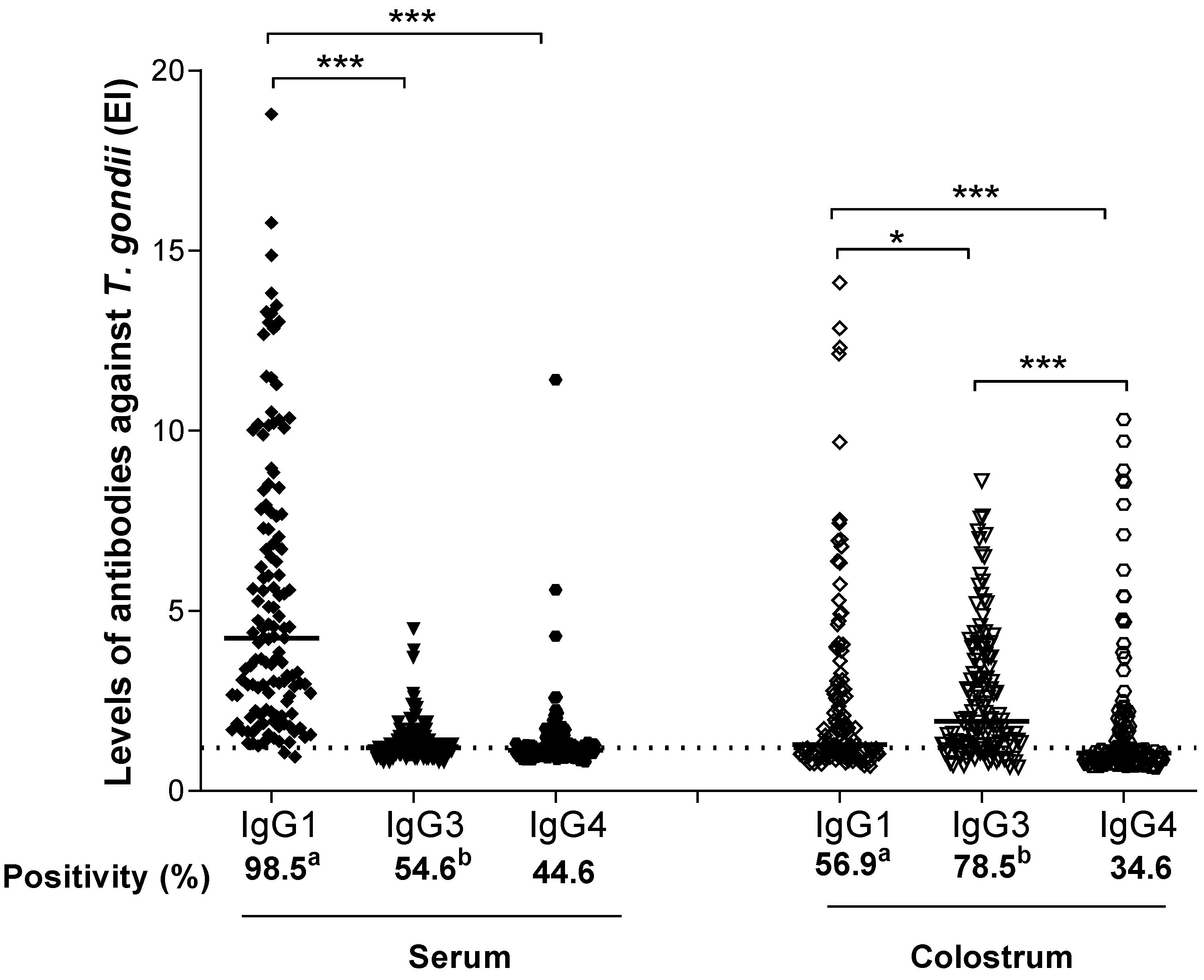
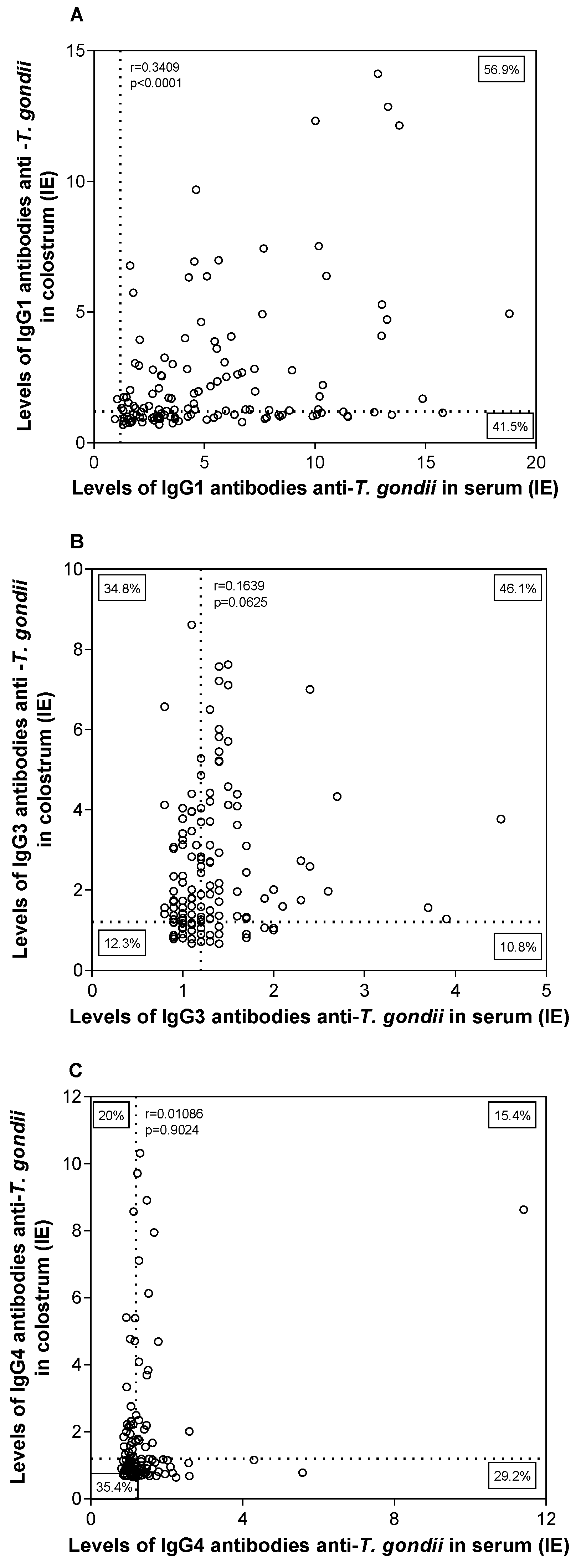
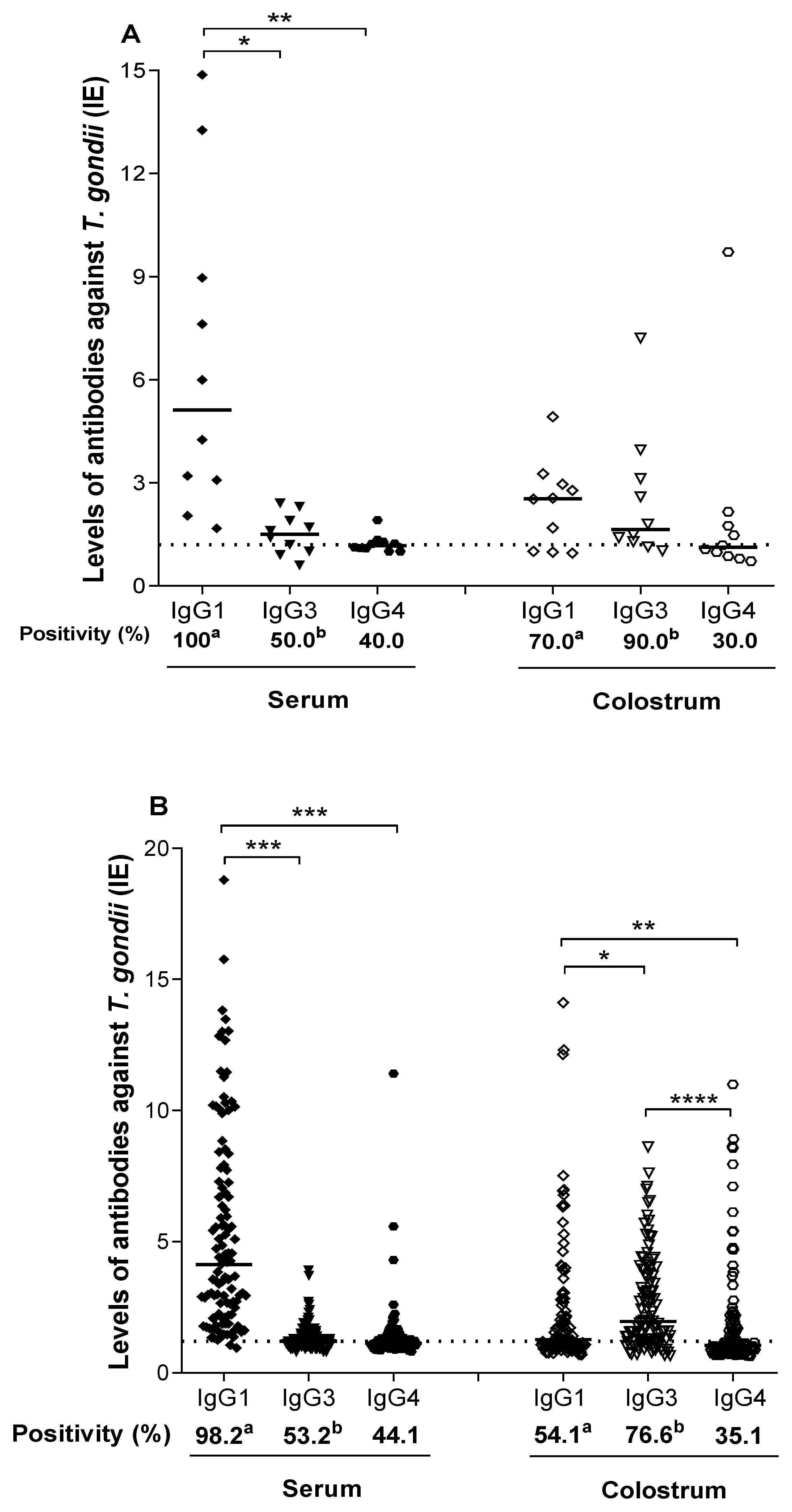
Background: Toxoplasma gondii is an obligate intracellular parasite that can infect several species, including humans, and can cause severe damage to the fetus when the infection occurs during pregnancy. The environment and/or food contamination are critical to spreading the infection. Human milk is rich in nutrients and bioactive elements that provide growth and development of the immune system of the newborn. All isotypes of immunoglobulins are present in human colostrum and they are produced from systemic or local sources. Breastfeeding protects the infant against various pathogens, but there is no conclusive study to detect IgG subclasses in colostrum against T. gondii. Therefore, the aim of this study was to detect and evaluate the presence of antibody isotypes against T. gondii in paired samples of serum and colostrum. Methods: The study included 283 puerperal patients. ELISA (Enzyme-Linked Immunosorbent Assay) for detection of anti-T. gondii-specific IgM, IgA, and IgG isotypes and IgG1, IgG3, and IgG4 subclasses were conducted on paired samples of serum and colostrum. Results: It was found that 45.9%, 6.0%, and 2.1% of serum samples and 45.2%, 7.1%, and 2.1% of colostrum samples were positive for IgG, IgM, and IgA, respectively. Specific IgG1, IgG3, and IgG4 were positive, respectively, in 98.5%, 54.6%, and 44.6% of serum samples, in contrast with 56.9%, 78.5%, and 34.6% of colostrum samples. Thus, the predominant reactivity of IgG subclasses against T. gondii was IgG1 in serum and IgG3 in colostrum. The higher percentage of positive samples and higher levels of anti-T. gondii IgG3 antibodies were observed in colostrum, when compared to serum samples, suggesting a local production of this subclass. IgG3 and IgG1 subclasses presented different percentages of positivity in serum and colostrum. Only the IgG1 subclass showed a significant correlation between the levels of anti-T. gondii in serum and colostrum, suggesting that IgG1 in breast milk comes from a systemic source. IgG4 showed a similar percentage of positivity in both sample types, but no significant correlation was observed between their levels. Conclusion: Colostrum presents representative levels of IgM, IgA, IgG1, IgG3, and IgG4 antibodies specific to T. gondii. The detection of these antibodies presents the potential for diagnostic application of colostrum samples to better identify the diagnostic status of T. gondii infection, especially during the acute phase. In addition, breastfeeding can also be a possible source of protective antibodies for the newborn against toxoplasmosis, an anthropozoonosis maintained by environmental infection, which interferes in the public health of many countries.
Keywords: Toxoplasma gondii; colostrum; serum; antibody isotypes Toxoplasma gondii; colostrum; serum; antibody isotypes