Article

Disease Progression Detection via Deep Sequence Learning of Successive Radiographic Scans
by
Jamil Ahmad
1,
Abdul Khader Jilani Saudagar
2,*,
Khalid Mahmood Malik
3,
Waseem Ahmad
4,
Muhammad Badruddin Khan
2,
Mozaherul Hoque Abul Hasanat
2,
Abdullah AlTameem
2,
Mohammed AlKhathami
2 and
Muhammad Sajjad
1
1
Department of Computer Science, Islamia College Peshawar, Chartered University, Peshawar 25000, Pakistan
2
Information Systems Department, Imam Mohammad Ibn Saud Islamic University (IMSIU), Riyadh 11432, Saudi Arabia
3
Department of Computer Science and Engineering, Oakland University, Rochester, MI 48309, USA
4
Lady Reading Hospital-Medical Teaching Institute, Peshawar 25000, Pakistan
*
Author to whom correspondence should be addressed.
Int. J. Environ. Res. Public Health 2022, 19(1), 480; https://doi.org/10.3390/ijerph19010480

Submission received: 31 October 2021 / Revised: 23 December 2021 / Accepted: 27 December 2021 / Published: 2 January 2022
(This article belongs to the Special Issue Data Science for Environment and Health Applications)

Abstract

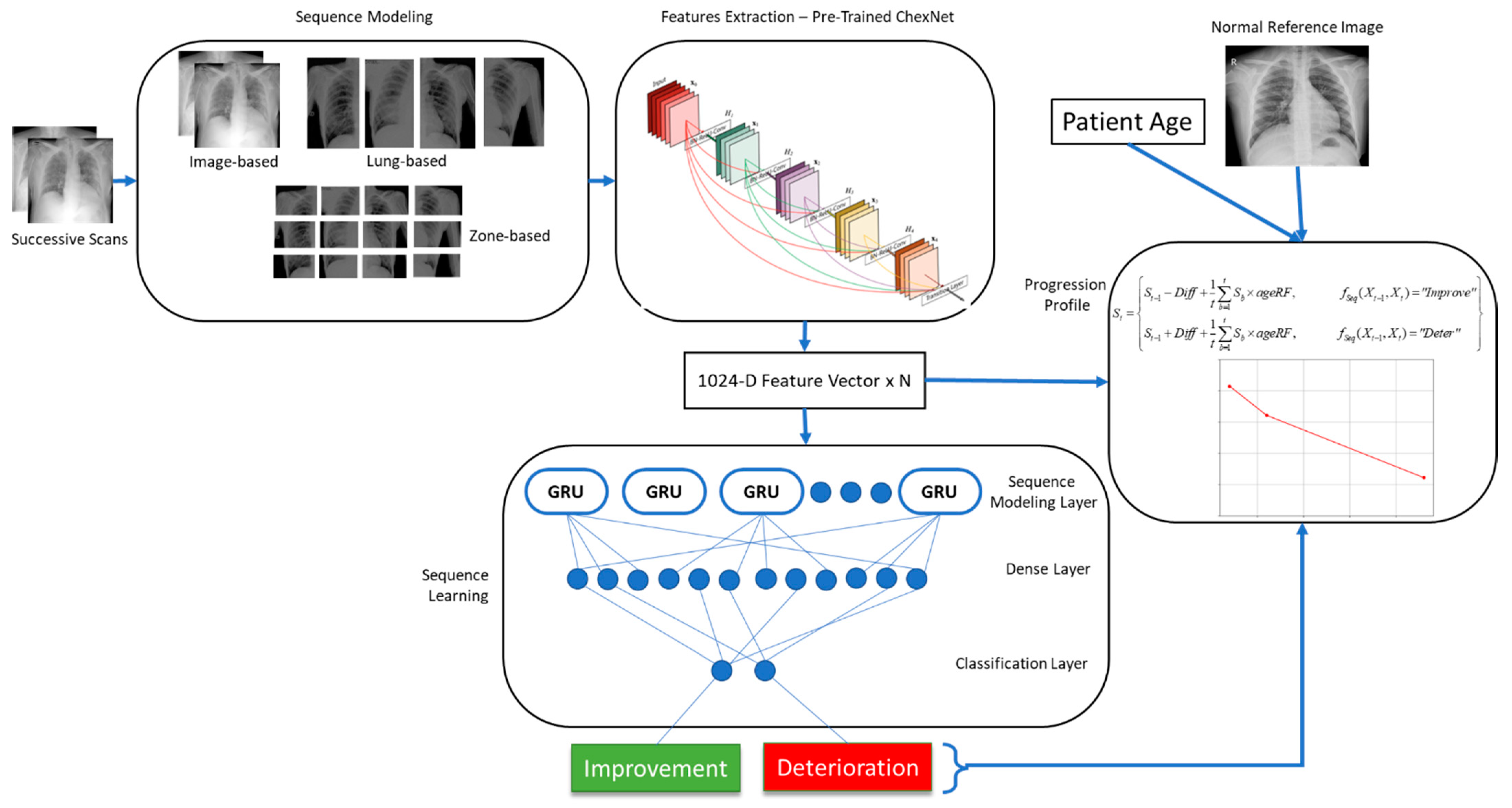
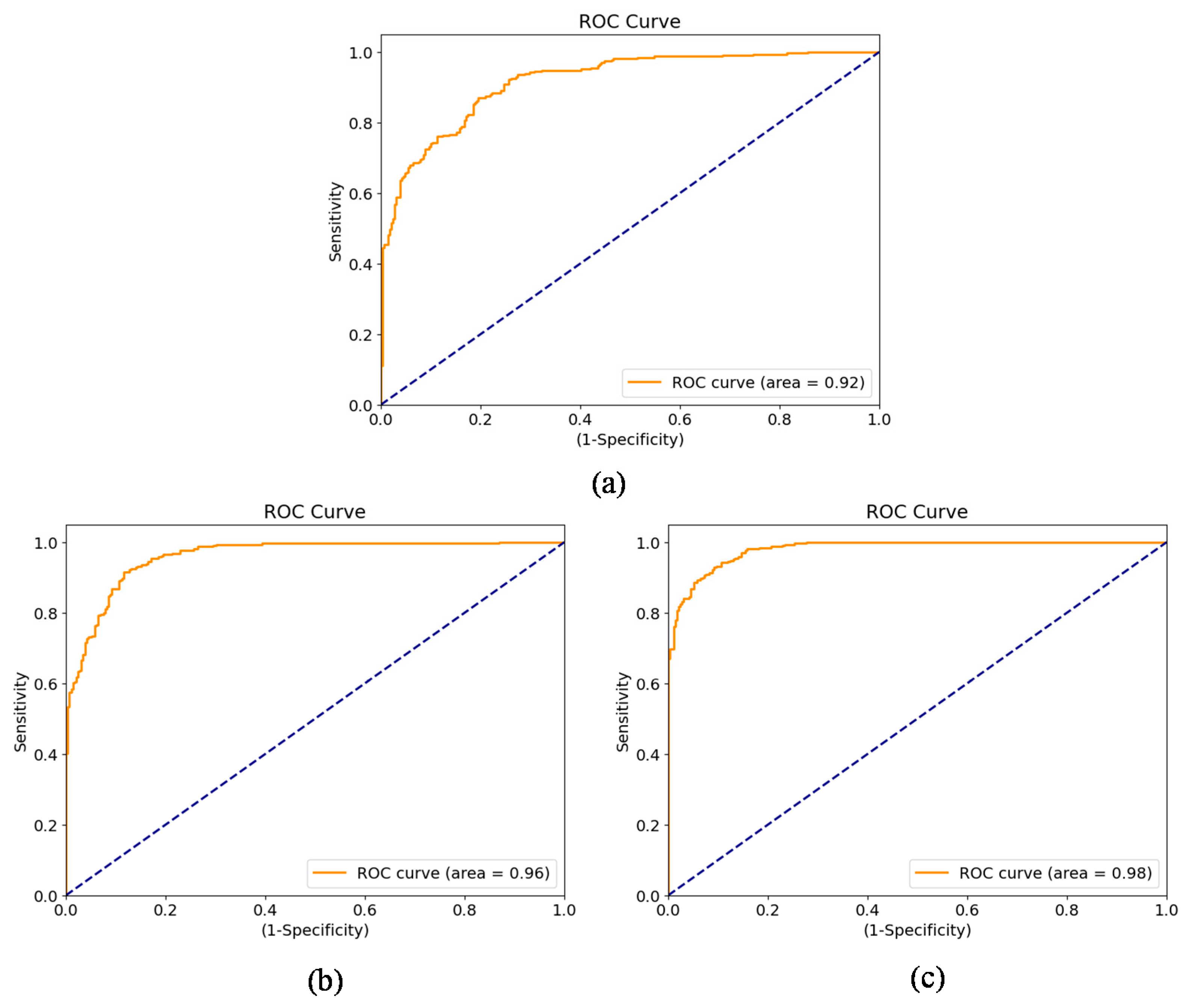
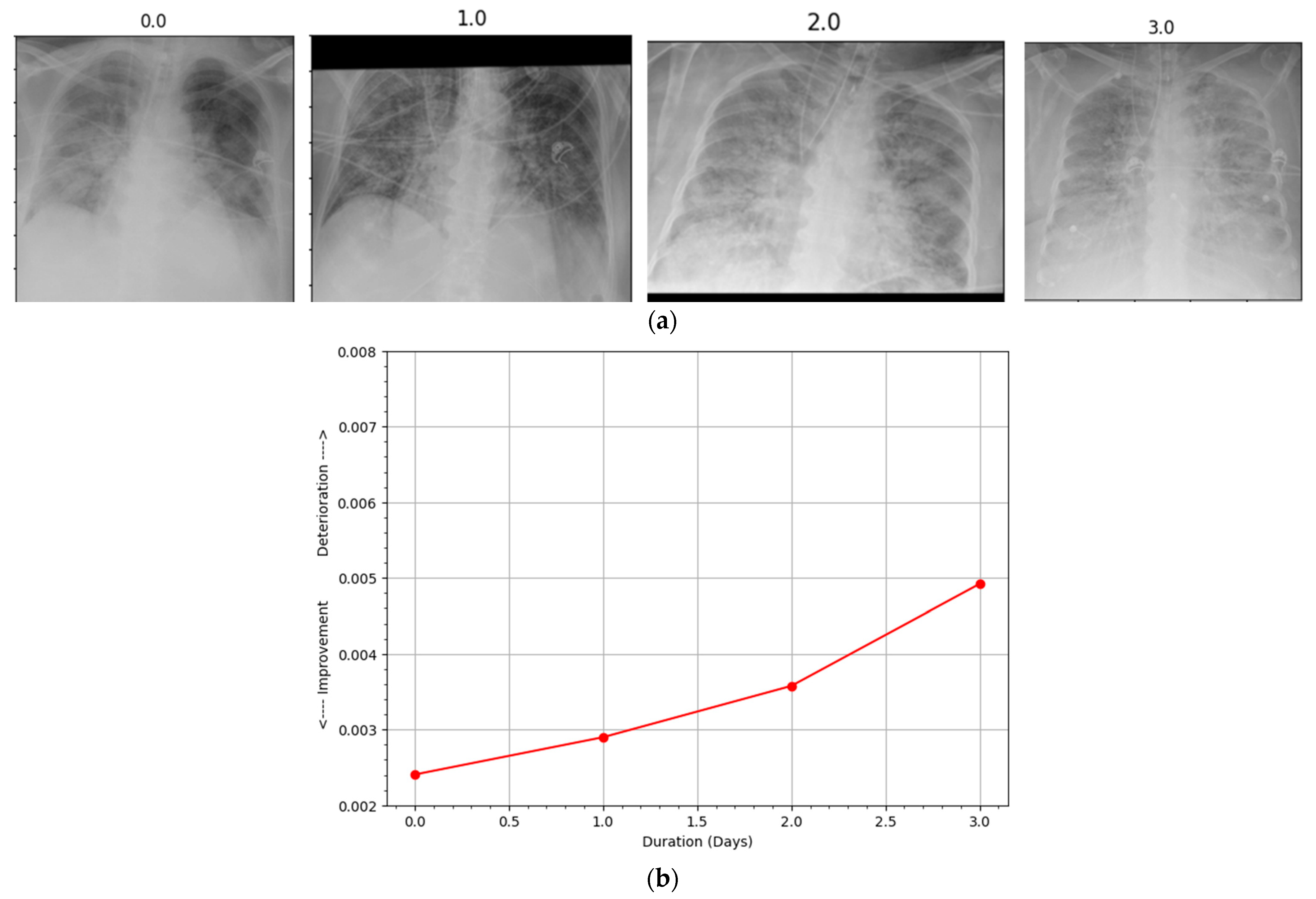
The highly rapid spread of the current pandemic has quickly overwhelmed hospitals all over the world and motivated extensive research to address a wide range of emerging problems. The unforeseen influx of COVID-19 patients to hospitals has made it inevitable to deploy a rapid and accurate triage system, monitor progression, and predict patients at higher risk of deterioration in order to make informed decisions regarding hospital resource management. Disease detection in radiographic scans, severity estimation, and progression and prognosis prediction have been extensively studied with the help of end-to-end methods based on deep learning. The majority of recent works have utilized a single scan to determine severity or predict progression of the disease. In this paper, we present a method based on deep sequence learning to predict improvement or deterioration in successive chest X-ray scans and build a mathematical model to determine individual patient disease progression profile using successive scans. A deep convolutional neural network pretrained on a diverse lung disease dataset was used as a feature extractor to generate the sequences. We devised three strategies for sequence modeling in order to obtain both fine-grained and coarse-grained features and construct sequences of different lengths. We also devised a strategy to quantify positive or negative change in successive scans, which was then combined with age-related risk factors to construct disease progression profile for COVID-19 patients. The age-related risk factors allowed us to model rapid deterioration and slower recovery in older patients. Experiments conducted on two large datasets showed that the proposed method could accurately predict disease progression. With the best feature extractor, the proposed method was able to achieve AUC of 0.98 with the features obtained from radiographs. Furthermore, the proposed patient profiling method accurately estimated the health profile of patients.
Keywords: disease progression; deterioration prediction; feature extraction; sequence learning disease progression; deterioration prediction; feature extraction; sequence learning