Article

The Role of Executive Function in the Effectiveness of Multi-Component Interventions Targeting Physical Activity Behavior in Office Workers

1
Department of Physical Activity and Health, the Swedish School of Sport and Health Sciences, GIH, 11433 Stockholm, Sweden
2
Division of Clinical Geriatrics, Department of Neurobiology, Care Sciences and Society, Karolinska University Hospital at Huddinge, 14157 Huddinge, Sweden
3
Wisconsin Alzheimer’s Disease Research Center, University of Wisconsin School of Medicine and Public Health, Madison, WI 53726, USA
4
Department of Psychology, Stockholm University, 10691 Stockholm, Sweden
5
Department of Public Health and Caring Sciences, Family Medicine and Preventive Medicine, Uppsala University, 75236 Uppsala, Sweden
6
The Department of Neuroscience, Karolinska Institutet, 17176 Stockholm, Sweden
*
Author to whom correspondence should be addressed.
Int. J. Environ. Res. Public Health 2022, 19(1), 266; https://doi.org/10.3390/ijerph19010266

Submission received: 31 October 2021 / Revised: 7 December 2021 / Accepted: 15 December 2021 / Published: 27 December 2021
(This article belongs to the Special Issue New Advances in Workplace Health Promotion)

Abstract

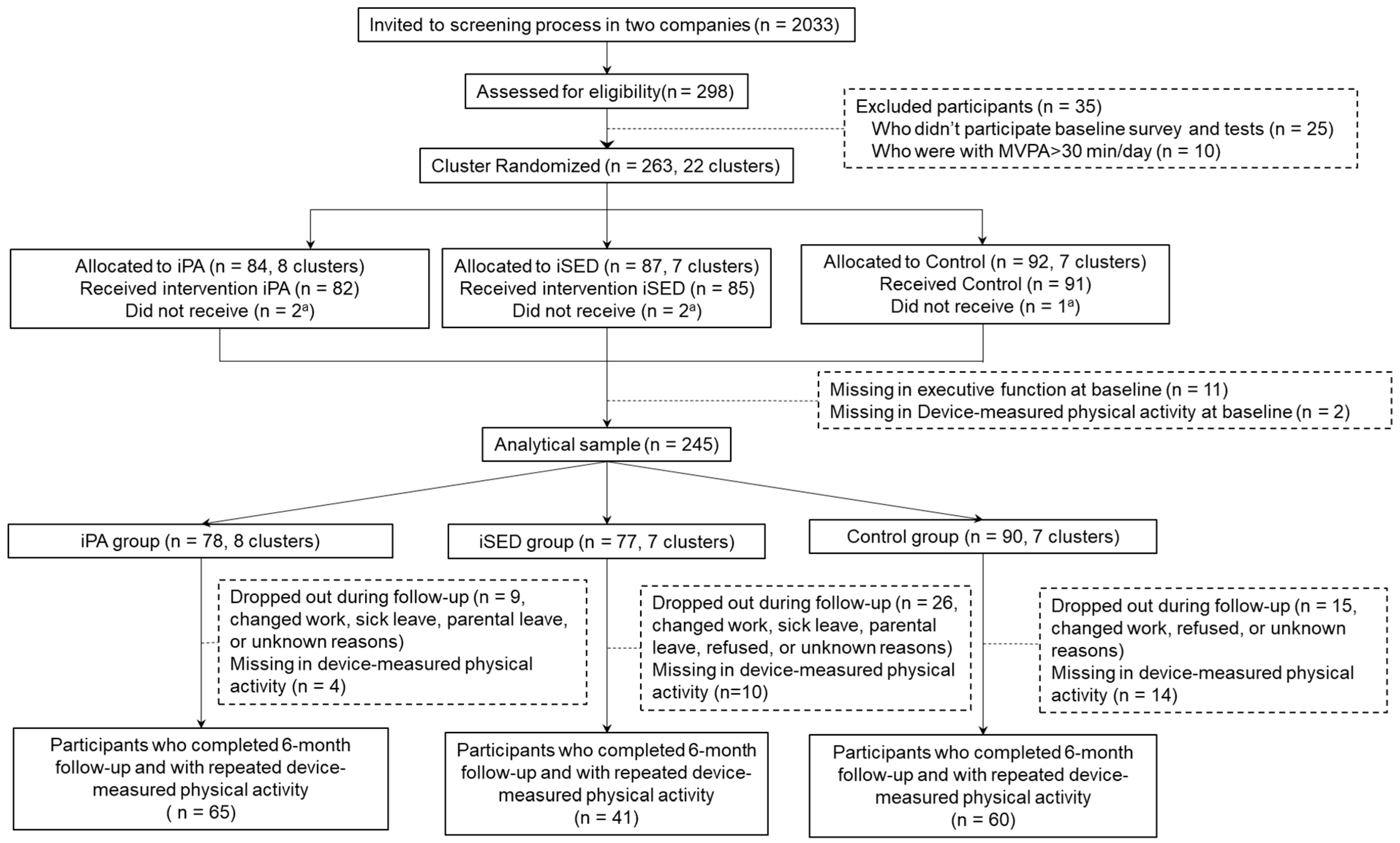
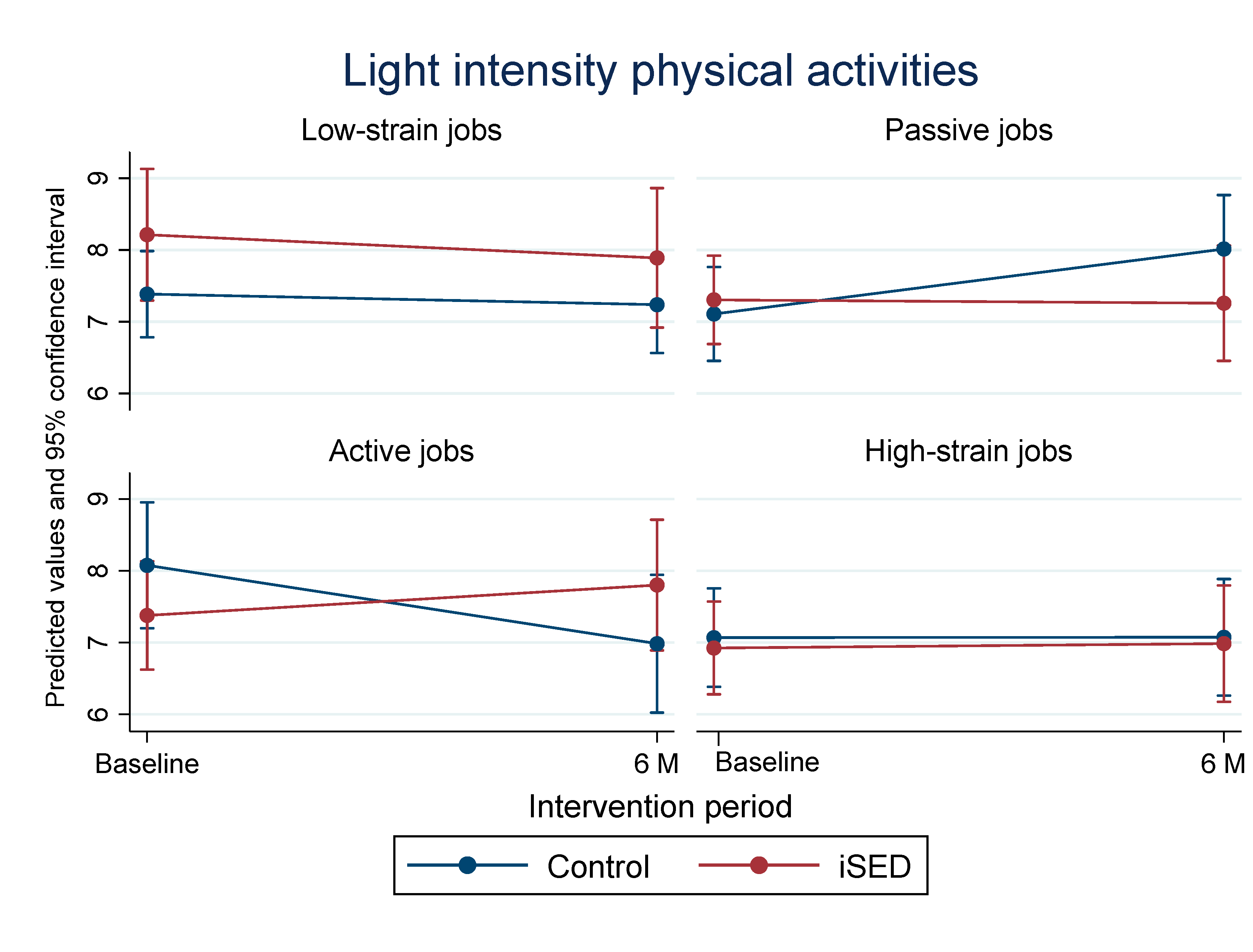
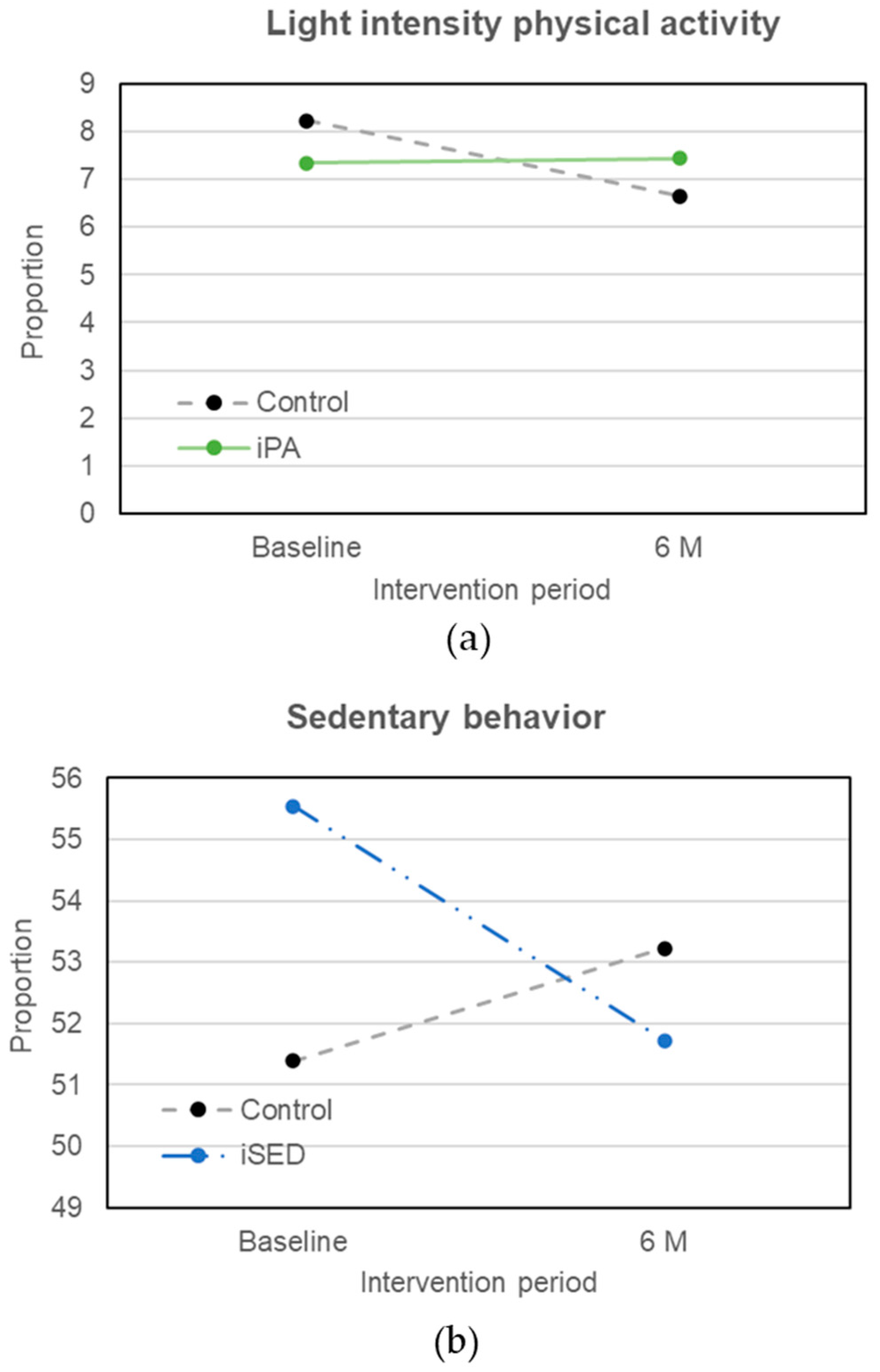
A knowledge gap remains in understanding how to improve the intervention effectiveness in office workers targeting physically active (PA) behavior. We aim to identify the modifying effect of executive function (EF) on the intervention effectiveness targeting PA-behaviors, and to verify whether the observed effect varies by Job Demand Control (JDC) categories. This workplace-based intervention study included 245 participants who were randomized into a control group and two intervention arms—promoting physical activity (iPA) group or reducing sedentary behavior (iSED) group. The interventions were conducted through counselling-based cognitive behavioral therapy and team activities over 6 months. PA-behaviors were measured by an accelerometer. EF was assessed by the Trail Making Test-B, Stroop, and n-back test. The JDC categories were measured by the demand control questionnaire. Higher EF level at baseline was significantly associated with the intervention effect on increased sleep time (β-coefficient: 3.33, p = 0.003) and decreased sedentary time (−2.76, p = 0.049) in the iSED-group. Participants with active jobs (high job demands, high control) presented significantly increased light-intensity PA in the iSED-group in comparison to the control group. Among participants with a high level of EF and active jobs, relative to the control group, the iPA-group showed a substantial increase in light-intensity PA (1.58, p = 0.036) and the iSED-group showed a tendency of reducing sedentary behavior (−5.35, p = 0.054). The findings suggest that office workers with a high EF and active jobs may benefit most from an intervention study targeting PA-behaviors.
Keywords: physical activity; sedentary behavior; executive function; job control; job demands; active jobs; self-regulation; health promotion physical activity; sedentary behavior; executive function; job control; job demands; active jobs; self-regulation; health promotion