


Abstract
Antimicrobial resistance (AMR) has become a global threat to not only public health impacts but also clinical and economic outcomes. During the past decades, there have been many studies focusing on surveillance, mechanisms, and diagnostics of AMR in infectious diseases but the impacts on public health, clinical and economic outcomes due to emergence of these AMRs are rarely studied and reported. This review was aimed to summarize the findings from published studies to report the outcome impacts due to AMR of malaria, tuberculosis and HIV and briefly discuss the implications for application to other infectious diseases. PubMed/Medline and Google Scholar databases were used for search of empirical and peer-reviewed papers reporting public health, clinical and economic outcomes due to AMR of malaria, tuberculosis and HIV. Papers published through 1 December 2019 were included in this review. A total of 76 studies were included for this review, including 16, 49 and 11 on public health, clinical and economic outcomes, respectively. The synthesized data indicated that the emergence and spread of AMR of malaria, tuberculosis and HIV have resulted in adverse public health, clinical and economic outcomes. AMR of malaria, tuberculosis and HIV results in significant adverse impacts on public health, clinical and economic outcomes. Evidence from this review suggests the needs to consider the similar studies for other infectious diseases.
Keywords:
antimicrobial resistance; outcome impacts; malaria; tuberculosis; HIV; infectious diseases 1. Introduction
Antimicrobial resistance (AMR) is the ability of bacteria, parasites, viruses or fungi to grow and spread in the presence of antimicrobial medicines that are normally active against them [1]. AMR has currently become an alarming threat for human health in the world. A recent report estimated that 10 million deaths will be attributed to AMR by 2050, and 100 trillion USD of the world’s economic outputs will be lost if substantive efforts are not made to contain this threat [2,3]. According to the World Health Organization (WHO) estimates, there were 460,000 people infected with multi-drug resistant tuberculosis (MDR-TB) in 2017 globally [4], and drug resistance continues to complicate the fight against many other infectious diseases, such as HIV, malaria and gonorrhea, as well. As the serious infectious diseases in the world, tuberculosis, HIV and malaria share the common threat of AMR while gonorrhea has been listed as one of the antibiotic-resistant “priority pathogens” by WHO [5]. Resistance to antimalarial drugs has threatened global success in control of malaria since the emergence of resistance to chloroquine in the 1970s [6]. During the 1990s, sulphadoxine-pyrimethamine was introduced in many African countries to replace chloroquine. However, it encountered drug-resistant parasites about a year after this introduction [7]. Artemisinin combination therapies (ACTs) are now recommended as the first-line treatments for uncomplicated P. falciparum malaria worldwide. Unfortunately, emergence of artemisinin resistant parasites had been observed recently in Cambodia, Southeast Asia, potentially fostering an increase in malaria cases and deaths [8]. Resistance to streptomycin was detected in a large majority of TB patients treated with this drug as early as in 1940s [9]. Shortly afterwards, a spread of this drug-resistant strains was recognized and continued in an ever wider geographic area despite changing the regime by combining this drug with others. MDR-TB is defined as TB caused by strains of M. tuberculosis that are resistant to at least isoniazid and rifampicin [10]. Extensively drug-resistant TB (XDR-TB) is caused by M. tuberculosis resistant to at least isoniazid and rifampicin, to any fluoroquinolone and to at least one of three injectable drugs used in anti-TB treatment (capreomycin, kanamycin, amikacin) [11]. HIV strains began to acquire resistance in 1987 when antiretroviral drugs (ARVs) were introduced as therapies for HIV-infected individuals [12]. Since then, a multitude of drug-resistant strains have evolved that differ considerably in their susceptibility to three major classes of ARVs: nucleoside reverse-transcriptase inhibitors (NRTIs), non-nucleoside reverse-transcriptase inhibitors (NNRTIs), and protease inhibitors (PIs). These drug-resistant strains are now being transmitted to individuals who have never received ARVs; that is, transmitted drug resistance has arisen.
Although it is generally believed that AMR could result in significant impacts regarding adverse public health, clinical and economic outcomes due to emergence and spread of AMR, the studies on these issues are limited. This narrative review was aimed to summarize the findings from the published studies on outcome impacts due to AMR of malaria, TB and HIV.
2. Materials and Methods
A literature search was conducted to identify articles published through 1 December 2019 that involved studies on outcome impacts due to AMR of malaria, TB and HIV. The public health outcome was defined as the adverse outcome in terms of increasing transmission and spread of the prolonged infection due to AMR. The clinical outcome was defined as the adverse outcome in terms of increasing treatment failure, mortality and other complications due to AMR. The economic outcome was defined as the adverse outcome in terms of increasing healthcare costs and productivity-loss costs due to AMR. The following terms were used to search articles in PubMed/Medline: (“drug resistance” [MeSH Terms]) AND (malaria [MeSH Terms] OR tuberculosis [MeSH Terms] OR “HIV infections” [MeSH Terms]) AND (“outcome impacts” [All Fields] OR outcome [All Fields] OR impacts [All Fields]). Search of Google Scholar was conducted with the following search strategy: (malaria or tuberculosis or “HIV infections”) AND “drug resistance” AND “outcome”. Titles and abstracts of retrieved records were first screened for inclusion in a full text review. The full texts of potentially relevant studies were then examined to confirm inclusion based on eligibility criteria. We included the articles to meet the following criteria: (a) cross-sectional studies, prospective studies, retrospective studies, case-control studies, meta-analysis, empirical and peer-reviewed studies; (b) at least an abstract with estimates and/or full results published in English; (c) investigate public health, clinical or economic outcomes of AMR of malaria, TB and HIV. The reference list of included articles and relevant systematic reviews were also examined to identify any studies that may have been missed. Commentaries, conference presentations or letter to editors were excluded from this review. The quality of each included article was assesses using the Effective Public Health Practice Project (EPHPP) Quality Assessment Tool for Quantitative Studies [13]. The articles finally included into this review were subsequently categorized according to disease (malaria, tuberculosis and HIV) field of interest (public health, clinical and economic outcomes). Due to wide variation in study designs and populations, we summarized the results of each included article narratively.
3. Results
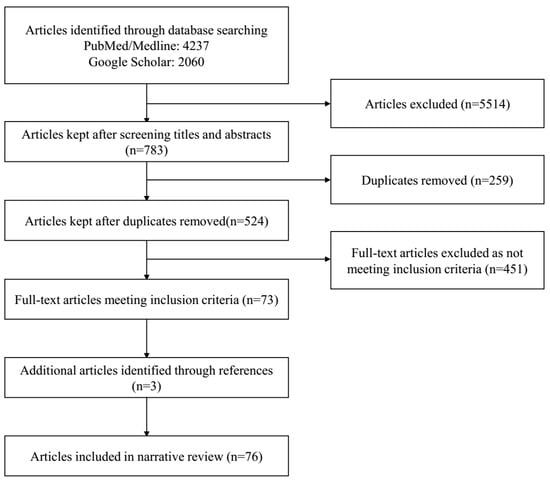
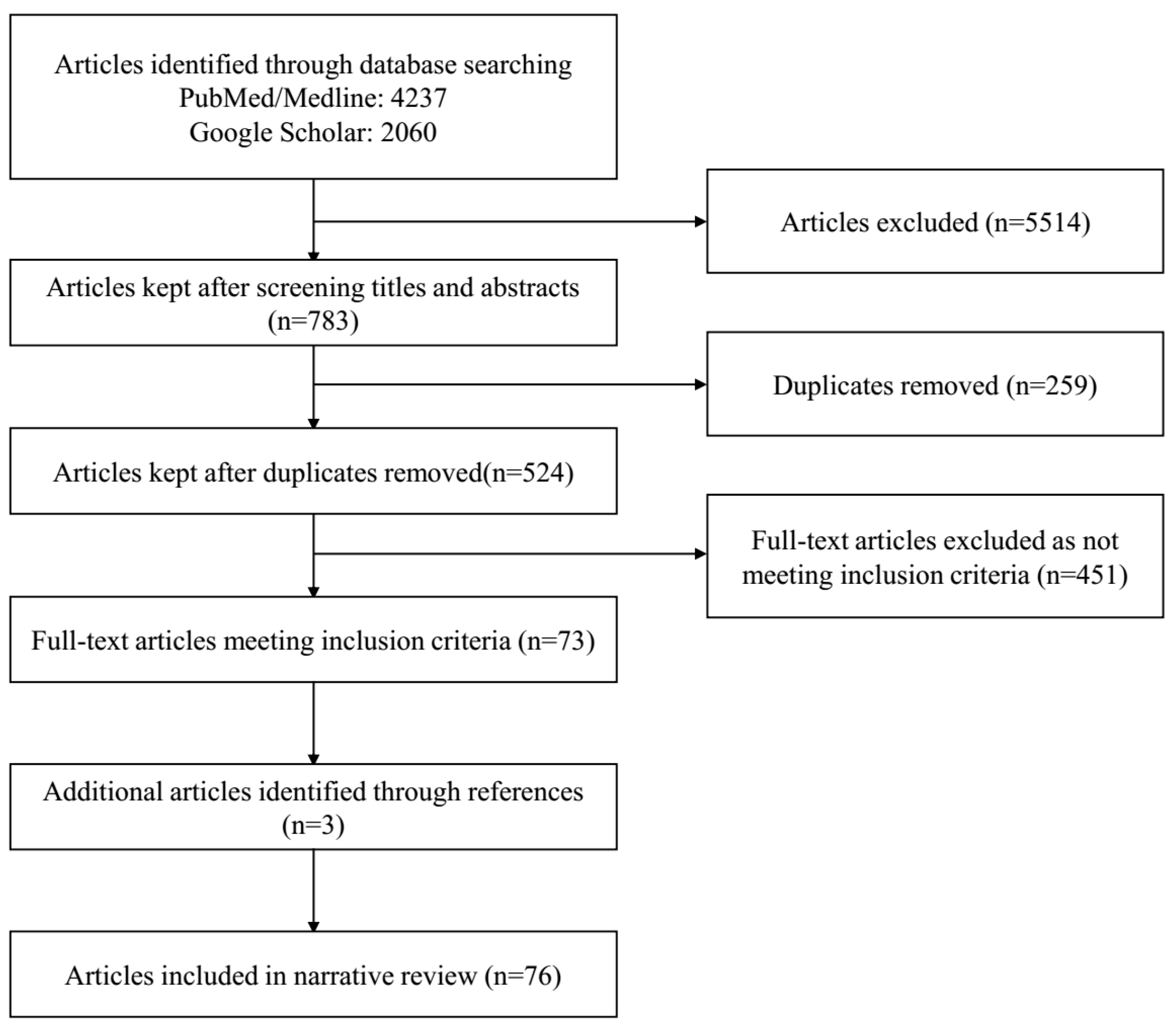
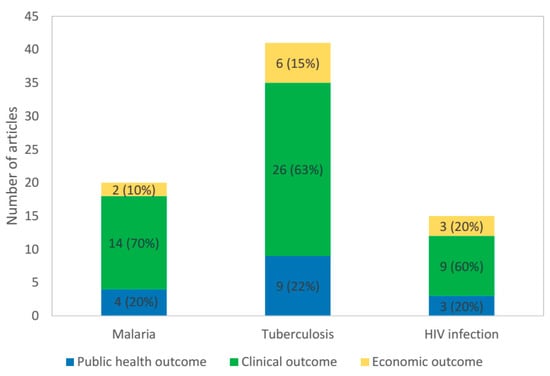
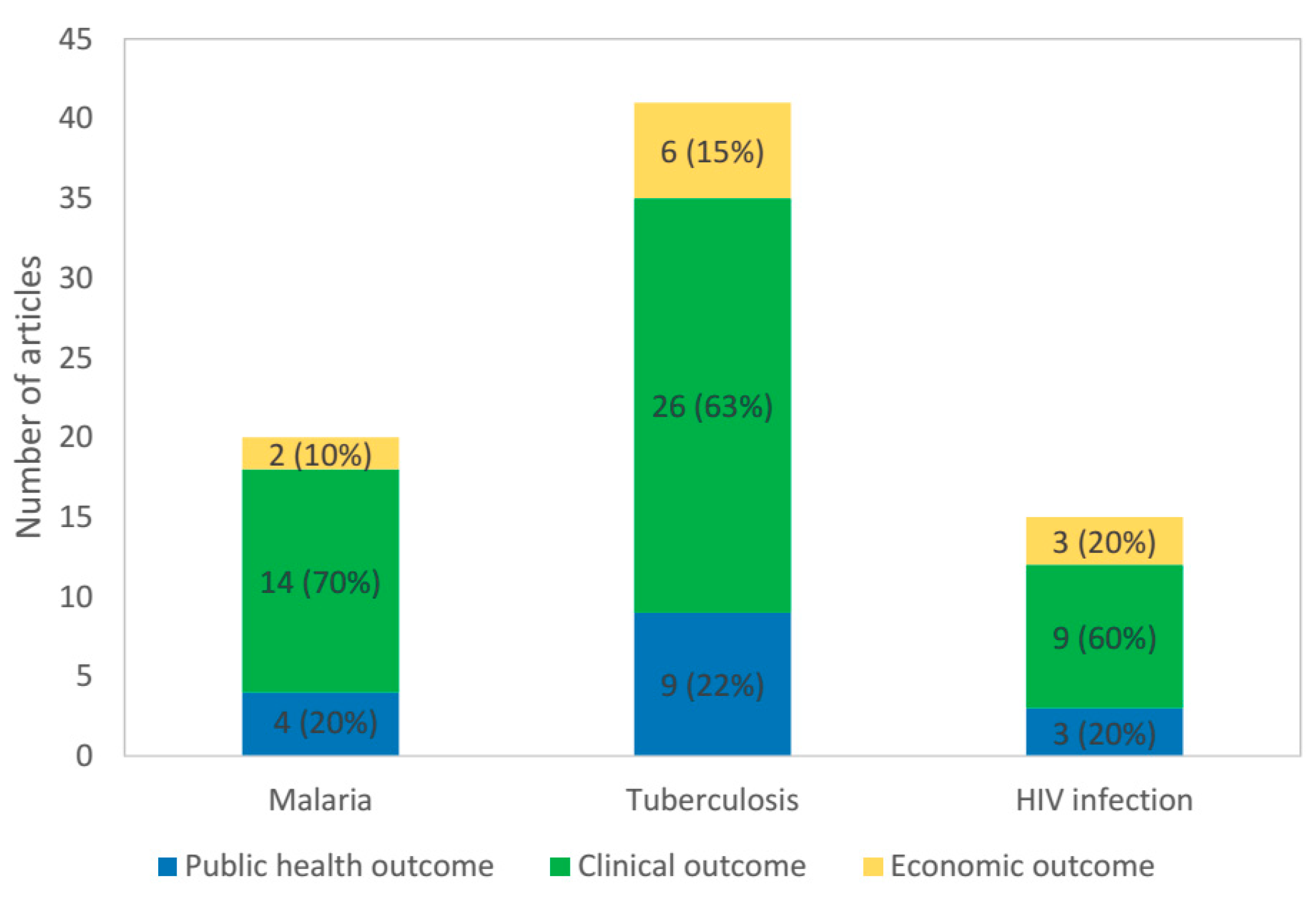
A total of 76 articles were identified as eligible for inclusion in the review (Figure 1). Figure 2 shows the number of articles on each of the three categories and diseases considered in the review.
Figure 1.
PRISMA flow diagram.
Figure 2.
Articles finally included into narrative review were categorized according to disease (malaria, tuberculosis and HIV) field of interest (public health, clinical and economic outcomes).
The characteristics of the included studies are summarized in Table 1 (16 on public health outcomes), Table 2 (49 on clinical outcomes) and Table 3 (11 on economic outcomes). Studies were predominantly conducted on tuberculosis, accounting for 56.2%, 53.1% and 54.5% on public health, clinical and economic outcomes, respectively, of the totals.
Table 1.
Characteristics of included studies on public health outcomes due to AMR.
Table 2.
Characteristics of included studies on clinical outcomes due to AMR.
Table 3.
Characteristics of included studies on economic outcomes due to AMR.
3.1. Public Health Outcomes
3.1.1. Malaria
There were two reports that identified drug resistance as the major reason for the occurrence of a malaria epidemic. In Balcad (Somalia), a town with previously low malaria transmission, the incidence of malaria rose more than 20-fold between 1986 and 1988 and the emergence of chloroquine resistance, coupled with favorable meteorological conditions, was identified as the cause [14]. A similar phenomenon occurred in 1994 in Rajasthan, India, and resulted in many deaths [15]. When resistance of P. falciparum to sulfadoxine-pyrimethamine was observed in 1990s, an ecological study was conducted in South Africa to assess the association between malaria incidence and the emergence and degree of the resistance to this first-line antimalarial treatment from 1991 to 2001. The data showed that when resistance of P. falciparum to sulfadoxine-pyrimethamine was greater than 10%, the risk ratio for malaria infection was 5.9 compared to the low resistance to sulfadoxine-pyrimethamine period. And the risk of death from malaria was 10.8 and case fatality 1.8 times higher after drug resistance had reached 10%, than before [16]. Since the first two cases of artemisinin resistance were confirmed in Cambodia in 2006, foci of either suspected or confirmed artemisinin resistance have been identified in a few countries. An individual-based malaria transmission model predicted that artemisinin and partner drug resistance at levels similar to those observed in Oddar Meanchey Province in Cambodia could result in an additional 78 million cases over a 5-year period (2016–2020) in Africa, a 7% increase in cases compared to a scenario with no resistance [17].
3.1.2. Tuberculosis
An outbreak of TB in schools of United States caused by M. tuberculosis resistant to isoniazid, streptomycin, and para-aminosalicylic acid was reported in 1976. And retrospective investigation revealed that the school outbreak was part of an ongoing community outbreak dating back at least to 1964 [18]. Beginning in 1990, outbreaks of MDR-TB in hospitals in the eastern United States had occurred [19,20,21,22,23]. During 2008–2015, an outbreak of isoniazid-resistant TB with a unique genotype began in Atlanta and spread nationally quickly, provided a warning about the ongoing potential for long-lasting and far-reaching outbreaks, particularly among high-risk populations with untreated HIV co-infection, mental illness, substance abuse, and homelessness [24]. A dynamic state transition model constructed in China showed that by 2050, incidence, prevalence and mortality of Drug-sensitive TB (DS-TB) would decrease by 32%, 50% and 41%, respectively, whereas MDR-TB would increase by respectively 60%, 48% and 35%. Reduction in DS-TB is a result of high treatment and cure rates leading to a decrease in the prevalence of latent tuberculous infection (LTBI), while the increase in MDR-TB is attributed to inappropriate treatment, leading to high transmission of infection and increased LTBI prevalence [25]. Another compartmental model forecasted the percentage of MDR-TB among incident cases of TB to increase, reaching 12.4% in India, 8.9% in the Philippines, 32.5% in Russia, and 5.7% in South Africa in 2040. It also predicted the percentage of XDR-TB among incident MDR-TB to increase, reaching 8.9% in India, 9.0% in the Philippines, 9.0% in Russia, and 8.5% in South Africa in 2040. As prevalence of DR-TB increased, the primary driver of incident DR-TB shifted from acquired drug resistance during treatment to transmission to contacts of individuals with DR-TB, leading to spread of MDR and XDR tuberculosis [26].
3.1.3. HIV
Based on a mathematical model that charted the evolution of drug-resistant HIV from 1996 to 2005 in a San Francisco (CA, USA) cohort of gay men, Blower et al. predicted that drug resistance would reach a high prevalence in developing countries, but that these epidemics of drug-resistant HIV would be driven by resistance acquired within individuals during therapy and not by transmission of resistant strains. Transmitted drug resistance had not increased - and the model predictions revealed that it would not increase - the annual incidence rate in San Francisco. Hence, the results indicated that transmission of resistant strains would be only a minor public health problem in San Francisco [27]. However, in another San Francisco-study presented in 2010 describing an identical population, a theoretical model (the amplification cascade model) revealed that 60% of the resistant strains being transmitted in San Francisco were capable of causing self-sustaining epidemics, and that an individual with an NNRTI-resistant strain can cause, on average, more than one new resistant infection. Consequently, the circulating NNRTI-resistant strains in San Francisco might pose a great and immediate threat to global public health [28]. In sub-Saharan Africa, a Spectrum Goals fast-track model was developed to project the average impact of HIV drug resistance on AIDS deaths and new infections between 2016 and 2030. Results indicated that in a situation where pretreatment drug-resistance levels were generally below 10%, drug resistance was responsible for an estimated 710,000 AIDS deaths and 380,000 new infections by 2030. If levels of pretreatment drug resistance are over 10%, the impact was greater, with an estimated 890 000 AIDS deaths and 450 000 new infections by 2030 attributable to HIV drug resistance [29].
3.2. Clinical Outcomes
3.2.1. Malaria
If ineffective first-line treatments were used at health centers and hospital, the time to symptom resolution may be protracted. For example, in Papua New Guinea, the treatment failures for the 28-day follow-up period were 3.8 times more common in 1999 than in 1996, and during the 29–42-day follow-up period 3.8 times more likely in 2002 than in 1991, which were ascribed to the increasing parasite resistance to standard treatment with chloroquine and amodiaquin [30]. As resistance increases, there would be an increase in the number of patients who present with severe malaria, thus case fatality rate would rise. Retrospective and prospective hospital-based studies in various African countries had documented significant increase (from 2- to 11-fold) in admissions for severe malaria and malaria deaths when chloroquine resistance developed and spread [31,32,33,34,35,36,37,38]. The malaria-related effects on pregnant women, their fetuses, and newborns also comprise an extremely large and often hidden burden [89,90]. In a study among pregnant women and newborn infants in Timika, it was found that in those with history of malaria during pregnancy, the increasing use of dihydroartemisinin-piperaquine, the first-line malaria treatment instead of chloroquine [91], was associated with a 54% fall in the proportion of maternal malaria at delivery and a 98% decrease in congenital malaria. Also, the change to more effective treatment was associated with an absolute 2% reduction of maternal severe anaemia and absolute 4.5% decrease in low birth weight babies [39]. Three prospective cohort studies found that patients from western Cambodia, where has been the focus of artemisinin-resistant malaria, were more likely to had parasite recrudescence [8,40,41]. In Silico Model for Antimalarial Drug Treatment and Failure showed that the development of artemisinin tolerance and resistance will have an immediate, large impact on the likely clinical efficacy of artemisinin combination therapies [42].
3.2.2. Tuberculosis
According to the WHO guidelines, there are six treatment outcomes in patients with TB: cured, treatment completed, died, treatment failed, defaulted, and transferred [43]. Two studies from Saudi Arabia found that the prevalence of rifampicin resistance was significantly higher in those with failed treatment than in successfully treated patients [44,45]. A retrospective study reported a relative risk of death of 1.9 among patients with rifampicin resistance compared with those with pan-susceptible group [46]. Five studies reported an increase (from 1.4- to 12.4-fold) of poor treatment outcomes (death, failure or default from TB therapy) in isoniazid mono-resistance patients compared to isoniazid sensitive case [45,46,47,48,49,50]. Patients with MDR-TB had considerably poorer clinical outcomes than if they developed disease due to drug-susceptible strains. Compared with susceptible cases, a significant increase (from 3- to 395-fold) in unfavorable outcomes was recorded among MDR-TB cases [43,44,45,51,52,53,54,55,56,57,58,59,60,61,62,63,64]. And the survival time in patients with MDR-TB was significantly shorter compared to those without MDR-TB [65,66]. Using country as the unit of analysis, an ecologic study showed that failure rates averaged 5.0%, and recurrence rates averaged 12.8% in the 20 countries where prevalence of initial MDR exceeded 3%, compared with an average of 1.6% and 8.1%, respectively, in 83 countries where initial MDR prevalence was less than 3% [67]. In a meta-analysis, it showed a stepwise worsening of treatment outcomes in MDR-TB cases treated in multiple centers as the resistance pattern of infecting TB strains advanced from MDR without additional resistance, to added resistance to a second-line injectable drug, to a fluoroquinolone, and then to both (XDR-TB). The study reported that compared with poor treatment outcomes, treatment success was higher in MDR-TB patients infected with strains without additional resistance (64%) or with resistance to second-line injectable drugs only (56%), than in those having resistance to fluoroquinolones alone (48%) or to fluoroquinolones plus second-line injectable drugs (40%) [68].
3.2.3. HIV
When using antiretroviral drugs as therapies for HIV-infected individuals, the antiretroviral treatment was considered efficient if the viral load decreases or remained undetectable (<50 copies/mL). The emergence of drug resistance, however, was reported to influence the virological response. In a study from Canada, it found that baseline drug resistance phenotype was predictive of poor virological response to dual protease inhibitor combination. Patients were at least four times less likely to achieve a decrease in plasma HIV RNA viral load if their viral isolates were resistant to ritonavir or saquinavir [69]. Cohort studies from USA reported significant increase (from 1.5- to 12.4-fold) of virological failure in subjects with baseline NNRTI resistance compared to subjects without resistance [70,71,72]. Studies from Europe also reported a significant association between NRTI resistance and therapy response [73,74]. Using the Stanford HIVdb algorithm, which assigns genotypic sensitivity score (GSS) of 1.00, 0.75, 0.50, 0.25 and 0.00 to the five levels of resistance (susceptible, potential low-level, low-level, intermediate-level and high-level resistance, respectively), a study from Taiwan found that compared with regimens with GSS >2.5, initiation of regimens with GSS ≤2.5 was associated with a higher treatment failure rate (39.3% versus 15.7%) and shorter time to treatment failure [75]. Experiencing virological failure with drug resistance is a prognostic sign for poorer long-term clinical outcome. Studies from multiple countries have documented the association between drug resistance and an increased risk of death or new AIDS defining event/death. The 48-month proportion of patients with none, one, two or three class-wide resistance were 8.9, 11.7, 13.4 and 27.1%, respectively, for death; 6.1, 9.9, 13.4 and 21.5%, respectively, for AIDS-related death; and 16.0, 17.7, 19.3 and 35.9%, respectively, for new AIDS event/death [76]. By 96 months from baseline, the proportion of patients with a new AIDS diagnosis or death was 20.3% in patients with no evidence of virological failure and 53% in those with virological failure and mutations to three drug classes [77]. Detection of drug resistance, particularly if extended to all three drug classes was related to poorer clinical outcome and represented a risk-marker of disease progression and death.
3.3. Economic Outcomes
3.3.1. Malaria
In areas with high rates of chloroquine-resistance, physicians and governments have changed empiric therapy for malaria, increasing overall treatment costs. Phillips and Phillips-Howard calculated that the use of quinine versus chloroquine as first-line therapy in 150 million patients with malaria would increase spending by as much as $100 million [78]. When physicians use ineffective drugs as empiric therapy, resistance will manifest itself clinically as treatment failure, and costs, morbidity, and mortality will be greater for patients with infections due to resistant organisms than for patients with infections due to susceptible organisms. Based on a decision tree model applied to all malaria-endemic countries using their specific estimates for malaria incidence, transmission intensity and GDP, Lubell et al. projected an excess of 116,000 deaths annually in the scenario of widespread artemisinin resistance. And the predicted medical costs for retreatment of clinical failures and for management of severe malaria exceed $32 million per year. Productivity losses resulting from excess morbidity and mortality were estimated at $385 million for each year during which failing ACT remained in use as first-line treatment [79].
3.3.2. Tuberculosis
A South African cost analysis showed that the per-patient cost of XDR-TB was $26,392, four times greater than MDR-TB ($6772), and 103 times greater than DS-TB ($257). Despite DR-TB comprising only 2.2% of the case burden, it consumed ~32% of the total estimated 2011 national TB budget of US $218 million [80]. In Asia, a cross-sectional survey in Cambodia showed that the mean total household cost for TB patients was $477, compared to $1525 in MDR-TB cases [81]. In Europe, a retrospective study from London found that the mean cost of managing a case of pulmonary MDR-TB was in excess of £60,000, 10 times the cost of treating drug-sensitive disease (£6040) [82]. In South America, a study from Ecuador found that total non-MDR-TB related patient costs averaged $960 per patient, compared to an average total cost of $6880 for MDR-TB patients, which represented respectively 31% and 223% of the average Ecuadorian annual income [83]. In North America, a US study States showed that average hospitalization cost per XDR-TB patient ($285,000) was 3.5 times that per MDR-TB patient ($81,000). Hospitalization episode costs for MDR-TB ranked third highest and those for XDR-TB highest among 262 principal diagnosis categories [84]. Another retrospective study reported that total direct costs averaged $430,000 per XDR-TB patient, three times greater than MDR-TB ($13,000), and 25 times greater than non-MDR TB ($17,000). Direct-plus-productivity-loss costs averaged $554,000 per XDR-TB patient, two times greater than MDR-TB patient ($260,000). Applying these averages to 364 cases of MDR-TB and nine cases of XDR-TB in the US during 2005–2007, direct costs were ≈ $53 million and direct-plus-productivity-loss costs were ≈ $100 million [85].
3.3.3. HIV
Only one study reported healthcare costs associated with antiretroviral drug resistance. The study from Canada reported that patients with no resistance had mean per patient per month (PPPM) costs of Canadian dollars (CDN) 1058, by contrast with the CDN 1291 costs of patients with secondary/acquired resistance. And the mean costs increased by number of resistant classes: mean costs for one, two or three ARV class resistance was CDN 1278, 1337 and 1801, respectively [86]. Considering that treatment failure and switching may follow from the development of drug resistance, studies of the costs due to treatment failure or treatment changes could potentially be extrapolated to represent the costs of resistance [92]. A report demonstrated total annual costs ranged from $31,700 for a patient on a 1st-line highly active antiretroviral therapy (HAART) regimen to $42,600 on 6th-line [87]. In a separate study presented in 2010, over a follow-up period of up to 60 months, total mean healthcare costs were $35,000 higher for patients on a 3rd- or greater line treatment regimen compared to patients on a 1st- or 2nd-line treatment regimen [88].
3.4. Summary of Evidence
By taking into account the number and evidence quality of the included studies, the synthesized findings from these studies show that there is strong evidence that drug-resistant tuberculosis has resulted in adverse public health, clinical and economic outcomes, drug-resistant malaria has resulted in adverse public health and clinical outcomes, and drug-resistant HIV infection has resulted in adverse clinical outcomes (Table 4).
Table 4.
Strength of evidence by topic.
Further higher quality research on the public health outcome of drug-resistant HIV infection and economic outcome of drug-resistant malaria are needed.
4. Discussion
This review exposes the multi-dimensional outcomes due to emergence and spread of AMR of malaria, tuberculosis and HIV to the antimicrobials recommended and/or used for treatment of certain infections. Owing to the increased burden of these infectious diseases in developing countries, most of the studies were conducted in these countries, particularly on clinical outcomes due to AMR. of the three diseases included in this review, tuberculosis’s outcomes due to AMR are mostly recognized by researchers to conduct studies accordingly, which is probably because tuberculosis has a relatively high mortality—the leading cause of death from a single infectious agent (above HIV/AIDS) and AMR rate [4].
It is well noted that the emergence of AMR or spread of resistant strain might result in a failure or delay to eliminate the infection, affecting the likelihood of onward transmission [93]. Regarding public health or epidemiological outcomes due to AMR, evidences were mostly obtained from population-based cohort studies or cross-sectional studies before 2000. However, mathematical models were increasingly used to predict the public health burden due to AMR in recent years. Background data and assumption parameters are critical for development of the models and outcomes predicted from the models. For example, in a San Francisco cohort of gay men discrepancies regarding the epidemics of drug-resistant HIV were found from model predictions. These differences in levels of resistance and effects on HIV incidence might be due to different time horizons, different model assumptions and other extraordinary factors or new events, such as vaccines, diagnostic tools, and policy changes [25]. Built upon current disease estimates and trend assumptions, considering the source, course and transmission of infection, and taking other major forces into account, models have the potential to be particularly valuable in predicting the public health outcomes of drug resistance and the future disease burden. The relationship between the emergence of drug resistance in patients and the risk of clinical outcomes has been subject to various analyses from cohort studies. Antimicrobial-resistant organisms affect patient outcomes in several ways. Treatment factors including delay in appropriate antimicrobial treatment, decreased antimicrobial effectiveness, increased antimicrobial toxicity, improper antimicrobial dosing and/or increased need for surgery and other invasive procedures may contribute to adverse outcomes in patients infected with these organisms [94]. Despite of the use of different methods of analysis as well as other factors, the results of studies included in this review have shown that patients with infections caused by drug-resistant organism generally had an increased risk of worse clinical outcomes and death, than patients infected with the same organism not demonstrating the resistance pattern. However, many studies were conducted in single institution and had small sample size. Future studies estimating clinical outcomes of antimicrobial-resistant infections should address the methodological limitations by using large patient populations in multicentre settings or by using large administrative datasets. There was a wide range of cost estimates across the studies probably because of the differences in economic background in study population and areas, methodologies used to collect the data and estimate the costs, comparator (infection susceptible to antimicrobials, or no infection) to be used for estimating additional cost, and study settings. Despite of these, additional expenditure resulted from emergence and spread of AMR was consistently reported in many of these studies. The economic burden of antimicrobial-resistant organisms can be assessed from a number of different perspectives, including that of society, the hospital, a third-paid party, a government agency or the patient [94]. Most studies in this review did not attempt to measure the cost of resistance from a societal perspective (including all the economic impacts on patients, physicians, health care providers, third-party buyers, drug manufacturers, and overall societal welfare), making the true economic burden of antimicrobial-resistant infections difficult to quantify accurately. To better quantify the economic repercussions of AMR, future studies should consider costs from multiple perspectives [95].
Findings from the current review have important implications for planning studies to address the public health, clinical and economic outcome impacts in other infectious diseases including gonorrhea. Neisseria gonorrhoeae—a pathogen causing gonorrhea has shown the capacity to develop resistance to the antimicrobials introduced for treatment of this infection since sulphonamides was firstly introduced for treatment of gonorrhea in the 1930s. Currently, N. gonorrhoeae is resistant to most antimicrobials previously recommended for treatment and emergence of resistance to the third-generation extended-spectrum cephalosporins has been found in many settings [96]. Gonorrhoea, together with malaria, TB and HIV have been listed by WHO as the global priority concerns to address their AMR [5,96]. No doubt efforts to improve surveillance programme for monitoring trends of gonococcal resistance, explore resistant mechanisms for responding to emergence of the resistance, and develop new antimicrobials for providing alternative treatment options are important. However, studies on outcome impacts due to gonococcal resistance are most needed to justify the investment to address the AMR in gonorrhea. However, evidence from studies on outcome impacts of gonococcal resistance [97,98] is relatively limited. Actually, investment to control of gonorrhea is disproportionately lower than many of other infectious diseases [99]. The findings from this review on malaria, tuberculosis and HIV may be helpful for considering the similar studies in gonorrhea. This consideration has been firstly highlighted in China and included into its comprehensive ROADMAP plan to address research needs for gonococcal AMR [100].
There are several limitations to this narrative review. First, we only included two databases in our search. Second, our search strategy did not extend to grey literature, and were unable to rule out publication bias. Third, due to wide variations in study design, publication years and populations, it is hard for us to make a pooled estimate of AMR outcome for each disease and consequently to do comparisons in terms of AMR outcome impacts among these three diseases, which also points towards the need for more harmonised methods to assess public health, clinical and economic outcome impacts due to AMR among different infectious diseases.
5. Conclusions
In conclusion, previous studies indicate that emergence and spread of AMR of malaria, TB and HIV have resulted in adverse public health, clinical and economic outcomes. Limited evidence from this review suggest the needs to consider the similar studies for other infectious diseases including gonorrhea.
Author Contributions
All authors contributed to the literature review and helped in creating the outline for the paper. Author T.J. wrote the initial draft of the paper and X.-S.C. provided feedback and edited the initial draft. All authors have read and agreed to the published version of the manuscript.
Funding
This research was funded by the National Science and Technology Major Project (2018ZX10101-001) and the Chinese Academy Medical Sciences Initiative for Innovative Medicine (2016-I2M-3-021) in China.
Conflicts of Interest
The authors declare no conflict of interest.
Abbreviations
AMR: Antimicrobial resistance; WHO: World Health Organization; MDR-TB: multi-drug resistant tuberculosis; ACTs: Artemisinin combination therapies; XDR-TB: Extensively drug-resistant TB; ARVs: antiretroviral drugs; NRTIs: nucleoside reverse-transcriptase inhibitors; NNRTIs: non-nucleoside reverse-transcriptase inhibitors; PIs: protease inhibitors; DS-TB: Drug-sensitive TB; LTBI: latent tuberculous infection; GSS: genotypic sensitivity score; PPPM: per patient per month; CDN: Canadian dollars; HAART: highly active antiretroviral therapy.
References
- WHO. Antimicrobial Resistance Fact Sheet. Available online: http://www.who.int/mediacentre/factsheets/fs194/en/ (accessed on 6 May 2019).
- Mendelson, M.; Matsoso, M.P. The World Health Organization Global Action Plan for antimicrobial resistance. S. Afr. Med. J. 2015, 105, 325. [Google Scholar] [CrossRef] [Scilit] [PubMed]
- Tacconelli, E.; Carrara, E.; Savoldi, A.; Harbarth, S.; Mendelson, M.; Monnet, D.L.; Pulcini, C.; Kahlmeter, G.; Kluytmans, J.; Carmeli, Y.; et al. Discovery, research, and development of new antibiotics: The WHO priority list of antibiotic-resistant bacteria and tuberculosis. Lancet Infect. Dis. 2018, 18, 318–327. [Google Scholar] [CrossRef] [Scilit]
- WHO. Global Tuberculosis Report 2018; World Health Organization: Geneva, Switzerland, 2018. [Google Scholar]
- WHO. Prioritization of Pathogens to Guide Discovery, Research and Development of New Antibiotics for Drug-Resistant Bacterial Infections, Including Tuberculosis; World Health Organization: Geneva, Switzerland, 2017. [Google Scholar]
- Olatunde, A. Chloroquine-resistant Plasmodium falciparum and malaria in Africa. Trans. R. Soc. Trop. Med. Hyg. 1977, 71, 80–81. [Google Scholar] [CrossRef] [Scilit]
- Bjorkman, A.; Phillips-Howard, P.A. The epidemiology of drug-resistant malaria. Trans. R. Soc. Trop. Med. Hyg. 1990, 84, 177–180. [Google Scholar] [CrossRef] [Scilit]
- Amaratunga, C.; Lim, P.; Suon, S.; Sreng, S.; Mao, S.; Sopha, C.; Sam, B.; Dek, D.; Try, V.; Amato, R.; et al. Dihydroartemisinin-piperaquine resistance in Plasmodium falciparum malaria in Cambodia: A multisite prospective cohort study. Lancet Infect. Dis. 2016, 16, 357–365. [Google Scholar] [CrossRef] [Scilit]
- Youmans, G.P.; Williston, E.H. Increase in resistance of tubercle bacilli to streptomycin; a preliminary report. Proc. Staff Meet. Mayo Clin. 1946, 21, 126. [Google Scholar]
- Pablos-Mendez, A.; Raviglione, M.C.; Laszlo, A.; Binkin, N.; Rieder, H.L.; Bustreo, F.; Cohn, D.L.; Lambregts-van Weezenbeek, C.S.; Kim, S.J.; Chaulet, P.; et al. Global surveillance for antituberculosis-drug resistance, 1994-1997. World Health Organization-International Union against Tuberculosis and Lung Disease Working Group on Anti-Tuberculosis Drug Resistance Surveillance. N. Engl. J. Med. 1998, 338, 1641–1649. [Google Scholar]
- Centers for Disease Control and Prevention (CDC). Emergence of Mycobacterium tuberculosis with extensive resistance to second-line drugs—Worldwide, 2000–2004. MMWR Morb. Mortal. Wkly. Rep. 2006, 55, 301–305. [Google Scholar]
- Larder, B.A.; Darby, G.; Richman, D.D. HIV with reduced sensitivity to zidovudine (AZT) isolated during prolonged therapy. Science 1989, 243, 1731–1734. [Google Scholar] [CrossRef] [Scilit]
- Thomas, B.H.; Ciliska, D.; Dobbins, M.; Micucci, S. A Process for systematically reviewing the literature: Providing the research evidence for public health nursing interventions. Worldviews Evid. Based Nurs. 2004, 1, 176–184. [Google Scholar] [CrossRef] [Scilit]
- Warsame, M.; Wernsdorfer, W.H.; Huldt, G.; Bjorkman, A. An epidemic of Plasmodium falciparum malaria in Balcad, Somalia, and its causation. Trans. R. Soc. Trop. Med. Hyg. 1995, 89, 142–145. [Google Scholar] [CrossRef] [Scilit]
- Sharma, Y.D.; Biswas, S.; Pillai, C.R.; Ansari, M.A.; Adak, T.; Devi, C.U. High prevalence of chloroquine resistant Plasmodium falciparum infection in Rajasthan epidemic. Acta Trop. 1996, 62, 135–141. [Google Scholar] [CrossRef] [Scilit]
- Knight, S.E.; Anyachebelu, E.J.; Geddes, R.; Maharaj, R. Impact of delayed introduction of sulfadoxine-pyrimethamine and arthemeter-lumefantrine on malaria epidemiology in KwaZulu-Natal, South Africa. Trop. Med. Int. Health 2009, 14, 1086–1092. [Google Scholar] [CrossRef] [Scilit] [PubMed]
- Slater, H.C.; Griffin, J.T.; Ghani, A.C.; Okell, L.C. Assessing the potential impact of artemisinin and partner drug resistance in sub-Saharan Africa. Malar. J. 2016, 15, 10. [Google Scholar] [CrossRef] [Scilit] [PubMed]
- Reves, R.; Blakey, D.; Snider, D.E., Jr.; Farer, L.S. Transmission of multiple drug-resistant tuberculosis: Report of a school and community outbreak. Am. J. Epidemiol. 1981, 113, 423–435. [Google Scholar] [CrossRef] [Scilit] [PubMed]
- Ussery, X.T.; Bierman, J.A.; Valway, S.E.; Seitz, T.A.; DiFerdinando, G.T., Jr.; Ostroff, S.M. Transmission of multidrug-resistant Mycobacterium tuberculosis among persons exposed in a medical examiner’s office, New York. Infect. Control Hosp. Epidemiol. 1995, 16, 160–165. [Google Scholar] [CrossRef] [Scilit]
- Coronado, V.G.; Beck-Sague, C.M.; Hutton, M.D.; Davis, B.J.; Nicholas, P.; Villareal, C.; Woodley, C.L.; Kilburn, J.O.; Crawford, J.T.; Frieden, T.R.; et al. Transmission of multidrug-resistant Mycobacterium tuberculosis among persons with human immunodeficiency virus infection in an urban hospital: Epidemiologic and restriction fragment length polymorphism analysis. J. Infect. Dis. 1993, 168, 1052–1055. [Google Scholar] [CrossRef] [Scilit]
- Friedman, C.R.; Stoeckle, M.Y.; Kreiswirth, B.N.; Johnson, W.D., Jr.; Manoach, S.M.; Berger, J.; Sathianathan, K.; Hafner, A.; Riley, L.W. Transmission of multidrug-resistant tuberculosis in a large urban setting. Am. J. Respir. Crit. Care Med. 1995, 152, 355–359. [Google Scholar] [CrossRef] [Scilit]
- Centers for Disease Control (CDC). Nosocomial transmission of multidrug-resistant tuberculosis among HIV-infected persons—Florida and New York, 1988–1991. MMWR Morb. Mortal. Wkly. Rep. 1991, 40, 585–591. [Google Scholar]
- Nivin, B.; Nicholas, P.; Gayer, M.; Frieden, T.R.; Fujiwara, P.I. A continuing outbreak of multidrug-resistant tuberculosis, with transmission in a hospital nursery. Clin. Infect. Dis. 1998, 26, 303–307. [Google Scholar] [CrossRef] [Scilit]
- Powell, K.M.; VanderEnde, D.S.; Holland, D.P.; Haddad, M.B.; Yarn, B.; Yamin, A.S.; Mohamed, O.; Sales, R.F.; DiMiceli, L.E.; Burns-Grant, G.; et al. Outbreak of Drug-Resistant Mycobacterium tuberculosis Among Homeless People in Atlanta, Georgia, 2008–2015. Public Health Rep. 2017, 132, 231–240. [Google Scholar] [CrossRef] [Scilit]
- Mehra, M.; Cossrow, N.; Kambili, C.; Underwood, R.; Makkar, R.; Potluri, R. Assessment of tuberculosis burden in China using a dynamic disease simulation model. Int. J. Tuberc. Lung Dis. 2013, 17, 1186–1194. [Google Scholar] [CrossRef] [Scilit]
- Sharma, A.; Hill, A.; Kurbatova, E.; van der Walt, M.; Kvasnovsky, C.; Tupasi, T.E.; Caoili, J.C.; Gler, M.T.; Volchenkov, G.V.; Kazennyy, B.Y.; et al. Estimating the future burden of multidrug-resistant and extensively drug-resistant tuberculosis in India, the Philippines, Russia, and South Africa: A mathematical modelling study. Lancet Infect. Dis. 2017, 17, 707–715. [Google Scholar] [CrossRef] [Scilit]
- Blower, S.M.; Aschenbach, A.N.; Gershengorn, H.B.; Kahn, J.O. Predicting the unpredictable: Transmission of drug-resistant HIV. Nat. Med. 2001, 7, 1016–1020. [Google Scholar] [CrossRef] [Scilit] [PubMed]
- Smith, R.J.; Okano, J.T.; Kahn, J.S.; Bodine, E.N.; Blower, S. Evolutionary dynamics of complex networks of HIV drug-resistant strains: The case of San Francisco. Science 2010, 327, 697–701. [Google Scholar] [CrossRef] [Scilit] [PubMed]
- Phillips, A.N.; Stover, J.; Cambiano, V.; Nakagawa, F.; Jordan, M.R.; Pillay, D.; Doherty, M.; Revill, P.; Bertagnolio, S. Impact of HIV Drug Resistance on HIV/AIDS-Associated Mortality, New Infections, and Antiretroviral Therapy Program Costs in Sub-Saharan Africa. J. Infect. Dis. 2017, 215, 1362–1365. [Google Scholar] [CrossRef] [Scilit] [PubMed]
- Nsanzabana, C.; Hastings, I.M.; Marfurt, J.; Müller, I.; Baea, K.; Rare, L.; Schapira, A.; Felger, I.; Betschart, B.; Smith, T.A.; et al. Quantifying the evolution and impact of antimalarial drug resistance: Drug use, spread of resistance, and drug failure over a 12-year period in Papua New Guinea. J. Infect. Dis. 2010, 201, 435–443. [Google Scholar] [CrossRef] [Scilit]
- Khoromana, C.O.; Campbell, C.C.; Wirima, J.J.; Heymann, D.L. In vivo efficacy of chloroquine treatment for Plasmodium falciparum in Malawian children under five years of age. Am. J. Trop. Med. Hyg. 1986, 35, 465–471. [Google Scholar] [CrossRef] [Scilit]
- Greenberg, A.E.; Ntumbanzondo, M.; Ntula, N.; Mawa, L.; Howell, J.; Davachi, F. Hospital-based surveillance of malaria-related paediatric morbidity and mortality in Kinshasa, Zaire. Bull. World Health Organ. 1989, 67, 189–196. [Google Scholar]
- Carme, B.; Yombi, B.; Bouquety, J.C.; Plassard, H.; Nzingoula, S.; Senga, J.; Akani, I. Child morbidity and mortality due to cerebral malaria in Brazzaville, Congo. A retrospective and prospective hospital-based study 1983–1989. Trop. Med. Parasitol. 1992, 43, 173–176. [Google Scholar]
- Asindi, A.A.; Ekanem, E.E.; Ibia, E.O.; Nwangwa, M.A. Upsurge of malaria-related convulsions in a paediatric emergency room in Nigeria. Consequence of emergence of chloroquine-resistant Plasmodium falciparum. Trop. Geogr. Med. 1993, 45, 110–113. [Google Scholar] [PubMed]
- Zucker, J.R.; Lackritz, E.M.; Ruebush, T.K., II; Hightower, A.W.; Adungosi, J.E.; Were, J.B.; Metchock, B.; Patrick, E.; Campbell, C.C. Childhood mortality during and after hospitalization in western Kenya: Effect of malaria treatment regimens. Am. J. Trop. Med. Hyg. 1996, 55, 655–660. [Google Scholar] [CrossRef] [Scilit] [PubMed]
- Shanks, G.D.; Biomndo, K.; Hay, S.I.; Snow, R.W. Changing patterns of clinical malaria since 1965 among a tea estate population located in the Kenyan highlands. Trans. R. Soc. Trop. Med. Hyg. 2000, 94, 253–255. [Google Scholar] [CrossRef] [Scilit]
- Zucker, J.R.; Ruebush, T.K., 2nd; Obonyo, C.; Otieno, J.; Campbell, C.C. The mortality consequences of the continued use of chloroquine in Africa: Experience in Siaya, western Kenya. Am. J. Trop. Med. Hyg. 2003, 68, 386–390. [Google Scholar] [CrossRef] [Scilit] [PubMed]
- Brewster, D.R.; Greenwood, B.M. Seasonal variation of paediatric diseases in The Gambia, west Africa. Ann. Trop. Paediatr. 1993, 13, 133–146. [Google Scholar] [CrossRef] [Scilit] [PubMed]
- Poespoprodjo, J.R.; Fobia, W.; Kenangalem, E.; Lampah, D.A.; Sugiarto, P.; Tjitra, E.; Anstey, N.M.; Price, R.N. Treatment policy change to dihydroartemisinin-piperaquine contributes to the reduction of adverse maternal and pregnancy outcomes. Malar. J. 2015, 14, 272. [Google Scholar] [CrossRef] [Scilit]
- Leang, R.; Taylor, W.R.; Bouth, D.M.; Song, L.; Tarning, J. Evidence of Plasmodium falciparum Malaria Multidrug Resistance to Artemisinin and Piperaquine in Western Cambodia: Dihydroartemisinin-Piperaquine Open-Label Multicenter Clinical Assessment. Antimicrob. Agents Chemother. 2015, 59, 4719–4726. [Google Scholar] [CrossRef] [Scilit]
- Leang, R.; Barrette, A.; Bouth, D.M.; Menard, D.; Abdur, R.; Duong, S.; Ringwald, P. Efficacy of dihydroartemisinin-piperaquine for treatment of uncomplicated Plasmodium falciparum and Plasmodium vivax in Cambodia, 2008 to 2010. Antimicrob. Agents Chemother. 2013, 57, 818–826. [Google Scholar] [CrossRef] [Scilit]
- Winter, K.; Hastings, I.M. Development, evaluation, and application of an in silico model for antimalarial drug treatment and failure. Antimicrob. Agents Chemother. 2011, 55, 3380–3392. [Google Scholar] [CrossRef] [Scilit]
- Espinal, M.A.; Kim, S.J.; Suarez, P.G.; Kam, K.M.; Khomenko, A.G.; Migliori, G.B.; Baéz, J.; Kochi, A.; Dye, C.; Raviglione, M.C. Standard short-course chemotherapy for drug-resistant tuberculosis: Treatment outcomes in 6 countries. JAMA 2000, 283, 2537–2545. [Google Scholar] [CrossRef] [Scilit]
- Singla, R.; Al-Sharif, N.; Al-Sayegh, M.O.; Osman, M.M.; Shaikh, M.A. Influence of anti-tuberculosis drug resistance on the treatment outcome of pulmonary tuberculosis patients receiving DOTS in Riyadh, Saudi Arabia. Int. J. Tuberc. Lung Dis. 2002, 6, 585–591. [Google Scholar] [PubMed]
- Samman, Y.; Krayem, A.; Haidar, M.; Mimesh, S.; Osoba, A.; Al-Mowaallad, A.; Abdelaziz, M.; Wali, S. Treatment outcome of tuberculosis among Saudi nationals: Role of drug resistance and compliance. Clin. Microbiol. Infect. 2003, 9, 289–294. [Google Scholar] [CrossRef] [Scilit] [PubMed]
- Anuwatnonthakate, A.; Whitehead, S.J.; Varma, J.K.; Silachamroon, U.; Kasetjaroen, Y.; Moolphate, S.; Limsomboon, P.; Inyaphong, J.; Suriyon, N.; Kavinum, S.; et al. Effect of mycobacterial drug resistance patterns on patients’ survival: A cohort study in Thailand. Glob. J. Health Sci. 2013, 5, 60–72. [Google Scholar] [CrossRef] [Scilit] [PubMed]
- Deepa, D.; Achanta, S.; Jaju, J.; Rao, K.; Samyukta, R.; Claassens, M.; Kumar, A.M.; Ph, V. The impact of isoniazid resistance on the treatment outcomes of smear positive re-treatment tuberculosis patients in the state of Andhra Pradesh, India. PLoS ONE 2013, 8, e76189. [Google Scholar] [CrossRef] [Scilit] [PubMed]
- Baez-Saldana, R.; Delgado-Sanchez, G.; Garcia-Garcia, L.; Cruz-Hervert, L.P.; Montesinos-Castillo, M.; Ferreyra-Reyes, L.; Bobadilla-Del-Valle, M.; Canizales-Quintero, S.; Ferreira-Guerrero, E.; Téllez-Vázquez, N.; et al. Isoniazid Mono-Resistant Tuberculosis: Impact on Treatment Outcome and Survival of Pulmonary Tuberculosis Patients in Southern Mexico 1995–2010. PLoS ONE 2016, 11, e0168955. [Google Scholar] [CrossRef] [Scilit]
- Nagu, T.J.; Aboud, S.; Matee, M.I.; Maeurer, M.J.; Fawzi, W.W.; Mugusi, F. Effects of isoniazid resistance on TB treatment outcomes under programmatic conditions in a high-TB and -HIV setting: A prospective multicentre study. J. Antimicrob. Chemother. 2017, 72, 876–881. [Google Scholar] [CrossRef] [Scilit]
- Karo, B.; Kohlenberg, A.; Hollo, V.; Duarte, R.; Fiebig, L.; Jackson, S.; Kearns, C.; Ködmön, C.; Korzeniewska-Kosela, M.; Papaventsis, D.; et al. Isoniazid (INH) mono-resistance and tuberculosis (TB) treatment success: Analysis of European surveillance data, 2002 to 2014. Eur. Surveill. 2019, 24, 1800392. [Google Scholar] [CrossRef] [Scilit]
- Garcia-Garcia, M.L.; Ponce de Leon, A.; Jimenez-Corona, M.E.; Jiménez-Corona, A.; Palacios-Martínez, M.; Balandrano-Campos, S.; Ferreyra-Reyes, L.; Juárez-Sandino, L.; Sifuentes-Osornio, J.; Olivera-Díaz, H.; et al. Clinical consequences and transmissibility of drug-resistant tuberculosis in southern Mexico. Arch. Intern. Med. 2000, 160, 630–636. [Google Scholar] [CrossRef] [Scilit]
- Garcia-Garcia, M.L.; Jimenez-Corona, M.E.; Ponce-de-Leon, A.; Jiménez-Corona, A.; Palacios-Martínez, M.; Balandrano-Campos, S.; Ferreyra-Reyes, L.; Juárez-Sandino, L.; Sifuentes-Osornio, J.; Olivera-Díaz, H.; et al. Mycobacterium tuberculosis drug resistance in a suburban community in southern Mexico. Int. J. Tuberc. Lung Dis. 2000, 4, S168–S170. [Google Scholar]
- Garcia-Garcia, M.L.; Sifuentes-Osornio, J.; Jimenez-Corona, M.E.; Ponce-de-León, A.; Jiménez-Corona, A.; Bobadilla-del Valle, M.; Palacios-Martínez, M.; Canales, G.; Sanginés, A.; Jaramillo, Y.; et al. Drug resistance of Mycobacterium tuberculosis in Orizaba, Veracruz. Implications for the tuberculosis prevention and control program. Rev. Investig. Clin. 2001, 53, 315–323. [Google Scholar]
- Noeske, J.; Nguenko, P.N. Impact of resistance to anti-tuberculosis drugs on treatment outcome using World Health Organization standard regimens. Trans. R. Soc. Trop. Med. Hyg. 2002, 96, 429–433. [Google Scholar] [CrossRef] [Scilit]
- Toungoussova, O.S.; Nizovtseva, N.I.; Mariandyshev, A.O.; Caugant, D.A.; Sandven, P.; Bjune, G. Impact of drug-resistant Mycobacterium tuberculosis on treatment outcome of culture-positive cases of tuberculosis in the Archangel oblast, Russia, in 1999. Eur. J. Clin. Microbiol. Infect Dis. 2004, 23, 174–179. [Google Scholar] [CrossRef] [Scilit] [PubMed]
- Ohkado, A.; Aguiman, L.; Adlawan, S.; Baring, E.; Quirante, O.; Suchi, M.; Endo, S.; Fujiki, A.; Mori, T. Tuberculosis drug resistance and treatment outcomes under DOTS settings in large cities in the Philippines. Int. J. Tuberc. Lung Dis. 2006, 10, 283–289. [Google Scholar] [PubMed]
- Cox, H.; Kebede, Y.; Allamuratova, S.; Ismailov, G.; Davletmuratova, Z.; Byrnes, G.; Stone, C.; Niemann, S.; Rüsch-Gerdes, S.; Blok, L.; et al. Tuberculosis recurrence and mortality after successful treatment: Impact of drug resistance. PLoS Med. 2006, 3, e384. [Google Scholar] [CrossRef] [Scilit]
- Matos, E.D.; Lemos, A.C.; Bittencourt, C.; Mesquita, C.L. Anti-tuberculosis drug resistance in strains of Mycobacterium tuberculosis isolated from patients in a tertiary hospital in Bahia. Br. J. Infect. Dis. 2007, 11, 331–338. [Google Scholar] [CrossRef] [Scilit]
- Seddon, J.A.; Visser, D.H.; Bartens, M.; Jordaan, A.M.; Victor, T.C.; van Furth, A.M.; Schoeman, J.F.; Schaaf, H.S. Impact of drug resistance on clinical outcome in children with tuberculous meningitis. Pediatr. Infect. Dis. J. 2012, 31, 711–716. [Google Scholar] [CrossRef] [Scilit]
- Sun, Y.; Harley, D.; Vally, H.; Sleigh, A. Comparison of characteristics and mortality in multidrug resistant (MDR) and non-MDR tuberculosis patients in China. BMC Public Health 2015, 15, 1027. [Google Scholar] [CrossRef] [Scilit]
- Sun, Y.; Harley, D.; Vally, H.; Sleigh, A. Impact of Multidrug Resistance on Tuberculosis Recurrence and Long-Term Outcome in China. PLoS ONE 2017, 12, e0168865. [Google Scholar] [CrossRef] [Scilit]
- Lockman, S.; Kruuner, A.; Binkin, N.; Levina, K.; Wang, Y.; Danilovitsh, M.; Hoffner, S.; Tappero, J. Clinical outcomes of Estonian patients with primary multidrug-resistant versus drug-susceptible tuberculosis. Clin. Infect. Dis. 2001, 32, 373–380. [Google Scholar] [CrossRef] [Scilit]
- Quy, H.T.; Cobelens, F.G.; Lan, N.T.; Buu, T.N.; Lambregts, C.S.; Borgdorff, M.W. Treatment outcomes by drug resistance and HIV status among tuberculosis patients in Ho Chi Minh City, Vietnam. Int. J. Tuberc. Lung Dis. 2006, 10, 45–51. [Google Scholar]
- Pradipta, I.S.; Van’t Boveneind-Vrubleuskaya, N.; Akkerman, O.W.; Alffenaar, J.C.; Hak, E. Treatment outcomes of drug-resistant tuberculosis in the Netherlands, 2005–2015. Antimicrob. Resist. Infect. Control 2019, 12, 115. [Google Scholar] [CrossRef] [Scilit] [PubMed]
- Eyob, G.; Guebrexabher, H.; Lemma, E.; Wolday, D.; Gebeyehu, M.; Abate, G.; Rigouts, L.; van Soolingen, D.; Fontanet, A.; Sanders, E.; et al. Drug susceptibility of Mycobacterium tuberculosis in HIV-infected and -uninfected Ethiopians and its impact on outcome after 24 months of follow-up. Int. J. Tuberc. Lung Dis. 2004, 8, 1388–1391. [Google Scholar] [PubMed]
- Sungkanuparph, S.; Eampokalap, B.; Chottanapund, S.; Thongyen, S.; Manosuthi, W. Impact of drug-resistant tuberculosis on the survival of HIV-infected patients. Int. J. Tuberc. Lung Dis. 2007, 11, 325–330. [Google Scholar]
- Mak, A.; Thomas, A.; Del Granado, M.; Zaleskis, R.; Mouzafarova, N.; Menzies, D. Influence of multidrug resistance on tuberculosis treatment outcomes with standardized regimens. Am. J. Respir. Crit. Care Med. 2008, 178, 306–312. [Google Scholar] [CrossRef] [Scilit] [PubMed]
- Falzon, D.; Gandhi, N.; Migliori, G.B.; Sotgiu, G.; Cox, H.S.; Holtz, T.H.; Hollm-Delgado, M.G.; Keshavjee, S.; DeRiemer, K.; Centis, R.; et al. Resistance to fluoroquinolones and second-line injectable drugs: Impact on multidrug-resistant TB outcomes. Eur. Respir. J. 2013, 42, 156–168. [Google Scholar] [CrossRef] [Scilit] [PubMed]
- Harrigan, P.R.; Hertogs, K.; Verbiest, W.; Pauwels, R.; Larder, B.; Kemp, S.; Bloor, S.; Yip, B.; Hogg, R.; Alexander, C.; et al. Baseline HIV drug resistance profile predicts response to ritonavir-saquinavir protease inhibitor therapy in a community setting. Aids 1999, 13, 1863–1871. [Google Scholar] [CrossRef] [Scilit]
- Kuritzkes, D.R.; Lalama, C.M.; Ribaudo, H.J.; Marcial, M.; Meyer, M.A., 3rd; Shikuma, C.; Johnson, V.A.; Fiscus, S.A.; D’Aquila, R.T.; Schackman, B.R.; et al. Preexisting resistance to nonnucleoside reverse-transcriptase inhibitors predicts virologic failure of an efavirenz-based regimen in treatment-naive HIV-1-infected subjects. J. Infect. Dis. 2008, 197, 867–870. [Google Scholar] [CrossRef] [Scilit]
- Taniguchi, T.; Nurutdinova, D.; Grubb, J.R.; Önen, N.F.; Shacham, E.; Donovan, M.; Overton, E.T. Transmitted drug-resistant HIV type 1 remains prevalent and impacts virologic outcomes despite genotype-guided antiretroviral therapy. AIDS Res. Hum. Retroviruses 2012, 28, 259–264. [Google Scholar] [CrossRef] [Scilit]
- Simen, B.B.; Simons, J.F.; Hullsiek, K.H.; Novak, R.M.; Macarthur, R.D.; Baxter, J.D.; Huang, C.; Lubeski, C.; Turenchalk, G.S.; Braverman, M.S.; et al. Low-abundance drug-resistant viral variants in chronically HIV-infected, antiretroviral treatment-naive patients significantly impact treatment outcomes. J. Infect. Dis. 2009, 199, 693–701. [Google Scholar] [CrossRef] [Scilit]
- Miller, V.; Phillips, A.; Rottmann, C.; Staszewski, S.; Pauwels, R.; Hertogs, K.; de Béthune, M.P.; Kemp, S.D.; Bloor, S.; Harrigan, P.R.; et al. Dual resistance to zidovudine and lamivudine in patients treated with zidovudine-lamivudine combination therapy: Association with therapy failure. J. Infect. Dis. 1998, 177, 1521–1532. [Google Scholar] [CrossRef] [Scilit]
- Derdelinckx, I.; Van Laethem, K.; Maes, B.; Schrooten, Y.; De Wit, S.; Florence, E.; Fransen, K.; Ribas, S.G.; Marissens, D.; Moutschen, M.; et al. Current levels of drug resistance among therapy-naive HIV-infected patients have significant impact on treatment response. J. Acquir. Immune Defic. Syndr. 2004, 37, 1664–1666. [Google Scholar] [CrossRef] [Scilit] [PubMed]
- Lai, C.C.; Hung, C.C.; Chen, M.Y.; Sun, H.Y.; Lu, C.L.; Tseng, Y.T.; Chang, S.F.; Su, Y.C.; Liu, W.C.; Hsieh, C.Y.; et al. Trends of transmitted drug resistance of HIV-1 and its impact on treatment response to first-line antiretroviral therapy in Taiwan. J. Antimicrob. Chemother. 2012, 67, 1254–1260. [Google Scholar] [CrossRef] [Scilit] [PubMed]
- Zaccarelli, M.; Tozzi, V.; Lorenzini, P.; Trotta, M.P.; Forbici, F.; Visco-Comandini, U.; Gori, C.; Narciso, P.; Perno, C.F.; Antinori, A.; et al. Multiple drug class-wide resistance associated with poorer survival after treatment failure in a cohort of HIV-infected patients. Aids 2005, 19, 1081–1089. [Google Scholar] [CrossRef] [Scilit] [PubMed]
- Cozzi-Lepri, A.; Phillips, A.N.; Clotet, B.; Mocroft, A.; Ruiz, L.; Kirk, O.; Lazzarin, A.; Wiercinska-Drapalo, A.; Karlsson, A.; Lundgren, J.D.; et al. Detection of HIV drug resistance during antiretroviral treatment and clinical progression in a large European cohort study. Aids 2008, 22, 2187–2198. [Google Scholar] [CrossRef] [Scilit]
- Phillips, M.; Phillips-Howard, P.A. Economic implications of resistance to antimalarial drugs. Pharmacoeconomics 1996, 10, 225–238. [Google Scholar] [CrossRef] [Scilit]
- Lubell, Y.; Dondorp, A.; Guerin, P.J.; Drake, T.; Meek, S.; Ashley, E.; Day, N.P.; White, N.J.; White, L.J. Artemisinin resistance—Modelling the potential human and economic costs. Malar. J. 2014, 13, 452. [Google Scholar] [CrossRef] [Scilit]
- Pooran, A.; Pieterson, E.; Davids, M.; Theron, G.; Dheda, K. What is the cost of diagnosis and management of drug resistant tuberculosis in South Africa? PLoS ONE 2013, 8, e54587. [Google Scholar] [CrossRef] [Scilit]
- Pichenda, K.; Nakamura, K.; Morita, A.; Kizuki, M.; Seino, K.; Takano, T. Non-hospital DOT and early diagnosis of tuberculosis reduce costs while achieving treatment success. Int. J. Tuberc. Lung Dis. 2012, 16, 828–834. [Google Scholar] [CrossRef] [Scilit]
- White, V.L.; Moore-Gillon, J. Resource implications of patients with multidrug resistant tuberculosis. Thora 2000, 55, 962–963. [Google Scholar] [CrossRef] [Scilit]
- Rouzier, V.A.; Oxlade, O.; Verduga, R.; Gresely, L.; Menzies, D. Patient and family costs associated with tuberculosis, including multidrug-resistant tuberculosis, in Ecuador. Int. J. Tuberc. Lung 2010, 14, 1316–1322. [Google Scholar]
- Marks, S.M.; Hirsch-Moverman, Y.; Salcedo, K.; Graviss, E.A.; Oh, P.; Seaworth, B.; Flood, J.; Armstrong, L.; Armitige, L.; Mase, S.; et al. Characteristics and costs of multidrug-resistant tuberculosis in-patient care in the United States, 2005–2007. Int. J. Tuberc. Lung 2016, 20, 435–441. [Google Scholar] [CrossRef] [Scilit] [PubMed]
- Marks, S.M.; Flood, J.; Seaworth, B.; Hirsch-Moverman, Y.; Armstrong, L.; Mase, S.; Salcedo, K.; Oh, P.; Graviss, E.A.; Colson, P.W.; et al. Treatment practices, outcomes, and costs of multidrug-resistant and extensively drug-resistant tuberculosis, United States, 2005–2007. Emerg. Infect. Dis. 2014, 20, 812–821. [Google Scholar] [CrossRef] [Scilit] [PubMed]
- Krentz, H.B.; Ko, K.; Beckthold, B.; Gill, M.J. The cost of antiretroviral drug resistance in HIV-positive patients. Antivir. Ther. 2014, 19, 341–348. [Google Scholar] [CrossRef] [Scilit]
- Martin, S. Incremental medical costs associated with increased changes in HAART regimens in a US patient sample. In Proceedings of the 4th IAS Conference on HIV Pathogenesis, Treatment and Prevention, Sydney, Australia, 22–25 July 2007. [Google Scholar]
- Meenan, R.T. Incidence-based Costs of Multiple HAART Switches Among HIV infected Patients in an HMO. Clin. Med. Res. 2010, 8, 52. [Google Scholar] [CrossRef] [Scilit]
- Steketee, R.W.; Nahlen, B.L.; Parise, M.E.; Menendez, C. The burden of malaria in pregnancy in malaria-endemic areas. Am. J. Trop. Med. Hyg. 2001, 64, 28–35. [Google Scholar] [CrossRef] [Scilit] [PubMed]
- Murphy, S.C.; Breman, J.G. Gaps in the childhood malaria burden in Africa: Cerebral malaria, neurological sequelae, anemia, respiratory distress, hypoglycemia, and complications of pregnancy. Am. J. Trop. Med. Hyg. 2001, 64, 57–67. [Google Scholar] [CrossRef] [Scilit]
- Ratcliff, A.; Siswantoro, H.; Kenangalem, E.; Maristela, R.; Wuwung, R.M.; Laihad, F.; Ebsworth, E.P.; Anstey, N.M.; Tjitra, E.; Price, R.N. Two fixed-dose artemisinin combinations for drug-resistant falciparum and vivax malaria in Papua, Indonesia: An open-label randomised comparison. Lancet 2007, 369, 757–765. [Google Scholar] [CrossRef] [Scilit]
- Snedecor, S.J.; Khachatryan, A.; Nedrow, K.; Chambers, R.; Li, C.; Haider, S.; Stephens, J. The prevalence of transmitted resistance to first-generation non-nucleoside reverse transcriptase inhibitors and its potential economic impact in HIV-infected patients. PLoS ONE 2013, 8, e72784. [Google Scholar] [CrossRef] [Scilit]
- Grad, Y.H.; Goldstein, E.; Lipsitch, M.; White, P.J. Improving Control of Antibiotic-Resistant Gonorrhea by Integrating Research Agendas Across Disciplines: Key Questions Arising from Mathematical Modeling. J. Infect. Dis. 2016, 213, 883–890. [Google Scholar] [CrossRef] [Scilit]
- Maragakis, L.L.; Perencevich, E.N.; Cosgrove, S.E. Clinical and economic burden of antimicrobial resistance. Expert Rev. Anti Infect. Ther. 2008, 6, 751–763. [Google Scholar] [CrossRef] [Scilit]
- Gandra, S.; Barter, D.M.; Laxminarayan, R. Economic burden of antibiotic resistance: How much do we really know? Clin. Microbiol. Infect. 2014, 20, 973–980. [Google Scholar] [CrossRef] [Scilit]
- Unemo, M.; Del Rio, C.; Shafer, W.M. Antimicrobial Resistance Expressed by Neisseria gonorrhoeae: A Major Global Public Health Problem in the 21st Century. Microbiol. Spectr. 2016; 4.
- Chesson, H.W.; Kirkcaldy, R.D.; Gift, T.L.; Owusu-Edusei, K., Jr.; Weinstock, H.S. Ciprofloxacin resistance and gonorrhea incidence rates in 17 cities, United States, 1991–2006. Emerg. Infect. Dis. 2014, 20, 612–619. [Google Scholar] [CrossRef] [Scilit]
- Chesson, H.W.; Kirkcaldy, R.D.; Gift, T.L.; Owusu-Edusei, K., Jr.; Weinstock, H.S. An Illustration of the Potential Health and Economic Benefits of Combating Antibiotic-Resistant Gonorrhea. Sex Transm. Dis. 2018, 45, 250–253. [Google Scholar] [CrossRef] [Scilit]
- Head, M.G.; Fitchett, J.R.; Cooke, M.K.; Wurie, F.B.; Hayward, A.C.; Atun, R. UK investments in global infectious disease research 1997–2010: A case study. Lancet Infect. Dis. 2013, 13, 55–64. [Google Scholar] [CrossRef] [Scilit]
- Chen, X.S.; Yin, Y.P.; Li, X.Y. A Roadmap Plan to Address Research Needs for Gonococcal Antimicrobial Resistance in China. Clin. Infect. Dis. 2019, 68, 505–510. [Google Scholar] [CrossRef] [Scilit]

© 2020 by the authors. Licensee MDPI, Basel, Switzerland. This article is an open access article distributed under the terms and conditions of the Creative Commons Attribution (CC BY) license (http://creativecommons.org/licenses/by/4.0/).