Article

Pseudomonas fluorescens: A Bioaugmentation Strategy for Oil-Contaminated and Nutrient-Poor Soil


by
Eduardo Jahir Gutiérrez
1,
María del Rosario Abraham
2,
Juan Carlos Baltazar
3,
Guadalupe Vázquez
4,
Eladio Delgadillo
4 and
David Tirado
4,*
1
Facultad de Ciencias Químico-Biológicas, Universidad Autónoma de Campeche, Av. Agustín Melgar S/N, Buena Vista, Campeche 24039, Mexico
2
División de Ciencias de la Vida, Departamento de Ingeniería en Alimentos, Universidad de Guanajuato, Hacienda El Copal Km 9, Carretera Irapuato-Silao; AP 311, Gto. Irapuato 36500, Mexico
3
División de Ingenierías, Departamento de Ingeniería en Minas, Universidad de Guanajuato, Metalurgia y Geología, Ex Had. De San Matias S/N. Col. San Javier, Gto. Guanajuato 36020, Mexico
4
División de Ingenierías, Departmento de Ingeniería Civil y Ambiental, Universidad de Guanajuato, Av. Juárez N 77, Col. Centro, Guanajuato Gto. 36000, Mexico
*
Author to whom correspondence should be addressed.
Int. J. Environ. Res. Public Health 2020, 17(19), 6959; https://doi.org/10.3390/ijerph17196959

Submission received: 12 August 2020 / Revised: 3 September 2020 / Accepted: 15 September 2020 / Published: 23 September 2020
(This article belongs to the Section Environmental Science and Engineering)

Abstract

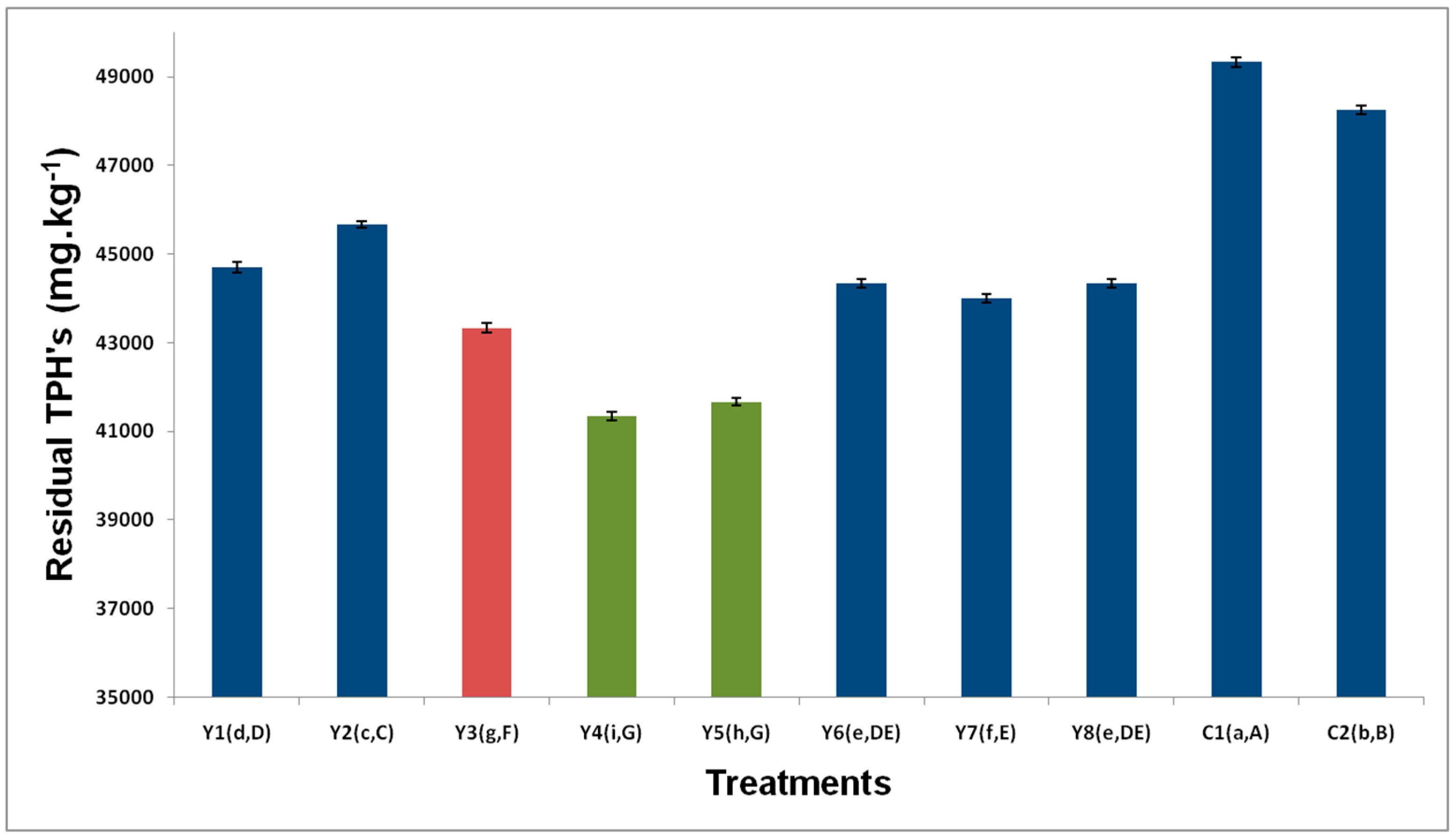
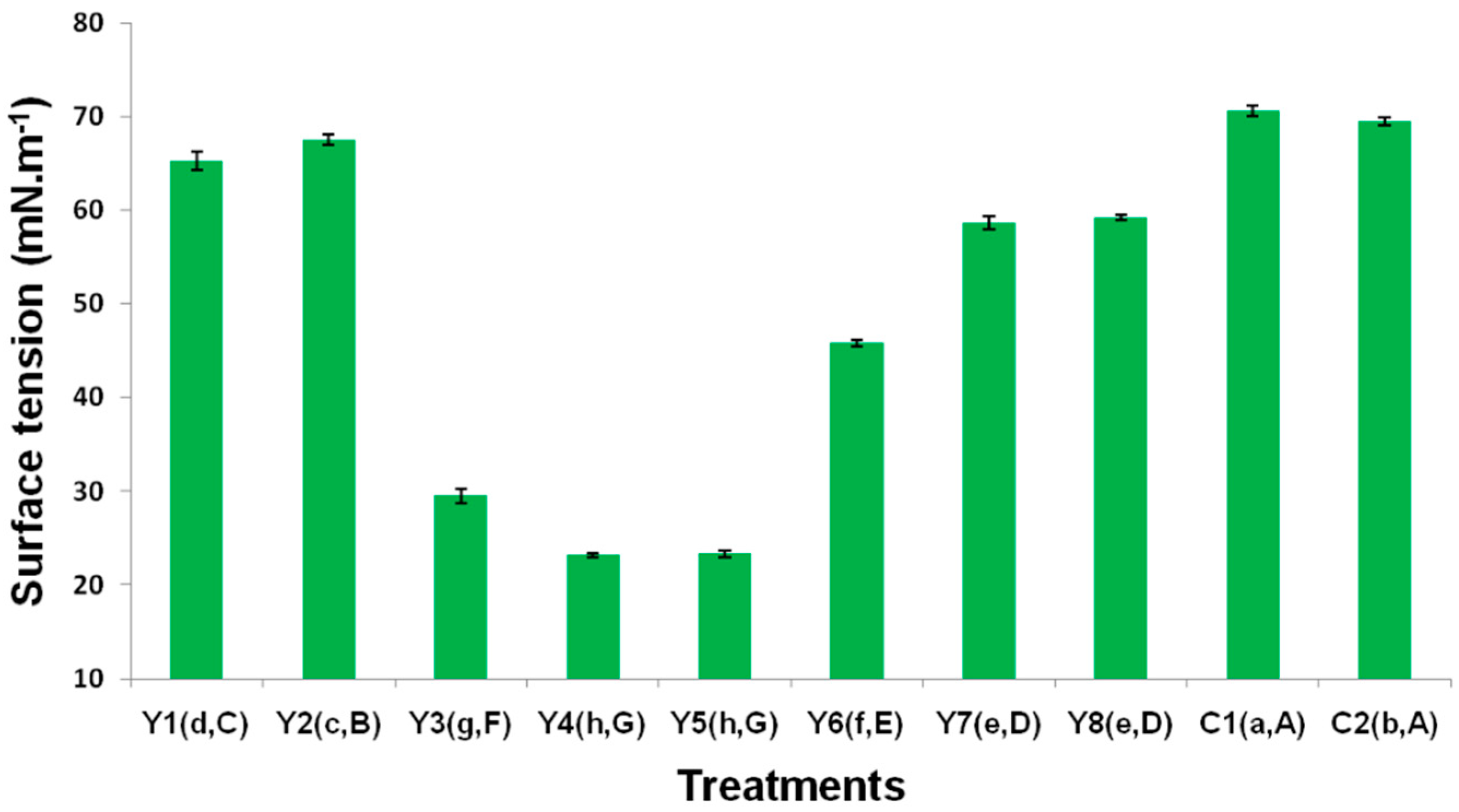
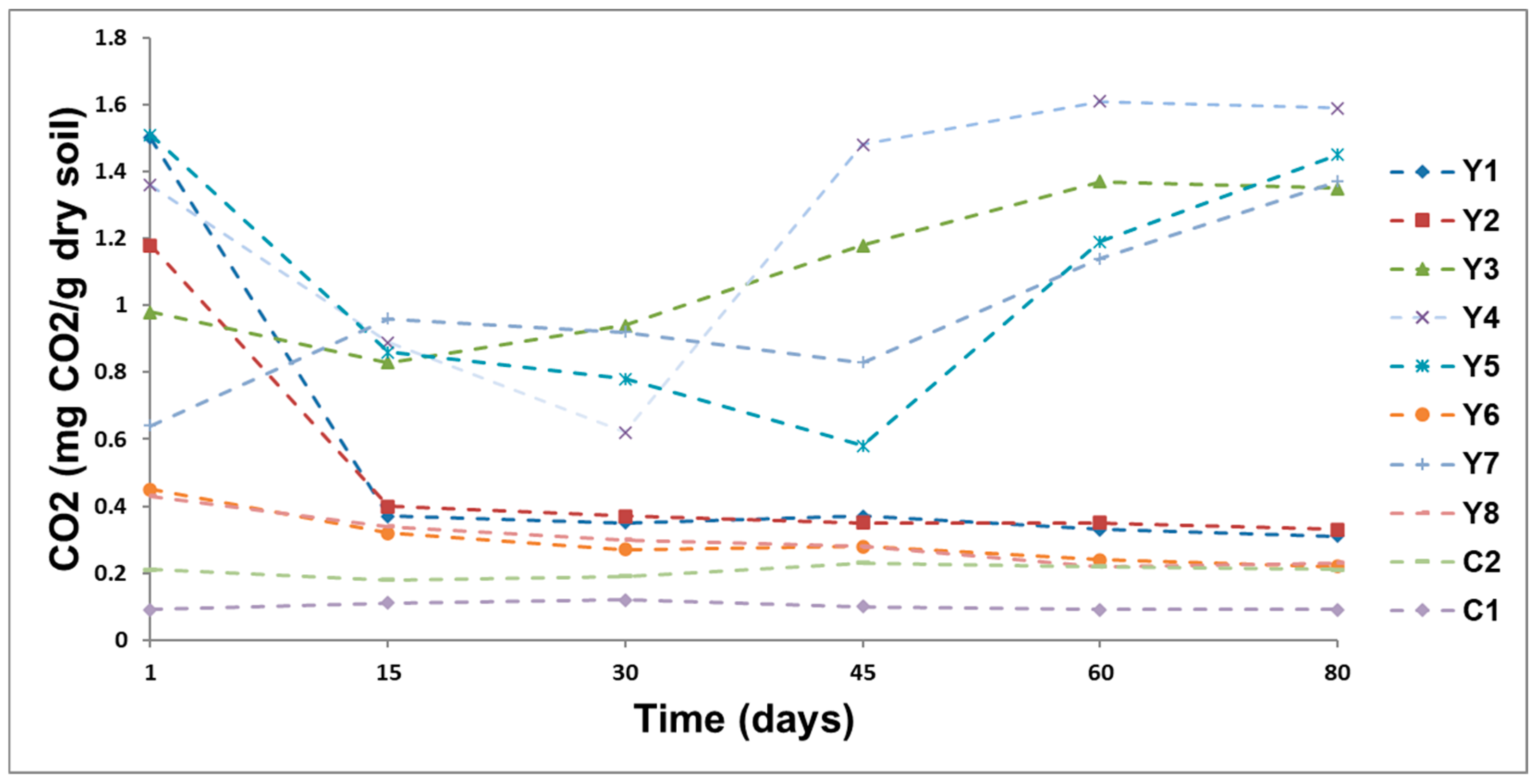
Bioremediation technology is one of the most profitable and sustainable strategies for remediating soils contaminated with hydrocarbons. This study focuses on assessing the influence of biostimulation and bioaugmentation with Pseudomonas fluorescens to contribute to the removal of total petroleum hydrocarbons (TPHs) of a soil. Laboratory studies were carried out (measurements of emitted CO2, surface tension, and residual TPH) to select the best bioaugmentation and biostimulation treatment. The sources of C, N, and P were glucose–yeast extract, NH4Cl–NaNO3, and K2HPO4–K3PO4, respectively. The effect of culture conditions on the reduction of TPH and respiratory activity was evaluated through a factorial design, 23, in a solid culture system. After 80 days of incubation, it was observed that treatments of yeast extract–NH4Cl–K2HPO4 (Y4) and glucose–NaNO3–K3PO4 (Y5) presented a higher level of TPH removal (20.91% and 20.00% degradation of TPH, respectively). Biostimulation favors the production of biosurfactants, indirectly measured by the change in surface tension in the soil extracts. The treatments Y4 and Y5 showed a lower change value of the surface tension (23.15 and 23.30 mN·m−1 at 25 °C). A positive correlation was determined between the change in surface tension and the removal of TPH; hence there was a contribution of the biosurfactants produced to the removal of hydrocarbons.
Keywords: TPH; Pseudomonas fluorescens; biodegradation; bioavailability; biosurfactant; surface tension TPH; Pseudomonas fluorescens; biodegradation; bioavailability; biosurfactant; surface tension