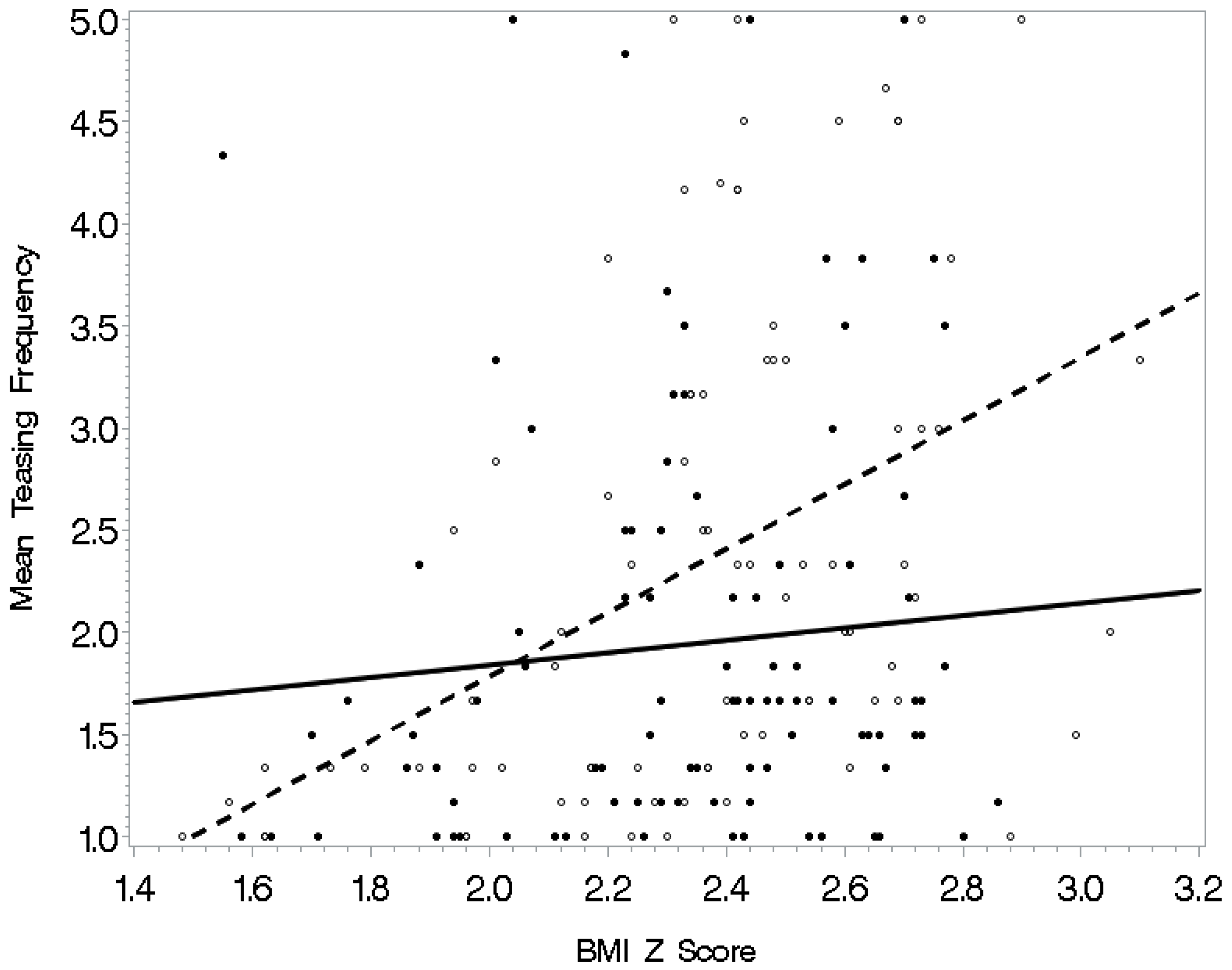
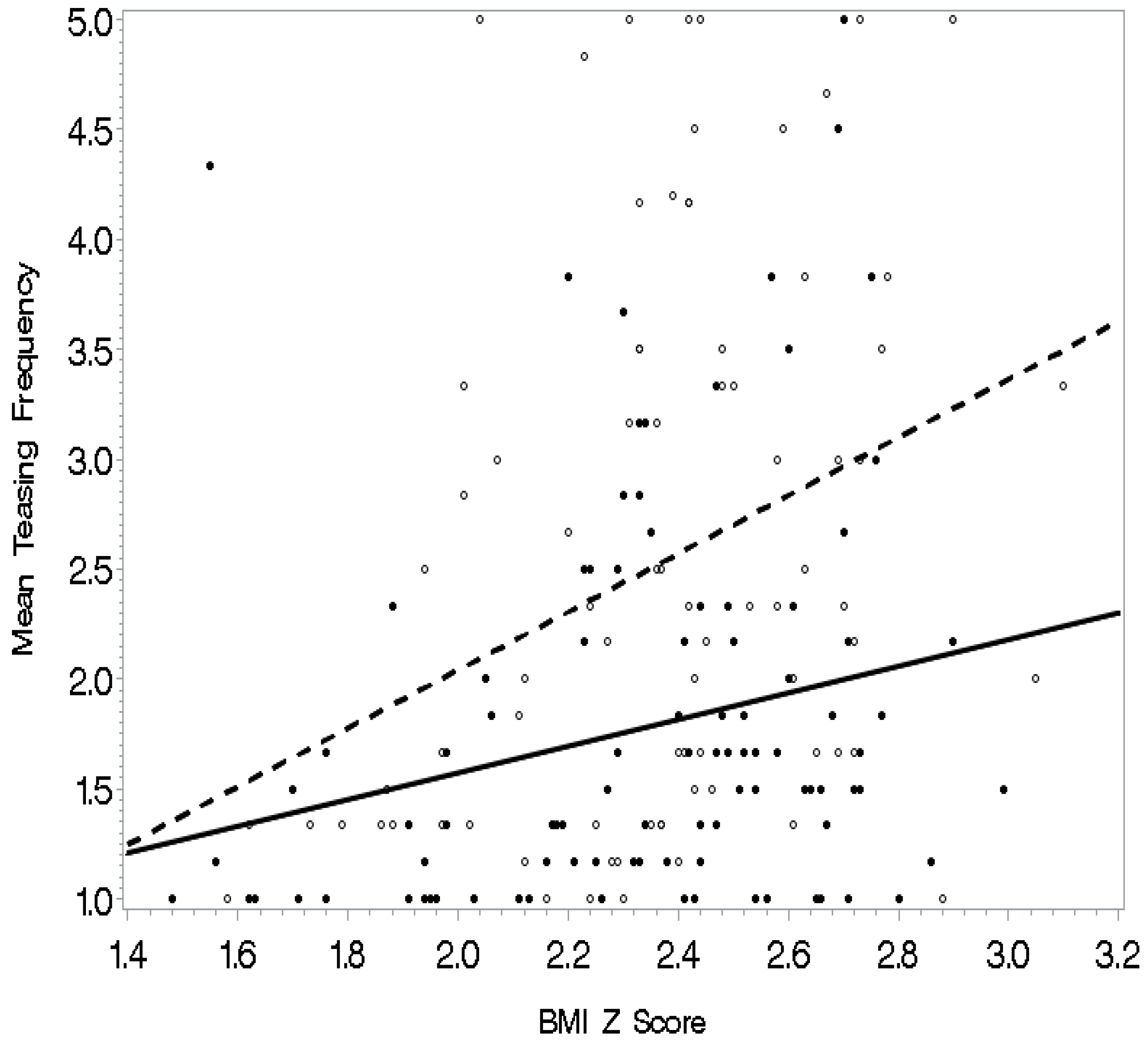
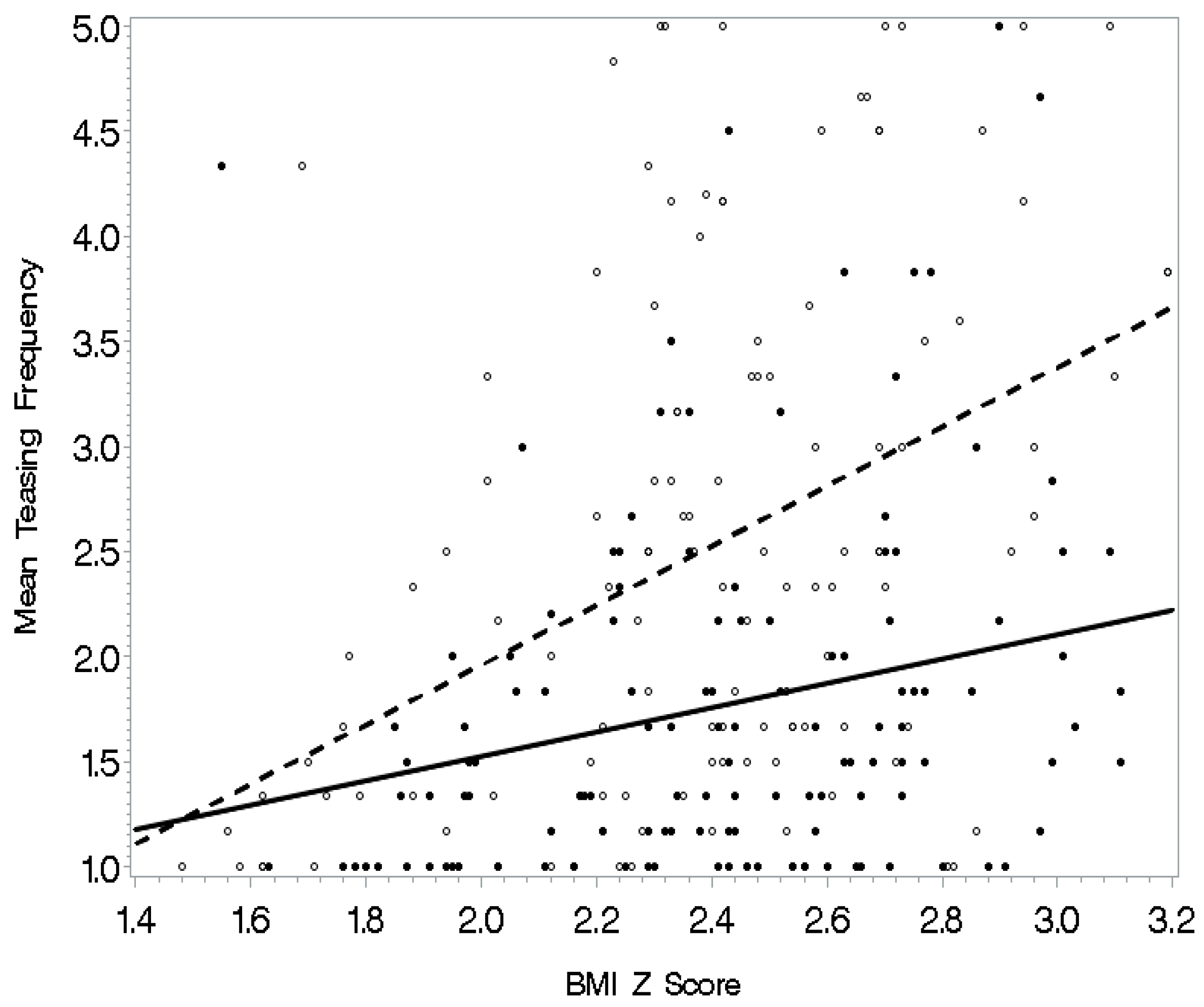
Weight-Related Teasing of Adolescents Who Are Primarily Obese: Roles of Sociocultural Attitudes Towards Appearance and Physical Activity Self-Efficacy

Abstract
Share and Cite
Ievers-Landis, C.E.; Dykstra, C.; Uli, N.; O’Riordan, M.A. Weight-Related Teasing of Adolescents Who Are Primarily Obese: Roles of Sociocultural Attitudes Towards Appearance and Physical Activity Self-Efficacy. Int. J. Environ. Res. Public Health 2019, 16, 1540. https://doi.org/10.3390/ijerph16091540
Ievers-Landis CE, Dykstra C, Uli N, O’Riordan MA. Weight-Related Teasing of Adolescents Who Are Primarily Obese: Roles of Sociocultural Attitudes Towards Appearance and Physical Activity Self-Efficacy. International Journal of Environmental Research and Public Health. 2019; 16(9):1540. https://doi.org/10.3390/ijerph16091540
Chicago/Turabian StyleIevers-Landis, Carolyn E., Carly Dykstra, Naveen Uli, and Mary Ann O’Riordan. 2019. "Weight-Related Teasing of Adolescents Who Are Primarily Obese: Roles of Sociocultural Attitudes Towards Appearance and Physical Activity Self-Efficacy" International Journal of Environmental Research and Public Health 16, no. 9: 1540. https://doi.org/10.3390/ijerph16091540
APA StyleIevers-Landis, C. E., Dykstra, C., Uli, N., & O’Riordan, M. A. (2019). Weight-Related Teasing of Adolescents Who Are Primarily Obese: Roles of Sociocultural Attitudes Towards Appearance and Physical Activity Self-Efficacy. International Journal of Environmental Research and Public Health, 16(9), 1540. https://doi.org/10.3390/ijerph16091540