A Group Decision Making Approach Considering Self-Confidence Behaviors and Its Application in Environmental Pollution Emergency Management




Abstract
1. Introduction
- Experts’ self-confidence levels are taken into account in GDM problems. That is, experts are allowed use SC-FPRs to express their evaluations, which can deal with their self-confidence psychological behaviors well. Meanwhile, some new operation laws for SC-FPRs are proposed to apply to environmental pollution emergency management.
- A novel determination of the decision weights of experts is given combining the subjective and objective weights. On one hand, the subjective weight can be directly assigned by organizer. On the other hand, the objective weight is determined by the self-confidence degree (SCD) of experts on their evaluations.
- An SCD is presented to measure the overall self-confidence levels of experts on their evaluations, as well as to be utilized to assign their objective weights in environmental pollution emergency management.
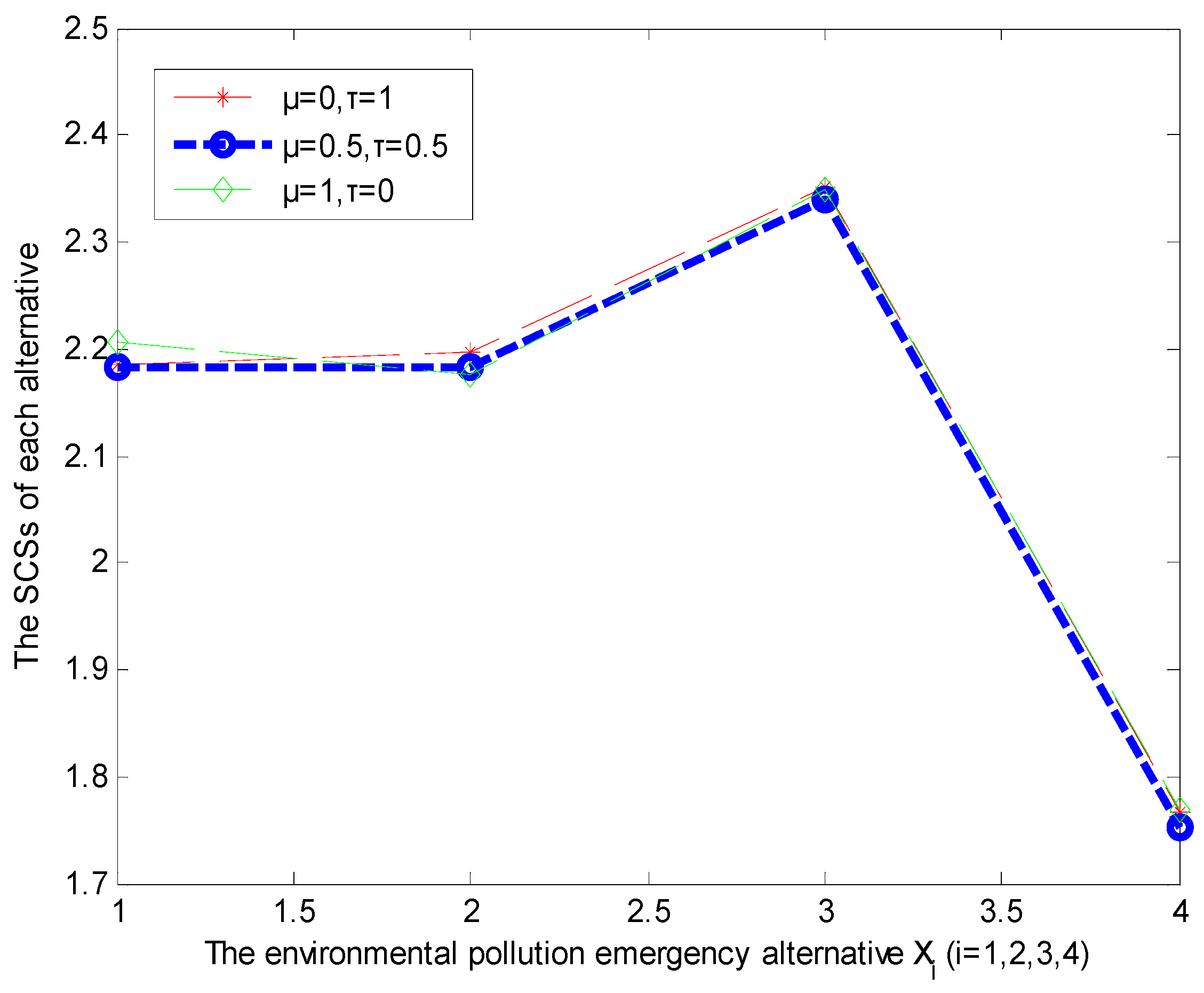
- An SCS function for SC-FPRs is designed to select the best alternative(s) in environmental pollution emergency management. We rank alternatives by computing the SCSs of the collective evaluations. And then, the best alternative is the one with the highest SCS.
2. Preliminaries
2.1. 2-Tuple Linguistic Ordinal Scale Model
- (1)
- 2-tuples comparison operator: Let and be two 2-tuples, then:
- if , then is smaller than ;
- if , then
- (a)
- if , then , represents the same information;
- (b)
- if , then is smaller than ;
- (2)
- A 2-tuple negation operator:
2.2. Self-Confident Fuzzy Preference Relations
- (1)
- ;
- (2)
- ;
- (3)
- ;
- (4)
- ;
- (5)
- .
3. A GDM Approach Considering Self-Confidence Behaviors
3.1. Determine the Decision Weight of Expert Considering Self-Confidence
- Stage 1.
- The organizer directly assigns the subjective weight for each expert denoted as , where represents the subjective weight of expert , such that and , . Considering the fairness among experts, the can be determined by the number of participators in decision making as follows:
- Stage 2.
- To determine the objective weights of experts based on the SCDs in their evaluations. The detailed approach is described below:
- (1)
- ;
- (2)
- if , it means that the expert is completely self-confident in all of her/his evaluations.
- Stage 3.
- Based on the above analysis, let be the weight vector of experts, the can be determined by combing the subjective weight and the objective weight as follows:where and are parameters to control the weight between and of expert , and .
- (1)
- if , i.e., , it indicates that the weight of expert does not consider the objective weight. In other words, the self-confidence of expert is not taken into account.
- (2)
- if , i.e., , it represents that the subjective weight of expert is not considered.
3.2. Detailed Decision Processes for GDM Considering Self-Confidence
| Algorithm 1.The GDM approach considering self-confidence. |
| Step 1. Suppose that there is a set of alternatives . Some experts are invited to take part in the decision making, and is a set of experts. All of the experts make the pairwise comparison of the alternatives in X, and then use SC-FPRs to express their evaluations, denoted as (). Go to Step 2. Step 2. Utilize Equations (1) and (4) to compute the and of expert , respectively. Subsequently, the decision weight of expert can be calculated by Equation (5). Go to Step 3. Step 3. Compute the collective evaluation by Equation (6). Go to Step 4. Step 4. Calculate the SCS of each alternative in collective evaluation by Equation (7). And then, the optimal selection can be obtained. Step 5. End. |
4. Case Study: An Environmental Pollution Emergency Management
4.1. Environmental Pollution Emergency Management Description
- Resource allocation;
- The rescue time of environmental pollution emergency;
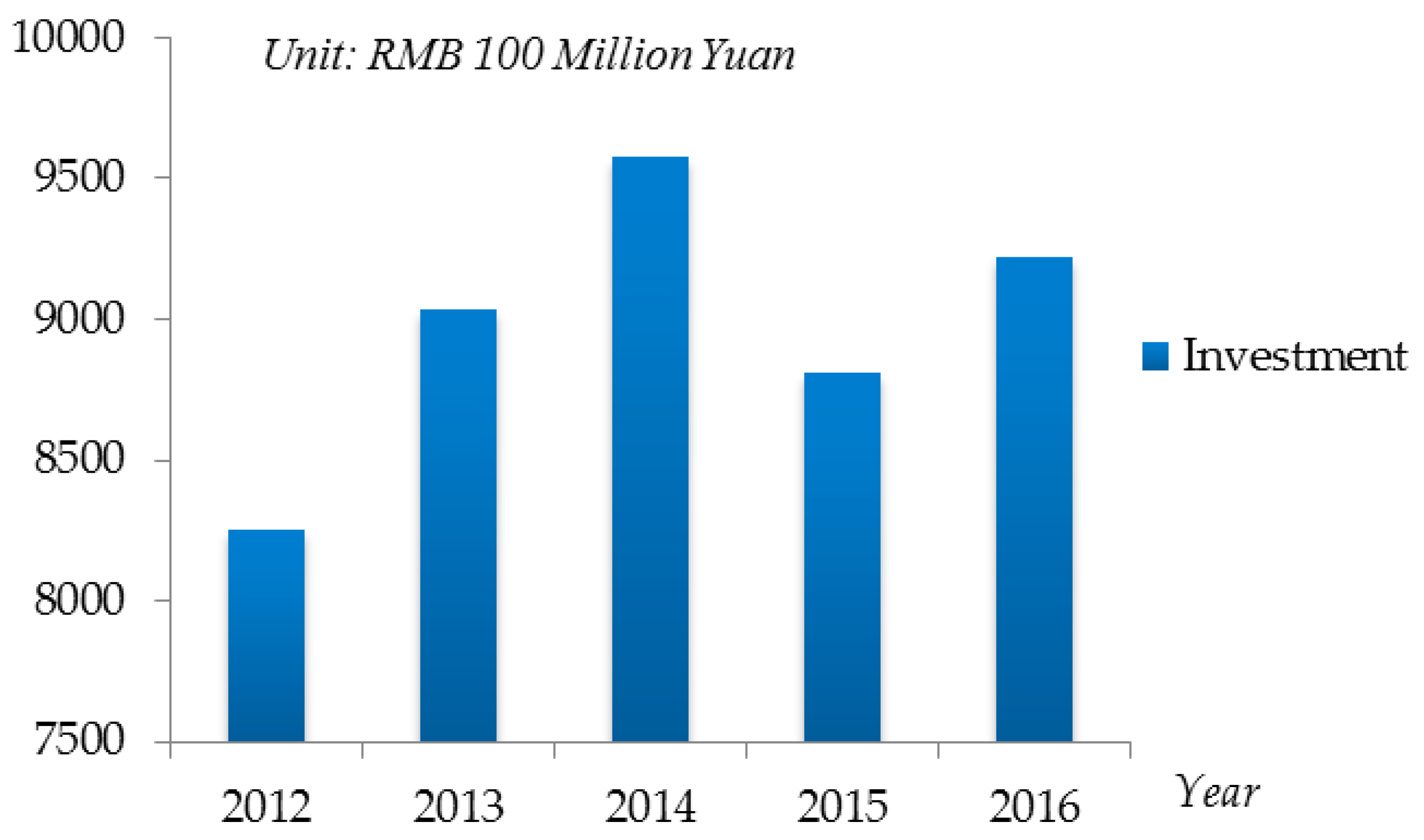
- The cost of investment;
- Other emergency safeguards.
- if , it means that expert thinks there is indifference between alternatives and , that is, .
- if , it means that expert thinks alternative is preferred to alternative , that is, . Specially, if , it indicates that expert thinks alternative xi is definitely preferred to alternative xj.
- if , it means that expert thinks alternative is preferred to alternative , that is, . Meanwhile, the smaller the stronger the preference of over .
4.2. Application of the Proposed GDM Approach Considering Self-Confidence
5. Analyses and Discussion
5.1. The Impact of Experts’ Self-Confidence on Alternative Ranking in GDM
5.2. Sensitivity Analysis of the Decision Weight
6. Conclusions
- (1)
- Experts are allowed to use SC-FPRs to express their assessment information, so as to deal with the self-confidence psychological behavior well in environmental pollution emergency management. Meanwhile, some new operational laws of 2-tuples in SC-FPR are presented to apply to GDM problems.
- (2)
- A novel determination of the experts’ weights is developed in environmental pollution emergency management. That is, we integrate the subjective weights assigned by the organizer, and the objective weights determined by the experts’ SCDs to determine the importance degree of experts in environmental pollution emergency management. An SCD is proposed to measure the overall self-confidence levels of experts on their evaluations. Subsequently, the objective weights of experts in environmental pollution emergency management can be assigned by the values of the SCDs of experts.
- (3)
- An SCS function is designed to obtain the alternatives rankings in environmental pollution emergency management. We compute the values of the SCSs for all the alternatives, and then rank them. The best alternative is obtained according to the largest value of SCS.
Author Contributions
Acknowledgments
Conflicts of Interest
Appendix A

| Notations | Descriptions |
|---|---|
| Finite set of environmental pollution emergency alternatives | |
| Set of experts (decision makers) | |
| Set of the linguistic self-confidence of expert | |
| The SC-FPR of expert | |
| The self-confidence matrix of expert | |
| Self-confidence deviation level of | |
| Self-confidence degree level of | |
| Subjective weight set of expert | |
| Objective weight set of expert | |
| Decision weight set of expert | |
| and | The parameters to control the weight between subjective and objective weights of expert |
| The SC-FPR of collective | |
| The self-confidence score function of |
References
- Hochbaum, D.S.; Levin, A. Methodologies and algorithms for group-rankings decision. Manag. Sci. 2006, 52, 1394–1408. [Google Scholar] [CrossRef] [Scilit]
- Herrera, F.; Herrera-Viedma, E.; Chiclana, F. Multiperson decision-making based on multiplicative preference relations. Eur. J. Oper. Res. 2001, 129, 372–385. [Google Scholar] [CrossRef] [Scilit]
- Xu, Y.J.; Liu, X.; Wang, H.M. The additive consistency measure of fuzzy reciprocal preference relations. Int. J. Mach. Learn. Cybern. 2018, 9, 1141–1152. [Google Scholar] [CrossRef] [Scilit]
- Millet, I. The effectiveness of alternative preference elicitation methods in the analytic hierarchy process. J. Multi-Criteria Decis. Anal. 1997, 6, 41–51. [Google Scholar] [CrossRef]
- Orlovsky, S. Decision-making with a fuzzy preference relation. Fuzzy Sets Syst. 1978, 1, 155–167. [Google Scholar] [CrossRef] [Scilit]
- Chiclana, F.; Herrera, F.; Herrera-Viedma, E. Integrating multiplicative preference relations in a multipurpose decision-making model based on fuzzy preference relations. Fuzzy Sets Syst. 2001, 122, 277–291. [Google Scholar] [CrossRef] [Scilit]
- Xu, Y.J.; Cabrerizo, F.J.; Herrera-Viedma, E. A consensus model for hesitant fuzzy preference relations and its application in water allocation management. Appl. Soft Comput. 2017, 58, 265–284. [Google Scholar] [CrossRef] [Scilit]
- Liao, H.C.; Si, G.S.; Xu, Z.S.; Fujita, H. Hesitant fuzzy linguistic preference utility set and its application in selection of fire rescue plans. Int. J. Environ. Res. Public Health 2018, 15, 664. [Google Scholar] [CrossRef] [Scilit]
- Tang, M.; Liao, H.C.; Li, Z.M.; Xu, Z.S. Nature disaster risk evaluation with a group decision making method based on incomplete hesitant fuzzy linguistic preference relations. Int. J. Environ. Res. Public Health 2018, 15, 751. [Google Scholar] [CrossRef] [Scilit]
- Zhang, Z.; Kou, X.Y.; Yu, W.Y.; Guo, C.H. On priority weights and consistency for incomplete hesitant fuzzy preference relations. Knowl.-Based Syst. 2018, 143, 115–126. [Google Scholar] [CrossRef] [Scilit]
- Zhang, Z.; Guo, C.H. Deriving priority weights from intuitionistic multiplicative preference relations under group decision-making settings. J. Oper. Res. Soc. 2017, 68, 1582–1599. [Google Scholar] [CrossRef] [Scilit]
- Dong, Y.C.; Liu, Y.T.; Liang, H.M.; Chiclana, F.; Herrera-Viedma, E. Strategic weight manipulation in multiple attribute decision making. Omega 2018, 75, 154–164. [Google Scholar] [CrossRef] [Scilit]
- Bénabou, R.; Tirole, J. Self-confidence and personal motivation. Q. J. Econ. 2002, 117, 871–915. [Google Scholar] [CrossRef] [Scilit]
- Hinsz, V.B. Cognitive and consensus processes in group recognition memory performance. J. Personal. Soc. Psychol. 1990, 59, 705. [Google Scholar] [CrossRef]
- Stephenson, G.M.; Abrams, D.; Wagner, W.; Wade, G. Partners in recall: Collaborative order in the recall of a police interrogation. Br. J. Soc. Psychol. 1986, 25, 341–343. [Google Scholar] [CrossRef] [Scilit]
- Johnson, H.H.; Torcivia, J.M. Group and individual performance on a single-stage task as a function of distribution of individual performance. J. Exp. Soc. Psychol. 1967, 3, 266–273. [Google Scholar] [CrossRef] [Scilit]
- Ureña, R.; Chiclana, F.; Fujita, H.; Herrera-Viedma, E. Confidence-consistency driven group decision making approach with incomplete reciprocal intuitionistic preference relations. Knowl.-Based Syst. 2015, 89, 86–96. [Google Scholar] [CrossRef] [Scilit]
- Liu, W.Q.; Dong, Y.C.; Chiclana, F.; Cabrerizo, F.J.; Herrera-Viedma, E. Group decision-making based on heterogeneous preference relations with self-confidence. Fuzzy Optim. Decis. Mak. 2017, 16, 429–447. [Google Scholar] [CrossRef] [Scilit]
- Su, L.Y.; Liu, J.L.; Christensen, P. Comparative study of water resource management policies between China and Denmark. Procedia Environ. Sci. 2010, 2, 1775–1798. [Google Scholar] [CrossRef] [Scilit]
- Zhang, X.-J.; Chen, C.; Ding, J.-Q.; Hou, A.; Li, Y.; Niu, Z.-B.; Su, X.-Y.; Xu, Y.-J.; Laws, E.A. The 2007 water crisis in Wuxi, China: Analysis of the origin. J. Hazard. Mater. 2010, 182, 130–135. [Google Scholar] [CrossRef] [Scilit]
- Zhong, L.; Zhang, Y.; Yang, D.D.; Lu, Z.L. Introduction and reflection of cadmium pollution accident occurred in LongJiang River of Guangxi Province. Chin. J. Chem. Educ. 2013, 6, 1. [Google Scholar]
- Miao, X.; Tang, Y.H.; Wong, C.W.; Zang, H.Y. The latent causal chain of industrial water pollution in China. Environ. Pollut. 2015, 196, 473–477. [Google Scholar] [CrossRef] [Scilit] [PubMed]
- Yuan, Q.; Gascó, M. Citizens’ use of microblogging and government communication during emergencies: A case study on water contamination in Shanghai. First Monday 2018, 23. [Google Scholar] [CrossRef] [Scilit]
- Yang, J.M. Environmental emergency response plan. In Environmental Management in Mega Construction Projects; Springer: Berlin, Germany, 2017; pp. 275–283. [Google Scholar]
- Shao, C.F.; Yang, J.; Tian, X.G.; Ju, M.T.; Huang, L. Integrated environmental risk assessment and whole-process management system in chemical industry parks. Int. J. Environ. Res. Public Health 2013, 10, 1609–1630. [Google Scholar] [CrossRef] [Scilit] [PubMed]
- Zhang, Q.; Wang, M. Strengthen The quality management of sudden environmental pollution emergency monitoring. J. Environ. Manag. Coll. China 2006, 2, 30. [Google Scholar]
- Marchese, D.; Reynolds, E.; Bates, M.E.; Morgan, H.; Clark, S.S.; Linkov, I. Resilience and sustainability: Similarities and differences in environmental management applications. Sci. Total Environ. 2018, 613, 1275–1283. [Google Scholar] [CrossRef] [Scilit] [PubMed]
- Cao, G.; Yang, L.; Liu, L.; Ma, Z.; Wang, J.; Bi, J. Environmental incidents in China: Lessons from 2006 to 2015. Sci. Total Environ. 2018, 633, 1165–1172. [Google Scholar] [CrossRef] [Scilit]
- Ayeni, A.O. Environmental policies for emergency management and public safety: Implementing green policy and community participation. In Emergency and Disaster Management: Concepts, Methodologies, Tools, and Applications; IGI Global: Hershey, PA, USA, 2019; pp. 903–922. [Google Scholar]
- Rämö, R.A.; van den Brink, P.J.; Ruepert, C.; Castillo, L.E.; Gunnarsson, J.S. Environmental risk assessment of pesticides in the River Madre de Dios, Costa Rica using PERPEST, SSD, and msPAF models. Environ. Sci. Pollut. Res. 2018, 25, 13254–13269. [Google Scholar] [CrossRef] [Scilit]
- Herrera, F.; Martínez, L. A 2-tuple fuzzy linguistic representation model for computing with words. IEEE Trans. Fuzzy Syst. 2000, 8, 746–752. [Google Scholar]
- Dong, Y.C.; Herrera-Viedma, E. Consistency-driven automatic methodology to set interval numerical scales of 2-tuple linguistic term sets and its use in the linguistic GDM with preference relation. IEEE Trans. Cybern. 2015, 45, 780–792. [Google Scholar] [CrossRef] [Scilit]
- Martínez, L.; Herrera, F. An overview on the 2-tuple linguistic model for computing with words in decision making: Extensions, applications and challenges. Inf. Sci. 2012, 207, 1–18. [Google Scholar] [CrossRef] [Scilit]
- Zadeh, L.A. A note on Z-numbers. Inf. Sci. 2011, 181, 2923–2932. [Google Scholar] [CrossRef] [Scilit]
- Liu, X.; Xu, Y.J.; Montes, R.; Dong, Y.C.; Herrera, F. Analysis of self-confidence indices-based additive consistency for fuzzy preference relations with self-confidence and its application in group decision making. Int. J. Intell. Syst. 2018. [Google Scholar] [CrossRef] [Scilit]
- Zacharakis, A.L.; Shepherd, D.A. The nature of information and overconfidence on venture capitalists’ decision making. J. Bus. Ventur. 2001, 16, 311–332. [Google Scholar] [CrossRef] [Scilit]
- Moore, D.A.; Healy, P.J. The trouble with overconfidence. Psychol. Rev. 2008, 115, 502. [Google Scholar] [CrossRef] [Scilit]
- Gayo-Avello, D. Social media, democracy, and democratization. IEEE Multimed. 2015, 22, 10–16. [Google Scholar] [CrossRef] [Scilit]
- De Meo, P.; Ferrara, E.; Rosaci, D.; Sarné, G.M. Trust and compactness in social network groups. IEEE Trans. Cybern. 2015, 45, 205–216. [Google Scholar] [CrossRef] [Scilit] [PubMed]
- Wu, J.; Xiong, R.Y.; Chiclana, F. Uninorm trust propagation and aggregation methods for group decision making in social network with four tuple information. Knowl.-Based Syst. 2016, 96, 29–39. [Google Scholar] [CrossRef] [Scilit]
- De Santo, E.M. Assessing public “participation” in environmental decision-making: Lessons learned from the UK Marine Conservation Zone (MCZ) site selection process. Mar. Policy 2016, 64, 91–101. [Google Scholar] [CrossRef] [Scilit]
- Liu, X.; Xu, Y.J.; Montes, R.; Ding, R.X.; Herrera, F. Alternative ranking-based clustering and reliability index-based consensus reaching process for hesitant fuzzy large scale group decision making. IEEE Trans. Fuzzy Syst. 2019, 27, 159–171. [Google Scholar] [CrossRef] [Scilit]
- Zhang, H.J.; Dong, Y.C.; Herrera-Viedma, E. Consensus building for the heterogeneous large-scale GDM with the individual concerns and satisfactions. IEEE Trans. Fuzzy Syst. 2018, 26, 884–898. [Google Scholar] [CrossRef] [Scilit]
- Xu, Y.J.; Wen, X.W.; Zhang, W.C. A two-stage consensus method for large-scale multi-attribute group decision making with an application to earthquake shelter selection. Comput. Ind. Eng. 2018, 116, 113–129. [Google Scholar] [CrossRef] [Scilit]
- Li, C.-C.; Dong, Y.C.; Herrera, F. A consensus model for large-scale linguistic group decision making with a feedback recommendation based on clustered personalized individual semantics and opposing consensus groups. IEEE Trans. Fuzzy Syst. 2018. [Google Scholar] [CrossRef] [Scilit]
- Palomares, I.; Martínez, L.; Herrera, F. A consensus model to detect and manage noncooperative behaviors in large-scale group decision making. IEEE Trans. Fuzzy Syst. 2014, 22, 516–530. [Google Scholar] [CrossRef] [Scilit]
- Wu, Z.B.; Xu, J.P. A consensus model for large-scale group decision making with hesitant fuzzy information and changeable clusters. Inf. Fusion 2018, 41, 217–231. [Google Scholar] [CrossRef] [Scilit]
- Zhang, Z.; Guo, C.H.; Martínez, L. Managing multigranular linguistic distribution assessments in large-scale multiattribute group decision making. IEEE Trans. Syst. Man Cybern. Syst. 2017, 47, 3063–3076. [Google Scholar] [CrossRef] [Scilit]
- Zhang, Z.; Guo, C.H. Consistency and consensus models for group decision-making with uncertain 2-tuple linguistic preference relations. Int. J. Syst. Sci. 2016, 47, 2572–2587. [Google Scholar] [CrossRef] [Scilit]
- Zhang, B.W.; Dong, Y.C.; Herrera-Viedma, E. Group decision making with heterogeneous preference structures: An automatic mechanism to support consensus reaching. Group Decis. Negot. 2019. [Google Scholar] [CrossRef] [Scilit]

| Year | 2012 | 2013 | 2014 | 2015 | 2016 | |
|---|---|---|---|---|---|---|
| Times | ||||||
| Total Number | 542 | 712 | 471 | 334 | 304 | |
| Severe | 5 | 3 | 3 | 3 | 3 | |
| Large | 5 | 12 | 16 | 5 | 5 | |
| General | 532 | 697 | 452 | 326 | 296 | |
| Self-Confidence Language | Semantics |
|---|---|
| s0 | None |
| s1 | Very low |
| s2 | Low |
| s3 | Slightly low |
| s4 | Medium |
| s5 | Slightly high |
| s6 | High |
| s7 | Very high |
| s8 | Prefect |
| Experts | |||||
|---|---|---|---|---|---|
| SCDL and SCD | |||||
| 0.354 | 0.5 | 0.458 | 0.375 | ||
| 0.646 | 0.5 | 0.542 | 0.625 | ||
| Rankings of Alternatives | ||
|---|---|---|
| μ and τ | Rankings of Alternatives | ||||
|---|---|---|---|---|---|
| 2.1847 | 2.1971 | 2.3505 | 1.7678 | ||
| 2.1868 | 2.1949 | 2.3504 | 1.7679 | ||
| 2.1890 | 2.1927 | 2.3504 | 1.7680 | ||
| 2.1912 | 2.1905 | 2.3503 | 1.7681 | ||
| 2.1933 | 2.1882 | 2.3503 | 1.7682 | ||
| 2.1838 | 2.1820 | 2.3399 | 1.7518 | ||
| 2.1976 | 2.1838 | 2.3502 | 1.7684 | ||
| 2.1998 | 2.1816 | 2.3501 | 1.7685 | ||
| 2.2019 | 2.1794 | 2.3501 | 1.7686 | ||
| 2.2041 | 2.1772 | 2.3500 | 1.7687 | ||
| 2.2063 | 2.1750 | 2.3500 | 1.7688 |
© 2019 by the authors. Licensee MDPI, Basel, Switzerland. This article is an open access article distributed under the terms and conditions of the Creative Commons Attribution (CC BY) license (http://creativecommons.org/licenses/by/4.0/).
Share and Cite
Liu, X.; Xu, Y.; Ge, Y.; Zhang, W.; Herrera, F. A Group Decision Making Approach Considering Self-Confidence Behaviors and Its Application in Environmental Pollution Emergency Management. Int. J. Environ. Res. Public Health 2019, 16, 385. https://doi.org/10.3390/ijerph16030385
Liu X, Xu Y, Ge Y, Zhang W, Herrera F. A Group Decision Making Approach Considering Self-Confidence Behaviors and Its Application in Environmental Pollution Emergency Management. International Journal of Environmental Research and Public Health. 2019; 16(3):385. https://doi.org/10.3390/ijerph16030385
Chicago/Turabian StyleLiu, Xia, Yejun Xu, Yao Ge, Weike Zhang, and Francisco Herrera. 2019. "A Group Decision Making Approach Considering Self-Confidence Behaviors and Its Application in Environmental Pollution Emergency Management" International Journal of Environmental Research and Public Health 16, no. 3: 385. https://doi.org/10.3390/ijerph16030385
APA StyleLiu, X., Xu, Y., Ge, Y., Zhang, W., & Herrera, F. (2019). A Group Decision Making Approach Considering Self-Confidence Behaviors and Its Application in Environmental Pollution Emergency Management. International Journal of Environmental Research and Public Health, 16(3), 385. https://doi.org/10.3390/ijerph16030385