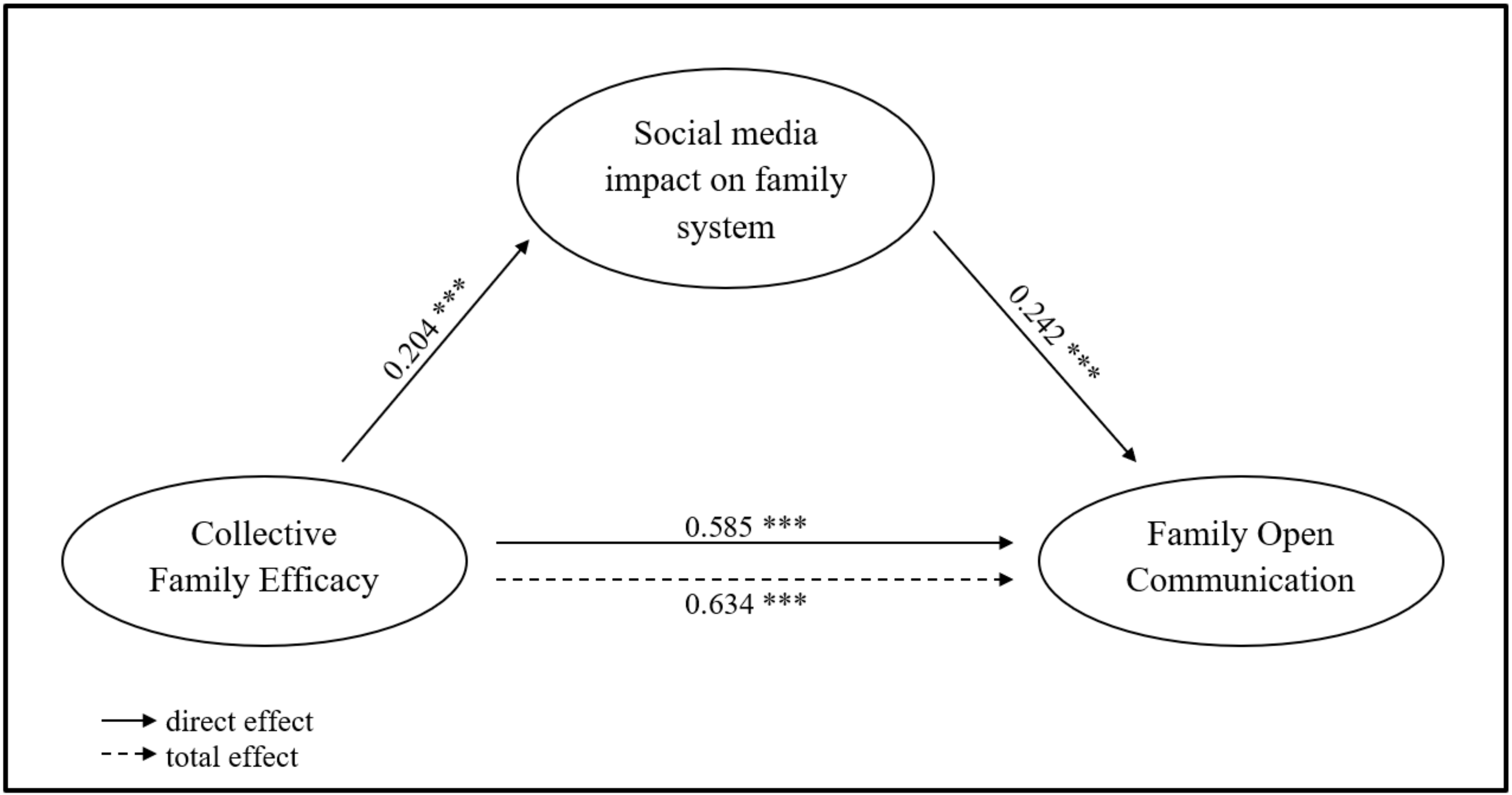
Families and Social Media Use: The Role of Parents’ Perceptions about Social Media Impact on Family Systems in the Relationship between Family Collective Efficacy and Open Communication




Abstract
Share and Cite
Procentese, F.; Gatti, F.; Di Napoli, I. Families and Social Media Use: The Role of Parents’ Perceptions about Social Media Impact on Family Systems in the Relationship between Family Collective Efficacy and Open Communication. Int. J. Environ. Res. Public Health 2019, 16, 5006. https://doi.org/10.3390/ijerph16245006
Procentese F, Gatti F, Di Napoli I. Families and Social Media Use: The Role of Parents’ Perceptions about Social Media Impact on Family Systems in the Relationship between Family Collective Efficacy and Open Communication. International Journal of Environmental Research and Public Health. 2019; 16(24):5006. https://doi.org/10.3390/ijerph16245006
Chicago/Turabian StyleProcentese, Fortuna, Flora Gatti, and Immacolata Di Napoli. 2019. "Families and Social Media Use: The Role of Parents’ Perceptions about Social Media Impact on Family Systems in the Relationship between Family Collective Efficacy and Open Communication" International Journal of Environmental Research and Public Health 16, no. 24: 5006. https://doi.org/10.3390/ijerph16245006
APA StyleProcentese, F., Gatti, F., & Di Napoli, I. (2019). Families and Social Media Use: The Role of Parents’ Perceptions about Social Media Impact on Family Systems in the Relationship between Family Collective Efficacy and Open Communication. International Journal of Environmental Research and Public Health, 16(24), 5006. https://doi.org/10.3390/ijerph16245006