Do Wet-Dry Ratio and Fe-Mn System Affect Oxidation-Reduction Potential Nonlinearly in the Subsurface Wastewater Infiltration Systems?


Abstract
1. Introduction
2. Materials and Methods
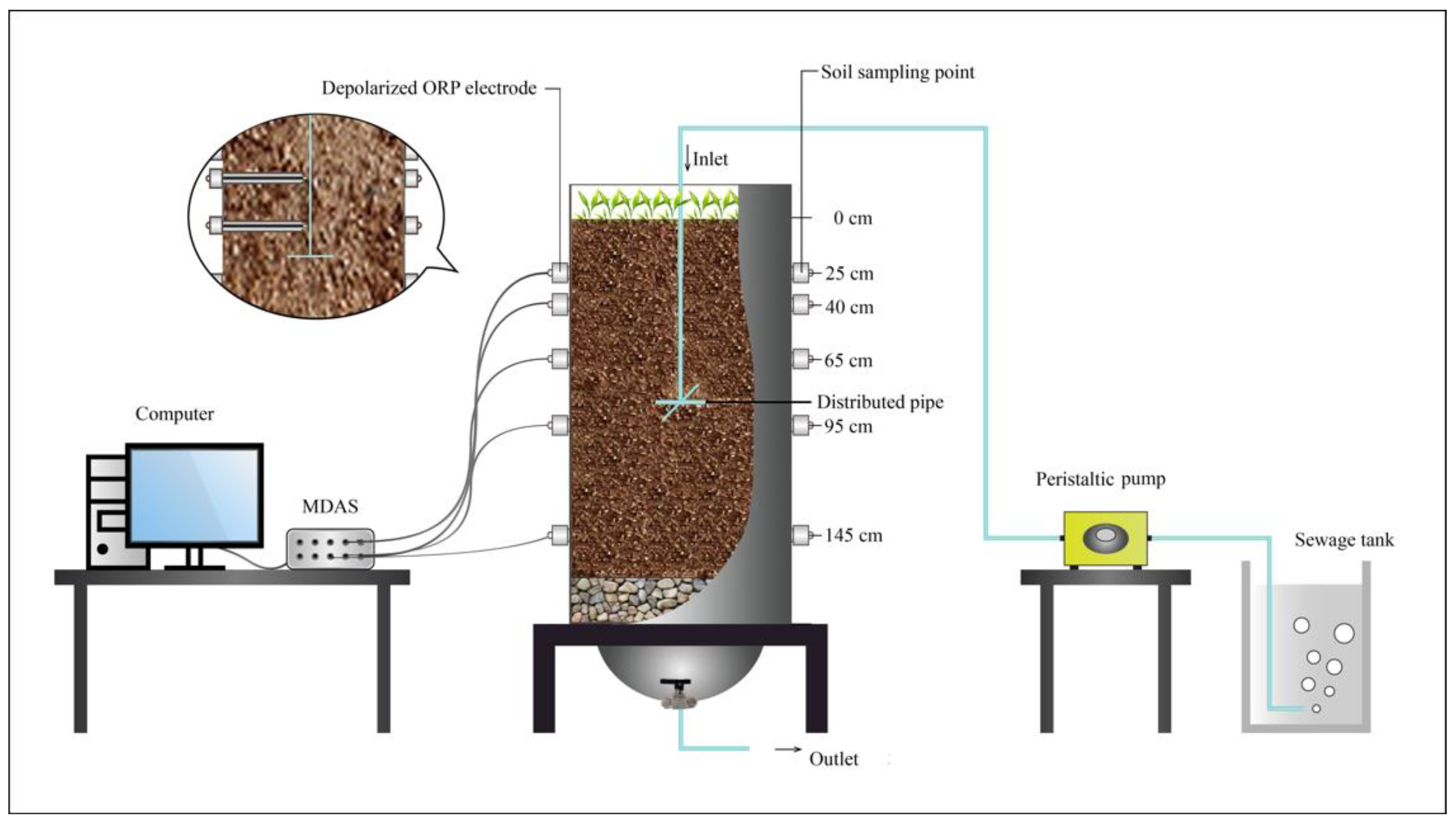
2.1. SWIS Description
2.2. Matrix
2.3. Matrix, Water Quality and Data Analysis
2.4. Experiments
2.4.1. ORP in Different Rwds
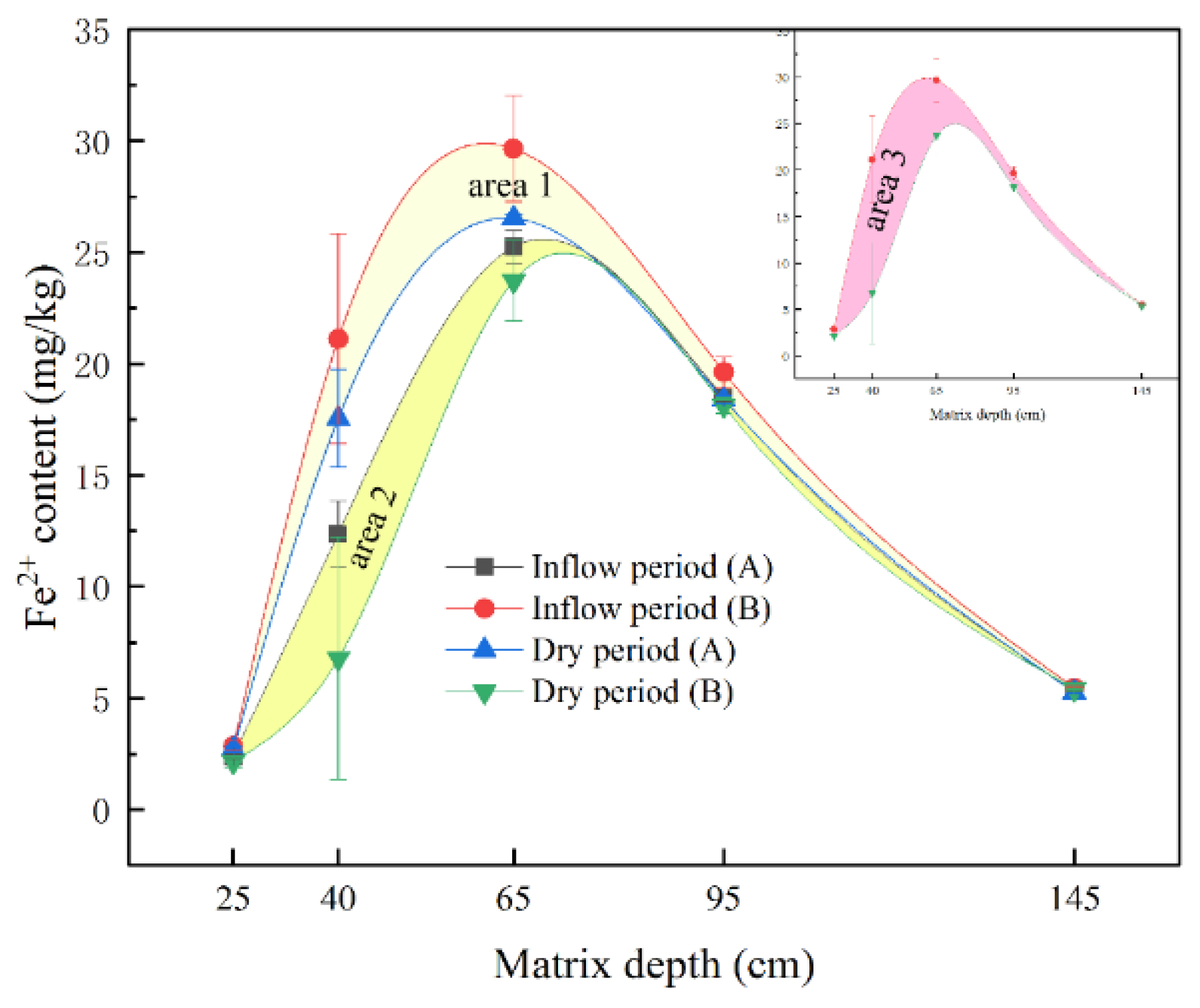
2.4.2. Measurements of the Contents of Fe2+ in the Matrix
2.4.3. Measurements of the Contents of Mn2+ in the Matrix
3. Results and Discussion
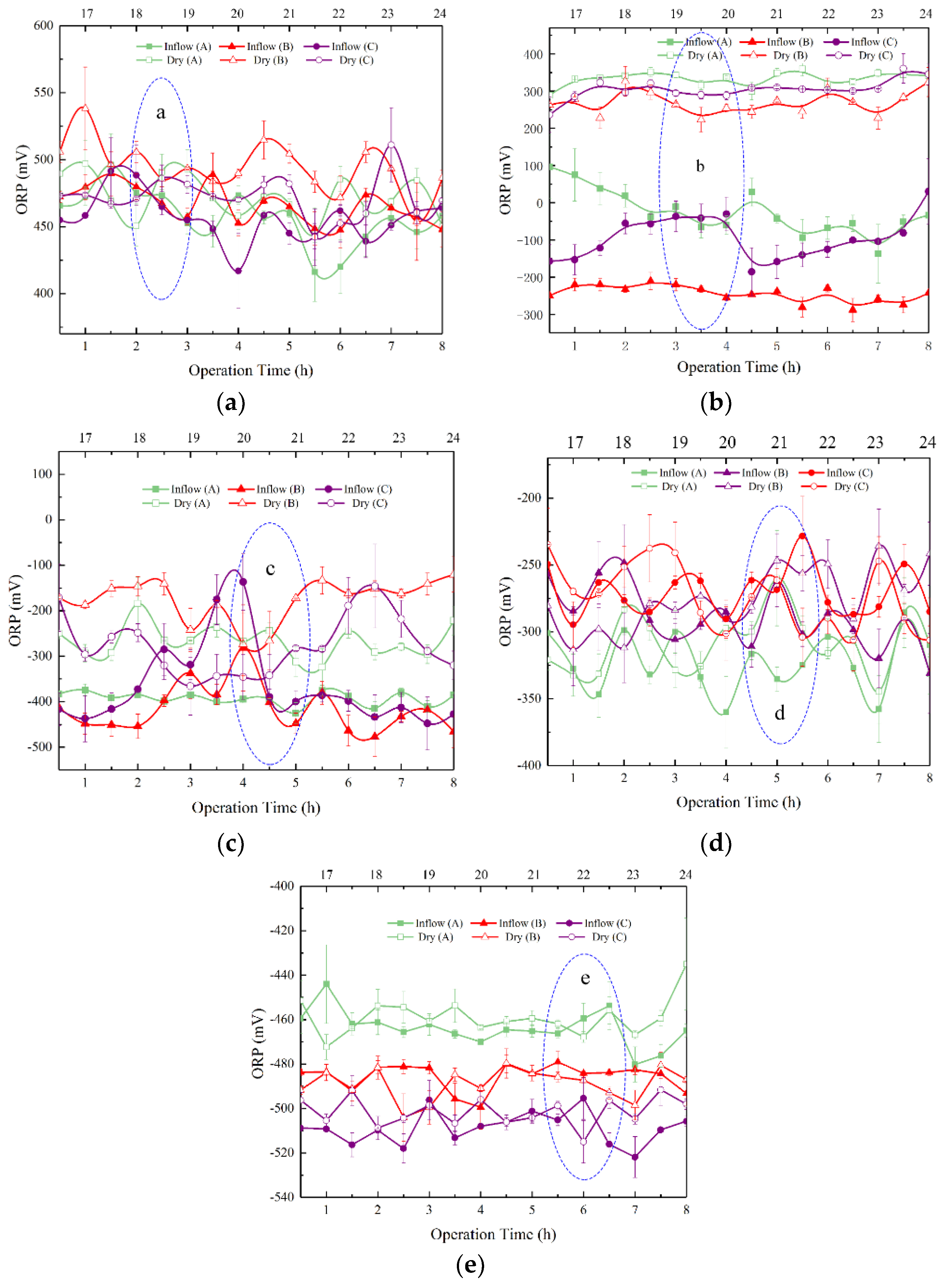
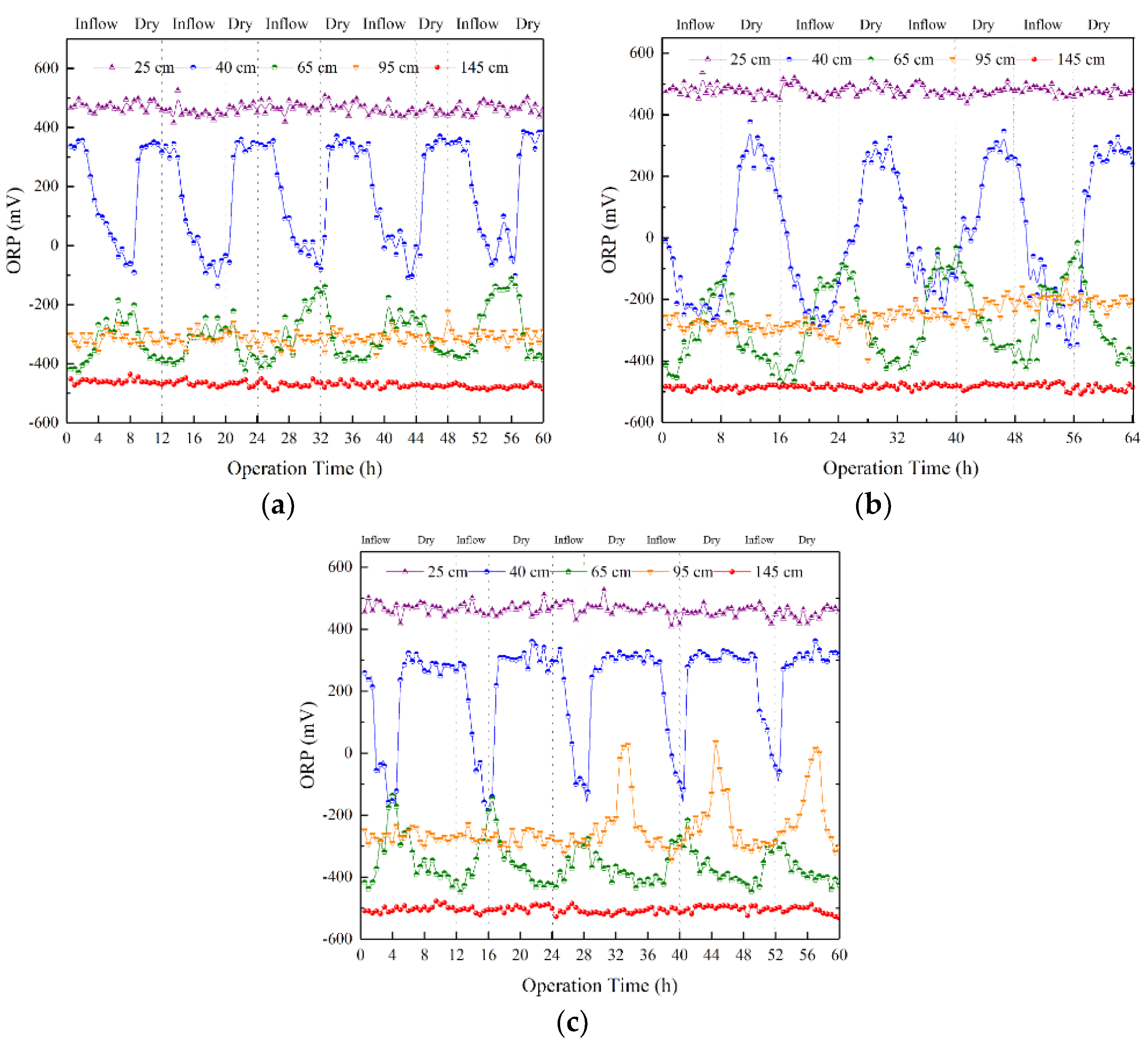
3.1. ORP under Three Rwds in the SWIS
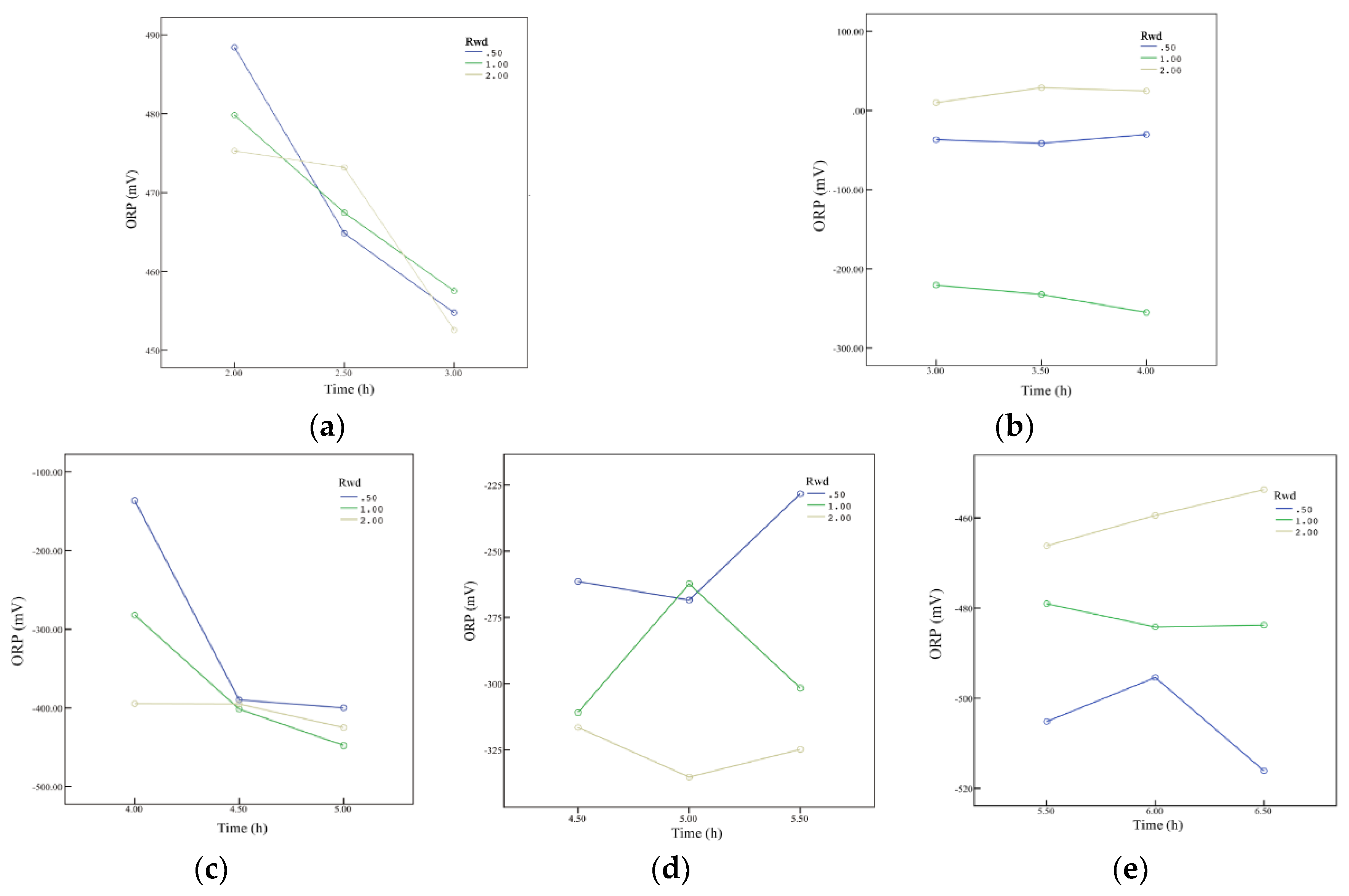
3.2. Effects of Fe-Mn Environment on ORP
3.3. Effects of Temperature on ORP
4. Conclusions
Author Contributions
Funding
Acknowledgments
Conflicts of Interest
References
- Li, W.W.; Yu, H.Q.; He, Z. Towards sustainable wastewater treatment by using microbial fuel cells-centered technologies. Energy Environ. Sci. 2014, 7, 911–924. [Google Scholar] [CrossRef]
- Razali, M.; Kim, J.F.; Attfield, M.; Budd, P.M.; Drioli, E.; Lee, Y.M.; Szekely, G. Sustainable wastewater treatment and recycling in membrane manufacturing. Green Chem. 2015, 17, 5196–5205. [Google Scholar] [CrossRef]
- Ramos, M.C.; Cots, F.R.; Martínez, J.A. Effects of land terracing on soil properties in the Priorate region in Northeastern Spain: A multivariate analysis. Geoderma 2007, 142, 251–261. [Google Scholar] [CrossRef]
- USEPA. Onsite Wastewater Treatment Systems Manual; EPA/625/R-00/008; U.S. Environmental Protection Agency: Washington, DC, USA, 2002.
- Li, Y.H.; Li, H.B.; Xu, X.Y.; Wang, S.Q.; Pan, J. Does carbon-nitrogen ratio affect nitrous oxide emission and spatial distribution in subsurface wastewater infiltration system? Bioresour. Technol. 2018, 250, 846–852. [Google Scholar] [CrossRef] [PubMed]
- Omari, A.A.; Fayyad, M. Treatment of domestic wastewater by subsurface flow constructed wetlands in Jordan. Desalination 2003, 155, 27–39. [Google Scholar] [CrossRef]
- Alattabi, A.W.; Harris, C.; Alkhaddar, R.; Alzeyadi, A.; Abdulredha, M. Online Monitoring of a sequencing batch reactor treating domestic wastewater. Procedia Eng. 2017, 196, 800–807. [Google Scholar] [CrossRef]
- Yu, R.F.; Chi, F.H.; Cheng, W.P.; Chang, J.C. Application of pH, ORP, and DO monitoring to evaluate chromium (VI) removal from wastewater by the nanoscale zero-valent iron (nZVI) process. Chem. Eng. J. 2014, 255, 568–576. [Google Scholar] [CrossRef]
- Kuroda, H.; Kato, T.; Koshigoe, Y.; Yaegashi, D.; Horaguti, S.; Inubushi, K.; Yamagishi, T.; Suwa, Y. The improvement of the nitrogen removal capacity in Wetlands. Desalin. Water Treat. 2010, 19, 146–148. [Google Scholar] [CrossRef]
- Husson, O.; Husson, B.; Brunet, A.; Babre, D.; Alary, K.; Sarthou, J.P.; Charpentier, H.; Durand, M.; Benada, J.; Henry, M. Practical improvements in soil redox potential (Eh) measurement for characterization of soil properties. Application for comparison of conventional and conservation agriculture cropping systems. Anal. Chim. Acta 2016, 906, 98–109. [Google Scholar] [CrossRef]
- Tan, B. Experimental Study on the Capillary Soil Reverse Tide Soil Treatment System. Ph.D. Thesis, Hunan Normal University, Changsha, Hunan, 2007. [Google Scholar]
- Pan, J.; Yuan, F.; Yu, L.; Huang, L.L.; Fei, H.X.; Cheng, F.; Zhang, Q. Performance of organics and nitrogen removal in subsurface wastewater infiltration systems by intermittent aeration and shunt distributing wastewater. Bioresour. Technol. 2016, 211, 744–746. [Google Scholar] [CrossRef] [PubMed]
- Sun, Y.F.; Qi, S.Y.; Zheng, F.P.; Huang, L.L.; Pan, J.; Jiang, Y.Y.; Hou, W.Y.; Xiao, L. Organics removal, nitrogen removal and N2O emission in subsurface wastewater infiltration systems amended with/without biochar and sludge. Bioresour. Technol. 2018, 249, 57–61. [Google Scholar] [CrossRef]
- Rivas, A.; Singh, R.; Horne, D.; Roygard, J.; Matthews, A.; Hedley, M.J. Denitrification potential in the subsurface environment in the Manawatu River catchment, New Zealand: Indications from oxidation reduction conditions, hydrogeological factors, and implications for nutrient management. J. Environ. Manag. 2017, 197, 476–489. [Google Scholar] [CrossRef] [PubMed]
- Zheng, F.P.; Huang, L.L.; Pan, J.; Fan, L.L.; Wang, S.Y.; Tan, C.Q. Does influent surface organic loading and aeration mode affect nitrogen removal and N2O emission in subsurface wastewater infiltration systems? Ecol. Eng. 2018, 123, 168–174. [Google Scholar] [CrossRef]
- Thomas, C.R.; Miao, L.; Sindhoj, E. Environmental factors affecting temporal and spatial patterns of soil redox potential in Florida Everglades wetlands. Wetlands 2009, 29, 1133–1145. [Google Scholar] [CrossRef]
- Weil, R.R.; Brady, N.C. The Nature and Properties of Soils, 15th ed.; Pearson: New York, NY, USA, 2016; pp. 284–324. [Google Scholar]
- Husson, O. Redox potential (Eh) and pH as drivers of soil/plant/microorganism systems: A transdisciplinary overview pointing to integrative opportunities for agronomy. Plant Soil 2013, 362, 389–417. [Google Scholar] [CrossRef]
- Nieuwenhuize, J.; Maas, Y.E.; Middelburg, J.J. Rapid analysis of organic carbon and nitrogen in particulate materials. Mar. Chem. 1994, 45, 217–224. [Google Scholar] [CrossRef]
- Reynolds, W.D.; Elrick, D.E.; Youngs, E.G. The soil solution phase. Single-ring and double- or concentric-ring infiltrometers. In Methods of Soil Analysis; Part 4. SSSA Book Ser. 5; Dane, J.H., Topp, G.C., Eds.; SSSA: Madison, WI, USA, 2002; pp. 821–826. [Google Scholar]
- Grossman, R.B.; Reinsch, T.G. Bulk density and linear extensibility. In Methods of Soil Analysis. Part 4. Agron. Monogr.; Dane, J.H., Topp, G.C., Eds.; SSSA: Madison WI, USA, 2002; Volume 5, pp. 201–225. [Google Scholar]
- Reynolds, W.D.; Elrick, D.E.; Youngs, E.G. Field methods (vadose and saturated zone techniques). In Methods of Soil Analysis. Part 4. Agron. Monogr.; Dane, J.H., Topp, G.C., Eds.; SSSA: Madison WI, USA, 2002; Volume 5, pp. 817–877. [Google Scholar]
- American Public Health Association (APHA). Standard Methods for the Examination of Water and Wastewater; American Public Health Association/American Water Works Association/Water Environment Federation: Washington, DC, USA, 2003. [Google Scholar]
- Zhang, J.; Huang, X.; Liu, C.X.; Shi, H.C.; Hu, H.Y. Nitrogen removal enhanced by intermittent operation in a subsurface wastewater infiltration system. Ecol. Eng. 2005, 25, 419–428. [Google Scholar] [CrossRef]
- Whisler, F.D. Redox potentials in soil columns intermittently flooded with sewage water. J. Environ. Qual. 1974, 3, 32–37. [Google Scholar] [CrossRef]
- Lance, J.C. Oxygen utilization in soil flooded with wastewater. J. Environ Qual. 1973, 2, 345–350. [Google Scholar] [CrossRef]
- Van Cuyk, S.; Siegrist, R.; Logan, A.; Masson, S.; Fischer, E.; Figueroa, L. Hydraulic and purification behaviors and their interaction during wastewater treatment in soil infiltration systems. Water Res. 2001, 35, 953–964. [Google Scholar] [CrossRef]
- Gale, P.M.; Reddy, K.R.; Graetz, D.A. Nitrogen removal from reclaimed water applied to constructed and natural wetland microcosms. Water Environ. Res. 1993, 65, 162–168. [Google Scholar] [CrossRef]
- Ong, S.; Uchiyama, K.; Inadama, D.; Ishida, Y.; Yamagiwa, K. Performance evaluation of laboratory scale up-flow constructed wetlands with different designs and emergent plants. Bioresour. Technol. 2010, 101, 7239–7244. [Google Scholar] [CrossRef] [PubMed]
- Yang, Y.Q.; Zhan, X.; Wu, S.J.; Kang, M.L.; Guo, J.N.; Chen, F.R. Effect of hydraulic loading rate on pollutant removal efficiency in subsurface infiltration system under intermittent operation and micro-power aeration. Bioresour. Technol. 2016, 205, 174–182. [Google Scholar] [CrossRef] [PubMed]
- Dušek, J.; Picek, T.; Čížková, H. Redox potential dynamics in a horizontal subsurface flow constructed wetland for wastewater treatment: Diel, seasonal and spatial fluctuations. Ecol. Eng. 2008, 34, 223–232. [Google Scholar] [CrossRef]
- Valtcheva, I.B.; Marchetti, P.; Livingston, A.G. Crosslinked polybenzimidazole membranes for organic solvent nanofiltration (OSN): Analysis of crosslinking reaction mechanism and effects of reaction parameters. J. Membr. Sci. 2015, 493, 568–579. [Google Scholar] [CrossRef]
- Didaskalou, C.; Kupai, J.; Cseri, L.; Barabas, J.; Vass, E.; Holtzl, T.; Szekely, G. Membrane-Grafted asymmetric organocatalyst for an integrated synthesis−separation platform. ACS Catal. 2018, 8, 7430–7438. [Google Scholar] [CrossRef]
- Kimbrough, D.E.; Kouame, Y.; Moheban, P.; Springthorpe, S. The effect of electrolysis and oxidation-reduction potential on microbial survival, growth and disinfection. Environ Pollut. 2016, 27, 211–221. [Google Scholar] [CrossRef]
- Peralta, A.L.; Ludmer, S.; Matthews, J.W.; Kent, A.D. Bacterial community response to changes in soil redox potential along a moisture gradient in restored wetlands. Ecol. Eng. 2014, 73, 246–253. [Google Scholar] [CrossRef]
- Lapara, T.M.; Nakatsu, C.H.; Pantea, L.M.; Alleman, G.E. Effect of temperature on COD removal and bacterial community development. Water Res. 2001, 35, 1764–1772. [Google Scholar]
- Kong, G.; Xu, Z.Y.; Wang, Y.; Tie, J.X.; Zheng, Z. Effects of soil medium on removal of pollutants from underground filtration system. Environ. Sci. Technol. 2011, 34, 75–78. [Google Scholar]
- Mareckova, M.S.; Zadorova, T.; Penizek, V.; Omelka, M.; Tejnecky, V.; Pruchova, P.; Chuman, T.; Drabek, O.; Buresova, A.; Vanek, A.; et al. The structure of bacterial communities along two vertical profiles of a deep colluvial soil. Soil Biol. Biochem. 2016, 101, 65–73. [Google Scholar] [CrossRef]
- Hall, S.J.; Silver, W.L. Iron oxidation stimulates organic matter decomposition in humid tropical forest soils. Glob. Chang. Biol. 2013, 19, 2804–2813. [Google Scholar] [CrossRef] [PubMed]
- Page, S.E.; Kling, G.W.; Sander, M.; Harrold, K.H.; Robert, J.; Mcneill, K.; Cory, R.M. Dark production of hydroxyl radical in arctic soil and surface waters. Environ. Sci. Technol. 2013, 47, 12860–12867. [Google Scholar] [CrossRef]
- Virtanen, S.; Puustinen, M.; Yli-Halla, M. Oxidation of iron sulfides in subsoils of cultivated boreal acid sulfate soil fields—Based on soil redox potential and pH measurements. Geoderma 2017, 308, 252–259. [Google Scholar] [CrossRef]
- Herndon, E.; Albashaireh, A.; Singer, D.; Chowdhury, T.R.; Gu, B.H.; Graham, D. Influence of iron redox cycling on organo-mineral associations in Arctic tundra soil. Geochim. Cosmochim. AC 2017, 207, 210–231. [Google Scholar] [CrossRef]
- Kraal, P.; Burton, E.D.; Rose, A.L.; Kocar, B.D.; Lockhart, R.S.; Grice, K.; Bush, R.T.; Tan, E.; Webb, S.M. Sedimentary iron-phosphorus cycling under contrasting redox conditions in an eutrophic estuary. Chem. Geol. 2015, 392, 19–31. [Google Scholar] [CrossRef]
- Essington, M.E. Soil and Water Chemistry: An Integrative Approach, 2nd ed.; CRC Press LLC: Boca Raton, FL, USA, 2005; pp. 445–465. [Google Scholar]
- Ryu, J.H.; Gao, S.; Tanji, K.K. Characterization of redox processes in shallow groundwater of Owens Dry Lake, California. Environ. Sci. Technol. 2004, 38, 5950–5957. [Google Scholar] [CrossRef]


| Organic matter (%) | 2.0 |
| pH | 6–9 |
| Porosity (%) | 55.4 |
| Permeability (cm·s−1) | 6.2 × 10⁻⁴ |
| Hydraulic conductivity (cm·s−1) | (1.1 ± 0.5) × 10−4 |
| >0.05 mm particle size distribution (%) | 51.96 |
| 0.005–0.002 mm particle size distribution (%) | 45.30 |
| <0.002 mm particle size distribution (%) | 2.24 |
| Inflow | Outflow | |
|---|---|---|
| COD (mg·L−1) | 82.5–153.2 | 11.3–36.4 |
| BOD5 (mg·L−1) | 51.7–96.6 | 4.9–11.2 |
| NH4+-N (mg·L−1) | 23.2–43.5 | 1.32–2.13 |
| TN (mg·L−1) | 30.1–50.4 | 13.6–19.7 |
| TP (mg·L−1) | 2.5–6.2 | 0.10–0.31 |
| NO3−-N (mg·L−1) | 3.27–15.70 | 6.93–17.45 |
| NO2−-N (mg·L−1) | 0.8–1.82 | 0.27–0.42 |
| pH | 7.17–7.60 | 7.12–7.46 |
| Fe2+ (mg·L−1) | 1.1–1.5 | 0.18–0.27 |
| Mn2+ (mg·L−1) | 0.31–0.53 | 0.07–0.1 |
| Matrix Depth (cm) | ORP (mV) | Mn2+ (mg·kg−1) | ORP (mV) | Mn2+ (mg·kg−1) |
|---|---|---|---|---|
| 145 | −409 | 6.53 | −409 | 3.64 |
| 95 | −124 | 7.04 | −353 | 5.62 |
| 65 | 232 | 3.91 | 389 | 10.06 |
| 40 | 514 | 2.52 | 479 | 1.24 |
| 25 | 502 | 0.64 | 505 | 0.89 |
© 2018 by the authors. Licensee MDPI, Basel, Switzerland. This article is an open access article distributed under the terms and conditions of the Creative Commons Attribution (CC BY) license (http://creativecommons.org/licenses/by/4.0/).
Share and Cite
Zhang, X.; Li, H.; Li, Y.; Guo, F.; Yang, Z.; Bai, J. Do Wet-Dry Ratio and Fe-Mn System Affect Oxidation-Reduction Potential Nonlinearly in the Subsurface Wastewater Infiltration Systems? Int. J. Environ. Res. Public Health 2018, 15, 2790. https://doi.org/10.3390/ijerph15122790
Zhang X, Li H, Li Y, Guo F, Yang Z, Bai J. Do Wet-Dry Ratio and Fe-Mn System Affect Oxidation-Reduction Potential Nonlinearly in the Subsurface Wastewater Infiltration Systems? International Journal of Environmental Research and Public Health. 2018; 15(12):2790. https://doi.org/10.3390/ijerph15122790
Chicago/Turabian StyleZhang, Xiaorong, Haibo Li, Yinghua Li, Fei Guo, Zhongxin Yang, and Jianing Bai. 2018. "Do Wet-Dry Ratio and Fe-Mn System Affect Oxidation-Reduction Potential Nonlinearly in the Subsurface Wastewater Infiltration Systems?" International Journal of Environmental Research and Public Health 15, no. 12: 2790. https://doi.org/10.3390/ijerph15122790
APA StyleZhang, X., Li, H., Li, Y., Guo, F., Yang, Z., & Bai, J. (2018). Do Wet-Dry Ratio and Fe-Mn System Affect Oxidation-Reduction Potential Nonlinearly in the Subsurface Wastewater Infiltration Systems? International Journal of Environmental Research and Public Health, 15(12), 2790. https://doi.org/10.3390/ijerph15122790