Review

Noise in the Sea and Its Impacts on Marine Organisms
College of Animal Sciences, Zhejiang University, Hangzhou 310058, Zhejiang, China
*
Author to whom correspondence should be addressed.
Int. J. Environ. Res. Public Health 2015, 12(10), 12304-12323; https://doi.org/10.3390/ijerph121012304

Submission received: 12 July 2015 / Revised: 8 September 2015 / Accepted: 25 September 2015 / Published: 30 September 2015

Abstract

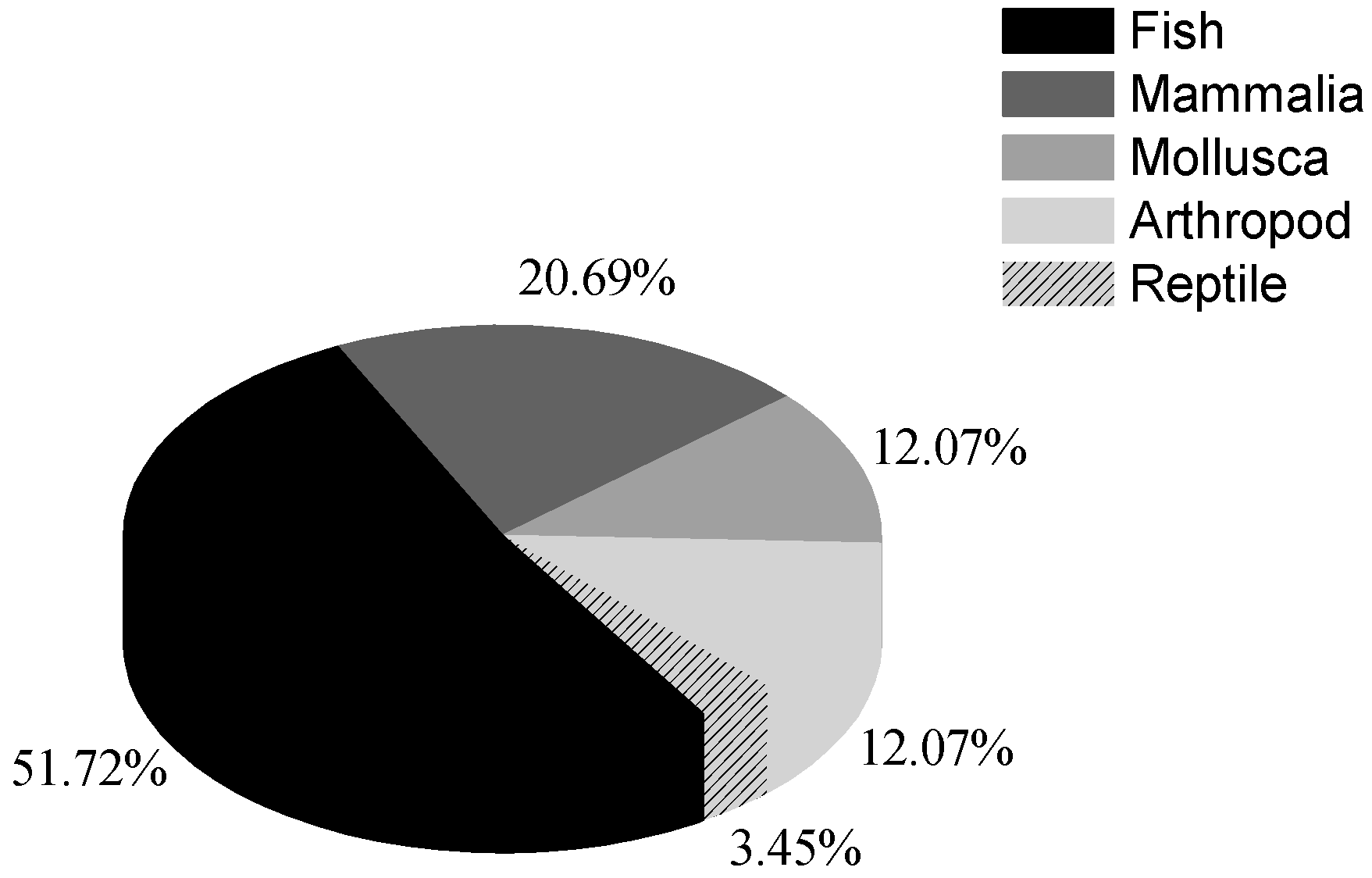
With the growing utilization and exploration of the ocean, anthropogenic noise increases significantly and gives rise to a new kind of pollution: noise pollution. In this review, the source and the characteristics of noise in the sea, the significance of sound to marine organisms, and the impacts of noise on marine organisms are summarized. In general, the studies about the impact of noise on marine organisms are mainly on adult fish and mammals, which account for more than 50% and 20% of all the cases reported. Studies showed that anthropogenic noise can cause auditory masking, leading to cochlear damage, changes in individual and social behavior, altered metabolisms, hampered population recruitment, and can subsequently affect the health and service functions of marine ecosystems. However, since different sampling methodologies and unstandarized measurements were used and the effects of noise on marine organisms are dependent on the characteristics of the species and noise investigated, it is difficult to compare the reported results. Moreover, the scarcity of studies carried out with other species and with larval or juvenile individuals severely constrains the present understanding of noise pollution. In addition, further studies are needed to reveal in detail the causes for the detected impacts.
Keywords: noise; marine organisms; auditory masking; behavior alteration; metabolism; recruitment; population composition noise; marine organisms; auditory masking; behavior alteration; metabolism; recruitment; population composition