
Equinatoxin II: How a Cationic Pore-Forming Sea Anemone Toxin Drives Nodal Swelling of Myelinated Nerve Fibers

 ,
,  , , and
Abstract
1. Introduction
2. Results
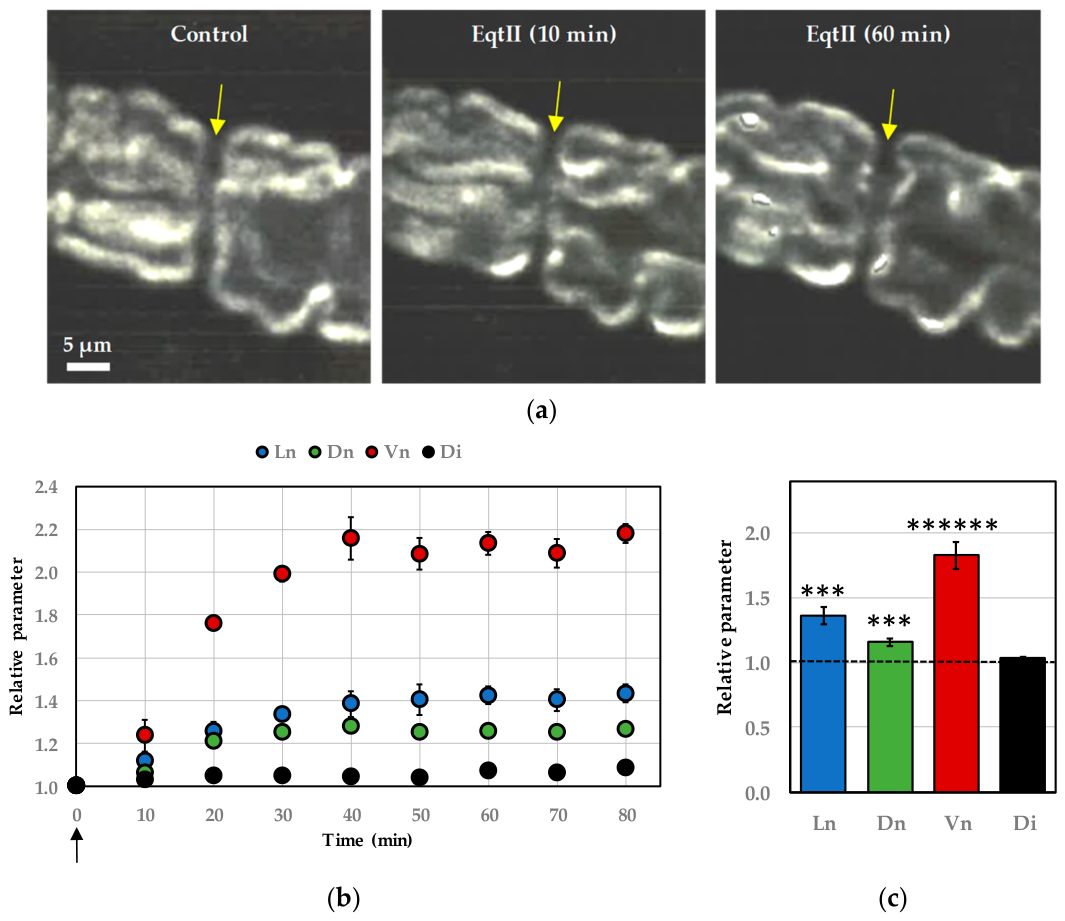
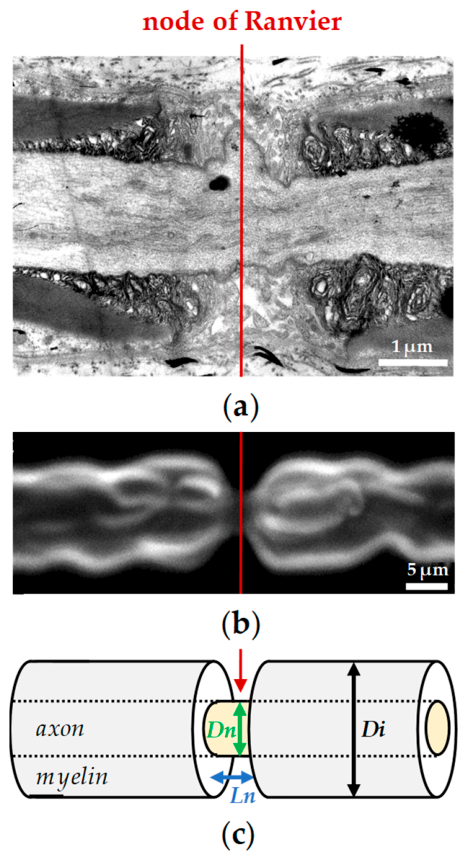
2.1. EqtII-Induced Nodal Swelling
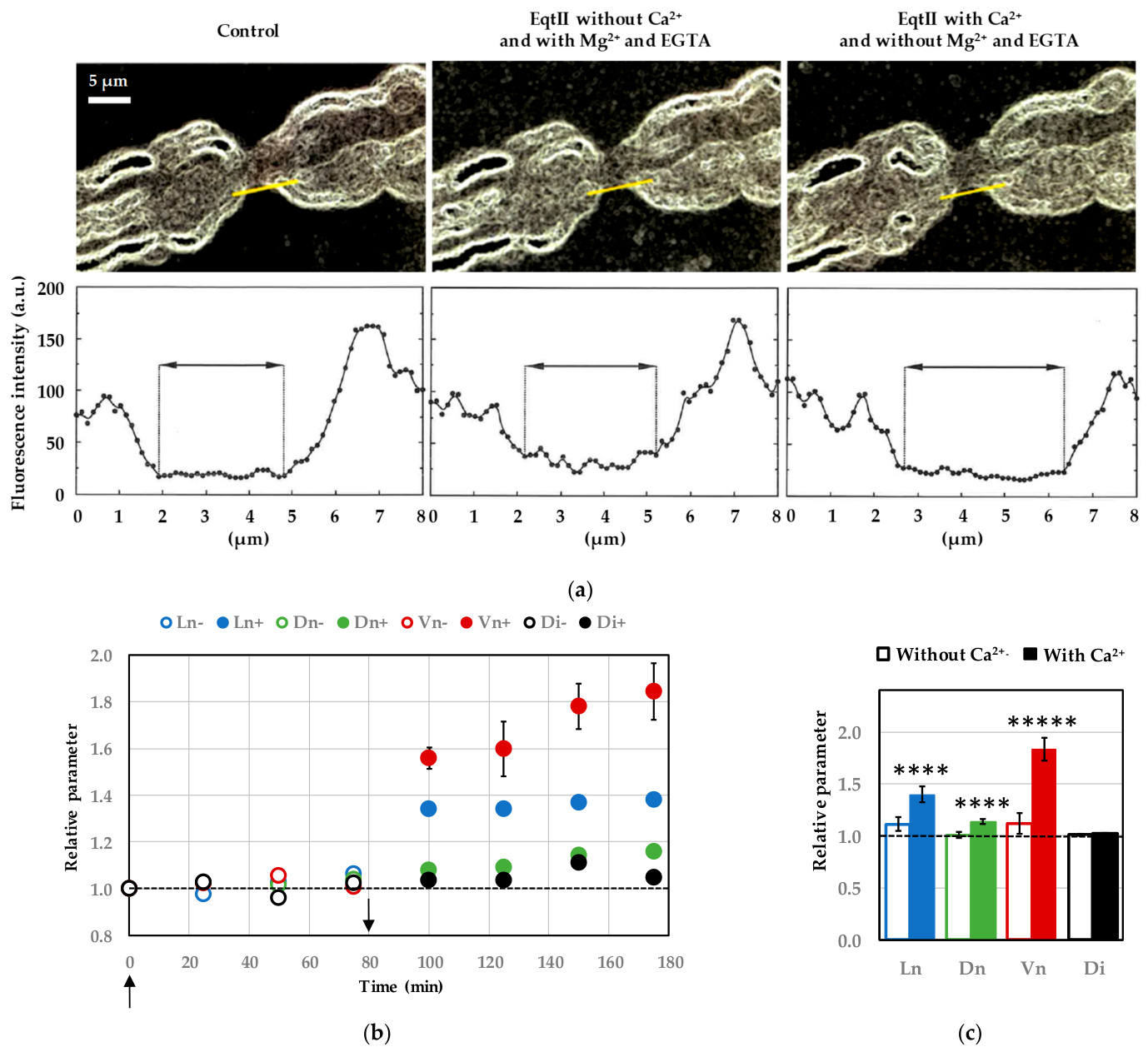
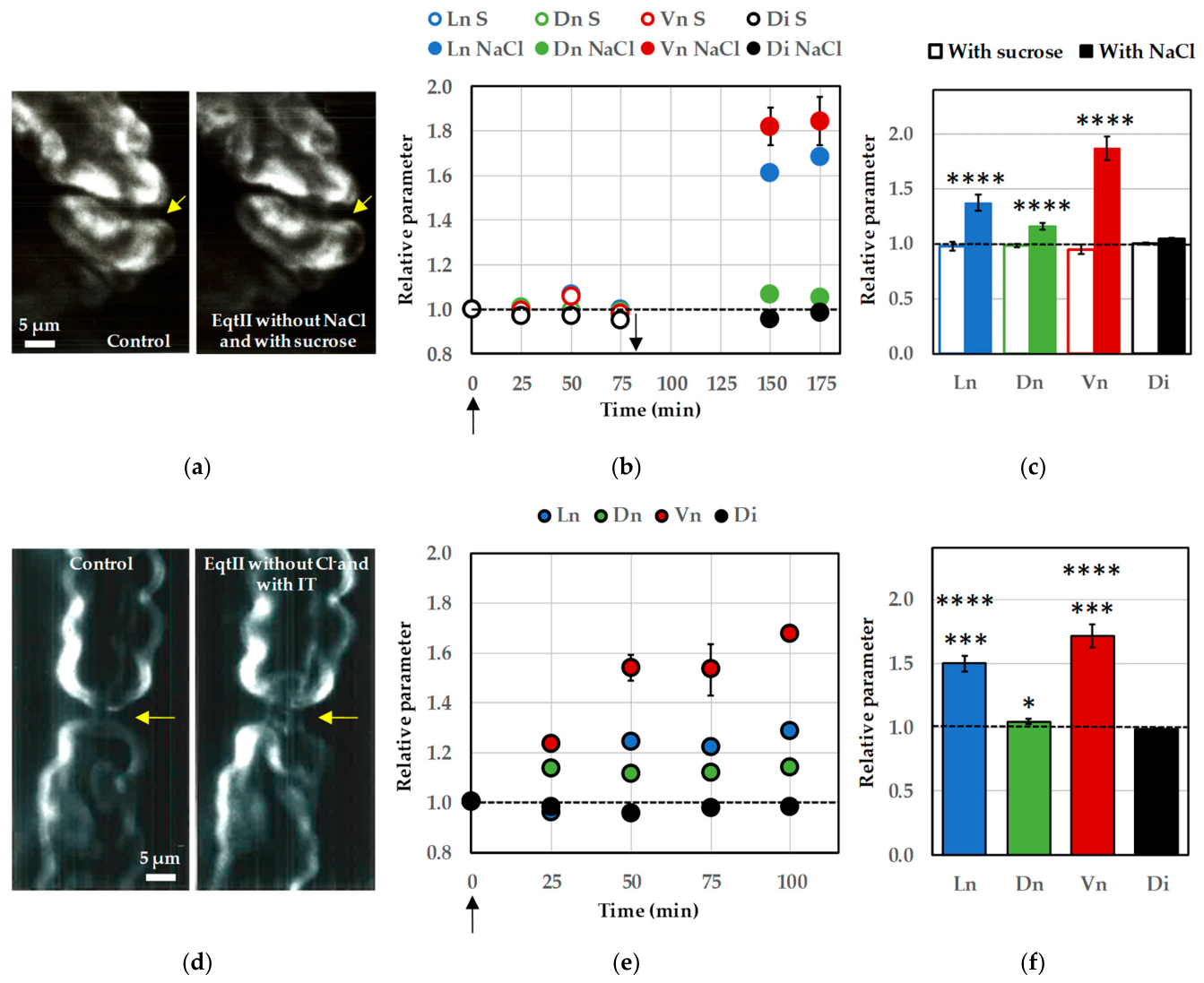
2.2. Removal of Extracellular Ca2+ Prevents EqtII-Induced Nodal Swelling
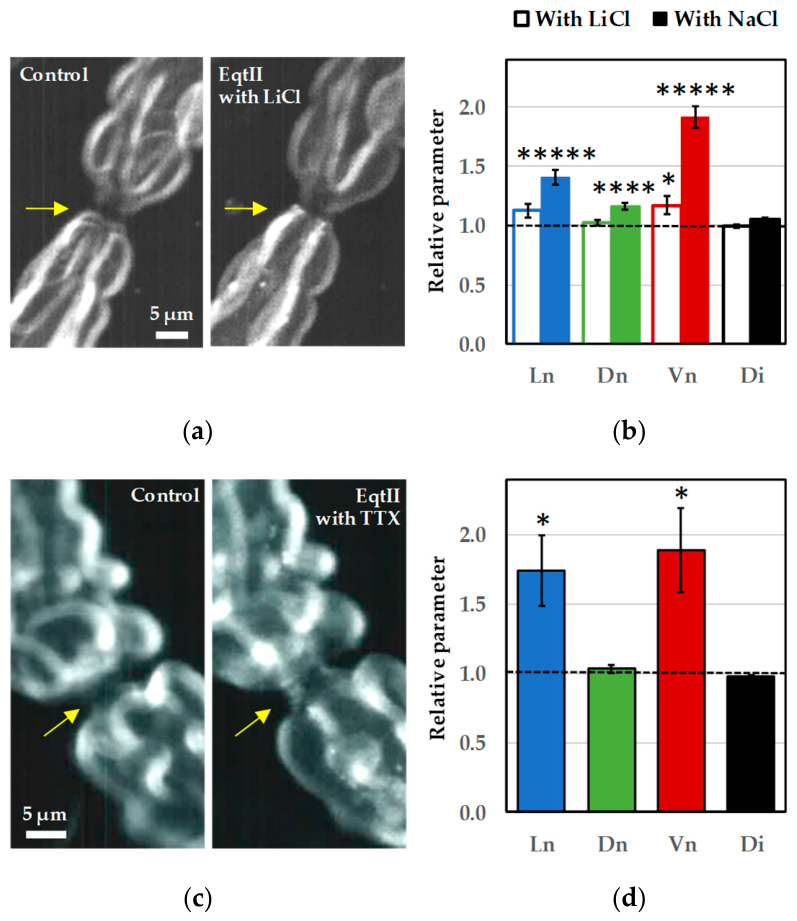
2.3. Extracellular Na+, but Not Cl−, Is Required for EqtII-Induced Nodal Swelling
2.4. Voltage-Gated Na+ Channels Are Not Required for EqtII-Induced Nodal Swelling
3. Discussion
3.1. Localized Nodal Vulnerability to EqtII
3.2. Essential Role of Extracellular Ca2+
3.3. Extracellular Na+, but Not Cl−, Is Strictly Required
3.4. TTX-Insensitivity Excludes Voltage-Gated Sodium Channels
3.5. K+ Movements Do Not Represent the Dominant Mechanism Underlying Nodal Swelling
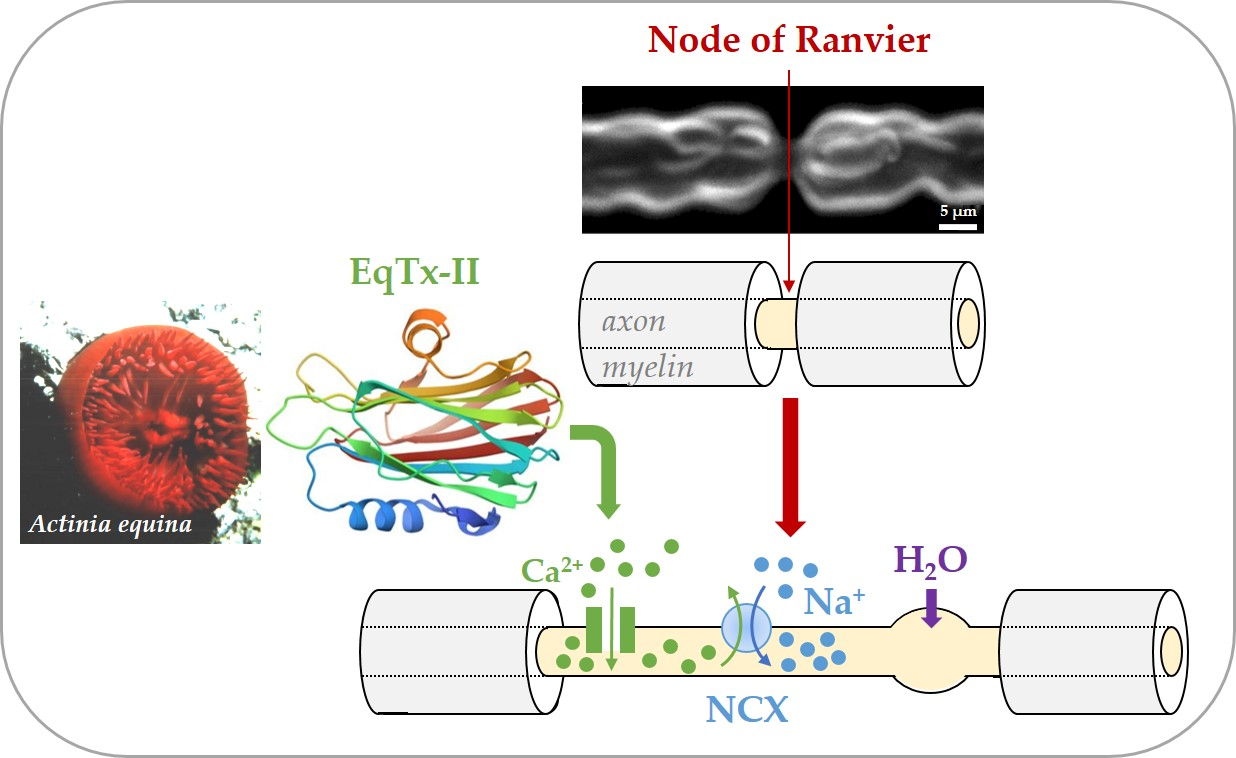
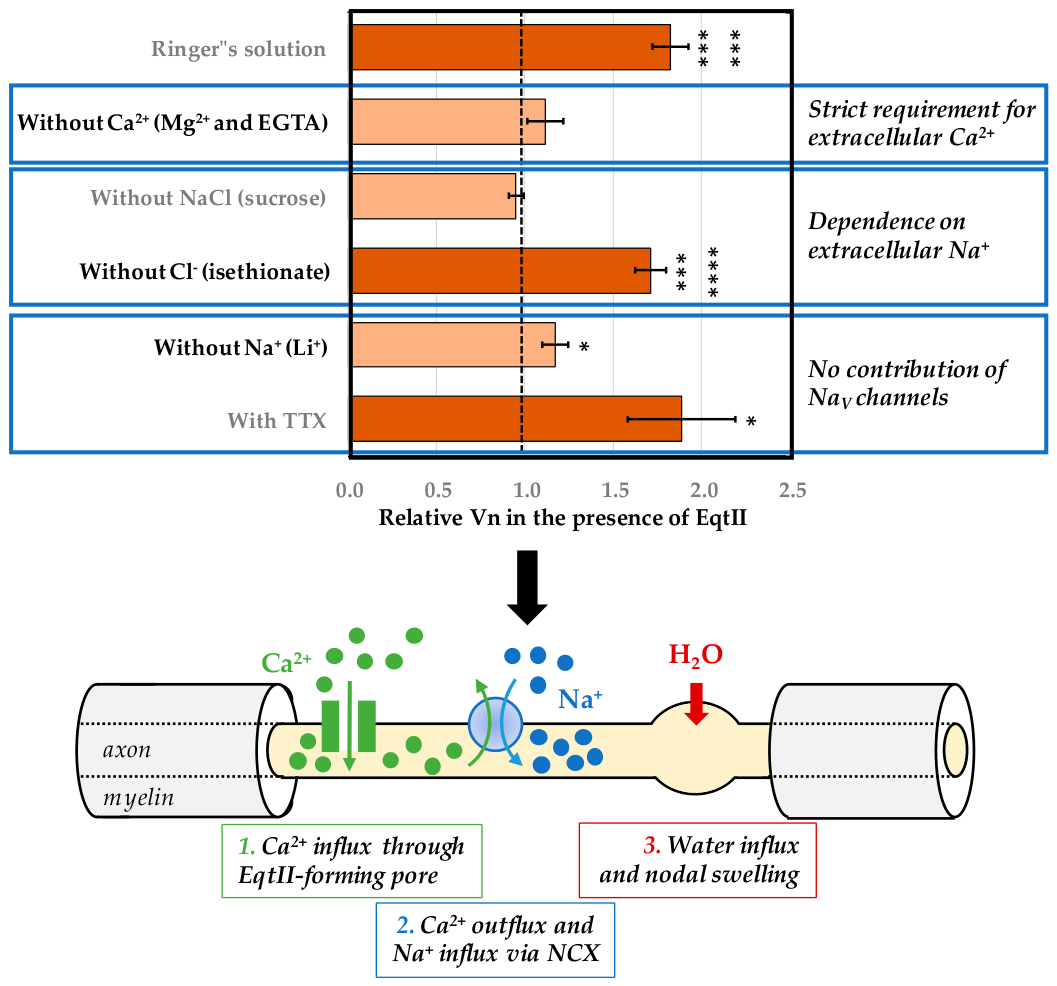
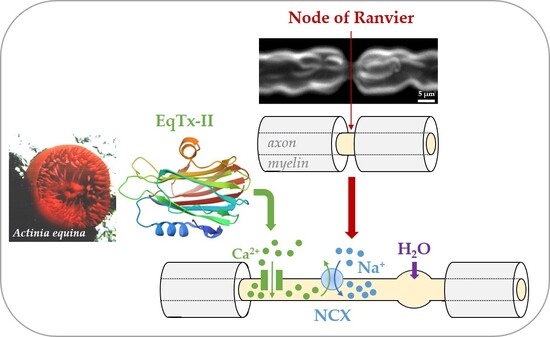
3.6. Proposed Mechanism: Coupling Between Ca2+ Influx and Na+ Entry via NCX
3.7. Physiological Relevance and Pathophysiological Implications
3.8. Limitations and Future Directions
4. Materials and Methods
4.1. Toxins and Chemicals
4.2. Animals and Myelinated Nerve Fibers
4.3. Confocal Laser Scanning Microscopy
4.4. Statistical Analysis
5. Conclusions
Author Contributions
Funding
Institutional Review Board Statement
Data Availability Statement
Conflicts of Interest
Abbreviations
| BSA | Bovine serum albumin |
| Di | Internodal diameter |
| Dn | Nodal diameter |
| EGTA | Ethylene glycol-bis(β-aminoethyl ether)-N,N,N′,N′-tetraacetic acid |
| EqtII | Equinatoxin-II |
| FM1-43 | N-(3-triethylammoniumpropyl)-4-(p-dibutylaminostyryl)pyridinium dibromide |
| HEPES | 4-(2-Hydroxyethyl)-1-piperazineethanesulfonic acid |
| Ln | Nodal length |
| NaV channels | Voltage-gated Na+ channels |
| NCX | Na+/Ca2+ exchanger |
| PBS | Phosphate-buffered saline |
| TTX | Tetrodotoxin |
| Vn | Nodal volume |
References
- Frazao, B.; Vasconcelos, V.; Antunes, A. Sea anemone (Cnidaria, Anthozoa, Actiniaria) toxins: An overview. Mar. Drugs 2012, 10, 1812–1851. [Google Scholar] [CrossRef]
- Menezes, C.; Thakur, N.L. Sea anemone venom: Ecological interactions and bioactive potential. Toxicon 2022, 208, 31–46. [Google Scholar] [CrossRef]
- Alvarez, C.; Soto, C.; Cabezas, S.; Alvarado-Mesen, J.; Laborde, R.; Pazos, F.; Ros, U.; Hernandez, A.M.; Lanio, M.E. Panorama of the Intracellular Molecular Concert Orchestrated by Actinoporins, Pore-Forming Toxins from Sea Anemones. Toxins 2021, 13, 567. [Google Scholar] [CrossRef]
- Anderluh, G.; Lakey, J.H. Disparate proteins use similar architectures to damage membranes. Trends Biochem. Sci. 2008, 33, 482–490. [Google Scholar] [CrossRef]
- Anderluh, G.; Macek, P. Cytolytic peptide and protein toxins from sea anemones (Anthozoa: Actiniaria). Toxicon 2002, 40, 111–124. [Google Scholar] [CrossRef] [PubMed]
- Kristan, K.C.; Viero, G.; Dalla Serra, M.; Macek, P.; Anderluh, G. Molecular mechanism of pore formation by actinoporins. Toxicon 2009, 54, 1125–1134. [Google Scholar] [CrossRef]
- Garcia-Saez, A.J.; Buschhorn, S.B.; Keller, H.; Anderluh, G.; Simons, K.; Schwille, P. Oligomerization and pore formation by equinatoxin II inhibit endocytosis and lead to plasma membrane reorganization. J. Biol. Chem. 2011, 286, 37768–37777. [Google Scholar] [CrossRef]
- Maraver-de-Paz, J.; Heras-Marquez, D.; Palacios-Ortega, J.; Martinez-Del-Pozo, A.; Garcia-Linares, S. Through the holes: The biotechnological potential of actinoporins (and other PFPs). Biophys. Rev. 2026, 18, 221–238. [Google Scholar] [CrossRef] [PubMed]
- Mori, T.; Niki, T.; Uchida, Y.; Mukai, K.; Kuchitsu, Y.; Kishimoto, T.; Sakai, S.; Makino, A.; Kobayashi, T.; Arai, H.; et al. A non-toxic equinatoxin-II reveals the dynamics and distribution of sphingomyelin in the cytosolic leaflet of the plasma membrane. Sci. Rep. 2024, 14, 16872. [Google Scholar] [CrossRef] [PubMed]
- Ramirez-Carreto, S.; Miranda-Zaragoza, B.; Rodriguez-Almazan, C. Actinoporins: From the Structure and Function to the Generation of Biotechnological and Therapeutic Tools. Biomolecules 2020, 10, 539. [Google Scholar] [CrossRef]
- Hinds, M.G.; Zhang, W.; Anderluh, G.; Hansen, P.E.; Norton, R.S. Solution structure of the eukaryotic pore-forming cytolysin equinatoxin II: Implications for pore formation. J. Mol. Biol. 2002, 315, 1219–1229. [Google Scholar] [CrossRef]
- Belmonte, G.; Menestrina, G.; Pederzolli, C.; Krizaj, I.; Gubensek, F.; Turk, T.; Macek, P. Primary and secondary structure of a pore-forming toxin from the sea anemone, Actinia equina L., and its association with lipid vesicles. Biochim. Biophys. Acta 1994, 1192, 197–204. [Google Scholar] [CrossRef]
- Macek, P.; Lebez, D. Isolation and characterization of three lethal and hemolytic toxins from the sea anemone Actinia equina L. Toxicon 1988, 26, 441–451. [Google Scholar] [CrossRef]
- Belmonte, G.; Pederzolli, C.; Macek, P.; Menestrina, G. Pore formation by the sea anemone cytolysin equinatoxin II in red blood cells and model lipid membranes. J. Membr. Biol. 1993, 131, 11–22. [Google Scholar] [CrossRef] [PubMed]
- Macek, P.; Belmonte, G.; Pederzolli, C.; Menestrina, G. Mechanism of action of equinatoxin II, a cytolysin from the sea anemone Actinia equina L. belonging to the family of actinoporins. Toxicology 1994, 87, 205–227. [Google Scholar] [CrossRef]
- Rojko, N.; Kristan, K.C.; Viero, G.; Zerovnik, E.; Macek, P.; Dalla Serra, M.; Anderluh, G. Membrane damage by an alpha-helical pore-forming protein, Equinatoxin II, proceeds through a succession of ordered steps. J. Biol. Chem. 2013, 288, 23704–23715. [Google Scholar] [CrossRef] [PubMed]
- Schon, P.; Garcia-Saez, A.J.; Malovrh, P.; Bacia, K.; Anderluh, G.; Schwille, P. Equinatoxin II permeabilizing activity depends on the presence of sphingomyelin and lipid phase coexistence. Biophys. J. 2008, 95, 691–698. [Google Scholar] [CrossRef] [PubMed]
- Wacklin, H.P.; Bremec, B.B.; Moulin, M.; Rojko, N.; Haertlein, M.; Forsyth, T.; Anderluh, G.; Norton, R.S. Neutron reflection study of the interaction of the eukaryotic pore-forming actinoporin equinatoxin II with lipid membranes reveals intermediate states in pore formation. Biochim. Biophys. Acta 2016, 1858, 640–652. [Google Scholar] [CrossRef]
- Athanasiadis, A.; Anderluh, G.; Macek, P.; Turk, D. Crystal structure of the soluble form of equinatoxin II, a pore-forming toxin from the sea anemone Actinia equina. Structure 2001, 9, 341–346. [Google Scholar] [CrossRef]
- Arranz, R.; Santiago, C.; Masiulis, S.; Rivera-de-Torre, E.; Palacios-Ortega, J.; Carlero, D.; Heras-Marquez, D.; Gavilanes, J.G.; Arias-Palomo, E.; Martinez-Del-Pozo, A.; et al. Elucidating the structure and assembly mechanism of actinoporin pores in complex membrane environments. Sci. Adv. 2025, 11, eadv0683. [Google Scholar] [CrossRef]
- Benoit, E.; Mattei, C.; Ouanounou, G.; Meunier, F.A.; Suput, D.; Le Gall, F.; Marquais, M.; Dechraoui, M.Y.; Molgó, J. Ionic mechanisms involved in the nodal swelling of myelinated axons caused by marine toxins. Cell Mol. Biol. Lett. 2002, 7, 317–321. [Google Scholar]
- Meunier, F.A.; Frangez, R.; Benoit, E.; Ouanounou, G.; Rouzaire-Dubois, B.; Suput, D.; Molgó, J. Ca(2+) and Na(+) contribute to the swelling of differentiated neuroblastoma cells induced by equinatoxin-II. Toxicon 2000, 38, 1547–1560. [Google Scholar] [CrossRef]
- Zorec, R.; Tester, M.; Macek, P.; Mason, W.T. Cytotoxicity of equinatoxin II from the sea anemone Actinia equina involves ion channel formation and an increase in intracellular calcium activity. J. Membr. Biol. 1990, 118, 243–249. [Google Scholar] [CrossRef]
- Hille, B. The permeability of the sodium channel to metal cations in myelinated nerve. J. Gen. Physiol. 1972, 59, 637–658. [Google Scholar] [CrossRef]
- Catterall, W.A. From ionic currents to molecular mechanisms: The structure and function of voltage-gated sodium channels. Neuron 2000, 26, 13–25. [Google Scholar] [CrossRef]
- Hille, B. Pharmacological modifications of the sodium channels of frog nerve. J. Gen. Physiol. 1968, 51, 199–219. [Google Scholar] [CrossRef]
- Rasband, M.N.; Peles, E. Mechanisms of node of Ranvier assembly. Nat. Rev. Neurosci. 2021, 22, 7–20. [Google Scholar] [CrossRef]
- Blaustein, M.P.; Lederer, W.J. Sodium/calcium exchange: Its physiological implications. Physiol. Rev. 1999, 79, 763–854. [Google Scholar] [CrossRef] [PubMed]
- Bers, D.M. Cardiac excitation-contraction coupling. Nature 2002, 415, 198–205. [Google Scholar] [CrossRef] [PubMed]
- Šuput, D.; Rubly, N.; Meves, H. Effects of equinatoxins on single myelinated nerve fibres. In Progress in Venom and Toxin Research; Gopalakrishnakone, P., Tan, C.H., Eds.; The Venom and Toxin Research Group, National University of Singapore: Singapore, 1987; Volume 1, pp. 467–469. [Google Scholar]
- Magi, S.; Castaldo, P.; Lariccia, V.; Piccirillo, S.; Maiolino, M.; Amoroso, S. Intracellular Calcium Ischemic Damage: Dual Role of the Na+/Ca2+ Exchanger. In The First Outstanding 50 Years of “Università Politecnica delle Marche”: Research Achievements in Life Sciences; Longhi, S., Monteriù, A., Freddi, A., Aquilanti, L., Ceravolo, M.G., Carnevali, O., Giordano, M., Moroncini, G., Eds.; Springer International Publishing: Cham, Switzerland, 2020; pp. 361–372. [Google Scholar]
- Serra, C.; Martínez-Alonso, E.; Ayuso, M.I.; Padmashri, R.; Henneberger, C.; Rusakov, D.A.; Alcázar, A.; Scott, R. Na+/Ca2+ exchanger triggers transient disruption of axon initial segments in hippocampal granule cells after brief ischemia. bioRxiv 2024. [Google Scholar] [CrossRef]
- Stys, P.K.; Waxman, S.G.; Ransom, B.R. Ionic mechanisms of anoxic injury in mammalian CNS white matter: Role of Na+ channels and Na(+)-Ca2+ exchanger. J. Neurosci. 1992, 12, 430–439. [Google Scholar] [CrossRef] [PubMed]
- Berridge, M.J.; Downes, C.P.; Hanley, M.R. Neural and developmental actions of lithium: A unifying hypothesis. Cell 1989, 59, 411–419. [Google Scholar] [CrossRef] [PubMed]
- Benoit, E.; Mattei, C.; Brown, S.; Molgó, J. Confocal microscopy and passive staining with the styryl dye FM1-43: A convenient method to evaluate morphometric changes in nodes of Ranvier of single living myelinated axons. In Microscopy and Imaging Science Practical Approaches to Applied Research and Education; Méndez-Vilas, A., Ed.; Microscopy Book Series; Formatex Research Center: Badajoz, Espagne, 2017; pp. 73–80. [Google Scholar]


Disclaimer/Publisher’s Note: The statements, opinions and data contained in all publications are solely those of the individual author(s) and contributor(s) and not of MDPI and/or the editor(s). MDPI and/or the editor(s) disclaim responsibility for any injury to people or property resulting from any ideas, methods, instructions or products referred to in the content. |
© 2026 by the authors. Licensee MDPI, Basel, Switzerland. This article is an open access article distributed under the terms and conditions of the Creative Commons Attribution (CC BY) license.
Share and Cite
Benoit, E.; Frangež, R.; Ouanounou, G.; Meunier, F.A.; Šuput, D.; Molgó, J. Equinatoxin II: How a Cationic Pore-Forming Sea Anemone Toxin Drives Nodal Swelling of Myelinated Nerve Fibers. Mar. Drugs 2026, 24, 187. https://doi.org/10.3390/md24050187
Benoit E, Frangež R, Ouanounou G, Meunier FA, Šuput D, Molgó J. Equinatoxin II: How a Cationic Pore-Forming Sea Anemone Toxin Drives Nodal Swelling of Myelinated Nerve Fibers. Marine Drugs. 2026; 24(5):187. https://doi.org/10.3390/md24050187
Chicago/Turabian StyleBenoit, Evelyne, Robert Frangež, Gilles Ouanounou, Frédéric A. Meunier, Dusan Šuput, and Jordi Molgó. 2026. "Equinatoxin II: How a Cationic Pore-Forming Sea Anemone Toxin Drives Nodal Swelling of Myelinated Nerve Fibers" Marine Drugs 24, no. 5: 187. https://doi.org/10.3390/md24050187
APA StyleBenoit, E., Frangež, R., Ouanounou, G., Meunier, F. A., Šuput, D., & Molgó, J. (2026). Equinatoxin II: How a Cationic Pore-Forming Sea Anemone Toxin Drives Nodal Swelling of Myelinated Nerve Fibers. Marine Drugs, 24(5), 187. https://doi.org/10.3390/md24050187