

Bioactive Compounds from Microalgae and Cyanobacteria: Evaluation of Their Antioxidant and Antimicrobial Activities
 , , , , ,
Highlights
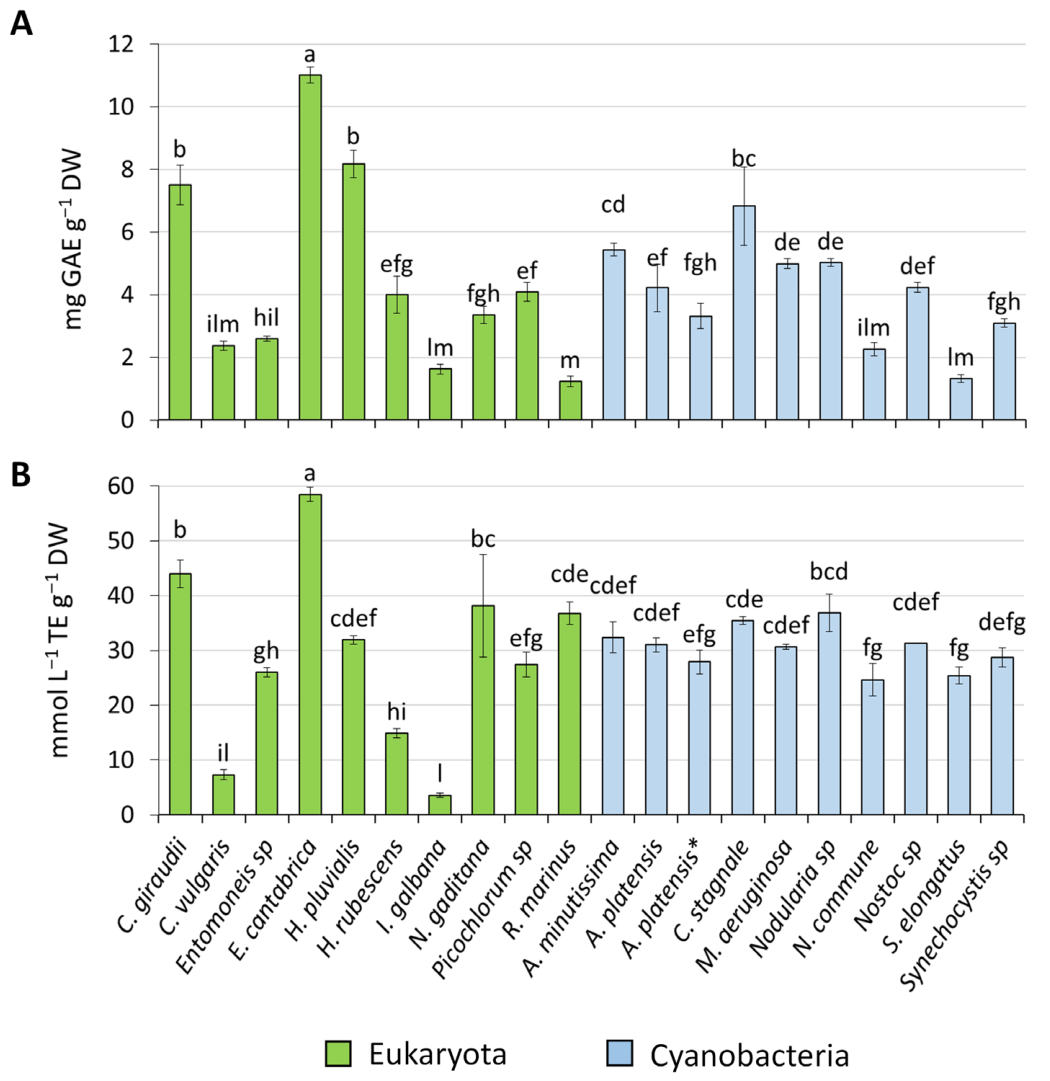
- Screening of 20 microalgal strains revealed a strong correlation between phenolic content and antioxidant activity, highest in E. cantabrica.
- Entomoneis sp. and C. giraudii exhibited the strongest antibacterial activity against Staphylococcus aureus.
- Entomoneis sp., C. giraudii, E. cantabrica and H. pluvialis are promising sources of bioactive compounds for pharmaceutical and nutraceutical applications.
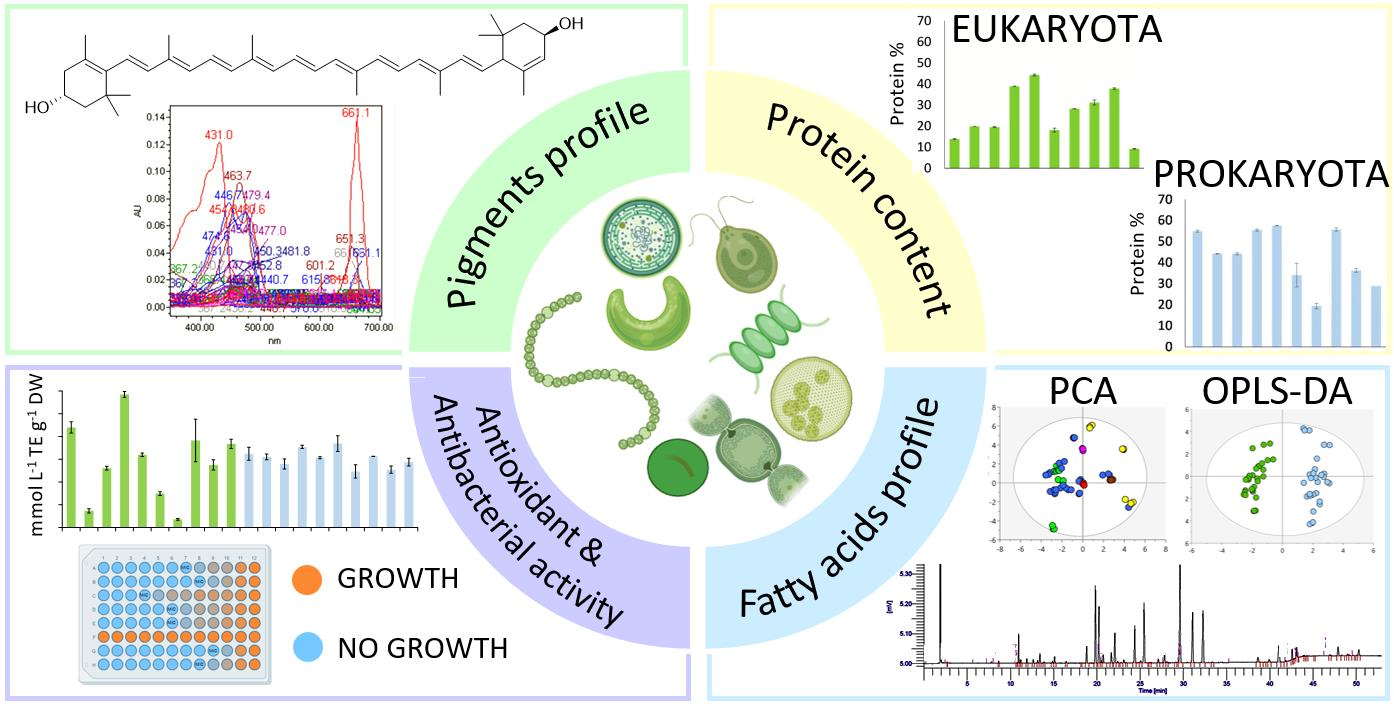
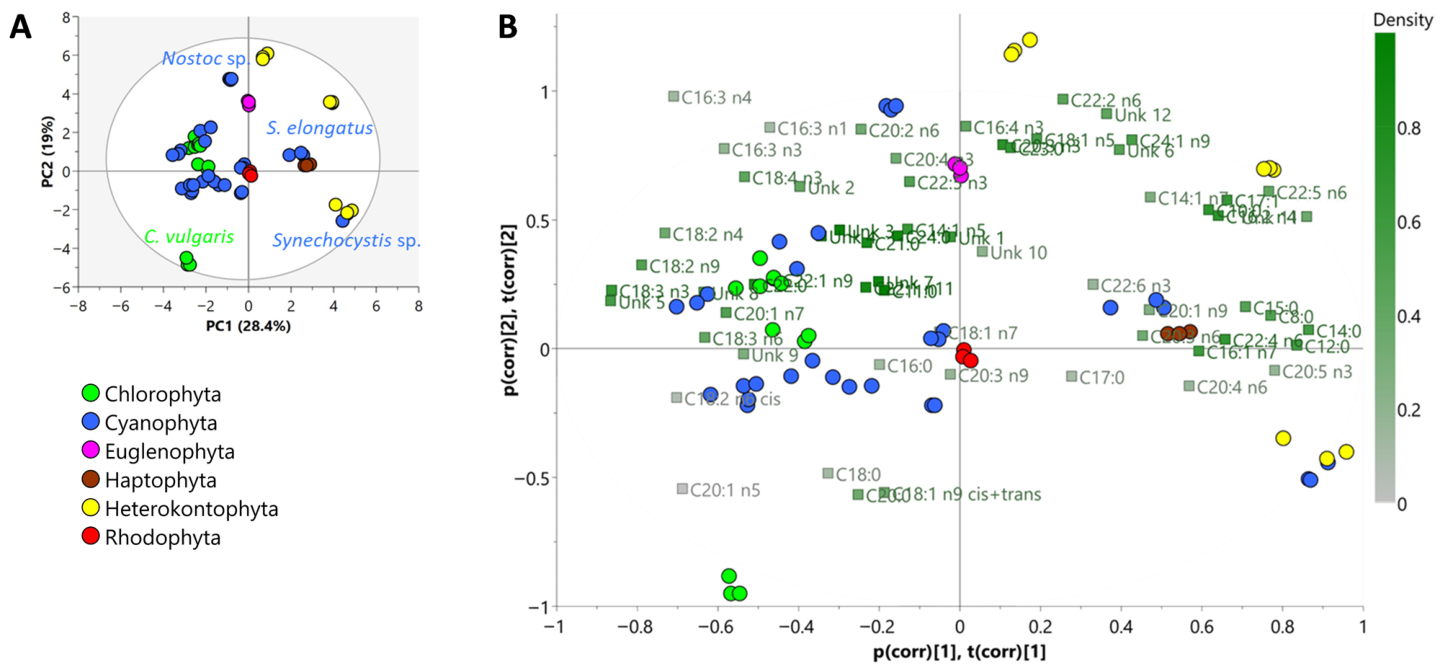
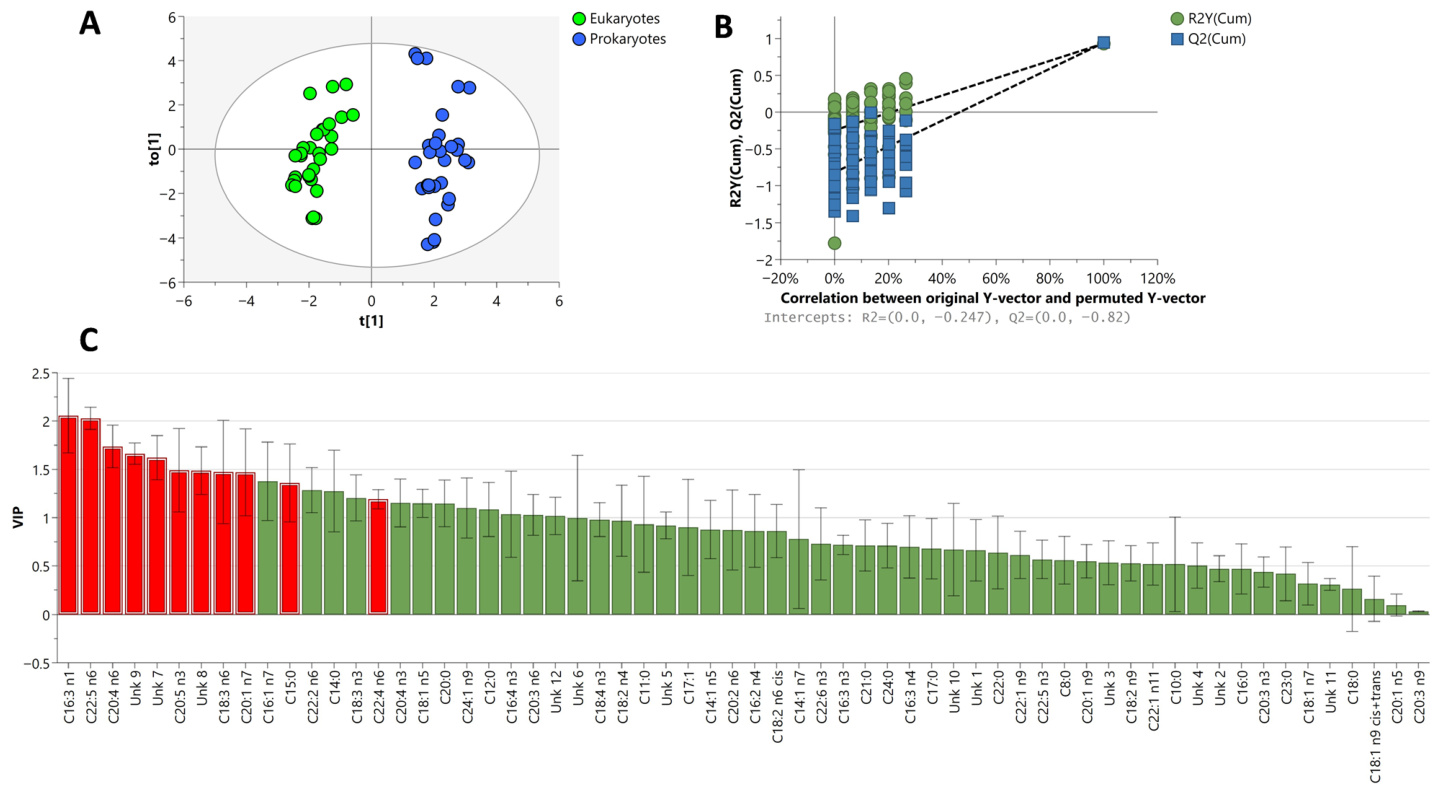
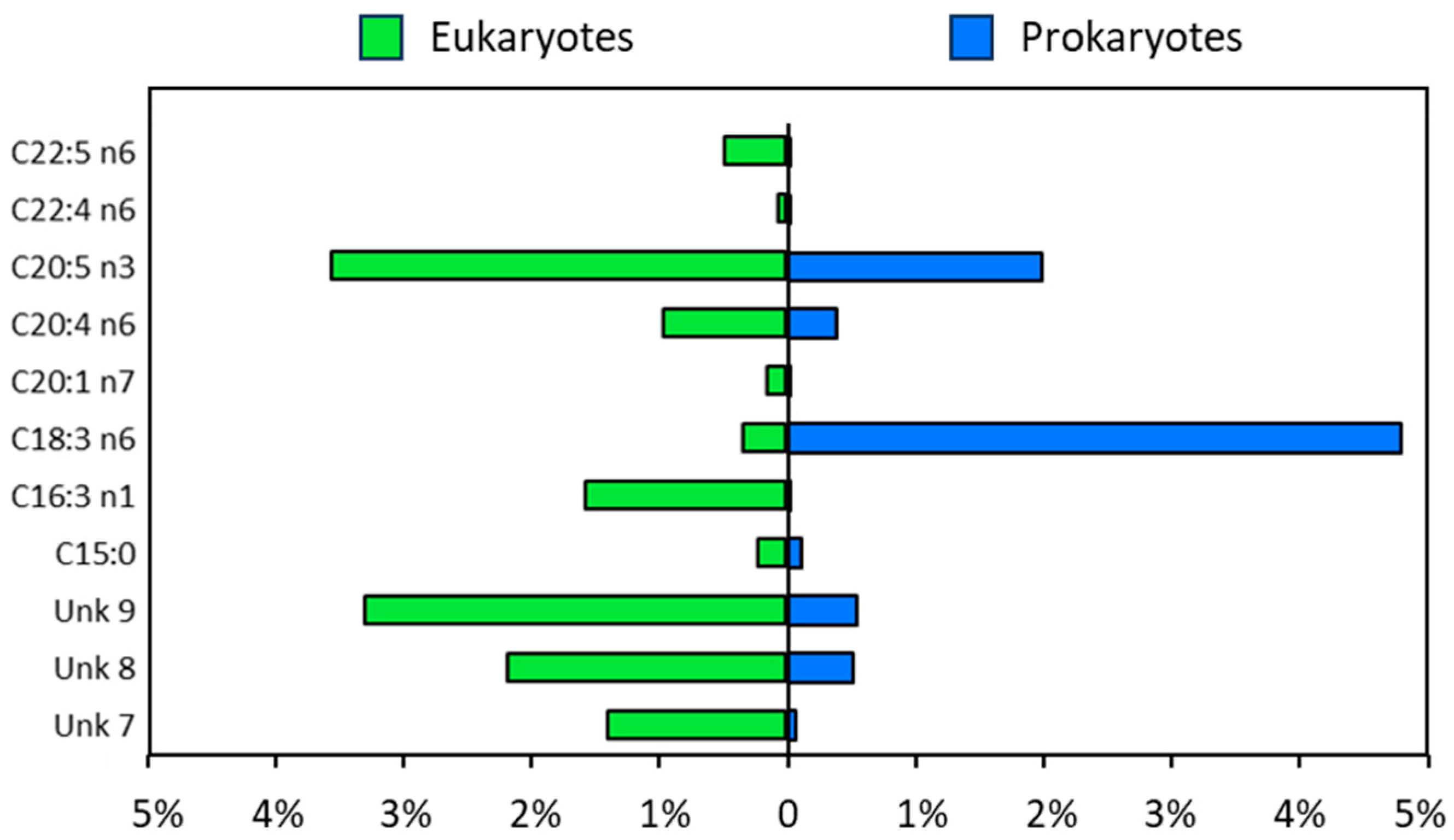
- Pigments and fatty acids profile, combined with multivariate data analysis, are a ro-bust chemotaxonomic tool for microalgae differentiation.
Abstract
1. Introduction
2. Results and Discussion
2.1. Culture Growth Characteristics
2.2. Total Phenol Content and Antioxidant Activity
2.3. Pigment Analysis
2.4. Total Lipids and Fatty Acids Profile
2.5. Protein Analysis
2.6. Antibacterial Activity
3. Materials and Methods
3.1. Materials
3.2. Species Selection, Culture Conditions and Biomass Harvesting
3.3. Total Phenol Content and Antioxidant Activity
3.4. Pigment Analysis
3.5. Lipids Extraction and Fatty Acids Profile by GC-FID
3.6. Protein Analysis
3.7. Preparation of Crude Extract for Antibacterial Assay
3.8. Assesment of Antimicrobial Activity: Determination of Minimum Inhibitory Concentration and Minimum Bactericidal Concentration
3.9. Statistical Analysis
4. Conclusions
Supplementary Materials
Author Contributions
Funding
Institutional Review Board Statement
Data Availability Statement
Acknowledgments
Conflicts of Interest
References
- Hachicha, R.; Elleuch, F.; Ben Hlima, H.; Dubessay, P.; de Baynast, H.; Delattre, C.; Pierre, G.; Hachicha, R.; Abdelkafi, S.; Michaud, P. Biomolecules from microalgae and cyanobacteria: Applications and market survey. Appl. Sci. 2022, 12, 1924. [Google Scholar] [CrossRef]
- Ganesan, R.; Manigandan, S.; Samuel, M.S.; Shanmuganathan, R.; Brindhadevi, K.; Chi, N.T.L.; Duc, P.A.; Pugazhendhi, A. A review on prospective production of biofuel from microalgae. Biotechnol. Rep. 2020, 27, e00509. [Google Scholar] [CrossRef]
- Mofijur, M.; Rasul, M.G.; Hassan, N.; Nabi, M. Recent development in the production of third generation biodiesel from microalgae. Energy Procedia 2019, 156, 53–58. [Google Scholar] [CrossRef]
- Lafarga, T. Effect of microalgal biomass incorporation into foods: Nutritional and sensorial attributes of the end products. Algal Res. 2019, 41, 101566. [Google Scholar] [CrossRef]
- Chuyen, H.V.; Eun, J.-B. Marine carotenoids: Bioactivities and potential benefits to human health. Crit. Rev. Food Sci. Nutr. 2017, 57, 2600–2610. [Google Scholar] [CrossRef]
- Saeed, M.U.; Hussain, N.; Shahbaz, A.; Hameed, T.; Iqbal, H.M.; Bilal, M. Bioprospecting microalgae and cyanobacteria for biopharmaceutical applications. J. Basic Microbiol. 2022, 62, 1110–1124. [Google Scholar] [CrossRef]
- Odenthal, K.; Nunes, E.; Nunes, N.; Fernandes, T.; Fernandes, I.A.; de Carvalho, M.A.P. Microalgae and cyanobacteria as natural sources of antioxidant enzymes and enzyme inhibitors for Alzheimer’s and diabetes. Algal Res. 2024, 82, 103610. [Google Scholar] [CrossRef]
- Cepas, V.; Gutiérrez-Del-Río, I.; López, Y.; Redondo-Blanco, S.; Gabasa, Y.; Iglesias, M.J.; Soengas, R.; Fernández-Lorenzo, A.; López-Ibáñez, S.; Villar, C.J. Microalgae and cyanobacteria strains as producers of lipids with antibacterial and antibiofilm activity. Mar. Drugs 2021, 19, 675. [Google Scholar] [CrossRef]
- Hassan, S.; Meenatchi, R.; Pachillu, K.; Bansal, S.; Brindangnanam, P.; Arockiaraj, J.; Kiran, G.S.; Selvin, J. Identification and characterization of the novel bioactive compounds from microalgae and cyanobacteria for pharmaceutical and nutraceutical applications. J. Basic Microbiol. 2022, 62, 999–1029. [Google Scholar] [CrossRef] [PubMed]
- European Union. European Commission Implementing Regulation (EU) 2017/2470 of 20 December 2017 Establishing the Union List of Novel Foods in Accordance with Regulation (EU) 2015/2283 of the European Parliament and of the Council on Novel Foods. Official Journal of the European Union, 30 December 2017.
- Prates, J.A. Applications of bioactive compounds from marine microalgae in health, cosmetics, and functional foods. Appl. Sci. 2025, 15, 6144. [Google Scholar] [CrossRef]
- Jerez-Martel, I.; García-Poza, S.; Rodríguez-Martel, G.; Rico, M.; Afonso-Olivares, C.; Gómez-Pinchetti, J.L. Phenolic profile and antioxidant activity of crude extracts from microalgae and cyanobacteria strains. J. Food Qual. 2017, 2017, 2924508. [Google Scholar] [CrossRef]
- Buonvino, S.; Trinca, C.; Leu, S.; Licoccia, S.; Melino, S. A New Algal Friendly Extract from Euglena cantabrica with Potential Applications in Biomedical Field. Mar. Drugs 2025, 23, 453. [Google Scholar] [CrossRef] [PubMed]
- Matos, J.; Cardoso, C.L.; Falé, P.; Afonso, C.M.; Bandarra, N.M. Investigation of nutraceutical potential of the microalgae Chlorella vulgaris and Arthrospira platensis. Int. J. Food Sci. Technol. 2020, 55, 303–312. [Google Scholar] [CrossRef]
- Vega, J.; Bonomi-Barufi, J.; Gómez-Pinchetti, J.L.; Figueroa, F.L. Cyanobacteria and red macroalgae as potential sources of antioxidants and UV radiation-absorbing compounds for cosmeceutical applications. Mar. Drugs 2020, 18, 659. [Google Scholar] [CrossRef]
- Maadane, A.; Merghoub, N.; Ainane, T.; El Arroussi, H.; Benhima, R.; Amzazi, S.; Bakri, Y.; Wahby, I. Antioxidant activity of some Moroccan marine microalgae: Pufa profiles, carotenoids and phenolic content. J. Biotechnol. 2015, 215, 13–19. [Google Scholar] [CrossRef]
- Li, H.-B.; Cheng, K.-W.; Wong, C.-C.; Fan, K.-W.; Chen, F.; Jiang, Y. Evaluation of antioxidant capacity and total phenolic content of different fractions of selected microalgae. Food Chem. 2007, 102, 771–776. [Google Scholar] [CrossRef]
- Goiris, K.; Muylaert, K.; Fraeye, I.; Foubert, I.; De Brabanter, J.; De Cooman, L. Antioxidant potential of microalgae in relation to their phenolic and carotenoid content. J. Appl. Phycol. 2012, 24, 1477–1486. [Google Scholar] [CrossRef]
- Wang, S.; Wu, S.; Yang, G.; Pan, K.; Wang, L.; Hu, Z. A review on the progress, challenges and prospects in commercializing microalgal fucoxanthin. Biotechnol. Adv. 2021, 53, 107865. [Google Scholar] [CrossRef]
- Di Lena, G.; Casini, I.; Lucarini, M.; Lombardi-Boccia, G. Carotenoid profiling of five microalgae species from large-scale production. Food Res. Int. 2019, 120, 810–818. [Google Scholar] [CrossRef]
- Sun, Z.; Wang, X.; Liu, J. Screening of Isochrysis strains for simultaneous production of docosahexaenoic acid and fucoxanthin. Algal Res. 2019, 41, 101545. [Google Scholar] [CrossRef]
- Foo, S.C.; Yusoff, F.M.; Ismail, M.; Basri, M.; Yau, S.K.; Khong, N.M.; Chan, K.W.; Ebrahimi, M. Antioxidant capacities of fucoxanthin-producing algae as influenced by their carotenoid and phenolic contents. J. Biotechnol. 2017, 241, 175–183. [Google Scholar] [CrossRef]
- Jeffrey, S. Chromatographic separation of chlorophylls and carotenoids from marine algae. Biochem. J. 1961, 80, 336. [Google Scholar] [CrossRef]
- Xiao, H.; Zhao, J.; Fang, C.; Cao, Q.; Xing, M.; Li, X.; Hou, J.; Ji, A.; Song, S. Advances in studies on the pharmacological activities of fucoxanthin. Mar. Drugs 2020, 18, 634. [Google Scholar] [CrossRef]
- Roy, S.; Llewellyn, C.A.; Egeland, E.S.; Johnsen, G. Phytoplankton Pigments: Characterization, Chemotaxonomy and Applications in Oceanography; Cambridge University Press: Cambridge, UK, 2011. [Google Scholar]
- Ryckebosch, E.; Bruneel, C.; Termote-Verhalle, R.; Muylaert, K.; Foubert, I. Influence of extraction solvent system on extractability of lipid components from different microalgae species. Algal Res. 2014, 3, 36–43. [Google Scholar] [CrossRef]
- Deenu, A.; Naruenartwongsakul, S.; Kim, S.M. Optimization and economic evaluation of ultrasound extraction of lutein from Chlorella vulgaris. Biotechnol. Bioprocess Eng. 2013, 18, 1151–1162. [Google Scholar] [CrossRef]
- Diaz-MacAdoo, D.; Nagai, S.; Mata, M.T.; Minei, R.; Ogura, A.; Riquelme, C. Comparative analysis of carotenoid synthesis and transcriptome of a microalga Chlorophyta MCH-35, potential lutein producer, in response to different quality light. Algal Res. 2023, 74, 103206. [Google Scholar] [CrossRef]
- De la Vega, M.; Díaz, E.; Vila, M.; León, R. Isolation of a new strain of Picochlorum sp and characterization of its potential biotechnological applications. Biotechnol. Prog. 2011, 27, 1535–1543. [Google Scholar] [CrossRef] [PubMed]
- Schagerl, M.; Pichler, C.; Donabaum, K. Patterns of major photosynthetic pigments in freshwater algae. 2. Dinophyta, Euglenophyta, Chlorophyceae and Charales. Ann. Limnol.-Int. J. Limnol. 2003, 39, 49–62. [Google Scholar] [CrossRef]
- Zapata, M.; Jeffrey, S.W.; Wright, S.W.; Rodríguez, F.; Garrido, J.L.; Clementson, L. Photosynthetic pigments in 37 species (65 strains) of Haptophyta: Implications for oceanography and chemotaxonomy. Mar. Ecol. Prog. Ser. 2004, 270, 83–102. [Google Scholar] [CrossRef]
- Lavaud, J.; Rousseau, B.; Etienne, A.-L. Enrichment of the light-harvesting complex in diadinoxanthin and implications for the nonphotochemical fluorescence quenching in diatoms. Biochemistry 2003, 42, 5802–5808. [Google Scholar] [CrossRef] [PubMed]
- Montero, O.; Macías-Sánchez, M.D.; Lama, C.M.; Lubián, L.M.; Mantell, C.; Rodríguez, M.; de la Ossa, E.M. Supercritical CO2 extraction of β-carotene from a marine strain of the cyanobacterium Synechococcus species. J. Agric. Food Chem. 2005, 53, 9701–9707. [Google Scholar] [CrossRef]
- Guillard, R.; Murphy, L.; Foss, P.; Liaaen-Jensen, S. Synechococcus spp. as likely zeaxanthin-dominant ultraphytoplankton in the North Atlantic 1. Limnol. Oceanogr. 1985, 30, 412–414. [Google Scholar] [CrossRef]
- Graham, J.E.; Lecomte, J.T.; Bryant, D.A. Synechoxanthin, an aromatic C40 xanthophyll that is a major carotenoid in the cyanobacterium Synechococcus sp. PCC 7002. J. Nat. Prod. 2008, 71, 1647–1650. [Google Scholar] [CrossRef] [PubMed]
- Casazza, A.P.; Lombardi, A.; Menin, B.; Santabarbara, S. Temperature-induced zeaxanthin overproduction in Synechococcus elongatus PCC 7942. Photochem. Photobiol. Sci. 2023, 22, 783–794. [Google Scholar] [CrossRef] [PubMed]
- Lam, M.K.; Lee, K.T. Potential of using organic fertilizer to cultivate Chlorella vulgaris for biodiesel production. Appl. Energy 2012, 94, 303–308. [Google Scholar] [CrossRef]
- Damiani, M.C.; Popovich, C.A.; Constenla, D.; Leonardi, P.I. Lipid analysis in Haematococcus pluvialis to assess its potential use as a biodiesel feedstock. Bioresour. Technol. 2010, 101, 3801–3807. [Google Scholar] [CrossRef]
- Mitra, M.; Patidar, S.K.; George, B.; Shah, F.; Mishra, S. A euryhaline Nannochloropsis gaditana with potential for nutraceutical (EPA) and biodiesel production. Algal Res. 2015, 8, 161–167. [Google Scholar] [CrossRef]
- Li, C.; Yu, Y.; Zhang, D.; Liu, J.; Ren, N.; Feng, Y. Combined effects of carbon, phosphorus and nitrogen on lipid accumulation of Chlorella vulgaris in mixotrophic culture. J. Chem. Technol. Biotechnol. 2016, 91, 680–684. [Google Scholar] [CrossRef]
- Pal, D.; Khozin-Goldberg, I.; Cohen, Z.; Boussiba, S. The effect of light, salinity, and nitrogen availability on lipid production by Nannochloropsis sp. Appl. Microbiol. Biotechnol. 2011, 90, 1429–1441. [Google Scholar] [CrossRef] [PubMed]
- Simopoulos, A.P. The importance of the omega-6/omega-3 fatty acid ratio in cardiovascular disease and other chronic diseases. Exp. Biol. Med. 2008, 233, 674–688. [Google Scholar] [CrossRef]
- Jesionowska, M.; Ovadia, J.; Hockemeyer, K.; Clews, A.C.; Xu, Y. EPA and DHA in microalgae: Health benefits, biosynthesis, and metabolic engineering advances. J. Am. Oil Chem. Soc. 2023, 100, 831–842. [Google Scholar] [CrossRef]
- Codex Alimentarius Commission; Joint FAO/WHO Food Standards Programme; Codex Committee on Nutrition and Foods for Special Dietary Uses. Proposed draft NRV-NCD for EPA and DHA long chain omega-3 fatty acids. In Proceedings of the 38th Session, Hamburg, Germany, 5–9 December 2016. [Google Scholar]
- Eriksson, L.; Byrne, T.; Johansson, E.; Trygg, J.; Vikström, C. Multi- and Megavariate Data Analysis Basic Principles and Applications; Umetrics Academy: Malmo, Sweden, 2013. [Google Scholar]
- Oku, N.; Yonejima, K.; Sugawa, T.; Igarashi, Y. Identification of the n-1 fatty acid as an antibacterial constituent from the edible freshwater cyanobacterium Nostoc verrucosum. Biosci. Biotechnol. Biochem. 2014, 78, 1147–1150. [Google Scholar] [CrossRef]
- Lupatini, A.L.; Colla, L.M.; Canan, C.; Colla, E. Potential application of microalga Spirulina platensis as a protein source. J. Sci. Food Agric. 2017, 97, 724–732. [Google Scholar] [CrossRef]
- Churchward, C.P.; Alany, R.G.; Snyder, L.A. Alternative antimicrobials: The properties of fatty acids and monoglycerides. Crit. Rev. Microbiol. 2018, 44, 561–570. [Google Scholar] [CrossRef]
- Kenny, J.G.; Ward, D.; Josefsson, E.; Jonsson, I.-M.; Hinds, J.; Rees, H.H.; Lindsay, J.A.; Tarkowski, A.; Horsburgh, M.J. The Staphylococcus aureus response to unsaturated long chain free fatty acids: Survival mechanisms and virulence implications. PLoS ONE 2009, 4, e4344. [Google Scholar] [CrossRef] [PubMed]
- Guillard, R.R.; Ryther, J.H. Studies of marine planktonic diatoms: I. Cyclotella nana Hustedt, and Detonula confervacea (Cleve) Gran. Can. J. Microbiol. 1962, 8, 229–239. [Google Scholar] [CrossRef] [PubMed]
- Guillard, R.R. Culture of phytoplankton for feeding marine invertebrates. In Culture of Marine Invertebrate Animals: Proceedings—1st Conference on Culture of Marine Invertebrate Animals Greenport; Springer: Boston, MA, USA, 1975. [Google Scholar]
- Allen, M.M. Simple conditions for growth of unicellular blue-green algae on plates 1, 2. J. Phycol. 1968, 4, 1–4. [Google Scholar] [CrossRef] [PubMed]
- Rippka, R.; Deruelles, J.; Waterbury, J.B.; Herdman, M.; Stanier, R.Y. Generic assignments, strain histories and properties of pure cultures of cyanobacteria. Microbiology 1979, 111, 1–61. [Google Scholar] [CrossRef]
- Bischoff, H.W.; Bold, H. Psychological studies IV. Some soil algae from enchanted rock and related algal species. Univ. Tex. Publ. 1963, 6318, 1. [Google Scholar]
- Bold, H.C. The morphology of Chlamydomonas chlamydogama, sp. nov. Bull. Torrey Bot. Club 1949, 76, 101–108. [Google Scholar] [CrossRef]
- Aiba, S.; Ogawa, T. Assessment of growth yield of a blue—Green alga, Spirulina platensis, in axenic and continuous culture. Microbiology 1977, 102, 179–182. [Google Scholar] [CrossRef]
- Singleton, V.L.; Rossi, J.A. Colorimetry of total phenolics with phosphomolybdic-phosphotungstic acid reagents. Am. J. Enol. Vitic. 1965, 16, 144–158. [Google Scholar] [CrossRef]
- Blois, M.S. Antioxidant determinations by the use of a stable free radical. Nature 1958, 181, 1199–1200. [Google Scholar] [CrossRef]
- Lichtenthaler, H.K.; Buschmann, C. Chlorophylls and carotenoids: Measurement and characterization by UV-VIS spectroscopy. Curr. Protoc. Food Anal. Chem. 2001, 1, F4.3.1–F4.3.8. [Google Scholar] [CrossRef]
- Zapata, M.; Rodríguez, F.; Garrido, J.L. Separation of chlorophylls and carotenoids from marine phytoplankton: A new HPLC method using a reversed phase C8 column and pyridine-containing mobile phases. Mar. Ecol. Prog. Ser. 2000, 195, 29–45. [Google Scholar] [CrossRef]
- Bligh, E.G.; Dyer, W.J. A rapid method of total lipid extraction and purification. Can. J. Biochem. Physiol. 1959, 37, 911–917. [Google Scholar] [CrossRef]
- Christie, W.W.; Han, X. Lipid Analysis: Isolation, Separation, Identification and Lipidomic Analysis, 4th ed.; Oily Press: Bridgewater, UK, 2010. [Google Scholar]
- Lourenço, S.O.; Barbarino, E.; Lavín, P.L.; Lanfer Marquez, U.M.; Aidar, E. Distribution of intracellular nitrogen in marine microalgae: Calculation of new nitrogen-to-protein conversion factors. Eur. J. Phycol. 2004, 39, 17–32. [Google Scholar] [CrossRef]
- de Falco, B.; Fiore, A.; Bochicchio, R.; Amato, M.; Lanzotti, V. Metabolomic analysis by UAE-GC MS and antioxidant activity of Salvia hispanica (L.) seeds grown under different irrigation regimes. Ind. Crops Prod. 2018, 112, 584–592. [Google Scholar] [CrossRef]
- CLSI. Methods for Dilution Antimicrobial Susceptibility Tests for Bacteria That Grow Aerobically, M07, 11th ed.; Clinical and Laboratory Standards Institute: Wayne, PA, USA, 2018. [Google Scholar]



| Species | BEA Code | Division (Class) | Geographical Origin | Culture Medium | n | µ (d−1) | Biomass Productivity (gCDW·l−1·d−1) |
|---|---|---|---|---|---|---|---|
| EUKARYOTES | |||||||
| Chrysoreinhardia giraudii | BEA 0313B | Heterokontophyta (Pelagophyceae) | Spain, Canary Islands, Gran Canaria. La Aldea harbor | F/2 | 12 | 0.277 ± 0.054 | 0.159 ± 0.031 |
| Chlorella vulgaris | BEA 0045B | Chlorophyta (Trebouxiophyceae) | Cape Verde, Maio. Porto Ingles saltwork | F/2 | 16 | 0.414 ± 0.100 | 0.030 ± 0.007 |
| Entomoneis sp. | BEA 0505B | Heterokontophyta (Bacillariophyceae) | Spain, Canary Islands, La Palma. Volcano new beach, squeezed from Ulva sp. | F/2 | 12 | 0.362 ± 0.027 | 0.059 ± 0.012 |
| Euglena cantabrica | BEA 0937B | Euglenophyta (Euglenophyceae) | Spain, Canary Islands, Gran Canaria. Maspalomas coastal lagoon | BBM + vit + 2N | 8 | 0.109 ± 0.011 | 0.049 ± 0.008 |
| Haematococcus pluvialis | BEA 1360B | Chlorophyta (Chlorophyceae) | Spain, Canary Islands, Gran Canaria. Agaete rock pool | BG11 | 16 | 0.364 ± 0.105 | 0.023 ± 0.004 |
| Hallochlorella rubescens | BEA 0069B | Chlorophyta Chlorophyceae) | Spain, Canary Islands, Fuerteventura. Lobos island sandy crust | F/2 | 8 | 0.249 ± 0.050 | 0.052 ± 0.018 |
| Isochrysis galbana | BEA 1751B | Haptophyta (Cocolithophyceae) | Spain, Canary Islands, Gran Canaria. Bocacangrejo saltwork | F/2 | 20 | 0.329 ± 0.025 | 0.033 ± 0.026 |
| Nannochloropsis gaditana | BEA 1883B | Heterokontophyta (Eustigmatophyceae) | Spain, Canary Islands, Gran Canaria. Taliarte coast, marine water sample | F/2 | 20 | 0.347 ± 0.025 | 0.021 ± 0.004 |
| Picochlorum sp. | BEA 0154B | Chlorophyta (Trebouxiophyceae) | Spain, Canary Islands, Gran Canaria. Maspalomas coastal lagoon | F/2 | 24 | 0.350 ± 0.047 | 0.017 ± 0.004 |
| Rhodosorus marinus | BEA 1286B | Rhodophyta (Stylonematophyceae) | Spain, Canary Islands, Gran Canaria. Taliarte rock pool | F/2 | 8 | 0.444 ± 0.074 | 0.112 ± 0.019 |
| PROKARYOTES | |||||||
| Anabaena minutissima | BEA 0300B | Cyanophyta (Cyanobacteria) | Spain, Canary Islands, Fuerteventura. Ajuy freshwater upwelling on the coast | BG11 | 12 | 0.473 ± 0.032 | 0.041 ± 0.010 |
| Arthrospira platensis | BEA 0007B | Cyanophyta (Cyanobacteria) | Chad, Lake Chad | SpM | 8 | 0.329 ± 0.046 | 0.064 ± 0.004 |
| Arthrospira platensis | BEA 1257B | Cyanophyta (Cyanobacteria) | Spain, Canary Islands, Fuerteventura. Los Molinos dam | SpM | 16 | 0.309 ± 0.037 | 0.040 ± 0.012 |
| Cylindrospermum stagnale | BEA 0605B | Cyanophyta (Cyanobacteria) | Spain, Canary Islands, La Gomera. Garajonay. National Park, slimy material from a wet rock | BG11 | 24 | 0.452 ± 0.212 | 0.013 ± 0.005 |
| Microcystis aeruginosa | BEA 0699B | Cyanophyta (Cyanobacteria) | Spain, Canary Islands, Tenerife. La Orotava Botanical Garden Pond | BG11 | 20 | 0.346 ± 0.046 | 0.017 ± 0.005 |
| Nodularia sp. | BEA 0866B | Cyanophyta (Cyanobacteria) | Spain, Canary Islands, Gran Canaria. Marine water sample. | F/2 | 16 | 0.274 ± 0.097 | 0.062 ± 0.021 |
| Nostoc commune | BEA 0024B | Cyanophyta (Cyanobacteria) | Spain, Canary Islands, Gran Canaria. On a trunk of Phoenix canariensis | BG11 | 20 | 0.475 ± 0.129 | 0.024 ± 0.009 |
| Nostoc sp. | BEA 0864B | Cyanophyta (Cyanobacteria) | Morocco, Rabat-Salè-Zemmour-Zaër, Rabat. Marine water sample | BG11 | 24 | 0.388 ± 0.060 | 0.029 ± 0.017 |
| Synechococcus elongatus | BEA 1031B | Cyanophyta (Cyanobacteria) | Spain, Canary Islands, Gran Canaria. Ayagaures dam, squeezed from Nitella sp. | BG11 | 16 | 0.212 ± 0.060 | 0.021 ± 0.006 |
| Synechocystis sp. | BEA 1833B | Cyanophyta (Cyanobacteria) | Spain, Toledo. Tirez Lagoon-Villacañas, hypersaline lagoon | BG11 | 12 | 0.360 ± 0.042 | 0.024 ± 0.008 |
| Identified Pigments (Abbreviation) | RT (Min) | λmax (nm) | Band Ratio |
|---|---|---|---|
| Chlorophyll-c3 (Chl-c3) * | 9.22 | 458 | 28 a |
| Chlorophyll-c2 (Chl-c2) * | 13.31 | 453; 585; 631 | 9 a |
| Chlorophyll-c1 (Chl-c1) | 14.18 | 448; 581; 633 | 7 a |
| Fucoxanthin (Fuco) * | 21.18 | 450 | - |
| Neoxanthin (Neo) * | 21.20 | 415; 442; 468 | 54 b |
| Violaxanthin (Viola) * | 22.14 | 415; 438; 467 | 91 b |
| Synechoxanthin (Syne) | 23.21 | 453; 479 | 35 b |
| Myxol quinovoside (Myxo) | 24.59 | 452; 477; 508 | 57 b |
| Diadinoxanthin (Diadino) * | 25.63 | 424; 448; 477 | 70 b |
| Caloxanthin (Cal) | 26.34 | 452; 478 | 44 b |
| Zeaxanthin (Zea) * | 28.10 | 454; 480 | 34 b |
| Lutein (Lut) * | 28.37 | 423; 447; 475 | 62 b |
| Canthaxanthin (Cantha) | 29.56 | 475 | - |
| Chlorophyll-b (Chl-b) * | 32.03 | 464; 654 | 2 a |
| Chlorophyll-a allomer 1 (Chl-a allo 1) | 32.89 | 419;657 | 0.87 a |
| Chlorophyll-a allomer 2 (Chl-a allo 2) | 33.04 | 430; 660 | 0.88 a |
| Chlorophyll-a (Chl-a) * | 33.49 | 431; 660 | 0.85 a |
| Chlorophyll-a epimer (Chl-a’) * | 33.81 | 431; 660 | 0.57 a |
| Pheophytin-b (Phe-b) | 34.63 | 437; 534; 656 | 2.6 a |
| β,β-Carotene (β,β-Car) | 36.20 | 455; 482 | 26 b |
| Species | Code | Fucoxanthin mg g−1 DW | Lutein mg g−1 DW |
|---|---|---|---|
| Chrysoreinhardia giraudii | BEA 0313B | 1.46 ± 0.08 | - |
| Chlorella vulgaris | BEA 0045B | - | 0.25 ± 0.04 |
| Entomoneis sp. | BEA 0505B | 4.35 ± 0.05 | - |
| Haematococcus pluvialis | BEA 1360B | - | 2.96 ± 0.17 |
| Hallochlorella rubescens | BEA 0069B | - | <LOQ |
| Isochrysis galbana | BEA 1751B | 0.54 ± 0.06 | - |
| Nannochloropsis gaditana | BEA 1883B | - | <LOQ |
| Nostoc commune | BEA 0024B | <LOQ | - |
| Picochlorum sp. | BEA 0154B | - | 0.51 ± 0.04 |
| TL | ΣSFAs | ΣMUFAs | ΣPUFAs | Σn6/Σn3 | Protein | |
|---|---|---|---|---|---|---|
| Eukaryote | ||||||
| C. giraudii | 11.3 ± 0.04 | 35.2 ± 0.53 | 6.0 ± 0.19 | 36.9 ± 0.60 | 0.2 ± 0.001 | 13.9 ± 0.18 g |
| C. vulgaris | 18.5 ± 0.05 | 34.2 ± 0.54 | 30.7 ± 0.58 | 24.7 ± 0.78 | 1.5 ± 0.05 | 19.8 ± 0.18 f |
| Entomoneis sp. | 12.0 ± 0.004 | 42.1 ± 0.12 | 34.1 ± 0.04 | 12.6 ± 0.07 | 0.2 ± 0.004 | 19.5 ± 0.01 f |
| E. cantabrica | 20.2 ± 0.02 | 14.6 ± 0.06 | 4.0 ± 0.15 | 55.1 ± 0.11 | 1.6 ± 0.01 | 38.9 ± 0.23 c |
| H. pluvialis | 18.9 ± 0.04 | 16.2 ± 0.69 | 6.8 ± 0.22 | 36.1 ± 1.38 | 0.5 ± 0.04 | 44.2 ± 0.08 b |
| H. rubescens | 12.9 ± 0.04 | 23.4 ± 0.10 | 33.0 ± 0.11 | 28.7 ± 0.05 | 0.4 ± 0.004 | 18.1 ± 0.43 fg |
| I. galbana | 14.4 ± 0.01 | 47.7 ± 0.32 | 25.5 ± 0.27 | 18.8 ± 0.54 | 0.4 ± 0.002 | 28.3 ± 0.95 e |
| N. gaditana | 18.9 ± 0.03 | 35.1 ± 0.25 | 31.0 ± 0.35 | 26.8 ± 0.46 | 0.4 ± 0.003 | 31.2 ± 0.06 e |
| Picochlorum sp. | 15.6 ± 0.03 | 25.3 ± 0.14 | 8.6 ± 0.11 | 35.3 ± 0.14 | 1.0 ± 0.02 | 37.8 ± 1.18 cd |
| R. marinus | 4.3 ± 0.001 | 49.2 ± 0.23 | 20.5 ± 0.18 | 25.2 ± 0.08 | 0.3 ± 0.02 | 9.2 ± 0.37 h |
| Cyanobacteria | ||||||
| A. minutissima | 12.9 ± 0.05 | 34.0 ± 2.33 | 20.0 ± 1.76 | 33.1 ± 4.60 | 0.3 ± 0.05 | 54.9 ± 0.14 a |
| A. platensis | 10.6 ± 0.01 | 42.5 ± 0.36 | 7.7 ± 0.43 | 37.8 ± 0.18 | 61.5 ± 3.76 | 44.2 ± 0.46 b |
| A. platensis* | 7.1 ± 0.03 | 41.3 ± 1.08 | 12.4 ± 0.12 | 34.5 ± 0.33 | 31.7 ± 11.4 | 44.2 ± 0.09 b |
| C. stagnale | 13.2 ± 0.05 | 28.4 ± 1.20 | 8.2 ± 0.13 | 39.5 ± 1.54 | 0.7 ± 0.07 | 55.4 ± 0.46 a |
| M. aeruginosa | 8.6 ± 0.01 | 57.2 ± 0.19 | 5.6 ± 0.44 | 25.3 ± 0.37 | 2.5 ± 0.05 | 57.6 ± 0.51 a |
| Nodularia sp. | 7.5 ± 0.002 | 38.8 ± 0.46 | 26.0 ± 0.46 | 22.6 ± 0.62 | 1.0 ± 0.01 | 34.1 ± 0.13 d |
| N. commune | 4.4 ± 0.01 | 29.6 ± 0.45 | 23.8 ± 0.16 | 33.9 ± 0.49 | 0.9 ± 0.02 | 19.4 ± 5.64 f |
| Nostoc sp. | 14.5 ± 0.05 | 34.6 ± 0.33 | 18.5 ± 0.20 | 36.8 ± 0.54 | 0.8 ± 0.02 | 55.7 ± 1.26 a |
| S. elongatus | 5.7 ± 0.02 | 44.5 ± 0.14 | 31.5 ± 0.19 | 17.7 ± 0.44 | 13.5 ± 3.24 | 36.3 ± 0.80 cd |
| Synechocystis sp. | 17.7 ± 0.04 | 34.5 ± 0.13 | 31.4 ± 0.19 | 27.3 ± 0.24 | 0.4 ± 0.003 | 28.8 ± 0.92 e |
| MIC50 | MIC90 | |
|---|---|---|
| (µg/mL) | ||
| Eukaryotes | ||
| C. giraudii | 128 | 128 |
| C. vulgaris | 1024 | >1024 |
| Entomoneis sp. | 32 | 32 |
| E. cantabrica | >1024 | >1024 |
| H. pluvialis | 512 | >1024 |
| H. rubescens | >1024 | >1024 |
| I. galbana | 128 | 256 |
| N. gaditana | 512 | 1024 |
| Picochlorum sp. | 128 | 256 |
| R. marinus | 128 | 512 |
| Prokaryotes | ||
| A. minutissima | >1024 | >1024 |
| A. platensis | 1024 | >1024 |
| A. platensis* | 1024 | >1024 |
| C. stagnale | 128 | 256 |
| M. aeruginosa | 256 | 512 |
| Nodularia sp. | 128 | 512 |
| N. commune | >1024 | >1024 |
| Nostoc sp. | 512 | 1024 |
| S. elongatus | >1024 | >1024 |
| Synechocystis sp. | 256 | 512 |
Disclaimer/Publisher’s Note: The statements, opinions and data contained in all publications are solely those of the individual author(s) and contributor(s) and not of MDPI and/or the editor(s). MDPI and/or the editor(s) disclaim responsibility for any injury to people or property resulting from any ideas, methods, instructions or products referred to in the content. |
© 2026 by the authors. Licensee MDPI, Basel, Switzerland. This article is an open access article distributed under the terms and conditions of the Creative Commons Attribution (CC BY) license.
Share and Cite
de Falco, B.; Martel-Benítez, C.J.; Almeida, C.; Anzano, A.; Pisapia, F.; Martín-Barrasa, J.L.; Quintana, A.M.; Gómez-Pinchetti, J.L. Bioactive Compounds from Microalgae and Cyanobacteria: Evaluation of Their Antioxidant and Antimicrobial Activities. Mar. Drugs 2026, 24, 171. https://doi.org/10.3390/md24050171
de Falco B, Martel-Benítez CJ, Almeida C, Anzano A, Pisapia F, Martín-Barrasa JL, Quintana AM, Gómez-Pinchetti JL. Bioactive Compounds from Microalgae and Cyanobacteria: Evaluation of Their Antioxidant and Antimicrobial Activities. Marine Drugs. 2026; 24(5):171. https://doi.org/10.3390/md24050171
Chicago/Turabian Stylede Falco, Bruna, Carlos José Martel-Benítez, Carlos Almeida, Attilio Anzano, Francesco Pisapia, José Luis Martín-Barrasa, Antera Martel Quintana, and Juan Luis Gómez-Pinchetti. 2026. "Bioactive Compounds from Microalgae and Cyanobacteria: Evaluation of Their Antioxidant and Antimicrobial Activities" Marine Drugs 24, no. 5: 171. https://doi.org/10.3390/md24050171
APA Stylede Falco, B., Martel-Benítez, C. J., Almeida, C., Anzano, A., Pisapia, F., Martín-Barrasa, J. L., Quintana, A. M., & Gómez-Pinchetti, J. L. (2026). Bioactive Compounds from Microalgae and Cyanobacteria: Evaluation of Their Antioxidant and Antimicrobial Activities. Marine Drugs, 24(5), 171. https://doi.org/10.3390/md24050171