
Exploration of Carotenoid-Producing Microorganisms from the Kuril-Kamchatka Trench and Their Antioxidant Potential


Abstract
1. Introduction
2. Results
2.1. Sampling and Enrichment of Microorganisms from the KKT
2.2. Diversity of Carotenoid-Producing Microorganisms from KKT
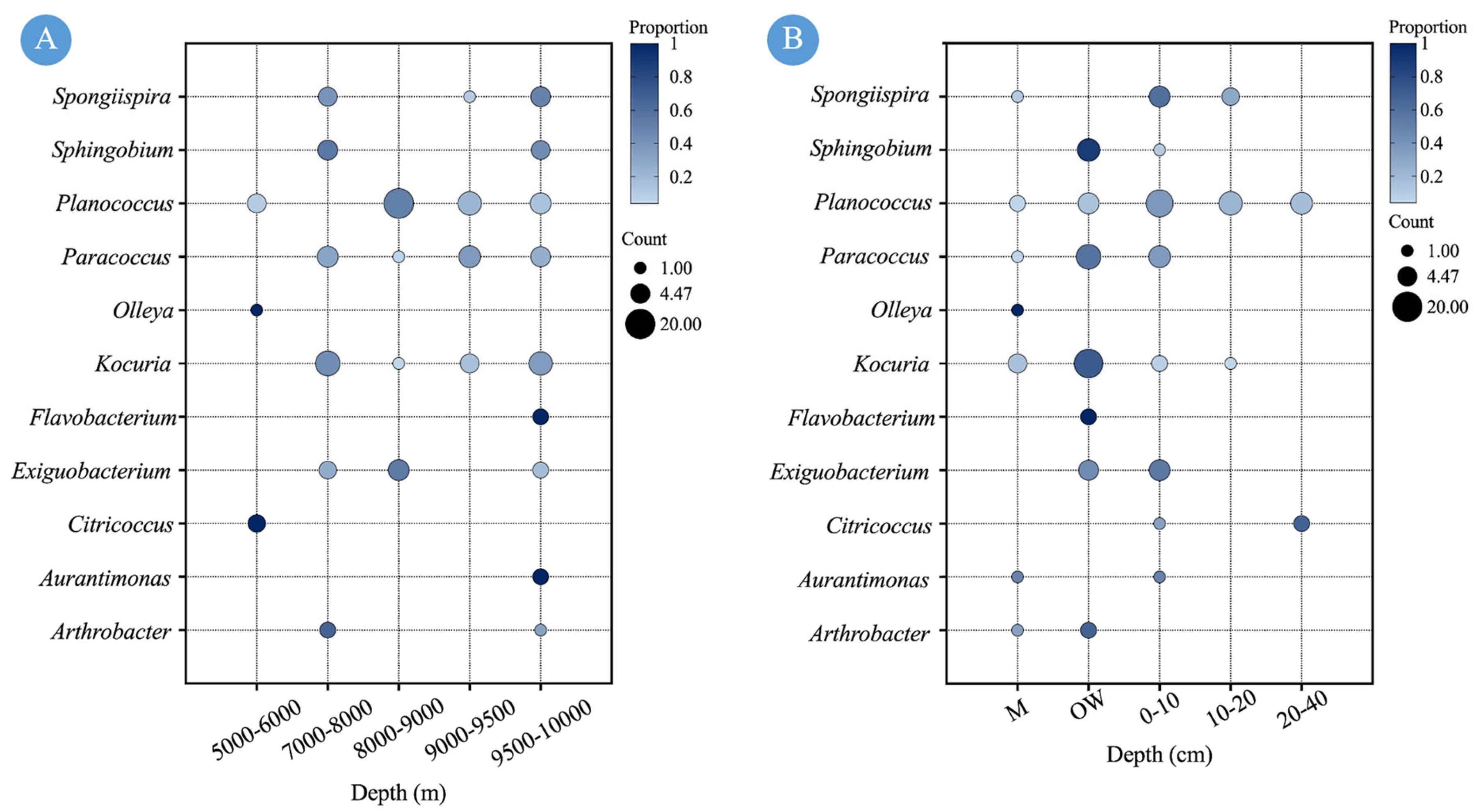
2.3. The Influence of Water Depth on the Diversity of CPMs
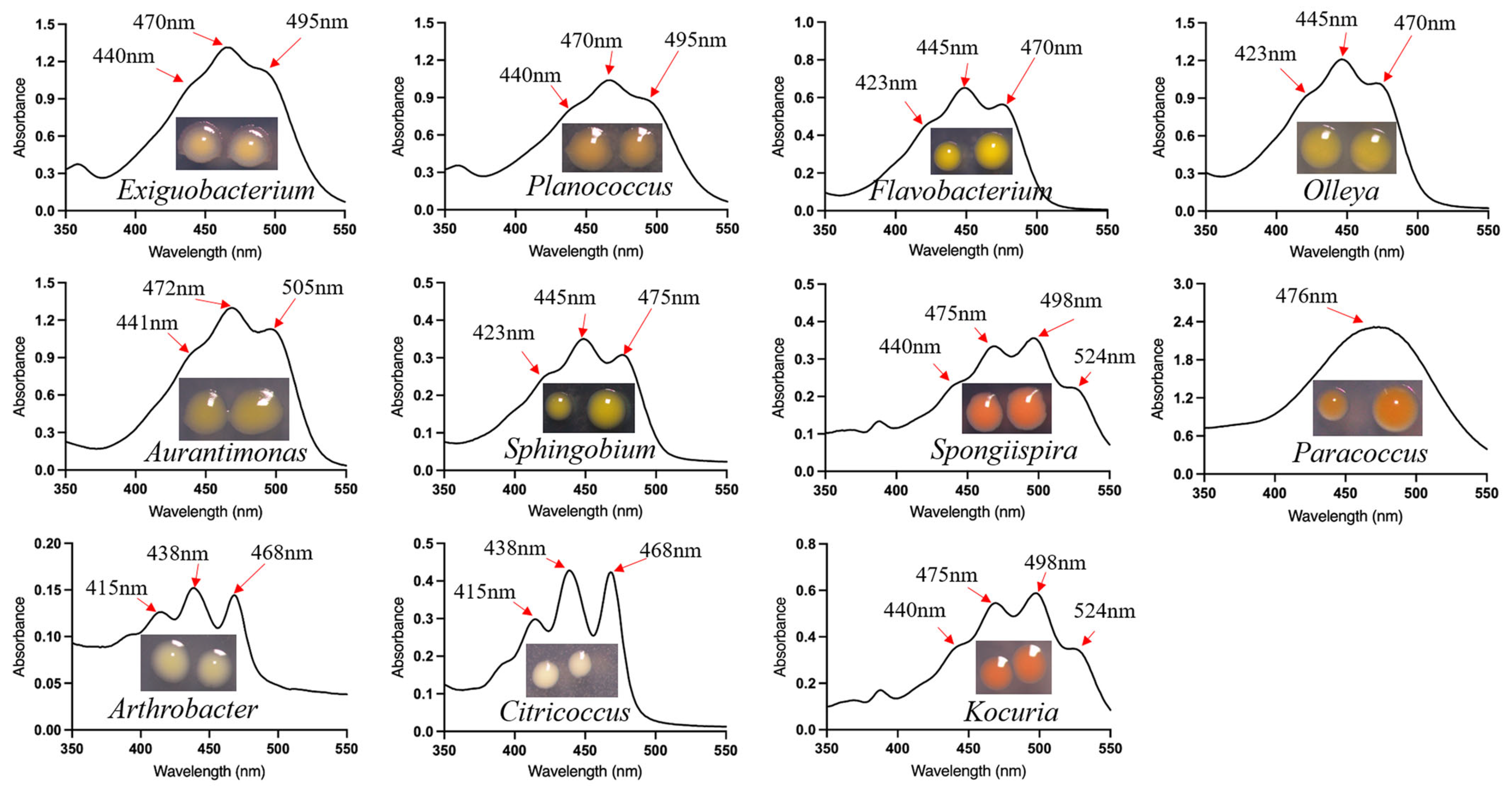
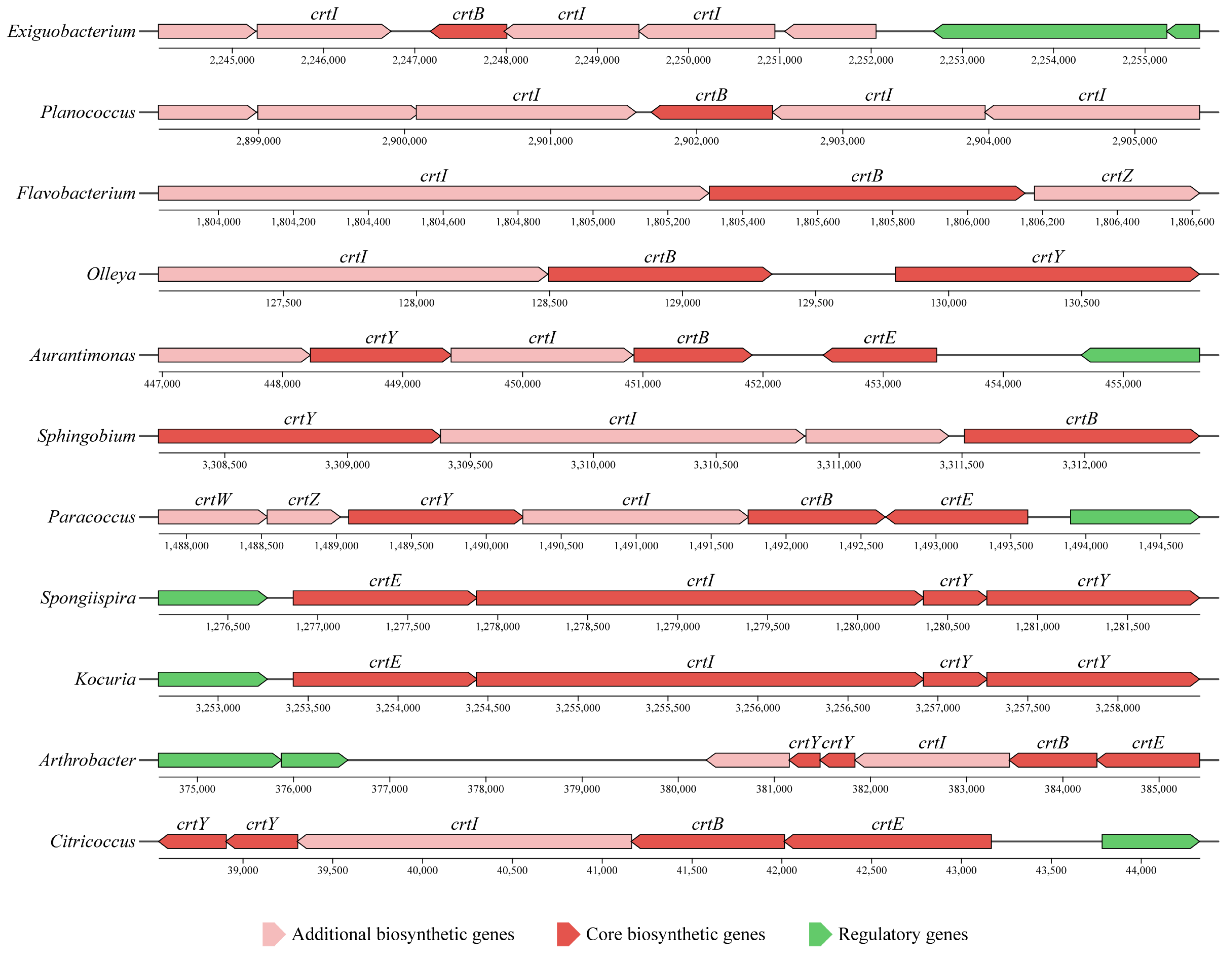
2.4. Carotenoid Characteristics from KKT and Their Biosynthetic Pathways
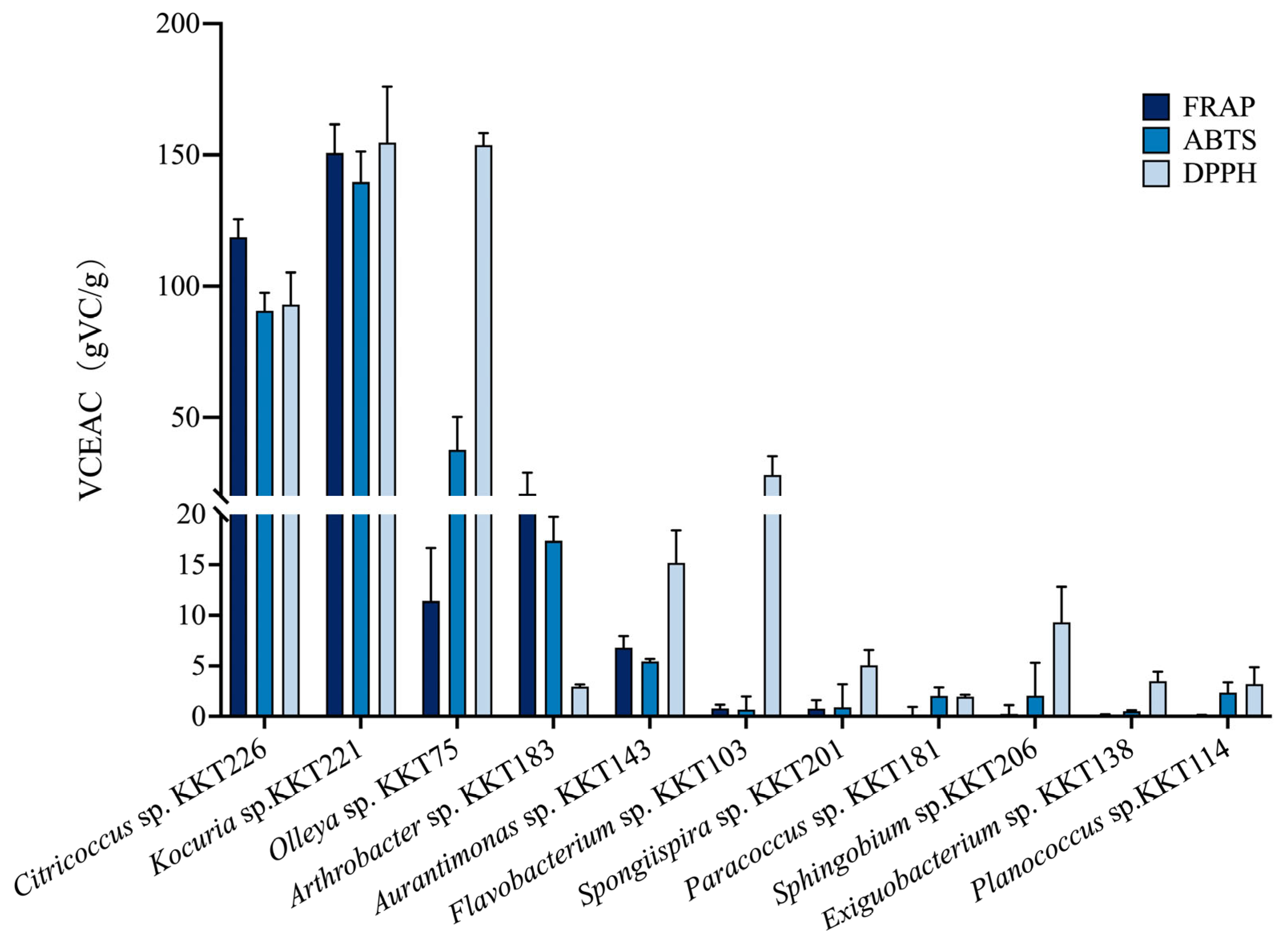
2.5. Antioxidant Capacity Analysis of Carotenoid Extracts from KKT Isolates
3. Discussion
3.1. The Hadal Zone Serves as a Promising Reservoir for Isolating CPMs
3.2. The Importance of Cultivation Strategies for Recovering Microbial Diversity
3.3. The Carotenoid Biosynthesis Potential of Microorganisms Derived from the KKT
3.4. Antioxidant Activity of Carotenoids Derived from Hadal Microorganisms
4. Materials and Methods
4.1. Sample Collection and Bacterial Isolation
4.2. 16S rRNA Gene PCR Amplification and Sequencing Analysis
4.3. Extraction and Quantification of Carotenoids
4.4. Determination of the Antioxidant Activities of Carotenoids
4.5. Genome Sequencing and Analysis of Carotenoid Biosynthesis Gene Clusters
4.6. Nucleotide Sequence Accession Numbers
5. Conclusions
Supplementary Materials
Author Contributions
Funding
Institutional Review Board Statement
Data Availability Statement
Acknowledgments
Conflicts of Interest
References
- Nunoura, T.; Takaki, Y.; Hirai, M.; Shimamura, S.; Makabe, A.; Koide, O.; Kikuchi, T.; Miyazaki, J.; Koba, K.; Yoshida, N. Hadal biosphere: Insight into the microbial ecosystem in the deepest ocean on Earth. Proc. Natl. Acad. Sci. USA 2015, 112, E1230–E1236. [Google Scholar] [CrossRef]
- Jamieson, A.J.; Fujii, T.; Mayor, D.J.; Solan, M.; Priede, I.G. Hadal trenches: The ecology of the deepest places on Earth. Trends Ecol. Evol. 2010, 25, 190–197. [Google Scholar] [CrossRef]
- Du, M.; Peng, X.; Zhang, H.; Ye, C.; Dasgupta, S.; Li, J.; Li, J.; Liu, S.; Xu, H.; Chen, C.; et al. Geology, environment, and life in the deepest part of the world’s oceans. Innovation 2021, 2, 100109. [Google Scholar] [CrossRef]
- Liu, R.L.; Wang, L.; Wei, Y.L.; Fang, J.S. The hadal biosphere: Recent insights and new directions. Deep-Sea Res. Part II 2018, 155, 11–18. [Google Scholar] [CrossRef]
- Glud, R.N.; Berg, P.; Thamdrup, B.; Larsen, M.; Stewart, H.A.; Jamieson, A.J.; Glud, A.; Oguri, K.; Sanei, H.; Rowden, A.A.; et al. Hadal trenches are dynamic hotspots for early diagenesis in the deep sea. Commun. Earth Environ. 2021, 2, 21. [Google Scholar] [CrossRef]
- Liu, J.; Zheng, Y.; Lin, H.; Wang, X.; Li, M.; Liu, Y.; Yu, M.; Zhao, M.; Pedentchouk, N.; Lea-Smith, D.J. Proliferation of hydrocarbon-degrading microbes at the bottom of the Mariana Trench. Microbiome 2019, 7, 47. [Google Scholar] [CrossRef] [PubMed]
- Zhao, X.; Liu, J.; Zhou, S.; Zheng, Y.; Wu, Y.; Kogure, K.; Zhang, X.-H. Diversity of culturable heterotrophic bacteria from the Mariana Trench and their ability to degrade macromolecules. Mar. Life Sci. Technol. 2020, 2, 181–193. [Google Scholar] [CrossRef]
- Peoples, L.M.; Donaldson, S.; Osuntokun, O.; Xia, Q.; Nelson, A.; Blanton, J.; Allen, E.E.; Church, M.J.; Bartlett, D.H. Vertically distinct microbial communities in the Mariana and Kermadec trenches. PLoS ONE 2018, 13, e0195102. [Google Scholar] [CrossRef]
- Zhou, Y.L.; Mara, P.; Cui, G.J.; Edgcomb, V.P.; Wang, Y. Microbiomes in the Challenger Deep slope and bottom-axis sediments. Nat. Commun. 2022, 13, 1515. [Google Scholar] [CrossRef]
- Jing, H.; Liu, H.; Xiao, Y.; Wu, Z.; Li, X. Microbial community structure and metabolic characteristics in the five different hadal trenches. Front. Microbiol. 2025, 16, 1676738. [Google Scholar]
- Takahashi, S.; Sugimoto, N. Effect of Pressure on Thermal Stability of G-Quadruplex DNA and Double-Stranded DNA Structures. Molecules 2013, 18, 13297–13319. [Google Scholar] [CrossRef] [PubMed]
- Herrera-Velarde, S.; Villanueva-Valencia, J.R.; Mendoza-Espinosa, P.; Castañeda-Priego, R. Stability and structural evolution of double-stranded DNA molecules under high pressures: A molecular dynamics study. Front. Phys. 2023, 11, 1076787. [Google Scholar] [CrossRef]
- Maurel, M.-C.; Leclerc, F.; Hervé, G. Ribozyme chemistry: To be or not to be under high pressure. Chem. Rev. 2019, 120, 4898–4918. [Google Scholar] [CrossRef] [PubMed]
- Nguyen, H.T.M.; Akanuma, G.; Hoa, T.T.M.; Nakai, Y.; Kimura, K.; Yamamoto, K.; Inaoka, T. Ribosome reconstruction during recovery from high-hydrostatic-pressure-induced injury in Bacillus subtilis. Appl. Environ. Microbiol. 2019, 86, e01640-19. [Google Scholar] [CrossRef]
- Seeliger, J.; Erwin, N.; Rosin, C.; Kahse, M.; Weise, K.; Winter, R. Exploring the structure and phase behavior of plasma membrane vesicles under extreme environmental conditions. Phys. Chem. Chem. Phys. 2015, 17, 7507–7513. [Google Scholar] [CrossRef]
- Lesser, M.P. Oxidative stress in marine environments: Biochemistry and physiological ecology. Annu. Rev. Physiol. 2006, 68, 253–278. [Google Scholar] [CrossRef]
- Elchennawi, I.; Ollagnier de Choudens, S. Iron–Sulfur Clusters toward Stresses: Implication for Understanding and Fighting Tuberculosis. Inorganics 2022, 10, 174. [Google Scholar] [CrossRef]
- Deming, T.J. Sulfur switches for responsive peptide materials. Acc. Chem. Res. 2024, 57, 661–669. [Google Scholar] [CrossRef]
- Xu, L.; Ma, S.; Qu, M.; Li, N.; Sun, X.; Wang, T.; Chen, L.; Zhu, J.; Ding, Y.; Gong, Y. Parthanatos initiated by ROS-induced DNA damage is involved in intestinal epithelial injury during necrotizing enterocolitis. Cell Death Discov. 2024, 10, 345. [Google Scholar] [CrossRef]
- Wang, B.; Wang, Y.; Zhang, J.; Hu, C.; Jiang, J.; Li, Y.; Peng, Z. ROS-induced lipid peroxidation modulates cell death outcome: Mechanisms behind apoptosis, autophagy, and ferroptosis. Arch. Toxicol. 2023, 97, 1439–1451. [Google Scholar] [CrossRef]
- Zou, X.; Wei, Y.; Jiang, S.; Xu, F.; Wang, H.; Zhan, P.; Shao, X. ROS stress and cell membrane disruption are the main antifungal mechanisms of 2-phenylethanol against Botrytis cinerea. J. Agric. Food Chem. 2022, 70, 14468–14479. [Google Scholar] [CrossRef]
- Flegler, A.; Lipski, A. The C50 carotenoid bacterioruberin regulates membrane fluidity in pink-pigmented Arthrobacter species. Arch. Microbiol. 2022, 204, 70. [Google Scholar] [CrossRef]
- Seel, W.; Baust, D.; Sons, D.; Albers, M.; Etzbach, L.; Fuss, J.; Lipski, A. Carotenoids are used as regulators for membrane fluidity by Staphylococcus xylosus. Sci. Rep. 2020, 10, 330. [Google Scholar] [CrossRef]
- Zamudio-Chávez, L.; Suesca, E.; López, G.-D.; Carazzone, C.; Manrique-Moreno, M.; Leidy, C. Staphylococcus aureus modulates carotenoid and phospholipid content in response to oxygen-restricted growth conditions, triggering changes in membrane biophysical properties. Int. J. Mol. Sci. 2023, 24, 14906. [Google Scholar] [CrossRef]
- Bakac, E.R.; Percin, E.; Gunes-Bayir, A.; Dadak, A. A Narrative Review: The Effect and Importance of Carotenoids on Aging and Aging-Related Diseases. Int. J. Mol. Sci. 2023, 24, 15199. [Google Scholar] [CrossRef]
- Blin, K.; Shaw, S.; Vader, L.; Szenei, J.; Reitz, Z.L.; Augustijn, H.E.; Cediel-Becerra, J.D.; de Crécy-Lagard, V.; Koetsier, R.A.; Williams, S.E.; et al. antiSMASH 8.0: Extended gene cluster detection capabilities and analyses of chemistry, enzymology, and regulation. Nucleic Acids Res. 2025, 53, W32–W38. [Google Scholar] [CrossRef]
- Bao, X.-C.; Tang, H.-Z.; Li, X.-G.; Li, A.-Q.; Qi, X.-Q.; Li, D.-H.; Liu, S.-S.; Wu, L.-F.; Zhang, W.-J. Bioluminescence contributes to the adaptation of deep-sea bacterium Photobacterium phosphoreum ANT-2200 to high hydrostatic pressure. Microorganisms 2023, 11, 1362. [Google Scholar] [CrossRef]
- Xie, Z.; Jian, H.; Jin, Z.; Xiao, X. Enhancing the adaptability of the deep-sea bacterium Shewanella piezotolerans WP3 to high pressure and low temperature by experimental evolution under H2O2 stress. Appl. Environ. Microbiol. 2018, 84, e02342-17. [Google Scholar]
- Sies, H.; Belousov, V.V.; Chandel, N.S.; Davies, M.J.; Jones, D.P.; Mann, G.E.; Murphy, M.P.; Yamamoto, M.; Winterbourn, C. Defining roles of specific reactive oxygen species (ROS) in cell biology and physiology. Nat. Rev. Mol. Cell Biol. 2022, 23, 499–515. [Google Scholar] [CrossRef]
- Chandimali, N.; Bak, S.G.; Park, E.H.; Lim, H.-J.; Won, Y.-S.; Kim, E.-K.; Park, S.-I.; Lee, S.J. Free radicals and their impact on health and antioxidant defenses: A review. Cell Death Discov. 2025, 11, 19. [Google Scholar] [CrossRef]
- Tamby, A.; Sinninghe Damsté, J.S.; Villanueva, L. Microbial membrane lipid adaptations to high hydrostatic pressure in the marine environment. Front. Mol. Biosci. 2023, 9, 1058381. [Google Scholar] [CrossRef]
- Steven, R.; Humaira, Z.; Natanael, Y.; Dwivany, F.M.; Trinugroho, J.P.; Dwijayanti, A.; Kristianti, T.; Tallei, T.E.; Emran, T.B.; Jeon, H. Marine microbial-derived resource exploration: Uncovering the hidden potential of marine carotenoids. Mar. Drugs 2022, 20, 352. [Google Scholar] [CrossRef]
- Genç, Y.; Bardakci, H.; Yücel, Ç.; Karatoprak, G.Ş.; Küpeli Akkol, E.; Hakan Barak, T.; Sobarzo-Sánchez, E. Oxidative stress and marine carotenoids: Application by using nanoformulations. Mar. Drugs 2020, 18, 423. [Google Scholar] [CrossRef]
- Maoka, T. Carotenoids as natural functional pigments. J. Nat. Med. 2020, 74, 1–16. [Google Scholar] [CrossRef]
- Shah, F.I.; Imran, H.; Akram, F.; Khalid, T.; Shehzadi, S. Marine Carotenoids: Unlocking Advanced Antioxidant Mechanisms and Therapeutic Applications for Oxidative Stress. Mol. Biotechnol. 2025. [Google Scholar] [CrossRef]
- Xiao, X.; Zhao, W.; Song, Z.; Qi, Q.; Wang, B.; Zhu, J.; Lin, J.; Wang, J.; Hu, A.; Huang, S. Microbial ecosystems and ecological driving forces in the deepest ocean sediments. Cell 2025, 188, 1363–1377.e9. [Google Scholar] [CrossRef]
- Srivastava, A.K.; Srivastava, R.; Bharati, A.P.; Singh, A.K.; Sharma, A.; Das, S.; Tiwari, P.K.; Srivastava, A.K.; Chakdar, H.; Kashyap, P.L.; et al. Analysis of Biosynthetic Gene Clusters, Secretory, and Antimicrobial Peptides Reveals Environmental Suitability of Exiguobacterium profundum PHM11. Front. Microbiol. 2022, 12, 785458. [Google Scholar] [CrossRef]
- Kim, J.W.; Choi, B.H.; Kim, J.H.; Kang, H.J.; Ryu, H.; Lee, P.C. Complete genome sequence of Planococcus faecalis AJ003(T), the type species of the genus Planococcus and a microbial C30 carotenoid producer. J. Biotechnol. 2018, 266, 72–76. [Google Scholar] [CrossRef]
- Liu, Q.; Li, W.; Liu, D.; Li, L.Y.; Li, J.; Lv, N.; Liu, F.; Zhu, B.L.; Zhou, Y.G.; Xin, Y.H.; et al. Light stimulates anoxic and oligotrophic growth of glacial Flavobacterium strains that produce zeaxanthin. ISME J. 2021, 15, 1844–1857. [Google Scholar] [CrossRef]
- Giuffrida, D.; Sutthiwong, N.; Dugo, P.; Donato, P.; Cacciola, F.; Girard-Valenciennes, E.; Le Mao, Y.; Monnet, C.; Fouillaud, M.; Caro, Y.; et al. Characterisation of the C50 carotenoids produced by strains of the cheese-ripening bacterium Arthrobacter arilaitensis. Int. Dairy J. 2016, 55, 10–16. [Google Scholar] [CrossRef]
- Dsouza, M.; Taylor, M.W.; Turner, S.J.; Aislabie, J. Genomic and phenotypic insights into the ecology of Arthrobacter from Antarctic soils. BMC Genom. 2015, 16, 36. [Google Scholar] [CrossRef] [PubMed]
- Metwally, R.A.; El-Sersy, N.A.; El Sikaily, A.; Sabry, S.A.; Ghozlan, H.A. Optimization and multiple in vitro activity potentials of carotenoids from marine Kocuria sp. RAM1. Sci. Rep. 2022, 12, 18203. [Google Scholar] [CrossRef] [PubMed]
- Li, Y.; Huang, S.Y.; Wei, D.; Pan, S.Y. Enhancing Astaxanthin Production in Paracoccus marcusii Using an Integrated Strategy: Breeding a Novel Mutant and Fermentation Optimization. Mar. Drugs 2026, 24, 19. [Google Scholar] [CrossRef]
- Liu, M.M.; Sandmann, G.; Chen, F.; Huang, J.C. Enhanced Coproduction of Cell-Bound Zeaxanthin and Secreted Exopolysaccharides by Sphingobium sp. via Metabolic Engineering and Optimized Fermentation. J. Agric. Food Chem. 2019, 67, 12228–12236. [Google Scholar] [CrossRef]
- Siddaramappa, S.; Viswanathan, V.; Thiyagarajan, S.; Narjala, A. Genomewide characterisation of the genetic diversity of carotenogenesis in bacteria of the order Sphingomonadales. Microb. Genom. 2018, 4, e000172. [Google Scholar] [CrossRef]
- Polyakov, N.E.; Focsan, A.L.; Gao, Y.; Kispert, L.D. The endless world of carotenoids—Structural, chemical and biological aspects of some rare carotenoids. Int. J. Mol. Sci. 2023, 24, 9885. [Google Scholar] [CrossRef]
- Ma, Y.C.; Su, W.P.; Sun, Z.S.; Zhang, Z.X.; Li, P.Y.; Zhang, B.; Sui, L.Y. Optimization of extraction procedure and antioxidant activity of C50 carotenoids from Halorubtum sp. HRM-150. Process Biochem. 2023, 130, 577–583. [Google Scholar] [CrossRef]
- Rodriguez-Amaya, D.B.; Kimura, M. General Procedure for Carotenoid Analysis. In HarvestPlus Handbook for Carotenoid Analysis; International Food Policy Research Institute (IFPRI): Washington, DC, USA, 2004; p. 19. [Google Scholar]
- Sayed, A.; Elbalasy, I.; Mohamed, M.S. Novel β-Carotene and Astaxanthin-Producing Marine Planococcus sp.: Insights into Carotenogenesis Regulation and Genetic Aspects. Appl. Biochem. Biotech. 2023, 195, 217–235. [Google Scholar] [CrossRef]
- Li, B.; Zhao, H.; Liu, J.; Liu, W.; Zhao, R. Application of ultra-high performance supercritical fluid chromatography for the determination of carotenoids in dietary supplements. J. Chromatogr. A 2015, 1425, 287–292. [Google Scholar] [CrossRef]


Disclaimer/Publisher’s Note: The statements, opinions and data contained in all publications are solely those of the individual author(s) and contributor(s) and not of MDPI and/or the editor(s). MDPI and/or the editor(s) disclaim responsibility for any injury to people or property resulting from any ideas, methods, instructions or products referred to in the content. |
© 2026 by the authors. Licensee MDPI, Basel, Switzerland. This article is an open access article distributed under the terms and conditions of the Creative Commons Attribution (CC BY) license.
Share and Cite
Zhang, G.-Y.; Li, X.-G.; Fang, H.-R.; Gao, J.-W.; Zhang, W.-J. Exploration of Carotenoid-Producing Microorganisms from the Kuril-Kamchatka Trench and Their Antioxidant Potential. Mar. Drugs 2026, 24, 105. https://doi.org/10.3390/md24030105
Zhang G-Y, Li X-G, Fang H-R, Gao J-W, Zhang W-J. Exploration of Carotenoid-Producing Microorganisms from the Kuril-Kamchatka Trench and Their Antioxidant Potential. Marine Drugs. 2026; 24(3):105. https://doi.org/10.3390/md24030105
Chicago/Turabian StyleZhang, Guan-Yuan, Xue-Gong Li, Hai-Rong Fang, Jin-Wei Gao, and Wei-Jia Zhang. 2026. "Exploration of Carotenoid-Producing Microorganisms from the Kuril-Kamchatka Trench and Their Antioxidant Potential" Marine Drugs 24, no. 3: 105. https://doi.org/10.3390/md24030105
APA StyleZhang, G.-Y., Li, X.-G., Fang, H.-R., Gao, J.-W., & Zhang, W.-J. (2026). Exploration of Carotenoid-Producing Microorganisms from the Kuril-Kamchatka Trench and Their Antioxidant Potential. Marine Drugs, 24(3), 105. https://doi.org/10.3390/md24030105