
Skip to Content
Marine DrugsMarine Drugs
  • Article
  • Open Access

19 January 2026

A Novel Bis-Spiroketal Scaffold and Other Secondary Metabolites from the Marine-Derived Fungus Talaromyces stipitatus HF05001: Structural Diversity and Bioactivities

,
,
,
,
,
,
,
,
and
1
Technical Innovation Center for Utilization of Marine Biological Resources, Third Institute of Oceanography, Ministry of Natural Resources, Xiamen 361000, China
2
School of Medicine, Xiamen University, Xiamen 361102, China
3
Xiamen Key Laboratory of Chiral Drugs, Xiamen 361102, China
*
Authors to whom correspondence should be addressed.

Abstract

Marine-derived fungi have become a vital resource for the discovery of novel secondary metabolites with diverse structures and significant biological activities. This study focuses on a systematic chemical investigation of the sponge-associated fungus Talaromyces stipitatus HF05001, leading to the isolation and identification of 20 compounds, including one new marine ketal natural product (Compound 17, Talarobispiral A). These compounds were structurally elucidated using comprehensive spectroscopic analyses, including 1D and 2D NMR, HRESIMS. All isolates were screened for their anti-inflammatory and anti-adipogenic properties. Among them, compound 4 (Secalonic acid D, SAD), 7 (Sch 725680) and 16 (bacillisporins C) demonstrated significant anti-inflammatory potential by markedly suppressing nitric oxide (NO) production in lipopolysaccharide (LPS)-stimulated RAW264.7 macrophages. Notably, compound 4 showed superior inhibitory effect, with an IC50 value of 0.22 μM. Additionally, compound 4 exhibited the strongest dose-dependent inhibition of lipid droplet accumulation in 3T3-L1 preadipocytes. These findings highlight the dual therapeutic potential of metabolites from Talaromyces stipitatus, identifying promising lead compounds for the development of novel treatments for inflammatory and metabolic disorders.

1. Introduction

Marine ecosystems, especially those with extreme conditions like high pressure, low oxygen, and temperature fluctuations, are home to an extraordinary diversity of microorganisms [1]. These unique environmental pressures have driven the evolution of marine microbes to develop intricate metabolic pathways, enabling them to produce a wide array of secondary metabolites with novel structures and potent bioactivities [2,3,4]. Among these, marine-derived fungi have emerged as a rich source of bioactive secondary metabolites, including polyketides [5], terpenoids [6], alkaloids [7], and steroids [8]. These metabolites often exhibit significant biological activities, such as antimicrobial, antiviral, anticancer, and anti-inflammatory effects, thus positioning them as promising candidates for drug discovery [3,9].
Talaromyces stipitatus is a marine-derived fungus that has garnered attention for its potential to produce bioactive secondary metabolites. Previous studies on this fungus have led to the isolation of various compounds, including ergosterol derivatives, anthraquinones [10], phenalenones and polyesters [11,12], steroids [13] which have demonstrated activities such as antibacterial, antiviral, antioxidant, and anti-inflammatory effects. For example, Questinol and citreorosein showed significant anti-obesity activity in zebrafish models, while some anthraquinones were toxic at tested doses [10]. emodin, a representative anthraquinone compound, has been reported to exhibit immunomodulatory, antibacterial, and anti-inflammatory activities [14]. Other compounds like talaromycin and secalonic acid D (SAD) have also shown significant biological activities [11,15]. Notably, spiroketal scaffolds, such as those in bis(oxaphenalenone) systems, are exceptionally rare in marine natural products, with only a handful of terrestrial analogs reported, underscoring the potential novelty of such structures in oceanic ecosystems [16]. These findings suggest that Talaromyces stipitatus is a promising source of novel bioactive compounds with potential therapeutic applications.
Chronic, low-grade inflammation is now recognized as a key pathological driver in the development and progression of obesity and related metabolic disorders. This intricate link, often termed "meta-inflammation", suggests that agents possessing dual anti-inflammatory and anti-adipogenic properties could offer superior therapeutic advantages [17]. Therefore, the discovery of natural products that can modulate both pathways is of significant scientific interest.
In our continuous efforts to discover novel bioactive compounds from marine microorganisms, we conducted a systematic investigation of the secondary metabolites from Talaromyces stipitatus HF05001. This study aimed not only to uncover the chemical diversity of this fungus but also to specifically evaluate its potential to yield compounds targeting the interconnected pathways of inflammation and adipogenesis, offering new avenues for therapeutic intervention.

2. Results and Discussion

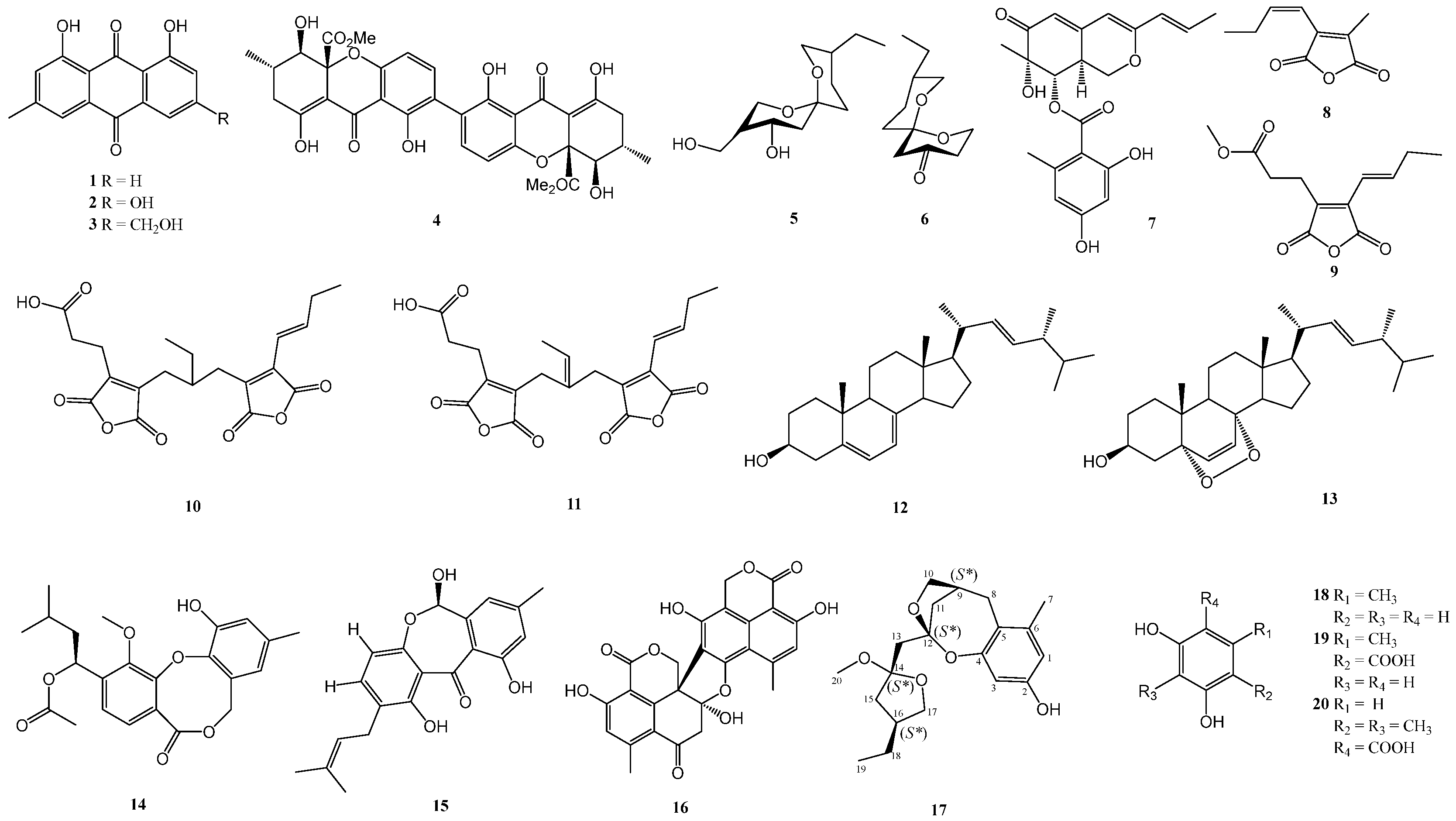
The EtOAc extract of Talaromyces stipitatus HF05001 was subjected to a series of chromatographic techniques, including silica gel column chromatography, ODS column chromatography, Sephadex LH-20 gel permeation chromatography, and semi-preparative HPLC, yielding a total of 20 compounds (120, Figure 1). The structures of these compounds were elucidated using comprehensive analyses of 1D and 2D NMR, HRESIMS.
Figure 1. Chemical structures of the isolated compounds 120 from Talaromyces stipitatus HF05001.
Compound 17 was obtained as a pale-yellow oil. HRESIMS data showed a protonated molecule peak [M+H]+ at m/z 349.20135 (Figure S7), consistent with a molecular weight of 348 and molecular formula of C20H28O5 (calcd. 348.1937). Further evidence for the molecular formula was provided by the sodium adduct [M+Na]+ at m/z 371.18317 and the dimeric sodium adduct [2M+Na]+ at m/z 719.37726.
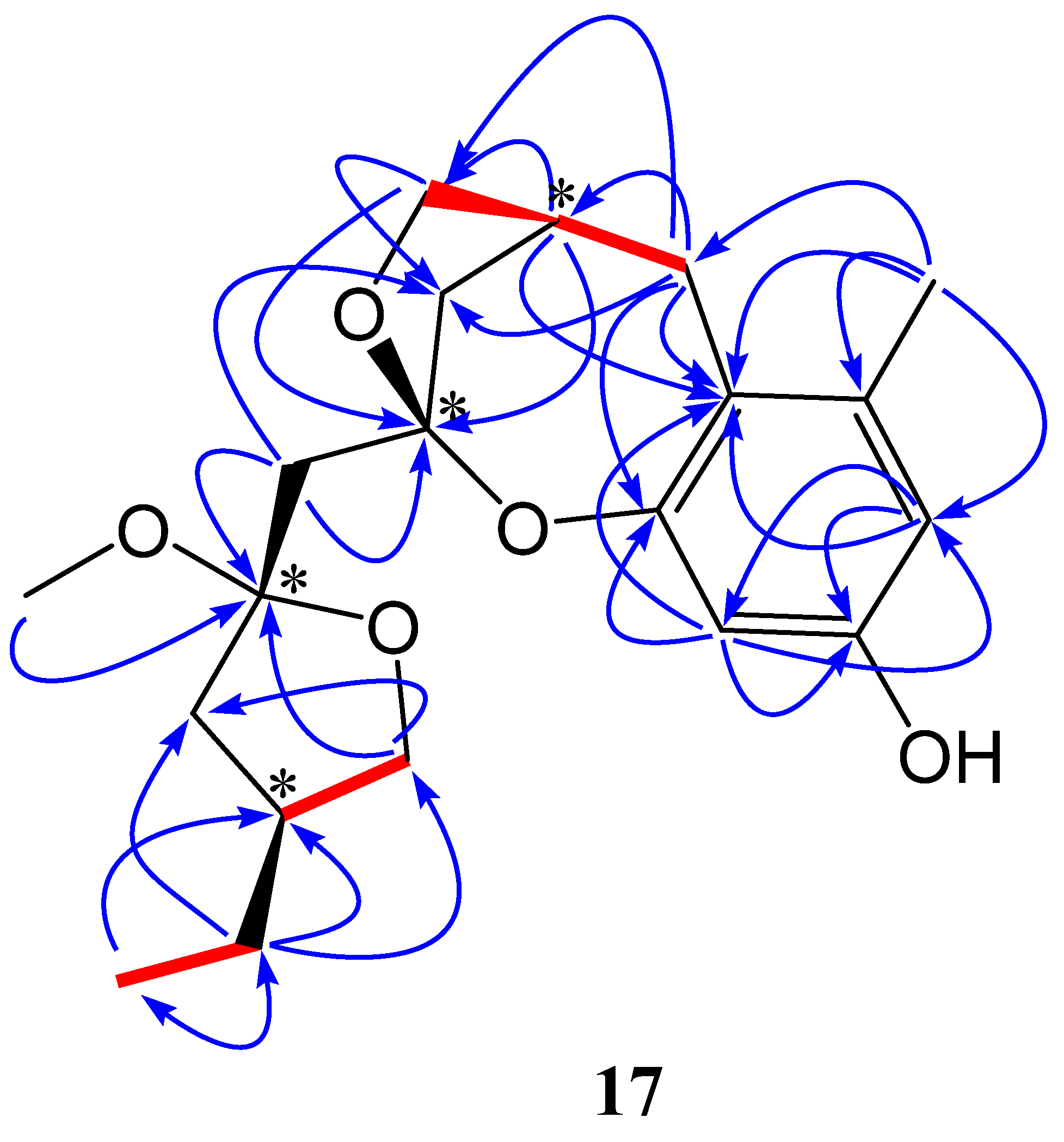
The 13C-NMR data for compound 17 revealed 20 carbon atoms (Table 1, Figure S2). DEPT spectra further classified these as three methyls, seven methylenes, four methines, and six quaternary carbons (Figure S3). The 1H-NMR spectrum showed two characteristic meta-coupled proton signals in the aromatic region: δH 6.34 (1H, d, J = 2.4 Hz, H-1) and δH 6.44 (1H, d, J = 2.4 Hz, H-3) (Figure S1). This suggested the presence of a 2,4,5,6-tetrasubstituted benzene ring. HMBC correlations further supported this assignment (Figure S6). The proton signal at δH 6.34 showed correlations with carbons at δC 19.1, 101.8, and 111.3. The proton at δH 6.44 correlated with carbons at δC 110.1, 111.3, 151.8, and 154.3. These correlations definitively established the substitution pattern on the benzene ring (Figure 2). The methyl signal at δH 2.17 (s), corresponding to δC 19.1, exhibited HMBC correlations with carbons at δC 110.1, 111.3, and 138.2. This further corroborated the proposed structure shown in Figure 2. The downfield chemical shifts in C-2 (δC 154.3) and C-4 (δC 151.8) indicated oxygen substituents at these positions.
Table 1. 1H (600 MHz) and 13C (150 MHz) NMR spectroscopic data of compound 17 in CDCl3 (δ in ppm, J in Hz within parentheses).
Figure 2. The key HMBC () and COSY () correlations of compound 17.
The 1H-NMR spectrum displayed two downfield doublet of doublets signals (Figure S1). The first set included δH 3.56 (1H, dd, J = 11.2, 4.5 Hz) and 3.24 (1H, dd, J = 11.2, 11.0 Hz) and the other one comprised δH 3.45 (1H, dd, J = 11.7, 4.7 Hz) and 3.68 (1H, dd, J = 11.8, 11.7 Hz). HSQC correlations assigned these proton signals to carbons at δC 65.5 and 62.0, respectively (Figure S5). This indicated the presence of two -CH2O- moieties directly attached to -CH groups. Further analysis of HMBC correlations confirmed a furan ring (Figure 2). Specifically, δH 3.68 and 3.45 (H-10) showed correlations with δC 96.6 (C-12). COSY correlations between δH 3.68, 3.45 (H-10) and δH 2.29 (H-9), and between δH 2.92, 2.19 (H-8) and H-9, further supported the furan ring’s presence. The unusually downfield chemical shift in C-12 (δC 96.6) suggested that this quaternary carbon was disubstituted by two oxygen atoms (Figure 2). DEPT (Figure S3) and HSQC (Figure S5) spectra revealed a characteristic methylene (-CH2-) signal at δH 2.92 (1H, dd, J = 16.8, 7.8 Hz) and 2.19 (1H, dd, J = 16.8, 2.4 Hz), corresponding to δC 20.4 (C-8). This methylene showed HMBC correlations with carbons at δC 36.2, 62.0, 111.3, 138.2, and 151.8. These connections unequivocally linked the furan ring to the previously established benzene ring.
HMBC correlations between δH 3.56, 3.24, and δC 96.7 suggested the presence of another furan ring (Figure 2). The exceptionally downfield shift in C-12 (δC 96.7) indicated another quaternary carbon disubstituted by two oxygen atoms. DEPT (Figure S3) and HSQC (Figure S5) spectra identified a methyl signal at δH 0.88 (3H, t, J = 7.5 Hz), corresponding to C-19 (δC 11.1). COSY correlations linked δH 0.88 to δH 1.16 (2H, m, H-18), confirming the adjacency of C-19 and C-18. HMBC correlations from δH 0.88 to δC 25.2 and 36.3 further connected this furan ring to the -CH2-CH3 fragment (Figure 2). Two proton signals at δH 2.48 (1H, d, J = 13.8 Hz) and 1.67 (1H, d, J = 13.8 Hz) showed a characteristic geminal coupling constant of 13.8 Hz, indicating a -CH2- group flanked by two quaternary carbons. Both methylene protons correlated with δC 96.6 and 96.7 in the HMBC spectrum. This linkage connected fragments 2B and 2C via this methylene group. These findings elucidated the planar structure of compound 17, revealing it as a rare marine ketal natural product (Figure 2).
Regarding the stereochemistry of 17, compound 17 possesses four stereogenic centers (C-9, C-12, C-14, and C-16). Among them, C-9 and C-12 are connected through a bridged five-membered ring system, which imposes structural rigidity requiring a fixed syn relationship between these two centers. Unfortunately, the NOESY data obtained for compound 17 were insufficient to establish the relative configuration. It should be made clear that, due to this limitation, an NMR calculation-based analysis was necessarily employed to support the relative configuration assignment. Consequently, although 24 = 16 absolute configurations are theoretically possible, this constraint reduces the number of feasible relative configurations to four (23 = 8 absolute configurations corresponding to four pairs of enantiomers). There are thus four possible relative configurations among those chiral centers in total, namely 9S*,12S*,14S*,16S*-17, 9S*,12S*,14S*,16R*-17, 9S*,12S*,14R*,16S*-17 and 9S*,12S*,14R*,16R*-17.
It is important to note that NMR chemical shift calculations cannot distinguish between enantiomers. Consequently, only one representative enantiomeric series, namely the (9S*,12S*) series, was used in the NMR calculations to determine the relative configuration. A GIAO-based NMR calculation was then employed to predict the chemical shifts in the four potential diastereoisomers. A subsequent DP4+ probability analysis revealed a clear inclination (99.35%) for the first diastereoisomer (9S*,12S*,14S*,16S*-17) (Supplementary Materials Table S1). Thus, the relative configuration of compound 17 was established as 9S*,12S*,14S*,16S* as shown in Figure 2. Only one enantiomeric series was computed due to the indistinguishability of enantiomers by NMR. It should be emphasized that the DP4+ analysis was used solely to assign the relative configuration; no claim is made regarding the absolute configuration, which could not be determined experimentally or computationally due to material limitations and the absence of a strong ECD chromophore.
To the best of our knowledge, compound 17 is the first member of this skeleton isolated from a marine-derived Talaromyces strain. Thus, compound 17 represents an unprecedented marine fungal natural product featuring a unique bis-spiroketal architecture, and has been designated Talarobispiral A.
By comparison of the NMR and MS data with those published in the literature, 19 known compounds were identified as emodin (1) [18], chrysophanic acid (2) [19], physcion (3) [20], secalonic acid D (4) [21], talaromycin A (5) [22], (3R, 4S, 6R,9R)-9-Ethyl-4-hydroxy-3-hydroxymethyl-1,7-dioxaspiro-[5.5] (6) [23], Sch 725680 (7) [24], 3-(1-buten-1-yl)-4-methyl-2,5-furandione (8) [25], 3-furanpropanoic acid, 4-(1-butenyl)-2,5-dihydro-2,5-dioxo-, methyl ester (9) [26], cordyanhydride A (10) [27], methyate cordyanhydride A (11) [28], ergosterol (12) [29], ergosterol peroxide (13) [30], paeciloxocins B (14) [31], 1,6,10-trihydroxy-8-methyl-2-(3-methyl-2-butenyl)-dibenz[b,e]oxepin-11(6H)-one (15) [32], bacillisporins C (16) [33], 5-methyl-1,3-benzenediol (18) [34], orsellinic acid (19) [35], and 1-(2,4-dihydroxy-3,5-dimethylphenyl)-ethanone (20) [36].
The anti-inflammatory activities of compounds 120 were evaluated using the Griess method to measure nitric oxide (NO) production in LPS-stimulated RAW264.7 macrophage cells [37,38]. Prior to anti-inflammatory screening, compounds 1–20 were evaluated for cytotoxicity against RAW264.7 macrophages using the CCK8 assay, revealing generally non-toxicity except Compound 4 (Figure S74), which supports the specificity of observed NO inhibition effects (Table 2). The results showed that several compounds exhibited significant inhibition of NO production (Table 2). Notably, compound 7 (Sch 725680) demonstrated potent anti-inflammatory activity with an NO inhibition rate of 85.25% ± 4.20% at 10 µM, while compound 16 (Bacillisporin C) also showed remarkable activity with an NO inhibition rate of 81.97% ± 1.76%, comparable to the positive control BAY 11-7085, which exhibited an NO inhibition rate of 85.63% ± 5.48%. However, it is important to note that while compound 4 (Secalonic acid D) exhibited strong NO inhibition (90.04% ± 3.47%), it also showed significant cytotoxicity, with a cell viability inhibition of 98.21% ± 3.35%, indicating potential cell toxicity at the tested concentration (10 μM). The potent cytotoxicity of SAD at 10 μM may stem from apoptotic pathways, warranting caution in therapeutic development at high concentration [39]. Other compounds, including the novel compound 17, showed some level of inhibitory activity against NO production, with an inhibition rate of 36.10% ± 7.29% at 10 µM. However, this activity was relatively weak compared to the more potent compounds such as compound 7 and compound 16. Notably, the NO inhibition rate of compound 17 did not exceed 50%, indicating that its anti-inflammatory potential may be limited at the tested concentration.
Table 2. Anti-inflammatory activities and cell viability inhibition of compounds 120 at 10 μM in LPS-stimulated RAW264.7 cells.
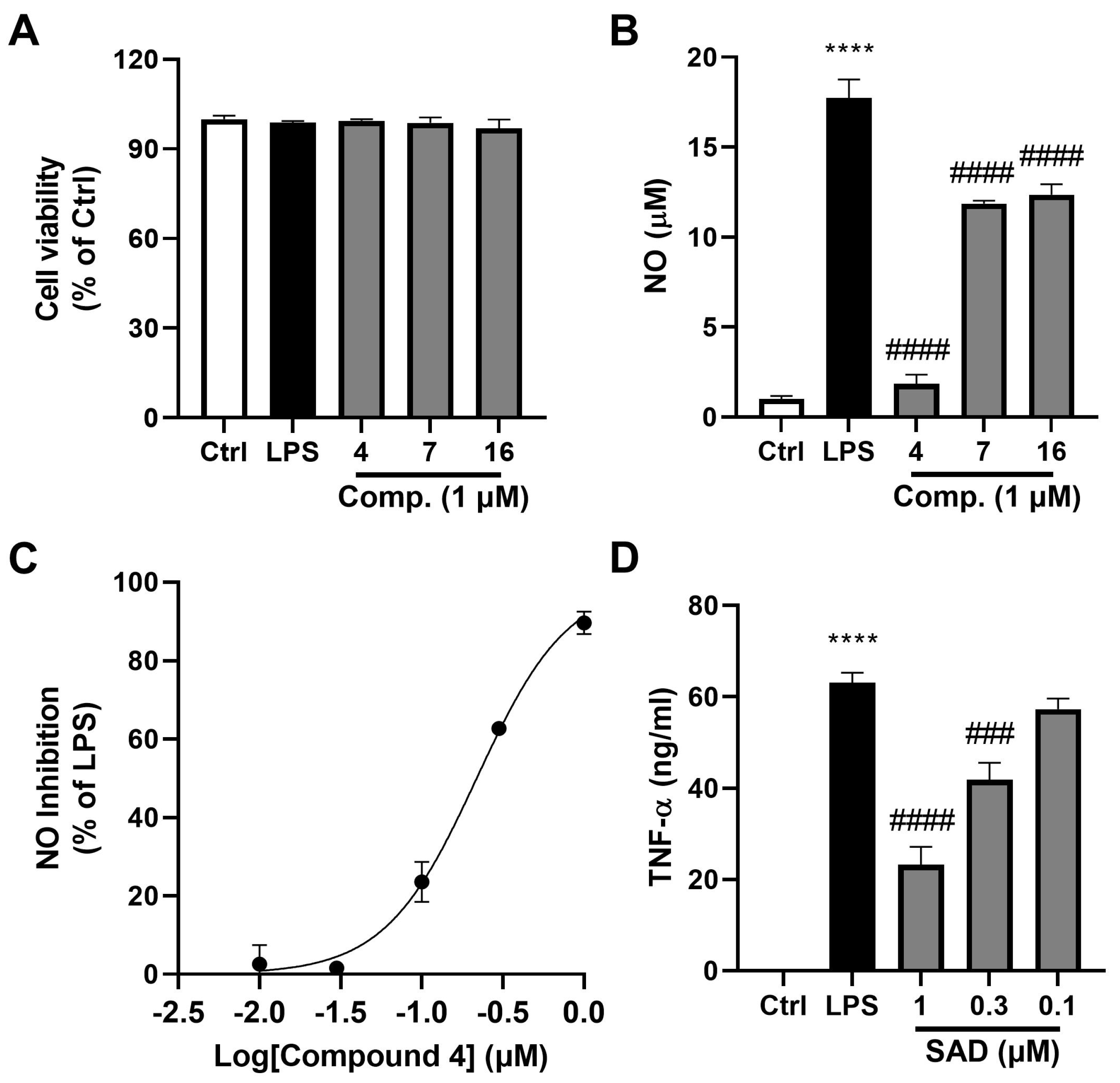
To further assess the anti-inflammatory activity of compounds 4, 7, and 16, we first confirmed their lack of cytotoxicity by evaluating cell viability in LPS-stimulated cells treated with each compound at 1 μM. As shown in Figure 3A, neither LPS nor the compounds significantly affected cell viability, which remained approximately 100% relative to the untreated control, indicating that the tested concentration was non-toxic and suitable for subsequent anti-inflammatory evaluations. We then examined their inhibitory effects on NO production at this non-toxic concentration of 1 μM. Compound 4 demonstrated significant NO inhibition at 1 μM, with an inhibition rate exceeding 50%, which was notably higher than that of compounds 7 and 16, indicating its superior anti-inflammatory potential at this concentration (Figure 3B).
Figure 3. Inhibitory effects of compounds 4, 7, and 16 on NO production in LPS-stimulated RAW264.7 macrophage cells. (A) Cell viability was assessed using a CCK-8 assay, with the results presented as a percentage of the control group (non-treated cells). (B) NO levels (μM) after treatment with 1 μM of compounds 4, 7, and 16. (C) Dose–response curve for compound 4 showing NO inhibition percentage relative to LPS-stimulated levels. (D) TNF-α levels were quantified in the culture supernatant after treatment with SAD at various concentrations. Data are expressed as the mean ± standard error medium (n = 4). Statistical significance is indicated as follows: **** p < 0.0001 versus the control group (Ctrl); #### p < 0.0001, ### p < 0.001 versus the LPS group.
Given the promising inhibitory activity observed for compound 4 despite its comparatively modest effect at 1 μM, we proceeded to determine its half-maximal inhibitory concentration (IC50) for NO production. The dose–response experiment revealed a concentration-dependent inhibitory effect of compound 4 on NO generation, with increasing inhibition as concentrations rose on a logarithmic scale. The IC50 value for compound 4 was determined to be 0.22 μM (Figure 3C), indicating that it effectively suppresses the release of this inflammatory mediator at sub-micromolar concentrations and possesses potent anti-inflammatory potential. We also assessed the impact of compound 4 on TNF-α production in LPS-stimulated cells. Compound 4 treatment resulted in a dose-dependent reduction in TNF-α levels, with higher concentrations yielding greater suppression compared to the LPS group (Figure 3D).
Collectively, these results suggest that compounds 4, 7, and 16 may serve as promising lead compounds for the development of novel anti-inflammatory agents, with compounds 7 and 16 showing particularly robust effects on NO inhibition at low doses. Further studies are underway to elucidate the mechanisms of action underlying these effects, with a focus on compound 4, and to evaluate their in vivo anti-inflammatory activity in relevant animal models.
Compound 7 (Sch 725680), a novel hydrogenated azaphilone initially isolated from Aspergillus species, was previously reported for antimicrobial and DNA polymerase inhibitory activities but not anti-inflammatory [24,40].This compound exhibits antifungal activity against Saccharomyces cerevisiae (PM503) and Candida albicans (C43), with minimum inhibitory concentrations (MICs) of 8 μg/mL and 64 μg/mL, respectively [24]. Bacillisporin C is produced by the fungus Talaromyces bacillisporus, which has been studied for its ability to generate various oxaphenalenone dimers, including bacillisporins A, B, and C, as well as other analogs. It has demonstrated moderate cytotoxic activity against several human cancer cell lines, including MCF-7, NCI-H460, and SF-268. While bacillisporin A showed strong activity, bacillisporin C, along with bacillisporin B and duclauxin, exhibited low cytotoxic effects in these assays (IC50) between 26–48 μM [41]. Bacillisporin C for isolation without anti-inflammatory reports [11,41]. Significantly, the present study provides the first evidence that both Compound 7 (Sch 725680) and Compound 16 (Bacillisporin C) exhibit potent inhibitory effects on nitric oxide (NO) secretion in LPS-stimulated RAW264.7 macrophage cells. This marked suppression of NO production underscores their considerable anti-inflammatory potential.
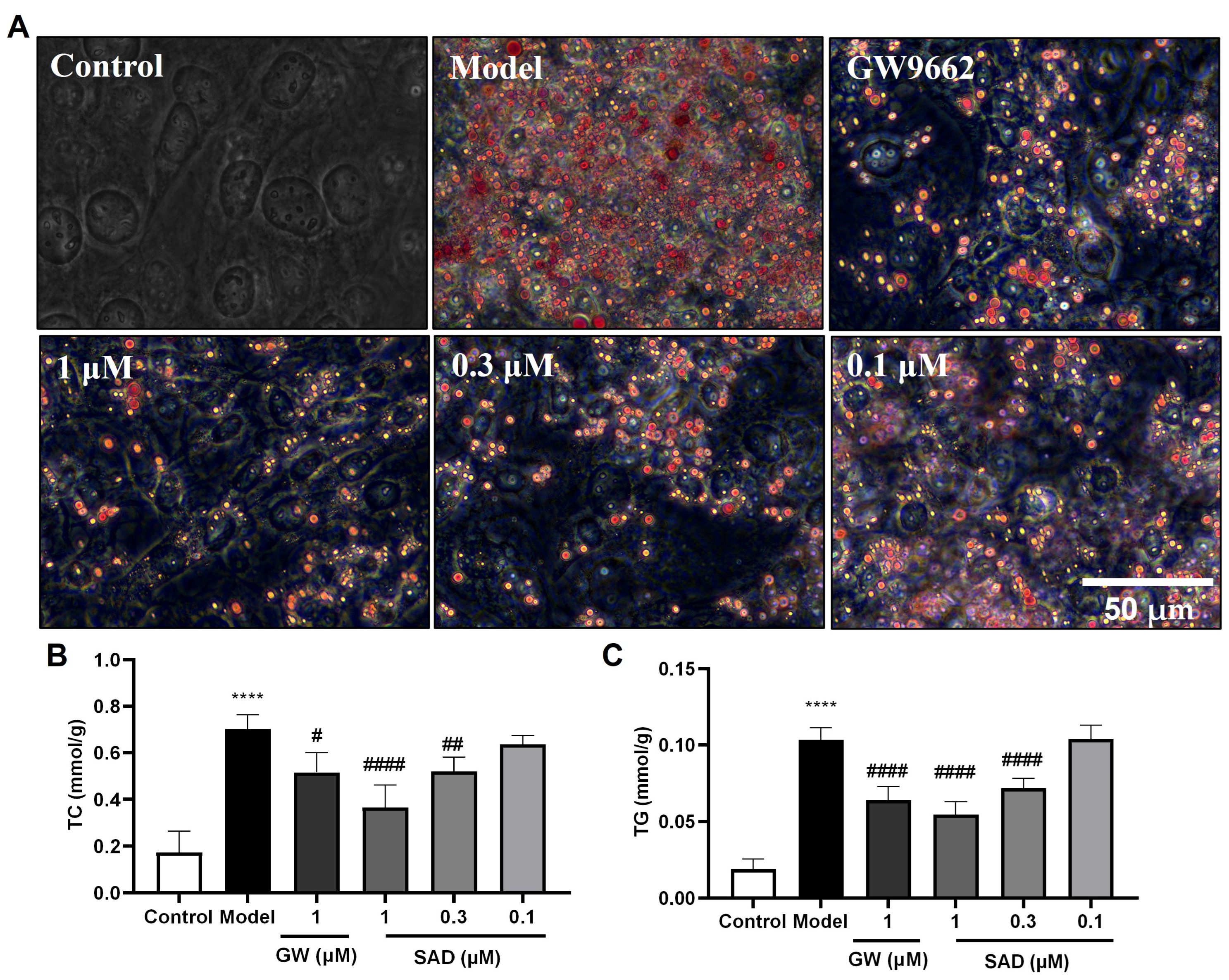
We further evaluated the anti-adipogenic activities of compounds 120 by quantification of total cholesterol (TC) and triglyceride (TG) levels as well as using Oil Red O staining in 3T3-L1 preadipocytes cells. Among them, Compound 4 (Secalonic acid D, SAD) exhibited the strongest inhibitory effect on lipid droplet accumulation (Figure 4). To benchmark SAD’s efficacy, we included GW9662 (1 μM), a selective PPARγ antagonist known to inhibit adipogenesis, as a positive control [42]. The results indicated that SAD significantly inhibited the differentiation of 3T3-L1 preadipocytes into adipocytes and reduced lipid droplet formation in a dose-dependent manner (0.1–1 μM) (Figure 4). Oil Red O staining revealed a marked reduction in lipid droplets in SAD-treated cells, comparable to or exceeding that of GW9662 (Figure 4A). Quantitative assays corroborated these findings, showing substantially decreased intracellular TC (Figure 4B) and TG levels (Figure 4C) with SAD treatment, with effects at 1 μM approaching those of the positive control. Notably, these effects were achieved at sub-micromolar concentrations (<1 μM) without observable cytotoxicity, positioning SAD as a promising candidate for anti-obesity therapeutics targeting metabolic dysregulation. The potent lipid-lowering activity positions SAD as a promising candidate for further development of anti-obesity therapeutics targeting metabolic dysregulation. Further studies are ongoing to elucidate the detailed mechanism of action of SAD and to explore its in vivo anti-obesity efficacy. These findings collectively demonstrate the versatility of Talaromyces stipitatus-derived compounds in addressing both inflammatory and metabolic disorders, highlighting their potential therapeutic applications.
Figure 4. Effects of compound 4 (SAD) on lipid accumulation in 3T3-L1 adipocytes, with GW9662 as a positive control. (A) Oil Red O staining of lipid droplets in 3T3-L1 cells treated with various concentrations of compound 4 (0.1, 0.3, and 1 µM) after induction of adipogenesis. The images show the control group (no treatment), model group (no compound treatment), GW9662 (GW, 1 μM; reduced lipid accumulation as a PPARγ antagonist benchmark), and cells treated with different concentrations of the compound 4. The scale bar represents 50 µm. (B) Quantification of total cholesterol (TC) levels in the treated cells. (C) Quantification of triglyceride (TG) levels in the treated cells. Data are expressed as the mean ± standard error medium (n = 6). Statistical significance is indicated as follows: **** p < 0.0001 versus the control group; # p < 0.05, ## p < 0.01, and #### p < 0.0001 versus the model group.
The intricate and now well-established link between chronic low-grade inflammation and metabolic diseases, a concept often termed "meta-inflammation," has revolutionized our understanding of obesity [43,44]. In this paradigm, adipose tissue is not merely an energy storage depot but a dynamic endocrine and immunological organ. In obese states, hypertrophied adipocytes and infiltrating immune cells, particularly macrophages, create a pro-inflammatory microenvironment by secreting cytokines. This localized inflammation could spill over into systemic circulation, driving insulin resistance and perpetuating a vicious cycle of metabolic dysfunction. This research provides a strong rationale for a dual-pronged therapeutic strategy, which discovering agents that can either directly quell inflammation or inhibit adipogenesis, thereby disrupting the cycle from two different pathways. Our findings from the marine-derived fungus Talaromyces stipitatus HF05001 contributed novel insights into this very strategy.
SAD (4) has previously been reported as a mycotoxin with teratogenic and cytotoxic properties at relatively high doses [45,46,47,48]. However, our data demonstrate potent anti-inflammatory (IC50 = 0.22 μM) and anti-adipogenic activity at sub-micromolar concentrations (<1 μM) that are >10-fold lower than those causing cytotoxicity in vitro. Furthermore, to quantitatively assess the safety margin of compound 4, we calculated its Therapeutic Index (TI) as the ratio of the IC50 for cytotoxicity to the IC50 for bioactivity. For anti-inflammatory activity in LPS-stimulated RAW264.7 macrophages, the TI was approximately 19 (cytotoxicity IC50 = 4.2 μM, anti-inflammatory IC50 for NO inhibition = 0.22 μM, Figure 3C). For anti-adipogenic activity in 3T3-L1 preadipocytes, the TI was approximately 14 (cytotoxicity IC50 = 13.4 μM; based on effective concentrations < 1 μM for lipid reduction, Figure 4B,C). These TI values indicate a reasonable therapeutic window, where bioactivity is achieved at concentrations 14–19-fold below those causing significant cytotoxicity, comparable to some natural product-derived agents like curcumin (TI ≈15–25 in similar models) [49]. Nonetheless, this window is relatively narrow for direct clinical application, underscoring the need for structural modifications to enhance selectivity and reduce off-target toxicity. These metrics reinforce compound 4 as a promising scaffold for anti-inflammatory and anti-obesity drug development, with ongoing studies focused on in vivo pharmacokinetics and analog synthesis to widen the TI. This pronounced therapeutic window suggests that appropriate structural modification or targeted delivery strategies could mitigate toxicity while preserving bioactivity, a common approach in natural-product-based drug development (e.g., paclitaxel, artemisinin).
Building on these findings, while the precise molecular mechanisms underlying the anti-inflammatory and anti-adipogenic activities of compound 4 remain to be fully elucidated, preliminary inferences can be drawn from the data and related literature. The suppression of NO and TNF-α (Figure 3B–D) suggests interference with LPS-induced NF-κB signaling, potentially reducing downstream mediators like PGE2 and IL-6, as observed in similar fungal metabolites [50]. For anti-adipogenesis, SAD’s dose-dependent reduction in lipid accumulation (Figure 4), comparable to the PPARγ antagonist GW9662, implies possible modulation of key transcription factors such as PPARγ and C/EBPα during early (days 0–2) and late (days 4–8) stages of 3T3-L1 differentiation. These mechanistic insights, supported by the inclusion of GW9662 as a benchmark, provide a foundation for understanding SAD’s dual activities in meta-inflammation.
The unprecedented bis-spiroketal scaffold of Talarobispiral A (17) suggests a novel biosynthetic pathway within Talaromyces fungi. While no direct precursors were identified in this study, future genomic and enzymatic investigations are warranted to elucidate its intriguing biogenesis.
In summary, this work transcends a simple report of new compounds. By screening for dual bioactivities within the unifying framework of meta-inflammation, we have unearthed distinct molecular tools from Talaromyces stipitatus HF05001. We have identified both direct anti-inflammatory leads (4, 7 and 16) and a highly promising, selective anti-adipogenic scaffold (4). Additionally, the novel bis-spiroketal architecture of compound 17 represents a significant contribution to the structural diversity of fungal natural products. Although compound 17 exhibits moderate anti-inflammatory activity compared to the potent known compounds 4, 7, and 16, its unique bis-spiroketal architecture represents a valuable addition to the structural diversity of fungal natural products and may inspire future synthetic modifications for enhanced potency. This study not only expands the chemical diversity of marine natural products but also provides a clear, rational basis for developing novel therapeutics targeting the nexus of inflammation and obesity.

3. Materials and Methods

3.1. General Experimental Procedures

NMR spectra were recorded on a Bruker 600 MHz spectrometer (Bruker Company, Fällanden, Switzerland) with tetramethylsilane (TMS) as an internal standard. HRESIMS data were acquired using a Xevo G2 Q-TOF mass spectrometer (Waters, Milford, MA, USA). Semi-preparative HPLC was performed using an Alltech LS class pump with a model 201 variable wavelength UV/Vis detector, and a YMC packed ODS-A (250 × 10 mm, 5 µm) column (YMC Co., Ltd., Kyoto, Japan) was used for purification. Column chromatography (CC) was carried out using a Sephadex LH-20 (Amersham Biosciences, San Francisco, CA, USA), ODS-A-HG (YMC Co., Ltd., Kyoto, Japan), and silica gel (Qingdao Marine Chemistry Co., Ltd., Qingdao, China). TLC analyses were performed with precoated silica gel plates by heating after spraying with vanillin sulfuric acid chromogenic reagent (Xilong Scientific Co., Ltd., Shantou, China).

3.2. Fungal Material and Identification

The fungus Talaromyces stipitatus HF05001 was isolated from a sponge sample collected near Zhanjiang, Guangdong, China. The fungus was identified based on morphological characteristics and ITS region sequencing. The ITS gene sequence was deposited in GenBank and assigned the accession number KU057945.1. The fungus was preserved at the laboratory of Technical Innovation Center for Utilization of Marine Biological Resources, Third Institute of Oceanography, Ministry of Natural Resources.

3.3. Fermentation, Extraction, and Isolation

The fungus was cultivated in a potato dextrose agar (PDA) plate under 25 °C for four days. The fresh mycelia and spores were inoculated into 500 mL Erlenmeyer flasks, each containing 100 mL potato dextrose broth (PDB) medium and followed by cultivation in a rotary shaker under 25 °C at 200 rpm for four days. The seed cultures were subsequently inoculated to 30 Erlenmeyer flasks (1 L) after autoclaving at 121 °C for 22 min. The agar-malt paste medium was prepared by mixing 20 g/L mannitol, 20 g/L maltose, 10 g/L glucose, 10 g/L monosodium glutamate, 1 g/L corn steep liquor, 3 g/L yeast extract, 0.5 g/L KH2PO4, and 0.3 g/L MgSO4·7H2O in seawater, and the pH was adjusted to 7.5. The fermentation was performed under static conditions at 25 °C for 35 days. The fermented material was fragmented using a stick and extracted successively with EtOAc three times, yielding an EtOAc extract. The extract was subjected to vacuum liquid chromatography column on silica gel eluting with a gradient of CH2Cl2 and MeOH (1:0 to 0:1) to furnish fractions. The fractions were subsequently separated by CC on ODS with MeOH/H2O elution (30–100%) to obtain subfractions. Further purification was carried out using semi-preparative HPLC with varying ratios of MeOH/H2O to yield the compounds.
Talarobispiral A (17): pale-yellow oil; 1H and 13C NMR data, see Table 1; HRESIMS m/z 349.2015 [M+H]⁺ (calcd for C20H29O5, 349.2010), 371.1832 [M+Na]⁺ (calcd for C20H29O5Na, 371.1829).

3.4. RAW264.7 Cell Culture and Treatment

The RAW264.7 macrophage cells were cultured in DMEM medium containing 10% fetal bovine serum and antibiotics (100 units/mL of penicillin and 100 g/mL of streptomycin) and maintained in a humidified 5% CO2 incubator at 37 °C. For the experiment, cells were seeded into 24-well plates (2 × 10⁴ cells/well) overnight. Next day, cells were incubated with fresh culture medium containing indicated concentration of the tested compounds for half an hour and following LPS treatment (1 µg/mL). Cells were treated with vehicle (DMSO, 0.1%) as a control.

3.5. Nitrite Quantification

The concentration of nitrite in culture medium was determined using a Griess Reagent Kit (Thermo Fisher, Shanghai, China) [51,52]. Briefly, 75 µL of cell culture supernatants were reacted with an equal volume of Griess Reagent Kit for 30 min at room temperature, and absorbance of diazonium was obtained at a wavelength of 560 nm. Nitrite production by vehicle stimulation was designated as 100% inhibition compared to LPS stimulation for the experiment.

3.6. 3T3-L1 Anti-Adipogenic Assay

The anti-adipogenic activity was evaluated using the 3T3-L1 preadipocyte cell line. 3T3-L1 cells were maintained in DMEM containing 10% calf serum and 1% penicillin-streptomycin at 37 °C in a 5% CO2 atmosphere. For differentiation, cells were induced with a mixture of 0.5 mM 3-isobutyl-1-methylxanthine (IBMX), 1 μM dexamethasone, and 10 μg/mL insulin. After 48 h, the medium was replaced with a maintenance medium containing 10 μg/mL insulin. During this differentiation process, compounds were added at concentrations of 1 µM. After 8 days, differentiated adipocytes were washed with PBS, fixed in 4% paraformaldehyde (15 min), and stained with filtered Oil Red O working solution (Solution A: B = 3:2; Nanjing Jiancheng Bioengineering, Cat# D027) for 20 min at RT. After destaining with 60% isopropanol, lipid droplets were visualized by bright-field microscopy (Zeiss, Imager.A2, Jena, Germany).

3.7. Triglyceride (TG) and Total Cholesterol (TC) Quantification

Cell lysates were prepared by washing differentiated adipocytes with cold PBS, followed by scraping, centrifugation (1000× g, 10 min, 4 °C), and resuspension in 200 μL PBS. Samples were sonicated on ice (3 × 10-s pulses at 40% amplitude). TG and TC levels were determined enzymatically using commercial kits (Nanjing Jiancheng Bioengineering; TG: Cat# A110-1-1, TC: Cat# A111-1-1) according to manufacturer protocols. Briefly, for TG analysis, 2.5 μL lysate was combined with 250 μL lipase/glycerol kinase-based reagent, incubated at 37 °C for 10 min, and absorbance measured at 500 nm with quantification against a glycerol standard. For TC measurement, 2.5 μL lysate was reacted with 250 μL cholesterol oxidase-phenol-4-aminoantipyrine (COD-PAP) reagent at 37 °C for 10 min, followed by absorbance reading at 500 nm and quantification using cholesterol standards. All values were normalized to total protein content.

3.8. NMR Calculation

The conformational analysis of the isomers was first conducted via random searching in the Stochastic using the MMFF94 force field with an energy cut-off of 5.0 kcal/mol and an RMSD threshold of 0.2 A. All conformers were consecutively optimized at the PM6 and HF/6-31G(d)levels. Dominative conformers were further optimized at the B3LYP/6-31G(d) level in the gas phase. The optimized conformers possess no imaginary frequencies and are true local minima. NMR calculations were then carried out by the Gauge-Including Atomic Orbitals (GIAO) method at MPW1PW91/6–311+G(2d,p) level in chloroform simulated by the IEFPCM model [53]. The TMS-corrected NMR chemical shift values were averaged according to Boltzmann distribution, finally the calculated 13C NMR data were obtained by the linear regression analysis method.

3.9. DP4+ Analysis

The 1H and 13C chemical shifts were computed from NMR calculations, then the counted and experimental chemical shifts were applied in the excel to use DP4+ calculations according to the Boltzmann statistics using the computed sum of electronic and zero-point energies as the input. On the DP4+ analysis excel, functional mPW1PW91, basis set 6- 311+G(d,p) and solvent PCM were chosen to calculate.

4. Conclusions

In conclusion, this study has unveiled the chemical diversity and bioactivity of compounds derived from the marine fungus Talaromyces stipitatus HF05001. The isolated compounds demonstrated significant anti-inflammatory and anti-adipogenic activities, with compound 4 (Secalonic acid D), compound 7 (Sch 725680) and compound 16 (Bacillisporin C) demonstrated potent anti-inflammatory activity, while compound 4 (Secalonic acid D) showing remarkable potential in inhibiting lipid accumulation in 3T3-L1 cells. These findings underscore the value of marine-derived fungi as a resource for novel bioactive compounds and pave the way for further exploration of their therapeutic applications in inflammatory and metabolic disorders.

Supplementary Materials

The following supporting information can be downloaded at https://www.mdpi.com/article/10.3390/md24010047/s1: Figures S1–S73: One-dimensional and two-dimensional NMR spectra along with HRESIMS spectra of compounds 17 and other compounds.

Author Contributions

Conceptualization, L.Y. and Z.W.; methodology, L.Y., X.W. and Y.L.; validation, X.H., Y.L. and Y.Q.; formal analysis, L.Y., J.R. and K.B.; investigation, X.H., Y.Y. and Y.W.; writing—original draft preparation L.Y. and Z.W.; writing—review and editing, L.Y. and J.R.; supervision, J.R. and Z.W.; project administration, J.R. and Z.W.; funding acquisition, L.Y. and K.B. All authors have read and agreed to the published version of the manuscript.

Funding

This work was supported by the National Key Research and Development Program of China (2022YFC2804800), Innovation Research and Development Special Funds of the Municipality-province-ministry Co-constructed (GJZX-HYSW-2024-09), the Scientific and Technological Projects of Fujian Province, People’s Republic of China (No. 2023N0036) and Wu Jieping Medical Foundation (No. 320.6750.2022-20-8).

Institutional Review Board Statement

Not applicable.

Data Availability Statement

The data presented in this study are available on request from the corresponding author.

Conflicts of Interest

The authors declare no conflicts of interest.

References

  1. Shu, W.S.; Huang, L.N. Microbial diversity in extreme environments. Nat. Rev. Microbiol. 2022, 20, 219–235. [Google Scholar] [CrossRef] [PubMed]
  2. Wei, B.; Hu, G.A.; Zhou, Z.Y.; Yu, W.C.; Du, A.Q.; Yang, C.L.; Yu, Y.L.; Chen, J.W.; Zhang, H.W.; Wu, Q.; et al. Global analysis of the biosynthetic chemical space of marine prokaryotes. Microbiome 2023, 11, 144. [Google Scholar] [CrossRef] [PubMed]
  3. Barzkar, N.; Sukhikh, S.; Babich, O. Study of marine microorganism metabolites: New resources for bioactive natural products. Front. Microbiol. 2023, 14, 1285902. [Google Scholar] [CrossRef]
  4. Nicoletti, R.; Salvatore, M.M.; Andolfi, A. Secondary Metabolites of Mangrove-Associated Strains of Talaromyces. Mar. Drugs 2018, 16, 12. [Google Scholar] [CrossRef]
  5. Jin, L.; Quan, C.; Hou, X.; Fan, S. Potential Pharmacological Resources: Natural Bioactive Compounds from Marine-Derived Fungi. Mar. Drugs 2016, 14, 76. [Google Scholar] [CrossRef]
  6. Elissawy, A.M.; El-Shazly, M.; Ebada, S.S.; Singab, A.B.; Proksch, P. Bioactive terpenes from marine-derived fungi. Mar. Drugs 2015, 13, 1966–1992. [Google Scholar] [CrossRef] [PubMed]
  7. Liu, Z.; Sun, W.; Hu, Z.; Wang, W.; Zhang, H. Marine Streptomyces-Derived Novel Alkaloids Discovered in the Past Decade. Mar. Drugs 2024, 22, 51. [Google Scholar] [CrossRef]
  8. Ma, X.Y.; Wang, H.N.; Sun, L.X.; Sun, J.; Jin, S.H.; Dai, F.X.; Sai, C.M.; Zhang, Z. Bioactive steroids from marine-derived fungi: A review (2015–2023). J. Asian Nat. Prod. Res. 2025, 27, 1236–1262. [Google Scholar] [CrossRef]
  9. Bharathi, D.; Lee, J. Recent Advances in Marine-Derived Compounds as Potent Antibacterial and Antifungal Agents: A Comprehensive Review. Mar. Drugs 2024, 22, 348. [Google Scholar] [CrossRef]
  10. Noinart, J.; Buttachon, S.; Dethoup, T.; Gales, L.; Pereira, J.A.; Urbatzka, R.; Freitas, S.; Lee, M.; Silva, A.M.S.; Pinto, M.M.M.; et al. A New Ergosterol Analog, a New Bis-Anthraquinone and Anti-Obesity Activity of Anthraquinones from the Marine Sponge-Associated Fungus Talaromyces stipitatus KUFA 0207. Mar. Drugs 2017, 15, 139. [Google Scholar] [CrossRef]
  11. Chaudhary, N.K.; Vuong, D.; Lacey, E.; Piggott, A.M.; Karuso, P. Phenalenones and Polyesters from Talaromyces stipitatus and Structure Revision of Talaromycesone A. J. Nat. Prod. 2024, 87, 2738–2745. [Google Scholar] [CrossRef]
  12. Chaudhary, N.K.; Crombie, A.; Vuong, D.; Lacey, E.; Piggott, A.M.; Karuso, P. Talauxins: Hybrid Phenalenone Dimers from Talaromyces stipitatus. J. Nat. Prod. 2020, 83, 1051–1060. [Google Scholar] [CrossRef]
  13. Zhang, M.; Deng, Y.; Liu, F.; Zheng, M.; Liang, Y.; Sun, W.; Li, Q.; Li, X.N.; Qi, C.; Liu, J.; et al. Five undescribed steroids from Talaromyces stipitatus and their cytotoxic activities against hepatoma cell lines. Phytochemistry 2021, 189, 112816. [Google Scholar] [CrossRef]
  14. Semwal, R.B.; Semwal, D.K.; Combrinck, S.; Viljoen, A. Emodin—A natural anthraquinone derivative with diverse pharmacological activities. Phytochemistry 2021, 190, 112854. [Google Scholar] [CrossRef] [PubMed]
  15. Guru, S.K.; Pathania, A.S.; Kumar, S.; Ramesh, D.; Kumar, M.; Rana, S.; Kumar, A.; Malik, F.; Sharma, P.R.; Chandan, B.K.; et al. Secalonic Acid-D Represses HIF1alpha/VEGF-Mediated Angiogenesis by Regulating the Akt/mTOR/p70S6K Signaling Cascade. Cancer Res. 2015, 75, 2886–2896. [Google Scholar] [CrossRef] [PubMed]
  16. Zang, Y.; Genta-Jouve, G.; Retailleau, P.; Escargueil, A.; Mann, S.; Nay, B.; Prado, S. Talaroketals A and B, unusual bis(oxaphenalenone) spiro and fused ketals from the soil fungus Talaromyces stipitatus ATCC 10500. Org. Biomol. Chem. 2016, 14, 2691–2697. [Google Scholar] [CrossRef]
  17. Choi, W.; Woo, G.H.; Kwon, T.-H.; Jeon, J.-H. Obesity-Driven Metabolic Disorders: The Interplay of Inflammation and Mitochondrial Dysfunction. Int. J. Mol. Sci. 2025, 26, 9715. [Google Scholar] [CrossRef]
  18. Bao, J.; Sun, Y.L.; Zhang, X.Y.; Han, Z.; Gao, H.C.; He, F.; Qian, P.Y.; Qi, S.H. Antifouling and antibacterial polyketides from marine gorgonian coral-associated fungus Penicillium sp. SCSGAF 0023. J. Antibiot. 2013, 66, 219–223. [Google Scholar] [CrossRef]
  19. Semple, S.J.; Pyke, S.M.; Reynolds, G.D.; Flower, R.L. In vitro antiviral activity of the anthraquinone chrysophanic acid against poliovirus. Antivir. Res. 2001, 49, 169–178. [Google Scholar] [CrossRef] [PubMed]
  20. Abdel-Naime, W.A.; Kimishima, A.; Setiawan, A.; Fahim, J.R.; Fouad, M.A.; Kamel, M.S.; Arai, M. Mitochondrial Targeting in an Anti-Austerity Approach Involving Bioactive Metabolites Isolated from the Marine-Derived Fungus Aspergillus sp. Mar. Drugs 2020, 18, 555. [Google Scholar] [CrossRef]
  21. Manojlovic, N.T.; Vasiljevic, P.J.; Gritsanapan, W.; Supabphol, R.; Manojlovic, I. Phytochemical and antioxidant studies of Laurera benguelensis growing in Thailand. Biol. Res. 2010, 43, 169–176. [Google Scholar] [CrossRef]
  22. Lynn, D.G.; Phillips, N.J.; Hutton, W.C.; Shabanowitz, J.; Fennell, D.I.; Cole, R.J. Talaromycins: Application of homonuclear spin correlation maps to structure assignment. J. Am. Chem. Soc. 1982, 104, 7319–7322. [Google Scholar] [CrossRef]
  23. Mori, K.; Ikunaka, M. Optical Rotatory Dispersion of Spiroacetals. Liebigs Ann. Der Chem. 1987, 1987, 333–336. [Google Scholar] [CrossRef]
  24. Yang, S.W.; Chan, T.M.; Terracciano, J.; Patel, R.; Patel, M.; Gullo, V.; Chu, M. A new hydrogenated azaphilone Sch 725680 from Aspergillus sp. J. Antibiot. 2006, 59, 720–723. [Google Scholar] [CrossRef]
  25. David, M.H.; Emyr, R.T.; Russell, J.C.; Thomas, J.S.; Christine, L.W. Structural and synthetic studies on maleic anhydride and related diacid natural products. Tetrahedron 2020, 76, 130717. [Google Scholar] [CrossRef]
  26. Aldridge, D.C.; Carman, R.M.; Moore, R.B. A new tricarboxylic acid anhydride from Paecilomyces variotii. J. Chem. Soc. Perkin Trans. 1980, 1, 2134–2135. [Google Scholar] [CrossRef]
  27. Masahiko, I.; Morakot, T.; Yodhathai, T. Cordyanhydrides A and B. Two unique anhydrides from the insect pathogenic fungus Cordyceps pseudomilitaris BCC 1620. Tetrahedron Lett. 2000, 41, 1657–1660. [Google Scholar] [CrossRef]
  28. Li, Y.; Li, X.; Xu, R.; Li, H.; Wang, B. Methylate cordyanhydride A, a new alkenoic anhydride from Cladosporium perangustum MA-318, an endophytic fungus derived from the marine mangrove plant Acrostichum aureum. Mar. Sci. 2017, 41, 110–113. [Google Scholar] [CrossRef]
  29. Huang, L.; Cao, Y.; Xu, H.; Chen, G. Separation and purification of ergosterol and stigmasterol in Anoectochilus roxburghii (wall) Lindl by high-speed counter-current chromatography. J. Sep. Sci. 2011, 34, 385–392. [Google Scholar] [CrossRef]
  30. Kobori, M.; Yoshida, M.; Ohnishi-Kameyama, M.; Takei, T.; Shinmoto, H. 5alpha,8alpha-Epidioxy-22E-ergosta-6,9(11),22-trien-3beta-ol from an edible mushroom suppresses growth of HL60 leukemia and HT29 colon adenocarcinoma cells. Biol. Pharm. Bull. 2006, 29, 755–759. [Google Scholar] [CrossRef]
  31. Wen, L.; Chen, G.; She, Z.; Yan, C.; Cai, J.; Mu, L. Two new paeciloxocins from a mangrove endophytic fungus Paecilomyces sp. Russ. Chem. Bull. 2010, 59, 1656–1659. [Google Scholar] [CrossRef]
  32. Sun, T.Y.; Kuang, R.Q.; Chen, G.D.; Qin, S.Y.; Wang, C.X.; Hu, D.; Wu, B.; Liu, X.Z.; Yao, X.S.; Gao, H. Three Pairs of New Isopentenyl Dibenzo[b,e]oxepinone Enantiomers from Talaromyces flavus, a Wetland Soil-Derived Fungus. Molecules 2016, 21, 1184. [Google Scholar] [CrossRef]
  33. Yamazaki, M.; Okuyama, E.M.I. Isolation and Structures of Oxaphenalenone Dimers from Talaromyces bacillosporus. Chem. Pharm. Bull. 1980, 28, 3649–3655. [Google Scholar] [CrossRef]
  34. Bhaktavalsala Suresh, A.; Kilingar Nadumane, V. The metabolite 5-methyl-1,3-benzenediol and its derivative methyl-2,4-dihydroxy-6-methylbenzoate from the lichen Parmotrema tinctorum with potent apoptotic and anti-angiogenesis effects. 3 Biotech 2021, 11, 346. [Google Scholar] [CrossRef]
  35. Schroeckh, V.; Scherlach, K.; Nutzmann, H.W.; Shelest, E.; Schmidt-Heck, W.; Schuemann, J.; Martin, K.; Hertweck, C.; Brakhage, A.A. Intimate bacterial-fungal interaction triggers biosynthesis of archetypal polyketides in Aspergillus nidulans. Proc. Natl. Acad. Sci. USA 2009, 106, 14558–14563. [Google Scholar] [CrossRef]
  36. Zhang, C.L.; Zheng, B.Q.; Lao, J.P.; Mao, L.J.; Chen, S.Y.; Kubicek, C.P.; Lin, F.C. Clavatol and patulin formation as the antagonistic principle of Aspergillus clavatonanicus, an endophytic fungus of Taxus mairei. Appl. Microbiol. Biotechnol. 2008, 78, 833–840. [Google Scholar] [CrossRef] [PubMed]
  37. Jia, W.; He, X.; Jin, W.; Gu, J.; Yu, S.; He, J.; Yi, Z.; Cai, B.; Gao, H.; Yang, L. Ramulus Cinnamomi essential oil exerts an anti-inflammatory effect on RAW264.7 cells through N-acylethanolamine acid amidase inhibition. J. Ethnopharmacol. 2023, 317, 116747. [Google Scholar] [CrossRef]
  38. Jia, W.; Yu, S.; Liu, X.; Le, Q.; He, X.; Yu, L.; He, J.; Yang, L.; Gao, H. Ethanol Extract of Limonium bicolor Improves Dextran Sulfate Sodium-Induced Ulcerative Colitis by Alleviating Inflammation and Restoring Gut Microbiota Dysbiosis in Mice. Mar. Drugs 2024, 22, 175. [Google Scholar] [CrossRef]
  39. Liao, G.; Zhou, J.; Wang, H.; Mao, Z.; Xiao, W.; Wang, H.; She, Z.; Zhu, Y. The cell toxicity effect of secalonic acid D on GH3 cells and the related mechanisms. Oncol. Rep. 2010, 23, 387–395. [Google Scholar] [PubMed]
  40. Myobatake, Y.; Takeuchi, T.; Kuramochi, K.; Kuriyama, I.; Ishido, T.; Hirano, K.; Sugawara, F.; Yoshida, H.; Mizushina, Y. Pinophilins A and B, inhibitors of mammalian A-, B-, and Y-family DNA polymerases and human cancer cell proliferation. J. Nat. Prod. 2012, 75, 135–141. [Google Scholar] [CrossRef] [PubMed]
  41. Dethoup, T.; Manoch, L.; Kijjoa, A.; Nascimento, M.S.; Puaparoj, P.; Silva, A.M.; Eaton, G.; Herz, W. Bacillisporins D and E, new oxyphenalenone dimers from Talaromyces bacillisporus. Planta medica 2006, 72, 957–960. [Google Scholar] [CrossRef] [PubMed]
  42. Park, S.Y.; Lee, J.H.; Kim, K.Y.; Kim, E.K.; Yun, S.J.; Kim, C.D.; Lee, W.S.; Hong, K.W. Cilostazol increases 3T3-L1 preadipocyte differentiation with improved glucose uptake associated with activation of peroxisome proliferator-activated receptor-gamma transcription. Atherosclerosis 2008, 201, 258–265. [Google Scholar] [CrossRef]
  43. Zatterale, F.; Longo, M.; Naderi, J.; Raciti, G.A.; Desiderio, A.; Miele, C.; Beguinot, F. Chronic Adipose Tissue Inflammation Linking Obesity to Insulin Resistance and Type 2 Diabetes. Front. Physiol. 2019, 10, 1607. [Google Scholar] [CrossRef] [PubMed]
  44. Cavaliere, G.; Cimmino, F.; Trinchese, G.; Catapano, A.; Petrella, L.; D’Angelo, M.; Lucchin, L.; Mollica, M.P. From Obesity-Induced Low-Grade Inflammation to Lipotoxicity and Mitochondrial Dysfunction: Altered Multi-Crosstalk between Adipose Tissue and Metabolically Active Organs. Antioxidants 2023, 12, 1172. [Google Scholar] [CrossRef] [PubMed]
  45. Ciegler, A.; Hayes, A.W.; Vesonder, R.F. Production and biological activity of secalonic Acid d. Appl. Environ. Microbiol. 1980, 39, 285–287. [Google Scholar] [CrossRef]
  46. Reddy, C.S.; Reddy, R.V.; Chan, P.K.; Hayes, A.W. Mutagenicity of secalonic acid D in mice. J. Environ. Pathol. Toxicol. 1980, 4, 31–37. [Google Scholar]
  47. Reddy, C.S.; Reddy, R.V.; Hayes, A.W.; Ciegler, A. Teratogenicity of secalonic acid D in mice. J. Toxicol. Environ. Health 1981, 7, 445–455. [Google Scholar] [CrossRef]
  48. Mayura, K.; Hayes, A.W.; Berndt, W.O. Teratogenicity of secalonic acid D in rats. Toxicology 1982, 25, 311–322. [Google Scholar] [CrossRef]
  49. Beltzig, L.; Frumkina, A.; Schwarzenbach, C.; Kaina, B. Cytotoxic, Genotoxic and Senolytic Potential of Native and Micellar Curcumin. Nutrients 2021, 13, 2385. [Google Scholar] [CrossRef]
  50. Dhulipala, V.C.; Hanumegowda, U.M.; Balasubramanian, G.; Reddy, C.S. Relevance of the palatal protein kinase A pathway to the pathogenesis of cleft palate by secalonic acid D in mice. Toxicol. Appl. Pharmacol. 2004, 194, 270–279. [Google Scholar] [CrossRef]
  51. Niu, S.; Yang, L.; Zhang, G.; Chen, T.; Hong, B.; Pei, S.; Shao, Z. Phenolic bisabolane and cuparene sesquiterpenoids with anti-inflammatory activities from the deep-sea-derived Aspergillus sydowii MCCC 3A00324 fungus. Bioorg. Chem. 2020, 105, 104420. [Google Scholar] [CrossRef] [PubMed]
  52. Zhang, Y.; Xie, C.L.; Wang, Y.; He, X.W.; Xie, M.M.; Li, Y.; Zhang, K.; Zou, Z.B.; Yang, L.H.; Xu, R.; et al. Penidihydrocitrinins A-C: New Polyketides from the Deep-Sea-Derived Penicillium citrinum W17 and Their Anti-Inflammatory and Anti-Osteoporotic Bioactivities. Mar. Drugs 2023, 21, 538. [Google Scholar] [CrossRef] [PubMed]
  53. Lodewyk, M.W.; Siebert, M.R.; Tantillo, D.J. Computational prediction of 1H and 13C chemical shifts: A useful tool for natural product, mechanistic, and synthetic organic chemistry. Chem. Rev. 2012, 112, 1839–1862. [Google Scholar] [CrossRef] [PubMed]
Disclaimer/Publisher’s Note: The statements, opinions and data contained in all publications are solely those of the individual author(s) and contributor(s) and not of MDPI and/or the editor(s). MDPI and/or the editor(s) disclaim responsibility for any injury to people or property resulting from any ideas, methods, instructions or products referred to in the content.

Article Metrics

Citations

Article Access Statistics

Multiple requests from the same IP address are counted as one view.