Identification and Cultivation of Biotechnologically Relevant Microalgal and Cyanobacterial Species Isolated from Sečovlje Salt Pans, Slovenia

 ,
,  , , , ,
Abstract
1. Introduction
2. Results
2.1. Metagenomic Analysis of Petola
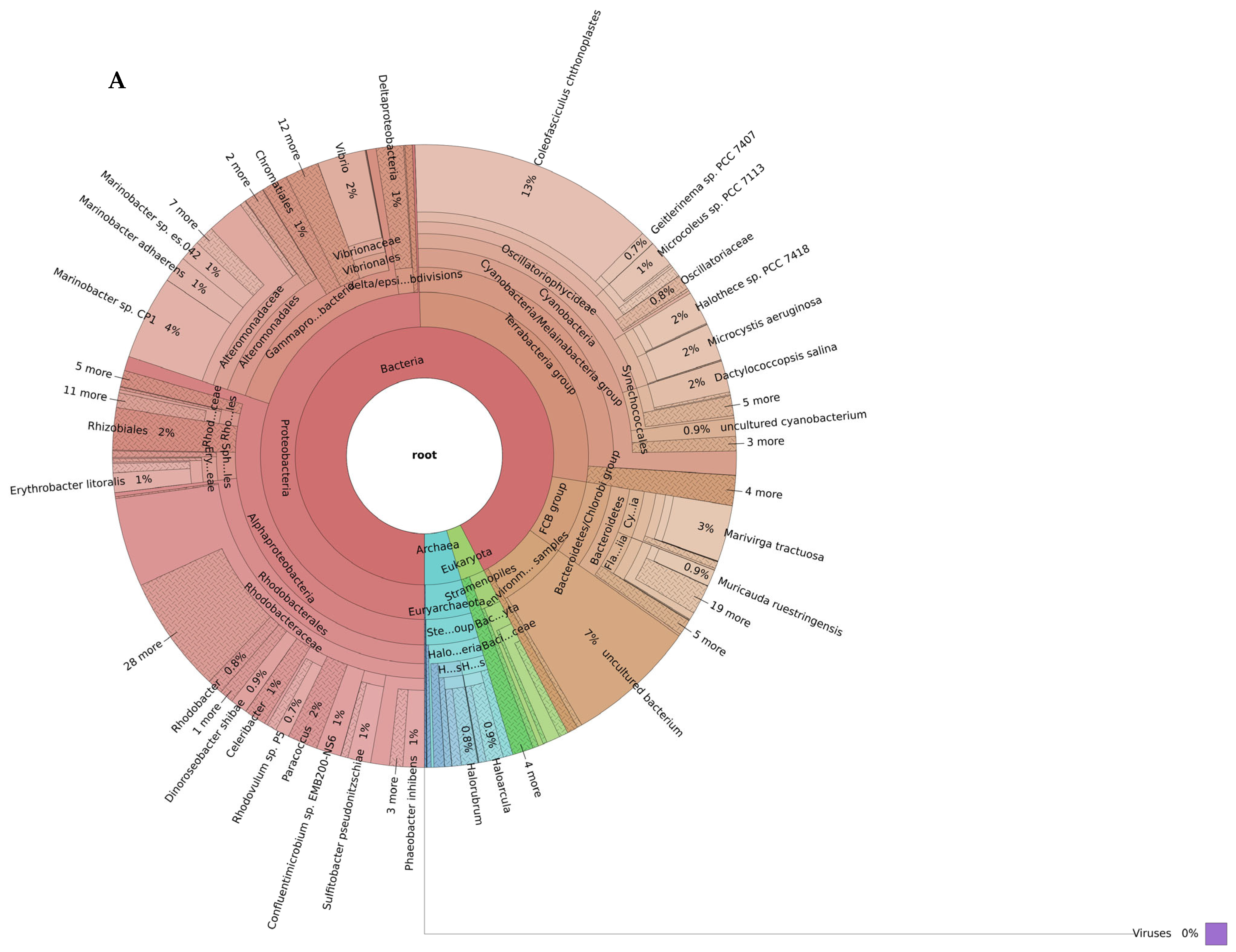
2.1.1. Low-Salinity Biodiversity
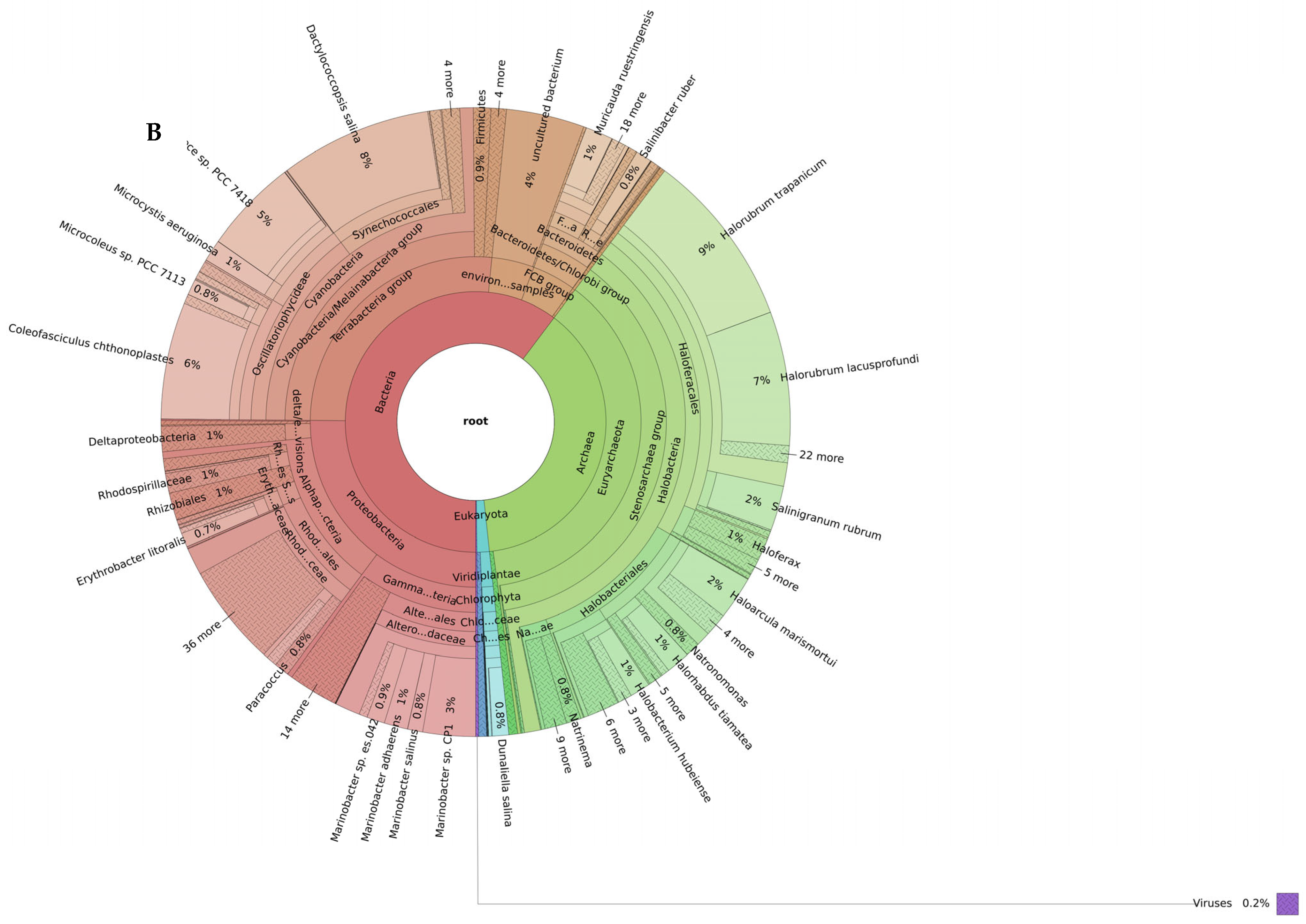
2.1.2. High-Salinity Biodiversity
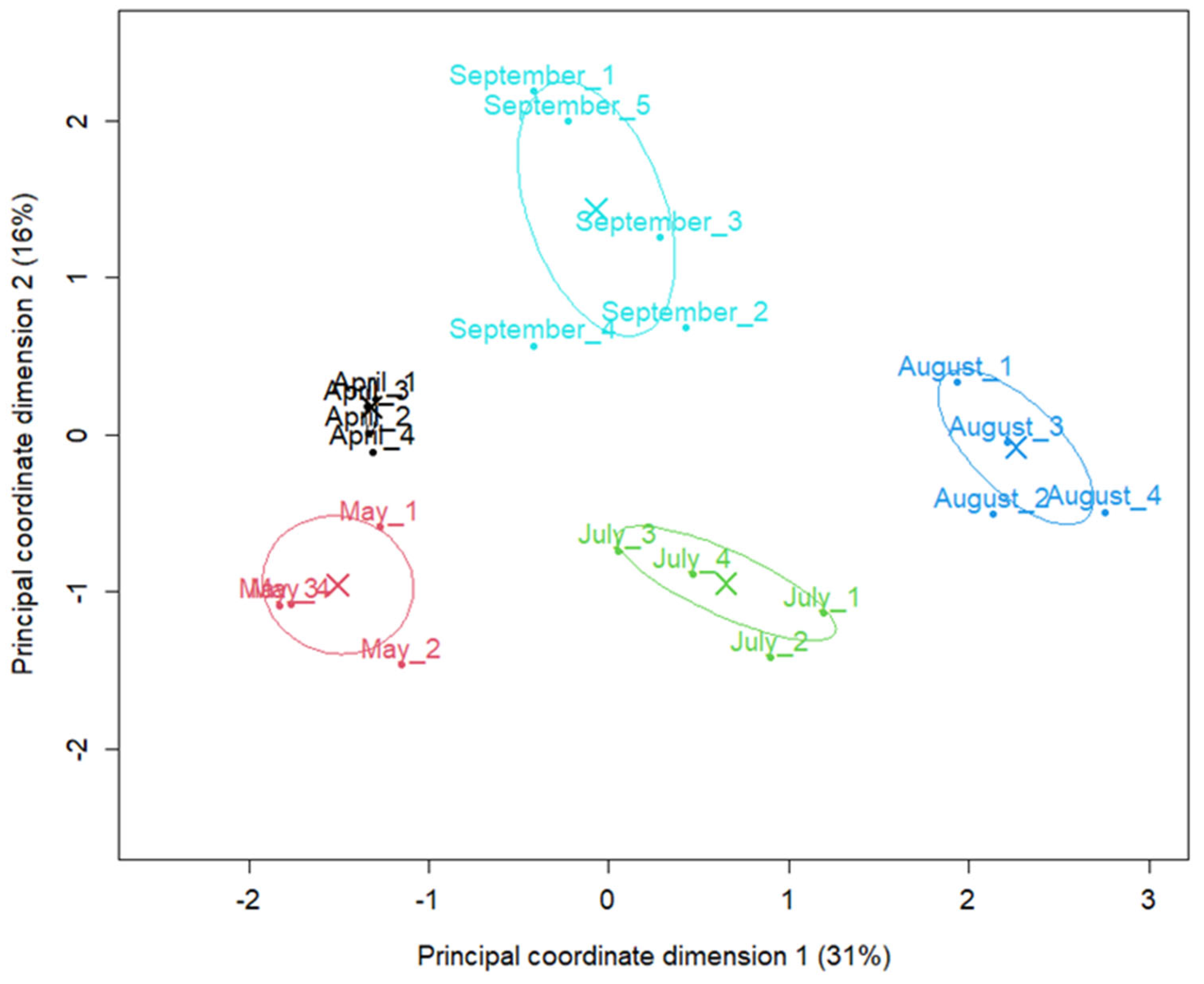
2.2. Influence of Salinity on Microbiome Composition
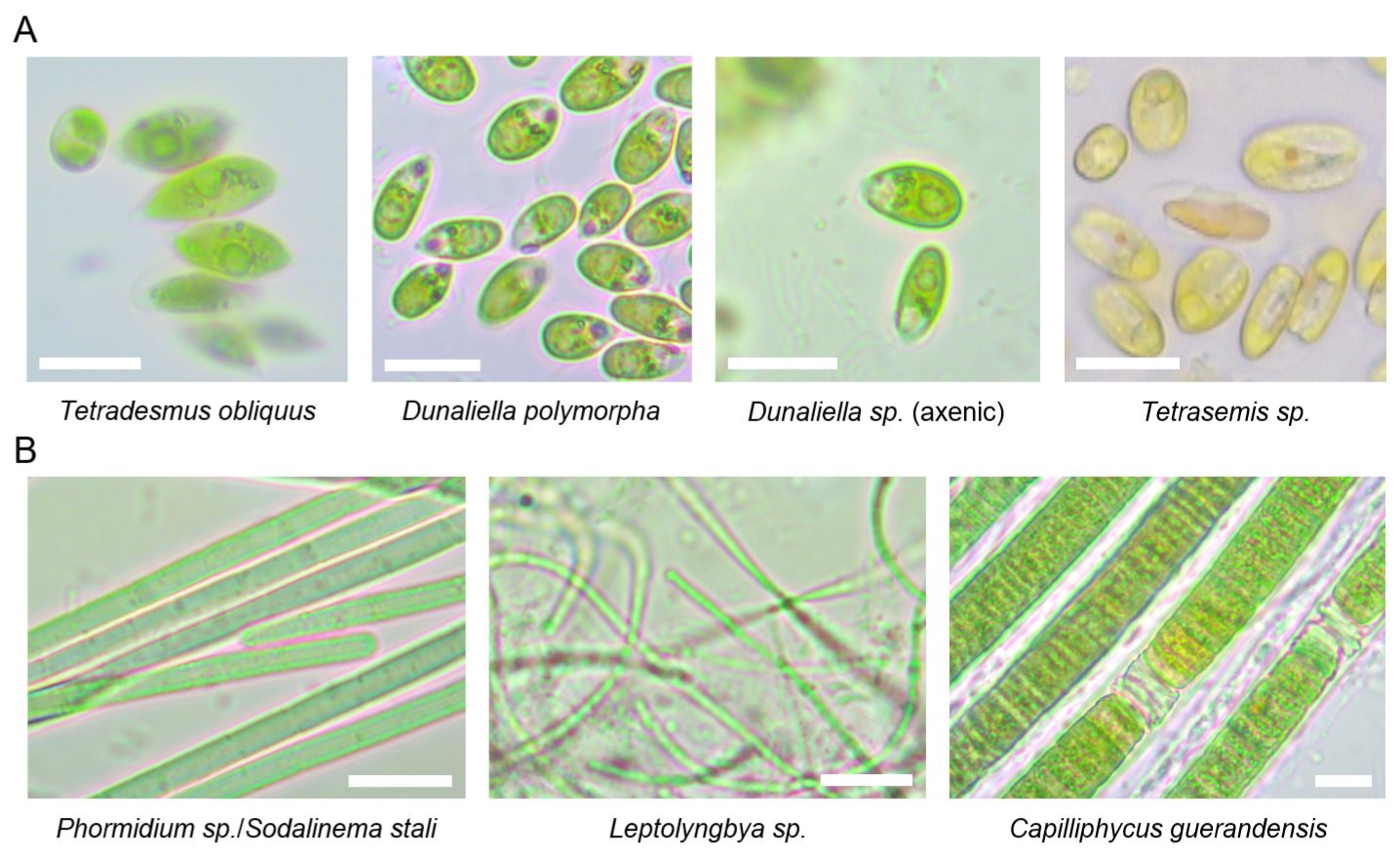
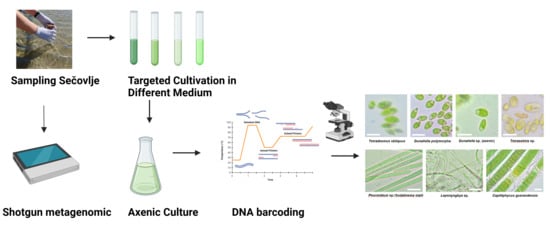
2.3. Cultivation, Isolation and Identification of Cultures
3. Discussion
3.1. Microbial Biodiversity of the Sečovlje Salt Pan
3.2. Targeted Organisms with Biotechnological Potential: Isolation of Microalgal and Cyanobacterial Cultures
4. Materials and Methods
4.1. Description of the Study Area
4.2. Sample Site
4.3. Shotgun Metagenomics
4.3.1. DNA Extraction and Sequencing
4.3.2. NGS Data Analysis
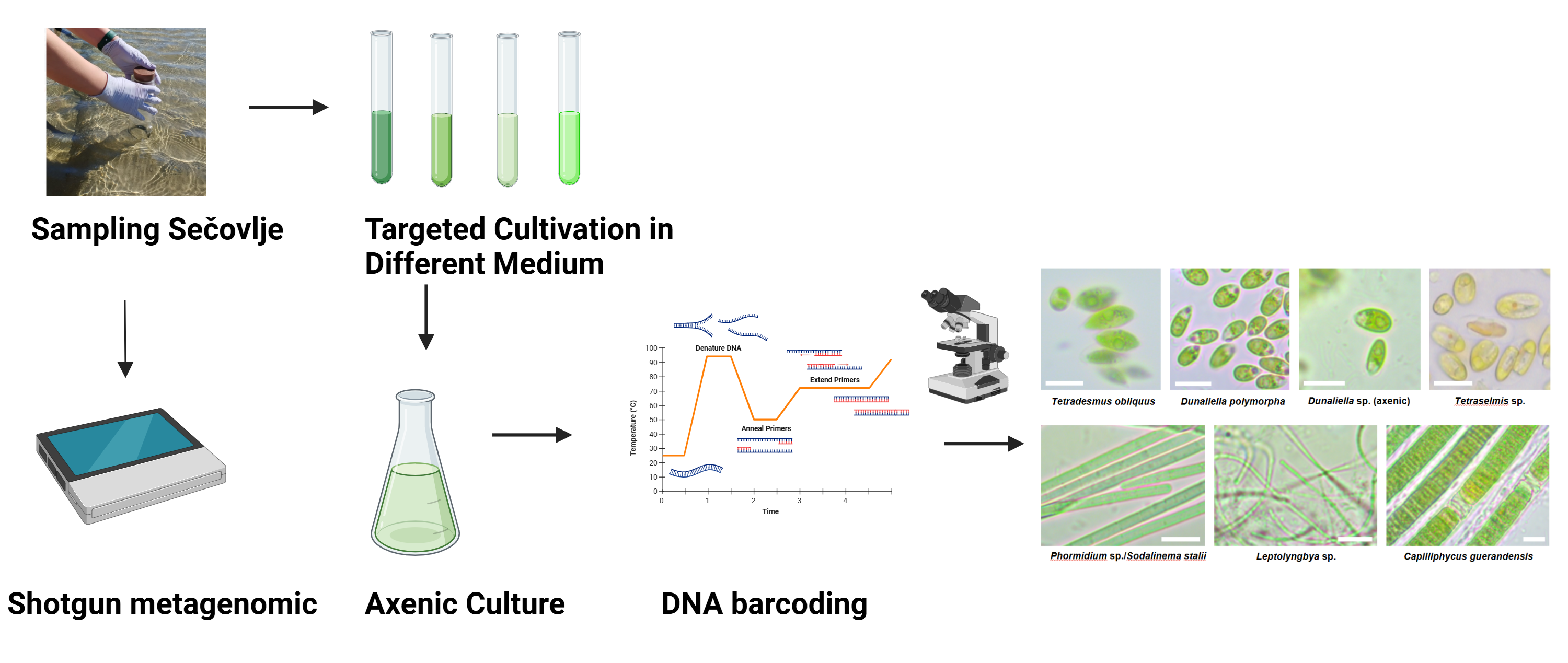
4.4. Isolation and Maintenance of Microalgal/Cyanobacterial Cultures
4.5. DNA Barcoding: DNA Isolation, PCR and Sequencing of Laboratory-Grown Microalgae
4.6. Microscopy
5. Conclusions
Supplementary Materials
Author Contributions
Funding
Institutional Review Board Statement
Data Availability Statement
Acknowledgments
Conflicts of Interest
Abbreviations
| PUFAs | Polyunsaturated Fatty Acids |
| FAO | Food and Agriculture Organization |
| USD | United State Dollar |
| EPA | Eicosapentaenoic Acid |
| CO2 | Carbon Dioxide |
| pH | Potential of Hydrogen |
| MDS | Multidimensional scaling |
| LogFC | Logarithm of Fold Change |
| PHA | Production of poly-hydroxy-alkanoates |
| Mn | Manganese |
| β-Carotene | Beta Carotene |
| DNA | Deoxyribonucleic Acid |
| rDNA | Ribosomal Deoxyribonucleic Acid |
| ITS | Internal transcribed spacer |
| Be° | Baumé |
| PCR | Polymerase chain reaction |
| AGE | Agarose Gel Electrophoresis |
| MAE | Microwave-assisted extraction |
| SPE | Supercritical fluid extraction |
| UAE | Ultrasound-assisted Extraction |
| UV | Ultra Violet |
| DHA | Dihydroxyacetone |
| AMPs | Antimicrobial Peptides |
| EPSs | Extracellular Polymeric Substances |
| MAAs | Mycosporine-like Amino Acids |
| % S | Salinity |
| ng | Nanogram |
| μL | Micro liter |
| MaAslin2 | Microbiome Multivariable Association with Linear Models 2 |
| LM | Linear model fit |
| NEGBIN | Negative binomial |
| CSS | Cumulative sum scaling |
| TMM | Trimmed mean of M-values |
| BG11 | Blue-Green medium 11 |
| ASN-III | Artificial Seawater Medium III |
| µmol | Micromole |
| m | Meter |
| s | Second |
| mM | Millimolar |
| dNTPs | Deoxynucleotide Triphosphate |
| Tm | Melting Temperature |
| U | Unit |
| (w/v) | Weight/volume |
| TAE buffer | Tris–Acetate–EDTA |
| BLASTN | Basic Local Alignment Search Tool |
References
- Hachicha, R.; Elleuch, F.; Ben Hlima, H.; Dubessay, P.; de Baynast, H.; Delattre, C.; Pierre, G.; Hachicha, R.; Abdelkafi, S.; Michaud, P.; et al. Biomolecules from Microalgae and Cyanobacteria: Applications and Market Survey. Appl. Sci. 2022, 12, 1924. [Google Scholar] [CrossRef]
- Abdur Razzak, S.; Bahar, K.; Islam, K.M.O.; Haniffa, A.K.; Faruque, M.O.; Hossain, S.M.Z.; Hossain, M.M. Microalgae Cultivation in Photobioreactors: Sustainable Solutions for a Greener Future. Green Chem. Eng. 2024, 5, 418–439. [Google Scholar] [CrossRef]
- Rotter, A.; Barbier, M.; Bertoni, F.; Bones, A.M.; Cancela, M.L.; Carlsson, J.; Carvalho, M.F.; Cegłowska, M.; Chirivella-Martorell, J.; Conk Dalay, M.; et al. The Essentials of Marine Biotechnology. Front. Mar. Sci. 2021, 8, 629629. [Google Scholar] [CrossRef]
- Nunnery, J.K.; Mevers, E.; Gerwick, W.H. Biologically Active Secondary Metabolites from Marine Cyanobacteria. Curr. Opin. Biotechnol. 2010, 21, 787–793. [Google Scholar] [CrossRef]
- Widyaswari, S.G.; Metusalach; Kasmiati; Amir, N. A Review: Bioactive Compounds of Macroalgae and Their Application as Functional Beverages. IOP Conf. Ser. Earth Environ. Sci. 2021, 679, 012002. [Google Scholar] [CrossRef]
- Hassan, S.; Meenatchi, R.; Pachillu, K.; Bansal, S.; Brindangnanam, P.; Arockiaraj, J.; Kiran, G.S.; Selvin, J. Identification and Characterization of the Novel Bioactive Compounds from Microalgae and Cyanobacteria for Pharmaceutical and Nutraceutical Applications. J. Basic Microbiol. 2022, 62, 999–1029. [Google Scholar] [CrossRef]
- Singh, S.K.; Kaur, R.; Bansal, A.; Kapur, S.; Sundaram, S. Chapter 8—Biotechnological Exploitation of Cyanobacteria and Microalgae for Bioactive Compounds. In Biotechnological Production of Bioactive Compounds; Verma, M.L., Chandel, A.K., Eds.; Elsevier: Amsterdam, The Netherlands, 2020; pp. 221–259. [Google Scholar]
- Pérez, J.P.; Muñoz, A.A.; Figueroa, C.P.; Agurto-Muñoz, C. Current Analytical Techniques for the Characterization of Lipophilic Bioactive Compounds from Microalgae Extracts. Biomass Bioenergy 2021, 149, 106078. [Google Scholar] [CrossRef]
- Sánchez-Bayo, A.; Morales, V.; Rodríguez, R.; Vicente, G.; Bautista, L.F. Cultivation of Microalgae and Cyanobacteria: Effect of Operating Conditions on Growth and Biomass Composition. Molecules 2020, 25, 2834. [Google Scholar] [CrossRef]
- Novoveská, L.; Nielsen, S.L.; Eroldoğan, O.T.; Haznedaroglu, B.Z.; Rinkevich, B.; Fazi, S.; Robbens, J.; Vasquez, M.; Einarsson, H. Overview and Challenges of Large-Scale Cultivation of Photosynthetic Microalgae and Cyanobacteria. Mar. Drugs 2023, 21, 445. [Google Scholar] [CrossRef]
- Khan, A.Z.; Cai, S.; Liu, L.; Cheng, Q.; Hu, Z.; Zheng, Y. Cyanobacterial Metabolic Pathways of Industrial Interests. In Cyanobacteria Biotechnology: Sustainability of Water-Energy-Environment Nexus; Mehmood, M.A., Malik, S., Musharraf, S.G., Boopathy, R., Eds.; Springer Nature: Cham, Switzerland, 2024; pp. 47–66. [Google Scholar]
- Loke Show, P. Global Market and Economic Analysis of Microalgae Technology: Status and Perspectives. Bioresour. Technol. 2022, 357, 127329. [Google Scholar] [CrossRef]
- Morais Junior, W.G.; Gorgich, M.; Corrêa, P.S.; Martins, A.A.; Mata, T.M.; Caetano, N.S. Microalgae for Biotechnological Applications: Cultivation, Harvesting and Biomass Processing. Aquaculture 2020, 528, 735562. [Google Scholar] [CrossRef]
- Vieira, V.V.; Benemann, J.; Vonshak, A.; Belay, A.; Ras, M.; Unamunzaga, C.; Cadoret, J.-P.; Rizzo, A. Spirulina in the 21st Century: Five Reasons for Success in Europe. J. Appl. Phycol. 2025, 37, 2203–2216. [Google Scholar] [CrossRef]
- Fabris, M.; Abbriano, R.M.; Pernice, M.; Sutherland, D.L.; Commault, A.S.; Hall, C.C.; Labeeuw, L.; McCauley, J.I.; Kuzhiuparambil, U.; Ray, P.; et al. Emerging Technologies in Algal Biotechnology: Toward the Establishment of a Sustainable, Algae-Based Bioeconomy. Front. Plant Sci. 2020, 11, 279. [Google Scholar] [CrossRef] [PubMed]
- Varshney, P.; Mikulic, P.; Vonshak, A.; Beardall, J.; Wangikar, P.P. Extremophilic Micro-Algae and Their Potential Contribution in Biotechnology. Bioresour. Technol. 2015, 184, 363–372. [Google Scholar] [CrossRef]
- Singh, O.V.; Gabani, P. Extremophiles: Radiation Resistance Microbial Reserves and Therapeutic Implications: Radiation Resistance Microbial Reserves and Therapeutic Implications. J. Appl. Microbiol. 2011, 110, 851–861. [Google Scholar] [CrossRef]
- Malavasi, V.; Soru, S.; Cao, G. Extremophile Microalgae: The Potential for Biotechnological Application. J. Phycol. 2020, 56, 559–573. [Google Scholar] [CrossRef]
- Saini, R.K.; Prasad, P.; Sreedhar, R.V.; Akhilender Naidu, K.; Shang, X.; Keum, Y.-S. Omega−3 Polyunsaturated Fatty Acids (PUFAs): Emerging Plant and Microbial Sources, Oxidative Stability, Bioavailability, and Health Benefits—A Review. Antioxidants 2021, 10, 1627. [Google Scholar] [CrossRef]
- Gantar, M.; Svirčev, Z. Microalgae and Cyanobacteria: Food for Thought. J. Phycol. 2008, 44, 260–268. [Google Scholar] [CrossRef]
- Rampelotto, P.H. Extremophiles and Extreme Environments: A Decade of Progress and Challenges. Life 2024, 14, 382. [Google Scholar] [CrossRef]
- Daoud, L.; Ben Ali, M. Chapter 5—Halophilic Microorganisms: Interesting Group of Extremophiles with Important Applications in Biotechnology and Environment. In Physiological and Biotechnological Aspects of Extremophiles; Salwan, R., Sharma, V., Eds.; Academic Press: Cambridge, MA, USA, 2020; pp. 51–64. [Google Scholar]
- Martínez, G.M.; Pire, C.; Martínez-Espinosa, R.M. Hypersaline Environments as Natural Sources of Microbes with Potential Applications in Biotechnology: The Case of Solar Evaporation Systems to Produce Salt in Alicante County (Spain). Curr. Res. Microb. Sci. 2022, 3, 100136. [Google Scholar] [CrossRef]
- Chekanov, K. Diversity and Distribution of Carotenogenic Algae in Europe: A Review. Mar. Drugs 2023, 21, 108. [Google Scholar] [CrossRef] [PubMed]
- Yovchevska, L.; Gocheva, Y.; Stoyancheva, G.; Miteva-Staleva, J.; Dishliyska, V.; Abrashev, R.; Stamenova, T.; Angelova, M.; Krumova, E. Halophilic Fungi—Features and Potential Applications. Microorganisms 2025, 13, 175. [Google Scholar] [CrossRef] [PubMed]
- Selvam, J.; Mal, J.; Singh, S.; Yadav, A.; Giri, B.; Pandey, A.; Sinha, R. Bioprospecting Marine Microalgae as Sustainable Bio-Factories for Value-Added Compounds. Algal Res. 2024, 79, 103444. [Google Scholar] [CrossRef]
- Tavčar Verdev, P.; Dolinar, M. A Pipeline for the Isolation and Cultivation of Microalgae and Cyanobacteria from Hypersaline Environments. Microorganisms 2025, 13, 603. [Google Scholar] [CrossRef]
- Fürch, T.; Preusse, M.; Tomasch, J.; Zech, H.; Wagner-Döbler, I.; Rabus, R.; Wittmann, C. Metabolic Fluxes in the Central Carbon Metabolism of Dinoroseobacter shibae and Phaeobacter gallaeciensis, Two Members of the Marine Roseobacter Clade. BMC Microbiol. 2009, 9, 209. [Google Scholar] [CrossRef]
- Le, L.T.H.L.; Yoo, W.; Lee, C.; Wang, Y.; Jeon, S.; Kim, K.K.; Lee, J.H.; Kim, T.D. Molecular Characterization of a Novel Cold-Active Hormone-Sensitive Lipase (HaHSL) from Halocynthiibacter arcticus. Biomolecules 2019, 9, 704. [Google Scholar] [CrossRef]
- Cui, H.; Lu, J.; Ding, W.; Zhang, W. Genomic Features and Antimicrobial Activity of Phaeobacter inhibens Strains from Marine Biofilms. Mar. Drugs 2024, 22, 492. [Google Scholar] [CrossRef]
- Wang, X.; Yu, M.; Wang, L.; Lin, H.; Li, B.; Xue, C.-X.; Sun, H.; Zhang, X.-H. Comparative Genomic and Metabolic Analysis of Manganese-Oxidizing Mechanisms in Celeribacter manganoxidans DY25T: Its Adaptation to the Environment of Polymetallic Nodules. Genomics 2020, 112, 2080–2091. [Google Scholar] [CrossRef]
- Arahal, D.R.; Lucena, T.; Rodrigo-Torres, L.; Pujalte, M.J. Ruegeria denitrificans sp. nov., a Marine Bacterium in the Family Rhodobacteraceae with the Potential Ability for Cyanophycin Synthesis. Int. J. Syst. Evol. Microbiol. 2018, 68, 2515–2522. [Google Scholar] [CrossRef]
- Yin, X.; Li, X.; Li, Q.; Wang, B.; Zheng, L. Complete Genome Analysis Reveals Environmental Adaptability of Sulfur-Oxidizing Bacterium Thioclava nitratireducens M1-LQ-LJL-11 and Symbiotic Relationship with Deep-Sea Hydrothermal Vent Chrysomallon squamiferum. Mar. Genom. 2023, 71, 101058. [Google Scholar] [CrossRef]
- Sorokin, D.Y.; Tourova, T.P.; Spiridonova, E.M.; Rainey, F.A.; Muyzer, G. Thioclava pacifica gen. nov., sp. nov., a Novel Facultatively Autotrophic, Marine, Sulfur-Oxidizing Bacterium from a near-Shore Sulfidic Hydrothermal Area. Int. J. Syst. Evol. Microbiol. 2005, 55, 1069–1075. [Google Scholar] [CrossRef] [PubMed]
- Hong, S.-H.; Nam, H.-K.; Kim, K.-R.; Kim, S.-W.; Oh, D.-K. Molecular Characterization of an Aldo-Keto Reductase from Marivirga tractuosa That Converts Retinal to Retinol. J. Biotechnol. 2014, 169, 23–33. [Google Scholar] [CrossRef] [PubMed]
- Ringø, E. Probiotics in Shellfish Aquaculture. Aquac. Fish. 2020, 5, 1–27. [Google Scholar] [CrossRef]
- Wu, Z.; Wu, Y.; Huang, Y.; He, J.; Su, P.; Feng, D. Insights into the Planktonic to Sessile Transition in a Marine Biofilm-Forming Pseudoalteromonas Isolate Using Comparative Proteomic Analysis. Aquat. Microb. Ecol. 2021, 86, 69–84. [Google Scholar] [CrossRef]
- Yang, Q.; Ge, Y.; Iqbal, N.M.; Yang, X.; Zhang, X. Sulfitobacter alexandrii sp. nov., a New Microalgae Growth-Promoting Bacterium with Exopolysaccharides Bioflocculanting Potential Isolated from Marine Phycosphere. Antonie Van Leeuwenhoek 2021, 114, 1091–1106. [Google Scholar] [CrossRef]
- Tanaka, T.; Yabuuchi, T.; Maeda, Y.; Nojima, D.; Matsumoto, M.; Yoshino, T. Production of Eicosapentaenoic Acid by High Cell Density Cultivation of the Marine Oleaginous Diatom Fistulifera solaris. Bioresour. Technol. 2017, 245, 567–572. [Google Scholar] [CrossRef]
- Oliver, L.; Dietrich, T.; Marañón, I.; Villarán, M.C.; Barrio, R.J. Producing Omega-3 Polyunsaturated Fatty Acids: A Review of Sustainable Sources and Future Trends for the EPA and DHA Market. Resources 2020, 9, 148. [Google Scholar] [CrossRef]
- Gevorgiz, R.G.; Gureev, M.A.; Zheleznova, S.N.; Gureeva, E.V.; Nechoroshev, M.V. Production of Diadinoxanthin in an Intensive Culture of the Diatomaceous Alga Cylindrotheca closterium (Ehrenb.) Reimann et Lewin. and Its Proapoptotic Activity. Appl. Biochem. Microbiol. 2022, 58, 261–268. [Google Scholar] [CrossRef]
- Sun, H.; Yang, S.; Zhao, W.; Kong, Q.; Zhu, C.; Fu, X.; Zhang, F.; Liu, Z.; Zhan, Y.; Mou, H.; et al. Fucoxanthin from Marine Microalgae: A Promising Bioactive Compound for Industrial Production and Food Application. Crit. Rev. Food Sci. Nutr. 2023, 63, 7996–8012. [Google Scholar] [CrossRef]
- Abu Bakar, M.F.; Mohd Setapar, S.H. Fucoxanthin: An Emerging Ingredient in Cosmeceutical Applications. J. Dermatol. Sci. Cosmet. Technol. 2025, 2, 100085. [Google Scholar] [CrossRef]
- Min, K.H.; Kim, D.H.; Shin, J.W.; Ki, M.-R.; Pack, S.P. Microalgae-Derived Peptide with Dual-Functionalities of Silica Deposition and Antimicrobial Activity for Biosilica-Based Biomaterial Design. Process Biochem. 2024, 146, 204–213. [Google Scholar] [CrossRef]
- Jeong, S.-W.; Choi, Y.J. Extremophilic Microorganisms for the Treatment of Toxic Pollutants in the Environment. Molecules 2020, 25, 4916. [Google Scholar] [CrossRef] [PubMed]
- León, M.J.; Hoffmann, T.; Sánchez-Porro, C.; Heider, J.; Ventosa, A.; Bremer, E. Compatible Solute Synthesis and Import by the Moderate Halophile Spiribacter Salinus: Physiology and Genomics. Front. Microbiol. 2018, 9, 108. [Google Scholar] [CrossRef] [PubMed]
- Pastor, J.M.; Salvador, M.; Argandoña, M.; Bernal, V.; Reina-Bueno, M.; Csonka, L.N.; Iborra, J.L.; Vargas, C.; Nieto, J.J.; Cánovas, M. Ectoines in Cell Stress Protection: Uses and Biotechnological Production. Biotechnol. Adv. 2010, 28, 782–801. [Google Scholar] [CrossRef] [PubMed]
- O’Neill, M.K.; Piligian, B.F.; Olson, C.D.; Woodruff, P.J.; Swarts, B.M. Tailoring Trehalose for Biomedical and Biotechnological Applications. Pure Appl. Chem. Chim. Pure Appl. 2017, 89, 1223–1249. [Google Scholar] [CrossRef]
- Mori, T.; Masuzawa, N.; Kondo, K.; Nakanishi, Y.; Chida, S.; Uehara, D.; Katahira, M.; Takeda, M. A Heterodimeric Hyaluronate Lyase Secreted by the Activated Sludge Bacterium Haliscomenobacter hydrossis. Biosci. Biotechnol. Biochem. 2023, 87, 256–266. [Google Scholar] [CrossRef]
- Biswas, J.; Saha, P.; Ganguly, J.; Paul, A.K. Production and Characterization of a Bioactive Extracellular Homopolysaccharide Produced by Haloferax sp. BKW301. J. Basic Microbiol. 2020, 60, 938–949. [Google Scholar] [CrossRef]
- Moopantakath, J.; Imchen, M.; Anju, V.T.; Busi, S.; Dyavaiah, M.; Martínez-Espinosa, R.M.; Kumavath, R. Bioactive Molecules from Haloarchaea: Scope and Prospects for Industrial and Therapeutic Applications. Front. Microbiol. 2023, 14, 1113540. [Google Scholar] [CrossRef]
- Aparici-Carratalá, D.; Esclapez, J.; Bautista, V.; Bonete, M.-J.; Camacho, M. Archaea: Current and Potential Biotechnological Applications. Res. Microbiol. 2023, 174, 104080. [Google Scholar] [CrossRef]
- Banciu, H.L.; Enache, M.; Rodriguez, R.M.; Oren, A.; Ventosa, A. Ecology and Physiology of Halophilic Microorganisms—Thematic Issue Based on Papers presented at Halophiles 2019—12th International Conference on Halophilic Microorganisms, Cluj-Napoca, Romania, 24–28 June 2019. FEMS Microbiol. Lett. 2019, 366, fnz250. [Google Scholar] [CrossRef]
- Cruz-Luna, D.; Canseco, S.P.; Morales, J.L.H.; Bolaños, T.A.; García-Sánchez, E. First Report of Halomicrobium mukohataei in Mexico and Its Biological Activity. Neotrop. Biol. Conserv. 2025, 20, 79–92. [Google Scholar] [CrossRef]
- Kulkarni, D.; Sherkar, R.; Shirsathe, C.; Sonwane, R.; Varpe, N.; Shelke, S.; More, M.P.; Pardeshi, S.R.; Dhaneshwar, G.; Junnuthula, V.; et al. Biofabrication of Nanoparticles: Sources, Synthesis, and Biomedical Applications. Front. Bioeng. Biotechnol. 2023, 11, 1159193. [Google Scholar] [CrossRef] [PubMed]
- Kowalewicz-Kulbat, M.; Krawczyk, K.T.; Szulc-Kielbik, I.; Rykowski, S.; Denel-Bobrowska, M.; Olejniczak, A.B.; Locht, C.; Klink, M. Cytotoxic Effects of Halophilic Archaea Metabolites on Ovarian Cancer Cell Lines. Microb. Cell Factories 2023, 22, 197. [Google Scholar] [CrossRef] [PubMed]
- Salgaonkar, B.B.; Bragança, J.M. Utilization of Sugarcane Bagasse by Halogeometricum borinquense Strain E3 for Biosynthesis of Poly(3-Hydroxybutyrate-Co-3-Hydroxyvalerate). Bioengineering 2017, 4, 50. [Google Scholar] [CrossRef] [PubMed]
- Luque, C.; Perazzoli, G.; Gómez-Villegas, P.; Vigara, J.; Martínez, R.; García-Beltrán, A.; Porres, J.M.; Prados, J.; León, R.; Melguizo, C. Extracts from Microalgae and Archaea from the Andalusian Coast: A Potential Source of Antiproliferative, Antioxidant, and Preventive Compounds. J. Mar. Sci. Eng. 2024, 12, 996. [Google Scholar] [CrossRef]
- Jing, H..; Lu, Q.; Zhou, L.; Liu, H.; Xiang, H. Identification of the Polyhydroxyalkanoate (PHA)-Specific Acetoacetyl Coenzyme A Reductase among Multiple FabG Paralogs in Haloarcula hispanica and Reconstruction of the PHA Biosynthetic Pathway in Haloferax volcanii. Appl. Environ. Microbiol. 2009, 75, 6168–6175. [Google Scholar]
- Haque, R.U.; Paradisi, F.; Allers, T. Haloferax volcanii for Biotechnology Applications: Challenges, Current State and Perspectives. Appl. Microbiol. Biotechnol. 2020, 104, 1371–1382. [Google Scholar] [CrossRef]
- Zhou, P.; Xu, X.-W.; Wu, M.; Huang, W.-D.; Oren, A. Isolation and Functional Expression of the Bop Gene from Halobiforma lacisalsi. Microbiol. Res. 2009, 164, 553–559. [Google Scholar] [CrossRef]
- Koller, M.; Rittmann, S.K.-M.R. Haloarchaea as Emerging Big Players in Future Polyhydroxyalkanoate Bioproduction: Review of Trends and Perspectives. Curr. Res. Biotechnol. 2022, 4, 377–391. [Google Scholar] [CrossRef]
- Kumar, V.; Singh, B.; Van Belkum, M.J.; Diep, D.B.; Chikindas, M.L.; Ermakov, A.M.; Tiwari, S.K. Halocins, Natural Antimicrobials of Archaea: Exotic or Special or Both? Biotechnol. Adv. 2021, 53, 107834. [Google Scholar] [CrossRef]
- Yavari-Bafghi, M.; Babavalian, H.; Amoozegar, M.A. Isolation, Screening and Identification of Haloarchaea with Chitinolytic Activity from Hypersaline Lakes of Iran. Arch. Biol. Sci. 2019, 71, 71–81. [Google Scholar] [CrossRef]
- Vázquez-Madrigal, A.S.; Barbachano-Torres, A.; Arellano-Plaza, M.; Kirchmayr, M.R.; Finore, I.; Poli, A.; Nicolaus, B.; De la Torre Zavala, S.; Camacho-Ruiz, R.M. Effect of Carbon Sources in Carotenoid Production from Haloarcula sp. M1, Halolamina sp. M3 and Halorubrum sp. M5, Halophilic Archaea Isolated from Sonora Saltern, Mexico. Microorganisms 2021, 9, 1096. [Google Scholar] [CrossRef] [PubMed]
- Pourkarimi, S.; Hallajisani, A.; Alizadehdakhel, A.; Nouralishahi, A.; Golzary, A. Factors Affecting Production of Beta-Carotene from Dunaliella Salina Microalgae. Biocatal. Agric. Biotechnol. 2020, 29, 101771. [Google Scholar] [CrossRef]
- Aprile, M.C.; Caputo, V.; Nayga, R.M., Jr. Consumers’ Preferences and Attitudes Toward Local Food Products. J. Food Prod. Mark. 2016, 22, 19–42. [Google Scholar] [CrossRef]
- Kovács, I.; Balázsné Lendvai, M.; Beke, J. The Importance of Food Attributes and Motivational Factors for Purchasing Local Food Products: Segmentation of Young Local Food Consumers in Hungary. Sustainability 2022, 14, 3224. [Google Scholar] [CrossRef]
- Rotter, A.; Varamogianni-Mamatsi, D.; Pobirk, A.Z.; Matjaž, M.G.; Cueto, M.; Díaz-Marrero, A.R.; Jónsdóttir, R.; Sveinsdóttir, K.; Catalá, T.S.; Romano, G.; et al. Marine Cosmetics and the Blue Bioeconomy: From Sourcing to Success Stories. iScience 2024, 27, 111339. [Google Scholar] [CrossRef]
- White, J.; Gorton, M.; Tocco, B.; Csillag, P.; Filipović, J. Chapter 10: Trends in Consumer Preference for Locally-Sourced Food Products. In Consumers and Food: Understanding and Shaping Consumer Behaviour; Burleigh Dodds Science Publishing: Sawston, UK, 2023. [Google Scholar]
- Olaizola, M. Commercial Development of Microalgal Biotechnology: From the Test Tube to the Marketplace. Biomol. Eng. 2003, 20, 459–466. [Google Scholar] [CrossRef]
- Amoozegar, M.A.; Safarpour, A.; Noghabi, K.A.; Bakhtiary, T.; Ventosa, A. Halophiles and Their Vast Potential in Biofuel Production. Front. Microbiol. 2019, 10, 1895. [Google Scholar] [CrossRef]
- DasSarma, S.; DasSarma, P. Halophiles and Their Enzymes: Negativity Put to Good Use. Curr. Opin. Microbiol. 2015, 25, 120–126. [Google Scholar] [CrossRef]
- Glavaš, N.; Šmuc, N.R.; Dolenec, M.; Kovač, N. The Seasonal Heavy Metal Signature and Variations in the Microbial Mat (Petola) of the Sečovlje Salina (Northern Adriatic). J. Soils Sediments 2015, 15, 2359–2368. [Google Scholar] [CrossRef]
- Glavaš, N.; Défarge, C.; Gautret, P.; Joulian, C.; Penhoud, P.; Motelica, M.; Kovač, N. The Structure and Role of the “Petola” Microbial Mat in Sea Salt Production of the Sečovlje (Slovenia). Sci. Total Environ. 2018, 644, 1254–1267. [Google Scholar] [CrossRef] [PubMed]
- Sonjak, S.; Udovič, M.; Wraber, T.; Likar, M.; Regvar, M. Diversity of Halophytes and Identification of Arbuscular Mycorrhizal Fungi Colonising Their Roots in an Abandoned and Sustained Part of Sečovlje Salterns. Soil Biol. Biochem. 2009, 41, 1847–1856. [Google Scholar] [CrossRef]
- Škrinjar, P.; Faganeli, J.; Ogrinc, N. The Role of Stromatolites in Explaining Patterns of Carbon, Nitrogen, Phosphorus, and Silicon in the Sečovlje Saltern Evaporation Ponds (Northern Adriatic Sea). J. Soils Sediments 2012, 12, 1641–1648. [Google Scholar] [CrossRef]
- Tkavc, R.; Gostinčar, C.; Turk, M.; Visscher, P.T.; Oren, A.; Gunde-Cimerman, N. Bacterial Communities in the ‘Petola’ Microbial Mat from the Sečovlje Salterns (Slovenia). FEMS Microbiol. Ecol. 2011, 75, 48–62. [Google Scholar] [CrossRef]
- Bonilla-Rosso, G.; Peimbert, M.; Alcaraz, L.D.; Hernández, I.; Eguiarte, L.E.; Olmedo-Alvarez, G.; Souza, V. Comparative Metagenomics of Two Microbial Mats at Cuatro Ciénegas Basin II: Community Structure and Composition in Oligotrophic Environments. Astrobiology 2012, 12, 659–673. [Google Scholar] [CrossRef]
- Filippidou, S.; Price, A.; Spencer-Jones, C.; Scales, A.; Macey, M.C.; Franchi, F.; Lebogang, L.; Cavalazzi, B.; Schwenzer, S.P.; Olsson-Francis, K. Diversity of Microbial Mats in the Makgadikgadi Salt Pans, Botswana. Microorganisms 2024, 12, 147. [Google Scholar] [CrossRef]
- Weingarten, E.A.; Lawson, L.A.; Jackson, C.R. The Saltpan Microbiome Is Structured by Sediment Depth and Minimally Influenced by Variable Hydration. Microorganisms 2020, 8, 538. [Google Scholar] [CrossRef]
- Jakob, I.; Weggenmann, F.; Posten, C. Cultivation of Emiliania huxleyi for Coccolith Production. Algal Res. 2018, 31, 47–59. [Google Scholar] [CrossRef]
- Fernández-Juárez, V.; Bennasar-Figueras, A.; Tovar-Sanchez, A.; Agawin, N.S.R. The Role of Iron in the P-Acquisition Mechanisms of the Unicellular N2-Fixing Cyanobacteria halothece sp., Found in Association with the Mediterranean Seagrass Posidonia oceanica. Front. Microbiol. 2019, 10, 1903. [Google Scholar] [CrossRef]
- Sarmah, P.; Rout, J. Algal Colonization on Polythene Carry Bags in a Domestic Solid Waste Dumping Site of Silchar Town in Assam. Phykos 2018, 48, e77. [Google Scholar]
- Kim, S.M.; Bae, E.H.; Kim, J.Y.; Kang, J.-S.; Choi, Y.-E. Mixotrophic Cultivation of a Native Cyanobacterium, Pseudanabaena mucicola GO0704, to Produce Phycobiliprotein and Biodiesel. J. Microbiol. Biotechnol. 2022, 32, 1325–1334. [Google Scholar] [CrossRef] [PubMed]
- Casamayor, E.O.; Triadó-Margarit, X.; Castañeda, C. Microbial Biodiversity in Saline Shallow Lakes of the Monegros Desert, Spain. FEMS Microbiol. Ecol. 2013, 85, 503–518. [Google Scholar] [CrossRef] [PubMed]
- Saccò, M.; White, N.E.; Harrod, C.; Salazar, G.; Aguilar, P.; Cubillos, C.F.; Meredith, K.; Baxter, B.K.; Oren, A.; Anufriieva, E.; et al. Salt to Conserve: A Review on the Ecology and Preservation of Hypersaline Ecosystems. Biol. Rev. 2021, 96, 2828–2850. [Google Scholar] [CrossRef] [PubMed]
- Vogt, J.C.; Abed, R.M.M.; Albach, D.C.; Palinska, K.A. Bacterial and Archaeal Diversity in Hypersaline Cyanobacterial Mats Along a Transect in the Intertidal Flats of the Sultanate of Oman. Microb. Ecol. 2018, 75, 331–347. [Google Scholar] [CrossRef]
- Kocberber Kilic, N.; Erdem, K.; Donmez, G. Bioactive Compounds Produced by Dunaliella Species, Antimicrobial Effects and Optimization of the Efficiency. Turk. J. Fish. Aquat. Sci. 2019, 19, 923–933. [Google Scholar] [CrossRef]
- Oliveira, C.Y.B.; Oliveira, C.D.L.; Prasad, R.; Ong, H.C.; Araujo, E.S.; Shabnam, N.; Gálvez, A.O. A Multidisciplinary Review of Tetradesmus obliquus: A Microalga Suitable for Large-Scale Biomass Production and Emerging Environmental Applications. Rev. Aquac. 2021, 13, 1594–1618. [Google Scholar] [CrossRef]
- Ahiahonu, E.K.; Anku, W.W.; Roopnarain, A.; Green, E.; Govender, P.P.; Serepa-Dlamini, M.H. Bioresource Potential of Tetradesmus obliquus UJEA_AD: Critical Evaluation of Biosequestration Rate, Biochemical and Fatty Acid Composition in BG11 Media. J. Chem. Technol. Biotechnol. 2022, 97, 689–697. [Google Scholar] [CrossRef]
- Ambati, R.R.; Gogisetty, D.; Aswathanarayana, R.G.; Ravi, S.; Bikkina, P.N.; Bo, L.; Yuepeng, S. Industrial Potential of Carotenoid Pigments from Microalgae: Current Trends and Future Prospects. Crit. Rev. Food Sci. Nutr. 2019, 59, 1880–1902. [Google Scholar] [CrossRef]
- Beta-Carotene Market Size, Share & Growth Report 2030. Available online: https://www.grandviewresearch.com/industry-analysis/beta-carotene-market (accessed on 28 September 2025).
- Lutein Market Size, Share & Growth Analysis Report 2030. Available online: https://www.grandviewresearch.com/industry-analysis/lutein-market-report (accessed on 28 September 2025).
- Astaxanthin Market Size and Share Industry Report 2030. Available online: https://www.grandviewresearch.com/industry-analysis/global-astaxanthin-market (accessed on 28 September 2025).
- Demirel, Z. Monitoring of Growth and Biochemical Composition of Dunaliella salina and Dunaliella polymorpha in Different Photobioreactors. Aquat. Res. 2022, 5, 136–145. [Google Scholar] [CrossRef]
- Glycerol Market Size, Share & Trends Analysis Report 2030. Available online: https://www.grandviewresearch.com/industry-analysis/glycerol-market (accessed on 28 September 2025).
- Paterson, S.; Gómez-Cortés, P.; de la Fuente, M.A.; Hernández-Ledesma, B. Bioactivity and Digestibility of Microalgae tetraselmis sp. and Nannochloropsis sp. as Basis of Their Potential as Novel Functional Foods. Nutrients 2023, 15, 477. [Google Scholar] [CrossRef]
- Ntzouvaras, A.; Chantzistrountsiou, X.; Papageorgiou, N.; Koletti, A.; Adamakis, I.-D.; Zografaki, M.-E.; Marka, S.; Vasilakis, G.; Tsirigoti, A.; Tzovenis, I.; et al. New Records of Tetraselmis sp. Strains with Biotechnological Potential Isolated from Greek Coastal Lagoons. Water 2023, 15, 1698. [Google Scholar] [CrossRef]
- Peptide Drug Conjugates Market Size Industry Report 2030. Available online: https://www.grandviewresearch.com/industry-analysis/peptide-drug-conjugates-market-report (accessed on 28 September 2025).
- Nainangu, P.; Keerthiga, K.; Subramanian, K.; Gopal, S.; Antonyraj, A.P.M. Characterization of Bioactive Metabolites in Phormidium sp. PB21: Pigment Production, Antimicrobial Potential, and Toxicity Assessment. Chem. Biodivers. 2025, 22, e202403415. [Google Scholar] [CrossRef] [PubMed]
- Raghuraman, R.; Aiyamperumal, B.; Anantharaman, P. Identification of Phormidium sp, (Kützing Ex Gomont 1892): A Potential Exopolymer for Effective Bioremediation. Bioremediat. J. 2025, 29, 141–153. [Google Scholar] [CrossRef]
- Phycocyanin Market Size, Share and Trends Report 2030. Available online: https://www.grandviewresearch.com/industry-analysis/phycocyanin-market-report (accessed on 28 September 2025).
- Samylina, O.S.; Sinetova, M.A.; Kupriyanova, E.V.; Starikov, A.Y.; Sukhacheva, M.V.; Dziuba, M.V.; Tourova, T.P. Ecology and Biogeography of the ‘Marine Geitlerinema’ Cluster and a Description of Sodalinema orleanskyi sp. nov., Sodalinema Gerasimenkoae sp. nov., Sodalinema stali sp. nov. and Baaleninema simplex gen. et sp. nov. (Oscillatoriales, Cyanobacteria). FEMS Microbiol. Ecol. 2021, 97, fiab104. [Google Scholar] [CrossRef]
- Lee, W.-K.; Ryu, Y.-K.; Kim, T.; Park, A.; Lee, Y.-J.; Lee, Y.; Kim, J.H.; Oh, C.; Kang, D.-H.; Choi, W.-Y. Optimization of Industrial-Scale Cultivation Conditions to Enhance the Nutritional Composition of Nontoxic Cyanobacterium Leptolyngbya sp. KIOST-1. Appl. Sci. 2024, 14, 282. [Google Scholar] [CrossRef]
- Gongi, W.; Cordeiro, N.; Pinchetti, J.L.G.; Ouada, H.B. Functional, Rheological, and Antioxidant Properties of Extracellular Polymeric Substances Produced by a Thermophilic Cyanobacterium Leptolyngbya sp. J. Appl. Phycol. 2022, 34, 1423–1434. [Google Scholar] [CrossRef]
- Browne, N.; Otero, P.; Murray, P.; Saha, S.K. Rapid Screening for Mycosporine-like Amino Acids (MAAs) of Irish Marine Cyanobacteria and Their Antioxidant Potential. Sustainability 2023, 15, 3792. [Google Scholar] [CrossRef]
- Lopes, G.; Clarinha, D.; Vasconcelos, V. Carotenoids from Cyanobacteria: A Biotechnological Approach for the Topical Treatment of Psoriasis. Microorganisms 2020, 8, 302. [Google Scholar] [CrossRef]
- Wang, H.; Halary, S.; Duval, C.; Bernard, C.; Troussellier, M.; Beniddir, M.A.; Brunel, J.-M.; Castaldi, A.; Caudal, F.; Golléty, C.; et al. Diversity, Metabolome Profiling and Bioactivities of Benthic Filamentous Cyanobacteria Isolated from Coastal Mangroves of Mayotte. Front. Mar. Sci. 2023, 10, 1201594. [Google Scholar] [CrossRef]
- Oren, A. Novel Insights into the Diversity of Halophilic Microorganisms and Their Functioning in Hypersaline Ecosystems. Npj Biodivers. 2024, 3, 18. [Google Scholar] [CrossRef]
- Oren, A. The Ecology of Dunaliella in High-Salt Environments. J. Biol. Res. Thessalon. 2014, 21, 23. [Google Scholar] [CrossRef] [PubMed]
- Borowitzka, M.A.; Huisman, J.M. The Ecology of Dunaliella salina (Chlorophyceae, Volvocales): Effect of Environmental Conditions on Aplanospore Formation. Bot. Mar. 1993, 36, 233–244. [Google Scholar] [CrossRef]
- Fawley, M.W.; Fawley, K.P. Identification of Eukaryotic Microalgal Strains. J. Appl. Phycol. 2020, 32, 2699–2709. [Google Scholar] [CrossRef] [PubMed]
- Caisová, L.; Marin, B.; Melkonian, M. A Consensus Secondary Structure of ITS2 in the Chlorophyta Identified by Phylogenetic Reconstruction. Protist 2013, 164, 482–496. [Google Scholar] [CrossRef]
- Hadi, S.I.I.A.; Santana, H.; Brunale, P.P.M.; Gomes, T.G.; Oliveira, M.D.; Matthiensen, A.; Oliveira, M.E.C.; Silva, F.C.P.; Brasil, B.S.A.F. DNA Barcoding Green Microalgae Isolated from Neotropical Inland Waters. PLoS ONE 2016, 11, e0149284. [Google Scholar] [CrossRef]
- Assunção, P.; Jaén-Molina, R.; Caujapé-Castells, J.; Wolf, M.; Buchheim, M.A.; de la Jara, A.; Freijanes, K.; Carmona, L.; Mendoza, H. Phylogenetic Analysis of ITS2 Sequences Suggests the Taxonomic Re-Structuring of Unaliella viridis (Hlorophyceae, Unaliellales). Phycol. Res. 2013, 61, 81–88. [Google Scholar] [CrossRef]
- Highfield, A.; Ward, A.; Pipe, R.; Schroeder, D.C. Molecular and Phylogenetic Analysis Reveals New Diversity of Dunaliella salina from Hypersaline Environments. J. Mar. Biol. Assoc. United Kingd. 2021, 101, 27–37. [Google Scholar] [CrossRef]
- Lebret, K.; Schroeder, J.; Balestreri, C.; Highfield, A.; Cummings, D.; Smyth, T.; Schroeder, D. Choice of Molecular Barcode Will Affect Species Prevalence but Not Bacterial Community Composition. Mar. Genom. 2016, 29, 39–43. [Google Scholar] [CrossRef]
- Pereira, H.; Silva, J.; Santos, T.; Gangadhar, K.N.; Raposo, A.; Nunes, C.; Coimbra, M.A.; Gouveia, L.; Barreira, L.; Varela, J. Nutritional Potential and Toxicological Evaluation of Tetraselmis sp. CTP4 Microalgal Biomass Produced in Industrial Photobioreactors. Molecules 2019, 24, 3192. [Google Scholar] [CrossRef]
- Piasecka, A.; Nawrocka, A.; Wiącek, D.; Krzemińska, I. Agro-Industrial By-Product in Photoheterotrophic and Mixotrophic Culture of Tetradesmus Obliquus: Production of Ω3 and Ω6 Essential Fatty Acids with Biotechnological Importance. Sci. Rep. 2020, 10, 6411. [Google Scholar] [CrossRef]
- Siegesmund, M.A.; Johansen, J.R.; Karsten, U.; Friedl, T. Coleofasciculus Gen. Nov. (Cyanobacteria): Morphological and Molecular Criteria for Revision of the Genus Microcoleus Gomont. J. Phycol. 2008, 44, 1572–1585. [Google Scholar] [CrossRef] [PubMed]
- Prieto-Barajas, C.M.; Valencia-Cantero, E.; Santoyo, G. Microbial Mat Ecosystems: Structure Types, Functional Diversity, and Biotechnological Application. Electron. J. Biotechnol. 2018, 31, 48–56. [Google Scholar] [CrossRef]
- Dahmen, I.; Chtourou, H.; Hadrich, F.; Baccar, N.; Sayadi, S.; Ayadi, H.; Chamkha, M. Phormidium versicolor PC Skin Cream Evaluation for Its Stability and Biological Activities. Appl. Microbiol. Biotechnol. 2024, 108, 541. [Google Scholar] [CrossRef] [PubMed]
- Rossi, F.; De Philippis, R. Role of Cyanobacterial Exopolysaccharides in Phototrophic Biofilms and in Complex Microbial Mats. Life 2015, 5, 1218–1238. [Google Scholar] [CrossRef]
- Koch, M.; Noonan, A.J.C.; Qiu, Y.; Dofher, K.; Kieft, B.; Mottahedeh, S.; Shastri, M.; Hallam, S.J. The Survivor Strain: Isolation and Characterization of Phormidium yuhuli AB48, a Filamentous Phototactic Cyanobacterium with Biotechnological Potential. Front. Bioeng. Biotechnol. 2022, 10, 932695. [Google Scholar] [CrossRef]
- Jayalath, S.U.; de Alwis, A.P. PHA, the Greenest Plastic So Far: Advancing Microbial Synthesis, Recovery, and Sustainable Applications for Circularity. ACS Omega 2025, 10, 32564–32586. [Google Scholar] [CrossRef]
- Mutalipassi, M.; Riccio, G.; Mazzella, V.; Galasso, C.; Somma, E.; Chiarore, A.; de Pascale, D.; Zupo, V. Symbioses of Cyanobacteria in Marine Environments: Ecological Insights and Biotechnological Perspectives. Mar. Drugs 2021, 19, 227. [Google Scholar] [CrossRef]
- Gammoudi, S.; Annabi-Trabelsi, N.; Bidhi, M.; Diwani, N.; Rekik, A.; Khmekhem, H.; Ayadi, H.; Guermazi, W.; Elloumi, J. The Solar Saltern of Sfax: Diversity of Hyperhalophilic Microalgae Species as a Promising Naturel Source of Biomolecules. In Progress in Microalgae Research—A Path for Shaping Sustainable Futures; IntechOpen: London, UK, 2022. [Google Scholar]
- Meier, D.V.; Greve, A.J.; Chennu, A.; van Erk, M.R.; Muthukrishnan, T.; Abed, R.M.M.; Woebken, D.; de Beer, D. Limitation of Microbial Processes at Saturation-Level Salinities in a Microbial Mat Covering a Coastal Salt Flat. Appl. Environ. Microbiol. 2021, 87, e00698-21. [Google Scholar] [CrossRef]
- Kataoka, R. Detection of Glutamic Acid in Piran Salts as a Source of Umami Taste. Salt Seawater Sci. Technol. 2022, 2, 3–9. [Google Scholar] [CrossRef]
- Koludrović, A.; Franić, M. Salt and Sea Saltworks; City Library of Zagreb (KGZ): Zagreb, Croatia, 1954; 156p. [Google Scholar]
- Anati, D.A. The Salinity of Hypersaline Brines: Concepts and Misconceptions. Int. J. Salt Lake Res. 1999, 8, 55–70. [Google Scholar] [CrossRef]
- Ovsyanyi, E.I.; Zaburdaev, V.I.; Romanov, A.S. On the Application of the Units of Measurement of the Amount and Composition of Matter in Oceanology. Phys. Oceanogr. 2004, 14, 243–254. [Google Scholar] [CrossRef]
- Kim, D.; Song, L.; Breitwieser, F.P.; Salzberg, S.L. Centrifuge: Rapid and Sensitive Classification of Metagenomic Sequences. Genome Res. 2016, 26, 1721–1729. [Google Scholar] [CrossRef] [PubMed]
- Martí, J.M. Recentrifuge: Robust Comparative Analysis and Contamination Removal for Metagenomics. PLoS Comput. Biol. 2019, 15, e1006967. [Google Scholar] [CrossRef] [PubMed]
- Mallick, H.; Rahnavard, A.; McIver, L.J.; Ma, S.; Zhang, Y.; Nguyen, L.H.; Tickle, T.L.; Weingart, G.; Ren, B.; Schwager, E.H.; et al. Multivariable Association Discovery in Population-Scale Meta-Omics Studies. PLoS Comput. Biol. 2021, 17, e1009442. [Google Scholar] [CrossRef]
- Chen, Y.; Chen, L.; Lun, A.T.L.; Baldoni, P.L.; Smyth, G.K. edgeR v4: Powerful Differential Analysis of Sequencing Data with Expanded Functionality and Improved Support for Small Counts and Larger Datasets. Nucleic Acids Res. 2025, 53, gkaf018. [Google Scholar] [CrossRef]
- Borowitzka, M. Appendix: Algal Growth Media and Sources of Algal Cultures. In Micro-Algal Biotechnology; Cambridge University Press: Cambridge, UK, 1988. [Google Scholar]
- Rippka, R. Isolation and Purification of Cyanobacteria. In Methods in Enzymology; Cyanobacteria; Academic Press: Cambridge, MA, USA, 1988; Volume 167, pp. 3–27. [Google Scholar]
- Abdullaev, A.A.; Semenenko, V.E. Intensive Culture of Dunaliella salina Teod. and Some of Its Physiological Characteristics. Sov. Plant Physiol. 1974, 21, 1145–1152. [Google Scholar]
- Rippka, R.; Deruelles, J.; Waterbury, J.B.; Herdman, M.; Stanier, R.Y. Generic Assignments, Strain Histories and Properties of Pure Cultures of Cyanobacteria. Microbiology 1979, 111, 1–61. [Google Scholar] [CrossRef]
- Bischoff, H.W.; Bold, H.C. Some Soil Algae from Enchanted Rock and Related Algal Species; University of Texas: Austin, TX, USA, 1963. [Google Scholar]
- Iteman, I.; Rippka, R.; de Marsac, N.T.; Herdman, M. Comparison of Conserved Structural and Regulatory Domains within Divergent 16S rRNA–23S rRNA Spacer Sequences of Cyanobacteria. Microbiology 2000, 146, 1275–1286. [Google Scholar] [CrossRef]
- Altschul, S.F.; Gish, W.; Miller, W.; Myers, E.W.; Lipman, D.J. Basic Local Alignment Search Tool. J. Mol. Biol. 1990, 215, 403–410. [Google Scholar] [CrossRef]
- Polyhydroxyalkanoates Market Size & Share Report, 2030. Available online: https://www.grandviewresearch.com/industry-analysis/pha-polyhydroxyalkanoates-market (accessed on 23 September 2025).
- Kumar, A.; Mukhia, S.; Kumar, R. Industrial Applications of Cold-Adapted Enzymes: Challenges, Innovations and Future Perspective. 3 Biotech 2021, 11, 426. [Google Scholar] [CrossRef]
- Yusof, N.A.; Hashim, N.H.F.; Bharudin, I. Cold Adaptation Strategies and the Potential of Psychrophilic Enzymes from the Antarctic Yeast, Glaciozyma Antarctica PI12. J. Fungi 2021, 7, 528. [Google Scholar] [CrossRef] [PubMed]
- Li, X.; Kuchinski, L.M.; Park, A.; Murphy, G.S.; Soto, K.C.; Schuster, B.S. Enzyme Purification and Sustained Enzyme Activity for Pharmaceutical Biocatalysis by Fusion with Phase-Separating Intrinsically Disordered Protein. Biotechnol. Bioeng. 2024, 121, 3155–3168. [Google Scholar] [CrossRef] [PubMed]
- Liu, M.; Liu, H.; Shi, M.; Jiang, M.; Li, L.; Zheng, Y. Microbial Production of Ectoine and Hydroxyectoine as High-Value Chemicals. Microb. Cell Factories 2021, 20, 76. [Google Scholar] [CrossRef] [PubMed]
- Kunte, H.; Lentzen, G.; Galinski, E. Industrial Production of the Cell Protectant Ectoine: Protection Mechanisms, Processes, and Products. Curr. Biotechnol. 2014, 3, 10–25. [Google Scholar] [CrossRef]
- Ectoine Market Size & Growth Report (2034). Available online: https://www.businessresearchinsights.com/market-reports/ectoine-market-100579 (accessed on 29 September 2025).
- Agarwal, N.; Singh, S.P. A Novel Trehalose Synthase for the Production of Trehalose and Trehalulose. Microbiol. Spectr. 2021, 9, e01333-21. [Google Scholar] [CrossRef]
- Liu, H.; Yang, S.; Liu, Q.; Wang, R.; Wang, T. A Process for Production of Trehalose by Recombinant Trehalose Synthase and Its Purification. Enzym. Microb. Technol. 2018, 113, 83–90. [Google Scholar] [CrossRef]
- Ruhal, R.; Kataria, R.; Choudhury, B. Trends in Bacterial Trehalose Metabolism and Significant Nodes of Metabolic Pathway in the Direction of Trehalose Accumulation. Microb. Biotechnol. 2013, 6, 493–502. [Google Scholar] [CrossRef]
- Trehalose Market Size, Trends, Share and Forecast 2032. Available online: https://www.credenceresearch.com/report/trehalose-market (accessed on 29 September 2025).
- Al Juhaimi, F.; Ghafoor, K.; Musa Özcan, M.; Uslu, N.; Babiker, E.E.; Mohamed Ahmed, I.A.; Alsawmahi, O.N. Effect of Cold Press and Soxhlet Extraction Systems on Total Carotenoid, Antioxidant Activity Values and Phytochemicals in Caper (Capparis Ovata Var Herbacea) Seed Oils. J. Food Process. Preserv. 2021, 45, e15530. [Google Scholar] [CrossRef]
- Viñas-Ospino, A.; López-Malo, D.; Esteve, M.J.; Frígola, A.; Blesa, J. Green Solvents: Emerging Alternatives for Carotenoid Extraction from Fruit and Vegetable By-Products. Foods 2023, 12, 863. [Google Scholar] [CrossRef]
- López, G.-D.; Álvarez-Rivera, G.; Carazzone, C.; Ibáñez, E.; Leidy, C.; Cifuentes, A. Bacterial Carotenoids: Extraction, Characterization, and Applications. Crit. Rev. Anal. Chem. 2023, 53, 1239–1262. [Google Scholar] [CrossRef]
- Tiwari, S.; Yawale, P.; Upadhyay, N. Carotenoids: Extraction Strategies and Potential Applications for Valorization of under-Utilized Waste Biomass. Food Biosci. 2022, 48, 101812. [Google Scholar] [CrossRef]
- Saini, R.K.; Keum, Y.-S. Carotenoid Extraction Methods: A Review of Recent Developments. Food Chem. 2018, 240, 90–103. [Google Scholar] [CrossRef] [PubMed]
- Beta Carotene Market Size & Share, Growth Trends 2025–2034. Available online: https://www.gminsights.com/industry-analysis/beta-carotene-market (accessed on 3 October 2025).
- Fucoxanthin Market Size, Share, Trends and Forecast Analysis (2025–2032). MAXIMIZE Mark. Res. 2025. Available online: https://www.maximizemarketresearch.com/market-report/global-fucoxanthin-market/98879/ (accessed on 3 October 2025).
- Chen, W.; Li, T.; Du, S.; Chen, H.; Wang, Q. Microalgal Polyunsaturated Fatty Acids: Hotspots and Production Techniques. Front. Bioeng. Biotechnol. 2023, 11. [Google Scholar] [CrossRef] [PubMed]
- Sprynskyy, M.; Monedeiro, F.; Monedeiro-Milanowski, M.; Nowak, Z.; Krakowska-Sieprawska, A.; Pomastowski, P.; Gadzała-Kopciuch, R.; Buszewski, B. Isolation of Omega-3 Polyunsaturated Fatty Acids (Eicosapentaenoic Acid—EPA and Docosahexaenoic Acid—DHA) from Diatom Biomass Using Different Extraction Methods. Algal Res. 2022, 62, 102615. [Google Scholar] [CrossRef]
- Santin, A.; Russo, M.T.; Ferrante, M.I.; Balzano, S.; Orefice, I.; Sardo, A. Highly Valuable Polyunsaturated Fatty Acids from Microalgae: Strategies to Improve Their Yields and Their Potential Exploitation in Aquaculture. Molecules 2021, 26, 7697. [Google Scholar] [CrossRef]
- Polyunsaturated Fatty Acids Market to Reach USD 11,422.3 Million by 2035 Amid Rising Demand for Health and Nutritional Solutions—FMIBlog 2025. Available online: https://www.futuremarketinsights.com/reports/polyunsaturated-fatty-acids-market (accessed on 3 October 2025).
- Chen, D.; Li, J.; Zhou, Z.; Long, C.; Qing, T.; Feng, B.; Zhang, P. Sequential Extraction of Cyanophycin Granule Polypeptide and Lipids from Algal-Bacterial Consortia: Simultaneous Recovery of Biopolymer and Fat Acids. Int. J. Biol. Macromol. 2025, 323, 147048. [Google Scholar] [CrossRef]
- Gupta, S.; Sharma, S.; Kumar Nadda, A.; Saad Bala Husain, M.; Gupta, A. Biopolymers from Waste Biomass and Its Applications in the Cosmetic Industry: A Review. Mater. Today Proc. 2022, 68, 873–879. [Google Scholar] [CrossRef]
- Hamid, B.; Bashir, Z.; Yatoo, A.M.; Mohiddin, F.; Majeed, N.; Bansal, M.; Poczai, P.; Almalki, W.H.; Sayyed, R.Z.; Shati, A.A.; et al. Cold-Active Enzymes and Their Potential Industrial Applications—A Review. Molecules 2022, 27, 5885. [Google Scholar] [CrossRef]
- Nobile, V.; Hajat, C.; Cestone, E.; Cascella, F.; Santus, G. Skin Antiaging and Skin Health Benefits of Probiotic Intake Combined with Topical Ectoin and Sodium Hyaluronate: A Randomized, Double-Blind, Placebo-Controlled Trial. Cosmetics 2025, 12, 34. [Google Scholar] [CrossRef]



| Species | NCBI Taxonomy Superkingdom | Biotechnological Aspects | Sector of Application | References |
|---|---|---|---|---|
| Dinoroseobacter shibae | Bacteria | Production of poly-hydroxy-alkanoates (PHA) | Biomaterials (e.g., bio-based plastics) | [28] |
| Halocynthiibacter arcticus | Bacteria | Cold-active enzymes | Industrial processes | [29] |
| Phaeobacter inhibens | Bacteria | Production of tropodithietic acid and antimicrobial effect | Medicine | [30] |
| Celeribacter manganoxidans | Bacteria | Mn (II)-oxidizing | Environmental remediation | [31] |
| Ruegeria sp. | Bacteria | Production of Cyanophycin | Biomaterials (biopolymers) | [32] |
| Thioclava nitratireducens | Bacteria | Biofilm formation | Biomaterials | [33,34] |
| Marivirga tractuosa | Bacteria | Production of aldo-keto reductase | Cosmetics (retinol production) | [35] |
| Roseobacter denitrificans | Bacteria | Production of antibiotics and growth stimulants (auxins) | Aquaculture, medicine | [36] |
| Leisingera methylohalidivorans | Bacteria | Biofilm-forming capacity | Biomaterials | [37] |
| Sulfitobacter pseudonitzschiae | Bacteria | Bioluminescence, Biofilm formation | Industrial processes, biomaterials | [38] |
| Fistulifera solaris | Eukaryota | PUFAs and EPA production | Supplements and functional foods Pharmaceuticals | [39,40] |
| Cylindrotheca closterium | Eukaryota | Production of Diadinoxanthin and fucoxanthin | Food application and cosmeceutical applications | [41,42,43] |
| Thalassiosira oceanica | Eukaryota | Antimicrobial property and Bio-silica production | Biomedical Application | [44] |
| Species | NCBI Taxonomy Kingdom | Biotechnological Aspects | Sector of Application | References |
|---|---|---|---|---|
| Spiribacter salinus | Bacteria | Ectoin and trehalose production | Industrial biotechnology (stabilizing) | [45,46,47,48] |
| Haliscomenobacter hydrossis | Bacteria | Hyaluronate lyase activity | Industrial biotechnology (hyaluronan processing) | [49] |
| Haloferax gibbonsii | Archaea | Production of extracellular polysaccharides | Industrial biotechnology (emulsification, surfactants) | [50] |
| Haloquadratum walsbyi | Archaea | Production of halomucin, archaeal gas vesicles | Medicine (protection against desiccation, vaccine development) | [51,52] |
| Halomicrobium mukohataei | Archaea | Intracellular silver nanoparticle production by exposure to silver, pigments | Medicine (antimicrobial, anticancer), cosmetics (antioxidant) | [53,54,55] |
| Halopenitus persicus | Archaea | Hydrolytic enzymes and carotenoids | Medicine (anticancer) | [56] |
| Halogeometricum borinquense | Archaea | Production of polyhydroxyalkanoates (PHAs) | Biomaterials | [57] |
| Haloarcula hispanica | Archaea | Production of PHAs, antioxidant effect | Biomaterials, medicine (anticancer) | [58,59] |
| Haloferax volcanii | Archaea | Halophilic enzymes, pigments, production of PHAs | Food and beverage industries, Medicine (antioxidant), biomaterials | [60] |
| Halobiforma lacisalsi | Archaea | Bacteriorhodopsin | Bioelectronics | [61] |
| Natrinema sp. | Archaea | Halocin, production of PHAs, chitinase | Medicine (anticancer), biomaterials, industrial biotechnology (chitin degradation) | [62,63,64] |
| Halorubrum trapanicum * | Archaea | β-Carotene production | Cosmetic | [65] |
| Dunaliella salina | Eukaryota | Β-Carotene production | Cosmetic | [66] |
| Culture Type | Organism | Phylum, Order | Salinity | Sample Type | Growth Medium | GenBank Accession Number |
|---|---|---|---|---|---|---|
| Axenic and Mixed * | Dunaliella polymorpha | Chlorophyta, Chlamydomonadales | Low | Petola | Hypersaline | PX677330 *, PX677331, PX677332 * |
| Axenic | Dunaliella sp. | Chlorophyta, Chlamydomonadales | High | Brine | Hypersaline | PX677333 |
| Mixed | Dunaliella spp. | Chlorophyta, Chlamydomonadales | Low and High | Petola and brine | Hypersaline | PX677334, PX677335, PX677336, PX677337, PX677338 |
| Mixed | Tetraselmis sp. + unknown | Chlorophyta, Chlorodendrales + unknown | Low | Petola | Marine | PX684463 |
| Axenic | Tetradesmus obliquus | Chlorophyta, Sphaeropleales | Low | Brine | Freshwater | PX684464 |
| Axenic | Phormidium sp./Sodalinema stali | Cyanophyta, Oscillatoriales | Low and High | Petola and brine | Marine and Hypersaline | PX684465 |
| Mixed | Leptolyngbya sp. + Prochlorotrichaceae bacterium | Cyanophyta, Leptolyngbyales + Prochlorotrichaceae | High | Brine | Hypersaline | PX684466, PX684467, PX684468, PX684469 |
| Mixed | Capilliphycus guerandensis + unknown | Cyanophyta, Oscillatoriales + unknown | Low | Petola | Marine | PX684470 |
| Species | Biotechnological Potentials | Industrial Applications | Market Value | References |
|---|---|---|---|---|
| Tetradesmus obliquus | Carotenoids (mainly composed of lutein, with β-carotene as a minor component), antioxidant compounds, high fatty acid composition | Food production and processing industry, Animal feed industry, Nutraceutical and functional foods industry, Pharmaceutical and biomedical industry, Cosmetics and cosmeceuticals industry | Β-Carotenoid: to reach USD 1.38 billion by 2030 Lutein: to reach USD 527.2 million by 2030 Astaxanthin: to reach USD 3.89 billion by 2030 Natural Antioxidants: to reach USD 1.50 billion by 2030 | [90,91,92,93,94,95] |
| Dunaliella polymorpha/Dunaliella sp. | High β-carotene, glycerol, antioxidant pigments | Glycerol: to reach USD 5.67 billion by 2030 | [96,97] | |
| Tetraselmis sp. | Polysaccharides, fatty acids (EPA, DHA), antimicrobial peptides (AMPs) | Peptide Drug Conjugates: to reach USD 12,842.9 million by 2030 | [98,99,100] | |
| Phormidium sp./Sodalinema stali | Extracellular polysaccharides (EPS), phycocyanin, antimicrobial compounds Fatty Acid composition | Phycocyanin: to reach USD 276.4 million by 2030 | [101,102,103,104] | |
| Leptolyngbya sp. | Extracellular polysaccharides (EPS), UV-absorbing compounds (MAAs), phycocyanin High protein content | Sun care products: to reach USD 15.92 billion by 2030 Protein supplements: to reach USD 10.8 billion by 2030 | [105,106,107,108] | |
| Capilliphycus guerandensis * | Cytotoxic activity | [109] |
| Month | Sampling Season | Water Temperature (°C) | Salinity (Mass %)/Salinity Level Category | Sample ID | Nanodrop Concentration [ng/μL] and Purity (A260/280 Ratio) of Replicates Passing Quality Control |
|---|---|---|---|---|---|
| April | Spring | 20 | 4.4%/Low | April_1 | 144 (1.86) |
| April_2 | 129 (1.85) | ||||
| April_3 | 99 (1.85) | ||||
| April_4 | 10 (1.83) | ||||
| May | Spring | 21 | 4.5%/Low | May_1 | 145 (1.85) |
| May_2 | 65 (1.85) | ||||
| May_3 | 96 (1.84) | ||||
| May_4 | 118 (1.83) | ||||
| July | Summer | 33 | 26.8%/High | July_1 | 33 (1.78) |
| July_2 | 31 (1.89) | ||||
| July_3 | 43 (1.95) | ||||
| July_4 | 130 (1.85) | ||||
| August | Summer | 32 | 28.7%/High | August_1 | 50 (1.91) |
| August_2 | 101 (1.83) | ||||
| August_3 | 79 (1.84) | ||||
| August_4 | 155 (1.87) | ||||
| September | Autumn | 32 | 5.1%/Low | September_1 | 104 (1.82) |
| September_2 | 113 (1.84) | ||||
| September_3 | 142 (1.85) | ||||
| September_4 | 108 (1.82) | ||||
| September_5 | 194 (1.84) |
| Name | Sequence | Tm (PCR) | Purpose | Reference |
|---|---|---|---|---|
| Fw_ITS1 | 5′-AGGAGAAGTCGTAACAAGGT-3′ | 56.5 °C | Barcoding of green algae | [115] |
| Rv_ITS4 | 5′-TCCTCCGCTTATTGATATGC-3′ | 56.5 °C | Barcoding of green algae | [115] |
| 322 | 5′-TGTACACACCGCCCGTC-3′ | 59.5 °C | Barcoding of cyanobacteria | [143] |
| 340 | 5′-CTCTGTGTGCCTAGGTATCC-3′ | 59.5 °C | Barcoding of cyanobacteria | [143] |
Disclaimer/Publisher’s Note: The statements, opinions and data contained in all publications are solely those of the individual author(s) and contributor(s) and not of MDPI and/or the editor(s). MDPI and/or the editor(s) disclaim responsibility for any injury to people or property resulting from any ideas, methods, instructions or products referred to in the content. |
© 2026 by the authors. Licensee MDPI, Basel, Switzerland. This article is an open access article distributed under the terms and conditions of the Creative Commons Attribution (CC BY) license.
Share and Cite
Atak, E.; Tavčar Verdev, P.; Petek, M.; Coll, A.; Bosch, D.; Dolinar, M.; Komarysta, V.; Glavaš, N.; Rotter, A. Identification and Cultivation of Biotechnologically Relevant Microalgal and Cyanobacterial Species Isolated from Sečovlje Salt Pans, Slovenia. Mar. Drugs 2026, 24, 26. https://doi.org/10.3390/md24010026
Atak E, Tavčar Verdev P, Petek M, Coll A, Bosch D, Dolinar M, Komarysta V, Glavaš N, Rotter A. Identification and Cultivation of Biotechnologically Relevant Microalgal and Cyanobacterial Species Isolated from Sečovlje Salt Pans, Slovenia. Marine Drugs. 2026; 24(1):26. https://doi.org/10.3390/md24010026
Chicago/Turabian StyleAtak, Eylem, Petra Tavčar Verdev, Marko Petek, Anna Coll, Daniel Bosch, Marko Dolinar, Viktoriia Komarysta, Neli Glavaš, and Ana Rotter. 2026. "Identification and Cultivation of Biotechnologically Relevant Microalgal and Cyanobacterial Species Isolated from Sečovlje Salt Pans, Slovenia" Marine Drugs 24, no. 1: 26. https://doi.org/10.3390/md24010026
APA StyleAtak, E., Tavčar Verdev, P., Petek, M., Coll, A., Bosch, D., Dolinar, M., Komarysta, V., Glavaš, N., & Rotter, A. (2026). Identification and Cultivation of Biotechnologically Relevant Microalgal and Cyanobacterial Species Isolated from Sečovlje Salt Pans, Slovenia. Marine Drugs, 24(1), 26. https://doi.org/10.3390/md24010026