Article

Biodiversity of Rhizosphere Fungi from Suaeda glauca in the Yellow River Delta and Their Agricultural Antifungal and Herbicidal Potentials


1
College of Chemistry and Pharmacy, Qingdao Agricultural University, Qingdao 266109, China
2
College of Plant Health and Medicine, Qingdao Agricultural University, Qingdao 266109, China
*
Authors to whom correspondence should be addressed.
These authors contributed equally to this work.
Mar. Drugs 2025, 23(12), 460; https://doi.org/10.3390/md23120460 (registering DOI)
Submission received: 7 November 2025 / Revised: 27 November 2025 / Accepted: 27 November 2025 / Published: 29 November 2025
(This article belongs to the Special Issue Marine Microorganisms Bioprospecting, 2nd Edition)

Abstract

Suaeda glauca is a typical halophyte distributed in coastal and inland zones of the Yellow River Delta. Its rhizosphere soil is a potential source for exploring various fungi and their metabolites. In this study, the rhizosphere fungal community of S. glauca was evaluated with high-throughput sequencing, suggesting that it was tightly associated with seasonal variation and soil physicochemical factors. The fungal diversity at the genus level when sampling in May was better than that in July and October. The physicochemical factors TK and TP exerted relatively positive effects on the fungal diversity, while SOM, pH and TDS exhibited negative ones. Using the dilution plating method, 55 cultivable fungal strains were further isolated from the rhizosphere soil of S. glauca, in which Aspergillus and Penicillium were the dominant ones. A total of 47 and 20 strains showed antifungal and herbicidal activity, respectively. Finally, bioassay-guided isolation from the representative strain A. tabacinus GD-25 obtained three polyketides (13) and one diphenyl ether (4). 1 (sydonic acid) and 4 (diorcinol) greatly inhibited mycelial vitality of Bortrytis cinerea, with IC50 values of 75.4 and 67.4 mg/L, respectively. In addition, 50 μg/mL of 4 could almost inhibit seedling growth of Echinochloa crusgalli.

1. Introduction

The Yellow River Delta wetland is one of the most representative coastal wetlands in China, which belongs to the transitional zone between terrestrial and marine ecosystems [1]. It plays an important role in protecting the biodiversity of the Yellow River and the Bohai Sea, which provides a suitable living environment for various ecological types including animals, plants and microorganisms [2,3]. However, a substantial part of the Yellow River Delta is saline–alkali land with underdeveloped land resources, almost 700,000 hectares [4,5]. Excessive soil salinity has negative effects on microbial communities, soil fertility, crop growth, etc. [6]. Nevertheless, it can provide a good habitat for halophyte and salt-tolerant microorganisms [7].
When halophytes are confronted with saline–alkali stress, their own tolerance mechanisms enable them to adapt to the environment rapidly [8,9]. Rhizosphere microorganisms can promote plant growth, alleviate saline–alkali stress and synergistically regulate soil ecology together with plants [10,11]. Suaeda glauca is a representative halophyte widely distributed in the Yellow River Delta. It has the ability to absorb salts and heavy metals in the soil, which is closely related to the soil microorganisms in the rhizosphere of S. glauca [12]. Due to its internal and external high-salinity environments, S. glauca has been considered a potential source for various bioactive microorganisms, which could produce different interesting secondary metabolites [13,14,15,16,17]. The rational utilization of these microorganisms is extremely important for the development and utilization of saline–alkali land resources [1]. Research on their bioactive potentials has mainly focused on the pharmacological applications, such as anticancer, antibacterial, antioxidant and enzyme-inhibitory effects, but there are few reports on their agricultural bioactive potential [18,19,20,21].
During our ongoing search for biocontrol agents in agriculture [13,14,15,22,23], S. glauca-derived fungus has attracted our attention because of its integrated potential against both weed and phytopathogens. In this study, high-throughput ITS sequencing was employed to evaluate the rhizosphere fungal community of S. glauca in the Yellow River Delta. The relationship between the fungal community and soil physicochemical factors was also analyzed. Then, cultivable fungi were isolated, identified and evaluated for their agricultural antifungal and herbicidal potentials. Finally, one representative strain was fermented to search for its bioactive metabolites. This study provides a feasible routine for the search of agricultural bioactive fungi from the rhizosphere soil of S. glauca and reveals their great potentials for the development of agricultural biocontrol agents.

2. Results and Discussion

2.1. Biodiversity of Rhizosphere Fungal Community of S. glauca

2.1.1. Rhizosphere Soil Physicochemical Factors

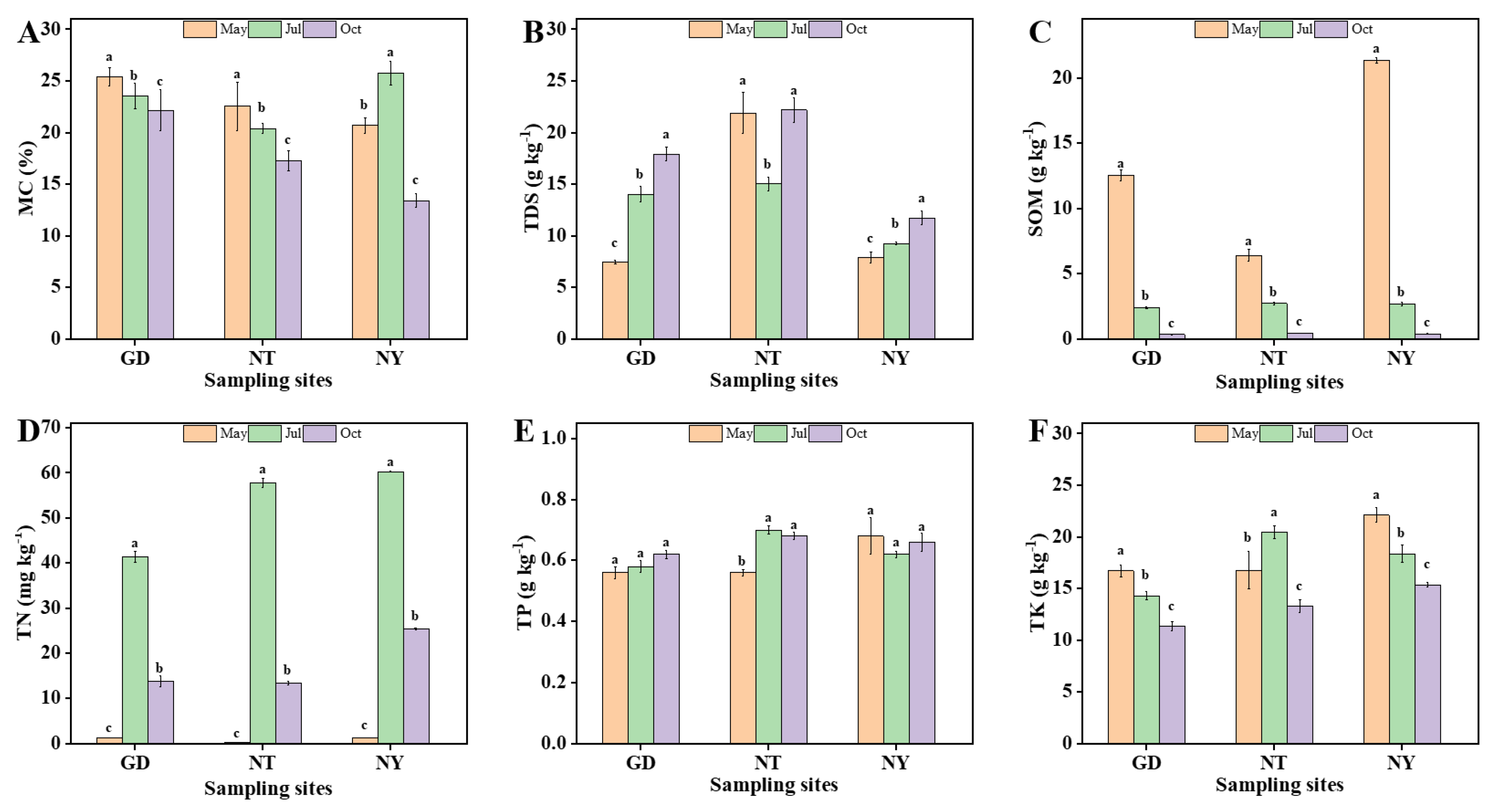
As shown in Figure 1 and Table S1, sampling zone NT showed the highest value of total dissolved salt content (TDS) in three zones. Meanwhile, the content of soil organic matter (SOM) in zone NY in May was significantly higher than those in zones GD and NT (p < 0.05). Therefore, S. glauca in zone NY could be observed with more dense distribution.
Soil physicochemical factors also exhibited obvious seasonality variations in the three sampling zones GD, NT and NY (Figure 1 and Table S1). The values of electrical conductivity (EC) and TDS in the GD and NY zones markedly enhanced from May to October, while total potassium (TK) and SOM in the GD and NY zones significantly decreased. Moreover, the contents of total nitrogen (TN) in the three zones all reached their peaks in July, while pH values (Figure S1) and moisture content (MC) recorded their minimum values in July and October, respectively.

2.1.2. Rhizosphere Fungal Diversity

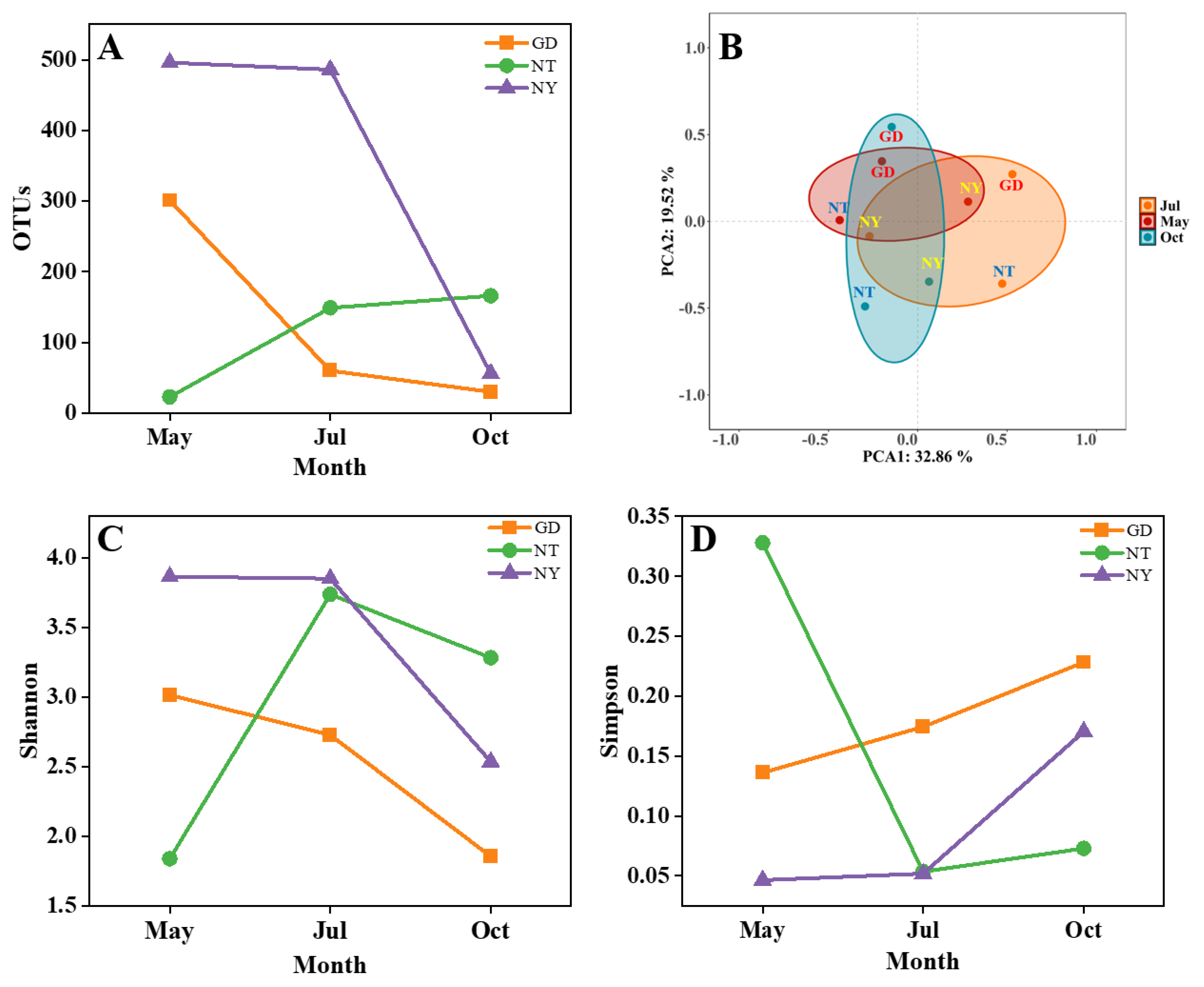
The rhizosphere fungal diversity of S. glauca in sampling zones GD, NT and NY has been evaluated using the methods of principal component analysis (PCA) and alpha-diversity analysis. As suggested in Figure 2A, zone NY showed significantly more operational taxonomic units (OTUs) than zones GD and NT in May and July. PCA results (Figure 2B) suggested that the rhizosphere fungal communities in the three sampling zones were obviously different. In addition, the seasonal transition from May (spring) to July (summer) and October (autumn) could also greatly affect rhizosphere fungal diversity.
Simpson, Shannon, Chao1 and Ace indices were further calculated to evaluate alpha-diversity of rhizosphere fungi in the three sampling zones. Analyses of Shannon (Figure 2C) and Simpson parameters (Figure 2D) indicated that the fungal diversity of zone NY was significantly higher than that of zones GD and NT in May, then very close to NT in July, and finally lower than NT in October. Moreover, zone GD showed lower fungal diversity than zones NY and NT in July and October. Chao1 and Ace indices also suggested similar results to those of the Simpson and Shannon ones (Table S2).

2.1.3. Rhizosphere Fungal Community Structure

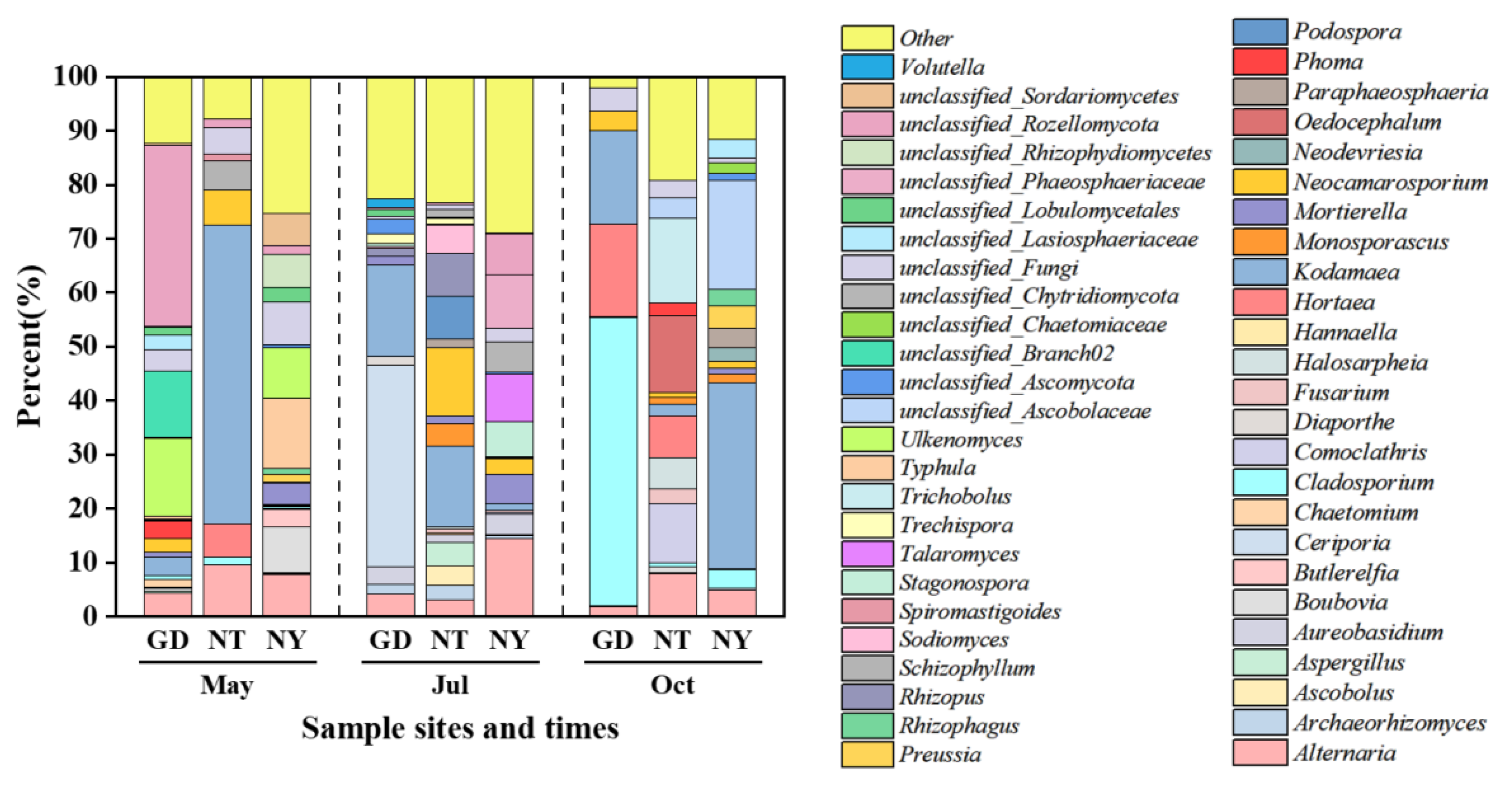
The rhizosphere fungal community structure of S. glauca in sampling zones GD, NT and NY was further analyzed at the genus level. As demonstrated in Figure 3, the fungal community structure exhibited obvious seasonal and locational variability. From the perspective of seasonal difference, the genus diversity when sampling in May (spring) was slightly higher than that in July (summer), and significantly better than that in October (Autumn). Ceriporia (12.44%), Kodamaea (11.06%) and Alternaria (7.20%) were the dominant genera in July, while Kodamaea was also the superior genus in May and October, with a relative abundance of 19.64% and 18.01%, respectively. Cladosporium was 19.16% in October, which was slightly higher than that of Kodamaea. Moreover, Alternaria was also the main genus in May and October, with the relative abundances both above 5%.
In terms of different sampling zones, the genus diversity of zone NY was higher than that of zones GD and NT. Take July as an example; except for unclassified species, genera in zone NY with a relative abundance above 5% were Alternaria (14.41%), Talaromyces (8.85%), Stagonospora (6.51%) and Mortierella (5.26%), while in zone NT, they were Kodamaea (15.02%), Neocamarosporium (12.75%), Rhizopus (7.96%) and Podospora (7.88%). For zone GD, Ceriporia and Kodamaea were two dominant genera with a total abundance above 50%.

2.1.4. Relationship Between Fungal Diversity and Soil Physicochemical Factors

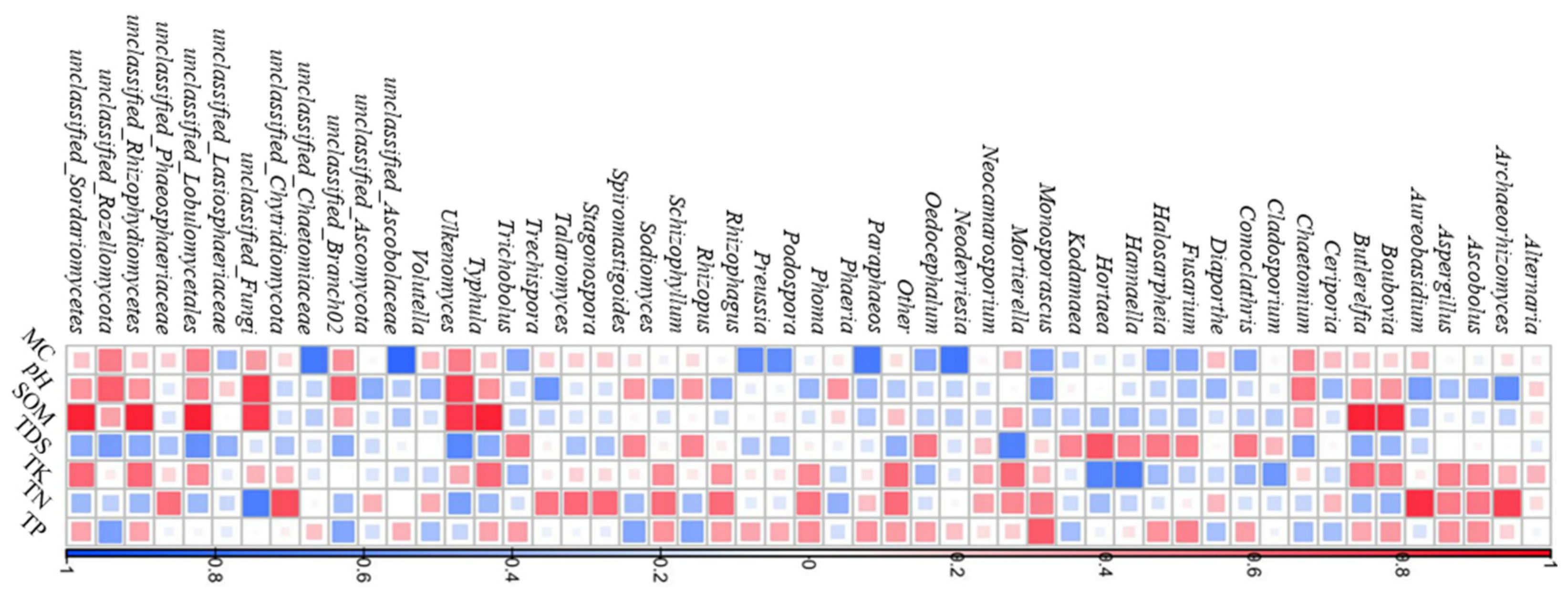
As shown in Figure 4, the impact of different soil physicochemical factors on the fungal relative abundances varied significantly. For example, the genera Archaeorhizomyces and Aureobasidium showed a greatly positive correlation with soil TN, but a significantly negative one with pH. Meanwhile, the genera Kodamaea and Alternaria were not obviously affected by soil physicochemical factors, and they therefore became the dominant ones in the three sampling zones (Figure 3).
TK and TP were representative factors which showed more positive correlations with dominant fungi at proportions of 64% and 56%, respectively, while SOM, pH and TDS exhibited more negative ones at proportions of 62%, 62% and 56%, respectively (Figure 4). This result suggested that TK and TP exerted relatively positive effects on fungal diversity in the three sampling zones, while SOM, pH and TDS exhibited negative ones. It was also found that TP was an important factor which could positively affect fungal number and biomass in the macrophyte rhizosphere [24]. Meanwhile, Refs. [25,26] reported that the content of SOM generally showed a negative correlation with fungal community structures. One possible interpretation for the negative relationship of SOM was that the interspecific competition for SOM would result in the survival of only fewer dominant highly competitive fungi, and therefore a decrease in fungal diversity [27]. On the other hand, the fungal decomposition ability of SOM increased with its community diversity, consequently resulting in SOM depletion [28].

2.2. Biodiversity of Cultivable Rhizosphere Fungi of S. glauca

2.2.1. Isolation and Identification of Cultivable Rhizosphere Fungi

A total of 55 de-duplicated fungal strains were isolated and identified from the rhizosphere soil of S. glauca in the three sampling zones (Tables S3 and S4). The fungal number and diversity when sampling in May were 31 strains distributed in 13 genera, which were higher than those in July and October (Table S3). This result is consistent with the analysis of fungal community structure in Section 2.1.3. The isolated fungal strains belonged to 20 genera, of which Aspergillus and Penicillium were dominant genera, accounting for 30.9% and 16.3%, respectively (Table S3). These results were not entirely in agreement with the fungal diversity on the basis of the high-throughput ITS sequencing, which might be related to non-cultivability or slow growth of a considerable number of fungi in the PDA medium.

2.2.2. Agricultural Antifungal and Herbicidal Potentials of Isolated Fungi

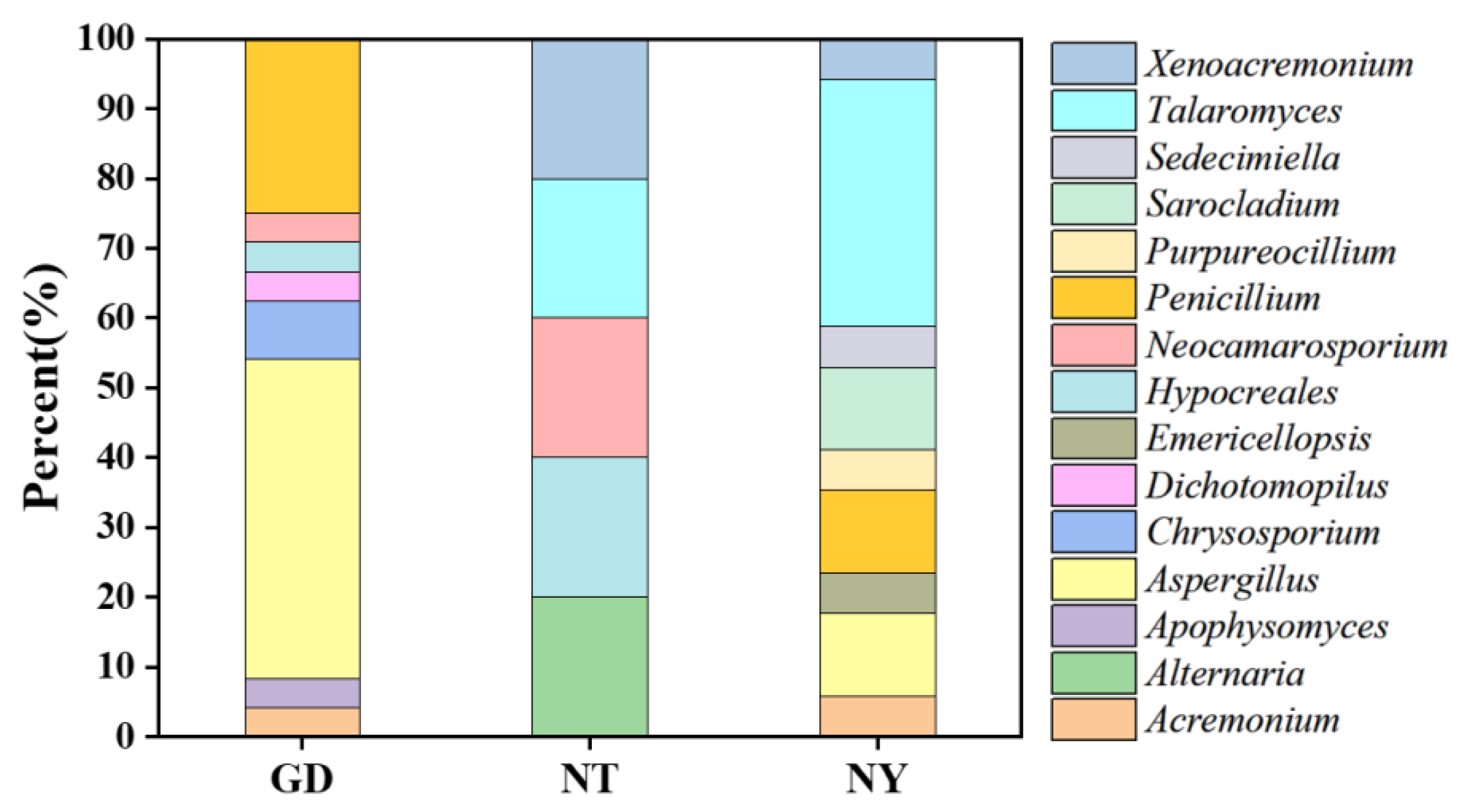
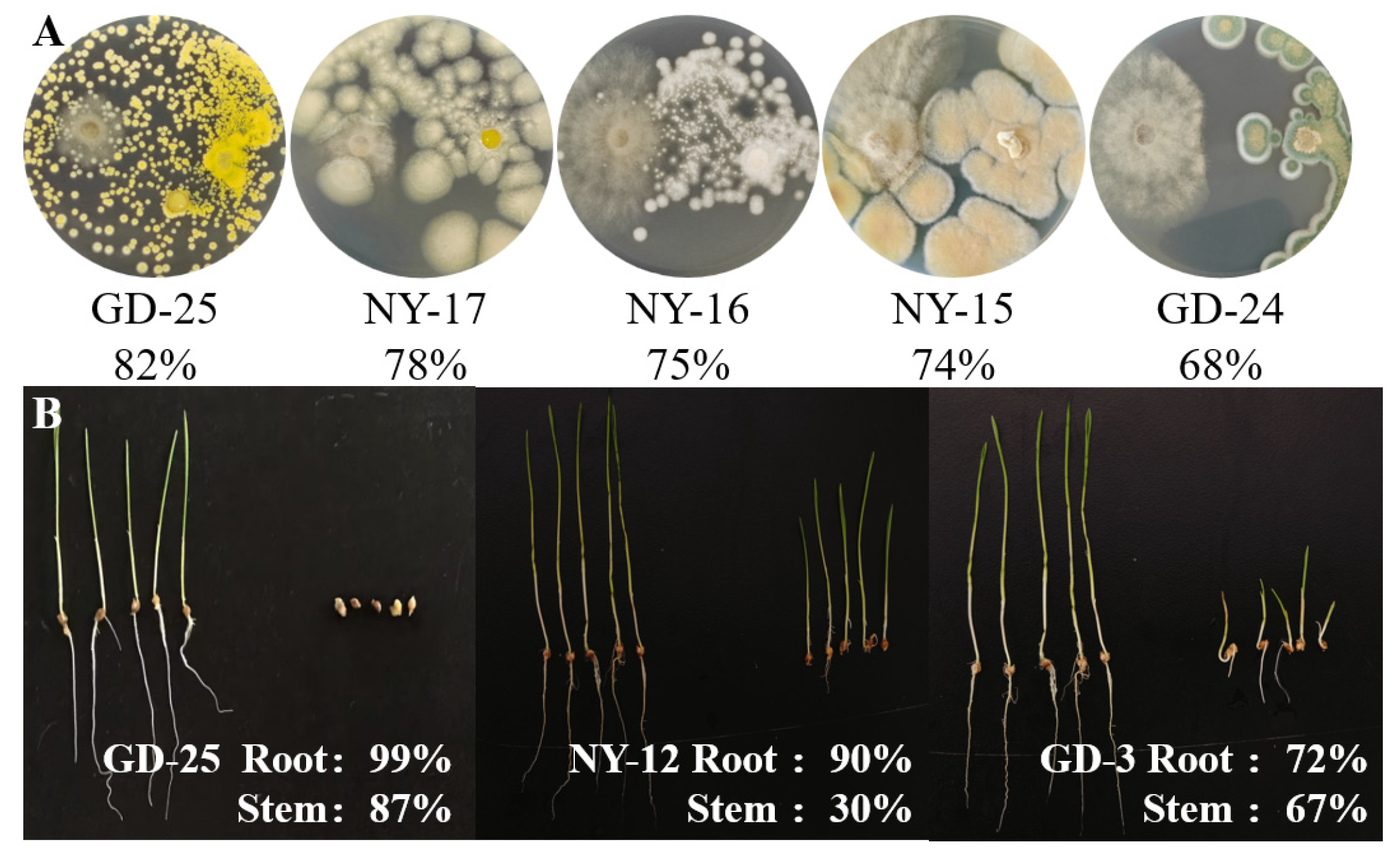
As shown in Table S4, 47 fungal strains (85.5%) showed antifungal potentials against Botrytis cinerea CJ-8 using the dual-culture method. The fungal diversity in zone GD was 25 strains distributed in nine genera, which was higher than that in NT (6 strains in five genera) and NY (17 strains in nine genera) (Table S4 and Figure 5). Strains Aspergillus and Penicillium were representative ones in zone GD, accounting for 48% and 24%, respectively. Meanwhile, in the NY region, Talaromyces was the dominant genus, accounting for 35.3%. As suggested in Table S4 and Figure 6, there were five representative antifungal strains with inhibition rates above 65%, including A. tabacinus GD-25, P. brasilianum NY-17 and NY-15, Sarocladium terricola NY-16 and P. oxalicum GD-24.
Compared to antifungal strains, only 20 fungal ones (36.4%) exhibited herbicidal potentials against seedling growth of Echinochloa crusgalli (Table S4). These strains belong to 10 genera, of which Aspergillus was the dominant one with a proportion of 35%. A. tabacinus GD-25 and A. iizukae NY-12 showed significant herbicidal effects against the root growth of E. crusgalli seedlings, with inhibition rates of 99.3% and 90.0%, respectively (Figure 6). However, other fungal strains only exhibited medium or weak herbicidal potentials against E. crusgalli (Table S4).

2.3. Bioassay-Guided Isolation of A. tabacinus GD-25

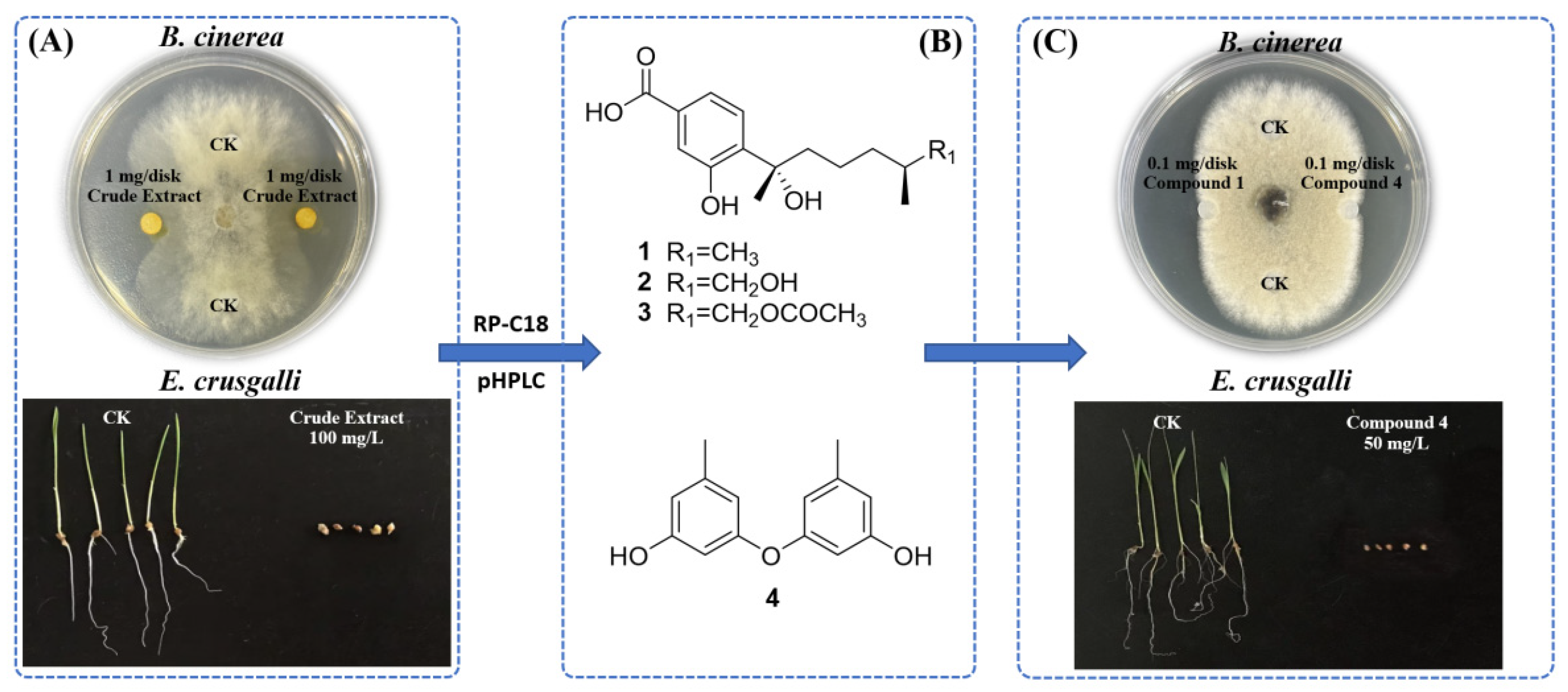
The crude extract of A. tabacinus GD-25 showed significant antifungal and herbicidal potentials against B. cinerea CJ-8 and E. crusgalli, respectively (Figure 7A). Its further bioassay-guided isolation yielded four bioactive metabolites, including three polyketides (13) and one diphenyl ether (4) (Figure 7B). Their structures were determined by detailed analyses of their 1H and 13C nuclear magnetic resonance (NMR) spectra (Figures S2–S9), as well as comparisons with previously published reports as follows: sydonic acid (1) [29], 12-hydroxy sydonic acid (2) [29], 12-acetoxysydonic acid (3) [30] and diorcinol (4) [31]. Compounds 13 were first isolated from the species of A. tabacinus.
Compounds 1 and 4 exhibited great antifungal potentials against the mycelial growth of B. cinerea CJ-8 (Figure 7C), while 2 and 3 only showed weak ones. Further antifungal quantitative evaluation using the resazurin-coloration method suggested that 1 and 4 greatly inhibited mycelial vitality of B. cinerea, with IC50 values of 75.4 and 67.4 mg/L, respectively, better than 234.3 mg/L for the commonly used fungicide boscalid. Preliminary structure–activity analysis of polyketides 13 indicated that the methyl group of R1 should be related to the antifungal potential of 1. Very recently, it had also been reported that diorcinol (4) could effectively reduce the development of rice blast, tomato late blight and pepper anthracnose [32]. The herbicidal component of A. tabacinus GD-25 was only compound 4, which could almost inhibit seedling growth of E. crusgalli at a concentration of 50 μg/mL (Figure 7C). Its EC50 value against the radicle growth of E. crusgalli seedlings was only 7.9 μg/mL. To our best knowledge, this is the first report of antifungal potential of 1 and herbicidal activity of 4.

3. Materials and Methods

3.1. Description of Sampling Sites

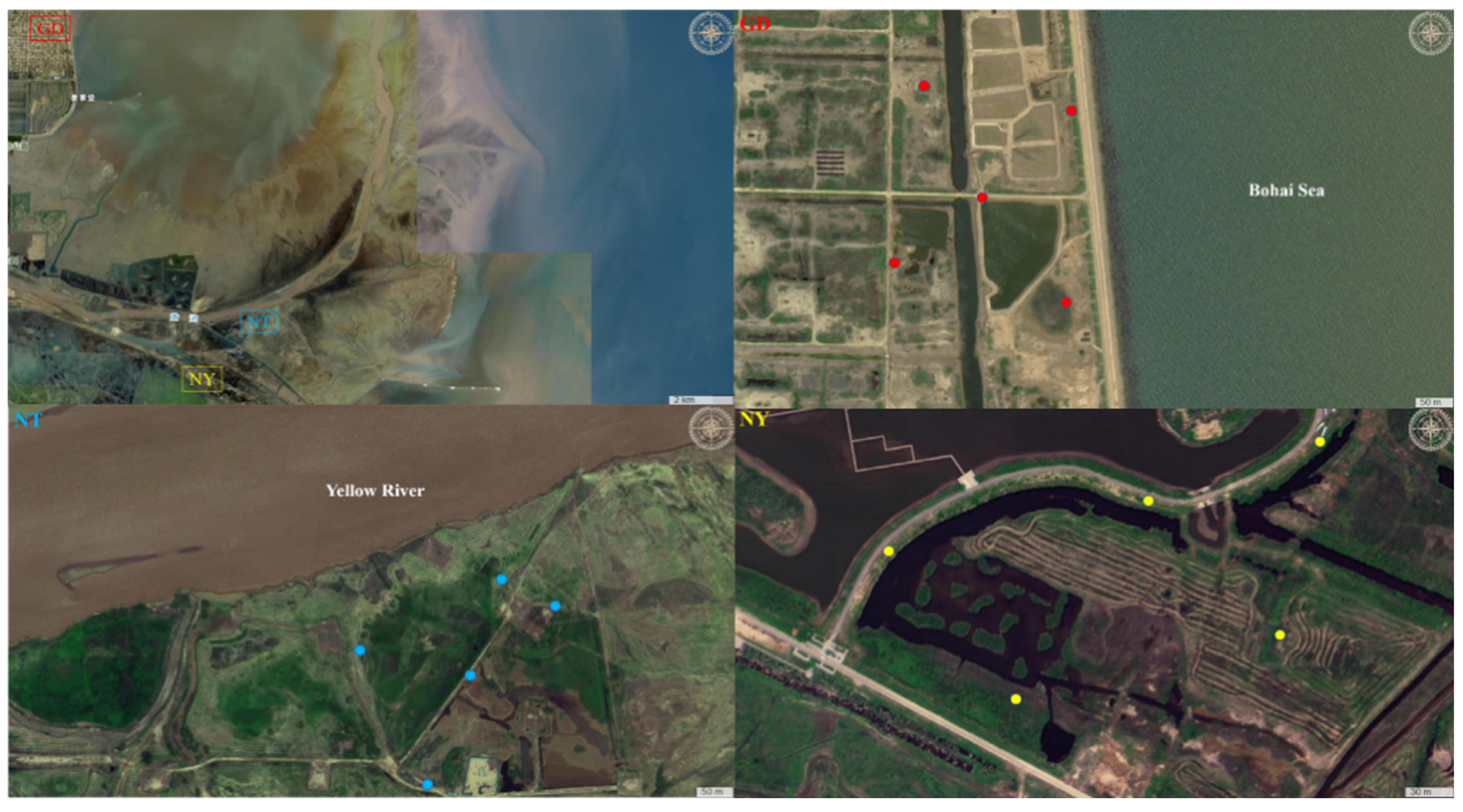
As shown in Figure 8, three representative sampling zones GD, NT and NY were chosen in the Yellow River Delta wetland. Their location information is as follows: GD zone at N37°86′ and E119°10′ near the Bohai Sea, NT at N37°76′ and E119°19′ adjacent to the Yellow River, and NY at N37°74′ and E119°16′. To avoid local deviations affecting the results, based on the principles of random sampling and uniform distribution, the five-point sampling method was used to collect rhizosphere soil of S. glauca in the three sampling zones in May, July and October 2023, respectively. The three selected months can accurately capture the responses of community diversity at the three locations to seasonal changes. The brief procedure is as follows: Five sampling points (1 m × 1 m) were set up approximately 300 m apart from each other to ensure ecological segregation. The whole plant of S. glauca was excavated with rhizosphere soil, which was then collected into a sterile sampling bag. Soils of the same sampling zones were thoroughly mixed for further analyses of physicochemical factors and the fungal community.

3.2. High-Throughput Sequencing and Analysis of Fungal Community Diversity

Soil samples were pretreated with liquid nitrogen and then sent to Sangon Biotech (Shanghai) Co., Ltd. (Shanghai, China) for high-throughput sequencing. The sequencing platform adopts Illumina NovaSeq 6000 (Beijing Biomarker Technology Co., Ltd., Beijing, China) [33]. After the data were returned, PCA, alpha-diversity (OTUs, ACE, Chao1, Simpson and Shannon) and fungal community structure analyses were conducted as previously described [34,35].

3.3. Soil Physiochemical Factors

Soil physicochemical factors were analyzed based on standard methods. Rhizosphere soil MC [36] was determined on the basis of the water loss between oven-dried soil (105 °C for 48 h) and wet soil. The pH [37] and electrical conductivity (EC) values were measured using a pH meter and an electrical conductivity meter, respectively. After determining the EC value, the total dissolved salt content (TDS) was calculated by converting the standard curve. SOM was quantified using the potassium dichromate oxidation method with external heating. TN was examined by a Kjeldahl apparatus (Kjeltec™8000, FOSS Group Co., Hillerød, Denmark). For soil TP and TK, another 0.25 g soil sample was extracted and acidified in turn using HCl, HNO3 and HF, and then analyzed by ICP (OPTMA8000DV, Inductively Coupled Plasma–optical emission spectroscopy, PerkinElmer Enterprise Management Co., Ltd., Waltham, MA, USA).

3.4. Isolation of Fungal Strains from S. glauca Rhizosphere Soil

Fungal strains from S. glauca rhizosphere soil were separated using the dilution plating technique [38]. First, 10 g of soil sample and 90 mL of sterile water were added to a 250 mL shaker flask with glass beads and fully suspended at 160 rpm for 1 h. Subsequently, serial 10-fold dilutions were performed, and 100 µL aliquots of 10−1 and 10−2 dilutions were uniformly coated on the surface of a PDA plate (containing 3% sea salt). All plates were incubated at 28 °C for 3–4 days to observe the appearance of fungal colonies, which were further purified by transferring a small amount of mycelia from the colony edge to a new PDA plate [39].

3.5. Identification of Fungal Strain

The total genomic DNA of the strain was extracted using the B518229 fungal genomic DNA rapid extraction kit. The ITS region was amplified using ITS1/ITS4 primers, and the target gene sequence was obtained by Sanger sequencing (sequencing was completed by Sangon Biotech (Shanghai) Co., Ltd.). Based on the determined ITS sequence, blast comparative analysis was conducted in NCBI to establish a phylogenetic tree for the preliminary identification of strains.

3.6. Antifungal and Herbicidal Evaluations

The antifungal activity was determined by the dual-culture method. The isolated fungi and pathogen B. cinerea (CJ-8) were symmetrically placed on both sides of the PDA plate and then cultured at 25 °C for 3–5 days. The inhibition rates were calculated as described previously [13,40].
The isolated fungi were fermented on solid rice media at 28 °C for 30 days, which were further extracted with ethyl acetate to obtain crude extracts. Their herbicidal potentials were determined using the small cup method [41]. The germinated E. crusgalli seeds were planted in agar beakers with 100 mg/L crude extracts and then cultured at 28 °C for 3–5 days. The inhibition rates of roots and stems were calculated, and the experiment was conducted in three parallel repeats.

3.7. Fermentation, Extraction and Bioassay-Guided Isolation of A. tabacinus GD-25

The fungus A. tabacinus GD-25 was statically fermented at 28 °C for 30 days on the solid rice medium, which was conducted in 10 × 1 L conical flasks containing rice (100 g/flask), peptone (0.6 g/flask) and natural seawater (100 mL/flask). The fungal culture was exhaustively extracted using ethyl acetate (EtOAc) to obtain a crude extract (12.2 g), which was fractionated via column chromatography over RP-C18 eluting with a MeOH–H2O gradient (from 1:9 to 1:0) to yield six subfractions (Fr. 5-1 to 5-6). Bioactive Fr. 5-3 was purified using semi-pHPLC (30% MeCN–H2O, 3 mL/min) to obtain compounds 1 (35.9 mg, tR = 19.3 min), 2 (6.8 mg, tR = 15.9 min), 3 (5.6 mg, tR = 17.4 min) and 4 (23.7 mg, tR = 22.8 min). The methods of disk diffusion [25,26] and resazurin coloration [40,42] were used to qualitatively and quantitatively evaluate antifungal potentials of the crude extract and its isolated fractions and compounds, respectively, while their herbicidal activities against E. crusgalli were determined using the same method as described in 3.6.

4. Conclusions

The present study analyzed the community structure of rhizosphere fungi from S. glauca in the Yellow River Delta and further evaluated their agricultural antifungal and herbicidal potentials. The main findings included the following: (1) The community structure of rhizosphere fungi significantly varied with seasonal turnover and soil physicochemical factors. The fungal diversity at the genus level when sampling in May was better than that in July and October. Some factors, including TK, TP, SOM, pH and TDS, were important for the mediation of fungal community composition. (2) The cultivable rhizosphere fungi from S. glauca belonged to 20 genera, of which Aspergillus and Penicillium were dominant genera, accounting for 30.9% and 16.3%, respectively. (3) Of a total of 55 cultivable fungal strains, 47 strains showed antifungal potentials and 20 strains showed herbicidal ones. (4) The metabolites sydonic acid (1) and diorcinol (4) from A. tabacinus GD-25 showed significant antifungal and herbicidal potentials. These findings undoubtedly provide the insight that rhizosphere fungi of S. glauca possess distinct microbial diversity and communities, which are a rich reservoir of microorganisms with potential agricultural antifungal and herbicidal properties.

Supplementary Materials

The following supporting information can be downloaded at https://www.mdpi.com/article/10.3390/md23120460/s1. Figure S1: Rhizosphere soil pH values of S. glauca in sampling zones GD, NT and NY of the Yellow River Delta; Figure S2: 1H NMR (500 MHz, CD3OD) spectrum of compound 1; Figure S3: 13C NMR (125 MHz, CD3OD) spectrum of compound 1; Figure S4: 1H NMR (500 MHz, CD3OD) spectrum of compound 2; Figure S5: 13C NMR (125 MHz, CD3OD) spectrum of compound 2; Figure S6: 1H NMR (500 MHz, CD3OD) spectrum of compound 3; Figure S7: 13C NMR (125 MHz, CD3OD) spectrum of compound 3; Figure S8: 1H NMR (500 MHz, CD3OD) spectrum of compound 4; Figure S9: 13C NMR (125 MHz, CD3OD) spectrum of compound 4; Table S1: Soil physicochemical factors of three sampling zones; Table S2: Alpha-diversity indices of three sampling zones; Table S3: Isolation of cultivable rhizosphere fungi from the three sampling zones and their classifications at the genus level; Table S4: Identification of cultivable rhizosphere fungi from three sampling zones and their antifungal and herbicidal potentials.

Author Contributions

T.-L.Q. and H.L. contributed equally to this work. Methodology, T.-L.Q., H.L., D.-F.C., M.-Y.L. and C.Z.; validation, H.L. and D.-F.C.; formal analysis, T.-L.Q., H.L. and D.-F.C.; resources, L.-Y.Z. and B.-H.Z.; writing—original draft preparation, T.-L.Q. and D.-F.C.; writing—review and editing, L.X. and F.-Y.D.; supervision, F.-Y.D.; funding acquisition, L.X. and F.-Y.D. All authors have read and agreed to the published version of the manuscript.

Funding

This research was funded by the Natural Science Foundation of China (No. 32170404) and Natural Science Foundation of Shandong Province (No. ZR2024MC129, ZR2022MC169 and ZR2021MC108).

Institutional Review Board Statement

Not applicable.

Informed Consent Statement

Not applicable.

Data Availability Statement

The research data are available in the supporting information.

Conflicts of Interest

The authors declare no conflicts of interest.

References

  1. Cao, X.T.; Cui, Q.H.; Li, D.Q.; Liu, Y.; Liu, K.; Li, Z.Q. Characteristics of soil microbial community structure in different land use types of the Huanghe alluvial plain. Microorganisms 2025, 13, 273. [Google Scholar] [CrossRef]
  2. Wang, Z.; Liu, K. Effect of intertidal vegetation (Suaeda salsa) restoration on microbial diversity in the offshore areas of the Yellow River Delta. Plants 2024, 13, 213. [Google Scholar] [CrossRef]
  3. Shang, S.; Hu, S.X.; Liu, X.X.; Zang, Y.; Chen, J.; Gao, N.; Li, L.Y.; Wang, J.; Liu, L.X.; Xu, J.K.; et al. Effects of Spartina alterniflora invasion on the community structure and diversity of wetland soil bacteria in the Yellow River Delta. Ecol. Evol. 2022, 12, e8905. [Google Scholar] [CrossRef]
  4. Li, Y.; Wang, J.; Li, E.; Yang, X.; Yang, J. Shifts in microbial community structure and co-occurrence network along a wide soil salinity gradient. Microorganisms 2024, 12, 1268. [Google Scholar] [CrossRef]
  5. Yang, C.; Lv, D.T.; Jiang, S.Y.; Lin, H.; Sun, J.Q.; Li, K.J.; Sun, J. Soil salinity regulation of soil microbial carbon metabolic function in the Yellow River Delta, China. Sci. Total Environ. 2021, 790, 148258. [Google Scholar] [CrossRef] [PubMed]
  6. Pan, X.Y.; Chen, Y.; Cui, J.H.; Peng, Z.P.; Fu, X.; Wang, Y.; Men, M.X. Accuracy analysis of remote sensing index enhancement for SVM salt inversion model. Geocarto Int. 2022, 37, 2406–2423. [Google Scholar] [CrossRef]
  7. Li, C.Y.; He, R.; Tian, C.Y.; Song, J. Utilization of halophytes in saline agriculture and restoration of contaminated salinized soils from genes to ecosystem: Suaeda salsa as an example. Mar. Pollut. Bull. 2023, 197, 115728. [Google Scholar] [CrossRef] [PubMed]
  8. Duan, Q.; Zhu, Z.; Wang, B.; Chen, M. Recent progress on the salt tolerance mechanisms and application of tamarisk. Int. J. Mol. Sci. 2022, 23, 3325. [Google Scholar] [CrossRef] [PubMed]
  9. Fan, C.X. Genetic mechanisms of salt stress responses in halophytes. Plant Signal. Behav. 2019, 15, 1704528. [Google Scholar] [CrossRef]
  10. Wang, Y.D.; Sun, Q.H.; Liu, J.A.; Wang, L.; Wu, X.; Zhao, Z.; Wang, N.; Gao, Z. Suaeda salsa root-associated microorganisms could effectively improve maize growth and resistance under salt stress. Microbiol. Spectr. 2022, 10, e0134922. [Google Scholar] [CrossRef]
  11. Kong, L.; Gong, X.W.; Zhang, X.L.; Zhang, W.Z.; Sun, J.; Chen, B.L. Effects of arbuscular mycorrhizal fungi on photosynthesis, ion balance of tomato plants under saline-alkali soil condition. J. Plant Nutr. 2019, 43, 682–698. [Google Scholar] [CrossRef]
  12. Peng, M.; Jiang, Z.H.; Xiang, Z.W.; Zhou, A.F.; Wang, C.; Wang, Z.Y.; Zhou, F.Z. Genomic features of a plant growth-promoting endophytic Enterobacter cancerogenus JY65 dominant in microbiota of halophyte Suaeda salsa. Plant Soil 2023, 496, 269–287. [Google Scholar] [CrossRef]
  13. Xiao, L.; Niu, H.J.; Qu, T.L.; Zhang, X.F.; Du, F.Y. Streptomyces sp. FX13 inhibits fungicide-resistant Botrytis cinerea in vitro and in vivo by producing oligomycin A. Pestic. Biochem. Phys. 2021, 175, 104834. [Google Scholar] [CrossRef]
  14. Wang, Z.F.; Zhang, W.; Xiao, L.; Zhou, Y.M.; Du, F.Y. Characterization and bioactive potentials of secondary metabolites from Fusarium chlamydosporum. Nat. Prod. Res. 2020, 34, 889–892. [Google Scholar] [CrossRef]
  15. Wang, Z.F.; Sun, Z.C.; Xiao, L.; Zhou, Y.M.; Du, F.Y. Herbicidal polyketides and diketopiperazine derivatives from Penicillium viridicatum. J. Agric. Food Chem. 2019, 67, 14102–14109. [Google Scholar] [CrossRef] [PubMed]
  16. Akhter, N.; Pan, C.; Liu, Y.; Shi, Y.T.; Wu, B. Isolation and structure determination of a new indene derivative from endophytic fungus Aspergillus flavipes Y-62. Nat. Prod. Res. 2019, 33, 2939–2944. [Google Scholar] [CrossRef] [PubMed]
  17. Niu, X.G.; Song, L.C.; Han, M.; Xiao, Y.N. Diversity of endophytic fungi of Suaeda heteroptera Kitag. Microbiol. China 2012, 39, 1388–1395. [Google Scholar]
  18. Zhao, S.Q.; Li, J.; Liu, J.P.; Xiao, S.Y.J.; Yang, S.M.; Mei, J.H.; Ren, M.Y.; Wu, S.Z.; Zhang, H.Y.; Yang, X.L. Secondary metabolites of Alternaria: A comprehensive review of chemical diversity and pharmacological properties. Front. Microbiol. 2023, 13, 1085666. [Google Scholar] [CrossRef]
  19. Deshmukh, S.K.; Dufosse, L.; Chhipa, H.; Saxena, S.; Mahajan, G.B.; Gupta, M.K. Fungal endophytes: A potential source of antibacterial compounds. J. Fungi 2022, 8, 164. [Google Scholar] [CrossRef] [PubMed]
  20. Kong, K.; Huang, Z.D.; Shi, S.P.; Pan, W.D.; Zhang, Y.L. Diversity, antibacterial and phytotoxic activities of culturable endophytic fungi from Pinellia pedatisecta and Pinellia ternate. BMC Microbiol. 2023, 23, 30. [Google Scholar] [CrossRef]
  21. Zhao, S.S.; Wang, B.; Tian, K.L.; Ji, W.X.; Zhang, T.Y.; Ping, C.; Yan, W.; Ye, Y.H. Novel metabolites from the Cercis chinensis derived endophytic fungus Alternaria alternata ZHJG5 and their antibacterial activities. Pest Manag. Sci. 2021, 77, 2264–2271. [Google Scholar] [CrossRef]
  22. Du, F.Y.; Ju, G.L.; Xiao, L.; Zhou, Y.M.; Wu, X. Sesquiterpenes and cyclodepsipeptides from marine-derived fungus Trichoderma longibrachiatum and their antagonistic activities against soil-borne pathogens. Mar. Drugs 2020, 18, 165. [Google Scholar] [CrossRef]
  23. Zhou, Y.M.; Ju, G.L.; Xiao, L.; Zhang, X.F.; Du, F.Y. Cyclodepsipeptides and sesquiterpenes from marine-derived fungus Trichothecium roseum and their biological functions. Mar. Drugs 2018, 16, 519. [Google Scholar] [CrossRef]
  24. He, J.Z.; Zheng, Y.; Chen, C.R.; He, Y.Q.; Zhang, L.M. Microbial composition and diversity of an upland red soil under long-term fertilization treatments as revealed by culture-dependent and culture-independent approaches. J. Soils Sediments 2008, 8, 349–358. [Google Scholar] [CrossRef]
  25. Liang, Y.M.; He, X.Y.; Chen, C.Y.; Feng, S.Z.; Liu, L.; Chen, X.B.; Zhao, Z.W.; Su, Y.R. Influence of plant communities and soil properties during natural vegetation restoration on arbuscular mycorrhizal fungal communities in a karst region. Ecol. Eng. 2015, 82, 57–65. [Google Scholar] [CrossRef]
  26. Jiang, S.; Hu, X.; Kang, Y.; Xie, C.; Shen, Q. Arbuscular mycorrhizal fungal communities in the rhizospheric soil of litchi and mango orchards as affected by geographic distance, soil properties and manure input. Appl. Soil Ecol. 2020, 152, 103593. [Google Scholar] [CrossRef]
  27. Schipper, L.A.; Degens, B.P.; Sparling, G.P.; Duncan, L.C. Changes in microbial heterotrophic diversity along five plant successional sequences. Soil Biol. Biochem. 2001, 33, 2093–2103. [Google Scholar] [CrossRef]
  28. Setälä, H.; Mclean, M.A. Decomposition rate of organic substrates in relation to the species diversity of soil saprophytic fungi. Oecologia 2004, 139, 98–107. [Google Scholar] [CrossRef]
  29. Lu, P.Y.; Jia, J.; Bi, H.K.; Liang, J.Y.; Liu, L. Research on secondary metabolites and their activities from a marine fungus Aspergillus sp. WJP1. Chin. J. Mar. Drugs 2022, 41, 13–20. [Google Scholar]
  30. Lu, Z.Y.; Zhu, H.J.; Fu, P.; Wang, Y.; Zhang, Z.H.; Lin, H.P.; Liu, P.P.; Zhuang, Y.B.; Hong, K.; Zhu, W.M. Cytotoxic polyphenols from the marine-derived fungus Penicillium expansum. J. Nat. Prod. 2010, 73, 911–914. [Google Scholar] [CrossRef]
  31. Huang, Y.F.; Li, X.X.; Chen, G.D.; Gao, H.; Guo, L.D.; Yao, X.S. A new diphenyl ether from an endolichenic fungal strain, Aspergillus sp. Mycosystema 2012, 31, 769–774. [Google Scholar]
  32. Nguyen, M.V.; Han, J.W.; Kim, H.; Choi, G.J. Phenyl ethers from the marine-derived fungus Aspergillus tabacinus and their antimicrobial activity against plant pathogenic fungi and bacteria. ACS Omega 2022, 7, 33273–33279. [Google Scholar] [CrossRef]
  33. Zhang, Y.M.; Wang, H.; Zhang, X.H.; Feng, Z.Q.; Liu, J.H.; Wang, Y.; Shang, S.; Xu, J.K.; Liu, T.; Liu, L.X. Effects of salt stress on the rhizosphere soil microbial communities of Suaeda salsa (L.) Pall. in the Yellow River Delta. Ecol. Evol. 2024, 14, e70315. [Google Scholar] [CrossRef] [PubMed]
  34. Xu, D.L.; Yu, X.W.; Zhang, Y.S.; Liu, Y.R.; Chen, C.M.; Li, L.; Fan, S.M.; Lu, X.R.; Zhang, X.J. Effect of compost as a soil amendment on the structure and function of fungal diversity in saline–alkali soil. Curr. Res. Microb. Sci. 2025, 9, 100405. [Google Scholar] [CrossRef] [PubMed]
  35. Xu, D.L.; Yu, X.W.; Yang, J.B.; Zhao, X.P.; Bao, Y.Y. High-Throughput sequencing reveals the diversity and community structure in rhizosphere soils of three endangered plants in Western Ordos, China. Curr. Microbiol. 2020, 77, 2713–2723. [Google Scholar] [CrossRef] [PubMed]
  36. Li, C.; Shao, W.; Dong, Q.; Ji, L.; Li, Q.; Zhang, A.; Chen, C.; Yao, W. The effects of acid-modified biochar and biomass power plant ash on the physiochemical properties and bacterial community structure of sandy alkaline soils in the ancient region of the Yellow River. Sustainability 2024, 16, 8909. [Google Scholar] [CrossRef]
  37. Huo, X.K.; Zhou, Y.M.; Zhu, N.; Guo, X.P.; Luo, W.; Zhuang, Y.; Leng, F.F.; Wang, Y.G. Soil organic matter and total nitrogen reshaped root-associated bacteria community and synergistic change the stress resistance of Codonopsis pilosula. Mol. Biotechnol. 2025, 67, 2545–2561. [Google Scholar] [CrossRef]
  38. Lin, X.G. Principles and Methods of Soil Microbiology Research, 2nd ed.; Higher Education Press: Beijing, China, 2024. [Google Scholar]
  39. Shen, N.X.; Liang, Z.Y.; Liu, Q.; Tu, C.D.; Dong, K.M.; Wang, C.Y.; Chen, M. Antifungal secondary metabolites isolated from mangrove rhizosphere soil-derived Penicillium fungi. Chin. J. Mar. Drugs 2020, 19, 717–721. [Google Scholar] [CrossRef]
  40. Xiao, L.; Wang, J.T.; Cao, D.F.; Li, H.; Fang, H.Y.; Qu, T.L.; Zhang, B.H.; Li, S.S.; Du, F.Y. Biocontrol potential and antifungal mechanism of a novel Bacillus velezensis NH-13-5 against Botrytis cinerea causing postharvest gray mold in table grapes. Postharvest Biol. Technol. 2025, 229, 113710. [Google Scholar] [CrossRef]
  41. Huo, J.; Zhao, B.; Zhang, Z.; Xing, J.; Zhang, J.; Dong, J.; Fan, Z. Structure-Based Discovery and synthesis of potential transketolase inhibitors. Molecules 2018, 23, 2116. [Google Scholar] [CrossRef]
  42. Chadha, S.; Kale, S.P. Simple fluorescence-based high throughput cell viability assay for filamentous fungi. Lett. Appl. Microbiol. 2015, 61, 238–244. [Google Scholar] [CrossRef] [PubMed]
Figure 1. Rhizosphere soil physicochemical factors of S. glauca in sampling zones GD, NT and NY of the Yellow River Delta. (A) Moisture content (MC), (B) total dissolved salt content (TDS), (C) soil organic matter (SOM), (D) total nitrogen (TN), (E) total phosphorus (TP) and (F) total potassium (TK). Vertical bars indicate standard errors of the means with three repeated experiments. Columns with different letters indicate significant differences according to Duncan’s multiple range test (p < 0.05).
Marinedrugs 23 00460 g001
Figure 2. Rhizosphere fungal diversity of S. glauca in sampling zones GD, NT and NY of the Yellow River Delta. (A) OTUs, (B) PCA, (C) Shannon diversity index and (D) Simpson diversity index.
Marinedrugs 23 00460 g002
Figure 3. Rhizosphere fungal community structure (genera with relative abundance ranking in top 30) of S. glauca in sampling zones GD, NT and NY of the Yellow River Delta.
Marinedrugs 23 00460 g003
Figure 4. Relationship between dominant genera of rhizosphere fungi and soil physicochemical factors (red suggests a positive correlation, while blue indicates a negative one).
Marinedrugs 23 00460 g004
Figure 5. Classifications at the genus level of antifungal rhizosphere fungi from sampling zones GD, NT and NY.
Marinedrugs 23 00460 g005
Figure 6. Antifungal and herbicidal potentials of representative fungal strains. (A) Antifungal activities against B. cinerea using the dual-culture method. (B) Herbicidal effects against E. crusgalli using the small cup method.
Marinedrugs 23 00460 g006
Figure 7. Bioassay-guided isolation of A. tabacinus GD-25. (A) Antifungal and herbicidal activities of the crude extract of A. tabacinus GD-25 against B. cinerea CJ-8 and E. crusgalli, respectively. (B) Structures of bioactive compounds 14. (C) Antifungal potentials of compounds 1 and 4 against B. cinerea CJ-8 and herbicidal activity of 4 against E. crusgalli.
Marinedrugs 23 00460 g007
Figure 8. Aerial views of the three sampling zones in the Yellow River Delta wetland (GD, red; NT, blue; NY, yellow). (GD) The intertidal zone near the Bohai Sea, (NT) the transition zone near the Yellow River and (NY) the inland zone. Maps source: National Geographic Information Public Service Platform (https://www.tianditu.gov.cn/, China), Access date: February 25, 2025.
Marinedrugs 23 00460 g008
Disclaimer/Publisher’s Note: The statements, opinions and data contained in all publications are solely those of the individual author(s) and contributor(s) and not of MDPI and/or the editor(s). MDPI and/or the editor(s) disclaim responsibility for any injury to people or property resulting from any ideas, methods, instructions or products referred to in the content.