Effects of Exercise-Based Interventions on Depressive Symptoms in Adults with Lung Cancer: A Systematic Review and Meta-Analysis of Randomized Controlled Trials



Abstract
1. Introduction
2. Materials and Methods
2.1. Registration
2.2. Eligibility Criteria
2.3. Search Strategy
2.4. Study Selection
2.5. Data Extraction
2.6. Outcome Definition
2.7. Risk of Bias and Certainty of Evidence
2.8. Statistical Analysis
3. Results
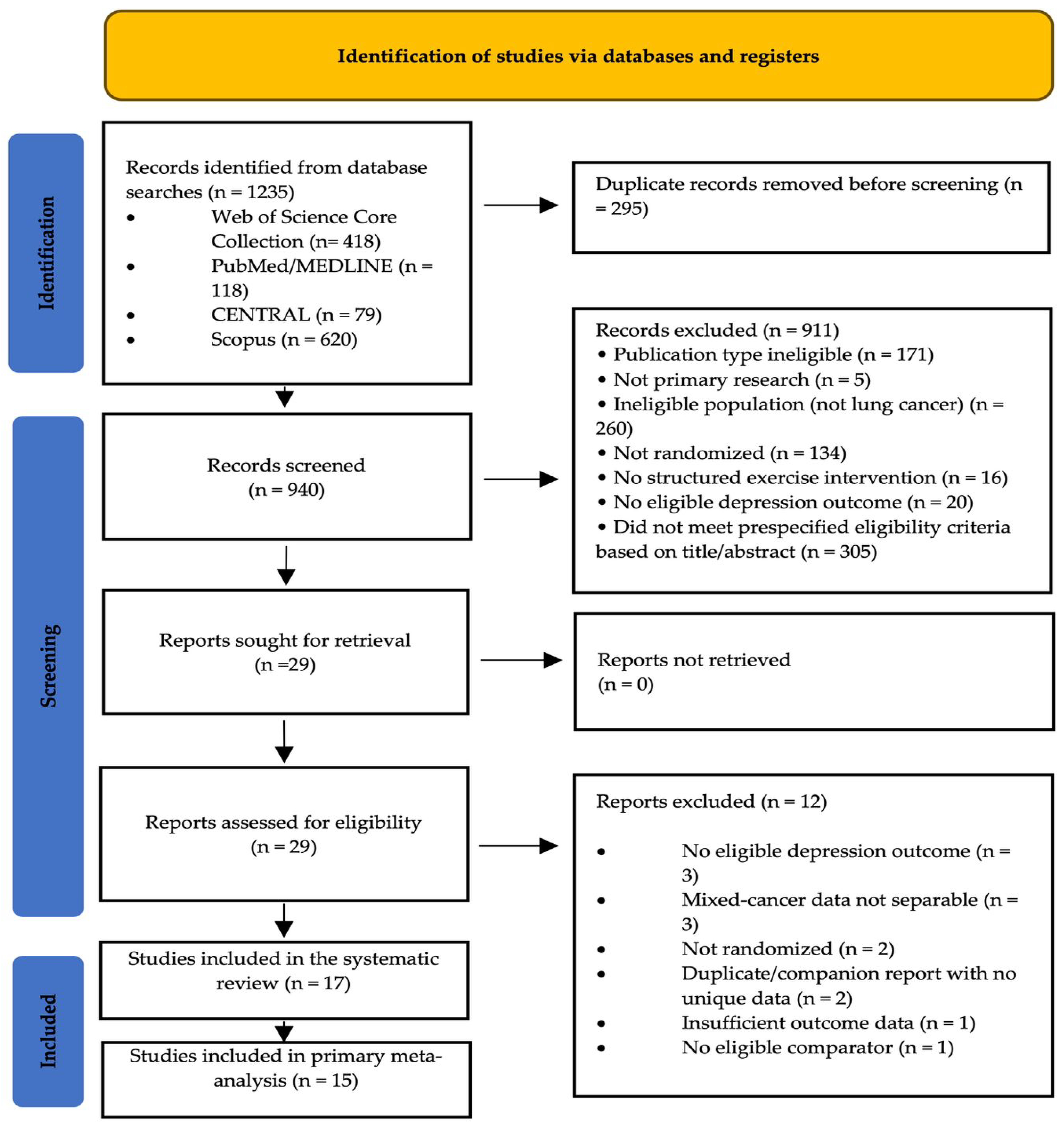
3.1. Study Selection Results
3.2. Study Characteristics
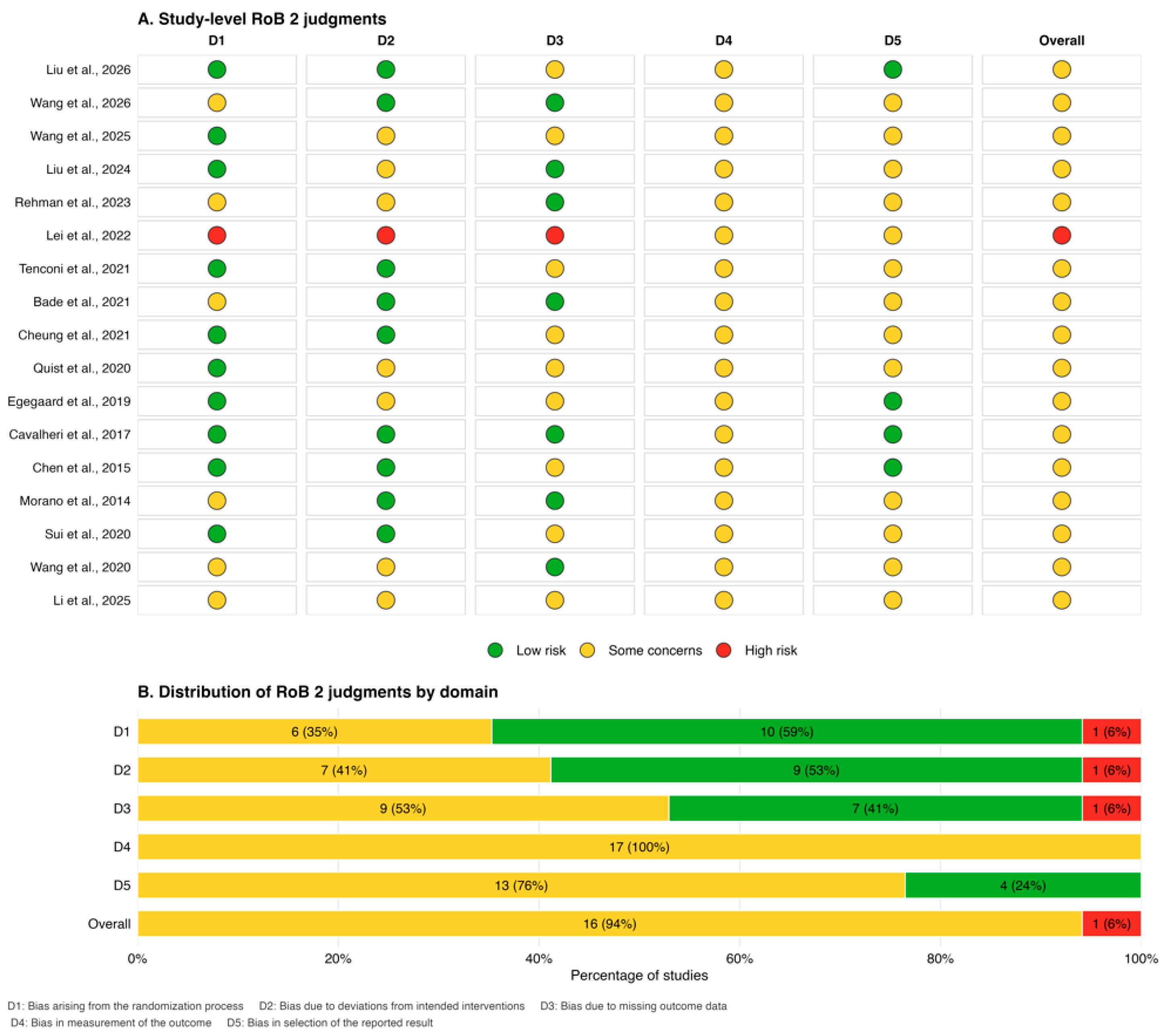
3.3. Risk of Bias
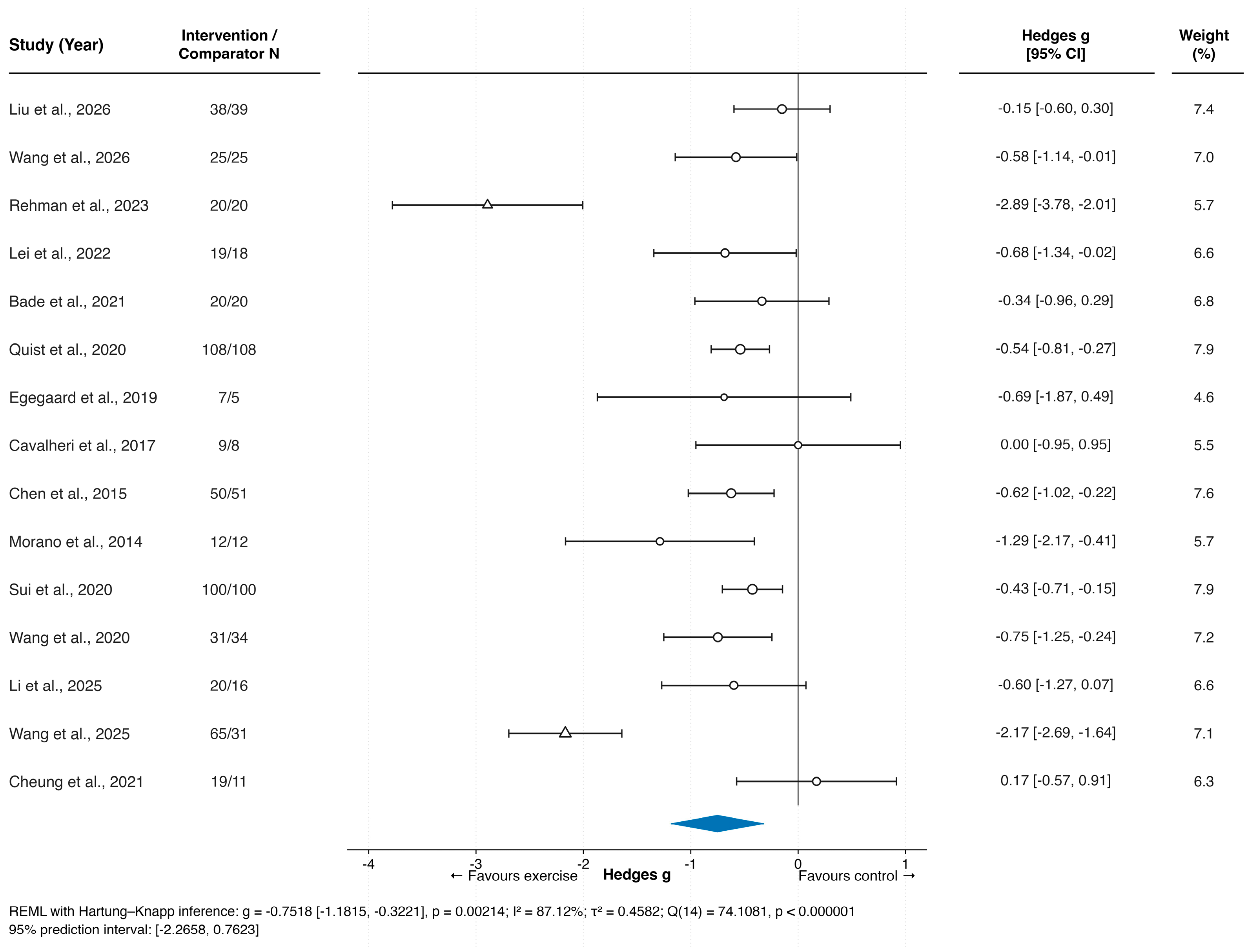
3.4. Primary Meta-Analysis
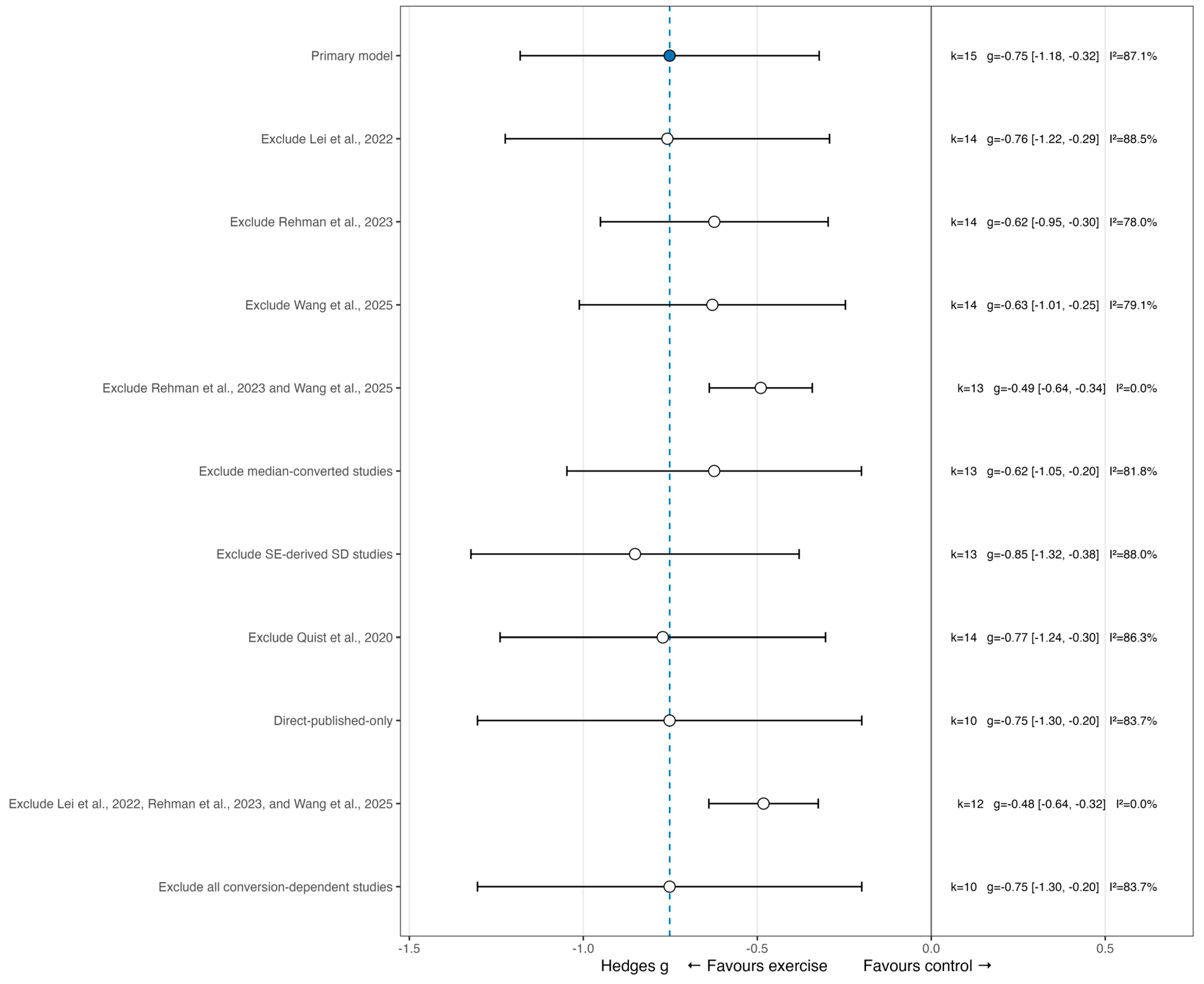
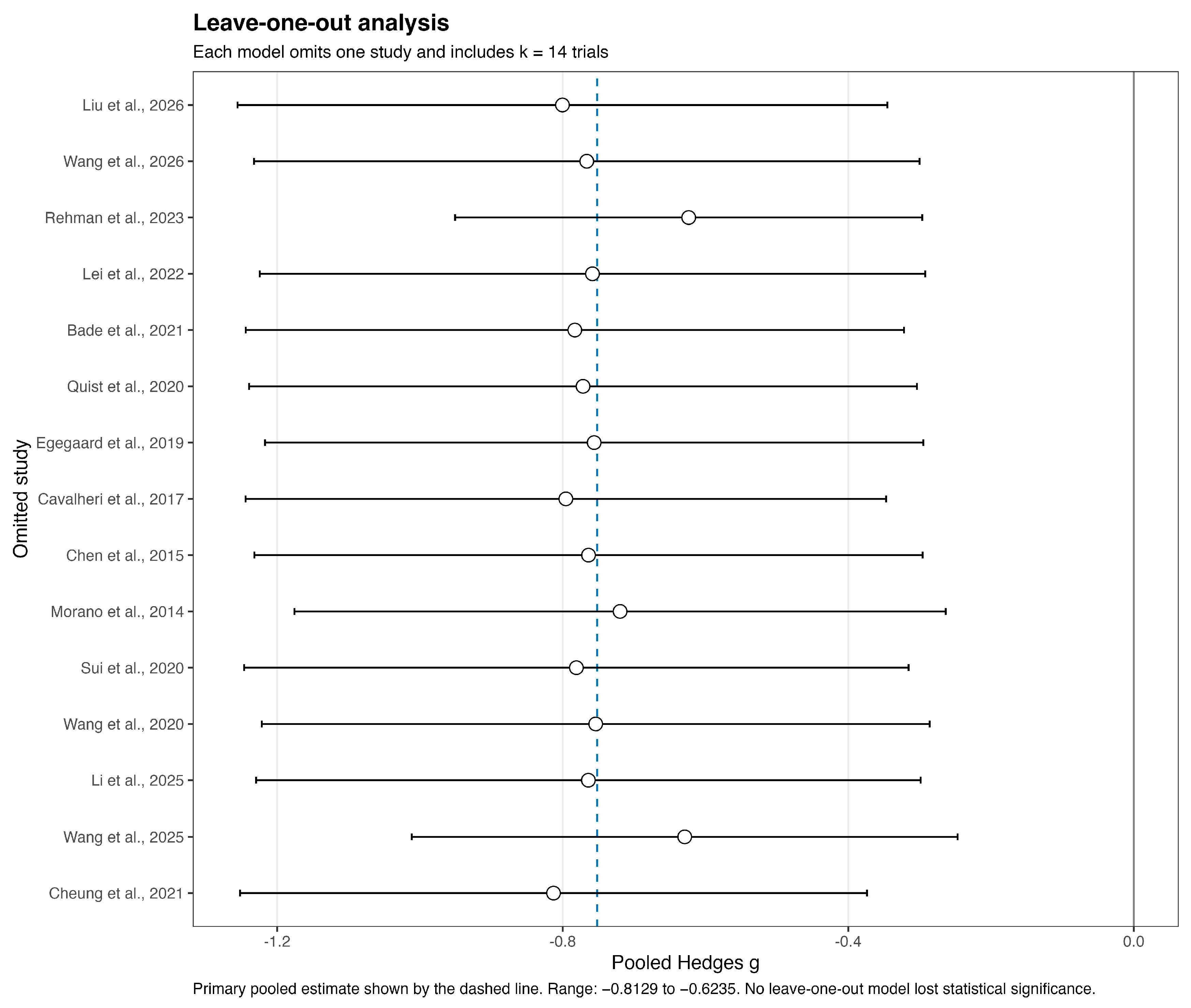
3.5. Sensitivity Analyses
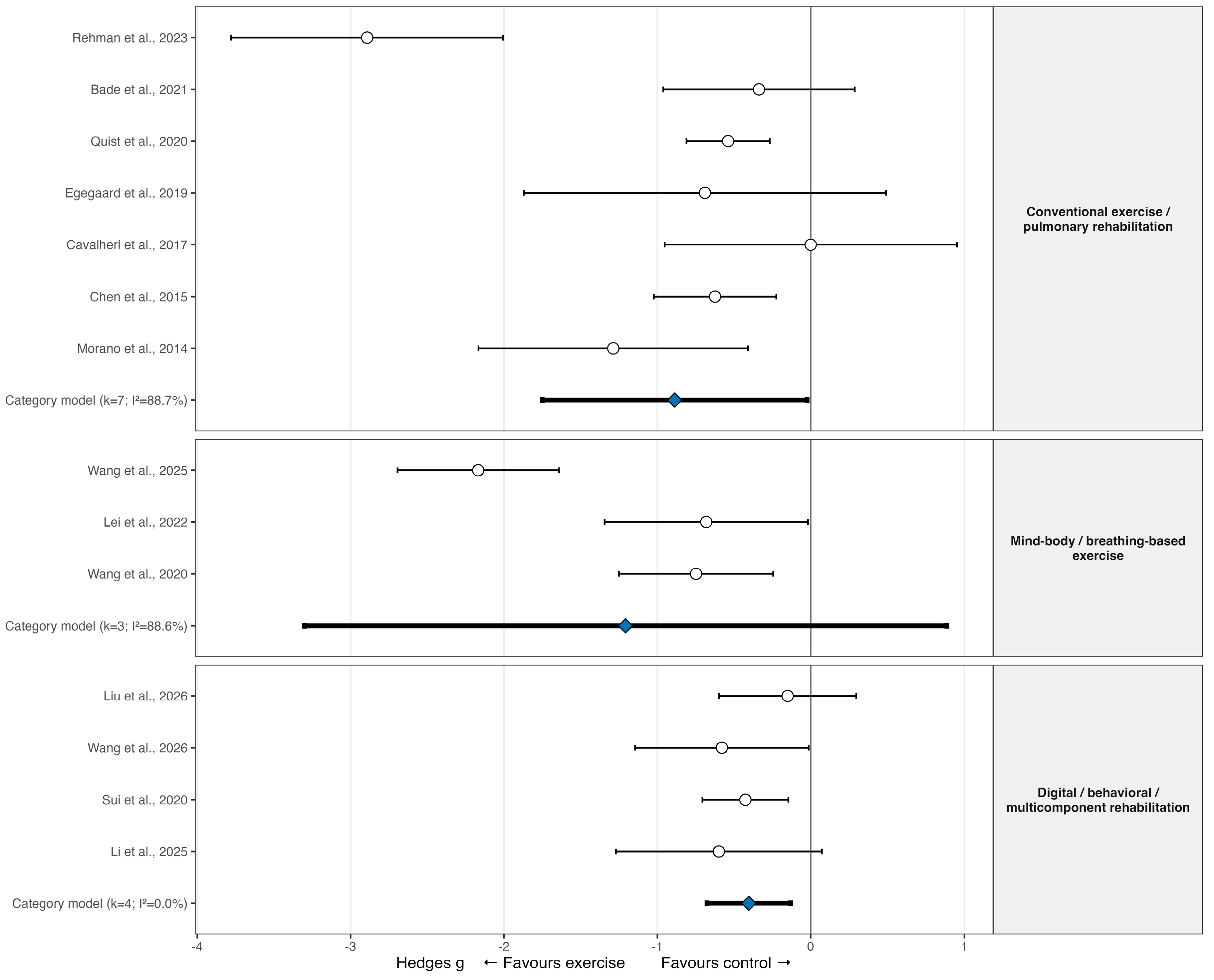
3.6. Exercise Subgroup Analysis
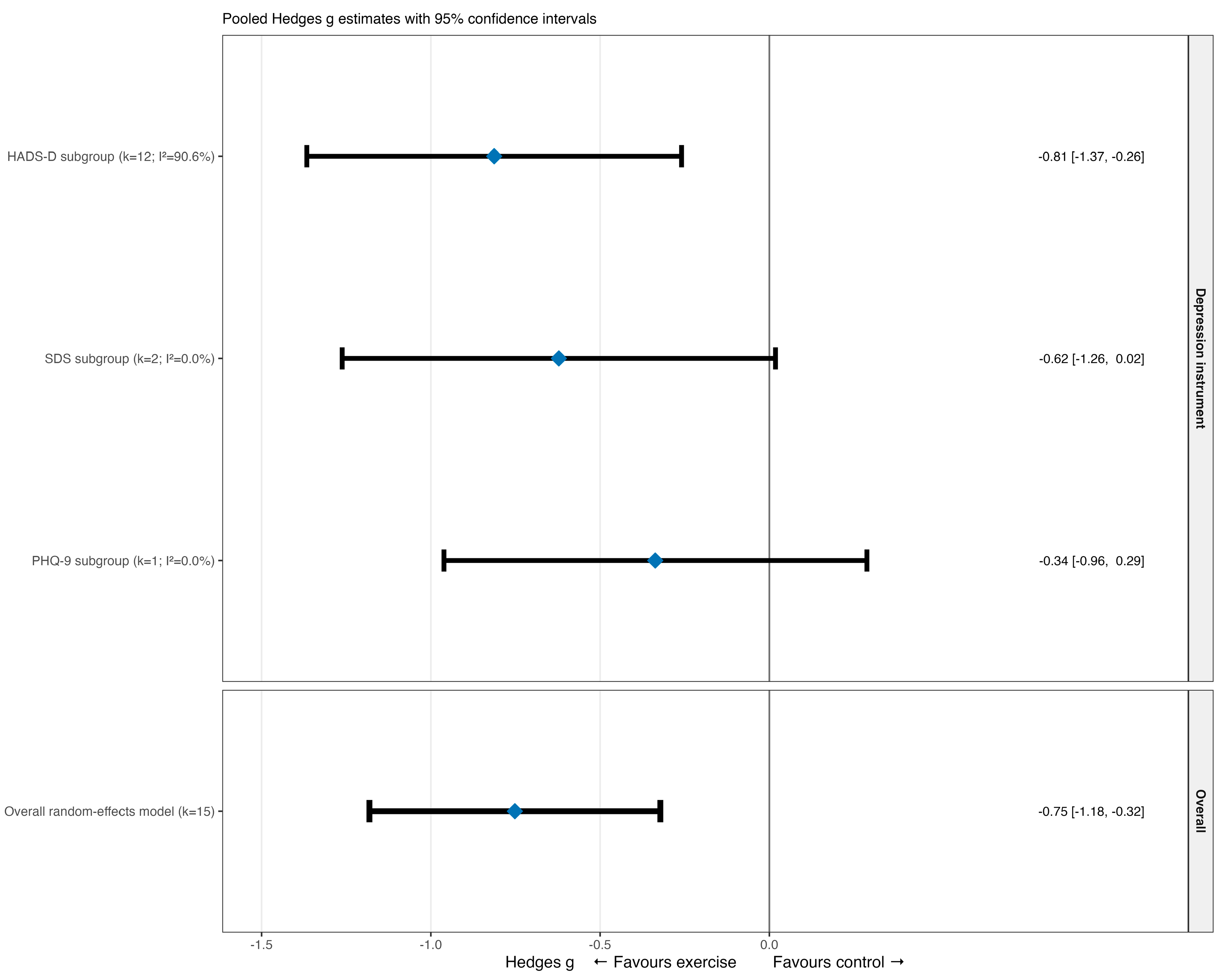
3.7. Depression-Instrument Subgroup Analysis
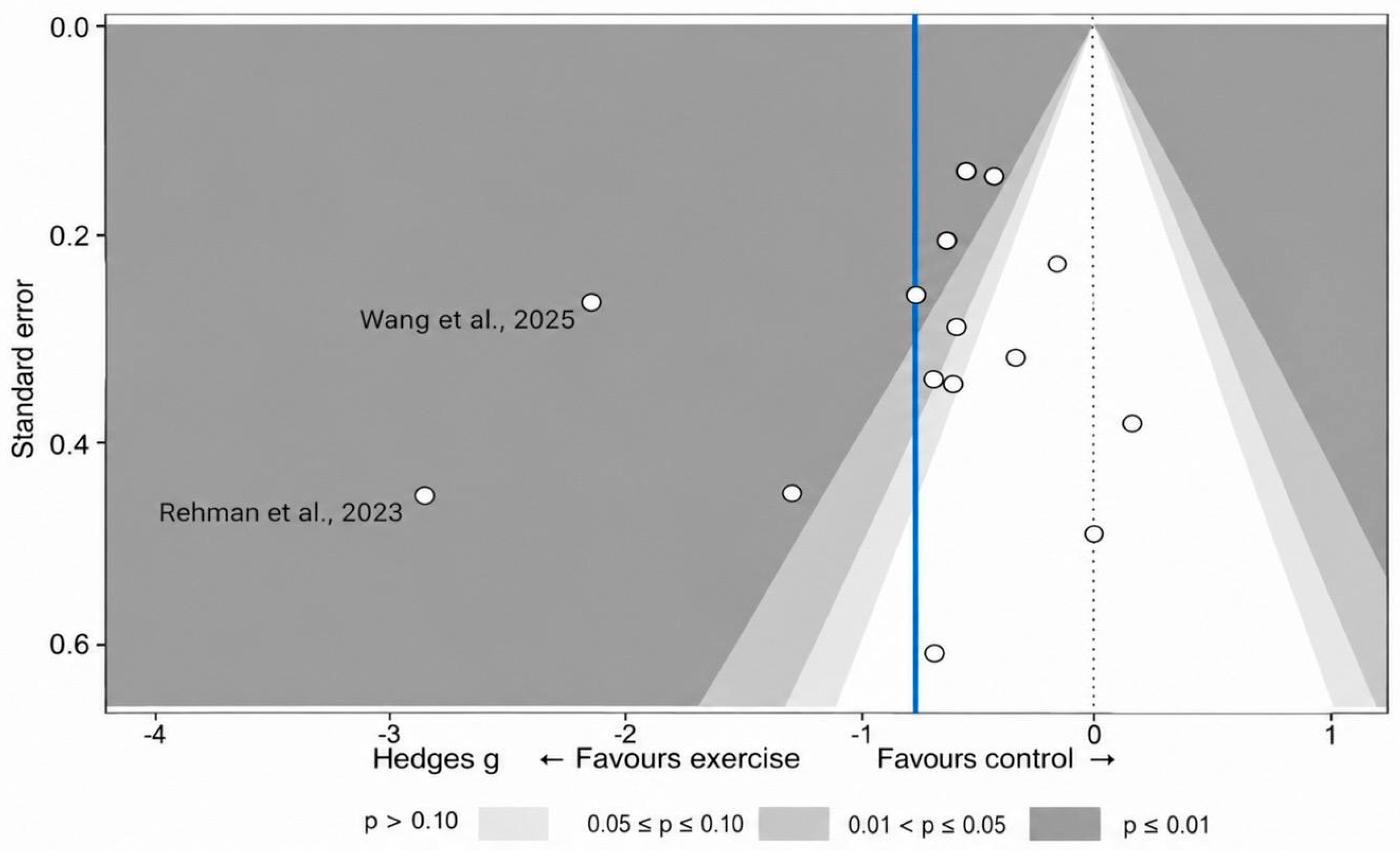
3.8. Small-Study-Effect Diagnostics
3.9. Meta-Regression
3.10. GRADE Certainty
4. Discussion
4.1. Principal Findings
4.2. Evidence Evolution
4.3. Understanding Heterogeneity
4.4. Clinical Interpretation and Sources of Variability
4.5. Certainty of Evidence and Clinical Implications
4.6. Strengths
4.7. Limitations
4.8. Future Research
5. Conclusions
Supplementary Materials
Author Contributions
Funding
Institutional Review Board Statement
Informed Consent Statement
Data Availability Statement
Conflicts of Interest
References
- Bray, F.; Laversanne, M.; Sung, H.; Ferlay, J.; Siegel, R.L.; Soerjomataram, I.; Jemal, A. Global cancer statistics 2022: GLOBOCAN estimates of incidence and mortality worldwide for 36 cancers in 185 countries. CA Cancer J. Clin. 2024, 74, 229–263. [Google Scholar] [CrossRef] [Scilit] [PubMed]
- Sullivan, D.R.; Forsberg, C.W.; Ganzini, L.; Au, D.H.; Gould, M.K.; Provenzale, D.; Slatore, C.G. Longitudinal changes in depression symptoms and survival among patients with lung cancer: A national cohort assessment. J. Clin. Oncol. 2016, 34, 3984–3991. [Google Scholar] [CrossRef] [Scilit] [PubMed]
- Walker, J.; Holm Hansen, C.; Martin, P.; Sawhney, A.; Thekkumpurath, P.; Beale, C.; Symeonides, S.; Wall, L.; Murray, G.; Sharpe, M. Prevalence of depression in adults with cancer: A systematic review. Ann. Oncol. 2013, 24, 895–900. [Google Scholar] [CrossRef] [Scilit] [PubMed]
- Grassi, L.; Caruso, R.; Riba, M.B.; Lloyd-Williams, M.; Kissane, D.; Rodin, G.; McFarland, D.; Campos-Ródenas, R.; Zachariae, R.; Santini, D.; et al. Anxiety and depression in adult cancer patients: ESMO Clinical Practice Guideline. ESMO Open 2023, 8, 101155. [Google Scholar] [CrossRef] [Scilit] [PubMed]
- Andersen, B.L.; Lacchetti, C.; Ashing, K.; Berek, J.S.; Berman, B.S.; Bolte, S.; Dizon, D.S.; Given, B.; Nekhlyudov, L.; Pirl, W.; et al. Management of anxiety and depression in adult survivors of cancer: ASCO guideline update. J. Clin. Oncol. 2023, 41, 3426–3453. [Google Scholar] [CrossRef] [Scilit] [PubMed]
- Campbell, K.L.; Winters-Stone, K.M.; Wiskemann, J.; May, A.M.; Schwartz, A.L.; Courneya, K.S.; Zucker, D.S.; Matthews, C.E.; Ligibel, J.A.; Gerber, L.H.; et al. Exercise guidelines for cancer survivors: Consensus statement from international multidisciplinary roundtable. Med. Sci. Sports Exerc. 2019, 51, 2375–2390. [Google Scholar] [CrossRef] [Scilit] [PubMed]
- Ligibel, J.A.; Bohlke, K.; May, A.M.; Clinton, S.K.; Demark-Wahnefried, W.; Gilchrist, S.C.; Irwin, M.L.; Late, M.; Mansfield, S.; Marshall, T.F.; et al. Exercise, diet, and weight management during cancer treatment: ASCO guideline. J. Clin. Oncol. 2022, 40, 2491–2507. [Google Scholar] [CrossRef] [Scilit] [PubMed]
- Brown, J.C.; Huedo-Medina, T.B.; Pescatello, L.S.; Ryan, S.M.; Pescatello, S.M.; Moker, E.; LaCroix, J.M.; Ferrer, R.A.; Johnson, B.T. The efficacy of exercise in reducing depressive symptoms among cancer survivors: A meta-analysis. PLoS ONE 2012, 7, e30955. [Google Scholar] [CrossRef] [Scilit] [PubMed]
- Craft, L.L.; Vaniterson, E.H.; Helenowski, I.B.; Rademaker, A.W.; Courneya, K.S. Exercise effects on depressive symptoms in cancer survivors: A systematic review and meta-analysis. Cancer Epidemiol. Biomark. Prev. 2012, 21, 3–19. [Google Scholar] [CrossRef] [Scilit] [PubMed]
- Noetel, M.; Sanders, T.; Gallardo-Gómez, D.; Taylor, P.; del Pozo Cruz, B.; van den Hoek, D.; Smith, J.J.; Mahoney, J.; Spathis, J.; Moresi, M.; et al. Effect of exercise for depression: Systematic review and network meta-analysis of randomised controlled trials. BMJ 2024, 384, e075847, Erratum in BMJ 2024, 385, q1024. https://doi.org/10.1136/bmj.q1024. [Google Scholar] [CrossRef] [Scilit] [PubMed]
- Cavalheri, V.; Burtin, C.; Formico, V.R.; Nonoyama, M.L.; Jenkins, S.; Spruit, M.A.; Hill, K. Exercise training undertaken by people within 12 months of lung resection for non-small cell lung cancer. Cochrane Database Syst. Rev. 2019, 6, CD009955. [Google Scholar] [CrossRef] [Scilit] [PubMed]
- Lee, J. Physiologic and psychologic adaptation to exercise interventions in lung cancer patients undergoing chemotherapy: A systematic review and meta-analysis of randomized controlled trials. Support. Care Cancer 2021, 29, 2863–2873. [Google Scholar] [CrossRef] [Scilit] [PubMed]
- Ni, H.-J.; Pudasaini, B.; Yuan, X.-T.; Li, H.-F.; Shi, L.; Yuan, P. Exercise training for patients pre- and postsurgically treated for non-small cell lung cancer: A systematic review and meta-analysis. Integr. Cancer Ther. 2017, 16, 63–73. [Google Scholar] [CrossRef] [Scilit] [PubMed]
- Singh, B.; Spence, R.; Steele, M.L.; Hayes, S.; Toohey, K. Exercise for individuals with lung cancer: A systematic review and meta-analysis of adverse events, feasibility, and effectiveness. Semin. Oncol. Nurs. 2020, 36, 151076. [Google Scholar] [CrossRef] [Scilit] [PubMed]
- Page, M.J.; McKenzie, J.E.; Bossuyt, P.M.; Boutron, I.; Hoffmann, T.C.; Mulrow, C.D.; Shamseer, L.; Tetzlaff, J.M.; Akl, E.A.; Brennan, S.E.; et al. The PRISMA 2020 statement: An updated guideline for reporting systematic reviews. BMJ 2021, 372, n71. [Google Scholar] [CrossRef] [Scilit] [PubMed]
- Luo, D.; Wan, X.; Liu, J.; Tong, T. Optimally estimating the sample mean from the sample size, median, mid-range, and/or mid-quartile range. Stat. Methods Med. Res. 2018, 27, 1785–1805. [Google Scholar] [CrossRef] [Scilit] [PubMed]
- Shi, J.; Luo, D.; Weng, H.; Zeng, X.-T.; Lin, L.; Chu, H.; Tong, T. Optimally estimating the sample standard deviation from the five-number summary. Res. Synth. Methods 2020, 11, 641–654. [Google Scholar] [CrossRef] [Scilit] [PubMed]
- Wan, X.; Wang, W.; Liu, J.; Tong, T. Estimating the sample mean and standard deviation from the sample size, median, range and/or interquartile range. BMC Med. Res. Methodol. 2014, 14, 135. [Google Scholar] [CrossRef] [Scilit] [PubMed]
- Higgins, J.P.T.; Thomas, J.; Chandler, J.; Cumpston, M.; Li, T.; Page, M.J.; Welch, V.A. (Eds.) Cochrane Handbook for Systematic Reviews of Interventions; Version 6.5; Cochrane: London, UK, 2024; Available online: https://www.cochrane.org/handbook (accessed on 25 July 2026).
- Sterne, J.A.C.; Savović, J.; Page, M.J.; Elbers, R.G.; Blencowe, N.S.; Boutron, I.; Cates, C.J.; Cheng, H.-Y.; Corbett, M.S.; Eldridge, S.M.; et al. RoB 2: A revised tool for assessing risk of bias in randomised trials. BMJ 2019, 366, l4898. [Google Scholar] [CrossRef] [Scilit] [PubMed]
- Guyatt, G.H.; Oxman, A.D.; Vist, G.E.; Kunz, R.; Falck-Ytter, Y.; Alonso-Coello, P.; Schünemann, H.J. GRADE: An emerging consensus on rating quality of evidence and strength of recommendations. BMJ 2008, 336, 924–926. [Google Scholar] [CrossRef] [Scilit] [PubMed]
- Viechtbauer, W. Conducting meta-analyses in R with the metafor package. J. Stat. Softw. 2010, 36, 1–48. [Google Scholar] [CrossRef] [Scilit]
- Knapp, G.; Hartung, J. Improved tests for a random effects meta-regression with a single covariate. Stat. Med. 2003, 22, 2693–2710. [Google Scholar] [CrossRef] [Scilit] [PubMed]
- Higgins, J.P.T.; Thompson, S.G.; Deeks, J.J.; Altman, D.G. Measuring inconsistency in meta-analyses. BMJ 2003, 327, 557–560. [Google Scholar] [CrossRef] [Scilit] [PubMed]
- Begg, C.B.; Mazumdar, M. Operating characteristics of a rank correlation test for publication bias. Biometrics 1994, 50, 1088–1101. [Google Scholar] [CrossRef] [Scilit]
- Duval, S.; Tweedie, R. Trim and fill: A simple funnel-plot-based method of testing and adjusting for publication bias in meta-analysis. Biometrics 2000, 56, 455–463. [Google Scholar] [CrossRef] [Scilit] [PubMed]
- Egger, M.; Davey Smith, G.; Schneider, M.; Minder, C. Bias in meta-analysis detected by a simple, graphical test. BMJ 1997, 315, 629–634. [Google Scholar] [CrossRef] [Scilit] [PubMed]
- Liu, Y.-Y.; Lu, H.-B.; Li, Y.-J.; Wang, Z.-Y.; Liu, Y.-H.; Qiao, S.; Xie, J. Effects of mindful breathing training combined with diary-based rehabilitation guidance in lung cancer patients undergoing surgery: A randomized controlled trial. Complement. Ther. Clin. Pract. 2024, 55, 101849. [Google Scholar] [CrossRef] [Scilit] [PubMed]
- Tenconi, S.; Mainini, C.; Rapicetta, C.; Braglia, L.; Galeone, C.; Cavuto, S.; Merlo, D.F.; Costi, S.; Paci, M.; Piro, R.; et al. Rehabilitation for lung cancer patients undergoing surgery: Results of the PUREAIR randomized trial. Eur. J. Phys. Rehabil. Med. 2021, 57, 1002–1011. [Google Scholar] [CrossRef] [Scilit] [PubMed]
- Cheung, D.S.T.; Takemura, N.; Lam, T.C.; Ho, J.C.M.; Deng, W.; Smith, R.; Yan, Y.; Lee, A.W.M.; Lin, C.C. Feasibility of aerobic exercise and Tai-Chi interventions in advanced lung cancer patients: A randomized controlled trial. Integr. Cancer Ther. 2021, 20, 15347354211033352. [Google Scholar] [CrossRef] [Scilit] [PubMed]
- Wang, Z.; Yu, L.; Song, C.; Cao, H.; Yang, Z.; Qiao, S.; Li, X.; Xie, J. Effects of loaded deep breathing training combined with PERMA model in lung cancer patients undergoing surgery: A randomized controlled trial. Support. Care Cancer 2025, 33, 574. [Google Scholar] [CrossRef] [Scilit] [PubMed]
- Liu, W.-L.; Chien, J.-Y.; Lu, Y.-Y.; Liu, K.-F. Nurse-supported hybrid home-based pulmonary rehabilitation improves psychological distress, quality of life, and functional performance in advanced lung cancer: A randomized controlled trial. Eur. J. Oncol. Nurs. 2026, 81, 103130. [Google Scholar] [CrossRef] [Scilit] [PubMed]
- Wang, L.; Liu, C.; Li, H.; Qin, L.; Shen, W.; Zheng, H.; Yang, D.; Huang, L.; Wang, Q. Effects of a rehabilitation program based on home intelligent management platform guided among patient after lung cancer surgery: A randomized controlled trial. Support. Care Cancer 2026, 34, 379. [Google Scholar] [CrossRef] [Scilit] [PubMed]
- Rehman, M.; Ahmad, U.; Waseem, M.; Ali, B.; Tariq, M.I. Effects of exercise training in patients with lung cancer during chemotherapy treatment. Malays. J. Med. Sci. 2023, 30, 141–152. [Google Scholar] [CrossRef] [Scilit] [PubMed]
- Lei, J.; Yang, J.; Dong, L.; Xu, J.; Chen, J.; Hou, X.; Bai, Z. An exercise prescription for patients with lung cancer improves the quality of life, depression, and anxiety. Front. Public Health 2022, 10, 1050471. [Google Scholar] [CrossRef] [Scilit] [PubMed]
- Bade, B.C.; Gan, G.; Li, F.; Lu, L.; Tanoue, L.; Silvestri, G.A.; Irwin, M.L. Randomized trial of physical activity on quality of life and lung cancer biomarkers in patients with advanced-stage lung cancer: A pilot study. BMC Cancer 2021, 21, 352, Erratum in BMC Cancer 2024, 24, 1409. https://doi.org/10.1186/s12885-024-13183-9. [Google Scholar] [CrossRef] [Scilit] [PubMed]
- Quist, M.; Langer, S.W.; Lillelund, C.; Winther, L.; Laursen, J.H.; Christensen, K.B.; Rørth, M.; Adamsen, L. Effects of an exercise intervention for patients with advanced inoperable lung cancer undergoing chemotherapy: A randomized clinical trial. Lung Cancer 2020, 145, 76–82. [Google Scholar] [CrossRef] [Scilit] [PubMed]
- Sui, Y.; Wang, T.; Wang, X. The impact of WeChat app-based education and rehabilitation program on anxiety, depression, quality of life, loss of follow-up and survival in non-small cell lung cancer patients who underwent surgical resection. Eur. J. Oncol. Nurs. 2020, 45, 101707. [Google Scholar] [CrossRef] [Scilit] [PubMed]
- Wang, Y.-Q.; Cao, H.-P.; Liu, X.; Yang, Z.; Yin, Y.-Y.; Ma, R.-C.; Xie, J. Effect of breathing exercises in patients with non-small cell lung cancer receiving surgical treatment: A randomized controlled trial. Eur. J. Integr. Med. 2020, 38, 101175. [Google Scholar] [CrossRef] [Scilit]
- Egegaard, T.; Rohold, J.; Lillelund, C.; Persson, G.; Quist, M. Pre-radiotherapy daily exercise training in non-small cell lung cancer: A feasibility study. Rep. Pract. Oncol. Radiother. 2019, 24, 375–382. [Google Scholar] [CrossRef] [Scilit] [PubMed]
- Cavalheri, V.; Jenkins, S.; Cecins, N.; Gain, K.; Phillips, M.J.; Sanders, L.H.; Hill, K. Exercise training for people following curative-intent treatment for non-small cell lung cancer: A randomized controlled trial. Braz. J. Phys. Ther. 2017, 21, 58–68. [Google Scholar] [CrossRef] [Scilit] [PubMed]
- Chen, H.-M.; Tsai, C.-M.; Wu, Y.-C.; Lin, K.-C.; Lin, C.-C. Randomised controlled trial on the effectiveness of home-based walking exercise on anxiety, depression and cancer-related symptoms in patients with lung cancer. Br. J. Cancer 2015, 112, 438–445. [Google Scholar] [CrossRef] [Scilit] [PubMed]
- Morano, M.T.A.P.; Mesquita, R.; da Silva, G.P.F.; Araújo, A.S.; Pinto, J.M.S.; Neto, A.G.; Viana, C.M.S.; de Moraes Filho, M.O.; Pereira, E.D.B. Comparison of the effects of pulmonary rehabilitation with chest physical therapy on the levels of fibrinogen and albumin in patients with lung cancer awaiting lung resection: A randomized clinical trial. BMC Pulm. Med. 2014, 14, 121. [Google Scholar] [CrossRef] [Scilit] [PubMed]
- Li, G.; Zhou, X.; Deng, J.; Wang, J.; Ai, P.; Zeng, J.; Ma, X.; Liao, H. Digital therapeutics-based cardio-oncology rehabilitation for lung cancer survivors: Randomized controlled trial. JMIR mHealth uHealth 2025, 13, e60115. [Google Scholar] [CrossRef] [Scilit] [PubMed]
- Henshall, C.L.; Allin, L.; Aveyard, H. A systematic review and narrative synthesis to explore the effectiveness of exercise-based interventions in improving fatigue, dyspnea, and depression in lung cancer survivors. Cancer Nurs. 2019, 42, 295–306. [Google Scholar] [CrossRef] [Scilit] [PubMed]
- Lu, Y.; Bai, X.; Pan, C. Impact of exercise interventions on quality of life and depression in lung cancer patients: A systematic review and meta-analysis. Int. J. Psychiatry Med. 2024, 59, 199–217. [Google Scholar] [CrossRef] [Scilit] [PubMed]
- Tadsuan, J.; Lai, Y.-H.; Lee, Y.-H.; Chen, M.-R. The effectiveness of exercise interventions on psychological distress in patients with lung cancer: A systematic review and meta-analysis. J. Cancer Surviv. 2026, 20, 910–926. [Google Scholar] [CrossRef] [Scilit] [PubMed]
- Hu, Y.; Gu, S.; Bu, Z.; Liu, Z.; Dong, J.; Shi, J.; Xu, Y. Effect of exercise for patients with advanced lung cancer and cancer-related fatigue: A systematic review and meta-analysis. J. Sport Health Sci. 2025, 14, 101017. [Google Scholar] [CrossRef] [Scilit] [PubMed]



| Study | Sample Size | Age, Years | Female, n/N (%) | Cancer Type | Stage | Clinical Phase | Intervention | Comparator | Exercise Category | Duration | Depression Measure/Role | Assessment/Synthesis |
|---|---|---|---|---|---|---|---|---|---|---|---|---|
| Liu et al., 2026 [32] | Randomized 104 (52/52); depression results 77 (38/39) | IG: 60.23 ± 10.56; CG: 61.17 ± 9.57 | IG: 26/52 (50.0%); CG: 28/52 (53.8%) | Lung cancer (NSCLC/SCLC) | III–IV | Advanced disease; active or oncological treatment | Hybrid home-based pulmonary rehabilitation | Usual care/education attention control with no prescribed structured exercise | Multicomponent exercise rehabilitation | 8 weeks | HADS-D/primary | Week 8; quantitative |
| Wang et al., 2026 [33] | Randomized 57 (27/30); depression result 50 (25/25) | IG: 54.40 ± 10.87; CG: 58.40 ± 10.44 | IG: 14/25 (56.0%); CG: 12/25 (48.0%) | Postoperative NSCLC | Not reported | Postoperative | HIM-guided rehabilitation | Standard care | Digital or telerehabilitation | 4 weeks | SDS/secondary | 1 month after discharge; quantitative |
| Wang et al., 2025 [31] | Randomized 102 (34/34/34); depression result 96 (65/31) | IG: 53.32 ± 9.29; CG: 57.84 ± 10.01 | IG: 43/65 (66.2%); CG: 25/31 (80.6%) | NSCLC undergoing thoracoscopic lobectomy | I–III (predominantly stage I) | Perioperative | PERMA plus loaded deep breathing; Loaded deep breathing | Routine care | Breathing or respiratory muscle exercise | Admission–discharge (variable) | HADS-D/primary | Discharge; quantitative |
| Liu et al., 2024 [28] | Randomized 102 (34/34/34); analyzed 99 (33/34/32); narrative synthesis | CIG: 61.06 ± 8.30; MBG: 61.50 ± 9.09; CG: 60.63 ± 8.28 | CIG: 18/33 (54.5%); MBG: 16/34 (47.1%); CG: 16/32 (50.0%) | NSCLC undergoing surgery | Carcinoma in situ–III | Perioperative | Mindful breathing plus diary guidance; Mindful breathing | Routine care | Mind–body exercise | Admission–discharge (variable) | HADS-D/secondary | Discharge; narrative synthesis (median and IQR reported) |
| Rehman et al., 2023 [34] | Randomized 40 (20/20); depression result 40 (20/20) | IG: 48.1 ± 4.0; CG: 48.3 ± 3.8 | IG: 9/20 (45.0%); CG: 7/20 (35.0%) | NSCLC | I–II | During chemotherapy | Pulmonary rehabilitation plus aerobic training | Pulmonary rehabilitation | Aerobic exercise added to pulmonary rehabilitation | 4 | HADS-D/NR | Post-test; quantitative |
| Lei et al., 2022 [35] | Randomized: 52 (26/26); depression result 37 (19/18) | IG: 56.04 ± 11.67; CG: 58.03 ± 7.71 | IG: 9/26 (34.6%); CG: 10/26 (38.5%) | Lung cancer/NSCLC | I–IIIB | Definitive treatment completed more than 1 week previously | Baduanjin plus elastic-band training | Control | Qigong or Baduanjin | 8 | SDS/primary | Post-intervention; quantitative |
| Tenconi et al., 2021 [29] | Randomized 140 (70/70); completed 6-month assessment 85 (45/40); narrative synthesis | IG: 66.00 ± 10.61; CG: 67.74 ± 10.84 | IG 32/70 (45.7%); CG 22/70 (31.4%) | Clinical stage I–II NSCLC scheduled for resection | Clinical stage I–II | Perioperative | Standard care plus perioperative pulmonary rehabilitation | Standard care | Pulmonary rehabilitation | 14–21 days preoperatively plus 8 weeks postoperatively | Total HADS/secondary | 6 months; narrative synthesis (HADS-D not separately reported) |
| Bade et al., 2021 [36] | Randomized 40 (20/20) | IG: 66.55 ± 7.28; CG: 63.20 ± 9.80 | IG: 12/20 (60.0%); CG: 18/20 (90.0%) | Stage III/IV NSCLC | IIIA–IV | Active treatment (85%) or post-treatment (15%) | Home-based physical activity | Usual care | Walking | 12 | PHQ-9/not explicitly designated | Week 12; quantitative (mixed-effects model estimates) |
| Cheung et al., 2021 [30] | Randomized 30 (19/11) | IG: 61.05 ± 9.76; CG: 58.36 ± 9.32 | IG: 8/19 (42.1%); CG: 6/11 (54.5%) | Stage IIIB–IV NSCLC | IIIB–IV | Advanced disease; mixed treatment status | Aerobic exercise; Tai Chi | Self-management control with written exercise guidelines | Aerobic/strengthening exercise and Tai Chi | 12 | HADS-D/secondary | Post-intervention; quantitative |
| Quist et al., 2020 [37] | Randomized 216 (108/108) | IG: 65.2 ± 8.2; CG: 63.5 ± 8.7 | IG: 55/108 (50.0%); CG: 56/108 (51.9%) | Advanced inoperable lung cancer (NSCLC/SCLC) | Advanced/inoperable | During chemotherapy | Supervised group exercise | Usual care | Combined aerobic and resistance | 12 | HADS-D/secondary | 12 weeks; quantitative (multiple-imputation analysis) |
| Sui et al., 2020 [38] | Randomized 200 (100/100) | IG: 61.37 ± 11.21; CG: 62.35 ± 9.98 | IG: 20/100 (20.0%); CG: 16/100 (16.0%) | NSCLC after surgical resection | I–III | Postoperative; intervention initiated 4–8 weeks after surgery | WeChat education and rehabilitation program | One-time education and rehabilitation guidance plus usual care | Digital or telerehabilitation | 52 | HADS-D/NR | 12 months; quantitative |
| Wang et al., 2020 [39] | Randomized/result 65 (31/34) | IG: 59 (52–62); CG: 55.5 (46.75–63.25), median (IQR) | IG: 20 (64.5%); CG: 23 (67.6%) | NSCLC receiving surgery | Not reported | Perioperative | Breathing exercises | Routine care | Breathing or respiratory muscle exercise | NR | HADS-D/secondary | Discharge; quantitative |
| Egegaard et al., 2019 [40] | Randomized 15 (8/7); depression result 12 (7/5) | IG: 64 ± 5.8; CG: 65 ± 4.7 | IG: 5/8 (62.5%); CG: 5/7 (71.4%) | Locally advanced NSCLC | locally advanced | During chemoradiotherapy | Aerobic interval training before radiotherapy | Control | Aerobic | 7 | HADS-D/secondary | 7 weeks; quantitative |
| Cavalheri et al., 2017 [41] | Randomized 17 (9/8) | IG: 66 ± 10; CG: 68 ± 9 | IG: 6/9 (66.7%); CG: 6/8 (75.0%) | NSCLC after curative-intent treatment | I–IIIA | 6–10 weeks after lobectomy or 4–8 weeks after adjuvant chemotherapy | Supervised combined aerobic and resistance training | Usual activities plus weekly attention-control telephone calls | Combined aerobic and resistance | 8 | HADS-D/secondary | 8 weeks; quantitative |
| Chen et al., 2015 [42] | Randomized 116 (58/58); depression result 101 (50/51) | IG: 64.76 ± 11.28; CG: 63.57 ± 10.54 | IG: 32/58 (55.2%); CG: 30/58 (51.7%) | Lung cancer | I–IV; unknown in 12 participants | Mixed treatment statuses | Home-based walking | Usual care | Walking | 12 | HADS-D/primary | 3 months; quantitative |
| Morano et al., 2014 [43] | Randomized 24 (12/12) | IG: 65 ± 8; CG: 69 ± 7 | IG: 8/12 (66.7%); CG: 7/12(58.3%) | NSCLC awaiting resection with pre-existing inflammatory pulmonary disease | I–IIIA | Preoperative | Pulmonary rehabilitation | Chest physical therapy | Pulmonary rehabilitation | 4 | HADS-D/NR | 1 month; quantitative |
| Li et al., 2025 [44] | Randomized 47 (25/22); depression result 36 (20/16) | IG: 49.50 ± 11.66; CG: 53.50 ± 10.71 | IG: 19/22 (86.4%); CG: 12/18 (66.7%) | Early-stage NSCLC survivors | early stage | Survivorship | Digital cardiac telerehabilitation | Usual care | Digital or telerehabilitation | 20 | HADS-D/secondary | 5 months; quantitative |
| Certainty Assessment | № of Patients | Certainty | Importance | ||||||||
|---|---|---|---|---|---|---|---|---|---|---|---|
| № of Studies | Study Design | Risk of Bias | Inconsistency | Indirectness | Imprecision | Other Considerations | Exercise | Control | Standardized Effect (95% CI) | ||
| 15 | Randomized controlled trials | Serious a | Serious b | Serious c | Not serious d | Publication bias not strongly suspected e | 543 | 498 | Hedges’ g = −0.75 (95% CI −1.18 to −0.32) | ⨁◯◯◯ Very low | Important |
Disclaimer/Publisher’s Note: The statements, opinions and data contained in all publications are solely those of the individual author(s) and contributor(s) and not of MDPI and/or the editor(s). MDPI and/or the editor(s) disclaim responsibility for any injury to people or property resulting from any ideas, methods, instructions or products referred to in the content. |
© 2026 by the authors. Published by MDPI on behalf of the Lithuanian University of Health Sciences. Licensee MDPI, Basel, Switzerland. This article is an open access article distributed under the terms and conditions of the Creative Commons Attribution (CC BY) license.
Share and Cite
Süleymanoğulları, M.; Pancar, Z. Effects of Exercise-Based Interventions on Depressive Symptoms in Adults with Lung Cancer: A Systematic Review and Meta-Analysis of Randomized Controlled Trials. Medicina 2026, 62, 1805. https://doi.org/10.3390/medicina62091805
Süleymanoğulları M, Pancar Z. Effects of Exercise-Based Interventions on Depressive Symptoms in Adults with Lung Cancer: A Systematic Review and Meta-Analysis of Randomized Controlled Trials. Medicina. 2026; 62(9):1805. https://doi.org/10.3390/medicina62091805
Chicago/Turabian StyleSüleymanoğulları, Mesut, and Zarife Pancar. 2026. "Effects of Exercise-Based Interventions on Depressive Symptoms in Adults with Lung Cancer: A Systematic Review and Meta-Analysis of Randomized Controlled Trials" Medicina 62, no. 9: 1805. https://doi.org/10.3390/medicina62091805
APA StyleSüleymanoğulları, M., & Pancar, Z. (2026). Effects of Exercise-Based Interventions on Depressive Symptoms in Adults with Lung Cancer: A Systematic Review and Meta-Analysis of Randomized Controlled Trials. Medicina, 62(9), 1805. https://doi.org/10.3390/medicina62091805