Systematic Review

Rehabilitation and Physiotherapy for Functional Sequelae in Adults with Head and Neck Cancer: A Systematic Review and Meta-Analysis


by
Miriam Linero-Bocanegra
1,
Carlos Fernández-Morales
2,*,
Daniel Torres-Lagares
3,
Elena Oliva-Ferrusola
3,
Cristo Jesús Barrios-Quinta
1 and
Ángel Rufino Yáñez-Álvarez
1
1
Department of Physiotherapy, University of Seville, 41009 Seville, Spain
2
Department of Medical-Surgical Therapy, Faculty of Medicine and Health Sciences, University of Extremadura, 06006 Badajoz, Spain
3
Department of Dentistry, Faculty of Dentistry, University of Seville, 41009 Seville, Spain
*
Author to whom correspondence should be addressed.
Medicina 2026, 62(9), 1648; https://doi.org/10.3390/medicina62091648
Submission received: 30 June 2026 / Revised: 24 August 2026 / Accepted: 26 August 2026 / Published: 28 August 2026
(This article belongs to the Special Issue Physiotherapy for Head and Neck Cancer)

Abstract

Background and Objectives: Functional sequelae following head and neck cancer (HNC) treatment frequently impair swallowing, mouth opening, speech, cervical and shoulder mobility, and overall quality of life. Although rehabilitation is increasingly recognized as an essential component of multidisciplinary care, evidence has largely focused on isolated functional impairments rather than providing a comprehensive evaluation across rehabilitation domains. To systematically evaluate the effectiveness of rehabilitation and physiotherapy interventions for preventing and treating functional sequelae in adults with head and neck cancer. Materials and Methods: A systematic review and meta-analysis of randomized controlled trials was conducted according to PRISMA 2020 guidelines. PubMed/MEDLINE, Embase, Cochrane Library, and PEDro were searched from inception to June 2026. Studies involving adult patients with head and neck cancer receiving conservative rehabilitation interventions were included. Random-effects meta-analyses were performed for clinically homogeneous intervention contrasts within the mouth-opening and trismus domains. Distinct comparisons involving intervention timing, additional therapeutic components, or delivery strategies were analysed separately. Results: Twenty-seven publications representing 21 independent randomized trials were included. Quantitative synthesis was restricted to clinically homogeneous intervention contrasts. Compared with usual care, preventive jaw rehabilitation favoured greater mouth opening across three independent trials (mean difference = 2.85 mm; conventional 95% CI: 0.38–5.32), although the modified Hartung–Knapp sensitivity interval included no effect (95% CI: −2.58–8.27). The pooled estimate for trismus across three independent trials also favoured rehabilitation, although both conventional and small-sample-adjusted confidence intervals included no effect (RR = 0.87; conventional 95% CI: 0.53–1.42; modified Hartung–Knapp 95% CI: 0.25–2.98). Postoperative swallowing rehabilitation after oral-cancer surgery and free-flap reconstruction favoured rehabilitation in both sequential cohorts (adjusted difference in change = 10.06 points; 95% CI: 7.68–12.44; GEE group-by-time β = 7.29 points; 95% CI: 4.11–10.47). Additional timing, support, enhancement, and delivery comparisons were analysed separately. Conclusions: Targeted rehabilitation interventions produced favourable estimates for mandibular mobility and postoperative swallowing function in adults with head and neck cancer. Preventive jaw rehabilitation favoured greater mouth opening, although the result was inconclusive after small-sample adjustment; the trismus estimate also favoured rehabilitation but remained imprecise.

1. Introduction

Head and neck cancer (HNC) represents one of the major global public health challenges, accounting for more than 900,000 new cases and approximately 450,000 deaths annually [1]. This heterogeneous group of malignancies includes tumors arising from the oral cavity, oropharynx, hypopharynx, larynx, nasopharynx, nasal cavity, and paranasal sinuses. Although tobacco and alcohol consumption remains the leading etiological factor, the incidence of human papillomavirus (HPV)-related tumors, particularly oropharyngeal cancer, has increased substantially over recent decades [2].
Advances in early diagnosis, reconstructive surgical techniques, intensity-modulated radiotherapy, systemic therapies, and multidisciplinary care have significantly improved survival among patients with head and neck cancer [2]. Consequently, the number of survivors continues to increase, and clinical attention has shifted from focusing exclusively on tumor control to addressing functional sequelae and health-related quality of life following treatment [3,4].
However, treatment for head and neck cancer frequently results in complex anatomical and functional impairments arising from both the disease itself and its treatment, including surgery, radiotherapy, and systemic therapies [5,6]. The most common sequelae include trismus, dysphagia, restricted cervical and shoulder mobility, lymphedema, musculoskeletal pain, voice and speech disorders, fatigue, and reduced health-related quality of life [5,7]. These complications may persist for months or even years after completion of treatment, compromising essential functions such as eating, communication, oral hygiene, breathing, and social participation [8,9].
In this context, rehabilitation has assumed an increasingly important role in the comprehensive management of head and neck cancer [3,8]. Conservative rehabilitation strategies include therapeutic exercise, mandibular rehabilitation, manual therapy, swallowing exercises, cervical and shoulder rehabilitation, supervised home-based exercise programmes, telerehabilitation, and interventions aimed at preventing or minimizing treatment-related functional sequelae [6,10]. Nevertheless, considerable variability exists among published rehabilitation programmes with regard to the timing of intervention, treatment intensity, duration, therapeutic components, and outcome measures [6,11].
During the past decade, the number of clinical trials and systematic reviews investigating rehabilitation in patients with head and neck cancer has increased substantially [11]. Nevertheless, most published reviews have focused on specific sequelae, particularly treatment-induced trismus or dysphagia rehabilitation, whereas others have been restricted to specific patient populations or isolated rehabilitation interventions [11]. Although these studies have provided valuable insights, they offer only a partial view of rehabilitation and limit a comprehensive understanding of the currently available evidence [8].
Although systematic reviews addressing specific functional sequelae are available, to the best of our knowledge, no systematic review and meta-analysis has comprehensively synthesized the evidence from randomized controlled trials evaluating rehabilitation interventions across the full spectrum of functional sequelae associated with head and neck cancer. Such an approach integrates both preventive and therapeutic rehabilitation strategies while considering the different functional domains affected by the disease and its treatment.
Therefore, the aim of the present systematic review and meta-analysis was to synthesize and quantitatively evaluate the evidence from randomized controlled trials regarding the effectiveness of rehabilitation and physiotherapy interventions for functional sequelae associated with head and neck cancer in adult patients. As a secondary objective, differences according to the functional domain assessed, the type of rehabilitation intervention, and the clinical context in which rehabilitation was delivered were explored.

2. Materials and Methods

2.1. Study Design

This systematic review and meta-analysis was conducted in accordance with the Preferred Reporting Items for Systematic Reviews and Meta-Analyses (PRISMA 2020) statement [12] and the methodological recommendations of the Cochrane Handbook for Systematic Reviews of Interventions (Version 6.5) [13]. The review protocol was prospectively registered in the International Prospective Register of Systematic Reviews (PROSPERO; CRD420261425384) [14].
The research question was formulated according to the PICO framework (Population, Intervention, Comparator, and Outcomes).

2.2. Search Strategy

A systematic literature search was conducted in PubMed/MEDLINE, Embase, Cochrane Library, and PEDro from database inception to 10 June 2026.
The search strategy combined controlled vocabulary terms (MeSH and Emtree) and free-text keywords related to head and neck cancer (e.g., “Head and Neck Neoplasms”, “head and neck cancer”, “oral cancer”, “oropharyngeal cancer”, and “laryngeal cancer”) with terms describing rehabilitation interventions (e.g., “Rehabilitation”, “Physical Therapy Modalities”, “physiotherapy”, “exercise therapy”, “manual therapy”, “telerehabilitation”, and “home exercise”). Boolean operators (AND and OR) were adapted to the indexing system of each database.
After combining both search concepts, validated randomized-trial filters were applied in PubMed/MEDLINE and Embase; CENTRAL was searched without an additional trial filter, and PEDro results were restricted using its clinical-trial method filter to identify randomized controlled trials. In addition, the reference lists of the included studies and relevant systematic reviews were manually screened to identify potentially eligible publications that had not been retrieved through the electronic database search.
The complete search strategy for each database is provided in Supplementary Material S1.

2.3. Eligibility Criteria

Eligibility criteria were established according to the PICO framework (Population, Intervention, Comparator, and Outcomes).

2.3.1. Population

Studies involving adult patients (≥18 years) with a diagnosis of primary head and neck cancer who had undergone surgery, radiotherapy, chemotherapy, chemoradiotherapy, immunotherapy, or any combination of oncological treatments were eligible. Included studies were required to evaluate at least one functional, musculoskeletal, or participation-related sequela resulting from the disease or its treatment.

2.3.2. Intervention

Conservative rehabilitation or physiotherapy interventions aimed at preventing or treating functional sequelae associated with head and neck cancer were eligible. These interventions included, but were not limited to, therapeutic exercise, manual therapy, electrotherapy, functional training, orofacial rehabilitation, cervical and shoulder rehabilitation, swallowing exercises, supervised home-based exercise programmes, and telerehabilitation. Studies evaluating specific rehabilitation devices (e.g., jaw-mobilization devices or exercise-assistance devices) were also included, provided that these devices formed part of a conservative rehabilitation programme targeting functional recovery.
Eligible comparator groups included usual care, standard education or instructions, no intervention, waiting-list controls, placebo or sham interventions, other active interventions, and different rehabilitation modalities, treatment intensities, frequencies, or dosages.

2.3.3. Outcomes

Studies were required to report at least one validated functional outcome related to head and neck cancer or its treatment. Outcomes of interest included, but were not limited to, mouth opening, mandibular function, swallowing function, cervical mobility, shoulder function, voice, fatigue, lymphedema, and health-related quality of life.

2.3.4. Exclusion Criteria

Studies were excluded if they:
Included participants without a diagnosis of head and neck cancer.
Evaluated temporomandibular disorders, bruxism, myofascial pain, orthognathic surgery, mandibular trauma, or oral fibrosis unrelated to oncological treatment.
Did not assess functional sequelae attributable to head and neck cancer or its treatment.
Evaluated general rehabilitation interventions without reporting outcomes specifically related to functional sequelae associated with head and neck cancer.
Assessed exclusively surgical, pharmacological, dental, or prosthetic interventions without a rehabilitation component aimed at functional recovery.
Did not include a comparator group.
Were observational studies, cross-sectional studies, case series, case reports, reviews, study protocols, editorials, letters to the editor, expert opinions, or conference abstracts without complete data.
Did not provide extractable data for at least one eligible functional outcome.
Were conducted in animal models or preclinical settings.
Were published in languages other than English or Spanish.

2.4. Study Selection

The search results were initially exported to reference management software to identify and remove duplicate records. Subsequently, the references were imported into Rayyan (web version; Rayyan Systems Inc., Cambridge, MA, USA), an online platform used to facilitate the screening process and identify any remaining duplicate records [15].
Study selection was conducted in two stages:
Screening of titles and abstracts.
Full-text assessment for eligibility.
Both stages were performed independently by two reviewers using the predefined eligibility criteria. Any disagreements were resolved through discussion and consensus. When consensus could not be reached, a third reviewer was consulted.
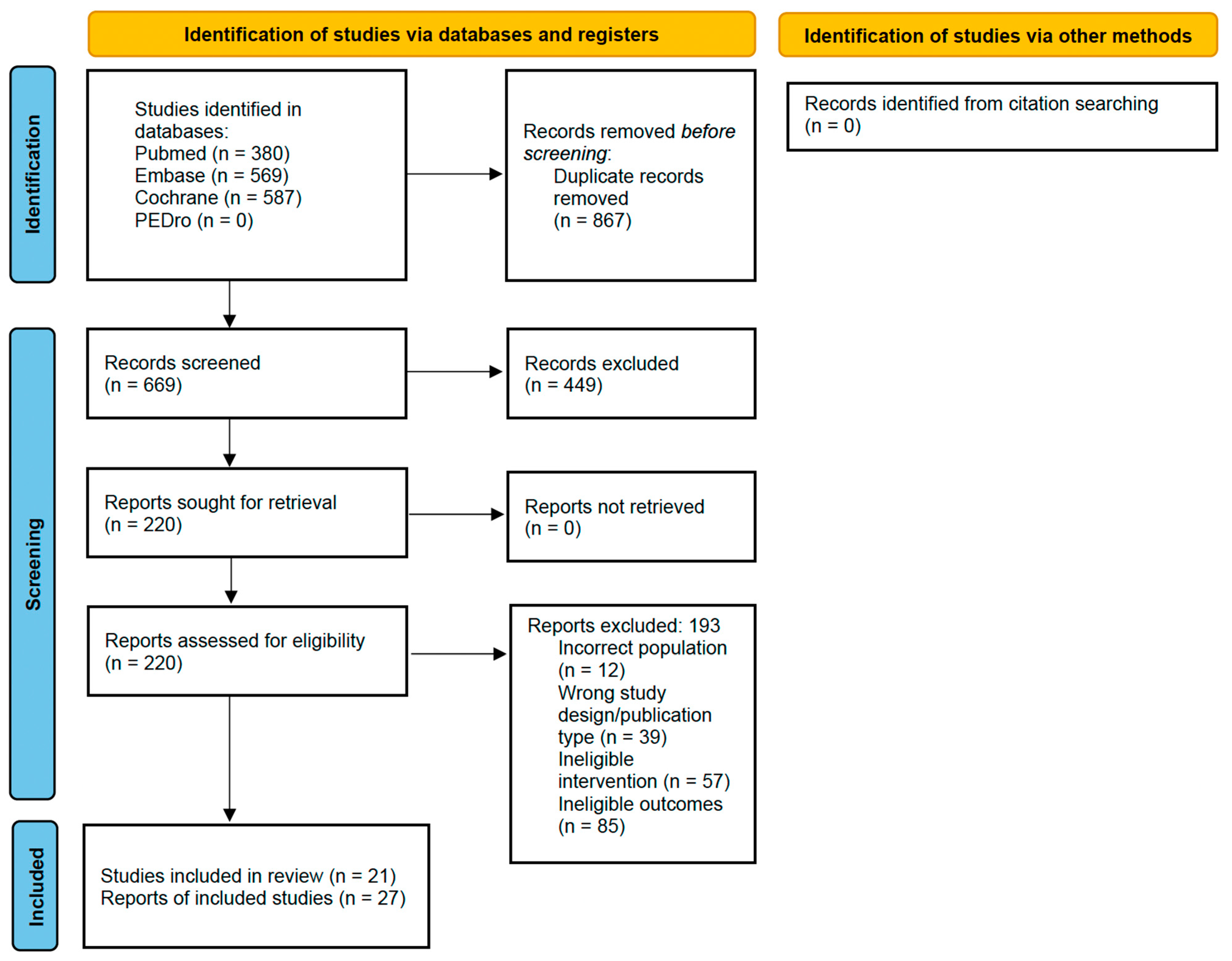
The complete study selection process was documented using a PRISMA 2020 flow diagram (Figure 1).

2.5. Data Extraction

Data were extracted using a standardized data extraction form specifically developed and pilot-tested for this systematic review.
Data extraction was performed by one reviewer and independently verified by a second reviewer.
The following information was collected from each included study:
First author and year of publication, unique trial identifier, and report type (primary report, companion publication, secondary analysis, or long-term follow-up report);
Country;
Study design;
Sample characteristics;
Tumor site;
Oncological treatment received;
Characteristics of the rehabilitation intervention;
Characteristics of the comparator group;
Duration of follow-up;
Outcome measures and assessment instruments;
Quantitative results for the outcomes of interest;
Data required for the meta-analysis (means, standard deviations, sample sizes, and event counts).
Companion publications, secondary analyses, and long-term follow-up reports arising from the same randomized population were linked under a common trial entry and treated as a single independent trial. When several reports provided data for the same comparison, outcome, and follow-up period, participants were included only once in each quantitative synthesis.

2.6. Risk of Bias Assessment

Risk of bias was assessed for each specific result included in the meta-analyses and for separately reported quantitative estimates using the revised Cochrane risk-of-bias tool for randomized trials (RoB 2) [16].
Each assessment was defined according to the randomized comparison, outcome, follow-up time, and effect of interest. The effect of assignment to intervention was assessed in all cases.
The standard RoB 2 tool was used for individually randomized parallel-group trials. The cluster-randomized version of RoB 2 was used for cluster-randomized trials [17] and additionally considered bias arising from the identification or recruitment of participants within clusters. Domain-level judgements were classified as low risk, some concerns, or high risk of bias, and an overall judgement was assigned to each result according to the RoB 2 algorithms.
Risk of bias was assessed independently by two reviewers (M.L.-B. and C.F.-M.). Disagreements were resolved through discussion and consensus; when consensus could not be reached, a third reviewer (Á.R.Y.-Á.) was consulted. Detailed domain-level judgements and the reasons supporting each assessment are provided in Supplementary Table S2. Risk-of-bias figures were generated using robvis version 0.3.1 [18].

2.7. Data Synthesis and Statistical Analysis

Quantitative syntheses were performed when at least two independent trials reported comparable outcomes for the same randomized intervention contrast, functional domain, clinical context, and follow-up period. The PROSPERO registration prespecified the functional outcome domains and quantitative synthesis of sufficiently comparable studies. The specific outcome-selection hierarchy, common follow-up rules, and organization by randomized intervention contrast were developed as operational refinements during the review process and were not prespecified in the registration. Each independent trial contributed a maximum of one effect estimate to each meta-analysis. Companion publications, secondary analyses, and follow-up reports were linked under a common trial entry to prevent duplication of participants. Meta-analyses were conducted in R version 4.5.1 (R Foundation for Statistical Computing, Vienna, Austria) using the metafor package version 4.8-0 [19]. Clinical comparability was determined by considering the tumour site and oncological treatment pathway, the phase of care in which rehabilitation was delivered, the functional impairment addressed, and the follow-up period. Interventions delivered as prehabilitation, during oncological treatment, in the postoperative period, or during long-term survivorship were not pooled solely because they assessed the same broad functional domain.
Intervention contrasts were classified as rehabilitation versus no rehabilitation or usual care, early versus delayed rehabilitation, basic versus enhanced rehabilitation, the same programme with versus without additional support, and one active rehabilitation modality or delivery strategy versus another. Trials belonging to different contrast categories were analysed separately. When fewer than two clinically comparable trials were available, effect estimates were presented individually or the findings were synthesized narratively.
Outcome selection followed a predefined hierarchy. Measures directly assessing the functional domain of interest were prioritized, followed by the primary outcome identified by the trial. When several eligible measures remained, objective or clinician-assessed measures were selected before patient-reported outcomes, and function-specific measures were selected before general quality-of-life measures. Direct measurements in millimetres were selected for mouth opening, dichotomous definitions based on a maximum mouth opening of 35 mm or less were selected for trismus, and the MASA-OC total score was selected for postoperative swallowing function.
Trials were pooled only when they reported outcomes within the same clinically relevant follow-up period. The longest common follow-up was selected when several comparable assessments were available. The mouth-opening and trismus meta-analyses used outcomes assessed 12 months after radiotherapy, whereas the postoperative swallowing estimates were reported at the 1-month assessment after surgery. Outcomes from other follow-up periods were analysed separately or synthesized narratively.
Changes from baseline were prioritized for continuous outcomes when an estimate and its variance were available. Endpoint values were used when change scores were unavailable, provided that the studies reported the outcome in the same measurement unit. An endpoint-only sensitivity analysis was performed for mouth opening. Outcome-specific sample sizes were based on the analytic population reported for each outcome and follow-up in the original trial.
Continuous outcomes reported on the same scale were pooled as mean differences. Dichotomous outcomes were pooled as risk ratios. Positive mean differences favoured rehabilitation, whereas risk ratios below 1 favoured rehabilitation for adverse functional outcomes. Random-effects models were fitted using restricted maximum-likelihood estimation. For the primary analyses, confidence intervals and p values for the pooled effects were calculated using Wald-type inference based on the model standard error and standard normal quantiles. Because each meta-analysis included only three trials, robustness to the inferential method was examined using a modified Hartung–Knapp adjustment, with the same REML estimate of τ2, the variance scale factor constrained to be at least 1, and a t distribution with k − 1 degrees of freedom [13,19]. This adjustment was treated as a sensitivity analysis because it may be highly conservative with very small k. Statistical heterogeneity was assessed using Cochran’s Q test, I2, and τ2. Prediction intervals were calculated using the conventional plug-in normal approximation based on the REML estimate of τ2 when at least three independent trials were available [13]. Because only three trials contributed to each meta-analysis, prediction intervals were considered descriptive and interpreted with explicit caution. In multi-arm trials, clinically comparable intervention groups were combined for the principal analysis so that a shared control group was included only once. In the three-arm trial by Bragante et al., the two active intervention groups were combined for the principal mouth-opening and trismus analyses. Each active arm was subsequently compared separately with the control group in sensitivity analyses.
Cluster-randomized postoperative swallowing estimates were reported separately using the model-based coefficients provided by the original investigators. For Zhang et al. [20], the extracted coefficient was the between-group difference in MASA-OC change from postoperative day 6 to day 30 (10.06 points, 95% CI 7.68–12.44) from a linear mixed-effects model with room number as a random effect and the day-6 MASA-OC score as a covariate; the report did not provide further details on the within-participant covariance structure. For Wu et al. [21], the extracted coefficient was the GEE group-by-time interaction for intervention ×1 month (β = 7.289, SE = 1.621), with the control group and postoperative day 6 as reference categories. GEE was used for repeated MASA-OC measurements, but the report did not specify additional covariates, the working correlation structure, or whether ward-room clustering was incorporated. Because the variance estimates could not be established as sufficiently comparable, the two estimates were not pooled. Publication bias was not formally assessed because fewer than ten independent trials contributed to each meta-analysis [13].

3. Results

3.1. Study Selection

The database search identified 1536 records. After removal of 867 duplicate records, 669 records were screened by title and abstract. Of these, 449 records were excluded, and 220 full-text reports were assessed for eligibility. A total of 193 reports were excluded for the following reasons: incorrect population (n = 12), wrong study design or publication type (n = 39), ineligible intervention (n = 57), and ineligible outcomes (n = 85). Twenty-seven publications representing 21 independent randomized trials were included in the systematic review. Fourteen trials provided extractable quantitative estimates, including three trials that contributed to the two clinically homogeneous meta-analyses. The study selection process is presented in Figure 1.

3.2. Characteristics of the Included Studies

The 21 independent randomized trials evaluated rehabilitation across a broad range of functional domains in patients with head and neck cancer. These included mouth opening and trismus prevention, swallowing rehabilitation during or after oncological treatment, postoperative rehabilitation after oral-cancer surgery, prehabilitation, voice and communication rehabilitation, and interventions designed to improve treatment delivery or adherence. This broad clinical scope was retained at the systematic-review level, whereas quantitative synthesis was restricted to trials addressing the same rehabilitation question within a comparable oncological treatment pathway and phase of care (Table 1).
Jaw-related trials evaluated preventive jaw rehabilitation versus usual care, early versus delayed initiation of the same programme, structured telephone support added to a mouth-opening programme, and comparisons between active jaw-mobilization modalities [22,23,24,25,26,27,28].
Swallowing trials covered preventive exercise during radiotherapy or chemoradiotherapy, prehabilitation, rehabilitation of established dysphagia, postoperative rehabilitation after oral-cancer surgery and free-flap reconstruction, and comparisons between basic and enhanced programmes or alternative delivery strategies [20,21,29,30,31,32,33,34,35,36,37,38,39,40].
Voice and communication outcomes were reported after radiotherapy for laryngeal cancer and after total laryngectomy [41,42,43,44,45,46]. Related reports arising from the same randomized population were grouped under a common trial entry. These studies were synthesized narratively because the interventions, clinical contexts, and endpoints were not sufficiently comparable for meta-analysis.
Table 1. Characteristics of the independent randomized trials and associated publications.
Trial and Associated Publication(s)CountryDesignPopulation/Treatment ContextSample SizeInterventionComparatorMain DomainFollow-Up/Main TimepointsSynthesis in Review
Yang et al., 2025 [22]ChinaRandomized controlled trial; blinded outcome assessors/statistical analystsOral squamous cell carcinoma after surgery and postoperative IMRT76 randomized; 36/36 analysedMouth-opening protocol started in postoperative week 2Same protocol started in week 4Mouth opening/trismusUp to 12 weeks after surgerySeparate quantitative estimate: early versus delayed rehabilitation
Schipor-Diaconu et al., 2024 [29]RomaniaRandomized controlled trialStage III-IV laryngeal cancer undergoing total laryngectomy96 randomized; 46/46 analysedProphylactic swallowing exercises after surgeryNo preventive exercises; treatment as neededSwallowing after laryngectomy3, 6, 9, and 12 monthsNarrative synthesis
Høgdal et al., 2015 [23]DenmarkParallel-group randomized clinical trial; blinded outcome assessmentOral cavity or oropharyngeal cancer treated with curative RT ± chemotherapy/surgery100 randomized; 36/34 in complete-case primary analysisPreventive physiotherapist-supervised exercises during RT plus home programmeUsual careMouth opening/trismus prevention5 and 12 months after RTMeta-analysis: mouth opening and trismus
Swedish voice rehabilitation trial
(Tuomi et al., 2014; Karlsson et al., 2015; Tuomi et al., 2017; Millgård et al., 2020; Karlsson et al., 2024) [41,42,43,44,45]
SwedenRandomized voice-rehabilitation trial with companion, subgroup, and long-term follow-up reportsLaryngeal cancer treated with curative RT ± chemotherapy89 randomized; 37/37 in main trial analyses; smaller subsets at later follow-upTen-session structured voice rehabilitation after RTNo structured voice rehabilitation; vocal-hygiene adviceVoice/communication/HRQL1, 6, 12, 24, and 60 months after RTNarrative synthesis; trial counted once
Li et al., 2025 [46]ChinaRandomized controlled trialPatients after total laryngectomy70 randomized; 35/35 analysedEsophageal speech rehabilitation programme plus conventional careConventional nursing careEsophageal speech/voice/quality of life1, 6, and 12 monthsNarrative synthesis
Bragante et al., 2020 [24]BrazilThree-arm randomized controlled trialHead and neck cancer undergoing definitive or postoperative external-beam RT90 randomized; 30/30/30Jaw exercises with hyperboloid device, with or without TheraBiteUsual-care guidanceMouth opening/trismus preventionEnd of RT and 12 months after RTMeta-analysis: mouth opening and trismus; active arms combined
Carnaby-Mann et al., 2012 [30]USAThree-arm randomized phase II trialPredominantly oropharyngeal HNC undergoing RT ± chemotherapy58 randomized; 14 active/14 usual care/13 sham assessed at 6 weeksHigh-intensity swallowing exercise programme (Pharyngocise)Usual care; separate sham-intervention armSwallowing; secondary mouth openingEnd of CRT/6 weeks and 6 monthsSeparate quantitative estimates
Lazarus et al., 2014 [31]USATwo-arm randomized clinical trial; blinded swallowing assessmentStage II-IV oral or oropharyngeal cancer treated with RT ± chemotherapy23 randomized; 8/10 analysedTraditional exercises plus isometric tongue-resistance exercisesTraditional tongue/laryngeal exercisesSwallowing/tongue strength10 weeks after RT/CRTSeparate quantitative estimate: enhanced versus basic rehabilitation
Zhang free-flap rehabilitation trial
(Zhang et al., 2022; Zhang et al., 2024) [20,32]
ChinaCluster-randomized controlled trial; ward rooms as the unit of randomization (18 clusters); companion outcome reportsOral cancer after extended resection and free-flap reconstruction; single centre, Peking University School and Hospital of Stomatology; recruited August 2021–January 2022123 screened; 75 randomized (37/38); 68 completed the 1-month assessment (34/34)Personalized swallowing/oral exercises from postoperative day 6Routine nursing and swallowing-related educationPostoperative swallowing/oral function/quality of lifePostoperative days 15 and 30/1 monthSeparate quantitative estimate: postoperative MASA-OC; companion reports counted once
Loorents et al., 2014 [25]SwedenMulticentre randomized studyHNC receiving RT with dose to jaw muscles/TMJ and baseline MIO > 35 mm66 randomized; 23/19 at 12 monthsProphylactic TheraBite training during and after RTStandard treatment without prophylactic TheraBiteMouth opening/trismus preventionWeekly during RT; 3, 6, and 12 months after RTNarrative synthesis
Langmore multicentre NMES trial
(Krisciunas et al., 2017, secondary analysis) [33]
USASecondary compliance analysis of a multicentre randomized trialHNC survivors with long-term radiation-associated dysphagia170 randomized in parent trial; 153 included in compliance analysisSwallowing exercises plus active NMESSame exercises plus sham NMESPost-treatment dysphagia/adjunct NMES/adherenceWeek 13 after a 12-week programmeNarrative synthesis: active NMES versus sham NMES
Messing et al., 2017 [34]USARandomized controlled trial; intention-to-treat analysisStage III-IV HNSCC undergoing curative chemoradiotherapy60 randomized; 29/28 analysedProphylactic swallow therapy plus TheraBite and weekly SLP supportNo direct prophylactic SLP therapy; minimum TheraBite standardSwallowing; secondary mouth opening3, 6, 12, and 24 months after CRTSeparate quantitative estimate: enhanced versus basic rehabilitation
Baudelet et al., 2024 (PRESTO trial) [35]BelgiumMulticentre three-arm randomized controlled trialStage III or IVA-B oropharyngeal cancer treated with RT/CRT148 randomized; 49/49/50Same prophylactic swallowing programme delivered by paper, app, or therapistAlternative delivery modes of the same active programmeSwallowing prophylaxis/adherence/delivery modeEnd of RT/CRT; 1 and 3 months after treatmentNarrative synthesis: delivery-strategy comparison
van der Geer et al., 2020 [26]NetherlandsRandomized controlled trial; active-device comparisonHNC survivors with established trismus (MMO ≤ 35 mm)27 enrolled; 22 started treatment; 12 completed follow-upTheraBite stretching exercisesDynasplint Trismus SystemTreatment of established trismusThree-month exercise protocolNarrative synthesis: active-device comparison
Govender et al., 2020 [36]United KingdomTwo-arm randomized feasibility trialNewly diagnosed stage III/IV HNC before oncological treatment32 randomized; 16/16 analysedTailored SIP SMART pre-treatment swallowing interventionUsual care and generic advice/exercises when relevantSwallowing prehabilitation1, 3, and 6 months after treatmentSeparate quantitative estimate: prehabilitation versus usual care
Swedish head-lift exercise trial
(Tuomi et al., 2022; Petersson et al., 2023) [37,38]
SwedenRandomized controlled trial with companion long-term HRQL reportHNC survivors with radiation-induced dysphagia 6–36 months after RT/CRT61 randomized; 25/27 at 8 weeks and 19/24 at 12 monthsShaker head-lift exercise plus standard dysphagia careStandard dysphagia carePost-treatment dysphagia/swallowing-related HRQL8 weeks and 12 monthsSeparate quantitative estimate: enhanced versus basic rehabilitation; trial counted once
Zhang Y et al., 2025 [39]ChinaProspective randomized parallel-controlled trialPrimary HNC undergoing particle therapy ± chemotherapy95 analysed; 47/48Feeding management plus swallowing training during particle therapyRoutine radiotherapy care and health educationSwallowing during particle therapyPost-treatment and 3 monthsSeparate quantitative estimate: rehabilitation versus routine care
Wu et al., 2024 [21]ChinaProspective cluster-randomized controlled trial; ward rooms as the unit of randomization (8 clusters)Oral cancer after extended resection and free-flap reconstruction; single centre, Peking University School and Hospital of Stomatology; recruited February–August 2022126 enrolled; 121 analysed (62/59)Early swallowing training from postoperative day 6Routine nursing and swallowing-related educationPostoperative swallowing/oral function/quality of lifePostoperative day 15 and 1 monthSeparate quantitative estimate: postoperative MASA-OC
Wang et al., 2019 [27]TaiwanParallel randomized clinical trial with active controlPostoperative oral cancer patients after curative surgery68 randomized; 30/30 analysedMouth-opening programme plus structured telephone supportSame mouth-opening programme without structured supportMouth opening/trismus/adherence1 and 3 months after dischargeSeparate quantitative estimates: telephone support versus the same programme
Saghafi et al., 2026 [28]SwedenSingle-blinded randomized controlled trialNewly diagnosed HNC scheduled for curative RT ± chemotherapy; no baseline trismus58 randomized; 25/27 assessed at 12 monthsPreventive active and passive jaw training with JawTrainerStandard careMouth opening/trismus/temporomandibular disorders6 and 12 months after RTMeta-analysis: mouth opening and trismus
Shanmugam and Pravenkumar, 2024 [40]IndiaRandomized controlled trialOral cavity squamous cell carcinoma undergoing major resection60 randomized; 30/30 analysedPreoperative swallowing exercises plus standard postoperative rehabilitationStandard postoperative rehabilitation aloneSwallowing prehabilitation before surgery6 months after surgerySeparate quantitative estimate: prehabilitation added to postoperative rehabilitation
RT: radiotherapy; CRT: chemoradiotherapy; IMRT: intensity-modulated radiotherapy; HNC: head and neck cancer; HRQL: health-related quality of life; MIO: maximum interincisal opening; MMO: maximum mouth opening; TMD: temporomandibular disorders; MASA: Mann Assessment of Swallowing Ability; MASA-OC: Mann Assessment of Swallowing Ability-Oral Cancer; OPSE: oropharyngeal swallow efficiency; MDADI: MD Anderson Dysphagia Inventory; UW-QOL: University of Washington Quality of Life Questionnaire; FOIS: Functional Oral Intake Scale; PEG: percutaneous endoscopic gastrostomy; NMES: neuromuscular electrical stimulation; SLP: speech-language pathologist.

3.3. Risk of Bias

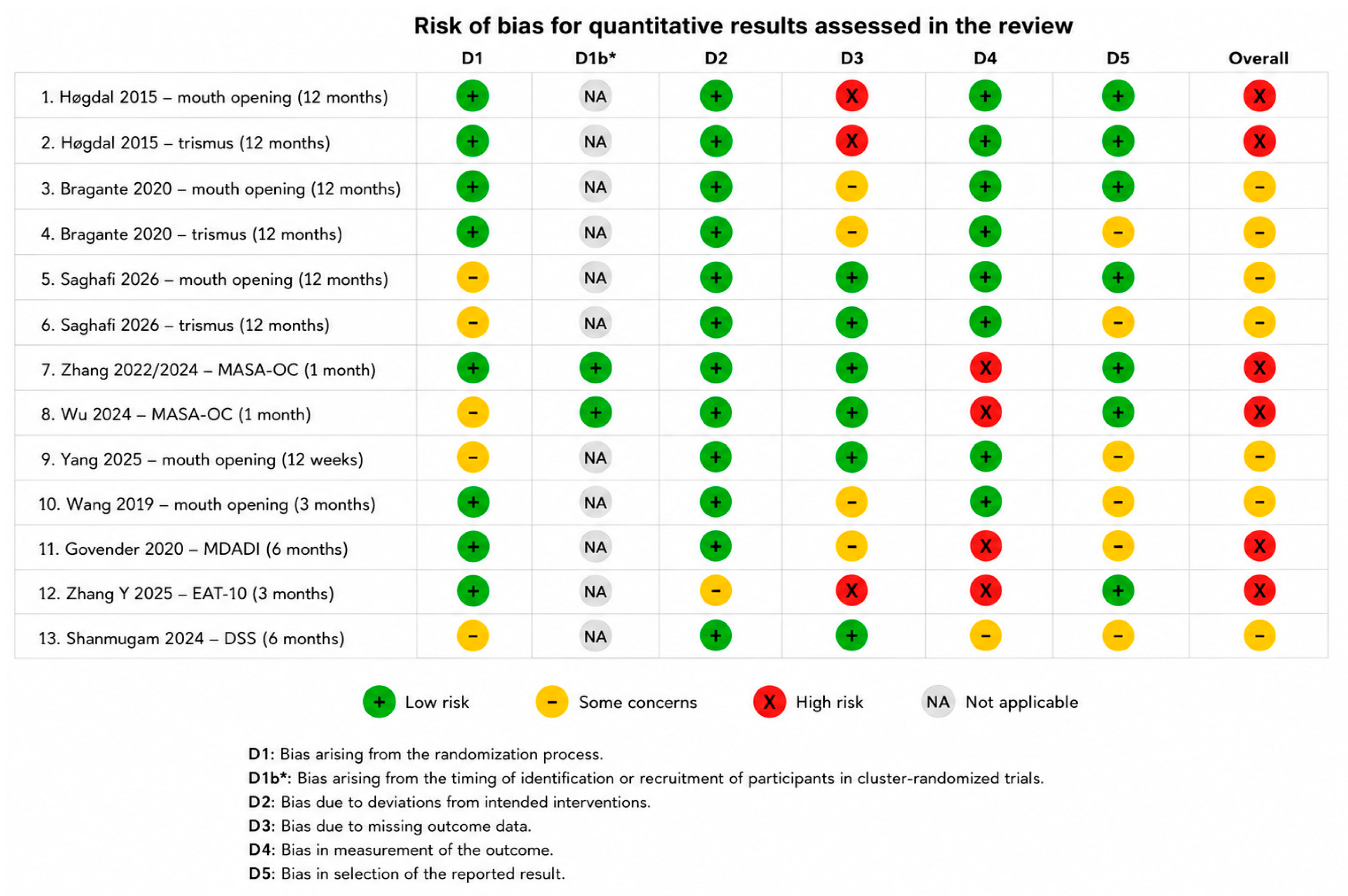
Risk of bias was assessed for 13 quantitative results: six effect estimates included in the two meta-analyses and seven separately reported quantitative estimates. Seven results were judged as having some concerns and six as having high risk of bias; none was classified as low risk overall. The mouth-opening and trismus results from Høgdal et al. were judged to be at high risk because of missing outcome data. The corresponding results from Bragante et al. and Saghafi et al. raised some concerns, mainly related to missing outcome data, the randomization process, or selection of the reported result. The postoperative MASA-OC results from the Zhang and Wu trials were judged to be at high risk because the clinician-assessed outcome could have been influenced by knowledge of the assigned intervention. Among the additional separately reported estimates, Yang et al. [22], Wang et al. [27], and Shanmugam and Pravenkumar [40] raised some concerns, whereas Govender et al. [36] and Zhang Y et al. [39] were judged to be at high risk of bias. Domain-level judgements are shown in Figure 2, and the supporting reasons are provided in Supplementary Table S2.

3.4. Preventive Jaw Rehabilitation Versus Usual Care: Mouth Opening

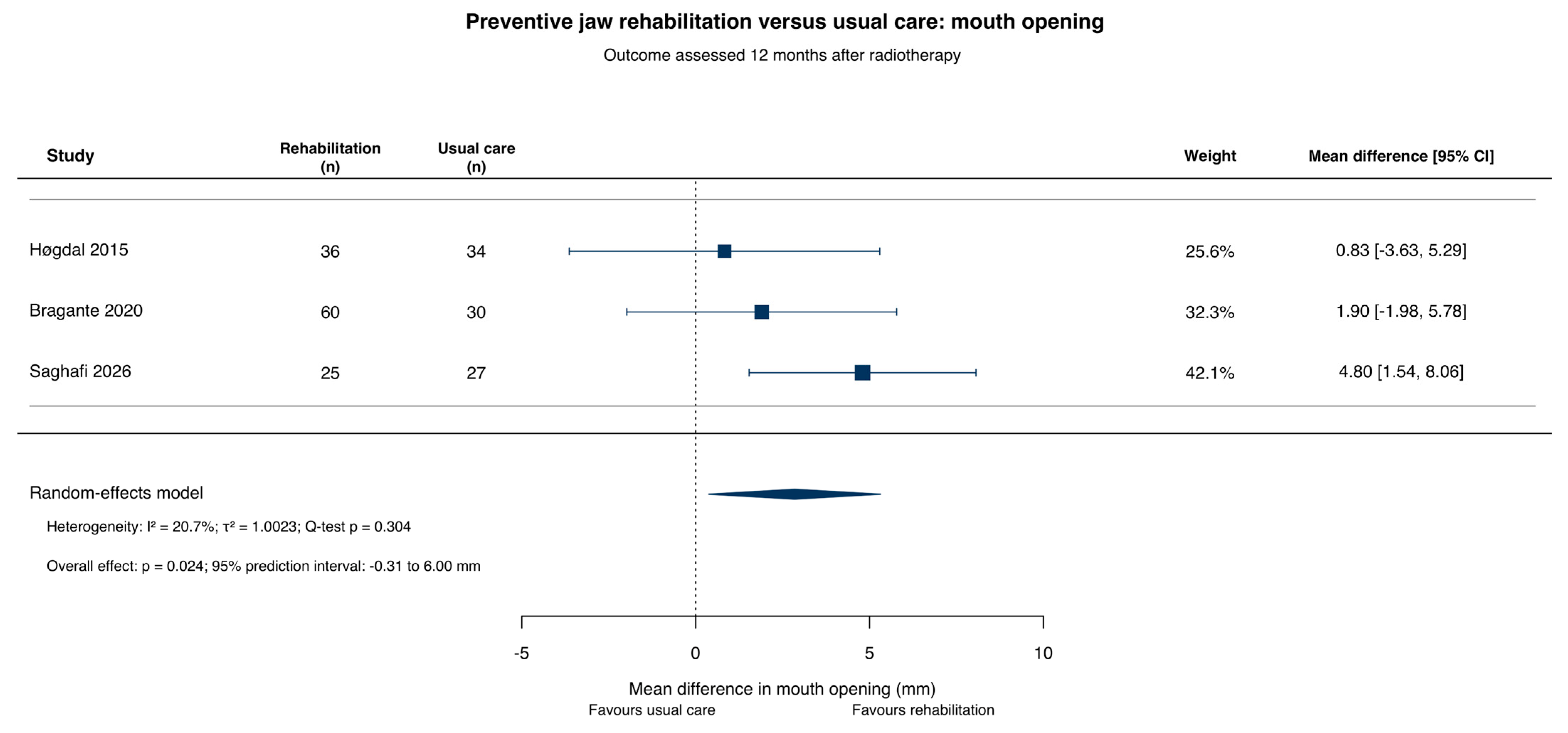
Three independent trials comparing preventive jaw rehabilitation with usual care contributed to the mouth-opening meta-analysis [23,24,28]. All three trials contributed change-from-baseline estimates to the principal analysis. Høgdal et al. included 36 intervention and 34 control participants with complete measurements across the required assessments, whereas the Bragante et al. [24] estimate was based on the intention-to-treat GEE analysis of all randomized participants (60 combined intervention and 30 control). Saghafi et al. contributed 25 intervention and 27 control participants at 12 months. The pooled estimate favoured rehabilitation (MD = 2.85 mm). Under the primary conventional Wald inference, the 95% CI was 0.38 to 5.32 (p = 0.024). The modified Hartung–Knapp sensitivity analysis produced a wider interval that included no effect (95% CI −2.58 to 8.27; p = 0.152), indicating that statistical inference was sensitive to the method used. Between-study heterogeneity was low (I2 = 20.7%, τ2 = 1.0023; Q-test p = 0.304), and the conventional 95% prediction interval ranged from −0.31 to 6.00 mm. Given that it was estimated from only three trials, this prediction interval is highly uncertain and should be interpreted descriptively (Figure 3).
The direction of effect was consistent across the included trials. Sensitivity analyses in which each active arm of the three-arm Bragante trial was entered separately also favoured rehabilitation under conventional Wald inference (MD = 3.03 mm, 95% CI 0.58 to 5.48; and MD = 2.81 mm, 95% CI 0.06 to 5.56). The endpoint-only analysis produced a comparable estimate, although with lower precision (MD = 2.50 mm, 95% CI −0.51 to 5.51).

3.5. Preventive Jaw Rehabilitation Versus Usual Care: Trismus

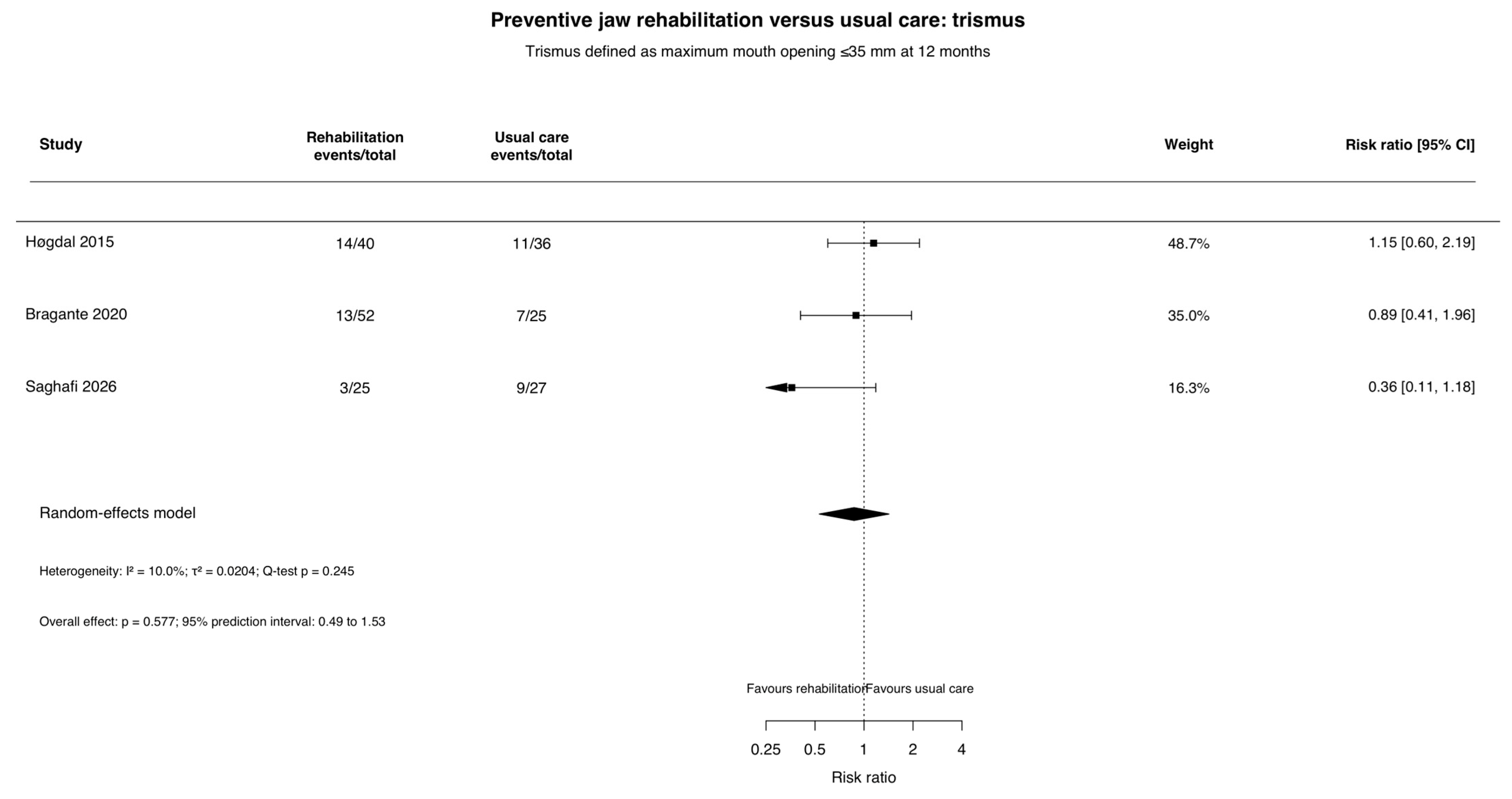
Three independent trials comparing preventive jaw rehabilitation with usual care reported dichotomous trismus outcomes [23,24,28]. For Bragante et al. [24], the 12-month trismus analysis included participants with available outcome data (13/52 events in the combined intervention groups and 7/25 in the control group), rather than the full intention-to-treat sample used for continuous mouth opening. In Høgdal et al., the 12-month trismus analysis included all participants assessed at that visit (14/40 vs. 11/36), whereas the continuous mouth-opening analysis required complete measurements across the relevant assessments (36/34). The pooled estimate favoured rehabilitation but was imprecise and compatible with no effect (RR = 0.87). Under conventional Wald inference, the 95% CI was 0.53 to 1.42 (p = 0.577). The modified Hartung–Knapp sensitivity analysis yielded a wider interval that also included no effect (95% CI 0.25 to 2.98; p = 0.673). Individual point estimates were not uniformly aligned, as Høgdal et al. favoured usual care (RR = 1.15). Between-study heterogeneity was low (I2 = 10.0%, τ2 = 0.0204; Q-test p = 0.245), and the conventional 95% prediction interval ranged from 0.49 to 1.53. Given that it was estimated from only three trials, this prediction interval is highly uncertain and should be interpreted descriptively (Figure 4). Sensitivity analyses using each Bragante intervention arm separately or the 6-month Saghafi assessment did not materially change the direction of the result.

3.6. Postoperative Swallowing Rehabilitation After Oral-Cancer Surgery

Two sequential cluster-randomized cohorts comparing postoperative swallowing rehabilitation with routine care after oral-cancer surgery and free-flap reconstruction reported MASA-OC outcomes at 1 month [20,21,32]. Both were conducted at the same centre under the same registered protocol (ChiCTR2100050398), but recruitment periods did not overlap: Zhang et al. recruited from August 2021 to January 2022 using 18 ward-room clusters, whereas Wu et al. recruited a subsequent cohort from February to August 2022 using eight ward-room clusters. No participant contributed to both estimates; the datasets were therefore treated as participant-level independent. Published model-based estimates and standard errors were used for both cohorts. Both estimates favoured rehabilitation but were reported separately because the variance estimates were not sufficiently comparable for pooling. Zhang et al. [20] reported an adjusted between-group difference in change of 10.06 points (95% CI 7.68–12.44), whereas Wu et al. [21] reported a GEE group-by-time coefficient of 7.289 (SE = 1.621; 95% CI 4.11–10.47).

3.7. Additional Intervention Contrasts and Narrative Synthesis

Trials comparing early versus delayed rehabilitation, basic versus enhanced rehabilitation, the same programme with versus without additional support, or alternative active modalities or delivery strategies were analysed separately from rehabilitation-versus-usual-care trials. Several of these comparisons produced favourable estimates, including earlier initiation of mouth-opening exercises, telephone-supported mouth-opening rehabilitation, and context-specific swallowing interventions. The corresponding quantitative results are presented in Supplementary Table S1.
The remaining studies were synthesized narratively when differences in intervention contrast, clinical context, outcome, or available numerical data precluded pooling. These included voice and communication rehabilitation, post-laryngectomy rehabilitation, adherence and delivery-mode interventions, active-device comparisons, and active versus sham neuromuscular electrical stimulation. Companion and follow-up publications from the same randomized population were treated as reports of a single trial.

4. Discussion

This systematic review provides a comprehensive synthesis of 21 independent randomized trials evaluating rehabilitation across the spectrum of functional sequelae associated with head and neck cancer. The revised quantitative synthesis, organized according to the randomized intervention contrast, favoured greater mouth opening, although the small-sample-adjusted sensitivity interval included no effect. Separate postoperative swallowing estimates also favoured rehabilitation. Preventive jaw rehabilitation also produced a favourable pooled estimate for trismus, although the available evidence was less precise. Other trials addressed intervention timing, additional support, enhanced programmes, and alternative active modalities, extending the evidence beyond the comparisons included in the meta-analyses.
The mouth-opening meta-analysis favoured preventive jaw rehabilitation compared with usual care, with a pooled mean difference of 2.85 mm and low between-study heterogeneity. The direction of effect was consistent across the included trials and analyses using either active arm of the Bragante trial. However, while the conventional Wald confidence interval excluded no effect, the modified Hartung–Knapp sensitivity interval included no effect, showing that the inferential conclusion was sensitive to the method used. The conventional prediction interval also included the possibility of no effect and is highly uncertain because it was estimated from only three trials. Taken together, the estimates suggest a possible benefit but remain insufficiently precise for a firm inferential conclusion. Structured jaw mobilization may counteract treatment-related stiffness and help preserve mandibular mobility. Improvements in mouth opening may facilitate mastication, oral hygiene, speech, dental care, and routine clinical examination, particularly in patients exposed to radiotherapy-related fibrosis or postoperative scar restriction [11,47,48].
The pooled estimate for trismus also favoured preventive jaw rehabilitation but was imprecise and compatible with no effect, with low between-study heterogeneity. Both the conventional and modified Hartung–Knapp confidence intervals included no effect, with the latter being substantially wider. The conventional prediction interval also included no effect and is highly uncertain because it was estimated from only three trials. The available evidence therefore remains insufficiently precise to confirm the magnitude of the preventive benefit; moreover, the Høgdal point estimate favoured usual care (RR = 1.15), despite the pooled estimate favouring rehabilitation. Preserving mandibular mobility before established fibrosis develops may be more achievable than reversing long-standing restriction. Further trials with larger samples, consistent diagnostic thresholds, and detailed adherence reporting are needed to define the preventive effect more precisely [11,47,48,49].
Postoperative swallowing rehabilitation produced favourable estimates in MASA-OC scores after oral-cancer surgery and free-flap reconstruction. Both cohort-specific estimates favoured rehabilitation: the adjusted between-group difference in change was 10.06 points (95% CI 7.68–12.44) in Zhang et al. [20], and the GEE group-by-time coefficient was 7.29 points (95% CI 4.11–10.47) in Wu et al. [21]. The estimates were not pooled because their variance structures could not be established as sufficiently comparable. Early, structured swallowing rehabilitation may therefore improve functional recovery in this specific postoperative population. The result applies to a defined surgical context and objective clinical measure, while preventive exercise during radiotherapy, prehabilitation, and rehabilitation of established dysphagia were evaluated through distinct comparisons. Presenting these settings separately provides a more clinically informative account of the available evidence.
The trials analysed separately provide complementary information on how rehabilitation programmes may be optimized. Favourable individual estimates were reported for earlier initiation of mouth-opening exercises [22], the addition of structured telephone support to a mouth-opening programme [27], and selected swallowing interventions delivered before, during, or after oncological treatment [36,39,40]. These studies evaluated timing, additional components, or delivery strategies rather than the same treatment contrast as the principal meta-analyses and were therefore presented separately. The broad clinical scope of the review identified substantial diversity in intervention content, comparator conditions, treatment timing, supervision, tumour site, and oncological treatment. Reorganizing the analyses according to the randomized contrast reduced conceptual heterogeneity and produced clinically interpretable estimates for specific rehabilitation questions. The estimates are therefore most applicable to the specific functional deficit, treatment stage, and therapeutic objective evaluated.
The result-specific RoB 2 assessment identified some concerns for seven results and high risk of bias for six results. The high-risk judgements for the Høgdal outcomes arose from missing follow-up data, whereas those for postoperative swallowing were related to clinician-assessed MASA-OC scores in non-blinded trials. The Bragante and Saghafi results raised some concerns but retained low-risk judgements for outcome measurement. Among the additional separately reported estimates, Yang et al. [22], Wang et al. [27], and Shanmugam and Pravenkumar [40] raised some concerns, whereas Govender et al. [36] and Zhang Y et al. [39] were judged to be at high risk of bias. The direction of effect remained consistent within the mouth-opening analysis and across the postoperative swallowing estimates, although the magnitude of these estimates should be interpreted in light of the identified methodological limitations.
Preventive jaw rehabilitation produced favourable estimates for mandibular mobility, while postoperative swallowing rehabilitation also favoured functional recovery after oral-cancer surgery and free-flap reconstruction. The favourable direction of the trismus estimate warrants further investigation of preventive jaw exercise during oncological treatment. Preventive jaw and postoperative swallowing rehabilitation may be considered according to the patient’s functional presentation and treatment stage, with physiotherapists, speech-language pathologists, and other rehabilitation professionals contributing to multidisciplinary head and neck cancer care.
Future research should focus on improving methodological consistency across rehabilitation trials. Larger multicentre randomized controlled trials with clearly defined comparator conditions are required to refine the optimal timing, intensity, therapeutic components, and delivery of rehabilitation interventions [50]. Standardization of outcome measures would facilitate comparison between studies and allow more precise quantitative syntheses. Furthermore, future investigations should evaluate long-term functional recovery, patient-reported outcomes, adherence to rehabilitation programmes, and cost-effectiveness to better define the role of rehabilitation within contemporary head and neck cancer management [11,49].
The present review has several limitations that should be considered when interpreting the findings. First, the broad scope of the review encompassed differences in participant characteristics, rehabilitation interventions, comparator conditions, treatment timing, programme duration, and outcome measures. Restricting each meta-analysis to a homogeneous intervention contrast improved clinical interpretability, although it reduced the number of trials contributing to each pooled estimate.
Second, several intervention contrasts were represented by individual randomized trials, and the two meta-analyses each included three independent trials. The use of different assessment instruments and follow-up periods limited quantitative pooling across some swallowing, voice, communication, and adherence-related outcomes. These findings were therefore retained through separate quantitative estimates and narrative synthesis. The restriction to publications in English or Spanish may also have resulted in the exclusion of potentially relevant evidence published in other languages. With only three trials in each meta-analysis, estimation of τ2, small-sample-adjusted inference, and prediction intervals is intrinsically unstable; the modified Hartung–Knapp analyses were therefore used to assess robustness rather than as definitive inferential tests.
Another limitation concerns the risk of bias of the quantitative results assessed in this review. Seven result-specific assessments raised some concerns and six were judged to be at high risk, mainly because of missing outcome data or potential influence of allocation knowledge on clinician-assessed outcomes. These issues reduce confidence in the precision of the pooled and separately reported estimates and should be considered when interpreting their magnitude. In addition, the small number of trials available for each outcome precluded a reliable assessment of publication bias.

5. Conclusions

Some targeted rehabilitation interventions produced favourable functional estimates in adults with head and neck cancer. Compared with usual care, preventive jaw rehabilitation favoured greater mouth opening, but the small-sample-adjusted confidence interval included no effect. The pooled estimate for trismus also favoured rehabilitation, although further trials are needed to determine the magnitude of this preventive effect more precisely. Postoperative swallowing rehabilitation favoured higher MASA-OC scores in both sequential cohorts after oral-cancer surgery and free-flap reconstruction.
The most consistent favourable estimates were observed for mandibular mobility and postoperative swallowing function, while separate trials provided additional favourable evidence regarding intervention timing, therapeutic enhancement, and delivery support. Rehabilitation strategies should be selected according to the functional deficit and clinical context within multidisciplinary head and neck cancer care.

Supplementary Materials

The following supporting information can be downloaded at: https://www.mdpi.com/article/10.3390/medicina62091648/s1, Supplementary Material S1: Complete Electronic Search Strategies; Supplementary Material S2: PRISMA 2020 Checklist; Table S1: Individual effect estimates for intervention contrasts not included in meta-analysis; Table S2: Result-specific risk-of-bias assessments for quantitative results. Reference [51] is cited in the supplementary materials.

Author Contributions

Conceptualization, M.L.-B., C.F.-M. and Á.R.Y.-Á.; methodology, M.L.-B. and C.F.-M.; formal analysis, C.F.-M.; investigation, M.L.-B.; data curation, M.L.-B. and C.F.-M.; writing—original draft preparation, M.L.-B.; writing—review and editing, M.L.-B., C.F.-M., D.T.-L., E.O.-F., C.J.B.-Q. and Á.R.Y.-Á.; supervision, C.F.-M. and Á.R.Y.-Á. All authors have read and agreed to the published version of the manuscript.

Funding

This research received no external funding.

Data Availability Statement

The data supporting the findings of this study are available within the article and its Supplementary Materials.

Conflicts of Interest

The authors declare no conflicts of interest.

References

  1. Bray, F.; Laversanne, M.; Sung, H.; Ferlay, J.; Siegel, R.L.; Soerjomataram, I.; Jemal, A. Global cancer statistics 2022: GLOBOCAN estimates of incidence and mortality worldwide for 36 cancers in 185 countries. CA Cancer J. Clin. 2024, 74, 229–263. [Google Scholar] [CrossRef] [Scilit] [PubMed]
  2. Johnson, D.E.; Burtness, B.; Leemans, C.R.; Lui, V.W.Y.; Bauman, J.E.; Grandis, J.R. Head and neck squamous cell carcinoma. Nat. Rev. Dis. Primers 2020, 6, 92. [Google Scholar] [CrossRef] [Scilit] [PubMed]
  3. Cohen, E.E.W.; LaMonte, S.J.; Erb, N.L.; Beckman, K.L.; Sadeghi, N.; Hutcheson, K.A.; Stubblefield, M.D.; Abbott, D.M.; Fisher, P.S.; Stein, K.D.; et al. American Cancer Society head and neck cancer survivorship care guideline. CA Cancer J. Clin. 2016, 66, 203–239. [Google Scholar] [CrossRef] [Scilit] [PubMed]
  4. Stubblefield, M.D. Radiation fibrosis syndrome: Neuromuscular and musculoskeletal complications in cancer survivors. PM&R 2011, 3, 1041–1054. [Google Scholar] [CrossRef] [Scilit] [PubMed]
  5. Heijnen, B.J.; Speyer, R.; Kertscher, B.; Cordier, R.; Koetsenruijter, K.W.J.; Swan, K.; Bogaardt, H. Dysphagia, speech, voice, and trismus following radiotherapy and/or chemotherapy in patients with head and neck carcinoma: Review of the literature. BioMed Res. Int. 2016, 2016, 6086894. [Google Scholar] [CrossRef] [Scilit] [PubMed]
  6. Rodriguez, A.M.; Komar, A.; Ringash, J.; Chan, C.; Davis, A.M.; Jones, J.; Martino, R.; McEwen, S. A scoping review of rehabilitation interventions for survivors of head and neck cancer. Disabil. Rehabil. 2019, 41, 2093–2107. [Google Scholar] [CrossRef] [Scilit] [PubMed]
  7. Dijkstra, P.U.; Kalk, W.W.I.; Roodenburg, J.L.N. Trismus in head and neck oncology: A systematic review. Oral Oncol. 2004, 40, 879–889. [Google Scholar] [CrossRef] [Scilit] [PubMed]
  8. Rogers, S.N.; Semple, C.; Babb, M.; Humphris, G. Quality of life considerations in head and neck cancer: United Kingdom National Multidisciplinary Guidelines. J. Laryngol. Otol. 2016, 130, S49–S52. [Google Scholar] [CrossRef] [Scilit] [PubMed]
  9. Hutcheson, K.A.; Lewin, J.S. Functional outcomes after chemoradiotherapy of laryngeal and pharyngeal cancers. Curr. Oncol. Rep. 2012, 14, 158–165. [Google Scholar] [CrossRef] [Scilit] [PubMed]
  10. Fernández-Morales, C.; Albornoz-Cabello, M.; Cardero-Durán, M.Á.; Moreno-Vázquez, J.M.; Espejo-Antúnez, L. Effectiveness of a multimodal physiotherapy program in fighter pilots with flight-related neck pain: A randomized controlled trial. PM&R 2025, 17, 1308–1320. [Google Scholar] [CrossRef] [Scilit] [PubMed]
  11. Anarte-Lazo, E.; Bravo-Vazquez, A.; Bernal-Utrera, C.; Torres-Lagares, D.; Rodriguez-Blanco, C.; Falla, D. Rehabilitation interventions for the management of treatment-induced trismus in people with head and neck cancer: A scoping review. Clin. Rehabil. 2026, 2692155261426637. [Google Scholar] [CrossRef] [Scilit] [PubMed]
  12. Page, M.J.; McKenzie, J.E.; Bossuyt, P.M.; Boutron, I.; Hoffmann, T.C.; Mulrow, C.D.; Shamseer, L.; Tetzlaff, J.M.; Akl, E.A.; Brennan, S.E.; et al. The PRISMA 2020 statement: An updated guideline for reporting systematic reviews. BMJ 2021, 372, n71. [Google Scholar] [CrossRef] [Scilit] [PubMed]
  13. Higgins, J.P.T.; Thomas, J.; Chandler, J.; Cumpston, M.; Li, T.; Page, M.J.; Welch, V.A. (Eds.) Cochrane Handbook for Systematic Reviews of Interventions; Version 6.5 (updated August 2024); Cochrane: London, UK, 2024; Available online: https://www.cochrane.org/authors/handbooks-and-manuals/handbook/current (accessed on 31 July 2026).
  14. PROSPERO. International Prospective Register of Systematic Reviews. Record CRD420261425384. Available online: https://www.crd.york.ac.uk/prospero/ (accessed on 31 July 2026).
  15. Ouzzani, M.; Hammady, H.; Fedorowicz, Z.; Elmagarmid, A. Rayyan—A web and mobile app for systematic reviews. Syst. Rev. 2016, 5, 210. [Google Scholar] [CrossRef] [Scilit] [PubMed]
  16. Sterne, J.A.C.; Savović, J.; Page, M.J.; Elbers, R.G.; Blencowe, N.S.; Boutron, I.; Cates, C.J.; Cheng, H.Y.; Corbett, M.S.; Eldridge, S.M.; et al. RoB 2: A revised tool for assessing risk of bias in randomised trials. BMJ 2019, 366, l4898. [Google Scholar] [CrossRef] [Scilit] [PubMed]
  17. Risk of Bias Tools. RoB 2 for Cluster-Randomized Trials, Version 18 March 2021. Available online: https://www.riskofbias.info/welcome/rob-2-0-tool/rob-2-for-cluster-randomized-trials (accessed on 31 July 2026).
  18. McGuinness, L.A.; Higgins, J.P.T. Risk-of-bias VISualization (robvis): An R package and Shiny web app for visualizing risk-of-bias assessments. Res. Synth. Methods 2021, 12, 55–61. [Google Scholar] [CrossRef] [Scilit] [PubMed]
  19. Viechtbauer, W. Conducting meta-analyses in R with the metafor package. J. Stat. Softw. 2010, 36, 1–48. [Google Scholar] [CrossRef] [Scilit]
  20. Zhang, J.; Wu, H.Y.; Shan, X.F.; Cai, Z.G.; Zhang, L.; Yang, Y. Effects of personalized oral exercises on swallowing function among patients with oral cancer after free flap transplantation: A cluster randomized controlled trial. Int. J. Oral Maxillofac. Surg. 2024, 53, 355–363. [Google Scholar] [CrossRef] [Scilit] [PubMed]
  21. Wu, H.Y.; Shan, X.F.; Cai, Z.G.; Zhang, J.; Li, P.J.; Zhang, L.; Yang, Y. Early swallowing training after free flap surgery in oral cancer: A randomized controlled trial. Oral Dis. 2024, 30, 1970–1980. [Google Scholar] [CrossRef] [Scilit] [PubMed]
  22. Yang, L.; Hao, G.; Yang, W.; Hou, L. The impact of different timing of mouth opening exercises on trismus in postoperative radiotherapy patients with oral cancer. J. Stomatol. Oral Maxillofac. Surg. 2025, 126, 102104. [Google Scholar] [CrossRef] [Scilit] [PubMed]
  23. Høgdal, N.; Juhl, C.; Aadahl, M.; Gluud, C. Early preventive exercises versus usual care does not seem to reduce trismus in patients treated with radiotherapy for cancer in the oral cavity or oropharynx: A randomised clinical trial. Acta Oncol. 2015, 54, 80–87. [Google Scholar] [CrossRef] [Scilit] [PubMed]
  24. Bragante, K.C.; Groisman, S.; Carboni, C.; Baiocchi, J.M.T.; da Motta, N.W.; Silva, M.F.; Pinto, R.C.; Plentz, R.D.M.; Wienandts, P.; Jotz, G.P. Efficacy of exercise therapy during radiotherapy to prevent reduction in mouth opening in patients with head and neck cancer: A randomized controlled trial. Oral Surg. Oral Med. Oral Pathol. Oral Radiol. 2020, 129, 27–38. [Google Scholar] [CrossRef] [Scilit] [PubMed]
  25. Loorents, V.; Rosell, J.; Karlsson, C.; Lidbäck, M.; Hultman, K.; Börjeson, S. Prophylactic training for the prevention of radiotherapy-induced trismus—A randomised study. Acta Oncol. 2014, 53, 530–538. [Google Scholar] [CrossRef] [Scilit] [PubMed]
  26. van der Geer, S.J.; Reintsema, H.; Kamstra, J.I.; Roodenburg, J.L.N.; Dijkstra, P.U. The use of stretching devices for treatment of trismus in head and neck cancer patients: A randomized controlled trial. Support. Care Cancer 2020, 28, 9–11. [Google Scholar] [CrossRef] [Scilit] [PubMed]
  27. Wang, T.J.; Su, J.H.; Leung, K.W.; Liang, S.Y.; Wu, S.F.; Wang, H.M. Effects of a mouth-opening intervention with remote support on adherence, the maximum interincisal opening, and mandibular function of postoperative oral cancer patients: A randomized clinical trial. Eur. J. Oncol. Nurs. 2019, 40, 111–119. [Google Scholar] [CrossRef] [Scilit] [PubMed]
  28. Saghafi, E.; Kadhim, K.; Andås, C.A.; Cahlin, B.J.; Finizia, C.; Axelsson, T.; Kjeller, G.; Tuomi, L. Jaw exercise in head and neck cancer patients for prevention of temporomandibular disorders: A randomized controlled trial. J. Cancer Surviv. 2026, 20, 1145–1156. [Google Scholar] [CrossRef] [Scilit] [PubMed]
  29. Schipor-Diaconu, E.T.; Grigore, R.; Bejenaru, P.L.; Simion-Antonie, C.B.; Taher, B.P.; Rujan, S.A.; Cirstea, A.I.; Iftimie, R.A.; Stancalie-Nedelcu, R.I. Prophylactic swallowing exercises in patients with laryngeal cancer who underwent total laryngectomy—A randomized trial. Curr. Oncol. 2024, 31, 6853–6866. [Google Scholar] [CrossRef] [Scilit] [PubMed]
  30. Carnaby-Mann, G.; Crary, M.A.; Schmalfuss, I.; Amdur, R. “Pharyngocise”: Randomized controlled trial of preventative exercises to maintain muscle structure and swallowing function during head-and-neck chemoradiotherapy. Int. J. Radiat. Oncol. Biol. Phys. 2012, 83, 210–219. [Google Scholar] [CrossRef] [Scilit] [PubMed]
  31. Lazarus, C.L.; Husaini, H.; Falciglia, D.; DeLacure, M.; Branski, R.C.; Kraus, D.; Lee, N.; Ho, M.; Ganz, C.; Smith, B.; et al. Effects of exercise on swallowing and tongue strength in patients with oral and oropharyngeal cancer treated with primary radiotherapy with or without chemotherapy. Int. J. Oral Maxillofac. Surg. 2014, 43, 523–530. [Google Scholar] [CrossRef] [Scilit] [PubMed]
  32. Zhang, J.; Wu, H.Y.; Lu, Q.; Shan, X.F.; Cai, Z.G.; Zhang, L.; Wei, L.; Yang, Y. Effects of personalized swallowing rehabilitation in patients with oral cancer after free flap transplantation: A cluster randomized controlled trial. Oral Oncol. 2022, 134, 106097. [Google Scholar] [CrossRef] [Scilit] [PubMed]
  33. Krisciunas, G.P.; Castellano, K.; McCulloch, T.M.; Lazarus, C.L.; Pauloski, B.R.; Meyer, T.K.; Graner, D.; Van Daele, D.J.; Silbergleit, A.K.; Crujido, L.R.; et al. Impact of compliance on dysphagia rehabilitation in head and neck cancer patients: Results from a multi-center clinical trial. Dysphagia 2017, 32, 327–336. [Google Scholar] [CrossRef] [Scilit] [PubMed]
  34. Messing, B.P.; Ward, E.C.; Lazarus, C.L.; Kim, M.; Zhou, X.; Silinonte, J.; Gold, D.; Harrer, K.; Ulmer, K.; Merritt, S.; et al. Prophylactic swallow therapy for patients with head and neck cancer undergoing chemoradiotherapy: A randomized trial. Dysphagia 2017, 32, 487–500. [Google Scholar] [CrossRef] [Scilit] [PubMed]
  35. Baudelet, M.; Van den Steen, L.; Duprez, F.; Goeleven, A.; Nuyts, S.; Nevens, D.; Vandenbruaene, C.; Massonet, H.; Vergauwen, A.; Vauterin, T.; et al. Prophylactic swallowing therapy during head-and-neck cancer radiotherapy: Effect of service-delivery mode and overall adherence level on swallowing function and muscle strength—The PRESTO Trial. Dysphagia 2024, 39, 267–281. [Google Scholar] [CrossRef] [Scilit] [PubMed]
  36. Govender, R.; Smith, C.H.; Barratt, H.; Gardner, B.; Taylor, S.A. SIP SMART: A parallel group randomised feasibility trial of a tailored pre-treatment swallowing intervention package compared with usual care for patients with head and neck cancer. BMC Cancer 2020, 20, 360. [Google Scholar] [CrossRef] [Scilit] [PubMed]
  37. Tuomi, L.; Dotevall, H.; Bergquist, H.; Petersson, K.; Andersson, M.; Finizia, C. The effect of the Shaker head-lift exercise on swallowing function following treatment for head and neck cancer: Results from a randomized, controlled trial with videofluoroscopic evaluation. Head Neck 2022, 44, 862–875. [Google Scholar] [CrossRef] [Scilit] [PubMed]
  38. Petersson, K.; Finizia, C.; Pauli, N.; Dotevall, H.; Tuomi, L. A randomized controlled study evaluating the head-lift exercise in head and neck cancer patients with radiation-induced dysphagia: Effect on swallowing function and health-related quality of life over 12 months. Eur. Arch. Otorhinolaryngol. 2023, 280, 5445–5457. [Google Scholar] [CrossRef] [Scilit] [PubMed]
  39. Zhang, Y.; Zhu, Y.; Zhang, L.; Wang, Y.; Xu, W.; Wan, H. Normalcy of swallowing in head and neck cancer patients undergoing particle therapy supported by combined swallowing training and feeding management: A randomised controlled trial. J. Oral Rehabil. 2025, 52, 847–858. [Google Scholar] [CrossRef] [Scilit] [PubMed]
  40. Shanmugam, S.; Pravenkumar, R.R. Impact of prehabilitation with preoperative swallowing exercises on postoperative swallowing morbidity in oral cavity cancer: Randomized controlled trial. J. Maxillofac. Oral Surg. 2024, 23, 1063–1071. [Google Scholar] [CrossRef] [Scilit] [PubMed]
  41. Tuomi, L.; Andréll, P.; Finizia, C. Effects of voice rehabilitation after radiation therapy for laryngeal cancer: A randomized controlled study. Int. J. Radiat. Oncol. Biol. Phys. 2014, 89, 964–972. [Google Scholar] [CrossRef] [Scilit] [PubMed]
  42. Karlsson, T.; Johansson, M.; Andréll, P.; Finizia, C. Effects of voice rehabilitation on health-related quality of life, communication and voice in laryngeal cancer patients treated with radiotherapy: A randomised controlled trial. Acta Oncol. 2015, 54, 1017–1024. [Google Scholar] [CrossRef] [Scilit] [PubMed]
  43. Tuomi, L.; Johansson, M.; Lindell, E.; Folkestad, L.; Malmerfors, M.; Finizia, C. Voice range profile and health-related quality of life measurements following voice rehabilitation after radiotherapy: A randomized controlled study. J. Voice 2017, 31, 115.e9–115.e16. [Google Scholar] [CrossRef] [Scilit] [PubMed]
  44. Millgård, M.; Tuomi, L. Voice quality in laryngeal cancer patients: A randomized controlled study of the effect of voice rehabilitation. J. Voice 2020, 34, 486.e13–486.e22. [Google Scholar] [CrossRef] [Scilit] [PubMed]
  45. Karlsson, T.; Tuomi, L.; Finizia, C. Do effects of voice rehabilitation in patients irradiated for laryngeal cancer remain 5 years postradiotherapy? J. Voice 2024, S0892-1997(24)00074-2. [Google Scholar] [CrossRef] [Scilit] [PubMed]
  46. Li, L.; Liu, Y.; Zhang, Y.; Li, X.; Jin, X.; Ren, X.; Nan, F. The effectiveness of an esophageal speech rehabilitation program for total laryngectomy patients based on behavior change wheel theory: A randomized controlled trial. J. Voice 2025, S0892-1997(25)00133-X. [Google Scholar] [CrossRef] [Scilit] [PubMed]
  47. Dijkstra, P.U.; Sterken, M.W.; Pater, R.; Spijkervet, F.K.L.; Roodenburg, J.L.N. Exercise therapy for trismus in head and neck cancer. Oral Oncol. 2007, 43, 389–394. [Google Scholar] [CrossRef] [Scilit] [PubMed]
  48. Kamstra, J.I.; van Leeuwen, M.; Roodenburg, J.L.N.; Dijkstra, P.U. Exercise therapy for trismus secondary to head and neck cancer: A systematic review. Head Neck 2017, 39, 2352–2362. [Google Scholar] [CrossRef] [Scilit] [PubMed]
  49. Chee, S.; Byrnes, Y.M.; Chorath, K.T.; Rajasekaran, K.; Deng, J. Interventions for trismus in head and neck cancer patients: A systematic review of randomized controlled trials. Integr. Cancer Ther. 2021, 20, 15347354211006474. [Google Scholar] [CrossRef] [Scilit] [PubMed]
  50. Arbelaez-Bonozo, L.; Luis-Sanchez, L.; Oliva-Ferrusola, E.; Fernandez-Morales, C.; Albornoz-Cabello, M.; Gutierrez-Perez, J.-L.; Torres-Lagares, D. Implant Prosthetic Rehabilitation in a Mandible Osteosarcoma Patient: A Clinical Report. Prosthesis 2025, 7, 22. [Google Scholar] [CrossRef] [Scilit]
  51. Lefebvre, C.; Glanville, J.; Briscoe, S.; Featherstone, R.; Littlewood, A.; Metzendorf, M.-I.; Noel-Storr, A.; Paynter, R.; Rader, T.; Thomas, J.; et al. Chapter 4: Searching for and selecting studies. In Cochrane Handbook for Systematic Reviews of Interventions; Higgins, J.P.T., Thomas, J., Chandler, J., Cumpston, M., Li, T., Page, M.J., Welch, V.A., Eds.; version 6.5.1; Cochrane: London, UK, 2025. [Google Scholar]
Figure 1. PRISMA 2020 flow diagram of the study selection process.
Medicina 62 01648 g001
Figure 2. Risk-of-bias assessment for the quantitative results assessed in the review [20,21,22,23,24,27,28,32,36,39,40]. D1: bias arising from the randomization process; D1b*: bias arising from the identification or recruitment of participants in cluster-randomized trials; D2: bias due to deviations from intended interventions; D3: bias due to missing outcome data; D4: bias in measurement of the outcome; D5: bias in selection of the reported result; * D1b applies only to cluster-randomized trials.
Medicina 62 01648 g002
Figure 3. Effect of preventive jaw rehabilitation versus usual care on mouth opening [23,24,28]. Forest plot of the random-effects meta-analysis, expressed as mean difference in millimetres. Positive values favour rehabilitation. The pooled confidence interval and prediction interval use the conventional REML/Wald framework; the modified Hartung–Knapp sensitivity analysis is reported in the text.
Medicina 62 01648 g003
Figure 4. Effect of preventive jaw rehabilitation versus usual care on trismus [23,24,28]. Forest plot of the random-effects meta-analysis. Risk ratios below 1 favour rehabilitation. The pooled confidence interval and prediction interval use the conventional REML/Wald framework; the modified Hartung–Knapp sensitivity analysis is reported in the text.
Medicina 62 01648 g004
Disclaimer/Publisher’s Note: The statements, opinions and data contained in all publications are solely those of the individual author(s) and contributor(s) and not of MDPI and/or the editor(s). MDPI and/or the editor(s) disclaim responsibility for any injury to people or property resulting from any ideas, methods, instructions or products referred to in the content.