Eustachian Tube Obstruction Grade as an Independent Determinant of Audiological and Quality-of-Life Outcomes in Pediatric Chronic Adenoiditis: A Retrospective Cohort Study

 ,
,  , , ,
, , ,
Abstract
1. Introduction
2. Materials and Methods
2.1. Study Design and Ethical Approval
2.2. Study Population
2.3. Endoscopic Evaluation and Eustachian Tube Obstruction Grading
2.4. Audiological and Clinical Assessment
2.5. Outcome Definition
2.6. Statistical Analysis
3. Results
3.1. Cohort Characteristics and ET Obstruction Distribution
3.2. Bivariate Correlations Between ET Obstruction Score and Outcome Measures
3.3. Multivariate Regression Models
3.4. Effect of Mucosal Appearance Among Children with Complete ET Obstruction
4. Discussion
5. Conclusions
Author Contributions
Funding
Institutional Review Board Statement
Informed Consent Statement
Data Availability Statement
Conflicts of Interest
Abbreviations
| AOM | Acute Otitis Media |
| AUC | Area Under the Curve |
| CI | Confidence Interval |
| CRP | C-Reactive Protein |
| ET | Eustachian Tube |
| ETD | Eustachian Tube Dysfunction |
| IgE | Immunoglobulin E |
| MEP | Middle Ear Pressure |
| NLR | Neutrophil-to-Lymphocyte Ratio |
| OME | Otitis Media with Effusion |
| OR | Odds Ratio |
| OSA-18 | Obstructive Sleep Apnea-18 Quality-of-Life Questionnaire |
| PMED | Persistent Middle Ear Dysfunction |
| PTA | Pure Tone Average |
| SD | Standard Deviation |
References
- Mashat, G.D.; Tran, H.H.; Urgessa, N.A.; Geethakumari, P.; Kampa, P.; Parchuri, R.; Bhandari, R.; Alnasser, A.R.; Akram, A.; Kar, S.; et al. The Correlation Between Otitis Media with Effusion and Adenoid Hypertrophy among Pediatric Patients: A Systematic Review. Cureus 2022, 14, e30985. [Google Scholar] [CrossRef] [PubMed]
- Rosenfeld, R.M.; Shin, J.J.; Schwartz, S.R.; Coggins, R.; Gagnon, L.; Hackell, J.M.; Hoelting, D.; Hunter, L.L.; Kummer, A.W.; Payne, S.C.; et al. Clinical Practice Guideline: Otitis Media with Effusion (Update). Otolaryngol.–Head Neck Surg. 2016, 154, S1–S41. [Google Scholar] [CrossRef] [PubMed]
- Mahbub, M.; Rahman, M. Correlation of Adenoid Hypertrophy on Nasoendoscopy and Audiological Parameters in Children. KYAMC J. 2021, 12, 18–21. [Google Scholar] [CrossRef]
- Seleim, A.; Elsamnody, A.; Amer, A. Different Techniques of Adenoidectomy and Its Impact on Middle Ear Pressure: A Randomized Controlled Study. Eur. Arch. Otorhinolaryngol. 2024, 281, 379–385. [Google Scholar] [CrossRef] [PubMed]
- Ahmad, Z.; Krüger, K.; Lautermann, J.; Lippert, B.; Tenenbaum, T.; Tigges, M.; Tisch, M. Adenoid Hypertrophy—Diagnosis and Treatment: The New S2k Guideline. HNO 2023, 71, 67–72. [Google Scholar] [CrossRef] [PubMed]
- Piotto, M.; Gambadauro, A.; Rocchi, A.; Lelii, M.; Madini, B.; Cerrato, L.; Chironi, F.; Belhaj, Y.; Patria, M. Pediatric Sleep Respiratory Disorders: A Narrative Review of Epidemiology and Risk Factors. Children 2023, 10, 955. [Google Scholar] [CrossRef] [PubMed]
- Menzies, B.; Teng, A.; Burns, M.; Lah, S. Neurocognitive Outcomes of Children with Sleep-Disordered Breathing: A Systematic Review with Meta-Analysis. Sleep Med. Rev. 2022, 63, 101629. [Google Scholar] [CrossRef] [PubMed]
- Al-Iede, M.; Alhelou, Z.; Hamdan, N.; Alramahi, B.; Algharibeh, S.; Qarajeh, A.; Ishtaieh, S.; Nsour, A.A.; AlAdwan, M.; Alhanbali, A.; et al. Impact of Adenotonsillectomy on Quality of Life in Pediatric Obstructive Sleep Apnoea (OSA): Insights from the OSA-18 Questionnaire. Nat. Sci. Sleep 2025, 17, 1291–1301. [Google Scholar] [CrossRef] [PubMed]
- Cassano, M.; De Corso, E.; Fiore, V.; Giancaspro, R.; Moffa, A.; Casale, M.; Trecca, E.; Mele, D.; Cassano, P.; Gelardi, M. Update of Endoscopic Classification System of Adenoid Hypertrophy Based on Clinical Experience on 7621 Children. Acta Otorhinolaryngol. Ital. 2022, 42, 257–264. [Google Scholar] [CrossRef] [PubMed]
- Peedikakkal, N.T.; Prakash, D.; Chandrakiran, C.; Patil, S.; Reddy, H.N. Endoscopic Grading, Radiological Grading and Clinical Features in Children with Chronic Adenoid Hypertrophy: A Correlational Study. Indian J. Otolaryngol. Head Neck Surg. 2023, 75, 725–731. [Google Scholar] [CrossRef] [PubMed]
- Lyakh, K.V.; Luhovskyi, S.; Kosakovskyi, A.; Shkorbotun, Y.; Skoryk, M. Clinical and Morphological Characteristics and Evaluation of Torus Tubarius in Children with Pharyngeal Tonsil Hypertrophy. Clin. Prev. Med. 2023, 8, 6–14. [Google Scholar] [CrossRef]
- ISO 8253-1:2010; Acoustics—Audiometric Test Methods—Part 1: Pure-Tone Air and Bone Conduction Audiometry. ISO: Geneva, Switzerland, 2010.
- ANSI/ASA S3.6-2018; Specification for Audiometers. Acoustical Society of America: New York, NY, USA, 2018.
- Jerger, J. Clinical Experience with Impedance Audiometry. Arch. Otolaryngol. 1970, 92, 311–324. [Google Scholar] [CrossRef] [PubMed]
- Moore, D.; Zobay, O.; Ferguson, M. Minimal and Mild Hearing Loss in Children: Association with Auditory Perception, Cognition, and Communication Problems. Ear Hear. 2020, 41, 720–732. [Google Scholar] [CrossRef] [PubMed]
- Cai, T.; McPherson, B.; Li, C.; Yang, F. Hearing Loss in Children with Otitis Media with Effusion: Actual and Simulated Effects on Speech Perception. Ear Hear. 2018, 39, 645–655. [Google Scholar] [CrossRef] [PubMed]
- Sohn, H.; Rosenfeld, R.M. Evaluation of Sleep-Disordered Breathing in Children. Otolaryngol. Head Neck Surg. 2003, 128, 344–352. [Google Scholar] [CrossRef] [PubMed]
- Syed, K.A.; Naina, P.; Sebastian, S.; Varghese, A.M. A Case-Control Study on the Association Between Endoscopic ACE Grade of Adenoid Hypertrophy and Hearing Loss in Children and Its Impact on Speech and Language Development. Indian J. Otolaryngol. Head Neck Surg. 2019, 71, 150–154. [Google Scholar] [CrossRef] [PubMed]
- Almutairi, A.A.; Aljabr, I.K.; Alsindi, Z.S.; Alkhawajah, A.A.; Aljasem, J.M.; Alzahrani, M.M.; Almaqhawi, A. Blood Inflammatory Markers as Predictors of Effusion Characteristics and Postoperative Hearing Outcomes in Children with Otitis Media with Effusion: A Retrospective Study. Medicina 2025, 61, 1520. [Google Scholar] [CrossRef] [PubMed]
- Elbistanli, M.S.; Koçak, H.E.; Acipayam, H.; Yiğider, A.P.; Keskin, M.; Kayhan, F.T. The Predictive Value of Neutrophil-Lymphocyte and Platelet-Lymphocyte Ratio for the Effusion Viscosity in Otitis Media with Chronic Effusion. J. Craniofac. Surg. 2017, 28, e244–e247. [Google Scholar] [CrossRef] [PubMed]
- Yukkaldıran, A.; Erdoğan, O.; Kaplama, M.E. Neutrophil-Lymphocyte and Platelet-Lymphocyte Ratios in Otitis Media with Effusion in Children: Diagnostic Role and Audiologic Correlations. Int. J. Clin. Pract. 2021, 75, e13805. [Google Scholar] [CrossRef] [PubMed]
- Yu, X.; Zhang, H.; Zong, S.; Xiao, H. Allergy in Pathogenesis of Eustachian Tube Dysfunction. World Allergy Organ. J. 2024, 17, 100860. [Google Scholar] [CrossRef] [PubMed]
- Vlastos, I.M.; Tsotsiou, N.; Almomani, M.; Doulaptsi, M.; Karatzanis, A.; Prokopakis, E. Is Allergic Rhinitis Related to Otitis Media with Effusion in Adults and Children? Applying Epidemiological Guidelines for Causation. Cells 2025, 14, 805. [Google Scholar] [CrossRef] [PubMed]
- Shin, J.M.; Yang, H.W.; Park, J.H.; Kim, T.H. Role of Nasal Fibroblasts in Airway Remodeling of Chronic Rhinosinusitis: The Modulating Functions Reexamined. Int. J. Mol. Sci. 2023, 24, 4017. [Google Scholar] [CrossRef] [PubMed]
- Berkiten, G.; Erhan, S.Ş.; Çelik, C.; Tutar, B.; Atar, Y.; Aksungur, E.; Sari, H.; Uyar, Y. An Assessment of the Effects of Adenoid Hypertrophy on Mucociliary Clearance and Nasal Cytology in Children. Int. J. Pediatr. Otorhinolaryngol. 2023, 174, 111718. [Google Scholar] [CrossRef] [PubMed]
- Sukumaran, G.K.; Sunanda, A.C.; George, S. The Impact of Adenotonsillectomy on the Quality of Life of Children with Obstructive Sleep Apnea. Int. Arch. Otorhinolaryngol. 2024, 28, e603–e607. [Google Scholar] [CrossRef] [PubMed]
- Major, M.P.; El-Hakim, H.; Witmans, M.; Major, P.W.; Flores-Mir, C. Adenoid Hypertrophy in Pediatric Sleep Disordered Breathing and Craniofacial Growth: The Emerging Role of Dentistry. J. Dent. Sleep Med. 2014, 1, 83–87. [Google Scholar] [CrossRef]
- Lee, K.; Tai, J.; Lee, S.H.; Kim, T.H. Advances in the Knowledge of the Underlying Airway Remodeling Mechanisms in Chronic Rhinosinusitis Based on the Endotypes: A Review. Int. J. Mol. Sci. 2021, 22, 910. [Google Scholar] [CrossRef] [PubMed]
- Pu, S.; Zhang, M.; Zhao, L.; Li, X.; Xu, H. A New Modified Endoscopic Evaluation System and Its Diagnostic Accuracy of Adenoid Hypertrophy in Children. Transl. Pediatr. 2025, 14, 1553–1562. [Google Scholar] [CrossRef] [PubMed]
- Ishman, S.L.; Maturo, S.; Schwartz, S.; McKenna, M.; Baldassari, C.M.; Bergeron, M.; Chernobilsky, B.; Ehsan, Z.; Gagnon, L.; Liu, Y.C.; et al. Expert Consensus Statement: Management of Pediatric Persistent Obstructive Sleep Apnea After Adenotonsillectomy. Otolaryngol. Head Neck Surg. 2023, 168, 115–130. [Google Scholar] [CrossRef] [PubMed]



| Variable | None (n = 42) | Partial (n = 114) | Complete (n = 80) | p-Value |
|---|---|---|---|---|
| Age (years), mean ± SD | 6.9 ± 2.1 | 6.8 ± 2.1 | 6.7 ± 1.9 | 0.81 |
| Male sex, n (%) | 22 (52.4%) | 56 (49.1%) | 47 (58.8%) | 0.50 |
| Symptom duration (months), mean ± SD | 11.9 ± 4.3 | 13.4 ± 4.0 | 16.9 ± 3.9 | <0.001 |
| AOM episodes/year, mean ± SD | 1.64 ± 1.41 | 2.17 ± 1.40 | 2.35 ± 1.34 | 0.027 |
| Cassano grade III–IV, n (%) | 5 (11.9%) | 60 (52.6%) | 62 (77.5%) | <0.001 |
| Allergic status, n (%) | 12 (28.6%) | 41 (36.0%) | 41 (51.2%) | 0.048 |
| NLR, mean ± SD | 2.53 ± 0.80 | 2.92 ± 0.77 | 3.24 ± 0.85 | 0.007 |
| CRP (mg/L), mean ± SD | 2.71 ± 0.94 | 3.00 ± 1.06 | 3.57 ± 1.07 | <0.001 |
| Total IgE (IU/mL), mean ± SD | 100.4 ± 49.1 | 117.4 ± 54.2 | 127.2 ± 56.4 | 0.225 |
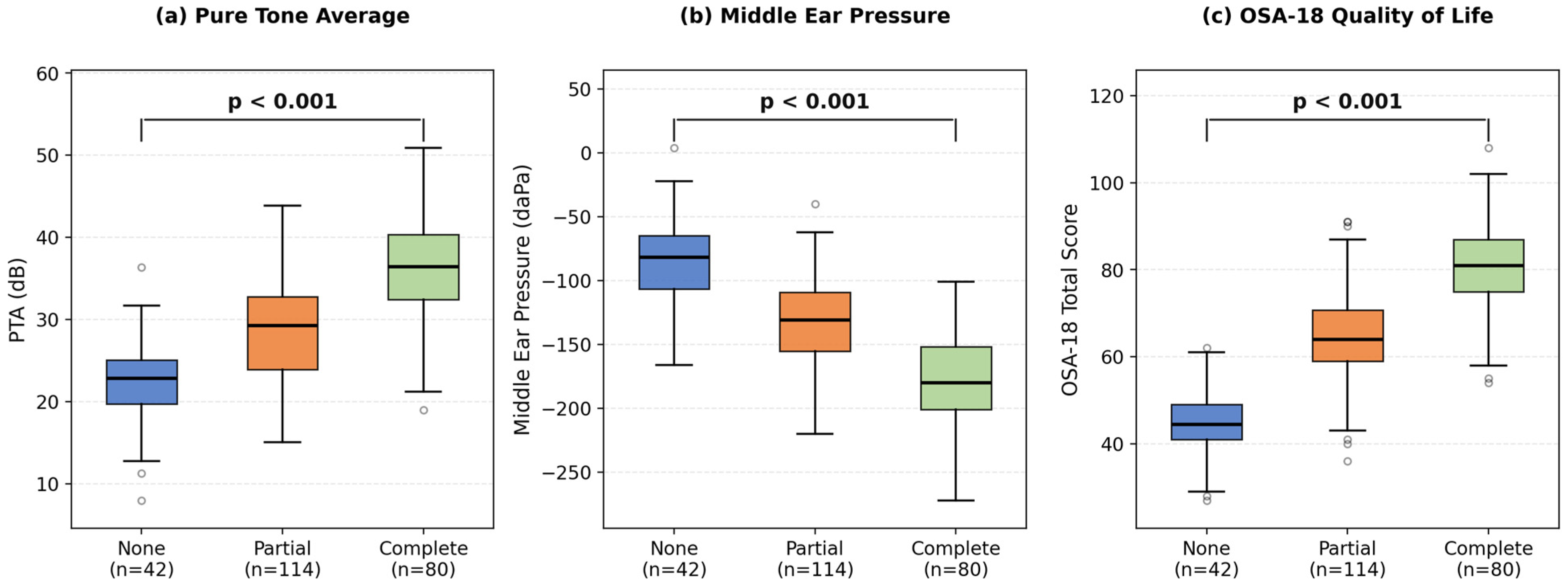
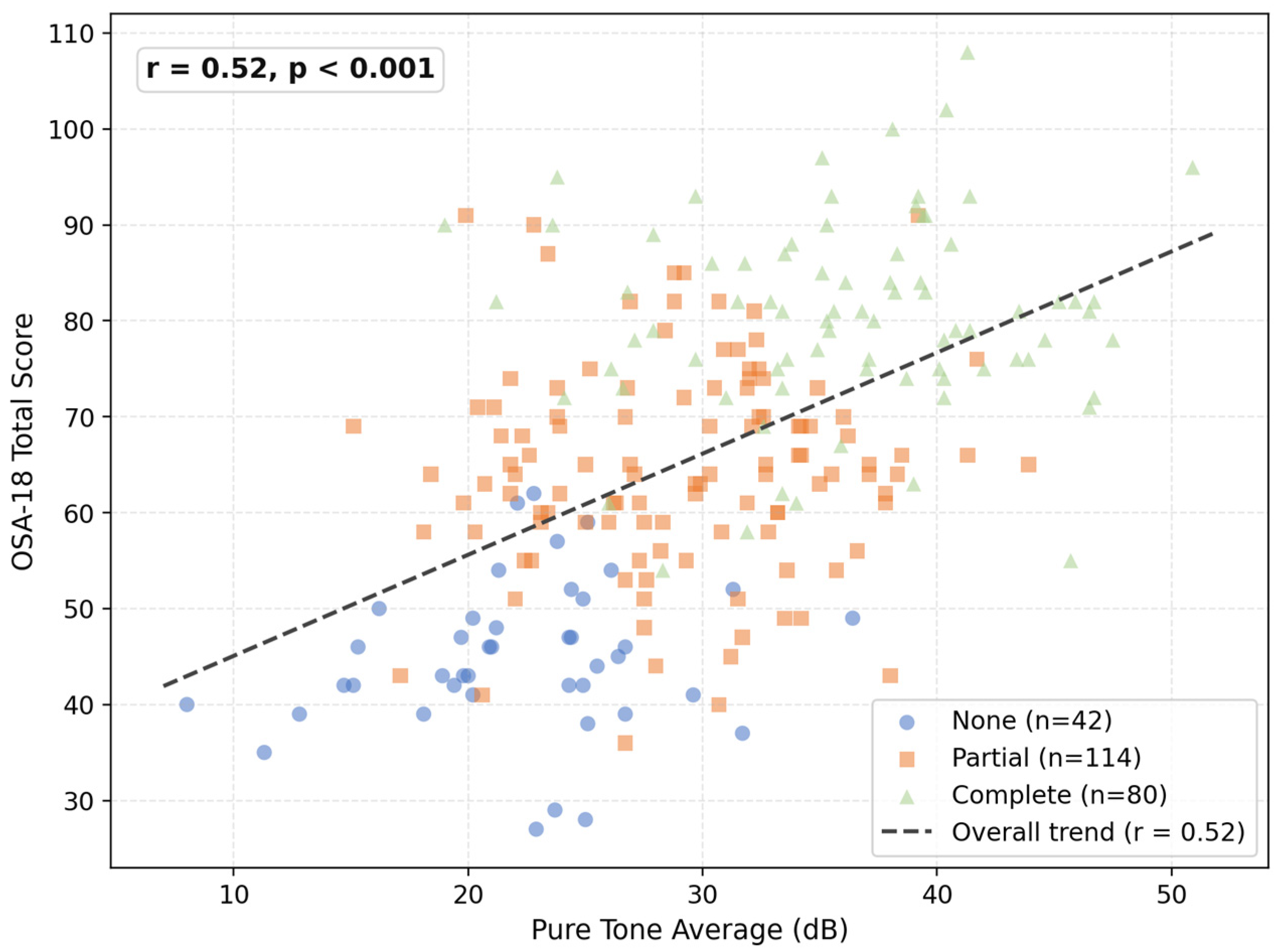
| PTA (dB), mean ± SD | 22.2 ± 5.5 | 29.0 ± 5.9 | 36.2 ± 6.7 | <0.001 |
| PTA > 30 dB, n (%) | 3 (7.1%) | 53 (46.5%) | 65 (81.2%) | <0.001 |
| MEP (daPa), mean ± SD | −82.1 ± 36.1 | −130.5 ± 32.4 | −177.7 ± 34.1 | <0.001 |
| OSA-18 total score, mean ± SD | 44.9 ± 7.9 | 64.5 ± 11.0 | 80.4 ± 10.3 | <0.001 |
| OSA-18 > 60 (severe), n (%) | 2 (4.8%) | 77 (67.5%) | 77 (96.2%) | <0.001 |
| Mucopurulent secretion, n (%) | 13 (31.0%) | 51 (44.7%) | 49 (61.3%) | 0.004 |
| Fibrotic mucosal appearance, n (%) | 0 (0.0%) | 9 (7.9%) | 52 (65.0%) | <0.001 |
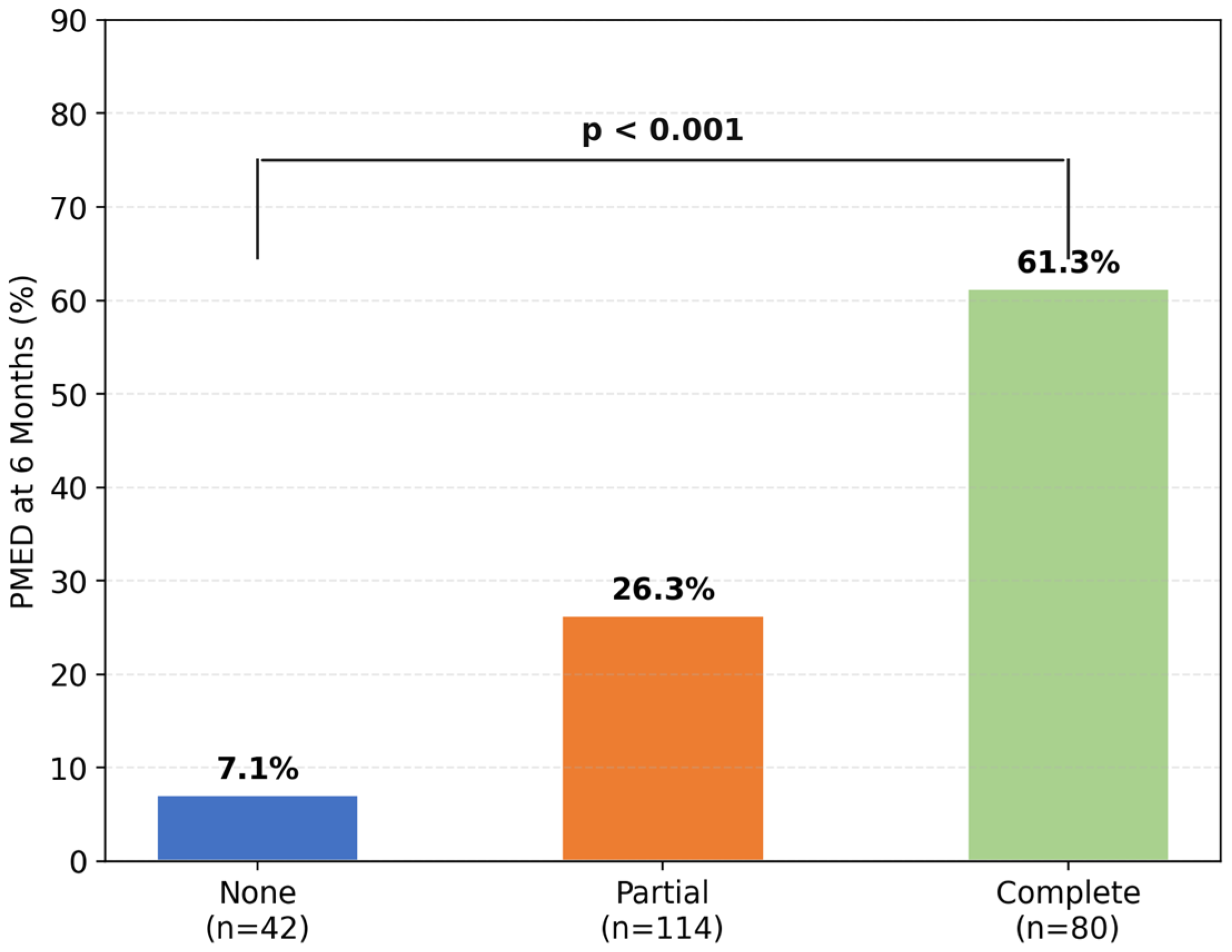
| PMED at 6 months, n (%) | 3 (7.1%) | 30 (26.3%) | 49 (61.3%) | <0.001 |
| Predictor | Estimate/OR | 95% CI | p-Value | Model |
|---|---|---|---|---|
| Linear regression outcome: PTA (dB) | ||||
| ET obstruction score | β = 5.57 | 4.37–6.77 | <0.001 | LR-PTA |
| NLR | β = 1.62 | 0.68–2.57 | 0.001 | LR-PTA |
| AOM episodes/year | β = 1.11 | 0.55–1.66 | <0.001 | LR-PTA |
| Cassano grade | β = 0.82 | −0.08–1.72 | 0.073 | LR-PTA |
| Allergic status | β = 0.23 | −1.26–1.72 | 0.760 | LR-PTA |
| Age | β = −0.11 | −0.46–0.24 | 0.531 | LR-PTA |
| Sex | β = 0.62 | −0.87–2.10 | 0.415 | LR-PTA |
| Logistic regression outcome: PTA > 30 dB (AUC = 0.86) | ||||
| ET obstruction score | OR = 5.12 | 2.84–9.24 | <0.001 | Log-PTA > 30 |
| NLR | OR = 2.23 | 1.43–3.48 | <0.001 | Log-PTA > 30 |
| AOM episodes/year | OR = 1.41 | 1.09–1.81 | 0.008 | Log-PTA > 30 |
| Cassano grade | OR = 1.37 | 0.93–2.03 | 0.111 | Log-PTA > 30 |
| Allergic status | OR = 0.76 | 0.39–1.49 | 0.424 | Log-PTA > 30 |
| Age | OR = 1.00 | 0.86–1.18 | 0.968 | Log-PTA > 30 |
| Sex | OR = 0.83 | 0.43–1.58 | 0.564 | Log-PTA > 30 |
| Linear regression outcome: OSA-18 total score | ||||
| ET obstruction score | β = 14.89 | 12.87–16.92 | <0.001 | LR-OSA18 |
| Cassano grade | β = 3.10 | 1.59–4.62 | <0.001 | LR-OSA18 |
| Allergic status | β = 4.24 | 1.73–6.76 | 0.001 | LR-OSA18 |
| AOM episodes/year | β = 1.33 | 0.40–2.26 | 0.005 | LR-OSA18 |
| NLR | β = 0.10 | −1.50–1.70 | 0.898 | LR-OSA18 |
| Age | β = −0.43 | −1.02–0.16 | 0.154 | LR-OSA18 |
| Sex | β = −0.67 | −3.17–1.83 | 0.598 | LR-OSA18 |
| Variable | Edematous (n = 28) | Fibrotic/Remodeling (n = 52) | p-Value |
|---|---|---|---|
| PTA (dB), mean ± SD | 35.7 ± 6.2 | 36.4 ± 7.0 | 0.665 |
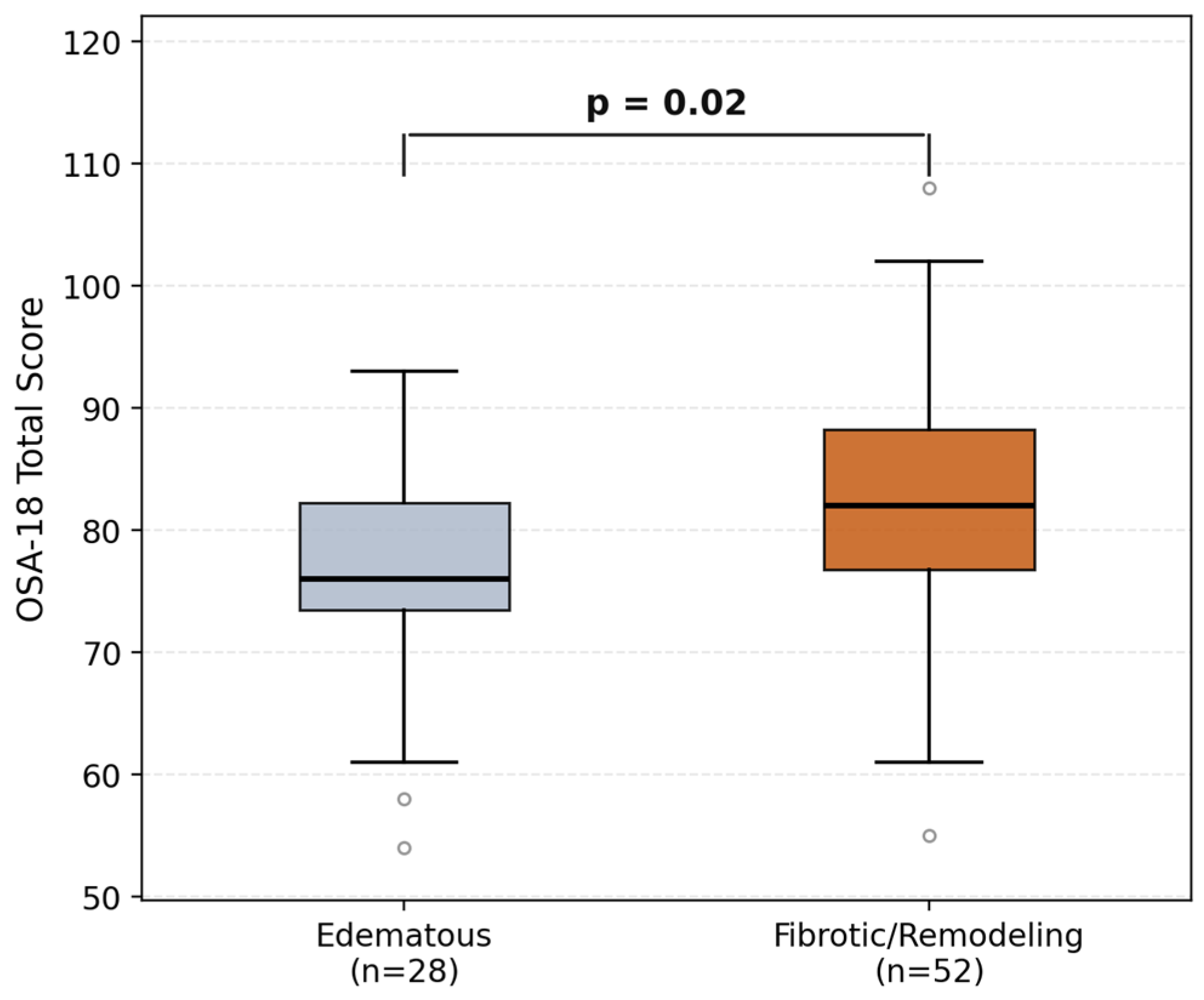
| OSA-18 total score, mean ± SD | 76.8 ± 11.1 | 82.3 ± 9.7 | 0.020 |
| OSA-18 > 60 (severe), n (%) | 27 (96.4%) | 50 (96.2%) | 0.960 |
| PMED at 6 months, n (%) | 18 (64.3%) | 31 (59.6%) | 0.691 |
Disclaimer/Publisher’s Note: The statements, opinions and data contained in all publications are solely those of the individual author(s) and contributor(s) and not of MDPI and/or the editor(s). MDPI and/or the editor(s) disclaim responsibility for any injury to people or property resulting from any ideas, methods, instructions or products referred to in the content. |
© 2026 by the authors. Published by MDPI on behalf of the Lithuanian University of Health Sciences. Licensee MDPI, Basel, Switzerland. This article is an open access article distributed under the terms and conditions of the Creative Commons Attribution (CC BY) license.
Share and Cite
Szekely, D.; Zara, F.; Patrascu, R.; Dumitru, C.S.; Barb, A.C.; Novacescu, D.; Armega Anghelescu, A.; Manole, A.; Iovanescu, D.; Iovanescu, G. Eustachian Tube Obstruction Grade as an Independent Determinant of Audiological and Quality-of-Life Outcomes in Pediatric Chronic Adenoiditis: A Retrospective Cohort Study. Medicina 2026, 62, 1297. https://doi.org/10.3390/medicina62071297
Szekely D, Zara F, Patrascu R, Dumitru CS, Barb AC, Novacescu D, Armega Anghelescu A, Manole A, Iovanescu D, Iovanescu G. Eustachian Tube Obstruction Grade as an Independent Determinant of Audiological and Quality-of-Life Outcomes in Pediatric Chronic Adenoiditis: A Retrospective Cohort Study. Medicina. 2026; 62(7):1297. https://doi.org/10.3390/medicina62071297
Chicago/Turabian StyleSzekely, Diana, Flavia Zara, Raul Patrascu, Cristina Stefania Dumitru, Alina Cristina Barb, Dorin Novacescu, Antonia Armega Anghelescu, Alexia Manole, Dan Iovanescu, and Gheorghe Iovanescu. 2026. "Eustachian Tube Obstruction Grade as an Independent Determinant of Audiological and Quality-of-Life Outcomes in Pediatric Chronic Adenoiditis: A Retrospective Cohort Study" Medicina 62, no. 7: 1297. https://doi.org/10.3390/medicina62071297
APA StyleSzekely, D., Zara, F., Patrascu, R., Dumitru, C. S., Barb, A. C., Novacescu, D., Armega Anghelescu, A., Manole, A., Iovanescu, D., & Iovanescu, G. (2026). Eustachian Tube Obstruction Grade as an Independent Determinant of Audiological and Quality-of-Life Outcomes in Pediatric Chronic Adenoiditis: A Retrospective Cohort Study. Medicina, 62(7), 1297. https://doi.org/10.3390/medicina62071297