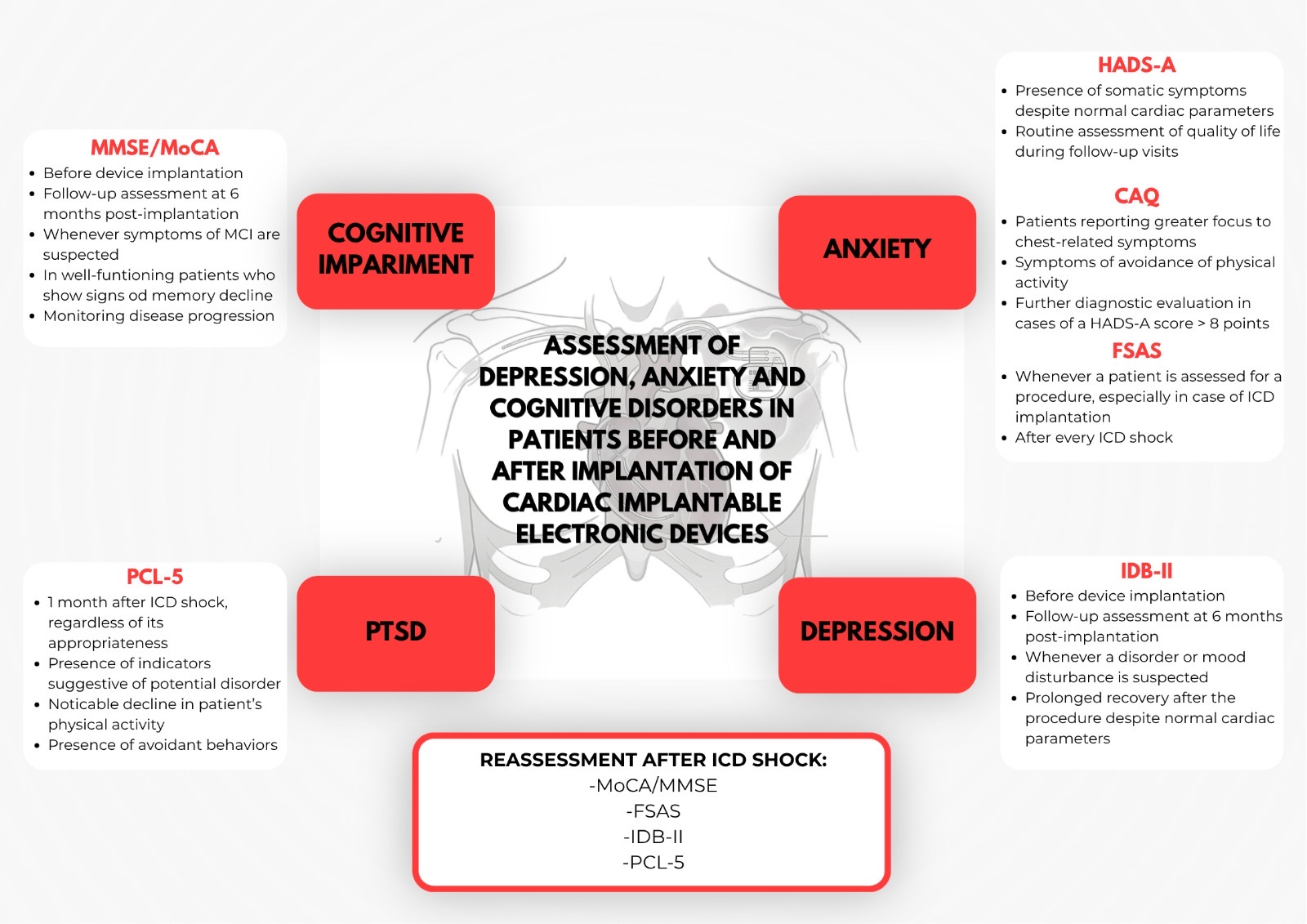
At the Intersection of Psychiatry and Cardiology: Assessment of Depressive, Anxiety and Cognitive Disorders in Patients Before and After the Implantation of Cardiac Implantable Electronic Devices
 ,
,
Abstract
1. Introduction
Mental Health and Cognitive Disorders, and Their Risk Factors, in Patients Being Assessed for and Following CIED Implantation
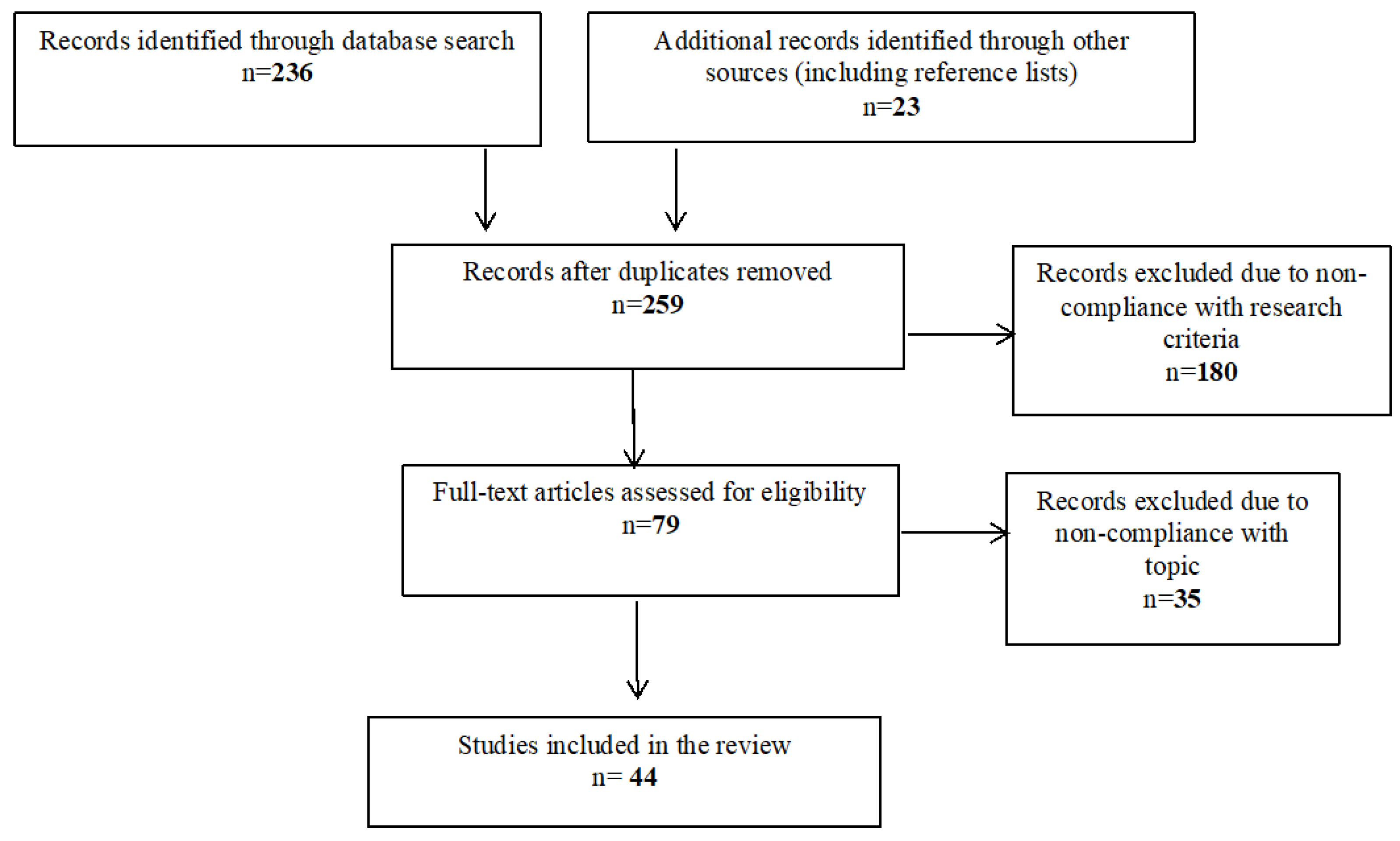
2. Materials and Methods
3. Clinical Implications of Psychiatric and Cognitive Disorders in Patients with CIEDs
3.1. Cognitive Impairment and Practical Implications for CIED Management
3.2. Anxiety
3.3. Depression
3.4. Post-Traumatic Stress Disorders
4. Discussion
Limitations
5. Conclusions
Author Contributions
Funding
Data Availability Statement
Conflicts of Interest
References
- Świętoń, E.B.; Steckiewicz, R.; Grabowski, M.; Stolarz, P. Changing trends in the use of cardiac implantable electronic devices over 14 years of practice at a cardiology reference center. Folia Cardiol. 2016, 11, 497–503. [Google Scholar]
- Lelonek, M.; Pawlak, A.; Straburzyńska-Migaj, E.; Nessler, J.; Rubiś, P. Identification and therapy for patients with heart failure with preserved ejection fraction: An expert opinion of the Heart Failure Association of the Polish Cardiac Society. Kardiol. Pol. 2024, 82, 247–254. [Google Scholar] [CrossRef] [PubMed]
- Zagożdżon, P.; Broczek, K.; Kujawska-Danecka, H.; Czernych, R.; Mossakowska, M. POLSENIOR 2 Badanie poszczególnych obszarów stanu zdrowia osób starszych, w tym jakości życia związanej ze zdrowiem (An Examination of Specific Aspects of Older People’s Health, Including Health-Related Quality of Life). Available online: https://polsenior2.gumed.edu.pl/attachment/attachment/82370/Polsenior_2.pdf (accessed on 22 May 2026).
- Pawlak, A.; Bielecka-Dąbrowa, A.; Dzierżanowski, T.; Holas, P.; Jaworska, I.; Kolasa, J.; Tomaszuk-Kazberuk, A.; Mierzyńska, A.; Muszala, A.; Pudlo, R.; et al. Expert opinion of the Heart Failure Association of the Polish Cardiac Society and the Polish Psychiatric Association on the management of patients with heart failure and selected mental disorders (depression, anxiety disorders, sleep disorders, delirium. Kardiol. Pol. 2024, 82, 1168–1185. [Google Scholar] [CrossRef] [PubMed]
- Burri, H.; Starck, C.; Auricchio, A.; Biffi, M.; Burri, M.; D’aVila, A.; Deharo, J.-C.; Glikson, M.; Israel, C.; Lau, C.-P.; et al. EHRA expert consensus statement and practical guide on optimal implantation technique for conventional pacemakers and implantable cardioverter-defibrillators: Endorsed by the Heart Rhythm Society (HRS), the Asia Pacific Heart Rhythm Society (APHRS), and the Latin-American Heart Rhythm Society (LAHRS). Europace 2021, 23, 983–1008. [Google Scholar] [CrossRef] [PubMed]
- Vaccarino, V.; Prescott, E.; Shah, A.J.; Bremner, J.D.; Raggi, P.; Dobiliene, O.; Gale, C.P.; Bugiardini, R. Mental health disorders and their impact on cardiovascular health disparities. Lancet Reg. Health Eur. 2025, 56. [Google Scholar] [CrossRef] [PubMed]
- Szczepanowski, R.; Wójta-Kempa, M.; Pawlak, A.; Kolasa, J.; Uchmanowicz, I.; Czapla, M.; Cyrkot, T. Depressive and anxiety disorders in the cardiological conditions: Psycho-logical interventions. Med. Res. J. 2022, 7, 333–339. [Google Scholar] [CrossRef]
- Goldstein, C.M.; Gathright, E.C.; Garcia, S. Relationship between depression and medication adherence in cardiovascular disease: The perfect challenge for the integrated care team. Patient Prefer. Adherence 2017, 11, 547–559. [Google Scholar] [CrossRef] [PubMed]
- Stein, D.J.; Shoptaw, S.J.; Vigo, D.V.; Lund, C.; Cuijpers, P.; Bantjes, J.; Sartorius, N.; Maj, M. Psychiatric diagnosis and treatment in the 21st century: Paradigm shifts versus incremental integration. World Psychiatry 2022, 21, 393–414. [Google Scholar] [CrossRef] [PubMed]
- Alzheimer’s disease facts and figures. Alzheimer’s Dement. 2025, 21, e70235. [CrossRef]
- Campbell, N.L.; Unverzagt, F.; LaMantia, M.A.; Khan, B.A.; Boustani, M.A. Risk factors for the progression of mild cognitive im-pairment to dementia. Clin. Geriatr. Med. 2013, 29, 873–893. [Google Scholar] [CrossRef] [PubMed]
- Visseren, F.L.J.; Mach, F.; Smulders, Y.M.; Carballo, D.; Koskinas, K.C.; Bäck, M.; Benetos, A.; Biffi, A.; Boavida, J.-M.; Capodanno, D.; et al. 2021 ESC Guidelines on cardiovascular disease prevention in clinical practice. Eur. Heart J. 2021, 42, 3227–3337. [Google Scholar] [CrossRef] [PubMed]
- Glikson, M.; Nielsen, J.C.; Kronborg, M.B.; Michowitz, Y.; Auricchio, A.; Barbash, I.M.; Barrabés, J.A.; Boriani, G.; Braunschweig, F.; Brignole, M.; et al. 2021 ESC Guidelines on cardiac pacing and cardiac resynchronization therapy. Eur. Heart J. 2021, 42, 3427–3520. [Google Scholar] [CrossRef] [PubMed]
- Fumagalli, S.; Pieragnoli, P.; Ricciardi, G.; Mascia, G.; Mascia, F.; Michelotti, F.; Mascioli, G.; Beltrami, M.; Padeletti, M.; Nesti, M.; et al. Cardiac resynchronization therapy improves functional status and cognition. Int. J. Cardiol. 2016, 219, 212–217. [Google Scholar] [CrossRef] [PubMed]
- Martis, A.; Gusetu, G.; Cismaru, G.; Zdrenghea, D.; Leucuta, D.-C.; Pop, D. Improvement of Cognitive Function and Interleukin 1 Beta Serum Concentrations Following Cardiac Pacemaker Implantation in Patients with Symptomatic Bradycardia. J. Pers. Med. 2021, 11, 770. [Google Scholar] [CrossRef] [PubMed]
- Beltrami, M.; Mascia, G.; Pieragnoli, P.; Checchi, L.; Ricciardi, G.; Garofalo, M.; Mascioli, G.; Padeletti, M.; Fumagalli, S. Cardiac resynchronization therapy improves functional status and cognition at long-term follow-up. Kardiol. Pol. 2025, 83, 1416–1419. [Google Scholar] [CrossRef] [PubMed]
- Ichikura, K.; Kobayashi, S.; Matsuoka, S.; Suzuki, T.; Nishimura, K.; Shiga, T.; Hagiwara, N.; Ishigooka, J.; Suzuki, S.-I. Avoidance behavior associated with depressive symptoms in patients with im-plantable cardioverter defibrillators. Int. J. Clin. Health Psychol. 2017, 17, 1–8. [Google Scholar] [CrossRef] [PubMed]
- Dyrbuś, M.; Pyka, Ł.; Kurek, A.; Niedziela, J.; Adamowicz-Czoch, E.; Sokoła, K.; Machowicz, J.; Ostręga, M.; Pres, D.; Skrzypek, M.; et al. Implantable Cardioverter-Defibrillator Therapies Following Generator Replace-ments-Long-Term Remote Monitoring Data. Clin. Pract. 2025, 15, 160. [Google Scholar] [CrossRef] [PubMed]
- Fleeman, B.; Aleong, R. Optimal Strategies to Reduce Inappropriate Implantable Cardioverter-defibrillator Shocks. J. Innov. Card. Rhythm. Manag. 2019, 10, 3623–3632. [Google Scholar] [CrossRef] [PubMed]
- Van Rees, J.B.; Borleffs, C.J.; de Bie, M.K.; Stijnen, T.; van Erven, L.; Bax, J.J.; Schalij, M.J. Inappropriate implantable cardioverter-defibrillator shocks: Incidence; predictors; and impact on mortality. J. Am. Coll. Cardiol. 2011, 57, 556–562. [Google Scholar] [CrossRef] [PubMed]
- Dixit, N.K.; Vazquez, L.D.; Cross, N.J.; Kuhl, E.A.; Serber, E.R.; Kovacs, A.; Dede, D.E.; Conti, J.B.; Sears, S.F. Cardiac resynchronization therapy: A pilot study examining cognitive change in patients before and after treatment. Clin. Cardiol. 2010, 33, 84–88. [Google Scholar] [CrossRef] [PubMed]
- Hałas, K.; Krzyżanowski, K.; Krzyżanowska, E.; Smurzyński, P.; Ryczek, R.; Michałkiewicz, D.; Orski, Z.; Makowski, K.; Wierzbowski, R.; Gielerak, G. Cognitive impairment after appropriate implantable cardiovert-er-defibrillator therapy for ventricular fibrillation. Pol. Heart J. (Kardiol. Pol.) 2014, 72, 134–139. [Google Scholar] [CrossRef] [PubMed]
- Garnero, S.; Pomero, A.; Vallauri, P.; Leto, L.; Testa, M.; Feola, M. The implantable cardioverter defibrillator in congestive heart failure patients in primary prevention: Assessment of neuropsychological impact. Minerva Cardioangiol. 2014, 62, 321–326. [Google Scholar] [PubMed]
- Dyrbuś, M.; Pyka, Ł.; Kurek, A.; Niedziela, J.T.; Adamowicz-Czoch, E.; Ostręga, M.; Sokoła, K.; Pres, D.; Gąsior, M.; Tajstra, M. Stroke after implantable cardioverter-defibrillator shocks in patients with heart failure. Kardiol. Pol. 2024, 82, 321–323. [Google Scholar] [CrossRef] [PubMed]
- Kindermann, I.; Wedegärtner, S.M.; Bernhard, B.; Ukena, J.; Lenski, D.; Karbach, J.; Schwantke, I.; Ukena, C.; Böhm, M. Changes in quality of life, depression, general anxiety, and heart-focused anxiety after defibrillator implantation. ESC Heart Fail. 2021, 8, 2502–2512. [Google Scholar] [CrossRef] [PubMed]
- Knackstedt, C.; Arndt, M.; Mischke, K.; Marx, N.; Nieman, F.; Kunert, H.J.; Schauerte, P.; Norra, C. Depression, psychological distress, and quality of life in patients with cardioverter defibrillator with or without cardiac resynchronization therapy. Heart Vessel. 2014, 29, 364–374. [Google Scholar] [CrossRef] [PubMed]
- Borne, R.T.; Varosy, P.D.; Masoudi, F.A. Implantable Cardioverter-Defibrillator Shocks: Epidemiology, Outcomes, and Therapeutic Approaches. JAMA Intern. Med. 2013, 173, 859–865. [Google Scholar] [CrossRef] [PubMed]
- Mishkin, J.D.; Saxonhouse, S.J.; Woo, G.W.; Burkart, T.A.; Miles, W.M.; Conti, J.B.; Schofield, R.S.; Sears, S.F.; Aranda, J.M. Appropriate Evaluation and Treatment of Heart Failure Patients After Implantable Cardioverter-Defibrillator Discharge: Time to Go Beyond the Initial Shock. JACC 2009, 54, 1993–2000. [Google Scholar] [CrossRef] [PubMed]
- Dyrbuś, M.; Pyka, Ł.; Kurek, A.; Niedziela, J.T.; Adamowicz-Czoch, E.; Ostręga, M.; Sokoła, K.; Pres, D.; Gąsior, M.; Tajstra, M. Alert Transmissions From Remote Monitoring of Patients With Cardiac Implantable Devices. JACC Clin. Electrophysiol. 2023, 9, 2163–2165. [Google Scholar] [CrossRef] [PubMed]
- Perini, A.P.; Kutyifa, V.; Veazie, P.; Daubert, J.P.; Schuger, C.; Zareba, W.; McNitt, S.; Rosero, S.; Tompkins, C.; Padeletti, L.; et al. Effects of implantable cardioverter/defibrillator shock and antitachycardia pacing on anxiety and quality of life: A MADIT-RIT substudy. Am. Heart J. 2017, 189, 75–84. [Google Scholar] [CrossRef] [PubMed]
- Schulz, S.M.; Massa, C.; Grzbiela, A.; Dengler, W.; Wiedemann, G.; Pauli, P. Implantable cardioverter defibrillator shocks are pro-spective predictors of anxiety. Heart Lung 2013, 42, 105–111. [Google Scholar] [CrossRef] [PubMed]
- da Silva, L.M.; Sampaio, C.P.B.M.; Guimarães, N.E.d.S.; Moreno, L.P.; Pontes, G.S.; Ferreira, E.d.J.F.; Neto, J.A.d.F. Assessment of cognitive function in elderly patients with heart failure. Rev. Assoc. Med. Bras. (1992) 2024, 70, e20240429. [Google Scholar] [CrossRef] [PubMed]
- Hoth, K.F.; Poppas, A.; Ellison, K.E.; Paul, R.H.; Sokobin, A.R.; Cho, Y.; Cohen, R.A. Link between change in cognition and left ventricular function following cardiac re-synchronization therapy. J. Cardiopulm. Rehabil. Prev. 2010, 30, 401–408. [Google Scholar] [CrossRef] [PubMed]
- Davis, D.H.; Creavin, S.T.; Yip, J.L.; Noel-Storr, A.H.; Brayne, C.; Cullum, S. Montreal Cognitive Assessment for the detection of de-mentia. Cochrane Database Syst. Rev. 2021, 2021, CD010775. [Google Scholar] [CrossRef] [PubMed]
- Folstein, M.F.; Folstein, S.E.; McHugh, P.R. “Mini-mental state”. A practical method for grading the cognitive state of patients for the clinician. J. Psychiatr. Res. 1975, 12, 189–198. [Google Scholar] [CrossRef] [PubMed]
- Pinto, T.C.C.; Machado, L.; Bulgacov, T.M.; Rodrigues-Júnior, A.L.; Costa, M.L.G.; Ximenes, R.C.C.; Sougey, E.B. Is the Montreal Cognitive Assessment (MoCA) screening superior to the Mini-Mental State Examination (MMSE) in the detection of mild cognitive impairment (MCI) and Alzheimer’s Disease (AD) in the elderly? Int. Psychogeriatr. 2019, 31, 491–504. [Google Scholar] [CrossRef] [PubMed]
- Rossignon, P.; Tajildin, R.; Famdie, E. Twists and turns: CRT-D with mixed Twiddler and Reel syndromes. Neth. Hearth J. 2025, 33, 67–68. [Google Scholar] [CrossRef] [PubMed]
- Tajstra, M.; Dyrbuś, M.; Kowalski, O.; Sterliński, M.; Breitenstein, A.; Hofer, D. Transvenous leadless pacemaker extraction: When, who, where, and how? Kardiol. Pol. 2026, 84, 174–187. [Google Scholar] [CrossRef] [PubMed]
- Dyrbuś, M.; Kawecki, J.; Kurek, A.; Liszka, R.; Machowicz, J.; Gąsior, M.; Tajstra, M. First short-term European experiences with dual-chamber leadless pacing: Early safety and electrical outcomes compared with transvenous systems. Kardiol. Pol. 2026; ahead of print.
- Knops, R.E.; Reddy, V.Y.; Ip, J.E.; Doshi, R.; Exner, D.V.; Defaye, P.; Canby, R.; Bongiorni, M.G.; Shoda, M.; Hindricks, G.; et al. A Dual-Chamber Leadless Pacemaker. N. Engl. J. Med. 2023, 388, 2360–2370. [Google Scholar] [CrossRef] [PubMed]
- Broek, K.C.v.D.; Nyklicek, I.; Denollet, J. Anxiety predicts poor perceived health in patients with an implantable defibrillator. Psychosomatics 2009, 50, 483–492. [Google Scholar] [CrossRef] [PubMed]
- Broek, K.C.v.D.; Tekle, F.B.; Habibović, M.; Alings, M.; van der Voort, P.H.; Denollet, J. Emotional distress, positive affect, and mortality in patients with an implantable cardioverter defibrillator. Int. J. Cardiol. 2013, 165, 327–332. [Google Scholar] [CrossRef] [PubMed]
- Francis, J.L.; Weinstein, A.A.; Krantz, D.S.; Haigney, M.C.; Stein, P.K.; Stone, P.H.; Gottdiener, J.S.; Kop, W.J. Association between symptoms of depression and anxiety with heart rate variability in patients with implantable cardioverter defibrillators. Psychosom. Med. 2009, 71, 821–827. [Google Scholar] [CrossRef] [PubMed]
- Sorrell, A.; Harrell, R.; Jordan, E.; Sargeant, M.; Nekkanti, R.; Catanzaro, J.N.; Sears, S.F. PTSD and mood disorders in implantable cardioverter defibrillator patients: Is more psychological assessment needed? Expert Rev. Cardiovasc. Ther. 2024, 22, 347–352. [Google Scholar] [CrossRef] [PubMed]
- Willy, K.; Meyer, T.; Eckardt, L.; Morina, N. Selection of social comparison standards in cardiac patients with and without expe-rienced defibrillator shock. Sci. Rep. 2024, 14, 1–10. [Google Scholar] [CrossRef] [PubMed]
- Knowles, K.A.; Olatunji, B.O. Specificity of trait anxiety in anxiety and depression: Meta-analysis of the State-Trait Anxiety In-ventory. Clin. Psychol. Rev. 2020, 82, 101928. [Google Scholar] [CrossRef] [PubMed]
- Ghezzi, E.S.; Sharman, R.L.S.; Selvanayagam, J.B.; Psaltis, P.J.; Sanders, P.; Astley, J.M.; Knayfati, S.; Batra, V.; Keage, H.A.D. Burden of mood symptoms and disorders in implantable cardioverter de-fibrillator patients: A systematic review and meta-analysis of 39 954 patients. Europace 2023, 25, euad130. [Google Scholar] [CrossRef] [PubMed]
- Dyrbuś, M.; Gąsior, M.; Tajstra, M. Daily behaviors regarding using smartphones in patients with high-voltage cardiac im-plantable electronic devices. Pol. Heart J. (Kardiol. Pol.) 2022, 80, 353–356. [Google Scholar] [CrossRef] [PubMed]
- Ford, J.; Finch, J.F.; Woodrow, L.K.; Cutitta, K.E.; Shea, J.; Fischer, A.; Hazelton, G.; Sears, S.F. The Florida Shock Anxiety Scale (FSAS) for patients with implantable cardioverter de-fibrillators: Testing factor structure, reliability, and validity of a previously established measure. Pacing Clin. Electrophysiol. 2012, 35, 1146–1153. [Google Scholar] [CrossRef] [PubMed]
- Emons, W.H.; Habibović, M.; Pedersen, S.S. Prevalence of anxiety in patients with an implantable cardioverter defibrillator: Measurement equivalence of the HADS-A and the STAI-S. Qual. Life Res. 2019, 28, 3107–3116. [Google Scholar] [CrossRef] [PubMed]
- Kuhl, E.A.; Dixit, N.K.; Walker, R.L.; Conti, J.B.; Sears, S.F. Measurement of patient fears about implantable cardioverter defibrillator shock: An initial evaluation of the Florida Shock Anxiety Scale. Pacing Clin. Electrophysiol. 2006, 29, 614–618. [Google Scholar] [CrossRef] [PubMed]
- Habibović, M.; Pedersen, S.; Broers, E.; Alings, M.; Theuns, D.; van der Voort, P.; Bouwels, L.; Herrman, J.-P.; Denollet, J. Prevalence of anxiety and risk associated with ventricular arrhythmia in patients with an implantable cardioverter defibrillator. Int. J. Cardiol. 2020, 310, 80–85. [Google Scholar] [CrossRef] [PubMed]
- Tripp, C.; Huber, N.L.; Kuhl, E.A.; Sears, S.F. Measuring ICD shock anxiety: Status update on the Florida Shock Anxiety Scale after over a decade of use. Pacing Clin. Electrophysiol. 2019, 42, 1294–1301. [Google Scholar] [CrossRef] [PubMed]
- Leosdottir, M.; Sigurdsson, E.; Reimarsdottir, G.; Gottskalksson, G.; Torfason, B.; Vigfusdottir, M.; Eggertsson, S.; Arnar, D.O. Health-related quality of life of patients with implantable cardioverter defibrillators compared with that of pacemaker recipients. Europace 2006, 8, 168–174. [Google Scholar] [CrossRef] [PubMed]
- Pushkarev, G.S.; Kuznetsov, V.A.; Fisher, Y.A.; Soldatova, A.M.; Enina, T.N. Depression and all-cause mortality in patients with con-gestive heart failure and an implanted cardiac device. Turk. Kardiyol. Dern. Ars. 2018, 46, 2–487. [Google Scholar] [CrossRef] [PubMed]
- Whang, W.; Albert, C.M.; Sears, S.F.; Lampert, R.; Conti, J.B.; Wang, P.J.; Singh, J.P.; Ruskin, J.N.; Muller, J.E.; Mittleman, M.A. Depression as a predictor for appropriate shocks among patients with implantable cardioverter-defibrillators: Results from the Triggers of Ventricular Arrhythmias (TOVA) study. J. Am. Coll. Cardiol. 2005, 45, 1090–1095. [Google Scholar] [CrossRef] [PubMed]
- Podolecki, T.; Pudlo, R.; Mazurek, M.; Kozieł-Siołkowska, M.; Boidol, J.; Kowalski, O.; Lenarczyk, R.; Kalarus, Z. The impact of shock therapy on depression development and remote prognosis in cardiac resynchronization therapy recipients. Cardiol. J. 2025, 32, 26–34. [Google Scholar] [CrossRef] [PubMed]
- Beck, A.T.; Ward, C.H.; Mendelson, M.; Mock, J.; Erbaugh, J. An inventory for measuring depression. Arch. Gen. Psychiatry 1961, 4, 561–571. [Google Scholar] [CrossRef] [PubMed]
- Habibović, M.; Broek, K.C.v.D.; Alings, M.; Van der Voort, P.H.; Denollet, J. Posttraumatic stress 18 months following cardio-verter defibrillator implantation: Shocks, anxiety, and personality. Health Psychol. 2012, 31, 186–193. [Google Scholar] [CrossRef] [PubMed]
- Coughlin, S.S. Post-traumatic Stress Disorder and Cardiovascular Disease. Open Cardiovasc. Med. J. 2011, 5, 164–170. [Google Scholar] [CrossRef] [PubMed]
- Karandinos, G.; Giuriato, M.; Zubizarreta, J.R.; Koh, K.A.; Masiakos, P.T.; Song, Z.; Sacks, C.A. Mental Health Outcomes in Children after Parental Firearm Injury. N. Engl. J. Med. 2026, 394, 475–485. [Google Scholar] [CrossRef] [PubMed]
- Styczkiewicz, K.; Lewicka, E.; Bielecka-Dąbrowa, A.; Główczyńska, R.; Banach, M.; Leszek, P.; Tajstra, M.; Jankowski, P.; Śliż, D.; Surma, S.; et al. Principles of primary prevention of cardiovascular diseases in patients with cancer. Expert Opinion of the Working Group on Prevention and Epidemiology (Cardio-oncology Task Force) and the Working Group on Cardio-oncology of the Polish Cardiac Society. Kardiol. Pol. 2026, 84, 131–156. [Google Scholar] [CrossRef] [PubMed]
- Desai, T.M.; Shukla, P.S.; Shah, H.R.; Sharma, N.P. Post-traumatic stress disorder following implantable cardioverter defibrillator shocks: A hidden cost of life-saving therapy. Int. J. Res. Med. Sci. 2025, 13, 3577–3584. [Google Scholar] [CrossRef]
- von Känel, R.; Baumert, J.; Kolb, C.; Cho, E.-Y.N.; Ladwig, K.-H. Chronic posttraumatic stress and its predictors in patients living with an implantable cardioverter defibrillator. J. Affect. Disord. 2011, 131, 344–352. [Google Scholar] [CrossRef] [PubMed]
- Agarwal, S.; Presciutti, A.; Cornelius, T.; Birk, J.; Roh, D.J.; Park, S.; Claassen, J.; Elkind, M.S.V.; Edmondson, D. Cardiac Arrest and Subsequent Hospitalization-Induced Posttraumatic Stress Is Associated With 1-Year Risk of Major Adverse Cardiovascular Events and All-Cause Mortality. Crit. Care Med. 2019, 47, e502–e505. [Google Scholar] [CrossRef] [PubMed]
- Heuvel, L.L.v.D.; Stalder, T.; du Plessis, S.; Suliman, S.; Kirschbaum, C.; Seedat, S. Hair cortisol levels in posttraumatic stress disorder and metabolic syndrome. Stress 2020, 23, 577–589. [Google Scholar] [CrossRef] [PubMed]
- Stojek, M.M.; Łukowska, M.; Sokołowska, M.; Nowacki, A.; Zielińska, J.; Duszkiewicz, R.; Różycka, J.; Crosby, R.D. Co-occurrence of posttraumatic stress disorder symptoms and food addiction in a large Polish sample: Latent profile analysis. Eur. J. Psychotraumatol. 2025, 16, 2508015. [Google Scholar] [CrossRef] [PubMed]
- Mureșanu, I.A.; Grad, D.A.; Mureșanu, D.F.; Dobran, S.-A.; Hapca, E.; Strilciuc, Ș.; Benedek, I.; Capriș, D.; Popescu, B.O.; Perju-Dumbravă, L.; et al. Evaluation of post-traumatic stress disorder (PTSD) and related comorbidities in clinical studies. J. Med. Life 2022, 15, 436–442. [Google Scholar] [CrossRef] [PubMed]
- Stojek, M.M.; Łukowska, M.; Różycka, J.; Sokołowska, M.; Zielińska, J.; Nowacki, A.; Duszkiewicz, R.; Psurek, A.; Michopoulos, V. Systemic inflammation and metabolic syndrome components in thresh-old/subthreshold posttraumatic stress disorder and food addiction in a Polish community sample. Eur. J. Psychotraumatol. 2025, 16, 2478792. [Google Scholar] [CrossRef] [PubMed]
- Bruffaerts, R.; Posada-Villa, J.; Al-Hamzawi, A.O.; Gureje, O.; Huang, Y.; Hu, C.; Bromet, E.J.; Viana, M.C.; Hinkov, H.R.; Karam, E.G.; et al. Proportion of patients without mental disorders being treated in mental health services worldwide. Br. J. Psychiatry 2015, 206, 101–109. [Google Scholar] [CrossRef] [PubMed]
- Bueno, H.; Deaton, C.; Farrero, M.; Forsyth, F.; Braunschweig, F.; Buccheri, S.; Dragan, S.; Gevaert, S.; Held, C.; Kurpas, D.; et al. ESC Clinical Consensus Statement on mental health and cardiovascular disease: Developed under the auspices of the ESC Clinical Practice Guidelines Committee. Eur. Heart J. 2025, 46, 4156–4225. [Google Scholar] [CrossRef] [PubMed]
- Fragoulis, C.; Spanorriga, M.-K.; Bega, I.; Prentakis, A.; Kontogianni, E.; Tsioufis, P.-A.; Palkopoulou, M.; Ntalakouras, J.; Iliakis, P.; Leontsinis, I.; et al. Behavioural Cardiology: A Review on an Expanding Field of Cardiology-Holistic Approach. J. Pers. Med. 2025, 15, 355. [Google Scholar] [CrossRef] [PubMed]
- Tajstra, M.; Dyrbuś, M.; Kurek, A. Transvenous lead extraction in octogenarians: Advanced in age but young at heart? Pol. Arch. Intern. Med. 2026, 136, 17278. [Google Scholar] [CrossRef] [PubMed]


| Mini-Mental State Examination (MMSE) | Montreal Cognitive Assessment (MoCA) | |
|---|---|---|
| Purpose of assessment | Initial dementia screening. | Initial screening for Mild Cognitive Impairment (MCI). |
| Administration time | 5–10 min | 10–15 min |
| Sensitivity | Low—Mild Cognitive Impairment (MCI). High: moderate and advanced dementia. | High—Mild Cognitive Impairment (MCI). Moderate: advanced dementia. |
| Specificity | Higher—lower false-positive rate in individuals without dementia. | Lower—higher false-positive rate. |
| Cognitive domains assessed | Orientation, registration, attention and calculation, recall, language, following commands. | Broader scope: Executive functions, episodic memory, visuospatial skills, attention, concentration, calculation, language. |
| Clinical Utility | Effective for rapid, routine assessment and monitoring of advanced dementia. | Preferred for early detection of MCI, which often presents as the initial symptom of dementia. |
| Cardiac Anxiety Questionnaire (CAQ) | Hospital Anxiety and Depression Scale Anxiety Subscale (HADS-A) | State-Trait Anxiety Inventory (STAI) | Florida Shock Anxiety Scale (FSAS) | |
|---|---|---|---|---|
| Number of items | 18 | 7 | 20 + 20 | 10 |
| Scope | Cardiac anxiety | Symptoms of general anxiety | State anxiety (transitory) vs. trait anxiety (stable personality characteristic) | Anxiety related to implantable device and shock delivery |
| Specificity | Scale assessing fear regarding cardiac symptoms, avoidance of symptoms, and hypervigilance toward physical sensations. | Scale assessing symptoms of anxiety and depression in somatic and clinical patients | A scale assessing anxiety both as an emotional state (temporary) and as a trait (stable predisposition to anxiety) | A scale assessing the level of anxiety regarding potential ICD shocks and situations that may trigger them. |
| Clinical utility | Diagnosis and assessment of cardiac anxiety. | Screening for generalized anxiety | In-depth assessment of anxiety in diagnostics and scientific research. | Assessment of anxiety in patients with an implantable cardioverter-defibrillator (ICD). |
| Purpose of assessment | Assessment of cardiac-related anxiety, particularly in patients with and without CIEDs. | Assessment of anxiety symptom severity independent of physical illness. | Measurement of anxiety levels both as a state and a personality trait. | Measurement of ICD shock-related anxiety and its impact on daily functioning. |
Disclaimer/Publisher’s Note: The statements, opinions and data contained in all publications are solely those of the individual author(s) and contributor(s) and not of MDPI and/or the editor(s). MDPI and/or the editor(s) disclaim responsibility for any injury to people or property resulting from any ideas, methods, instructions or products referred to in the content. |
© 2026 by the authors. Published by MDPI on behalf of the Lithuanian University of Health Sciences. Licensee MDPI, Basel, Switzerland. This article is an open access article distributed under the terms and conditions of the Creative Commons Attribution (CC BY) license.
Share and Cite
Klimek-Ociepka, K.; Kruczaj, K.; Dyrbuś, M.; Pudlo, R.; Gąsior, M.; Tajstra, M. At the Intersection of Psychiatry and Cardiology: Assessment of Depressive, Anxiety and Cognitive Disorders in Patients Before and After the Implantation of Cardiac Implantable Electronic Devices. Medicina 2026, 62, 1255. https://doi.org/10.3390/medicina62071255
Klimek-Ociepka K, Kruczaj K, Dyrbuś M, Pudlo R, Gąsior M, Tajstra M. At the Intersection of Psychiatry and Cardiology: Assessment of Depressive, Anxiety and Cognitive Disorders in Patients Before and After the Implantation of Cardiac Implantable Electronic Devices. Medicina. 2026; 62(7):1255. https://doi.org/10.3390/medicina62071255
Chicago/Turabian StyleKlimek-Ociepka, Kamila, Karolina Kruczaj, Maciej Dyrbuś, Robert Pudlo, Mariusz Gąsior, and Mateusz Tajstra. 2026. "At the Intersection of Psychiatry and Cardiology: Assessment of Depressive, Anxiety and Cognitive Disorders in Patients Before and After the Implantation of Cardiac Implantable Electronic Devices" Medicina 62, no. 7: 1255. https://doi.org/10.3390/medicina62071255
APA StyleKlimek-Ociepka, K., Kruczaj, K., Dyrbuś, M., Pudlo, R., Gąsior, M., & Tajstra, M. (2026). At the Intersection of Psychiatry and Cardiology: Assessment of Depressive, Anxiety and Cognitive Disorders in Patients Before and After the Implantation of Cardiac Implantable Electronic Devices. Medicina, 62(7), 1255. https://doi.org/10.3390/medicina62071255