Silent Stroke in Adult Cardiac Surgery: Mechanisms, Clinical Impact, and Preventive Strategies

 ,
,  , and
, and
Abstract
1. Introduction
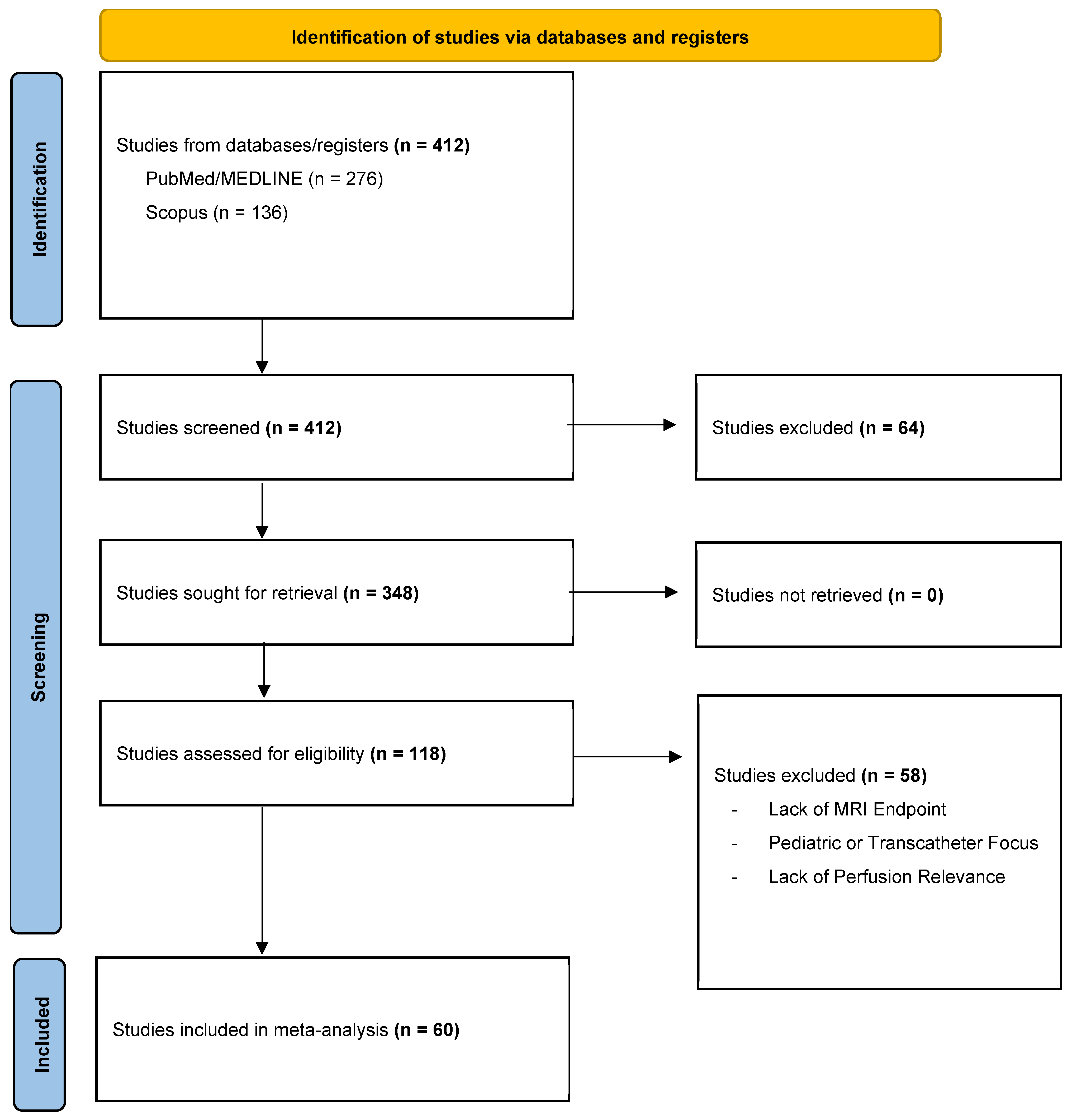
2. Methods
3. Results
3.1. Incidence of Silent Stroke After Cardiac Surgery
3.2. Imaging Characteristics and Lesion Distribution
3.3. Cerebral Microembolization
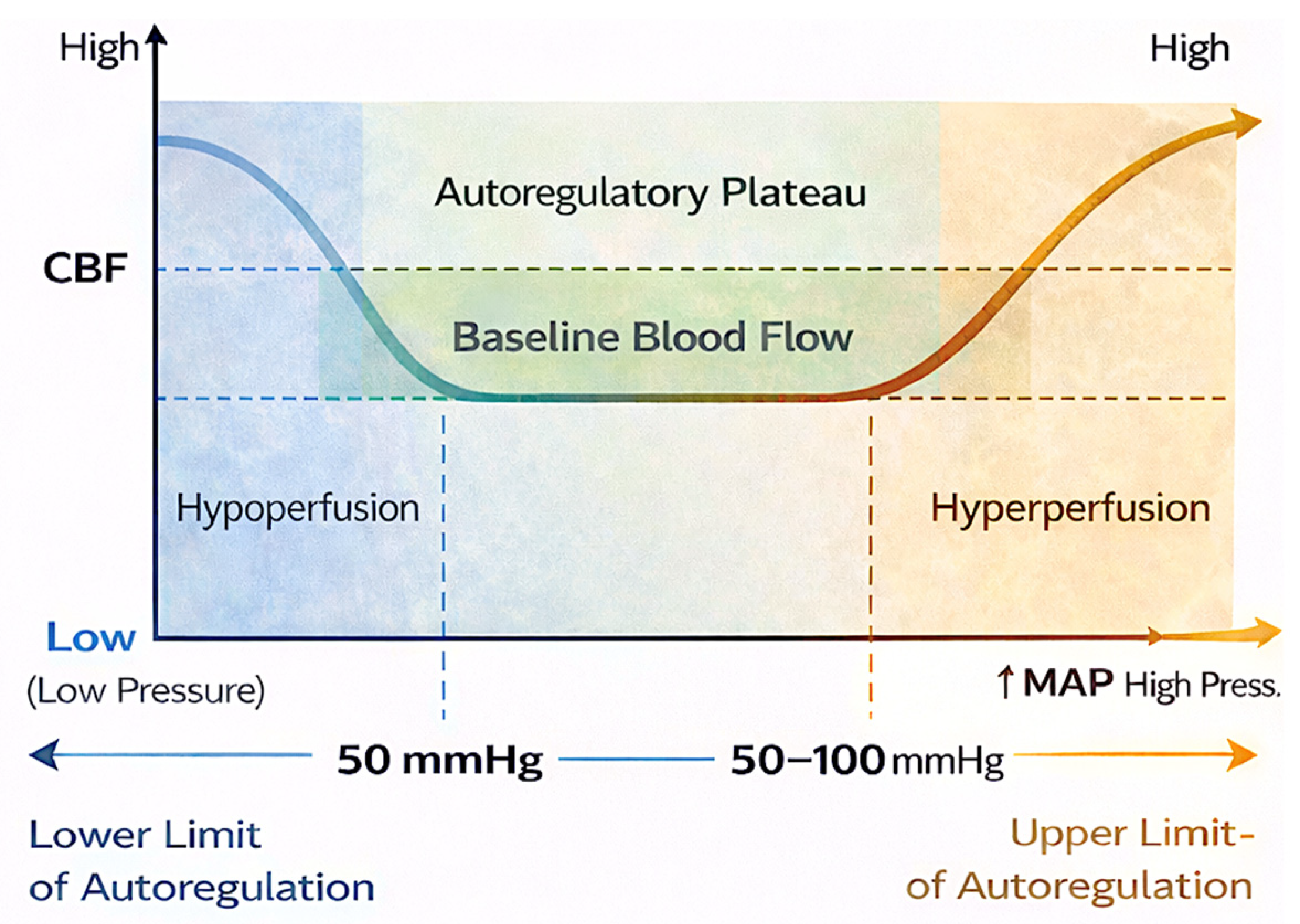
3.4. Cerebral Hypoperfusion and Oxygen Delivery
3.5. Hyperoxia, Cerebral Vasoconstriction, and Microcirculatory Effects
3.6. Perfusion Strategies and Circuit Configuration
3.7. Cannulation Strategy and Surgical Technique
3.8. Clinical and Cognitive Consequences
4. Discussion
4.1. Limitations of the Available Evidence
4.2. Future Perspectives and Research Directions
5. Conclusions
Author Contributions
Funding
Institutional Review Board Statement
Informed Consent Statement
Data Availability Statement
Acknowledgments
Conflicts of Interest
Abbreviations
| CABG | Coronary Artery Bypass Grafting |
| CBF | Cerebral Blood Flow |
| CPB | Cardiopulmonary Bypass |
| DWI | Diffusion-Weighted Imaging |
| DWI-MRI | Diffusion-Weighted Magnetic Resonance Imaging |
| MAP | Mean Arterial Pressure |
| MRI | Magnetic Resonance Imaging |
| NIRS | Near-Infrared Spectroscopy |
| NO | Nitric Oxide |
| PaCO2 | Partial Pressure of Arterial Carbon Dioxide |
| PaO2 | Partial Pressure of Arterial Oxygen |
| rSO2 | Regional Cerebral Oxygen Saturation |
| SBI | Silent Brain Injury |
| SWI | Susceptibility-Weighted Imaging |
| TCD | Transcranial Doppler |
References
- Nah, H.W.; Lee, J.W.; Chung, C.H.; Choo, S.J.; Kwon, S.U.; Kim, J.S.; Warach, S.; Kang, D.W. New brain infarcts on magnetic resonance imaging after coronary artery bypass graft surgery: Lesion patterns, mechanism, and predictors. Ann. Neurol. 2014, 76, 347–355. [Google Scholar] [CrossRef] [PubMed]
- Djaiani, G.; Fedorko, L.; Cusimano, R.J.; Mikulis, D.; Carroll, J.; Poonawala, H.; Beattie, S.; Karski, J. Off-pump coronary bypass surgery: Risk of ischemic brain lesions in patients with atheromatous thoracic aorta. Can. J. Anaesth. 2006, 53, 795–801. [Google Scholar] [CrossRef] [PubMed]
- Michałowska, I.; Furmanek, M.I.; Smaga, E.; Juraszyński, Z.; Zieliński, T.; Chełstowska, S.; Kuśmierczyk, M.; Szpakowski, E.; Mierzyńska, A.; Walecki, J.M. Evaluation of brain lesions in patients after coronary artery bypass grafting using MRI with the emphasis on susceptibility-weighted imaging. Kardiochir Torakochirurgia Pol. 2015, 12, 1–7. [Google Scholar] [CrossRef] [PubMed]
- Floyd, T.F.; Shah, P.N.; Price, C.C.; Harris, F.; Ratcliffe, S.J.; Acker, M.A.; Bavaria, J.E.; Rahmouni, H.; Kuersten, B.; Wiegers, S.; et al. Clinically silent cerebral ischemic events after cardiac surgery: Their incidence, regional vascular occurrence, and procedural dependence. Ann. Thorac. Surg. 2006, 81, 2160–2166. [Google Scholar] [CrossRef]
- Restrepo, L.; Wityk, R.J.; Grega, M.A.; Borowicz, L., Jr.; Barker, P.B.; Jacobs, M.A.; Beauchamp, N.J.; Hillis, A.E.; McKhann, G.M. Diffusion- and perfusion-weighted magnetic resonance imaging of the brain before and after coronary artery bypass grafting surgery. Stroke 2002, 33, 2909–2915. [Google Scholar] [CrossRef]
- Knipp, S.C.; Matatko, N.; Schlamann, M.; Wilhelm, H.; Thielmann, M.; Forsting, M.; Diener, H.C.; Jakob, H. Small ischemic brain lesions after cardiac valve replacement detected by diffusion-weighted magnetic resonance imaging: Relation to neurocognitive function. Eur. J. Cardiothorac. Surg. 2005, 28, 88–96. [Google Scholar] [CrossRef]
- Barber, P.A.; Hach, S.; Tippett, L.J.; Ross, L.; Merry, A.F.; Milsom, P. Cerebral ischemic lesions on diffusion-weighted imaging are associated with neurocognitive decline after cardiac surgery. Stroke 2008, 39, 1427–1433. [Google Scholar] [CrossRef]
- Guo, J.; Zhou, C.; Yue, L.; Yan, F.; Shi, J. Incidence and Risk Factors for Silent Brain Infarction After On-Pump Cardiac Surgery: A Meta-analysis and Meta-regression of 29 Prospective Cohort Studies. Neurocrit. Care 2021, 34, 657–668. [Google Scholar] [CrossRef]
- Vedel, A.G.; Holmgaard, F.; Rasmussen, L.S.; Langkilde, A.; Paulson, O.B.; Lange, T.; Thomsen, C.; Olsen, P.S.; Ravn, H.B.; Nilsson, J.C. High-Target Versus Low-Target Blood Pressure Management During Cardiopulmonary Bypass to Prevent Cerebral Injury in Cardiac Surgery Patients: A Randomized Controlled Trial. Circulation 2018, 137, 1770–1780. [Google Scholar] [CrossRef] [PubMed]
- Patel, N.; Banahan, C.; Janus, J.; Horsfield, M.A.; Cox, A.; Marshall, D.; Colman, J.; Morlese, J.; Evans, D.H.; Hannon, C.; et al. Neurological impact of emboli during adult cardiac surgery. J. Neurol. Sci. 2020, 416, 117006. [Google Scholar] [CrossRef] [PubMed] [PubMed Central]
- Abu-Omar, Y.; Balacumaraswami, L.; Pigott, D.W.; Matthews, P.M.; Taggart, D.P. Solid and gaseous cerebral microembolization during off-pump, on-pump, and open cardiac surgery procedures. J. Thorac. Cardiovasc. Surg. 2004, 127, 1759–1765. [Google Scholar] [CrossRef] [PubMed]
- Karkouti, K.; Djaiani, G.; Borger, M.A.; Beattie, W.S.; Fedorko, L.; Wijeysundera, D.; Ivanov, J.; Karski, J. Low hematocrit during cardiopulmonary bypass is associated with increased risk of perioperative stroke in cardiac surgery. Ann. Thorac. Surg. 2005, 80, 1381–1387. [Google Scholar] [CrossRef] [PubMed]
- Magruder, J.T.; Fraser CD3rd Grimm, J.C.; Crawford, T.C.; Beaty, C.A.; Suarez-Pierre, A.; Hayes, R.L.; Johnston, M.V.; Baumgartner, W.A. Correlating Oxygen Delivery During Cardiopulmonary Bypass with the Neurologic Injury Biomarker Ubiquitin C-Terminal Hydrolase L1 (UCH-L1). J. Cardiothorac. Vasc. Anesthesia 2018, 32, 2485–2492. [Google Scholar] [CrossRef] [PubMed]
- Holmgaard, F.; Vedel, A.G.; Langkilde, A.; Lange, T.; Nilsson, J.C.; Ravn, H.B. Differences in regional cerebral oximetry during cardiac surgery for patients with or without postoperative cerebral ischaemic lesions evaluated by magnetic resonance imaging. Br. J. Anaesth. 2018, 121, 1203–1211. [Google Scholar] [CrossRef] [PubMed]
- Raffa, G.M.; Agnello, F.; Occhipinti, G.; Miraglia, R.; Lo Re, V.; Marrone, G.; Tuzzolino, F.; Arcadipane, A.; Pilato, M.; Luca, A. Neurological complications after cardiac surgery: A retrospective case-control study of risk factors and outcome. J. Cardiothorac. Surg. 2019, 14, 23. [Google Scholar] [CrossRef] [PubMed] [PubMed Central]
- Liebold, A.; Albrecht, G. Minimized extracorporeal circulation in non-coronary surgery. J. Thorac. Dis. 2019, 11, S1498–S1506. [Google Scholar] [CrossRef] [PubMed] [PubMed Central]
- Cheng, T.; Barve, R.; Cheng, Y.W.M.; Ravendren, A.; Ahmed, A.; Toh, S.; Goulden, C.J.; Harky, A. Conventional versus miniaturized cardiopulmonary bypass: A systematic review and meta-analysis. JTCVS Open 2021, 8, 418–441. [Google Scholar] [CrossRef] [PubMed] [PubMed Central]
- Martens, S.; Neumann, K.; Sodemann, C.; Deschka, H.; Wimmer-Greinecker, G.; Moritz, A. Carbon dioxide field flooding reduces neurologic impairment after open heart surgery. Ann. Thorac. Surg. 2008, 85, 543–547. [Google Scholar] [CrossRef] [PubMed]
- Bombardieri, A.M.; Singh, N.P.; Yaeger, L.; Athiraman, U.; Tsui, B.C.H.; Singh, P.M. The Regional Cerebral Oxygen Saturation Effect of Inotropes/Vasopressors Administered to Treat Intraoperative Hypotension: A Bayesian Network Meta-analysis. J. Neurosurg. Anesthesiol. 2023, 35, 31–40. [Google Scholar] [CrossRef] [PubMed] [PubMed Central]
- Marques, E.; Couture, E.J.; Bussières, J.S.; Langevin, S.; Poirier, P.; Voisine, P.; Caouette, M.; Brassard, P. Effects of noradrenaline and phenylephrine on cerebral oxygen saturation during cardiopulmonary bypass in cardiac surgery. Exp. Physiol. 2025, 110, 798–808. [Google Scholar] [CrossRef] [PubMed] [PubMed Central]
- Khalil, M.A.; El Tahan, M.R.; Khidr, A.M.; Fallatah, S.; Abohamar, A.D.; Amer, M.M.; Makhdom, F.; El Ghoneimy, Y.; Al Bassam, B.; Alghamdi, T.; et al. Effects of norepinephrine infusion during cardiopulmonary bypass on perioperative changes in lactic acid level (Norcal). Perfusion 2023, 38, 1584–1599. [Google Scholar] [CrossRef] [PubMed]
- Nakamura, Y.; Nishijima, S.; Kuroda, M.; Nakayama, T.; Tsuruta, R.; Yoshiyama, D.; Yasumoto, Y.; Ito, Y. Perfusion strategy using axillary or femoral cannulation for minimally invasive cardiac surgery: Experience in 270 patients with computed tomography-based criteria. Eur. J. Cardiothorac. Surg. 2021, 59, 1200–1207. [Google Scholar] [CrossRef] [PubMed]
- Modi, P.; Chitwood, W.R., Jr. Retrograde femoral arterial perfusion and stroke risk during minimally invasive mitral valve surgery: Is there cause for concern? Ann. Cardiothorac. Surg. 2013, 2, E1. [Google Scholar] [CrossRef] [PubMed] [PubMed Central]
- Shu, L.; Aziz, Y.N.; de Havenon, A.; Messe, S.R.; Nguyen, T.N.; Sur, N.B.; Xiong, L.; Yaghi, S. Perioperative Stroke: Mechanisms, Risk Stratification, and Management. Stroke 2025, 56, 2798–2809. [Google Scholar] [CrossRef] [PubMed] [PubMed Central]
- Tang, S.; Huang, W.; Zhang, K.; Chen, W.; Xie, T. Comparison of effects of propofol versus sevoflurane for patients undergoing cardiopulmonary bypass cardiac surgery. Pak. J. Med Sci. 2019, 35, 1072–1075. [Google Scholar] [CrossRef] [PubMed] [PubMed Central]
- Zhang, G.; Pei, Y.; Xu, F.; Feng, Y.; Zhou, Q.; Zhou, Y.; Feng, W.; Li, S. Incidence and impact of brain lesions and cognitive impairment after CABG with moderate or severe cerebral artery stenosis seen on low-field MRI. Stroke Vasc. Neurol. 2025, svn-2025-004132. [Google Scholar] [CrossRef] [PubMed]
- Zhao, N.; Qin, R.; Liu, B.; Zhang, D. Sevoflurane versus propofol on immediate postoperative cognitive dysfunction in patients undergoing cardiac surgery under cardiopulmonary bypass: A comparative analysis. J. Cardiothorac. Surg. 2025, 20, 54. [Google Scholar] [CrossRef] [PubMed] [PubMed Central]
- Malvindi, P.G.; Margari, V.; Mastro, F.; Visicchio, G.; Kounakis, G.; Favale, A.; Dambruoso, P.; Labriola, C.; Carbone, C.; Paparella, D. External aortic cross-clamping and endoaortic balloon occlusion in minimally invasive mitral valve surgery. Ann. Cardiothorac. Surg. 2018, 7, 748–754. [Google Scholar] [CrossRef]
- Baraka, A.; Naufal, M.; El-Khatib, M. Correlation between cerebral and mixed venous oxygen saturation during moderate versus tepid hypothermic hemodiluted cardiopulmonary bypass. J. Cardiothorac. Vasc. Anesth. 2006, 20, 819–825. [Google Scholar] [CrossRef]
- Vretzakis, G.; Georgopoulou, S.; Stamoulis, K.; Stamatiou, G.; Tsakiridis, K.; Zarogoulidis, P.; Katsikogianis, N.; Kougioumtzi, I.; Machairiotis, N.; Tsiouda, T.; et al. Cerebral oximetry in cardiac anesthesia. J. Thorac. Dis. 2014, 6, S60–S69. [Google Scholar] [CrossRef]
- Steppan, J.; Hogue, C.W., Jr. Cerebral and tissue oximetry. Best Pr. Res. Clin. Anaesthesiol. 2014, 28, 429–439. [Google Scholar] [CrossRef] [PubMed]
- Ward, A.F.; Loulmet, D.F.; Neuburger, P.J.; Grossi, E.A. Outcomes of peripheral perfusion with balloon aortic clamping for totally endoscopic robotic mitral valve repair. J. Thorac. Cardiovasc. Surg. 2014, 148, 2769–2772. [Google Scholar] [CrossRef] [PubMed]
- Halkos, M.E.; Anderson, A.; Binongo, J.N.G.; Stringer, A.; Lasanajak, Y.; Thourani, V.H.; Lattouf, O.M.; Guyton, R.A.; Baio, K.T.; Sarin, E.; et al. Operative strategies to reduce cerebral embolic events during on- and off-pump coronary artery bypass surgery: A stratified, prospective randomized trial. J. Thorac. Cardiovasc. Surg. 2017, 154, 1278–1285.e1. [Google Scholar] [CrossRef] [PubMed] [PubMed Central]
- Gipson, K.E.; Rosinski, D.J.; Schonberger, R.B.; Kubera, C.; Mathew, E.S.; Nichols, F.; Dyckman, W.; Courtin, F.; Sherburne, B.; Bordey, A.F.; et al. Elimination of gaseous microemboli from cardiopulmonary bypass using hypobaric oxygenation. Ann. Thorac. Surg. 2014, 97, 879–886. [Google Scholar] [CrossRef]
- Vekstein, A.M.; Lin, S.S. Commentary: Silent brain lesions after coronary artery bypass grafting-Reexamining the sound of silence. J. Thorac. Cardiovasc. Surg. 2021, 161, 649–650. [Google Scholar] [CrossRef] [PubMed]
- Worku, B.; Gaudino, M. Commentary: Covert or overt? Depends on how hard you look. JTCVS Open 2020, 4, 12–13. [Google Scholar] [CrossRef] [PubMed] [PubMed Central]
- Rajagopal, K. Commentary: Coming to terms with stroke and “brain lesions” in cardiac surgery. J. Thorac. Cardiovasc. Surg. 2021, 161, 647–648. [Google Scholar] [CrossRef] [PubMed]
- Sun, X.; Lindsay, J.; Monsein, L.H.; Hill, P.C.; Corso, P.J. Silent brain injury after cardiac surgery: A review: Cognitive dysfunction and magnetic resonance imaging diffusion-weighted imaging findings. J. Am. Coll. Cardiol. 2012, 60, 791–797. [Google Scholar] [CrossRef] [PubMed]
- Hassell, M.E.; Nijveldt, R.; Roos, Y.B.; Majoie, C.B.; Hamon, M.; Piek, J.J.; Delewi, R. Silent cerebral infarcts associated with cardiac disease and procedures. Nat. Rev. Cardiol. 2013, 10, 696–706. [Google Scholar] [CrossRef] [PubMed]
- Møller, C.H.; Penninga, L.; Wetterslev, J.; Steinbrüchel, D.A.; Gluud, C. Off-pump versus on-pump coronary artery bypass grafting for ischaemic heart disease. Cochrane Database Syst. Rev. 2012, 2012, CD007224. [Google Scholar] [CrossRef] [PubMed] [PubMed Central]
- Benezet-Mazuecos, J.; Rubio, J.M.; Cortés, M.; Iglesias, J.A.; Calle, S.; de la Vieja, J.J.; Quiñones, M.A.; Sanchez-Borque, P.; de la Cruz, E.; Espejo, A.; et al. Silent ischaemic brain lesions related to atrial high rate episodes in patients with cardiac implantable electronic devices. Europace 2015, 17, 364–369. [Google Scholar] [CrossRef] [PubMed]
- Knipp, S.C.; Matatko, N.; Wilhelm, H.; Schlamann, M.; Massoudy, P.; Forsting, M.; Diener, H.C.; Jakob, H. Evaluation of brain injury after coronary artery bypass grafting. A prospective study using neuropsychological assessment and diffusion-weighted magnetic resonance imaging. Eur. J. Cardiothorac. Surg. 2004, 25, 791–800. [Google Scholar] [CrossRef] [PubMed]
- Ito, A.; Goto, T.; Maekawa, K.; Baba, T.; Mishima, Y.; Ushijima, K. Postoperative neurological complications and risk factors for pre-existing silent brain infarction in elderly patients undergoing coronary artery bypass grafting. J Anesth. 2012, 26, 405–411. [Google Scholar] [CrossRef] [PubMed]
- Nishijima, S.; Nakamura, Y.; Yoshiyama, D.; Yasumoto, Y.; Kuroda, M.; Nakayama, T.; Tsuruta, R.; Ito, Y.; Shikata, F.; Takeda, T.; et al. Silent brain infarction after minimally invasive cardiac surgery with retrograde perfusion. J. Card. Surg. 2020, 35, 1927–1932. [Google Scholar] [CrossRef] [PubMed]
- Tachibana, H.; Hiraoka, A.; Saito, K.; Naito, Y.; Chikazawa, G.; Tamura, K.; Totsugawa, T.; Yoshitaka, H.; Sakaguchi, T. Incidence and impact of silent brain lesions after coronary artery bypass grafting. Thorac. Cardiovasc. Surg. 2021, 161, 636–644. [Google Scholar] [CrossRef] [PubMed]
- Gerstenecker, A.; Norling, A.M.; Jacob, A.; Lazar, R.M. Silent Brain Infarction, Delirium, and Cognition in Three Invasive Cardiovascular Procedures: A Systematic Review. Neuropsychol. Rev. 2023, 33, 474–491. [Google Scholar] [CrossRef] [PubMed]
- Ganesh, A. Perioperative strokes: Uncovering risks, sequelae, and a therapeutic future. Anesthesiol. Perioper. Sci. 2025, 3, 12. [Google Scholar] [CrossRef]
- Lenarczyk, R.; Proietti, M.; Scheitz, J.F.; Shah, D.; Siebert, E.; Gorog, D.A.; Kowalczyk, J.; Bonaros, N.; Ntaios, G.; Doehner, W.; et al. Clinical and subclinical acute brain injury caused by invasive cardiovascular procedures. Nat. Rev. Cardiol. 2025, 22, 273–303. [Google Scholar] [CrossRef]
- Nishijima, S.; Nakamura, Y.; Higuma, Y.; Niitsuma, K.; Yasumoto, Y.; Kuroda, M.; Okugi, S.; Hayashi, Y.; Nakayama, T.; Ito, Y. Impact of Root Venting on Brain Injury in Minithoracotomy Aortic Valve Replacement: Prospective Evaluation with Preoperative and Postoperative Brain MRI in 252 Patients. Ann. Thorac. Surg. 2025, 121, 597–604. [Google Scholar] [CrossRef] [PubMed]
- Tutuš, V.; Paunović, M.; Rajović, N.; Milić, N.; Matković, M.; Karan, R.; Putnik, S.; Aleksić, N.; Trifunović Zamaklar, D.; Jugović, M.; et al. Gaseous Microemboli and Postoperative Delirium in Coronary Artery Bypass Grafting. J. Clin. Med. 2025, 14, 5123. [Google Scholar] [CrossRef] [PubMed] [PubMed Central]
- Browne, A.; Spence, J.; Power, P.; Copland, I.; Mian, R.; Gagnon, S.; Kennedy, S.; Sharma, M.; Lamy, A. Perioperative covert stroke in patients undergoing coronary artery bypass graft surgery. JTCVS Open 2020, 4, 1–11. [Google Scholar] [CrossRef] [PubMed] [PubMed Central]
- Indja, B.; Woldendorp, K.; Vallely, M.P.; Grieve, S.M. Silent Brain Infarcts Following Cardiac Procedures: A Systematic Review and Meta-Analysis. J. Am. Hear. Assoc. 2019, 8, e010920. [Google Scholar] [CrossRef] [PubMed] [PubMed Central]
- Cho, S.M.; Deshpande, A.; Pasupuleti, V.; Hernandez, A.V.; Uchino, K. Radiographic and Clinical Brain Infarcts in Cardiac and Diagnostic Procedures: A Systematic Review and Meta-Analysis. Stroke 2017, 48, 2753–2759. [Google Scholar] [CrossRef] [PubMed]
- Khan, J.M.; Shore, A.; Lee, K.F.H.; Wood, M.D.; Maslove, D.M.; Hunt, M.; Georgescu, I.; Muscedere, J.; Boyd, J.G. Cerebral autoregulation-based mean arterial pressure targets and delirium in critically ill adults without brain injury: A retrospective cohort study. Cibles de tension artérielle moyenne basées sur l’autorégulation cérébrale et delirium chez les adultes gravement malades sans lésion cérébrale: Une étude de cohorte rétrospective. Can. J. Anaesth./J. Can. D’anesthesie 2024, 71, 107–117. [Google Scholar] [CrossRef]
- Khan, J.M.; Wood, M.D.; Lee, K.F.H.; Maslove, D.; Muscedere, J.; English, S.W.; Ball, I.; Slessarev, M.; Boyd, J.G. Delirium, Cerebral Perfusion, and High-Frequency Vital-Sign Monitoring in the Critically Ill. The CONFOCAL-2 Feasibility Study. Ann. Am. Thorac. Soc. 2021, 18, 112–121. [Google Scholar] [CrossRef]
- Wood, M.D.; Jacobson, J.A.; Maslove, D.M.; Muscedere, J.G.; Boyd, J.G. Cerebral Oxygenation and Neurological Outcomes Following Critical Illness (CONFOCAL) Research Group. The physiological determinants of near-infrared spectroscopy-derived regional cerebral oxygenation in critically ill adults. Intensive Care Med. Exp. 2019, 7, 23. [Google Scholar] [CrossRef]
- Duebener, L.F.; Hagino, I.; Sakamoto, T.; Mime, L.B.; Stamm, C.; Zurakowski, D.; Schäfers, H.J.; Jonas, R.A. Effects of pH management during deep hypothermic bypass on cerebral microcirculation: Alpha-stat versus pH-stat. Circulation 2002, 106, I103–I108. [Google Scholar] [CrossRef]
- Ye, J.; Li, Z.; Yang, Y.; Yang, L.; Turner, A.; Jackson, M.; Deslauriers, R. Use of a pH-stat strategy during retrograde cerebral perfusion improves cerebral perfusion and tissue oxygenation. Ann. Thorac. Surg. 2004, 77, 1664–1670. [Google Scholar] [CrossRef]
- Kern, F.H.; Greeley, W.J. Pro: pH-stat management of blood gases is not preferable to alpha-stat in patients undergoing brain cooling for cardiac surgery. J. Cardiothorac. Vasc. Anesth. 1995, 9, 215–218. [Google Scholar] [CrossRef]
- Hoover, L.R.; Dinavahi, R.; Cheng, W.P.; Cooper, J.R., Jr.; Marino, M.R.; Spata, T.C.; Daniels, G.L.; Vaughn, W.K.; Nussmeier, N.A. Jugular venous oxygenation during hypothermic cardiopulmonary bypass in patients at risk for abnormal cerebral autoregulation: Influence of alpha-Stat versus pH-stat blood gas management. Anesth. Analg. 2009, 108, 1389–1393. [Google Scholar] [CrossRef]



| Thematic Domain | Main Findings | Key Evidence/Methods | Representative References |
|---|---|---|---|
| Incidence of Silent Stroke | Silent cerebral ischemic lesions occur in 20–60% of patients after adult cardiac surgery, markedly exceeding the incidence of clinically overt stroke. Risk is reduced but not abolished with off-pump or anaortic techniques. | DWI-MRI-based observational studies; prospective cohorts; meta-analyses | [1,2,3,4,5,6,7,8,29,30,31,41,45,46,47] |
| Imaging Characteristics | Lesions are typically small, multifocal, punctate, and distributed across multiple vascular territories, with preferential involvement of cortical and watershed regions. Lesion burden varies widely among patients. | DWI-MRI; susceptibility-weighted imaging (SWI) | [1,3,4,5,6,7,16,30,39,45,47] |
| Cerebral Microembolization | Microembolization is the dominant mechanism of silent stroke. Embolic load is highest during aortic manipulation (cannulation, cross-clamping, side-biting, de-airing). Both gaseous and particulate emboli contribute. | TCD; MRI lesion patterns | [2,10,11,34] |
| Cerebral Hypoperfusion and Oxygen Delivery | Perfusion pressure alone does not protect against silent stroke. Hemodilution and reduced oxygen delivery are associated with biochemical and imaging markers of cerebral injury. | Randomized trials; NIRS monitoring; biomarker studies | [9,12,13,14] |
| Hyperoxia and Cerebral Vasoconstriction | Hyperoxia may induce cerebral vasoconstriction and impair microcirculatory oxygen delivery, particularly in watershed regions. Clinical evidence is conflicting, with no definitive MRI-based trials targeting oxygen tension. | Physiological studies; NIRS; observational clinical studies | [9,12,13,14,20,21,22,24,26,39] |
| Perfusion Strategies and CPB Configuration | Miniaturized circuits, embolic filtration, and hypobaric oxygenation reduce embolic load and inflammatory activation, but consistent reductions in MRI-detected silent stroke have not been demonstrated. | Observational studies; meta-analyses; experimental models | [17,18,19,35] |
| Cannulation Strategy and Surgical Technique | Retrograde femoral perfusion may increase embolic risk in selected patients, while axillary cannulation restores antegrade flow. Silent infarcts remain detectable even with optimized minimally invasive strategies. | MRI-based cohort studies; comparative surgical analyses | [23,25,32,33,46,51] |
| Clinical and Cognitive Consequences | Silent stroke is associated with postoperative delirium, cognitive dysfunction, and functional decline. Higher lesion burden correlates with worse neurocognitive outcomes. | Neuropsychological testing; longitudinal observational studies | [6,7,16,43,47,48,53,54] |
| Long-Term Neurological Impact | Silent cerebral infarcts are associated with increased long-term risk of symptomatic stroke, dementia, and mortality. | Longitudinal studies; systematic reviews | [24,30,31,40,49,50] |
| Conceptual and Editorial Perspectives | MRI has redefined neurological outcomes in cardiac surgery. Silent stroke should be considered a clinically meaningful endpoint rather than an incidental finding. | Editorial commentaries; narrative reviews | [36,37,38,39] |
Disclaimer/Publisher’s Note: The statements, opinions and data contained in all publications are solely those of the individual author(s) and contributor(s) and not of MDPI and/or the editor(s). MDPI and/or the editor(s) disclaim responsibility for any injury to people or property resulting from any ideas, methods, instructions or products referred to in the content. |
© 2026 by the authors. Published by MDPI on behalf of the Lithuanian University of Health Sciences. Licensee MDPI, Basel, Switzerland. This article is an open access article distributed under the terms and conditions of the Creative Commons Attribution (CC BY) license.
Share and Cite
Condello, I.; Dell’Aquila, M.; Condello, S.; Falco, G.; Totaro, A.; Dsouki, Y.E.; Prapas, S.; Katsavrias, K.; D’Onofrio, A.; Newman, J.; et al. Silent Stroke in Adult Cardiac Surgery: Mechanisms, Clinical Impact, and Preventive Strategies. Medicina 2026, 62, 675. https://doi.org/10.3390/medicina62040675
Condello I, Dell’Aquila M, Condello S, Falco G, Totaro A, Dsouki YE, Prapas S, Katsavrias K, D’Onofrio A, Newman J, et al. Silent Stroke in Adult Cardiac Surgery: Mechanisms, Clinical Impact, and Preventive Strategies. Medicina. 2026; 62(4):675. https://doi.org/10.3390/medicina62040675
Chicago/Turabian StyleCondello, Ignazio, Michele Dell’Aquila, Salvatore Condello, Giorgia Falco, Antonio Totaro, Youssef El Dsouki, Sotirios Prapas, Konstantinos Katsavrias, Augusto D’Onofrio, Joshua Newman, and et al. 2026. "Silent Stroke in Adult Cardiac Surgery: Mechanisms, Clinical Impact, and Preventive Strategies" Medicina 62, no. 4: 675. https://doi.org/10.3390/medicina62040675
APA StyleCondello, I., Dell’Aquila, M., Condello, S., Falco, G., Totaro, A., Dsouki, Y. E., Prapas, S., Katsavrias, K., D’Onofrio, A., Newman, J., Patel, N., Kalimi, R., Gaudino, M., & Calafiore, A. M. (2026). Silent Stroke in Adult Cardiac Surgery: Mechanisms, Clinical Impact, and Preventive Strategies. Medicina, 62(4), 675. https://doi.org/10.3390/medicina62040675