Pulmonary Complications of Cancer Therapy: Clinical Presentations, Imaging Patterns, and Management Strategies
 , , , and
Abstract
1. Introduction
2. Methods
| Items | Specification |
| Date of search | 1 January 2014 to 1 January 2025 |
| Databases and other sources searched | PubMed Central |
| Search terms used |
|
| |
| |
| Timeframe | 2010 to 2025 |
| Inclusion and exclusion criteria |
|
| |
| Selection process | Independent. All selected articles were reviewed by all authors. |
3. Drug-Induced Lung Injury
3.1. Cytotoxic Agents
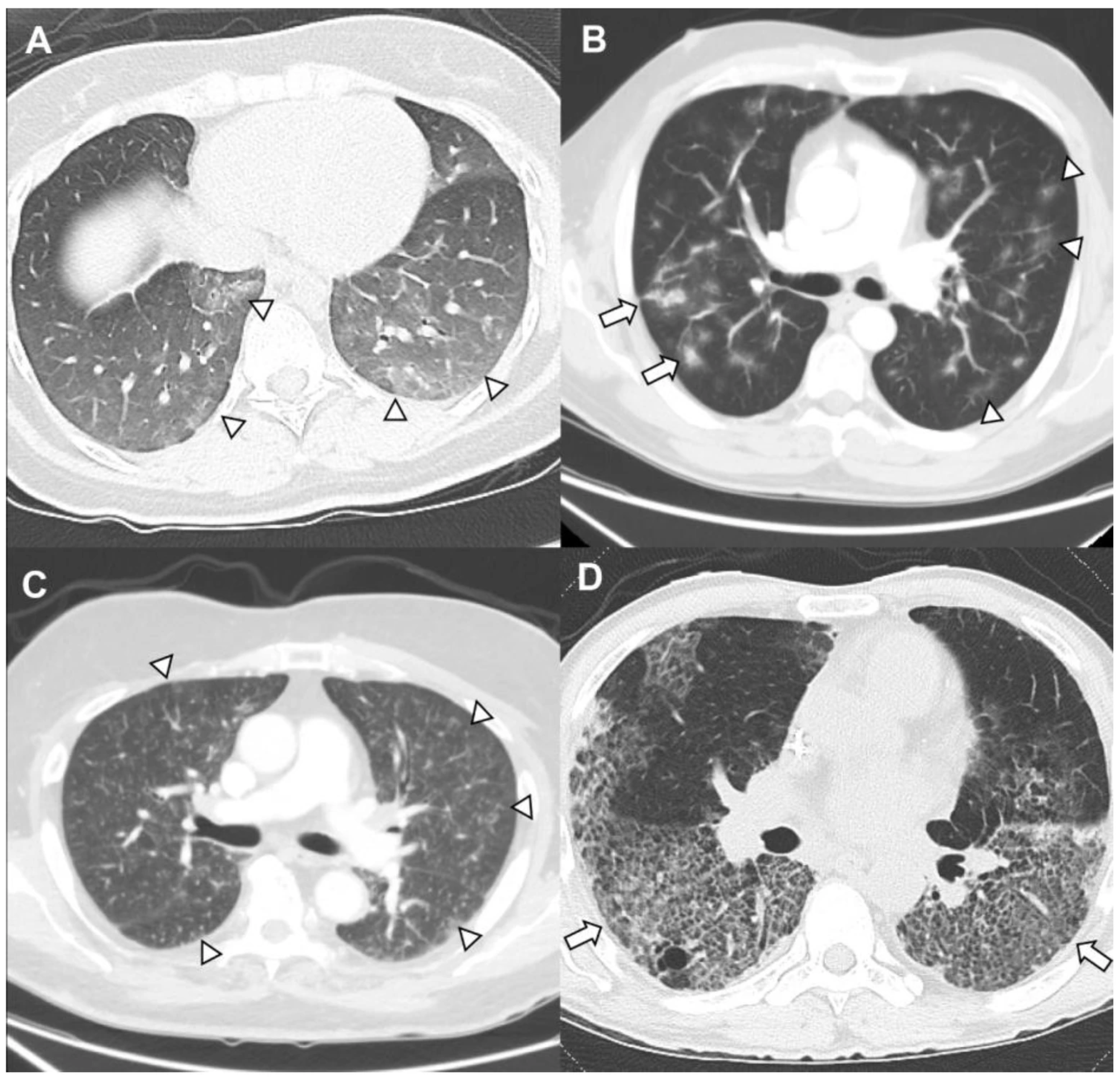
- Bleomycin. Bleomycin has direct cytotoxic effect and induces tumor cell death by inhibition of angiogenesis and generation of free oxygen radicals. Lung and skin toxicities are common due to a lack of the bleomycin-inactivating enzyme, bleomycin hydrolase [15]. Bleomycin-induced pneumonitis can occur in 10% of patients and progress into pulmonary fibrosis, and mortality in severe cases is 60% [16,17]. Risk factors include advanced age, renal function impairment, and thoracic radiation [18].
- Gemcitabine. Gemcitabine-associated pulmonary toxicities include dyspnea (8–10%), interstitial pneumonitis (1.1–3.9%) with patterns of non-specific interstitial pneumonia, and/or hypersensitivity pneumonitis, pulmonary eosinophilia, radiation recall, and ARDS [15,19,20]. In a large Japanese study of 25,924 patients, ILD was observed in 1.7% of those on gemcitabine-based chemotherapy [20]. Toxicity is thought to be a cytokine-mediated inflammatory reaction of the alveolar capillary wall, and a recent pharmacovigilance analysis has identified CD40 as a key pathogenic target [21,22].
- Methotrexate. Methotrexate is an anti-metabolite agent that interferes with folic acid metabolism, and the incidence of methotrexate-associated pneumonitis has been reported to range between 0.3% to 11% [23]. The mechanism is thought to be an idiosyncratic hypersensitivity reaction independent of drug dose.
- Alkylating agents. Alkylating agents are well-recognized for their interstitial pneumonitis and potential for pulmonary fibrosis, and these include cyclophosphamide, busulfan, and nitrosoureas (carmustine, BCNU; lomustine, CCNU) [24,25]. “Busulfan lung,” characterized by insidious onset of dyspnea, dry cough, and restrictive ventilatory impairment occurring months to years after exposure. Nitrosoureas, particularly carmustine, have been associated with dose-dependent pulmonary toxicity with increased risk when cumulative doses exceed 1000–1500 mg/m2 or with prior thoracic radiation and/or concurrent use of other pneumotoxic agents [24]. Furthermore, alkylating agents are often part of the conditioning regimens used prior to hematopoietic stem cell transplantation, and these agents can directly injure pulmonary parenchyma and endothelial cells, leading to early interstitial damage and inflammation [26]. This mechanism is thought to contribute to idiopathic pneumonia syndrome occurring post-transplant. Risk is further compounded by concomitant total body irradiation, older age, pre-existing lung disease, and allogeneic donor source.
- Taxanes. Taxanes act by promoting microtubule assembly and preventing their disassembly, thereby inhibiting mitosis and promoting cell death. The incidence of taxane-induced interstitial pneumonitis is rare and varies by formulation with nab-paclitaxel showing higher rates (13%) compared to conventional paclitaxel (<1%) and docetaxel (rare) [7]. However, in a small prospective study of 40 patients with lung cancer on docetaxel, pulmonary toxicity was reported at 4.6% [27].
3.2. Immune Checkpoint Inhibitors
3.3. Antibody–Drug Conjugates
3.4. Tyrosine Kinase Inhibitors
4. Radiation-Induced Lung Injury
5. Pleural Disease
5.1. Radiation-Induced Pleural Effusion
5.2. Therapy-Related Pleural Effusion
6. Pulmonary Vascular Disease
Pulmonary Veno-Occlusive Disease
7. Other Conditions
7.1. Transfusion-Related Lung Injury
7.2. Cryptogenic Organizing Pneumonia
7.3. Other Risk Factors
8. Conclusions
Author Contributions
Funding
Institutional Review Board Statement
Informed Consent Statement
Data Availability Statement
Conflicts of Interest
Abbreviations
| DILI | drug-induced lung injury |
| ICI | immune checkpoint inhibitor |
| ARDS | acute respiratory distress syndrome |
| VEGF | vascular endothelial growth factor |
| EGFR | epidermal growth factor receptor |
| irAE | immune-related adverse event |
| ADC | antibody–drug conjugate |
| RILI | radiation-induced lung injury |
| ILD | interstitial lung disease |
| RRP | radiation recall pneumonitis |
| CT | computed tomography |
| PH | pulmonary hypertension |
| PVOD | pulmonary veno-occlusive disease |
| TRALI | transfusion-related acute lung injury |
| TACO | transfusion-associated circulatory overload |
| COP | cryptogenic organizing pneumonia |
| PAP | pulmonary alveolar proteinosis |
| GM-CSF | granulocyte-macrophage colony-stimulating factor |
| ILA | interstitial lung abnormalities |
| CTCAE | Common Terminology Criteria for Adverse Events |
| RTOG | Radiation Therapy Oncology Group |
| BCNU | carmustine |
| CCNU | lomustine |
| PD-1 | programmed cell death protein 1 |
| PD-L1 | programmed death-ligand 1 |
| CTLA-4 | cytotoxic T-lymphocyte-associated protein 4 |
| ALK | anaplastic lymphoma kinase |
| TKI | tyrosine kinase inhibitors |
References
- Cox, J.D.; Stetz, J.; Pajak, T.F. Toxicity criteria of the Radiation Therapy Oncology Group (RTOG) and the European Organization for Research and Treatment of Cancer (EORTC). Int. J. Radiat. Oncol. Biol. Phys. 1995, 31, 1341–1346. [Google Scholar] [CrossRef] [Scilit]
- National Institutes of Health. Common Terminology Criteria for Adverse Events (CTCAE) Version 6.0; U.S. Department of Health and Human Services: Washington, DC, USA, 2025.
- Spagnolo, P.; Bonniaud, P.; Rossi, G.; Sverzellati, N.; Cottin, V. Drug-induced interstitial lung disease. Eur. Respir. J. 2022, 60, 2102776. [Google Scholar] [CrossRef] [Scilit]
- Dimopoulou, I.; Bamias, A.; Lyberopoulos, P.; Dimopoulos, M.A. Pulmonary toxicity from novel antineoplastic agents. Ann. Oncol. 2006, 17, 372–379. [Google Scholar] [CrossRef] [Scilit]
- Cherri, S.; Noventa, S.; Fanelli, M.; Calandra, G.; Prochilo, T.; Bna, C.; Savelli, G.; Zaniboni, A. Drug-Related Pneumonitis in Cancer Treatment during the COVID-19 Era. Cancers 2021, 13, 1052. [Google Scholar] [CrossRef] [Scilit]
- Chan, K.L.; Faiz, S.A.; Altan, M.; Sheshadri, A. Updates in Drug-Related Pneumonitis Due to Targeted Oncologic Therapies. J. Immunother. Precis. Oncol. 2024, 7, 272–282. [Google Scholar] [CrossRef] [Scilit]
- Long, K.; Suresh, K. Pulmonary toxicity of systemic lung cancer therapy. Respirology 2020, 25, 72–79. [Google Scholar] [CrossRef] [Scilit]
- Jain, A.; Shannon, V.R.; Sheshadri, A. Immune-Related Adverse Events: Pneumonitis. Adv. Exp. Med. Biol. 2018, 995, 131–149. [Google Scholar]
- Altan, M.; Soto, F.; Xu, T.; Wilson, N.; Franco-Vega, M.C.; Simbaqueba Clavijo, C.A.; Shannon, V.R.; Faiz, S.A.; Gandhi, S.; Lin, S.H.; et al. Pneumonitis After Concurrent Chemoradiation and Immune Checkpoint Inhibition in Patients with Locally Advanced Non-small Cell Lung Cancer. Clin. Oncol. (R. Coll. Radiol.) 2023, 35, 630–639. [Google Scholar] [CrossRef] [Scilit]
- Charpidou, A.G.; Gkiozos, I.; Tsimpoukis, S.; Apostolaki, D.; Dilana, K.D.; Karapanagiotou, E.M.; Syrigos, K.N. Therapy-induced toxicity of the lungs: An overview. Anticancer. Res. 2009, 29, 631–639. [Google Scholar]
- O’Driscoll, B.R.; Hasleton, P.S.; Taylor, P.M.; Poulter, L.W.; Gattameneni, H.R.; Woodcock, A.A. Active lung fibrosis up to 17 years after chemotherapy with carmustine (BCNU) in childhood. N. Engl. J. Med. 1990, 323, 378–382. [Google Scholar] [CrossRef] [Scilit]
- Possick, J.D. Pulmonary Toxicities from Checkpoint Immunotherapy for Malignancy. Clin. Chest Med. 2017, 38, 223–232. [Google Scholar] [CrossRef] [Scilit]
- Komninos, D.; Psarros, E.; Theochari, E.; Tsirikos, G.; Sampsonas, F.; Tzouvelekis, A. When cancer treatment affects the lungs: A clinical overview on pulmonary toxicity induced by new cancer drugs. Expert. Rev. Respir. Med. 2026, 20 , 1–14. [Google Scholar] [CrossRef] [Scilit] [PubMed]
- Johkoh, T.; Lee, K.S.; Nishino, M.; Travis, W.D.; Ryu, J.H.; Lee, H.Y.; Ryerson, C.J.; Franquet, T.; Bankier, A.A.; Brown, K.K.; et al. Chest CT Diagnosis and Clinical Management of Drug-Related Pneumonitis in Patients Receiving Molecular Targeting Agents and Immune Checkpoint Inhibitors: A Position Paper From the Fleischner Society. Chest 2021, 159, 1107–1125. [Google Scholar] [CrossRef]
- Morgan, C.; Tillett, T.; Braybrooke, J.; Ajithkumar, T. Management of uncommon chemotherapy-induced emergencies. Lancet Oncol. 2011, 12, 806–814. [Google Scholar] [CrossRef] [Scilit]
- White, D.A.; Stover, D.E. Severe bleomycin-induced pneumonitis. Clinical features and response to corticosteroids. Chest 1984, 86, 723–728. [Google Scholar] [CrossRef] [Scilit]
- Brandt, J.P.; Gerriets, V. Bleomycin. In StatPearls [Internet]; StatPearls Publishing: Treasure Island, FL, USA, 2023. [Google Scholar]
- Sleijfer, S. Bleomycin-induced pneumonitis. Chest 2001, 120, 617–624. [Google Scholar] [CrossRef] [Scilit] [PubMed]
- Faiz, S.A.; Balachandran, D.D.; Bashoura, L.; Shannon, V.R. Pulmonary Radiation Recall Induced by Gemcitabine. Am. J. Respir. Crit. Care Med. 2016, 194, 909–910. [Google Scholar] [CrossRef] [Scilit] [PubMed]
- Hamada, T.; Yasunaga, H.; Nakai, Y.; Isayama, H.; Matsui, H.; Fushimi, K.; Koike, K. Interstitial lung disease associated with gemcitabine: A Japanese retrospective cohort study. Respirology 2016, 21, 338–343. [Google Scholar] [CrossRef] [Scilit]
- Barlesi, F.; Villani, P.; Doddoli, C.; Gimenez, C.; Kleisbauer, J.P. Gemcitabine-induced severe pulmonary toxicity. Fundam. Clin. Pharmacol. 2004, 18, 85–91. [Google Scholar] [CrossRef] [Scilit]
- Li, S.; Miao, W.; Tao, Q.; Sun, J.; Huang, Z.; Zhou, Y.; Jiang, H. Pharmacovigilance study and genetic target prediction analysis of FDA adverse event reporting system for anticancer drug-associated interstitial lung disease. Naunyn Schmiedebergs Arch. Pharmacol. 2026. [Google Scholar] [CrossRef] [Scilit] [PubMed]
- Fragoulis, G.E.; Conway, R.; Nikiphorou, E. Methotrexate and interstitial lung disease: Controversies and questions. A narrative review of the literature. Rheumatology 2019, 58, 1900–1906. [Google Scholar] [CrossRef] [Scilit]
- Cooper, J.A., Jr.; White, D.A.; Matthay, R.A. Drug-induced pulmonary disease. Part 1: Cytotoxic drugs. Am. Rev. Respir. Dis. 1986, 133, 321–340. [Google Scholar] [PubMed]
- Camus, P.; Bonniaud, P.; Fanton, A.; Camus, C.; Baudaun, N.; Foucher, P. Drug-induced and iatrogenic infiltrative lung disease. Clin. Chest Med. 2004, 25, 479–519. [Google Scholar] [CrossRef] [Scilit]
- Bertini, C.; Soto, F.; Brown, R.; Bashoura, L.; Cheng, G.S.; Hensley, M.K.; Hsu, J.; Lai, Y.K.; Sharifi, H.; Sturek, J.M.; et al. Noninfectious pulmonary complications after hematopoietic cell transplantation: A comprehensive review. Respir. Med. 2025, 248, 108336. [Google Scholar] [CrossRef] [Scilit]
- Tamiya, A.; Naito, T.; Miura, S.; Morii, S.; Tsuya, A.; Nakamura, Y.; Kaira, K.; Murakami, H.; Takahashi, T.; Yamamoto, N.; et al. Interstitial lung disease associated with docetaxel in patients with advanced non-small cell lung cancer. Anticancer. Res. 2012, 32, 1103–1106. [Google Scholar]
- Schneider, B.J.; Naidoo, J.; Santomasso, B.D.; Lacchetti, C.; Adkins, S.; Anadkat, M.; Atkins, M.B.; Brassil, K.J.; Caterino, J.M.; Chau, I.; et al. Management of Immune-Related Adverse Events in Patients Treated with Immune Checkpoint Inhibitor Therapy: ASCO Guideline Update. J. Clin. Oncol. 2021, 39, 4073–4126. [Google Scholar] [CrossRef] [Scilit]
- Hussaini, S.; Chehade, R.; Boldt, R.G.; Raphael, J.; Blanchette, P.; Maleki Vareki, S.; Fernandes, R. Association between immune-related side effects and efficacy and benefit of immune checkpoint inhibitors—A systematic review and meta-analysis. Cancer Treat. Rev. 2021, 92, 102134. [Google Scholar] [CrossRef] [Scilit]
- Wan, G.; Chen, W.; Khattab, S.; Roster, K.; Nguyen, N.; Yan, B.; Rajeh, A.; Seo, J.; Rashdan, H.; Zubiri, L.; et al. Multi-organ immune-related adverse events from immune checkpoint inhibitors and their downstream implications: A retrospective multicohort study. Lancet Oncol. 2024, 25, 1053–1069. [Google Scholar] [CrossRef] [Scilit]
- Atchley, W.T.; Alvarez, C.; Saxena-Beem, S.; Schwartz, T.A.; Ishizawar, R.C.; Patel, K.P.; Rivera, M.P. Immune Checkpoint Inhibitor-Related Pneumonitis in Lung Cancer: Real-World Incidence, Risk Factors, and Management Practices Across Six Health Care Centers in North Carolina. Chest 2021, 160, 731–742. [Google Scholar] [CrossRef] [Scilit]
- Hu, X.; Ren, J.; Xue, Q.; Luan, R.; Ding, D.; Tan, J.; Su, X.; Yang, J. Anti-PD-1/PD-L1 and anti-CTLA-4 associated checkpoint inhibitor pneumonitis in non-small cell lung cancer: Occurrence, pathogenesis and risk factors (Review). Int. J. Oncol. 2023, 63, 122. [Google Scholar] [CrossRef] [Scilit]
- Naidoo, J.; Wang, X.; Woo, K.M.; Iyriboz, T.; Halpenny, D.; Cunningham, J.; Chaft, J.E.; Segal, N.H.; Callahan, M.K.; Lesokhin, A.M.; et al. Pneumonitis in Patients Treated with Anti-Programmed Death-1/Programmed Death Ligand 1 Therapy. J. Clin. Oncol. 2017, 35, 709–717. [Google Scholar] [CrossRef] [Scilit]
- Asher, N.; Marom, E.M.; Ben-Betzalel, G.; Baruch, E.N.; Steinberg-Silman, Y.; Schachter, J.; Shapira-Frommer, R.; Markel, G. Recurrent Pneumonitis in Patients with Melanoma Treated with Immune Checkpoint Inhibitors. Oncologist 2019, 24, 640–647. [Google Scholar] [CrossRef] [Scilit]
- Shannon, V.R.; Subudhi, S.K.; Huo, L.; Faiz, S.A. Diffuse alveolar hemorrhage with nivolumab monotherapy. Respir. Med. Case Rep. 2020, 30, 101131. [Google Scholar] [CrossRef] [Scilit]
- Zhou, P.; Zhao, X.; Wang, G. Risk Factors for Immune Checkpoint Inhibitor-Related Pneumonitis in Cancer Patients: A Systemic Review and Meta-Analysis. Respiration 2022, 101, 1035–1050. [Google Scholar] [CrossRef] [Scilit]
- Chen, X.; Huan, C.; Yang, P.; He, M.; Wang, R.; Zhou, J.; Zhou, J. Immune checkpoint inhibitor-induced interstitial lung disease in non-small cell lung cancer patients with preexisting pulmonary emphysema or interstitial lung abnormalities. Lung Cancer 2025, 210, 108831. [Google Scholar] [CrossRef] [Scilit]
- Nishino, M.; Ramaiya, N.H.; Awad, M.M.; Sholl, L.M.; Maattala, J.A.; Taibi, M.; Hatabu, H.; Ott, P.A.; Armand, P.F.; Hodi, F.S. PD-1 Inhibitor-Related Pneumonitis in Advanced Cancer Patients: Radiographic Patterns and Clinical Course. Clin. Cancer Res. 2016, 22, 6051–6060. [Google Scholar] [CrossRef] [Scilit]
- Li, C.; Faiz, S.A.; Boysen-Osborn, M.; Sheshadri, A.; Wattana, M.K. Immune Checkpoint Inhibitor-associated Pneumonitis: A Narrative Review. West. J. Emerg. Med. 2025, 26, 210–218. [Google Scholar] [CrossRef] [Scilit] [PubMed]
- Haanen, J.; Carbonnel, F.; Robert, C.; Kerr, K.M.; Peters, S.; Larkin, J.; Jordan, K.; Committee, E.G. Management of toxicities from immunotherapy: ESMO Clinical Practice Guidelines for diagnosis, treatment and follow-up. Ann. Oncol. 2017, 28, iv119–iv142. [Google Scholar] [CrossRef] [Scilit]
- Naidoo, J.; Murphy, C.; Atkins, M.B.; Brahmer, J.R.; Champiat, S.; Feltquate, D.; Krug, L.M.; Moslehi, J.; Pietanza, M.C.; Riemer, J.; et al. Society for Immunotherapy of Cancer (SITC) consensus definitions for immune checkpoint inhibitor-associated immune-related adverse events (irAEs) terminology. J. Immunother. Cancer 2023, 11, e006398. [Google Scholar] [CrossRef] [Scilit]
- Brahmer, J.R.; Abu-Sbeih, H.; Ascierto, P.A.; Brufsky, J.; Cappelli, L.C.; Cortazar, F.B.; Gerber, D.E.; Hamad, L.; Hansen, E.; Johnson, D.B.; et al. Society for Immunotherapy of Cancer (SITC) clinical practice guideline on immune checkpoint inhibitor-related adverse events. J. Immunother. Cancer 2021, 9, e002435. [Google Scholar] [CrossRef] [Scilit]
- Lai, K.A.; Sheshadri, A.; Adrianza, A.M.; Etchegaray, M.; Balachandran, D.D.; Bashoura, L.; Shannon, V.R.; Faiz, S.A. Role of Infliximab in Immune Checkpoint Inhibitor-Induced Pneumonitis. J. Immunother. Precis. Oncol. 2020, 3, 172–174. [Google Scholar] [CrossRef] [Scilit]
- Dolladille, C.; Ederhy, S.; Sassier, M.; Cautela, J.; Thuny, F.; Cohen, A.A.; Fedrizzi, S.; Chretien, B.; Da-Silva, A.; Plane, A.F.; et al. Immune Checkpoint Inhibitor Rechallenge After Immune-Related Adverse Events in Patients with Cancer. JAMA Oncol. 2020, 6, 865–871. [Google Scholar] [CrossRef] [Scilit]
- Tarantino, P.; Modi, S.; Tolaney, S.M.; Cortes, J.; Hamilton, E.P.; Kim, S.B.; Toi, M.; Andre, F.; Curigliano, G. Interstitial Lung Disease Induced by Anti-ERBB2 Antibody-Drug Conjugates: A Review. JAMA Oncol. 2021, 7, 1873–1881. [Google Scholar] [CrossRef] [Scilit]
- Fang, N.; Wang, X.; Xu, Z.; Zhan, H.; Wang, Y.; Zhao, B.; Huang, H.; Lin, M. Immuno-OncologyThe adverse event of interstitial lung disease in patients treated with antibody-drug conjugates. Oncologist 2025, 30, oyaf228. [Google Scholar] [CrossRef] [Scilit]
- Zhu, Z.; Shen, G.; Li, J.; Qiu, T.; Fang, Q.; Zheng, Y.; Xin, Y.; Liu, Z.; Zhao, F.; Ren, D.; et al. Incidence of antibody-drug conjugates-related pneumonitis in patients with solid tumors: A systematic review and meta-analysis. Crit. Rev. Oncol. Hematol. 2023, 184, 103960. [Google Scholar] [CrossRef] [Scilit]
- Jain, M.D.; Abramson, J.S.; Ansell, S.M. Easy as ABC: Managing Toxicities of Antibody-Drug Conjugates, Bispecific Antibodies, and CAR T-Cell Therapies. Am. Soc. Clin. Oncol. Educ. Book. 2025, 45, e473916. [Google Scholar] [CrossRef] [Scilit] [PubMed]
- Azhar, M.; Soto, F.; Su, A.; Gonzalez, N.A.V.; Medina, K.B.; Madrigal, A.L.; Duran, C.C.; Reyna, C.I.R.; Chan, C.; Shroff, G.S.; et al. Incidence and risk factors for pneumonitis due to trastuzumab Deruxtecan in metastatic breast cancer: A retrospective cohort study. Breast Cancer Res. 2025, 27, 197. [Google Scholar] [CrossRef] [Scilit] [PubMed]
- Yoon, S.; Shin, S.J.; Kim, H.C.; Kim, Y.S.; Lee, H.J.; Keam, B.; Choi, Y.J.; Kim, Y.J.; Park, I.; Park, S.H.; et al. Enfortumab vedotin-related pneumonitis is more common than expected and could lead to acute respiratory failure. Eur. J. Cancer 2022, 174, 81–89. [Google Scholar] [CrossRef] [Scilit]
- Rugo, H.S.; Tokunaga, E.; Iwata, H.; Petry, V.; Smit, E.F.; Goto, Y.; Kim, D.W.; Shitara, K.; Gruden, J.F.; Modi, S.; et al. Pooled analysis of trastuzumab deruxtecan retreatment after recovery from grade 1 interstitial lung disease/pneumonitis. Ann. Oncol. 2025, 36, 1389–1399. [Google Scholar] [CrossRef] [Scilit]
- Administration FaD. PADCEV EJFV- Enfortumab Vedotin. 2021. Available online: https://dailymed.nlm.nih.gov/dailymed/drugInfo.cfm?setid=b5631d3e-4604-4363-8f20-11dfc5a4a8ed (accessed on 10 January 2026).
- Shah, R.R. Tyrosine Kinase Inhibitor-Induced Interstitial Lung Disease: Clinical Features, Diagnostic Challenges, and Therapeutic Dilemmas. Drug Saf. 2016, 39, 1073–1091. [Google Scholar] [CrossRef] [Scilit] [PubMed]
- Weatherald, J.; Bondeelle, L.; Chaumais, M.C.; Guignabert, C.; Savale, L.; Jais, X.; Sitbon, O.; Rousselot, P.; Humbert, M.; Bergeron, A.; et al. Pulmonary complications of Bcr-Abl tyrosine kinase inhibitors. Eur. Respir. J. 2020, 56, 2000279. [Google Scholar] [CrossRef] [Scilit]
- Ma, Z.; Pei, J.; Zhang, Y.; Li, H.; Sun, D.; Zhang, Y.; An, Z. Interstitial pneumonitis associated with EGFR/ALK tyrosine kinase inhibitors used in non-small cell lung cancer: An observational, retrospective, pharmacovigilance study. Expert. Opin. Drug Saf. 2023, 22, 237–242. [Google Scholar] [CrossRef] [Scilit]
- Hanania, A.N.; Mainwaring, W.; Ghebre, Y.T.; Hanania, N.A.; Ludwig, M. Radiation-Induced Lung Injury: Assessment and Management. Chest 2019, 156, 150–162. [Google Scholar] [CrossRef] [Scilit]
- Chang, S.; Lv, J.; Wang, X.; Su, J.; Bian, C.; Zheng, Z.; Yu, H.; Bao, J.; Xin, Y.; Jiang, X. Pathogenic mechanisms and latest therapeutic approaches for radiation-induced lung injury: A narrative review. Crit. Rev. Oncol. Hematol. 2024, 202, 104461. [Google Scholar] [CrossRef] [Scilit]
- Verginadis, I.I.; Citrin, D.E.; Ky, B.; Feigenberg, S.J.; Georgakilas, A.G.; Hill-Kayser, C.E.; Koumenis, C.; Maity, A.; Bradley, J.D.; Lin, A. Radiotherapy toxicities: Mechanisms, management, and future directions. Lancet 2025, 405, 338–352. [Google Scholar] [CrossRef] [Scilit]
- Arroyo-Hernandez, M.; Maldonado, F.; Lozano-Ruiz, F.; Munoz-Montano, W.; Nunez-Baez, M.; Arrieta, O. Radiation-induced lung injury: Current evidence. BMC Pulm. Med. 2021, 21, 9. [Google Scholar] [CrossRef] [Scilit]
- Ruysscher, D.; Wauters, E.; Jendrossek, V.; Filippi, A.R.; Revel, M.P.; Faivre-Finn, C.; Naidoo, J.; Ramella, S.; Guckenberger, M.; Ricardi, U.; et al. Diagnosis and treatment of radiation induced pneumonitis in patients with lung cancer: An ESTRO clinical practice guideline. Radiother. Oncol. 2025, 207, 110837. [Google Scholar] [CrossRef] [Scilit] [PubMed]
- Chopra, A.; Hu, K.; Judson, M.A.; Feller-Kopman, D. Clinical approach to a pleural effusion. Chest 2025. online ahead of print. [Google Scholar] [CrossRef] [Scilit] [PubMed]
- Harding, W.C.; Halawa, A.R.; Aiche, M.M.; Zafar, B.; Ali, H.R.; Bashoura, L.; Faiz, S.A. Pleural Effusion: Shedding Light on Pleural Disease Beyond Infection and Malignancy. Medicina 2025, 61, 443. [Google Scholar] [CrossRef] [Scilit]
- Kassirian, S.; Hinton, S.N.; Cuninghame, S.; Chaudhary, R.; Iansavitchene, A.; Amjadi, K.; Dhaliwal, I.; Zeman-Pocrnich, C.; Mitchell, M.A. Diagnostic sensitivity of pleural fluid cytology in malignant pleural effusions: Systematic review and meta-analysis. Thorax 2023, 78, 32–40. [Google Scholar] [CrossRef] [Scilit]
- Zhao, J.; Day, R.M.; Jin, J.Y.; Quint, L.; Williams, H.; Ferguson, C.; Yan, L.; King, M.; Albsheer, A.; Matuszak, M.; et al. Thoracic radiation-induced pleural effusion and risk factors in patients with lung cancer. Oncotarget 2017, 8, 97623–97632. [Google Scholar] [CrossRef] [Scilit]
- Deek, M.P.; Nagarajan, S.; Kim, S.; Ahmed, I.; Paul, S.; Scher, E.D.; Listo, M.; Chen, A.; Aisner, J.; Hussain, S.; et al. Clinical characteristics and dose-volume histogram parameters associated with the development of pleural effusions in non-small cell lung cancer patients treated with chemoradiation therapy. Acta Oncol. 2016, 55, 1029–1035. [Google Scholar] [CrossRef] [Scilit]
- Feller-Kopman, D.; Light, R. Pleural Disease. N. Engl. J. Med. 2018, 378, 1754. [Google Scholar] [CrossRef] [Scilit] [PubMed]
- Vahid, B.; Marik, P.E. Pulmonary complications of novel antineoplastic agents for solid tumors. Chest 2008, 133, 528–538. [Google Scholar] [CrossRef] [Scilit]
- Faiz, S.A.; Sahay, S.; Jimenez, C.A. Pleural effusions in acute and chronic leukemia and myelodysplastic syndrome. Curr. Opin. Pulm. Med. 2014, 20, 340–346. [Google Scholar] [CrossRef] [Scilit]
- Piccart, M.J.; Klijn, J.; Paridaens, R.; Nooij, M.; Mauriac, L.; Coleman, R.; Bontenbal, M.; Awada, A.; Selleslags, J.; Van Vreckem, A.; et al. Corticosteroids significantly delay the onset of docetaxel-induced fluid retention: Final results of a randomized study of the European Organization for Research and Treatment of Cancer Investigational Drug Branch for Breast Cancer. J. Clin. Oncol. 1997, 15, 3149–3155. [Google Scholar] [CrossRef] [Scilit]
- Kalchiem-Dekel, O.; Falcon, C.J.; Bestvina, C.M.; Liu, D.; Kaplanis, L.A.; Wilhelm, C.; Eichholz, J.; Harada, G.; Wirth, L.J.; Digumarthy, S.R.; et al. Brief Report: Chylothorax and Chylous Ascites During RET Tyrosine Kinase Inhibitor Therapy. J. Thorac. Oncol. 2022, 17, 1130–1136. [Google Scholar] [CrossRef] [Scilit]
- Sawada, R.; Matsui, Y.; Uchino, J.; Okura, N.; Morimoto, Y.; Iwasaku, M.; Kaneko, Y.; Yamada, T.; Takayama, K. Late-onset Pleural and Pericardial Effusion as Immune-related Adverse Events after 94 Cycles of Nivolumab. Intern. Med. 2021, 60, 3585–3588. [Google Scholar] [CrossRef] [Scilit] [PubMed]
- Terashima, T.; Iwami, E.; Shimada, T.; Kuroda, A.; Matsuzaki, T.; Nakajima, T.; Sasaki, A.; Eguchi, K. IgG4-related pleural disease in a patient with pulmonary adenocarcinoma under durvalumab treatment: A case report. BMC Pulm. Med. 2020, 20, 104. [Google Scholar] [CrossRef] [Scilit] [PubMed]
- Montani, D.; Bergot, E.; Gunther, S.; Savale, L.; Bergeron, A.; Bourdin, A.; Bouvaist, H.; Canuet, M.; Pison, C.; Macro, M.; et al. Pulmonary arterial hypertension in patients treated by dasatinib. Circulation 2012, 125, 2128–2137. [Google Scholar] [CrossRef] [Scilit]
- Humbert, M.; Kovacs, G.; Hoeper, M.M.; Badagliacca, R.; Berger, R.M.F.; Brida, M.; Carlsen, J.; Coats, A.J.S.; Escribano-Subias, P.; Ferrari, P.; et al. 2022 ESC/ERS Guidelines for the diagnosis and treatment of pulmonary hypertension. Eur. Respir. J. 2023, 61, 2200879. [Google Scholar] [CrossRef] [Scilit]
- Grynblat, J.; Khouri, C.; Hlavaty, A.; Jais, X.; Savale, L.; Chaumais, M.C.; Kularatne, M.; Jevnikar, M.; Boucly, A.; Antigny, F.; et al. Characteristics and outcomes of patients developing pulmonary hypertension associated with proteasome inhibitors. Eur. Respir. J. 2024, 63, 2302158. [Google Scholar] [CrossRef] [Scilit]
- Toy, P.; Looney, M.R.; Popovsky, M.; Palfi, M.; Berlin, G.; Chapman, C.E.; Bolton-Maggs, P.; Matthay, M.A. Transfusion-related Acute Lung Injury: 36 Years of Progress (1985–2021). Ann. Am. Thorac. Soc. 2022, 19, 705–712. [Google Scholar] [CrossRef] [Scilit]
- Clifford, L.; Jia, Q.; Subramanian, A.; Yadav, H.; Schroeder, D.R.; Kor, D.J. Risk Factors and Clinical Outcomes Associated with Perioperative Transfusion-associated Circulatory Overload. Anesthesiology 2017, 126, 409–418. [Google Scholar] [CrossRef] [Scilit] [PubMed]
- King, T.E., Jr.; Lee, J.S. Cryptogenic Organizing Pneumonia. N. Engl. J. Med. 2022, 386, 1058–1069. [Google Scholar] [CrossRef] [Scilit]
- Zare Mehrjardi, M.; Kahkouee, S.; Pourabdollah, M. Radio-pathological correlation of organizing pneumonia (OP): A pictorial review. Br. J. Radiol. 2017, 90, 20160723. [Google Scholar] [CrossRef] [Scilit]
- Podolanczuk, A.J.; Hunninghake, G.M.; Wilson, K.C.; Khor, Y.H.; Kheir, F.; Pang, B.; Adegunsoye, A.; Cararie, G.; Corte, T.J.; Flanagan, J.; et al. Approach to the Evaluation and Management of Interstitial Lung Abnormalities: An Official American Thoracic Society Clinical Statement. Am. J. Respir. Crit. Care Med. 2025, 211, 1132–1155. [Google Scholar] [CrossRef] [Scilit] [PubMed]
- Park, S.; Choe, J.; Hwang, H.J.; Noh, H.N.; Jung, Y.J.; Lee, J.B.; Do, K.H.; Chae, E.J.; Seo, J.B. Long-Term Follow-Up of Interstitial Lung Abnormality: Implication in Follow-Up Strategy and Risk Thresholds. Am. J. Respir. Crit. Care Med. 2023, 208, 858–867. [Google Scholar] [CrossRef] [Scilit] [PubMed]



| Grade | CTCAE v6.0 | RTOG |
|---|---|---|
| 0 | No changes | No changes |
| 1 | Asymptomatic, only radiographic findings | Asymptomatic or mild symptoms |
| 2 | Symptomatic, does not interfere with daily activities | Moderate symptoms of pneumonitis (severe cough) and radiographic changes |
| 3 | Symptomatic, interferes with daily activities, requires supplemental oxygen | Severe symptoms of pneumonitis, dense radiographic changes |
| 4 | Threatens life, requires mechanical ventilation support | Symptoms of severe respiratory failure requiring assisted ventilation or continuous oxygen |
| 5 | Death | Death-related late effects of radiotherapy |
| Pulmonary Manifestation | Chemotherapy | Molecular |
|---|---|---|
| Bronchospasm | Alkylating agents (cyclophosphamide), antitumor antibiotics, anti-metabolities, taxanes, ATRA | Monoclonal antibodies |
| DAD, NCPE, DAH | Alkylating agents, antitumor antibiotics, anti-metabolites, taxanes, platinoids (oxaliplatin), ATRA | Immunomodulators, monoclonal antibodies, proteosome inhibitors, rapamycin inhibitors, tyrosine kinase inhibitors |
| Eosinophilic pneumonia | Alkylating agents, antitumor antibiotics, anti-metabolites, taxanes | Monoclonal antibodies (rituximab) |
| Hemoptysis | Immunomodulators, monoclonal antibodies, proteosome inhibitors | |
| Interstitial pneumonitis/fibrosis | Alkylating agents, antitumor antibiotics, anti-metabolites, taxanes, platinoids (oxaliplatin) | Immunomodulators, proteosome inhibitors, rapamycin inhibitors, tyrosine kinase inhibitors, antibody–drug conjugates, CDK inhibitor, PI3K, PARP inhibitor |
| Pleural effusion | Alkylating agents (cyclophosphamide), anti-metabolites (methotrexate, gemcitabine), taxanes, ATRA | Tyrosine kinase inhibitors |
| Pulmonary hypertension | Antitumor antibiotics (bleomycin, mitomycin) | Proteosome inhibitors, tyrosine kinase inhibitors |
| Radiation recall | Alkylating agents (nitrosoureas), anti-metabolites, taxanes, | Monoclonal antibodies, proteosome inhibitors, tyrosine kinase inhibitors (gefitinib, EGFR) |
Disclaimer/Publisher’s Note: The statements, opinions and data contained in all publications are solely those of the individual author(s) and contributor(s) and not of MDPI and/or the editor(s). MDPI and/or the editor(s) disclaim responsibility for any injury to people or property resulting from any ideas, methods, instructions or products referred to in the content. |
© 2026 by the authors. Published by MDPI on behalf of the Lithuanian University of Health Sciences. Licensee MDPI, Basel, Switzerland. This article is an open access article distributed under the terms and conditions of the Creative Commons Attribution (CC BY) license.
Share and Cite
Zafar, B.; Haque, T.; Tan, M.; Singh, R.; Bashoura, L.; Sheshadri, A.; Azhar, M.; Faiz, S.A. Pulmonary Complications of Cancer Therapy: Clinical Presentations, Imaging Patterns, and Management Strategies. Medicina 2026, 62, 578. https://doi.org/10.3390/medicina62030578
Zafar B, Haque T, Tan M, Singh R, Bashoura L, Sheshadri A, Azhar M, Faiz SA. Pulmonary Complications of Cancer Therapy: Clinical Presentations, Imaging Patterns, and Management Strategies. Medicina. 2026; 62(3):578. https://doi.org/10.3390/medicina62030578
Chicago/Turabian StyleZafar, Bilal, Tasmea Haque, Miranda Tan, Ritika Singh, Lara Bashoura, Ajay Sheshadri, Maria Azhar, and Saadia A. Faiz. 2026. "Pulmonary Complications of Cancer Therapy: Clinical Presentations, Imaging Patterns, and Management Strategies" Medicina 62, no. 3: 578. https://doi.org/10.3390/medicina62030578
APA StyleZafar, B., Haque, T., Tan, M., Singh, R., Bashoura, L., Sheshadri, A., Azhar, M., & Faiz, S. A. (2026). Pulmonary Complications of Cancer Therapy: Clinical Presentations, Imaging Patterns, and Management Strategies. Medicina, 62(3), 578. https://doi.org/10.3390/medicina62030578