Article

The Role of Mid-Trimester BUN and Creatinine Assessment in Predicting Preeclampsia: Retrospective Case–Control Study

1
Private Practice, 32100 Elazig, Turkey
2
Department of Obstetrics and Gynecology, Firat University Faculty of Medicine, 23100 Elazig, Turkey
3
Gynecology and Obstetrics Clinic, Fethi Sekin City Hospital, 23100 Elazig, Turkey
4
Department of Obstetrics and Gynecology, Faculty of Medicine, Mardin Artuklu University, 47100 Mardin, Turkey
5
Gynecology and Obstetrics Clinic, Private East Anatolia Hospital, 23100 Elazig, Turkey
6
Department of Obstetrics and Gynecology, Gazi Yaşargil Training and Research Hospital, Health Sciences University, 21500 Diyarbakir, Turkey
*
Author to whom correspondence should be addressed.
Medicina 2025, 61(4), 746; https://doi.org/10.3390/medicina61040746

Submission received: 13 March 2025 / Revised: 8 April 2025 / Accepted: 14 April 2025 / Published: 18 April 2025
(This article belongs to the Special Issue Recent Advances in Maternal–Fetal Medicine)

Abstract

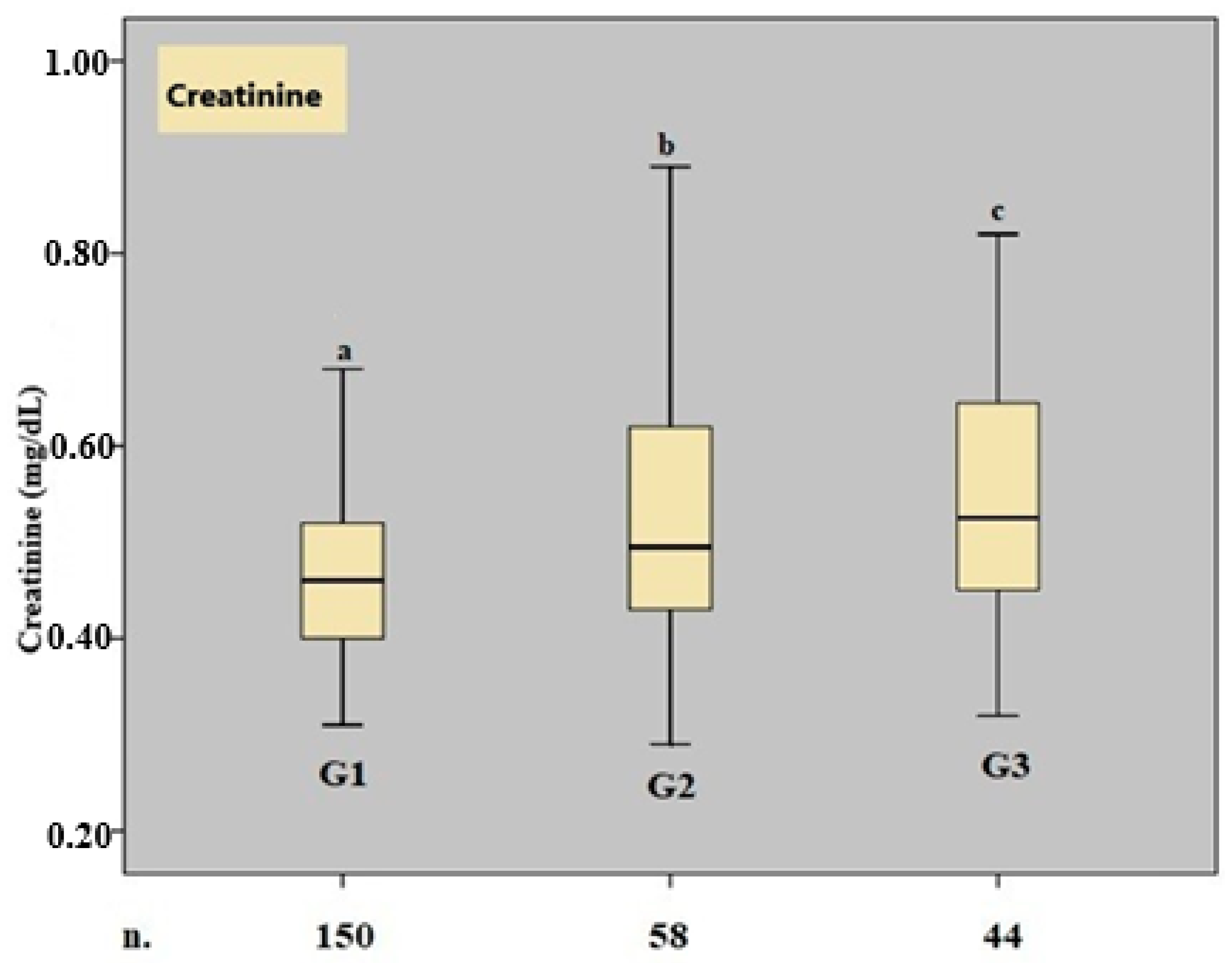
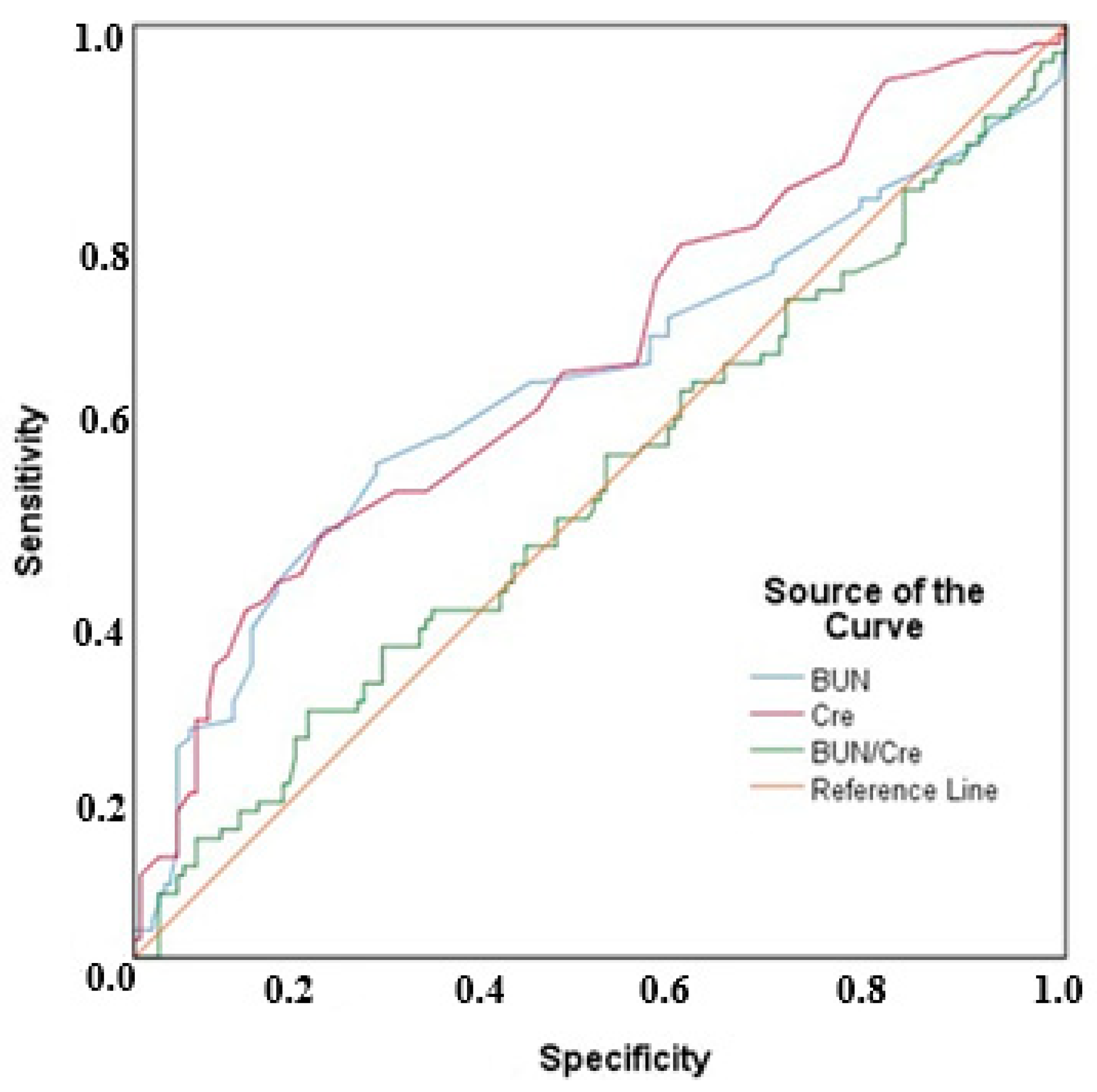
Background and Objectives: Preeclampsia (PE) is a major cause of adverse perinatal outcomes. Early diagnosis of pregnant women at risk of PE can facilitate disease prevention and management. However, the presence of different phenotypes of the disease complicates its prediction. In particular, the challenges in the early diagnosis of term PE cases necessitate research on PE prediction in the second and third trimesters. This study aims to examine the association between PE development and mid-trimester blood urea nitrogen (BUN), serum creatinine, and the BUN/creatinine ratio in pregnant women. Materials and Methods: This retrospective case–control study was conducted on women diagnosed with PE. Pregnant women who underwent routine biochemical blood tests between the 18th and 24th weeks of gestation and subsequently gave birth at our hospital between January 2022 and May 2023 were categorized into three groups. Accordingly, healthy women who had term deliveries were classified as Group 1 (150 cases), women diagnosed with PE were classified as Group 2 (58 cases), and those diagnosed with severe PE were classified as Group 3 (44 cases). Results: There were no significant differences in age, gravidity, parity, body mass index, or gestational week at blood sampling between the patient and control groups (p > 0.05). When comparing the mean blood urea nitrogen, serum creatinine, and BUN/creatinine ratios, a significant difference was observed between the control group and those who developed PE (p = 0.001, p < 0.001, and p = 0.031, respectively). Univariate analysis revealed a significant association between BUN levels and PE development (OR 1.083; 95% CI, 1.031–1.139; p = 0.002). A stronger association was observed between serum creatinine levels and PE development (OR 112.344; 95% CI, 11.649–1083.416; p < 0.001). However, no significant association was found between the BUN/creatinine ratio and PE in univariate analysis (OR 1.003; 95% CI, 0.979–1.028; p > 0.05). Mid-trimester BUN and serum creatinine levels were significantly higher in patients who developed PE and severe PE. The AUC value for the BUN parameter in predicting PE was 0.614 (AUC 0.614; 95% CI, 0.539–0.689; p = 0.002). A BUN cut-off value of 16.2 mg/dL predicted disease development with a sensitivity of 52.9% and a specificity of 74%. Similarly, the AUC value for the serum creatinine parameter in predicting PE was 0.644 (AUC 0.644; 95% CI, 0.574–0.751; p < 0.001). A serum creatinine cut-off value of 0.58 mg/dL was able to predict disease development with 37.2% sensitivity and 88% specificity. No significant AUC value was obtained for the BUN/creatinine ratio (p > 0.05). Conclusions: Our findings indicate that elevated BUN and serum creatinine levels measured during the mid-trimester (18–24 weeks) are associated with an increased risk of developing preeclampsia.
Keywords: blood urea nitrogen; mid-trimester biomarkers; preeclampsia; prediction; serum creatinine blood urea nitrogen; mid-trimester biomarkers; preeclampsia; prediction; serum creatinine