Article

Predicted vs. Observed Prosthesis–Patient Mismatch After Surgical Aortic Valve Replacement

1
Cardiac Surgery Unit, Azienda Ospedale Università di Padova, 35122 Padova, Italy
2
Cardiac Surgery Unit, Università degli Studi di Roma Tor Vergata, 00133 Roma, Italy
3
Unit of Biostatistics, Epidemiology and Public Health, Department of Cardiac, Thoracic, Vascular Sciences and Public Health, University of Padova, 35122 Padova, Italy
*
Author to whom correspondence should be addressed.
These authors contributed equally to this work.
Medicina 2025, 61(4), 743; https://doi.org/10.3390/medicina61040743

Submission received: 30 September 2024 / Revised: 20 February 2025 / Accepted: 8 April 2025 / Published: 17 April 2025
(This article belongs to the Section Cardiology)

Abstract

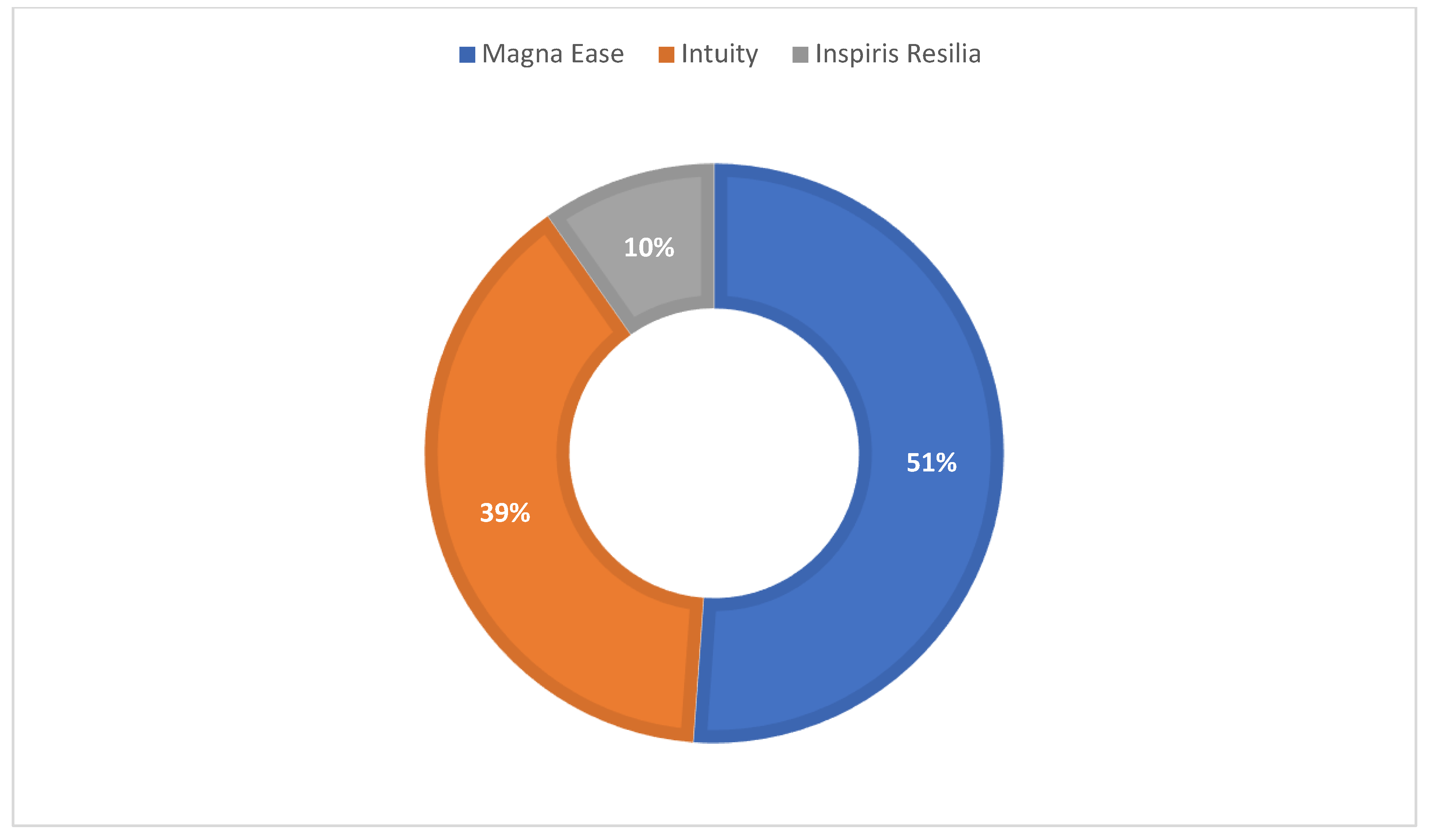
Background and Objectives: Prosthesis–patient mismatch (PPM) after surgical aortic valve replacement (SAVR) is associated with worse clinical outcomes and worse valve durability. The aim of this retrospective single-center study was to evaluate the consistency between predicted PPM (PPMp) and measured PPM (PPMm) after SAVR with three different bioprostheses. Materials and Methods: We analyzed data of all consecutive patients who underwent surgical aortic valve replacement with Magna Ease, Intuity, and Inspiris Resilia bioprostheses (Edwards Lifesciences, Irvine, CA, USA) at our institution. PPM was defined if EOAi ≤ 0.85 cm2/m2. PPMm was determined by institutional echo lab-measured EOAi on discharge-day echocardiogram. PPMp was assessed using reference values for each valve model and size indexed to BSA based on height, weight, prosthesis type, and size. For the overall population and for the three valve types we evaluated the sensitivity, specificity, positive predicted value, negative predicted value, and accuracy of PPMp. Furthermore, the consistency between PPMm and PPMp were evaluated according to prosthesis type, size, stent internal diameter (ID), and true ID. Results: A total of 1323 patients underwent SAVR; complete hemodynamic data were available for 872 patients, who represent the population of our study. Magna Ease, Intuity, and Inspiris Resilia were implanted in 446 (51.1%), 341 (39.1%), and 85 (9.7%) patients, respectively. In 635 out of 872 cases (72.8%), PPMp was consistent with PPMm (Magna Ease: 321/446, 72%; Inspiris Resilia: 58/85, 68.2%; Intuity: 256/341, 75%). Overall, the sensitivity, specificity, positive predicted value, negative predicted value, and accuracy of PPMp were 0.26, 0.83, 0.24, 0.84, and 0.73, respectively (Magna Ease: 0.21, 0.82, 0.3, 0.8, and 0.72; Inspiris Resilia: 0.11, 0.82, 0.14, 0.79, and 0.68; Intuity: 0.45, 0.78, 0.19, 0.93, and 0.75). Conclusions: The consistency between PPMp and PPMm was suboptimal. We did not observe differences between PPMp and PPMm among different valve types. Discordance between PPMp and PPMm was more evident in smaller valve sizes. When implanting small valves, the evaluation of PPMp should be used with caution to avoid unexpected PPMm.
Keywords: aortic valve replacement; bioprostheses; prosthesis–patient mismatch aortic valve replacement; bioprostheses; prosthesis–patient mismatch