Abstract
Background and Objectives: Perioperative myocardial infarction (PMI) after coronary artery bypass grafting (CABG) remains difficult to diagnose due to varying biomarker thresholds and ECG criteria. This study aimed to evaluate the predictive value of ECG changes and cardiac biomarkers for identifying pathological findings in repeat coronary angiography after CABG. Materials and Methods: This retrospective study included 137 patients who underwent repeat coronary angiography due to suspected PMI. ECG changes and serial measurements of CK, CK-MB, and hsTnT were analyzed at 4, 8, and 18 h postoperatively. The primary endpoint was the identification of graft-related complications or new coronary lesions. Results: Pathological angiographic findings were detected in 85.4% (n = 117) of cases, predominantly graft-related complications (96.6%). ST-segment elevation (p < 0.01) and ST-segment depression (p = 0.02) were significantly associated with pathological findings. The combination of ST-segment elevation and CK-MB > 1.0 µkat/L also showed a high predictive accuracy (p < 0.01). HsTnT demonstrated the strongest diagnostic performance, with a threshold of 1231 ng/L at 18 h (AUC = 1.0; p < 0.01). Earlier postoperative biomarker elevations did not show significant discriminatory value. Conclusions: ECG remains the most accessible and fastest predictive tool for PMI detection. However, cardiac biomarkers only gain diagnostic relevance beyond 8 h postoperatively. A multimodal approach integrating biomarker kinetics and ECG changes may enhance early decision-making and improve patient outcomes, as ST-segment elevation in combination with CK-MB > 1.0 µkat/L serves as a relevant predictor. Notably, hsTnT levels > 1231 ng/L at 18 h reliably identified patients with pathological angiographic findings. These findings were derived from a highly selected cohort (~2% of all CABG patients) referred for coronary angiography and should therefore be interpreted as hypothesis-generating rather than directly generalizable to the broader surgical population.
1. Introduction
Perioperative myocardial infarction (PMI) is a rare but formidable complication of coronary artery bypass grafting (CABG), casting a long shadow over patient outcomes due to its association with increased mortality and morbidity [1,2,3,4]. Though the definition of PMI continues to elude consensus [5]. Consequently, reported incidence rates of PMI for isolated CABG procedures fluctuate dramatically, ranging from as low as 0.3% to as high as 30%, depending on the definition and diagnostic tools employed [3,6]. This reflects the diagnostic ambiguity and controversy surrounding PMI. The challenge lies in differentiating true ischemic myocardial injury and necrosis from the background noise of non-specific, procedure-related or postoperative changes, including surgical trauma, inflammation, and hemodynamic instability, all of which can elevate cardiac biomarkers or induce postoperative electrocardiographic alterations [7]. The diagnostic landscape for PMI has become increasingly complex, as several definitions have emerged in recent years. Among these are the Fourth Universal Definition of Myocardial Infarction (4UDMI), the Society for Cardiovascular Angiography and Interventions (SCAI) definition, and the Academic Research Consortium (ARC) definition [8,9,10]. These frameworks diverge in their enzyme cut-off thresholds, specified timing, and criteria for additional diagnostic markers, such as new electrocardiographic (ECG) abnormalities, imaging evidence of ischemia, or angiographic confirmation of bypass graft or native vessel occlusion. The European Society of Cardiology guidelines define PMI based on the Fourth Universal Definition. However, both the 4UDMI and other PMI definitions have faced growing criticism, particularly in the context of CABG. Their reliance on biomarker thresholds has been compared to navigating without a compass, uncertain whether elevations signify true ischemia or benign procedure-related phenomena. This uncertainty is compounded by the fact that the biomarker thresholds in current PMI definitions were arbitrarily established, lacking substantial evidence to support their selection at the time of introduction [7,8,9]. Adding to the complexity, the variability of these thresholds across studies further fuels diagnostic inconsistencies, making the interpretation of cardiac biomarkers feel akin to reading between the lines of a blurred manuscript. ECG changes, such as ST-segment alterations or new Q waves, offer an additional lens into ischemic processes, yet the clarity they provide is often pixelated and incomplete. The main criticism is that the inclusion of electrocardiographic findings in all current PMI definitions seems to rely more on extrapolations from data on acute coronary syndromes and coronary artery disease, as well as biological plausibility, rather than evidence derived from cardiac surgery patients [7]. Given the diagnostic ambiguities and limitations of current PMI definitions, particularly in the context of CABG, this study aims to shed light on the role of ECG changes and biomarker dynamics in identifying clinically significant coronary events. To this end, we investigated the correlation between clinically observed ECG alterations, biomarker dynamics, and angiographic findings in the context of postoperative repeat coronary angiography, with the goal of refining diagnostic strategies for PMI.
2. Patients and Methods
2.1. Patients and Study Design
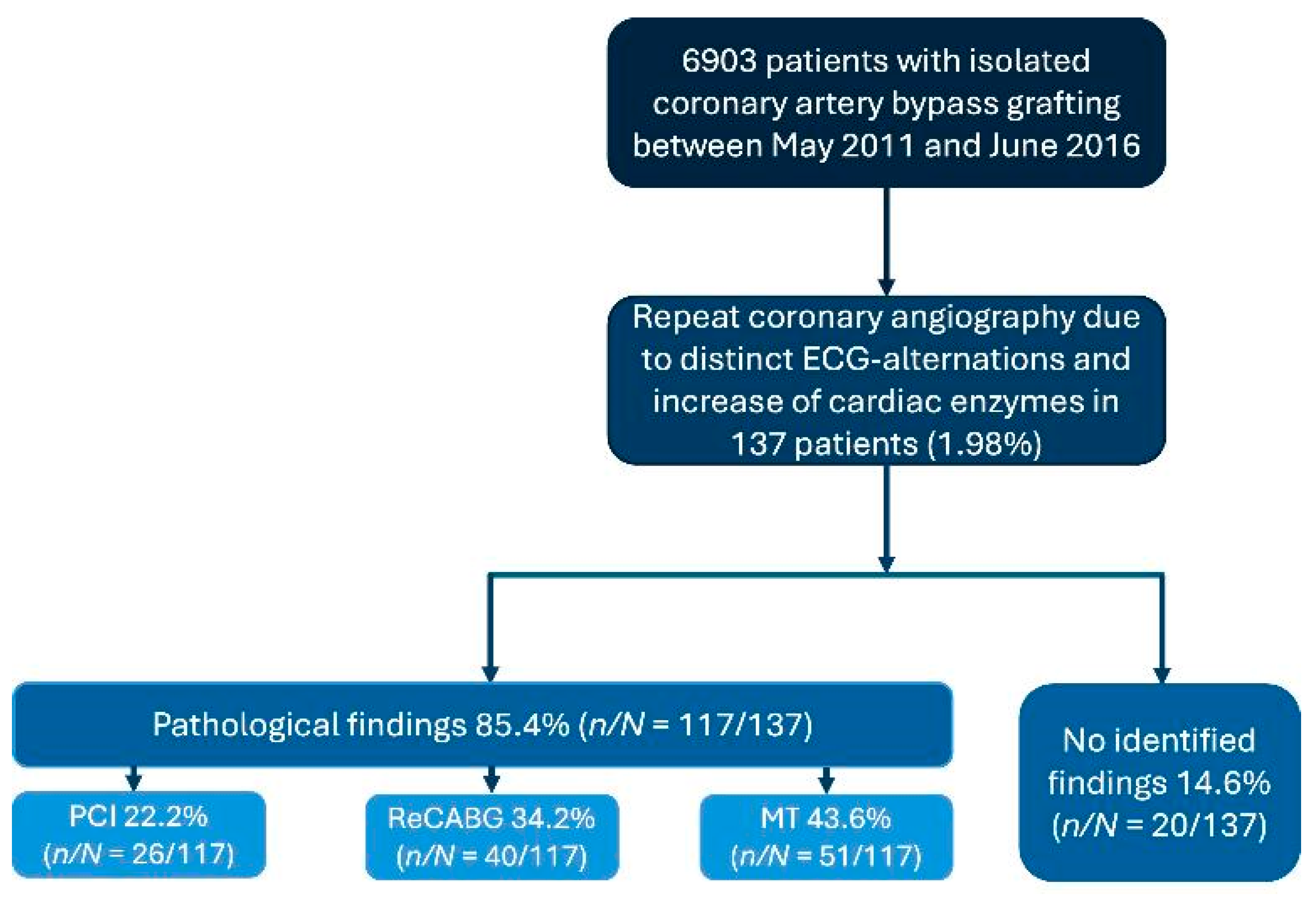
This study followed a retrospective observational design. The study included patients who underwent CABG between May 2011 and July 2016 at our institution. Among these, repeat coronary angiography was performed in 137 patients (1.98%) due to postoperative enzyme and/or ECG alterations. Pathologic angiographic findings were identified in 117 patients, while the remaining 20 patients, who exhibited ECG and enzyme alterations but no pathologic findings on repeat angiography, served as the control group (Figure 1). Preoperative, intraoperative, and postoperative data were collected, including information on potential adverse events associated with coronary angiography. Only on-pump CABG procedures were included. Off-pump CABG cases and patients with acute coronary syndrome were excluded from the analysis.
Figure 1.
Flow diagram of the study population. Abbreviations: PCI; percutaneous coronary intervention; ReCABG, redo coronary artery bypass grafting; MT, medical treatment.
2.2. Decision-Making for Repeat Coronary Angiography
Creatine kinase (CK), creatine kinase myocardial band (CK-MB), the CK/CK-MB ratio (CKMBQ), and high-sensitivity Troponin T (hsTnT) as well as ECG findings were recorded immediately postoperatively. Cardiac enzyme levels were subsequently measured at 4–6 h, 8–12 h, and 18–24 h. According to our institutional protocol, pathologic findings were defined as CK levels > 10 µkat/L, CK-MB > 1 µkat/L, CKMBQ > 10%, and/or ECG alterations or relevant ventricular arrhythmias, which prompted repeat coronary angiography. Postoperative ECGs were systematically evaluated for new ischemic changes. Significant ECG abnormalities were defined as new ST-segment elevation ≥ 1.0 mm in ≥2 contiguous leads (≥2.0 mm in V2–V3 in men and ≥1.5 mm in V2–V3 in women), ST-segment depression ≥1.0 mm in ≥2 leads, new T-wave inversion ≥1.0 mm in ≥2 leads, new pathological Q-waves (≥40 ms and/or ≥25% of the R-wave), or new left bundle branch block. High-sensitive Troponin T was measured using the Roche Elecsys® hsTnT assay (lower detection limit 5 ng/L; 99th percentile URL 14 ng/L) in parallel with CK and CK-MB. For clarity and consistency, time intervals in this paper are subsequently simplified to 4, 8, and 18 h to facilitate data presentation and interpretation.
2.3. Study Endpoints
The primary endpoint of this observational study was the identification of pathologic findings during repeat coronary angiography, irrespective of whether native vessels or CABG grafts were affected. The secondary endpoint focused on the type of treatment administered following pathologic findings, distinguishing between medical treatment (MT), percutaneous coronary intervention (PCI), and redo-CABG (ReCABG). Patients who underwent postoperative repeat coronary angiography without pathological abnormalities (no identified findings) were defined as the NIF group.
2.4. Data Analysis and Statistics
ECG changes and enzyme elevations were analyzed in relation to the study endpoints. Statistical analyses were conducted using SAS JMP 7.0© software and Python (version 3.9; Python Software Foundation). For continuous variables, normality was assessed using the Shapiro–Wilk test. In case of normality (p > 0.05), numeric variables are presented as means with standard deviation (mean ± SD), and comparisons between means were performed using Student’s t-test, with a significance level of p < 0.05. If the assumption of normality was violated (p < 0.05), group differences were analyzed using the non-parametric Mann–Whitney U test. Categorical data were analyzed using contingency tables and Fisher’s exact test. Following univariate analysis, a multivariate stepwise forward regression model was constructed. Additionally, a receiver operating characteristic (ROC) analysis was conducted for various enzyme values to evaluate diagnostic performance. Quality criteria, including the area under the curve (AUC), specificity, sensitivity, and likelihood ratios, were calculated. The optimal cutoff values were determined using the Youden Index. A Kaplan–Meier analysis of cumulative mortality was conducted to estimate the mortality probabilities of patients who underwent postoperative repeat coronary angiography over a maximum follow-up period of six years (2190 days). To assess mortality risk, a Cox proportional hazards model was applied, using the NIF group as the reference category. Given the limited sample size and low event rate, a bootstrap Cox regression with 1000 resamples was performed to generate robust hazard ratio (HR) estimates and corresponding 95% confidence intervals (CI, 2.5–97.5%). HRs were calculated for the MT, PCI, and ReCABG groups. The proportional hazards assumption was verified prior to analysis, and p-values < 0.05 were considered statistically significant. Given the exploratory character of this analysis, no formal adjustment for multiple testing was performed. Reported p-values are to be interpreted in a descriptive and hypothesis-generating context.
3. Results
3.1. Patient Baseline Characteristics
The mean age of the patients was 66.2 ± 8.8 years, with more than two-thirds being male (n = 99; 72.3%). The mean body mass index (BMI) was 27.3 ± 3.4 kg/m2. Chronic obstructive pulmonary disease (COPD) was present in 11 patients (8.0%), and diabetes mellitus type 2 was recorded in approximately one-third of the cohort (n = 42; 30.7%). A history of peripheral vascular disease was reported in 23 patients (16.8%), while cerebrovascular disease was documented in 29 patients (21.2%). Most patients exhibited three-vessel disease (n = 99; 72.3%), with one-vessel disease and two-vessel disease reported in only 7 (5.1%) and 31 (22.6%) patients, respectively. The left main stem (LMS) was affected in 85.4% of the patients (n = 117). Additionally, a history of myocardial infarction was noted in nearly half of the patients (n = 67; 48.9%). Detailed baseline characteristics are summarized in Table 1.
Table 1.
Baseline characteristics.
3.2. Procedural and Intraoperative Data
All procedures were performed using extracorporeal circulation (ECC). The mean procedure time was 162.0 ± 47.7 min, with an average aortic cross-clamp time of 41.7 ± 13.1 min. On average, 2.7 ± 0.9 anastomoses were performed per patient. The left internal mammary artery (LIMA) was utilized in 93.4% of cases (n = 128), while the right internal mammary artery (RIMA) was used in 5.1% (n = 7) (Table 2).
Table 2.
Procedural and intraoperative data.
3.3. Angiographic Findings
Repeat coronary angiography was required in 137 of 6903 patients (2.0%). Pathological findings were identified in 117 cases (85.4%; per-patient analysis), while 20 patients (14.6%) showed no angiographic correlation to ECG or enzyme abnormalities (Table 3). Among those with pathological findings, medical therapy was initiated in 43.6% (n = 51), whereas 56.4% (n = 66) underwent surgical or percutaneous reintervention. The most frequently observed issues were vein graft complications (n = 91; 77.8%), followed by problems involving IMA grafts in 72 patients.
Table 3.
Angiographic findings.
3.4. ECG Changes and Enzyme Elevations Leading to Repeat Coronary Angiography
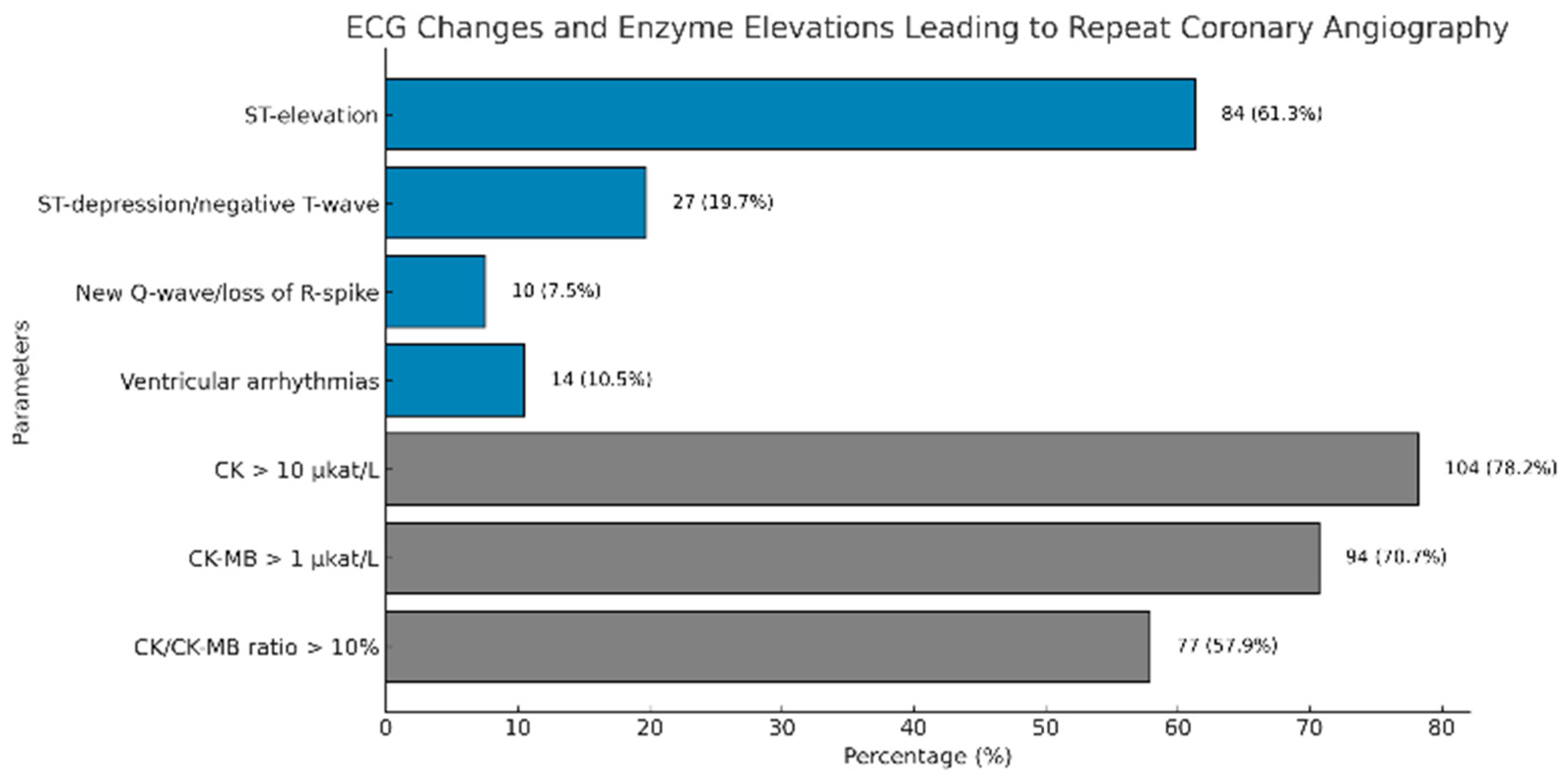
The most common ECG alteration observed was ST-segment elevation, occurring in 61.3% of patients. ST-segment depression or negative T-waves were noted in 19.7% of cases. New Q-waves or loss of R-wave amplitude were observed in 7.5% of patients, while ventricular arrhythmias were present in 10.5%. Regarding enzyme alterations, CK levels exceeding 10 µkat/L were elevated in 78.2% of patients, and CK-MB levels above 1 µkat/L were observed in 70.7%. The CK/CK-MB ratio was elevated (>10%) in 57.9% of cases (Figure 2, Table 4).
Figure 2.
Horizontal bar chart illustrating the percentages of various ECG changes and enzyme elevations that lead to repeat coronary angiography. Enzyme-related parameters are highlighted in gray for distinction, with the percentages and corresponding sample sizes (n) annotated beside each bar. Abbreviations: ECG, electrocardiogram; CK, creatinine-kinase; CK-MB, creatinine- kinase myocardial band.
Table 4.
ECG changes and enzyme elevations leading to repeat coronary angiography.
3.5. Correlation Between Angiographic Findings and ECG Changes
The most relevant ECG change was ST-segment elevation. Patients with pathologic findings in repeat coronary angiography demonstrated ST-segment elevation almost twice as frequently as those without pathologic findings (65.8% vs. 35.0%, respectively). This difference reached statistical significance in both univariate and multivariate analyses (p = 0.01 and p < 0.01, respectively). Less frequent, but still relevant, was ST-segment depression. Among patients with pathologic findings, ST-segment depression was observed in 31.6% (n = 37/117), compared to only 5.0% (n = 1/20) in patients without pathologic findings. This difference was also significant in univariate and multivariate analysis for pathological finding in the postoperative repeat coronary angiography (p = 0.04 and p = 0.02, respectively). New Q-waves, loss of R-wave amplitude, or new-onset ventricular arrhythmias were not predictive of relevant angiographic findings (Table 5: p > 0.999 and p = 0.26, respectively).
Table 5.
ECG changes and enzyme cutoff values with respect to angiographic findings.
3.6. Correlation Between Angiographic Findings and CK-, CK-MB-, and CK/CK-MB-Excursion
In univariate analysis, CK > 10 µkat/L, CK-MB > 1 µkat/L, and the quotient CK/CK-MB > 10% were significantly associated with pathologic angiographic findings (Table 4: p < 0.01 for all).
3.7. Correlation Between Angiographic Finding and Combination of ECG Changes and CK-MB-Excursion
When analyzing the combined predictive value of ST-segment changes and CK-MB elevation, the combination of ST-segment elevation and CK-MB > 1.0 µkat/L was significantly associated with pathological angiographic findings (58.1% vs. 5.0%, p < 0.01) and remained a strong predictor in the univariate analysis (p < 0.01). In contrast, the combination of ST-segment depression and CK-MB > 1.0 µkat/L did not reach statistical significance (26.2% vs. 10.0%, p = 0.366) in the overall cohort, though a trend was observed in the univariate analysis (p = 0.09; Table 4).
3.8. Receiver Operating Characteristic (ROC) Analysis of Postoperative Enzyme Course of CK, CK-MB and CK/CK-MB Ratio
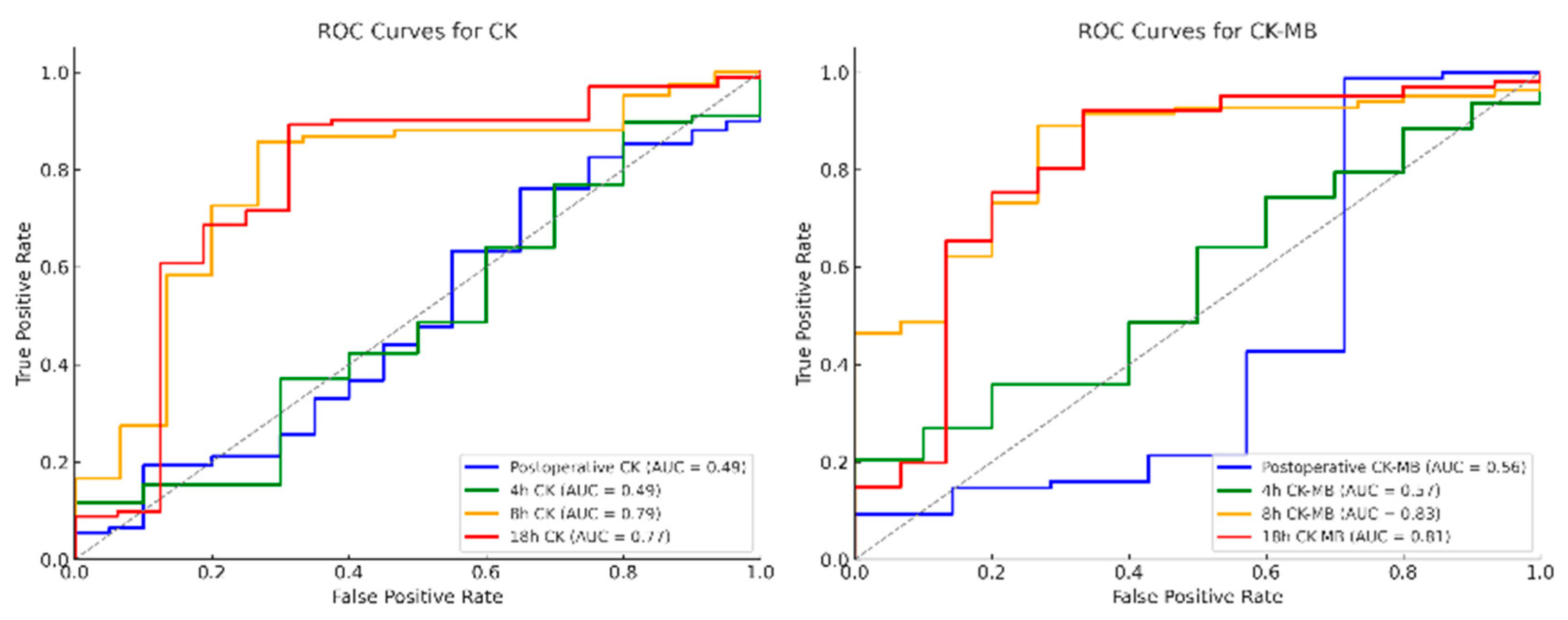
In ROC analysis demonstrated the statistical relevance of CK, CK-MB, and CK/CK-MB ratio excursions starting at 8 to 12 h postoperatively (Figure 3, Table 6). Cut-off values were identified for CK (8 h: 10.1 µkat/L; 18 h: 10.9 µkat/L; p < 0.01), CK-MB (8 h: 0.67 µkat/L; 18 h: 0.48 µkat/L; p < 0.01), and CK/CK-MB ratio (8 h: 6.4%; 18 h: 4.6%; p < 0.01). Despite AUC values ranging between 0.72 and 0.83, both specificity and sensitivity remained low (Table 5; Figure 3). Higher specificity and sensitivity were observed for changes in CK and CK-MB within the first 18 h postoperatively (∆CK18, ∆CK-MB18). A change in CK exceeding 7.04 µkat/L within 18 h postoperatively was associated with angiographic findings, showing a specificity of 77.5% and a sensitivity of 65% (AUC 0.71; p < 0.01). Similarly, a ∆CK-MB18 of 0.21 µkat/L achieved a sensitivity of 71% and specificity of 70% (AUC 0.77; p < 0.01).
Figure 3.
Receiver Operating Characteristic (ROC) curves for total CK and CK-MB levels measured at different timepoints after surgery (postoperative, 4 h, 8 h, and 18 h). Area under the curve (AUC) values are indicated in the legend. Abbreviations: CK, creatinine-kinase; CK-MB, creatinine-kinase myocardial band. Note: The dotted diagonal line represents the line of no discrimination (AUC = 0.5).
Table 6.
ROC analysis of postoperative enzyme course.
3.9. High-Sensitivity Troponin T (hsTnT) Enzyme Course with Respect to Angiographic Findings
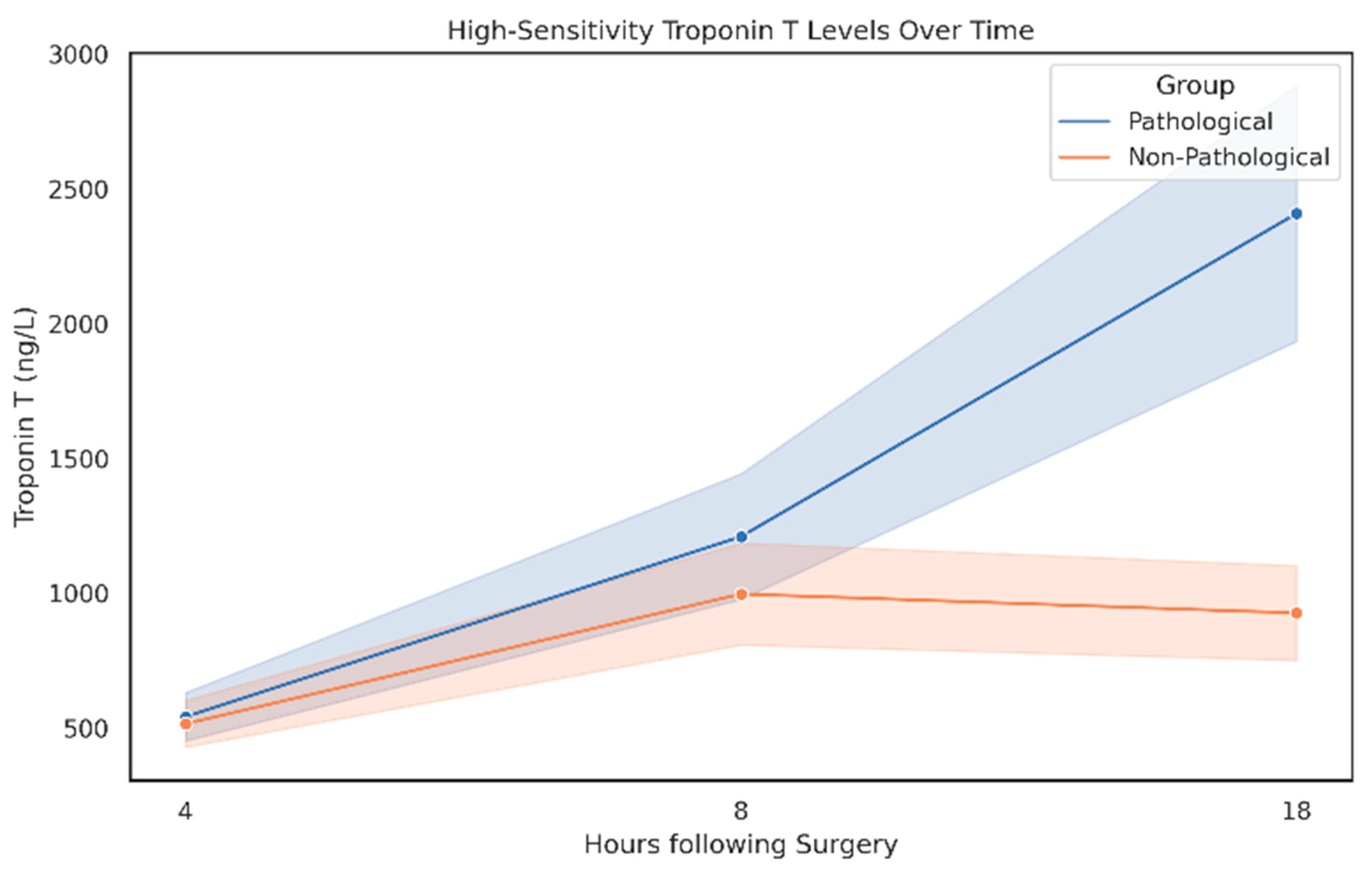
The analysis of Troponin T levels at 4-, 8-, and 18 h post-surgery revealed a time-dependent difference between the groups. At 4 h, no statistically significant difference was observed (p = 0.199). However, at 8 h, a significant difference emerged (p < 0.001), which became highly significant by 12 h (p < 0.0001), with markedly higher Troponin T levels in the pathological findings group compared to the NIF group (Figure 4).
Figure 4.
The course of high-sensitivity Troponin T over a period of 12 h.
3.10. ROC Analysis of Postoperative Enzyme Course of hsTnT
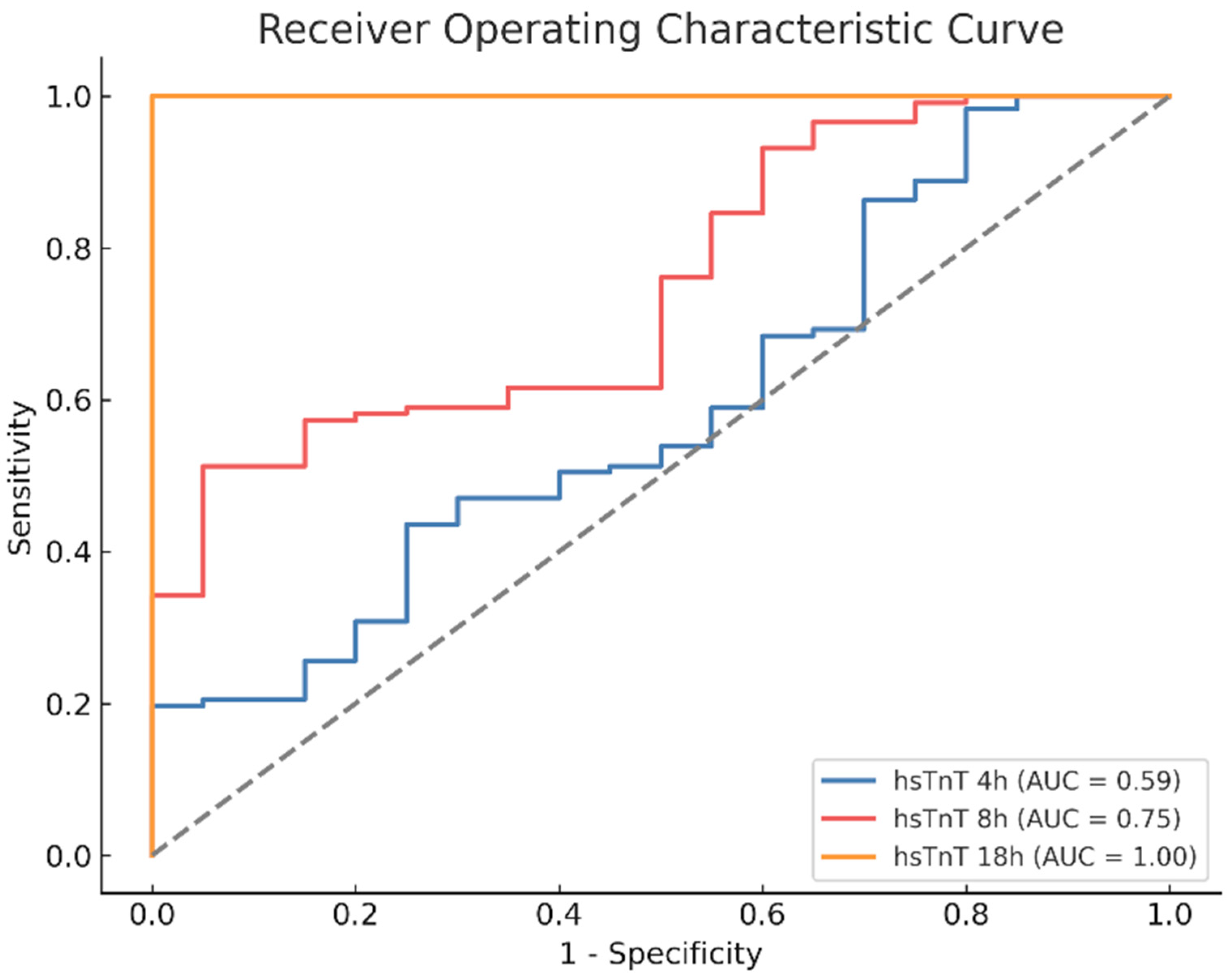
ROC analysis was conducted to evaluate the ability of high-sensitivity Troponin T (hsTnT) levels to distinguish between pathological findings and no identified findings at different time points (4 h, 8 h, and 18 h post-surgery). At 4 h, hsTnT exhibited limited discriminatory power (AUC = 0.59), indicating poor differentiation between the groups. By 8 h, its predictive accuracy improved (AUC = 0.75), suggesting a moderate ability to distinguish between patients with and without pathological findings. At 18 h, hsTnT demonstrated near-perfect separation (AUC = 1.00). The Youden Index analysis identified the optimal cutoff values, with thresholds of 641 ng/L for troponin measurement at 4 h, 1231 ng/L at 8 h, and 1608 ng/L at 18 h. The highest diagnostic accuracy was observed for the 18 h measurement, followed by the 8 h measurement, whereas the 4 h measurement exhibited the lowest discriminatory power (Figure 5).
Figure 5.
Receiver Operating Characteristic (ROC) curves suggest that high-sensitivity Troponin T (hsTnT) provides an accurate prediction of pathological findings in angiography no earlier than eight hours post-surgery. Note: The dotted diagonal line represents the line of no discrimination (AUC = 0.5).
3.11. Multivariate Analysis
In the stepwise forward regression model that included both ECG and enzyme alterations with respect to CK-, CK-MB and CK/CK-MB ratio, three univariate significant factors retained their significance. ST-segment elevation and depression were identified as independent risk factors for pathologic angiographic findings (p < 0.01 and p = 0.02, respectively). ST-segment elevation in combination with CK-MB levels exceeding 1.0 µkat/L was found to be highly predictive of angiographic abnormalities (p < 0.001). All other factors, including cardiac enzyme elevations, did not demonstrate statistical significance (Table 5).
3.12. 30-Day Mortality Analysis
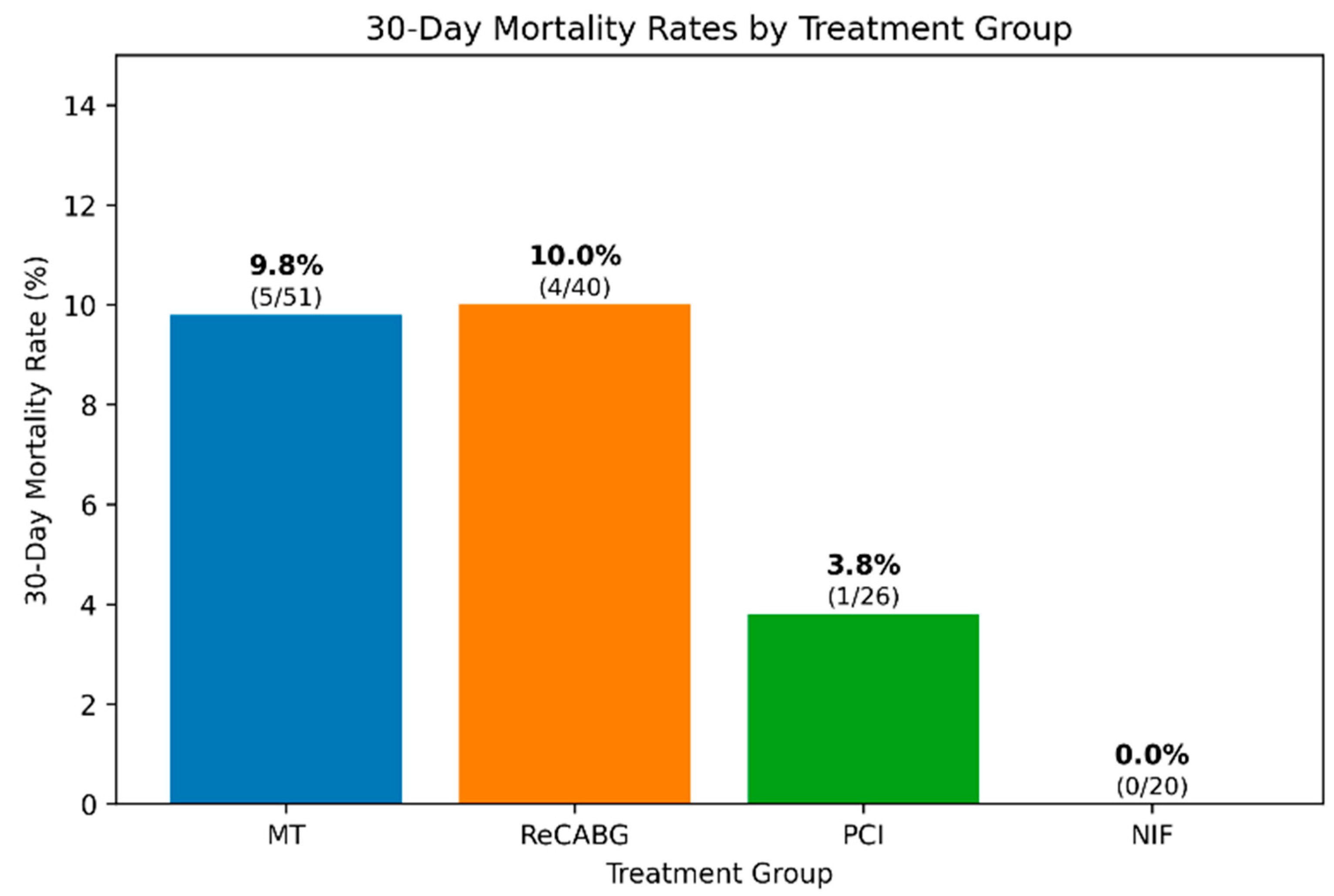
Thirty-day mortality rates varied among patient groups (Figure 6). The MT and ReCABG groups had similar 30-day mortality rates of 9.8% (5/51) and 10.0% (4/40), respectively. The PCI group had a lower mortality rate of 3.8% (1/26), while no deaths occurred in the NIF group (0/20). However, no statistically significant differences in 30-day mortality were found between the groups (p-values ranging from 0.312 to 1.000).
Figure 6.
30-day mortality rates by the four different treatment group. Abbreviations: MT, medical therapy; ReCABG, redo coronary artery bypass grafting; PCI, percutaneous coronary interventions; NIF, no identified findings in the repeat coronary angiography.
3.13. Comparison of Long-Term Survival Across Treatment Groups
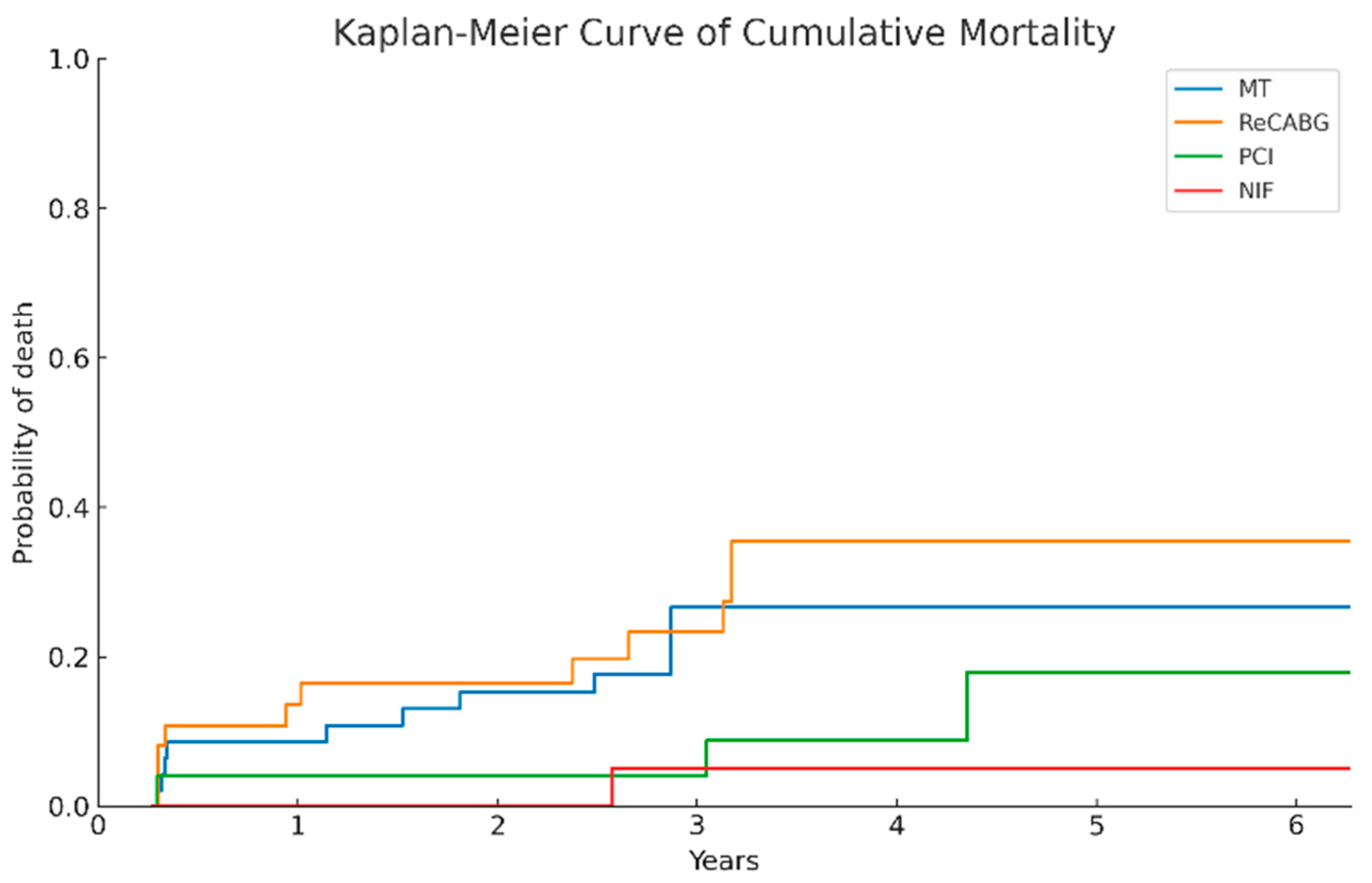
The Kaplan–Meier method was applied to analyze survival probabilities over a 6-year observation period in four patient groups. Survival rates were 90.0% (45/50) in the MT group, 89.5% (34/38) in the ReCABG group, 96.0% (24/25) in the PCI group, and 95.0% (19/20) in the NIF group (Figure 7).
Figure 7.
The Kaplan–Meier curve illustrate the probability of mortality over time for the four patient groups. Abbreviations: MT, medical therapy; ReCABG, redo coronary artery bypass grafting; PCI, percutaneous coronary interventions; NIF, no identified findings in the repeat coronary angiography.
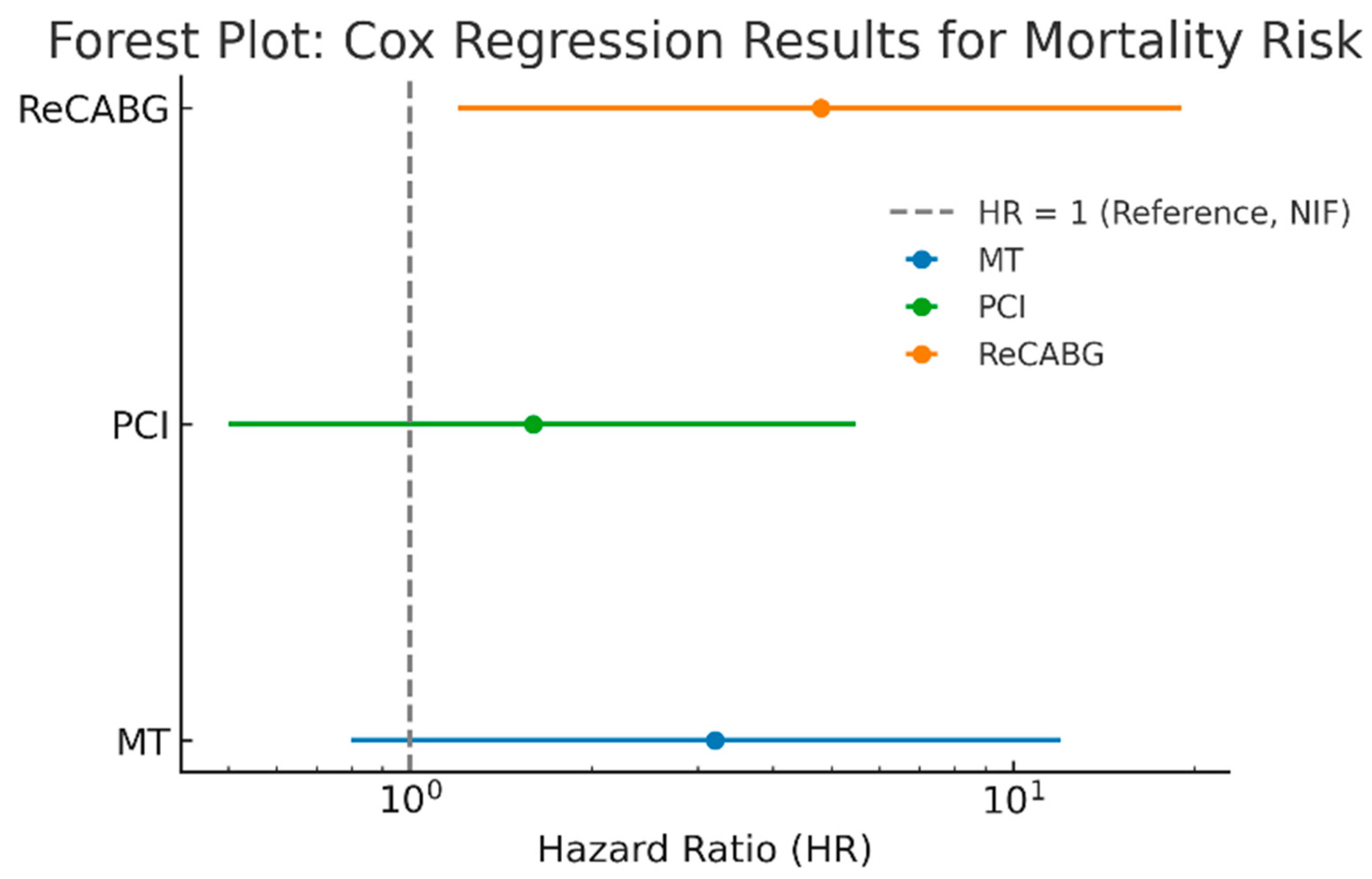
The bootstrap Cox regression analysis was conducted to evaluate the association between treatment groups and mortality risk, using the NIF group as the reference category (Figure 8). Given the limited sample size and low event rate, 1000 bootstrap resamples were applied to generate robust hazard ratio (HR) estimates and corresponding 95% confidence intervals (CI, 2.5–97.5%). While no statistically significant differences were observed between groups, a trend toward increased mortality risk was noted in certain treatment cohorts. Patients in the MT group exhibited a higher hazard ratio (HR = 3.2, 95% CI: 0.8–12.0, p = 0.172), indicating a non-significant increase in mortality risk compared to the reference group. Similarly, the PCI group showed an HR of 1.6 (95% CI: 0.5–5.5, p = 0.589), suggesting no statistically significant difference in mortality risk compared to the NIF group. The ReCABG group demonstrated the highest hazard ratio (HR = 4.8, 95% CI: 1.2–19.0, p = 0.067), reflecting a trend toward increased mortality risk, though the wide confidence interval indicates uncertainty in the estimate.
Figure 8.
Cox regression results for mortality risk in the treatment groups. Abbreviations: MT, medical therapy; ReCABG, redo coronary artery bypass grafting; PCI, percutaneous coronary interventions; NIF, no identified findings in the repeat coronary angiography.
3.14. Adverse Events of Repeat Coronary Angiography
We recorded no procedural or vascular complications associated with repeat coronary angiography. However, additive renal impairment, characterized by an elevation in serum creatinine and the need for dialysis, occurred in 11 patients (8.0%), which was significantly higher compared to the overall CABG population (4.4%; p < 0.05).
4. Discussion
This study contributes to the ongoing debate surrounding the definition and diagnostic criteria of PMI after CABG by analyzing ECG changes and biomarker kinetics in correlation with angiographic findings. Coronary bypass surgery remains a cornerstone in the management of coronary artery disease. The diagnostic framework for acute coronary syndromes is well-established and widely accepted, offering clinicians a clear and largely standardized pathway for decision-making [11,12]. In contrast, the definition of PMI after CABG remains elusive—fragmented by heterogeneous criteria, varying biomarker thresholds, and a resulting lack of universal consensus and heterogeneity of definitions [5,13,14]. Even with a confirmed diagnosis, the optimal treatment strategy remains subject to debate, as conclusive evidence guiding decision-making is still lacking; for after the diagnosis has been established, management encompasses a spectrum of therapeutic approaches, ranging from conservative strategies to PCI and, in select cases, redo surgery [14]. However, there is clear consensus that PMI is a prognostically relevant complication, regardless of the definition used for its diagnosis [15,16]. Within the heterogeneous diagnostic landscape of PMI, postoperative repeat coronary angiography holds a pivotal role as the gold standard for identifying its underlying causes, particularly in assessing the graft patency or new coronary artery lesions [13]. Commonly available diagnostic tools such as ECG and biomarkers, which are frequently used for rapid clinical assessment and often trigger postoperative repeat coronary angiography due to presumed pathological changes, consistently exhibit a considerable overlap between patients with and without pathological angiographic findings [13,17]. This diagnostic ambiguity raises a fundamental clinical dilemma: to what extent is invasive coronary angiography truly warranted in this setting, and at what threshold does its use become indispensable for preventing secondary complications of PMI? While angiography remains the definitive tool for assessing graft patency, its routine use in the absence of clearly defined predictive markers risks unnecessary procedural burden, increased costs, and potential complications. The prevalence of postoperative repeat coronary angiography in our observed cohort of 6903 patients who underwent CABG was 2.0%, falling within the range reported in the literature (0.4–30%), with the high variability largely attributed to differences in cut-off levels defined by institutional protocols [1,18,19,20,21,22]. This highlights the need for a refined, evidence-based approach to risk stratification to ensure that invasive diagnostics are appropriately targeted.
Consistently, postoperative repeat coronary angiography identified graft-related factors as the predominant pathology (n = 113/117, 96.6%), while new coronary artery lesions (n = 4/117) were of minor significance. These findings corroborate the results of a meta-analysis and other retrospective studies, which have repeatedly highlighted graft-related complications as the principal driver of PMI [3,4,19,23,24,25].
ST-segment elevation was significantly more prevalent in patients with pathological angiographic findings compared to the control group (65.8% vs. 35.0%, p = 0.02) and remained a strong independent predictor in both univariate (p = 0.01) and multivariate analysis (p < 0.01). While its predictive strength was lower than ST-elevation, ST-segment depression remained a statistically significant independent predictor in both univariate (p = 0.04) and multivariate analysis (p = 0.02). By contrast, other ECG alterations, including new Q-waves, loss of R-wave amplitude, and ventricular arrhythmias, showed no significant predictive value. The lack of association may stem from the heterogeneity of postoperative cardiac electrical activity, which can be influenced by factors such as surgical trauma or hemodynamic fluctuations rather than angiographically confirmed perfusion impairments. These findings raise important questions regarding current PMI definitions, particularly concerning the role of ECG changes in different diagnostic frameworks. The SCAI explicitly includes new pathological Q-waves or persistent LBBB as diagnostic criteria alongside biomarker thresholds, while ST-segment changes are not directly emphasized [9]. However, the European Association of Cardio-Thoracic Surgery (EACTS) expert consensus statement on perioperative myocardial infarction after cardiac surgery clearly defined that an isolated newly developed Q wave has no diagnostic value in establishing PMI [13]. A statement supported by the findings of previous studies, which is also corroborated by the results of our study [13,26,27,28].
Cardiac enzyme dynamics were also evaluated, with CK > 10 µkat/L, CK-MB > 1 µkat/L, and CK/CK-MB ratio > 10% demonstrating significant correlations with pathologic angiographic findings in univariate analysis (all p < 0.01). However, these associations did not hold in multivariate models. This suggests that while enzyme elevations offer valuable insights into myocardial injury, their specificity in the postoperative context may be limited by the influence of nonischemic factors, such as inflammation and surgical manipulation. The ROC analysis revealed that cardiac enzymes gained diagnostic relevance only after 8 h postoperatively. The strongest predictive performance was observed for changes in CK and CK-MB within the first 18 h, with ΔCK (7.04 µkat/L) and ΔCK-MB (0.21 µkat/L) achieving moderate sensitivity and specificity. A significant increase in CK-MB in PMI has also been described in other retrospective studies, typically occurring only after a time interval of approximately 12 h [29,30]. These results highlight the importance of serial measurements rather than single time point evaluations to improve diagnostic accuracy.
Thus, our findings demonstrate that ST-segment elevation or depression—alone or in combination with CK-MB > 1.0 µkat/L—serves as a relevant predictor of graft-related complications. While current definitions such as the 4UDMI do not include ST-segment deviations as diagnostic criteria for type 5 MI, their predictive value—particularly in combination with CK-MB elevation—is supported by our data and warrants reconsideration in CABG-specific contexts.
High-sensitivity troponin T played a pivotal role in our analysis, emerging as the most robust biomarker for predicting pathological findings in postoperative repeat coronary angiography. Our ROC analysis identified a cutoff value of 1231 ng/L at 18 h postoperatively, demonstrating the strongest predictive performance for detecting graft-related complications or new coronary lesions in postoperative repeat coronary angiography. This threshold corresponds to an 88-fold increase above the upper reference limit (URL) of hsTnT, exceeding the commonly accepted PMI definitions in consensus-recommended cutoffs, including 4UDMI, ARC, and SCAI. This is consistent with recent data from NSTEMI patients undergoing PCI, where a troponin rise > 20%—as defined by current guidelines—was not prognostically relevant unless exceeding 40% and an absolute threshold of 5× URL. These findings underline the limitations of sensitivity-driven definitions and support the need for procedure-specific biomarker thresholds in settings such as CABG [31].
Beyond its diagnostic role, hsTnT has also been extensively investigated in the context of prognostic risk stratification. A recent large-scale retrospective analysis explored the relationship between postoperative troponin thresholds and mortality risk [29]. These findings further suggest that current consensus-defined cutoffs may be overly conservative in predicting adverse outcomes, as significantly higher troponin levels have been associated with increased 30-day mortality [32]. Further supporting this, the findings of Devereaux et al. demonstrated that the lowest troponin I threshold associated with increased 30-day mortality after CABG was markedly higher than those currently recommended in consensus statements. Specifically, a threshold of 5670 ng/L (218× URL) was identified as the lowest level linked to increased mortality risk [30]. This far exceeds the cutoff definitions in 4UDMI, ARC, and SCAI, raising critical questions about the appropriateness of current recommendations for CABG patients [33]. Although elevated cardiac troponin levels are clearly linked to long-term mortality, no validated threshold exists within the first 24 h post-CABG to guide further diagnostics such as coronary angiography. Yet, timely identification of angiographic pathology is critical to initiate appropriate therapy. This diagnostic uncertainty poses a clinical dilemma: overly cautious strategies may lead to unnecessary invasive procedures, while overly permissive approaches risk missing clinically significant ischemia.
In this context, our findings may help refine existing evidence by suggesting procedure-specific thresholds and diagnostic combinations—particularly the relevance of ST-segment deviations alongside CK-MB elevations occurring beyond 8 h postoperatively and a high-sensitivity troponin T cutoff of 1231 ng/L at 18 h. These parameters could improve diagnostic precision and support the development of CABG-adapted PMI criteria.
Once the diagnosis of PMI is established, the critical question arises: what is the optimal management strategy, and within what time frame should it be implemented? The overarching goal must be to minimize myocardial damage while ensuring that the time interval between diagnosis and potential reintervention—regardless of the modality—remains as short as possible. Thus, timely reintervention may aid in salvaging reversibly injured myocardium, limiting further ventricular dysfunction, and ultimately improving prognosis [22]. Our long-term survival analysis revealed the highest mortality risk in patients requiring redo-CABG, with a clear trend despite not reaching statistical significance. In contrast, PCI-treated patients in our cohort demonstrated long-term survival rates comparable to those without pathological angiographic findings. While the lack of statistical significance may be attributed to the study’s sample size, it could also suggest an emerging trend in which PCI serves as a viable revascularization strategy for select patients with graft failure or native coronary progression. Supporting this notion, Thielmann et al. reported that redo-CABG in acute PMI was associated with the highest in-hospital and 1-year mortality rates among all treatment groups, further highlighting the procedural risk and perioperative burden linked to surgical reintervention [21].
Taken together, treatment decisions should be individualized, weighing clinical presentation, biomarker trends, and angiographic findings. While redo-CABG remains the definitive option in certain scenarios, its high risk highlights the need for patient-specific strategies and further research into optimal revascularization pathways.
5. Conclusions
This study provides a structured analysis of ECG changes and cardiac biomarker kinetics in relation to pathological findings on repeat coronary angiography after CABG. PMI was predominantly associated with graft-related complications, underscoring the need for targeted revascularization strategies. CK, CK-MB, and hsTnT gained diagnostic relevance only beyond 8 h postoperatively, with hsTnT > 1231 ng/L at 18 h showing the strongest predictive value for angiographic pathology.
To support clinical decision-making, a structured postoperative monitoring protocol may be helpful, combining serial assessment of cardiac biomarkers at defined time points (4, 8, and 18 h) with ECG analysis focusing on ST-segment deviations. Based on these findings, a pragmatic risk stratification approach appears feasible: ST-segment elevation in combination with CK-MB > 1.0 µkat/L within the first 8 h, and particularly hsTnT levels > 1231 ng/L at 18 h postoperatively, may serve as reliable indicators to guide the indication for repeat coronary angiography. In particular, the presence of ST-segment elevation or depression in the immediate postoperative ECG should raise suspicion and warrant close attention to the dynamic course of cardiac enzymes. In this context, rising CK-MB levels (>1.0 µkat/L at 8 h) and elevated hsTnT values (>1231 ng/L at 18 h) may provide valuable diagnostic guidance. Conversely, in patients without ECG abnormalities, isolated biomarker elevations should be interpreted with caution and ideally supported by echocardiographic findings.
These observations may serve as a basis for future prospective studies aimed at evaluating the clinical utility of such thresholds. While not sufficient to directly influence current guidelines, the findings may eventually contribute to discussions in future updates of the Fourth Universal Definition of Myocardial Infarction (4UDMI) or the SCAI classification.
Long-term survival analysis revealed the highest mortality in patients requiring redo-CABG, whereas PCI-treated patients had outcomes comparable to those without angiographic pathology. Despite advancements in high-sensitivity biomarkers, ECG remains the most accessible and predictive first-line diagnostic tool for PMI. These findings highlight the need for CABG-specific thresholds and diagnostic criteria. A multimodal approach combining ECG, biomarker kinetics, and angiographic findings may enhance early decision-making and reduce unnecessary invasive procedures.
6. Limitations
This study has several limitations that should be acknowledged. First, its retrospective design inherently limits causal interpretations and introduces potential selection bias. Only patients who underwent postoperative coronary angiography due to clinical suspicion of PMI were included, representing a small and highly selected subset (approximately 2%) of the overall CABG population. This selection bias limits generalizability and precludes assessment of the true diagnostic performance of ECG or biomarkers in an unselected postoperative setting.
Second, the control group (patients with ECG/enzyme changes but without pathological angiographic findings) was small (n = 20), which reduces statistical power and may affect the robustness of between-group comparisons.
Third, although multivariate analysis and bootstrap regression were applied to strengthen robustness, residual confounding cannot be entirely excluded. The relatively small sample size, particularly in the subgroup analyses of different treatment strategies, may have contributed to the lack of statistical significance in certain comparisons, despite observed trends in mortality risk. Due to the sample size, the reliability of the ROC analysis and threshold determination should be interpreted with caution.
Fourth, while ST-segment changes and cardiac biomarkers were analyzed as diagnostic markers for angiographic pathology, their postoperative specificity is limited. ST-segment alterations can also occur due to non-ischemic factors such as pericarditis, electrolyte imbalances, or surgical trauma.
Finally, this was a single-center study with institution-specific protocols for repeat coronary angiography. Echocardiographic evaluation of regional wall motion abnormalities was not systematically performed, which could have provided functional insights into myocardial viability. Biomarker thresholds and reintervention strategies may differ across institutions, limiting external validity.
Nonetheless, our findings suggest a potential association between ST-segment changes and graft-related pathology. However, the retrospective and highly selective nature of the dataset limits the generalizability of these results. Further prospective validation in unselected CABG cohorts is warranted.
Author Contributions
Conceptualization, K.A. and S.-M.T.; methodology, M.W. and A.P.; software, M.W., A.P. and A.T.-W.; validation, K.A., U.K. and K.M.; formal analysis, A.P. and A.T.-W.; investigation, A.P. and A.T.-W.; resources, K.A. and S.A.; data curation, S.A., A.P. and A.T.-W.; writing—original draft preparation, A.T.-W.; writing—review and editing, K.A., U.K. and M.W.; visualization, A.P. and A.T.-W.; supervision, K.M.; project administration, K.A. and K.M. All authors have read and agreed to the published version of the manuscript.
Funding
This research received no external funding.
Institutional Review Board Statement
The study was conducted in accordance with the Declaration of Helsinki and approved by The Ethics Committee at the Technical University of Dresden (protocol code EK-28092012 granted in 12 September 2012).
Informed Consent Statement
Informed consent was waived due to the retrospective design of the study.
Data Availability Statement
The data presented in this study are available on request from the corresponding authors. The data are not publicly available due to ethical regulations.
Conflicts of Interest
The authors declare no conflicts of interest.
References
- Yau, J.M.; Alexander, J.H.; Hafley, G.; Mahaffey, K.W.; Mack, M.J.; Kouchoukos, N.; Goyal, A.; Peterson, E.D.; Gibson, C.M.; Califf, R.M.; et al. Impact of perioperative myocardial infarction on angiographic and clinical outcomes following coronary artery bypass grafting (from project of ex-vivo vein graft engineering via transfection [prevent] iv). Am. J. Cardiol. 2008, 102, 546–551. [Google Scholar] [CrossRef]
- Preusser, M.J.; Landwehrt, J.; Mastrobuoni, S.; Biancari, F.; Dakkak, A.R.; Alshakaki, M.; Martens, S.; Dell’Aquila, A.M. Survival results of postoperative coronary angiogram for treatment of perioperative myocardial ischaemia following coronary artery bypass grafting: A single-centre experience. Interact. Cardiovasc. Thorac. Surg. 2018, 26, 237–242. [Google Scholar] [CrossRef] [PubMed]
- Biancari, F.; Anttila, V.; Dell’Aquila, A.M.; Airaksinen, J.K.E.; Brascia, D. Control angiography for perioperative myocardial ischemia after coronary surgery: Meta-analysis. J. Cardiothorac. Surg. 2018, 13, 24. [Google Scholar] [CrossRef]
- Sef, D.; Szavits-Nossan, J.; Predrijevac, M.; Golubic, R.; Sipic, T.; Stambuk, K.; Korda, Z.; Meier, P.; Turina, M.I. Management of perioperative myocardial ischaemia after isolated coronary artery bypass graft surgery. Open Heart 2019, 6, e001027. [Google Scholar] [CrossRef] [PubMed]
- Heuts, S.; Gollmann-Tepekoylu, C.; Denessen, E.J.S.; Olsthoorn, J.R.; Romeo, J.L.R.; Maessen, J.G.; van ‘t Hof, A.W.J.; Bekers, O.; Hammarsten, O.; Polzl, L.; et al. Cardiac troponin release following coronary artery bypass grafting: Mechanisms and clinical implications. Eur. Heart J. 2023, 44, 100–112. [Google Scholar] [CrossRef]
- Thielmann, M.; Sharma, V.; Al-Attar, N.; Bulluck, H.; Bisleri, G.; Bunge, J.J.H.; Czerny, M.; Ferdinandy, P.; Frey, U.H.; Heusch, G.; et al. Esc joint working groups on cardiovascular surgery and the cellular biology of the heart position paper: Perioperative myocardial injury and infarction in patients undergoing coronary artery bypass graft surgery. Eur. Heart J. 2017, 38, 2392–2407. [Google Scholar] [CrossRef]
- Gaudino, M.; Jaffe, A.S.; Milojevic, M.; Sandoval, Y.; Devereaux, P.J.; Thygesen, K.; Myers, P.O.; Kluin, J. Great debate: Myocardial infarction after cardiac surgery must be redefined. Eur. Heart J. 2024, 45, 4170–4177. [Google Scholar] [CrossRef]
- Thygesen, K.; Alpert, J.S.; Jaffe, A.S.; Chaitman, B.R.; Bax, J.J.; Morrow, D.A.; White, H.D. Executive Group on behalf of the Joint European Society of Cardiology/American College of Cardiology/American Heart Association/World Heart Federation Task Force for the Universal Definition of Myocardial, Fourth universal definition of myocardial infarction. Circulation 2018, 138, e618–e651. [Google Scholar] [CrossRef]
- Moussa, I.D.; Klein, L.W.; Shah, B.; Mehran, R.; Mack, M.J.; Brilakis, E.S.; Reilly, J.P.; Zoghbi, G.; Holper, E.; Stone, G.W. Consideration of a new definition of clinically relevant myocardial infarction after coronary revascularization: An expert consensus document from the society for cardiovascular angiography and interventions (scai). J. Am. Coll. Cardiol. 2013, 62, 1563–1570. [Google Scholar] [CrossRef]
- Spagnolo, M.; Occhipinti, G.; Laudani, C.; Greco, A.; Capodanno, D. Periprocedural myocardial infarction and injury. Eur. Heart J. Acute Cardiovasc. Care 2024, 13, 433–445. [Google Scholar] [CrossRef] [PubMed]
- Rao, S.V.; O’Donoghue, M.L.; Ruel, M.; Rab, T.; Tamis-Holland, J.E.; Alexander, J.H.; Baber, U.; Baker, H.; Cohen, M.G.; Cruz-Ruiz, M.; et al. 2025 acc/aha/acep/naemsp/scai guideline for the management of patients with acute coronary syndromes: A report of the american college of cardiology/american heart association joint committee on clinical practice guidelines. Circulation 2025, 85, 2135–2237. [Google Scholar] [CrossRef]
- Byrne, R.A.; Rossello, X.; Coughlan, J.J.; Barbato, E.; Berry, C.; Chieffo, A.; Claeys, M.J.; Dan, G.A.; Dweck, M.R.; Galbraith, M.; et al. 2023 esc guidelines for the management of acute coronary syndromes. Eur. Heart J. 2023, 44, 3720–3826. [Google Scholar] [CrossRef]
- Gaudino, M.; Flather, M.; Capodanno, D.; Milojevic, M.; Bhatt, D.L.; Biondi Zoccai, G.; Boden, W.E.; Devereaux, P.J.; Doenst, T.; Farkouh, M.; et al. European association of cardio-thoracic surgery (eacts) expert consensus statement on perioperative myocardial infarction after cardiac surgery. Eur. J. Cardiothorac. Surg. 2024, 65, ezad415. [Google Scholar] [CrossRef]
- Gaudino, M.; Dangas, G.D.; Angiolillo, D.J.; Brodt, J.; Chikwe, J.; DeAnda, A.; Hameed, I.; Rodgers, M.L.; Sandner, S.; Sun, L.Y.; et al. Considerations on the management of acute postoperative ischemia after cardiac surgery: A scientific statement from the american heart association. Circulation 2023, 148, 442–454. [Google Scholar] [CrossRef] [PubMed]
- Hara, H.; Serruys, P.W.; Takahashi, K.; Kawashima, H.; Ono, M.; Gao, C.; Wang, R.; Mohr, F.W.; Holmes, D.R.; Davierwala, P.M.; et al. Impact of peri-procedural myocardial infarction on outcomes after revascularization. J. Am. Coll. Cardiol. 2020, 76, 1622–1639. [Google Scholar] [CrossRef]
- Gaudino, M.; Di Franco, A.; Dimagli, A.; Biondi-Zoccai, G.; Rahouma, M.; Perezgrovas Olaria, R.; Soletti, G.; Cancelli, G.; Chadow, D.; Spertus, J.A.; et al. Correlation between periprocedural myocardial infarction, mortality, and quality of life in coronary revascularization trials: A meta-analysis. J. Soc. Cardiovasc. Angiogr. Interv. 2023, 2, 100591. [Google Scholar] [CrossRef]
- Holmvang, L.; Jurlander, B.; Rasmussen, C.; Thiis, J.J.; Grande, P.; Clemmensen, P. Use of biochemical markers of infarction for diagnosing perioperative myocardial infarction and early graft occlusion after coronary artery bypass surgery. Chest 2002, 121, 103–111. [Google Scholar] [CrossRef]
- Fleissner, F.; Issam, I.; Martens, A.; Cebotari, S.; Haverich, A.; Shrestha, M.L. The unplanned postoperative coronary angiogram after cabg: Identifying the patients at risk. Thorac. Cardiovasc. Surg. 2017, 65, 292–295. [Google Scholar] [CrossRef] [PubMed]
- Fabricius, A.M.; Gerber, W.; Hanke, M.; Garbade, J.; Autschbach, R.; Mohr, F.W. Early angiographic control of perioperative ischemia after coronary artery bypass grafting. Eur. J. Cardiothorac. Surg. 2001, 19, 853–858. [Google Scholar] [CrossRef] [PubMed]
- Alter, P.; Vogt, S.; Herzum, M.; Irqsusi, M.; Rupp, H.; Maisch, B.; Moosdorf, R. Indications for angiography subsequent to coronary artery bypass grafting. Am. Heart J. 2005, 149, 1082–1090. [Google Scholar] [CrossRef] [PubMed]
- Thielmann, M.; Massoudy, P.; Jaeger, B.R.; Neuhauser, M.; Marggraf, G.; Sack, S.; Erbel, R.; Jakob, H. Emergency re-revascularization with percutaneous coronary intervention, reoperation, or conservative treatment in patients with acute perioperative graft failure following coronary artery bypass surgery. Eur. J. Cardiothorac. Surg. 2006, 30, 117–125. [Google Scholar] [CrossRef]
- Laflamme, M.; DeMey, N.; Bouchard, D.; Carrier, M.; Demers, P.; Pellerin, M.; Couture, P.; Perrault, L.P. Management of early postoperative coronary artery bypass graft failure. Interact. Cardiovasc. Thorac. Surg. 2012, 14, 452–456. [Google Scholar] [CrossRef]
- Rupprecht, L.; Schmid, C.; Debl, K.; Lunz, D.; Florchinger, B.; Keyser, A. Impact of coronary angiography early after cabg for suspected postoperative myocardial ischemia. J. Cardiothorac. Surg. 2019, 14, 54. [Google Scholar] [CrossRef]
- Rasmussen, C.; Thiis, J.J.; Clemmensen, P.; Efsen, F.; Arendrup, H.C.; Saunamaki, K.; Madsen, J.K.; Pettersson, G. Significance and management of early graft failure after coronary artery bypass grafting: Feasibility and results of acute angiography and re-re-vascularization. Eur. J. Cardiothorac. Surg. 1997, 12, 847–852. [Google Scholar] [CrossRef]
- Davierwala, P.M.; Verevkin, A.; Leontyev, S.; Misfeld, M.; Borger, M.A.; Mohr, F.W. Impact of expeditious management of perioperative myocardial ischemia in patients undergoing isolated coronary artery bypass surgery. Circulation 2013, 128, S226–S234. [Google Scholar] [CrossRef]
- Svedjeholm, R.; Dahlin, L.G.; Lundberg, C.; Szabo, Z.; Kagedal, B.; Nylander, E.; Olin, C.; Rutberg, H. Are electrocardiographic q-wave criteria reliable for diagnosis of perioperative myocardial infarction after coronary surgery? Eur. J. Cardiothorac. Surg. 1998, 13, 655–661. [Google Scholar] [CrossRef] [PubMed][Green Version]
- Crescenzi, G.; Bove, T.; Pappalardo, F.; Scandroglio, A.M.; Landoni, G.; Aletti, G.; Zangrillo, A.; Alfieri, O. Clinical significance of a new q wave after cardiac surgery. Eur. J. Cardiothorac. Surg. 2004, 25, 1001–1005. [Google Scholar] [CrossRef] [PubMed]
- Ramsay, J.; Shernan, S.; Fitch, J.; Finnegan, P.; Todaro, T.; Filloon, T.; Nussmeier, N.A. Increased creatine kinase mb level predicts postoperative mortality after cardiac surgery independent of new q waves. J. Thorac. Cardiovasc. Surg. 2005, 129, 300–306. [Google Scholar] [CrossRef][Green Version]
- Carrier, M.; Pellerin, M.; Perrault, L.P.; Solymoss, B.C.; Pelletier, L.C. Troponin levels in patients with myocardial infarction after coronary artery bypass grafting. Ann. Thorac. Surg. 2000, 69, 435–440. [Google Scholar] [CrossRef]
- Peivandi, A.A.; Dahm, M.; Opfermann, U.T.; Peetz, D.; Doerr, F.; Loos, A.; Oelert, H. Comparison of cardiac troponin i versus t and creatine kinase mb after coronary artery bypass grafting in patients with and without perioperative myocardial infarction. Herz 2004, 29, 658–664. [Google Scholar] [CrossRef] [PubMed]
- Armillotta, M.; Bergamaschi, L.; Paolisso, P.; Belmonte, M.; Angeli, F.; Sansonetti, A.; Stefanizzi, A.; Bertolini, D.; Bodega, F.; Amicone, S.; et al. Prognostic relevance of type 4a myocardial infarction and periprocedural myocardial injury in patients with non-st-segment-elevation myocardial infarction. Circulation 2025, 151, 760–772. [Google Scholar] [CrossRef] [PubMed]
- Polzl, L.; Engler, C.; Sterzinger, P.; Lohmann, R.; Nagele, F.; Hirsch, J.; Graber, M.; Eder, J.; Reinstadler, S.; Sappler, N.; et al. Association of high-sensitivity cardiac troponin t with 30-day and 5-year mortality after cardiac surgery. J. Am. Coll. Cardiol. 2023, 82, 1301–1312. [Google Scholar] [CrossRef] [PubMed]
- Devereaux, P.J.; Lamy, A.; Chan, M.T.V.; Allard, R.V.; Lomivorotov, V.V.; Landoni, G.; Zheng, H.; Paparella, D.; McGillion, M.H.; Belley-Cote, E.P.; et al. High-sensitivity troponin i after cardiac surgery and 30-day mortality. N. Engl. J. Med. 2022, 386, 827–836. [Google Scholar] [CrossRef] [PubMed]
Disclaimer/Publisher’s Note: The statements, opinions and data contained in all publications are solely those of the individual author(s) and contributor(s) and not of MDPI and/or the editor(s). MDPI and/or the editor(s) disclaim responsibility for any injury to people or property resulting from any ideas, methods, instructions or products referred to in the content. |
© 2025 by the authors. Published by MDPI on behalf of the Lithuanian University of Health Sciences. Licensee MDPI, Basel, Switzerland. This article is an open access article distributed under the terms and conditions of the Creative Commons Attribution (CC BY) license (https://creativecommons.org/licenses/by/4.0/).