Article

Comparative Effectiveness of Clopidogrel Versus Aspirin for Primary Prevention in High-Risk Patients with Type 2 Diabetes: A Nationwide Propensity Score–Matched Cohort Study

1
Gachon Medical Research Institute, Gachon Biomedical Convergence Institute, Gachon University Gil Medical Center, Incheon 21565, Republic of Korea
2
Department of Research and Analysis, National Health Insurance Service Ilsan Hospital, Goyang 10444, Republic of Korea
3
Division of Cardiology, Gachon University Gil Medical Center, College of Medicine, Gachon University, Namdong-daero 774, Namdong-gu, Incheon 21565, Republic of Korea
4
Department of Translational-Clinical Medicine, Gachon Advanced Institute for Health Sciences and Technology (GAIHST), Gachon University, Incheon 21999, Republic of Korea
5
Division of Gastroenterology, Department of Internal Medicine, Gachon University Gil Medical Center, College of Medicine, Gachon University, Incheon 21565, Republic of Korea
*
Authors to whom correspondence should be addressed.
These authors contributed equally to this work.
Medicina 2025, 61(10), 1730; https://doi.org/10.3390/medicina61101730

Submission received: 23 August 2025 / Revised: 13 September 2025 / Accepted: 18 September 2025 / Published: 23 September 2025
(This article belongs to the Section Cardiology)

Abstract

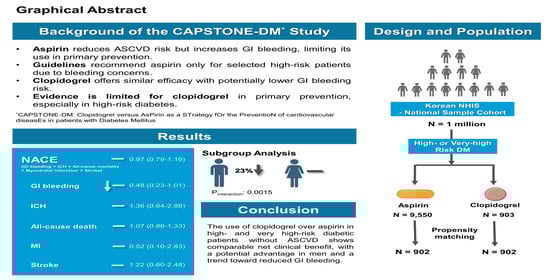
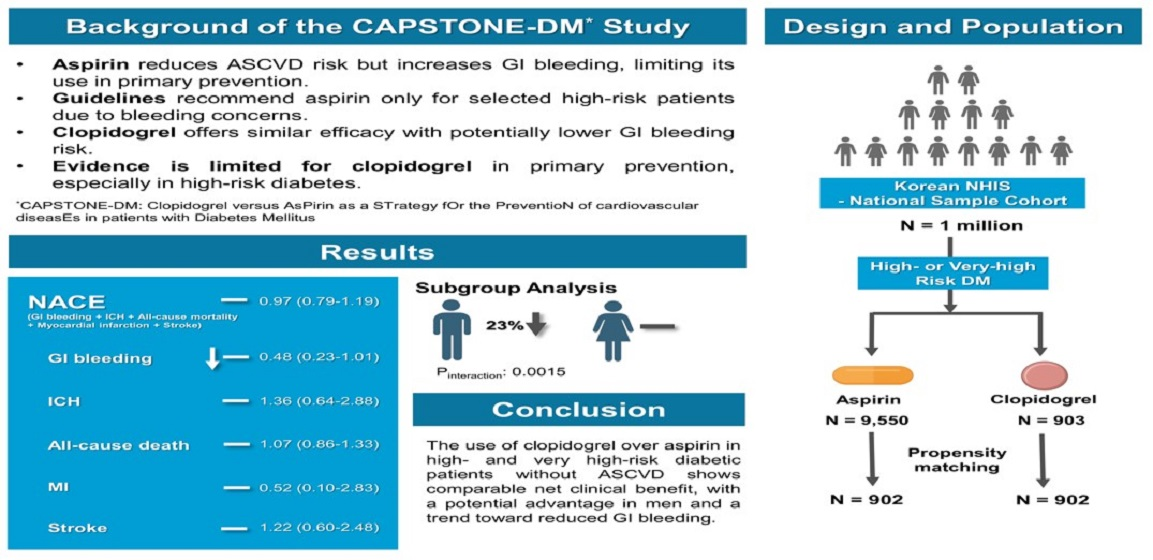
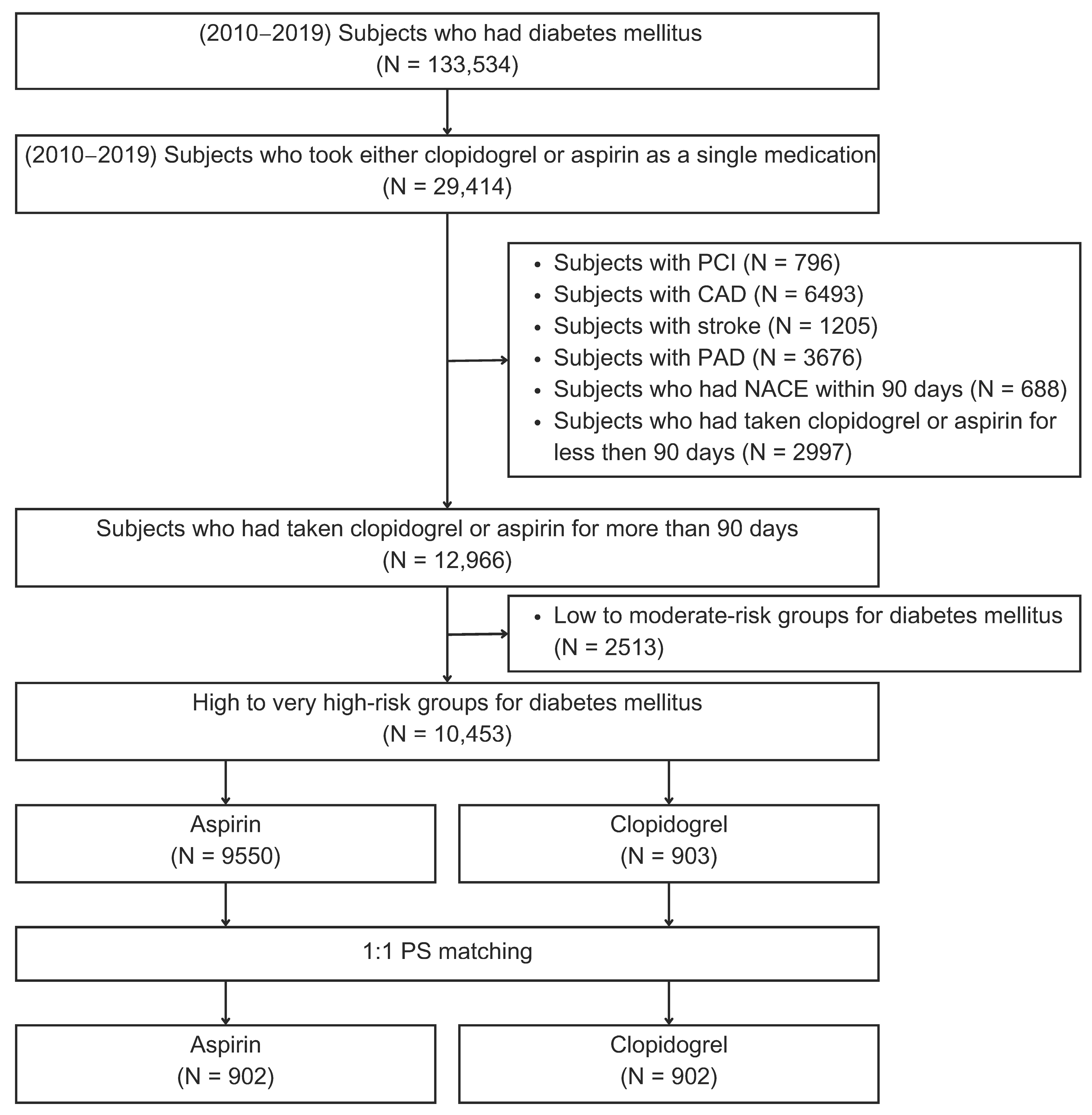
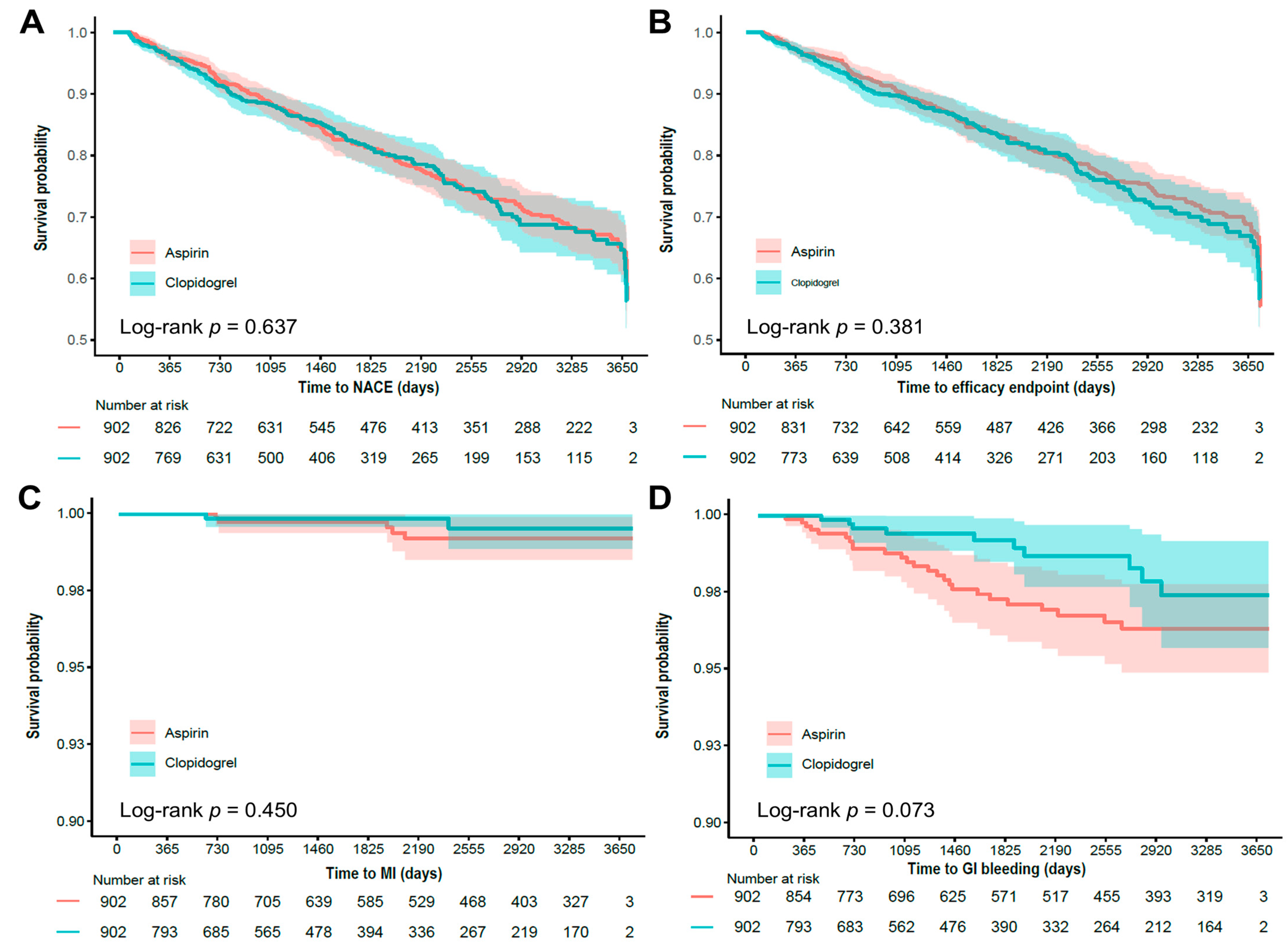
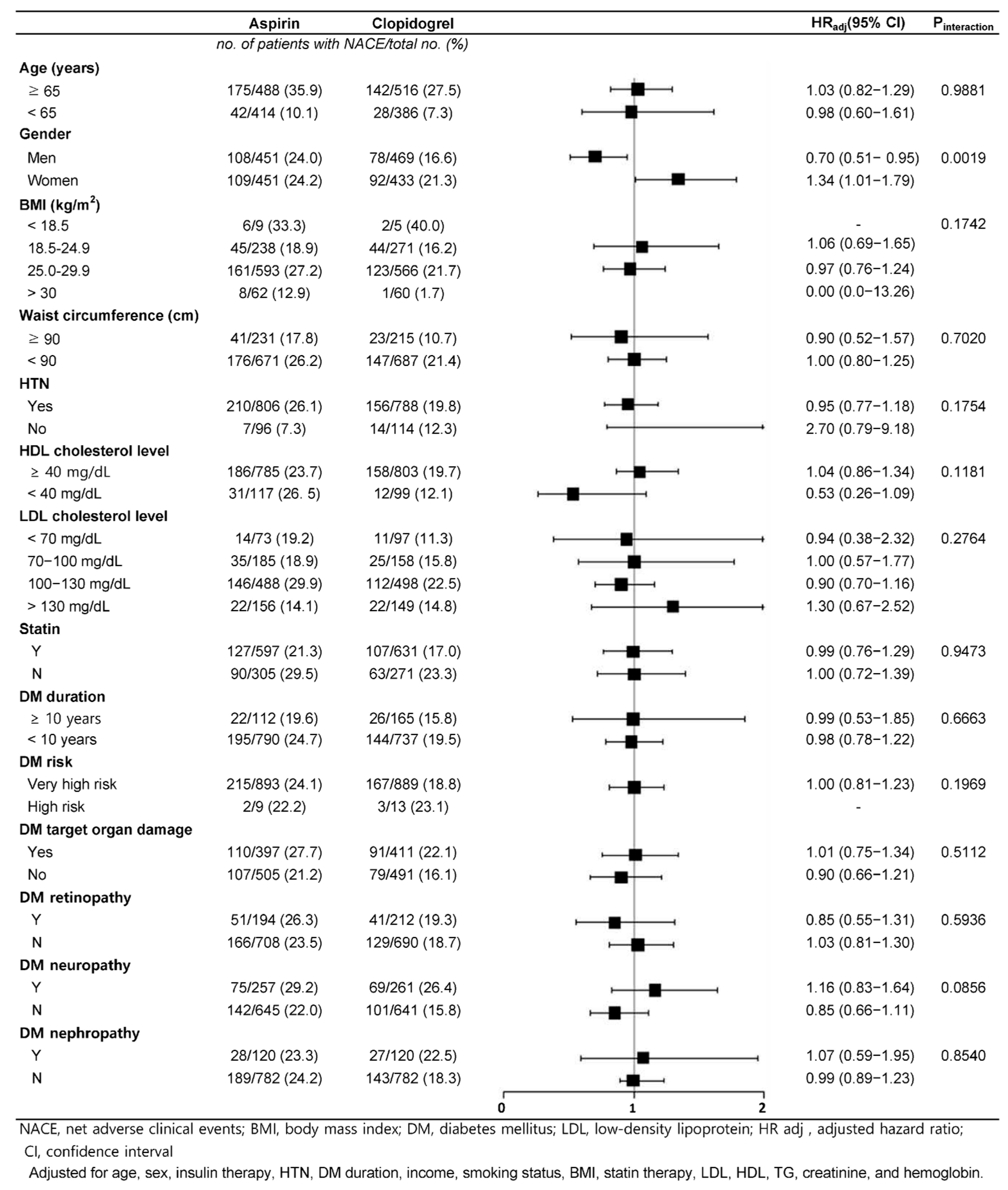
Background and Objectives: The benefits of aspirin for primary prevention of atherosclerotic cardiovascular disease (ASCVD) among high-risk patients with diabetes are controversial owing to bleeding risk. Current guidelines recommend the use of aspirin in high-risk patients with diabetes; however, the supporting evidence is inconsistent, primarily due to an increased risk of gastrointestinal (GI) bleeding. Given these concerns, it is important to explore alternative antiplatelet strategies. Clopidogrel, a widely used P2Y12 inhibitor, has been suggested to cause fewer GI bleeding events than aspirin. Accordingly, we aimed to compare the efficacy and bleeding risk of clopidogrel versus aspirin in high- and very high-risk populations with diabetes without prior ASCVD using the Korean National Health Insurance Service data. Materials and Methods: Propensity score-matching was performed to reduce baseline imbalances. The primary endpoint was net adverse clinical events (NACEs), defined as a composite of all-cause death, myocardial infarction (MI), stroke, intracranial hemorrhage (ICH), and gastrointestinal GI bleeding. Secondary endpoints included efficacy (composite of all-cause death, MI, and stroke) and bleeding outcomes (GI bleeding and ICH). Results: Among 10,453 patients (9550 on aspirin and 903 on clopidogrel), 902 matched pairs were analyzed. Clopidogrel showed no significant difference compared with aspirin in NACE incidence (hazard ratio [HR]: 0.97; 95% confidence interval [CI]: 0.79–1.19), efficacy endpoints (HR: 1.02; 95% CI: 0.82–1.26), or individual outcomes (MI, stroke, all-cause death). Clopidogrel demonstrated a trend towards lower GI bleeding (HR: 0.48; 95% CI: 0.23–1.01), although not significant. In subgroup analysis, male patients on clopidogrel had significantly lower NACE risk than those on aspirin (HR: 0.73; 95% CI: 0.54–0.99). Conclusions: These findings suggest that clopidogrel may be considered a preferable alternative to aspirin for primary prevention in high-risk male patients with diabetes, particularly those with an elevated risk for gastrointestinal bleeding, guiding personalized antiplatelet therapy choices in clinical practice.
Keywords: aspirin; clopidogrel; diabetes mellitus; bleeding; primary prevention aspirin; clopidogrel; diabetes mellitus; bleeding; primary prevention
Graphical Abstract