Article

Machine Learning-Based Mortality Prediction in Chronic Kidney Disease among Heart Failure Patients: Insights and Outcomes from the Jordanian Heart Failure Registry


1
Cardiology Section, Internal Medicine Department, Specialty Hospital, Amman 12344, Jordan
2
Cardiology Section, Internal Medicine Department, King Abdullah University Hospital, Irbid 22110, Jordan
3
Cardiology Section, Internal Medicine Department, Jordan University Hospital, Amman 11942, Jordan
4
Department of Cardiology, Amman Surgical Hospital, Amman 11180, Jordan
*
Author to whom correspondence should be addressed.
Medicina 2024, 60(5), 831; https://doi.org/10.3390/medicina60050831

Submission received: 7 April 2024 / Revised: 7 May 2024 / Accepted: 14 May 2024 / Published: 19 May 2024
(This article belongs to the Section Cardiology)

Abstract

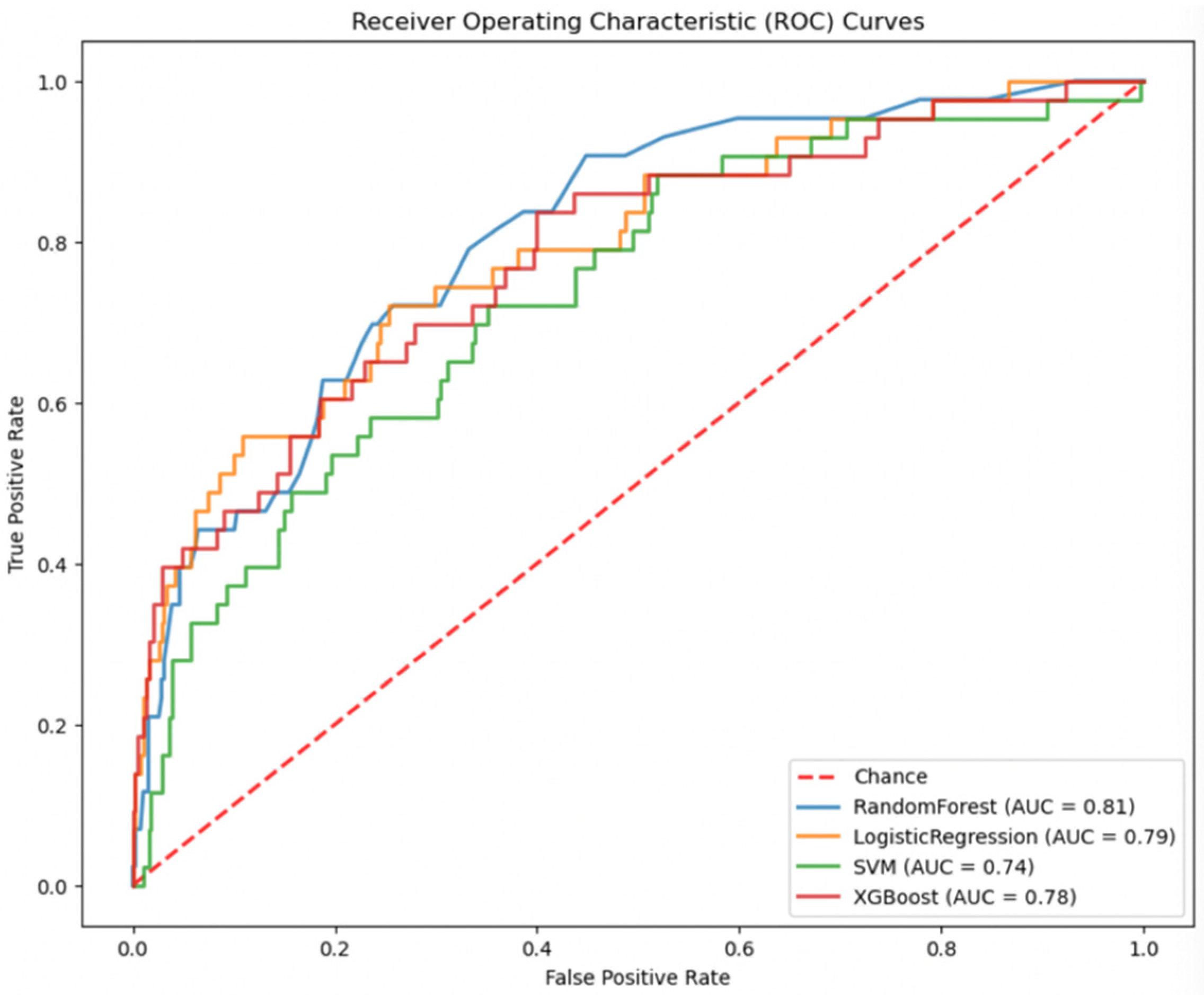
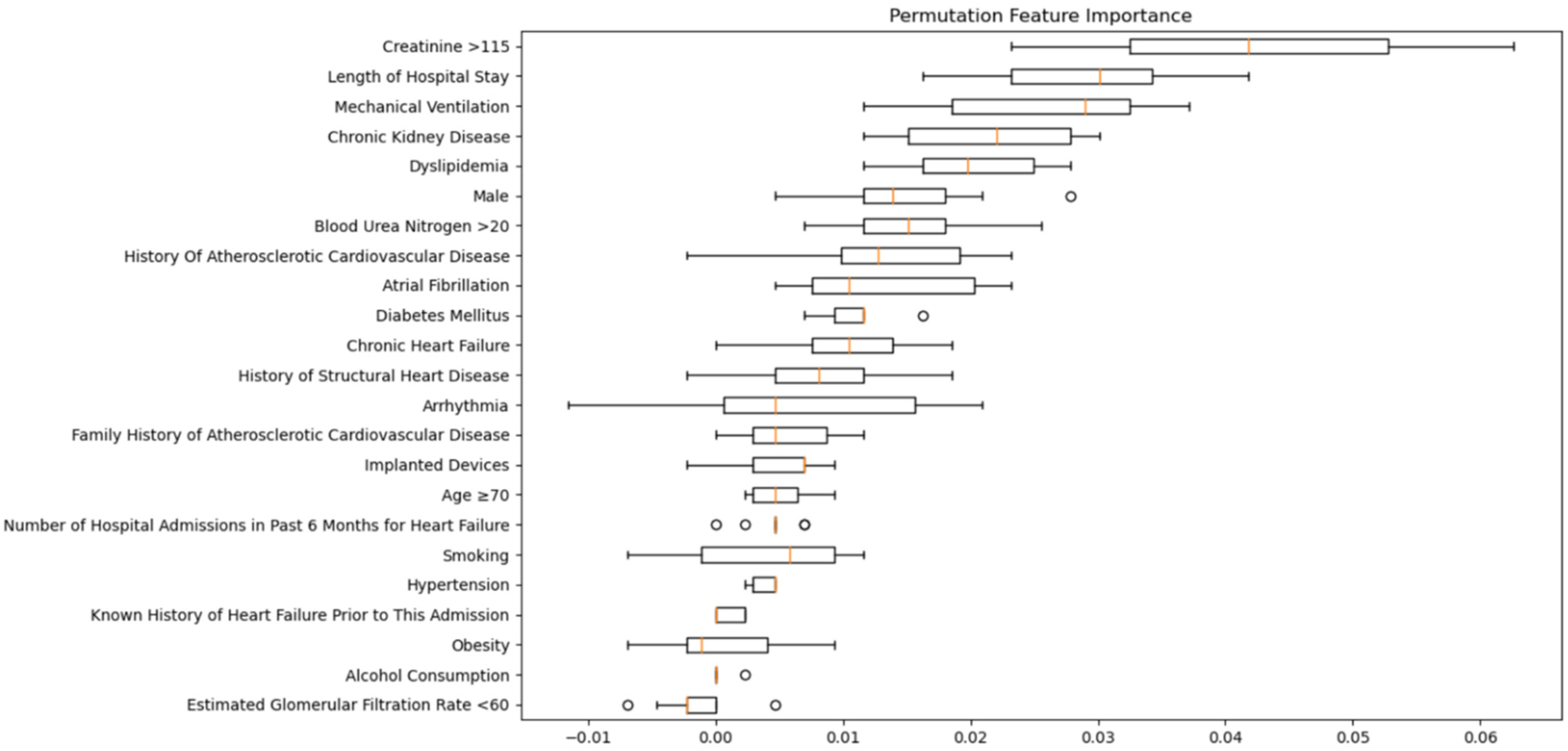
Background and Objectives: Heart failure (HF) is a prevalent and debilitating condition that imposes a significant burden on healthcare systems and adversely affects the quality of life of patients worldwide. Comorbidities such as chronic kidney disease (CKD), arterial hypertension, and diabetes mellitus (DM) are common among HF patients, as they share similar risk factors. This study aimed to identify the prognostic significance of multiple factors and their correlation with disease prognosis and outcomes in a Jordanian cohort. Materials and Methods: Data from the Jordanian Heart Failure Registry (JoHFR) were analyzed, encompassing medical records from acute and chronic HF patients attending public and private cardiology clinics and hospitals across Jordan. An online form was utilized for data collection, focusing on three kidney function tests, estimated glomerular filtration rate (eGFR), blood urea nitrogen (BUN), and creatinine levels, with the eGFR calculated using the Cockcroft–Gault formula. We also built six machine learning models to predict mortality in our cohort. Results: From the JoHFR, 2151 HF patients were included, with 644, 1799, and 1927 records analyzed for eGFR, BUN, and creatinine levels, respectively. Age negatively impacted all measures (p ≤ 0.001), while smokers surprisingly showed better results than non-smokers (p ≤ 0.001). Males had more normal eGFR levels compared to females (p = 0.002). Comorbidities such as hypertension, diabetes, arrhythmias, and implanted devices were inversely related to eGFR (all with p-values <0.05). Higher BUN levels were associated with chronic HF, dyslipidemia, and ASCVD (p ≤ 0.001). Higher creatinine levels were linked to hypertension, diabetes, dyslipidemia, arrhythmias, and previous HF history (all with p-values <0.05). Low eGFR levels were associated with increased mechanical ventilation needs (p = 0.049) and mortality (p ≤ 0.001), while BUN levels did not significantly affect these outcomes. Machine learning analysis employing the Random Forest Classifier revealed that length of hospital stay and creatinine >115 were the most significant predictors of mortality. The classifier achieved an accuracy of 90.02% with an AUC of 80.51%, indicating its efficacy in predictive modeling. Conclusions: This study reveals the intricate relationship among kidney function tests, comorbidities, and clinical outcomes in HF patients in Jordan, highlighting the importance of kidney function as a predictive tool. Integrating machine learning models into clinical practice may enhance the predictive accuracy of patient outcomes, thereby supporting a more personalized approach to managing HF and related kidney dysfunction. Further research is necessary to validate these findings and to develop innovative treatment strategies for the CKD population within the HF cohort.
Keywords: machine learning; heart failure; chronic kidney disease; mortality prediction; random forest classifier machine learning; heart failure; chronic kidney disease; mortality prediction; random forest classifier