

ROS-Centered Transcriptomic Regulatory Networks Linking Salinity Stress, Antioxidant Defense and Processability Traits in Salicornia spp.

 ,
,  , , ,
, , ,
Abstract
1. Introduction
2. Processability Characteristics of Plant Raw Materials as Outputs of Transcriptome Programs
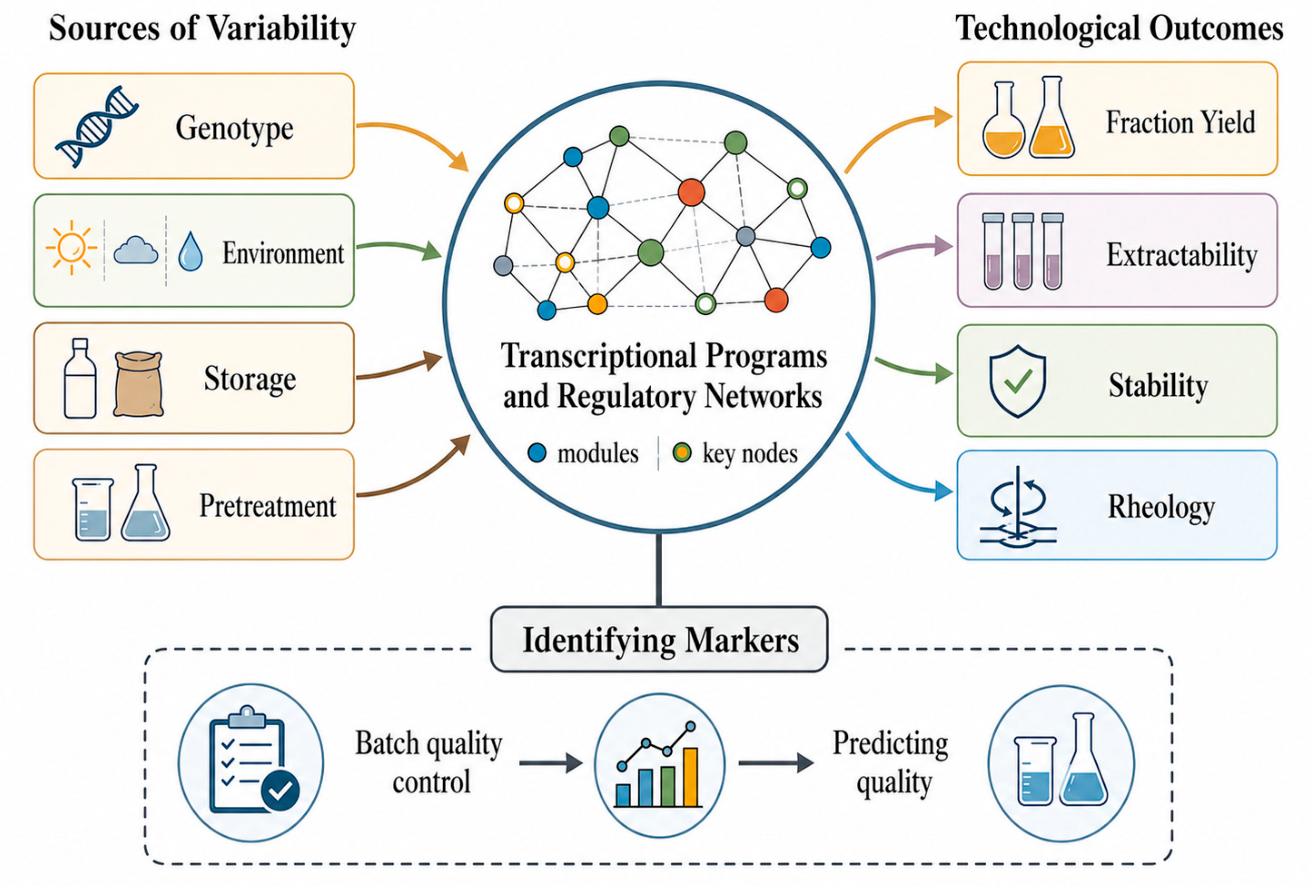
2.1. Conceptual Model: ‘Gene Expression → Pathways → Composition and Structure of Biopolymers → Processing Parameters’
2.2. The Role of Regulatory Networks and the Significance of RNA-Seq
3. Study Design and RNA-Seq Data Acquisition for Quality and Raw Material Processing
4. Analytical Strategies: From Read-Level Analysis to Functional Pathways and Regulatory Insights
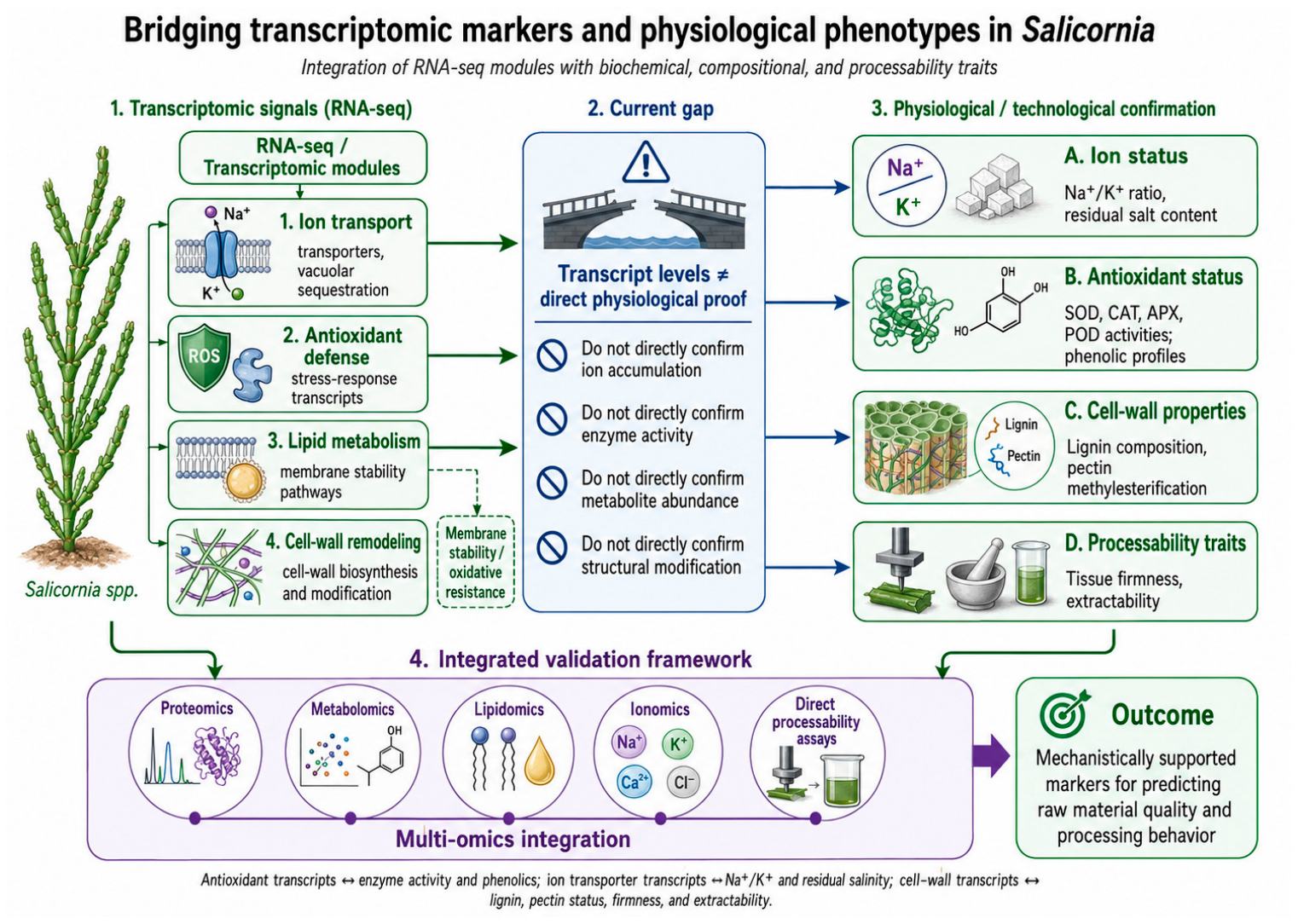
5. Transcriptomic Markers of Processing Traits: Identification, Prioritization and Validation
5.1. Marker Formats and Their Biological Meanings
5.2. Prioritization Criteria for Processing Markers
5.3. Validation of Transcriptomic Markers
5.4. Application to Raw Material Quality Prediction
6. Regulatory Expression Networks: Modules, Key Nodes and Molecular Control Points
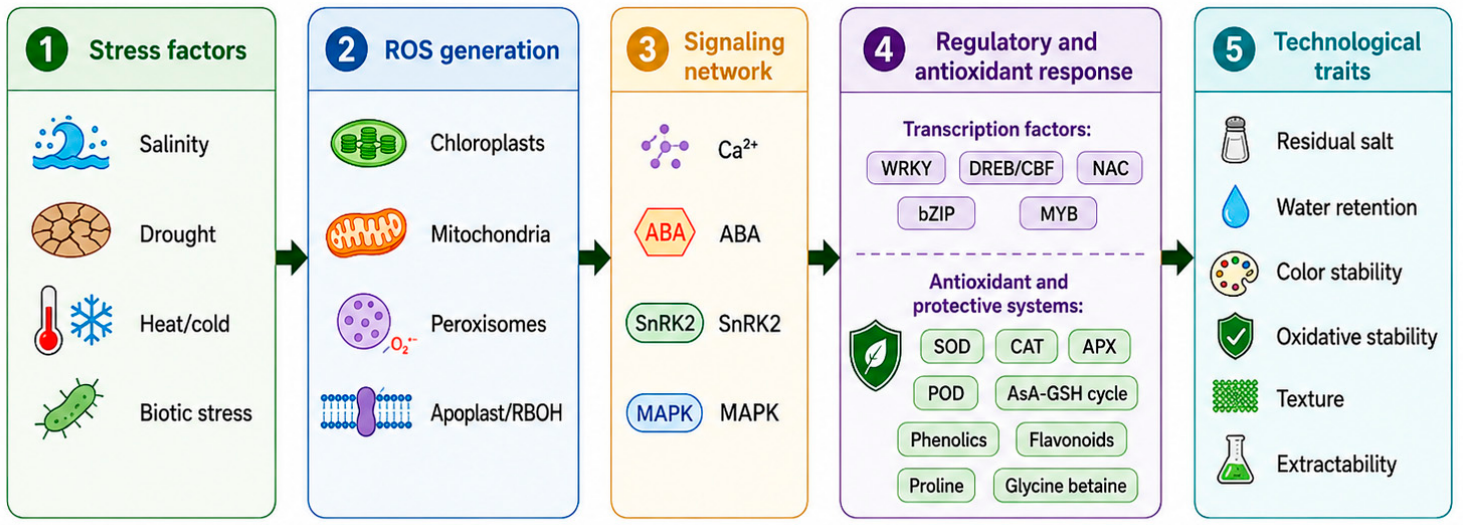
7. ROS-Centered Signaling Under Salinity and Related Stress Responses
8. Salicornia as a Model Halophytic Raw Material for Processing-Oriented Transcriptomic Markers
Dataset-Informed Synthesis of Candidate Marker Modules
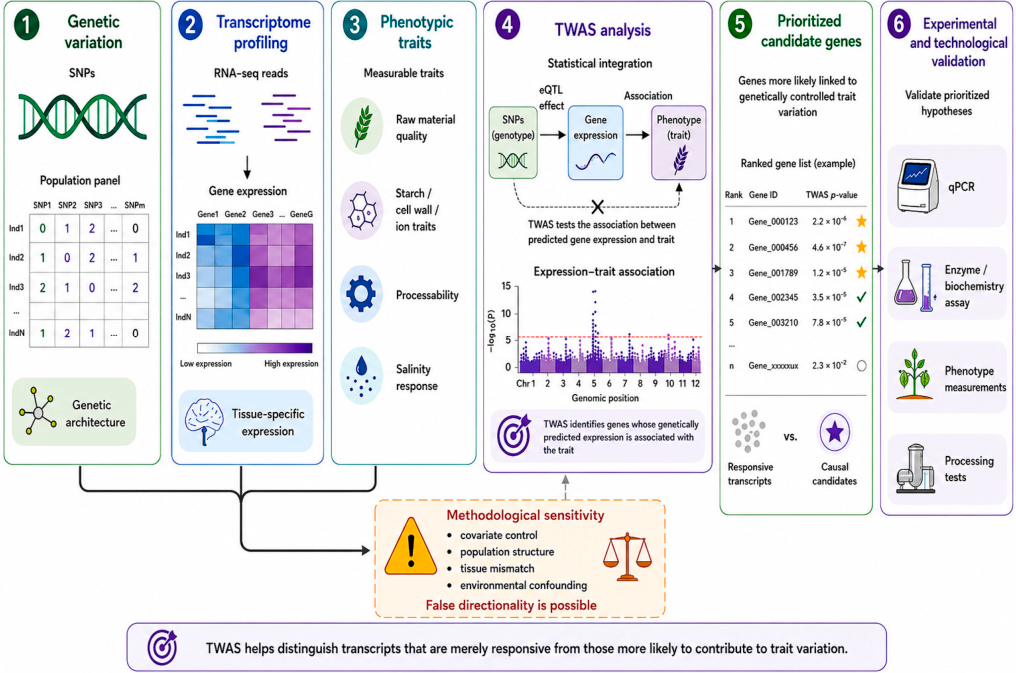
9. Emerging Genomic and AI-Assisted Approaches for Salicornia Quality Prediction
10. Conclusions
Author Contributions
Funding
Institutional Review Board Statement
Informed Consent Statement
Data Availability Statement
Conflicts of Interest
References
- Zhu, J.K. Abiotic stress signaling and responses in plants. Cell 2016, 167, 313–324. [Google Scholar] [CrossRef] [PubMed]
- Munns, R.; Tester, M. Mechanisms of salinity tolerance. Annu. Rev. Plant Biol. 2008, 59, 651–681. [Google Scholar] [CrossRef] [PubMed]
- Zhao, S.; Cao, R.; Sun, L.; Zhuang, D.; Zhong, M.; Zhao, F.; Jiao, G.; Chen, P.; Li, X.; Duan, Y.; et al. An Integrative Analysis of the Transcriptome and Proteome of Rice Grain Chalkiness Formation Under High Temperature. Plants 2024, 13, 3309. [Google Scholar] [CrossRef] [PubMed]
- Nirmal, R.C.; Furtado, A.; Wrigley, C.; Henry, R.J. Influence of gene expression on hardness in wheat. PLoS ONE 2016, 11, e0164746. [Google Scholar] [CrossRef] [PubMed]
- De Angelis, D.; Latrofa, V.; Squeo, G.; Pasqualone, A.; Summo, C. Techno-functional, rheological, and chemical properties of plant-based protein ingredients obtained with dry fractionation and wet extraction. Curr. Res. Food Sci. 2024, 9, 100906. [Google Scholar] [CrossRef] [PubMed]
- Gan, J.; Qiu, Y.; Tao, Y.; Zhang, L.; Okita, T.W.; Yan, Y.; Tian, L. RNA-seq analysis reveals transcriptome reprogramming and alternative splicing during early response to salt stress in tomato root. Front. Plant Sci. 2024, 15, 1394223. [Google Scholar] [CrossRef] [PubMed]
- Kirwan, J.A.; Gika, H.; Beger, R.D.; Bearden, D.; Dunn, W.B.; Goodacre, R.; Theodoridis, G.; Witting, M.; Yu, L.R.; Wilson, I.D.; et al. Quality assurance and quality control reporting in untargeted metabolic phenotyping: mQACC recommendations for analytical quality management. Metabolomics 2022, 18, 70. [Google Scholar] [CrossRef] [PubMed]
- Faqeerzada, M.A.; Park, E.; Lim, J.; Kim, K.; Sathasivam, R.; Park, S.U.; Kim, H.; Cho, B.K. Development of multi-sensing technologies for high-throughput morphological, physiological, and biochemical phenotyping of drought-stressed watermelon plants. Plant Physiol. Biochem. 2025, 229, 110577. [Google Scholar] [CrossRef] [PubMed]
- Berlingeri, J.; Fuentes, A.; Ranario, E.; Yun, H.; Rim, E.Y.; Garrett, O.; Howard, A.; LaPorte, M.F.; Lo, S.; Pauli, D.; et al. Integration of crop modeling and sensing into molecular breeding for nutritional quality and stress tolerance. Theor. Appl. Genet. 2025, 138, 205. [Google Scholar] [CrossRef] [PubMed]
- Upton, R.N.; Correr, F.H.; Lile, J.; Reynolds, G.L.; Falaschi, K.; Cook, J.P.; Lachowiec, J. Design, execution, and interpretation of plant RNA seq analyses. Front. Plant Sci. 2023, 14, 1135455. [Google Scholar] [CrossRef] [PubMed]
- Butardo, V.M.; Luo, J.; Li, Z.; Gidley, M.J.; Bird, A.R.; Tetlow, I.J.; Fitzgerald, M.; Jobling, S.A.; Rahman, S. Functional genomic validation of the roles of soluble starch synthase IIa in Japonica rice endosperm. Front. Genet. 2020, 11, 289. [Google Scholar] [CrossRef] [PubMed]
- Li, Y.; Li, P.; Zhao, D.; Wang, F.; Lu, B. Metabolic and starch biosynthetic networks underlying yam waxiness formation revealed by integrated transcriptomics and proteomics. J. Agric. Food Chem. 2025, 73, 32846–32861. [Google Scholar] [CrossRef] [PubMed]
- Song, J.; Ma, C.; Xu, Y.; Wang, Y.; Wang, B.; Zhang, G.; Liu, X.; Xu, X.; Yang, Y.; Zhang, N. Mechanistic analysis of starch gelatinization properties regulated by biomolecules: A protein, non-starch polysaccharides and lipids perspective. Crit. Rev. Food Sci. Nutr. 2025, 66, 3434–3451. [Google Scholar] [CrossRef] [PubMed]
- Vogel, C.; Marcotte, E.M. Insights into the regulation of protein abundance from proteomic and transcriptomic analyses. Nat. Rev. Genet. 2012, 13, 227–232. [Google Scholar] [CrossRef] [PubMed]
- Jensen, O.N. Interpreting the protein language using proteomics. Nat. Rev. Mol. Cell Biol. 2006, 7, 391–403. [Google Scholar] [CrossRef] [PubMed]
- Moskal, K.; Puchta-Jasińska, M.; Bolc, P.; Motor, A.; Frankowski, R.; Pietrusińska-Radzio, A.; Rucińska, A.; Tomiczak, K.; Boczkowska, M. Why “Where” Matters as Much as “How Much”: Single-Cell and Spatial Transcriptomics in Plants. Int. J. Mol. Sci. 2025, 26, 11819. [Google Scholar] [CrossRef] [PubMed]
- Panditrao, G.; Bhowmick, R.; Meena, C.; Sarkar, R.R. Emerging landscape of molecular interaction networks: Opportunities, challenges and prospects. J. Biosci. 2022, 47, 24. [Google Scholar] [CrossRef] [PubMed]
- Chen, Y.; Zhu, H.; Feng, Y.; Wang, Y.; Wang, X.; Zhang, W.; Luo, Y. Rheological analysis in food processing: Factors, applications, and future outlooks with machine learning integration. RSC Adv. 2026, 16, 5040–5063. [Google Scholar] [CrossRef] [PubMed]
- Malpartida Yapias, R.J.; Ore Areche, F.; Echevarria Victorio, J.P.; Paucarchuco Soto, J.; Lobato Calderon, G.R.; Palomino Santos, E.R.; Montalvo Otivo, J.M.; Flores-Miranda, C.; Ruiz Rodriguez, A. Advancements in green extraction technologies for pectin enhancing efficiency, sustainability, and functional properties: A systematic review. Braz. J. Biol. 2025, 85, e287792, Erratum in Braz. J. Biol. 2025, 85, e87792er. [Google Scholar] [CrossRef] [PubMed]
- Spinardi, A.; Cola, G.; Gardana, C.S.; Mignani, I. Variation of anthocyanin content and profile throughout fruit development and ripening of highbush blueberry cultivars grown at two different altitudes. Front. Plant Sci. 2019, 10, 1045. [Google Scholar] [CrossRef] [PubMed]
- Xie, M.; Wang, J.; Wang, F.; Wang, J.; Yan, Y.; Feng, K.; Chen, B. A review of genomic, transcriptomic, and proteomic applications in edible fungi biology: Current status and future directions. J. Fungi 2025, 11, 422. [Google Scholar] [CrossRef] [PubMed]
- Muthuramalingam, K.; Kim, Y.; Cho, M. β-glucan, “the knight of health sector”: Critical insights on physiochemical heterogeneities, action mechanisms and health implications. Crit. Rev. Food Sci. Nutr. 2022, 62, 6908–6931. [Google Scholar] [CrossRef] [PubMed]
- Desai, N.; Rana, D.; Salave, S.; Gupta, R.; Patel, P.; Karunakaran, B.; Sharma, A.; Giri, J.; Benival, D.; Kommineni, N. Chitosan: A potential biopolymer in drug delivery and biomedical applications. Pharmaceutics 2023, 15, 1313. [Google Scholar] [CrossRef] [PubMed]
- Zhang, P.P.; Li, M.S.; Zhou, J.; Zhu, C.H.; Tang, R.; He, Z.C.; Yao, X.H.; Ping, Y.F.; Xiang, D.F.; Tan, L.Y.; et al. Region-resolved proteomic map of the human brain: Functional interconnections and neurological implications. Signal Transduct. Target. Ther. 2026, 11, 43. [Google Scholar] [CrossRef] [PubMed]
- Zhan, C.; Tang, T.; Wu, E.; Zhang, Y.; He, M.; Wu, R.; Bi, C.; Wang, J.; Zhang, Y.; Shen, B. From multi-omics approaches to personalized medicine in myocardial infarction. Front. Cardiovasc. Med. 2023, 10, 1250340. [Google Scholar] [CrossRef] [PubMed]
- Huo, J.; Yu, M.; Feng, N.; Zheng, D.; Zhang, R.; Xue, Y.; Khan, A.; Zhou, H.; Mei, W.; Du, X.; et al. Integrated transcriptome and metabolome analysis of salinity tolerance in response to foliar application of choline chloride in rice (Oryza sativa L.). Front. Plant Sci. 2024, 15, 1440663. [Google Scholar] [CrossRef] [PubMed]
- Satrio, R.D.; Fendiyanto, M.H.; Miftahudin, M. Tools and techniques used at global scale through genomics, transcriptomics, proteomics, and metabolomics to investigate plant stress responses at the molecular level. In Molecular Dynamics of Plant Stress and Its Management; Springer Nature: Singapore, 2024; pp. 555–607. [Google Scholar] [CrossRef]
- Hernández-Elvira, M.; Sunnerhagen, P. Post-transcriptional regulation during stress. FEMS Yeast Res. 2022, 22, foac025. [Google Scholar] [CrossRef] [PubMed]
- Lin, Y.; Lin, P.; Lu, Y.; Zheng, J.; Zheng, Y.; Huang, X.; Zhao, X.; Cui, L. Post-translational modifications of RNA-modifying proteins in cellular dynamics and disease progression. Adv. Sci. 2024, 11, 2406318. [Google Scholar] [CrossRef] [PubMed]
- Dal Co, A.; Ackermann, M.; van Vliet, S. Spatial self-organization of metabolism in microbial systems: A matter of enzymes and chemicals. Cell Syst. 2023, 14, 98–108. [Google Scholar] [CrossRef] [PubMed]
- Wang, P.; Moreno, S.; Janke, A.; Boye, S.; Wang, D.; Schwarz, S.; Voit, B.; Appelhans, D. Probing crowdedness of artificial organelles by clustering polymersomes for spatially controlled and pH-triggered enzymatic reactions. Biomacromolecules 2022, 23, 3648–3662. [Google Scholar] [CrossRef] [PubMed]
- Tardy, B.L.; Mattos, B.D.; Otoni, C.G.; Beaumont, M.; Majoinen, J.; Kamarainen, T.; Rojas, O.J. Deconstruction and reassembly of renewable polymers and biocolloids into next generation structured materials. Chem. Rev. 2021, 121, 14088–14188. [Google Scholar] [CrossRef] [PubMed]
- Arrigo, R.; Malucelli, G.; Mantia, F.P.L. Effect of the elongational flow on the morphology and properties of polymer systems: A brief review. Polymers 2021, 13, 3529. [Google Scholar] [CrossRef] [PubMed]
- Oyinloye, T.M.; Lee, C.J.; Yoon, W.B. Integration of nonlinear rheology and CFD simulation to elucidate the influence of saturated oil on soy protein concentrate behavior during high-moisture extrusion. Gels 2025, 11, 1003. [Google Scholar] [CrossRef] [PubMed]
- Bhaskar, P.B.; Wu, L.; Busse, J.S.; Whitty, B.R.; Hamernik, A.J.; Jansky, S.H.; Buell, C.R.; Bethke, P.C.; Jiang, J. Suppression of the vacuolar invertase gene prevents cold-induced sweetening in potato. Plant Physiol. 2010, 154, 939–948. [Google Scholar] [CrossRef] [PubMed]
- Liu, T.; Zhou, T.; Cui, G.; Liu, X.; Song, B. Advances in understanding cold-induced sweetening in potato tubers. Hortic. Plant J. 2025; in press. [CrossRef]
- Wang, Q.; Li, Y.; Sun, F.; Li, X.; Wang, P.; Yang, G.; He, G. Expression of Puroindoline a in durum wheat affects milling and pasting properties. Front. Plant Sci. 2019, 10, 482. [Google Scholar] [CrossRef] [PubMed]
- Panahi, B.; Hamid, R.; Ghorbanzadeh, Z.; Golkari, S.; Yildirim, M.; Jacob, F. Transcriptional networks shaping malting quality in barley: From grain development to brewing performance. Food Chem. Mol. Sci. 2025, 12, 100348. [Google Scholar] [CrossRef] [PubMed]
- Held, S.T. Effects of Mash Style on β-Glucan Concentration and β-Glucanase Activity in the Production of Quality Wort for Beer Brewing. Master’s Thesis, University of California, Davis, CA, USA, 2022. [Google Scholar]
- Fox, G.P. Variation in Barley Quality and Its Impact on Malting and Brewing. Ph.D. Thesis, Stellenbosch University, Stellenbosch, South Africa, 2025. [Google Scholar]
- Amirebrahimi, F.F.; Saidi, A.; Ahmadikhah, A. Genome-wide association study (GWAS) and transcription analysis of candidate genes for rice grain eating and cooking quality traits. BMC Genom. 2025, 27, 113. [Google Scholar] [CrossRef] [PubMed]
- Zhao, Y.; Zhao, J.; Hu, M.; Sun, L.; Liu, Q.; Zhang, Y.; Li, Q.; Wang, P.; Ma, W.; Li, H.; et al. Transcriptome and proteome analysis revealed the influence of high-molecular-weight glutenin subunits deficiency on expression of storage substances and the potential regulatory mechanism of HMW-GSs. Foods 2023, 12, 361. [Google Scholar] [CrossRef] [PubMed]
- Yang, T.; Wang, B.; Lv, T.; Wang, P.; Zhou, Q.; Jiang, D.; Jiang, H. Investigating the molecular mechanism of high-molecular-weight glutenin subunit affects gluten aggregation during dough mixing: Experimental characterizations and computational simulations. Food Chem. 2025, 466, 142205. [Google Scholar] [CrossRef] [PubMed]
- Liu, S.; Xie, L.; Wu, H.; Xu, D.; Che, R.; Tian, W.; Liu, B.; Chao, Y.; Zhang, Y.; Xia, X.; et al. TaIAA10-6D orchestrates processing quality and grain yield by modulating glutenin–gliadin ratio and plant morphogenesis in wheat. Crop J. 2025, 13, 1460–1469. [Google Scholar] [CrossRef]
- Xie, L.; Liu, S.; Zhang, Y.; Tian, W.; Xu, D.; Li, J.; Luo, X.; Li, L.; Bian, Y.; Li, F.; et al. Efficient proteome-wide identification of transcription factors targeting Glu-1: A case study for functional validation of TaB3-2A1 in wheat. Plant Biotechnol. J. 2023, 21, 1952–1965. [Google Scholar] [CrossRef] [PubMed]
- Merlino, M.; Gaudin, J.C.; Dardevet, M.; Martre, P.; Ravel, C.; Boudet, J. Wheat DOF transcription factors TaSAD and WPBF regulate glutenin gene expression in cooperation with SPA. PLoS ONE 2023, 18, e0287645. [Google Scholar] [CrossRef] [PubMed]
- Li, C.; Mur, L.A.; Wang, Q.; Hou, X.; Zhao, C.; Chen, Z.; Wu, J.; Guo, Q. ROS scavenging and ion homeostasis is required for the adaptation of halophyte Karelinia caspia to high salinity. Front. Plant Sci. 2022, 13, 979956. [Google Scholar] [CrossRef] [PubMed]
- Wang, X.; Wang, T.; Yu, P.; Li, Y.; Lv, X. NO enhances the adaptability to high-salt environments by regulating osmotic balance, antioxidant defense, and ion homeostasis in eelgrass based on transcriptome and metabolome analysis. Front. Plant Sci. 2024, 15, 1343154. [Google Scholar] [CrossRef] [PubMed]
- Yu, Y.; Wang, H.; Liu, J.; Wang, Q.; Shen, T.; Guo, W.; Wang, R. Shifts in microbial community function and structure along the successional gradient of coastal wetlands in Yellow River Estuary. Eur. J. Soil Biol. 2012, 49, 12–21. [Google Scholar] [CrossRef]
- Marand, A.P.; Eveland, A.L.; Kaufmann, K.; Springer, N.M. cis-Regulatory elements in plant development, adaptation, and evolution. Annu. Rev. Plant Biol. 2023, 74, 111–137. [Google Scholar] [CrossRef] [PubMed]
- Kulkarni, S.R.; Vaneechoutte, D.; Van de Velde, J.; Vandepoele, K. TF2Network: Predicting transcription factor regulators and gene regulatory networks in Arabidopsis using publicly available binding site information. Nucleic Acids Res. 2018, 46, e31. [Google Scholar] [CrossRef] [PubMed]
- Song, X.; Li, Y.; Cao, X.; Qi, Y. MicroRNAs and their regulatory roles in plant–environment interactions. Annu. Rev. Plant Biol. 2019, 70, 489–525. [Google Scholar] [CrossRef] [PubMed]
- Zeng, Z.; Zhang, S.; Li, W.; Chen, B.; Li, W. Gene-coexpression network analysis identifies specific modules and hub genes related to cold stress in rice. BMC Genom. 2022, 23, 251. [Google Scholar] [CrossRef] [PubMed]
- Yu, T.; Zhang, J.; Cao, J.; Ma, X.; Li, W.; Yang, G. Hub gene mining and co-expression network construction of low-temperature response in maize of seedling by WGCNA. Genes 2023, 14, 1598. [Google Scholar] [CrossRef] [PubMed]
- Tian, F.; Yang, D.C.; Meng, Y.Q.; Jin, J.; Gao, G. PlantRegMap: Charting functional regulatory maps in plants. Nucleic Acids Res. 2020, 48, D1104–D1113. [Google Scholar] [CrossRef] [PubMed]
- Hussey, S.G.; Mizrachi, E.; Creux, N.M.; Myburg, A.A. Navigating the transcriptional roadmap regulating plant secondary cell wall deposition. Front. Plant Sci. 2013, 4, 325. [Google Scholar] [CrossRef] [PubMed]
- Yang, L.; Wang, Y.; Bai, Y.; Yang, J.; Gao, Y.; Hou, C.; Gao, M.; Gu, X.; Liu, W. Lipid metabolism improves salt tolerance of Salicornia europaea. Ann. Bot. 2025, 135, 789–802. [Google Scholar] [CrossRef] [PubMed]
- Cao, Y.; Ma, J.; Cheng, Z.; Xia, L.; Wang, L.; Li, J.; Zhang, X.; Han, S.; Tian, Y.; Li, M.; et al. The Zma-miRNA319-ZmMYB74 module regulates maize resistance to stalk rot disease by modulating lignin deposition. Plant Biotechnol. J. 2026, 24, 1598–1619. [Google Scholar] [CrossRef] [PubMed]
- Arshad, K.T.; Li, C.; Li, L.; Wang, J.; Chen, J.; Zhao, Y. Genome-wide identification and expression profiling of bHLH transcription factors associated with ferulic acid biosynthesis in Angelica sinensis. Front. Plant Sci. 2025, 16, 1718585. [Google Scholar] [CrossRef] [PubMed]
- Qiao, X.; Jian, B.; Qiu, J.; Singh, J.; Kaur, I.; Hao, R.; Singh, J.; Singh, L.; Zhang, H.; Yin, X.; et al. Transcriptomics in solanaceous crop improvement: Advances and opportunities. Front. Plant Sci. 2025, 16, 1750317. [Google Scholar] [CrossRef] [PubMed]
- Zhu, Z.; Jiang, L.; Ding, X. Advancing breast cancer heterogeneity analysis: Insights from genomics, transcriptomics and proteomics at bulk and single-cell levels. Cancers 2023, 15, 4164. [Google Scholar] [CrossRef] [PubMed]
- Yao, J.; Marand, A.P.; Bai, Y.; Schmitz, R.J.; Fan, L. Advances in plant spatial multi-omics data analysis. Trends Plant Sci. 2025, 31, 337–352. [Google Scholar] [CrossRef] [PubMed]
- Zhan, J.; Meyers, B.C. Plant small RNAs: Their biogenesis, regulatory roles, and functions. Annu. Rev. Plant Biol. 2023, 74, 21–51. [Google Scholar] [CrossRef] [PubMed]
- Chen, S.; Li, Y.; Hu, J.; Li, H.; Hu, C.; Zhao, J.; Qian, H.; Bai, S.; Tang, Z.; Feng, Y. Integrating bulk RNA-seq, scRNA-seq and spatial transcriptomics data to identify novel post-translational modification-related molecular subtypes and therapeutic responses in hepatocellular carcinoma. Cancer Cell Int. 2025, 25, 330. [Google Scholar] [CrossRef] [PubMed]
- Littman, R.; Cheng, M.; Wang, N.; Peng, C.; Yang, X. SCING: Inference of robust, interpretable gene regulatory networks from single-cell and spatial transcriptomics. iScience 2023, 26, 107124. [Google Scholar] [CrossRef] [PubMed]
- Wu, Z.; Sun, Y.; Zhao, X.; Liu, Z.; Zhou, W.; Niu, Y. Phenotype prediction in plants is improved by integrating large-scale transcriptomic datasets. NAR Genom. Bioinform. 2024, 6, lqae184. [Google Scholar] [CrossRef] [PubMed]
- Yang, X.S.; Wu, J.; Ziegler, T.E.; Yang, X.; Zayed, A.; Rajani, M.S.; Zhou, D.; Basra, A.S.; Schachtman, D.P.; Peng, M.; et al. Gene expression biomarkers provide sensitive indicators of in planta nitrogen status in maize. Plant Physiol. 2011, 157, 1841–1852. [Google Scholar] [CrossRef] [PubMed]
- Lu, S.; Sturtevant, D.; Aziz, M.; Jin, C.; Li, Q.; Chapman, K.D.; Guo, L. Spatial analysis of lipid metabolites and expressed genes reveals tissue-specific heterogeneity of lipid metabolism in high- and low-oil Brassica napus seeds. Plant J. 2018, 94, 915–932. [Google Scholar] [CrossRef] [PubMed]
- Knoch, D.; Rugen, N.; Thiel, J.; Heuermann, M.C.; Kuhlmann, M.; Rizzo, P.; Meyer, R.C.; Wagner, S.; Schippers, J.H.M.; Braun, H.-P.; et al. A spatio-temporal transcriptomic and proteomic dataset of developing Brassica napus seeds. Sci. Data 2025, 12, 759. [Google Scholar] [CrossRef] [PubMed]
- Wang, J.; Fu, D.; Tian, Y.; Lv, M.; Xu, J.; Yu, T.; Lu, L.; Pang, X.; Li, X. Single-cell transcriptome sequencing reveals dynamic gene expression trajectories regulating vascular cell senescence in Hylocereus undatus. Gene 2025, 966, 149718. [Google Scholar] [CrossRef] [PubMed]
- Yao, Y.; Xiong, E.; Qu, X.; Li, J.; Liu, H.; Quan, L.; Lu, W.; Zhu, X.; Chen, M.; Li, K.; et al. WGCNA and transcriptome profiling reveal hub genes for key development stage seed size/oil content between wild and cultivated soybean. BMC Genom. 2023, 24, 494. [Google Scholar] [CrossRef] [PubMed]
- Jia, K.; Shen, J. Transcriptome-wide association studies associated with Crohn’s disease: Challenges and perspectives. Cell Biosci. 2024, 14, 29. [Google Scholar] [CrossRef] [PubMed]
- Yasir, M.; Kanwal, H.H.; Hussain, Q.; Riaz, M.W.; Sajjad, M.; Rong, J.; Jiang, Y. Status and prospects of genome-wide association studies in cotton. Front. Plant Sci. 2022, 13, 1019347. [Google Scholar] [CrossRef] [PubMed]
- Benitez, A.; Iglesias-Moya, J.; Segura, M.; Carvajal, F.; Palma, F.; Garrido, D.; Martínez, C.; Jamilena, M. RNA-seq based analysis of transcriptomic changes associated with ABA-induced postharvest cold tolerance in zucchini fruit. Postharvest Biol. Technol. 2022, 192, 112023. [Google Scholar] [CrossRef]
- Leek, J.T.; Scharpf, R.B.; Bravo, H.C.; Simcha, D.; Langmead, B.; Johnson, W.E.; Geman, D.; Baggerly, K.; Irizarry, R.A. Tackling the widespread and critical impact of batch effects in high-throughput data. Nat. Rev. Genet. 2010, 11, 733–739. [Google Scholar] [CrossRef] [PubMed]
- Schurch, N.J.; Schofield, P.; Gierliński, M.; Cole, C.; Sherstnev, A.; Singh, V.; Wrobel, N.; Gharbi, K.; Simpson, G.G.; Owen-Hughes, T.; et al. How many biological replicates are needed in an RNA-seq experiment and which differential expression tool should you use? RNA 2016, 22, 839–851, Erratum in RNA 2016, 22, 1641. [Google Scholar] [CrossRef] [PubMed]
- Liu, Y.; Zhou, J.; White, K.P. RNA-seq differential expression studies: More sequence or more replication? Bioinformatics 2014, 30, 301–304. [Google Scholar] [CrossRef] [PubMed]
- Rubio-Piña, J.A.; Zapata-Pérez, O. Isolation of total RNA from tissues rich in polyphenols and polysaccharides of mangrove plants. Electron. J. Biotechnol. 2011, 14, 11. [Google Scholar] [CrossRef]
- Iqbal, A.; Yang, Y.; Wu, Y.; Li, J.; Hamayun, M.; Hussain, A.; Shah, F. An easy and robust method for the isolation of high quality RNA from coconut tissues. Electron. J. Biotechnol. 2020, 48, 78–85. [Google Scholar] [CrossRef]
- Mishko, A.; Sundyreva, M.; Stepanov, I.; Efimenko, S.; Plotnikov, V.; Nenko, N. Isolation of high-quality RNA from plant seeds. Biol. Commun. 2021, 66, 144–150. [Google Scholar] [CrossRef]
- Ewels, P.; Magnusson, M.; Lundin, S.; Käller, M. MultiQC: Summarize analysis results for multiple tools and samples in a single report. Bioinformatics 2016, 32, 3047–3048. [Google Scholar] [CrossRef] [PubMed]
- Dobin, A.; Davis, C.A.; Schlesinger, F.; Drenkow, J.; Zaleski, C.; Jha, S.; Batut, P.; Chaisson, M.; Gingeras, T.R. STAR: Ultrafast universal RNA-seq aligner. Bioinformatics 2013, 29, 15–21. [Google Scholar] [CrossRef] [PubMed]
- Bray, N.L.; Pimentel, H.; Melsted, P.; Pachter, L. Near-optimal probabilistic RNA-seq quantification. Nat. Biotechnol. 2016, 34, 525–527, Erratum in Nat. Biotechnol. 2016, 34, 888. [Google Scholar] [CrossRef] [PubMed]
- Soneson, C.; Love, M.I.; Robinson, M.D. Differential analyses for RNA-seq: Transcript-level estimates improve gene-level inferences. F1000Research 2016, 4, 1521. [Google Scholar] [CrossRef] [PubMed]
- Zhao, L.; Zhang, H.; Kohnen, M.V.; Prasad, K.V.; Gu, L.; Reddy, A.S. Analysis of transcriptome and epitranscriptome in plants using PacBio Iso-Seq and nanopore-based direct RNA sequencing. Front. Genet. 2019, 10, 253. [Google Scholar] [CrossRef] [PubMed]
- Liao, Y.; Smyth, G.K.; Shi, W. featureCounts: An efficient general-purpose program for assigning sequence reads to genomic features. Bioinformatics 2014, 30, 923–930. [Google Scholar] [CrossRef] [PubMed]
- Robinson, M.D.; Oshlack, A. A scaling normalization method for differential expression analysis of RNA-seq data. Genome Biol. 2010, 11, R25. [Google Scholar] [CrossRef] [PubMed]
- Conesa, A.; Madrigal, P.; Tarazona, S.; GomezCabrero, D.; Cervera, A.; McPherson, A.; Szcześniak, M.W.; Gaffney, D.J.; Elo, L.L.; Zhang, X.; et al. A survey of best practices for RNA-seq data analysis. Genome Biol. 2016, 17, 13, Erratum in Genome Biol. 2016, 17, 181. [Google Scholar] [CrossRef] [PubMed]
- Wagner, G.P.; Kin, K.; Lynch, V.J. Measurement of mRNA abundance using RNA-seq data: RPKM measure is inconsistent among samples. Theory Biosci. 2012, 131, 281–285. [Google Scholar] [CrossRef] [PubMed]
- Love, M.I.; Huber, W.; Anders, S. Moderated estimation of fold change and dispersion for RNA-seq data with DESeq2. Genome Biol. 2014, 15, 550. [Google Scholar] [CrossRef] [PubMed]
- The Gene Ontology Consortium. The Gene Ontology resource: Enriching a GOld mine. Nucleic Acids Res. 2021, 49, D325–D334. [Google Scholar] [CrossRef] [PubMed]
- Kanehisa, M.; Goto, S. KEGG: Kyoto encyclopedia of genes and genomes. Nucleic Acids Res. 2000, 28, 27–30. [Google Scholar] [CrossRef] [PubMed]
- Schwacke, R.; Ponce-Soto, G.Y.; Krause, K.; Bolger, A.M.; Arsova, B.; Hallab, A.; Gruden, K.; Stitt, M.; Bolger, M.E.; Usadel, B. MapMan4: A refined protein classification and annotation framework applicable to multi-omics data analysis. Mol. Plant 2019, 12, 879–892. [Google Scholar] [CrossRef] [PubMed]
- Subramanian, A.; Tamayo, P.; Mootha, V.K.; Mukherjee, S.; Ebert, B.L.; Gillette, M.A.; Paulovich, A.; Pomeroy, S.L.; Golub, T.R.; Lander, E.S.; et al. Gene set enrichment analysis: A knowledge-based approach for interpreting genome-wide expression profiles. Proc. Natl. Acad. Sci. USA 2005, 102, 15545–15550. [Google Scholar] [CrossRef] [PubMed]
- Yu, G.; Wang, L.G.; Han, Y.; He, Q.Y. clusterProfiler: An R package for comparing biological themes among gene clusters. OMICS A J. Integr. Biol. 2012, 16, 284–287. [Google Scholar] [CrossRef] [PubMed]
- Prieto-Baños, S.; Nevers, Y.; Altenhoff, A.; Warwick Vesztrocy, A.; Dessimoz, C.; Glover, N.M. Annotation matters: The effect of structural gene annotation on orthology inference. Bioinformatics 2025, 41, btaf365. [Google Scholar] [CrossRef] [PubMed]
- Ezoe, A.; Shirai, K.; Hanada, K. Degree of functional divergence in duplicates is associated with distinct roles in plant evolution. Mol. Biol. Evol. 2021, 38, 1447–1459. [Google Scholar] [CrossRef] [PubMed]
- Zhao, K.; Rhee, S.Y. Interpreting omics data with pathway enrichment analysis. Trends Genet. 2023, 39, 308–319. [Google Scholar] [CrossRef] [PubMed]
- Zhou, W.; Soghigian, J.; Xiang, Q.Y. A new pipeline for removing paralogs in target enrichment data. Syst. Biol. 2022, 71, 410–425. [Google Scholar] [CrossRef] [PubMed]
- Ma, X.; Yan, H.; Yang, J.; Liu, Y.; Li, Z.; Sheng, M.; Cao, Y.; Yu, X.; Yi, X.; Xu, W.; et al. PlantGSAD: A comprehensive gene set annotation database for plant species. Nucleic Acids Res. 2022, 50, D1456–D1467. [Google Scholar] [CrossRef] [PubMed]
- Emms, D.M.; Kelly, S. OrthoFinder: Phylogenetic orthology inference for comparative genomics. Genome Biol. 2019, 20, 238. [Google Scholar] [CrossRef] [PubMed]
- Huerta-Cepas, J.; Szklarczyk, D.; Heller, D.; Hernández-Plaza, A.; Forslund, S.K.; Cook, H.; Mende, D.R.; Letunic, I.; Rattei, T.; Jensen, L.J.; et al. eggNOG 5.0: A hierarchical, functionally and phylogenetically annotated orthology resource based on 5090 organisms and 2502 viruses. Nucleic Acids Res. 2019, 47, D309–D314. [Google Scholar] [CrossRef] [PubMed]
- Wilkinson, M.D.; Dumontier, M.; Aalbersberg, I.J.; Appleton, G.; Axton, M.; Baak, A.; Blomberg, N.; Boiten, J.W.; da Silva Santos, L.B.; Bourne, P.E.; et al. The FAIR guiding principles for scientific data management and stewardship. Sci. Data 2016, 3, 160018. [Google Scholar] [CrossRef] [PubMed]
- Clough, E.; Barrett, T. The gene expression omnibus database. In Statistical Genomics: Methods and Protocols; Springer: New York, NY, USA, 2016; pp. 93–110. [Google Scholar] [CrossRef] [PubMed]
- Deutsch, E.W.; Bandeira, N.; Sharma, V.; Perez-Riverol, Y.; Carver, J.J.; Kundu, D.J.; García-Seisdedos, D.; Jarnuczak, A.F.; Hewapathirana, S.; Pullman, B.S.; et al. The Proteo-meXchange consortium in 2020: Enabling big data approaches in proteomics. Nucleic Acids Res. 2020, 48, D1145–D1152. [Google Scholar] [CrossRef] [PubMed]
- Tai, H.H.; Lagüe, M.; Thomson, S.; Aurousseau, F.; Neilson, J.; Murphy, A.; Bizimungu, B.; Davidson, C.; Deveaux, V.; Bègue, Y.; et al. Tuber transcriptome profiling of eight potato cultivars with different cold-induced sweetening responses. Plant Physiol. Biochem. 2020, 146, 163–176. [Google Scholar] [CrossRef] [PubMed]
- Hadish, J.A.; Hargarten, H.L.; Zhang, H.; Mattheis, J.P.; Honaas, L.A.; Ficklin, S.P. Towards identification of post-harvest fruit quality transcriptomic markers in Malus domestica. PLoS ONE 2024, 19, e0297015, Correction in PLoS ONE 2024, 21, 0306187. [Google Scholar] [CrossRef] [PubMed]
- Yi, M.; Nissley, D.V.; McCormick, F.; Stephens, R.M. ssGSEA score-based Ras dependency indexes derived from gene expression data reveal potential Ras addiction mechanisms with possible clinical implications. Sci. Rep. 2020, 10, 10258. [Google Scholar] [CrossRef] [PubMed]
- Azodi, C.B.; Pardo, J.; VanBuren, R.; de Los Campos, G.; Shiu, S.H. Transcriptome-based prediction of complex traits in maize. Plant Cell 2020, 32, 139–151. [Google Scholar] [CrossRef] [PubMed]
- Torres-Rodríguez, J.V.; Li, D.; Schnable, J.C. Evolving best practices for transcriptome-wide association studies accelerate discovery of gene–phenotype links. Curr. Opin. Plant Biol. 2025, 83, 102670. [Google Scholar] [CrossRef] [PubMed]
- Lee, Y.K.; Jang, S.; Im, J.; Koh, H.J. Comprehensive GWAS and transcriptome analysis discovered candidate gene associated with starch pasting properties of temperate japonica rice (Oryza sativa L.). Rice 2025, 18, 23. [Google Scholar] [CrossRef] [PubMed]
- Yu, Y.; Mai, Y.; Zheng, Y.; Shi, L. Assessing and mitigating batch effects in large-scale omics studies. Genome Biol. 2024, 25, 254. [Google Scholar] [CrossRef] [PubMed]
- Yu, Y.; Zhang, N.; Mai, Y.; Ren, L.; Chen, Q.; Cao, Z.; Chen, Q.; Liu, Y.; Hou, W.; Yang, J.; et al. Correcting batch effects in large-scale multiomics studies using a reference-material-based ratio method. Genome Biol. 2023, 24, 201. [Google Scholar] [CrossRef] [PubMed]
- Goh, W.W.B.; Yong, C.H.; Wong, L. Are batch effects still relevant in the age of big data? Trends Biotechnol. 2022, 40, 1029–1040. [Google Scholar] [CrossRef] [PubMed]
- Antoszewski, K.; Chmielewska, K.; Jagiello, K.; Puzyn, T. Designing RNA sequencing experiments: A practical guide to reproducible gene expression analysis. Comput. Struct. Biotechnol. J. 2025, 31, 101–119. [Google Scholar] [CrossRef] [PubMed]
- Sun, H.; Li, C.; Li, S.; Ma, J.; Li, S.; Li, X.; Gao, C.; Yang, R.; Ma, N.; Yang, J.; et al. Identification and validation of stable reference genes for RT-qPCR analyses of Kobresia littledalei seedlings. BMC Plant Biol. 2024, 24, 389. [Google Scholar] [CrossRef] [PubMed]
- Langfelder, P.; Horvath, S. WGCNA: An R package for weighted correlation network analysis. BMC Bioinform. 2008, 9, 559. [Google Scholar] [CrossRef] [PubMed]
- O’Malley, R.C.; Huang, S.S.C.; Song, L.; Lewsey, M.G.; Bartlett, A.; Nery, J.R.; Galli, M.; Gallavotti, A.; Ecker, J.R. Cistrome and epicistrome features shape the regulatory DNA landscape. Cell 2016, 165, 1280–1292, Correction in Cell 2016, 166, P1598. [Google Scholar] [CrossRef] [PubMed]
- Huynh-Thu, V.A.; Irrthum, A.; Wehenkel, L.; Geurts, P. Inferring regulatory networks from expression data using tree-based methods. PLoS ONE 2010, 5, e12776. [Google Scholar] [CrossRef] [PubMed]
- Suzuki, N.; Koussevitzky, S.; Mittler, R.; Miller, G. ROS and redox signalling in the response of plants to abiotic stress. Plant Cell Environ. 2012, 35, 259–270. [Google Scholar] [CrossRef] [PubMed]
- Baxter, A.; Mittler, R.; Suzuki, N. ROS as key players in plant stress signalling. J. Exp. Bot. 2014, 65, 1229–1240. [Google Scholar] [CrossRef] [PubMed]
- Nadarajah, K.K. ROS homeostasis in abiotic stress tolerance in plants. Int. J. Mol. Sci. 2020, 21, 5208. [Google Scholar] [CrossRef] [PubMed]
- Rai, G.K.; Mishra, S.; Chouhan, R.; Mushtaq, M.; Chowdhary, A.A.; Rai, P.K.; Kumar, R.R.; Kumar, P.; Perez-Alfocea, F.; Colla, G.; et al. Plant salinity stress, sensing, and its mitigation through WRKY. Front. Plant Sci. 2023, 14, 1238507. [Google Scholar] [CrossRef] [PubMed]
- Torres, M.A. ROS in biotic interactions. Physiol. Plant. 2010, 138, 414–429. [Google Scholar] [CrossRef] [PubMed]
- Kurusu, T.; Kuchitsu, K.; Tada, Y. Plant signaling networks involving Ca2+ and Rboh/Nox-mediated ROS production under salinity stress. Front. Plant Sci. 2015, 6, 427. [Google Scholar] [CrossRef] [PubMed]
- Hasanuzzaman, M.; Bhuyan, M.H.M.B.; Zulfiqar, F.; Raza, A.; Mohsin, S.M.; Mahmud, J.A.; Fujita, M.; Fotopoulos, V. Reactive oxygen species and antioxidant defense in plants under abiotic stress: Revisiting the crucial role of a universal defense regulator. Antioxidants 2020, 9, 681. [Google Scholar] [CrossRef] [PubMed]
- Mishra, N.; Jiang, C.; Chen, L.; Paul, A.; Chatterjee, A.; Shen, G. Achieving abiotic stress tolerance in plants through antioxidative defense mechanisms. Front. Plant Sci. 2023, 14, 1110622. [Google Scholar] [CrossRef] [PubMed]
- Caverzan, A.; Passaia, G.; Rosa, S.B.; Ribeiro, C.W.; Lazzarotto, F.; Margis-Pinheiro, M. Plant responses to stresses: Role of ascorbate peroxidase in the antioxidant protection. Genet. Mol. Biol. 2012, 35, 1011–1019. [Google Scholar] [CrossRef] [PubMed]
- Homayouni, H.; Razi, H.; Izadi, M.; Alemzadeh, A.; Kazemeini, S.A.; Niazi, A.; Vicente, O. Temporal changes in biochemical responses to salt stress in three Salicornia species. Plants 2024, 13, 979. [Google Scholar] [CrossRef] [PubMed]
- Aghaleh, M.; Niknam, V.; Ebrahimzadeh, H.; Razavi, K. Effect of salt stress on physiological and antioxidative responses in two species of Salicornia (S. persica and S. europaea). Acta Physiol. Plant. 2011, 33, 1261–1270. [Google Scholar] [CrossRef]
- Szymańska, K.P.; Polkowska-Kowalczyk, L.; Lichocka, M.; Maszkowska, J.; Dobrowolska, G. SNF1-related protein kinases SnRK2.4 and SnRK2.10 modulate ROS homeostasis in plant response to salt stress. Int. J. Mol. Sci. 2019, 20, 143. [Google Scholar] [CrossRef] [PubMed]
- Hussain, Q.; Asim, M.; Zhang, R.; Khan, R.; Farooq, S.; Wu, J. Transcription factors interact with ABA through gene expression and signaling pathways to mitigate drought and salinity stress. Biomolecules 2021, 11, 1159. [Google Scholar] [CrossRef] [PubMed]
- Golldack, D.; Li, C.; Mohan, H.; Probst, N. Tolerance to drought and salt stress in plants: Unraveling the signaling networks. Front. Plant Sci. 2014, 5, 151. [Google Scholar] [CrossRef] [PubMed]
- Manna, M.; Rengasamy, B.; Sinha, A.K. Revisiting the role of MAPK signalling pathway in plants and its manipulation for crop improvement. Plant Cell Environ. 2023, 46, 2277–2295. [Google Scholar] [CrossRef] [PubMed]
- Khoso, M.A.; Hussain, A.; Ritonga, F.N.; Ali, Q.; Channa, M.M.; Alshegaihi, R.M.; Meng, Q.; Ali, M.; Zaman, W.; Brohi, R.D.; et al. WRKY transcription factors (TFs): Molecular switches to regulate drought, temperature, and salinity stresses in plants. Front. Plant Sci. 2022, 13, 1039329. [Google Scholar] [CrossRef] [PubMed]
- Xiong, H.; He, H.; Chang, Y.; Miao, B.; Liu, Z.; Wang, Q.; Dong, F.; Xiong, L. Multiple roles of NAC transcription factors in plant development and stress responses. J. Integr. Plant Biol. 2025, 67, 510–538. [Google Scholar] [CrossRef] [PubMed]
- Li, J.; Han, G.; Sun, C.; Sui, N. Research advances of MYB transcription factors in plant stress resistance and breeding. Plant Signal. Behav. 2019, 14, 1613131. [Google Scholar] [CrossRef] [PubMed]
- Aliakbari, M.; Ranjbar, G.; Nejad, G.M. RNA-seq transcriptome profiling of the halophyte Salicornia persica in response to salinity. J. Plant Growth Regul. 2021, 40, 2169–2183. [Google Scholar] [CrossRef]
- Fan, P.; Nie, L.; Jiang, P.; Feng, J.; Lv, S.; Chen, X.; Bao, H.; Guo, J.; Tai, F.; Wang, J.; et al. Transcriptome analysis of Salicornia europaea under saline conditions revealed the adaptive primary metabolic pathways as early events to facilitate salt adaptation. PLoS ONE 2013, 8, e80595. [Google Scholar] [CrossRef] [PubMed]
- Ma, J.; Zhang, M.; Xiao, X.; You, J.; Wang, J.; Wang, T.; Yao, Y.; Tian, C.; Li, C. Global transcriptome profiling of Salicornia europaea L. shoots under NaCl treatment. PLoS ONE 2013, 8, e65877. [Google Scholar] [CrossRef] [PubMed]
- Mendis, C.L.; Padmathilake, R.E.; Attanayake, R.N.; Perera, D. Learning from Salicornia: Physiological, biochemical, and molecular mechanisms of salinity tolerance. Int. J. Mol. Sci. 2025, 26, 5936. [Google Scholar] [CrossRef] [PubMed]
- Alfheeaid, H.A.; Raheem, D.; Ahmed, F.; Alhodieb, F.S.; Alsharari, Z.D.; Alhaji, J.H.; BinMowyna, M.N.; Saraiva, A.; Raposo, A. Salicornia bigelovii, S. brachiata and S. herbacea: Their nutritional characteristics and an evaluation of their potential as salt substitutes. Foods 2022, 11, 3402. [Google Scholar] [CrossRef] [PubMed]
- Cárdenas Pérez, S.; Niedojadło, K.; Świdzinski, M.; Orzoł, A.; Strzelecki, J.; Piernik, A.; Kačík, F.; Ďurkovič, J. Cell wall remodeling and polarized light analysis reveal ecotype-specific strategies in Salicornia europaea L. with biotechnological applications. Sci. Rep. 2025, 16, 964. [Google Scholar] [CrossRef] [PubMed]
- Perez, S.C.; Strzelecki, J.; Piernik, A.; Dehnavi, A.R.; Trzeciak, P.; Puchałka, R.; Mierek-Adamska, A.; Pérez, J.C.; Kačík, F.; Račko, V.; et al. Salinity-driven changes in Salicornia cell wall nanomechanics and lignin composition. Environ. Exp. Bot. 2024, 218, 105606. [Google Scholar] [CrossRef]
- Wang, X.; Fan, P.; Song, H.; Chen, X.; Li, X.; Li, Y. Comparative proteomic analysis of differentially expressed proteins in shoots of Salicornia europaea under different salinity. J. Proteome Res. 2009, 8, 3331–3345. [Google Scholar] [CrossRef] [PubMed]
- Lv, S.; Jiang, P.; Tai, F.; Wang, D.; Feng, J.; Fan, P.; Bao, H.; Li, Y. The V-ATPase subunit A is essential for salt tolerance through participating in vacuolar Na+ compartmentalization in Salicornia europaea. Planta 2017, 246, 1177–1187. [Google Scholar] [CrossRef] [PubMed]
- Pajuelo, E.; Romano-Rodríguez, E.; Mateos-Naranjo, E.; Flores-Duarte, N.J.; Rodríguez-Llorente, I.D.; Redondo-Gómez, S. Halophytes as holobionts: Disentangling the contribution of plant genotype and environmental factors to the associated microbiome of hydro- and xerohalophytes. Curr. Res. Microb. Sci. 2025, 9, 100511. [Google Scholar] [CrossRef] [PubMed]
- Zhang, A.; Liu, Y.; Wang, F.; Li, T.; Chen, Z.; Kong, D.; Bi, J.; Zhang, F.; Luo, X.; Wang, J.; et al. Enhanced rice salinity tolerance via CRISPR/Cas9-targeted mutagenesis of the OsRR22 gene. Mol. Breed. 2019, 39, 47. [Google Scholar] [CrossRef] [PubMed]
- Ly, L.K.; Ho, T.M.; Bui, T.P.; Nguyen, L.T.; Phan, Q.; Le, N.T.; Khuat, L.T.M.; Le, L.H.; Chu, H.H.; Pham, N.B.; et al. CRISPR/Cas9 targeted mutations of OsDSG1 gene enhanced salt tolerance in rice. Funct. Integr. Genom. 2024, 24, 70. [Google Scholar] [CrossRef] [PubMed]
- Wang, T.; Xun, H.; Wang, W.; Ding, X.; Tian, H.; Hussain, S.; Dong, Q.; Li, Y.; Cheng, Y.; Wang, C.; et al. Mutation of GmAITR genes by CRISPR/Cas9 genome editing results in enhanced salinity stress tolerance in soybean. Front. Plant Sci. 2021, 12, 779598. [Google Scholar] [CrossRef] [PubMed]
- Yu, J.; Zhu, C.; Xuan, W.; An, H.; Tian, Y.; Wang, B.; Chi, W.; Chen, G.; Ge, Y.; Li, J.; et al. Genome-wide association studies identify OsWRKY53 as a key regulator of salt tolerance in rice. Nat. Commun. 2023, 14, 3550. [Google Scholar] [CrossRef] [PubMed]
- Hazzouri, K.M.; Khraiwesh, B.; Amiri, K.M.A.; Pauli, D.; Blake, T.; Shahid, M.; Mullath, S.K.; Nelson, D.; Mansour, A.L.; Salehi-Ashtiani, K.; et al. Mapping of HKT1;5 gene in barley using GWAS approach and its implication in salt tolerance mechanism. Front. Plant Sci. 2018, 9, 156. [Google Scholar] [CrossRef] [PubMed]
- Duan, H.; Tiika, R.J.; Tian, F.; Lu, Y.; Zhang, Q.; Hu, Y.; Cui, G.; Yang, H. Metabolomics analysis unveils important changes involved in the salt tolerance of Salicornia europaea. Front. Plant Sci. 2023, 13, 1097076. [Google Scholar] [CrossRef] [PubMed]



| Processability Trait | Measurable Phenotype | Candidate Genes, Gene Families or Pathways | Supporting Evidence and Validation Need |
|---|---|---|---|
| Residual salt content | Na+, K+, Na+/K+ ratio, ash content | SeHKT1;2, SeSOS1, SeNHX1, SeVHA-A, SeVP1, HKT, SOS1, NHX, V-ATPase | Transcriptomic studies in S. europaea and S. persica indicate activation of ion transport and vacuolar compartmentalization pathways under salinity. Validation requires ionomic analysis and comparison with residual salt after drying or processing. |
| Water retention and drying behavior | Moisture loss, dehydration rate, rehydration capacity | P5CS, P5CR, BADH, CMO, SPS, SUS, PIP, TIP, proline and glycine betaine pathways | Osmolyte accumulation is repeatedly associated with salinity adaptation in Salicornia. Validation requires parallel measurement of osmolytes, water activity, drying loss and rehydration index. |
| Oxidative and color stability | MDA, H2O2, pigment retention, browning or color change during storage | SOD, CAT, APX, POD/GPX, GR, MDHAR, DHAR, phenylpropanoid/flavonoid genes | Comparative studies show species-dependent antioxidant responses in S. persica, S. europaea and S. bigelovii. Validation requires enzyme assays, metabolite profiling and color-stability testing. |
| Texture and tissue firmness | Firmness, grindability, particle-size behavior, mechanical resistance | CESA, PME, PMEI, EXP, XTH, PAL, C4H, 4CL, CCR, CAD, POD/laccase-related genes | Cell-wall studies in S. europaea show that salinity can alter cellulose deposition, pectin methylesterification, lignin composition and wall stiffness. Validation requires cell-wall chemistry and mechanical phenotyping. |
| Extractability of soluble and functional fractions | Extract yield, soluble solids, phenolic and flavonoid recovery | PME, PMEI, EXP, XTH, cellulase/hemicellulase-related genes, PAL, CHS, FLS, flavonoid pathway genes | Extractability is expected to depend on cell-wall structure and secondary metabolite accumulation. Validation requires extraction assays, metabolomics and compound-level profiling. |
| Lipid-related stability and functional quality | Lipid composition, membrane stability, oxidation susceptibility | SePSS, KAS, FAD, GPAT, LACS, PLD, LOX, phospholipid and sphingolipid metabolism genes | Transcriptomic and lipidomic studies in S. europaea show salt-induced lipid remodeling. Validation requires lipidomics and oxidative-stability measurements. |
| Source of Evidence | Species and Material | Main Stress or Omics Context | Recurrent Modules Relevant to Marker Development | Use for the Proposed Panel |
|---|---|---|---|---|
| Ma et al. [139] | S. europaea, shoots | NaCl-responsive transcriptome | Ion transport, stress-response pathways, carbohydrate and energy metabolism | Supports inclusion of ion transport, osmotic adjustment and stress-response modules |
| Fan et al. [140] | S. europaea, roots and shoots | Salinity-responsive transcriptome | Primary metabolism, transcription factors, cell wall metabolism, lignin biosynthesis | Supports inclusion of TF modules and cell-wall remodeling markers |
| Aliakbari et al. [138] | S. persica | RNA-seq under salinity | ABA signaling, calcium regulation, transporters, sodium compartmentalization | Supports inclusion of ABA/Ca2+ signaling and ion compartmentalization markers |
| Homayouni et al. [129] | S. persica, S. europaea, S. bigelovii | Comparative biochemical response to 300 and 500 mM NaCl | SOD, POD, APX, proline, glycine betaine, ion accumulation | Supports antioxidant and osmoprotective modules and shows species-dependent efficiency |
| Yang et al. [57] | S. europaea | Transcriptomic and lipidomic response to NaCl | Lipid biosynthesis, phospholipid and sphingolipid remodeling, membrane-related pathways | Supports lipid metabolism markers for membrane stability and oxidative resistance |
| Cárdenas Pérez et al. [143] | S. europaea ecotypes | Cell-wall response under salinity | Cellulose deposition, pectin methylesterification, lignin composition, wall stiffness | Supports cell-wall remodeling markers for texture and extractability |
| Wang et al. [145] | S. europaea, shoots | Comparative proteomic response under different salinity levels | Photosynthesis, energy metabolism, stress-response proteins, antioxidant-related proteins | Supports proteomic validation of transcriptomic modules and shows that transcript abundance should not be treated as protein-level proof |
| Duan et al. [138] | S. europaea | Widely targeted metabolomics under NaCl treatments | Proline, sucrose, glucose, quercetin derivatives, kaempferol derivatives, flavone/flavonol and phenylpropanoid pathways | Supports osmoprotection, antioxidant and secondary-metabolism modules relevant to nutritional and processability traits |
Disclaimer/Publisher’s Note: The statements, opinions and data contained in all publications are solely those of the individual author(s) and contributor(s) and not of MDPI and/or the editor(s). MDPI and/or the editor(s) disclaim responsibility for any injury to people or property resulting from any ideas, methods, instructions or products referred to in the content. |
© 2026 by the authors. Licensee MDPI, Basel, Switzerland. This article is an open access article distributed under the terms and conditions of the Creative Commons Attribution (CC BY) license.
Share and Cite
Gubaidullin, N.; Ospankulova, G.; Gajimuradova, A.; Syzdykova, A.; Zhumalin, A.; Dairova, K.; Konysbayeva, D.; Gorbulya, V.; Makangali, K. ROS-Centered Transcriptomic Regulatory Networks Linking Salinity Stress, Antioxidant Defense and Processability Traits in Salicornia spp. Curr. Issues Mol. Biol. 2026, 48, 719. https://doi.org/10.3390/cimb48070719
Gubaidullin N, Ospankulova G, Gajimuradova A, Syzdykova A, Zhumalin A, Dairova K, Konysbayeva D, Gorbulya V, Makangali K. ROS-Centered Transcriptomic Regulatory Networks Linking Salinity Stress, Antioxidant Defense and Processability Traits in Salicornia spp. Current Issues in Molecular Biology. 2026; 48(7):719. https://doi.org/10.3390/cimb48070719
Chicago/Turabian StyleGubaidullin, Nurtai, Gulnazym Ospankulova, Aisarat Gajimuradova, Alfiya Syzdykova, Aibek Zhumalin, Kalamkas Dairova, Damilya Konysbayeva, Viktoriya Gorbulya, and Kadyrzhan Makangali. 2026. "ROS-Centered Transcriptomic Regulatory Networks Linking Salinity Stress, Antioxidant Defense and Processability Traits in Salicornia spp." Current Issues in Molecular Biology 48, no. 7: 719. https://doi.org/10.3390/cimb48070719
APA StyleGubaidullin, N., Ospankulova, G., Gajimuradova, A., Syzdykova, A., Zhumalin, A., Dairova, K., Konysbayeva, D., Gorbulya, V., & Makangali, K. (2026). ROS-Centered Transcriptomic Regulatory Networks Linking Salinity Stress, Antioxidant Defense and Processability Traits in Salicornia spp. Current Issues in Molecular Biology, 48(7), 719. https://doi.org/10.3390/cimb48070719