NGF-Hydrogel Ameliorates Aberrant Adult Hippocampal Neurogenesis and Improves Hippocampal Remodeling After Epilepsy
Abstract
1. Introduction
2. Materials and Methods
2.1. Animal
2.2. Preparation and Properties of the NGF-Hydrogel
2.3. Experimental Groups and Intervention Protocol
2.4. BrdU Administration
2.5. Establishment of the Epilepsy Model and Stereotactic Injection
2.6. Viral Tracing and Circuit Labeling
2.7. In Vivo Electrophysiological Monitoring
2.8. Tamoxifen-Induced Lineage Tracing
2.9. Ex Vivo Planar Multielectrode Array Recording
2.10. Behavioral Tests
2.11. Statistical Analysis
3. Results
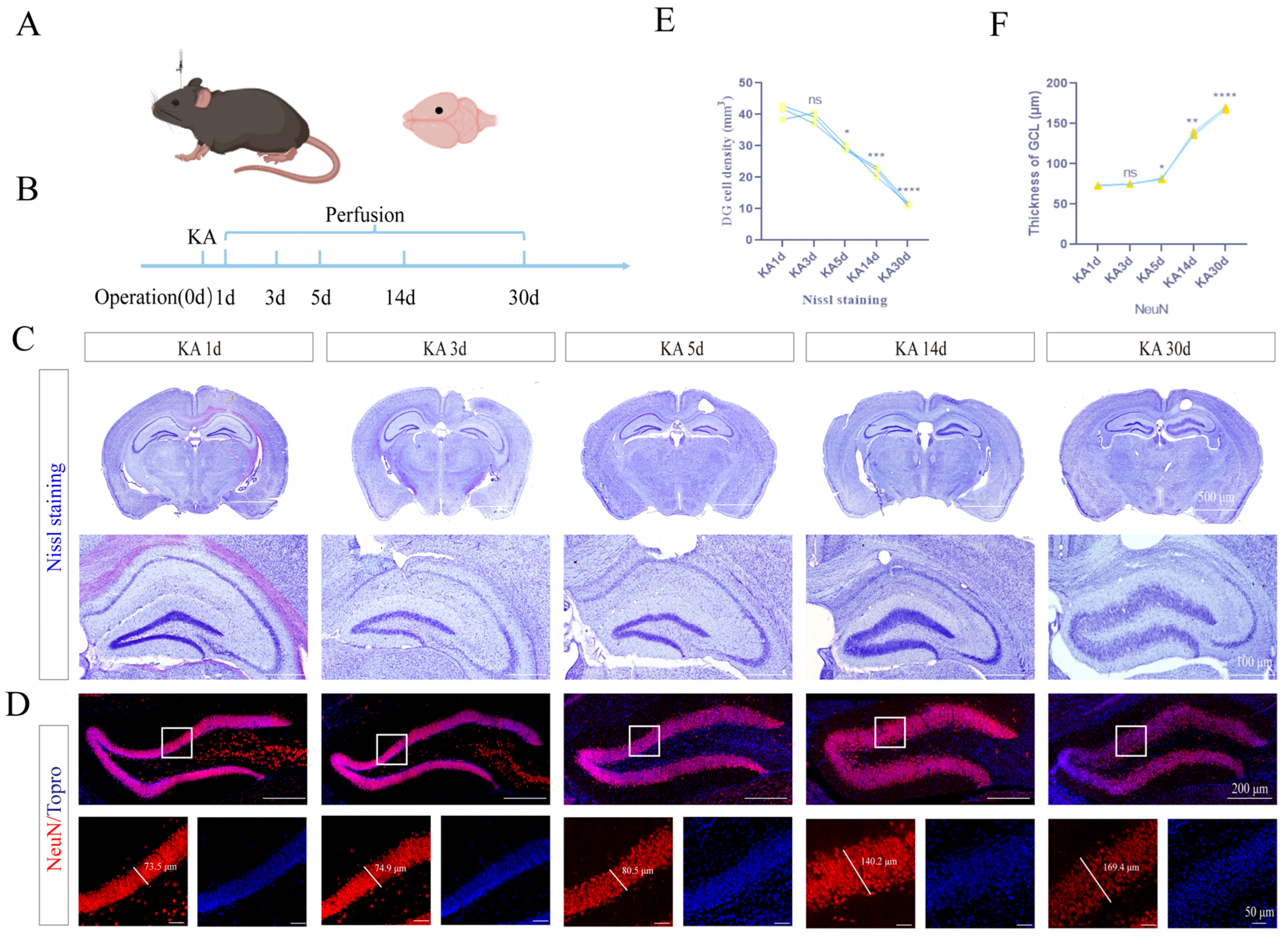
3.1. Temporal Dynamics of Dentate Gyrus Remodeling in the KA-Induced TLE Model and Selection of an Early Intervention Time Point
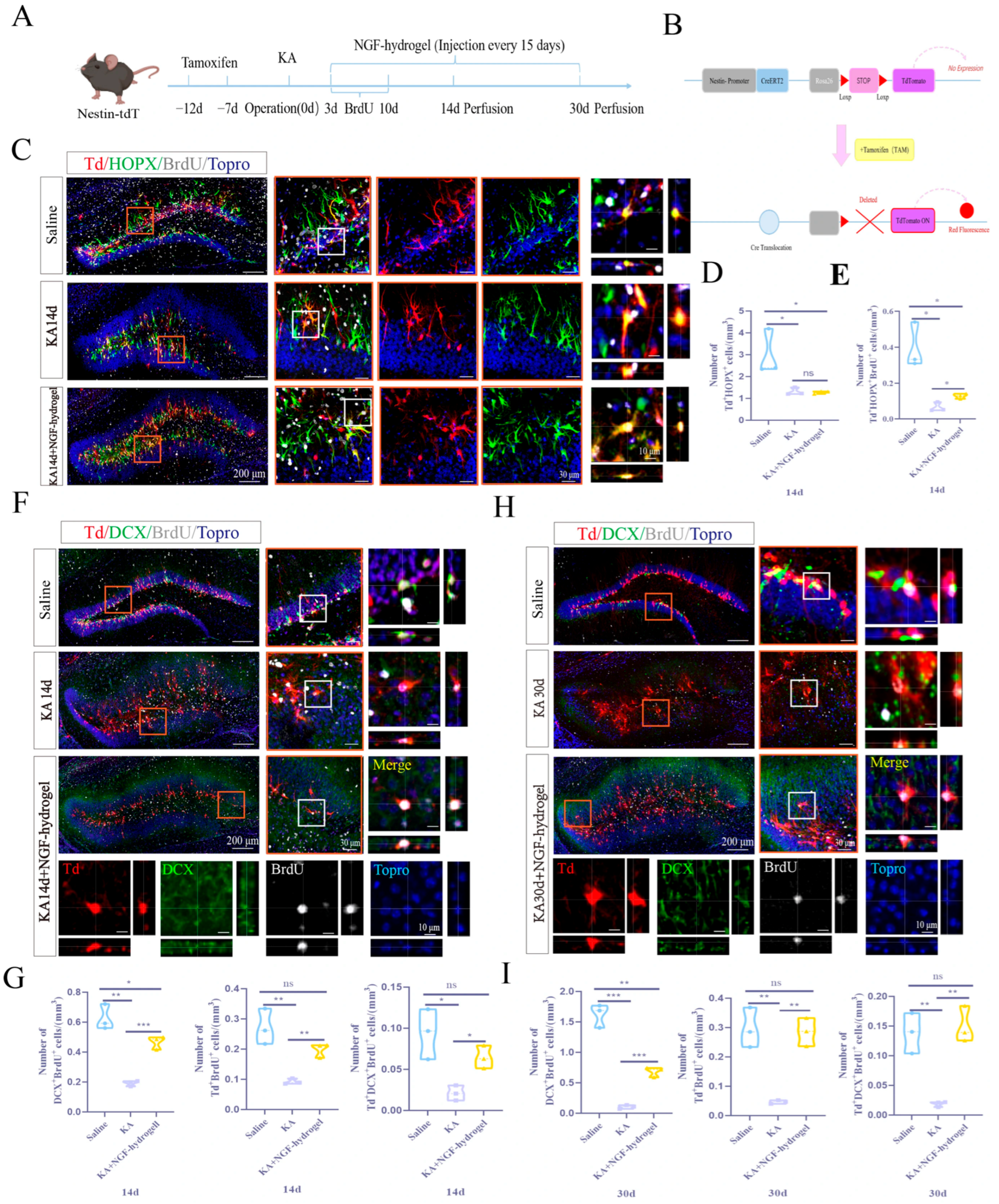
3.2. NGF-Hydrogel Is Associated with Preservation of Dentate Gyrus Stem Cell-Related Populations and Improved Positioning of Newborn Neurons After Epilepsy
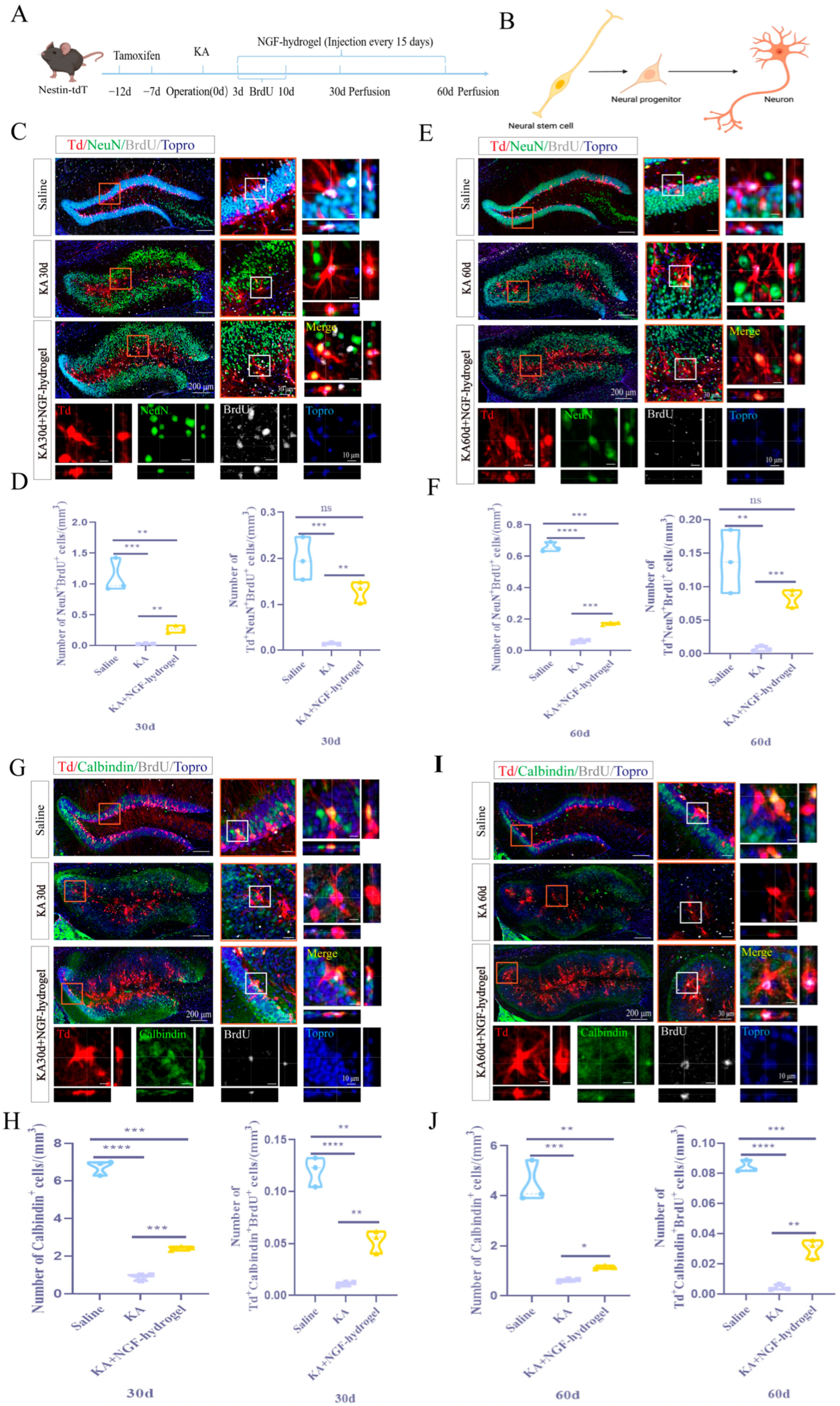
3.3. NGF-Hydrogel Promotes Maturation-Related Phenotypes and Long-Term Retention of Newborn Neurons After Epilepsy
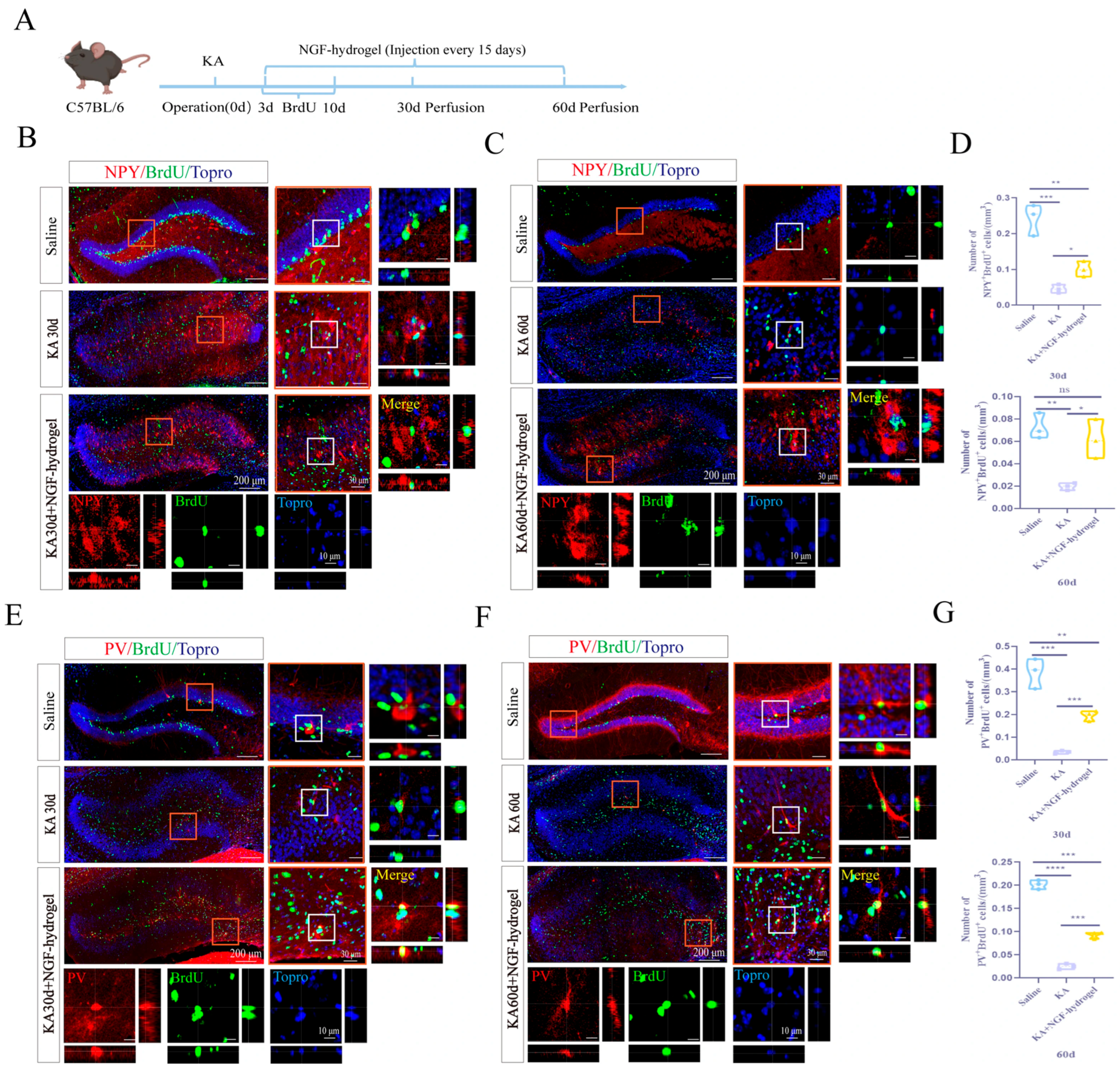
3.4. NGF-Hydrogel Is Associated with Preservation of NPY+ and PV+ Interneuron-Related Markers After Epilepsy
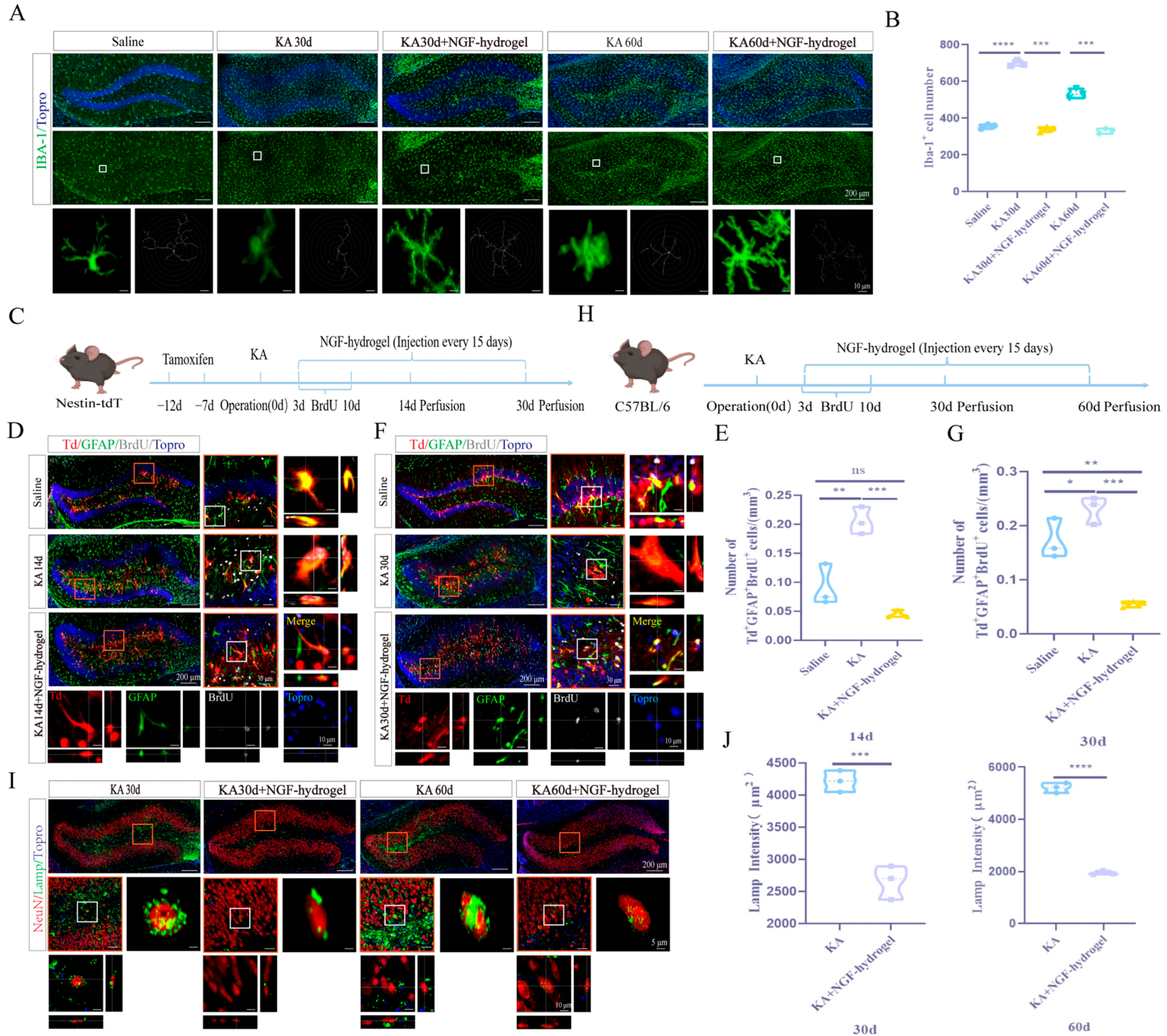
3.5. NGF-Hydrogel Attenuates Microglial Activation, GFAP-Related Changes, and Neuronal Lamp1-Associated Burden After Epilepsy
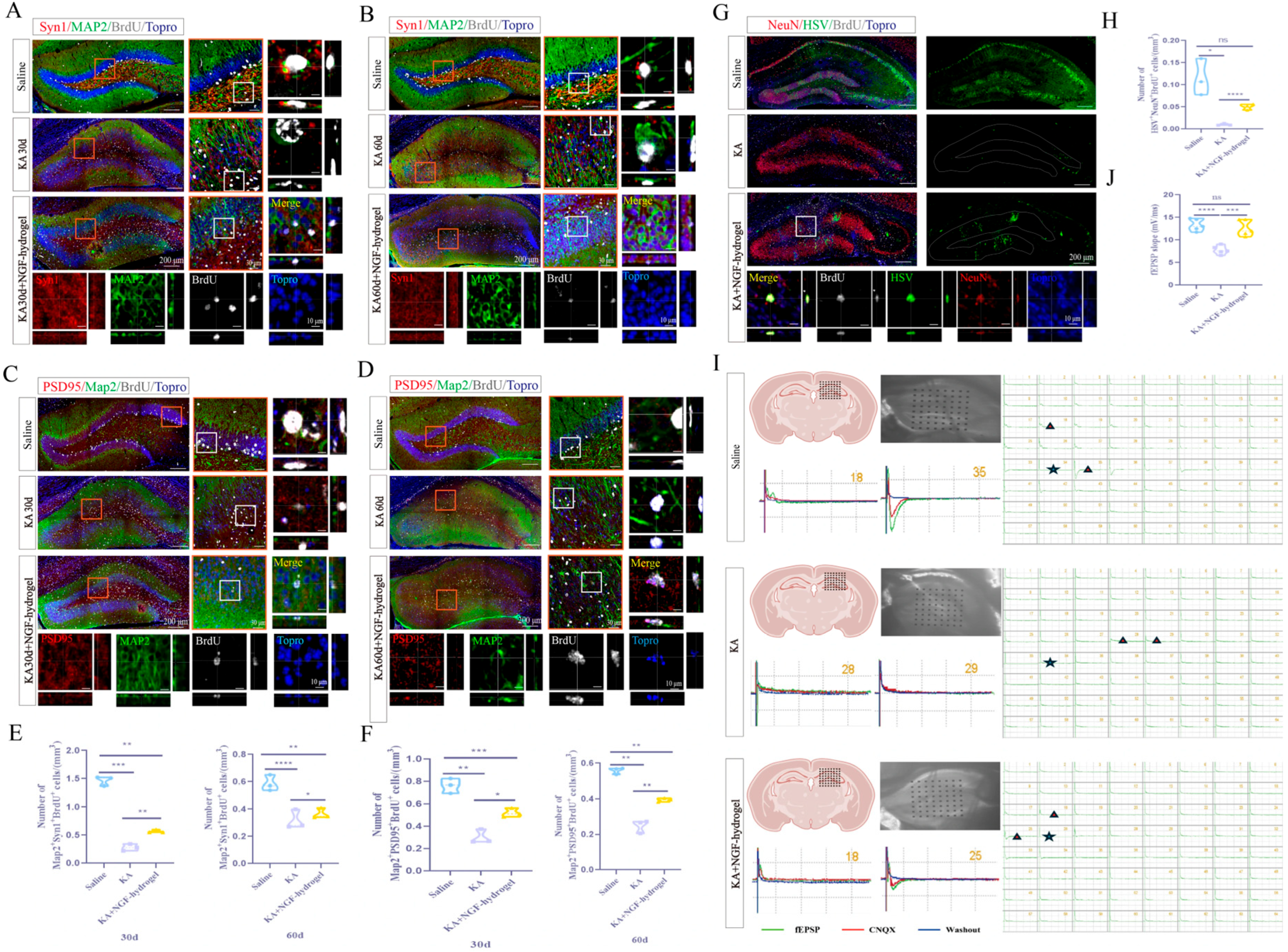
3.6. NGF-Hydrogel Improves Synaptic and Circuit-Related Readouts After Epilepsy
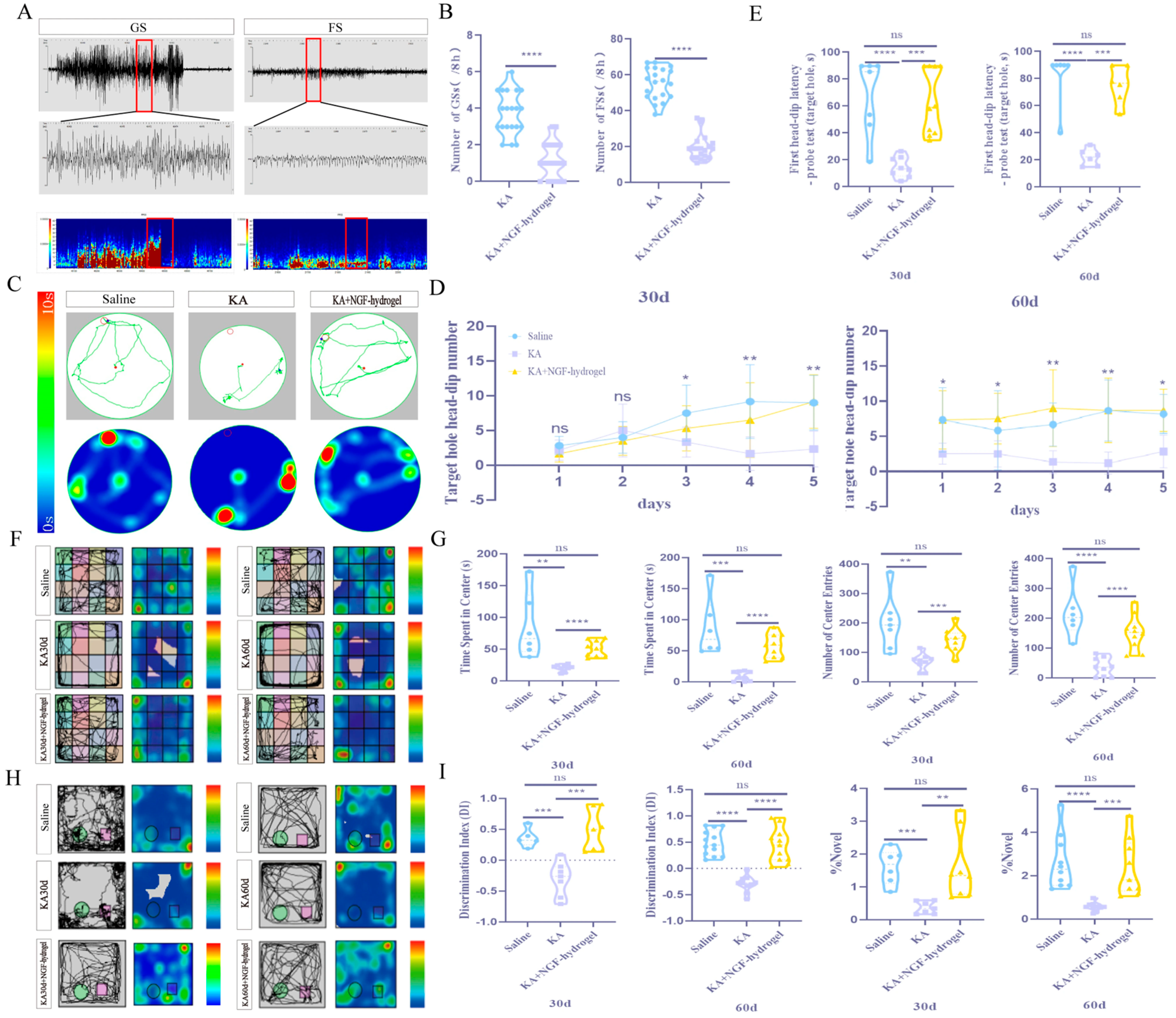
3.7. NGF-Hydrogel Reduces Chronic Seizure Burden and Improves Affective and Cognitive Behavioral Outcomes After Epilepsy
4. Discussion
Author Contributions
Funding
Institutional Review Board Statement
Informed Consent Statement
Data Availability Statement
Conflicts of Interest
Abbreviations
| ACSF | Artificial cerebrospinal fluid |
| BrdU | 5-bromo-2′-deoxyuridine |
| Calbindin | Calbindin-D28k |
| CNQX | 6-cyano-7-nitroquinoxaline-2,3-dione |
| DCX | Doublecortin |
| DG | Dentate Gyrus |
| DI | Discrimination Index |
| EC | Entorhinal Cortex |
| EEG | Electroencephalography |
| fEPSP | Field Excitatory Postsynaptic Potential |
| FS | Focal Seizure |
| GCD | Granule Cell Dispersion |
| GCL | Granule Cell Layer |
| GFAP | Glial Fibrillary Acidic Protein |
| GS | Generalized Seizure |
| HOPX | Homeodomain-Only Protein |
| IBA-1 | Ionized calcium-Binding Adapter molecule 1 |
| KA | Kainic Acid |
| Lamp1 | Lysosomal-Associated Membrane Protein 1 |
| Map2 | Microtubule-Associated Protein 2 |
| MEA | Multielectrode Array |
| NeuN | Neuronal Nuclei |
| NGF | Nerve Growth Factor |
| NOR | Novel Object Recognition |
| NPY | Neuropeptide Y |
| NSC | Neural Stem Cell |
| OFT | Open Field Test |
| PSD95 | postsynaptic density protein 95 |
| PV | parvalbumin |
| SE | Status Epilepticus |
| SGZ | Subgranular Zone |
| Syn1 | synapsin 1 |
| Td | tdTomato |
| TLE | temporal lobe epilepsy |
| TTX | tetrodotoxin |
References
- Lein, P.J.; Barnhart, C.D.; Pessah, I.N. Acute hippocampal slice preparation and hippocampal slice cultures. Methods Mol. Biol. 2011, 758, 115–134. [Google Scholar] [CrossRef]
- Sparks, F.T.; Liao, Z.; Li, W.; Grosmark, A.; Soltesz, I.; Losonczy, A. Hippocampal adult-born granule cells drive network activity in a mouse model of chronic temporal lobe epilepsy. Nat. Commun. 2020, 11, 6138. [Google Scholar] [CrossRef] [PubMed]
- Vinti, V.; Dell’Isola, G.B.; Tascini, G.; Mencaroni, E.; Cara, G.D.; Striano, P.; Verrotti, A. Temporal Lobe Epilepsy and Psychiatric Comorbidity. Front. Neurol. 2021, 12, 775781. [Google Scholar] [CrossRef] [PubMed]
- Villamizar-Torres, D.; Cepeda Trillos, A.C.; Vargas-Moreno, A. Mesial temporal sclerosis and epilepsy: A narrative review. Acta Epileptol. 2024, 6, 28. [Google Scholar] [CrossRef] [PubMed]
- Chen, Z.; Brodie, M.J.; Liew, D.; Kwan, P. Treatment Outcomes in Patients with Newly Diagnosed Epilepsy Treated with Established and New Antiepileptic Drugs: A 30-Year Longitudinal Cohort Study. JAMA Neurol. 2018, 75, 279–286. [Google Scholar] [CrossRef]
- Leitch, B. Parvalbumin Interneuron Dysfunction in Neurological Disorders: Focus on Epilepsy and Alzheimer’s Disease. Int. J. Mol. Sci. 2024, 25, 5549. [Google Scholar] [CrossRef]
- Cattaneo, S.; Verlengia, G.; Marino, P.; Simonato, M.; Bettegazzi, B. NPY and Gene Therapy for Epilepsy: How, When,... and Y. Front. Mol. Neurosci. 2020, 13, 608001. [Google Scholar] [CrossRef]
- Godoy, L.D.; Prizon, T.; Rossignoli, M.T.; Leite, J.P.; Liberato, J.L. Parvalbumin Role in Epilepsy and Psychiatric Comorbidities: From Mechanism to Intervention. Front. Integr. Neurosci. 2022, 16, 765324. [Google Scholar] [CrossRef]
- Wickham, J.; Ledri, M.; Bengzon, J.; Jespersen, B.; Pinborg, L.H.; Englund, E.; Woldbye, D.P.D.; Andersson, M.; Kokaia, M. Inhibition of epileptiform activity by neuropeptide Y in brain tissue from drug-resistant temporal lobe epilepsy patients. Sci. Rep. 2019, 9, 19393. [Google Scholar] [CrossRef]
- Cho, K.O.; Lybrand, Z.R.; Ito, N.; Brulet, R.; Tafacory, F.; Zhang, L.; Good, L.; Ure, K.; Kernie, S.G.; Birnbaum, S.G.; et al. Aberrant hippocampal neurogenesis contributes to epilepsy and associated cognitive decline. Nat. Commun. 2015, 6, 6606. [Google Scholar] [CrossRef]
- Ammothumkandy, A.; Ravina, K.; Wolseley, V.; Tartt, A.N.; Yu, P.N.; Corona, L.; Zhang, N.; Nune, G.; Kalayjian, L.; Mann, J.J.; et al. Altered adult neurogenesis and gliogenesis in patients with mesial temporal lobe epilepsy. Nat. Neurosci. 2022, 25, 493–503. [Google Scholar] [CrossRef]
- Chen, L.; Xu, Y.; Cheng, H.; Li, Z.; Lai, N.; Li, M.; Ruan, Y.; Zheng, Y.; Fei, F.; Xu, C.; et al. Adult-born neurons in critical period maintain hippocampal seizures via local aberrant excitatory circuits. Signal Transduct. Target. Ther. 2023, 8, 225. [Google Scholar] [CrossRef]
- Schartz, N.D.; Wyatt-Johnson, S.K.; Price, L.R.; Colin, S.A.; Brewster, A.L. Status epilepticus triggers long-lasting activation of complement C1q-C3 signaling in the hippocampus that correlates with seizure frequency in experimental epilepsy. Neurobiol. Dis. 2018, 109, 163–173. [Google Scholar] [CrossRef] [PubMed]
- Jiang, G.T.; Shao, L.; Kong, S.; Zeng, M.L.; Cheng, J.J.; Chen, T.X.; Han, S.; Yin, J.; Liu, W.H.; He, X.H.; et al. Complement C3 Aggravates Post-epileptic Neuronal Injury Via Activation of TRPV1. Neurosci. Bull. 2021, 37, 1427–1440. [Google Scholar] [CrossRef]
- Conroy, J.N.; Coulson, E.J. High-affinity TrkA and p75 neurotrophin receptor complexes: A twisted affair. J. Biol. Chem. 2022, 298, 101568. [Google Scholar] [CrossRef]
- Nordvall, G.; Forsell, P.; Sandin, J. Neurotrophin-targeted therapeutics: A gateway to cognition and more? Drug Discov. Today 2022, 27, 103318. [Google Scholar] [CrossRef]
- Gall, C.M.; Isackson, P.J. Limbic seizures increase neuronal production of messenger RNA for nerve growth factor. Science 1989, 245, 758–761. [Google Scholar] [CrossRef]
- Lagostena, L.; Rosato-Siri, M.; D’Onofrio, M.; Brandi, R.; Arisi, I.; Capsoni, S.; Franzot, J.; Cattaneo, A.; Cherubini, E. In the adult hippocampus, chronic nerve growth factor deprivation shifts GABAergic signaling from the hyperpolarizing to the depolarizing direction. J. Neurosci. 2010, 30, 885–893. [Google Scholar] [CrossRef]
- Eu, W.Z.; Chen, Y.J.; Chen, W.T.; Wu, K.Y.; Tsai, C.Y.; Cheng, S.J.; Carter, R.N.; Huang, G.J. The effect of nerve growth factor on supporting spatial memory depends upon hippocampal cholinergic innervation. Transl. Psychiatry 2021, 11, 162. [Google Scholar] [CrossRef] [PubMed]
- Chao, M.V. The p75 neurotrophin receptor. J. Neurobiol. 1994, 25, 1373–1385. [Google Scholar] [CrossRef] [PubMed]
- Politron-Zepeda, G.A.; Fletes-Vargas, G.; Rodriguez-Rodriguez, R. Injectable Hydrogels for Nervous Tissue Repair-A Brief Review. Gels 2024, 10, 190. [Google Scholar] [CrossRef]
- Grimaudo, M.A.; Krishnakumar, G.S.; Giusto, E.; Furlani, F.; Bassi, G.; Rossi, A.; Molinari, F.; Lista, F.; Montesi, M.; Panseri, S. Bioactive injectable hydrogels for on demand molecule/cell delivery and for tissue regeneration in the central nervous system. Acta Biomater. 2022, 140, 88–101. [Google Scholar] [CrossRef]
- Farasati Far, B.; Safaei, M.; Nahavandi, R.; Gholami, A.; Naimi-Jamal, M.R.; Tamang, S.; Ahn, J.E.; Ramezani Farani, M.; Huh, Y.S. Hydrogel Encapsulation Techniques and Its Clinical Applications in Drug Delivery and Regenerative Medicine: A Systematic Review. ACS Omega 2024, 9, 29139–29158. [Google Scholar] [CrossRef] [PubMed]
- Jiang, H.; Luo, X.; Li, H.; Guo, Z.; Cao, Y.; Yang, L.; Wu, H.; Li, P. Dynamic management of traumatic brain injury in rat: Injectable hydrogels and future directions. Front. Neurol. 2026, 17, 1824220. [Google Scholar] [CrossRef] [PubMed]
- Dugan, L.L.; Creedon, D.J.; Johnson, E.M.; Holtzman, D.M. Rapid suppression of free radical formation by nerve growth factor involves the mitogen-activated protein kinase pathway. Proc. Natl. Acad. Sci. USA 1997, 94, 4086–4091. [Google Scholar] [CrossRef]
- Tuszynski, M.H.; Thal, L.; Pay, M.; Salmon, D.P.; U, H.S.; Bakay, R.; Patel, P.; Blesch, A.; Vahlsing, H.L.; Ho, G.; et al. A phase 1 clinical trial of nerve growth factor gene therapy for Alzheimer disease. Nat. Med. 2005, 11, 551–555. [Google Scholar] [CrossRef] [PubMed]
- Bielefeld, P.; Sierra, A.; Encinas, J.M.; Maletic-Savatic, M.; Anderson, A.; Fitzsimons, C.P. A Standardized Protocol for Stereotaxic Intrahippocampal Administration of Kainic Acid Combined with Electroencephalographic Seizure Monitoring in Mice. Front. Neurosci. 2017, 11, 160. [Google Scholar] [CrossRef]
- Rusina, E.; Bernard, C.; Williamson, A. The Kainic Acid Models of Temporal Lobe Epilepsy. eNeuro 2021, 8, 1–24. [Google Scholar] [CrossRef]
- Bach-Hagemann, A.; Harder, E.; Warner, L.; Conzen-Dilger, C.; Schmidt, T.P.; Pinkernell, S.; Palme, R.; Lindauer, U. Severity Assessment in Rats Undergoing Subarachnoid Hemorrhage Induction by Endovascular Perforation or Corresponding Sham Surgery. Eur. Surg. Res. 2023, 64, 120–138. [Google Scholar] [CrossRef]
- Oh, S.S.; Narver, H.L. Mouse and Rat Anesthesia and Analgesia. Curr. Protoc. 2024, 4, e995. [Google Scholar] [CrossRef]
- Bouillereta, V.; Depaulis, A.; Marescaux, C.; Nehlig, A.; Le Gal La Salle, G. Recurrent seizures and hippocampal sclerosis following intrahippocampal kainate injection in adult mice: Electroencephalography, histopathology and synaptic reorganization similar to mesial temporal lobe epilepsy. Neuroscience 1999, 89, 717–729. [Google Scholar] [CrossRef]
- Sun, N.; Cassell, M.D.; Perlman, S. Anterograde, transneuronal transport of herpes simplex virus type 1 strain H129 in the murine visual system. J. Virol. 1996, 70, 5405–5413. [Google Scholar] [CrossRef]
- Yang, H.; Xiong, F.; Song, Y.G.; Jiang, H.F.; Qin, H.B.; Zhou, J.; Lu, S.; Grieco, S.F.; Xu, X.; Zeng, W.B.; et al. HSV-1 H129-Derived Anterograde Neural Circuit Tracers: Improvements, Production, and Applications. Neurosci. Bull. 2021, 37, 701–719. [Google Scholar] [CrossRef] [PubMed]
- Lagace, D.C.; Whitman, M.C.; Noonan, M.A.; Ables, J.L.; DeCarolis, N.A.; Arguello, A.A.; Donovan, M.H.; Fischer, S.J.; Farnbauch, L.A.; Beech, R.D.; et al. Dynamic contribution of nestin-expressing stem cells to adult neurogenesis. J. Neurosci. 2007, 27, 12623–12629. [Google Scholar] [CrossRef] [PubMed]
- Fu, X.; Huang, Y.P.; Lindeman, S.; Mago, A.; Fukunaga, I. Dense and Sparse Labelling of Mitral Cells by Oral and Intraperitoneal Routes of Tamoxifen Administration. Methods Mol. Biol. 2023, 2710, 185–193. [Google Scholar] [CrossRef] [PubMed]
- Rotheneichner, P.; Romanelli, P.; Bieler, L.; Pagitsch, S.; Zaunmair, P.; Kreutzer, C.; Konig, R.; Marschallinger, J.; Aigner, L.; Couillard-Despres, S. Tamoxifen Activation of Cre-Recombinase Has No Persisting Effects on Adult Neurogenesis or Learning and Anxiety. Front. Neurosci. 2017, 11, 27. [Google Scholar] [CrossRef]
- Oka, H.; Shimono, K.; Ogawa, R.; Sugihara, H.; Taketani, M. A new planar multielectrode array for extracellular recording: Application to hippocampal acute slice. J. Neurosci. Methods 1999, 93, 61–67. [Google Scholar] [CrossRef]
- Seibenhener, M.L.; Wooten, M.C. Use of the Open Field Maze to measure locomotor and anxiety-like behavior in mice. J. Vis. Exp. 2015, 6, e52434. [Google Scholar]
- Leger, M.; Quiedeville, A.; Bouet, V.; Haelewyn, B.; Boulouard, M.; Schumann-Bard, P.; Freret, T. Object recognition test in mice. Nat. Protoc. 2013, 8, 2531–2537. [Google Scholar] [CrossRef]
- O’Leary, T.P.; Brown, R.E. Optimization of apparatus design and behavioral measures for the assessment of visuo-spatial learning and memory of mice on the Barnes maze. Learn. Mem. 2013, 20, 85–96. [Google Scholar] [CrossRef]
- Bouilleret, V.; Boyet, S.; Marescaux, C.; Nehlig, A. Mapping of the progressive metabolic changes occurring during the development of hippocampal sclerosis in a model of mesial temporal lobe epilepsy. Brain Res. 2000, 852, 255–262. [Google Scholar] [CrossRef] [PubMed]
- Levesque, M.; Avoli, M. The kainic acid model of temporal lobe epilepsy. Neurosci. Biobehav. Rev. 2013, 37, 2887–2899. [Google Scholar] [CrossRef] [PubMed]
- Gorantla, V.R.; Pemminati, S.; Bond, V.; Meyers, D.G.; Millis, R.M. Effects of Swimming Exercise on Learning and Memory in the Kainate-Lesion Model of Temporal Lobe Epilepsy. J. Clin. Diagn. Res. 2016, 10, CF01–CF05. [Google Scholar] [CrossRef]
- Racine, R.J. Modification of seizure activity by electrical stimulation. II. Motor seizure. Electroencephalogr. Clin. Neurophysiol. 1972, 32, 281–294. [Google Scholar] [CrossRef]
- Post, J.M.; Loch, S.; Lerner, R.; Remmers, F.; Lomazzo, E.; Lutz, B.; Bindila, L. Antiepileptogenic Effect of Subchronic Palmitoylethanolamide Treatment in a Mouse Model of Acute Epilepsy. Front. Mol. Neurosci. 2018, 11, 67. [Google Scholar] [CrossRef] [PubMed]
- Murphy, B.L.; Danzer, S.C. Somatic translocation: A novel mechanism of granule cell dendritic dysmorphogenesis and dispersion. J. Neurosci. 2011, 31, 2959–2964. [Google Scholar] [CrossRef]
- Shima, A.; Nitta, N.; Suzuki, F.; Laharie, A.M.; Nozaki, K.; Depaulis, A. Activation of mTOR signaling pathway is secondary to neuronal excitability in a mouse model of mesio-temporal lobe epilepsy. Eur. J. Neurosci. 2015, 41, 976–988. [Google Scholar] [CrossRef]
- Jessberger, S.; Parent, J.M. Epilepsy and Adult Neurogenesis. Cold Spring Harb. Perspect. Biol. 2015, 7, a020677. [Google Scholar]
- Danzer, S.C. Adult Neurogenesis in the Development of Epilepsy. Epilepsy Curr. 2019, 19, 316–320. [Google Scholar] [CrossRef]
- DeCarolis, N.A.; Mechanic, M.; Petrik, D.; Carlton, A.; Ables, J.L.; Malhotra, S.; Bachoo, R.; Gotz, M.; Lagace, D.C.; Eisch, A.J. In vivo contribution of nestin- and GLAST-lineage cells to adult hippocampal neurogenesis. Hippocampus 2013, 23, 708–719. [Google Scholar] [CrossRef]
- Li, D.; Takeda, N.; Jain, R.; Manderfield, L.J.; Liu, F.; Li, L.; Anderson, S.A.; Epstein, J.A. Hopx distinguishes hippocampal from lateral ventricle neural stem cells. Stem Cell Res. 2015, 15, 522–529. [Google Scholar] [CrossRef] [PubMed]
- Sierra, A.; Martin-Suarez, S.; Valcarcel-Martin, R.; Pascual-Brazo, J.; Aelvoet, S.A.; Abiega, O.; Deudero, J.J.; Brewster, A.L.; Bernales, I.; Anderson, A.E.; et al. Neuronal hyperactivity accelerates depletion of neural stem cells and impairs hippocampal neurogenesis. Cell Stem Cell 2015, 16, 488–503. [Google Scholar] [CrossRef] [PubMed]
- Kasahara, Y.; Nakashima, H.; Nakashima, K. Seizure-induced hilar ectopic granule cells in the adult dentate gyrus. Front. Neurosci. 2023, 17, 1150283. [Google Scholar] [CrossRef] [PubMed]
- Overstreet-Wadiche, L.S.; Bromberg, D.A.; Bensen, A.L.; Westbrook, G.L. Seizures accelerate functional integration of adult-generated granule cells. J. Neurosci. 2006, 26, 4095–4103. [Google Scholar] [CrossRef]
- Kuipers, S.D.; Tiron, A.; Soule, J.; Messaoudi, E.; Trentani, A.; Bramham, C.R. Selective survival and maturation of adult-born dentate granule cells expressing the immediate early gene Arc/Arg3.1. PLoS ONE 2009, 4, e4885. [Google Scholar] [CrossRef]
- Scharfman, H.E. The Dentate Gyrus and Temporal Lobe Epilepsy: An “Exciting” Era. Epilepsy Curr. 2019, 19, 249–255. [Google Scholar] [CrossRef]
- Althaus, A.L.; Moore, S.J.; Zhang, H.; Du, X.; Murphy, G.G.; Parent, J.M. Altered Synaptic Drive onto Birthdated Dentate Granule Cells in Experimental Temporal Lobe Epilepsy. J. Neurosci. 2019, 39, 7604–7614. [Google Scholar] [CrossRef]
- Lybrand, Z.R.; Goswami, S.; Zhu, J.; Jarzabek, V.; Merlock, N.; Aktar, M.; Smith, C.; Zhang, L.; Varma, P.; Cho, K.O.; et al. A critical period of neuronal activity results in aberrant neurogenesis rewiring hippocampal circuitry in a mouse model of epilepsy. Nat. Commun. 2021, 12, 1423. [Google Scholar] [CrossRef]
- Hofmann, G.; Balgooyen, L.; Mattis, J.; Deisseroth, K.; Buckmaster, P.S. Hilar somatostatin interneuron loss reduces dentate gyrus inhibition in a mouse model of temporal lobe epilepsy. Epilepsia 2016, 57, 977–983, Erratum in Epilepsia 2016, 57, 1946.. [Google Scholar] [CrossRef]
- Sun, C.; Mtchedlishvili, Z.; Bertram, E.H.; Erisir, A.; Kapur, J. Selective loss of dentate hilar interneurons contributes to reduced synaptic inhibition of granule cells in an electrical stimulation-based animal model of temporal lobe epilepsy. J. Comp. Neurol. 2007, 500, 876–893. [Google Scholar] [CrossRef]
- Drexel, M.; Romanov, R.A.; Wood, J.; Weger, S.; Heilbronn, R.; Wulff, P.; Tasan, R.O.; Harkany, T.; Sperk, G. Selective Silencing of Hippocampal Parvalbumin Interneurons Induces Development of Recurrent Spontaneous Limbic Seizures in Mice. J. Neurosci. 2017, 37, 8166–8179. [Google Scholar] [CrossRef]
- Hiragi, T.; Ikegaya, Y.; Koyama, R. Microglia after Seizures and in Epilepsy. Cells 2018, 7, 26. [Google Scholar] [CrossRef]
- Andoh, M.; Ikegaya, Y.; Koyama, R. Synaptic Pruning by Microglia in Epilepsy. J. Clin. Med. 2019, 8, 2170. [Google Scholar] [CrossRef]
- Jakubs, K.; Nanobashvili, A.; Bonde, S.; Ekdahl, C.T.; Kokaia, Z.; Kokaia, M.; Lindvall, O. Environment matters: Synaptic properties of neurons born in the epileptic adult brain develop to reduce excitability. Neuron 2006, 52, 1047–1059. [Google Scholar] [CrossRef]
- Zhu, Y.; Armstrong, J.N.; Contractor, A. Kainate receptors regulate the functional properties of young adult-born dentate granule cells. Cell Rep. 2021, 36, 109751. [Google Scholar] [CrossRef]
- Xiong, F.; Yang, H.; Song, Y.G.; Qin, H.B.; Zhang, Q.Y.; Huang, X.; Jing, W.; Deng, M.; Liu, Y.; Liu, Z.; et al. An HSV-1-H129 amplicon tracer system for rapid and efficient monosynaptic anterograde neural circuit tracing. Nat. Commun. 2022, 13, 7645. [Google Scholar] [CrossRef]
- Gunn, B.G.; Pruess, B.S.; Gall, C.M.; Lynch, G. Input/Output Relationships for the Primary Hippocampal Circuit. J. Neurosci. 2025, 45, e0130242024. [Google Scholar] [CrossRef]
- Williams, P.A.; White, A.M.; Clark, S.; Ferraro, D.J.; Swiercz, W.; Staley, K.J.; Dudek, F.E. Development of spontaneous recurrent seizures after kainate-induced status epilepticus. J. Neurosci. 2009, 29, 2103–2112. [Google Scholar] [CrossRef]
- Puttachary, S.; Sharma, S.; Tse, K.; Beamer, E.; Sexton, A.; Crutison, J.; Thippeswamy, T. Immediate Epileptogenesis after Kainate-Induced Status Epilepticus in C57BL/6J Mice: Evidence from Long Term Continuous Video-EEG Telemetry. PLoS ONE 2015, 10, e0131705. [Google Scholar] [CrossRef]
- Pitts, M.W. Barnes Maze Procedure for Spatial Learning and Memory in Mice. Bio Protoc. 2018, 8, e2744. [Google Scholar] [CrossRef]
- Van Den Herrewegen, Y.; Denewet, L.; Buckinx, A.; Albertini, G.; Van Eeckhaut, A.; Smolders, I.; De Bundel, D. The Barnes Maze Task Reveals Specific Impairment of Spatial Learning Strategy in the Intrahippocampal Kainic Acid Model for Temporal Lobe Epilepsy. Neurochem. Res. 2019, 44, 600–608. [Google Scholar] [CrossRef]
- Samalens, L.; Beets, C.; Courivaud, C.; Kahane, P.; Depaulis, A. Comorbidities in the mouse model of temporal lobe epilepsy induced by intrahippocampal kainate. Epilepsia 2025, 66, 4525–4537. [Google Scholar] [CrossRef]
- Groticke, I.; Hoffmann, K.; Loscher, W. Behavioral alterations in a mouse model of temporal lobe epilepsy induced by intrahippocampal injection of kainate. Exp. Neurol. 2008, 213, 71–83. [Google Scholar] [CrossRef]
- Muller, C.J.; Groticke, I.; Bankstahl, M.; Loscher, W. Behavioral and cognitive alterations, spontaneous seizures, and neuropathology developing after a pilocarpine-induced status epilepticus in C57BL/6 mice. Exp. Neurol. 2009, 219, 284–297. [Google Scholar] [CrossRef]
- Wulsin, A.C.; Franco-Villanueva, A.; Romancheck, C.; Morano, R.L.; Smith, B.L.; Packard, B.A.; Danzer, S.C.; Herman, J.P. Functional disruption of stress modulatory circuits in a model of temporal lobe epilepsy. PLoS ONE 2018, 13, e0197955. [Google Scholar] [CrossRef]
- Inostroza, M.; Brotons-Mas, J.R.; Laurent, F.; Cid, E.; de la Prida, L.M. Specific impairment of “what-where-when” episodic-like memory in experimental models of temporal lobe epilepsy. J. Neurosci. 2013, 33, 17749–17762. [Google Scholar] [CrossRef]
- Pearson, J.N.; Schulz, K.M.; Patel, M. Specific alterations in the performance of learning and memory tasks in models of chemoconvulsant-induced status epilepticus. Epilepsy Res. 2014, 108, 1032–1040. [Google Scholar] [CrossRef]
- Robel, S. Astroglial Scarring and Seizures: A Cell Biological Perspective on Epilepsy. Neuroscientist 2017, 23, 152–168. [Google Scholar] [CrossRef]
- Wyatt, S.K.; Witt, T.; Barbaro, N.M.; Cohen-Gadol, A.A.; Brewster, A.L. Enhanced classical complement pathway activation and altered phagocytosis signaling molecules in human epilepsy. Exp. Neurol. 2017, 295, 184–193. [Google Scholar] [CrossRef]
- Saunders, P.T.K.; Horne, A.W. Endometriosis: Etiology, pathobiology, and therapeutic prospects. Cell 2021, 184, 2807–2824. [Google Scholar] [CrossRef]
- Cobourn, K.; Fayed, I.; Keating, R.F.; Oluigbo, C.O. Early outcomes of stereoelectroencephalography followed by MR-guided laser interstitial thermal therapy: A paradigm for minimally invasive epilepsy surgery. Neurosurg. Focus 2018, 45, E8. [Google Scholar] [CrossRef]
- Cercel, A.-M.; Boboc, I.K.S.; Surugiu, R.; Doeppner, T.R.; Hermann, D.M.; Catalin, B.; Gresita, A.; Popa-Wagner, A. Grafts of hydrogel-embedded electrically stimulated subventricular stem cells into the stroke cavity improves functional recovery of mice. Neural Regen. Res. 2026, 21, 695–703. [Google Scholar] [CrossRef]



Disclaimer/Publisher’s Note: The statements, opinions and data contained in all publications are solely those of the individual author(s) and contributor(s) and not of MDPI and/or the editor(s). MDPI and/or the editor(s) disclaim responsibility for any injury to people or property resulting from any ideas, methods, instructions or products referred to in the content. |
© 2026 by the authors. Licensee MDPI, Basel, Switzerland. This article is an open access article distributed under the terms and conditions of the Creative Commons Attribution (CC BY) license.
Share and Cite
Bai, Y.; Chen, K.; Yao, T.; Shi, S.; Duan, H.; Hao, P.; Zhao, W.; Gao, Y.; Li, X.; Yang, Z. NGF-Hydrogel Ameliorates Aberrant Adult Hippocampal Neurogenesis and Improves Hippocampal Remodeling After Epilepsy. Curr. Issues Mol. Biol. 2026, 48, 608. https://doi.org/10.3390/cimb48060608
Bai Y, Chen K, Yao T, Shi S, Duan H, Hao P, Zhao W, Gao Y, Li X, Yang Z. NGF-Hydrogel Ameliorates Aberrant Adult Hippocampal Neurogenesis and Improves Hippocampal Remodeling After Epilepsy. Current Issues in Molecular Biology. 2026; 48(6):608. https://doi.org/10.3390/cimb48060608
Chicago/Turabian StyleBai, Yuanyuan, Kangzhen Chen, Taojie Yao, Shengbo Shi, Hongmei Duan, Peng Hao, Wen Zhao, Yudan Gao, Xiaoguang Li, and Zhaoyang Yang. 2026. "NGF-Hydrogel Ameliorates Aberrant Adult Hippocampal Neurogenesis and Improves Hippocampal Remodeling After Epilepsy" Current Issues in Molecular Biology 48, no. 6: 608. https://doi.org/10.3390/cimb48060608
APA StyleBai, Y., Chen, K., Yao, T., Shi, S., Duan, H., Hao, P., Zhao, W., Gao, Y., Li, X., & Yang, Z. (2026). NGF-Hydrogel Ameliorates Aberrant Adult Hippocampal Neurogenesis and Improves Hippocampal Remodeling After Epilepsy. Current Issues in Molecular Biology, 48(6), 608. https://doi.org/10.3390/cimb48060608