
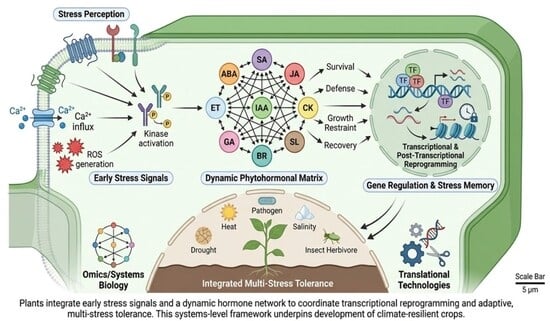
Molecular Mechanisms of Plant Stress Tolerance: From Stress Perception to Phytohormonal Crosstalk and Transcriptional Regulation



Abstract
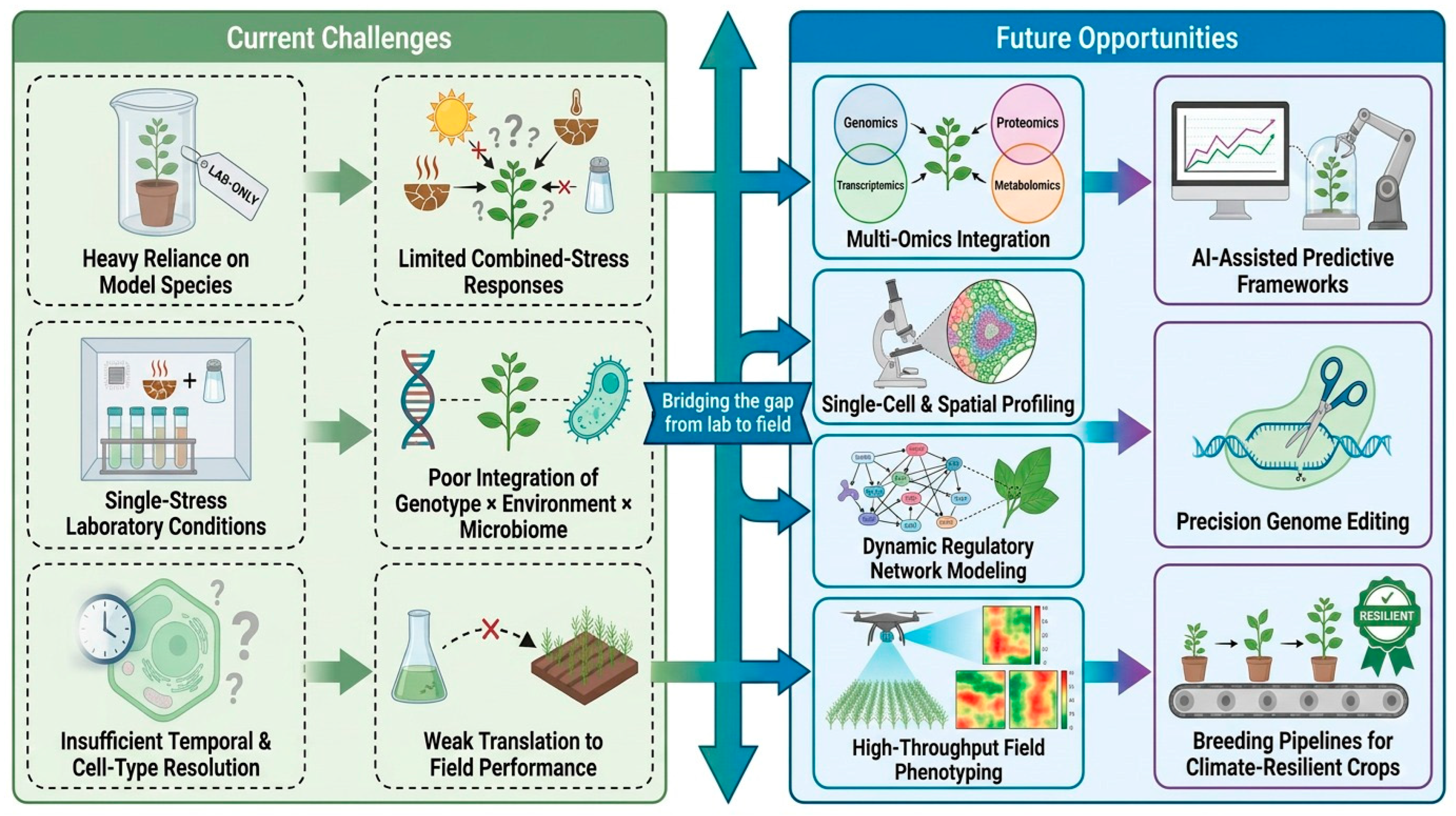
1. Introduction
2. Stress Perception and Early Signaling Networks
3. Phytohormonal Control of Plant Stress Responses
4. Phytohormonal Crosstalk in Coordinating Stress Tolerance
5. Transcriptional and Post-Transcriptional Regulation of Stress Responses
6. Integrated Molecular Mechanisms of Abiotic and Biotic Stress Tolerance
7. Emerging Omics Approaches and Translational Perspectives
8. Challenges, Knowledge Gaps, and Future Perspectives
9. Conclusions
Author Contributions
Funding
Data Availability Statement
Acknowledgments
Conflicts of Interest
References
- Karalija, E.; Ibragić, S.; Dahija, S.; Šamec, D. Transgenerational memory of phenotypic traits in plants: Epigenetic regulation of growth, hormonal balance, and stress adaptation. Curr. Issues Mol. Biol. 2025, 47, 404. [Google Scholar] [CrossRef]
- Siddique, A.B.; Parveen, S.; Rahman, M.Z.; Rahman, J. Revisiting plant stress memory: Mechanisms and contribution to stress adaptation. Physiol. Mol. Biol. Plants 2024, 30, 349–367. [Google Scholar] [CrossRef]
- Moustaka, J.; Moustakas, M. Early-stage detection of biotic and abiotic stress on plants by chlorophyll fluorescence imaging analysis. Biosensors 2023, 13, 796. [Google Scholar] [CrossRef]
- Collins, C.G.; Elmendorf, S.C.; Smith, J.G.; Shoemaker, L.; Szojka, M.; Swift, M.; Suding, K.N. Global change re-structures alpine plant communities through interacting abiotic and biotic effects. Ecol. Lett. 2022, 25, 1813–1826. [Google Scholar] [CrossRef]
- Mittal, U.; Kumar, V.; Kukreja, S.; Singh, B.; Pandey, N.K.; Goutam, U. Role of beneficial elements in developing resilience to abiotic and biotic stresses in plants: Present status and future prospects. J. Plant Growth Regul. 2023, 42, 3789–3813. [Google Scholar] [CrossRef]
- Zafar, S.; Khan, M.K.; Aslam, N.; Hasnain, Z. Impact of different stresses on morphology, physiology, and biochemistry of plants. In Molecular Dynamics of Plant Stress and Its Management; Springer: Berlin/Heidelberg, Germany, 2024; pp. 67–91. [Google Scholar]
- Ma, L.; Li, X.; Zhang, J.; Yi, D.; Li, F.; Wen, H.; Liu, W.; Wang, X. MsWRKY33 increases alfalfa (Medicago sativa L.) salt stress tolerance through altering the ROS scavenger via activating MsERF5 transcription. Plant Cell Environ. 2023, 46, 3887–3901. [Google Scholar] [CrossRef] [PubMed]
- Singh, A.K.; Pal, P.; Sahoo, U.K.; Sharma, L.; Pandey, B.; Prakash, A.; Sarangi, P.K.; Prus, P.; Pașcalău, R.; Imbrea, F. Enhancing crop resilience: The role of plant genetics, transcription factors, and next-generation sequencing in addressing salt stress. Int. J. Mol. Sci. 2024, 25, 12537. [Google Scholar] [CrossRef] [PubMed]
- Houetohossou, S.C.A.; Houndji, V.R.; Hounmenou, C.G.; Sikirou, R.; Kakaï, R.L.G. Deep learning methods for biotic and abiotic stresses detection and classification in fruits and vegetables: State of the art and perspectives. Artif. Intell. Agric. 2023, 9, 46–60. [Google Scholar] [CrossRef]
- Ali, S.; Akhtar, M.S.; Siraj, M.; Zaman, W. Molecular communication of microbial plant biostimulants in the rhizosphere under abiotic stress conditions. Int. J. Mol. Sci. 2024, 25, 12424. [Google Scholar] [CrossRef] [PubMed]
- Gull, A.; Lone, A.A.; Wani, N.U.I. Biotic and abiotic stresses in plants. In Abiotic and Biotic Stress in Plants; IntechOpen: London, UK, 2019. [Google Scholar]
- Dangi, A.K.; Sharma, B.; Khangwal, I.; Shukla, P. Combinatorial interactions of biotic and abiotic stresses in plants and their molecular mechanisms: Systems biology approach. Mol. Biotechnol. 2018, 60, 636–650. [Google Scholar] [CrossRef]
- Jalmi, S.K.; Sinha, A.K. ROS mediated MAPK signaling in abiotic and biotic stress-striking similarities and differences. Front. Plant Sci. 2015, 6, 769. [Google Scholar] [CrossRef]
- Khan, A.; Shah, S.T.; Basit, A.; Mohamed, H.I.; Li, Y. Mitogen-activated protein kinase: A potent signaling protein that combats biotic and abiotic stress in plants. J. Plant Growth Regul. 2024, 43, 1762–1786. [Google Scholar] [CrossRef]
- Abed, M.M.; Aydin, M.; Yiğider, E.; Ekinci, M.; Yildirim, E. Systematic Literature Review for Mechanisms and Costs of Plant Adaptation to Biotic and Abiotic Stresses. Phyton (0031-9457) 2025, 94, 3845. [Google Scholar] [CrossRef]
- Ali, S.; Moon, Y.-S.; Hamayun, M.; Khan, M.A.; Bibi, K.; Lee, I.-J. Pragmatic role of microbial plant biostimulants in abiotic stress relief in crop plants. J. Plant Interact. 2022, 17, 705–718. [Google Scholar] [CrossRef]
- He, M.; He, C.-Q.; Ding, N.-Z. Abiotic stresses: General defenses of land plants and chances for engineering multistress tolerance. Front. Plant Sci. 2018, 9, 1771. [Google Scholar] [CrossRef]
- Ramu, V.S.; Paramanantham, A.; Ramegowda, V.; Mohan-Raju, B.; Udayakumar, M.; Senthil-Kumar, M. Transcriptome analysis of sunflower genotypes with contrasting oxidative stress tolerance reveals individual-and combined-biotic and abiotic stress tolerance mechanisms. PLoS ONE 2016, 11, e0157522. [Google Scholar] [CrossRef]
- Ku, Y.-S.; Sintaha, M.; Cheung, M.-Y.; Lam, H.-M. Plant hormone signaling crosstalks between biotic and abiotic stress responses. Int. J. Mol. Sci. 2018, 19, 3206. [Google Scholar] [CrossRef]
- Forcat, S.; Bennett, M.H.; Mansfield, J.W.; Grant, M.R. A rapid and robust method for simultaneously measuring changes in the phytohormones ABA, JA and SA in plants following biotic and abiotic stress. Plant Methods 2008, 4, 16. [Google Scholar] [CrossRef]
- Singh, D.; Dhiman, V.K.; Pandey, H.; Dhiman, V.K.; Pandey, D. Crosstalk between salicylic acid and auxins, cytokinins and gibberellins under biotic stress. In Auxins, Cytokinins and Gibberellins Signaling in Plants; Springer: Berlin/Heidelberg, Germany, 2022; pp. 249–262. [Google Scholar]
- Liu, T.; Chen, T.; Kan, J.; Yao, Y.; Guo, D.; Yang, Y.; Ling, X.; Wang, J.; Zhang, B. The GhMYB36 transcription factor confers resistance to biotic and abiotic stress by enhancing PR1 gene expression in plants. Plant Biotechnol. J. 2022, 20, 722–735. [Google Scholar] [CrossRef]
- Yoon, Y.; Seo, D.H.; Shin, H.; Kim, H.J.; Kim, C.M.; Jang, G. The role of stress-responsive transcription factors in modulating abiotic stress tolerance in plants. Agronomy 2020, 10, 788. [Google Scholar] [CrossRef]
- Meier, S.; Bastian, R.; Donaldson, L.; Murray, S.; Bajic, V.; Gehring, C. Co-expression and promoter content analyses assign a role in biotic and abiotic stress responses to plant natriuretic peptides. BMC Plant Biol. 2008, 8, 24. [Google Scholar] [CrossRef] [PubMed]
- Chand Jha, U.; Nayyar, H.; Mantri, N.; Siddique, K.H.M. Non-coding RNAs in legumes: Their emerging roles in regulating biotic/abiotic stress responses and plant growth and development. Cells 2021, 10, 1674. [Google Scholar] [CrossRef] [PubMed]
- Halder, K.; Chaudhuri, A.; Abdin, M.Z.; Majee, M.; Datta, A. Chromatin-based transcriptional reprogramming in plants under abiotic stresses. Plants 2022, 11, 1449. [Google Scholar] [CrossRef]
- Bharath, P.; Gahir, S.; Raghavendra, A.S. Abscisic acid-induced stomatal closure: An important component of plant defense against abiotic and biotic stress. Front. Plant Sci. 2021, 12, 615114. [Google Scholar] [CrossRef]
- Dietz, K.-J.; Vogelsang, L. A general concept of quantitative abiotic stress sensing. Trends Plant Sci. 2024, 29, 319–328. [Google Scholar] [CrossRef]
- Dopp, I.J.; Yang, X.; Mackenzie, S.A. A new take on organelle-mediated stress sensing in plants. New Phytol. 2021, 230, 2148–2153. [Google Scholar] [CrossRef] [PubMed]
- Wang, C.-F.; Han, G.-L.; Yang, Z.-R.; Li, Y.-X.; Wang, B.-S. Plant salinity sensors: Current understanding and future directions. Front. Plant Sci. 2022, 13, 859224. [Google Scholar] [CrossRef]
- Xu, T.; Niu, J.; Jiang, Z. Sensing mechanisms: Calcium signaling mediated abiotic stress in plants. Front. Plant Sci. 2022, 13, 925863. [Google Scholar] [CrossRef]
- Gong, Z.; Xiong, L.; Shi, H.; Yang, S.; Herrera-Estrella, L.R.; Xu, G.; Chao, D.-Y.; Li, J.; Wang, P.-Y.; Qin, F. Plant abiotic stress response and nutrient use efficiency. Sci. China Life Sci. 2020, 63, 635–674. [Google Scholar] [CrossRef]
- Shajar, F.; Nabi, A.U.; Manzoor, A.; Saleem, S.; Mushtaq, N.U.; Manzoor, S.; Rehman, R.U. Membrane-associated mechanisms in plant responses to abiotic stress. Plant Sci. 2025, 360, 112726. [Google Scholar] [CrossRef]
- Rodas-Junco, B.A.; Racagni-Di-Palma, G.E.; Canul-Chan, M.; Usorach, J.; Hernández-Sotomayor, S.T. Link between lipid second messengers and osmotic stress in plants. Int. J. Mol. Sci. 2021, 22, 2658. [Google Scholar] [CrossRef]
- Liang, X.; Zhang, J. Regulation of plant responses to biotic and abiotic stress by receptor-like cytoplasmic kinases. Stress Biol. 2022, 2, 25. [Google Scholar] [CrossRef] [PubMed]
- Jin, S.; Zhong, X.; Hu, Z.; Jiang, Z. Ca2+ flux in plant responses to abiotic stress. J. Plant Physiol. 2025, 315, 154648. [Google Scholar] [CrossRef]
- Hayes, S.; Schachtschabel, J.; Mishkind, M.; Munnik, T.; Arisz, S.A. Hot topic: Thermosensing in plants. Plant Cell Environ. 2021, 44, 2018–2033. [Google Scholar] [CrossRef] [PubMed]
- Casal, J.J.; Murcia, G.; Bianchimano, L. Plant thermosensors. Annu. Rev. Genet. 2024, 58, 135–158. [Google Scholar] [CrossRef]
- Boubakri, H. Microbial-derived inducers of plant immunity: Recent advances and future prospects. Planta 2026, 263, 8. [Google Scholar] [CrossRef] [PubMed]
- Nabi, Z.; Manzoor, S.; Nabi, S.U.; Wani, T.A.; Gulzar, H.; Farooq, M.; Arya, V.M.; Baloch, F.S.; Vlădulescu, C.; Popescu, S.M. Pattern-Triggered Immunity and Effector-Triggered Immunity: Crosstalk and cooperation of PRR and NLR-mediated plant defense pathways during host–pathogen interactions. Physiol. Mol. Biol. Plants 2024, 30, 587–604. [Google Scholar] [CrossRef]
- Yadav, M.; Singh, A. Interplay of calcium sensors with ROS: Unravelling the crosstalk in plant defense response. J. Plant Growth Regul. 2025, 44, 6353–6363. [Google Scholar] [CrossRef]
- Tikhonova, O.A.; Grigorchuk, V.P.; Brodovskaya, E.V.; Veremeichik, G.N. Differential Modulation of Brassinosteroid and Ethylene Signalling Systems by Native and Constitutively Active Forms of the AtCPK1 Gene in Transgenic Tobacco Plants Under Heat Stress. Plants 2025, 14, 1032. [Google Scholar] [CrossRef]
- Weralupitiya, C.; Eccersall, S.; Meisrimler, C.-N. Shared signals, different fates: Calcium and ROS in plant PRR and NLR immunity. Cell Rep. 2024, 43, 114910. [Google Scholar] [CrossRef]
- Peláez-Vico, M.Á.; Fichman, Y.; Zandalinas, S.I.; Foyer, C.H.; Mittler, R. ROS are universal cell-to-cell stress signals. Curr. Opin. Plant Biol. 2024, 79, 102540. [Google Scholar] [CrossRef]
- Wurzinger, B.; Mair, A.; Pfister, B.; Teige, M. Cross-talk of calcium-dependent protein kinase and MAP kinase signaling. Plant Signal. Behav. 2011, 6, 8–12. [Google Scholar] [CrossRef]
- Mata-Pérez, C.; Sánchez-Vicente, I.; Arteaga, N.; Gómez-Jiménez, S.; Fuentes-Terrón, A.; Oulebsir, C.S.; Calvo-Polanco, M.; Oliver, C.; Lorenzo, Ó. Functions of nitric oxide-mediated post-translational modifications under abiotic stress. Front. Plant Sci. 2023, 14, 1158184. [Google Scholar] [CrossRef]
- Chen, S.; Jia, H.; Wang, X.; Shi, C.; Wang, X.; Ma, P.; Wang, J.; Ren, M.; Li, J. Hydrogen sulfide positively regulates abscisic acid signaling through persulfidation of SnRK2. 6 in guard cells. Mol. Plant 2020, 13, 732–744. [Google Scholar] [CrossRef]
- Bihani, S.C.; Srivastava, A.K. Decoding the calcium signal: Structural insights into CBL-CIPK pathway in plants. Biochim. Et Biophys. Acta (BBA)-Gen. Subj. 2025, 1869, 130819. [Google Scholar] [CrossRef]
- Waadt, R. Phytohormone signaling mechanisms and genetic methods for their modulation and detection. Curr. Opin. Plant Biol. 2020, 57, 31–40. [Google Scholar] [CrossRef] [PubMed]
- Lin, Z.; Li, Y.; Wang, Y.; Liu, X.; Ma, L.; Zhang, Z.; Mu, C.; Zhang, Y.; Peng, L.; Xie, S. Initiation and amplification of SnRK2 activation in abscisic acid signaling. Nat. Commun. 2021, 12, 2456. [Google Scholar] [CrossRef]
- Zhang, Y.; Zhou, Y.; Zhu, W.; Liu, J.; Cheng, F. Non-coding RNAs fine-tune the balance between plant growth and abiotic stress tolerance. Front. Plant Sci. 2022, 13, 965745. [Google Scholar] [CrossRef]
- Lim, G.-H.; Liu, H.; Yu, K.; Liu, R.; Shine, M.; Fernandez, J.; Burch-Smith, T.; Mobley, J.K.; McLetchie, N.; Kachroo, A. The plant cuticle regulates apoplastic transport of salicylic acid during systemic acquired resistance. Sci. Adv. 2020, 6, eaaz0478. [Google Scholar] [CrossRef] [PubMed]
- Romero-Hernandez, G.; Martinez, M. Plant kinases in the perception and signaling networks associated with arthropod herbivory. Front. Plant Sci. 2022, 13, 824422. [Google Scholar] [CrossRef] [PubMed]
- Hartman, S.; Sasidharan, R.; Voesenek, L.A. The role of ethylene in metabolic acclimations to low oxygen. New Phytol. 2021, 229, 64–70. [Google Scholar] [CrossRef] [PubMed]
- Waadt, R.; Seller, C.A.; Hsu, P.K.; Takahashi, Y.; Munemasa, S.; Schroeder, J.I. Publisher Correction: Plant hormone regulation of abiotic stress responses. Nat. Rev. Mol. Cell Biol. 2022, 23, 516. [Google Scholar] [CrossRef] [PubMed]
- Scuffi, D.; Álvarez, C.; Laspina, N.; Gotor, C.; Lamattina, L.; García-Mata, C. Hydrogen sulfide generated by L-cysteine desulfhydrase acts upstream of nitric oxide to modulate abscisic acid-dependent stomatal closure. Plant Physiol. 2014, 166, 2065–2076. [Google Scholar] [CrossRef]
- Pande, A.; Mun, B.G.; Rahim, W.; Khan, M.; Lee, D.S.; Lee, G.M.; Al Azzawi, T.N.I.; Hussain, A.; Kim, C.K.; Yun, B.W. Phytohormonal regulation through protein s-nitrosylation under stress. Front. Plant Sci. 2022, 13, 865542. [Google Scholar] [CrossRef]
- Shah, N.; Irshad, M.; Murad, W.; Hamayun, M.; Qadir, M.; Hussain, A.; Begum, H.A.; Alrefaei, A.F.; Almutairi, M.H.; Ahmad, A. IAA is more effective than EDTA in enhancing phytoremediation potential for cadmium and copper contaminated soils. BMC Plant Biol. 2024, 24, 815. [Google Scholar] [CrossRef]
- Zhang, K.; Khan, M.N.; Khan, Z.; Luo, T.; Zhang, B.; Bi, J.; Hu, L.; Luo, L. Seed priming with ascorbic acid and spermidine regulated auxin biosynthesis to promote root growth of rice under drought stress. Front. Plant Sci. 2024, 15, 1482930. [Google Scholar] [CrossRef]
- Dini-Andreote, F.; Wells, D.M.; Atkinson, J.A.; Atkinson, B.S.; Finkel, O.M.; Castrillo, G. Microbial drivers of root plasticity. New Phytol. 2025, 248, 52–67. [Google Scholar] [CrossRef]
- Savelieva, E.M.; Myakushina, Y.A.; Lomin, S.N.; Kolachevskaya, O.O.; Arkhipov, D.V.; Romanov, G.A. Biotechnological modification of the cytokinin regulatory system to improve drought and heat tolerance in the major crops. Plant Cell Rep. 2026, 45, 37. [Google Scholar] [CrossRef] [PubMed]
- Zhang, R.; Wang, Y.; Wang, X.; Jiao, S.; Lu, Y.; Du, Y.; Zhang, W.; Kang, Y.; Liu, Y.; Qin, S. Differential responses of microstructure, antioxidant defense, and plant hormone signaling regulation in potato (Solanum tuberosum L.) under drought, alkaline salt, and combined stresses. Sci. Hortic. 2025, 341, 114014. [Google Scholar] [CrossRef]
- Guo, S.-Q.; Chen, Y.-X.; Ju, Y.-L.; Pan, C.-Y.; Shan, J.-X.; Ye, W.-W.; Dong, N.-Q.; Kan, Y.; Yang, Y.-B.; Zhao, H.-Y. Fine-tuning gibberellin improves rice alkali–thermal tolerance and yield. Nature 2025, 639, 162–171. [Google Scholar] [CrossRef]
- Wu, X.; Li, L.; Hannan, F.; Qin, T.; Ayyaz, A.; Ma, J.; Athar, H.U.R.; Zafar, Z.U.; Farooq, M.A.; Zhou, W. Brassinosteroid-induced transcriptomic rearrangements unveiled the physiological mechanism of chromium stress tolerance in Brassica napus. Curr. Plant Biol. 2024, 39, 100360. [Google Scholar] [CrossRef]
- Sang, S.; Tian, S.; Xu, W.; Shi, H.; Deng, B. Dual defense: Melatonin simultaneously mitigates cadmium toxicity and southern blight in peanut. Front. Plant Sci. 2025, 16, 1686151. [Google Scholar] [CrossRef]
- Jariani, P.; Sabokdast, M.; Rajabi, F.; Naghavi, M.R.; Dedicova, B. Enhancing salinity tolerance in wheat: The role of synthetic Strigolactone (GR24) in modulating antioxidant enzyme activities, ion channels, and related gene expression in stress responses. Sci. Rep. 2025, 15, 24216. [Google Scholar] [CrossRef]
- Shen, J.; Tong, M.; Yuan, Q.; Long, L.; Shi, Y. Exogenous strigolactones modulate antioxidant metabolism via CsD27 to enhance drought tolerance in tea plants. Front. Plant Sci. 2025, 16, 1601094. [Google Scholar] [CrossRef]
- Ali, S.; Mir, R.A.; Haque, M.A.; Danishuddin; Almalki, M.A.; Alfredan, M.; Khalifa, A.; Mahmoudi, H.; Shahid, M.; Tyagi, A. Exploring physiological and molecular dynamics of drought stress responses in plants: Challenges and future directions. Front. Plant Sci. 2025, 16, 1565635. [Google Scholar] [CrossRef] [PubMed]
- An, S.; Liu, Y.; Sang, K.; Wang, T.; Yu, J.; Zhou, Y.; Xia, X. Brassinosteroid signaling positively regulates abscisic acid biosynthesis in response to chilling stress in tomato. J. Integr. Plant Biol. 2023, 65, 10–24. [Google Scholar] [CrossRef] [PubMed]
- Zavaliev, R.; Dong, X. NPR1, a key immune regulator for plant survival under biotic and abiotic stresses. Mol. Cell 2024, 84, 131–141. [Google Scholar] [CrossRef] [PubMed]
- Wu, Y.; Zhang, D.; Chu, J.Y.; Boyle, P.; Wang, Y.; Brindle, I.D.; De Luca, V.; Després, C. The Arabidopsis NPR1 protein is a receptor for the plant defense hormone salicylic acid. Cell Rep. 2012, 1, 639–647. [Google Scholar] [CrossRef]
- Zhu, Z. Jasmonate: The Swiss army knife in the plant’s pocket. J. Exp. Bot. 2023, 74, 1159–1161. [Google Scholar] [CrossRef]
- Ma, Z.; Hu, L.; Jiang, W. Understanding AP2/ERF transcription factor responses and tolerance to various abiotic stresses in plants: A comprehensive review. Int. J. Mol. Sci. 2024, 25, 893. [Google Scholar] [CrossRef]
- Khan, S.; Alvi, A.F.; Khan, N.A. Role of ethylene in the regulation of plant developmental processes. Stresses 2024, 4, 28–53. [Google Scholar] [CrossRef]
- Gao, J.; Zhuang, S.; Zhang, W. Advances in plant auxin biology: Synthesis, metabolism, signaling, interaction with other hormones, and roles under abiotic stress. Plants 2024, 13, 2523. [Google Scholar] [CrossRef]
- Leftley, N.; Banda, J.; Pandey, B.; Bennett, M.; Voß, U. Uncovering how auxin optimizes root systems architecture in response to environmental stresses. Cold Spring Harb. Perspect. Biol. 2021, 13, a040014. [Google Scholar] [CrossRef] [PubMed]
- Hajam, A.H.; Ali, M.S.; Singh, S.K.; Bashri, G. Understanding cytokinin: Biosynthesis, signal transduction, growth regulation, and phytohormonal crosstalk under heavy metal stress. Environ. Exp. Bot. 2024, 228, 106025. [Google Scholar] [CrossRef]
- Mason, M.G.; Jha, D.; Salt, D.E.; Tester, M.; Hill, K.; Kieber, J.J.; Eric Schaller, G. Type-B response regulators ARR1 and ARR12 regulate expression of AtHKT1; 1 and accumulation of sodium in Arabidopsis shoots. Plant J. 2010, 64, 753–763. [Google Scholar] [CrossRef]
- Bouré, N.; Arnaud, N. Molecular GA pathways as conserved integrators for adaptive responses. Plant Biol. 2023, 25, 649–660. [Google Scholar] [CrossRef]
- Yin, W.; Dong, N.; Li, X.; Yang, Y.; Lu, Z.; Zhou, W.; Qian, Q.; Chu, C.; Tong, H. Understanding brassinosteroid-centric phytohormone interactions for crop improvement. J. Integr. Plant Biol. 2025, 67, 563–581. [Google Scholar] [CrossRef] [PubMed]
- Khalid, M.F.; Shafqat, W.; Khan, R.I.; Jawaid, M.Z.; Hussain, S.; Saqib, M.; Rizwan, M.; Ahmed, T. Unveiling the resilience mechanism: Strigolactones as master regulators of plant responses to abiotic stresses. Plant Stress 2024, 12, 100490. [Google Scholar] [CrossRef]
- Datta, T.; Kumar, R.S.; Sinha, H.; Trivedi, P.K. Small but mighty: Peptides regulating abiotic stress responses in plants. Plant Cell Environ. 2024, 47, 1207–1223. [Google Scholar] [CrossRef]
- Khanna, K.; Sharma, N.; Kour, S.; Ali, M.; Ohri, P.; Bhardwaj, R. Hydrogen sulfide: A robust combatant against abiotic stresses in plants. Hydrogen 2021, 2, 319–342. [Google Scholar] [CrossRef]
- Veselova, S.; Nuzhnaya, T.; Burkhanova, G.; Rumyantsev, S.; Maksimov, I. Wheat miR408 and miR159 Weaken the Virulence of Parastagonospora nodorum (Berk.) and Induce the Defense Response in Plants (Triticum aestivum L.) Against Pathogens. Plants 2026, 15, 789. [Google Scholar] [CrossRef]
- Zhou, H.; Hua, J.; Zhang, J.; Luo, S. Negative interactions balance growth and defense in plants confronted with herbivores or pathogens. J. Agric. Food Chem. 2022, 70, 12723–12732. [Google Scholar] [CrossRef]
- Seo, J.S.; Um, T. Modulation of JA–GA signaling and drought response by a truncated OsJAZ9 protein in rice. Plant Signal. Behav. 2025, 20, 2590150. [Google Scholar] [CrossRef] [PubMed]
- Mandal, D.; Datta, S.; Mitra, S.; Nag Chaudhuri, R. ABI3 promotes auxin signalling by regulating SHY2 expression to control primary root growth in response to dehydration stress. J. Exp. Bot. 2024, erae237. [Google Scholar]
- Kosakivska, I.; Voytenko, L.; Vasyuk, V.; Shcherbatiuk, M. ABA-induced alterations in cytokinin homeostasis of Triticum aestivum and Triticum spelta under heat stress. Plant Stress 2024, 11, 100353. [Google Scholar] [CrossRef]
- Neres, D.F.; Wright, R.C. Pleiotropy, a feature or a bug? Toward co-ordinating plant growth, development, and environmental responses through engineering plant hormone signaling. Curr. Opin. Biotechnol. 2024, 88, 103151. [Google Scholar] [CrossRef]
- Figueroa-Macías, J.P.; García, Y.C.; Núñez, M.; Díaz, K.; Olea, A.F.; Espinoza, L. Plant growth-defense trade-offs: Molecular processes leading to physiological changes. Int. J. Mol. Sci. 2021, 22, 693. [Google Scholar] [CrossRef] [PubMed]
- Wu, X.; Zhu, S.; He, L.; Cheng, G.; Li, T.; Meng, W.; Wen, F. Phenylalanine Ammonia-Lyase: A Core Regulator of Plant Carbon Metabolic Flux Redistribution-From Molecular Mechanisms and Growth Modulation to Stress Adaptability. Plants 2025, 14, 3811. [Google Scholar] [CrossRef]
- Cowan, A.K.; Freeman, M.; Björkman, P.-O.; Nicander, B.; Sitbon, F.; Tillberg, E. Effects of senescence-induced alteration in cytokinin metabolism on source-sink relationships and ontogenic and stress-induced transitions in tobacco. Planta 2005, 221, 801–814. [Google Scholar] [CrossRef]
- Aerts, N.; Pereira Mendes, M.; Van Wees, S.C. Multiple levels of crosstalk in hormone networks regulating plant defense. Plant J. 2021, 105, 489–504. [Google Scholar] [CrossRef]
- Altaf, M.; Mahmood, S.R.; Ahmad, O.; Bashir, S.; Bashir, A.; Showkat, S.; Aijaz, B.; Majid, B. The Emerging Role of Phytohormone Crosstalk in Orchestrating Plant Stress Tolerance. Plant Cell Biotechnol. Mol. Biol. 2025, 26, 152–165. [Google Scholar] [CrossRef]
- Khan, S. Identification and Prioritization of Dermatological Disorders Influenced by Female Hormonal Fluctuations During and Beyond Menopause; University of Houston: Houston, TX, USA, 2016. [Google Scholar]
- Cao, M.-J.; Zhang, Y.-L.; Liu, X.; Huang, H.; Zhou, X.E.; Wang, W.-L.; Zeng, A.; Zhao, C.-Z.; Si, T.; Du, J. Combining chemical and genetic approaches to increase drought resistance in plants. Nat. Commun. 2017, 8, 1183. [Google Scholar] [CrossRef] [PubMed]
- Wang, K.; Guo, H.; Yin, Y. AP2/ERF transcription factors and their functions in Arabidopsis responses to abiotic stresses. Environ. Exp. Bot. 2024, 222, 105763. [Google Scholar] [CrossRef]
- Bhoite, R.; Onyemaobi, O.; Halder, T.; Shankar, M.; Sharma, D. Transcription factors–Insights into abiotic and biotic stress resilience and crop improvement. Curr. Plant Biol. 2025, 41, 100434. [Google Scholar] [CrossRef]
- Zha, D.; He, Y.; Song, J. Regulatory role of ABA-responsive element binding factors in plant abiotic stress response. Physiol. Plant. 2025, 177, e70233. [Google Scholar] [CrossRef]
- Yang, Y.; Xu, Y.; Feng, B.; Li, P.; Li, C.; Zhu, C.-Y.; Ren, S.-N.; Wang, H.-L. Regulatory networks of bZIPs in drought, salt and cold stress response and signaling. Plant Sci. 2025, 352, 112399. [Google Scholar] [CrossRef]
- Xiong, H.; He, H.; Chang, Y.; Miao, B.; Liu, Z.; Wang, Q.; Dong, F.; Xiong, L. Multiple roles of NAC transcription factors in plant development and stress responses. J. Integr. Plant Biol. 2025, 67, 510–538. [Google Scholar] [CrossRef]
- Zheng, C.; Yang, Q.; Wang, X.; Chen, Y.; He, R.; Li, X.; Pan, H.; Zhuo, R.; Qu, T.; Qiu, W. Transcription Factors Involved in Plant Stress and Growth and Development: NAC. Agronomy 2025, 15, 949. [Google Scholar] [CrossRef]
- Tang, Y.; Xia, P. WRKY transcription factors: Key regulators in plant drought tolerance. Plant Sci. 2025, 359, 112647. [Google Scholar] [CrossRef]
- Huang, Y.; Sun, Z.; Zhou, X. WRKY transcription factors in response to metal stress in plants: A review. Int. J. Mol. Sci. 2024, 25, 10952. [Google Scholar] [CrossRef]
- Rattan, P.; Gandotra, E.; Mittal, S. Long non-coding RNAs: Silent contributors to plant survival under abiotic stress. Biochem. Biophys. Res. Commun. 2025, 782, 152581. [Google Scholar] [CrossRef]
- Zhang, F.; Yang, J.; Zhang, N.; Wu, J.; Si, H. Roles of microRNAs in abiotic stress response and characteristics regulation of plant. Front. Plant Sci. 2022, 13, 919243. [Google Scholar] [CrossRef]
- Urquiaga, M.C.d.O.; Thiebaut, F.; Hemerly, A.S.; Ferreira, P.C.G. From trash to luxury: The potential role of plant LncRNA in DNA methylation during abiotic stress. Front. Plant Sci. 2021, 11, 603246. [Google Scholar] [CrossRef]
- Gelaw, T.A.; Sanan-Mishra, N. Non-coding RNAs in response to drought stress. Int. J. Mol. Sci. 2021, 22, 12519. [Google Scholar] [CrossRef]
- Liu, X.-X.; Guo, Q.-H.; Xu, W.-B.; Liu, P.; Yan, K. Rapid regulation of alternative splicing in response to environmental stresses. Front. Plant Sci. 2022, 13, 832177. [Google Scholar] [CrossRef]
- Wu, H.-Y.L.; Hsu, P.Y. Nonsense-mediated decay is not a major mechanism for regulating the uORF-containing mRNAs in Arabidopsis. bioRxiv 2021. BioRxiv:2021.2009.2016.460672. [Google Scholar]
- Maruri-López, I.; Figueroa, N.E.; Hernández-Sánchez, I.E.; Chodasiewicz, M. Plant stress granules: Trends and beyond. Front. Plant Sci. 2021, 12, 722643. [Google Scholar] [CrossRef]
- Jang, G.-J.; Jang, J.-C.; Wu, S.-H. Dynamics and functions of stress granules and processing bodies in plants. Plants 2020, 9, 1122. [Google Scholar] [CrossRef] [PubMed]
- Yao, T.; Zhang, J.; Xie, M.; Yuan, G.; Tschaplinski, T.J.; Muchero, W.; Chen, J.-G. Transcriptional regulation of drought response in Arabidopsis and woody plants. Front. Plant Sci. 2021, 11, 572137. [Google Scholar] [CrossRef] [PubMed]
- Varghese, R.; Shringi, H.; Efferth, T.; Ramamoorthy, S. Artificial intelligence driven approaches in phytochemical research: Trends and prospects. Phytochem. Rev. 2025, 24, 3649–3664. [Google Scholar] [CrossRef]
- Zhao, W.; Dong, H.; Cui, C.; Wang, C.; Liu, Y.; Ning, Y.; Zhang, H.; Li, M.; Li, S. Integrated transcriptomic and WGCNA identify drought-responsive TFs in Larix olgensis. BMC Plant Biol. 2025, 25, 1553. [Google Scholar] [CrossRef]
- Zhang, Y.; Xia, P. The DREB transcription factor, a biomacromolecule, responds to abiotic stress by regulating the expression of stress-related genes. Int. J. Biol. Macromol. 2023, 243, 125231. [Google Scholar] [CrossRef]
- Yoshida, T.; Fujita, Y.; Sayama, H.; Kidokoro, S.; Maruyama, K.; Mizoi, J.; Shinozaki, K.; Yamaguchi-Shinozaki, K. AREB1, AREB2, and ABF3 are master transcription factors that cooperatively regulate ABRE-dependent ABA signaling involved in drought stress tolerance and require ABA for full activation. Plant J. 2010, 61, 672–685. [Google Scholar] [CrossRef] [PubMed]
- Baoxiang, W.; Zhiguang, S.; Yan, L.; Bo, X.; Jingfang, L.; Ming, C.; Yungao, X.; Bo, Y.; Jian, L.; Jinbo, L. A pervasive phosphorylation cascade modulation of plant transcription factors in response to abiotic stress. Planta 2023, 258, 73. [Google Scholar] [CrossRef] [PubMed]
- Usman, M.; Azam, M.; Song, C.; Yousaf, N.; Ahmad, Z.; Murtaza, G.; Manzoor, M.A. Integrating biochemical pathways, transcriptional regulation, proteomics, and genetic approaches for enhancing salt stress tolerance in crops. Trop. Plants 2025, 4, e030. [Google Scholar] [CrossRef]
- Chen, H.; Lai, Z.; Shi, J.; Xiao, Y.; Chen, Z.; Xu, X. Roles of Arabidopsis WRKY18, WRKY40 and WRKY60 transcription factors in plant responses to abscisic acid and abiotic stress. BMC Plant Biol. 2010, 10, 281. [Google Scholar] [CrossRef]
- Ma, Z.; Hu, L. WRKY transcription factor responses and tolerance to abiotic stresses in plants. Int. J. Mol. Sci. 2024, 25, 6845. [Google Scholar] [CrossRef]
- Seo PilJoon, S.P.; Lee SaetBuyl, L.S.; Suh MiChung, S.M.; Park MiJeong, P.M.; Go YoungSam, G.Y.; Park ChungMo, P.C. The MYB96 transcription factor regulates cuticular wax biosynthesis under drought conditions in Arabidopsis. Plant Cell 2011, 23, 1138–1152. [Google Scholar]
- Ma, R.; Liu, B.; Geng, X.; Ding, X.; Yan, N.; Sun, X.; Wang, W.; Sun, X.; Zheng, C. Biological function and stress response mechanism of MYB transcription factor family genes. J. Plant Growth Regul. 2023, 42, 83–95. [Google Scholar] [CrossRef]
- Chinnusamy, V.; Ohta, M.; Kanrar, S.; Lee, B.-H.; Hong, X.; Agarwal, M.; Zhu, J.-K. ICE1: A regulator of cold-induced transcriptome and freezing tolerance in Arabidopsis. Genes Dev. 2003, 17, 1043–1054. [Google Scholar] [CrossRef]
- Fragkostefanakis, S.; Mesihovic, A.; Simm, S.; Paupière, M.J.; Hu, Y.; Paul, P.; Mishra, S.K.; Tschiersch, B.; Theres, K.; Bovy, A. HsfA2 controls the activity of developmentally and stress-regulated heat stress protection mechanisms in tomato male reproductive tissues. Plant Physiol. 2016, 170, 2461–2477. [Google Scholar] [CrossRef]
- Moulick, D.; Bhutia, K.L.; Sarkar, S.; Roy, A.; Mishra, U.N.; Pramanick, B.; Maitra, S.; Shankar, T.; Hazra, S.; Skalicky, M. The intertwining of Zn-finger motifs and abiotic stress tolerance in plants: Current status and future prospects. Front. Plant Sci. 2023, 13, 1083960. [Google Scholar] [CrossRef]
- Rehman, S.; Ahmad, Z.; Ramakrishnan, M.; Kalendar, R.; Zhuge, Q. Regulation of plant epigenetic memory in response to cold and heat stress: Towards climate resilient agriculture. Funct. Integr. Genom. 2023, 23, 298. [Google Scholar] [CrossRef] [PubMed]
- Lagiotis, G.; Madesis, P.; Stavridou, E. Echoes of a stressful past: Abiotic stress memory in crop plants towards enhanced adaptation. Agriculture 2023, 13, 2090. [Google Scholar] [CrossRef]
- Matinahmadi, A.; Zayani, Z.; Majewska, K.; Smoliński, D.J. Plant P-bodies in post-transcriptional control: Composition, dynamics, and context-dependent roles. Plant Commun. 2026, 7, 101787. [Google Scholar] [CrossRef] [PubMed]
- Xiang, Y.; Dong, X. Translational regulation of plant stress responses: Mechanisms, pathways, and applications in bioengineering. Annu. Rev. Phytopathol. 2025, 63, 117–146. [Google Scholar] [CrossRef]
- Escalante, L.E.; Gasch, A.P. The role of stress-activated RNA–protein granules in surviving adversity. RNA 2021, 27, 753–762. [Google Scholar] [CrossRef] [PubMed]
- Kumar, V.; Wegener, M.; Knieper, M.; Kaya, A.; Viehhauser, A.; Dietz, K.-J. Strategies of molecular signal integration for optimized plant acclimation to stress combinations. Plant Stress Toler. Methods Protoc. 2024, 2832, 3–29. [Google Scholar]
- Tan, Q.W.; Lim, P.K.; Chen, Z.; Pasha, A.; Provart, N.; Arend, M.; Nikoloski, Z.; Mutwil, M. Cross-stress gene expression atlas of Marchantia polymorpha reveals the hierarchy and regulatory principles of abiotic stress responses. Nat. Commun. 2023, 14, 986. [Google Scholar] [CrossRef]
- Sheard, L.B.; Tan, X.; Mao, H.; Withers, J.; Ben-Nissan, G.; Hinds, T.R.; Kobayashi, Y.; Hsu, F.-F.; Sharon, M.; Browse, J. Jasmonate perception by inositol-phosphate-potentiated COI1–JAZ co-receptor. Nature 2010, 468, 400–405. [Google Scholar] [CrossRef]
- Pardo-Hernández, M.; Arbona, V.; Simon, I.; Rivero, R.M. Specific ABA-independent tomato transcriptome reprogramming under abiotic stress combination. Plant J. 2024, 117, 1746–1763. [Google Scholar] [CrossRef]
- Jing, Z.; Liu, N.; Zhang, Z.; Hou, X. Research progress on plant responses to stress combinations in the context of climate change. Plants 2024, 13, 469. [Google Scholar] [CrossRef]
- Jiang, Z.; Verhoeven, A.; Li, Y.; Geertsma, R.; Sasidharan, R.; van Zanten, M. Deciphering acclimation to sublethal combined and sequential abiotic stresses in Arabidopsis thaliana. Plant Physiol. 2024, 200, kiae581. [Google Scholar] [CrossRef]
- Ludwig, E.; Sumner, J.; Berry, J.; Polydore, S.; Ficor, T.; Agnew, E.; Haines, K.; Greenham, K.; Fahlgren, N.; Mockler, T.C. Natural variation in Brachypodium distachyon responses to combined abiotic stresses. Plant J. 2024, 117, 1676–1701. [Google Scholar] [CrossRef]
- Balfagón Sanmartín, D. WRKY48 negatively regulates plant acclimation to a combination of high light and heat stress. Sci. Comm. 2024, 71, 128. [Google Scholar] [CrossRef]
- Pandey, P.; Irulappan, V.; Bagavathiannan, M.V.; Senthil-Kumar, M. Impact of combined abiotic and biotic stresses on plant growth and avenues for crop improvement by exploiting physio-morphological traits. Front. Plant Sci. 2017, 8, 537. [Google Scholar] [CrossRef]
- Munns, R.; Millar, A.H. Seven plant capacities to adapt to abiotic stress. J. Exp. Bot. 2023, 74, 4308–4323. [Google Scholar] [CrossRef] [PubMed]
- Xu, Y.; Fu, X. Reprogramming of plant central metabolism in response to abiotic stresses: A metabolomics view. Int. J. Mol. Sci. 2022, 23, 5716. [Google Scholar] [CrossRef] [PubMed]
- Vera-Vives, A.M.; Mellon, M.; Gurrieri, L.; Westhoff, P.; Segalla, A.; Bizzotto, E.; Campanaro, S.; Sparla, F.; Weber, A.P.; Alboresi, A. Inactivation of mitochondrial complex IV in Physcomitrium patens reveals the essential role of respiration in coordinating plants metabolism. bioRxiv 2024. BioRxiv:2024.2005.2006.592826. [Google Scholar]
- Marmagne, A.; Masclaux-Daubresse, C.; Chardon, F. Modulation of plant nitrogen remobilization and postflowering nitrogen uptake under environmental stresses. J. Plant Physiol. 2022, 277, 153781. [Google Scholar] [CrossRef]
- Vanlerberghe, G.C.; Dahal, K.; Alber, N.A.; Chadee, A. Photosynthesis, respiration and growth: A carbon and energy balancing act for alternative oxidase. Mitochondrion 2020, 52, 197–211. [Google Scholar] [CrossRef] [PubMed]
- Rodrigues Neto, J.C.; Salgado, F.F.; Braga, Í.d.O.; Carvalho da Silva, T.L.; Belo Silva, V.N.; Leão, A.P.; Ribeiro, J.A.d.A.; Abdelnur, P.V.; Valadares, L.F.; De Sousa, C.A.F. Osmoprotectants play a major role in the Portulaca oleracea resistance to high levels of salinity stress—Insights from a metabolomics and proteomics integrated approach. Front. Plant Sci. 2023, 14, 1187803. [Google Scholar] [CrossRef] [PubMed]
- Nicolas, P.; Shinozaki, Y.; Powell, A.; Philippe, G.; Snyder, S.I.; Bao, K.; Zheng, Y.; Xu, Y.; Courtney, L.; Vrebalov, J. Spatiotemporal dynamics of the tomato fruit transcriptome under prolonged water stress. Plant Physiol. 2022, 190, 2557–2578. [Google Scholar] [CrossRef] [PubMed]
- Tran, L.-S.P.; Nakashima, K.; Sakuma, Y.; Simpson, S.D.; Fujita, Y.; Maruyama, K.; Fujita, M.; Seki, M.; Shinozaki, K.; Yamaguchi-Shinozaki, K. Isolation and functional analysis of Arabidopsis stress-inducible NAC transcription factors that bind to a drought-responsive cis-element in the early responsive to dehydration stress 1 promoter. Plant Cell 2004, 16, 2481–2498. [Google Scholar] [CrossRef] [PubMed]
- Correia, P.M.; Cairo Westergaard, J.; Bernardes da Silva, A.; Roitsch, T.; Carmo-Silva, E.; Marques da Silva, J. High-throughput phenotyping of physiological traits for wheat resilience to high temperature and drought stress. J. Exp. Bot. 2022, 73, 5235–5251. [Google Scholar] [CrossRef]
- Bagherian, K.; Bidese-Puhl, R.; Bao, Y.; Zhang, Q.; Sanz-Saez, A.; Dang, P.M.; Lamb, M.C.; Chen, C. Phenotyping agronomic and physiological traits in peanut under mid-season drought stress using UAV-based hyperspectral imaging and machine learning. Plant Phenome J. 2023, 6, e20081. [Google Scholar] [CrossRef]
- Zahid, A.; Dashtipour, K.; Abbas, H.T.; Mabrouk, I.B.; Al-Hasan, M.; Ren, A.; Imran, M.A.; Alomainy, A.; Abbasi, Q.H. Machine learning enabled identification and real-time prediction of living plants’ stress using terahertz waves. Def. Technol. 2022, 18, 1330–1339. [Google Scholar] [CrossRef]
- Heinemann, A.B.; Costa-Neto, G.; Fritsche-Neto, R.; da Matta, D.H.; Fernandes, I.K. Enviromic prediction is useful to define the limits of climate adaptation: A case study of common bean in Brazil. Field Crops Res. 2022, 286, 108628. [Google Scholar] [CrossRef]
- Cooper, M.; Tomura, S.; Wilkinson, M.J.; Powell, O.; Messina, C.D. Breeding perspectives on tackling trait genome-to-phenome (g2p) dimensionality using ensemble-based genomic prediction. Theor. Appl. Genet. 2025, 138, 172. [Google Scholar] [CrossRef]
- Smith, D.T.; Potgieter, A.B.; Chapman, S.C. Scaling up high-throughput phenotyping for abiotic stress selection in the field. Theor. Appl. Genet. 2021, 134, 1845–1866. [Google Scholar] [CrossRef]
- Jin, J.; Cheng, L.; Meng, L.; Su, H.; Lu, P.; Tao, J.; Zhang, W.; Liu, N.; Li, H.; Zhang, J. Single-nucleus RNA sequencing of Nicotiana tabacum seedlings reveals heterogeneity among cell types. Ind. Crops Prod. 2024, 208, 117825. [Google Scholar] [CrossRef]
- Asmat, P.; Hidalgo, M. From Rhizosphere to Crop Production: Evolutionary and Molecular Insights into Plant Growth Promoting Rhizobacteria (PGPR). Ann. Agri-Bio Res. 2025, 30, 126–140. [Google Scholar]
- Krejci, A.; Tennessen, J.M. Metabolism in time and space–exploring the frontier of developmental biology. Development 2017, 144, 3193–3198. [Google Scholar] [CrossRef] [PubMed]
- Kundu, B.K.; Tanti, B. Decoding plant physiology through systems biology: Integrative multi-omics and computational perspectives for next-generation crop design. Plant Commun. 2026, 7, 101668. [Google Scholar] [CrossRef]
- Pagnotta, M.A. Molecular breeding for abiotic stress tolerance in crops: Recent developments and future prospectives. Int. J. Mol. Sci. 2025, 26, 9164. [Google Scholar] [CrossRef]
- Kahlon, K.S.; Rawale, K.S.; Kumar, S.; Gill, K.S. Identification and mapping of QTLs and their corresponding candidate genes controlling high night-time temperature stress tolerance in wheat (Triticum aestivum L.). Plant Genome 2024, 17, e20517. [Google Scholar] [CrossRef] [PubMed]
- Panahi, B.; Shahi, A. Trancriptome data mining in combination with co-expression network analysis identifies the functional modules and critical regulators in Hordeum vulgare L. in response to cold stress. Biochem. Biophys. Rep. 2024, 37, 101620. [Google Scholar] [CrossRef] [PubMed]
- Sun, X.; Feng, D.; Liu, M.; Qin, R.; Li, Y.; Lu, Y.; Zhang, X.; Wang, Y.; Shen, S.; Ma, W. Single-cell transcriptome reveals dominant subgenome expression and transcriptional response to heat stress in Chinese cabbage. Genome Biol. 2022, 23, 262. [Google Scholar] [CrossRef]
- Habibpourmehraban, F.; Atwell, B.J.; Haynes, P.A. Unique and shared proteome responses of rice plants (Oryza sativa) to individual abiotic stresses. Int. J. Mol. Sci. 2022, 23, 15552. [Google Scholar] [CrossRef]
- Li, Q.; Sun, Q.; Wang, D.; Liu, Y.; Zhang, P.; Lu, H.; Zhang, Y.; Zhang, S.; Wang, A.; Ding, X. Quantitative phosphoproteomics reveals the role of wild soybean GsSnRK1 as a metabolic regulator under drought and alkali stresses. J. Proteom. 2022, 258, 104528. [Google Scholar] [CrossRef]
- Wang, J.; Yang, K.; Yao, L.; Ma, Z.; Li, C.; Si, E.; Li, B.; Meng, Y.; Ma, X.; Shang, X. Metabolomics analyses provide insights into nutritional value and abiotic stress tolerance in halophyte Halogeton glomeratus. Front. Plant Sci. 2021, 12, 703255. [Google Scholar] [CrossRef]
- Kou, S.; Gu, Q.; Duan, L.; Liu, G.; Yuan, P.; Li, H.; Wu, Z.; Liu, W.; Huang, P.; Liu, L. Genome-wide bisulphite sequencing uncovered the contribution of DNA methylation to rice short-term drought memory formation. J. Plant Growth Regul. 2022, 41, 2903–2917. [Google Scholar] [CrossRef]
- Öztürk Gökçe, Z.N.; Aksoy, E.; Bakhsh, A.; Demirel, U.; Çalışkan, S.; Çalışkan, M.E. Combined drought and heat stresses trigger different sets of miRNAs in contrasting potato cultivars. Funct. Integr. Genom. 2021, 21, 489–502. [Google Scholar] [CrossRef]
- Altmann, M.; Altmann, S.; Rodriguez, P.A.; Weller, B.; Vergara, L.E.; Palme, J.; Marín-de la Rosa, N. Extensive signal integration by the phytohormone protein network. Nature 2020, 583, 271–276, Erratum in Nature 2020, 584, E34. [Google Scholar] [CrossRef] [PubMed]
- Joshi, S.; Thoday-Kennedy, E.; Daetwyler, H.D.; Hayden, M.; Spangenberg, G.; Kant, S. High-throughput phenotyping to dissect genotypic differences in safflower for drought tolerance. PLoS ONE 2021, 16, e0254908. [Google Scholar] [CrossRef] [PubMed]
- Filippou, P.; Zarza, X.; Antoniou, C.; Obata, T.; Villarroel, C.A.; Ganopoulos, I.; Harokopos, V.; Gohari, G.; Aidinis, V.; Madesis, P. Systems biology reveals key tissue-specific metabolic and transcriptional signatures involved in the response of Medicago truncatula plant genotypes to salt stress. Comput. Struct. Biotechnol. J. 2021, 19, 2133–2147. [Google Scholar] [CrossRef]
- Hazbir, N.A.M.; Jumali, S.S.; Shakri, T.; Isa, N.M. Characterization and functional study of stress-associated protein in rice and Arabidopsis. Malays. Appl. Biol. 2023, 52, 73–86. [Google Scholar] [CrossRef]
- Murmu, S.; Sinha, D.; Chaurasia, H.; Sharma, S.; Das, R.; Jha, G.K.; Archak, S. A review of artificial intelligence-assisted omics techniques in plant defense: Current trends and future directions. Front. Plant Sci. 2024, 15, 1292054. [Google Scholar] [CrossRef]
- Husaini, A.M. High-value pleiotropic genes for developing multiple stress-tolerant biofortified crops for 21st-century challenges. Heredity 2022, 128, 460–472. [Google Scholar] [CrossRef]
- Abraham-Juárez, M.J.; Busche, M.; Anderson, A.A.; Lunde, C.; Winders, J.; Christensen, S.A.; Hunter, C.T.; Hake, S.; Brunkard, J.O. Liguleless narrow and narrow odd dwarf act in overlapping pathways to regulate maize development and metabolism. Plant J. 2022, 112, 881–896. [Google Scholar] [CrossRef]
- Singh, A.; Maurya, A.; Rajkumar, S.; Singh, A.K.; Bhardwaj, R.; Kaushik, S.K.; Kumar, S.; Singh, K.; Singh, G.P.; Singh, R. Genome-wide comparative analysis of five Amaranthaceae species reveals a large amount of repeat content. Plants 2024, 13, 824. [Google Scholar] [CrossRef]
- Tan, J.W.; Shinde, H.; Tesfamicael, K.; Hu, Y.; Fruzangohar, M.; Tricker, P.; Baumann, U.; Edwards, E.J.; Rodríguez López, C.M. Global transcriptome and gene co-expression network analyses reveal regulatory and non-additive effects of drought and heat stress in grapevine. Front. Plant Sci. 2023, 14, 1096225. [Google Scholar] [CrossRef]
- Yan, Z.; Wang, J.; Wang, F.; Xie, C.; Lv, B.; Yu, Z.; Dai, S.; Liu, X.; Xia, G.; Tian, H. MPK3/6-induced degradation of ARR1/10/12 promotes salt tolerance in Arabidopsis. EMBO Rep. 2021, 22, EMBR202152457. [Google Scholar] [CrossRef] [PubMed]
- Ojolo, S.P.; Cao, S.; Priyadarshani, S.; Li, W.; Yan, M.; Aslam, M.; Zhao, H.; Qin, Y. Regulation of plant growth and development: A review from a chromatin remodeling perspective. Front. Plant Sci. 2018, 9, 1232. [Google Scholar] [CrossRef]
- Wei, X.; Liu, S.; Sun, C.; Xie, G.; Wang, L. Convergence and divergence: Signal perception and transduction mechanisms of cold stress in Arabidopsis and rice. Plants 2021, 10, 1864. [Google Scholar] [CrossRef]
- Cheng, K.C.; Burdine, R.D.; Dickinson, M.E.; Ekker, S.C.; Lin, A.Y.; Lloyd, K.K.; Lutz, C.M.; MacRae, C.A.; Morrison, J.H.; O’Connor, D.H. Promoting validation and cross-phylogenetic integration in model organism research. Dis. Models Mech. 2022, 15, dmm049600. [Google Scholar] [CrossRef]
- Dezem, F.S.; Arjumand, W.; DuBose, H.; Morosini, N.S.; Plummer, J. Spatially resolved single-cell omics: Methods, challenges, and future perspectives. Annu. Rev. Biomed. Data Sci. 2024, 7, 131–153. [Google Scholar] [CrossRef]
- Faye, J.M.; Akata, E.A.; Sine, B.; Diatta, C.; Cisse, N.; Fonceka, D.; Morris, G.P. Quantitative and population genomics suggest a broad role of stay-green loci in the drought adaptation of sorghum. Plant Genome 2022, 15, e20176. [Google Scholar] [CrossRef] [PubMed]
- Faist, H.; Trognitz, F.; Antonielli, L.; Symanczik, S.; White, P.J.; Sessitsch, A. Potato root-associated microbiomes adapt to combined water and nutrient limitation and have a plant genotype-specific role for plant stress mitigation. Environ. Microbiome 2023, 18, 18, Erratum in Environ. Microbiome 2023, 18, 37. [Google Scholar] [CrossRef]
- Lumibao, C.Y.; Torres Martínez, L.; Megonigal, J.P.; Van Bael, S.A.; Blum, M.J. Microbial mediation of salinity stress response varies by plant genotype and provenance over time. Mol. Ecol. 2022, 31, 4571–4585. [Google Scholar] [CrossRef] [PubMed]
- Barua, D.; Mishra, A.; Kirti, P.; Barah, P. Identifying signal-crosstalk mechanism in maize plants during combined salinity and boron stress using integrative systems biology approaches. BioMed Res. Int. 2022, 2022, 1027288. [Google Scholar] [CrossRef]
- Morales, A.; De Boer, H.J.; Douma, J.C.; Elsen, S.; Engels, S.; Glimmerveen, T.; Sajeev, N.; Huber, M.; Luimes, M.; Luitjens, E. Effects of sublethal single, simultaneous and sequential abiotic stresses on phenotypic traits of Arabidopsis thaliana. AoB Plants 2022, 14, plac029. [Google Scholar] [CrossRef] [PubMed]
- Ramkumar, M.; Mulani, E.; Jadon, V.; Sureshkumar, V.; Krishnan, S.G.; Senthil Kumar, S.; Raveendran, M.; Singh, A.; Solanke, A.U.; Singh, N. Identification of major candidate genes for multiple abiotic stress tolerance at seedling stage by network analysis and their validation by expression profiling in rice (Oryza sativa L.). 3 Biotech 2022, 12, 127. [Google Scholar] [CrossRef]
- Lauterberg, M.; Saranga, Y.; Deblieck, M.; Klukas, C.; Krugman, T.; Perovic, D.; Ordon, F.; Graner, A.; Neumann, K. Precision phenotyping across the life cycle to validate and decipher drought-adaptive QTLs of wild emmer wheat (Triticum turgidum ssp. dicoccoides) introduced into elite wheat varieties. Front. Plant Sci. 2022, 13, 965287. [Google Scholar] [CrossRef] [PubMed]
- Pardo, J.; Wai, C.M.; Harman, M.; Nguyen, A.; Kremling, K.A.; Romay, M.C.; Lepak, N.; Bauerle, T.L.; Buckler, E.S.; Thompson, A.M. Cross-species predictive modeling reveals conserved drought responses between maize and sorghum. Proc. Natl. Acad. Sci. USA 2023, 120, e2216894120. [Google Scholar] [CrossRef] [PubMed]



| Phytohormone | Major Stress Contexts | Core Biosynthesis/Signaling Components | Principal Molecular Functions | Representative Downstream Responses | Growth/Defense Trade-Off Relevance |
|---|---|---|---|---|---|
| Abscisic acid (ABA) | Drought, salinity, osmotic stress, cold, heat, flooding recovery | NCED biosynthesis enzymes; PYR/PYL/RCAR receptors; PP2Cs; SnRK2s; ABF/AREB transcription factors | Central regulator of abiotic stress signaling; coordinates water conservation, osmotic adjustment, and stress-inducible gene expression | Stomatal closure, LEA protein accumulation, osmoprotectant biosynthesis, ROS detoxification, root architecture modulation | Strongly promotes survival under stress, often at the cost of growth and photosynthetic activity [68,69] |
| Salicylic acid (SA) | Biotrophic and hemibiotrophic pathogen attack, systemic acquired resistance, oxidative stress | ICS and PAL pathways; NPR1/NPR3/NPR4; TGA transcription factors; PR gene activation | Mediates immune signaling, redox-sensitive defense activation, and systemic resistance | PR protein expression, defense metabolite accumulation, local and systemic immunity, redox homeostasis | Prioritizes defense over growth when pathogen pressure is high; often antagonistic to JA-dependent responses [70,71] |
| Jasmonates (JA/JA-Ile) | Herbivory, wounding, necrotrophic pathogens, mechanical stress, some abiotic stresses | LOX-AOS-AOC-OPR biosynthesis pathway; COI1 receptor; JAZ repressors; MYC transcription factors | Controls wound responses, anti-herbivore defense, defense metabolite production, and stress acclimation | Proteinase inhibitor induction, secondary metabolite biosynthesis, defense gene activation, growth inhibition under prolonged stress | Promotes defense investment and resource reallocation, frequently restraining vegetative growth [69,72,73] |
| Ethylene (ET) | Flooding, pathogen attack, wounding, salinity, senescence, mechanical impedance | ACS and ACO enzymes; ETR receptors; CTR1; EIN2; EIN3/EIL1; ERFs | Regulates stress acclimation, senescence, cell wall remodeling, and defense-related transcription | Aerenchyma formation, pathogen-responsive gene induction, modulation of root growth, interaction with JA signaling | Can either restrain or support growth depending on developmental stage and stress type; major regulator of plasticity [74] |
| Auxin (IAA) | Drought adaptation, salinity, shade-associated stress, wound repair, developmental adjustment under stress | TAA/YUCCA biosynthesis; TIR1/AFB receptors; Aux/IAA repressors; ARFs | Coordinates developmental plasticity, especially root system remodeling and tissue regeneration | Lateral root modulation, tropic growth changes, vascular differentiation, stress-induced architectural adjustment | Maintains growth potential under stress but is frequently repressed or redistributed to favor survival [75,76] |
| Cytokinins (CKs) | Nutrient stress, drought, senescence regulation, recovery after stress | IPT biosynthesis enzymes; AHK receptors; AHP phosphotransfer proteins; ARR regulators | Regulate cell division, nutrient allocation, meristem activity, and delay senescence | Shoot growth maintenance, chlorophyll retention, source–sink modulation, altered root-to-shoot balance | Often antagonistic to ABA; higher CK favors growth maintenance, whereas reduced CK may support survival under severe stress [77,78] |
| Gibberellins (GAs) | Growth restraint under drought, salinity, cold, and pathogen challenge | GA20ox/GA3ox/GA2ox enzymes; GID1 receptors; DELLA proteins | Control growth promotion and integrate environmental constraints with developmental progression | Stem elongation control, seed germination modulation, DELLA accumulation under stress, interaction with defense pathways | GA suppression and DELLA stabilization often favor stress survival by reducing growth expenditure [79] |
| Brassinosteroids (BRs) | Heat, cold, salinity, drought, oxidative stress, pathogen-associated stress | BRI1/BAK1 receptor complex; BIN2; BES1/BZR1 transcriptional regulators | Promote stress tolerance through cell protection, antioxidant regulation, membrane stabilization, and growth adjustment | ROS-scavenging enzyme activation, stress-responsive gene expression, improved membrane integrity, developmental resilience | Help buffer the cost of stress by partially sustaining growth while enhancing tolerance mechanisms [80] |
| Strigolactones (SLs) | Drought, nutrient deficiency, root stress, symbiotic interactions | D27, CCD7, CCD8 biosynthesis enzymes; MAX2 signaling component | Modulate root development, resource allocation, symbiosis, and stress adaptation | Root system remodeling, altered shoot branching, enhanced nutrient foraging, interaction with ABA and auxin pathways | Optimize architectural and metabolic resource allocation under limiting conditions [81] |
| Gasotransmitters and non-canonical signaling molecules, including NO, H2S, melatonin, and peptide signals | Drought, salinity, heat, cold, oxidative stress, pathogen challenge, combined stress | NO/RNS metabolism, DES1-mediated H2S production, S-nitrosylation, persulfidation, peptide receptors, melatonin-associated redox pathways | Fine-tune redox balance, hormone sensitivity, protein activity, and stress-responsive transcription | Stomatal regulation, antioxidant adjustment, defense priming, modulation of ABA/SA/JA/ET signaling, stress memory-related responses | Function as modulators of hormone and redox networks rather than classical phytohormones; help adjust stress intensity and reduce excessive trade-off costs [82,83] |
| Regulatory Class/Family | Representative Members | Major Upstream Signals | Major Stress Types | Typical Target Genes/Processes | Functional Outcome |
|---|---|---|---|---|---|
| AP2/ERF-DREB family | DREB1/CBF, DREB2, ERF1, ERF5 | Cold signals, dehydration, ABA-independent stress pathways, ET/JA signaling | Cold, drought, salinity, heat, necrotrophic stress | Dehydration-responsive genes, osmoprotectant synthesis, cold acclimation genes, defense genes | Rapid induction of abiotic and defense-associated transcriptional programs [114,115] |
| bZIP family | ABF/AREB, HY5, TGA factors | ABA, ROS, redox cues, light-stress integration, SA signaling | Drought, salinity, oxidative stress, pathogen-associated stress | ABA-responsive genes, antioxidant enzymes, PR genes, stress-related metabolic regulators | Fine control of ABA-dependent stress adaptation and redox-responsive transcription [116,117] |
| NAC family | SNAC1, ANAC019, ANAC072/RD26, ATAF1 | ABA, drought, salinity, ROS, senescence signals | Drought, salinity, heat, senescence-associated stress | Cell protection genes, detoxification pathways, senescence-related programs, cell wall remodeling | Enhances stress endurance and reallocates resources toward survival [118] |
| WRKY family | WRKY33, WRKY40, WRKY53, WRKY70 | SA, JA, MAPK cascades, ROS, pathogen recognition | Pathogen stress, drought, salinity, oxidative stress | PR genes, hormone-responsive genes, defense metabolite pathways, ROS regulatory genes | Central regulators of immune signaling and hormone-dependent defense balance [119,120] |
| MYB family | MYB2, MYB15, MYB44, MYB96 | ABA, drought, cold, secondary metabolism cues | Drought, salinity, cold, UV and oxidative stress | Cuticular wax biosynthesis, phenylpropanoid metabolism, stomatal regulation, stress-inducible transcription | Couples metabolic reprogramming with protective structural and biochemical responses [121,122] |
| bHLH family | ICE1, MYC2, bHLH122 | Cold signals, JA signaling, ABA, ROS | Cold, herbivory, drought, salinity | Cold-responsive genes, defense pathways, stomatal behavior, metabolic regulation | Integrates developmental control with stress-specific transcriptional activation [123,124] |
| Heat shock factors (HSFs) | HSFA1, HSFA2, HSFBs | Heat stress, proteotoxic stress, ROS | Heat, oxidative stress, combined stress | Heat shock proteins, chaperones, proteostasis networks | Preserves protein stability and cellular homeostasis during acute stress [125] |
| Zinc finger proteins | ZAT10, ZAT12, C2H2-type factors | ROS, ABA, salinity, cold | Oxidative stress, salinity, cold, drought | Antioxidant genes, signaling regulators, stress-inducible transcriptional repressors/activators | Fine-tunes signal intensity and prevents excessive cellular damage [126] |
| MicroRNAs (miRNAs) | miR398, miR156, miR159, miR166, miR393 | Stress-triggered transcriptional reprogramming, hormone pathways, ROS | Drought, salinity, heat, cold, pathogen stress | mRNA cleavage or translational repression of TFs, signaling proteins, developmental regulators | Provides rapid post-transcriptional adjustment and improves response precision [127] |
| Long non-coding RNAs (lncRNAs) | Stress-induced lncRNAs with species-specific functions | Chromatin changes, stress signaling, hormonal cues | Abiotic and biotic stresses, especially combined stresses | Regulation of neighboring genes, miRNA decoy activity, chromatin interaction, transcriptional modulation | Adds regulatory specificity and network plasticity, though many mechanisms remain unresolved [128] |
| Alternative splicing machinery | SR proteins, spliceosomal regulators, stress-responsive splicing factors | Temperature variation, ABA, ROS, developmental state | Heat, cold, salinity, drought | Isoform switching in signaling kinases, TFs, transporters, and metabolic genes | Expands proteomic and regulatory diversity under fluctuating stress conditions [129] |
| Epigenetic regulators linked to transcriptional memory | DNA methyltransferases, histone acetyltransferases/ deacetylases, chromatin remodelers | Prolonged or repeated stress, developmental cues | Stress memory, priming, recurrent drought, heat, pathogen challenge | Chromatin accessibility, transcriptional priming, persistent stress-responsive states | Supports short- or long-term stress memory and adaptive recall [130] |
| RNA decay and translational control factors | RNA-binding proteins, decapping factors, stress granule-associated proteins | Energy limitation, oxidative stress, heat, combined stress | Acute stress and recovery phases | mRNA stability, selective translation, transcript storage or degradation | Helps prioritize essential stress proteins while minimizing unnecessary energy expenditure [131] |
| Approach | Biological Level Captured | Major Insights Generated | Relevance to Stress Biology | Translational Application | Major Limitations |
|---|---|---|---|---|---|
| Genomics | DNA sequence variation, structural variants, gene families | Identification of stress-related loci, gene family expansion, allelic diversity, evolutionary adaptation | Reveals the genetic basis of tolerance potential and natural variation | Marker development, QTL mapping, genomic selection, candidate gene discovery | Sequence variation does not directly explain regulatory dynamics or stress-state specificity [160] |
| Transcriptomics (bulk RNA-seq) | Genome-wide gene expression changes | Stress-responsive genes, pathway activation, co-expression modules, regulatory network inference | Core tool for mapping transcriptional reprogramming under stress | Biomarker discovery, candidate TF identification, comparative stress profiling | Expression changes may not reflect protein activity or cell-type specificity [161] |
| Single-cell and spatial transcriptomics | Cell-specific and tissue-resolved gene expression | Cellular heterogeneity, tissue-specific signaling, spatially restricted stress responses | Crucial for resolving how stress responses differ across organs and cell | Precision targeting of tissue-specific tolerance traits | High cost, technical complexity, limited coverage in many crop species [162] |
| Proteomics | Protein abundance, modification, turnover | Post-transcriptional regulation, enzyme dynamics, signaling protein accumulation, stress-induced proteome remodeling | Bridges the gap between transcriptional changes and functional execution | Identification of protein biomarkers, stress-responsive enzymes, pathway bottlenecks | Lower coverage than transcriptomics and difficulty detecting low-abundance regulators [163] |
| Phosphoproteomics and PTM profiling | Protein phosphorylation and other post-translational modifications | Kinase signaling networks, activation states, rapid signal transduction events | Highly relevant for early stress signaling and pathway activation status | Discovery of actionable regulatory nodes in signaling cascades | Dynamic and technically demanding; often requires precise sampling windows [164] |
| Metabolomics | Primary and secondary metabolites | Osmoprotectant accumulation, antioxidant metabolites, defense compounds, pathway rewiring | Directly reflects physiological adaptation and stress outcome states | Metabolic biomarkers, quality traits, stress-resilient chemotypes | Strong environmental sensitivity and complex metabolite annotation [165] |
| Epigenomics | DNA methylation, histone marks, chromatin accessibility | Stress memory, transcriptional priming, chromatin-based regulation | Important for repeated stress exposure and adaptive plasticity | Epigenetic markers and stress priming strategies | Context dependency and unclear stability across generations in many systems [166] |
| Small RNA profiling | miRNAs, siRNAs, other regulatory RNAs | Post-transcriptional repression networks, fine-tuning of stress pathways | Clarifies how plants rapidly modulate stress gene output | RNA-based biomarkers and regulatory node identification | Functional validation remains slow and mechanistic interpretation can be difficult [167] |
| Interactomics/network biology | Protein–protein, protein–DNA, gene–gene interactions | Regulatory hubs, signaling crosstalk, network topology, pathway convergence | Essential for understanding integrated stress regulation rather than isolated genes | Prioritization of master regulators for breeding or engineering | Networks are often inferred and require extensive experimental validation [168] |
| Phenomics | High-throughput morphological, physiological, and imaging traits | Dynamic stress phenotypes, growth responses, recovery kinetics, genotype-by-environment effects | Connects molecular findings to whole-plant performance | Screening elite lines under controlled and semi-field conditions | Trait interpretation can be complex without multi-omics integration [169] |
| Systems biology and predictive modeling | Multi-layer integration across omics and phenotype | Causal inference, network hierarchy, emergent properties, stress prediction | Enables transition from descriptive to predictive plant stress biology | Decision support for engineering and breeding climate-resilient crops | Model quality depends heavily on data completeness and standardization [170] |
| Genome editing and functional genomics integration | Targeted gene perturbation and validation | Direct testing of gene function and regulatory hierarchy | Critical for validating omics-derived candidate genes | CRISPR-based development of stress-resilient germplasm | Regulatory constraints, off-target considerations, and polygenic trait complexity [171] |
| AI-assisted multi-omics analysis | Pattern detection across large heterogeneous datasets | Hidden trait associations, candidate prioritization, predictive stress classification | Powerful for complex, multivariate stress biology datasets | Smart breeding pipelines, predictive phenotyping, precision agriculture integration | Requires large, high-quality datasets and may suffer from poor interpretability [172] |
Disclaimer/Publisher’s Note: The statements, opinions and data contained in all publications are solely those of the individual author(s) and contributor(s) and not of MDPI and/or the editor(s). MDPI and/or the editor(s) disclaim responsibility for any injury to people or property resulting from any ideas, methods, instructions or products referred to in the content. |
© 2026 by the authors. Licensee MDPI, Basel, Switzerland. This article is an open access article distributed under the terms and conditions of the Creative Commons Attribution (CC BY) license.
Share and Cite
Ali, S.; Moon, Y.-S. Molecular Mechanisms of Plant Stress Tolerance: From Stress Perception to Phytohormonal Crosstalk and Transcriptional Regulation. Curr. Issues Mol. Biol. 2026, 48, 474. https://doi.org/10.3390/cimb48050474
Ali S, Moon Y-S. Molecular Mechanisms of Plant Stress Tolerance: From Stress Perception to Phytohormonal Crosstalk and Transcriptional Regulation. Current Issues in Molecular Biology. 2026; 48(5):474. https://doi.org/10.3390/cimb48050474
Chicago/Turabian StyleAli, Sajid, and Yong-Sun Moon. 2026. "Molecular Mechanisms of Plant Stress Tolerance: From Stress Perception to Phytohormonal Crosstalk and Transcriptional Regulation" Current Issues in Molecular Biology 48, no. 5: 474. https://doi.org/10.3390/cimb48050474
APA StyleAli, S., & Moon, Y.-S. (2026). Molecular Mechanisms of Plant Stress Tolerance: From Stress Perception to Phytohormonal Crosstalk and Transcriptional Regulation. Current Issues in Molecular Biology, 48(5), 474. https://doi.org/10.3390/cimb48050474