Ganoderic Acid A Attenuates Pathological Cardiac Hypertrophy by Attenuating Inflammatory Responses

Abstract
1. Introduction
2. Materials and Methods
2.1. Ethical Permission
2.2. Transverse Aortic Constriction
2.3. Animals
2.4. Euthanasia Procedure
2.5. Cell Culture and Treatments
2.6. Echocardiography
2.7. Histology
2.8. Immunofluorescence Microscopy
2.9. Western Blotting
2.10. Quantitative Real Time-PCR
2.11. Immunohistochemical Staining
2.12. Statistical Analyses
3. Results
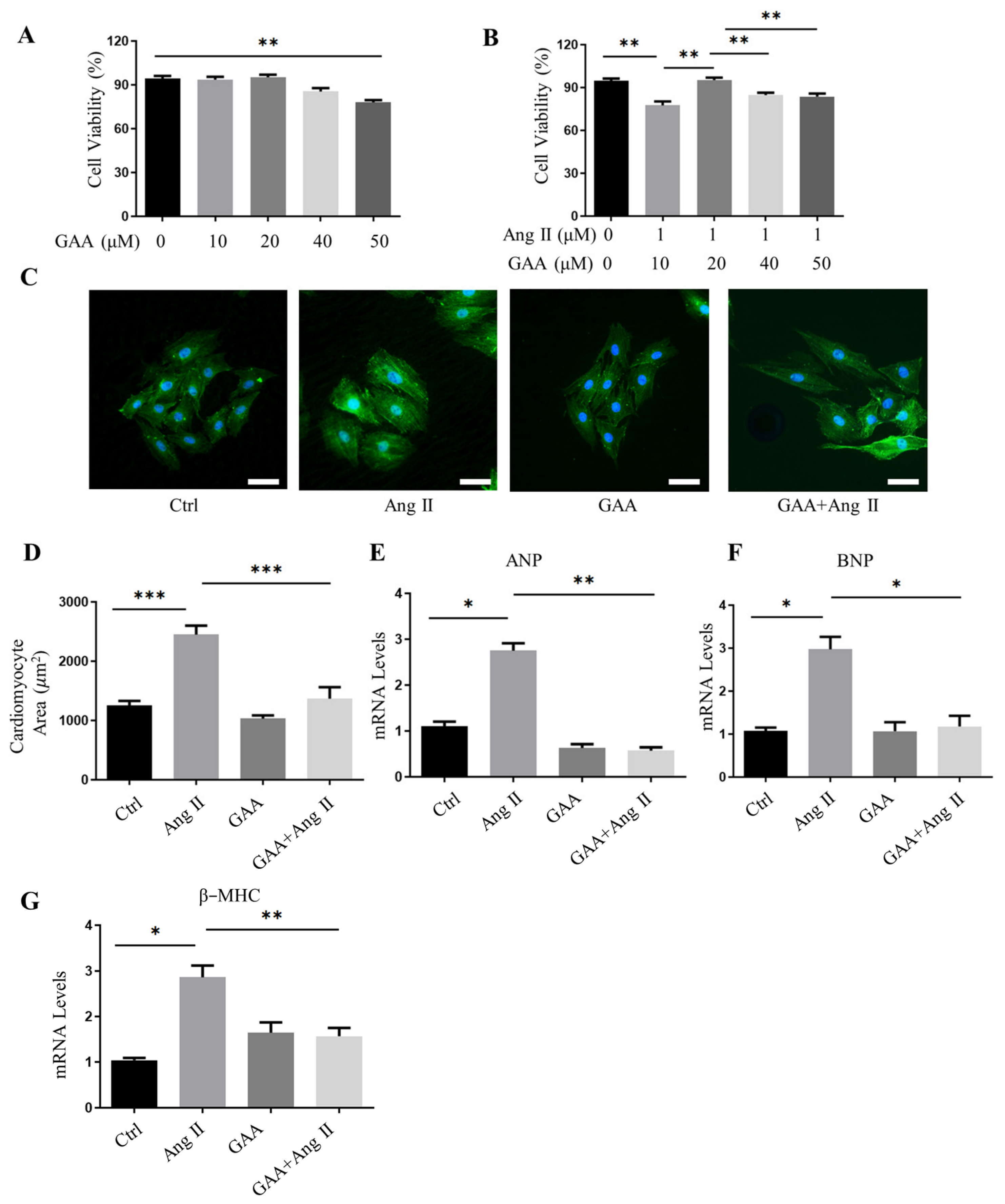
3.1. GAA Protected Against Angiotensin II-Induced Cardiomyocyte Hypertrophy
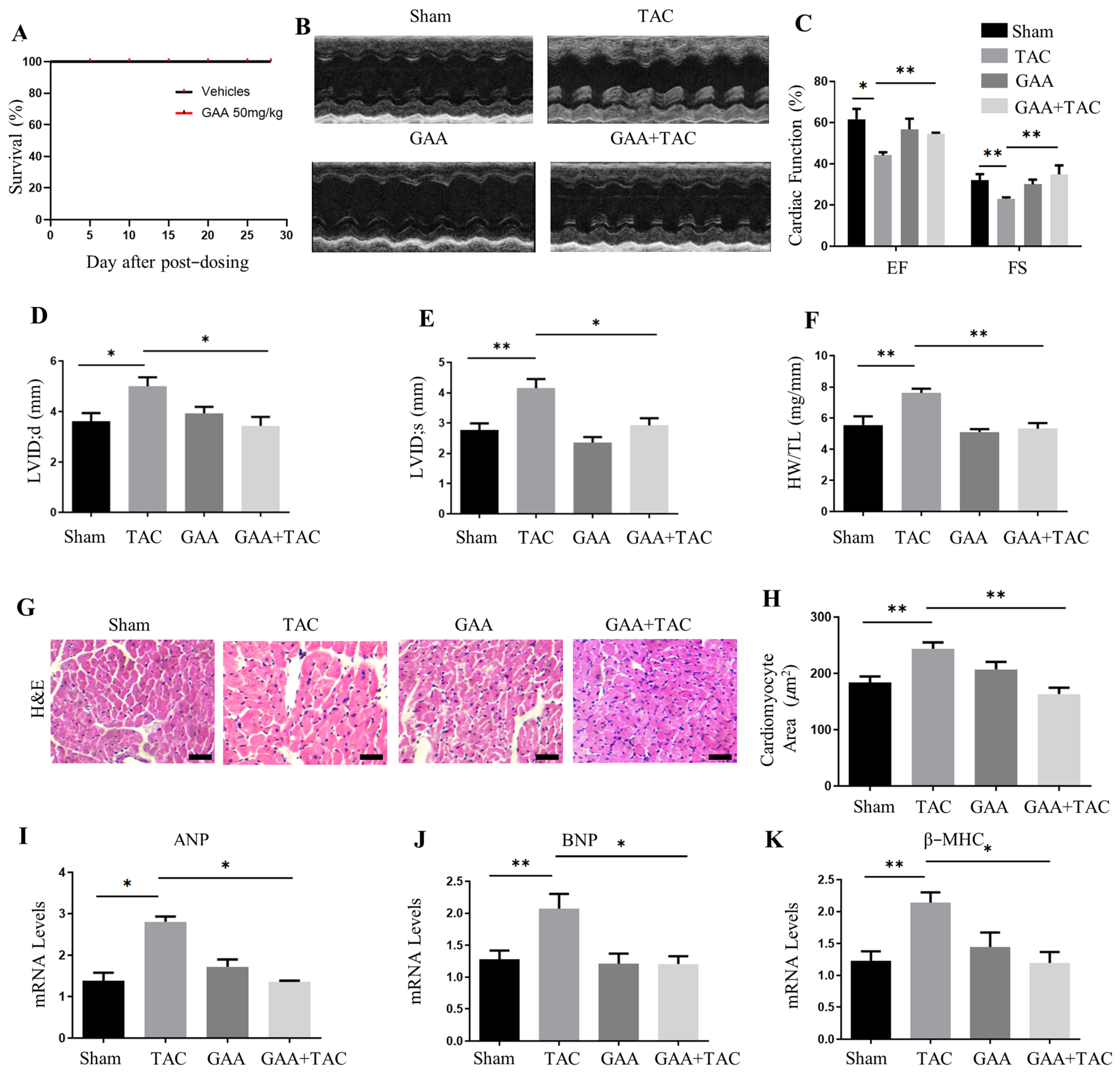
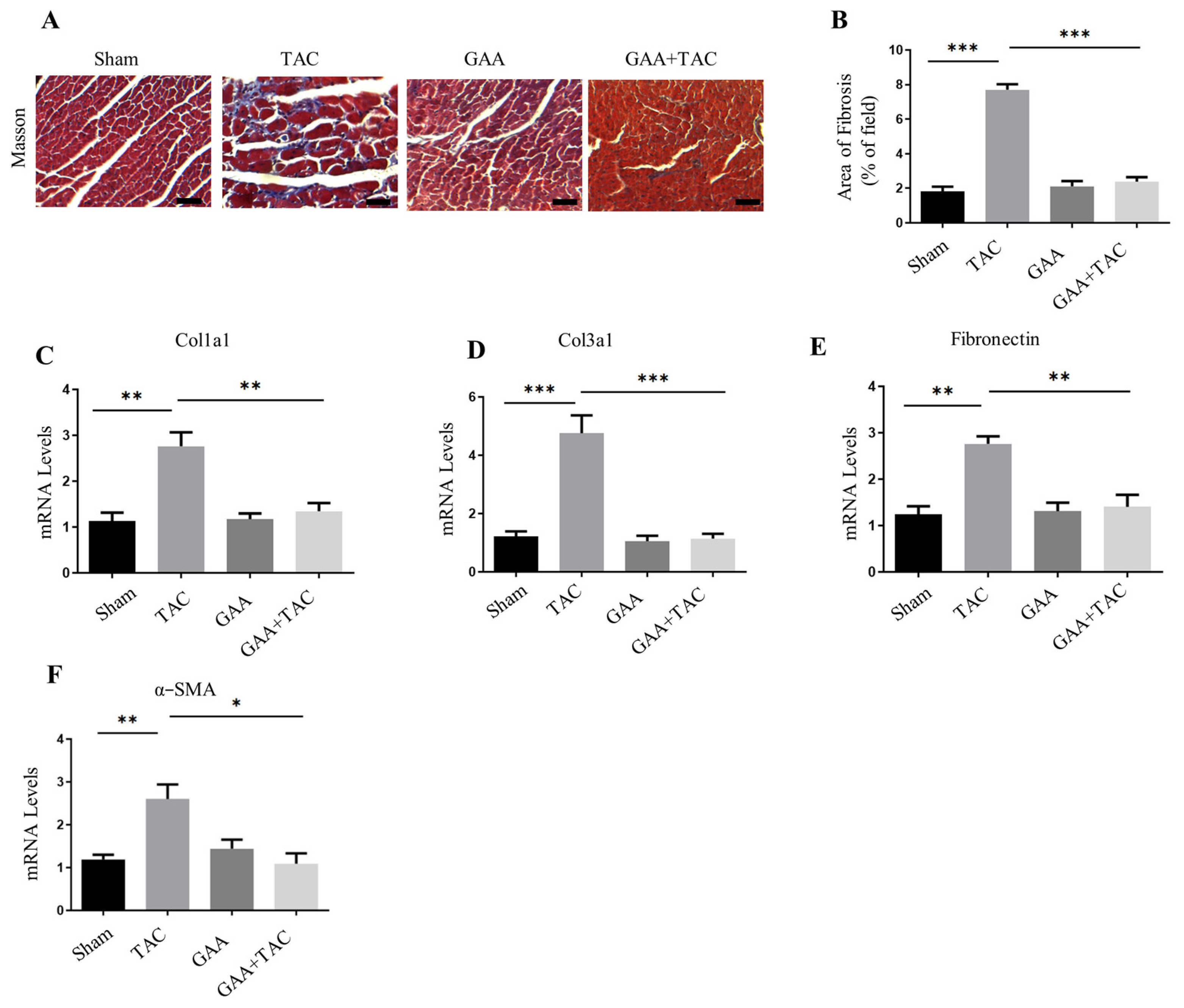
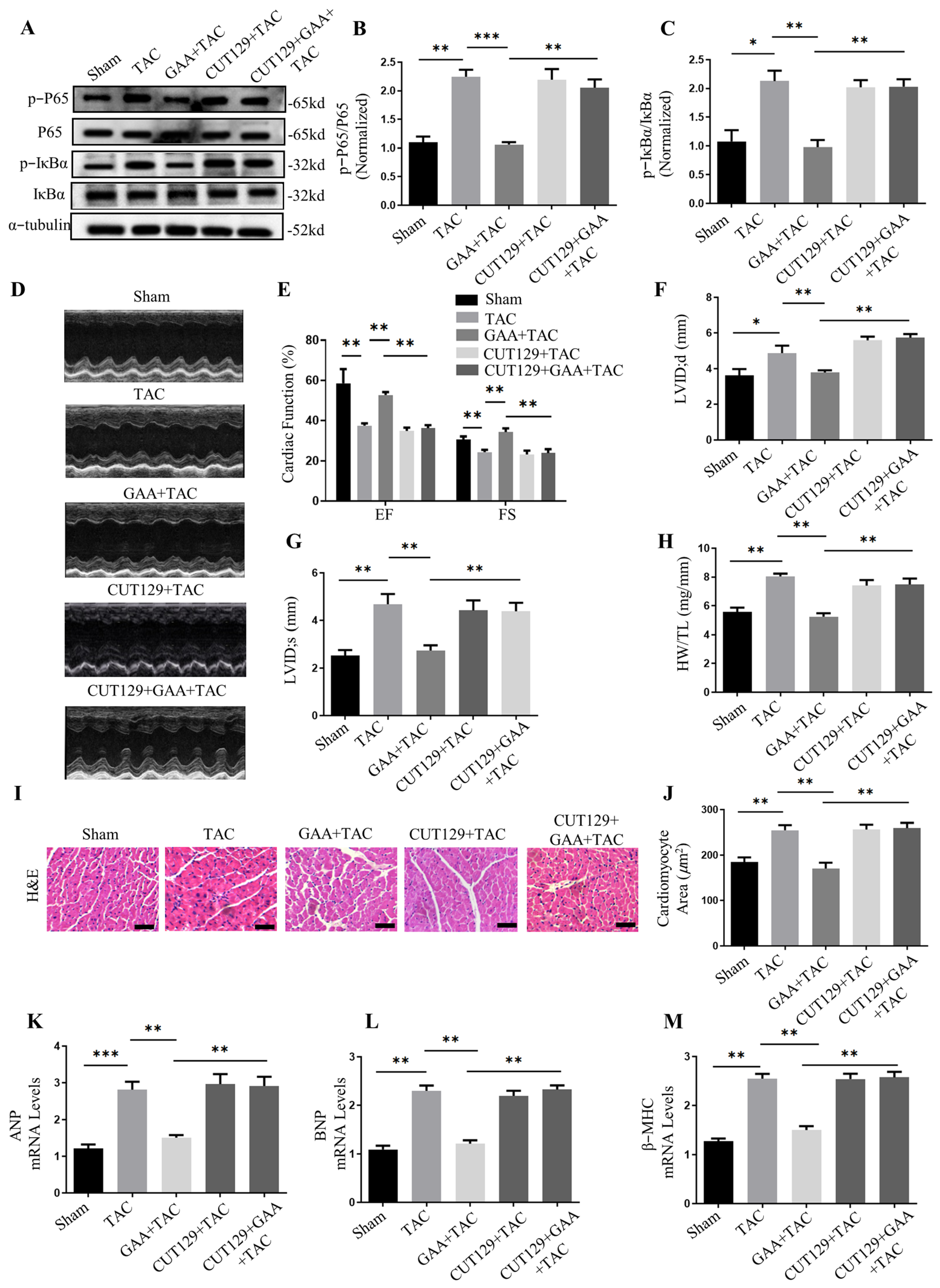
3.2. GAA Protected Against Pressure Overload-Induced Cardiac Hypertrophy In Vivo
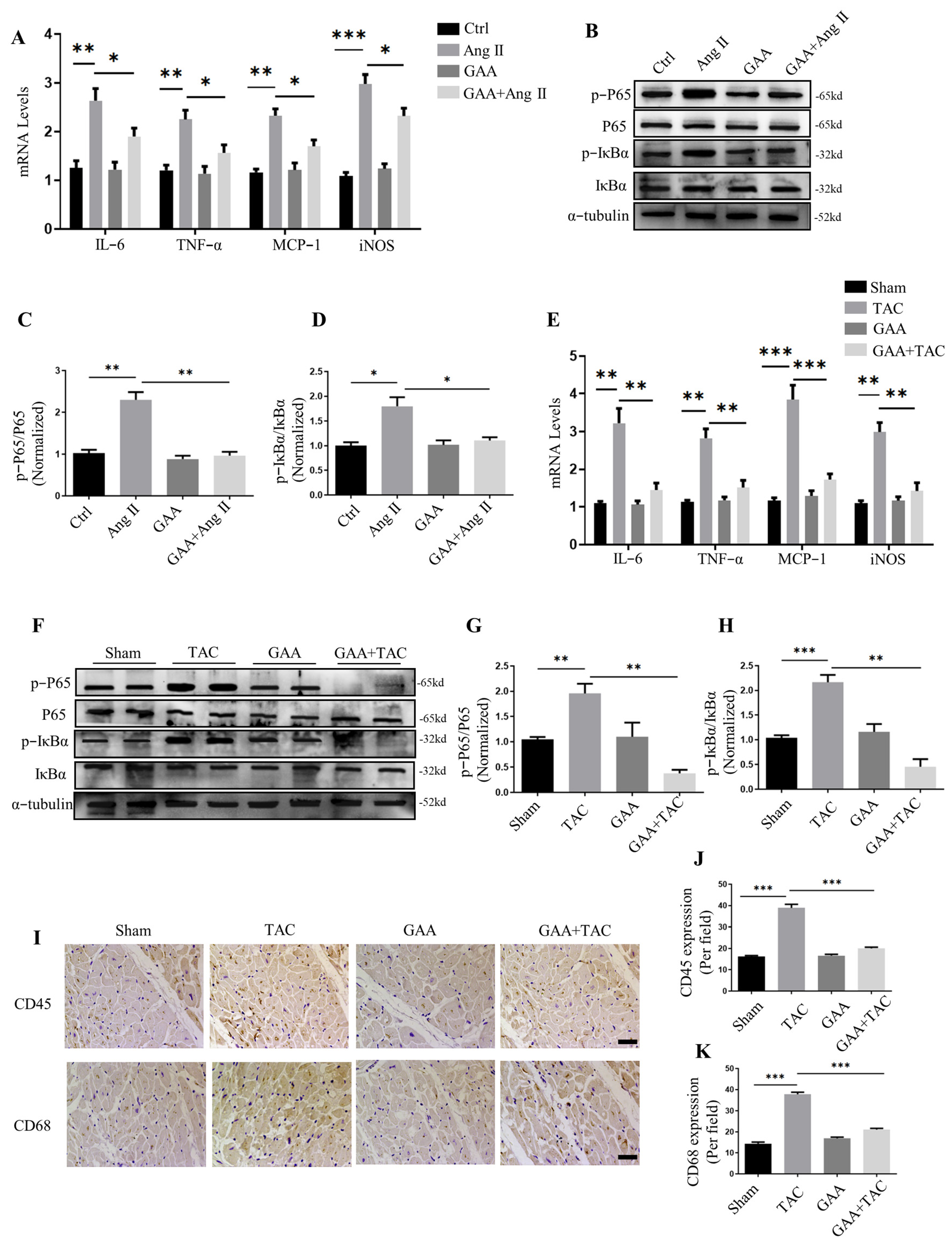
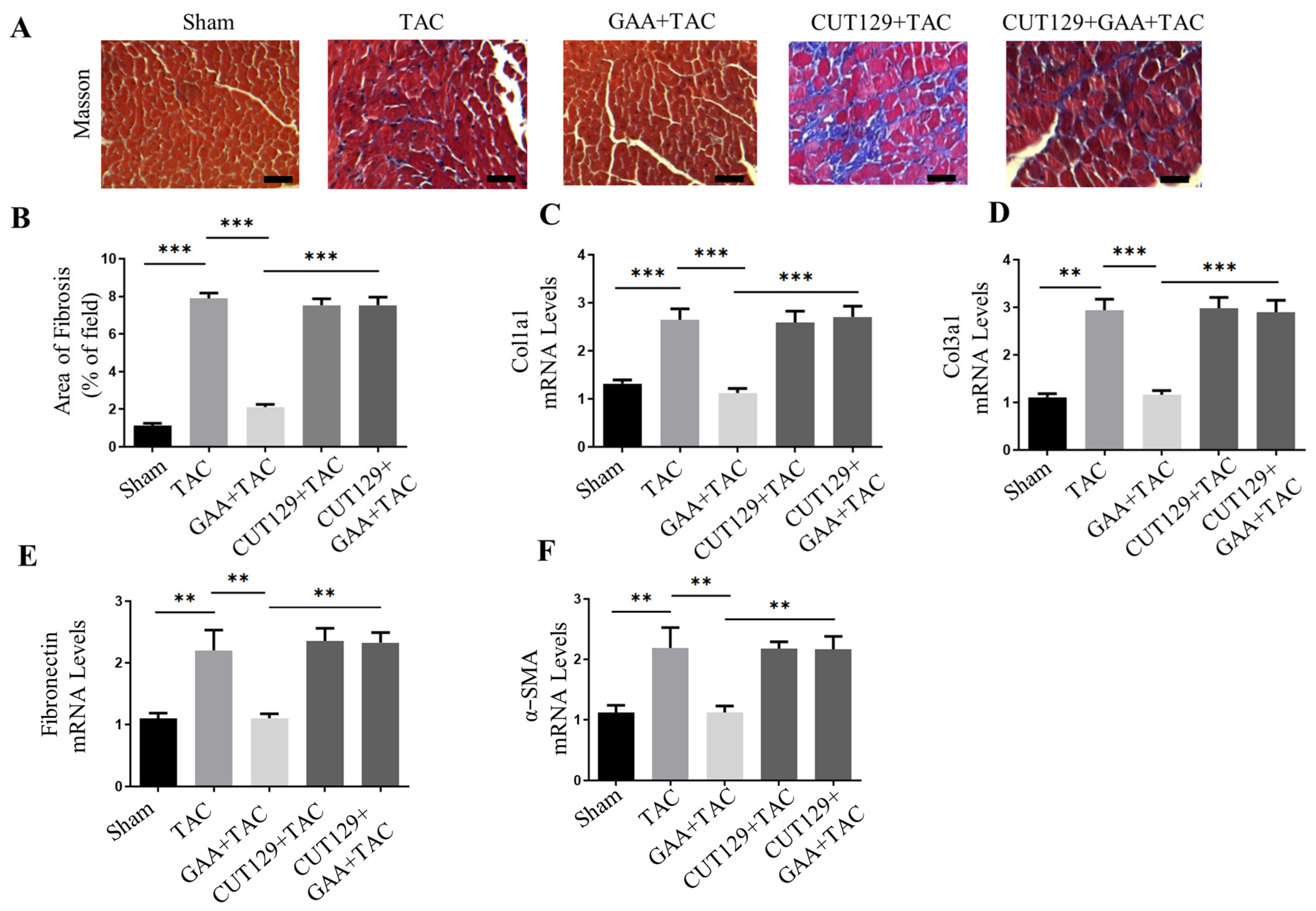
3.3. GAA Attenuated Cardiac Hypertrophy by Attenuating Inflammatory Responses
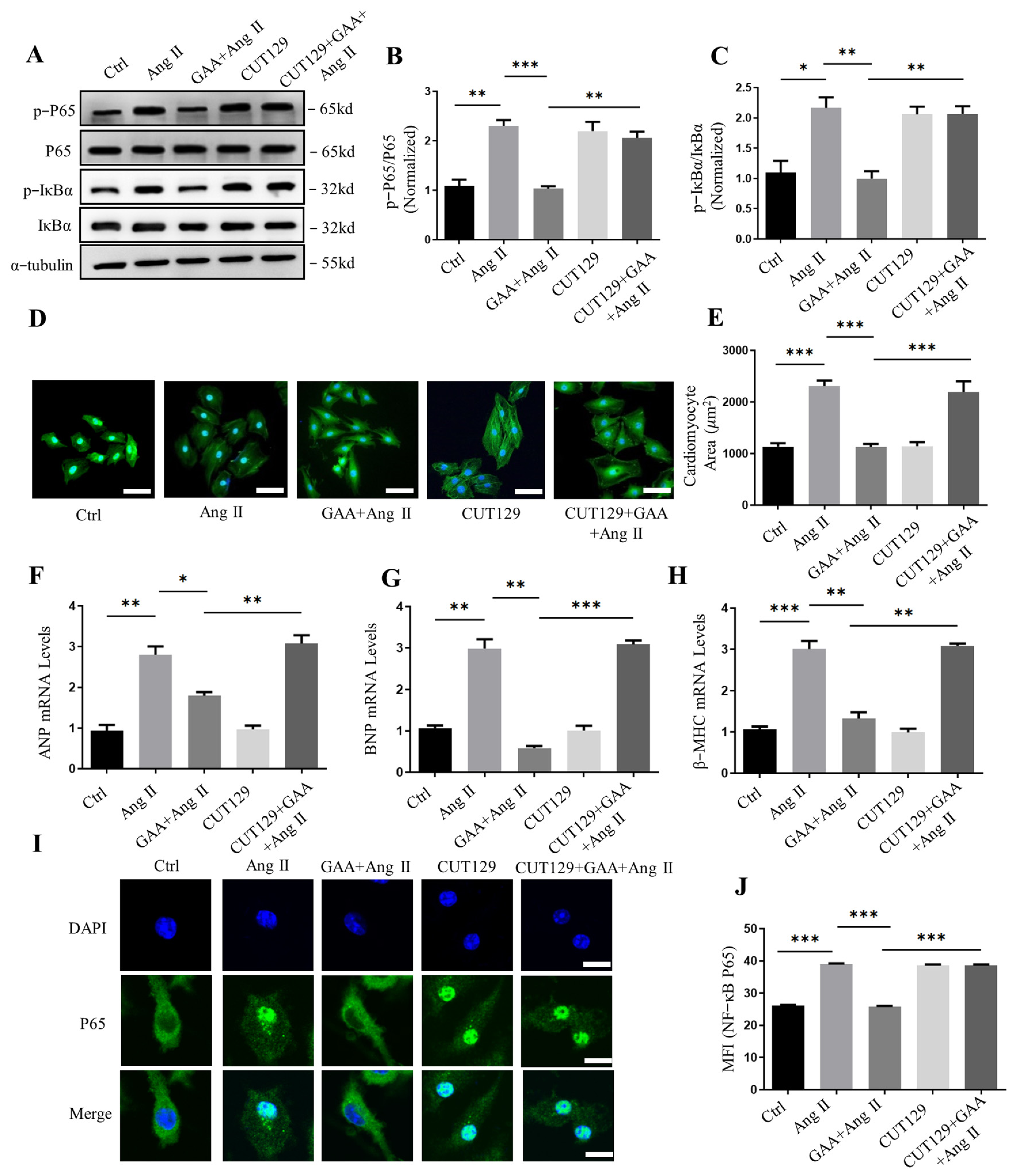
3.4. Protective Effects of GAA Involve NF-κB Signaling
4. Discussion
5. Conclusions
Supplementary Materials
Author Contributions
Funding
Institutional Review Board Statement
Informed Consent Statement
Data Availability Statement
Conflicts of Interest
Abbreviations
References
- Braunwald, E. The war against heart failure: The Lancet lecture. Lancet 2015, 385, 812–824. [Google Scholar] [CrossRef] [Scilit]
- Oldfield, C.J.; Duhamel, T.A.; Dhalla, N.S. Mechanisms for the transition from physiological to pathological cardiac hypertrophy. Can. J. Physiol. Pharmacol. 2020, 98, 74–84. [Google Scholar] [CrossRef] [Scilit]
- Nakamura, M.; Sadoshima, J. Mechanisms of physiological and pathological cardiac hypertrophy. Nat. Rev. Cardiol. 2018, 15, 387–407. [Google Scholar] [CrossRef] [Scilit]
- Tham, Y.K.; Bernardo, B.C.; Ooi, J.Y.; Weeks, K.L.; McMullen, J.R. Pathophysiology of cardiac hypertrophy and heart failure: Signaling pathways and novel therapeutic targets. Arch. Toxicol. 2015, 89, 1401–1438. [Google Scholar] [CrossRef] [Scilit]
- Gibb, A.A.; Epstein, P.N.; Uchida, S.; Zheng, Y.; McNally, L.A.; Obal, D.; Katragadda, K.; Trainor, P.; Conklin, D.J.; Brittian, K.R.; et al. Exercise-Induced Changes in Glucose Metabolism Promote Physiological Cardiac Growth. Circulation 2017, 136, 2144–2157. [Google Scholar] [CrossRef] [Scilit]
- Yang, D.; Liu, H.Q.; Liu, F.Y.; Tang, N.; Guo, Z.; Ma, S.Q.; An, P.; Wang, M.Y.; Wu, H.M.; Yang, Z.; et al. The Roles of Noncardiomyocytes in Cardiac Remodeling. Int. J. Biol. Sci. 2020, 16, 2414–2429. [Google Scholar] [CrossRef] [Scilit]
- Yang, D.; Liu, H.-Q.; Tang, F.-Y.; Guo, N.; Ma, Z.; An, S.-Q.; Wang, P.; Wu, M.-Y.; Yang, H.-M.; Fan, Z.; et al. Critical roles of macrophages in pressure overload-induced cardiac remodeling. J. Mol. Med. 2021, 99, 33–46. [Google Scholar] [CrossRef] [Scilit] [PubMed]
- Ridker, P.M.; Lüscher, T.F. Anti-inflammatory therapies for cardiovascular disease. Eur. Heart J. 2014, 35, 1782–1791. [Google Scholar] [CrossRef] [Scilit] [PubMed]
- Singh, M.V.; Abboud, F.M. Toll-like receptors and hypertension. Am. J. Physiol.-Regul. Integr. Comp. Physiol. 2014, 307, R501–R504. [Google Scholar] [CrossRef] [Scilit] [PubMed]
- Gong, X.; Ji, M.; Xu, J.; Zhang, C.; Li, M. Hypoglycemic effects of bioactive ingredients from medicine food homology and medicinal health food species used in China. Crit. Rev. Food Sci. Nutr. 2020, 60, 2303–2326. [Google Scholar] [CrossRef] [Scilit]
- Cao, F.-R.; Feng, L.; Ye, L.-H.; Wang, L.-S.; Xiao, B.-X.; Tao, X.; Chang, Q. Ganoderic Acid A Metabolites and Their Metabolic Kinetics. Front. Pharmacol. 2017, 8, 101. [Google Scholar] [CrossRef] [Scilit]
- Cao, T.; Tang, C.; Xue, L.; Wang, M.; Wang, D. Protective effect of Ganoderic acid A on adjuvant-induced arthritis. Immunol. Lett. 2020, 226, 1–6. [Google Scholar] [CrossRef] [Scilit] [PubMed]
- Zheng, S.; Ma, J.; Zhao, X.; Yu, X.; Ma, Y. Ganoderic Acid A Attenuates IL-1β-Induced Inflammation in Human Nucleus Pulposus Cells Through Inhibiting the NF-κB Pathway. Inflammation 2022, 45, 851–862. [Google Scholar] [CrossRef] [Scilit]
- Zhang, Y.; Shi, K.; Lin, T.; Xia, F.; Liu, F. Ganoderic acid A alleviates myocardial ischemia-reperfusion injury in rats by regulating JAK2/STAT3/NF-κB pathway. Int. Immunopharmacol. 2020, 84, 106543. [Google Scholar] [CrossRef] [Scilit]
- Jiang, D.S.; Li, L.; Huang, L.; Gong, J.; Xia, H.; Liu, X.; Wan, N.; Wei, X.; Zhu, X.; Chen, Y.; et al. Interferon regulatory factor 1 is required for cardiac remodeling in response to pressure overload. Hypertension 2014, 64, 77–86. [Google Scholar] [CrossRef] [Scilit]
- Radwan, F.F.Y.; Hossain, A.; God, J.M.; Leaphart, N.; Elvington, M.; Nagarkatti, M.; Tomlinson, S.; Haque, A. Reduction of myeloid-derived suppressor cells and lymphoma growth by a natural triterpenoid. J. Cell. Biochem. 2015, 116, 102–114. [Google Scholar] [CrossRef] [Scilit]
- Zhang, L.L.; Wang, K.P.; Huang, L.; Deng, B.Y.; Chen, C.; Zhao, K.L.; Wang, W.X. Ganoderic Acid A Alleviates Severe Acute Pancreatitis by Modulating Gut Homeostasis and Inhibiting TLR4-NLRP3 Signaling. J. Agric. Food. Chem. 2024, 73, 1563–1579. [Google Scholar] [CrossRef] [Scilit]
- Zhou, Q.; Gao, J.; Wu, G.; Wang, C.; Yang, Y.; Huang, T.; Wang, Y.; Yue, T.; Gao, Z.; Xie, H.; et al. Adipose progenitor cell-derived extracellular vesicles suppress macrophage M1 program to alleviate midlife obesity. Nat. Commun. 2025, 16, 2743. [Google Scholar] [CrossRef] [Scilit]
- Hasan, P.; Saotome, M.; Ikoma, T.; Iguchi, K.; Kawasaki, H.; Iwashita, T.; Hayashi, H.; Maekawa, Y. Mitochondrial fission protein, dynamin-related protein 1, contributes to the promotion of hypertensive cardiac hypertrophy and fibrosis in Dahl-salt sensitive rats. J. Mol. Cell. Cardiol. 2018, 121, 103–106. [Google Scholar] [CrossRef] [Scilit] [PubMed]
- He, C.; Medley, S.C.; Kim, J.; Sun, C.; Kwon, H.R.; Sakashita, H.; Pincu, Y.; Yao, L.; Eppard, D.; Dai, B.; et al. STAT1 modulates tissue wasting or overgrowth downstream from PDGFRbeta. Genes Dev. 2017, 31, 1666–1678. [Google Scholar] [CrossRef] [Scilit] [PubMed]
- He, C.; Medley, S.C.; Hu, T.; Hinsdale, M.E.; Lupu, F.; Virmani, R.; Olson, L.E. PDGFRbeta signalling regulates local inflammation and synergizes with hypercholesterolaemia to promote atherosclerosis. Nat. Commun. 2015, 6, 7770. [Google Scholar] [CrossRef] [Scilit] [PubMed]
- He, C.; Li, H.; Viollet, B.; Zou, M.H.; Xie, Z. AMPK Suppresses Vascular Inflammation In Vivo by Inhibiting Signal Transducer and Activator of Transcription-1. Diabetes 2015, 64, 4285–4297. [Google Scholar] [CrossRef] [Scilit]
- Vesely, D.L.; Douglass, M.A.; Dietz, J.R.; Gower, W.R., Jr.; McCormick, M.T.; Rodriguez-Paz, G.; Schocken, D.D. Three peptides from the atrial natriuretic factor prohormone amino terminus lower blood pressure and produce diuresis, natriuresis, and/or kaliuresis in humans. Circulation 1994, 90, 1129–1140. [Google Scholar] [CrossRef] [Scilit] [PubMed]
- Mukoyama, M.; Nakao, K.; Hosoda, K.; Suga, S.; Saito, Y.; Ogawa, Y.; Shirakami, G.; Jougasaki, M.; Obata, K.; Yasue, H.; et al. Brain natriuretic peptide as a novel cardiac hormone in humans. Evidence for an exquisite dual natriuretic peptide system, atrial natriuretic peptide and brain natriuretic peptide. J. Clin. Investig. 1991, 87, 1402–1412. [Google Scholar] [CrossRef] [Scilit]
- Bernardo, B.C.; Weeks, K.L.; Pretorius, L.; McMullen, J.R. Molecular distinction between physiological and pathological cardiac hypertrophy: Experimental findings and therapeutic strategies. Pharmacol. Ther. 2010, 128, 191–227. [Google Scholar] [CrossRef] [Scilit]
- Golatkar, V.; Bhatt, L.K. Artesunate attenuates isoprenaline induced cardiac hypertrophy in rats via SIRT1 inhibiting NF-κB activation. Eur. J. Pharmacol. 2024, 977, 10. [Google Scholar] [CrossRef] [Scilit]
- Li, D.; Guo, Y.Y.; Cen, X.F.; Qiu, H.L.; Chen, S.; Zeng, X.F.; Zeng, Q.; Xu, M.; Tang, Q.Z. Lupeol protects against cardiac hypertrophy via TLR4-PI3K-Akt-NF-κB pathways. Acta Pharmacol. Sin. 2022, 43, 1989–2002. [Google Scholar] [CrossRef] [Scilit]
- Deng, S.; Hu, Y.; Zhou, J.; Wang, Y.F.; Wang, Y.G.; Li, S.C.; Huang, G.; Peng, C.; Hu, A.K.; Yu, Q.; et al. TLR4 mediates alveolar bone resorption in experimental peri-implantitis through regulation of CD45 cell infiltration, RANKL/OPG ratio, and inflammatory cytokine production. J. Periodontol. 2020, 91, 671–682. [Google Scholar] [CrossRef] [Scilit] [PubMed]
- Thakur, S.; Li, L.; Gupta, S. NF-κB-Mediated Integrin-Linked Kinase Regulation in Angiotensin II-Induced Pro-fibrotic Process in Cardiac Fibroblasts. Life Sci. 2014, 107, 68–75. [Google Scholar] [CrossRef] [Scilit]
- Hamid, T.; Guo, S.Z.; Kingery, J.R.; Xiang, X.; Dawn, B.; Prabhu, S.D. Cardiomyocyte NF-κB p65 promotes adverse remodelling, apoptosis, and endoplasmic reticulum stress in heart failure. Cardiovasc. Res. 2011, 89, 129–138. [Google Scholar] [CrossRef] [Scilit]
- Schmeisser, A.; Soehnlein, O.; Illmer, T.; Lorenz, H.M.; Eskafi, S.; Roerick, O.; Gabler, C.; Strasser, R.; Daniel, W.G.; Garlichs, C.D. ACE inhibition lowers angiotensin II-induced chemokine expression by reduction of NF-kappaB activity and AT1 receptor expression. Biochem. Biophys. Res. Commun. 2004, 325, 532–540. [Google Scholar] [CrossRef] [Scilit]
- Laura, Z.; Anke, R.; Claudia, N.; Maria-Patapia, Z.; Christina, G.; Roel, V.D.N.; Rainer, D.; Leon, D.W.; Bergmann, M.W. NF-κB activation is required for adaptive cardiac hypertrophy. Cardiovasc. Res. 2009, 84, 416–424. [Google Scholar]
- Segura, A.M.; Frazier, O.H.; Buja, L.M. Fibrosis and heart failure. Heart Fail. Rev. 2014, 19, 173–185. [Google Scholar] [CrossRef] [Scilit] [PubMed]
- Kong, P.; Christia, P.; Frangogiannis, N.G. The pathogenesis of cardiac fibrosis. Cell. Mol. Life Sci. CMLS 2014, 71, 549–574. [Google Scholar] [CrossRef] [Scilit] [PubMed]
- Hou, X.; Zhang, Y.; Shen, Y.H.; Liu, T.; Song, S.; Cui, L.; Bu, P. PPAR-gamma activation by rosiglitazone suppresses angiotensin II-mediated proliferation and phenotypictransition in cardiac fibroblasts via inhibition of activation of activator protein 1. Eur. J. Pharmacol. 2013, 715, 196–203. [Google Scholar] [CrossRef] [Scilit] [PubMed]
- Yang, M.; Xiong, J.; Zou, Q.; Wang, D.D.; Huang, C.X. Chrysin attenuates interstitial fibrosis and improves cardiac function in a rat model of acute myocardial infarction. J. Mol. Histol. 2018, 49, 555–565. [Google Scholar] [CrossRef] [Scilit]
- Zhen, C.; Wu, X.; Zhang, J.; Liu, D.; Li, G.; Yan, Y.; He, X.; Miao, J.; Song, H.; Yan, Y.; et al. Ganoderma lucidum polysaccharides attenuates pressure-overload-induced pathological cardiac hypertrophy. Front. Pharmacol. 2023, 14, 1127123. [Google Scholar] [CrossRef] [Scilit]
- Lu, J.; Qin, J.Z.; Chen, P.; Chen, X.; Zhang, Y.Z.; Zhao, S.J. Quality difference study of six varieties of with different origins. Front. Pharmacol. 2012, 3, 57. [Google Scholar] [CrossRef] [Scilit]


Disclaimer/Publisher’s Note: The statements, opinions and data contained in all publications are solely those of the individual author(s) and contributor(s) and not of MDPI and/or the editor(s). MDPI and/or the editor(s) disclaim responsibility for any injury to people or property resulting from any ideas, methods, instructions or products referred to in the content. |
© 2026 by the authors. Licensee MDPI, Basel, Switzerland. This article is an open access article distributed under the terms and conditions of the Creative Commons Attribution (CC BY) license.
Share and Cite
Zhen, C.; Zhang, Y.; Tan, H.; Liu, D.; He, X.; Chen, W. Ganoderic Acid A Attenuates Pathological Cardiac Hypertrophy by Attenuating Inflammatory Responses. Curr. Issues Mol. Biol. 2026, 48, 471. https://doi.org/10.3390/cimb48050471
Zhen C, Zhang Y, Tan H, Liu D, He X, Chen W. Ganoderic Acid A Attenuates Pathological Cardiac Hypertrophy by Attenuating Inflammatory Responses. Current Issues in Molecular Biology. 2026; 48(5):471. https://doi.org/10.3390/cimb48050471
Chicago/Turabian StyleZhen, Changlin, Yonghui Zhang, Hui Tan, Dan Liu, Xiuzhen He, and Wansong Chen. 2026. "Ganoderic Acid A Attenuates Pathological Cardiac Hypertrophy by Attenuating Inflammatory Responses" Current Issues in Molecular Biology 48, no. 5: 471. https://doi.org/10.3390/cimb48050471
APA StyleZhen, C., Zhang, Y., Tan, H., Liu, D., He, X., & Chen, W. (2026). Ganoderic Acid A Attenuates Pathological Cardiac Hypertrophy by Attenuating Inflammatory Responses. Current Issues in Molecular Biology, 48(5), 471. https://doi.org/10.3390/cimb48050471