
Novel lncRNA Signature (UFC1/PTENP1) as a Molecular Biomarker for the Diagnosis and Prognosis of Hepatocellular Carcinoma in an Egyptian Cohort


Abstract
1. Introduction
2. Materials and Methods
2.1. Study Design and Participants
2.2. Analysis of lncRNAs Expression
2.3. Statistical Analysis
3. Results
3.1. Demographic Characteristics of the Study Population
3.2. Laboratory, Biochemical, and Clinical Characteristics
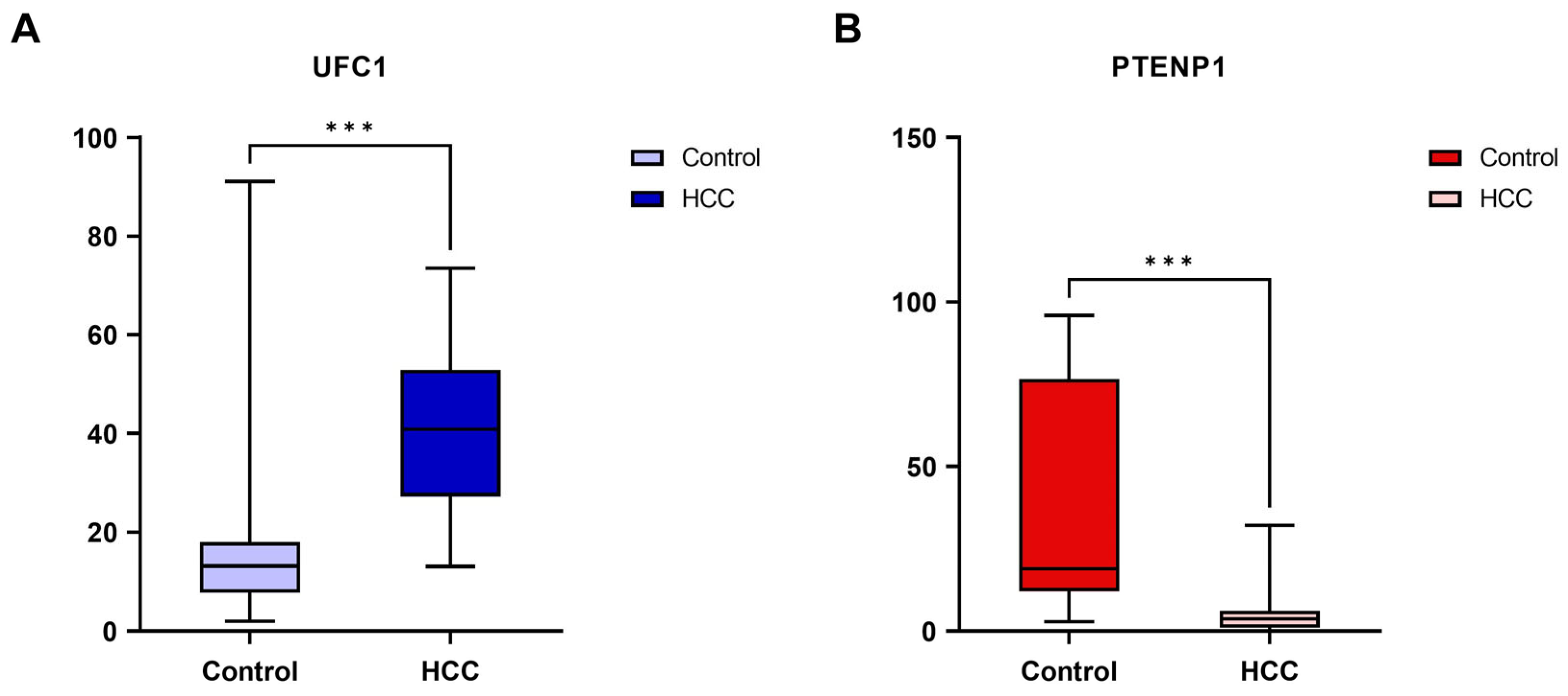
3.3. Expression Profile of lncRNAs in HCC
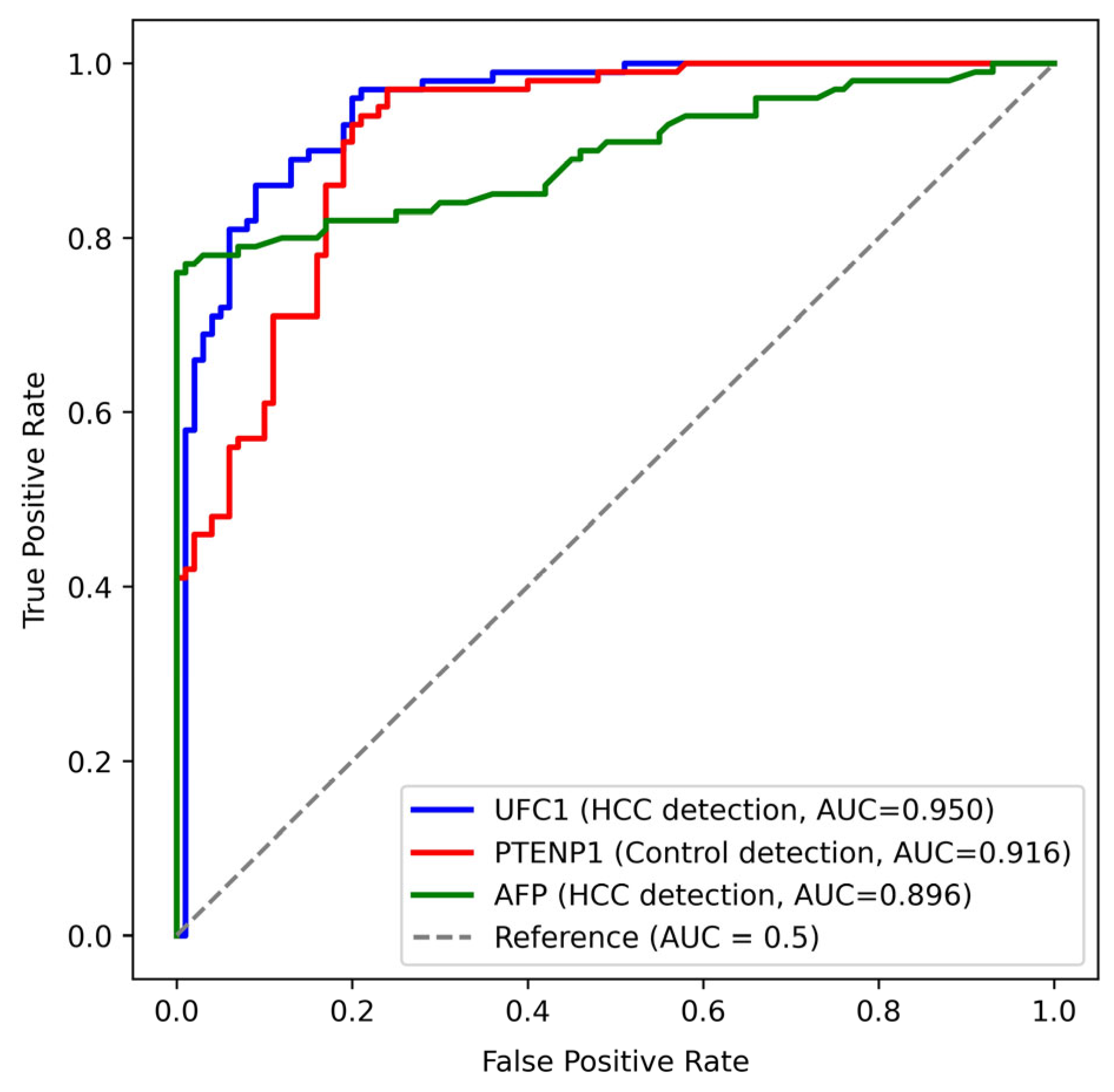
3.4. Diagnostic Performance of the Studied lncRNAs
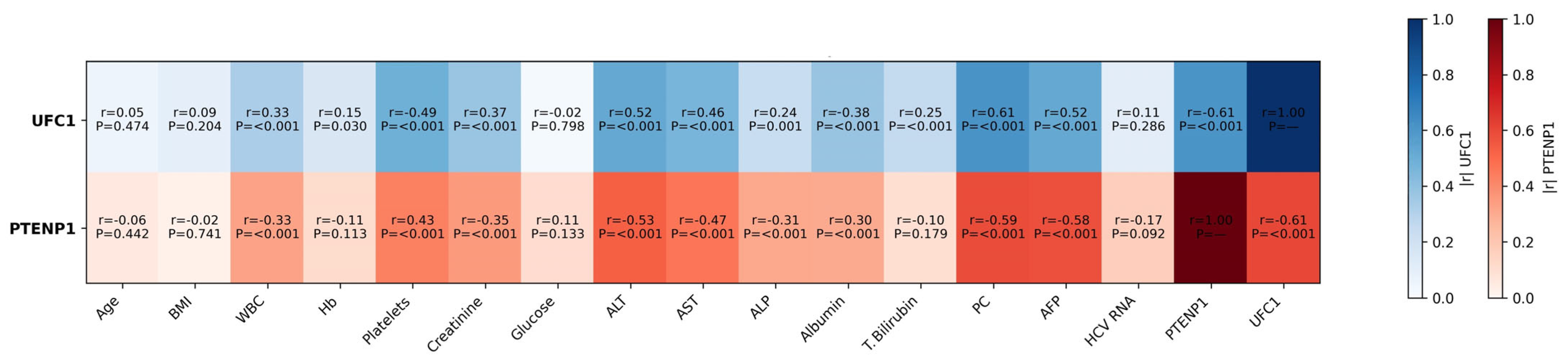
3.5. Correlation of lncRNAs with Clinical and Laboratory Parameters
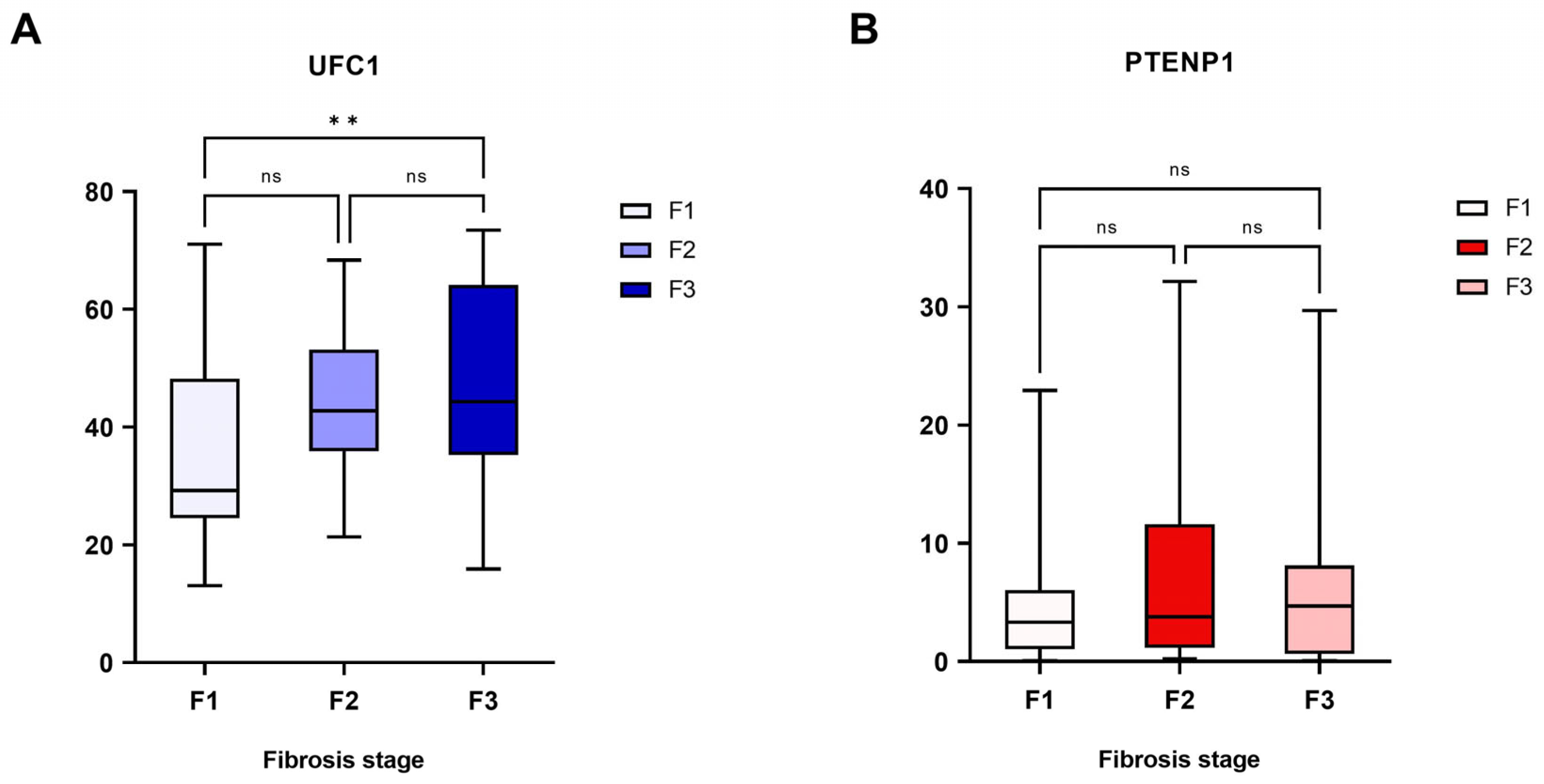
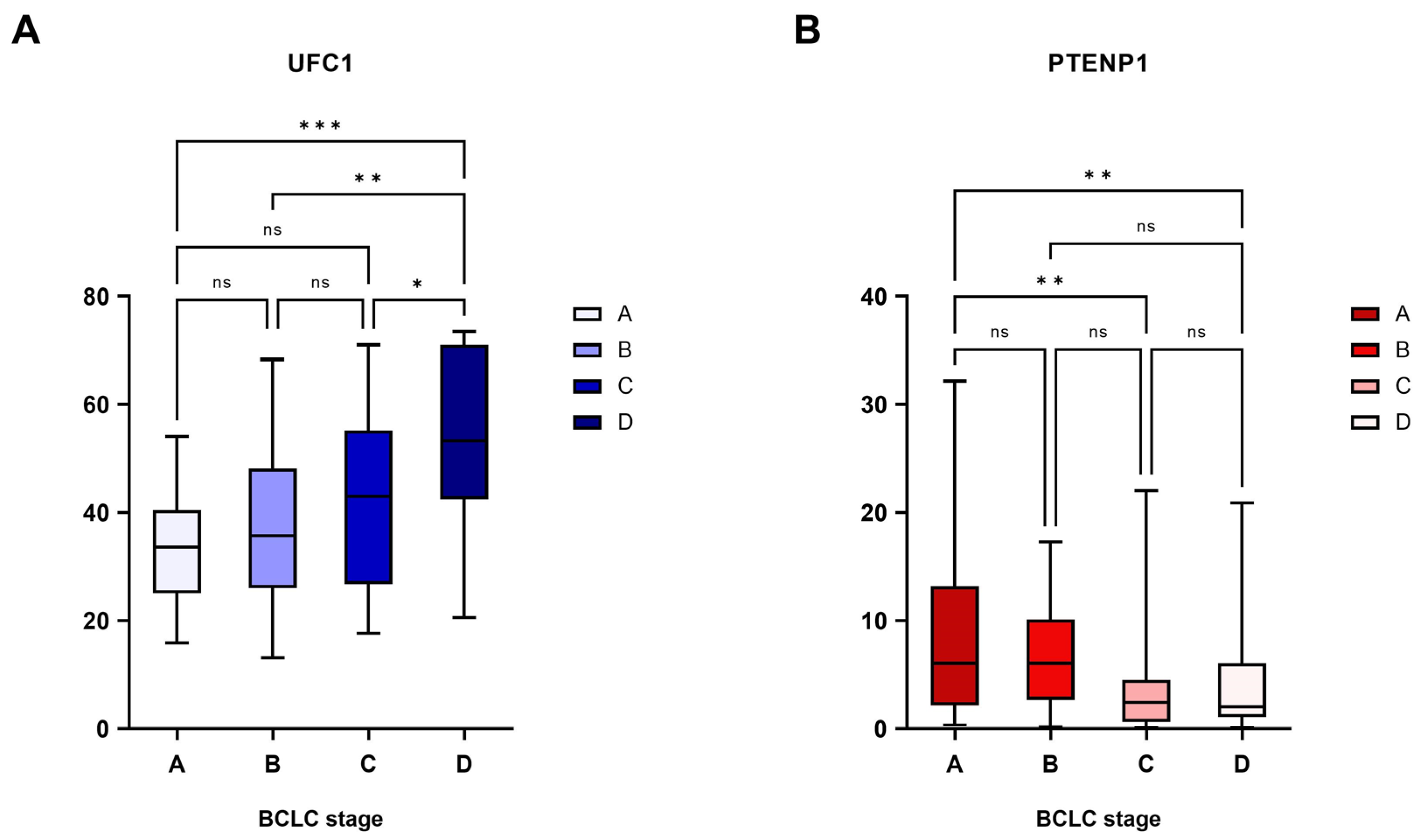
3.6. Association of lncRNA Expression with Fibrosis, Steatosis, and BCLC Stage
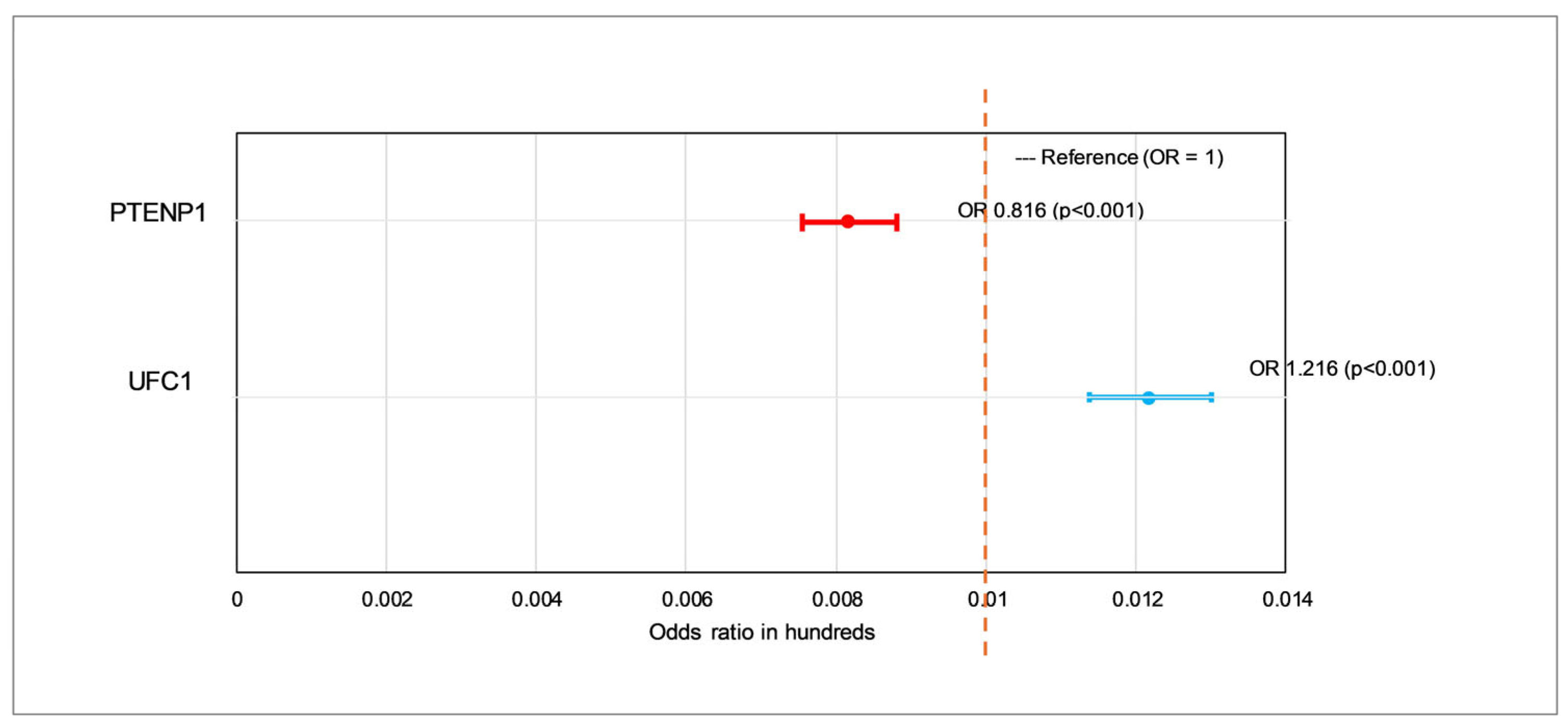
3.7. Prognostic Performance of the Studied lncRNAs
4. Discussion
5. Conclusions
Supplementary Materials
Author Contributions
Funding
Institutional Review Board Statement
Informed Consent Statement
Data Availability Statement
Conflicts of Interest
Abbreviations
| AFP | Alpha-fetoprotein |
| ALP | Alkaline phosphatase |
| ALT | Alanine aminotransferase |
| AST | Aspartate aminotransferase |
| AUC | Area under the curve |
| BCLC | Barcelona Clinic Liver Cancer staging system |
| BMI | Body mass index |
| CRC | Colorectal cancer |
| HBV | Hepatitis B virus |
| HCC | Hepatocellular carcinoma |
| HCV | Hepatitis C virus |
| lncRNAs | Long non-coding RNAs |
| NSCLC | Non-small cell lung cancer |
| OR | Odds ratio |
| PC | Prothrombin concentration |
| PTENP1 | Phosphatase and tensin homolog pseudogene 1 |
| UFC1 | Ubiquitin-fold modifier conjugating enzyme 1 |
References
- Singh, S.P.; Madke, T.; Chand, P. Global Epidemiology of Hepatocellular Carcinoma. J. Clin. Exp. Hepatol. 2025, 15, 102446. [Google Scholar] [CrossRef] [Scilit] [PubMed]
- Alrumaihi, F. Role of liquid biopsy for early detection, prognosis, and therapeutic monitoring of hepatocellular carcinoma. Diagnostics 2025, 15, 1655. [Google Scholar] [CrossRef] [Scilit]
- Elkady, A.; Hassan, M.; Hagag, M.F.; El-Ahwany, E.; Helal, O.M.; Zoheiry, M.; Abdalla, M.A.; Elzallat, M. Innovative model of surface-enhanced Raman spectroscopy for exosomes identification: An approach for the diagnosis of hepatocellular carcinoma. Clin. Chim. Acta 2023, 540, 117228. [Google Scholar] [CrossRef] [Scilit] [PubMed]
- Hassan, M.; El-Maadawy, W.H.; Elhusseny, Y.; Agamy, F.E.; Fahim, S.A.; Balata, M. Genetic variants and soluble isoforms of PD-1/PD-L1 as novel biomarkers for pancreatic ductal adenocarcinoma (PDAC) susceptibility and prognosis. Biomedicines 2025, 13, 2246. [Google Scholar] [CrossRef] [Scilit]
- Hassan, M.; El-Maadawy, W.H.; Fahim, S.A.; Youssef, S.M.; Badran, O.M.; Balata, M. Integrating CTLA-4 genetics and soluble isoforms for the stratification of HCV-related hepatocellular carcinoma risk and aggressiveness. Int. J. Mol. Sci. 2025, 26, 11067. [Google Scholar] [CrossRef] [Scilit]
- Lee, D.H. Recent advances and issues in imaging modalities for hepatocellular carcinoma surveillance. J. Liver Cancer 2025, 25, 31–40. [Google Scholar] [CrossRef] [Scilit]
- Milošević, I.; Nikolić, N.; Stanković, S.; Filipović, A.; Ranin, J.; Paunović, I.; Simić, J.; Beronja, B. Pilot Study of PIVKA-II in the Prognostic Assessment of Hepatocellular Carcinoma in Chronic Viral Hepatitis: Comparative Findings from HBV and HCV Cohorts from a Single Center in Serbia. Biomedicines 2025, 13, 2653. [Google Scholar] [CrossRef] [Scilit] [PubMed]
- Hassan, M.; Elzallat, M.; Aboushousha, T.; Elhusseny, Y.; El-Ahwany, E. MicroRNA-122 mimic/microRNA-221 inhibitor combination as a novel therapeutic tool against hepatocellular carcinoma. Non-Coding RNA Res. 2023, 8, 126–134. [Google Scholar] [CrossRef] [Scilit] [PubMed]
- Naseer, Q.A.; Malik, A.; Zhang, F.; Chen, S. Exploring the enigma: History, present, and future of long non-coding RNAs in cancer. Discov. Oncol. 2024, 15, 214. [Google Scholar] [CrossRef] [Scilit]
- Ma, L.; Liu, X.Q.; Roopashree, R.; Kazmi, S.W.; Jasim, S.A.; Vinay, K.P.; Fateh, A.; Yang, F.; Rajabivahid, M.; Dehghani-Ghorbi, M.; et al. Long non-coding RNAs (lncRNAs) in cancer development: New insight from STAT3 signaling pathway to immune evasion. Clin. Exp. Med. 2025, 25, 53. [Google Scholar] [CrossRef] [Scilit]
- Uttam, V.; Rana, M.K.; Sharma, U.; Singh, K.; Jain, A. Circulating long non-coding RNA EWSAT1 acts as a liquid biopsy marker for esophageal squamous cell carcinoma: A pilot study. Non-Coding RNA Res. 2024, 9, 1–11. [Google Scholar] [CrossRef] [Scilit] [PubMed]
- Zhang, X.; Liang, W.; Liu, J.; Zang, X.; Gu, J.; Pan, L.; Shi, H.; Fu, M.; Huang, Z.; Zhang, Y.; et al. Long non-coding RNA UFC1 promotes gastric cancer progression by regulating miR-498/Lin28b. J. Exp. Clin. Cancer Res. 2018, 37, 134. [Google Scholar] [CrossRef] [Scilit] [PubMed]
- Liu, L.; Wu, D.; Cao, C. lincRNA-UFC1 facilitates cell proliferation and tumor growth in hepatocellular carcinoma by upregulating HuR/β-catenin expression. Cancer Res. 2015, 75, 3954. [Google Scholar] [CrossRef] [Scilit]
- Khasarah, G.; Al Nabilsi, D.; Madani, O.; Khazem, F.; Alsayed, R. PTEN defects in cancer, from gene to protein molecular causes and therapeutic targets. Discov. Oncol. 2025, 16, 1649. [Google Scholar] [CrossRef] [Scilit]
- Cao, C.; Sun, J.; Zhang, D.; Guo, X.; Xie, L.; Li, X.; Wu, D.; Liu, L. The long intergenic noncoding RNA UFC1, a target of microRNA 34a, interacts with the mRNA stabilizing protein HuR to increase levels of β-catenin in HCC cells. Gastroenterology 2015, 148, 415–426.e18. [Google Scholar] [CrossRef] [Scilit]
- Yu, T.; Shan, T.D.; Li, J.Y.; Huang, C.Z.; Wang, S.Y.; Ouyang, H.; Lu, X.J.; Xu, J.H.; Zhong, W.; Chen, Q.K. Knockdown of linc-UFC1 suppresses proliferation and induces apoptosis of colorectal cancer. Cell Death Dis. 2016, 7, e2228. [Google Scholar] [CrossRef] [Scilit]
- Xie, R.; Wang, M.; Zhou, W.; Wang, D.; Yuan, Y.; Shi, H.; Wu, L. Long non-coding RNA (LncRNA) UFC1/MIR-34a contributes to proliferation and migration in breast cancer. Med. Sci. Monit. 2019, 25, 7149–7157. [Google Scholar] [CrossRef] [Scilit]
- Zang, X.; Gu, J.; Zhang, J.; Shi, H.; Hou, S.; Xu, X.; Chen, Y.; Zhang, Y.; Mao, F.; Qian, H.; et al. Exosome-transmitted lncRNA UFC1 promotes non-small-cell lung cancer progression by EZH2-mediated epigenetic silencing of PTEN expression. Cell Death Dis. 2020, 11, 215. [Google Scholar] [CrossRef] [Scilit]
- Liu, P.; Sun, Q.-Q.; Liu, T.-X.; Lu, K.; Zhang, N.; Zhu, Y.; Chen, M. Serum lncRNA-UFC1 as a potential biomarker for diagnosis and prognosis of pancreatic cancer. Int. J. Clin. Exp. Pathol. 2019, 12, 4125–4129. [Google Scholar]
- Li, W.; Zhang, T.; Guo, L.; Huang, L. Regulation of PTEN expression by noncoding RNAs. J. Exp. Clin. Cancer Res. 2018, 37, 223. [Google Scholar] [CrossRef] [Scilit] [PubMed]
- Gupta, S.; Silveira, D.A.; Lorenzoni, P.R.; Mombach, J.C.M.; Hashimoto, R.F. LncRNA PTENP1/miR-21/PTEN axis modulates EMT and drug resistance in cancer: Dynamic boolean modeling for cell fates in DNA damage response. Int. J. Mol. Sci. 2024, 25, 8264. [Google Scholar] [CrossRef] [Scilit]
- Gaber, D.A.; Shaker, O.; Younis, A.T.; El-Kassas, M. LncRNA HULC and miR-122 expression pattern in HCC-related HCV Egyptian patients. Genes 2022, 13, 1669. [Google Scholar] [CrossRef] [Scilit] [PubMed]
- Toraih, E.A.; Ellawindy, A.; Fala, S.Y.; Al Ageeli, E.; Gouda, N.S.; Fawzy, M.S.; Hosny, S. Oncogenic long noncoding RNA MALAT1 and HCV-related hepatocellular carcinoma. Biomed. Pharmacother. 2018, 102, 653–669. [Google Scholar] [CrossRef] [Scilit] [PubMed]
- Li, J.; Wang, X.; Tang, J.; Jiang, R.; Zhang, W.; Ji, J.; Sun, B. HULC and Linc00152 act as novel biomarkers in predicting diagnosis of hepatocellular carcinoma. Cell. Physiol. Biochem. 2015, 37, 687–696. [Google Scholar] [CrossRef] [Scilit]
- Moonmuang, S.; Chaiyawat, P.; Jantrapirom, S.; Pruksakorn, D.; Lo Piccolo, L. Circulating long non-coding RNAs as novel potential biomarkers for osteogenic sarcoma. Cancers 2021, 13, 4214. [Google Scholar] [CrossRef] [Scilit] [PubMed]
- Arroyo, J.D.; Chevillet, J.R.; Kroh, E.M.; Ruf, I.K.; Pritchard, C.C.; Gibson, D.F.; Mitchell, P.S.; Bennett, C.F.; Pogosova-Agadjanyan, E.L.; Stirewalt, D.L.; et al. Argonaute2 complexes carry a population of circulating microRNAs independent of vesicles in human plasma. Proc. Natl. Acad. Sci. USA 2011, 108, 5003–5008. [Google Scholar] [CrossRef] [Scilit]
- Shah, M.; Sarkar, D. HCC-related lncRNAs: Roles and mechanisms. Int. J. Mol. Sci. 2024, 25, 597. [Google Scholar] [CrossRef] [Scilit]




| Control (n = 100) | HCC (n = 100) | p-Value | ||
|---|---|---|---|---|
| Age (years) | 41.42 ± 0.84 | 42.71 ± 0.95 | 0.308 | |
| Gender | ||||
| Females | 30 (30.0%) | 35 (35.0%) | 0.450 | |
| Males | 70 (70.0%) | 65 (65.00%) | ||
| BMI | 25.84 ± 0.34 | 26.67 ± 0.36 | 0.089 | |
| Laboratory data | ||||
| WBCs (×1000/µL) | 4.87 ± 0.15 | 6.54 ± 0.18 | <0.001 | |
| Hemoglobin (g/dL) | 12.81 ± 0.16 | 13.64 ± 0.16 | <0.001 | |
| Platelets (×1000/µL) | 322.45 ± 4.60 | 225.05 ± 5.96 | <0.001 | |
| ALT (IU/L) | 19.10 (12.98–23.55) | 42.50 (26.50–67.75) | <0.001 | |
| AST (IU/L) | 21.90 (17.13–27.48) | 39.00 (28.0–56.75) | <0.001 | |
| ALP (IU/L) | 66.50 (56.35–77.6) | 91.00 (70.00–120.75) | <0.001 | |
| Albumin (g/dL) | 4.24 ± 0.05 | 3.79 ± 0.04 | <0.001 | |
| Total Bilirubin (mg/dL) | 0.60 ± 0.11 | 0.75 ± 0.03 | <0.001 | |
| PC (%) | 69.57 ± 0.71 | 92.23 ± 0.98 | <0.001 | |
| Creatinine (mg/dL) | 0.70 ± 0.02 | 0.90 ± 0.02 | <0.001 | |
| Glucose (mg/dL) | 100.52 ± 2.08 | 97.74 ± 2.10 | 0.348 | |
| AFP (ng/mL) | 7.3 (4.15–10.36) | 64.90 (19.63–174.22) | <0.001 | |
| Quantitative HCV RNA (copies) | 0 | 248,834.5 (46,025–591,431.75) | N.A | |
| Clinical data | ||||
| Fibrosis Grade | F1 | 45 (45.0%) | ||
| F2 | 20 (20.0%) | |||
| F3 | 35 (35.0%) | |||
| Steatosis | None | 58 (58.0%) | ||
| Mild | 39 (39.0%) | |||
| Moderate | 3 (3.0%) | |||
| BCLC Stage | A | 24 (24.0%) | ||
| B | 23 (23.0%) | |||
| C | 30 (30.0%) | |||
| D | 23 (23.0%) | |||
Disclaimer/Publisher’s Note: The statements, opinions and data contained in all publications are solely those of the individual author(s) and contributor(s) and not of MDPI and/or the editor(s). MDPI and/or the editor(s) disclaim responsibility for any injury to people or property resulting from any ideas, methods, instructions or products referred to in the content. |
© 2026 by the authors. Licensee MDPI, Basel, Switzerland. This article is an open access article distributed under the terms and conditions of the Creative Commons Attribution (CC BY) license.
Share and Cite
Hassan, M.; Abdelsalam, L.; Behery, A.K.; Elnahas, R.F. Novel lncRNA Signature (UFC1/PTENP1) as a Molecular Biomarker for the Diagnosis and Prognosis of Hepatocellular Carcinoma in an Egyptian Cohort. Curr. Issues Mol. Biol. 2026, 48, 360. https://doi.org/10.3390/cimb48040360
Hassan M, Abdelsalam L, Behery AK, Elnahas RF. Novel lncRNA Signature (UFC1/PTENP1) as a Molecular Biomarker for the Diagnosis and Prognosis of Hepatocellular Carcinoma in an Egyptian Cohort. Current Issues in Molecular Biology. 2026; 48(4):360. https://doi.org/10.3390/cimb48040360
Chicago/Turabian StyleHassan, Marwa, Lobna Abdelsalam, Amal Kotb Behery, and Rania Fathy Elnahas. 2026. "Novel lncRNA Signature (UFC1/PTENP1) as a Molecular Biomarker for the Diagnosis and Prognosis of Hepatocellular Carcinoma in an Egyptian Cohort" Current Issues in Molecular Biology 48, no. 4: 360. https://doi.org/10.3390/cimb48040360
APA StyleHassan, M., Abdelsalam, L., Behery, A. K., & Elnahas, R. F. (2026). Novel lncRNA Signature (UFC1/PTENP1) as a Molecular Biomarker for the Diagnosis and Prognosis of Hepatocellular Carcinoma in an Egyptian Cohort. Current Issues in Molecular Biology, 48(4), 360. https://doi.org/10.3390/cimb48040360