From Genetic Determinism to Epigenetic Regulation: Paradigm Shifts in the Understanding of Neurodevelopmental Disorders
 ,
,  , and
, and
Abstract
1. Introduction
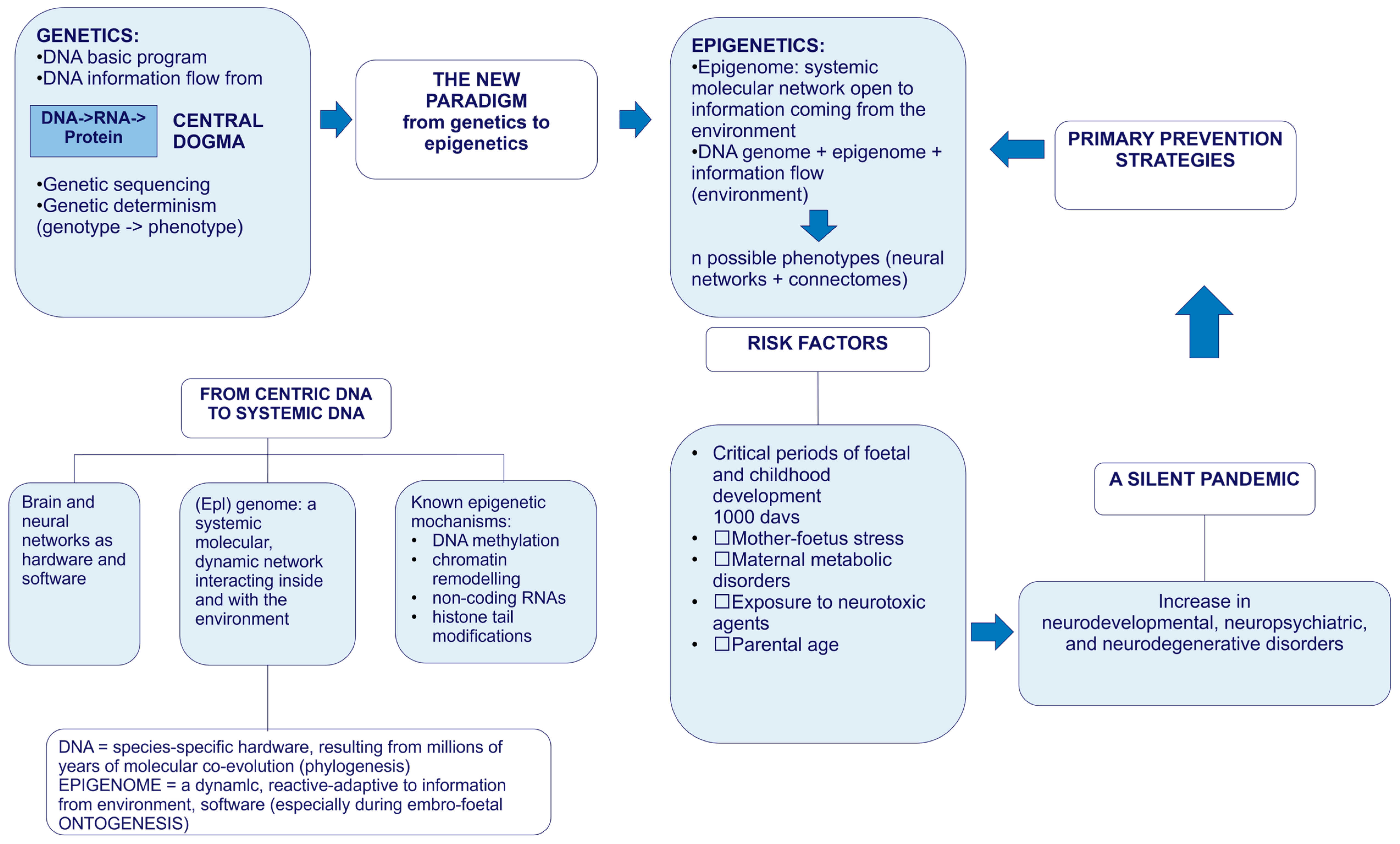
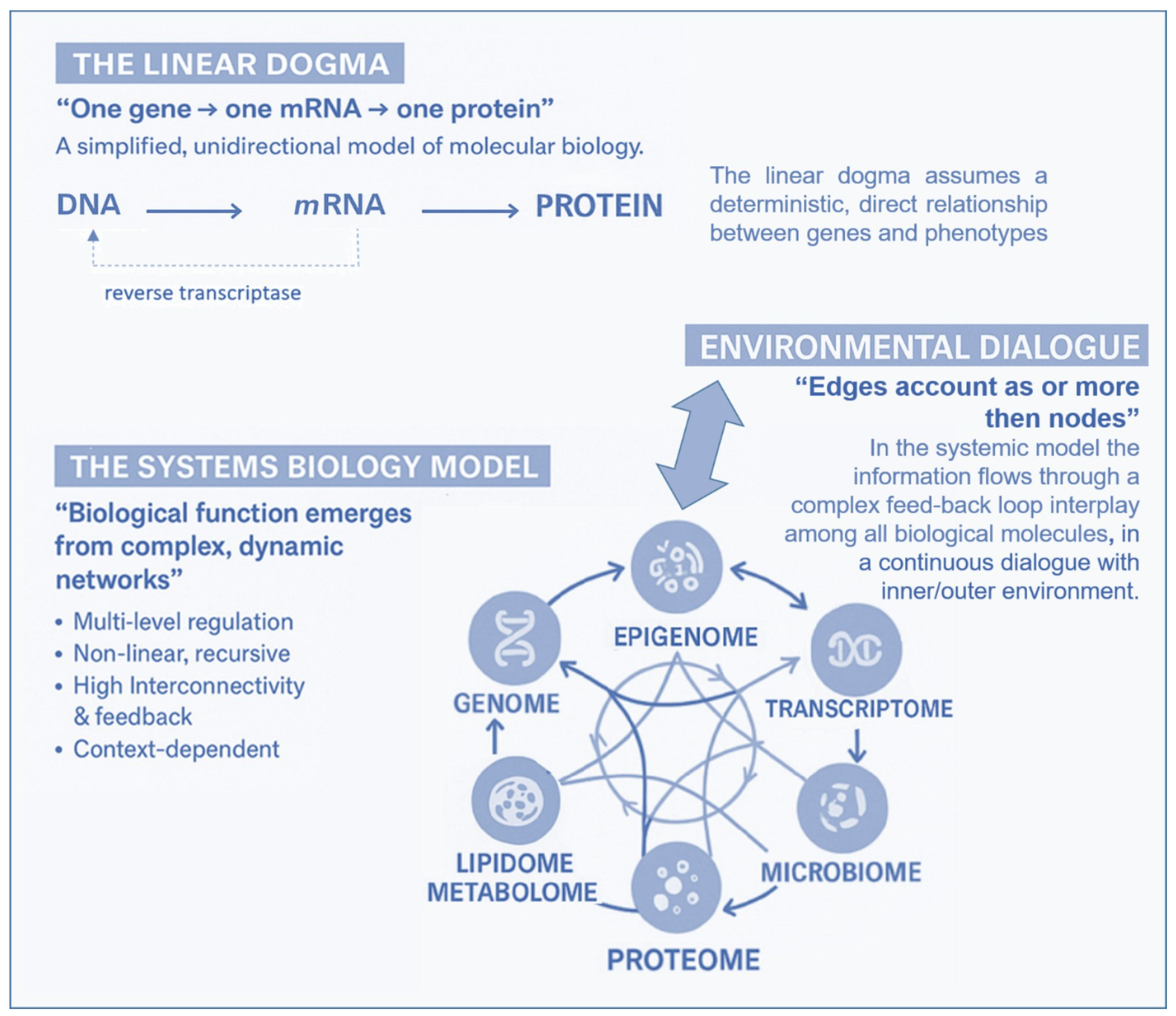
2. Towards a New Paradigm: From Linear Genetics to Systems Biology and Complex Genomics (Epigenetics, Metagenomics, and Hologenomics)
3. The Dynamic Interplay Between Nature and Nurture: An Epigenetic Shift
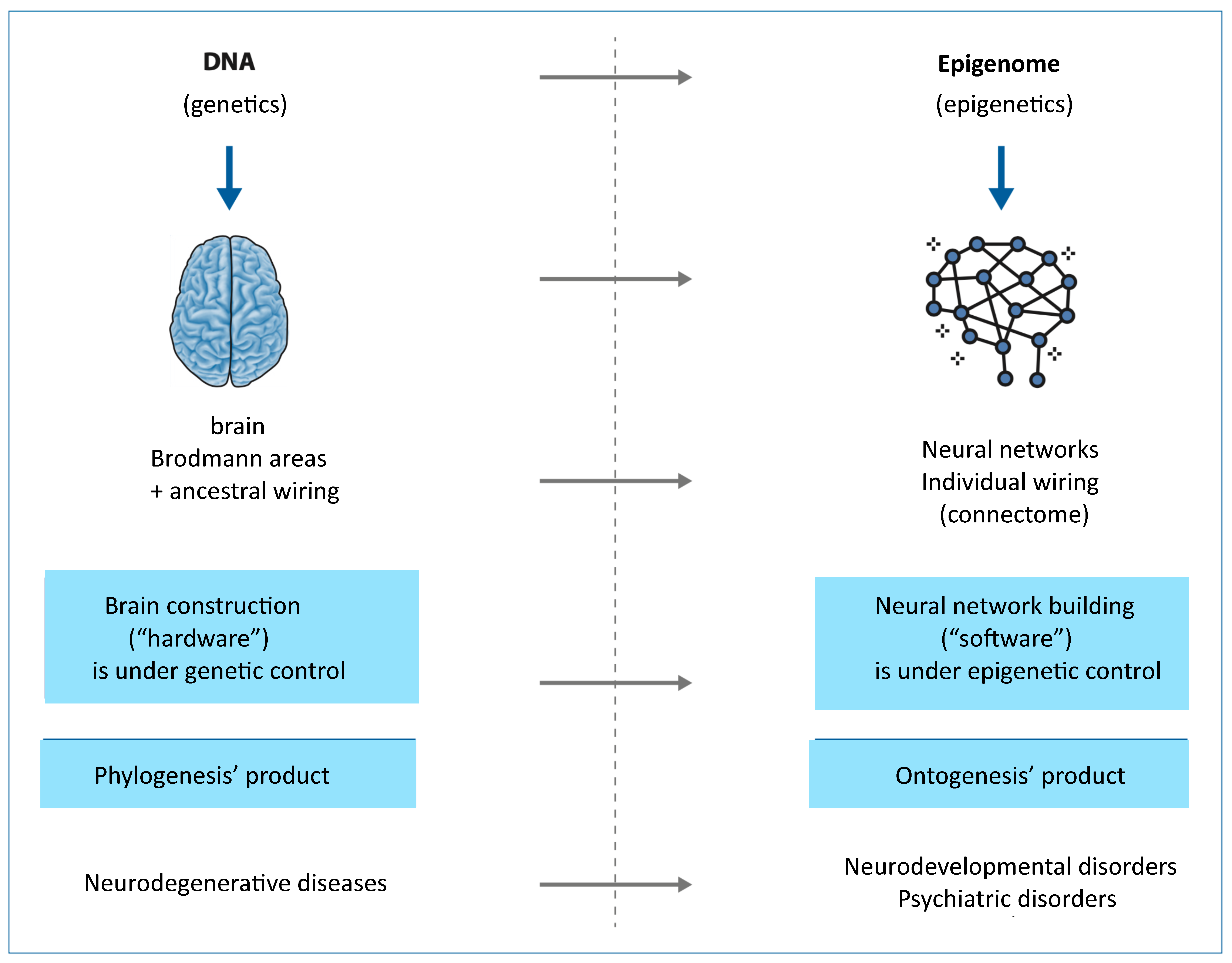
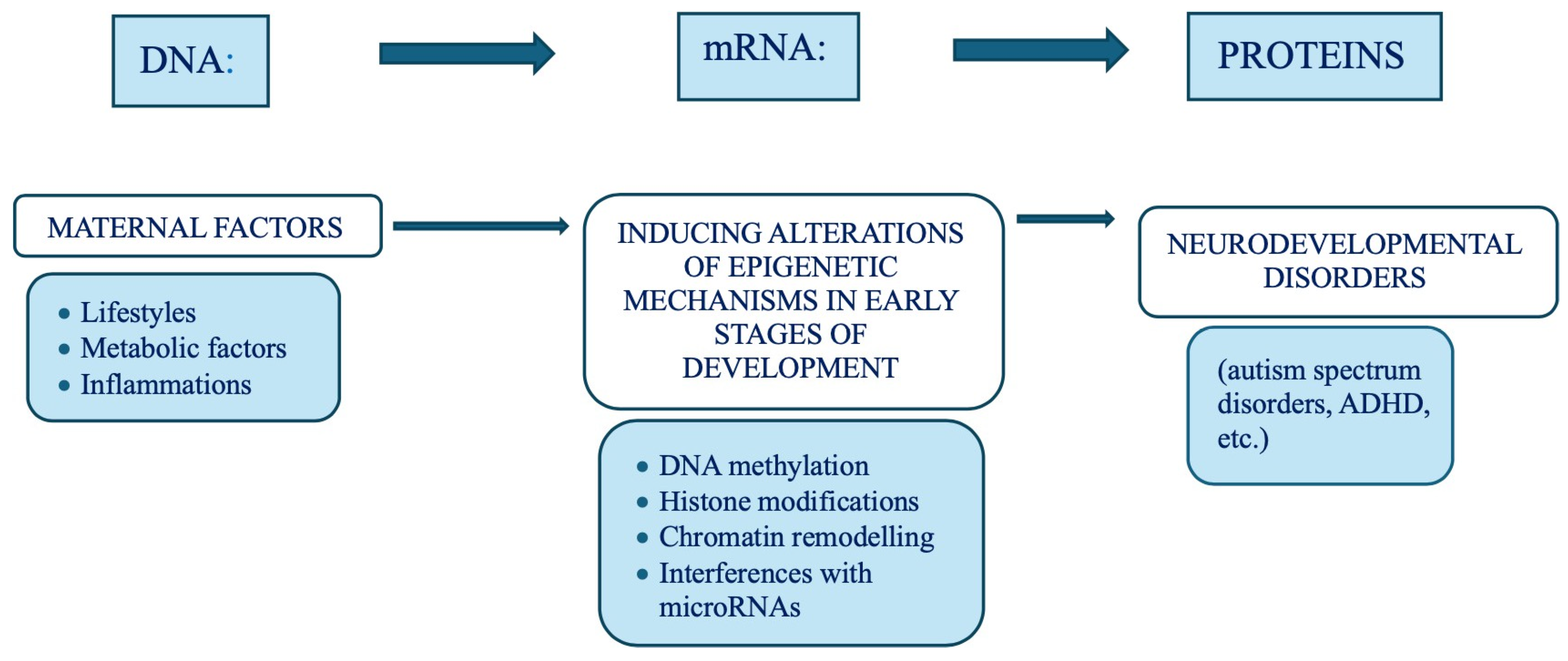
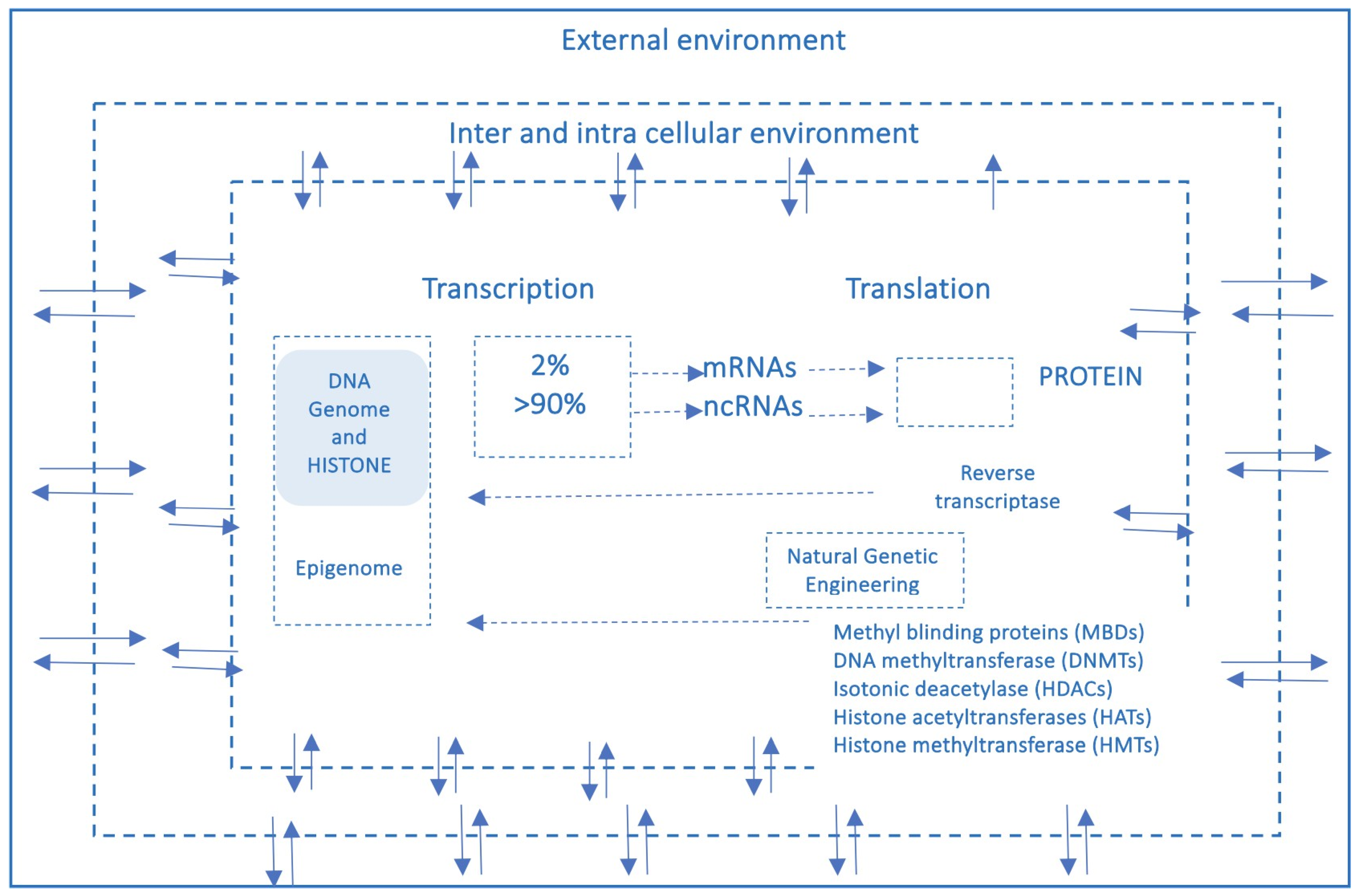
- The genome consists of two main components: a relatively stable part—the funda- mental DNA molecule, which serves as the molecular memory of a species and changes very slowly under natural conditions—and a more complex, dynamic part that interacts with the environment and is constantly evolving. This dynamic component corresponds to what we call the epigenome, the “software” that regulates genetic operation [26,27].
- When scientists examine the genomes of two monozygotic twins at a very young age, they find them to be nearly identical (Nature). However, if they analyze the genomes of the same twins years later—after each has undergone different life experiences that gradually “mark” the epigenome and reposition chromatin—they will observe significant structural changes induced by life experience and environmental factors (Nurture) [31,32,33].
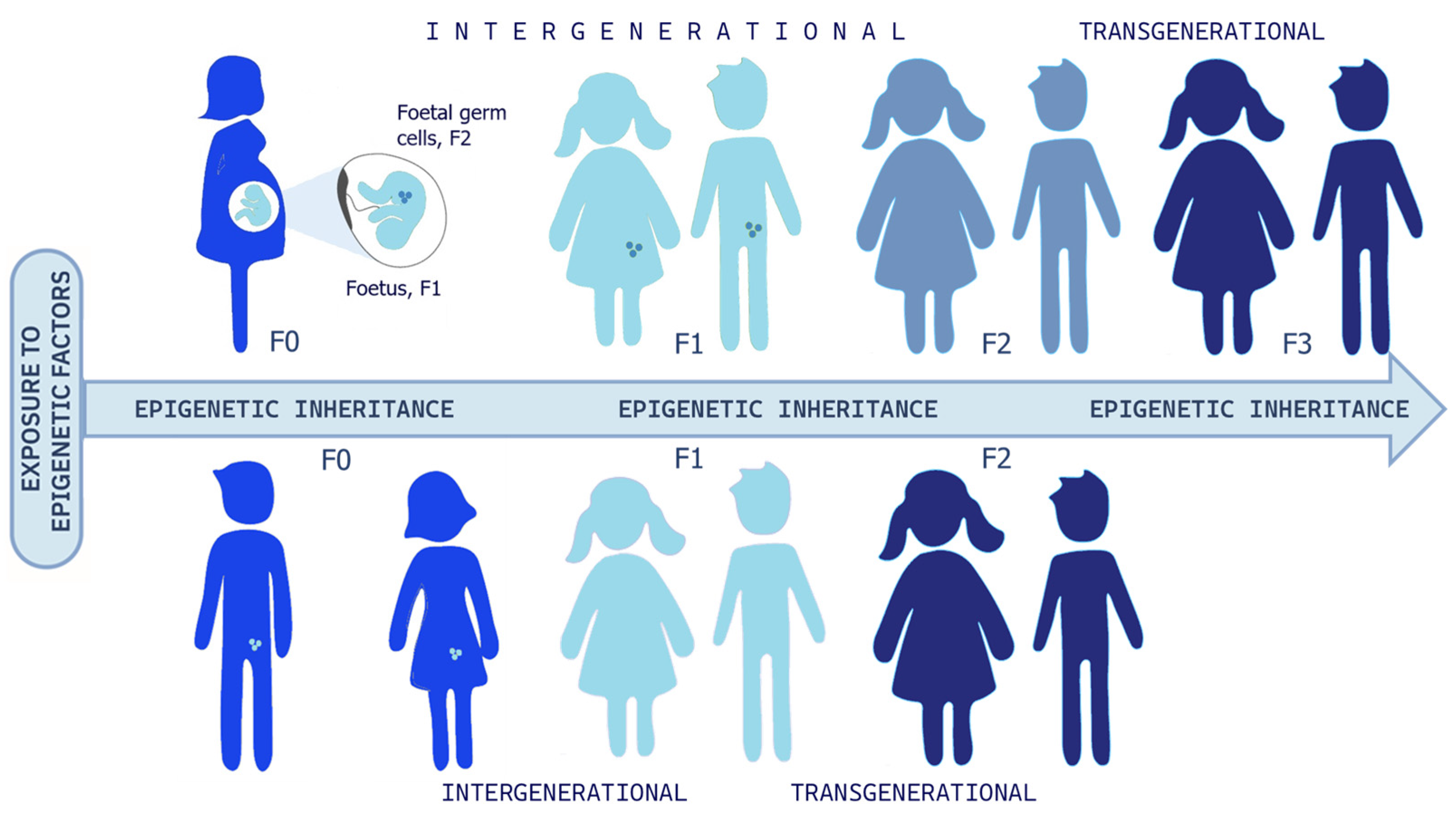
- Epigenetic transformations are largely passed down from one cell generation to the next, facilitating and stabilizing the gradual morpho-functional differentiation of cells in various tissues. Increasing evidence shows that some epigenetic marks in gametes are preserved and transmitted from one human generation to another, potentially leading to the inheritance of damage and even predisposing individuals to neoplastic diseases [34,35,36,37].
- Major epigenetic transformations primarily affect less differentiated cells, which have a more flexible genomic structure. These include pluripotent cells in the early stages of embryonic and fetal development, as well as stem cells in various tissues. The epigenetic marks on germ cells (gametes) can have an impact on the health of future grandchildren [38]. In this light, if we truly consider the environment as a continuous flow of stimuli and molecular information, we could hypothesize that every cell—and, by extension, every organism—is constantly compelled to change in order to adapt. Since this would represent its fundamental purpose, it could not only acquire and process, but also convert this incoming information into new, stored biological data. Initially, these changes could occur at the epigenetic level, but over time, probably with the persistence of stimuli, they could become embedded at the genetic level.
4. Epigenetic Intergenerational and Transgenerational Inheritance
5. A Historical/Epistemological Digression
6. Epigenetic Signatures in the Spectrum of Neurodevelopmental Disorders
7. Epidemiological Data: Genuine Increase or Improved Diagnosis?
- -
- The rising prevalence of preterm births.
- -
- Persistent maternal–fetal and early childhood stress.
- -
- Chronic inflammation and subacute infections.
- -
- Maternal autoimmune diseases, which result in the placental transfer of cytokines and antibodies that interfere with fetal neuronal network development.
- -
- Exposure to hundreds of synthetic chemicals and byproducts of thermochemical reactions detected in the placenta, umbilical cord, and the wider environment.
- -
- Pervasive vehicle emissions.
- -
- The extensive use of pesticides in agriculture.
- -
- Household insecticide use.
- -
- Plasticizers and other endocrine-disrupting chemicals interfere with the adult psycho–neuro–immune–endocrine system and act as pseudo-morphogens in embryos and fetuses. These mimetic molecules can alter cellular differentiation processes, ultimately affecting fetal tissue and organ programming (fetal programming [85]).
8. Phylogenesis and Ontogenesis: The Role of Genetics and Epigenetics
9. Risk Factors
9.1. Environmental Exposures and Epigenetic Neurotoxicology
9.2. Maternal Inflammation, Autoimmunity, and Psycho-Neurotoxicity
9.3. Maternal Metabolic Disorders and Lifestyle
9.4. Maternal–Fetal Stress and Its Psycho-Neurotoxic Effects on the Fetus
9.5. Premature Births and Placental Inflammation: Psychoneurotoxic Effects on the Fetus
9.6. Parental Age and the Risk of Autism and Schizophrenia
- The HPA Axis/Glucocorticoid Signaling: Targeted by both neurotoxic metals (lead and mercury) and psychosocial stress via hypermethylation, which programs anxiety and stress vulnerability.
- GABAergic Signaling: Targeted by maternal inflammation and infection (MIA) via hypermethylation of the genes, leading to synaptic dysfunction and ASD-like phenotypes.
9.7. The Adolescent Brain: A Critical Period of Development
10. Salutogenic Factors
11. Implications for Research and Prevention
- →
- Educational programs to increase the awareness and knowledge of parents, students, and educators, to be validated and suggested as best practice;
- →
- Educational programs for schools to promote salutogenesis, to be validated and suggested as best practice;
- →
- Prospective pregnancy, birth cohorts, and follow-ups with diverse exposures to risk or salutogenic factors, measured and evaluated repeatedly across sensitive windows;
- →
- In animal models, puppies from the same litter, born to mothers with different types of stress and typical epigenomes, could be raised in a neutral or enriched environment to assess the reversibility of epigenetic marks of the negative conditions at birth;
- →
- Integrated multi-omics (e.g., methylation, transcriptomics, and metabolomics) with careful attention to tissue specificity (placenta, cord blood, amniotic fluid, and, where feasible, brain-relevant models) to evaluate the phenotypes correlated with epigenetic marks and different exposures;
- →
- Triangulation using complementary causal-inference approaches (e.g., sibling comparisons, negative controls, and mediation analyses where assumptions are met);
- →
- Replication and rigorous control of batch effects in epigenetic studies;
- →
- Translational bridges that test mechanisms in diverse experimental systems (animal models, iPSC-derived neurons/organoids);
- →
- Most urgently, none of these perspectives of research would be feasible if salutogenic and positive environmental factors are not suitable, which means prevention strategies and policy interventions are needed.
12. Concluding Remarks: Epigenetics, the Bridge Between Genes and Environment, and the Field of Human Responsibility
Literature Search and Selection
Author Contributions
Funding
Data Availability Statement
Acknowledgments
Conflicts of Interest
Abbreviations
| NDDs | Neurodevelopmental disorders |
| ASD | Autism Spectrum Disorder |
| ADHD | Attention-Deficit/Hyperactivity Disorder |
| ID | Intellectual Disability |
| MDD | Major Depressive Disorders |
| SZ | Schizophrenia |
| SLDs | Specific Learning Disorders |
References
- Reichard, J.; Zimmer-Bensch, G. The Epigenome in Neurodevelopmental Disorders. Front. Neurosci. 2021, 15, 776809. [Google Scholar] [CrossRef]
- Adamczyk, P.M.; Shaw, A.; Morella, I.M.; More, L. Neurobiology, molecular pathways, and environmental influences in antisocial traits and personality disorders. Neuropharmacology 2025, 269, 110322. [Google Scholar] [CrossRef]
- Lee, S.; McAfee, J.C.; Lee, J.; Gomez, A.; Ledford, A.T.; Clarke, D.; Min, H.; Gerstein, M.B.; Boyle, A.P.; Sullivan, P.F.; et al. Massively parallel reporter assay investigates shared genetic variants of eight psychiatric disorders. Cell 2025, 188, 1409–1424.e21. [Google Scholar] [CrossRef]
- Xie, C.; Xiang, S.; Shen, C.; Peng, X.; Kang, J.J.; Li, Y.; Cheng, W.; He, S.; Bobou, M.; Broulidakis, M.J.; et al. A shared neural basis underlying psychiatric comorbidity. Nat. Med. 2023, 29, 1232–1242, Erratum in Nat. Med. 2023, 29, 2375. [Google Scholar] [CrossRef] [PubMed]
- Cross-Disorder Group of the Psychiatric Genomics Consortium. Genomic Relationships, Novel Loci, and Pleiotropic Mechanisms across Eight Psychiatric Disorders. Cell 2019, 179, 1469–1482.e11. [Google Scholar] [CrossRef] [PubMed]
- Bacon, E.R.; Brinton, R.D. Epigenetics of the developing and aging brain: Mechanisms that regulate onset and outcomes of brain reorganization. Neurosci. Biobehav. Rev. 2021, 125, 503–516. [Google Scholar] [CrossRef] [PubMed]
- Horsthemke, B. A critical view on transgenerational epigenetic inheritance in humans. Nat. Commun. 2018, 9, 2973. [Google Scholar] [CrossRef]
- Fernandez-Twinn, D.S.; Constância, M.; Ozanne, S.E. Intergenerational epigenetic inheritance in models of developmental programming of adult disease. Semin. Cell Dev. Biol. 2015, 43, 85–95. [Google Scholar] [CrossRef]
- Mulligan, C.J.; Quinn, E.B.; Hamadmad, D.; Dutton, C.L.; Nevell, L.; Binder, A.M.; Panter-Brick, C.; Dajani, R. Epigenetic signatures of intergenerational exposure to violence in three generations of Syrian refugees. Sci. Rep. 2025, 15, 5945. [Google Scholar] [CrossRef]
- Dolinoy, D.C.; Weidmana, J.R.; Jirtle, R.L. Epigenetic gene regulation: Linking early developmental environment to adult disease. Reprod. Toxicol. 2007, 23, 297–307. [Google Scholar] [CrossRef]
- Hacker, K. The Burden of Chronic Disease. Mayo Clin. Proc. Innov. Qual. Outcomes 2024, 8, 112–119, Erratum in Mayo Clin. Proc. Innov. Qual. Outcomes 2024, 9, 100588. [Google Scholar] [CrossRef]
- Wang, G.; Walker, S.O.; Hong, X.; Bartell, T.R.; Wang, X. Epigenetics and Early Life Origins of Chronic Noncommunicable Diseases. J. Adolesc. Health 2013, 52, S14–S21. [Google Scholar] [CrossRef]
- Kundakovic, M.; Champagne, F.A. Early-life experience, epigenetics, and the developing brain. Neuropsychopharmacology 2015, 40, 141–153. [Google Scholar] [CrossRef]
- Kwon, E.; Kim, Y.J. What is fetal programming?: A lifetime health is under the control of in utero health. Obstet. Gynecol. Sci. 2017, 60, 506–519. [Google Scholar] [CrossRef] [PubMed]
- Subramanian, M.; Wojtusciszyn, A.; Favre, L.; Boughorbel, S.; Shan, J.; Letaief, K.B.; Pitteloud, N.; Chouchane, L. Precision medicine in the era of artificial intelligence: Implications in chronic disease management. J. Transl. Med. 2020, 18, 472. [Google Scholar] [CrossRef] [PubMed]
- Encode Project Consortium. An integrated encyclopedia of DNA elements in the human genome. Nature 2012, 489, 57–74. [Google Scholar] [CrossRef]
- Shapiro, J.A. Revisiting the Central Dogma in the 21st Century. Ann. N. Y. Acad. Sci. 2009, 1178, 6–28. [Google Scholar] [CrossRef]
- Balestrieri, E.; Arpino, C.; Matteucci, C.; Sorrentino, R.; Pica, F.; Alessandrelli, R.; Coniglio, A.; Curatolo, P.; Rezza, G.; Macciardi, F.; et al. HERVs Expression in Autism Spectrum Disorders. PLoS ONE 2012, 7, e48831. [Google Scholar] [CrossRef] [PubMed]
- Guffanti, G.; Gaudi, S.; Fallon, J.H.; Sobell, J.; Potkin, S.G.; Pato, C.; Macciardi, F. Transposable elements and psychiatric disorders. Am. J. Med. Genet. Part B 2014, 165, 201–216. [Google Scholar] [CrossRef]
- Dash, S.; Syed, Y.A.; Khan, M.R. Understanding the Role of the Gut Microbiome in Brain Development and Its Association with Neurodevelopmental Psychiatric Disorders. Front. Cell Dev. Biol. 2022, 10, 880544. [Google Scholar] [CrossRef]
- Dutton, C.L.; Maisha, F.M.; Quinn, E.B.; Morales, K.L.; Moore, J.M.; Mulligan, C.J. Maternal Psychosocial Stress Is Associated with Reduced Diversity in the Early Infant Gut Microbiome. Microorganisms 2023, 11, 975. [Google Scholar] [CrossRef]
- Krubitzer, L.; Kahn, D.M. Nature versus nurture revisited: An old idea with a new twist. Prog. Neurobiol. 2003, 70, 33–52. [Google Scholar] [CrossRef]
- Perna, R.; Harik, L. Nature (Genes), Nurture (Epigenetics), and Brain Development. J. Pediatr. Neonatal Care 2017, 6, 00238. [Google Scholar] [CrossRef]
- Meaney, M.J. Epigenetics and the Biological Definition of Gene × Environment Interactions. Child Dev. 2010, 81, 41–79. [Google Scholar] [CrossRef]
- Penner-Goeke, S.; Binder, E.B. Linking environmental factors and gene regulation. eLife 2024, 13, e96710. [Google Scholar] [CrossRef]
- Dolinoy, D.C.; Das, R.; Weidman, J.R.; Jirtle, R.L. Metastable epialleles, imprinting, and the fetal origins of adult diseases. Pediatr. Res. 2007, 61, 30–37. [Google Scholar] [CrossRef] [PubMed]
- Kubota, T. Epigenetic alterations induced by environmental stress associated with metabolic and neurodevelopmental disorders. Environ. Epigenet. 2016, 2, dvw017. [Google Scholar] [CrossRef]
- Mulligan, C.J. Systemic racism can get under our skin and into our genes. Am. J. Phys. Anthropol. 2021, 175, 399–405. [Google Scholar] [CrossRef] [PubMed]
- Jaenisch, R.; Bird, A. Epigenetic regulation of gene expression: How the genome integrates intrinsic and environmental signals. Nat. Genet. 2003, 33, 245–254. [Google Scholar] [CrossRef] [PubMed]
- Mulligan, C.J. Epigenetic age acceleration and psychosocial stressors in early childhood. Epigenomics 2025, 17, 701–710. [Google Scholar] [CrossRef]
- Fraga, M.F.; Ballestar, E.; Paz, M.F.; Ropero, S.; Setien, F.; Ballestar, M.L.; Heine-Suñer, D.; Cigudosa, J.C.; Urioste, M.; Benitez, J.; et al. Epigenetic differences arise during the lifetime of monozygotic twins. Proc. Natl. Acad. Sci. USA 2005, 102, 10604–10609. [Google Scholar] [CrossRef]
- Hannon, E.; Knox, O.; Sugden, K.; Burrage, J.; Wong, C.C.Y.; Belsky, D.W.; Corcoran, D.L.; Arseneault, L.; Moffitt, T.E.; Caspi, A.; et al. Characterizing genetic and environmental influences on variable DNA methylation using monozygotic and dizygotic twins. PLoS Genet. 2018, 14, e1007544. [Google Scholar] [CrossRef]
- Zenk, F.; Loeser, E.; Schiavo, R.; Kilpert, F.; Bogdanović, O.; Iovino, N. Germ line-inherited H3K27me3 restricts enhancer function during maternalto-zygotic transition. Science 2017, 357, 212–216. [Google Scholar] [CrossRef]
- Reik, W. Stability and flexibility of epigenetic gene regulation in mammalian development. Nature 2007, 447, 425–432. [Google Scholar] [CrossRef]
- Drake, A.J.; Walker, B.R. The intergenerational effects of fetal programming: Non-genomic mechanisms for the inheritance of low birth weight and cardiovascular risk. J. Endocrinol. 2004, 180, 1–16. [Google Scholar] [CrossRef] [PubMed]
- Banushi, B.; Collova, J.; Milroy, H. Epigenetic Echoes: Bridging Nature, Nurture, and Healing Across Generations. Int. J. Mol. Sci. 2025, 26, 3075. [Google Scholar] [CrossRef] [PubMed]
- Burgio, E.; Piscitelli, P.; Colao, A. Environmental Carcinogenesis and Transgenerational Transmission of Carcinogenic Risk: From Genetics to Epigenetics. Int. J. Environ. Res. Public Health 2018, 15, 1791. [Google Scholar] [CrossRef]
- Webster, A.K.; Phillips, P.C. Epigenetics and individuality: From concepts to causality across timescales. Nat. Rev. Genet. 2025, 26, 406–423. [Google Scholar] [CrossRef] [PubMed]
- Verdikt, R.; Armstrong, A.A.; Allard, P. Transgenerational inheritance and its modulation by environmental cues. Curr. Top. Dev. Biol. 2023, 152, 31–76. [Google Scholar]
- Khan, Z.; El Messiri, N.; Iqbal, E.; Hassan, H.; Tanweer, M.S.; Sadia, S.R.; Taj, M.; Zaidi, U.; Yusuf, K.; Syed, N.I.; et al. On the role of epigenetic modifications of HPA axis in post traumatic stress disorder and resilience. J. Neurophysiol. 2025, 133, 742–759. [Google Scholar] [CrossRef]
- Knudsen, T.M.; Rezwan, F.I.; Jiang, Y.; Karmaus, W.; Svanes, C.; Holloway, J.W. Transgenerational and intergenerational epigenetic inheritance in allergic diseases. J. Allergy Clin. Immunol. 2018, 142, 765–772. [Google Scholar] [CrossRef]
- Cavalli, G.; Heard, E. Advances in epigenetics link genetics to the environment and disease. Nature 2019, 571, 489–499. [Google Scholar] [CrossRef]
- Takahashi, Y.; Valencia, M.M.; Yu, Y.; Ouchi, Y.; Takahashi, K.; Shokhirev, M.N.; Lande, K.; Williams, A.E.; Fresia, C.; Kurita, M.; et al. Transgenerational inheritance of acquired epigenetic signatures at CpG islands in mice. Cell 2023, 186, 715–731.e19. [Google Scholar] [CrossRef]
- Kachhawaha, A.S.; Mishra, S.; Tiwari, A.K. Epigenetic control of heredity. Prog. Mol. Biol. Transl. Sci. 2023, 198, 25–60. [Google Scholar]
- Korolenko, A.A.; Noll, S.E.; Skinner, M.K. Epigenetic Inheritance and Transgenerational Environmental Justice. Yale J. Biol. Med. 2023, 96, 241–250. [Google Scholar] [CrossRef]
- Wood, J.J.; Drahota, A.; Sze, K.; Har, K.; Chiu, A.; Langer, D.A. Cognitive behavioral therapy for anxiety in children with autism spectrum disorders: A randomized, controlled trial. J. Child Psychol. Psychiatry 2009, 50, 224–234. [Google Scholar] [CrossRef]
- Ball, N.J.; Mercado, E., III; Orduna, I. Enriched environments as a potential treatment for developmental disorders: A critical assessment. Front. Psychol. 2019, 10, 466. [Google Scholar] [CrossRef] [PubMed]
- Kaliman, P. Epigenetics and meditation. Curr. Opin. Psychol. 2019, 28, 76–80. [Google Scholar] [CrossRef] [PubMed]
- Kubota, T. Biological understanding of neurodevelopmental disorders based on epigenetics, a new genetic concept in education. In Learning Disabilities—Neurobiology, Assessment, Clinical Features and Treatments; Misciagna, S., Ed.; IntechOpen: London, UK, 2022. [Google Scholar]
- Gaudi, S.; Guffanti, G.; Fallon, J.; Macciardi, F. Epigenetic mechanisms and associated brain circuits in the regulation of positive emotions: A role for transposable elements. J. Comp. Neurol. 2016, 524, 2944–2954. [Google Scholar] [CrossRef]
- Yehuda, R.; Engel, S.M.; Brand, S.R.; Seckl, J.; Marcus, S.M.; Berkowitz, G.S. Transgenerational effects of posttraumatic stress disorder in babies of mothers exposed to the World Trade Center attacks during pregnancy. J. Clin. Endocrinol. Metab. 2005, 90, 4115–4118. [Google Scholar] [CrossRef] [PubMed]
- Yehuda, R.; Bierer, L.M. Transgenerational transmission of cortisol and PTSD risk. Prog. Brain Res. 2008, 167, 121–135. [Google Scholar] [PubMed]
- Cusick, S.E.; Georgieff, M.K. The Role of Nutrition in Brain Development: The Golden Opportunity of the “First 1000 Days”. J. Pediatr. 2016, 175, 16–21. [Google Scholar] [CrossRef]
- Katus, L.; Lloyd-Fox, S. Broadening the lens: How 25 years of prospective longitudinal studies have reshaped infant neurodevelopment in the majority world. Infant. Behav. Dev. 2025, 81, 102128. [Google Scholar] [CrossRef]
- Aristotle. De Generatione et Corruptione; Oxford University Press: Oxford, UK, 1982. [Google Scholar]
- Aristotle. De Respiratione, Parva Naturalia; Harvard University Press: Cambridge, MA, USA, 1908. [Google Scholar]
- Aristotle. De Vita et Morte Parva Naturalia; Oxford University Press: Oxford, UK, 1957. [Google Scholar]
- Heard, E.; Martienssen, R.A. Transgenerational Epigenetic Inheritance: Myths and Mechanisms. Cell 2014, 157, 95–109. [Google Scholar] [CrossRef] [PubMed]
- Morris-Rosendahl, D.J.; Crocq, M.A. Neurodevelopmental disorders—The history and future of a diagnostic concept. Dialogues Clin. Neurosci. 2020, 22, 65–72. [Google Scholar] [CrossRef] [PubMed]
- Mullin, A.P.; Gokhale, A.; Moreno-De-Luca, A.; Sanyal, S.; Waddington, J.L.; Faundez, V. Neurodevelopmental disorders: Mechanisms and boundary definitions from genomes, interactomes and proteomes. Transl. Psychiatry 2013, 3, e329. [Google Scholar] [CrossRef]
- Bonti, E.; Zerva, I.K.; Koundourou, C.; Sofologi, M. The High Rates of Comorbidity among Neurodevelopmental Disorders: Reconsidering the Clinical Utility of Distinct Diagnostic Categories. J. Pers. Med. 2024, 14, 300. [Google Scholar] [CrossRef]
- Bertollo, A.G.; Puntel, C.F.; da Silva, B.V.; Martins, M.L.; Bagatini, M.D.; Ign’acio, Z.M. Neurobiological Relationships Between Neurodevelopmental Disorders and Mood Disorders. Brain Sci. 2025, 15, 307. [Google Scholar] [CrossRef]
- Owen, M.J.; O’Donovan, M.C. Schizophrenia and the neurodevelopmental continuum: Evidence from genomics. World Psychiatry 2017, 16, 227–235. [Google Scholar] [CrossRef]
- Stoccoro, A.; Conti, E.; Scaffei, E.; Calderoni, S.; Coppedè, F.; Migliore, L.; Battini, R. DNA Methylation Biomarkers for Young Children with Idiopathic Autism Spectrum Disorder: A Systematic Review. Int. J. Mol. Sci. 2023, 24, 9138. [Google Scholar] [CrossRef]
- Hamza, M.; Halayem, S.; Bourgou, S.; Daoud, M.; Charfi, F.; Belhadj, A. Epigenetics and ADHD: Toward an Integrative Approach of the Disorder Pathogenesis. J. Atten. Disord. 2019, 23, 655–664. [Google Scholar] [CrossRef]
- Mirkovic, B.; Chagraoui, A.; Gerardin, P.; Cohen, D. Epigenetics and Attention-Deficit/Hyperactivity Disorder: New Perspectives? Front. Psychiatry 2020, 11, 579. [Google Scholar] [CrossRef] [PubMed]
- Fu, G.H.; Chen, W.; Li, H.M.; Wang, Y.F.; Liu, L.; Qian, Q.J. A potential association of RNF219-AS1 with ADHD: Evidence from categorical analysis of clinical phenotypes and from quantitative exploration of executive function and white matter microstructure endophenotypes. CNS Neurosci. Ther. 2021, 27, 603–616. [Google Scholar] [CrossRef] [PubMed]
- Zhang, S.F.; Gao, J.; Liu, C.M. The Role of Non-Coding RNAs in Neurodevelopmental Disorders. Front. Genet. 2019, 10, 1033. [Google Scholar] [CrossRef]
- Liaci, C.; Prandi, L.; Pavinato, L.; Brusco, A.; Maldotti, M.; Molineris, I.; Oliviero, S.; Merlo, G.R. The Emerging Roles of Long Non-Coding RNAs in Intellectual Disability and Related Neurodevelopmental Disorders. Int. J. Mol. Sci. 2022, 23, 6118. [Google Scholar] [CrossRef]
- Smigielski, L.; Jagannath, V.; Rössler, W.; Walitza, S.; Grünblatt, E. Epigenetic mechanisms in schizophrenia and other psychotic disorders: A systematic review of empirical human findings. Mol. Psychiatry 2020, 25, 1718–1748. [Google Scholar] [CrossRef] [PubMed]
- Lordan, R.; Storni, C.; De Benedictis, C.A. Autism Spectrum Disorders: Diagnosis and Treatment. In Autism Spectrum Disorders; Grabrucker, A.M., Ed.; Exon Publications: Brisbane, Australia, 2021; Chapter 2. [Google Scholar]
- Márquez-Caraveo, M.E.; Rodríguez-Valentín, R.; Pérez-Barrón, V.; Vázquez-Salas, R.A.; Sánchez-Ferrer, J.C.; De Castro, F.; Allen-Leigh, B.; Lazcano-Ponce, E. Children and adolescents with neurodevelopmental disorders show cognitive heterogeneity and require a person-centered approach. Sci. Rep. 2021, 11, 18463. [Google Scholar] [CrossRef]
- Aldinger, K.A.; Lane, C.J.; Veenstra-Van der Weele, J.; Levitt, P. Patterns of Risk for Multiple Co-Occurring Medical Conditions Replicate Across Distinct Cohorts of Children with Autism Spectrum Disorder. Autism Res. 2015, 8, 771–781. [Google Scholar] [CrossRef]
- Patel, S.; Han, V.X.; Keating, B.A.; Nishida, H.; Mohammad, S.; Jones, H.; Dale, R.C. NDDECHO: A standardised digital assessment tool to capture early life environmental and inflammatory factors for children with neurodevelopmental disorders. Brain Behav. Immun. Health 2025, 46, 101011. [Google Scholar] [CrossRef]
- Grandjean, P.; Landrigan, P.J. Developmental neurotoxicity of industrial chemicals. Lancet 2006, 368, 2167–2178. [Google Scholar] [CrossRef]
- Grandjean, P.; Landrigan, P.J. Neurobehavioural effects of developmental toxicity. Lancet Neurol. 2014, 13, 330–338. [Google Scholar] [CrossRef]
- Frances, L.; Quintero, J.; Fernández, A.; Ruiz, A.; Caules, J.; Fillon, G.; Hervás, A.; Soler, C.V. Current state of knowledge on the prevalence of neurodevelopmental disorders in childhood according to the DSM-5: A systematic review in accordance with the PRISMA criteria. Child. Adolesc. Psychiatry Ment. Health 2022, 16, 27. [Google Scholar] [CrossRef] [PubMed]
- Bougeard, C.; Picarel-Blanchot, F.; Schmid, R.; Campbell, R.; Buitelaar, J. Prevalence of Autism Spectrum Disorder and Co-Morbidities in Children and Adolescents: A Systematic Literature Review. Focus 2024, 2, 212. [Google Scholar] [CrossRef]
- Baio, J.; Wiggins, L.; Christensen, D.L.; Maenner, M.J.; Daniels, J.; Warren, Z.; Kurzius-Spencer, M.; Zahorodny, W.; Robinson, C.R.; White, T.; et al. Prevalence of Autism Spectrum Disorder Among Children Aged 8 Years—Autism and Developmental Disabilities Monitoring Network, 11 Sites, United States, 2014. MMWR Surveill. Summ. 2018, 67, 1–23. [Google Scholar] [CrossRef] [PubMed]
- O’Sharkey, K.; Mitra, S.; Paik, S.-A.; Chow, T.; Cockburn, M.; Ritz, B. Trends in the Prevalence of Autism Spectrum Disorder in California: Disparities by Sociodemographic Factors and Region Between 1990–2018. J. Autism Dev. Disord. 2025, 55, 2503–2511. [Google Scholar] [CrossRef] [PubMed]
- Fombonne, E.; MacFarlane, H.; Salem, A.C. Epidemiological surveys of ASD: Advances and remaining challenges. J. Autism Dev. Disord. 2021, 51, 4271–4290. [Google Scholar] [CrossRef]
- Sacco, R.; Camilleri, N.; Eberhardt, J.; Umla-Runge, K.; Newbury-Birch, D. The Prevalence of Autism Spectrum Disorder in Europe. In Autism Spectrum Disorders—Recent Advances and New Perspectives; IntechOpen: London, UK, 2023. [Google Scholar]
- Issac, A.; Halemani, K.; Shetty, A.; Thimmappa, L.; Vijay, V.; Koni, K.; Mishra, P.; Kapoor, V. The global prevalence of autism spectrum disorder in children: A systematic review and meta-analysis. Osong Public Health Res. Perspect. 2025, 16, 3–27. [Google Scholar] [CrossRef]
- Lahiri, D.K.; Maloney, B.; Riyaz, B.M.; Ge, Y.W.; Zawia, N.H. How and when environmental agents and dietary factors affect the course of Alzheimer’s disease: The “LEARn” model (Latent Early-Life Associated Regulation) may explain the triggering of AD. Curr. Alzheimer Res. 2007, 4, 219–228. [Google Scholar] [CrossRef]
- Burgio, E. Environment and Fetal Programming: The origins of some current ‘pandemics’. J. Pediatr. Neonatal Individ. Med. 2015, 4, e040237. [Google Scholar]
- Lacagnina, S. The Developmental Origins of Health and Disease (DOHaD). Am. J. Lifestyle Med. 2019, 14, 47–50. [Google Scholar] [CrossRef]
- Raff, R.A.; Arthur, W.; Carroll, S.B.; Coates, M.I.; Wray, G. Chronicling the birth of a discipline. Evol. Dev. 1999, 1, 1–2. [Google Scholar] [CrossRef] [PubMed]
- Miranda-Dominguez, O.; Feczko, E.; Grayson, D.S.; Walum, H.; Nigg, J.T.; Fair, D.A. Heritability of the human connectome: A connectotyping study. Netw. Neurosci. 2018, 2, 175–199. [Google Scholar] [CrossRef] [PubMed]
- Bailo, P.; Piccinini, A.; Barbara, G.; Caruso, P.; Bollati, V.; Gaudi, S. Epigenetics of violence against women: A systematic review of the literature. Environ. Epigenet. 2024, 10, dvae012. [Google Scholar] [CrossRef]
- Carannante, A.; Giustini, M.; Rota, F.; Bailo, P.; Piccinini, A.; Izzo, G.; Bollati, V.; Gaudi, S. Intimate partner violence and stress-related disorders: From epigenomics to resilience. Front. Glob. Women’s Health 2025, 6, 1536169. [Google Scholar] [CrossRef]
- Tuulari, J.J.; Bourgery, M.; Iversen, J.; Koefoed, T.G.; Ahonen, A.; Ahmedani, A.; Kataja, E.-L.; Karlsson, L.; Barrès, R.; Karlsson, H.; et al. Exposure to childhood maltreatment is associated with specific epigenetic patterns in sperm. Mol. Psychiatry 2025, 30, 2635–2644. [Google Scholar] [CrossRef]
- Stenz, L.; Schechter, D.S.; Serpa, S.R.; Paoloni-Giacobino, A. Intergenerational Transmission of DNA Methylation Signatures Associated with Early Life Stress. Curr. Genom. 2018, 19, 665–675. [Google Scholar] [CrossRef]
- An, E.; Delgadillo, D.R.; Yang, J.; Agarwal, R.; Labus, J.S.; Pawar, S.; Leitman, M.; Kilpatrick, L.A.; Bhatt, R.R.; Vora, P.; et al. Stress-resilience impacts psychological wellbeing as evidenced by brain–gut microbiome interactions. Nat. Ment. Health 2024, 2, 935–950. [Google Scholar] [CrossRef]
- Roth, T.L.; Sweatt, J.D. Annual Research Review: Epigenetic mechanisms and environmental shaping of the brain during sensitive periods of development. J. Child Psychol. Psychiatry 2011, 52, 398–408. [Google Scholar] [CrossRef]
- Tran, N.Q.V.; Miyake, K. Neurodevelopmental Disorders and Environmental Toxicants: Epigenetics as an Underlying Mechanism. Int. J. Genom. 2017, 2017, 7526592. [Google Scholar] [CrossRef]
- Bose, R.; Spulber, S.; Ceccatelli, S. The threat posed by environmental contaminants on neurodevelopment: What can we learn from neural stem cells? Int. J. Mol. Sci. 2023, 24, 4338. [Google Scholar] [CrossRef] [PubMed]
- Antoniou, E.E.; Otter, R. Phthalate exposure and neurotoxicity in children: A systematic review and meta-analysis. Int. J. Public Health 2024, 69, 1606802. [Google Scholar] [CrossRef] [PubMed]
- Sun, C.; Huang, C.; Yu, C.W. Environmental exposure and infants’ health. Indoor Built Environ. 2023, 32, 1291–1295. [Google Scholar] [CrossRef]
- FIsmail, Y.; Fatemi, A.; Johnston, M.V. Cerebral plasticity: Windows of opportunity in the developing brain. Eur. J. Paediatr. Neurol. 2017, 21, 23–48. [Google Scholar] [CrossRef]
- Lanphear, B.P.; Hornung, R.; Khoury, J.; Yolton, K.; Baghurst, P.; Bellinger, D.C.; Canfield, R.L.; Dietrich, K.N.; Bornschein, R.; Greene, T.; et al. Low-level environmental lead exposure and children’s intellectual function: An international pooled analysis. Environ. Health Perspect. 2005, 113, 894–899, Erratum in Environ. Health Perspect. 2019, 127, 099001. [Google Scholar] [CrossRef]
- Kumar, A.; Kumar, A.; Cabral-Pinto, M.M.S.; Chaturvedi, A.K.; Shabnam, A.A.; Subrahmanyam, G.; Mondal, R.; Gupta, D.K.; Malyan, S.K.; Kumar, S.S.; et al. Lead Toxicity: Health Hazards, Influence on Food Chain, and Sustainable Remediation Approaches. Int. J. Environ. Res. Public Health 2020, 17, 2179. [Google Scholar] [CrossRef]
- Johansson, C.; Castoldi, A.F.; Onishchenko, N.; Manzo, L.; Vahter, M.; Ceccatelli, S. Neurobehavioural and molecular changes induced by methylmercury exposure during development. Neurotox. Res. 2007, 11, 241–260. [Google Scholar] [CrossRef]
- Farıas, P.; Hern’andez-Bonilla, D.; Moreno-Mac’ıas, H.; Montes-L’opez, S.; Schnaas, L.; Texcalac-Sangrador, J.L.; R’ıos, C.; Riojas-Rodrıguez, H. Prenatal Co-Exposure to Manganese, Mercury, and Lead, and Neurodevelopment in Children during the First Year of Life. Int. J. Environ. Res. Public Health 2022, 19, 13020. [Google Scholar] [CrossRef]
- Appleton, A.A.; Jackson, B.P.; Karagas, M.; Marsit, C.J. Prenatal exposure to neurotoxic metals is associated with increased placental glucocorticoid receptor DNA methylation. Epigenetics 2017, 12, 607–615. [Google Scholar] [CrossRef] [PubMed]
- Perera, F.; Miao, Y.; Ross, Z.; Rauh, V.; Margolis, A.; Hoepner, L.; Riley, K.W.; Herbstman, J.; Wang, S. Prenatal exposure to air pollution during the early and middle stages of pregnancy is associated with adverse neurodevelopmental outcomes at ages 1 to 3 years. Environ. Health 2024, 23, 95. [Google Scholar] [CrossRef]
- Grova, N.; Schroeder, H.; Olivier, J.L.; Turner, J.D. Epigenetic and Neurological Impairments Associated with Early Life Exposure to Persistent Organic Pollutants. Int. J. Genom. 2019, 2019, 2085496. [Google Scholar] [CrossRef] [PubMed]
- Botnaru, A.A.; Lupu, A.; Morariu, P.C.; Jităreanu, A.; Nedelcu, A.H.; Morariu, B.A.; Anton, E.; Di Gioia, M.L.; Lupu, V.V.; Dragostin, O.M.; et al. Neurotoxic Effects of Pesticides: Implications for Neurodegenerative and Neurobehavioral Disorders. J. Xenobiot. 2025, 15, 83. [Google Scholar] [CrossRef]
- Brannen, K.C.; Devaud, L.L.B.; Liu, J.C.; Lauder, J.M. Prenatal exposure to neurotoxicants dieldrin or lindane alters tert-Butylbicyclophosphorothionate binding to GABAA receptors in fetal rat brainstem. Dev. Neurosci. 1998, 20, 34–41. [Google Scholar] [CrossRef]
- Van Melis, L.V.J.; Bak, T.; Peerdeman, A.M.; van Kleef, R.G.D.M.; Wopken, J.P.; Westerink, R.H.S. Acute, prolonged, and chronic exposure to organochlorine insecticides evoke differential effects on in vitro neuronal activity and network development. Neurotoxicology 2025, 111, 103308. [Google Scholar] [CrossRef] [PubMed]
- Rauh, V.A.; Garfinkel, R.; Perera, F.P.; Andrews, H.F.; Hoepner, L.; Barr, D.B.; Whitehead, R.; Tang, D.; Whyatt, R.W. Impact of prenatal chlorpyrifos exposure on neurodevelopment in the first 3 years of life among inner-city children. Pediatrics 2006, 118, e1845–e1859. [Google Scholar] [CrossRef]
- Roberts, J.R.; Dawley, E.H.; Reigart, J.R. Children’s low-level pesticide exposure and associations with autism and ADHD: A review. Pediatr. Res. 2019, 85, 234–241. [Google Scholar] [CrossRef] [PubMed]
- Bertoletti, A.C.C.; Peres, K.K.; Faccioli, L.S.; Vacci, M.C.; Mata, I.R.D.; Kuyven, C.J.; Bosco, S.M.D. Early exposure to agricultural pesticides and the occurrence of autism spectrum disorder: A systematic review. Rev. Paul. Pediatr. 2022, 41, e2021360. [Google Scholar] [CrossRef] [PubMed]
- Atladottir, H.O.; Thorsen, P.; Ostergaard, L.; Schendel, D.E.; Lemcke, S.; Abdallah, M.; Parner, E.T. Maternal infection requiring hospitalization during pregnancy and autism spectrum disorders. J. Autism Dev. Disord. 2010, 40, 1423–1430. [Google Scholar] [CrossRef]
- Zerbo, O.; Iosif, A.-M.; Walker, C.; Ozonoff, S.; Hansen, R.L.; Hertz-Picciotto, I. Is maternal influenza or fever during pregnancy associated with autism or developmental delays? Results from the CHARGE (Childhood Autism Risks from Genetics and Environment) study. J. Autism Dev. Disord. 2013, 43, 25–33. [Google Scholar] [CrossRef]
- Kwon, H.K.; Choi, G.B.; Huh, J.R. Maternal inflammation and its ramifications on fetal neurodevelopment. Trends Immunol. 2022, 43, 230–244. [Google Scholar] [CrossRef]
- Ayoub, G. Neurodevelopmental impact of maternal immune activation and autoimmune disorders, environmental toxicants and folate metabolism on autism spectrum disorder. Curr. Issues Mol. Biol. 2025, 47, 721. [Google Scholar] [CrossRef]
- Keil, A.; Daniels, J.L.; Forssen, U.; Hultman, C.; Cnattingius, S.; Soderberg, K.C.; Feychting, M.; Sparen, P. Parental autoimmune diseases associated with autism spectrum disorders in offspring. Epidemiology 2010, 21, 805–808. [Google Scholar] [CrossRef]
- Atladottir, H.O.; Pedersen, M.G.; Thorsen, P.; Mortensen, P.B.; Deleuran, B.; Eaton, W.W.; Parner, E.T. Association of family history of autoimmune diseases and autism spectrum disorders. Pediatrics 2009, 124, 687–694. [Google Scholar] [CrossRef]
- MSpann, N.; Timonen-Soivio, L.; Suominen, A.; Cheslack-Postava, K.; McKeague, I.W.; Sourander, A.; Brown, A.S. Proband and familial autoimmune diseases are associated with proband diagnosis of autism spectrum disorders. J. Am. Acad. Child Adolesc. Psychiatry 2019, 58, 496–505. [Google Scholar] [CrossRef]
- Labouesse, M.A.; Dong, E.; Grayson, D.R.; Guidotti, A.; Meyer, U. Maternal immune activation induces GAD1 and GAD2 promoter remodeling in the offspring prefrontal cortex. Epigenetics 2015, 10, 1143–1155. [Google Scholar] [CrossRef]
- Dudova, I.; Horackova, K.; Hrdlicka, M.; Balastik, M. Can maternal autoantibodies play an etiological role in ASD development? Neuropsychiatr. Dis. Treat. 2020, 16, 1391–1398. [Google Scholar] [CrossRef]
- Braunschweig, D.; Krakowiak, P.; Duncanson, P.; Boyce, R.; Hansen, R.L.; Ashwood, P.; Hertz-Picciotto, I.; Pessah, I.N.; Van de Water, J. Autism-specific maternal autoantibodies recognize critical proteins in developing brain. Transl. Psychiatry 2013, 3, e277. [Google Scholar] [CrossRef] [PubMed]
- Jones, K.L.; Van de Water, J. Maternal autoantibody related autism: Mechanisms and path-ways. Mol. Psychiatry 2019, 24, 252–265. [Google Scholar] [CrossRef] [PubMed]
- Ramirez-Celis, A.; Croen, L.A.; Yoshida, C.K.; Alexeeff, S.E.; Schauer, J.; Yolken, R.H.; Ashwood, P.; Van de Water, J. Maternal autoantibody profiles as biomarkers for ASD and ASD with co-occurring intellectual disability. Mol. Psychiatry 2022, 27, 3760–3767. [Google Scholar] [CrossRef] [PubMed]
- Bruce, M.R.; Couch, A.C.M.; Grant, S.; McLellan, J.; Ku, K.; Chang, C.; Bachman, A.; Matson, M.; Berman, R.F.; Maddock, R.J.; et al. Altered behavior, brain structure, and neurometabolites in a rat model of autism-specific maternal autoantibody exposure. Mol. Psychiatry 2023, 28, 2136–2147. [Google Scholar] [CrossRef]
- Banik, A.; Kandilya, D.; Ramya, S.; Stünkel, W.; Chong, Y.S.; Dheen, S.T. Maternal factors that induce epigenetic changes contribute to neurological disorders in offspring. Genes 2017, 8, 150. [Google Scholar] [CrossRef]
- Lussier, A.A.; Bodnar, T.S.; Weinberg, J. Intersection of epigenetic and immune alterations: Implications for fetal alcohol spectrum disorder and mental health. Front. Neurosci. 2021, 15, 788630. [Google Scholar] [CrossRef]
- Smith, A.; Kaufman, F.; Sandy, M.S.; Cardenas, A. Cannabis exposure during critical windows of development: Epigenetic and molecular pathways implicated in neuropsychiatric disease. Curr. Environ. Health Rep. 2020, 7, 325–342. [Google Scholar] [CrossRef]
- Alvarez-Mejıa, D.; Rodas, J.A.; Leon-Rojas, J.E. From womb to mind: Prenatal epigenetic influences on mental health disorders. Int. J. Mol. Sci. 2025, 26, 6096. [Google Scholar] [CrossRef]
- Baroutis, D.; Sotiropoulou, I.M.; Mantzioros, R.; Theodora, M.; Daskalakis, G.; Antsaklis, P. Prenatal maternal stress and long-term neurodevelopmental outcomes: A narrative review. J. Perinat. Med. 2025, 53, 1159–1171. [Google Scholar] [CrossRef]
- Yao, B.; Cheng, Y.; Wang, Z.; Li, Y.; Chen, L.; Huang, L.; Zhang, W.; Chen, D.; Wu, H.; Tang, B.; et al. DNA N6-methyladenine is dynamically regulated in the mouse brain following environmental stress. Nat. Commun. 2017, 8, 1122. [Google Scholar] [CrossRef] [PubMed]
- Ohuma, E.; Moller, A.-B.; Bradley, E.; Chakwera, S.; Hussain-Alkhateeb, L.; Lewin, A.; Okwaraji, Y.B.; Mahanani, W.R.; Johansson, E.W.; Lavin, T.; et al. National, regional, and global estimates of preterm birth in 2020, with trends from 2010: A systematic analysis. Lancet 2023, 402, 1261–1271. [Google Scholar] [CrossRef] [PubMed]
- Cervantes, E.M.; Girard, S. Placental inflammation in preterm premature rupture of membranes and risk of neurodevelopmental disorders. Cells 2025, 14, 965. [Google Scholar] [CrossRef] [PubMed]
- Lyall, K.; Song, L.; Botteron, K.; Croen, L.A.; Dager, S.R.; Fallin, M.D.; Hazlett, H.C.; Kauffman, E.; Landa, R.; Ladd-Acosta, R.; et al. The association between parental age and autism-related outcomes in children at high familial risk for autism. Autism Res. 2020, 13, 998–1010. [Google Scholar] [CrossRef]
- Krug, A.; Wöhr, M.; Seffer, D.; Rippberger, H.; Sungur, A.Ö.; Dietsche, B.; Stein, F.; Sivalingam, S.; Forstner, A.J.; Witt, S.H.; et al. Advanced paternal age as a risk factor for neurodevelopmental disorders: A translational study. Mol. Autism 2020, 11, 54. [Google Scholar] [CrossRef]
- Weaver, I.; Cervoni, N.; Champagne, F.; D’Alessio, A.C.; Sharma, S.; Seckl, J.R.; Dymov, S.; Szyf, M.; Meaney, M.J. Epigenetic programming by maternal behavior. Nat. Neurosci. 2004, 7, 847–854. [Google Scholar] [CrossRef]





| NDD | Epigenetic Mechanism | Specific Signature (Gene/Locus/Mark) | Type & Direction of Change | Observed Effect/Implication |
|---|---|---|---|---|
| ASD | DNA Methylation | Global DNA | Hypomethylation (in peripheral tissues) | Correlates with disease severity; potential biomarker |
| DNA Methylation | NCAM1, NGF, ST8SIA2 | Increased methylation | Altered neuronal cell adhesion, growth factor signaling | |
| DNA Methylation | OXTR, HTR4, TGFB1 | Hypomethylation | Altered social behavior, serotonin signaling, immune response | |
| DNA Methylation | ESR2 | Hypermethylation | Associated with symptom severity | |
| DNA Methylation | MECP2, OXTR, HTR1A, RELN, BCL-2, EN-2 | Sex-related methylation differences | Influences sex-specific ASD phenotypes | |
| Histone Modification | ASH1L, KDM5B, KMT2C, SETD2, SETDB1 | Mutations/Dysregulation | Affects NPC proliferation/differentiation, WNT signaling, cortical malformations | |
| Non-coding RNA | RAY1/ST7, ST7OT1–3 | Rare variants | Implicated in ASD onset | |
| Non-coding RNA | lnc-NR2F1, SYNGAP1-AS, MSNP1AS | Upregulation | Affects neuronal maturation, RHOA pathway, cytoskeleton dynamics | |
| ADHD | DNA Methylation | DRD4 promoter, LIME1, SPTBN2, ZNF814, ELF4, OR6K6, APOB, LPAR5, NET promoter | Altered methylation patterns (hyper/hypo) | Associated with ADHD symptoms, persistence, executive function |
| Histone Modification | H3K4Me3 (general), HDACs 2/3 | Dysregulation (e.g., decreased acetylated H3, increased HDACs) | Affects synaptic plasticity, neuronal circuits, gene transcription | |
| Non-coding RNA | KDM4A-AS1, LINC02497, LINC02060, TMEM161B-AS1, LINC01288, LINC01572, MEF2C-AS1, LINC00461 | Associated with risk (non-coding variants) | Pleiotropic effects across psychiatric disorders (LINC00461); influences gene expression | |
| Non-coding RNA | let-7d, miR-384-5p | Abnormal expression | Affects learning and memory, neuronal function | |
| ID | DNA Methylation | DNMT3B (ICF syndrome), DNMT3A (TBRS) | Mutations leading to aberrant methylation (hypo/hyper) | Impaired neurogenesis, neuronal differentiation, migration |
| Histone Modification | EHMT1 (Kleefstra syndrome) | Mutations affecting H3K9 mono- and dimethylation | Developmental delay, cognitive impairments | |
| Histone Modification | EZH2, NSD1 (Weaver syndrome), NSD2 (Wolf-Hirschhorn syndrome) | Haploinsufficiency/Mutations affecting H3K27me3, H3K36 methylation | Cognitive deficits, neuronal migration defects, growth abnormalities | |
| Histone Modification | ATRX (ATRX syndrome) | Mutations affecting H3K9me3 marks | Intellectual disability, cognitive defects, dysregulated DNA methylation | |
| Non-coding RNA | FMR1 gene (FMR4, FMR1-AS1, FMR5, FMR6), miRNAs (miR-302, miR-125, miR-132) | Dysregulation/Inactivation (FXS) | Impaired neuronal development, synaptic function | |
| Non-coding RNA | SNORD116 clusters (PWS), Ube3a-ATS (AS) | Deletion/Epigenetic silencing | Contributes to ID phenotypes in PWS and AS | |
| Non-coding RNA | lnc-NR2F1, FLJ16341, LINC00299 | Mutations/Disruption | Affects neuronal maturation, migration, neurodevelopmental delay | |
| ATP-Dependent Chromatin Remodeling | BAF complexes (Brg1) | Dysregulation/Loss of function | Defects in neurogenesis, gliogenesis, abnormal cerebral development | |
| SZ | DNA Methylation | reelin promoter, BDNF gene promoter, SOX10 gene, GAD67 enzyme, RELN gene | Methylation changes (hyper/hypo) | Abnormal GABA synthesis, myelin development, oligodendrocyte dysfunction |
| Histone Modification | H2A.Z | Hyperacetylation | Associated with abnormal gene expression in SZ neurons | |
| Histone Modification | H3K9 | Increased di-methylation (esp. in men) | Associated with elevated GLP and SETDB1 activities | |
| Histone Modification | H3K4, H3K27 | Decreased H3K4 trimethylation, Increased H3K27 trimethylation | Altered chromatin activity, gene repression/activation | |
| Histone Modification | GAD67 gene promoter | Reduced H3K4 methylation (in women) | Decreased GAD67 expression, affecting GABAergic function | |
| Non-coding RNA | MicroRNAs | Differentially expressed | Potential role in SZ pathogenesis |
| Surveillance Year | Birth Year | Number of ADDM Sites Reporting | Combined Prevalence per 1000 Children (Range Across ADDM Sites) | 1 in X Children |
|---|---|---|---|---|
| 2022 | 2014 | 16 | 32.2 (9.7–53.1) | 1 in 31 |
| 2020 | 2012 | 11 | 27.6 (23.1–44.9) | 1 in 36 |
| 2018 | 2010 | 11 | 23.0 (16.5–38.9) | 1 in 44 |
| 2016 | 2008 | 11 | 18.5 (18.0–19.1) | 1 in 54 |
| 2014 | 2006 | 11 | 16.8 (13.1–29.3) | 1 in 59 |
| 2012 | 2004 | 11 | 14.5 (8.2–24.6) | 1 in 69 |
| 2010 | 2002 | 11 | 14.7 (5.7–21.9) | 1 in 68 |
| 2008 | 2000 | 14 | 11.3 (4.8–21.2) | 1 in 88 |
| 2006 | 1998 | 11 | 9.0 (4.2–12.1) | 1 in 110 |
| 2004 | 1996 | 8 | 8.0 (4.6–9.8) | 1 in 125 |
| 2002 | 1994 | 14 | 6.6 (3.3–10.6) | 1 in 150 |
| 2000 | 1992 | 6 | 6.7 (4.5–9.9) | 1 in 150 |
Disclaimer/Publisher’s Note: The statements, opinions and data contained in all publications are solely those of the individual author(s) and contributor(s) and not of MDPI and/or the editor(s). MDPI and/or the editor(s) disclaim responsibility for any injury to people or property resulting from any ideas, methods, instructions or products referred to in the content. |
© 2026 by the authors. Licensee MDPI, Basel, Switzerland. This article is an open access article distributed under the terms and conditions of the Creative Commons Attribution (CC BY) license.
Share and Cite
Burgio, E.; Porru, A.; Pettini, C.; Vaglini, I.; Gemignani, A.; Pettini, M.; Fratini, F.; Lucangeli, D. From Genetic Determinism to Epigenetic Regulation: Paradigm Shifts in the Understanding of Neurodevelopmental Disorders. Curr. Issues Mol. Biol. 2026, 48, 163. https://doi.org/10.3390/cimb48020163
Burgio E, Porru A, Pettini C, Vaglini I, Gemignani A, Pettini M, Fratini F, Lucangeli D. From Genetic Determinism to Epigenetic Regulation: Paradigm Shifts in the Understanding of Neurodevelopmental Disorders. Current Issues in Molecular Biology. 2026; 48(2):163. https://doi.org/10.3390/cimb48020163
Chicago/Turabian StyleBurgio, Ernesto, Annamaria Porru, Chiara Pettini, Ilaria Vaglini, Angelo Gemignani, Marco Pettini, Federica Fratini, and Daniela Lucangeli. 2026. "From Genetic Determinism to Epigenetic Regulation: Paradigm Shifts in the Understanding of Neurodevelopmental Disorders" Current Issues in Molecular Biology 48, no. 2: 163. https://doi.org/10.3390/cimb48020163
APA StyleBurgio, E., Porru, A., Pettini, C., Vaglini, I., Gemignani, A., Pettini, M., Fratini, F., & Lucangeli, D. (2026). From Genetic Determinism to Epigenetic Regulation: Paradigm Shifts in the Understanding of Neurodevelopmental Disorders. Current Issues in Molecular Biology, 48(2), 163. https://doi.org/10.3390/cimb48020163