
Rethinking Human Energy Metabolism


 ,
,
Abstract
1. Introduction
Oxidative Phosphorylation
2. A Quick Critical Look at the Energy Metabolism from the Point of View of the New Paradigms
2.1. Glycolysis, Tricarboxylic Acid Cycle, and the Mitochondrial Substrates
2.2. The Tricarboxylic Acid Cycle
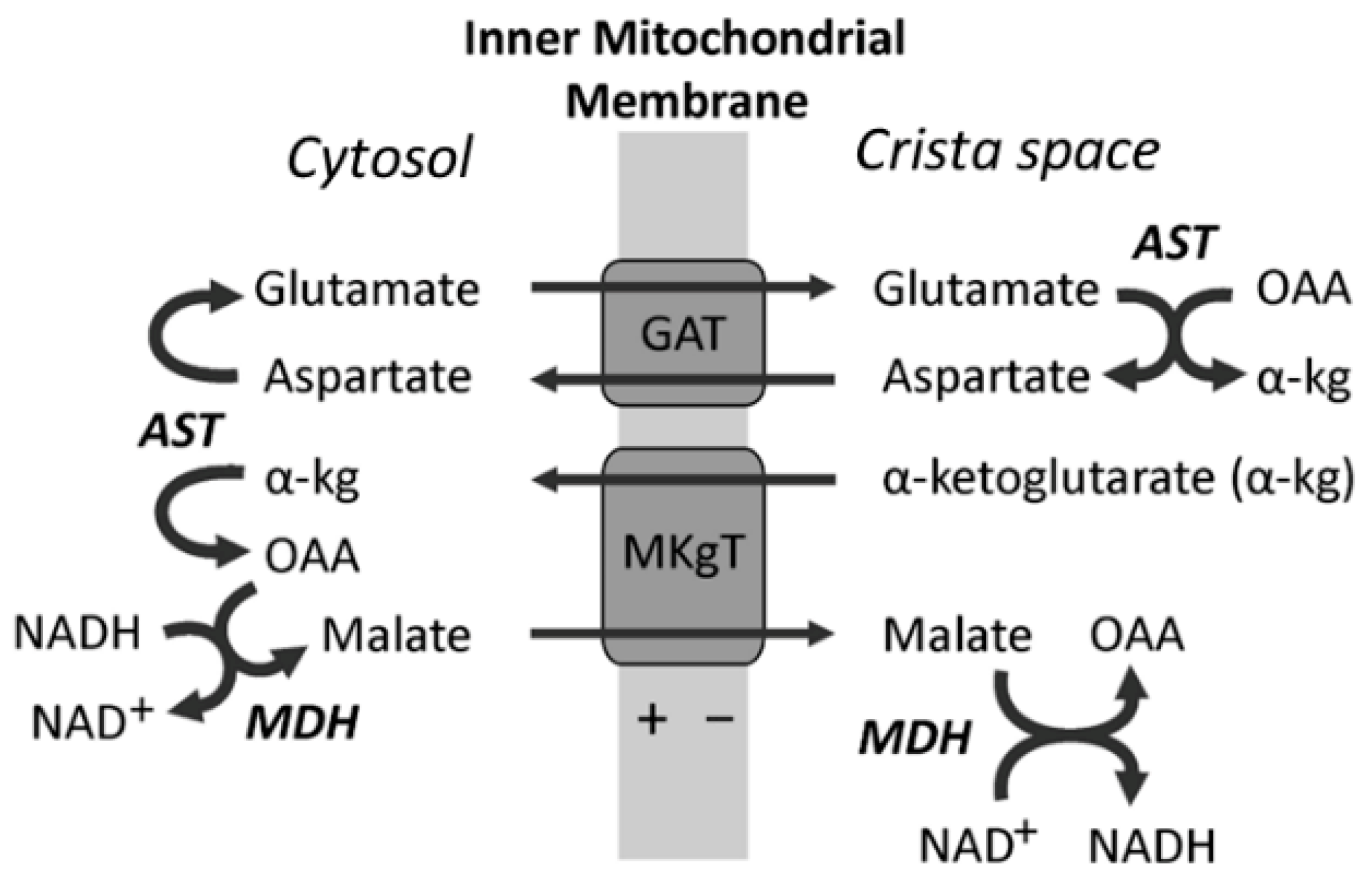
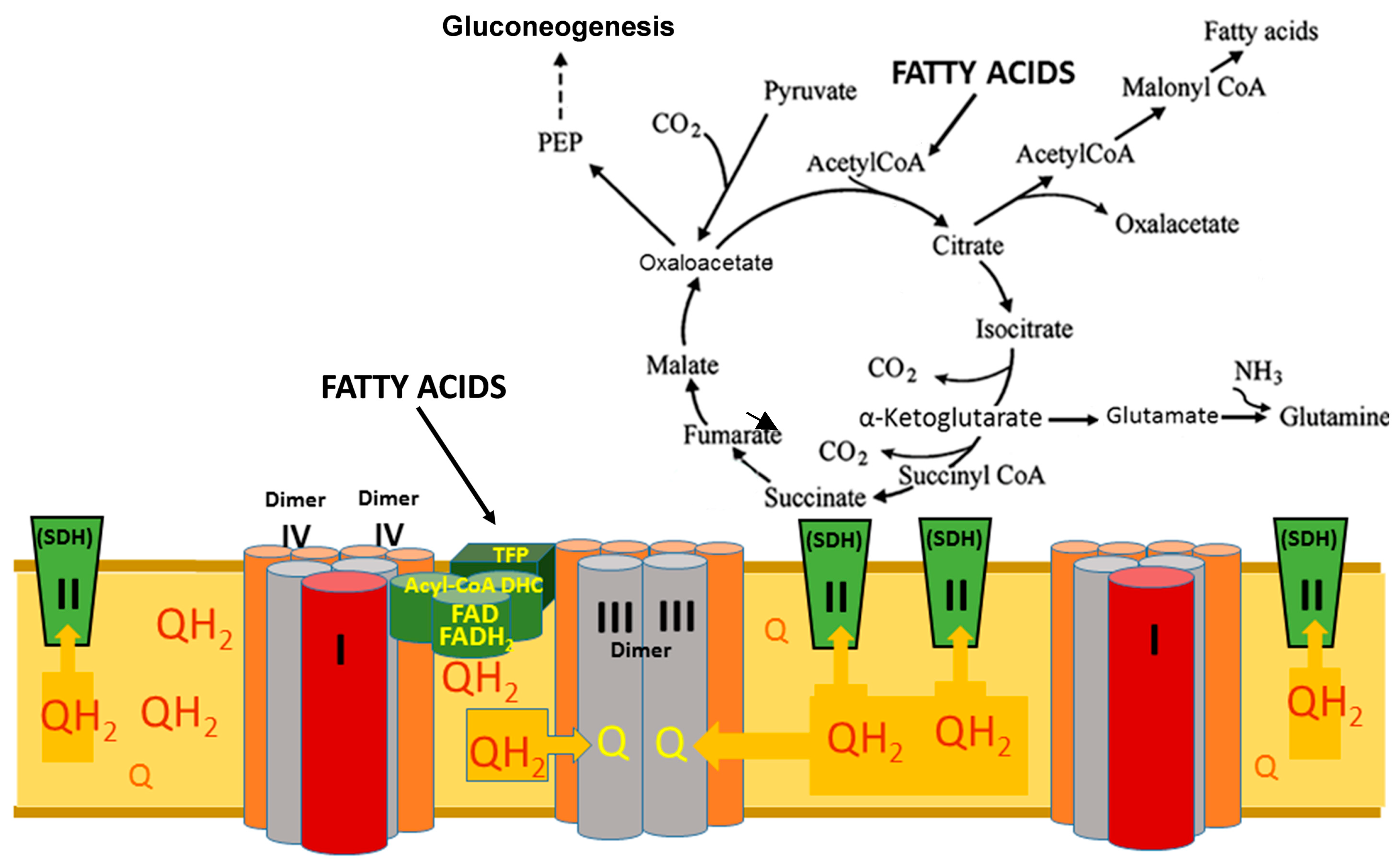
- On the cytoplasmic side of the mitochondria, LDH converts lactate into pyruvate and H+ to form NADH. For fast oxidation of pyruvate, it is necessary to rapidly oxidize the cytoplasmic NADH and transfer the electrons into the space of the cristae. For this purpose, there is a malate aspartate shunt (MAS) (Figure 3). MAS transports electrons by transferring reducing equivalents of NADH from the cytoplasm to the crista space. MAS consists of two enzymes, malate dehydrogenase (MDH) and aspartate aminotransferase (AST), located on either side of the cristae membrane (Figure 3), and two carriers across the cristae membrane: glutamate/aspartate transporter (GAT) and malate/α-ketoglutarate transporter (MKgT). The importance of MAS has been proven in experiments with inhibitors of the transaminase and SDH [39]. Although aminotransferases are reversible enzymes, in MAS, AST works only in one direction: in the cytoplasm, aspartate + α-ketoglutarate → OAA + glutamate, and in the cristae, OAA + glutamate → aspartate + α-ketoglutarate (Figure 3).
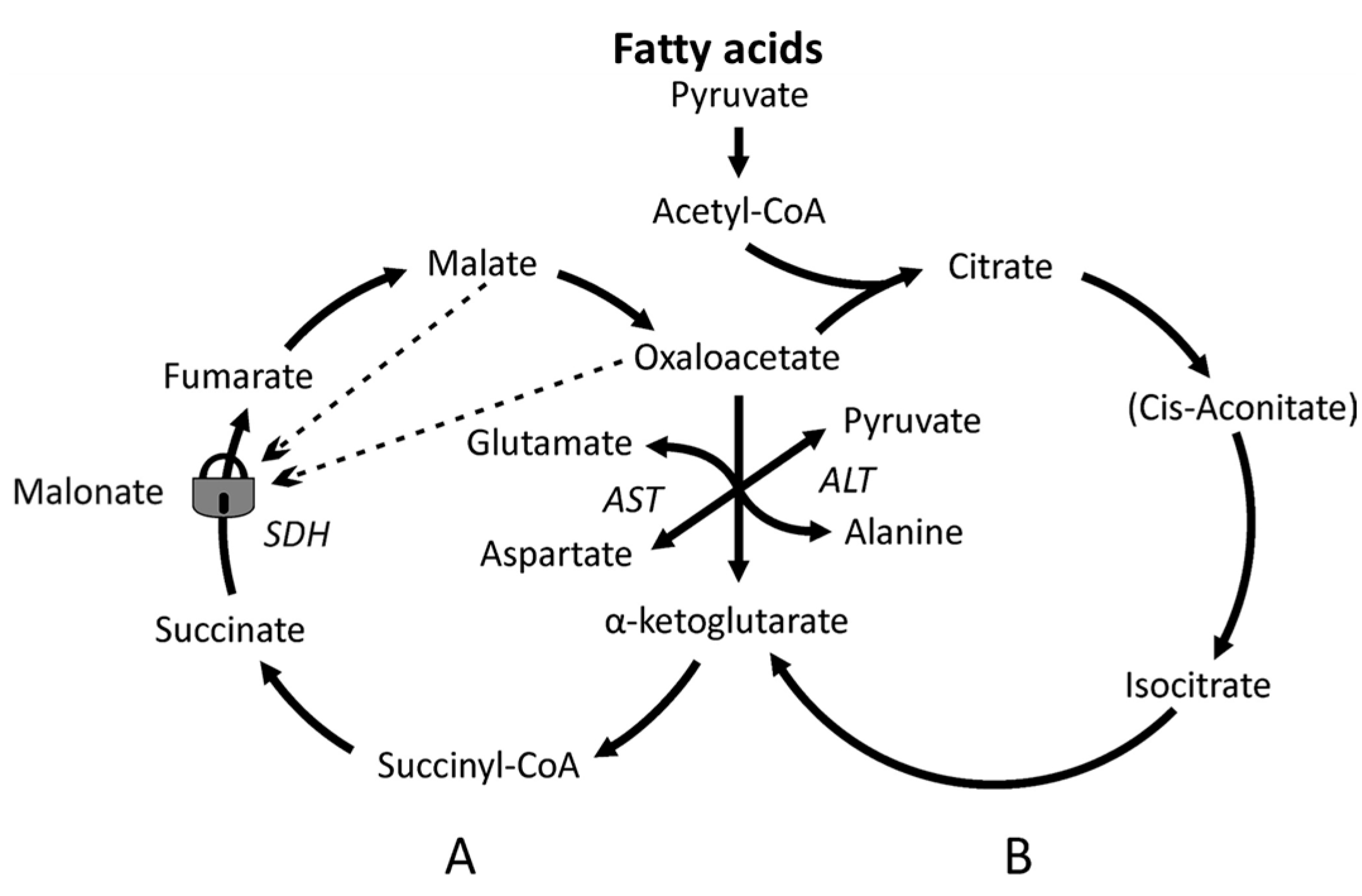
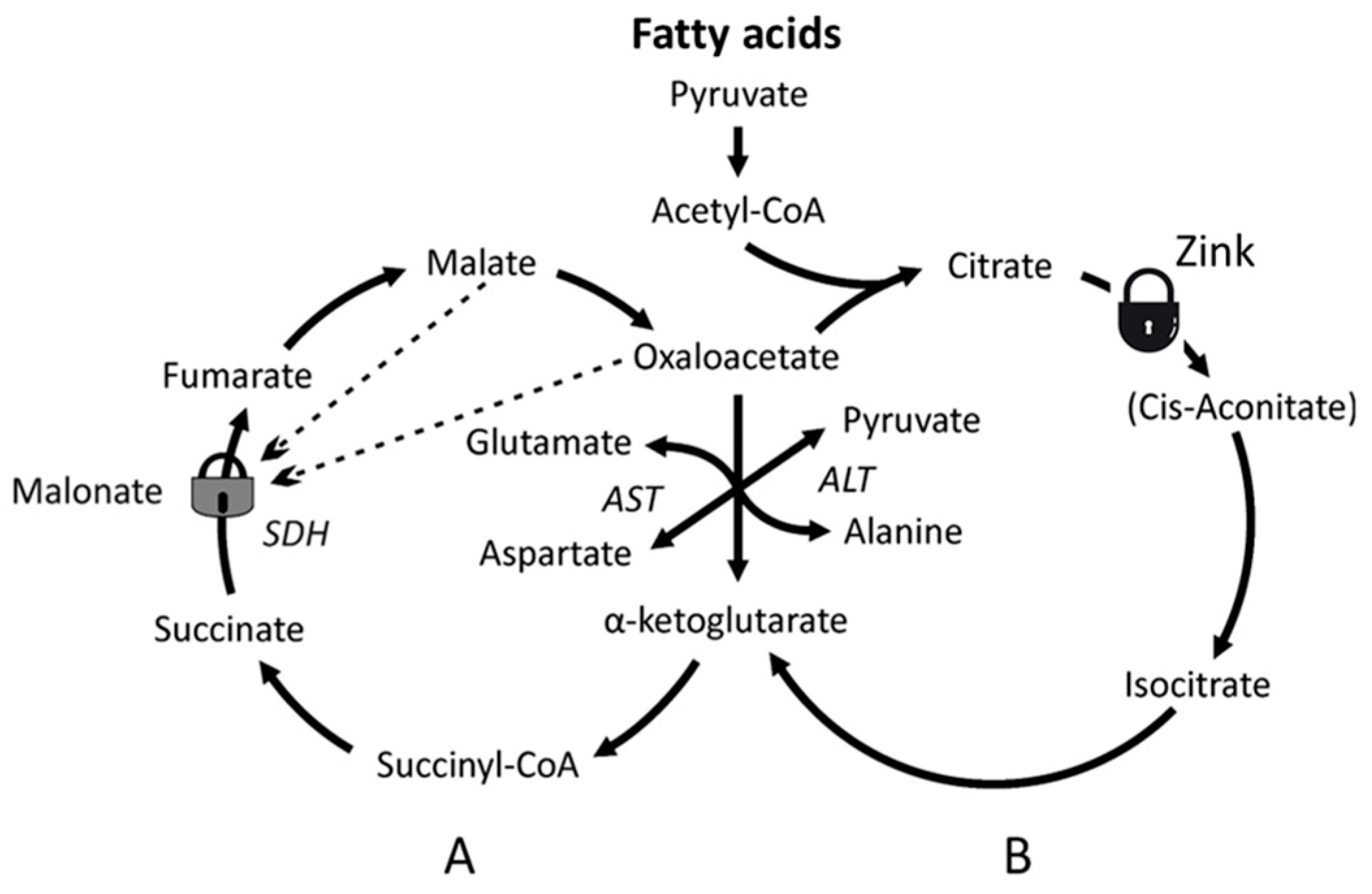
- In the presence of pyruvate and glutamate in the same space, alanine aminotransferase catalyzes the reaction: Pyruvate + Glutamate → Alanine + α-ketoglutarate. Since glutamate is constantly entering the mitochondria during the work of MAS, and α-ketoglutarate is constantly removed from the cristae space and oxidized in the cycle A (Figure 2), ALT works only towards the formation of alanine. The physiological meaning of this process is that in most organs, except the liver, the mitochondria lack the enzyme glutamate dehydrogenase. Therefore, toxic ammonium released during glutamate oxidation, especially in the brain, is captured during the formation of alanine by ALT. Alanine from the muscles and brain enters the bloodstream and travels to the liver, where ALT works backwards to form pyruvate and glutamate. Pyruvate in the liver is a substrate for active gluconeogenesis, especially in the glucose–alanine cycle: alanine → pyruvate (carboxylation) → OAA → phosphoenolpyruvate → … → glucose. Therefore, lactate is the transport form of pyruvate for oxidation by mitochondria, and alanine is the transport form of pyruvate for gluconeogenesis. Alanine is also the source of ammonium for the formation of urea in the liver. Since the direction of the reactions of AST and ALT can change in different compartments or organs, in the general scheme of Figure 3, arrows point in both directions.
- The excess of α-ketoglutarate, formed by ALT and AST, rapidly undergoes transformations in cycle A, creating an excess of OAA, which in turn becomes a substrate for cycle B. Both cycles become conjugated and are irreversible. This allows intermediate metabolites of cycle B to be directed into other metabolic pathways. Depending on the organ, citrate can be directed to lipid synthesis, accumulate in prostatic fluid, or be converted to isocitrate and used in the transhydrogenase reactions to transfer the mitochondrial redox equivalents of NADH to the cytosolic NADPH [40].
3. Respiratory Functions of the Isolated Mitochondria
4. Respirasome
4.1. History
4.2. Respirasome Structure
5. The Key Roles of Fatty Acids β-Oxidation and Lactate Accumulation and Oxidation in Human Metabolism
5.1. Fatty Acids β-Oxidation
5.2. Oxidation of Lactate and Fatty Acids During Exercise
6. Discussion
7. Conclusions and Future Perspectives
Author Contributions
Funding
Data Availability Statement
Conflicts of Interest
References
- Kann, O.; Soder, L.; Khodaie, B. Lactate is a potentially harmful substitute for brain glucose fuel: Consequences for metabolic restoration of neurotransmission. Neural Regen. Res. 2025, 20, 1403–1404. [Google Scholar] [CrossRef]
- Dienel, G.A.; Rothman, D.L.; Mangia, S. A Bird’s-Eye View of Glycolytic Upregulation in Activated Brain: The Major Fate of Lactate Is Release from Activated Tissue, Not Shuttling to Nearby Neurons. J. Neurochem. 2025, 169, e70111. [Google Scholar] [CrossRef]
- Bolanos, J.P.; Magistretti, P.G. The neuron-astrocyte metabolic unit as a cornerstone of brain energy metabolism in health and disease. Nat. Metab. 2025, 7, 2414–2423. [Google Scholar] [CrossRef]
- Swigonova, Z.; Mohsen, A.W.; Vockley, J. Acyl-CoA dehydrogenases: Dynamic history of protein family evolution. J. Mol. Evol. 2009, 69, 176–193. [Google Scholar] [CrossRef]
- Yakubowski, H.; Flatt, P. LibreTexts—Biology. Fundamentals of Biochemistry. Available online: https://bio.libretexts.org/Bookshelves/Biochemistry/Fundamentals_of_Biochemistry_(Jakubowski_and_Flatt) (accessed on 17 December 2025).
- Schägger, H.; Pfeiffer, K. Supercomplexes in the respiratory chains of yeast and mammalian mitochondria. EMBO J. 2000, 19, 1777–1783. [Google Scholar] [CrossRef]
- Schägger, H. Respiratory chain supercomplexes. IUBMB Life 2001, 52, 119–128. [Google Scholar] [CrossRef] [PubMed]
- Wang, Y.; Mohsen, A.W.; Mihalik, S.J.; Goetzman, E.S.; Vockley, J. Evidence for association of mitochondrial fatty acid oxidation and oxidative phosphorylation complexes. J. Biol. Chem. 2010, 285, 29834–29841. [Google Scholar] [CrossRef] [PubMed]
- Bultema, J.B.; Braun, H.P.; Boekema, E.J.; Kouril, R. Megacomplex organization of the oxidative phosphorylation system by structural analysis of respiratory supercomplexes from potato. Biochim. Biophys. Acta 2009, 1787, 60–67. [Google Scholar] [CrossRef] [PubMed]
- Dudkina, N.V.; Kouril, R.; Peters, K.; BraunBoekema, H.P. Structure and function of mitochondrial supercomplexes. Biochim. Biophys. Acta 2021, 1797, 664–670. [Google Scholar] [CrossRef]
- Nesterov, S.V.; Yaguzhinsky, L.S.; Vasilov, R.G.; Kadantsev, V.N.; Goltsov, A.N. Contribution of the Collective Excitations to the Coupled Proton and Energy Transport along Mitochondrial Cristae Membrane in Oxidative Phosphorylation System. Entropy 2022, 24, 1813. [Google Scholar] [CrossRef]
- Nesterov, S.; Chesnokov, Y.; Kamyshinsky, R.; Panteleeva, A.; Lyamzaev, K.; Vasilov, R.; Yaguzhinsky, L. Ordered Clusters of the Complete Oxidative Phosphorylation System in Cardiac Mitochondria. Int. J. Mol. Sci. 2021, 22, 1462. [Google Scholar] [CrossRef]
- Panov, A.V. The Structure of the Cardiac Mitochondria Respirasome Is Adapted for the Oxidation of Fatty Acids. Int. J. Mol. Sci. 2024, 25, 2410. [Google Scholar] [CrossRef]
- Crofts, A.R.; Holland, J.T.; Victoria, D.; Kolling, D.R.; Dikanov, S.A.; Gilbreth, R.; Lhee, S.N.; Kuras, R.; Kuras, M.G. The Q-cycle reviewed: How well does a monomeric mechanism of the bc(1) complex account for the function of a dimeric complex? Biochim. Biophys. Acta 2008, 1777, 1001–1019. [Google Scholar] [CrossRef]
- Brand, M.D. Mitochondrial generation of superoxide and hydrogen peroxide as the source of mitochondrial redox signaling. Free Radic. Biol. Med. 2016, 100, 14–31. [Google Scholar] [CrossRef]
- Ikeda, Y.; Okamura-Ikeda, K.; Tanaka, K. Purification and characterization of short-chain, medium-chain, and long-chain acyl-CoA dehydrogenases from rat liver mitochondria. Isolation of the holo- and apoenzymes and conversion of the apoenzyme to the holoenzyme. J. Biol. Chem. 1985, 260, 1311–1325. [Google Scholar] [CrossRef]
- Izai, K.; Uchida, Y.; Orii, T.; Yamamoto, S.; Hashimoto, T. Novel fatty acid beta-oxidation enzymes in rat liver mitochondria. I. Purification and properties of very-long-chain acyl-coenzyme A dehydrogenase. J. Biol. Chem. 1992, 267, 1027–1033. [Google Scholar] [CrossRef] [PubMed]
- McAndrew, R.P.; Wang, Y.; Mohsen, A.W.; He, M.; Vockley, J.; Kim, J.J. Structural basis for substrate fatty acyl chain specificity: Crystal structure of human very-long-chain acyl-CoA dehydrogenase. J. Biol. Chem. 2008, 283, 9435–9443. [Google Scholar] [CrossRef]
- Ensenauer, R.; He, M.; Willard, J.M.; Goetzman, E.S.; Corydon, T.J.; Vandahl, B.B.; Mohsen, A.-W.; Isaya, G.; Vockley, J. Human acyl-CoA dehydrogenase-9 plays a novel role in the mitochondrial beta-oxidation of unsaturated fatty acids. J. Biol. Chem. 2005, 280, 32309–32316. [Google Scholar] [CrossRef]
- Nouws, J.; Nijtmans, L.; Houten, S.M.; van den Brand, M.; Huynen, M.; Venselaar, H.; Hoefs, S.; Gloerich, J.; Kronick, J.; Hutchin, T.; et al. Acyl-CoA dehydrogenase 9 is required for the biogenesis of oxidative phosphorylation complex I. Cell Metab. 2010, 12, 283–294. [Google Scholar] [CrossRef] [PubMed]
- Gladden, L.B. Lactate metabolism: A new paradigm for the third millennium. J. Physiol. 2004, 558, 5–30. [Google Scholar] [CrossRef] [PubMed]
- Brooks, G.A.; Arevalo, J.A.; Osmond, A.D.; Leija, R.G.; Curl, C.C.; Tovar, A.P. Lactate in contemporary biology: A phoenix risen. J. Physiol. 2022, 600, 1229–1251. [Google Scholar] [CrossRef]
- Panov, A.V.; Mayorov, V.I.; Dikalov, S.I. Role of Fatty Acids β-Oxidation in the Metabolic Interactions Between Organs. Int. J. Mol. Sci. 2024, 25, 12740. [Google Scholar] [CrossRef]
- Stanley, W.C.; Recchia, F.A.; Lopaschuk, G.D. Myocardial substrate metabolism in the normal and failing heart. Physiol. Rev. 2005, 85, 1093–1129. [Google Scholar] [CrossRef]
- Rogatzki, M.J.; Ferguson, B.S.; Goodwin, M.L.; Gladden, L.B. Lactate is always the end product of glycolysis. Front. Neurosci. 2015, 9, 22. [Google Scholar] [CrossRef]
- Stanley, J.C.; Perham, R.N. Purification of 2-oxo acid dehydrogenase multienzyme omplexes from ox heart by new method. Biochem. J. 1980, 191, 147–154. [Google Scholar] [CrossRef] [PubMed]
- Abeles, M. Corticonics: Neural Circuits of the Cerebral Cortex; Cambridge University Press: Cambridge, UK, 1991; ISBN 0521374766. [Google Scholar]
- Panov, A.; Schonfeld, P.; Dikalov, S.; Hemendinger, R.; Bonkovsky, H.L.; Brooks, B.R. The Neuromediator Glutamate, through Specific Substrate Interactions, Enhances Mitochondrial ATP Production and Reactive Oxygen Species Generation in Nonsynaptic Brain Mitochondria. J. Biol. Chem. 2009, 284, 14448–14456. [Google Scholar] [CrossRef]
- Pellerin, L.; Magistretti, P.J. Neuroenergetics: Calling upon astrocytes to satisfy hungry neurons. Neuroscientist 2004, 10, 53–62. [Google Scholar] [CrossRef] [PubMed]
- Brooks, G.A. Muscle Fuel Utilization with Glycolysis Viewed Right Side Up. Adv. Exp. Med. Biol. 2025, 1478, 3–18. [Google Scholar] [PubMed]
- Adina-Zada, A.; Zeczycki, T.N.; Attwood, P.V. Regulation of the structure and activity of pyruvate carboxylase by acetyl CoA. Arch. Biochem. Biophys. 2012, 519, 118–130. [Google Scholar] [CrossRef]
- Valle, M. Pyruvate Carboxylase, Structure and Function. Subcell. Biochem. 2017, 83, 291–322. [Google Scholar]
- Panov, A.; Orynbayeva, Z.; Vavilin, V.; Lyakhovich, V. Fatty Acids in Energy Metabolism of the Central Nervous System. BioMed. Res. Intern. 2014, 2014, 472459. [Google Scholar] [CrossRef]
- Yudkoff, M.; Nelson, D.; Daikhin, Y.; Erecinska, M. Tricarboxylic acid cycle in rat brain synaptosomes. Fluxes and interactions with aspartate aminotransferase and malate/aspartate shuttle. J. Biol. Chem. 1994, 269, 27414–27420. [Google Scholar] [CrossRef]
- Ratnakumari, L.; Murthy, C.R. Activities of pyruvate dehydrogenase, enzymes of citric acid cycle, and aminotransferases in the subcellular fractions of cerebral cortex in normal and hyperammonemic rats. Neurochem. Res. 1989, 14, 221–228. [Google Scholar] [CrossRef]
- Brooks, G.A. Lactate as a fulcrum of metabolism. Redox Biol. 2020, 35, 101454. [Google Scholar] [CrossRef] [PubMed]
- Brooks, G.A. The Science and Translation of Lactate Shuttle Theory. Cell Metab. 2018, 27, 757–785. [Google Scholar] [CrossRef]
- Kane, D.A. Lactate oxidation at the mitochondria: A lactate-malate-aspartate shuttle at work. Front. Neurosci. 2014, 8, 366. [Google Scholar] [CrossRef]
- Erecinska, M.; Nelson, D. Effects of 3-nitropropionic acid on synaptosomal energy and transmitter metabolism: Relevance to neurodegenerative brain diseases. J. Neurochem. 1994, 63, 1033–1041. [Google Scholar] [CrossRef] [PubMed]
- Costello, L.C.; Franklin, R.B. Bioenergetic theory of prostate malignancy. Prostate 1994, 25, 162–166. [Google Scholar] [CrossRef] [PubMed]
- Panov, A.; Orynbaeva, Z. Bioenergetic and antiapoptotic properties of mitochondria from cultured human prostate cancer cells PC-3, DU145 and LNCaP. PLoS ONE 2013, 8, e72078. [Google Scholar] [CrossRef]
- Panov, A. Practical Mitochondriology: Pitfalls and Problems in Studies of Mitochondria; CreateSpace Independent Publishing Platform: Scotts Valley, CA, USA, 2013; ISBN 9781483963853. [Google Scholar]
- Panov, A.; Orynbayeva, Z. Determination of mitochondrial metabolic phenotype through investigation of the intrinsic inhibition of succinate dehydrogenase. Analyt. Biochem. 2018, 552, 30–37. [Google Scholar] [CrossRef]
- Panov, A.; Dikalov, S. Brain energy Metabolism. In Encyclopedia in Biochemstry, 3rd ed.; Elsevier Inc.: Amsterdam, The Netherlands, 2021; pp. 1–16. [Google Scholar] [CrossRef]
- Panov, A.V.; Mayorov, V.I.; Dikalova, A.E.; Dikalov, S.I. Long-Chain and Medium-Chain Fatty Acids in Energy Metabolism of Murine Kidney Mitochondria. Int. J. Mol. Sci. 2023, 24, 379. [Google Scholar] [CrossRef]
- Panov, A.; Mayorov, V.; Dikalov, S. Metabolic Syndrome and beta-Oxidation of Long-Chain Fatty Acids in the Brain, Heart, and Kidney Mitochondria. Int. J. Mol. Sci. 2022, 23, 4047. [Google Scholar] [CrossRef]
- Hatefi, Y. The mitochondrial electron transport and oxidative phosphorylation system. Annu. Rev. Biochem. 1985, 54, 1015–1069. [Google Scholar] [CrossRef]
- Althoff, T.; Mills, D.J.; Popot, J.L.; Kuhlbrandt, W. Arrangement of electron transport chain components in bovine mitochondrial supercomplex I1III2IV1. EMBO J. 2011, 30, 4652–4664. [Google Scholar] [CrossRef]
- Muhleip, A.; Flygaard, R.K.; Baradaran, R.; Haapanen, O.; Gruhl, T.; Tobiasson, V.; Maréchal, A.; Sharma, V.; Amunts, A. Structural basis of mitochondrial membrane bending by the I-II-III(2)-IV(2) supercomplex. Nature 2023, 615, 934–938. [Google Scholar] [CrossRef]
- Zhou, L.; Maldonado, M.; Padavannil, A.; Guo, F.; Letts, J.A. Structures of Tetrahymena’s respiratory chain reveal the diversity of eukaryotic core metabolism. Science 2022, 376, 831–839. [Google Scholar] [CrossRef]
- Sousa, J.S.; Mills, D.J.; Vonck, J.; Kuhlbrandt, W. Functional asymmetry and electron flow in the bovine respirasome. Elife 2016, 5, E21290. [Google Scholar] [CrossRef]
- CRC Handbook of Chemistry and Physics, 56th ed.; Weast, R.C., Ed.; CRC Press: Boca Raton, FL, USA, 1975. [Google Scholar]
- Chretien, D.; Benit, P.; Ha, H.H.; Keipert, S.; El-Khoury, R.; Chang, Y.-T.; Jastroch, M.; Jacobs, H.T.; Rustin, P.; Rak, M. Mitochondria are physiologically maintained at close to 50 degrees C. PLoS Biol. 2018, 16, e2003992. [Google Scholar] [CrossRef] [PubMed]
- Javadov, S.; Jang, S.; Chapa-Dubocq, X.R.; Khuchua, Z.; Camara, A.K. Mitochondrial respiratory supercomplexes in mammalian cells: Structural versus functional role. J. Mol. Med. 2021, 99, 57–73. [Google Scholar] [CrossRef] [PubMed]
- Milenkovskaya, E.; Dowhan, W. Cardiolipin-dependent formation of mitochondrial respiratory supercomplexes. Chem. Phys. Lipids 2014, 179, 42–48. [Google Scholar] [CrossRef] [PubMed]
- Nesci, S.; Trombetti, F.; Pagliarani, A.; Ventrella, V.; Algieri, C.; Tioli, G.; Lenaz, G. Molecular and Supramolecular Structure of the Mitochondrial Oxidative Phosphorylation System: Implications for Pathology. Life 2021, 11, 242. [Google Scholar] [CrossRef] [PubMed]
- Vercellino, I.; Sazanov, L.A. Structure and assembly of the mammalian mitochondrial supercomplex CIII(2)CIV. Nature 2021, 598, 364–367. [Google Scholar] [CrossRef]
- Wu, M.; Gu, J.; Guo, R.; Huang, Y.; Yang, M. Structure of Mammalian Respiratory Supercomplex I(1)III(2)IV(1). Cell 2016, 167, 1598–1609.e1510. [Google Scholar] [CrossRef]
- Brischigliaro, M.; Cabrera-Orefice, A.; Arnold, A.; Viscomi, C.; Zeviani, M.; Fernandez-Vizarra, E. Structural rather than catalytic role for mitochondrial respiratory chain supercomplexes. Elife 2023, 12, RP88084. [Google Scholar] [CrossRef]
- Brzezinski, P.; Moe, A.; Adelroth, P. Structure and Mechanism of Respiratory III-IV Supercomplexes in Bioenergetic Membranes. Chem. Rev. 2021, 121, 9644–9673. [Google Scholar] [CrossRef]
- Guo, R.; Zong, S.; Wu, M.; Gu, J.; Yang, M. Architecture of Human Mitochondrial Respiratory Megacomplex I(2)III(2)IV(2). Cell 2017, 170, 1247–1257 e1212. [Google Scholar] [CrossRef]
- Sazanov, L.A.; Jackson, J.B. Proton-translocating transhydrogenase and NAD- and NADP-linked isocitrate dehydrogenases operate in a substrate cycle which contributes to fine regulation of the tricarboxylic acid cycle activity in mitochondria. FEBS Lett. 1994, 344, 109–116. [Google Scholar] [CrossRef]
- Hoek, J.B.; Rydstrom, J. Physiological roles of nicotinamide nucleotide transhydrogenase. Biochem. J. 1988, 254, 1–10. [Google Scholar] [CrossRef] [PubMed]
- Quinlan, C.L.; Perevoshchikova, I.V.; Hey-Mogensen, M.; Orr, A.L.; Brand, M.D. Sites of reactive oxygen species generation by mitochondria oxidizing different substrates. Redox Biol. 2013, 1, 304–312. [Google Scholar] [CrossRef]
- Perevoshchikova, I.V.; Quinlan, C.L.; Orr, A.O.; Gerencser, A.A.; Brand, M.D. Sites of superoxide and hydrogen peroxide production during fatty acid oxidation in rat skeletal muscle mitochondria. Free Radic. Biol. Med. 2013, 61C, 298–309. [Google Scholar] [CrossRef] [PubMed]
- Elustondo, P.A.; White, A.E.; Hughes, M.E.; Brebner, K.; Pavlov, E.; Kane, D.A. Physical and functional association of lactate dehydrogenase (LDH) with skeletal muscle mitochondria. J. Biol. Chem. 2013, 288, 25309–25317. [Google Scholar] [CrossRef]
- Young, A.; Oldford, C.; Mailloux, R.J. Lactate dehydrogenase supports lactate oxidation in mitochondria isolated from different mouse tissues. Redox Biol. 2020, 28, 101339. [Google Scholar] [CrossRef]
- Altinok, O.; Poggio, J.L.; Stein, D.E.; Bowne, W.B.; Shieh, A.C.; Snyder, N.W.; Orynbayeva, Z. Malate-aspartate shuttle promotes l-lactate oxidation in mitochondria. J. Cell. Physiol. 2020, 235, 2569–2581. [Google Scholar] [CrossRef] [PubMed]
- Gonzalez-Freire, M.; de Cabo, R.; Bernier, M.; Sollott, S.J.; Fabbri, E.; Navas, P.; Ferrucci, L. Reconsidering the Role of Mitochondria in Aging. J. Gerontol. A Biol. Sci. Med. Sci. 2015, 70, 1334–1342. [Google Scholar] [CrossRef] [PubMed]
- San-Millan, I.; Brooks, G.A. Assessment of Metabolic Flexibility by Means of Measuring Blood Lactate, Fat, and Carbohydrate Oxidation Responses to Exercise in Professional Endurance Athletes and Less-Fit Individuals. Sports Med. 2018, 48, 467–479. [Google Scholar] [CrossRef] [PubMed]
- Wang, Z.; Ying, Z.; Bosy-Westphal, A.; Zhang, J.; Heller, M.; Later, W.; Heymsfield, S.B.; Müller, M.J. Evaluation of specific metabolic rates of major organs and tissues: Comparison between men and women. Am. J. Hum. Biol. 2011, 23, 333–338. [Google Scholar] [CrossRef]
- Vina, J.; Borras, C.; Gambini, J.; Sastre, J.; Pallardo, F.V. Why females live longer than males? Importance of the upregulation of longevity-associated genes by oestrogenic compounds. FEBS Lett. 2005, 579, 2541–2545. [Google Scholar] [CrossRef]
- Ballard, J.W.; Melvin, R.G.; Miller, J.T.; Katewa, S.D. Sex differences in survival and mitochondrial bioenergetics during aging in Drosophila. Aging Cell 2007, 6, 699–708. [Google Scholar] [CrossRef]
- Panov, A.V.; Darenskaya, M.A.; Dikalov, S.I.; Kolesnikov, S.I. Metabolic syndrome as the first stage of eldership; the beginning of real aging. In Update in Geriatrics; Somarnyotin, S., Ed.; IntechOpen: London, UK, 2021; pp. 37–67. ISBN 978-1-83962-309-7. [Google Scholar] [CrossRef]




Disclaimer/Publisher’s Note: The statements, opinions and data contained in all publications are solely those of the individual author(s) and contributor(s) and not of MDPI and/or the editor(s). MDPI and/or the editor(s) disclaim responsibility for any injury to people or property resulting from any ideas, methods, instructions or products referred to in the content. |
© 2026 by the authors. Licensee MDPI, Basel, Switzerland. This article is an open access article distributed under the terms and conditions of the Creative Commons Attribution (CC BY) license.
Share and Cite
Panov, A.; Mayorov, V.; Dikalov, S.; Krasilnikova, A.; Yaguzhinsky, L. Rethinking Human Energy Metabolism. Curr. Issues Mol. Biol. 2026, 48, 159. https://doi.org/10.3390/cimb48020159
Panov A, Mayorov V, Dikalov S, Krasilnikova A, Yaguzhinsky L. Rethinking Human Energy Metabolism. Current Issues in Molecular Biology. 2026; 48(2):159. https://doi.org/10.3390/cimb48020159
Chicago/Turabian StylePanov, Alexander, Vladimir Mayorov, Sergey Dikalov, Alexandra Krasilnikova, and Lev Yaguzhinsky. 2026. "Rethinking Human Energy Metabolism" Current Issues in Molecular Biology 48, no. 2: 159. https://doi.org/10.3390/cimb48020159
APA StylePanov, A., Mayorov, V., Dikalov, S., Krasilnikova, A., & Yaguzhinsky, L. (2026). Rethinking Human Energy Metabolism. Current Issues in Molecular Biology, 48(2), 159. https://doi.org/10.3390/cimb48020159