
Revealing the Multi-Target Mechanisms of Fespixon Cream in Diabetic Foot Ulcer Healing: Integrated Network Pharmacology, Molecular Docking, and Clinical RT-qPCR Validation


Abstract
1. Introduction
2. Methods
2.1. Component and Target Analysis of Fespixon Cream
2.2. Target Identification in Diabetic Foot Ulcers and Therapeutic Potential of Fespixon Cream
2.3. Network Construction and Analysis of Fespixon Cream Components and Targets
2.4. Protein–Protein Interaction Mapping and Functional Analysis
2.5. GO and KEGG Pathway Enrichment Analysis
2.6. Molecular Docking Validation
2.7. RT-qPCR Experiment
2.8. Statistical Analysis
3. Results
3.1. Screening of Active Components and Related Targets of Fespixon Cream
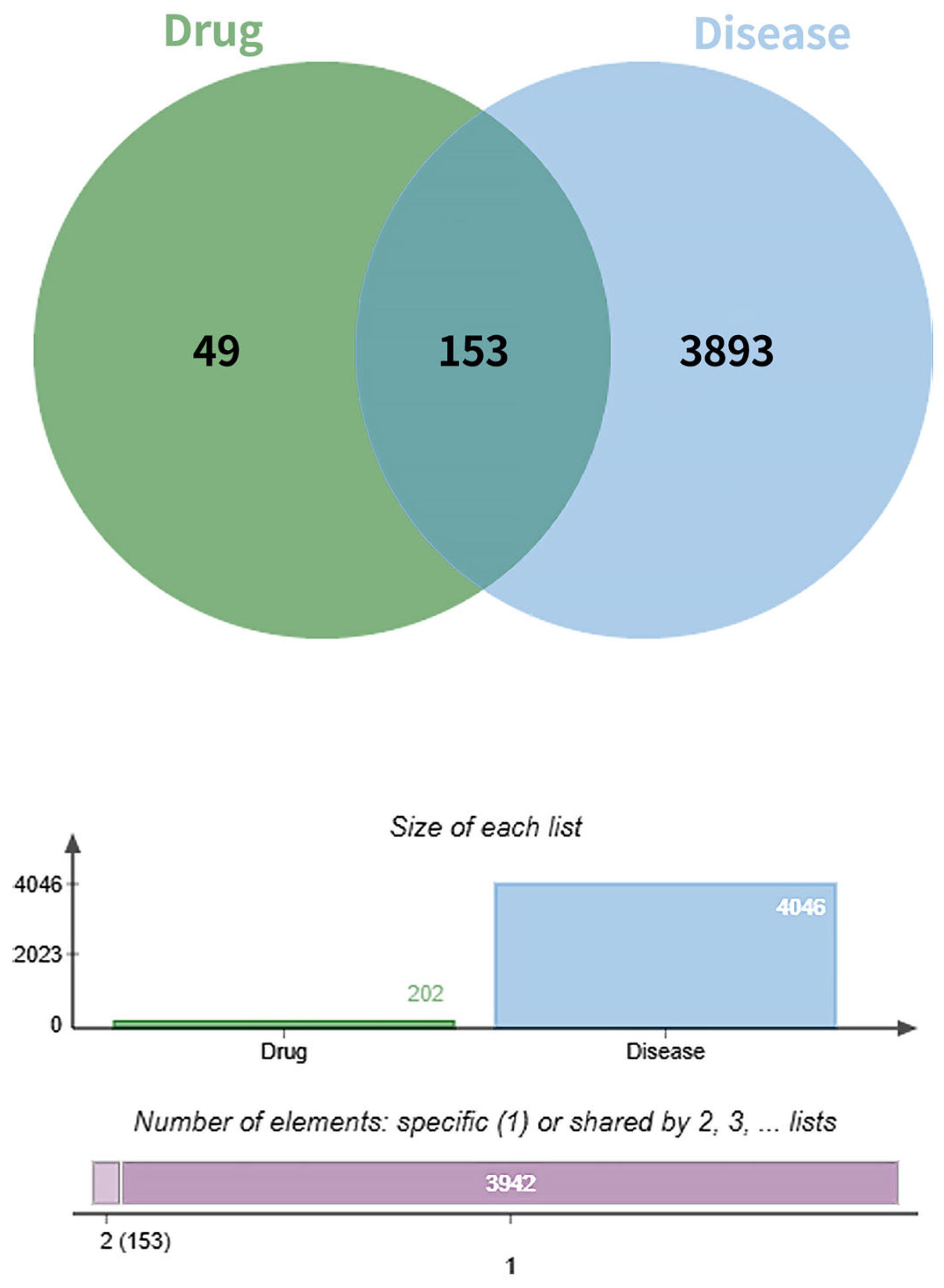
3.2. Identification of Diabetic Foot Ulcer-Related Targets and Prediction of Potential Therapeutic Targets of Fespixon Cream
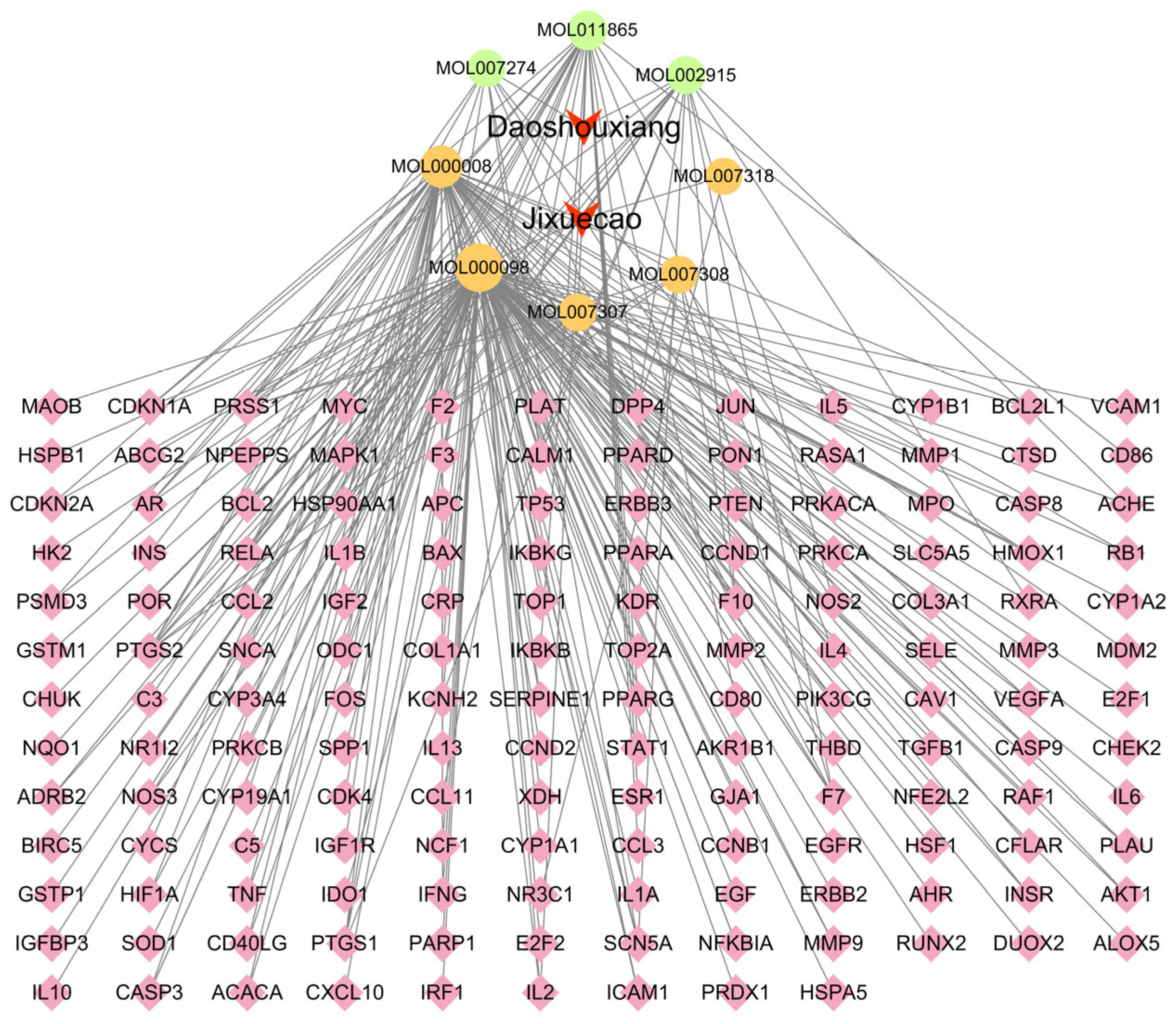
3.3. Construction and Analysis of the Fespixon Cream–Compound–Target Network
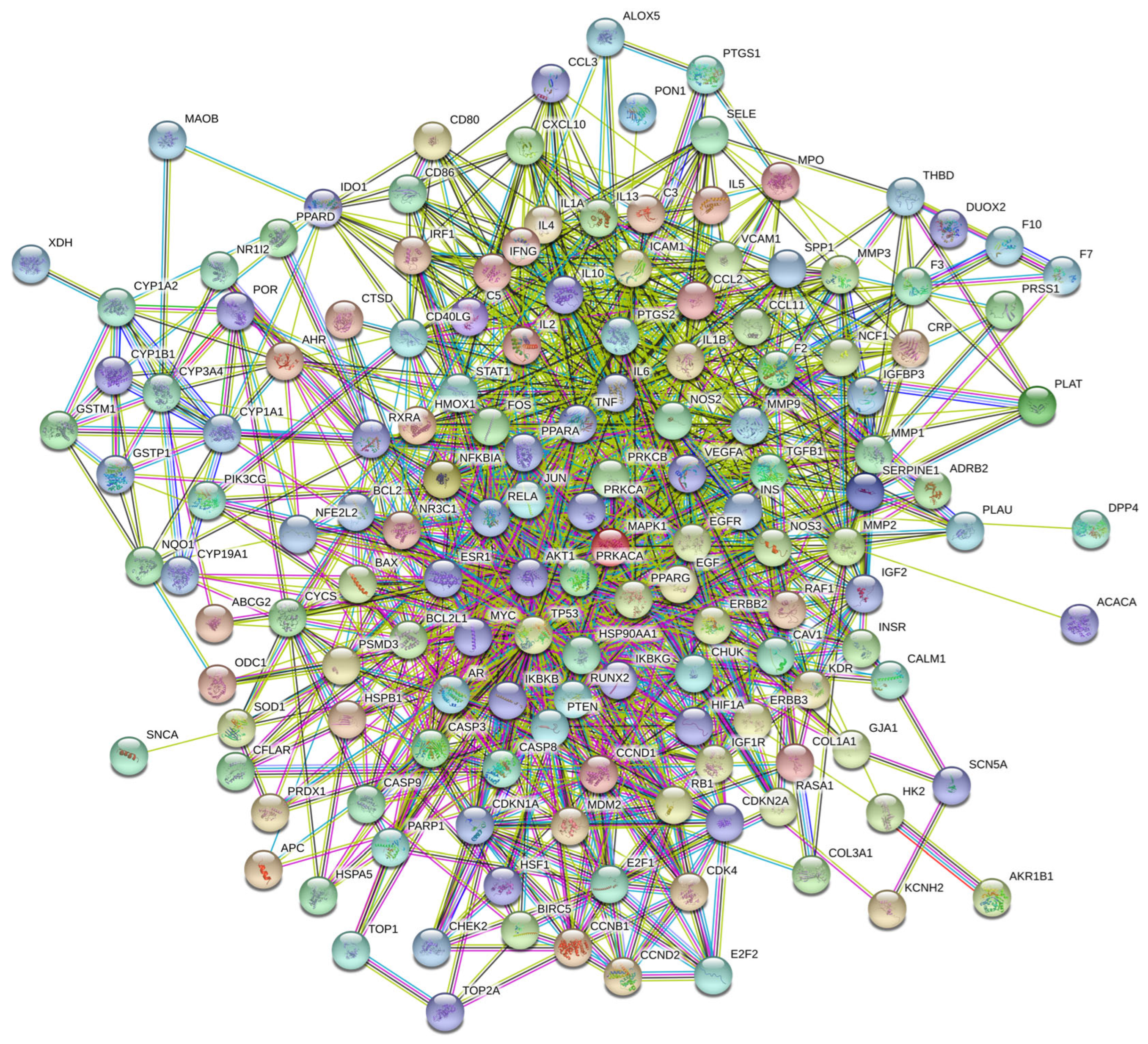
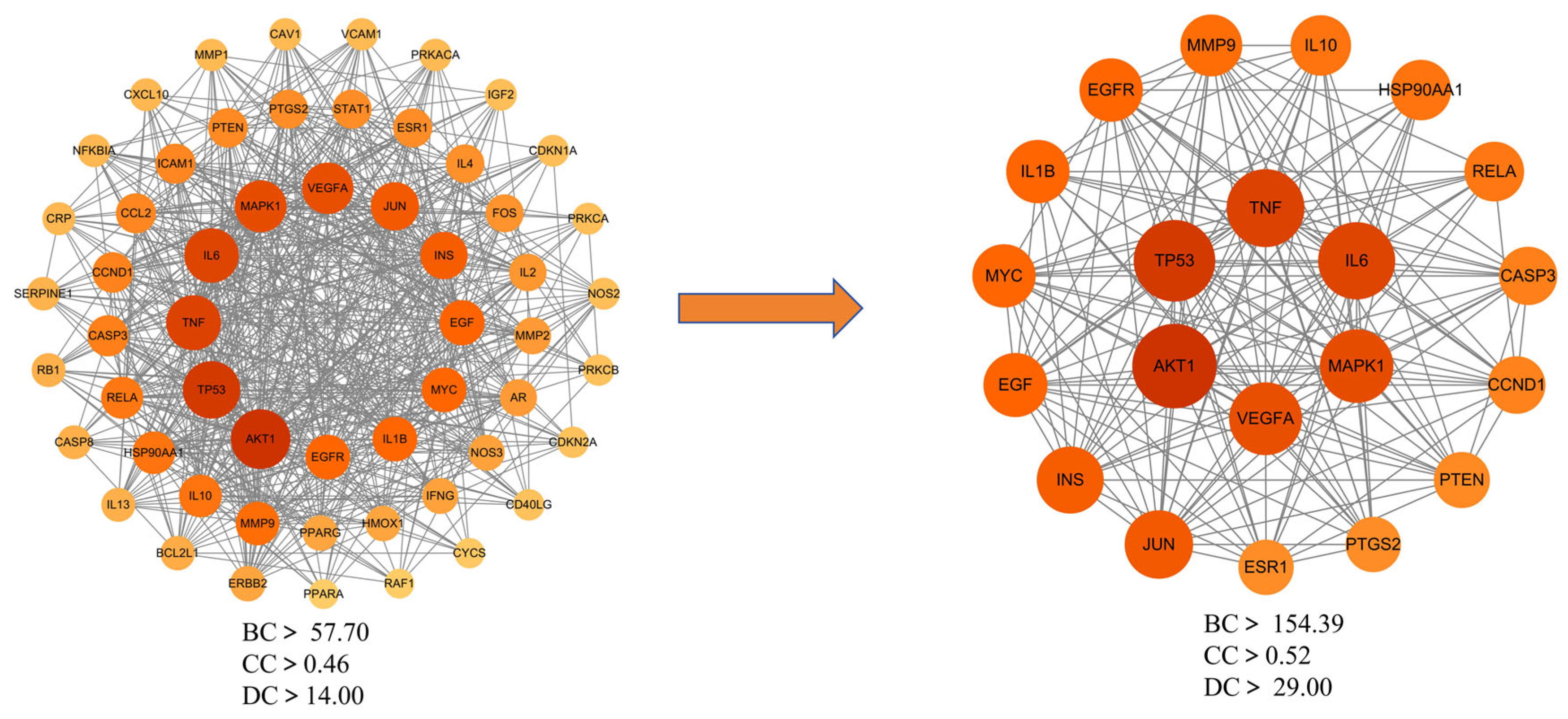
3.4. Construction and Analysis of the Protein–Protein Interaction (PPI) Network
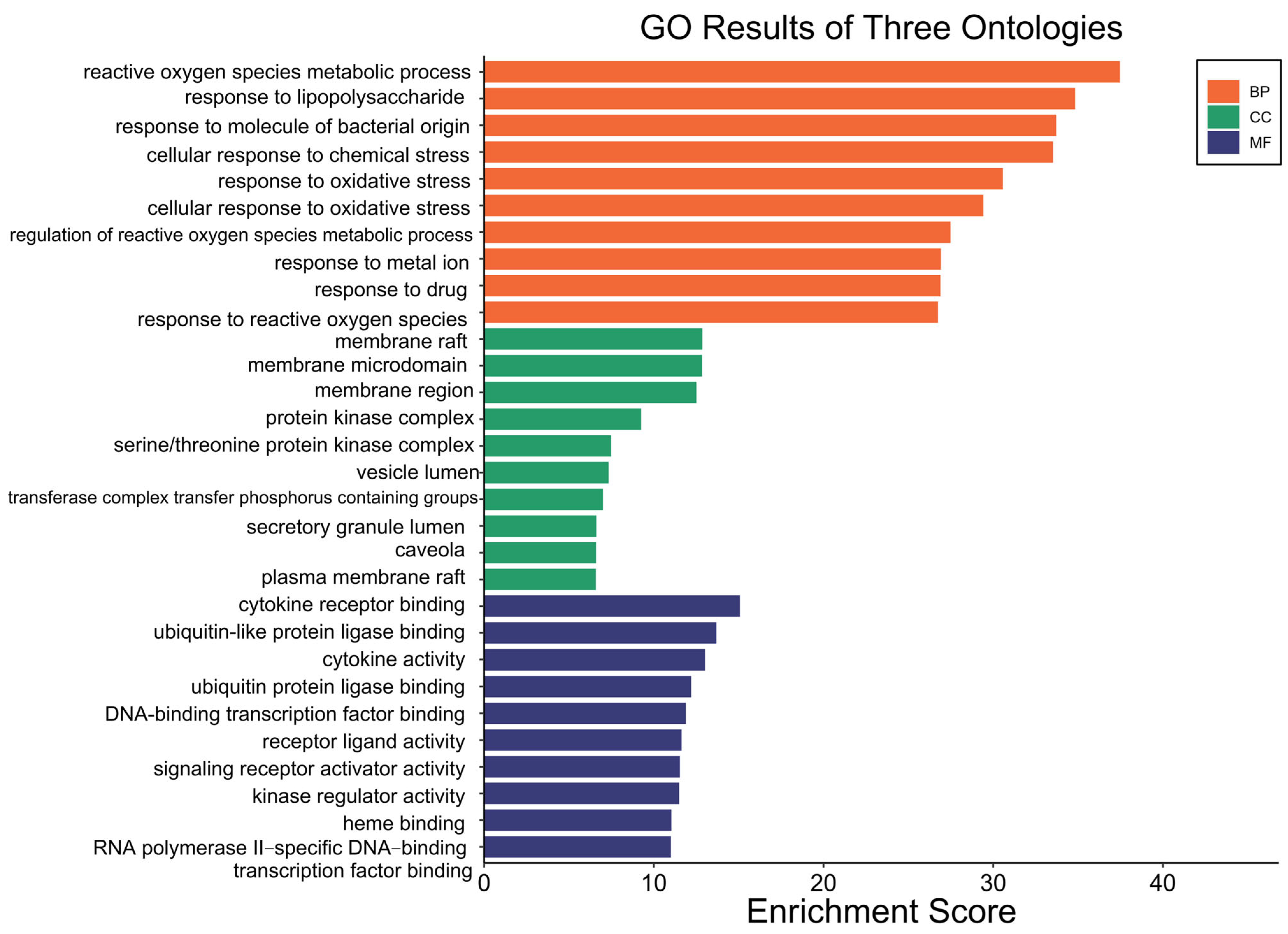
3.5. GO Enrichment Analysis
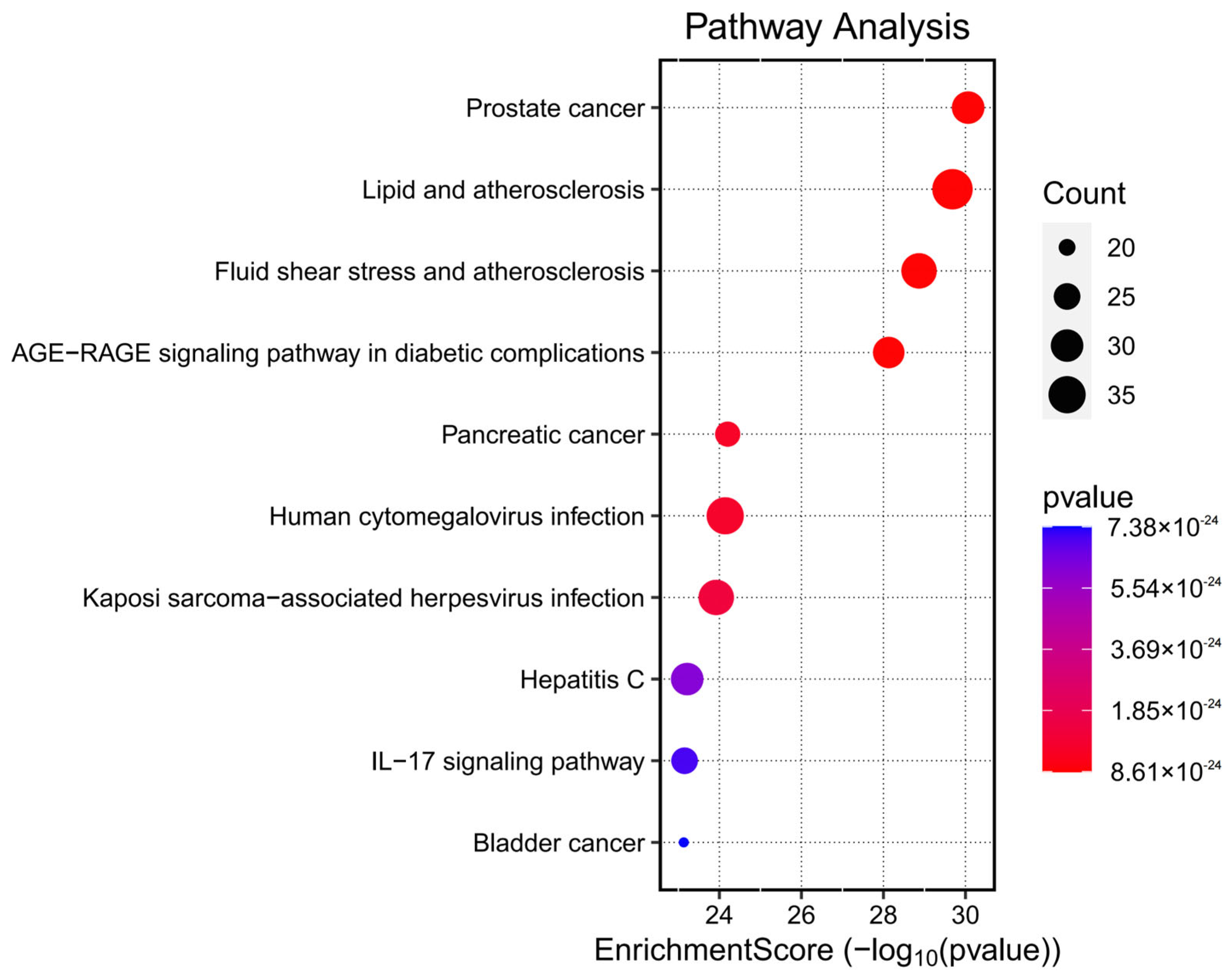
3.6. KEGG Pathway Enrichment Analysis
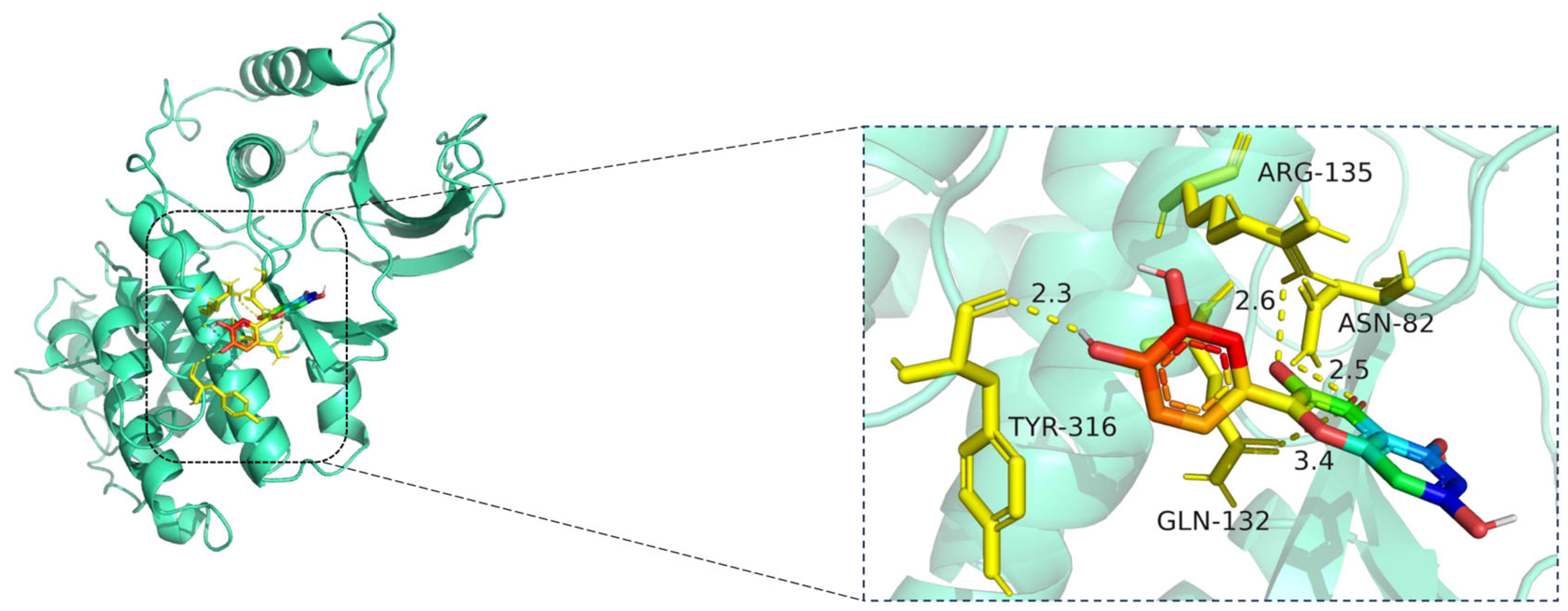
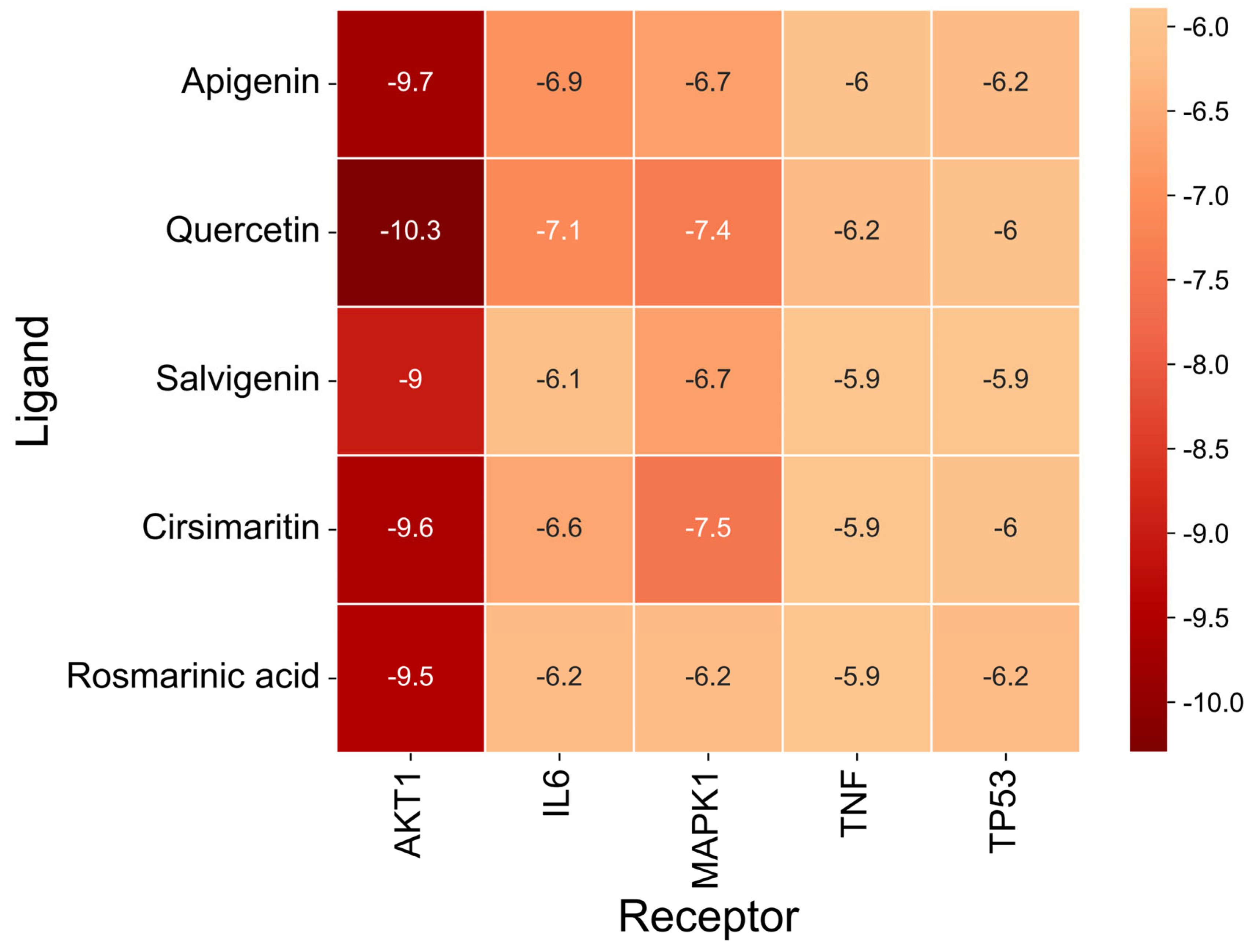
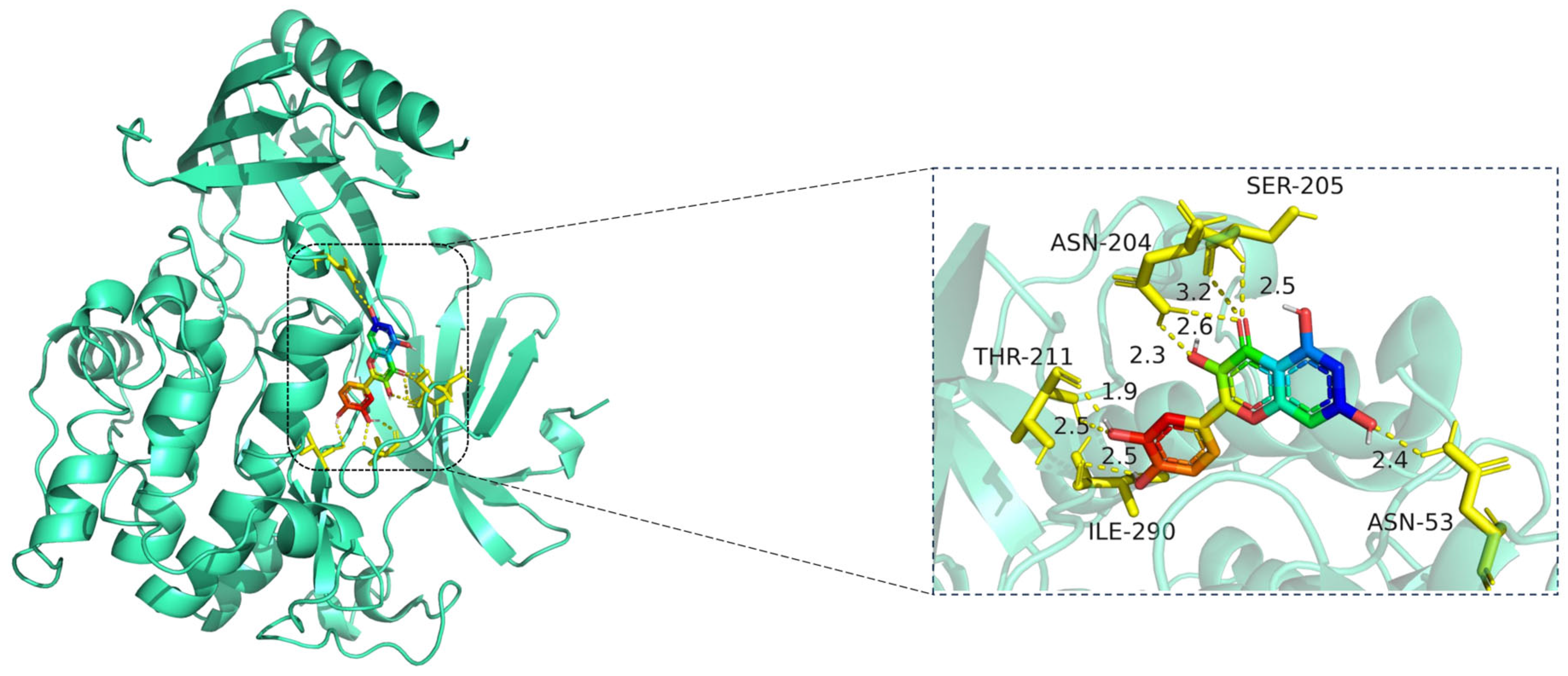
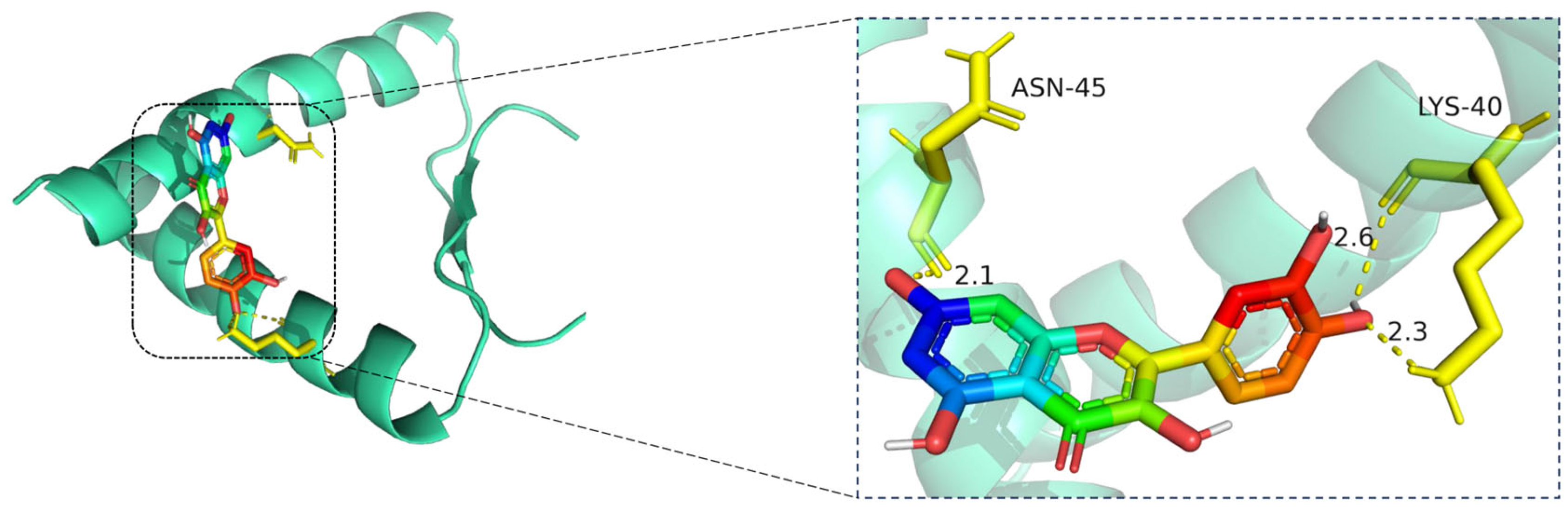
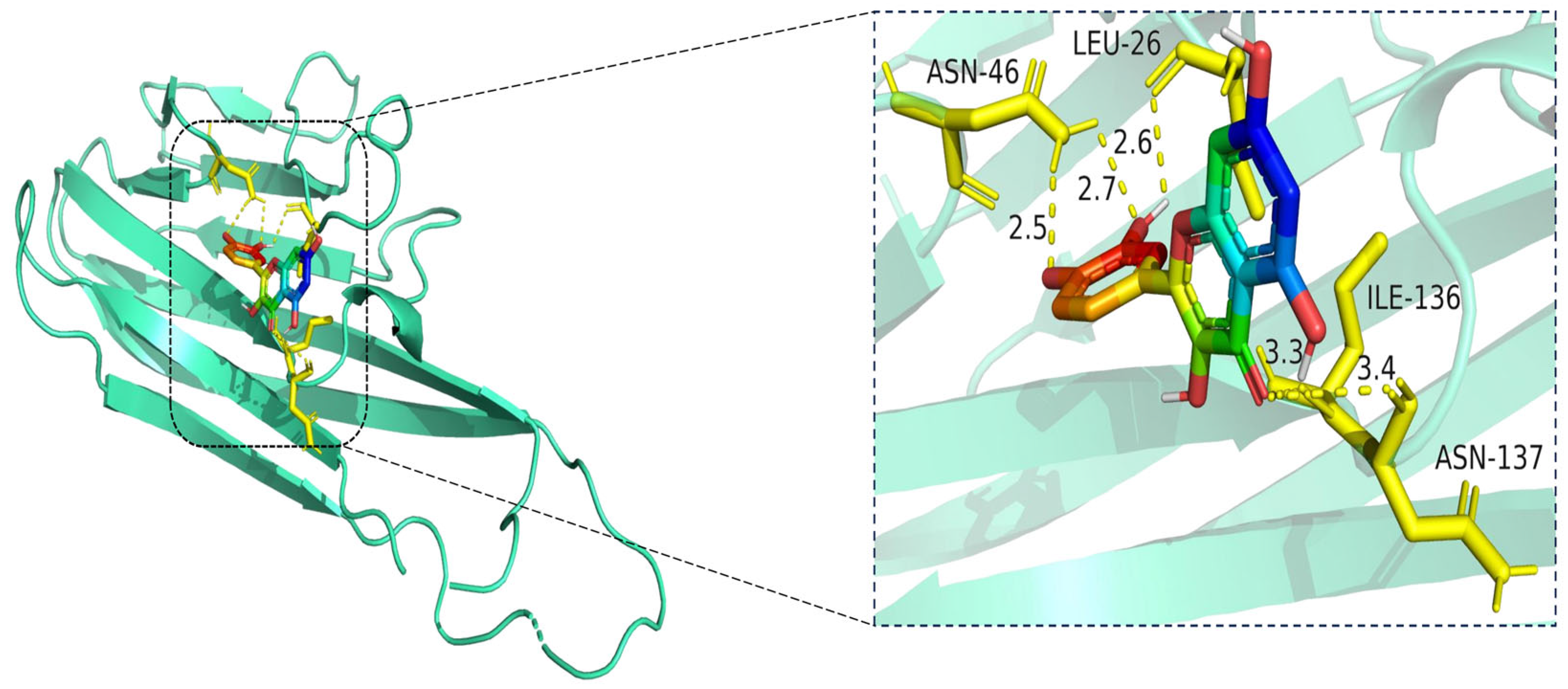
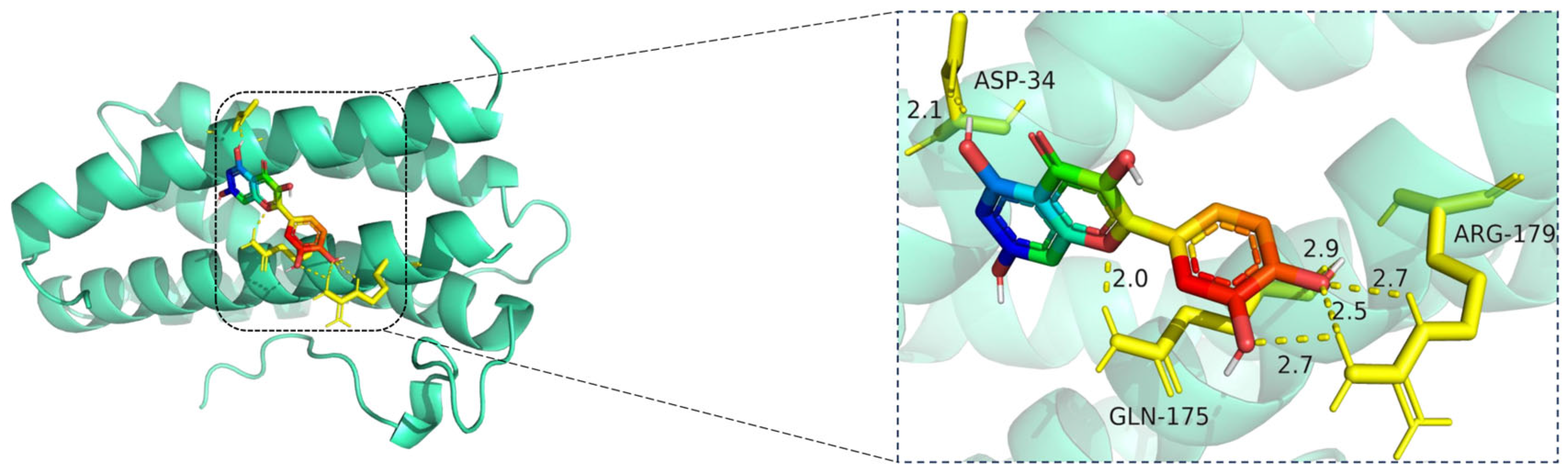
3.7. Molecular Docking Validation Between Key Targets and Active Compounds
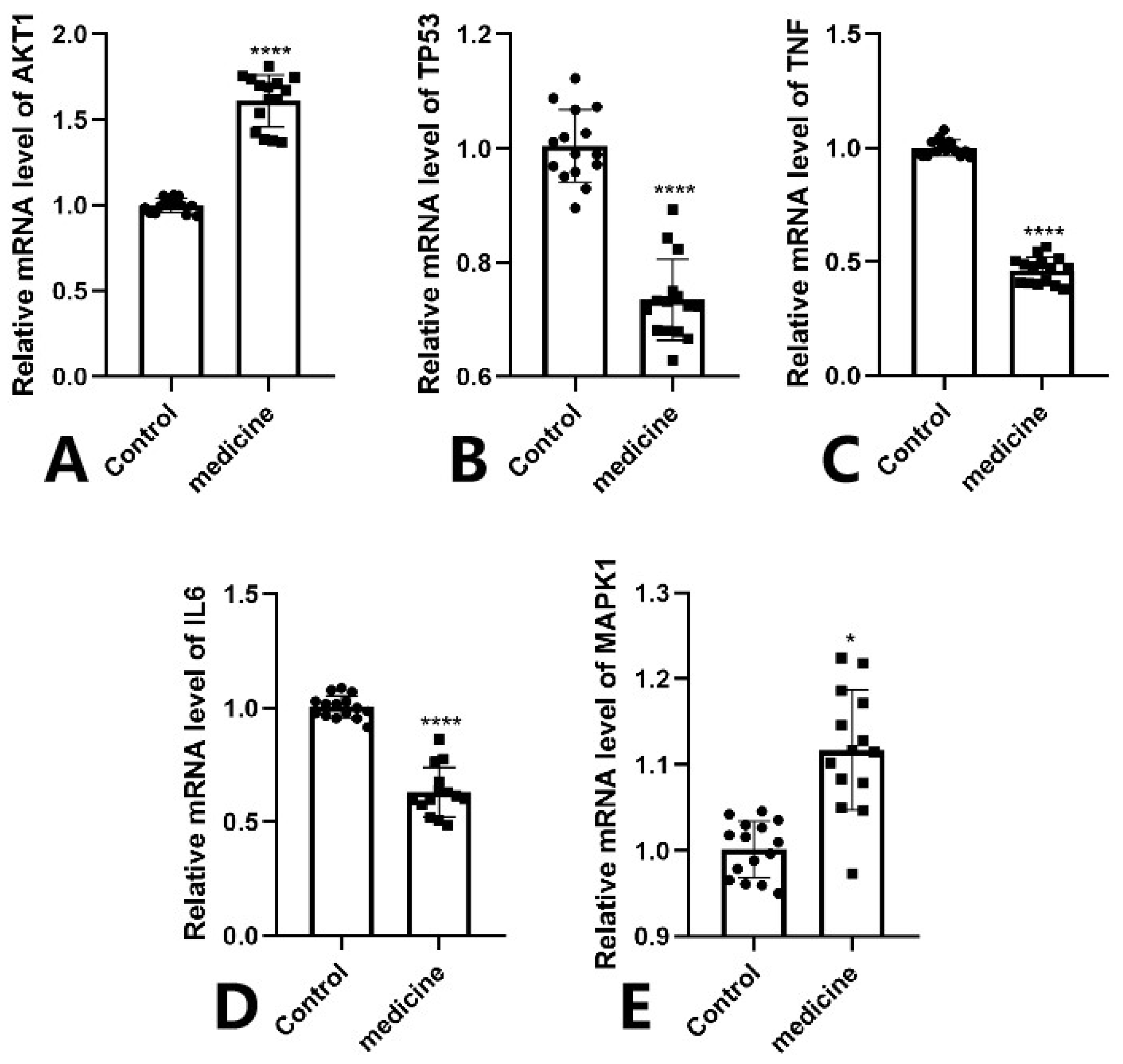
3.8. Clinical Sample Experimental Validation
4. Discussion
5. Conclusions
Author Contributions
Funding
Institutional Review Board Statement
Informed Consent Statement
Data Availability Statement
Conflicts of Interest
References
- Zhang, P.; Lu, J.; Jing, Y.; Tang, S.; Zhu, D.; Bi, Y. Global epidemiology of diabetic foot ulceration: A systematic review and meta-analysis. Ann. Med. 2017, 49, 106–116. [Google Scholar] [CrossRef] [Scilit] [PubMed]
- Armstrong, D.G.; Boulton, A.J.; Bus, S.A. Diabetic foot ulcers and their recurrence. N. Engl. J. Med. 2017, 376, 2367–2375. [Google Scholar] [CrossRef] [Scilit] [PubMed]
- Huang, K.; Mi, B.; Xiong, Y.; Fu, Z.; Zhou, W.; Liu, W.; Liu, G.; Dai, G. Angiogenesis during diabetic wound repair:from mechanism to therapy opportunity. Burns Trauma. 2025, 13, tkae052. [Google Scholar] [CrossRef] [Scilit]
- Lv, D.; Cao, X.; Zhong, L.; Dong, Y.; Xu, Z.; Rong, Y.; Xu, H.; Wang, Z.; Yang, H.; Yin, R.; et al. Targeting phenylpyruvate restrains excessive NLRP3 inflammasome activation and pathological inflammation in diabetic wound healing. Cell Rep. Med. 2023, 4, 101129. [Google Scholar] [CrossRef] [Scilit]
- Jahan, H.; Choudhary, M.I. Gliclazide alters macrophages polarization state in diabetic atheroscleros-is in vitro via blocking AGE-RAGE/TLR4-reactive oxygen species-activated NF-kβ nexus. Eur. J. Pha-rmacol. 2021, 894, 173874. [Google Scholar] [CrossRef] [Scilit]
- El Hage, R.; Knippschild, U.; Arnold, T.; Hinterseher, I. Stem Cell-Based Therapy: A Promising Treatment for Diabetic Foot Ulcer. Biomedicines 2022, 10, 1507. [Google Scholar] [CrossRef] [Scilit]
- Huang, Y.Y.; Lin, C.W.; Cheng, N.C.; Cazzell, S.M.; Chen, H.-H.; Huang, K.-F.; Tung, K.-Y.; Huang, H.-L.; Lin, P.-Y.; Perng, C.-K.; et al. Effect of a novel macrophage-regulating drug on wound healing in patients with diabetic foot ulcers: A randomized clinical trial. JAMA Netw. Open 2021, 4, e2122607. [Google Scholar] [CrossRef] [Scilit]
- Chang, S.-C.; Lin, C.-W.; Chen, J.-C.; Wu, Y.-H.; Chen, S.-G.; Huang, Y.-Y.; Cheng, N.-C.; Cazzell, S.M.; Chen, H.-H.; Huang, K.-F.; et al. Effects of ON101 for Hard-to-Heal Diabetic Foot Ulcers in a Randomized Phase III Trial: A Post Hoc Analysis. Adv. Wound Care 2024. [Google Scholar] [CrossRef] [Scilit]
- Leu, W.J.; Chen, J.C.; Guh, J.H. Extract From Plectranthus amboinicus Inhibit Maturation and Release of Interleukin 1β Through Inhibition of NF-κB Nuclear Translocation and NLRP3 Inflammasome Activation. Front. Pharmacol. 2019, 10, 573. [Google Scholar] [CrossRef] [Scilit]
- Li, X.; Liu, Z.; Liao, J.; Chen, Q.; Lu, X.; Fan, X. Network pharmacology approaches for research of Traditional Chinese Medicines. Chin. J. Nat. Med. 2023, 21, 323–332. [Google Scholar] [CrossRef] [Scilit]
- Syriopoulou, A.; Markopoulos, I.; Tzakos, A.G.; Mavromoustakos, T. Ligand-Receptor Interactions and Drug Design. Methods Mol. Biol. 2021, 2266, 89–104. [Google Scholar] [CrossRef] [Scilit] [PubMed]
- Zhang, Z.; Wang, L.; Li, X.; Miao, Y.; Li, D. Integrating Network Pharmacology, Molecular Docking and Experimental Validation to Explore the Pharmacological Mechanisms of Quercetin Against Diabetic Wound. Int. J. Med. Sci. 2024, 21, 2837–2850. [Google Scholar] [CrossRef] [Scilit] [PubMed]
- Salehi, B.; Venditti, A.; Sharifi-Rad, M.; Kręgiel, D.; Sharifi-Rad, J.; Durazzo, A.; Lucarini, M.; Santini, A.; Souto, E.B.; Novellino, E.; et al. The Therapeutic Potential of Apigenin. Int. J. Mol. Sci. 2019, 20, 1305. [Google Scholar] [CrossRef] [Scilit]
- Zhang, J.; Shi, Y.; Wang, J.; Gao, M.; Zhong, S.; Chen, Y.; Hao, J.; Yang, P.; Xu, S.; Liu, Y. Mechanisms of Huhuang decoction in treating diabetic wounds: A network pharmacological and experimental study. Int. J. Med. Sci. 2025, 22, 1811–1824. [Google Scholar] [CrossRef] [Scilit]
- Landeros-Martínez, L.L.; Campos-Almazán, M.I.; Sánchez-Bojorge, N.A.; Flores, R.; Palomares-Báez, J.P.; Rodríguez-Valdez, L.M. Theoretical Studies for the Discovery of Potential Sucrase-Isomaltase Inhibitors from Maize Silk Phytochemicals: An Approach to Treatment of Type 2 Diabetes. Molecules 2023, 28, 6778. [Google Scholar] [CrossRef] [Scilit]
- Tentolouris, A.; Eleftheriadou, I.; Samakidou, G.; Tentolouris, N. Developments in the management of diabetic foot ulcers (Review). World Acad. Sci. J. 2025, 7, 46. [Google Scholar] [CrossRef] [Scilit]
- González, P.; Lozano, P.; Ros, G.; Solano, F. Hyperglycemia and Oxidative Stress: An Integral, Updated and Critical Overview of Their Metabolic Interconnections. Int. J. Mol. Sci. 2023, 24, 9352. [Google Scholar] [CrossRef] [Scilit]
- Yuan, T.; Yang, T.; Chen, H.; Fu, D.; Hu, Y.; Wang, J.; Yuan, Q.; Yu, H.; Xu, W.; Xie, X.; et al. New insights into oxidative stress and inflammation during diabetes mellitus-accelerated atherosclerosis. Redox Biol. 2019, 20, 247–260. [Google Scholar] [CrossRef] [Scilit]
- Di Marco, E.; Gray, S.P.; Jandeleit-Dahm, K. Diabetes alters activation and repression of pro- and anti-inflammatory signaling pathways in the vasculature. Front. Endocrinol. 2013, 4, 68. [Google Scholar] [CrossRef] [Scilit]
- Herrero-Cervera, A.; Soehnlein, O.; Kenne, E. Neutrophils in chronic inflammatory diseases. Cell Mol. Immunol. 2022, 19, 177–191. [Google Scholar] [CrossRef] [Scilit]
- Yang, H.; Chen, Y.; Rong, Y.; Zhou, Y.; Li, S.; Li, X.; Wu, H.; Lv, D.; Cao, X.; Wang, P.; et al. Multifunctional hydrogel targeting senescence to accelerate diabetic wound healing through promoting angiogenesis. J. Nanobiotechnol. 2025, 23, 177. [Google Scholar] [CrossRef] [Scilit] [PubMed]
- Tang, G.; Wang, Y.; Deng, P.; Wu, J.; Lu, Z.; Zhu, R.; Guo, H.; Zhang, Y.; Mo, X.; Chen, Z. Mechanism of dracorhodin in accelerating diabetic foot ulcer healing via the Nrf2 pathway, a network pharmacology, molecular docking and experimental validation. Sci. Rep. 2025, 15, 12492. [Google Scholar] [CrossRef] [Scilit] [PubMed]
- Wang, X.; Liu, M.; Wu, Y.; Sun, J.; Liu, L.; Pan, Z. Gentiopicroside targeting AKT1 activates HIF-1α/VEGF axis promoting diabetic ulcer wound healing. Front. Pharmacol. 2025, 16, 1506499. [Google Scholar] [CrossRef] [Scilit] [PubMed]
- Pandey, S.; Anshu, T.; Maharana, K.C.; Sinha, S. Molecular insights into diabetic wound healing: Focus on Wnt/β-catenin and MAPK/ERK signaling pathways. Cytokine 2025, 191, 156957. [Google Scholar] [CrossRef] [Scilit]
- He, W.; Tang, M.; Gu, R.; Wu, X.; Mu, X.; Nie, X. The Role of p53 in Regulating Chronic Inflammation and PANoptosis in Diabetic Wounds. Aging Dis. 2025, 16, 373–393. [Google Scholar] [CrossRef] [Scilit]
- Fu, J.; Huang, J.; Lin, M.; Xie, T.; You, T. Quercetin Promotes Diabetic Wound Healing via Switching Macrophages From M1 to M2 Polarization. J. Surg. Res. 2020, 246, 213–223. [Google Scholar] [CrossRef] [Scilit]
- Wang, R.; Wang, Q.; Liu, M.; Xiao, H.; Zhang, G.; Yao, J.; Liu, M. Jingfang Granules for Diabetic Wound Healing: Insights from Network Pharmacology and Experimental Validation. Drug Des. Devel Ther. 2025, 19, 4835–4860. [Google Scholar] [CrossRef] [Scilit]


| Component | Volume |
|---|---|
| GoScriptTM Enzyme Mix | 4 µL |
| GoScriptTM Reaction Buffer | 4 µL |
| Total RNA | 2 µg |
| Nuclease-Free Water | Add to 20 µL |
| Temperature | Time |
|---|---|
| 25 °C | 5 min |
| 42 °C | 60 min |
| 70 °C | 15 min |
| 4 °C | hold |
| Component | Volume |
|---|---|
| cDNA | 1 µL |
| 2xUniversal Blue SYBR Green qPCR Master Mix | 5 µL |
| Forward primer (10 µM) | 0.25 µL |
| Reverse primer (10 µM) | 0.25 µL |
| ddH2O | 5.5 µL |
| Temperature | Time | |
|---|---|---|
| Initial Denaturation | 95 °C | 5 min |
| Denaturation | 95 °C | 30 s |
| Annealing and Extension | 60 °C | 60 s |
| Primer | Sequence | |
|---|---|---|
| AKT1 | F | AGAAGCAGGAGGAGGAGGAG |
| AKT1 | R | CGACCGCACATCATCTCGTA |
| IL-6 | F | ACCCCCAGGAGAAGATTCCA |
| IL-6 | R | ATTTGTGGTTGGGTCAGGGG |
| TNF | F | TGTGGGGTGTGAGAAGAGAGA |
| TNF | R | GCTCTTAGCCCTGAGGTGTC |
| MAPK1 | F | CAGTTCTTGACCCCTGGTCC |
| MAPK1 | R | CTGGGACATCCCCAGAAACC |
| TP53 | F | GGGTTGATTCCACACCCCC |
| TP53 | R | CTCCGTCATGTGCTGTGACT |
| GAPDH | F | ATGGGCAGCCGTTAGGAAAG |
| GAPDH | R | AGGAAAAGCATCACCCGGAG |
| ID | Molecule Name | Herb | Degree |
|---|---|---|---|
| MOL000098 | Quercetin | Centella asiatica (Jixuecao) | 126 |
| MOL000008 | Apigenin | Centella asiatica (Jixuecao) | 59 |
| MOL011865 | Rosmarinic acid | Plectranthus amboinicus (Daoshouxiang) | 26 |
| MOL002915 | Salvigenin | Plectranthus amboinicus (Daoshouxiang) | 16 |
| MOL007274 | Cirsimaritin | Plectranthus amboinicus (Daoshouxiang) | 10 |
| MOL007308 | Castilliferol | Centella asiatica (Jixuecao) | 9 |
| MOL007307 | Castillicetin | Centella asiatica (Jixuecao) | 6 |
| MOL007318 | Asiaticoside, f_qt | Centella asiatica (Jixuecao) | 2 |
| Gene | Betweenness | Closeness | Degree |
|---|---|---|---|
| AKT1 | 2429.38 | 0.642 | 73 |
| TP53 | 2389.60 | 0.629 | 69 |
| TNF | 1293.53 | 0.616 | 64 |
| IL6 | 1360.79 | 0.616 | 63 |
| MAPK1 | 1237.83 | 0.598 | 58 |
| VEGFA | 1004.31 | 0.603 | 57 |
| JUN | 621.88 | 0.575 | 51 |
| INS | 1460.20 | 0.575 | 49 |
| EGF | 635.52 | 0.562 | 45 |
| EGFR | 520.63 | 0.558 | 44 |
| IL1B | 393.26 | 0.540 | 44 |
| MYC | 623.35 | 0.556 | 44 |
| MMP9 | 674.79 | 0.556 | 42 |
| HSP90AA1 | 928.77 | 0.542 | 40 |
| IL10 | 264.42 | 0.546 | 40 |
| RELA | 276.21 | 0.538 | 39 |
| CASP3 | 502.16 | 0.540 | 37 |
| CCND1 | 418.66 | 0.528 | 36 |
| PTEN | 292.68 | 0.527 | 34 |
| ESR1 | 332.27 | 0.536 | 33 |
| PTGS2 | 378.29 | 0.528 | 33 |
| ID | Description | p Value | Count |
|---|---|---|---|
| hsa05215 | Prostate cancer | 8.61 × 10⁻³¹ | 30 |
| hsa05417 | Lipid and atherosclerosis | 2.08 × 10⁻³⁰ | 39 |
| hsa05418 | Fluid shear stress and atherosclerosis | 1.35 × 10⁻²⁹ | 33 |
| hsa04933 | AGE-RAGE signaling pathway in diabetic complications | 7.43 × 10⁻²⁹ | 29 |
| hsa05212 | Pancreatic cancer | 6.27 × 10⁻²⁵ | 24 |
| hsa05163 | Human cytomegalovirus infection | 7.21 × 10⁻²⁵ | 35 |
| hsa05167 | Kaposi sarcoma-associated herpesvirus infection | 1.19 × 10⁻²⁴ | 33 |
| hsa05160 | Hepatitis C | 6.09 × 10⁻²⁴ | 30 |
| hsa04657 | IL-17 signaling pathway | 7.05 × 10⁻²⁴ | 25 |
| hsa05219 | Bladder cancer | 7.38 × 10⁻²⁴ | 19 |
| Receptor | Uniport-ID | PDB-ID | Ligand | MOL-ID | Binding Energy (kcal·mol−1) |
|---|---|---|---|---|---|
| AKT1 | P31749 | 1UNQ | Apigenin | MOL000008 | −9.7 |
| AKT1 | P31749 | 1UNQ | Quercetin | MOL000098 | −10.3 |
| AKT1 | P31749 | 1UNQ | Salvigenin | MOL002915 | −9 |
| AKT1 | P31749 | 1UNQ | Cirsimaritin | MOL007274 | −9.6 |
| AKT1 | P31749 | 1UNQ | Rosmarinic acid | MOL011865 | −9.5 |
| IL6 | P05231 | 1ALU | Apigenin | MOL000008 | −6.9 |
| IL6 | P05231 | 1ALU | Quercetin | MOL000098 | −7.1 |
| IL6 | P05231 | 1ALU | Salvigenin | MOL002915 | −6.1 |
| IL6 | P05231 | 1ALU | Cirsimaritin | MOL007274 | −6.6 |
| IL6 | P05231 | 1ALU | Rosmarinic acid | MOL011865 | −6.2 |
| MAPK1 | P28482 | 3SA0 | Apigenin | MOL000008 | −6.7 |
| MAPK1 | P28482 | 3SA0 | Quercetin | MOL000098 | −7.4 |
| MAPK1 | P28482 | 3SA0 | Salvigenin | MOL002915 | −6.7 |
| MAPK1 | P28482 | 3SA0 | Cirsimaritin | MOL007274 | −7.5 |
| MAPK1 | P28482 | 3SA0 | Rosmarinic acid | MOL011865 | −6.2 |
| TNF | P01375 | 4TSV | Apigenin | MOL000008 | −6 |
| TNF | P01375 | 4TSV | Quercetin | MOL000098 | −6.2 |
| TNF | P01375 | 4TSV | Salvigenin | MOL002915 | −5.9 |
| TNF | P01375 | 4TSV | Cirsimaritin | MOL007274 | −5.9 |
| TNF | P01375 | 4TSV | Rosmarinic acid | MOL011865 | −5.9 |
| TP53 | P04637 | 1AIE | Apigenin | MOL000008 | −6.2 |
| TP53 | P04637 | 1AIE | Quercetin | MOL000098 | −6 |
| TP53 | P04637 | 1AIE | Salvigenin | MOL002915 | −5.9 |
| TP53 | P04637 | 1AIE | Cirsimaritin | MOL007274 | −6 |
| TP53 | P04637 | 1AIE | Rosmarinic acid | MOL011865 | −6.2 |
Disclaimer/Publisher’s Note: The statements, opinions and data contained in all publications are solely those of the individual author(s) and contributor(s) and not of MDPI and/or the editor(s). MDPI and/or the editor(s) disclaim responsibility for any injury to people or property resulting from any ideas, methods, instructions or products referred to in the content. |
© 2025 by the authors. Licensee MDPI, Basel, Switzerland. This article is an open access article distributed under the terms and conditions of the Creative Commons Attribution (CC BY) license (https://creativecommons.org/licenses/by/4.0/).
Share and Cite
Li, T.; Wei, D.; Wang, J.; Gao, L. Revealing the Multi-Target Mechanisms of Fespixon Cream in Diabetic Foot Ulcer Healing: Integrated Network Pharmacology, Molecular Docking, and Clinical RT-qPCR Validation. Curr. Issues Mol. Biol. 2025, 47, 485. https://doi.org/10.3390/cimb47070485
Li T, Wei D, Wang J, Gao L. Revealing the Multi-Target Mechanisms of Fespixon Cream in Diabetic Foot Ulcer Healing: Integrated Network Pharmacology, Molecular Docking, and Clinical RT-qPCR Validation. Current Issues in Molecular Biology. 2025; 47(7):485. https://doi.org/10.3390/cimb47070485
Chicago/Turabian StyleLi, Tianbo, Dehua Wei, Jiangning Wang, and Lei Gao. 2025. "Revealing the Multi-Target Mechanisms of Fespixon Cream in Diabetic Foot Ulcer Healing: Integrated Network Pharmacology, Molecular Docking, and Clinical RT-qPCR Validation" Current Issues in Molecular Biology 47, no. 7: 485. https://doi.org/10.3390/cimb47070485
APA StyleLi, T., Wei, D., Wang, J., & Gao, L. (2025). Revealing the Multi-Target Mechanisms of Fespixon Cream in Diabetic Foot Ulcer Healing: Integrated Network Pharmacology, Molecular Docking, and Clinical RT-qPCR Validation. Current Issues in Molecular Biology, 47(7), 485. https://doi.org/10.3390/cimb47070485