Hypothesis

Molecular Mechanism for the Selective Presentation of Antigenic Peptides by Major Histocompatibility Complex Class I and Class II Molecules: A Hypothesis


Shenzhen Key Laboratory of Steroid Drug Discovery and Development, School of Medicine, The Chinese University of Hong Kong, Shenzhen 518172, China
Curr. Issues Mol. Biol. 2025, 47(11), 945; https://doi.org/10.3390/cimb47110945
Submission received: 28 August 2025 / Revised: 29 October 2025 / Accepted: 5 November 2025 / Published: 13 November 2025
(This article belongs to the Section Biochemistry, Molecular and Cellular Biology)

Abstract

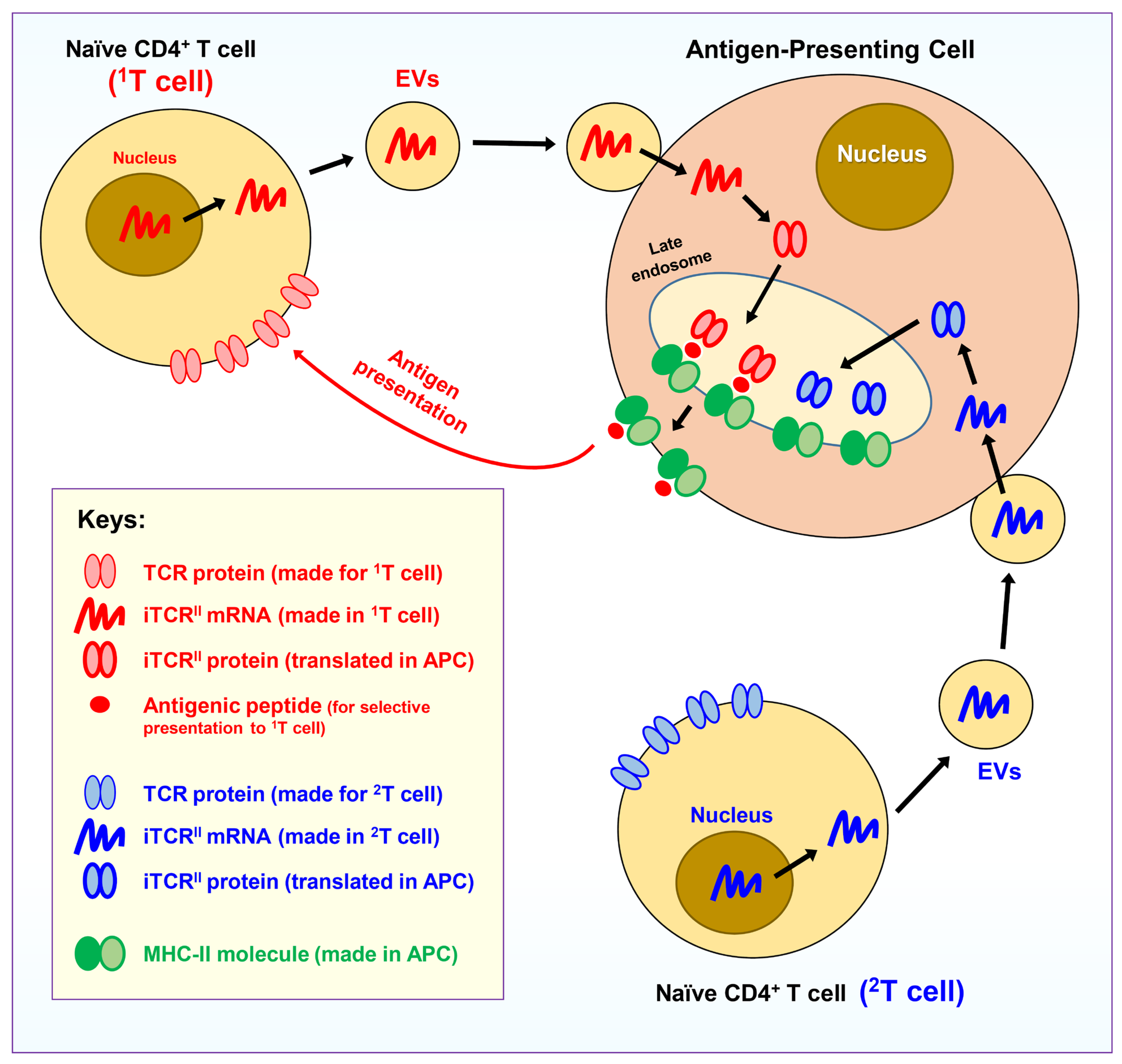
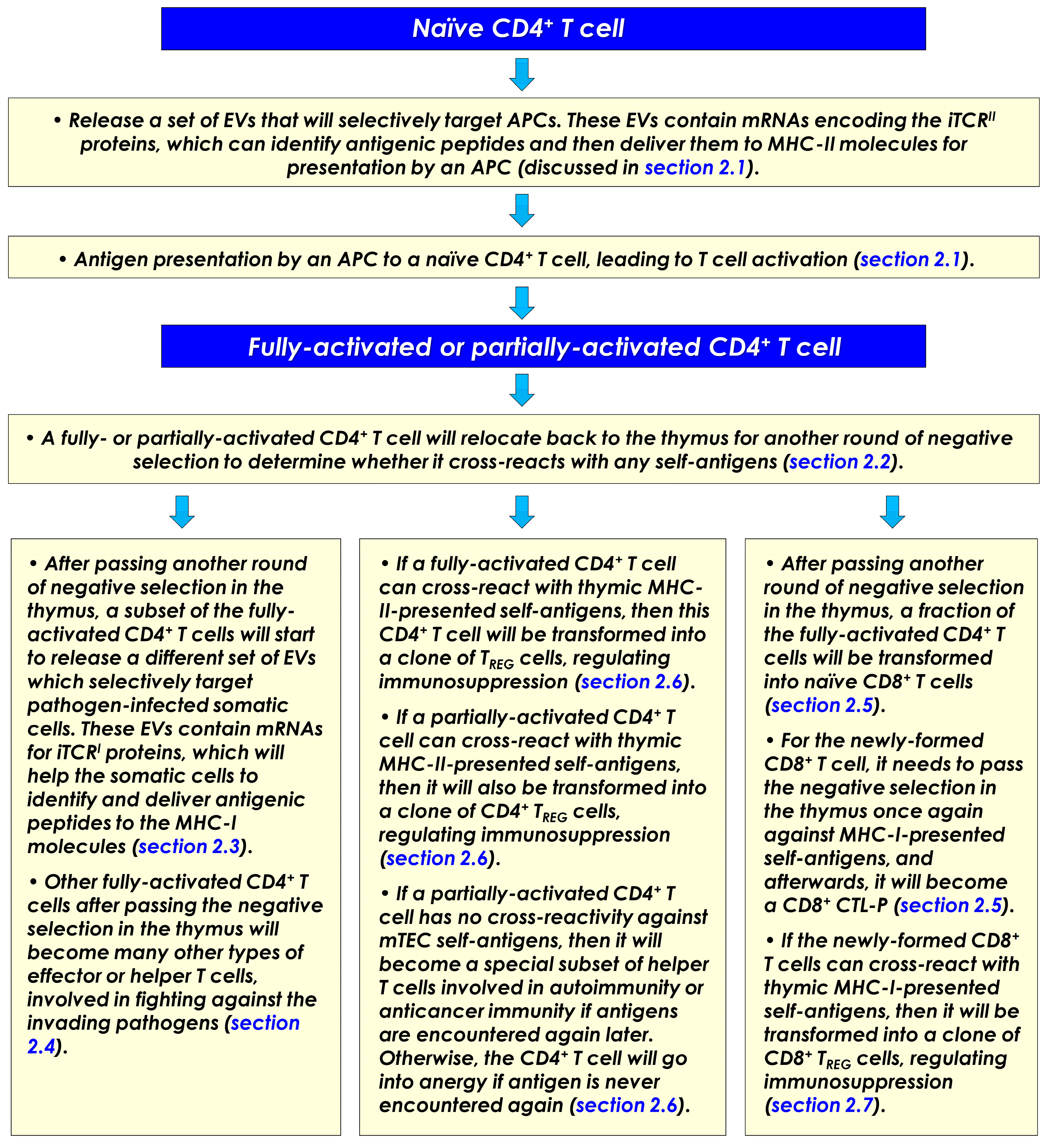
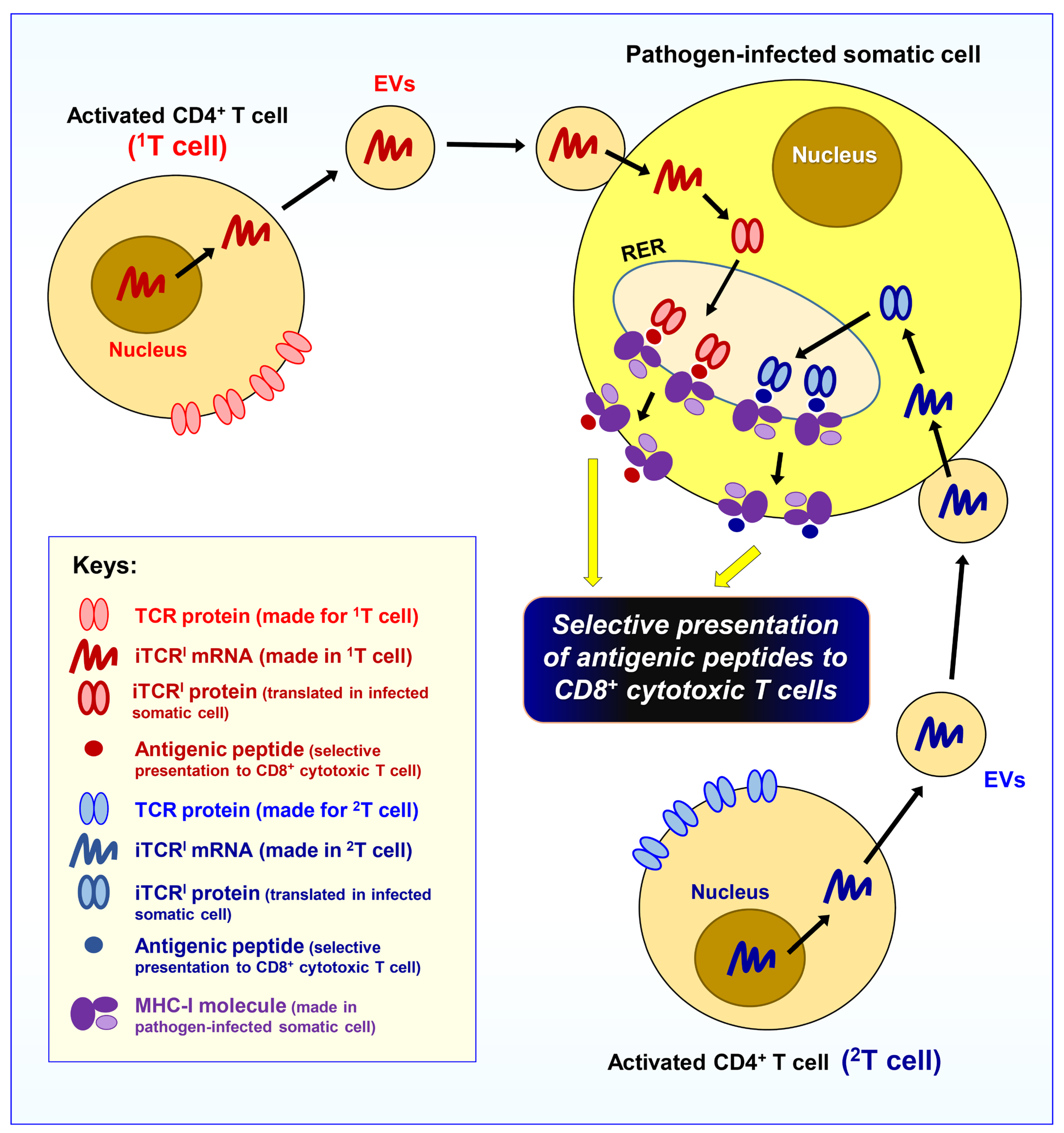
The major histocompatibility complex (MHC) class I and class II molecules (abbreviated as MHC-I and MHC-II, respectively) are specialized in antigen presentation. Unlike the T cell receptors (TCRs), which have great variability, the MHC-I and MHC-II molecules essentially have no variability at all. It is apparent that the MHC-I and MHC-II molecules per se do not have the built-in ability to distinguish the huge populations of self-peptides from antigenic non-self-peptides. At present, the precise mechanism underlying the selective presentation of antigenic peptides by both MHC-I and MHC-II molecules is unclear. For an MHC-II molecule to gain the ability to selectively present antigenic (mostly foreign) peptides, it is hypothesized herein that all naïve CD4+ T cells in the body will release extracellular vesicles (EVs), which are specially designed for antigen-presenting cells (APCs); these EVs contain mRNAs that will be delivered to APCs and translated into an intracellular version of the TCR proteins (iTCRII), which will help select antigenic peptides for presentation by the MHC-II molecules. Similarly, it is hypothesized that the fully activated CD4+ T cells will also release EVs, and these EVs contain different mRNAs for another intracellular version of the TCR proteins (iTCRI), which will help pathogen-infected somatic cells to select the antigenic peptides (mostly from invading pathogens) for presentation by the MHC-I molecules. Understandably, while the iTCRII proteins will work closely with the MHC-II molecules in the exogenous endocytic pathway, the iTCRI proteins will work closely with the MHC-I molecules in the endogenous pathway. In this paper, a few other related hypotheses are also proposed, which jointly offer a plausible mechanistic explanation for the selective presentation of antigenic peptides by both MHC-I and MHC-II molecules. While the proposed hypotheses are partly supported by some experimental observations, it is hoped that these hypotheses will promote discussion and experimental testing of the mechanisms underlying the complex process of selective antigen presentation.
Keywords: antigen presentation; major histocompatibility complex molecules; T cell receptors; antigen-presenting cells; dendritic cells; extracellular vesicles antigen presentation; major histocompatibility complex molecules; T cell receptors; antigen-presenting cells; dendritic cells; extracellular vesicles