
Interconnected Mechanistic Pathways, Molecular Biomarkers, and Therapeutic Approach of Oral Cancer in Patients with Diabetes Mellitus

 ,
,  ,
,  ,
,  , and
, and 
Abstract
1. Introduction
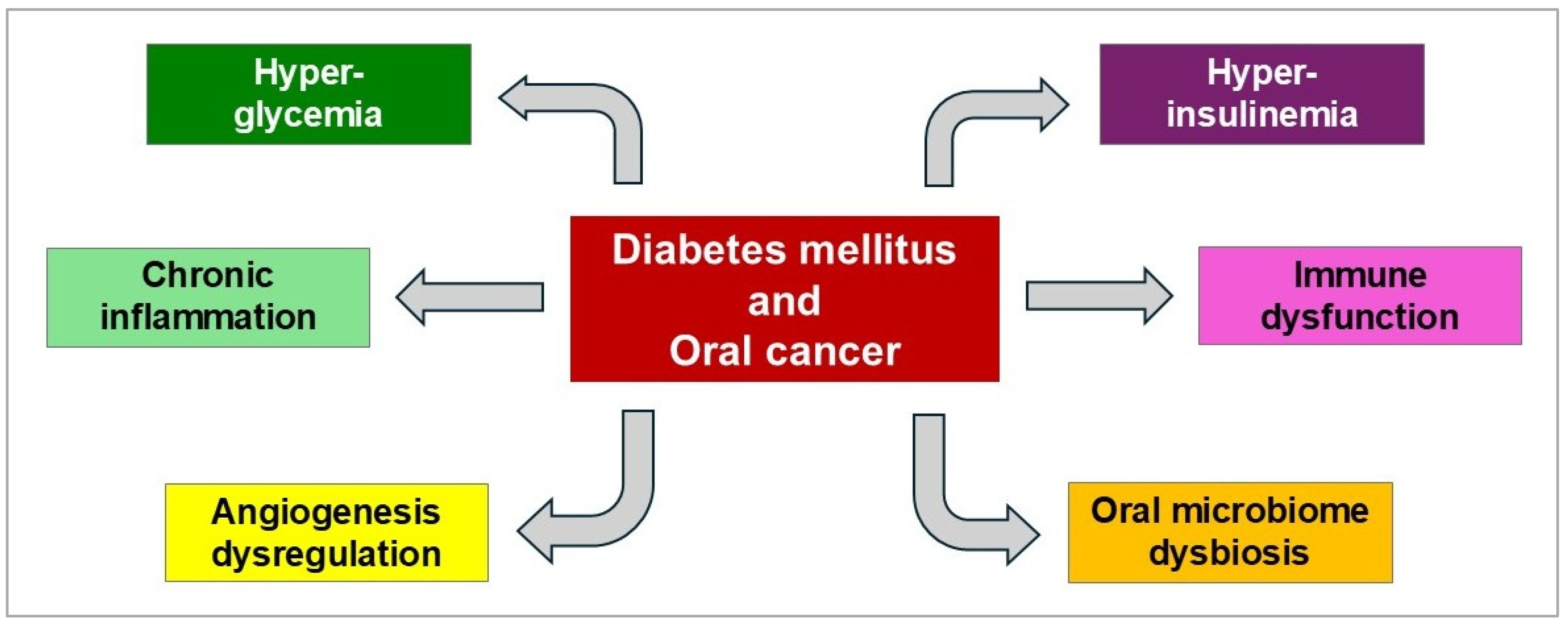
2. Biological Mechanisms That Correlate Diabetes Mellitus with Oral Cancer
2.1. Hyperglycemia-Mediated Effects
2.2. Hyperinsulinemia
2.3. Chronic Inflammation
2.4. Immune Dysfunction
2.5. Angiogenesis Dysregulation
2.6. Oral Microbiota Dysbiosis
3. Molecular Pathways in Diabetes Mellitus and Oral Cancer
3.1. AGE-RAGE Interactions: Molecular Mechanisms and Implications in Diabetes and Oral Cancer
3.2. Insulin/IGF-1 System in Diabetes Mellitus and Oral Cancer
3.3. Core Molecular Pathways
3.3.1. PI3K/AKT/mTOR Signaling Network

| Molecular Players | Normal Function | DM Implications | OC Implications | References |
|---|---|---|---|---|
| PI3K/AKT/mTOR signaling network | ||||
| PI3K |
|
|
| [79,80] |
| Protein kinase B (AKT) |
|
|
| [79,81] |
| mTOR |
|
|
| [82] |
| PTEN |
|
|
| [83] |
| Inflammatory pathway | ||||
| NLRP3 |
|
|
| [84,85] |
| ASC |
|
|
| [86] |
| Caspase-1 |
|
|
| [87] |
| IL-1β |
|
|
| [87] |
| IL-18 |
|
|
| [88,89] |
| p53 tumor suppressor network | ||||
| p53 |
|
|
| [90] |
| MDM2 |
|
|
| [91] |
| p21 |
|
|
| [92,93] |
| BAX/BAK |
|
|
| [94,95] |
| Hypoxia-Inducible Factor (HIF) pathway | ||||
| HIF-1α |
|
|
| [96,97] |
| HIF-2α |
|
|
| [98,99] |
| VEGF |
|
|
| [43,100] |
| GLUT1 |
|
|
| [101] |
| Oral microbiome pathway | ||||
| Microbial sp. | Pathway targets | Diabetes implications | OC implications | References |
| Fusobacterium nucleatum | TLR4/NF-κB, Wnt/β-catenin | Inflammation | Tumor promotion | [102,103] |
| Porphyromonas gingivalis | NLRP3, PI3K/AKT | Insulin resistance | DNA damage, tumor induction, and progression | [103,104] |
| Candida albicans | NF-κB, complement | Immune dysfunction | DNA damage | [103,105] |
3.3.2. Inflammatory Pathway
3.3.3. p53 Tumor Suppressor Network
3.3.4. Hypoxia-Inducible Factor (HIF) Pathways
3.3.5. Oral Microbiome Pathway
Gram-Negative Bacteria
C. albicans
3.3.6. NF-κB Transcriptional Network
3.4. Molecular Biomarkers with Clinical Significance in Diabetes and Oral Cancer
4. Oral Cancer Treatment in Diabetes Patients
4.1. Metformin (Biguanides)
4.2. GLP-1 Agonists
4.2.1. Semaglutide
4.2.2. Liraglutide
4.2.3. SGLT Inhibitors
4.3. Molecular Biomarkers as Therapeutic Targets in Diabetes and Oral Cancer
5. Methodological Limitations and Further Research
- Prospective longitudinal studies measuring proposed molecular mediators (insulin, IGF-1, inflammatory cytokines, AGEs) before cancer diagnosis to establish temporal causality rather than correlation.
- Direct validation of pathway dysregulation (PI3K/AKT/mTOR, HIF-1α, NF-κB) in human oral tissues comparing diabetic versus non-diabetic patients while controlling for confounding factors like smoking and alcohol use.
- Microbiome intervention trials testing whether periodontal treatment or antimicrobial strategies reduce cancer incidence in diabetic populations, combined with metagenomic analyses that identify functional pathways beyond taxonomic associations.
- Mendelian randomization and genetic studies to strengthen causal inference and identify shared susceptibility loci.
- Biomarker discovery and validation for early detection, specifically in diabetic populations.
- Randomized controlled trials evaluating enhanced screening protocols and integrated diabetes-dental care models to determine whether intensified surveillance or glycemic optimization strategies could reduce OC morbidity and mortality in this high-risk population.
6. Materials and Methods
- Molecular mechanisms: Grouped by biomarker categories.
- Therapeutic interventions: Organized by drug class with emphasis on mechanism of action and clinical evidence.
- Clinical implications: Integration of molecular insights with therapeutic potential.
7. Conclusions and Clinical Implications
Author Contributions
Funding
Data Availability Statement
Acknowledgments
Conflicts of Interest
Abbreviations
| OC | Oral cancer |
| OSCC | Oral squamous cell carcinoma |
| HNSCC | Head and Neck Squamous Cell Carcinoma |
| DM | Diabetes mellitus |
| HR | Hazard ratio |
| IL | Interleukin |
| IGF | Insulin-like growth factor |
| IRS | Insulin-Receptor substrate |
| PI3K | Phosphatidylinositol 3-kinase |
| AKT | Protein kinase B |
| mTOR | Mammalian Target of Rapamycin |
| PTEN | Phosphatase and tensin homolog deleted on chromosome 10 |
| TNF | Tumor necrosis factor |
| NLRP3 | NOD-, LRR-, and pyrin domain-containing protein 3 |
| ASC | Apoptosis-associated speck-like protein containing a CARD |
| p-53 | A stress-sensitive tumor suppressor protein |
| p-21 | A protein that regulates the cell cycle |
| MDM2 | Murine Double Minute 2–an oncogene |
| BAK | Bcl-2 homologous antagonist/killer |
| BAX | family of proteins involved in inducing cell death |
| VEGF | Vascular Endothelial Growth Factor |
| GLUT | Glucose Transporter |
| CRP | C-Reactive Protein |
| NF-κB | Nuclear Factor kappa-light-chain-enhancer of activated B cells |
| TH1/TH2 | Type 1/2 T helper cells |
| PD-1/PD-L1 | An immune checkpoint pathway where the receptor PD-1 on immune cells interacts with its ligand PD-L1, primarily found on cancer cells, to suppress T cell activity and enable cancer to evade the immune system. |
| CCLCX1 | A chemokine that functions as a signaling molecule to recruit immune cells, particularly neutrophils, to sites of infection and inflammation |
| HbA1c | Glycated hemoglobin |
| IGFBP3 | Insulin-like Growth Factor Binding Protein-3. |
| ICAM-1 | Intercellular Adhesion Molecule 1 |
| MDA | Malonyl Dialdehyde |
| ADIPOQ | Adiponectin gene |
| TCF7L2 | Transcription factor 7-like 2 |
| CCL2 | Chemokine (C-C motif) ligand 2 |
| AGE | advanced glycation end products |
| RAGE | Receptors for AGE |
| IFN-γ | Interferon γ |
| CXCL1 | Chemokine (C-X-C motif) ligand 1 |
| HIF-1α | Hypoxia-inducible factor 1-alpha |
| HIF-2α | Hypoxia-inducible factor 2-alpha |
| ROS | Reactive Oxygen Species |
| SOD | Superoxide Dismutase |
| RNS | Reactive nitrogen species |
| CFPAK-1 | A pancreatic adenocarcinoma cell line |
| PCNA | Proliferating Cell Nuclear Antigen |
| Ki67 | Antigen Kiel 67 |
| Bcl-x | B-cell lymphoma-X |
| JNK | c-Jun N-terminal kinase |
| MAPK | p38 mitogen-activated protein kinase |
| AP-1 | Activator Protein-1 |
| IL-6 | Interleukin 6 |
| JAK2 | Janus kinase 2 |
| STAT3 | signal transducer and activator of transcription 3 |
| Emp | Empagliflozine |
References
- Rodríguez-Molinero, J.; Migueláñez-Medrán, B.d.C.; Puente-Gutiérrez, C.; Delgado-Somolinos, E.; Martín Carreras-Presas, C.; Fernández-Farhall, J.; López-Sánchez, A.F. Association between Oral Cancer and Diet: An Update. Nutrients 2021, 13, 1299. [Google Scholar] [CrossRef]
- Saka-Herrán, C.; Jané-Salas, E.; Mari-Roig, A.; Estrugo-Devesa, A.; López-López, J. Time-to-Treatment in Oral Cancer: Causes and Implications for Survival. Cancers 2021, 13, 1321. [Google Scholar] [CrossRef] [PubMed]
- Senevirathna, K.; Jayawardana, N.; Udumalagala Gamage, C.; Perera, U.; Jayasinghe, R.; Seneviratne, B. Use of Oral Squamous Cell Carcinoma: A Discussion Paper. Int. Health Trends Perspect. 2023, 3, 1–15. [Google Scholar] [CrossRef]
- Huber, M.A.; Tantiwongkosi, B. Oral and Oropharyngeal Cancer. Med. Clin. N. Am. 2014, 98, 1299–1321. [Google Scholar] [CrossRef]
- Warnakulasuriya, S. Living with Oral Cancer: Epidemiology with Particular Reference to Prevalence and Life-Style Changes That Influence Survival. Oral Oncol. 2010, 46, 407–410. [Google Scholar] [CrossRef]
- Garavello, W.; Bertuccio, P.; Levi, F.; Lucchini, F.; Bosetti, C.; Malvezzi, M.; Negri, E.; La Vecchia, C. The Oral Cancer Epidemic in Central and Eastern Europe. Int. J. Cancer 2010, 127, 160–171. [Google Scholar] [CrossRef]
- Gupta, N.; Gupta, R.; Acharya, A.K.; Patthi, B.; Goud, V.; Reddy, S.; Garg, A.; Singla, A. Changing Trends in Oral Cancer—A Global Scenario. Nepal J. Epidemiol. 2017, 6, 613–619. [Google Scholar] [CrossRef]
- Peng, J.; Hu, Q.; Chen, X.; Wang, C.; Zhang, J.; Ren, X.; Wang, Y.; Tao, X.; Li, H.; Song, M.; et al. Diet-Induced Obesity Accelerates Oral Carcinogenesis by Recruitment and Functional Enhancement of Myeloid-Derived Suppressor Cells. Cell Death Dis. 2021, 12, 946. [Google Scholar] [CrossRef]
- Klein, S.; Gastaldelli, A.; Yki-Järvinen, H.; Scherer, P.E. Why Does Obesity Cause Diabetes? Cell Metab. 2022, 34, 11–20. [Google Scholar] [CrossRef]
- Elian, V.; Popovici, V.; Karampelas, O.; Pircalabioru, G.G.; Radulian, G.; Musat, M. Risks and Benefits of SGLT-2 Inhibitors for Type 1 Diabetes Patients Using Automated Insulin Delivery Systems—A Literature Review. Int. J. Mol. Sci. 2024, 25, 1972. [Google Scholar] [CrossRef]
- Abhinav, R.P.; Williams, J.; Livingston, P.; Anjana, R.M.; Mohan, V. Burden of Diabetes and Oral Cancer in India. J. Diabetes Complicat. 2020, 34, 107670. [Google Scholar] [CrossRef] [PubMed]
- Tseng, C.-H. Oral Cancer in Taiwan: Is Diabetes a Risk Factor? Clin. Oral Investig. 2013, 17, 1357–1364. [Google Scholar] [CrossRef] [PubMed]
- Vegh, A.; Banyai, D.; Ujpal, M.; Somogyi, K.S.; Biczo, Z.; Kammerhofer, G.; Nemeth, Z.; Hermann, P.; Payer, M.; Vegh, D. Prevalence of Diabetes and Impaired Fasting Glycemia in Patients with Oral Cancer: A Retrospective Study in Hungary. Anticancer Res. 2022, 42, 109–113. [Google Scholar] [CrossRef]
- Goutzanis, L.; Vairaktaris, E.; Yapijakis, C.; Kavantzas, N.; Nkenke, E.; Derka, S.; Vassiliou, S.; Acil, Y.; Kessler, P.; Stavrianeas, N.; et al. Diabetes May Increase Risk for Oral Cancer through the Insulin Receptor Substrate-1 and Focal Adhesion Kinase Pathway. Oral Oncol. 2007, 43, 165–173. [Google Scholar] [CrossRef]
- Ramos-Garcia, P.; Roca-Rodriguez, M.d.M.; Aguilar-Diosdado, M.; Gonzalez-Moles, M.A. Diabetes Mellitus and Oral Cancer/Oral Potentially Malignant Disorders: A Systematic Review and Meta-Analysis. Oral Dis. 2021, 27, 404–421. [Google Scholar] [CrossRef]
- Gong, Y.; Wei, B.; Yu, L.; Pan, W. Type 2 Diabetes Mellitus and Risk of Oral Cancer and Precancerous Lesions: A Meta-Analysis of Observational Studies. Oral Oncol. 2015, 51, 332–340. [Google Scholar] [CrossRef]
- Verhulst, M.J.L.; Loos, B.G.; Gerdes, V.E.A.; Teeuw, W.J. Evaluating All Potential Oral Complications of Diabetes Mellitus. Front. Endocrinol. 2019, 10, 56. [Google Scholar] [CrossRef]
- Remschmidt, B.; Pau, M.; Gaessler, J.; Zemann, W.; Jakse, N.; Payer, M.; Végh, D. Diabetes Mellitus and Oral Cancer: A Retrospective Study from Austria. Anticancer Res. 2022, 42, 1899–1903. [Google Scholar] [CrossRef]
- Ghanem, A.S.; Nagy, A.C. Oral Health’s Role in Diabetes Risk: A Cross-Sectional Study with Sociodemographic and Lifestyle Insights. Front. Endocrinol. 2024, 15, 1342783. [Google Scholar] [CrossRef]
- Wu, C.-H.; Wu, T.-Y.; Li, C.-C.; Lui, M.-T.; Chang, K.-W.; Kao, S.-Y. Impact of Diabetes Mellitus on the Prognosis of Patients with Oral Squamous Cell Carcinoma: A Retrospective Cohort Study. Ann. Surg. Oncol. 2010, 17, 2175–2183. [Google Scholar] [CrossRef] [PubMed]
- Wang, X.; Wang, H.; Zhang, T.; Cai, L.; Dai, E.; He, J. Diabetes and Its Potential Impact on Head and Neck Oncogenesis. J. Cancer 2020, 11, 583–591. [Google Scholar] [CrossRef]
- Pinheiro, L.C.; Cho, J.; Rothman, J.; Zeng, C.; Wilson, M.; Kern, L.M.; Tamimi, R.M.; Safford, M.M. Diabetes and Cancer Co-Management: Patient-Reported Challenges, Needs, and Priorities. Support. Care Cancer 2023, 31, 145. [Google Scholar] [CrossRef]
- Shahid, R.K.; Ahmed, S.; Le, D.; Yadav, S. Diabetes and Cancer: Risk, Challenges, Management and Outcomes. Cancers 2021, 13, 5735. [Google Scholar] [CrossRef]
- Xu, W.; Chen, Z.; Zhang, L. Impact of Diabetes on the Prognosis of Patients with Oral and Oropharyngeal Cancer: A Meta-Analysis. J. Diabetes Investig. 2024, 15, 1140–1150. [Google Scholar] [CrossRef]
- Priyadharsini, J.V.; Pandi, A. A Review on Diabetes and Oral Cancer: Molecular Links and Implications. Mol. Biol. Res. Commun. 2025, 14, 109–113. [Google Scholar] [CrossRef]
- De Falco, V.; Vitale, P.; Brancati, C.; Cicero, G.; Auriemma, A.; Addeo, R. Prognostic Value of Diabetes and Metformin Use in a Real-Life Population of Head and Neck Cancer Patients. Front. Med. 2023, 10, 1252407. [Google Scholar] [CrossRef]
- Vinay Deshmukh, C.; Suresh Dodamani, A.; Dilip Mistry, V.; Bhikaji Nepale, M.; Sakharam Patil, S.; Sanjay Ahirrao, S. Biological Mechanisms Linking Diabetes Mellitus and Oral Carcinogenesis: A Review. Acta Sci. Dent. Sci. 2025, 9, 9–14. [Google Scholar]
- Kim, G.-J.; Han, K.-D.; Joo, Y.-H. Association of Metabolic Syndrome with the Risk of Head and Neck Cancer: A 10-Year Follow-Up Study of 10 Million Initially Healthy Individuals. Cancers 2023, 15, 4118. [Google Scholar] [CrossRef]
- Adnan, Y.; Ali, S.M.A.; Awan, M.S.; Zahid, N.; Awan, M.O.; Afzal Kayani, H.; Farooqui, H.A. Body Mass Index and Diabetes Mellitus May Predict Poorer Overall Survival of Oral Squamous Cell Carcinoma Patients: A Retrospective Cohort from a Tertiary-Care Centre of a Resource-Limited Country. Clin. Med. Insights Oncol. 2022, 16, 11795549221084832. [Google Scholar] [CrossRef]
- Ranc, K.; Jørgensen, M.E.; Friis, S.; Carstensen, B. Mortality after Cancer among Patients with Diabetes Mellitus: Effect of Diabetes Duration and Treatment. Diabetologia 2014, 57, 927–934. [Google Scholar] [CrossRef]
- Végh, D.; Bányai, D.; Hermann, P.; Németh, Z.; Ujpál, M. Type-2 Diabetes Mellitus and Oral Tumors in Hungary: A Long-Term Comparative Epidemiological Study. Anticancer Res. 2017, 37, 1853–1857. [Google Scholar] [CrossRef]
- Duan, W.; Shen, X.; Lei, J.; Xu, Q.; Yu, Y.; Li, R.; Wu, E.; Ma, Q. Hyperglycemia, a Neglected Factor during Cancer Progression. BioMed Res. Int. 2014, 2014, 461917. [Google Scholar] [CrossRef]
- Ramteke, P.; Deb, A.; Shepal, V.; Bhat, M.K. Hyperglycemia Associated Metabolic and Molecular Alterations in Cancer Risk, Progression, Treatment, and Mortality. Cancers 2019, 11, 1402. [Google Scholar] [CrossRef]
- Harborg, S.; Kjærgaard, K.A.; Thomsen, R.W.; Borgquist, S.; Cronin-Fenton, D.; Hjorth, C.F. New Horizons: Epidemiology of Obesity, Diabetes Mellitus, and Cancer Prognosis. J. Clin. Endocrinol. Metab. 2024, 109, 924–935. [Google Scholar] [CrossRef]
- Park, J.B.; Moon, G.H.; Cho, A.; Kwon, M.; Park, J.W.; Yi, E.C.; Kim, H.; Fukuda, J.; Kwak, C.; Ko, Y.G.; et al. Neddylation of Insulin Receptor Substrate Acts as a Bona Fide Regulator of Insulin Signaling and Its Implications for Cancer Cell Migration. Cancer Gene Ther. 2024, 31, 599–611. [Google Scholar] [CrossRef]
- Zhang, X.; Varma, S.; Yee, D. Suppression of Insulin Receptor Substrate 1 Inhibits Breast Cancer Growth In Vitro and in Female Athymic Mice. Endocrinology 2023, 164, bqac214. [Google Scholar] [CrossRef]
- González-Moles, M.Á.; Ramos-García, P. State of Evidence on Oral Health Problems in Diabetic Patients: A Critical Review of the Literature. J. Clin. Med. 2021, 10, 5383. [Google Scholar] [CrossRef]
- Abhinav, R.P.; Williams, J.; Bennett, C.; Livingston, P.; Jebarani, S.; Pradeepa, R.; Anjana, R.M.; Mohan, V. Frequency and Association of Self-Reported Oral Cancer among Individuals with Type 2 Diabetes at a Tertiary Care Diabetes Centre in South India—A Retrospective Study. J. Diabetes Complicat. 2022, 36, bqab103. [Google Scholar] [CrossRef]
- Ramasamy, R.; Yan, S.F.; Schmidt, A.M. Receptor for AGE (RAGE): Signaling Mechanisms in the Pathogenesis of Diabetes and Its Complications. Ann. N. Y. Acad. Sci. 2011, 1243, 88–102. [Google Scholar] [CrossRef]
- Dobrucki, I.T.; Miskalis, A.; Nelappana, M.; Applegate, C.; Wozniak, M.; Czerwinski, A.; Kalinowski, L.; Dobrucki, L.W. Receptor for Advanced Glycation End-products: Biological Significance and Imaging Applications. WIREs Nanomed. Nanobiotechnol. 2024, 16, e1935. [Google Scholar] [CrossRef]
- Mekala, M.R.; Bangi, B.B.; Jayalatha, N.; Lebaka, R.R.; Nadendla, L.K.; Ginjupally, U. Association of Diabetes with Oral Cancer-an Enigmatic Correlation. Asian Pac. J. Cancer Prev. 2020, 21, 809–814. [Google Scholar] [CrossRef] [PubMed]
- Yang, Y.; Cao, Y. The Impact of VEGF on Cancer Metastasis and Systemic Disease. Semin. Cancer Biol. 2022, 86, 251–261. [Google Scholar] [CrossRef] [PubMed]
- Ghalehbandi, S.; Yuzugulen, J.; Pranjol, M.Z.I.; Pourgholami, M.H. The Role of VEGF in Cancer-Induced Angiogenesis and Research Progress of Drugs Targeting VEGF. Eur. J. Pharmacol. 2023, 949, 175586. [Google Scholar] [CrossRef]
- Pisano, M.; Giordano, F.; Sangiovanni, G.; Capuano, N.; Acerra, A.; D’Ambrosio, F. The Interaction between the Oral Microbiome and Systemic Diseases: A Narrative Review. Microbiol. Res. 2023, 14, 1862–1878. [Google Scholar] [CrossRef]
- Lee, Y.-H.; Chung, S.W.; Auh, Q.-S.; Hong, S.-J.; Lee, Y.-A.; Jung, J.; Lee, G.-J.; Park, H.J.; Shin, S.-I.; Hong, J.-Y. Progress in Oral Microbiome Related to Oral and Systemic Diseases: An Update. Diagnostics 2021, 11, 1283. [Google Scholar] [CrossRef]
- Shaalan, A.; Lee, S.; Feart, C.; Garcia-Esquinas, E.; Gomez-Cabrero, D.; Lopez-Garcia, E.; Morzel, M.; Neyraud, E.; Rodriguez-Artalejo, F.; Streich, R.; et al. Alterations in the Oral Microbiome Associated with Diabetes, Overweight, and Dietary Components. Front. Nutr. 2022, 9, 914715. [Google Scholar] [CrossRef]
- Rai, A.K.; Panda, M.; Das, A.K.; Rahman, T.; Das, R.; Das, K.; Sarma, A.; Kataki, A.C.; Chattopadhyay, I. Dysbiosis of Salivary Microbiome and Cytokines Influence Oral Squamous Cell Carcinoma through Inflammation. Arch. Microbiol. 2021, 203, 137–152. [Google Scholar] [CrossRef]
- Hu, X.; Wu, J.; Xiong, H.; Zeng, L.; Wang, Z.; Wang, C.; Huang, D.; Zhang, T.; Peng, Y.; Chen, W.; et al. Type 2 Diabetes Mellitus Promotes the Proliferation, Metastasis, and Suppresses the Apoptosis in Oral Squamous Cell Carcinoma. J. Oral Pathol. Med. 2022, 51, 483–492. [Google Scholar] [CrossRef]
- Twarda-Clapa, A.; Olczak, A.; Białkowska, A.M.; Koziołkiewicz, M. Advanced Glycation End-Products (AGEs): Formation, Chemistry, Classification, Receptors, and Diseases Related to AGEs. Cells 2022, 11, 1312. [Google Scholar] [CrossRef]
- Ilea, A.; Băbţan, A.M.; Boşca, B.A.; Crişan, M.; Petrescu, N.B.; Collino, M.; Sainz, R.M.; Gerlach, J.Q.; Câmpian, R.S. Advanced Glycation End Products (AGEs) in Oral Pathology. Arch. Oral Biol. 2018, 93, 22–30. [Google Scholar] [CrossRef]
- Haque, E.; Kamil, M.; Hasan, A.; Irfan, S.; Sheikh, S.; Khatoon, A.; Nazir, A.; Mir, S.S. Advanced Glycation End Products (AGEs), Protein Aggregation and Their Cross Talk: New Insight in Tumorigenesis. Glycobiology 2020, 30, 2–18. [Google Scholar] [CrossRef] [PubMed]
- Palati, S.; Ramani, P.; Sekaran, S. Receptors of Advanced Glycation End Products in Oral Squamous Cell Carcinoma: A Systematic Review. Tumor Discov. 2023, 2, 244. [Google Scholar] [CrossRef]
- Ko, S.-Y.; Ko, H.-A.; Shieh, T.-M.; Chi, T.-C.; Chen, H.-I.; Chen, Y.-T.; Yu, Y.-H.; Yang, S.-H.; Chang, S.-S. Advanced Glycation End Products Influence Oral Cancer Cell Survival via Bcl-Xl and Nrf-2 Regulation in Vitro. Oncol. Lett. 2017, 13, 3328–3334. [Google Scholar] [CrossRef] [PubMed]
- Ko, S.-Y.; Ko, H.-A.; Shieh, T.-M.; Chang, W.-C.; Chen, H.-I.; Chang, S.-S.; Lin, I.-H. Cell Migration Is Regulated by AGE-RAGE Interaction in Human Oral Cancer Cells In Vitro. PLoS ONE 2014, 9, e110542. [Google Scholar] [CrossRef]
- Huang, B.; Lang, X.; Li, X. The Role of IL-6/JAK2/STAT3 Signaling Pathway in Cancers. Front. Oncol. 2022, 12, 1023177. [Google Scholar] [CrossRef]
- Zhou, M.; Zhang, Y.; Shi, L.; Li, L.; Zhang, D.; Gong, Z.; Wu, Q. Activation and Modulation of the AGEs-RAGE Axis: Implications for Inflammatory Pathologies and Therapeutic Interventions—A Review. Pharmacol. Res. 2024, 206, 107282. [Google Scholar] [CrossRef]
- Nijenhuis-Noort, E.C.; Berk, K.A.; Neggers, S.J.C.M.M.; van der Lely, A.J. The Fascinating Interplay between Growth Hormone, Insulin-Like Growth Factor-1, and Insulin. Endocrinol. Metab. 2024, 39, 83–89. [Google Scholar] [CrossRef]
- LeRoith, D.; Scheinman, E.; Bitton-Worms, K. The Role for Insulin and Insulin-like Growth Factors in the Increased Risk of Cancer in Diabetes. Rambam Maimonides Med. J. 2011, 2, e0043. [Google Scholar] [CrossRef]
- Chen, P.; Lin, C.; Yang, S.; Chang, Y. Oral Submucous Fibrosis Stimulates Invasion and Epithelial-mesenchymal Transition in Oral Squamous Cell Carcinoma by Activating MMP-2 and IGF-IR. J. Cell. Mol. Med. 2021, 25, 9814–9825. [Google Scholar] [CrossRef]
- Zhi, X.; Lamperska, K.; Golusinski, P.; Schork, N.J.; Luczewski, L.; Golusinski, W.; Masternak, M.M. Expression Levels of Insulin-like Growth Factors 1 and 2 in Head and Neck Squamous Cell Carcinoma. Growth Horm. IGF Res. 2014, 24, 137–141. [Google Scholar] [CrossRef]
- Brady, G.; Crean, S.; Naik, P.; Kapas, S. Upregulation of IGF-2 and IGF-1 Receptor Expression in Oral Cancer Cell Lines. Int. J. Oncol. 2007, 31, 875–881. [Google Scholar] [CrossRef] [PubMed]
- Al-Samerria, S.; Radovick, S. The Role of Insulin-like Growth Factor-1 (IGF-1) in the Control of Neuroendocrine Regulation of Growth. Cells 2021, 10, 2664. [Google Scholar] [CrossRef] [PubMed]
- Salminen, A.; Kaarniranta, K.; Kauppinen, A. Insulin/IGF-1 Signaling Promotes Immunosuppression via the STAT3 Pathway: Impact on the Aging Process and Age-Related Diseases. Inflamm. Res. 2021, 70, 1043–1061. [Google Scholar] [CrossRef]
- Zhong, W.; Wang, X.; Wang, Y.; Sun, G.; Zhang, J.; Li, Z. Obesity and Endocrine-Related Cancer: The Important Role of IGF-1. Front. Endocrinol. 2023, 14, 1093257. [Google Scholar] [CrossRef]
- Scully, T.; Ettela, A.; LeRoith, D.; Gallagher, E.J. Obesity, Type 2 Diabetes, and Cancer Risk. Front. Oncol. 2021, 10, 615375. [Google Scholar] [CrossRef]
- Kilvert, A.; Fox, C. Hyperinsulinaemia and Cancer Risk: Cause and Effect? Pract. Diabetes 2020, 37, 223–227a. [Google Scholar] [CrossRef]
- Bowers, L.W.; Rossi, E.L.; O’Flanagan, C.H.; deGraffenried, L.A.; Hursting, S.D. The Role of the Insulin/IGF System in Cancer: Lessons Learned from Clinical Trials and the Energy Balance-Cancer Link. Front. Endocrinol. 2015, 6, 77. [Google Scholar] [CrossRef]
- Starzyńska, A.; Sejda, A.; Adamska, P.; Marvaso, G.; Sakowicz-Burkiewicz, M.; Adamski, Ł.; Jereczek-Fossa, B. Prognostic Value of the PIK3CA, AKT, and PTEN Mutations in Oral Squamous Cell Carcinoma: Literature Review. Arch. Med. Sci. 2021, 17, 207–217. [Google Scholar] [CrossRef]
- Dey, S.; Singh, A.K.; Singh, A.K.; Rawat, K.; Banerjee, J.; Agnihotri, V.; Upadhaya, D. Critical Pathways of Oral Squamous Cell Carcinoma: Molecular Biomarker and Therapeutic Intervention. Med. Oncol. 2022, 39, 30. [Google Scholar] [CrossRef]
- Rehim, A.A.; Rohoma, K.; Elwafa, R.A.; Dabees, H.; Amin, N.G. The Relation of Mtor with Diabetic Complications and Insulin Resistance in Patients with Type 2 Diabetes Mellitus. Atherosclerosis 2022, 355, 204. [Google Scholar] [CrossRef]
- Fruman, D.A.; Chiu, H.; Hopkins, B.D.; Bagrodia, S.; Cantley, L.C.; Abraham, R.T. The PI3K Pathway in Human Disease. Cell 2017, 170, 605–635. [Google Scholar] [CrossRef]
- Maffei, A.; Lembo, G.; Carnevale, D. PI3Kinases in Diabetes Mellitus and Its Related Complications. Int. J. Mol. Sci. 2018, 19, 4098. [Google Scholar] [CrossRef] [PubMed]
- Rajendran, P.; Sekar, R.; Dhayasankar, P.S.; Ali, E.M.; Abdelsalam, S.A.; Balaraman, S.; Chellappan, B.V.; Metwally, A.M.; Abdallah, B.M. PI3K/AKT Signaling Pathway Mediated Autophagy in Oral Carcinoma—A Comprehensive Review. Int. J. Med. Sci. 2024, 21, 1165–1175. [Google Scholar] [CrossRef] [PubMed]
- Devaraji, M.; Thanikachalam, P.V. Targeting the MTOR Pathway: A New Horizon in Oral Cancer Treatment. Oral Oncol. Rep. 2024, 11, 100619. [Google Scholar] [CrossRef]
- Chow, L.M.L.; Baker, S.J. PTEN Function in Normal and Neoplastic Growth. Cancer Lett. 2006, 241, 184–196. [Google Scholar] [CrossRef]
- Li, Y.Z.; Di Cristofano, A.; Woo, M. Metabolic Role of PTEN in Insulin Signaling and Resistance. Cold Spring Harb. Perspect. Med. 2020, 10, a036137. [Google Scholar] [CrossRef]
- Heald, R. PTEN Link between Cancer and Diabetes. Lancet Oncol. 2012, 13, e417. [Google Scholar] [CrossRef]
- Squarize, C.H.; Castilho, R.M.; Abrahao, A.C.; Molinolo, A.; Lingen, M.W.; Gutkind, J.S. PTEN Deficiency Contributes to the Development and Progression of Head and Neck Cancer. Neoplasia 2013, 15, 461–471. [Google Scholar] [CrossRef]
- Schultze, S.M.; Hemmings, B.A.; Niessen, M.; Tschopp, O. PI3K/AKT, MAPK and AMPK Signalling: Protein Kinases in Glucose Homeostasis. Expert Rev. Mol. Med. 2012, 14, e1. [Google Scholar] [CrossRef]
- Yang, J.; Nie, J.; Ma, X.; Wei, Y.; Peng, Y.; Wei, X. Targeting PI3K in Cancer: Mechanisms and Advances in Clinical Trials. Mol. Cancer 2019, 18, 26. [Google Scholar] [CrossRef]
- Song, M.; Bode, A.M.; Dong, Z.; Lee, M.-H. AKT as a Therapeutic Target for Cancer. Cancer Res. 2019, 79, 1019–1031. [Google Scholar] [CrossRef]
- Chang, H.-C.; Yang, C.-C.; Loi, L.-K.; Hung, C.-H.; Wu, C.-H.; Lin, Y.-C. Interplay of P62-MTORC1 and EGFR Signaling Promotes Cisplatin Resistance in Oral Cancer. Heliyon 2024, 10, e28406. [Google Scholar] [CrossRef] [PubMed]
- Rahmani, A.; Alzohairy, M.; Babiker, A.Y.; Rizvi, M.A.; Elkarimahmad, H.G. Clinicopathological Significance of PTEN and Bcl2 Expressions in Oral Squamous Cell Carcinoma. Int. J. Clin. Exp. Pathol. 2012, 5, 965–971. [Google Scholar] [PubMed]
- Sharma, B.R.; Kanneganti, T.-D. NLRP3 Inflammasome in Cancer and Metabolic Diseases. Nat. Immunol. 2021, 22, 550–559. [Google Scholar] [CrossRef]
- Ding, Y.; Ding, X.; Zhang, H.; Li, S.; Yang, P.; Tan, Q. Relevance of NLRP3 Inflammasome-Related Pathways in the Pathology of Diabetic Wound Healing and Possible Therapeutic Targets. Oxid. Med. Cell. Longev. 2022, 2022, 9687925. [Google Scholar] [CrossRef]
- Xu, Z.; Zhou, Y.; Xie, R.; Ning, Z. Metabolomics Uncovers the Diabetes Metabolic Network: From Pathophysiological Mechanisms to Clinical Applications. Front. Endocrinol. 2025, 16, 1624878. [Google Scholar] [CrossRef]
- Tylutka, A.; Walas, Ł.; Zembron-Lacny, A. Level of IL-6, TNF, and IL-1β and Age-Related Diseases: A Systematic Review and Meta-Analysis. Front. Immunol. 2024, 15, 1330386. [Google Scholar] [CrossRef]
- Zhao, Y.; Shen, M.; Feng, Y.; He, R.; Xu, X.; Xie, Y.; Shi, X.; Zhou, M.; Pan, S.; Wang, M.; et al. Regulatory B Cells Induced by Pancreatic Cancer Cell-Derived Interleukin-18 Promote Immune Tolerance via the PD-1/PD-L1 Pathway. Oncotarget 2018, 9, 14803–14814. [Google Scholar] [CrossRef]
- Cirella, A.; Olivera, I.; Luri-Rey, C.; Bolaños, E.; Berraondo, P.; Melero, I. Interleukin-18 in Cancer Immunology and Immunotherapy. Expert Opin. Ther. Targets 2023, 27, 1035–1042. [Google Scholar] [CrossRef]
- Shen, J.; Wang, Q.; Mao, Y.; Gao, W.; Duan, S. Targeting the P53 Signaling Pathway in Cancers: Molecular Mechanisms and Clinical Studies. MedComm 2023, 4, e288. [Google Scholar] [CrossRef]
- Wang, C.-Y.; Chao, C.-H. P53-Mediated Indirect Regulation on Cellular Metabolism: From the Mechanism of Pathogenesis to the Development of Cancer Therapeutics. Front. Oncol. 2022, 12, 895112. [Google Scholar] [CrossRef] [PubMed]
- Liu, H.; Liu, K.; Dong, Z. The Role of P21-Activated Kinases in Cancer and Beyond: Where Are We Heading? Front. Cell Dev. Biol. 2021, 9, 641381. [Google Scholar] [CrossRef] [PubMed]
- Ao, X.; Jiang, M.; Zhou, J.; Liang, H.; Xia, H.; Chen, G. LincRNA-p21 Inhibits the Progression of Non-small Cell Lung Cancer via Targeting MiR-17-5p. Oncol. Rep. 2018, 41, 789–800. [Google Scholar] [CrossRef]
- Stevens, M.; Oltean, S. Modulation of the Apoptosis Gene Bcl-x Function Through Alternative Splicing. Front. Genet. 2019, 10, 804. [Google Scholar] [CrossRef]
- Lebeaupin, C.; Blanc, M.; Vallée, D.; Keller, H.; Bailly-Maitre, B. BAX Inhibitor-1: Between Stress and Survival. FEBS J. 2020, 287, 1722–1736. [Google Scholar] [CrossRef]
- Durrani, I.A.; Bhatti, A.; John, P. The Prognostic Outcome of ‘Type 2 Diabetes Mellitus and Breast Cancer’ Association Pivots on Hypoxia-Hyperglycemia Axis. Cancer Cell Int. 2021, 21, 351. [Google Scholar] [CrossRef]
- He, F.; Xiao, H.; Cai, Y.; Zhang, N. ATF5 and HIF1α Cooperatively Activate HIF1 Signaling Pathway in Esophageal Cancer. Cell Commun. Signal. 2021, 19, 53. [Google Scholar] [CrossRef]
- Hallis, S.P.; Kim, S.K.; Lee, J.-H.; Kwak, M.-K. Association of NRF2 with HIF-2α-Induced Cancer Stem Cell Phenotypes in Chronic Hypoxic Condition. Redox Biol. 2023, 60, 102632. [Google Scholar] [CrossRef]
- Lee, S.-H.; Golinska, M.; Griffiths, J.R. HIF-1-Independent Mechanisms Regulating Metabolic Adaptation in Hypoxic Cancer Cells. Cells 2021, 10, 2371. [Google Scholar] [CrossRef]
- Mabeta, P.; Steenkamp, V. The VEGF/VEGFR Axis Revisited: Implications for Cancer Therapy. Int. J. Mol. Sci. 2022, 23, 15585. [Google Scholar] [CrossRef]
- Yu, M.; Yongzhi, H.; Chen, S.; Luo, X.; Lin, Y.; Zhou, Y.; Jin, H.; Hou, B.; Deng, Y.; Tu, L.; et al. The Prognostic Value of GLUT1 in Cancers: A Systematic Review and Meta-Analysis. Oncotarget 2017, 8, 43356–43367. [Google Scholar] [CrossRef] [PubMed]
- Li, R.; Xiao, L.; Gong, T.; Liu, J.; Li, Y.; Zhou, X.; Li, Y.; Zheng, X. Role of Oral Microbiome in Oral Oncogenesis, Tumor Progression, and Metastasis. Mol. Oral Microbiol. 2023, 38, 9–22. [Google Scholar] [CrossRef]
- Murray, P.E.; Coffman, J.A.; Garcia-Godoy, F. Oral Pathogens’ Substantial Burden on Cancer, Cardiovascular Diseases, Alzheimer’s, Diabetes, and Other Systemic Diseases: A Public Health Crisis—A Comprehensive Review. Pathogens 2024, 13, 1084. [Google Scholar] [CrossRef]
- Yao, Y.; Shen, X.; Zhou, M.; Tang, B. Periodontal Pathogens Promote Oral Squamous Cell Carcinoma by Regulating ATR and NLRP3 Inflammasome. Front. Oncol. 2021, 11, 722797. [Google Scholar] [CrossRef]
- Gao, C.; Guo, Y.; Chen, F. Cross-Cohort Microbiome Analysis of Salivary Biomarkers in Patients with Type 2 Diabetes Mellitus. Front. Cell. Infect. Microbiol. 2022, 12, 816526. [Google Scholar] [CrossRef]
- Coll, R.; O’Neill, L.; Schroder, K. Questions and Controversies in Innate Immune Research: What Is the Physiological Role of NLRP3? Cell Death Discov. 2016, 2, 16019. [Google Scholar] [CrossRef]
- Gora, I.M.; Ciechanowska, A.; Ladyzynski, P. Nlrp3 Inflammasome at the Interface of Inflammation, Endothelial Dysfunction, and Type 2 Diabetes. Cells 2021, 10, 314. [Google Scholar] [CrossRef]
- Scuderi, S.A.; Casili, G.; Basilotta, R.; Lanza, M.; Filippone, A.; Raciti, G.; Puliafito, I.; Colarossi, L.; Esposito, E.; Paterniti, I. NLRP3 Inflammasome Inhibitor BAY-117082 Reduces Oral Squamous Cell Carcinoma Progression. Int. J. Mol. Sci. 2021, 22, 11108. [Google Scholar] [CrossRef]
- Jiang, Y.; Qiang, Z.; Liu, Y.; Zhu, L.; Xiao, L.; Du, Z.; Cai, R.; Qiang, S. Diverse Functions of NLRP3 Inflammasome in PANoptosis and Diseases. Cell Death Discov. 2025, 11, 389. [Google Scholar] [CrossRef]
- Agrawal, I.; Jha, S. Comprehensive Review of ASC Structure and Function in Immune Homeostasis and Disease. Mol. Biol. Rep. 2020, 47, 3077–3096. [Google Scholar] [CrossRef]
- Esser, N.; Legrand-Poels, S.; Piette, J.; Scheen, A.J.; Paquot, N. Inflammation as a Link between Obesity, Metabolic Syndrome and Type 2 Diabetes. Diabetes Res. Clin. Pract. 2014, 105, 141–150. [Google Scholar] [CrossRef] [PubMed]
- Grant, R.W.; Dixit, V.D. Mechanisms of Disease: Inflammasome Activation and the Development of Type 2 Diabetes. Front. Immunol. 2013, 4, 50. [Google Scholar] [CrossRef] [PubMed]
- Wu, C.S.; Chang, K.P.; OuYang, C.N.; Kao, H.K.; Hsueh, C.; Chen, L.C.; Cheng, H.Y.; Liang, Y.; Liou, W.; Liang, C.; et al. ASC Contributes to Metastasis of Oral Cavity Squamous Cell Carcinoma. Oncotarget 2016, 7, 50074–50085. [Google Scholar] [CrossRef]
- Silva, F.; Padín-Iruegas, M.; Caponio, V.; Lorenzo-Pouso, A.; Saavedra-Nieves, P.; Chamorro-Petronacci, C.; Suaréz-Peñaranda, J.; Pérez-Sayáns, M. Caspase 3 and Cleaved Caspase 3 Expression in Tumorogenesis and Its Correlations with Prognosis in Head and Neck Cancer: A Systematic Review and Meta-Analysis. Int. J. Mol. Sci. 2022, 23, 11937. [Google Scholar] [CrossRef]
- Shih, L.-C.; Tsai, C.-W.; Sun, K.-T.; Hsu, H.-M.; Shen, T.-C.; Tsai, Y.-T.; Chang, W.-S.; Lin, M.-L.; Wang, Y.-C.; Gong, C.-L.; et al. Association of Caspase-8 Genotypes with Oral Cancer Risk in Taiwan. In Vivo 2019, 33, 1151–1156. [Google Scholar] [CrossRef]
- Lutz, V.; Hellmund, V.M.; Picard, F.S.R.; Raifer, H.; Ruckenbrod, T.; Klein, M.; Bopp, T.; Savai, R.; Duewell, P.; Keber, C.U.; et al. IL18 Receptor Signaling Regulates Tumor-Reactive CD8+ T-Cell Exhaustion via Activation of the IL2/STAT5/MTOR Pathway in a Pancreatic Cancer Model. Cancer Immunol. Res. 2023, 11, 421–434. [Google Scholar] [CrossRef]
- Brinkmann, O.; Kastratovic, D.A.; Dimitrijevic, M.V.; Konstantinovic, V.S.; Jelovac, D.B.; Antic, J.; Nesic, V.S.; Markovic, S.Z.; Martinovic, Z.R.; Akin, D.; et al. Oral Squamous Cell Carcinoma Detection by Salivary Biomarkers in a Serbian Population. Oral Oncol. 2011, 47, 51–55. [Google Scholar] [CrossRef]
- Lacroix, M.; Riscal, R.; Arena, G.; Linares, L.K.; Le Cam, L. Metabolic Functions of the Tumor Suppressor P53: Implications in Normal Physiology, Metabolic Disorders, and Cancer. Mol. Metab. 2020, 33, 2–22. [Google Scholar] [CrossRef]
- Darawadi, B. Role of Tumor Suppressor P53 Family in Glucose Metabolism in Association with Diabetes. Adv. Cancer Chemother. Pharmacol. 2023, 1, 1–7. [Google Scholar] [CrossRef]
- Lahalle, A.; Lacroix, M.; De Blasio, C.; Cissé, M.Y.; Linares, L.K.; Le Cam, L. The P53 Pathway and Metabolism: The Tree That Hides the Forest. Cancers 2021, 13, 133. [Google Scholar] [CrossRef]
- Schuch, L.F.; De Arruda, J.A.A.; Viana, K.S.S.; Caldeira, P.C.; Abreu, M.H.N.G.; Bernardes, V.F.; de Aguiar, M.C.F. DNA Damage-Related Proteins in Smokers and Non-Smokers with Oral Cancer. Braz. Oral Res. 2022, 36, e027. [Google Scholar] [CrossRef] [PubMed]
- Ilyas, S. Immunohistochemistry Examination to Reveal the Pathogenesis of Oral Squamous Cell Carcinoma. Int. J. Ecophysiol. 2023, 4, 5–25. [Google Scholar] [CrossRef]
- Saito, R.; Rocanin-Arjo, A.; You, Y.-H.; Darshi, M.; Van Espen, B.; Miyamoto, S.; Pham, J.; Pu, M.; Romoli, S.; Natarajan, L.; et al. Systems Biology Analysis Reveals Role of MDM2 in Diabetic Nephropathy. J. Clin. Investig. 2016, 1, e87877. [Google Scholar] [CrossRef]
- Yanamoto, S.; Kawasaki, G.; Yoshitomi, I.; Mizuno, A. P53, Mdm2, and P21 Expression in Oral Squamous Cell Carcinomas: Relationship with Clinicopathologic Factors. Oral Surg. Oral Med. Oral Pathol. Oral Radiol. Endodontol. 2002, 94, 593–600. [Google Scholar] [CrossRef]
- Gartel, A.L.; Serfas, M.S.; Tyner, A.L. P21-Negative Regulator of the Cell Cycle. Exp. Biol. Med. 1996, 213, 138–149. [Google Scholar] [CrossRef]
- Elmitwalli, O.; Darwish, R.; Al-Jabery, L.; Algahiny, A.; Roy, S.; Butler, A.E.; Hasan, A.S. The Emerging Role of P21 in Diabetes and Related Metabolic Disorders. Int. J. Mol. Sci. 2024, 25, 13209. [Google Scholar] [CrossRef]
- Tatemoto, Y.; Osaki, T.; Yoneda, K.; Yamamoto, T.; Ueta, E.; Kimura, T. Expression of P53 and P21 Proteins in Oral Squamous Cell Carcinoma: Correlation with Lymph Node Metastasis and Response to Chemoradiotherapy. Pathol. Res. Pract. 1998, 194, 821–830. [Google Scholar] [CrossRef]
- Parvathy, M.; Sreeja, S.; Kumar, R.; Pillai, M.R. Potential Role of P21 Activated Kinase 1 (PAK1) in the Invasion and Motility of Oral Cancer Cells. BMC Cancer 2016, 16, 293. [Google Scholar] [CrossRef]
- Peña-Blanco, A.; García-Sáez, A.J. Bax, Bak and beyond—Mitochondrial Performance in Apoptosis. FEBS J. 2018, 285, 416–431. [Google Scholar] [CrossRef]
- White, S.A.; Zhang, L.S.; Pasula, D.J.; Yang, Y.H.C.; Luciani, D.S. Bax and Bak Jointly Control Survival and Dampen the Early Unfolded Protein Response in Pancreatic β-Cells under Glucolipotoxic Stress. Sci. Rep. 2020, 10, 10986. [Google Scholar] [CrossRef]
- Alam, M.; Kashyap, T.; Mishra, P.; Panda, A.K.; Nagini, S.; Mishra, R. Role and Regulation of Proapoptotic Bax in Oral Squamous Cell Carcinoma and Drug Resistance. Head Neck 2019, 41, 185–197, Erratum in Head Neck 2025, 47, 414–417. [Google Scholar] [CrossRef] [PubMed]
- Lee, Y.S.; Kim, J.; Osborne, O.; Oh, D.Y.; Sasik, R.; Schenk, S.; Chen, A.; Chung, H.; Murphy, A.; Watkins, S.M.; et al. Increased Adipocyte O2 Consumption Triggers HIF-1α, Causing Inflammation and Insulin Resistance in Obesity. Cell 2014, 157, 1339–1352. [Google Scholar] [CrossRef]
- Mahdy, R.A.; Nada, W.M.; Hadhoud, K.M.; El-Tarhony, S.A. The Role of Vascular Endothelial Growth Factor in the Progression of Diabetic Vascular Complications. Eye 2010, 24, 1576–1584. [Google Scholar] [CrossRef]
- Stîngǎ, A.C.; Mǎrgǎritescu, O.; Stîngǎ, A.S.; Pirici, D.; Ciurea, R.; Bunget, A.; Cruce, M. VEGFR1 and VEGFR2 Immunohistochemical Expression in Oral Squamous Cell Carcinoma: A Morphometric Study. Rom. J. Morphol. Embryol. 2011, 52, 1269–1275. [Google Scholar]
- Elian, V.; Popovici, V.; Steriade, A.T.; Radulian, G.; Ozon, E.A.; Moroșan, E.; Musat, M. Molecular Biomarkers and Therapeutic Approach of Patients with Diabetes and Obstructive Sleep Apnea. Int. J. Mol. Sci. 2025, 26, 10234. [Google Scholar] [CrossRef]
- Mahuli, A.V.; Sagar, V.; Kumar, A.; Mahuli, S.A.; Kujur, A. A Systematic Review and Meta-Analysis Assessing the Role of Oral Health as a Risk Factor in Oral Cancer. Cureus 2023, 15, e39786. [Google Scholar] [CrossRef]
- Wei, K.; Ma, Y.; Xu, J.; Zheng, H.; Xue, L.; Chu, Y.; Shi, Y.; Sun, Z.; Sun, Q. Potential Changes in Microorganisms and Metabolites Associated with Oral Cancer: A Preliminary Study. BMC Cancer 2025, 25, 611. [Google Scholar] [CrossRef]
- Chattopadhyay, I.; Verma, M.; Panda, M. Role of Oral Microbiome Signatures in Diagnosis and Prognosis of Oral Cancer. Technol. Cancer Res. Treat. 2019, 18, 1533033819867354. [Google Scholar] [CrossRef]
- Michaud, D.S.; Fu, Z.; Shi, J.; Chung, M. Periodontal Disease, Tooth Loss, and Cancer Risk. Epidemiol. Rev. 2017, 39, 49–58. [Google Scholar] [CrossRef]
- Lalla, E.; Papapanou, P.N. Diabetes Mellitus and Periodontitis: A Tale of Two Common Interrelated Diseases. Nat. Rev. Endocrinol. 2011, 7, 738–748. [Google Scholar] [CrossRef]
- Polak, D.; Shapira, L. An Update on the Evidence for Pathogenic Mechanisms That May Link Periodontitis and Diabetes. Nat. Rev. Endocrinol. 2018, 45, 150–166. [Google Scholar] [CrossRef] [PubMed]
- Zhao, D.; Sun, Y.; Li, X.; Wang, X.; Lu, L.; Li, C.; Pan, Y.; Wang, S. Association between Periodontitis and HbA1c Levels in Non-Diabetic Patients: A Systematic Review and Meta-Analysis. Healthcare 2023, 11, 2649. [Google Scholar] [CrossRef] [PubMed]
- Mivehchi, H.; Eskandari-Yaghbastlo, A.; Pour Bahrami, P.; Elhami, A.; Faghihinia, F.; Nejati, S.T.; Kazemi, K.S.; Nabi Afjadi, M. Exploring the Role of Oral Bacteria in Oral Cancer: A Narrative Review. Discov. Oncol. 2025, 16, 242. [Google Scholar] [CrossRef]
- Jia, S.; Li, X.; Du, Q. Host Insulin Resistance Caused by Porphyromonas gingivalis-Review of Recent Progresses. Front. Cell. Infect. Microbiol. 2023, 13, 1209381. [Google Scholar] [CrossRef]
- Song, Y.; Kwon, J.-J.; Na, H.S.; Kim, S.Y.; Shin, S.-H.; Chung, J. High Glucose Condition Aggravates Inflammatory Response Induced by Porphyromonas gingivalis in THP-1 Macrophages via Autophagy Inhibition. BMC Immunol. 2024, 25, 69. [Google Scholar] [CrossRef]
- Zang, W.; Geng, F.; Liu, J.; Wang, Z.; Zhang, S.; Li, Y.; Lu, Z.; Pan, Y. Porphyromonas gingivalis Potentiates Stem-like Properties of Oral Squamous Cell Carcinoma by Modulating SCD1-Dependent Lipid Synthesis via NOD1/KLF5 Axis. Int. J. Oral Sci. 2025, 17, 15. [Google Scholar] [CrossRef]
- Song, J.M.; Woo, B.H.; Lee, J.H.; Yoon, S.; Cho, Y.; Kim, Y.-D.; Park, H.R. Oral Administration of Porphyromonas gingivalis, a Major Pathogen of Chronic Periodontitis, Promotes Resistance to Paclitaxel in Mouse Xenografts of Oral Squamous Cell Carcinoma. Int. J. Mol. Sci. 2019, 20, 2494. [Google Scholar] [CrossRef]
- Guo, Z.; Jing, S.; Jumatai, S.; Gong, Z. Porphyromonas gingivalis Promotes the Progression of Oral Squamous Cell Carcinoma by Activating the Neutrophil Chemotaxis in the Tumour Microenvironment. Cancer Immunol. Immunother. 2023, 72, 1523–1539. [Google Scholar] [CrossRef]
- Yamada, C.; Ho, A.; Nusbaum, A.; Xu, R.; Davey, M.E.; Nichols, F.; Mao, C.; Movila, A. Inhibitory Effect of Porphyromonas gingivalis -derived Phosphoethanolamine Dihydroceramide on Acid Ceramidase Expression in Oral Squamous Cells. J. Cell. Mol. Med. 2023, 27, 1290–1295. [Google Scholar] [CrossRef]
- Wen, L.; Mu, W.; Lu, H.; Wang, X.; Fang, J.; Jia, Y.; Li, Q.; Wang, D.; Wen, S.; Guo, J.; et al. Porphyromonas gingivalis Promotes Oral Squamous Cell Carcinoma Progression in an Immune Microenvironment. J. Dent. Res. 2020, 99, 666–675. [Google Scholar] [CrossRef]
- Bachtiar, B.M.; Bachtiar, E.W.; Kusumaningrum, A.; Sunarto, H.; Soeroso, Y.; Sulijaya, B.; Apriyanti, E.; Fragrantia Theodorea, C.; Putra Pratomo, I.; Yudhistira; et al. Porphyromonas gingivalis Association with Inflammatory Markers and Exosomal MiRNA-155 in Saliva of Periodontitis Patients with and without Diabetes Diagnosed with COVID-19. Saudi Dent. J. 2023, 35, 61–69. [Google Scholar] [CrossRef]
- Wei, W.; Li, J.; Tang, B.; Deng, Y.; Li, Y.; Chen, Q. Metabolomics and Metagenomics Reveal the Impact of Γδ T Inhibition on Gut Microbiota and Metabolism in Periodontitis-Promoting OSCC. mSystems 2024, 9, e0077723. [Google Scholar] [CrossRef]
- Gur, C.; Ibrahim, Y.; Isaacson, B.; Yamin, R.; Abed, J.; Gamliel, M.; Enk, J.; Bar-On, Y.; Stanietsky-Kaynan, N.; Coppenhagen-Glazer, S.; et al. Binding of the Fap2 Protein of Fusobacterium nucleatum to Human Inhibitory Receptor TIGIT Protects Tumors from Immune Cell Attack. Immunity 2015, 42, 344–355. [Google Scholar] [CrossRef]
- Rodrigues, C.F.; Rodrigues, M.E.; Henriques, M. Candida Sp. Infections in Patients with Diabetes Mellitus. J. Clin. Med. 2019, 8, 76. [Google Scholar] [CrossRef]
- Mohammed, L.; Jha, G.; Malasevskaia, I.; Goud, H.K.; Hassan, A. The Interplay Between Sugar and Yeast Infections: Do Diabetics Have a Greater Predisposition to Develop Oral and Vulvovaginal Candidiasis? Cureus 2021, 18, e13407. [Google Scholar] [CrossRef] [PubMed]
- Suresh Unniachan, A.; Krishnavilasom Jayakumari, N.; Sethuraman, S. Association between Candida Species and Periodontal Disease: A Systematic Review. Curr. Med. Mycol. 2020, 6, 63–68. [Google Scholar] [CrossRef]
- Talapko, J.; Meštrović, T.; Dmitrović, B.; Juzbašić, M.; Matijević, T.; Bekić, S.; Erić, S.; Flam, J.; Belić, D.; Petek Erić, A.; et al. A Putative Role of Candida albicans in Promoting Cancer Development: A Current State of Evidence and Proposed Mechanisms. Microorganisms 2023, 11, 1476. [Google Scholar] [CrossRef]
- Mizumoto, A.; Ohashi, S.; Hirohashi, K.; Amanuma, Y.; Matsuda, T.; Muto, M. Molecular Mechanisms of Acetaldehyde-Mediated Carcinogenesis in Squamous Epithelium. Int. J. Mol. Sci. 2017, 18, 1943. [Google Scholar] [CrossRef]
- Wang, X.; Wu, S.; Wu, W.; Zhang, W.; Li, L.; Liu, Q.; Yan, Z. Candida albicans Promotes Oral Cancer via IL-17A/IL-17RA-Macrophage Axis. mBio 2023, 14, e0044723. [Google Scholar] [CrossRef]
- Wang, X.; Zhao, W.; Zhang, W.; Wu, S.; Yan, Z. Candida albicans Induces Upregulation of Programmed Death Ligand 1 in Oral Squamous Cell Carcinoma. J. Oral Pathol. Med. 2022, 51, 444–453. [Google Scholar] [CrossRef]
- Marin-Dett, F.H.; Campanella, J.E.M.; Trovatti, E.; Bertolini, M.C.; Vergani, C.E.; Barbugli, P.A. Extracellular Lipids of Candida albicans Biofilm Induce Lipid Droplet Formation and Decreased Response to a Topoisomerase I Inhibitor in Dysplastic and Neoplastic Oral Cells. J. Appl. Oral Sci. 2022, 30, e20220319. [Google Scholar] [CrossRef] [PubMed]
- Fujiwara, N.; Kitamura, N.; Yoshida, K.; Yamamoto, T.; Ozaki, K.; Kudo, Y. Involvement of Fusobacterium Species in Oral Cancer Progression: A Literature Review Including Other Types of Cancer. Int. J. Mol. Sci. 2020, 21, 6207. [Google Scholar] [CrossRef] [PubMed]
- Fan, Y.; Zhang, J.; Shi, J.; Chen, L.; Long, J.; Zhang, S.; Liu, S. Genetic Cross-Talk between Oral Squamous Cell Carcinoma and Type 2 Diabetes: The Potential Role of Immunity. Dis. Markers 2022, 2022, 6389906. [Google Scholar] [CrossRef]
- Chen, L.-C.; Lo, Y.-S.; Ho, H.-Y.; Lin, C.-C.; Chuang, Y.-C.; Chang, W.-C.; Hsieh, M.-J. LDL Receptor-Related Protein 1B Polymorphisms Associated with Increased Risk of Lymph Node Metastasis in Oral Cancer Group with Diabetes Mellitus. Int. J. Mol. Sci. 2024, 25, 3963. [Google Scholar] [CrossRef]
- He, Y.; Chen, J.; Han, B.; Zhao, Y.; Hou, L.; Fang, J.; Lian, M. The Association between Diabetes and Head and Neck Squamous Cell Carcinoma: Evidence from Clinical Cohort and Bioinformatics Analyses. Front. Genet. 2025, 16, 1660012. [Google Scholar] [CrossRef]
- Mojumder, D.; Paul, S.; Podder, A. Molecular Biomarkers for Diagnosis of Oral Cancer: An Overview. Int. J. Hum. Health Sci. 2022, 6, 11–16. [Google Scholar] [CrossRef]
- Thomaidou, A.C.; Batsaki, P.; Adamaki, M.; Goulielmaki, M.; Baxevanis, C.N.; Zoumpourlis, V.; Fortis, S.P. Promising Biomarkers in Head and Neck Cancer: The Most Clinically Important MiRNAs. Int. J. Mol. Sci. 2022, 23, 8257. [Google Scholar] [CrossRef]
- Piotrowski, I.; Zhu, X.; Saccon, T.D.; Ashiqueali, S.; Schneider, A.; de Carvalho Nunes, A.D.; Noureddine, S.; Sobecka, A.; Barczak, W.; Szewczyk, M.; et al. Mirnas as Biomarkers for Diagnosing and Predicting Survival of Head and Neck Squamous Cell Carcinoma Patients. Cancers 2021, 13, 3980. [Google Scholar] [CrossRef]
- Tay, Z.Y.; Kao, H.K.; Lien, K.H.; Hung, S.Y.; Huang, Y.; Tsang, N.M.; Chang, K.P. The Impact of Preoperative Glycated Hemoglobin Levels on Outcomes in Oral Squamous Cell Carcinoma. Oral Dis. 2020, 26, 1449–1458. [Google Scholar] [CrossRef]
- Vegh, A.; Vegh, D.; Banyai, D.; Kammerhofer, G.; Biczo, Z.; Voros, B.; Ujpal, M.; Peña-Cardelles, J.F.; Yonel, Z.; Joob-Fancsaly, A.; et al. Point-of-Care HbA1c Measurements in Oral Cancer and Control Patients in Hungary. In Vivo 2022, 36, 2248–2254. [Google Scholar] [CrossRef] [PubMed]
- Gallagher, E.J.; LeRoith, D. Hyperinsulinaemia in Cancer. Nat. Rev. Cancer 2020, 20, 629–644. [Google Scholar] [CrossRef] [PubMed]
- Szablewski, L. Insulin Resistance: The Increased Risk of Cancers. Curr. Oncol. 2024, 31, 998–1027. [Google Scholar] [CrossRef]
- Tiwari, S.K.; Saini, S.; Singhal, P.; Mathur, A.; Sinha, M. The Diagnostic and Prognostic Utility of Insulin Growth Factor of Squamous Cell Carcinoma in Oral Cavity. Tzu Chi Med. J. 2021, 33, 160–164. [Google Scholar] [CrossRef]
- Shah, K.H.; Odedra, S.P.; Subramanyam, R.V.; Shah, V.S.; Pillai, J.P.; Dholabhai, P.N. Estimation and Correlation of Serum C-Reactive Protein in Patients with Oral Squamous Cell Carcinoma. J. Indian Acad. Oral Med. Radiol. 2025, 37, 30–34. [Google Scholar] [CrossRef]
- Mengji, A.; Yaga, U.; Besta, R.; Soankamble, S. C-Reactive Protein: An Inflammatory Biomarker in Oral Cancer. J. Indian Acad. Oral Med. Radiol. 2015, 27, 565. [Google Scholar] [CrossRef]
- Vinocha, A.; Grover, R.; Deepak, R. Clinical Significance of Interleukin-6 in Diagnosis of Lung, Oral, Esophageal, and Gall Bladder Carcinomas. J. Cancer Res. Ther. 2018, 14, 758. [Google Scholar] [CrossRef]
- Deepthi, G.; Nandan, S.R.K.; Kulkarni, P.G. Salivary Tumour Necrosis Factor-α as a Biomarker in Oral Leukoplakia and Oral Squamous Cell Carcinoma. Asian Pac. J. Cancer Prev. 2019, 20, 2087–2093. [Google Scholar] [CrossRef]
- Brundha, M.P.; Raveendran, S.R.; Rajeshkar, N. Salivary Tumour Necrosis Factor-Alpha and Receptor for Advanced Glycation End Products as Prognostic and Predictive Markers for Recurrence in Oral Squamous Cell Carcinoma—A Pilot Study. Eur. J. Clin. Exp. Med. 2023, 21, 36–43. [Google Scholar] [CrossRef]
- Piva, M.R.; DE Souza, L.B.; Martins-Filho, P.R.S.; Nonaka, C.F.W.; De Santana SANTOS, T.; De Souza Andrade, E.S.; Piva, D. Role of Inflammation in Oral Carcinogenesis (Part II): CD8, FOXP3, TNF-α, TGF-β and NF-ΚB Expression. Oncol. Lett. 2013, 5, 1909–1914. [Google Scholar] [CrossRef][Green Version]
- Prieto-Correa, J.R.; Bologna-Molina, R.; González-González, R.; Molina-Frechero, N.; Soto-Ávila, J.J.; Isiordia-Espinoza, M.; Márquez, M.C.; Verdín, S.L. DNA Oxidative Damage in Oral Cancer: 8-Hydroxy-2′-Deoxyguanosine Immunoexpression Assessment. Med. Oral Patol. Oral Cir. Bucal 2020, 28, e530–e538. [Google Scholar] [CrossRef]
- Mohideen, K.; Sudhakar, U.; Balakrishnan, T.; Almasri, M.A.; Al-Ahmari, M.M.; Al Dira, H.S.; Suhluli, M.; Dubey, A.; Mujoo, S.; Khurshid, Z.; et al. Malondialdehyde, an Oxidative Stress Marker in Oral Squamous Cell Carcinoma—A Systematic Review and Meta-Analysis. Curr. Issues Mol. Biol. 2021, 43, 1019–1035. [Google Scholar] [CrossRef] [PubMed]
- Shetty, S.R.; Babu, S.; Kumari, S.; Shetty, P.; Hegde, S.H.; Castelino, R. Status of Salivary Lipid Peroxidation in Oral Cancer and Precancer. Indian J. Med. Paediatr. Oncol. 2014, 35, 156–158. [Google Scholar] [CrossRef] [PubMed]
- Wang, X.; Wang, J.; Zhao, X.; Zhang, J.; Zhang, Y. The Adipokines in Oral Cancer Pathogenesis and Its Potential as a New Therapeutic Approach. Naunyn Schmiedeberg’s Arch. Pharmacol. 2025, 398, 9623–9639. [Google Scholar] [CrossRef] [PubMed]
- Gholizadeh, N.; Yousefian, M.; Mohammadpour, H.; Razavi, A.E.; Talaei, S.; Sheykhbahaei, N. Long Non-Coding RNAs PVT1, CCAT2, and TCF7L2, and MiR-33 and c-Myc Expression in Oral Squamous Cell Carcinoma and Oral Lichen Planus Patients. J. Cranio-Maxillofac. Surg. 2025, 53, 1197–1204. [Google Scholar] [CrossRef]
- Heianza, Y.; Xue, Q.; Ma, H.; Bray, G.; Sacks, F.; Qi, L. 1257-P: Changes in Circulating Pancreatic Islet-Specific MicroRNA-375 Levels and Improvements in Insulin Sensitivity and Glucose Metabolism in Response to Weight-Loss Diets with Different Compositions of Macronutrients—The POUNDS Lost Trial. Diabetes 2023, 72, 1257-P. [Google Scholar] [CrossRef]
- Sun, Y.; Li, L.; Hao, W. Post-Chemotherapy MiR-146a Expression and Its Prognostic Potential in Oral Cancer Patients. Trop. J. Pharm. Res. 2021, 20, 2205–2211. [Google Scholar] [CrossRef]
- Liu, Y.-T.; Yu, C.-C.; Lu, M.-Y.; Chao, S.-C.; Liao, Y.-W.; Yu, C.-H.; Lee, Y.-H. MiR-146a Participates in the Regulation of Cancer Stemness of Oral Carcinoma Cells. J. Dent. Sci. 2023, 18, 503–509. [Google Scholar] [CrossRef]
- Dioguardi, M.; Caloro, G.A.; Laino, L.; Alovisi, M.; Sovereto, D.; Crincoli, V.; Aiuto, R.; Coccia, E.; Troiano, G.; Lo Muzio, L. Circulating MiR-21 as a Potential Biomarker for the Diagnosis of Oral Cancer: A Systematic Review with Meta-Analysis. Cancers 2020, 12, 936. [Google Scholar] [CrossRef]
- Shreya Reddy, C.S.; Usman, P.P.A.S.; Ganapathy, D.M.; Ameya, K.P.; Sekar, D. MicroRNA-21 as a Biomarker in Terminal Stage Oral Squamous Cell Carcinoma (OSCC) in the South Indian Population. Oral Oncol. Rep. 2024, 9, 100139. [Google Scholar] [CrossRef]
- YANG, X.; WU, H.; LING, T. Suppressive Effect of MicroRNA-126 on Oral Squamous Cell Carcinoma in Vitro. Mol. Med. Rep. 2014, 10, 125–130. [Google Scholar] [CrossRef]
- Sasahira, T.; Kurihara, M.; Bhawal, U.K.; Ueda, N.; Shimomoto, T.; Yamamoto, K.; Kirita, T.; Kuniyasu, H. Downregulation of MiR-126 Induces Angiogenesis and Lymphangiogenesis by Activation of VEGF-A in Oral Cancer. Br. J. Cancer 2012, 107, 700–706. [Google Scholar] [CrossRef]
- Arunkumar, G.; Deva Magendhra Rao, A.K.; Manikandan, M.; Rao, H.P.S.; Subbiah, S.; Ilangovan, R.; Murugan, A.K.; Munirajan, A.K. Dysregulation of MiR-200 Family MicroRNAs and Epithelial-Mesenchymal Transition Markers in Oral Squamous Cell Carcinoma. Oncol. Lett. 2018, 15, 649–657. [Google Scholar] [CrossRef] [PubMed]
- Hsieh, P.-L.; Huang, C.-C.; Yu, C.-C. Emerging Role of MicroRNA-200 Family in Dentistry. Noncoding RNA 2021, 7, 35. [Google Scholar] [CrossRef] [PubMed]
- Zhang, Y.; Zhu, L.; Wang, R.; Miao, L.; Jiang, H.; Yuan, H.; Ma, H.; Chen, N. Genetic Variants in Let-7/Lin28 Modulate the Risk of Oral Cavity Cancer in a Chinese Han Population. Sci. Rep. 2014, 4, 7434. [Google Scholar] [CrossRef]
- Peng, C.; Wang, T.; Lee, S.; Hsieh, P.; Liao, Y.; Tsai, L.; Fang, C.; Yu, C.; Hsieh, C. Let-7c Restores Radiosensitivity and Chemosensitivity and Impairs Stemness in Oral Cancer Cells through Inhibiting Interleukin-8. J. Oral Pathol. Med. 2018, 47, 590–597. [Google Scholar] [CrossRef]
- Hilly, O.; Pillar, N.; Stern, S.; Strenov, Y.; Bachar, G.; Shomron, N.; Shpitzer, T. Distinctive Pattern of Let-7 Family MicroRNAs in Aggressive Carcinoma of the Oral Tongue in Young Patients. Oncol. Lett. 2016, 12, 1729–1736. [Google Scholar] [CrossRef]
- Chang, C.J.; Hsu, C.C.; Chang, C.H.; Tsai, L.L.; Chang, Y.C.; Lu, S.W.; Yu, C.H.; Huang, H.S.; Wang, J.J.; Tsai, C.H.; et al. Let-7d Functions as Novel Regulator of Epithelial-Mesenchymal Transition and Chemoresistant Property in Oral Cancer. Oncol. Rep. 2011, 26, 1003–1010. [Google Scholar] [CrossRef]
- Frost, R.J.A.; Olson, E.N. Control of Glucose Homeostasis and Insulin Sensitivity by the Let-7 Family of MicroRNAs. Proc. Natl. Acad. Sci. USA 2011, 108, 21075–21080. [Google Scholar] [CrossRef]
- Su, Y.-F.; Lin, C.-S.; Shen, P.-C.; Chuang, S.-E.; Dai, Y.-H.; Huang, T.-W.; Lin, C.-Y.; Hung, Y.-J.; Shieh, Y.-S. MiR-34a Functions as a Tumor Suppressor in Oral Cancer through the Inhibition of the Axl/Akt/GSK-3β Pathway. J. Dent. Sci. 2024, 19, 428–437. [Google Scholar] [CrossRef]
- Kalfert, D.; Ludvikova, M.; Pesta, M.; Ludvik, J.; Dostalova, L.; Kholová, I. Multifunctional Roles of MiR-34a in Cancer: A Review with the Emphasis on Head and Neck Squamous Cell Carcinoma and Thyroid Cancer with Clinical Implications. Diagnostics 2020, 10, 563. [Google Scholar] [CrossRef]
- Janssen, J.A.M.J.L. Hyperinsulinemia and Its Pivotal Role in Aging, Obesity, Type 2 Diabetes, Cardiovascular Disease and Cancer. Int. J. Mol. Sci. 2021, 22, 7797. [Google Scholar] [CrossRef]
- Zhou, L.; Li, H.; Cai, H.; Liu, W.; Pan, E.; Yu, D.; He, S. Upregulation of IGF2BP2 Promotes Oral Squamous Cell Carcinoma Progression That Is Related to Cell Proliferation, Metastasis and Tumor-Infiltrating Immune Cells. Front. Oncol. 2022, 12, 809589. [Google Scholar] [CrossRef]
- Olatunde, A.; Nigam, M.; Singh, R.K.; Panwar, A.S.; Lasisi, A.; Alhumaydhi, F.A.; Jyoti Kumar, V.; Mishra, A.P.; Sharifi-Rad, J. Cancer and Diabetes: The Interlinking Metabolic Pathways and Repurposing Actions of Antidiabetic Drugs. Cancer Cell Int. 2021, 21, 499. [Google Scholar] [CrossRef] [PubMed]
- Wen, J.; Yi, Z.; Chen, Y.; Huang, J.; Mao, X.; Zhang, L.; Zeng, Y.; Cheng, Q.; Ye, W.; Liu, Z.; et al. Efficacy of Metformin Therapy in Patients with Cancer: A Meta-Analysis of 22 Randomised Controlled Trials. BMC Med. 2022, 20, 402. [Google Scholar] [CrossRef]
- Chen, C.-H.; Tsai, H.-T.; Chuang, H.-C.; Shiu, L.-Y.; Su, L.-J.; Chiu, T.-J.; Luo, S.-D.; Fang, F.-M.; Huang, C.-C.; Chien, C.-Y. Metformin Disrupts Malignant Behavior of Oral Squamous Cell Carcinoma via a Novel Signaling Involving Late SV40 Factor/Aurora-A. Sci. Rep. 2017, 7, 1358. [Google Scholar] [CrossRef]
- Ji, M.; Lv, Y.; Chen, C.; Xing, D.; Zhou, C.; Zhao, J.; Qi, Y.; Zhang, J.; Wang, Y.; Ma, X.; et al. Metformin Inhibits Oral Squamous Cell Carcinoma Progression through Regulating RNA Alternative Splicing. Life Sci. 2023, 315, 121274. [Google Scholar] [CrossRef]
- Qi, X.; Xu, W.; Xie, J.; Wang, Y.; Han, S.; Wei, Z.; Ni, Y.; Dong, Y.; Han, W. Metformin Sensitizes the Response of Oral Squamous Cell Carcinoma to Cisplatin Treatment through Inhibition of NF-ΚB/HIF-1α Signal Axis. Sci. Rep. 2016, 6, 35788, Erratum in Sci. Rep. 2017, 7, 42934. [Google Scholar] [CrossRef]
- Bouland, C.; Vanden Eynden, X.; Lalmand, M.; Buset, T.; Yanni, A.; Javadian, R.; Rodriguez, A.; Loeb, I.; Lechien, J.R.; Journe, F.; et al. Preventive and Therapeutic Effect of Metformin in Head and Neck Cancer: A Concise Review. J. Clin. Med. 2023, 12, 6195. [Google Scholar] [CrossRef]
- Gutkind, J.S.; Molinolo, A.A.; Wu, X.; Wang, Z.; Nachmanson, D.; Harismendy, O.; Alexandrov, L.B.; Wuertz, B.R.; Ondrey, F.G.; Laronde, D.; et al. Inhibition of MTOR Signaling and Clinical Activity of Metformin in Oral Premalignant Lesions. J. Clin. Investig. 2021, 6, e147096. [Google Scholar] [CrossRef]
- Vitale-Cross, L.; Molinolo, A.A.; Martin, D.; Younis, R.H.; Maruyama, T.; Patel, V.; Chen, W.; Schneider, A.; Gutkind, J.S. Metformin Prevents the Development of Oral Squamous Cell Carcinomas from Carcinogen-Induced Premalignant Lesions. Cancer Prev. Res. 2012, 5, 562–573. [Google Scholar] [CrossRef]
- Madera, D.; Vitale-Cross, L.; Martin, D.; Schneider, A.; Molinolo, A.A.; Gangane, N.; Carey, T.E.; McHugh, J.B.; Komarck, C.M.; Walline, H.M.; et al. Prevention of Tumor Growth Driven by PIK3CA and HPV Oncogenes by Targeting MTOR Signaling with Metformin in Oral Squamous Carcinomas Expressing OCT3. Cancer Prev. Res. 2015, 8, 197–207. [Google Scholar] [CrossRef]
- Hu, X.; Xiong, H.; Chen, W.; Huang, L.; Mao, T.; Yang, L.; Wang, C.; Huang, D.; Wang, Z.; Yu, J.; et al. Metformin Reduces the Increased Risk of Oral Squamous Cell Carcinoma Recurrence in Patients with Type 2 Diabetes Mellitus: A Cohort Study with Propensity Score Analyses. Surg. Oncol. 2020, 35, 453–459. [Google Scholar] [CrossRef] [PubMed]
- Wu, X.; Yeerna, H.; Goto, Y.; Ando, T.; Wu, V.H.; Zhang, X.; Wang, Z.; Amornphimoltham, P.; Murphy, A.N.; Tamayo, P.; et al. Metformin Inhibits Progression of Head and Neck Squamous Cell Carcinoma by Acting Directly on Carcinoma-Initiating Cells. Cancer Res. 2019, 79, 4360–4370. [Google Scholar] [CrossRef] [PubMed]
- Gross, A.J.; Dhar, M.; Carlson, E.R. Metformin as a Potential Neoadjuvant Therapeutic Agent in Head and Neck Squamous Cell Carcinoma. J. Oral Maxillofac. Surg. 2020, 78, e93. [Google Scholar] [CrossRef]
- Wilbon, S.S.; Kolonin, M.G. GLP1 Receptor Agonists—Effects beyond Obesity and Diabetes. Cells 2023, 13, 65. [Google Scholar] [CrossRef]
- Wolff Sagy, Y.; Ramot, N.; Battat, E.; Arbel, R.; Reges, O.; Dicker, D.; Lavie, G. Glucagon-like Peptide-1 Receptor Agonists Compared with Bariatric Metabolic Surgery and the Risk of Obesity-Related Cancer: An Observational, Retrospective Cohort Study. eClinicalMedicine 2025, 83, 103213. [Google Scholar] [CrossRef]
- Wang, C.; Wu, Z.; Zhou, J.; Cheng, B.; Huang, Y. Semaglutide, a Glucagon-like Peptide-1 Receptor Agonist, Inhibits Oral Squamous Cell Carcinoma Growth through P38 MAPK Signaling Pathway. J. Cancer Res. Clin. Oncol. 2025, 151, 103. [Google Scholar] [CrossRef]
- Trakoonsenathong, R.; Kunprom, W.; Aphivatanasiri, C.; Yueangchantuek, P.; Pimkeeree, P.; Sorin, S.; Khawkhiaw, K.; Chiu, C.-F.; Okada, S.; Wongkham, S.; et al. Liraglutide Exhibits Potential Anti-Tumor Effects on the Progression of Intrahepatic Cholangiocarcinoma, in Vitro and in Vivo. Sci. Rep. 2024, 14, 13726. [Google Scholar] [CrossRef]
- Lu, X.; Xu, C.; Dong, J.; Zuo, S.; Zhang, H.; Jiang, C.; Wu, J.; Wei, J. Liraglutide Activates Nature Killer Cell-Mediated Antitumor Responses by Inhibiting IL-6/STAT3 Signaling in Hepatocellular Carcinoma. Transl. Oncol. 2021, 14, 100872. [Google Scholar] [CrossRef]
- Eftekhari, S.; Montazeri, H.; Tarighi, P. Synergistic Anti-Tumor Effects of Liraglutide, a Glucagon-like Peptide-1 Receptor Agonist, along with Docetaxel on LNCaP Prostate Cancer Cell Line. Eur. J. Pharmacol. 2020, 878, 173102. [Google Scholar] [CrossRef]
- Lu, R.; Yang, J.; Wei, R.; Ke, J.; Tian, Q.; Yu, F.; Liu, J.; Zhang, J.; Hong, T. Synergistic Anti-Tumor Effects of Liraglutide with Metformin on Pancreatic Cancer Cells. PLoS ONE 2018, 13, e0198938. [Google Scholar] [CrossRef]
- Zhang, X.; Zhang, L.; Wang, B.; Zhang, X.; Gu, L.; Guo, K.; Zhang, X.; Zhou, Z. GLP-1 Receptor Agonist Liraglutide Inhibits the Proliferation and Migration of Thyroid Cancer Cells. Cell Mol. Biol. 2023, 69, 221–225. [Google Scholar] [CrossRef]
- Zhao, W.; Zhang, X.; Zhou, Z.; Sun, B.; Gu, W.; Liu, J.; Zhang, H. Liraglutide Inhibits the Proliferation and Promotes the Apoptosis of MCF-7 Human Breast Cancer Cells through Downregulation of MicroRNA-27a Expression. Mol. Med. Rep. 2018, 17, 5202–5212. [Google Scholar] [CrossRef] [PubMed]
- Liu, Z.Z.; Duan, X.X.; Yuan, M.-C.; Yu, J.; Hu, X.; Han, X.; Lan, L.; Liu, B.-W.; Wang, Y.; Qin, J.-F. Glucagon-like Peptide-1 Receptor Activation by Liraglutide Promotes Breast Cancer through NOX4/ROS/VEGF Pathway. Life Sci. 2022, 294, 120370. [Google Scholar] [CrossRef]
- Pu, Z.; Yang, Y.; Qin, S.; Li, X.; Cui, C.; Chen, W. The Effect of Liraglutide on Lung Cancer and Its Potential Protective Effect on High Glucose-Induced Lung Senescence and Oxidative Damage. Front. Biosci. Landmark 2023, 28, 259. [Google Scholar] [CrossRef]
- Chequin, A.; Costa, L.E.; de Campos, F.F.; Moncada, A.D.B.; de Lima, L.T.F.; Sledz, L.R.; Picheth, G.F.; Adami, E.R.; Acco, A.; Gonçalves, M.B.; et al. Antitumoral Activity of Liraglutide, a New DNMT Inhibitor in Breast Cancer Cells in Vitro and in Vivo. Chem. Biol. Interact. 2021, 349, 109641. [Google Scholar] [CrossRef]
- Alanteet, A.; Attia, H.; Alfayez, M.; Mahmood, A.; Alsaleh, K.; Alsanea, S. Liraglutide Attenuates Obese-Associated Breast Cancer Cell Proliferation via Inhibiting PI3K/Akt/MTOR Signaling Pathway. Saudi Pharm. J. 2024, 32, 101923. [Google Scholar] [CrossRef]
- Kanda, R.; Hiraike, H.; Wada-Hiraike, O.; Ichinose, T.; Nagasaka, K.; Sasajima, Y.; Ryo, E.; Fujii, T.; Osuga, Y.; Ayabe, T. Expression of the Glucagon-like Peptide-1 Receptor and Its Role in Regulating Autophagy in Endometrial Cancer. BMC Cancer 2018, 18, 657. [Google Scholar] [CrossRef]
- Tong, G.; Peng, T.; Chen, Y.; Sha, L.; Dai, H.; Xiang, Y.; Zou, Z.; He, H.; Wang, S. Effects of GLP-1 Receptor Agonists on Biological Behavior of Colorectal Cancer Cells by Regulating PI3K/AKT/MTOR Signaling Pathway. Front. Pharmacol. 2022, 13, 901559. [Google Scholar] [CrossRef]
- Alanteet, A.A.; Attia, H.A.; Shaheen, S.; Alfayez, M.; Alshanawani, B. Anti-Proliferative Activity of Glucagon-Like Peptide-1 Receptor Agonist on Obesity-Associated Breast Cancer: The Impact on Modulating Adipokines’ Expression in Adipocytes and Cancer Cells. Dose-Response 2021, 19, 1559325821995651. [Google Scholar] [CrossRef]
- Dutka, M.; Bobiński, R.; Francuz, T.; Garczorz, W.; Zimmer, K.; Ilczak, T.; Ćwiertnia, M.; Hajduga, M.B. SGLT-2 Inhibitors in Cancer Treatment—Mechanisms of Action and Emerging New Perspectives. Cancers 2022, 14, 5811. [Google Scholar] [CrossRef]
- Mohite, P.; Lokwani, D.K.; Sakle, N.S. Exploring the Therapeutic Potential of SGLT2 Inhibitors in Cancer Treatment: Integrating in Silico and in Vitro Investigations. Naunyn-Schmiedeberg’s Arch. Pharmacol. 2024, 397, 6107–6119. [Google Scholar] [CrossRef] [PubMed]
- Tezcan, G. Empagliflozin Inhibits OSCC Proliferation and Migration by Suppressing SLC2A3 and NLRP3. Namık Kemal Tıp Derg. 2025, 13, 302–310. [Google Scholar] [CrossRef]
- Hanabata, Y.; Nakajima, Y.; Morita, K.; Kayamori, K.; Omura, K. Coexpression of SGLT1 and EGFR Is Associated with Tumor Differentiation in Oral Squamous Cell Carcinoma. Odontology 2012, 100, 156–163. [Google Scholar] [CrossRef]
- Doss, D.M.; Nirmal, R.M.; Veeran, V.; Saravanan, R.; Sridevi, J.; Rachel, J.B. Immunoevaluation of GLUT-1 in Oral Squamous Cell Carcinoma. J. Oral Maxillofac. Pathol. 2025, 29, 179–185. [Google Scholar] [CrossRef]
- Mostafa, R.G.; Hashim, M.I.; Bawahab, A.A.; Baloush, R.A.A.; Abdelwahed, M.S.; Hasan, A.; Ismail, K.A.; Abd-Elhameed, N.R.; Embaby, A.; Sharfeldeen, A.E.R.M. Immunohistochemical Expression of Glucose Transporter-1 in Oral Epithelial Dysplasia and Different Grades of Oral Squamous Cell Carcinoma. Medicina 2025, 61, 557. [Google Scholar] [CrossRef]
- Rafik, R.; Andrew, R.; Mark, R. NF-ΚB Inhibitors in Clinical Management for Cancer and Diabetes Treatment: The IL-6 Potential. Am. Heart J. 2024, 267, 143–144. [Google Scholar] [CrossRef]
- Singh, A.K.; Sharma, N.K.; Mishra, N.; Mahajan, A.; Krishnan, A.; Rajpoot, R.; Kumar, J.A.; Pandey, A. Effects of Curcumin on Oral Cancer at Molecular Level: A Systematic Review. Natl. J. Maxillofac. Surg. 2023, 14, 9–15. [Google Scholar] [CrossRef]
- Zhang, D.; Fu, M.; Gao, S.-H.; Liu, J.-L. Curcumin and Diabetes: A Systematic Review. Evid. Based Complement. Altern. Med. 2013, 2013, 636053. [Google Scholar] [CrossRef]
- Mikolaskova, I.; Crnogorac-Jurcevic, T.; Smolkova, B.; Hunakova, L. Nutraceuticals as Supportive Therapeutic Agents in Diabetes and Pancreatic Ductal Adenocarcinoma: A Systematic Review. Biology 2023, 12, 158. [Google Scholar] [CrossRef]
- Wang, C.-R.; Tsai, H.-W. Anti- and Non-Tumor Necrosis Factor-α-Targeted Therapies Effects on Insulin Resistance in Rheumatoid Arthritis, Psoriatic Arthritis and Ankylosing Spondylitis. World J. Diabetes 2021, 12, 238–260. [Google Scholar] [CrossRef]
- Mercogliano, M.F.; Bruni, S.; Mauro, F.; Elizalde, P.V.; Schillaci, R. Harnessing Tumor Necrosis Factor Alpha to Achieve Effective Cancer Immunotherapy. Cancers 2021, 13, 564. [Google Scholar] [CrossRef]
- Wu, Y.; Dong, Y.; Liu, Y.; Vadgama, J. Diabetes-Associated Dysregulated Cytokines and Cancer. Integr. Cancer Sci. Ther. 2016, 3, 370–378. [Google Scholar] [CrossRef][Green Version]
- Kim, N.-H.; Kim, S.-K.; Kim, D.-S.; Zhang, D.; Park, J.-A.; Yi, H.; Kim, J.-S.; Shin, H.-C. Anti-Proliferative Action of IL-6R-Targeted Antibody Tocilizumab for Non-Small Cell Lung Cancer Cells. Oncol. Lett. 2015, 9, 2283–2288. [Google Scholar] [CrossRef] [PubMed][Green Version]
- Matzinger, M.; Fischhuber, K.; Heiss, E.H. Activation of Nrf2 Signaling by Natural Products-Can It Alleviate Diabetes? Biotechnol. Adv. 2018, 36, 1738–1767. [Google Scholar] [CrossRef]
- Pouremamali, F.; Pouremamali, A.; Dadashpour, M.; Soozangar, N.; Jeddi, F. An Update of Nrf2 Activators and Inhibitors in Cancer Prevention/Promotion. Cell Commun. Signal. 2022, 20, 100. [Google Scholar] [CrossRef]
- Wang, D.; Li, J.; Luo, G.; Zhou, J.; Wang, N.; Wang, S.; Zhao, R.; Cao, X.; Ma, Y.; Liu, G.; et al. Nox4 as a Novel Therapeutic Target for Diabetic Vascular Complications. Redox Biol. 2023, 64, 102781. [Google Scholar] [CrossRef]
- Konaté, M.M.; Antony, S.; Doroshow, J.H. Inhibiting the Activity of NADPH Oxidase in Cancer. Antioxid. Redox Signal. 2020, 33, 435–454. [Google Scholar] [CrossRef]
- Stalin, J.; Garrido-Urbani, S.; Heitz, F.; Szyndralewiez, C.; Jemelin, S.; Coquoz, O.; Ruegg, C.; Imhof, B.A. Inhibition of Host NOX1 Blocks Tumor Growth and Enhances Checkpoint Inhibitor–Based Immunotherapy. Life Sci. Alliance 2019, 2, e201800265. [Google Scholar] [CrossRef]
- Luo, M.; Zhou, L.; Huang, Z.; Li, B.; Nice, E.C.; Xu, J.; Huang, C. Antioxidant Therapy in Cancer: Rationale and Progress. Antioxidants 2022, 11, 1128. [Google Scholar] [CrossRef]
- Shafras, M.; Sabaragamuwa, R.; Suwair, M. Role of Dietary Antioxidants in Diabetes: An Overview. Food Chem. Adv. 2024, 4, 100666. [Google Scholar] [CrossRef]
- Ali, E.S.; Mitra, K.; Akter, S.; Ramproshad, S.; Mondal, B.; Khan, I.N.; Islam, M.T.; Sharifi-Rad, J.; Calina, D.; Cho, W.C. Recent Advances and Limitations of MTOR Inhibitors in the Treatment of Cancer. Cancer Cell Int. 2022, 22, 284. [Google Scholar] [CrossRef] [PubMed]
- Vergès, B.; Walter, T.; Cariou, B. Endocrine Side Effects of Anti-Cancer Drugs: Effects of Anti-Cancer Targeted Therapies on Lipid and Glucose Metabolism. Eur. J. Endocrinol. 2014, 170, R43–R55. [Google Scholar] [CrossRef]
- Umezawa, S.; Higurashi, T.; Nakajima, A. AMPK: Therapeutic Target for Diabetes and Cancer Prevention. Curr. Pharm. Des. 2017, 23, 3629–3644. [Google Scholar] [CrossRef]
- Li, J.; Dong, R.; Yu, J.; Yi, S.; Da, J.; Yu, F.; Zha, Y. Inhibitor of IGF1 Receptor Alleviates the Inflammation Process in the Diabetic Kidney Mouse Model without Activating SOCS2. Drug Des. Dev. Ther. 2018, 12, 2887–2896. [Google Scholar] [CrossRef]
- Guven, D.C.; Ahmed, J.; Stephen, B.; Naing, A. IGF-1R Inhibitors in Cancer: A Review of Available Evidence and Future Outlook. Crit. Rev. Oncol. Hematol. 2025, 214, 104809. [Google Scholar] [CrossRef]
- Elebiyo, T.C.; Rotimi, D.; Evbuomwan, I.O.; Maimako, R.F.; Iyobhebhe, M.; Ojo, O.A.; Oluba, O.M.; Adeyemi, O.S. Reassessing Vascular Endothelial Growth Factor (VEGF) in Anti-Angiogenic Cancer Therapy. Cancer Treat. Res. Commun. 2022, 32, 100620. [Google Scholar] [CrossRef]
- Carmeliet, P.; Wong, B.W.; De Bock, K. Treating Diabetes by Blocking a Vascular Growth Factor. Cell Metab. 2012, 16, 553–555. [Google Scholar] [CrossRef][Green Version]
- Semenza, G.L. Development of Small Molecule Inhibitors of Hypoxia-Inducible Factors for Cancer Therapy. Pharmacol. Rev. 2025, 77, 100075. [Google Scholar] [CrossRef]
- Kao, T.-W.; Bai, G.-H.; Wang, T.-L.; Shih, I.-M.; Chuang, C.-M.; Lo, C.-L.; Tsai, M.-C.; Chiu, L.-Y.; Lin, C.-C.; Shen, Y.-A. Novel Cancer Treatment Paradigm Targeting Hypoxia-Induced Factor in Conjunction with Current Therapies to Overcome Resistance. J. Exp. Clin. Cancer Res. 2023, 42, 171. [Google Scholar] [CrossRef]
- Ilegems, E.; Bryzgalova, G.; Correia, J.; Yesildag, B.; Berra, E.; Ruas, J.L.; Pereira, T.S.; Berggren, P.-O. HIF-1α Inhibitor PX-478 Preserves Pancreatic β Cell Function in Diabetes. Sci. Transl. Med. 2022, 14, eaba9112. [Google Scholar] [CrossRef]
- Nekoua, M.P.; Fachinan, R.; Atchamou, A.K.; Nouatin, O.; Amoussou-Guenou, D.; Amoussou-Guenou, M.K.; Moutairou, K.; Yessoufou, A. Modulation of Immune Cells and Th1/Th2 Cytokines in Insulin-Treated Type 2 Diabetes Mellitus. Afr. Health Sci. 2016, 16, 712. [Google Scholar] [CrossRef] [PubMed]
- Shang, Q.; Yu, X.; Sun, Q.; Li, H.; Sun, C.; Liu, L. Polysaccharides Regulate Th1/Th2 Balance: A New Strategy for Tumor Immunotherapy. Biomed. Pharmacother. 2024, 170, 115976. [Google Scholar] [CrossRef] [PubMed]
- Disis, M.L.; Watt, W.C.; Cecil, D.L. Th1 Epitope Selection for Clinically Effective Cancer Vaccines. Oncoimmunology 2014, 3, e954971. [Google Scholar] [CrossRef]
- Kang, Y.E.; Kim, H.J.; Shong, M. Regulation of Systemic Glucose Homeostasis by T Helper Type 2 Cytokines. Diabetes Metab. J. 2019, 43, 549. [Google Scholar] [CrossRef]
- Cho, Y.K.; Jung, C.H. Immune-Checkpoint Inhibitors-Induced Type 1 Diabetes Mellitus: From Its Molecular Mechanisms to Clinical Practice. Diabetes Metab. J. 2023, 47, 757–766. [Google Scholar] [CrossRef]
- Aden, D.; Zaheer, S.; Sureka, N.; Trisal, M.; Chaurasia, J.K.; Zaheer, S. Exploring Immune Checkpoint Inhibitors: Focus on PD-1/PD-L1 Axis and Beyond. Pathol. Res. Pract. 2025, 269, 155864. [Google Scholar] [CrossRef]

| Population | Key Findings | Significance | Reference |
|---|---|---|---|
|
|
| [24] |
|
|
| [25] |
|
|
| [25] |
|
|
| [26] |
|
|
| [25] |
|
|
| [25] |
| Molecular Mechanism | DM Implications | OC Implications | Molecular Pathways |
|---|---|---|---|
| Inflammation activation |
|
|
|
| Oxidative stress induction |
|
|
|
| Cell apoptosis regulation |
|
|
|
| Insulin resistance mechanism |
|
|
|
| Angiogenesis activation |
|
|
|
| TF Activation |
|
|
|
| Aspect | Molecular Players | Molecular Considerations |
|---|---|---|
| Ligands |
|
|
| Receptors |
|
|
| OC progression |
|
|
| Biomarkers for Integrated DM–OC Risk Assessment | |||||
|---|---|---|---|---|---|
| Biomarker Type | Marker | DM Association | OC Association | Clinical Significance | Reference |
| Metabolic | HbA1c | Glycemic control | Increased risk >7% | Risk stratification | [169,170] |
| Fasting insulin | Insulin resistance | Mitogenic signaling | Early detection | [171,172] | |
| IGF/IGFBP3 | Growth hormone axis | Proliferation marker | Prognostic value | [173] | |
| Inflammatory | CRP | Chronic inflammation | Tumor promotion | Risk assessment | [174,175] |
| IL-6 | Cytokine elevation | Oncogenic signaling | Diagnosis and treatment monitoring biomarker | [176] | |
| TNF-α | Insulin resistance | Tumor stage predictor | Diagnosis biomarker | [177,178,179] | |
| Oxidative | 8-OHdG | DNA oxidation | DNA damage | Early diagnosis marker | [180] |
| MDA | Lipid peroxidation | Mitochondrial membrane damage | Early diagnosis marker | [181,182] | |
| Genetic | ADIPOQ variants | Adiponectin levels | Cancer susceptibility | Personalized risk indicator | [183] |
| TCF7L2 variants | T2DM risk | Cancer metabolism | Genetic marker | [184] | |
| MicroRNAs Clinical Significance in Diabetes and Oral Cancer | |||||
| miRNA Type | Target Genes | DM Implication | OC Implication | Clinical Significance | Reference |
| miR-375 | PDK1, YWHAZ | ↓ Insulin secretion | ↑ Oncogenic in OSCC | Early diagnosis marker | [185] |
| miR-146a | IRAK1, TRAF6, EGFR | ↓ Anti-inflammatory | ↓ Tumor suppressor | Prognosis marker | [186,187] |
| miR-21 | PTEN, PDCD4, TPM1 | ↑ Pro-inflammatory | ↑ Oncogenic | Biomarker for diagnosis and prognosis | [186,187,188,189] |
| miR-126 | VEGF, PI3K | ↓ Endothelial function | ↓ Anti-angiogenic | Vascular complications detector | [190,191] |
| miR-200 family | ZEB1/2, E-cadherin | ↑ Epithelial integrity | ↓ EMT suppression | Metastasis marker | [192,193] |
| let-7 | RAS, c-Myc, HMGA2 | ↑ Glucose homeostasis | ↓ Tumor suppressor | Prognosis indicator | [194,195,196,197,198] |
| miR-34a | CDK4/6, c-Met, Notch | ↑ β-cell apoptosis | ↓ p53 target | Prognosis indicator | [199,200] |
| Biomarker Type | Key Players | DM Interaction | OC Interaction | Therapeutic Targets | Reference |
|---|---|---|---|---|---|
| Inflammatory | NF-κB | Chronic activation via AGE-RAGE | Promotes survival, angiogenesis | NF-κB inhibitors, Curcumin | [237,238,239,240] |
| TNF-α | Insulin resistance | Tumor promotion, cachexia | Anti-TNF antibodies | [241,242] | |
| IL-6 | β-cell dysfunction | Oncogenic signaling | Tocilizumab | [243,244] | |
| ROS-related | ROS/RNS | Pancreatic damage | DNA damage, mutagenesis | Antioxidants, Nrf2 activators | [245,246] |
| NADPH Oxidase | Vascular complications | Pro-tumorigenic signaling | NOX inhibitors | [247,248,249] | |
| SOD/Catalase | Reduced activity | Impaired DNA repair | Antioxidant enzymes | [250,251] | |
| Metabolic | mTOR | Nutrient-sensing disruption | Growth promotion | Rapamycin, mTOR inhibitors | [252,253] |
| AMPK | Reduced activation | Tumor suppression loss | AMPK activators | [254] | |
| Insulin/IGF-1 | Hyperinsulinemia | Mitogenic signaling | IGF-1R inhibitors | [255,256] | |
| Angiogenic | VEGF | Diabetic complications | Tumor angiogenesis | Bevacizumab, VEGF inhibitors | [257,258] |
| HIF-1α | Hypoxia response | Metabolic reprogramming | HIF inhibitors | [259,260,261] | |
| Immune | Th1/Th2 balance | Shifted to Th2 | Tumor immune evasion | Immunomodulators | [262,263,264,265] |
| PD-1/PD-L1 | Immune exhaustion | Checkpoint inhibition | Pembrolizumab, Nivolumab | [266,267] |
Disclaimer/Publisher’s Note: The statements, opinions and data contained in all publications are solely those of the individual author(s) and contributor(s) and not of MDPI and/or the editor(s). MDPI and/or the editor(s) disclaim responsibility for any injury to people or property resulting from any ideas, methods, instructions or products referred to in the content. |
© 2025 by the authors. Licensee MDPI, Basel, Switzerland. This article is an open access article distributed under the terms and conditions of the Creative Commons Attribution (CC BY) license (https://creativecommons.org/licenses/by/4.0/).
Share and Cite
Elian, V.; Popovici, V.; Nicolescu, M.I.; Nicolescu, A.M.; Aurelian, S.M.; Ozon, E.A. Interconnected Mechanistic Pathways, Molecular Biomarkers, and Therapeutic Approach of Oral Cancer in Patients with Diabetes Mellitus. Curr. Issues Mol. Biol. 2025, 47, 929. https://doi.org/10.3390/cimb47110929
Elian V, Popovici V, Nicolescu MI, Nicolescu AM, Aurelian SM, Ozon EA. Interconnected Mechanistic Pathways, Molecular Biomarkers, and Therapeutic Approach of Oral Cancer in Patients with Diabetes Mellitus. Current Issues in Molecular Biology. 2025; 47(11):929. https://doi.org/10.3390/cimb47110929
Chicago/Turabian StyleElian, Viviana, Violeta Popovici, Mihnea Ioan Nicolescu, Alexandra Maria Nicolescu, Sorina Maria Aurelian, and Emma Adriana Ozon. 2025. "Interconnected Mechanistic Pathways, Molecular Biomarkers, and Therapeutic Approach of Oral Cancer in Patients with Diabetes Mellitus" Current Issues in Molecular Biology 47, no. 11: 929. https://doi.org/10.3390/cimb47110929
APA StyleElian, V., Popovici, V., Nicolescu, M. I., Nicolescu, A. M., Aurelian, S. M., & Ozon, E. A. (2025). Interconnected Mechanistic Pathways, Molecular Biomarkers, and Therapeutic Approach of Oral Cancer in Patients with Diabetes Mellitus. Current Issues in Molecular Biology, 47(11), 929. https://doi.org/10.3390/cimb47110929