Review

The Role of Extracellular Vesicles in Bone Regeneration and Associated Bone Diseases

1
School of Medicine, Chongqing University, Chongqing 400030, China
2
Department of Bone and Soft Tissue Oncology, Chongqing University Cancer Hospital, Chongqing University School of Medicine, Chongqing 400030, China
*
Author to whom correspondence should be addressed.
These authors contributed equally to this work and share first authorship.
Curr. Issues Mol. Biol. 2024, 46(9), 9269-9285; https://doi.org/10.3390/cimb46090548
Submission received: 3 August 2024 / Revised: 18 August 2024 / Accepted: 21 August 2024 / Published: 23 August 2024
(This article belongs to the Special Issue Exosomes in Tissue Regeneration and Disease Therapy)

Abstract

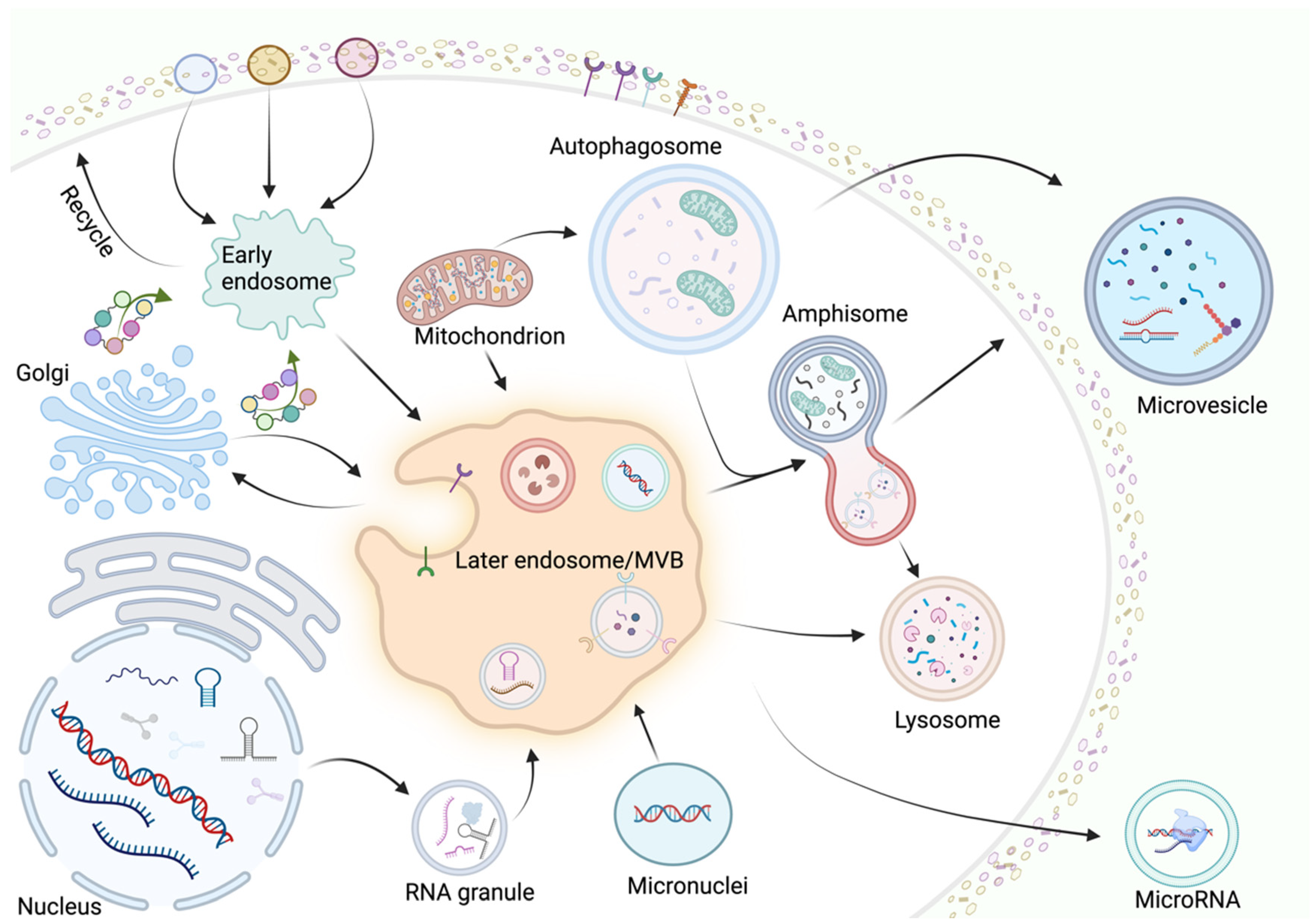
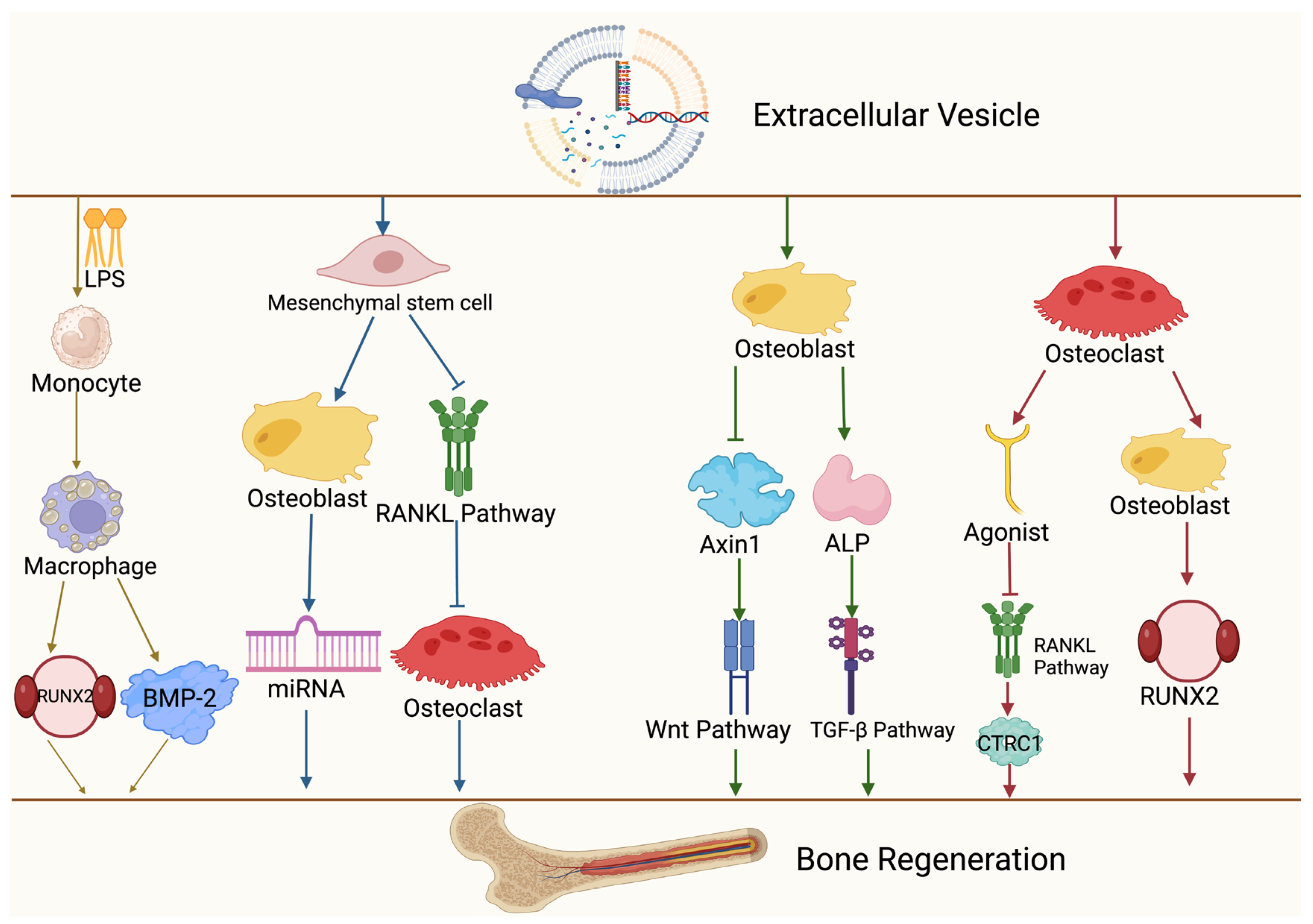
Extracellular vesicles (EVs) are nanoscale particles with a lipid bilayer membrane structure secreted by various cell types. Nearly all human cells secrete EVs, primarily mediating intercellular communication. In recent years, scientists have discovered that EVs can carry multiple biological cargos, such as DNA, non-coding RNAs (ncRNAs), proteins, cytokines, and lipids, and mediate intercellular signal transduction. Bone is a connective tissue with a nerve supply and high vascularization. The repair process after injury is highly complex, involving interactions among multiple cell types and biological signaling pathways. Bone regeneration consists of a series of coordinated osteoconductive and osteoinductive biological processes. As mediators of intercellular communication, EVs can promote bone regeneration by regulating osteoblast-mediated bone formation, osteoclast-mediated bone resorption, and other pathways. This review summarizes the biogenesis of EVs and the mechanisms by which EV-mediated intercellular communication promotes bone regeneration. Additionally, we focus on the research progress of EVs in various diseases related to bone regeneration. Finally, based on the above research, we explore the clinical applications of engineered EVs in the diagnosis and treatment of bone regeneration-related diseases.
Keywords: EVs; bone regeneration; mechanisms; diagnosis; treatment EVs; bone regeneration; mechanisms; diagnosis; treatment