Article

Influence of Antibiotics on Functionality and Viability of Liver Cells In Vitro
1
Department Extracorporeal Therapy Systems (EXTHER), Fraunhofer Institute for Cell Therapy and Immunology, Schillingallee 68, 18057 Rostock, Germany
2
Department of Anesthesiology and Intensive Care Medicine, Charité Campus Benjamin Franklin, Hindenburgdamm 30, 12203 Berlin, Germany
3
Center for Anesthesiology and Intensive Care Medicine, Hospital of Magdeburg, Birkenallee 34, 39130 Magdeburg, Germany
4
Department of Anesthesiology and Intensive Care Medicine, University Hospital of Rostock, Schillingallee 35, 18057 Rostock, Germany
*
Authors to whom correspondence should be addressed.
Curr. Issues Mol. Biol. 2022, 44(10), 4639-4657; https://doi.org/10.3390/cimb44100317
Submission received: 2 July 2022 / Revised: 17 September 2022 / Accepted: 22 September 2022 / Published: 3 October 2022

Abstract

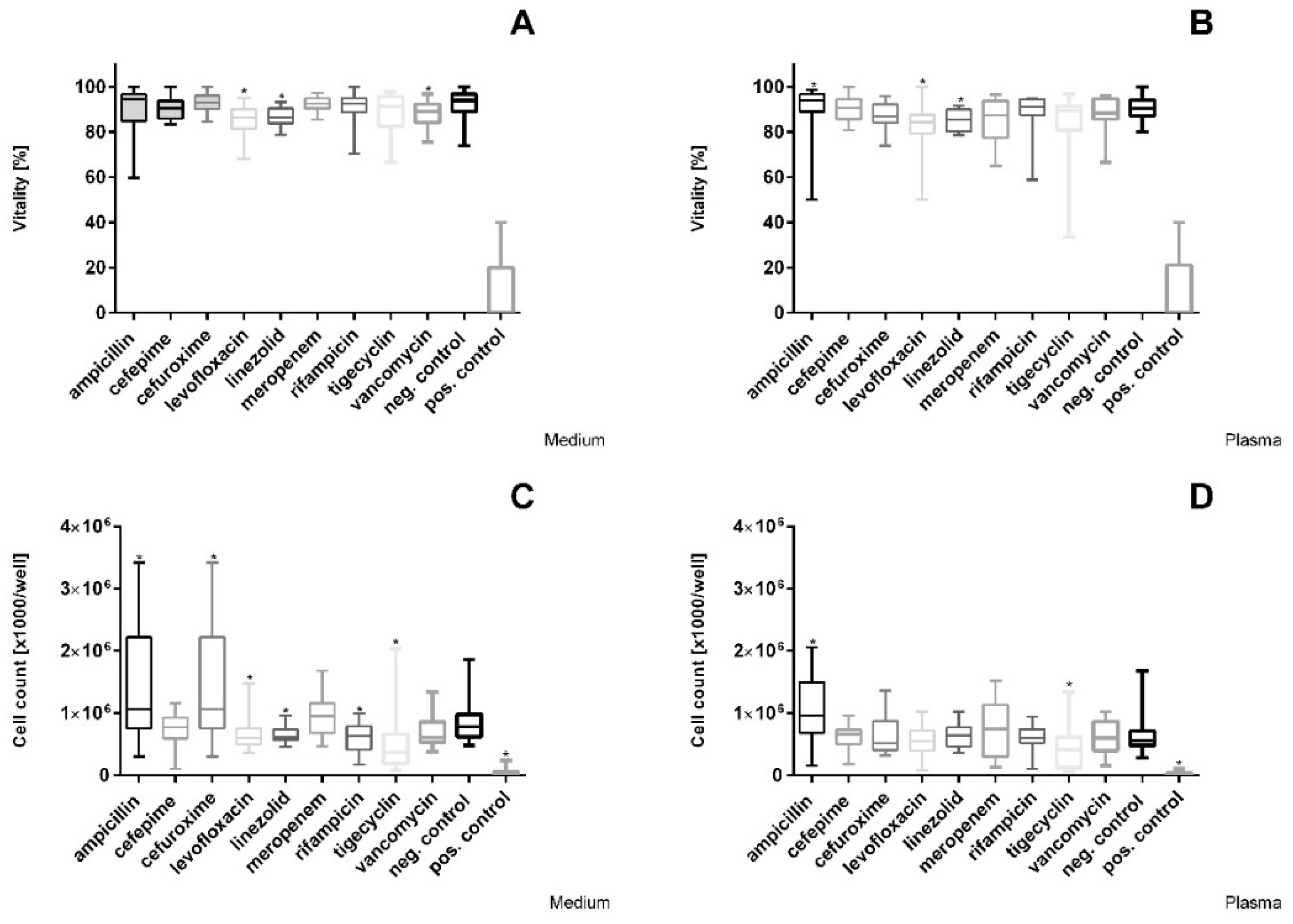
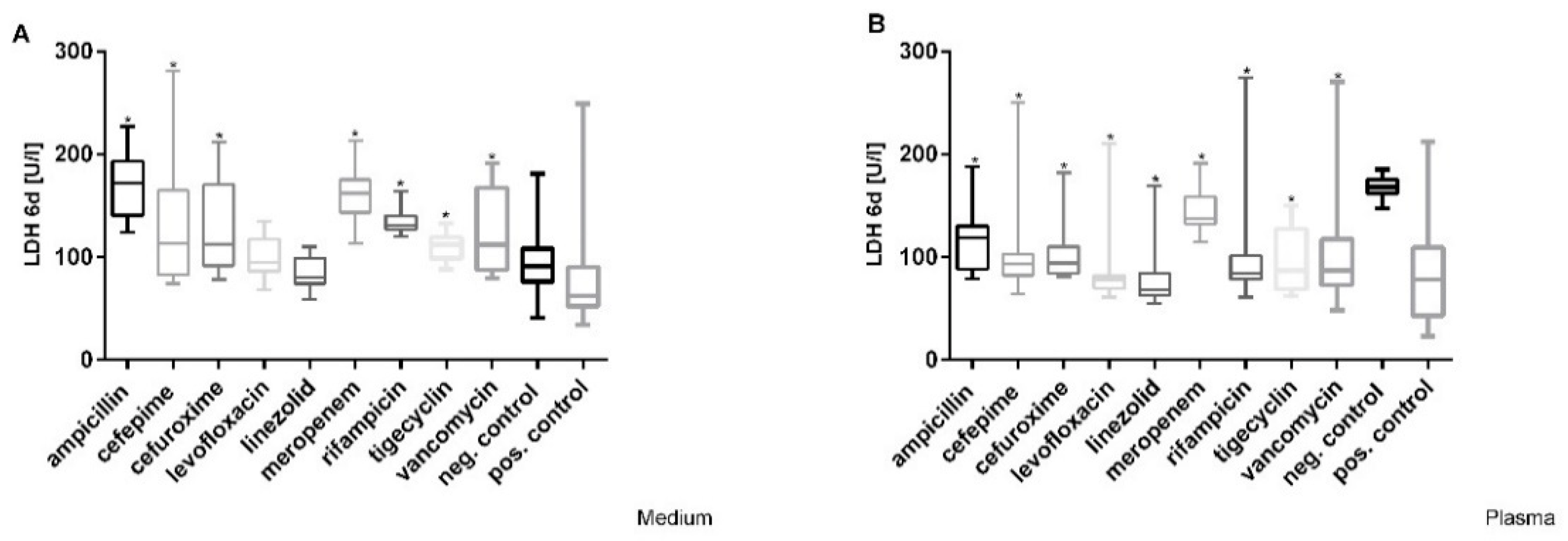
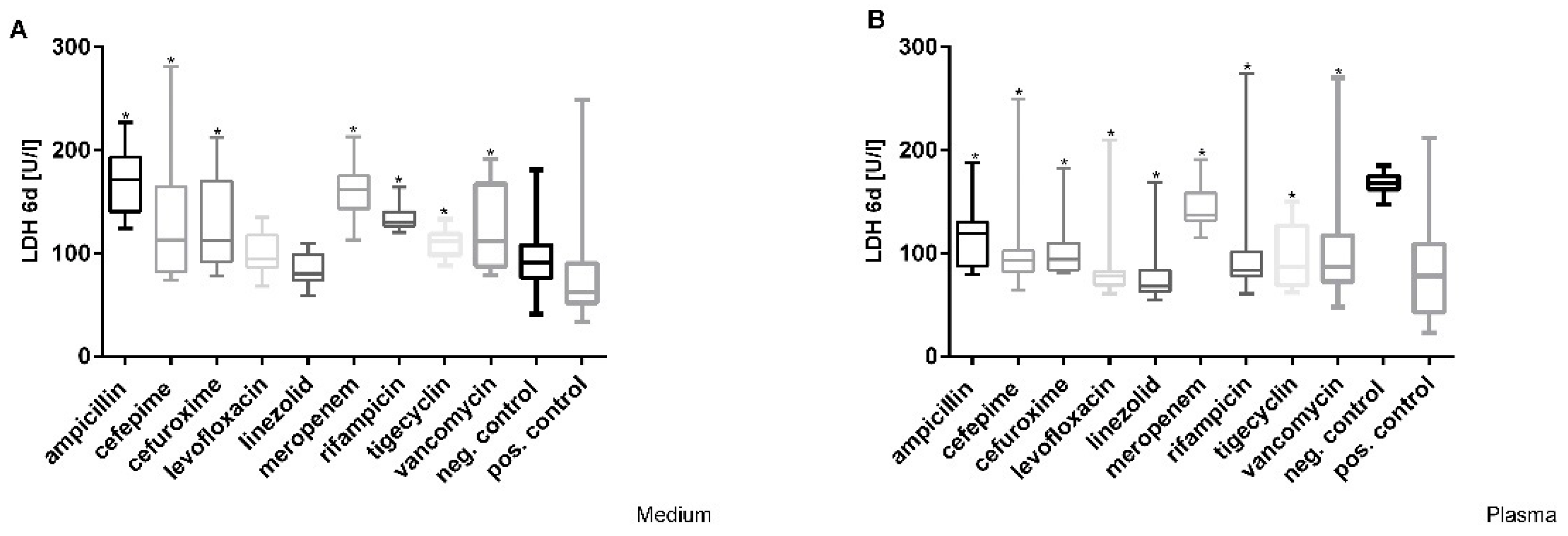
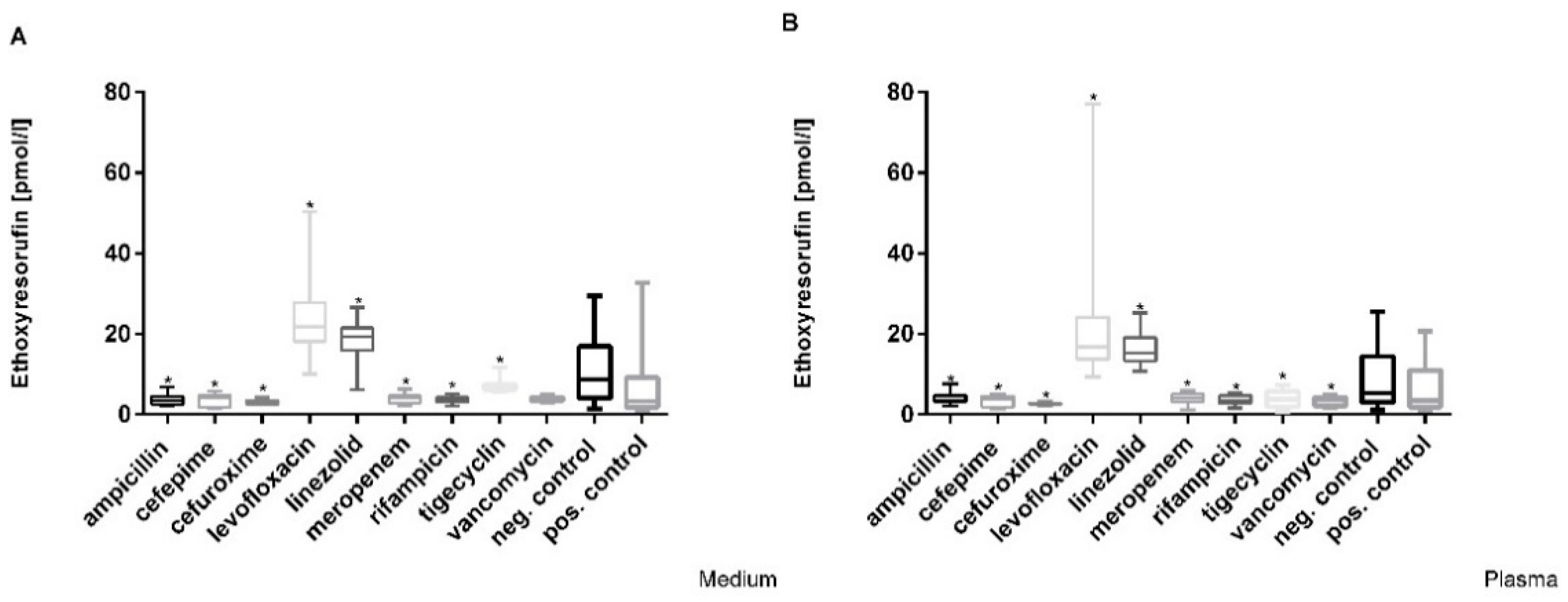
(1) Antibiotics are an important weapon in the fight against serious bacterial infections and are considered a common cause of drug-induced liver injury (DILI). The hepatotoxicity of many drugs, including antibiotics, is poorly analyzed in human in vitro models. (2) A standardized assay with a human hepatoma cell line was used to test the hepatotoxicity of various concentrations (Cmax, 5× Cmax, and 10× Cmax) of antibiotics. In an ICU, the most frequently prescribed antibiotics, ampicillin, cefepime, cefuroxime, levofloxacin, linezolid, meropenem, rifampicin, tigecycline, and vancomycin, were incubated with HepG2/C3A cells for 6 days. Cell viability (XTT assay, LDH release, and vitality), albumin synthesis, and cytochrome 1A2 activity were determined in cells. (3) In vitro, vancomycin, rifampicin, and tigecycline showed moderate hepatotoxic potential. The antibiotics ampicillin, cefepime, cefuroxime, levofloxacin, linezolid, and meropenem were associated with mild hepatotoxic reactions in test cells incubated with the testes Cmax concentration. Rifampicin and cefuroxime showed significantly negative effects on the viability of test cells. (4) Further in vitro studies and global pharmacovigilance reports should be conducted to reveal underlying mechanism of the hepatotoxic action of vancomycin, rifampicin, tigecycline, and cefuroxime, as well as the clinical relevance of these findings.
Keywords: antibiotics; drug-induced liver injury; hepatotoxicity antibiotics; drug-induced liver injury; hepatotoxicity