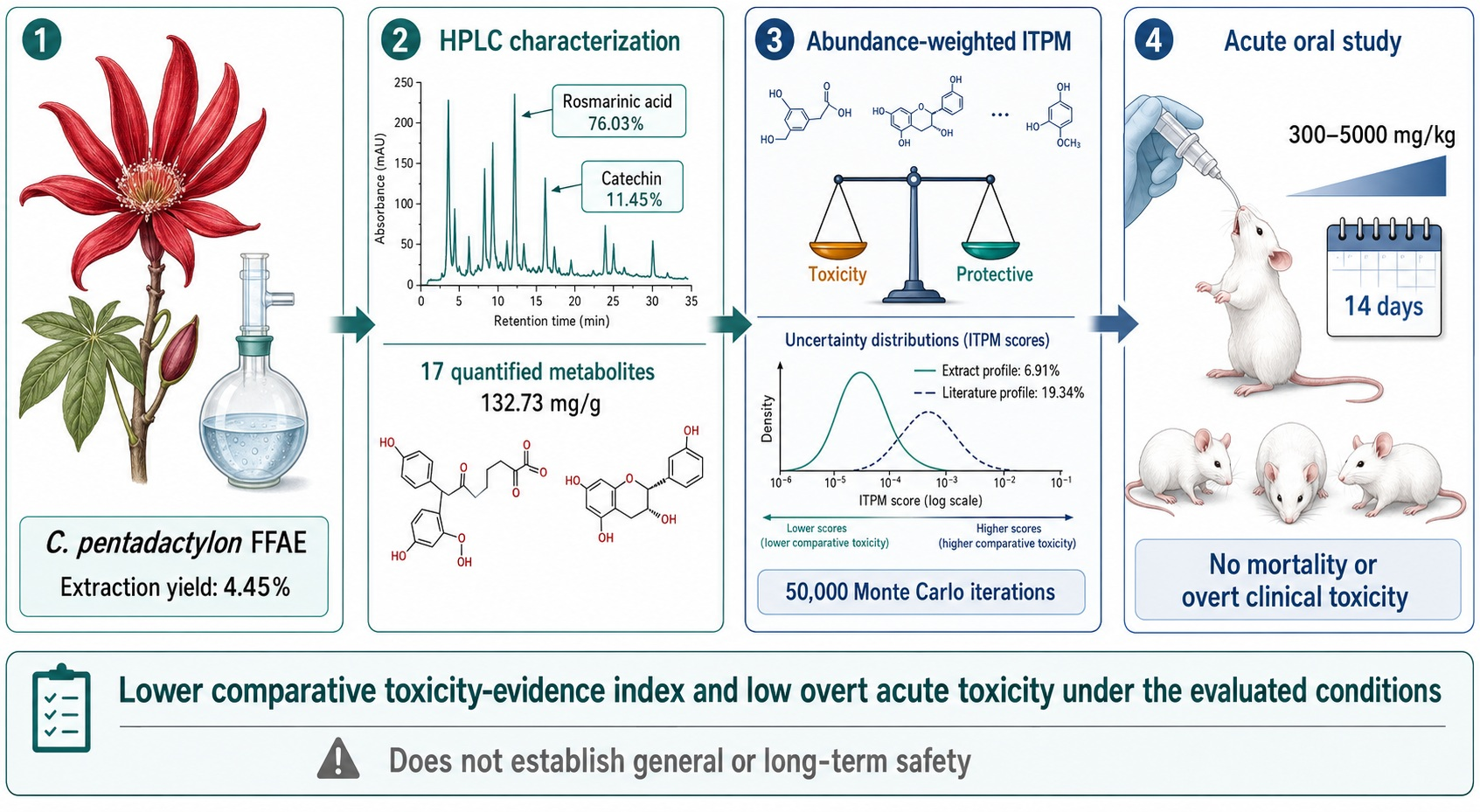
Predicting the Toxicity In Silico of the Aqueous Extract of Chiranthodendron pentadactylon Flowers. Experimental Evaluation In Vivo

 ,
, 

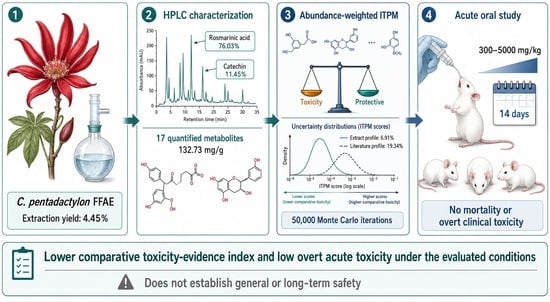
Abstract
1. Introduction
2. Results
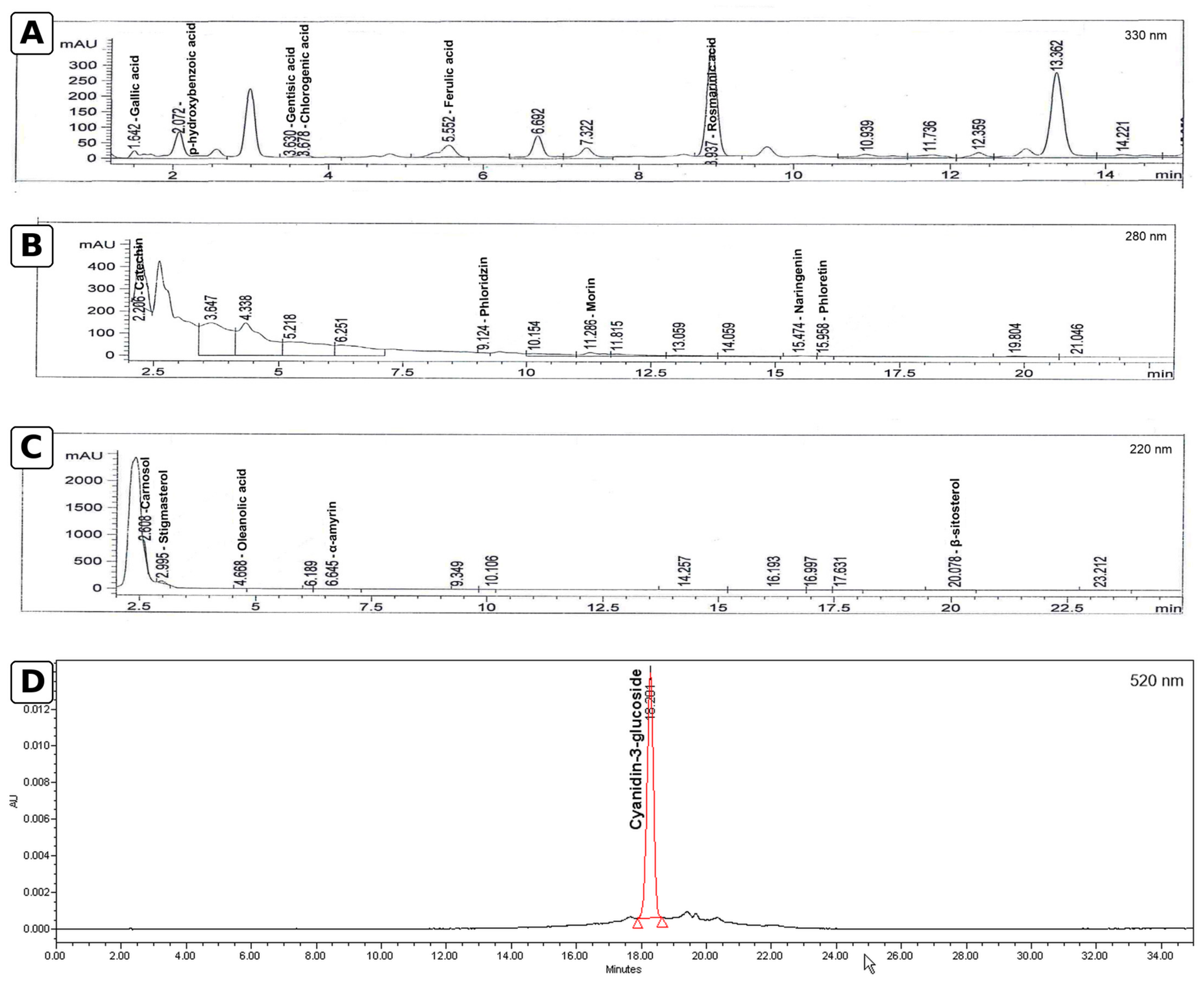
2.1. Extraction Yield and HPLC Characterization of the FFAE
2.2. In Silico Toxicological Endpoint Predictions
2.3. Toxicological Alert Score and Compound Categorization
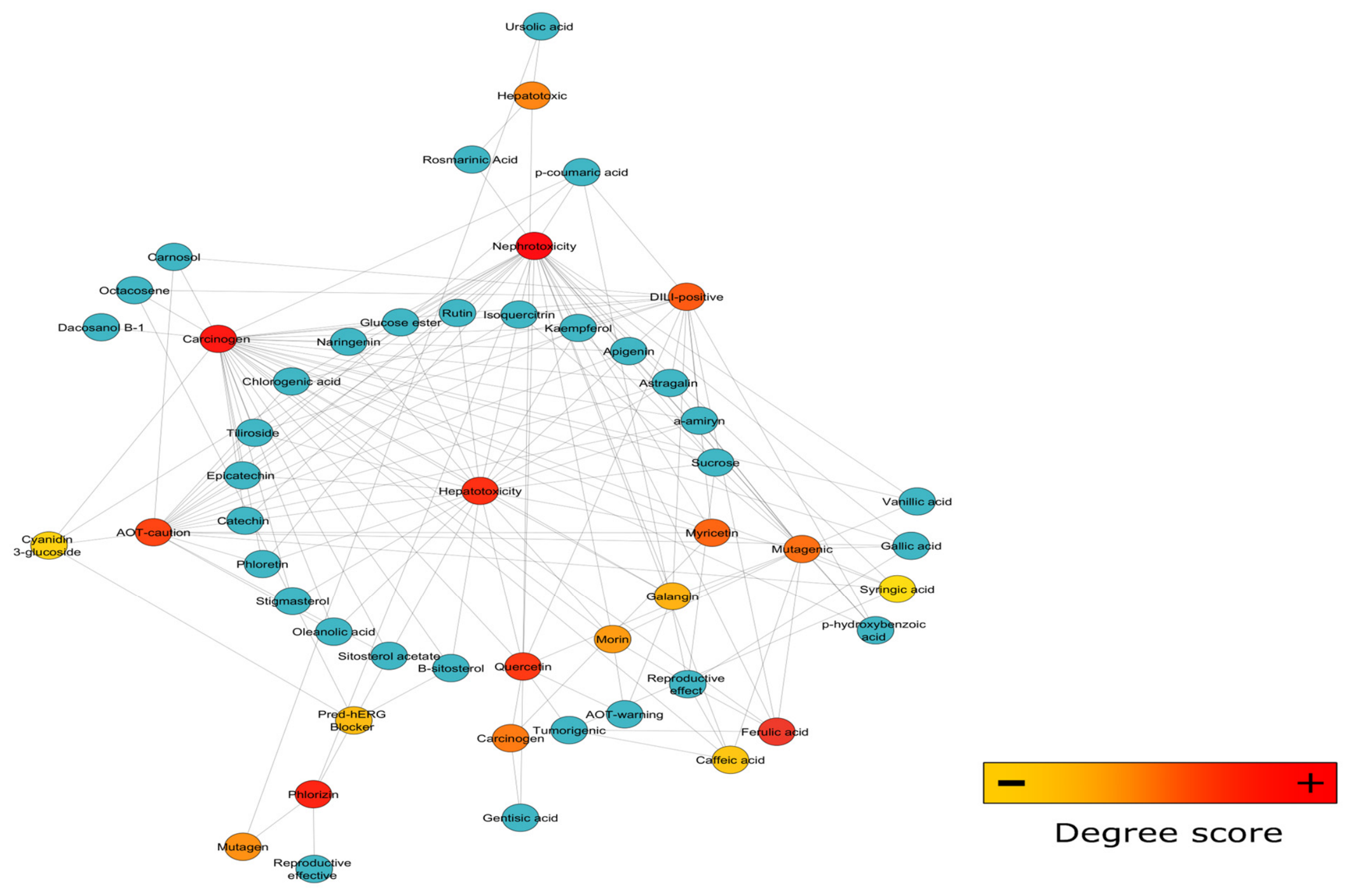
2.4. Compound–Toxicological Endpoint Network
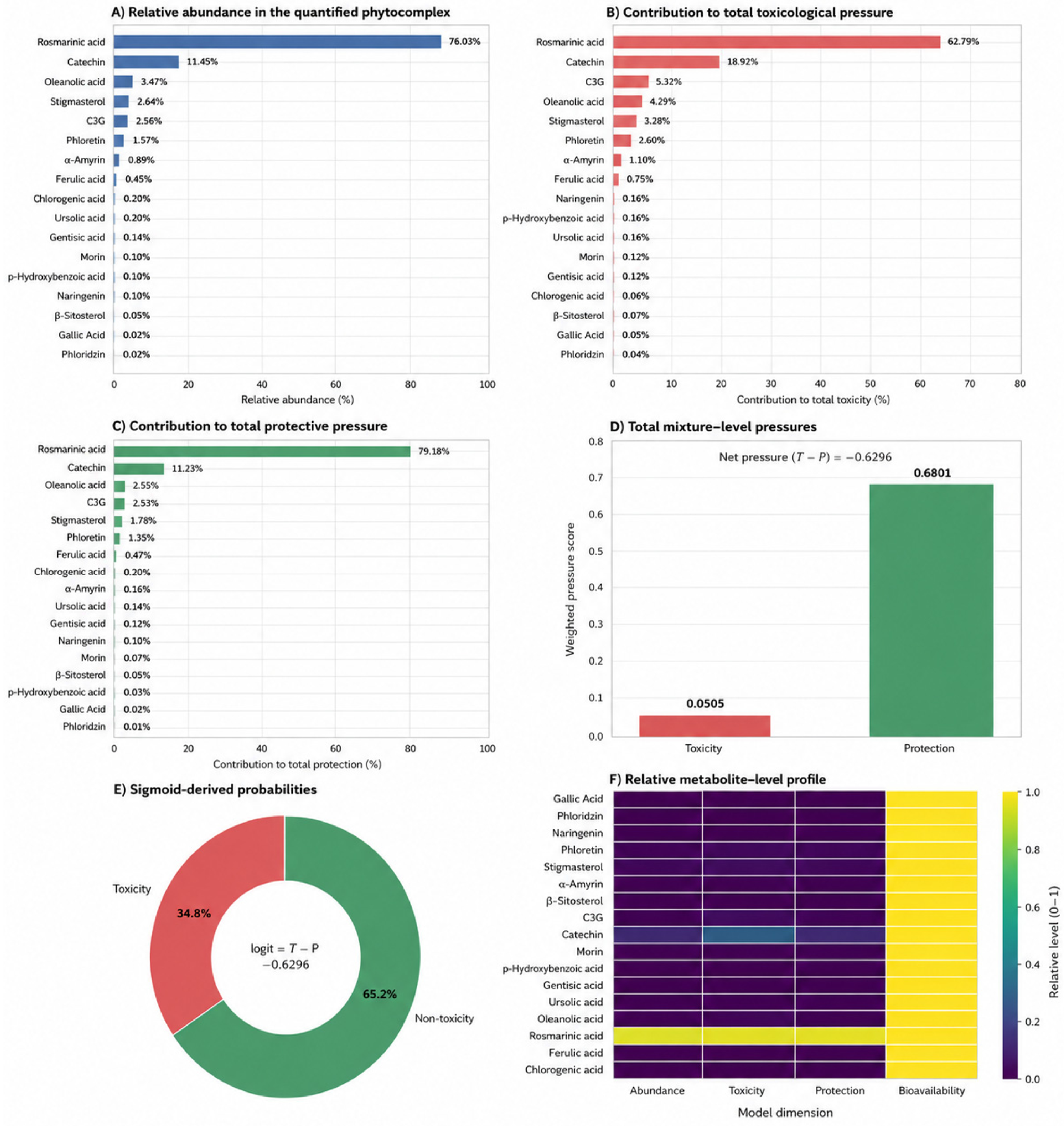
2.5. Integrative Toxicity Prediction Mode lITPM-Based Toxicological Assessment of the C. pentadactylon Flower Extract
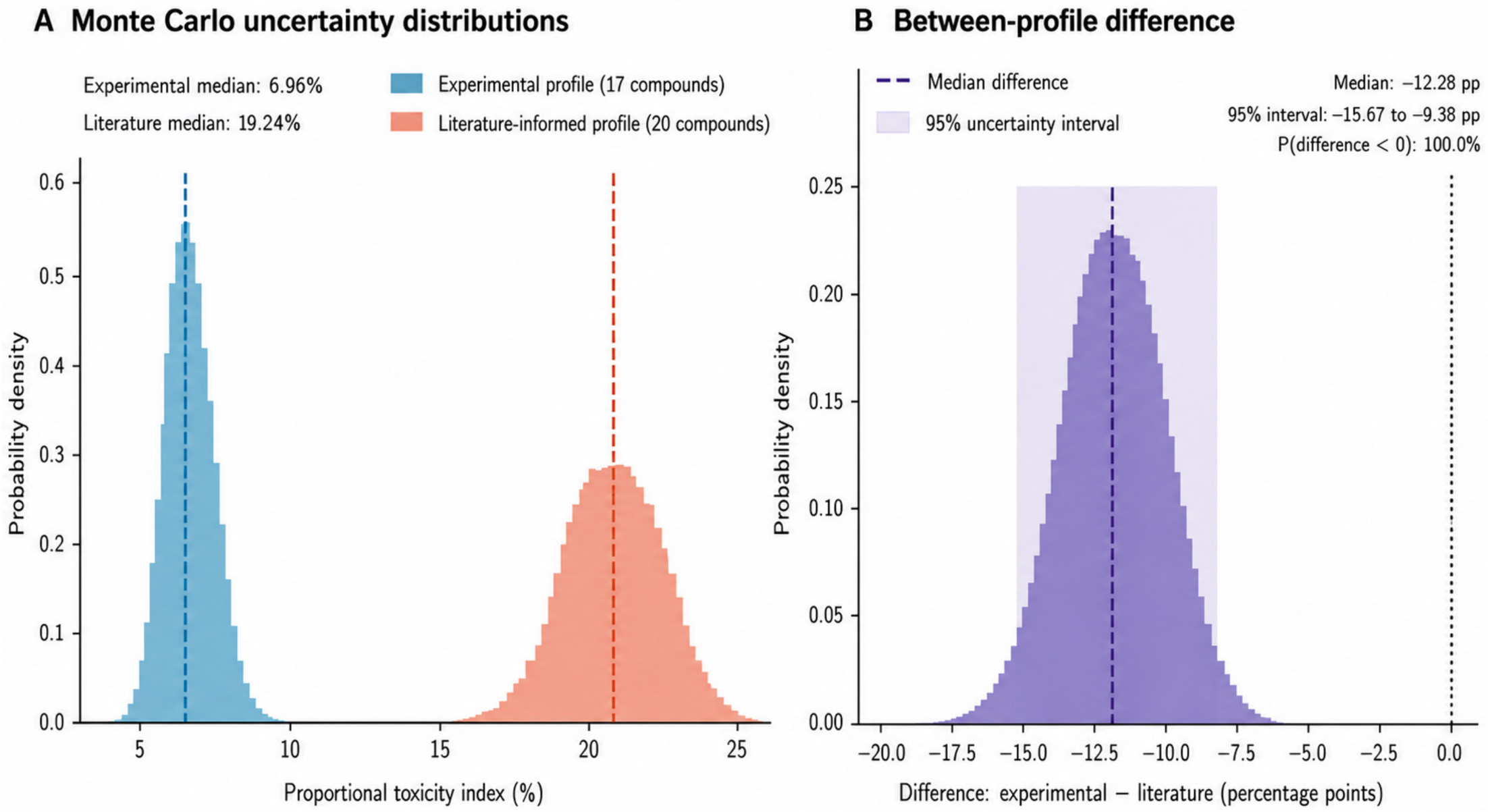
2.6. Monte Carlo Uncertainty Analysis
2.7. Preliminary External Evaluation of the ITPM
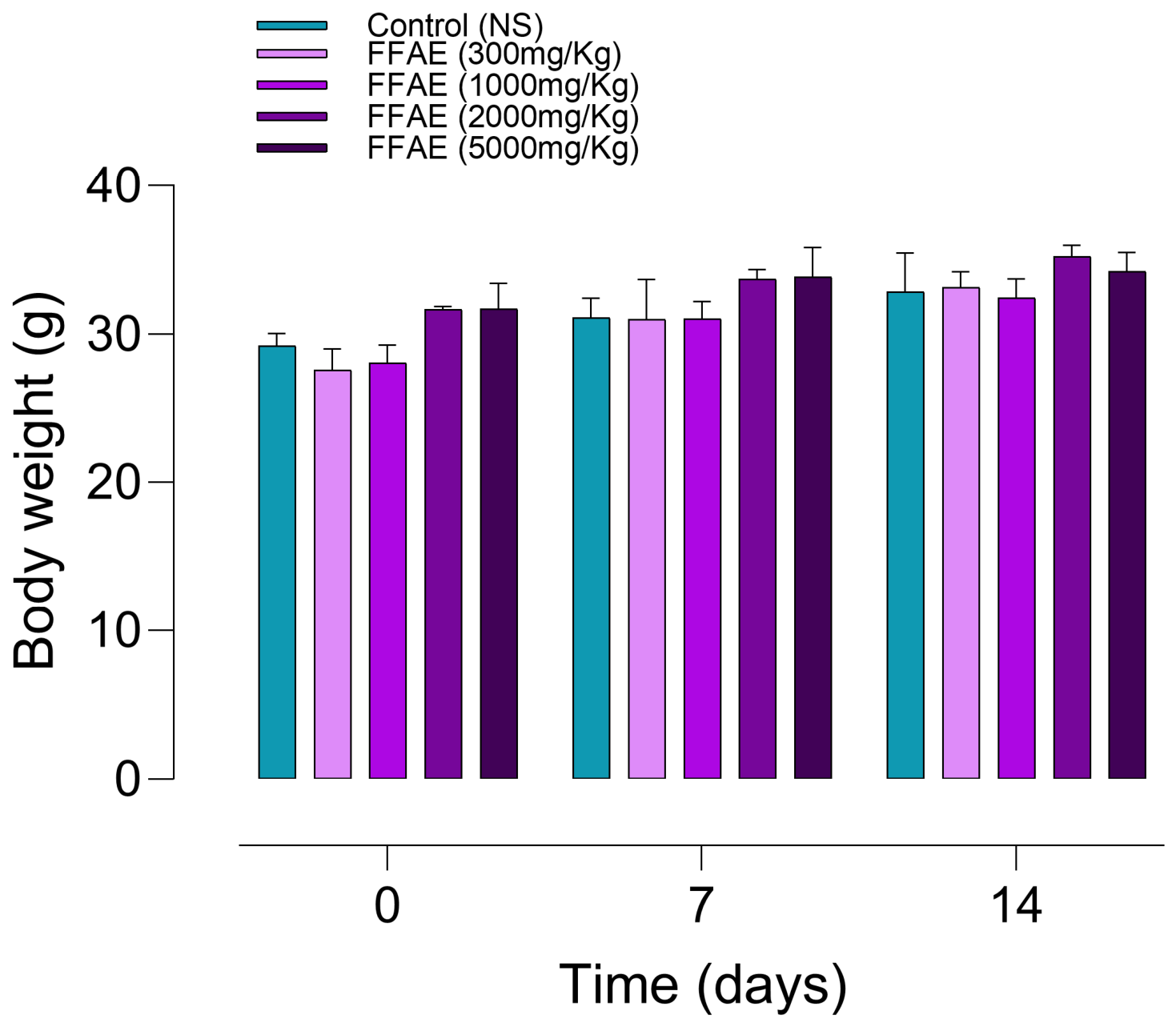
2.8. Acute Oral Toxicity of the FFAE in Mice
3. Discussion
4. Materials and Methods
4.1. Plant Material
4.2. Preparation of the Fresh Flower Aqueous Extract
4.3. Chemicals and Reference Standards
4.4. HPLC Characterization of the FFAE
4.4.1. Phenolic Acids and Flavonoids
4.4.2. Terpenoids and Phytosterols
4.4.3. Cyanidin 3-O-Glucoside
4.5. In Silico Toxicological Assessment
4.5.1. Phytochemical Dataset
4.5.2. Toxicological Endpoint Predictions
4.5.3. Consensus, Uncertainty, and Supplementary Alerts
4.6. Toxicological Alert Score
4.7. Toxicological Endpoint Connectivity of C. pentadactylon Phytochemicals
4.8. Integrative Toxicity Prediction Model
4.8.1. Compound-Level Scoring and Mixture Integration
4.8.2. Uncertainty and Sensitivity Analyses
- Ttotal = total toxicological pressure score obtained by summing the weighted toxicological contributions of the evaluated metabolites.
- Ptotal = total protective pressure score obtained by summing the weighted protective contributions of the evaluated metabolites.
- ITPMtoxicity-evidence = proportional toxicological evidence within the total integrated toxicity–protection balance; values range from 0 to 1.
- ITPMprotective-evidence = proportional protective evidence within the total integrated toxicity–protection balance; values range from 0 to 1 and are complementary to the toxicity-evidence index.
- Interpretation note. These indices represent the relative mathematical balance of toxicological and protective evidence integrated by the ITPM; they should not be interpreted as experimentally calibrated probabilities of toxicity, non-toxicity, or safety.
4.8.3. Preliminary External Evaluation
4.9. Acute Oral Toxicity Study
4.9.1. Animals and Ethical Approval
4.9.2. Experimental Procedure
4.9.3. Statistical Analysis
5. Conclusions
Supplementary Materials
Author Contributions
Funding
Institutional Review Board Statement
Informed Consent Statement
Data Availability Statement
Acknowledgments
Conflicts of Interest
Abbreviations
| ADME | Absorption, Distribution, Metabolism, and Excretion |
| ADMET | Absorption, Distribution, Metabolism, Excretion, and Toxicity |
| AOT | Acute Oral Toxicity |
| BAS | Bioavailability Score |
| BBB | Blood–Brain Barrier |
| C. pentadactylon | Chiranthodendron pentadactylon |
| CID | Compound Identification Number (PubChem Compound Identifier) |
| CV | Coefficient of Variation |
| DILI | Drug-Induced Liver Injury |
| DL | Drug-likeness |
| GI | Gastrointestinal |
| hERG | Human Ether-à-go-go-Related Gene |
| HPS | Heuristic Protective Score |
| IMSS | Mexican Institute of Social Security |
| ITPM | Integrative Toxicological Prediction Model |
| LD50 | Median Lethal Dose |
| NAMs | New Approach Methodologies |
| OECD | Organisation for Economic Co-operation and Development |
| ProTox-II | Prediction of Toxicity II |
| QSAR | Quantitative Structure–Activity Relationship |
| RA | Relative Abundance |
| ROS | Reactive Oxygen Species |
| SDF | Structure-Data Format |
| SMILES | Simplified Molecular Input Line Entry System |
| SwissADME | Swiss Absorption, Distribution, Metabolism, and Excretion |
| TCM | Traditional Chinese Medicine |
| THS | Heuristic Toxicity Score |
| TPS | Total Protective Score |
| TTS | Total Toxicity Score |
References
- Silveira, D.; Boylan, F. Medicinal Plants: Advances in Phytochemistry and Ethnobotany. Plants 2023, 12, 1682. [Google Scholar] [CrossRef] [Scilit]
- Salmerón-Manzano, E.; Garrido-Cardenas, J.A.; Manzano-Agugliaro, F. Worldwide Research Trends on Medicinal Plants. Int. J. Environ. Res. Public Health 2020, 17, 3376. [Google Scholar] [CrossRef] [Scilit]
- Wangchuk, P. Therapeutic applications of natural products in herbal medicines, biodiscovery programs, and biomedicine. J. Biol. Act. Prod. Nat. 2018, 8, 1–20. [Google Scholar] [CrossRef] [Scilit]
- Rodríguez-Hernández, A.A.; Flores-Soria, F.G.; Patiño-Rodríguez, O.; Escobedo-Moratilla, A. Sanitary Registries and Popular Medicinal Plants Used in Medicines and Herbal Remedies in Mexico (2001–2020): A Review and Potential Perspectives. Horticulturae 2022, 8, 377. [Google Scholar] [CrossRef] [Scilit]
- Rahman, M.H.; Roy, B.; Chowdhury, G.M.; Hasan, A.; Saimun, M.S.R. Medicinal plant sources and traditional healthcare practices of forest-dependent communities in and around Chunati Wildlife Sanctuary in southeastern Bangladesh. Environ. Sustain. 2022, 5, 207–241. [Google Scholar] [CrossRef] [Scilit]
- Gaston, T.E.; Mendrick, D.L.; Paine, M.F.; Roe, A.L.; Yeung, C.K. “Natural” is not synonymous with “Safe”: Toxicity of natural products alone and in combination with pharmaceutical agents. Regul. Toxicol. Pharmacol. RTP 2020, 113, 104642. [Google Scholar] [CrossRef] [Scilit]
- Novack, G.D. Natural Does Not Mean Safe. Ocul. Surf. 2016, 14, 515–519. [Google Scholar] [CrossRef] [Scilit]
- Anywar, G.; Kakudidi, E.; Byamukama, R.; Mukonzo, J.; Schubert, A.; Oryem-Origa, H.; Jassoy, C. A Review of the Toxicity and Phytochemistry of Medicinal Plant Species Used by Herbalists in Treating People Living with HIV/AIDS in Uganda. Front. Pharmacol. 2021, 12, 615147. [Google Scholar] [CrossRef] [Scilit]
- Zhu, K.X.; Wu, M.; Bian, Z.L.; Han, S.L.; Fang, L.M.; Ge, F.F.; Wang, X.Z.; Xie, S.F. Growing attention on the toxicity of Chinese herbal medicine: A bibliometric analysis from 2013 to 2022. Front. Pharmacol. 2024, 15, 1293468. [Google Scholar] [CrossRef] [Scilit]
- Bamidele, O.; Popoola, A.O.; Adedayo, L.D.; Adelowo, F.; Inaolaji, D.; Arokoyo, D.S. Hematological Changes Provoked by Natural Alkaloids. Future Nat. Prod. 2024, 10, 44–51. [Google Scholar] [CrossRef] [Scilit]
- Williamson, E.M. Herbal Neurotoxicity: An Introduction to Its Occurrence and Causes. In Toxicology of Herbal Products; Pelkonen, O., Duez, P., Vuorela, P.M., Vuorela, H., Eds.; Springer International Publishing: Cham, Switzerland, 2017; pp. 345–362. [Google Scholar]
- Wattanathorn, J.; Uabundit, N.; Itarat, W.; Mucimapura, S.; Laopatarakasem, P.; Sripanidkulchai, B. Neurotoxicity of Coscinium fenestratum stem, a medicinal plant used in traditional medicine. Food Chem. Toxicol. 2006, 44, 1327–1333. [Google Scholar] [CrossRef] [Scilit]
- Mugale, M.N.; Dev, K.; More, B.S.; Mishra, V.S.; Washimkar, K.R.; Singh, K.; Maurya, R.; Rath, S.K.; Chattopadhyay, D.; Chattopadhyay, N. A Comprehensive Review on Preclinical Safety and Toxicity of Medicinal Plants. Clin. Complement. Med. Pharmacol. 2024, 4, 100129. [Google Scholar] [CrossRef] [Scilit]
- Raies, A.B.; Bajic, V.B. In silico toxicology: Computational methods for the prediction of chemical toxicity. Wiley Interdiscip. Rev. Comput. Mol. Sci. 2016, 6, 147–172. [Google Scholar] [CrossRef] [Scilit] [PubMed]
- Husain, A.; Meenakshi, D.U.; Ahmad, A.; Shrivastava, N.; Khan, S.A. A Review on Alternative Methods to Experimental Animals in Biological Testing: Recent Advancement and Current Strategies. J. Pharm. Bioallied Sci. 2023, 15, 165–171. [Google Scholar] [CrossRef] [Scilit]
- Parthasarathi, R.; Dhawan, A. Chapter 5—In Silico Approaches for Predictive Toxicology. In In Vitro Toxicology; Dhawan, A., Kwon, S., Eds.; Academic Press: Cambridge, MA, USA, 2018; pp. 91–109. [Google Scholar]
- Williamson, E.M. Synergy and other interactions in phytomedicines. Phytomedicine 2001, 8, 401–409. [Google Scholar] [CrossRef] [Scilit]
- Efferth, T.; Koch, E. Complex interactions between phytochemicals. The multi-target therapeutic concept of phytotherapy. Curr. Drug Targets 2011, 12, 122–132. [Google Scholar] [CrossRef] [Scilit]
- Caesar, L.K.; Cech, N.B. Synergy and antagonism in natural product extracts: When 1 + 1 does not equal 2. Nat. Prod. Rep. 2019, 36, 869–888. [Google Scholar] [CrossRef] [Scilit]
- World Health Organization. Principles and Methods for the Risk Assessment of Chemicals in Food-Environmental Health Criteria 240; World Health Organization: Geneva, Switzerland, 2008. [Google Scholar]
- OECD. Considerations for Assessing the Risks of Combined Exposure to Multiple Chemicals; Series on Testing and Assessment No. 296; Environment, Health and Safety Division, Environment Directorate: Paris, France, 2018. [Google Scholar]
- EFSA Scientific Committee; More, S.J.; Bampidis, V.; Benford, D.; Bennekou, S.H.; Bragard, C.; Halldorsson, T.I.; Hernández-Jerez, A.F.; Koutsoumanis, K.P.; Naegeli, H.; et al. Guidance on harmonised methodologies for human health, animal health and ecological risk assessment of combined exposure to multiple chemicals. EFSA J. 2019, 17, e05634. [Google Scholar] [CrossRef] [Scilit]
- EFSA Scientific Committee; Hardy, A.; Benford, D.; Halldorsson, T.; Jeger, M.J.; Knutsen, H.K.; More, S.; Naegeli, H.; Noteborn, H.; Ockleford, C.; et al. Guidance on the use of the weight of evidence approach in scientific assessments. EFSA J. 2017, 15, e04971. [Google Scholar] [CrossRef] [Scilit]
- OECD. Overview of Concepts and Available Guidance Related to Integrated Approaches to Testing and Assessment (IATA); OECD: Paris, France, 2020. [Google Scholar]
- Yang, Y.; Zhang, Z.; Li, S.; Ye, X.; Li, X.; He, K. Synergy effects of herb extracts: Pharmacokinetics and pharmacodynamic basis. Fitoterapia 2014, 92, 133–147. [Google Scholar] [CrossRef] [Scilit]
- Rasoanaivo, P.; Wright, C.W.; Willcox, M.L.; Gilbert, B. Whole plant extracts versus single compounds for the treatment of malaria: Synergy and positive interactions. Malar. J. 2011, 10, S4. [Google Scholar] [CrossRef] [Scilit]
- Escobar-Ramírez, J.L.; Santiago-Mejía, J.; Soto-Núñez, M.; Barrera-Vázquez, O.S.; Vargas-Querea, R.; Magos-Guerrero, G.A. The Hypotensive and Vasodilatory Effects Observed in Rats Exposed to Chiranthodendron pentadactylon Larreat Flowers Can Be Attributed to Cyanidin 3-O-Glucoside. Molecules 2023, 28, 7698. [Google Scholar] [CrossRef] [Scilit]
- Velázquez, C.; Calzada, F.; Esquivel, B.; Barbosa, E.; Calzada, S. Antisecretory activity from the flowers of Chiranthodendron pentadactylon and its flavonoids on intestinal fluid accumulation induced by Vibrio cholerae toxin in rats. J. Ethnopharmacol. 2009, 126, 455–458. [Google Scholar] [CrossRef] [Scilit]
- Márquez, C.; Ochoa, L.; Rodríguez, E.; Essayag, M. Plantas Medicinales de México Composición, Usos y Actividad Biológica; Universidad Nacional Autónoma de México (UNAM): Mexico City, Mexico, 1999. [Google Scholar]
- Argueta, A.; Vázquez, M.C.G. Atlas de las Plantas de la Medicina Tradicional Mexicana; Instituto Nacional Indigenista: Mexico City, Mexico, 1994. [Google Scholar]
- Linares, E. Selección de Plantas Medicinales de México; Editorial Limusa: Mexico City, Mexico, 1988. [Google Scholar]
- Perusquía, M.; Mendoza, S.; Bye, R.; Linares, E.; Mata, R. Vasoactive effects of aqueous extracts from five Mexican medicinal plants on isolated rat aorta. J. Ethnopharmacol. 1995, 46, 63–69. [Google Scholar] [CrossRef] [Scilit]
- Alanis, A.; Calzada, F.; Cervantes, J.; Torres, J.; Ceballos, G. Antibacterial properties of some plants used in Mexican traditional medicine for the treatment of gastrointestinal disorders. J. Ethnopharmacol. 2005, 100, 153–157. [Google Scholar] [CrossRef] [Scilit]
- Velázquez, C.; Calzada, F.; Torres, J.; González, F.; Ceballos, G. Antisecretory activity of plants used to treat gastrointestinal disorders in Mexico. J. Ethnopharmacol. 2006, 103, 66–70. [Google Scholar] [CrossRef] [Scilit]
- Calzada, F.; Yépez-Mulia, L.; Aguilar, A. In vitro susceptibility of Entamoeba histolytica and Giardia lamblia to plants used in Mexican traditional medicine for the treatment of gastrointestinal disorders. J. Ethnopharmacol. 2006, 108, 367–370. [Google Scholar] [CrossRef] [Scilit]
- Santiago-Balmaseda, E.; Segura-Cobos, D.; Garín-Aguilar, M.E.; San Miguel-Chávez, R.; Cristóbal-Luna, J.M.; Madrigal-Santillán, E.; Gutierrez-Rebolledo, G.A.; Chamorro-Cevallos, G.A.; Pérez-Pastén-Borja, R. Chiranthodendron pentadactylon Larreat (Sterculiaceae), a Potential Nephroprotector against Oxidative Damage Provoked by STZ-Induced Hyperglycemia in Rats. Plants 2023, 12, 3572. [Google Scholar] [CrossRef] [Scilit]
- Reyna Torres, V.H. Evaluación de la Toxicidad Aguda y Subcrónica del Extracto Acuoso de Chiranthodendron pentadactylon Larreat (flor de Manita). Bachelor’s Thesis, Universidad Nacional Autónoma de México, Mexico City, Mexico, 2012. [Google Scholar]
- Domínguez, X.A.; Quevedo, J.; Gutierrez, A.M.A. Estudio químico de la Flor de Manita (Macpaxochitl) Chiranihodendron pentadactylon. Cienc. Mex. 1970, 27, 87–89. [Google Scholar]
- Harborne, J.B.; Smith, D.M. Notizen: Flavonoid Pigments and Plant Phylogeny: The Case of the Hand-flower tree Chiranthodendron pentadactylon. Z. Naturforsch. B 1972, 27, 210. [Google Scholar] [CrossRef] [Scilit]
- Mekenyan, O. In Silico Toxicology: Principles and Applications; Royal Society of Chemistry: London, UK, 2010. [Google Scholar]
- Todeschini, R.; Consonni, V. Handbook of Molecular Descriptors; John Wiley & Sons: Hoboken, NJ, USA, 2008. [Google Scholar]
- Jakopin, Ž. 2-aminothiazoles in drug discovery: Privileged structures or toxicophores? Chem.-Biol. Interact. 2020, 330, 109244. [Google Scholar] [CrossRef] [Scilit]
- Barret, R. 8—Pharmacophore. In Therapeutical Chemistry; Barret, R., Ed.; Elsevier: Amsterdam, The Netherlands, 2018; pp. 119–133. [Google Scholar]
- Danieli, A.; Colombo, E.; Raitano, G.; Lombardo, A.; Roncaglioni, A.; Manganaro, A.; Sommovigo, A.; Carnesecchi, E.; Dorne, J.-L.C.M.; Benfenati, E. The VEGA Tool to Check the Applicability Domain Gives Greater Confidence in the Prediction of In Silico Models. Int. J. Mol. Sci. 2023, 24, 9894. [Google Scholar] [CrossRef] [Scilit]
- O’Boyle, N.M.; Banck, M.; James, C.A.; Morley, C.; Vandermeersch, T.; Hutchison, G.R. Open Babel: An open chemical toolbox. J. Cheminform. 2011, 3, 33. [Google Scholar] [CrossRef] [Scilit] [PubMed]
- Enoch, S.; Ellison, C.; Schultz, T.; Cronin, M.T.D. A review of the electrophilic reaction chemistry involved in covalent protein binding relevant to toxicity. Crit. Rev. Toxicol. 2011, 41, 783–802. [Google Scholar] [CrossRef] [Scilit]
- Fraga, C.G.; Croft, K.D.; Kennedy, D.O.; Tomás-Barberán, F.A. The effects of polyphenols and other bioactives on human health. Food Funct. 2019, 10, 514–528. [Google Scholar] [CrossRef] [Scilit]
- Cory, H.; Passarelli, S.; Szeto, J.; Tamez, M.; Mattei, J. The role of polyphenols in human health and food systems: A mini-review. Front. Nutr. 2018, 5, 370438. [Google Scholar] [CrossRef] [Scilit]
- Santana-Gálvez, J.; Cisneros-Zevallos, L.; Jacobo-Velázquez, D.A. Chlorogenic acid: Recent advances on its dual role as a food additive and a nutraceutical against metabolic syndrome. Molecules 2017, 22, 358. [Google Scholar] [CrossRef] [Scilit]
- Liu, J.; Guan, Y.; Yang, L.; Fang, H.; Sun, H.; Sun, Y.; Yan, G.; Kong, L.; Wang, X. Ferulic acid as an anti-inflammatory agent: Insights into molecular mechanisms, pharmacokinetics and applications. Pharmaceuticals 2025, 18, 912. [Google Scholar] [CrossRef] [Scilit]
- Kahkeshani, N.; Farzaei, F.; Fotouhi, M.; Alavi, S.S.; Bahramsoltani, R.; Naseri, R.; Momtaz, S.; Abbasabadi, Z.; Rahimi, R.; Farzaei, M.H.; et al. Pharmacological effects of gallic acid in health and diseases: A mechanistic review. Iran. J. Basic Med. Sci. 2019, 22, 225. [Google Scholar] [CrossRef] [Scilit]
- Manach, C.; Williamson, G.; Morand, C.; Scalbert, A.; Rémésy, C. Bioavailability and bioefficacy of polyphenols in humans. I. Review of 97 bioavailability studies. Am. J. Clin. Nutr. 2005, 81, 230s–242s. [Google Scholar] [CrossRef] [Scilit]
- Enoch, S.J.; Nahar, L.; Sarker, S.D. Chapter 14—Predictive toxicology of phytochemicals. In Computational Phytochemistry, 2nd ed.; Sarker, S.D., Nahar, L., Eds.; Elsevier: Amsterdam, The Netherlands, 2024; pp. 439–463. [Google Scholar]
- Rager, J.E.; Rider, C.V. Wrangling whole mixtures risk assessment: Recent advances in determining sufficient similarity. Curr. Opin. Toxicol. 2023, 35, 100417. [Google Scholar] [CrossRef] [Scilit]
- Belfield, S.J.; Firman, J.W.; Enoch, S.J.; Madden, J.C.; Erik Tollefsen, K.; Cronin, M.T.D. A review of quantitative structure-activity relationship modelling approaches to predict the toxicity of mixtures. Comput. Toxicol. 2023, 25, 100251. [Google Scholar] [CrossRef] [Scilit]
- Zulkifli, M.H.; Abdullah, Z.L.; Mohamed Yusof, N.I.S.; Mohd Fauzi, F. In silico toxicity studies of traditional Chinese herbal medicine: A mini review. Curr. Opin. Struct. Biol. 2023, 80, 102588. [Google Scholar] [CrossRef] [Scilit]
- Mahony, C.; Bartlett, A.; Fitzpatrick, S.; Galli, C.; Hunt, P.; Inselman, A.; Jimenez, J.; Krzykwa, J.; Larson, J.; Rider, C.; et al. A screening strategy for identifying the developmental and reproductive toxicity potential of botanicals. Pharm. Biol. 2026, 64, 639–667. [Google Scholar] [CrossRef] [Scilit]
- Kar, S.; Leszczynski, J. Exploration of Computational Approaches to Predict the Toxicity of Chemical Mixtures. Toxics 2019, 7, 15. [Google Scholar] [CrossRef] [Scilit]
- Hansen, K.; Mika, S.; Schroeter, T.; Sutter, A.; Ter Laak, A.; Steger-Hartmann, T.; Heinrich, N.; Muller, K.-R. Benchmark data set for in silico prediction of Ames mutagenicity. J. Chem. Inf. Model. 2009, 49, 2077–2081. [Google Scholar] [CrossRef] [Scilit]
- Benigni, R.; Bossa, C. Structure alerts for carcinogenicity, and the Salmonella assay system: A novel insight through the chemical relational databases technology. Mutat. Res./Rev. Mutat. Res. 2008, 659, 248–261. [Google Scholar] [CrossRef] [Scilit]
- Birudukota, S.; Halder, S.; Ramakrishna, R.A. Towards Mechanistic QSAR Approaches for Predicting Reactive Oxygen Species (ROS) Generation: Mini Review. J. Appl. Toxicol. 2026, 46, 1098–1106. [Google Scholar] [CrossRef] [Scilit]
- Banerjee, P.; Kemmler, E.; Dunkel, M.; Preissner, R. ProTox 3.0: A webserver for the prediction of toxicity of chemicals. Nucleic Acids Res. 2024, 52, W513–W520. [Google Scholar] [CrossRef] [Scilit]
- Wagner, H.; Ulrich-Merzenich, G. Synergy research: Approaching a new generation of phytopharmaceuticals. Phytomedicine 2009, 16, 97–110. [Google Scholar] [CrossRef] [Scilit]
- Shao, L.I.; Zhang, B. Traditional Chinese medicine network pharmacology: Theory, methodology and application. Chin. J. Nat. Med. 2013, 11, 110–120. [Google Scholar] [CrossRef] [Scilit]
- Hopkins, A.L. Network pharmacology: The next paradigm in drug discovery. Nat. Chem. Biol. 2008, 4, 682–690. [Google Scholar] [CrossRef] [Scilit]
- Nogales, C.; Mamdouh, Z.M.; List, M.; Kiel, C.; Casas, A.I.; Schmidt, H.H. Network pharmacology: Curing causal mechanisms instead of treating symptoms. Trends Pharmacol. Sci. 2022, 43, 136–150. [Google Scholar] [CrossRef] [Scilit]
- Secretaría de Medio Ambiente y Recursos Naturales (SEMARNAT). Norma Oficial Mexicana NOM-059-SEMARNAT-2010, Protección Ambiental—Especies Nativas de México de Flora y Fauna Silvestres—Categorías de Riesgo y Especificaciones para su Inclusión, Exclusión o Cambio—Lista de Especies en Riesgo; Diario Oficial de la Federación: Mexico City, Mexico, 2010. [Google Scholar]
- Shannon, P.; Markiel, A.; Ozier, O.; Baliga, N.S.; Wang, J.T.; Ramage, D.; Amin, N.; Schwikowski, B.; Ideker, T. Cytoscape: A software environment for integrated models of biomolecular interaction networks. Genome Res. 2003, 13, 2498–2504. [Google Scholar] [CrossRef] [Scilit] [PubMed]
- Chin, C.-H.; Chen, S.-H.; Wu, H.-H.; Ho, C.-W.; Ko, M.-T.; Lin, C.-Y. cytoHubba: Identifying hub objects and sub-networks from complex interactome. BMC Syst. Biol. 2014, 8, S11. [Google Scholar] [CrossRef] [Scilit]
- OECD. Test No. 420: Acute Oral Toxicity—Fixed Dose Procedure; OECD Guidelines for the Testing of Chemicals, Section 4; OECD Publishing: Paris, France, 2002. [Google Scholar] [CrossRef] [Scilit]



| Compound | PubChem CID | Chemical Class | Source |
|---|---|---|---|
| Dacosanol B-1 | 12620 | Long-chain fatty alcohol (aliphatic alcohol) | [38] |
| Glucose Ester | 64689 | Carbohydrate derivative/sugar ester | |
| Octacosene | 87821 | Long-chain alkene (hydrocarbon) | |
| Cyanidin 3-Glucoside | 441667 | Anthocyanin (flavonoid glycoside) | |
| Tiliroside | 5320686 | Flavonol glycoside | [39] |
| Astragalin | 5282102 | Flavonol glycoside | |
| Isoquercitrin | 5280804 | Flavonol glycoside | |
| Catechin | 9064 | Flavan-3-ol (flavonoid) | |
| Epicatechin | 72276 | Flavan-3-ol (flavonoid) | |
| Sacarosa | 5988 | Disaccharide (carbohydrate) | |
| Gallic Acid | 370 | Hydroxybenzoic acid (phenolic acid) | |
| Chlorogenic Acid | 1794427 | Hydroxycinnamic acid derivative/caffeoylquinic acid | |
| Syringic Acid | 10742 | Hydroxybenzoic acid (phenolic acid) | |
| Vanillic Acid | 8468 | Hydroxybenzoic acid (phenolic acid) | |
| P-Hydroxybenzoic Acid | 135 | Hydroxybenzoic acid (phenolic acid) | |
| Caffeic Acid | 689043 | Hydroxycinnamic acid (phenolic acid) | [36] |
| Ferulic Acid | 445858 | Hydroxycinnamic acid (phenolic acid) | |
| p-coumaric acid | 637542 | Hydroxycinnamic acid (phenolic acid) | |
| Rutin | 5280805 | Flavonol glycoside | |
| Phlorizin | 6072 | Dihydrochalcone glycoside (flavonoid) | |
| Myricetin | 5281672 | Flavonol | |
| Quercetin | 5280343 | Flavonol | |
| Naringenin | 439246 | Flavanone | |
| Phloretin | 4788 | Dihydrochalcone | |
| Apigenin | 5280443 | Flavone | |
| Kaempferol | 5280863 | Flavonol | |
| Galangin | 5281616 | Flavonol | |
| Carnosol | 442009 | Phenolic diterpene (abietane diterpenoid) | |
| Stigmasterol | 5280794 | Phytosterol (steroid) | |
| Oleanolic Acid | 10494 | Pentacyclic triterpenoid (oleanane-type) | |
| α-amyrin | 73170 | Pentacyclic triterpenoid (ursane-type) | |
| β-sitosterol | 222284 | Phytosterol (steroid) | |
| Morin | 5281670 | Flavonol | This study |
| Gentisic acid | 3469 | Hydroxybenzoic acid (phenolic acid) | This study |
| Ursolic acid | 64945 | Pentacyclic triterpenoid (ursane-type) | This study |
| Rosmarinic acid | 5281792 | Hydroxycinnamic acid ester (phenolic acid derivative) | This study |
| Endpoint or Toxicity Classification | Compounds | Percentage |
|---|---|---|
| Hepatotoxicity | 29/36 | 80.6% |
| Nephrotoxicity | 28/36 | 77.8% |
| Mutagenicity | 21/36 | 58.3% |
| Carcinogenicity | 28/36 | 77.8% |
| hERG-related cardiotoxicity | 33/36 | 91.7% |
| Reproductive-effects alert (supplementary) | 7/36 | 19.4% |
| Higher acute toxicity potential (predicted LD50 ≤ 1000 mg/kg) | 6/36 | 16.7% |
| Intermediate acute toxicity potential (predicted LD50 > 1000–2000 mg/kg) | 8/36 | 22.2% |
| Lower acute toxicity potential (predicted LLD50 > 2000 mg/kg) | 22/36 | 61.1% |
| Relative Alert Burden | Operational Definition | Compounds | Percentage |
|---|---|---|---|
| Lower | <0.33 of five endpoints positive | 1/36 | 2.8% |
| Intermediate | 0.33 to <0.67 | 12/36 | 33.3% |
| Higher | ≥0.67 | 23/36 | 63.9% |
| Compound | CID | Hepatotoxic | Nephrotoxic | Mutagenic | Carcinogenic | Cardiotoxic | Positive Endpoints | Category | Predicted LD50 (mg/kg) | Acute Toxicity Interpretation |
|---|---|---|---|---|---|---|---|---|---|---|
| Dacosanol B-1 | 12620 | − | − | − | − | + | 1/5 | Lower | 1000 | Higher acute toxicity potential |
| Glucose Ester | 64689 | + | + | − | − | + | 3/5 | Intermediate | 23,000 | Lower acute toxicity potential |
| Octacosene | 87821 | + | − | − | + | + | 3/5 | Intermediate | 5050 | Lower acute toxicity potential |
| Cyanidin 3-Glucoside | 441667 | + | + | + | + | + | 5/5 | Higher | 5000 | Lower acute toxicity potential |
| Tiliroside | 5320686 | + | + | + | + | + | 5/5 | Higher | 5000 | Lower acute toxicity potential |
| Astragalin | 5282102 | + | + | + | + | + | 5/5 | Higher | 5000 | Lower acute toxicity potential |
| Isoquercitrin | 5280804 | + | + | + | + | + | 5/5 | Higher | 5000 | Lower acute toxicity potential |
| Catechin | 9064 | + | + | − | + | + | 4/5 | Higher | 10,000 | Lower acute toxicity potential |
| Epicatechin | 72276 | + | + | − | + | + | 4/5 | Higher | 10,000 | Lower acute toxicity potential |
| Sacarosa | 5988 | − | + | − | − | + | 2/5 | Intermediate | 29,700 | Lower acute toxicity potential |
| Gallic Acid | 370 | − | + | + | + | + | 4/5 | Higher | 2000 | Intermediate acute toxicity potential |
| Chlorogenic Acid | 1794427 | − | + | + | + | + | 4/5 | Higher | 5000 | Lower acute toxicity potential |
| Syringic Acid | 10742 | − | + | + | + | + | 4/5 | Higher | 1700 | Intermediate acute toxicity potential |
| Vanillic Acid | 8468 | − | + | + | − | + | 3/5 | Intermediate | 2000 | Intermediate acute toxicity potential |
| P-Hydroxybenzoic Acid | 135 | + | + | + | − | + | 4/5 | Higher | 2200 | Lower acute toxicity potential |
| Caffeic Acid | 689043 | + | + | + | + | + | 5/5 | Higher | 2980 | Lower acute toxicity potential |
| Ferulic Acid | 445858 | + | + | + | + | + | 5/5 | Higher | 1772 | Intermediate acute toxicity potential |
| p-coumaric acid | 637542 | + | + | + | + | + | 5/5 | Higher | 2850 | Lower acute toxicity potential |
| Rutin | 5280805 | + | + | + | + | + | 5/5 | Higher | 5000 | Lower acute toxicity potential |
| Phlorizin | 6072 | + | + | + | + | + | 5/5 | Higher | 3000 | Lower acute toxicity potential |
| Myricetin | 5281672 | + | + | + | + | + | 5/5 | Higher | 159 | Higher acute toxicity potential |
| Quercetin | 5280343 | + | + | + | + | + | 5/5 | Higher | 159 | Higher acute toxicity potential |
| Naringenin | 439246 | + | + | − | + | + | 4/5 | Higher | 2000 | Intermediate acute toxicity potential |
| Phloretin | 4788 | + | + | − | + | + | 4/5 | Higher | 500 | Higher acute toxicity potential |
| Apigenin | 5280443 | + | + | + | + | + | 5/5 | Higher | 2500 | Lower acute toxicity potential |
| Kaempferol | 5280863 | + | + | + | + | + | 5/5 | Higher | 3919 | Lower acute toxicity potential |
| Galangin | 5281616 | + | + | + | + | + | 5/5 | Higher | 3919 | Lower acute toxicity potential |
| Carnosol | 442009 | + | + | − | + | + | 4/5 | Higher | 1500 | Intermediate acute toxicity potential |
| Stigmasterol | 5280794 | + | − | − | + | + | 3/5 | Intermediate | 890 | Higher acute toxicity potential |
| Oleanolic Acid | 10494 | + | − | − | + | + | 3/5 | Intermediate | 2000 | Intermediate acute toxicity potential |
| α-amyrin | 73170 | + | − | − | + | + | 3/5 | Intermediate | 70,000 | Lower acute toxicity potential |
| β-sitosterol | 222284 | + | − | − | + | + | 3/5 | Intermediate | 890 | Higher acute toxicity potential |
| Morin | 5281670 | − | + | + | − | + | 3/5 | Intermediate | 4500 | Lower acute toxicity potential |
| Gentisic acid | 3469 | + | − | − | + | − | 2/5 | Intermediate | 2000 | Intermediate acute toxicity potential |
| Ursolic acid | 64945 | + | − | + | − | − | 2/5 | Intermediate | 3919 | Lower acute toxicity potential |
| Rosmarinic acid | 5281792 | + | + | − | − | − | 2/5 | Intermediate | 5000 | Lower acute toxicity potential |
Disclaimer/Publisher’s Note: The statements, opinions and data contained in all publications are solely those of the individual author(s) and contributor(s) and not of MDPI and/or the editor(s). MDPI and/or the editor(s) disclaim responsibility for any injury to people or property resulting from any ideas, methods, instructions or products referred to in the content. |
© 2026 by the authors. Licensee MDPI, Basel, Switzerland. This article is an open access article distributed under the terms and conditions of the Creative Commons Attribution (CC BY) license.
Share and Cite
Barrera-Vázquez, O.S.; Magos-Guerrero, G.A.; Escobar-Ramírez, J.L.; San Miguel-Chávez, R.; Huerta-Reyes, M. Predicting the Toxicity In Silico of the Aqueous Extract of Chiranthodendron pentadactylon Flowers. Experimental Evaluation In Vivo. Pharmaceuticals 2026, 19, 1354. https://doi.org/10.3390/ph19091354
Barrera-Vázquez OS, Magos-Guerrero GA, Escobar-Ramírez JL, San Miguel-Chávez R, Huerta-Reyes M. Predicting the Toxicity In Silico of the Aqueous Extract of Chiranthodendron pentadactylon Flowers. Experimental Evaluation In Vivo. Pharmaceuticals. 2026; 19(9):1354. https://doi.org/10.3390/ph19091354
Chicago/Turabian StyleBarrera-Vázquez, Oscar Salvador, Gil Alfonso Magos-Guerrero, Juan Luis Escobar-Ramírez, Rubén San Miguel-Chávez, and Maira Huerta-Reyes. 2026. "Predicting the Toxicity In Silico of the Aqueous Extract of Chiranthodendron pentadactylon Flowers. Experimental Evaluation In Vivo" Pharmaceuticals 19, no. 9: 1354. https://doi.org/10.3390/ph19091354
APA StyleBarrera-Vázquez, O. S., Magos-Guerrero, G. A., Escobar-Ramírez, J. L., San Miguel-Chávez, R., & Huerta-Reyes, M. (2026). Predicting the Toxicity In Silico of the Aqueous Extract of Chiranthodendron pentadactylon Flowers. Experimental Evaluation In Vivo. Pharmaceuticals, 19(9), 1354. https://doi.org/10.3390/ph19091354