Article

Targeted Sequencing and Haplotype Analysis of Voltage-Gated Potassium Channel Genes Reveal a Potential Association of KCNV2 Haplotypes with Antiseizure Medication Response in Turkish Patients with Epilepsy

by
Kubra Cigdem Pekkoc-Uyanik
1,
Zeynep Gizem Todurga-Seven
2,
Erhan Rasit Agay
2,3 and
Hafize Uzun
4,*
1
Department of Medical Biology, Faculty of Medicine, Haliç University, 34060 Istanbul, Turkey
2
Department of Medical Pharmacology, Cerrahpasa Faculty of Medicine, Istanbul University-Cerrahpasa, 34098 Istanbul, Turkey
3
Sinan Sipahi Family Health Centre, Republic of Turkey Ministry of Health, 34295 Istanbul, Turkey
4
Department of Medical Biochemistry, Faculty of Medicine, Istanbul Atlas University, 34408 Istanbul, Turkey
*
Author to whom correspondence should be addressed.
Pharmaceuticals 2026, 19(8), 1193; https://doi.org/10.3390/ph19081193
Submission received: 1 July 2026 / Revised: 14 July 2026 / Accepted: 27 July 2026 / Published: 29 July 2026
(This article belongs to the Section Pharmacology)

Abstract

Objective: Voltage-gated potassium channel genes are among the most frequently implicated in epilepsy and antiseizure medication (ASM) response. In this pilot study, we aimed to identify rare and common variants by sequencing voltage-gated potassium channel (Kv) genes in epilepsy patients using ASM, and to reveal the potential drug responses of these variants. Methods: To investigate the role of genetic variants in Kv genes (KCNQ1, KCNQ2, KCNQ3, KCNA1, KCNA2, and KCNV2) in response to ASMs among 31 epilepsy patients, we used targeted next-generation sequencing (tNGS). Patients were classified as responders or persistent based on seizure control status. Selected variants in the genes were annotated, filtered, and analyzed for association with ASM response. Results: We identified 181 variants in the 6 channel genes, including missense, synonymous, intronic, UTR, and stop-gained variants. Six variants of uncertain significance (VUSs) were observed, including KCNA2c.*1314C>T, KCNQ1c.*976G>A, KCNQ2 (c.2613G>T p.Arg871Ser and c.1148+62T>G), and KCNQ3 (c.*6282A>G and c.*2860T>C). Two novel variants were identified in our study group, KCNA2:c.*1314C>T and KCNQ3:c.*2860T>C. Both were located in the 3′ UTR region and classified as VUSs according to ACMG guidelines. In the KCNV2 gene, the CG haplotype comprising rs7029012 and rs10967705 was observed more frequently in patients with drug-persistent epilepsy than in those with drug-responsive epilepsy (18.5% vs. 0.8%; χ2 = 6.756, p = 0.009, BH-FDR q = 0.036), suggesting a potential association with pharmacoresistant epilepsy. Conclusions: Our haplotype analysis suggests the potential pharmacogenetic contribution of the KCNV2 gene to ASM response; however, these exploratory findings require validation in larger independent cohorts and functional studies.

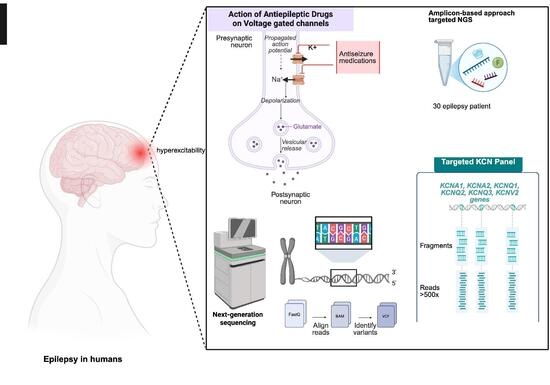
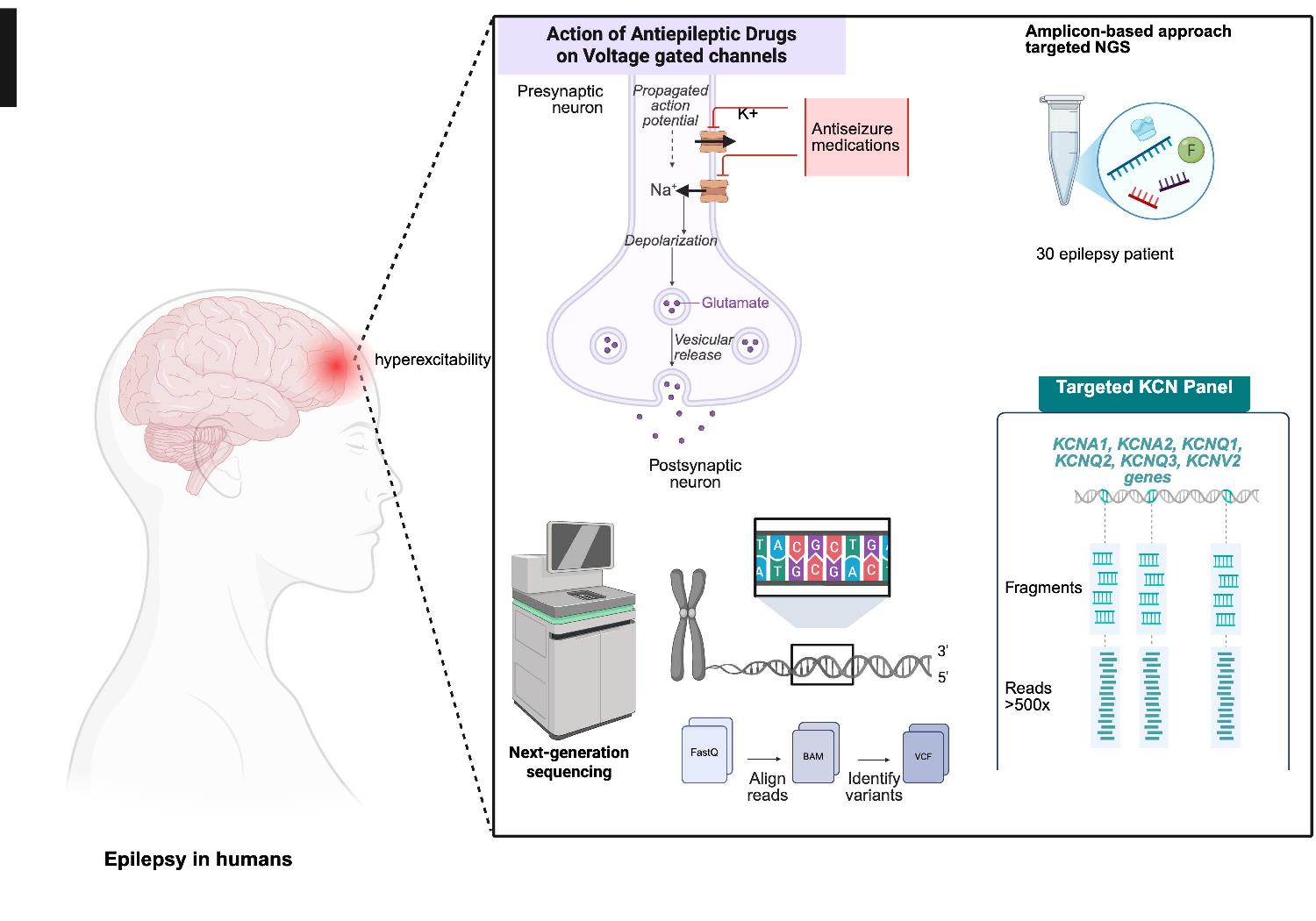
Graphical Abstract

1. Introduction

Epilepsy is a neurological disorder characterized by abnormal neuronal discharges in the brain and affects millions of individuals worldwide. Approximately 70–80% of epilepsy cases are estimated to have a genetic basis [1,2]. Advances in genetic research have improved syndrome classification, enabled the identification of novel therapeutic targets, and facilitated the development of precision medicine approaches. Notably, nearly one-quarter of epilepsy-associated genes encode ion channels [3].
Despite the availability of numerous antiseizure medications (ASMs), approximately 30% of patients remain drug-resistant, highlighting the need for more effective therapeutic strategies [4]. ASMs exert their antiepileptic effects through multiple molecular targets, including voltage-gated ion channels that regulate neuronal excitability [5].
Among these, Kv7.2/Kv7.3 potassium channels have emerged as promising therapeutic targets because of their prominent perisomatic and axonal expression and their ability to suppress neuronal hyperexcitability by limiting membrane depolarization [6,7,8]. Voltage-gated potassium (Kv) channels mediate K+ efflux during membrane repolarization and are essential for action potential generation, propagation, and synaptic transmission. Consequently, structural or functional alterations in these channels have been implicated in epilepsy and other neurological disorders [9].
The widespread application of targeted next-generation sequencing (tNGS) has accelerated the identification of epilepsy-associated genes, particularly those encoding potassium channel subunits [10]. Several Kv-related genes, including KCNA1, KCNA2, KCNQ2, KCNQ3, KCNT1, KCNT2, and KCNMA1, have been associated with epilepsy syndromes [11,12]. In particular, variants in KCNQ1, KCNQ2, KCNQ3, KCNA1, KCNA2, and KCNV2 influence neuronal excitability by regulating action potential repolarization and may affect both epilepsy susceptibility and ASM response [13,14]. Disruption of channel structure or function caused by these variants can result in abnormal neuronal firing and diverse epileptic phenotypes.
Loss-of-function (LoF) variants in KCNQ2 and KCNQ3 are well-established causes of benign familial neonatal seizures and developmental and epileptic encephalopathies, whereas pharmacological activation of Kv7.2/Kv7.3 channels has demonstrated antiseizure efficacy [8,15]. Although the first-generation Kv7.2/Kv7.3 opener ezogabine was effective against focal-onset seizures (FOS), its clinical use was discontinued because of long-term adverse effects [15,16]. More recently, the selective Kv7.2/Kv7.3 opener XEN1101 has shown promise as a potential treatment for FOS [17]. Likewise, KCNV2 variants have been associated with more severe epilepsy phenotypes through altered Kv2.1/Kv8.2 channel function [18]. Functional studies of KCNA1 have further demonstrated that gain- and loss-of-function variants are associated with distinct clinical phenotypes and treatment responses, including enhanced sensitivity of certain gain-of-function variants to carbamazepine [19].
These findings highlight the potential of genotype-guided therapy in epilepsy [20]. Because genetic variation in Kv channel genes may contribute to interindividual differences in ASM response [9], we performed targeted next-generation sequencing of six candidate genes (KCNQ1, KCNQ2, KCNQ3, KCNA1, KCNA2, and KCNV2) in patients receiving ASM therapy to investigate their association with treatment response. Given that nearly one-third of patients remain resistant to ASMs [4], identifying pharmacogenetic determinants may improve patient stratification and support the development of personalized therapeutic approaches.

2. Results

2.1. Targeted Gene Sequencing Panel

The Targeted Gene Sequencing Panel of Kv Genes (KCNA1, KCNA2, KCNQ1, KCNQ2, KCNQ3, and KCNV2) in patients with epilepsy revealed both common and rare variants. We identified 181 variants in the six channel genes, including missense, synonymous, intronic, untranslated region (UTR), and stop-gained variants (Table 1).
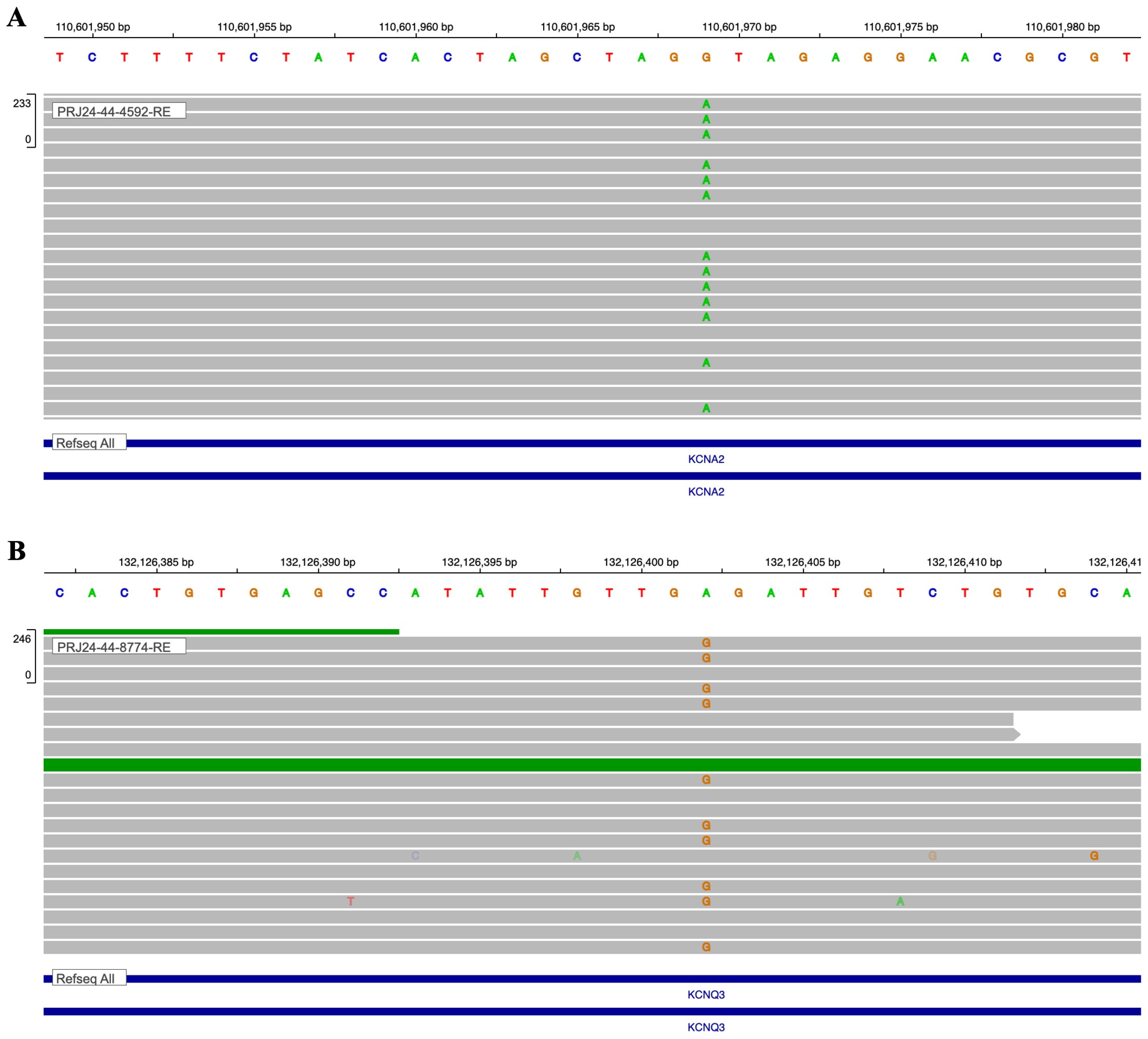
Nineteen variants were identified in KCNA1 gene, predominantly 3′ UTR or synonymous variants, and all were classified as benign. One stop-gained variant (c.684T>C, p.Cys228=) was observed. Minor allele frequencies (MAFs) ranged from 0.01 to 0.50, indicating that most variants are common in the population. Six variants were detected in the KCNA2 gene, mainly 3′ UTR and synonymous changes. All were benign, except for KCNA2:c.*1314C>T, a novel VUS that is not present in population databases (PM2). KCNA2:c.*1314C>T is shown in Figure 1. Thirty-one variants were identified in the KCNQ1 gene, including intronic, non-coding transcript exon, 3′ UTR, and synonymous variants. Most were benign, except *KCNQ1:c.976G>A, classified as VUS (PM2), and rare missense variant KCNQ1:c.1179G>T (p.Lys393Asn), classified as benign. Among the analyzed KCNQ1 rs34601797 variant, the intronic duplications c.1733-363dup and c.1733-364_1733-363dup were detected, both classified as benign and present at similar allele frequencies in the studied group. Fifteen variants were observed in the KCNQ2 gene, including 3′ UTR, intronic, synonymous, and missense variants. Most were benign; however, KCNQ2:c.2613G>T (p.Arg871Ser) and KCNQ2:c.1148+62T>G were VUS with very low MAF (<0.01, PM2). Rare missense variants like KCNQ2:c.2065A>C (p.Ile689Leu) may have functional relevance. Thirty-nine variants were identified in KCNQ3 gene, primarily located in the 3′ UTR and introns, with most being benign. Two variants, KCNQ3:c.*6282A>G and novel KCNQ3:c.*2860T>C, were classified as VUS. KCNQ3:c.*2860T>C is shown in Figure 1. Ten variants were detected in KCNV2, including 5′ UTR, 3′ UTR, synonymous, and missense variants. Most were benign; KCNV2:c.180C>T (p.Asp60=) was likely benign (PM2), and KCNV2:c.1597C>G (p.Leu533Val), a rare missense variant, may have functional significance (Table 1).
Six variants of VUS were observed, including KCNA2 (c.*1314C>T), KCNQ1 (c.*976G>A), KCNQ2 (c.2613G>T p.Arg871Ser and c.1148+62T>G), and KCNQ3 (c.*6282A>G and c.*2860T>C). Two novel variants were identified in our study group, KCNA2:c.*1314C>T and KCNQ3:c.*2860T>C. Both were located in the 3′ UTR region and classified as variants of VUS according to ACMG guidelines, supported by the PM2 criterion due to their absence in population databases (Figure 1A,B).
In addition to previously reported benign and likely benign variants, two novel variants were identified in our cohort: *KCNA2:c.1314C>T and *KCNQ3:c.2860T>C. Both were located in the 3′ UTR region and classified as variants of VUS according to ACMG guidelines, supported by the PM2 criterion due to their absence in population databases.
The selected variants within Kv genes were statistically analyzed between the drug-responsive and drug-persistent patient groups. No statistically significant differences were found in the distribution of the KCNA1 gene (rs1048500T>C, rs2227910G>C, rs4766310C>T, and rs4766309T>A), the KCNQ1 gene (rs8234A>G, rs2237895A>C), KCNQ2 (rs1801475T>G, rs3746372C>A), the KCNQ3 gene (rs112550767C>CCTGT, rs10095295T>A, and rs10108362A>G) or the KCNV2 gene (rs7029012C>G, rs10967705C>G) between drug-responsive and drug-persistent epilepsy patients.
Overall, most identified variants across the six ion channel genes were common and benign, primarily located in UTRs, intronic, or synonymous regions. Rare or novel variants classified as VUS were detected in KCNA2, KCNQ1, KCNQ2, and KCNQ3, suggesting potential relevance for epileptic phenotypes that warrant further functional investigation.

2.2. Haplotype Analysis

Common variations of the KCNA1 (rs1048500, rs2227910, rs4766310), KCNQ1 (rs2237895, rs8234), KCNQ2 (rs3746372, rs1801475), KCNQ3 (rs10095295, rs10108362), and KCNV2 (rs7029012, rs10967705) genes’ haplotypes were analyzed for association with epilepsy as sets of one, two, or three alleles. The chromosomal locations of the genes were identified as follows: KCNQ1 at 11p15.5, KCNQ2 at 20q13.33, KCNQ3 at 8q24, KCNA1 at 12p13.32, and KCNV2 at 9q34.3. Haplotype analysis was performed separately for each gene, as the genes are located on different chromosomes.
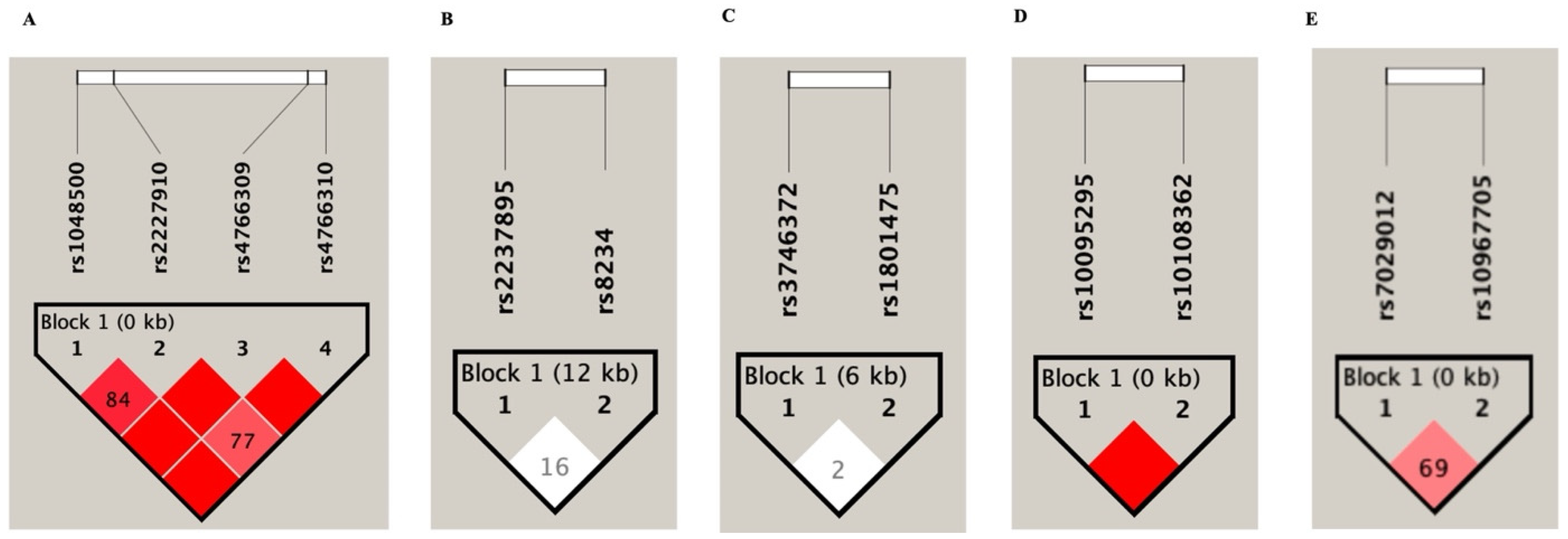
Table 2 lists the contig positions and marker numbers of polymorphisms in the haplotype analysis of the KCNA1, KCNQ1, KCNQ2, KCNQ3, and KCNV2 genes. The LD analysis schemes were given to define haplotype blocks across the studied SNPs, as shown in Figure 2. A strong LD KCN1A gene block was identified between rs1048500, rs2227910, rs4766309, and rs4766310, with D′ values ranging from 0.77 to 0.84 suggesting strong allelic correlation within this region. High correlation was found between rs1048500 and rs2227910 (L′ 84%), between rs2227910 and rs4766310 (LD 77%), and between rs47666309 and rs4766310 (LD 100%). Among the polymorphisms, difference between rs1048500 and rs2227910 (D′ = 0.84; LOD = 6.45; r2 = 0.671) and linkage disequilibrium between rs2227910 and rs4766310 (D′ = 0.77; LOD = 5.72; r2 = 0.607) and between rs47666309 and rs4766310 (D′ = 1; LOD = 4.94; r2 = 0.51) have been revealed. This suggests a strong genetic linkage between these markers, which are often inherited together. However, high LD does not necessarily indicate that these SNPs are associated with the epilepsy drug response.
The LD plots of the analyzed SNPs are shown in Figure 2. The numbers in the squares represent D′ values. Red color indicates strong LD, while lighter colors represent weaker LD. Distinct haplotype blocks were defined using the Gabriel et al. method [21].
This block was subsequently included in haplotype association testing. Additionally, a strong LD was identified between KCNQ3 rs10095295 and rs10108362 within the haplotype block. In contrast, rs2237895 and rs8234 KCNQ1 showed weak LD (D′ = 0.16), whereas rs7029012 and rs10967705 KCNV2 showed moderate linkage disequilibrium (D′ = 0.69, LOD = 3.88, r2 = 0.449). Although the D′ value indicates moderate linkage disequilibrium between these variants, the corresponding r2 value suggests a moderate level of allelic correlation. In contrast, rs3746372 and rs1801475 KCNQ2 exhibited very weak LD (D′ = 0.02). Haplotype blocks were defined according to the Gabriel et al. method based primarily on D′ values, while r2 values were used to complement the interpretation of marker correlation.
In the analysis performed using the Haploview program, no statistically significant difference was found in the single or combined allele results of the KCNA1, KCNQ1, KCNQ2, and KCNQ3 genes. No single-marker associations reached statistical significance in the KCNV2 gene.
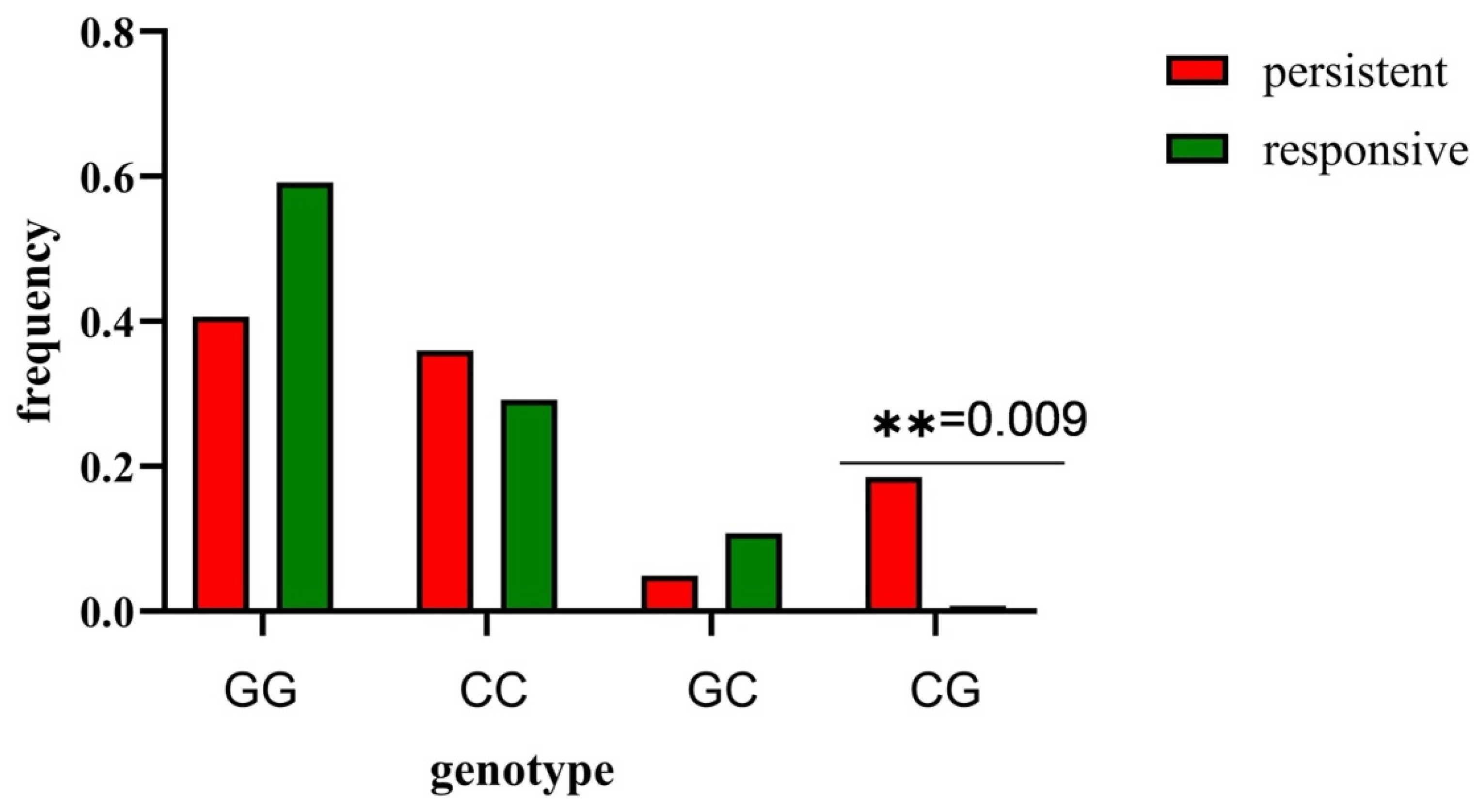
Haplotype analysis of KCNV2 gene identified four major haplotypes (GG, CC, GC, CG) and a single-marker haplotype with distributions between drug-persistent and drug-responsive epilepsy patients (Table 3). The GG haplotype was the most common overall (0.526) and was more frequent in drug-responsive patients (0.592) compared to drug-persistent patients (0.406); however, the difference did not reach statistical significance (χ2 = 1.972, p = 0.160). Interestingly, the CG haplotype comprising the KCNV2 rs7029012 and rs10967705 variants was observed more frequently in drug-persistent epilepsy patients (0.185) than in drug-responsive patients (0.008) (χ2 = 6.756, p = 0.009, BH-FDR q = 0.036) (Figure 3).
Haplotype analysis of the KCNV2 gene revealed that the combination of rs7029012 (c.-42C>G, 5′ UTR variant) and rs10967705 (c.183C>G, synonymous variant, p.Gly61=) statistical significance in relation to the studied phenotype (Table 3). Both variants are individually classified as benign and do not alter the amino acid sequence or coding function. While the observed suggests a potential modulatory effect of this haplotype, the association remains inconclusive and warrants further investigation in larger cohorts to clarify its possible impact on gene regulation or disease susceptibility.

3. Discussion

The present pilot pharmacogenetic study comprehensively evaluated genetic variation in six voltage-gated potassium channel genes in Turkish patients with epilepsy using targeted next-generation sequencing. Although most of the 181 identified variants were classified as benign or likely benign according to ACMG criteria and no individual variant was significantly associated with antiseizure medication (ASM) response, several findings deserve attention. We identified six variants of VUS, including two previously unreported variants in KCNA2 and KCNQ3, expanding the current spectrum of potassium channel gene variation in epilepsy. Most importantly, haplotype analysis revealed that the KCNV2 CG haplotype (rs7029012-rs10967705) was significantly enriched in patients with drug-persistent epilepsy compared with drug-responsive patients. These findings suggest that while single Kv gene variants may have limited predictive value for ASM response, specific haplotypes within potassium channel genes may contribute to pharmacoresistance and represent promising pharmacogenetic biomarkers that warrant further investigation.
Voltage-gated potassium channels are essential regulators of neuronal excitability and play a central role in stabilizing the resting membrane potential, making them attractive therapeutic targets in epilepsy [22,23]. Despite substantial advances in antiseizure medications (ASMs), drug-resistant epilepsy remains a major clinical challenge, emphasizing the need for therapies targeting novel molecular pathways. Pharmacological activation of potassium channels, particularly Kv7 (KCNQ2/KCNQ3), Kv1.1, KATP, and GIRK2 channels, has been shown to suppress neuronal hyperexcitability and reduce seizure susceptibility [3,5,24]. In the present study, although no individual potassium channel variant was significantly associated with ASM response, the identification of a KCNV2 haplotype enriched in drug-persistent patients supports the concept that inherited variation within potassium channel genes may influence treatment response. These findings suggest that the cumulative effects of multiple genetic variants, rather than individual polymorphisms alone, may contribute to pharmacoresistance and further reinforce potassium channels as promising targets for precision medicine in epilepsy.
Voltage-gated potassium channel genes, including KCNA1, KCNA2, KCNQ1, KCNQ2, KCNQ3, and KCNV2, have been implicated in epilepsy susceptibility; however, their contribution to antiseizure medication (ASM) response remains incompletely understood. In the present study, no significant associations were observed between individual variants in these genes and treatment response among Turkish patients with epilepsy. These findings suggest that common polymorphisms within Kv channel genes alone may have limited predictive value for ASM responsiveness. Similarly, Qu et al. found no significant associations between variants in KCNA1, KCNA2, or KCNV2 and either epilepsy susceptibility or drug resistance in patients with genetic generalized epilepsy, indicating that these genes may not independently determine disease risk or treatment outcome [23]. Likewise, Al-Eitan et al. reported that, among several polymorphisms evaluated in KCNA1, KCNA2, and KCNV2, only the KCNA2 variant rs3887820 was associated with an increased risk of generalized myoclonic seizures, whereas no significant associations were identified for KCNA1 or KCNV2 with either epilepsy susceptibility or ASM response [25]. Collectively, these findings suggest that the influence of Kv channel genes on pharmacoresistance is likely modest and may depend on the combined effects of multiple variants, haplotypes, or interactions with other genetic and environmental factors rather than on single polymorphisms alone.
Common genetic variants often exert their effects indirectly by serving as markers for nearby functional variants through linkage disequilibrium rather than by directly altering protein function [26]. Accordingly, haplotype analysis may capture the combined effects of multiple linked variants that are not detectable in single-variant association analyses. Although no individual SNP was significantly associated with ASM response in our cohort, the KCNV2 CG haplotype (rs7029012-rs10967705) was significantly more frequent in patients with drug-persistent epilepsy than in drug-responsive patients (18.5% vs. 0.8%, p = 0.009, BH-FDR q = 0.036). This finding suggests that the KCNV2 CG haplotype may represent a potential pharmacogenetic marker of ASM resistance. Because KCNV2 encodes the modulatory Kv8.2 potassium channel subunit, genetic variation within this locus may influence neuronal excitability; however, this hypothesis requires experimental confirmation through functional electrophysiological studies. However, as both constituent variants are currently classified as benign, the observed association is more likely to reflect linkage with unidentified functional variants or regulatory elements than a direct biological effect. Functional studies, particularly electrophysiological characterization of the rs7029012-rs10967705 haplotype, are required to determine whether these variants alter channel properties, neuronal excitability, or antiseizure medication responsiveness. As both variants are currently classified as benign, the observed association may reflect linkage disequilibrium with nearby functional regulatory variants rather than a direct biological effect.
A notable finding of the present study was the strong linkage disequilibrium (LD) observed between KCNV2 rs7029012 and rs10967705 (D′ = 0.82), supporting the presence of a haplotype block within this genomic region. This observation is consistent with the findings of Qu et al., who also reported significant LD between these two variants (D′ = 0.70) and suggested that rs10967705 may be associated with susceptibility to childhood absence epilepsy [23]. However, after Bonferroni correction for multiple testing, no variants in KCNA1, KCNA2, or KCNV2 remained significantly associated with epilepsy risk or drug resistance [23]. Together with our findings, these results indicate that, although individual variants may have limited predictive value, haplotype-based analyses may better capture the combined genetic effects influencing epilepsy susceptibility and ASM response. Nevertheless, the exploratory nature of our study and the limited sample size warrant cautious interpretation, and independent replication in larger cohorts is required.
The identification of genetic determinants of pharmacoresistance is a prerequisite for the implementation of precision medicine in epilepsy [27]. Targeted next-generation sequencing enabled the comprehensive characterization of genetic variation across six voltage-gated potassium channel genes, identifying 181 variants, including rare and previously unreported alterations. Although individual variants were not significantly associated with ASM response in this cohort, these findings underscore the genetic heterogeneity of potassium channel genes in epilepsy and highlight the value of tNGS for discovering candidate variants that warrant functional validation in larger pharmacogenetic studies.
Integrating pharmacogenetic information into clinical practice has the potential to improve ASM selection and facilitate precision medicine approaches in epilepsy. In the present study, the majority of variants identified in voltage-gated potassium channel genes were classified as benign or likely benign, consistent with their relatively high population frequencies. Nevertheless, the identification of several VUS, including two previously unreported variants, expands the current spectrum of genetic variation in epilepsy. Although these variants were detected in both drug-responsive and drug-persistent patients and their clinical significance remains uncertain, they represent promising candidates for future functional and genotype–phenotype studies aimed at clarifying their potential role in ASM response and epilepsy pathogenesis.
Although no statistically significant differences were observed, the numerically higher frequency of VUS in the drug-persistent group raises the possibility that rare variants in potassium channel genes may influence ASM response. However, because these variants have not been functionally characterized, it remains unclear whether they alter channel function or contribute to pharmacoresistance. Further functional and genotype–phenotype studies are needed to clarify their biological and clinical relevance.
Consistent with previous pharmacogenetic studies, our findings suggest that individual genetic variants in potassium channel genes have a limited impact on ASM response across the heterogeneous range of currently available antiseizure medications [26]. This observation is biologically plausible, as most ASMs exert their therapeutic effects through mechanisms other than the direct modulation of potassium channels. Nevertheless, our exploratory haplotype analysis indicates that the combined effects of linked genetic variants, rather than individual polymorphisms, may contribute to interindividual differences in treatment response. As potassium channel-targeting agents continue to emerge, such as selective Kv7 channel openers, the relationship between potassium channel gene variation and response to these mechanism-specific therapies warrants further investigation. Thus, potassium channel modulators remain promising candidates for future precision medicine approaches in epilepsy [26].
The majority of the variants identified in this cohort were classified as benign or likely benign according to ACMG criteria, suggesting limited immediate clinical relevance. However, the identification of several variants classified as VUS, including two previously unreported variants in KCNA2 and KCNQ3, expands the current spectrum of potassium channel gene variation in epilepsy. Although the biological and clinical relevance of these variants remains uncertain, they represent potential candidates for future functional studies and genotype–phenotype correlation analyses to clarify their possible contribution to epilepsy susceptibility and ASM response.
The majority of the variants identified in this cohort were classified as benign or likely benign according to ACMG criteria, suggesting that they are unlikely to have substantial functional or clinical significance. However, the identification of several variants of VUS, including two previously unreported variants in KCNA2 and KCNQ3, expands the current spectrum of potassium channel gene variation in epilepsy. Although the clinical relevance of these variants remains uncertain, they represent important candidates for future functional studies and genotype–phenotype correlation analyses to clarify their potential contribution to epilepsy susceptibility and ASM response.
Although the clinical relevance of most identified variants remains limited, these findings expand the current spectrum of potassium channel gene variation. Particularly, the novel variants may provide valuable insights for future genotype–phenotype correlation studies in epilepsy and highlight the need for functional validation studies to elucidate their biological effects.

Limitations and Strengths

This study has several limitations that should be acknowledged. First, the relatively small sample size limited the statistical power to detect modest genetic effects and increased the risk of false-positive or false-negative findings. Therefore, the observed association between the KCNV2 haplotype and ASM response should be interpreted cautiously as exploratory and hypothesis-generating rather than confirmatory.
Second, the single-center design and inclusion of only Turkish patients may limit the generalizability of our findings to other ethnic populations. Although epilepsy subtype was recorded and did not differ significantly between the drug-responsive and drug-persistent groups, disease duration and seizure frequency were not available for all participants and therefore could not be incorporated into the association analyses. Third, patients were not stratified according to the specific ASMs received. Therefore, it was not possible to determine whether the observed haplotype association is related to resistance to particular ASMs or reflects a more general association with drug-resistant epilepsy. Future studies with larger, more homogeneous treatment groups and comprehensive clinical phenotyping are needed to clarify potential drug-specific genetic effects and genotype–phenotype relationships. Finally, although six VUS and two novel variants were identified, functional validation studies, including in vitro or in vivo assays, were not performed to assess their biological effects. Therefore, the functional relevance of these variants and the biological implications of the identified haplotypes remain to be elucidated. In particular, electrophysiological validation was beyond the scope of the present clinical pharmacogenetic study and should be addressed in future mechanistic investigations. Larger, multicenter studies involving ethnically diverse populations, together with functional investigations, are required to validate these findings and clarify the mechanistic role of potassium channel gene variation in ASM response.
Despite these limitations, this study has several strengths. To our knowledge, this is the first targeted next-generation sequencing study to comprehensively evaluate the KCNA1, KCNA2, KCNQ1, KCNQ2, KCNQ3, and KCNV2 genes in relation to ASM response in a Turkish epilepsy cohort. The use of high-depth targeted sequencing enabled the detection of both common and rare variants, including two previously unreported variants, while haplotype analysis provided additional pharmacogenetic insights beyond conventional single-variant analyses. These findings provide a valuable foundation for future precision medicine studies in epilepsy.

4. Methods

4.1. Study Population

This pilot exploratory pharmacogenetic study was conducted in accordance with the Declaration of Helsinki on medical research due to the involvement of a human study group. The Non-Interventional Clinical Research Ethics Committee of Istanbul University-Cerrahpaşa gave approval (approval number: 2025/428; date: 4 June 2025). Written informed consent was obtained from all participants.
Thirty-five patients with epilepsy receiving routine ASM treatment were screened at the Republic of Türkiye Ministry of Health, Sinan Sipahi Family Health Centre (Istanbul, Türkiye). Two patients did not meet the inclusion criteria and two declined participation, leaving 31 patients for the final analysis. Eligible participants were aged 18–75 years and had complete clinical and genetic data. The mean age of the participants was 45.52 ± 15.51 years. The mean age was 47.40 ± 18.28 years in the drug-responsive group and 42.51 ± 16.40 years in the drug-persistent group, with no significant difference between the groups (p = 0.647). Similarly, the sex distribution did not differ significantly between the two groups (p = 0.793). The study population received ASMs as either monotherapy or polytherapy. The treatment regimen most commonly included valproic acid (VPA), levetiracetam (LEV), carbamazepine (CBZ) and lamotrigine (LTG), while topiramate (TPM), lacosamide (LCM), oxcarbazepine (OXC), phenytoin (PHT), and clonazepam (CLZ) were prescribed in a smaller proportion of patients. Epilepsy subtypes were classified as focal, generalized, or combined focal/generalized epilepsy, and no significant difference in subtype distribution was observed between the drug-responsive and drug-persistent groups (p = 0.220).
Patients were classified according to the International League Against Epilepsy (ILAE) criteria as drug-responsive (≥12 months seizure-free; n = 19) or drug-persistent (≥4 seizures/year despite treatment with ≥2 ASMs; n = 12) [28]. The mean age of the cohort was 43.2 ± 17.9 years, and 56.2% were male. No significant differences in age or sex were observed between the groups (p > 0.05).
Because this was a pilot study, the primary objective was hypothesis generation and identification of potential pharmacogenetic associations rather than confirmatory testing. Sample size estimation was performed using G*Power 3.1 based on the expected effect size for treatment response.

4.2. Blood Collection and DNA Isolation

Peripheral venous blood (10 mL) was collected into EDTA tubes during routine outpatient follow-up visits over a two-month period. Samples were stored at 4 °C until genomic DNA extraction.
Genomic DNA was isolated using the QIAamp DNA Micro Kit (Qiagen, Hilden, Germany; Cat. No. 56304) according to the manufacturer’s instructions. DNA concentration and purity were assessed using the Qubit 3.0 Fluorometer (Invitrogen, Carlsbad, CA, USA).

4.3. Targeted Next-Generation Sequencing

Targeted next-generation sequencing (tNGS) was performed for the coding regions and exon–intron boundaries of six potassium channel genes (KCNQ1, KCNQ2, KCNQ3, KCNA1, KCNA2, and KCNV2). Target regions were amplified by PCR using a MiniAmp Thermal Cycler (Thermo Fisher Scientific, Waltham, MA, USA).
Amplicon libraries were prepared using manually designed primers, indexed, pooled, and sequenced on the Illumina NovaSeq 6000 platform (Illumina Inc., San Diego, CA, USA). All target regions achieved a minimum sequencing depth of 100×.

4.4. Bioinformatic Analysis and Variant Interpretation

Raw sequencing reads underwent quality assessment using FastQC 0.11.9 followed by adapter trimming and quality filtering with Cutadapt 5.0. High-quality reads were aligned to the GRCh38 human reference genome and processed through the DRAGEN 4.3.6 analysis pipeline [29,30].
Variant annotation was performed using Ensembl Variant Effect Predictor (VEP) 115.2 and all prioritized variants were visually confirmed using the Integrative Genomics Viewer (IGV) 3.8.3.
Rare variants (minor allele frequency < 1% in gnomAD 4.1) with potential functional significance were prioritized and interpreted using the Ilyome Bioinformatics platform. Variant classification followed the American College of Medical Genetics and Genomics/Association for Molecular Pathology (ACMG/AMP) 2015 guidelines [31].

4.5. Statistical Analysis

Statistical analyses were performed using GraphPad Prism version 10.5.0. The normality of continuous variables was assessed using the Shapiro–Wilk test. Since age was not normally distributed, between-group comparisons were performed using the Mann–Whitney U test. Sex distribution was compared using the Chi-square test, while allele, genotype, and variant frequency comparisons were performed using Fisher’s exact test. Statistical significance was defined as p < 0.05. Allele and genotype frequencies were calculated, and the Hardy–Weinberg equilibrium (HWE) was assessed using the online HWE calculator developed by Michael H. Court. Linkage disequilibrium (LD) and haplotype analyses were performed using Haploview 4.1 software. To account for multiple comparisons, the Benjamini–Hochberg false discovery rate (BH-FDR) procedure was applied separately to the single-marker and haplotype association analyses. Adjusted q-values < 0.05 were considered statistically significant.

4.6. Safety Assessment

Study-related adverse events were prospectively monitored throughout follow-up using structured clinical questionnaires and routine laboratory evaluations. Participants were encouraged to report any unexpected events at any time. No study-related adverse events were observed.

5. Conclusions

This pilot pharmacogenetic study provides two principal findings. First, most variants identified in KCNA1, KCNA2, KCNQ1, KCNQ2, KCNQ3, and KCNV2 were classified as benign or likely benign according to ACMG criteria. However, the identification of six variants of uncertain significance, including two previously unreported variants, expands the current spectrum of potassium channel gene variation in epilepsy and provides candidate variants for future functional studies.
Second, although no significant associations were observed for individual variants, the haplotype analysis identified a preliminary association between the KCNV2 rs7029012–rs10967705 CG haplotype and drug-resistant epilepsy, which remained significant after BH-FDR correction.
The findings of this pilot study should be interpreted in light of several limitations, including the relatively small sample size, the inclusion of only a Turkish population, the lack of a healthy control group, the absence of functional validation of the identified variants and haplotypes, and the inability to evaluate drug-specific genetic associations because patients were not stratified according to the specific antiseizure medications received. Consequently, it remains unclear whether the observed KCNV2 haplotype association is related to resistance to particular ASMs or reflects a more general association with drug-resistant epilepsy. Therefore, larger multicenter studies involving multi-ethnic populations, homogeneous treatment groups, healthy controls, and functional investigations are required to validate these findings, clarify the biological significance of the identified variants and haplotypes, and determine their potential role in antiseizure medication response. Although the identified KCNV2 haplotype represents a promising pharmacogenetic candidate, its biological relevance cannot be established without independent replication and functional electrophysiological studies.

Author Contributions

K.C.P.-U.: methodology, conceptualization, investigation, data analysis, writing—original draft, review and editing. Z.G.T.-S. conceptualization, methodology, investigation, data analysis writing—original draft, review and editing. E.R.A.: data curation, clinic examinations, review and editing. H.U.: conceptualization, methodology, investigation, writing—original draft, review and editing. All authors have read and agreed to the published version of the manuscript.

Funding

This research received no external funding.

Institutional Review Board Statement

The study was conducted by the Declaration of Helsinki on medical research consisting of a human study group. This study was approved by the Non-Interventional Clinical Research Ethics Committee of Istanbul University-Cerrahpaşa (approval number: 2025/428; date: 4 June 2025).

Informed Consent Statement

Informed consent was obtained from all subjects involved in the study.

Data Availability Statement

The data supporting the findings of this study can be obtained from the corresponding author upon reasonable request.

Acknowledgments

We thank our patients who participated in the study.

Conflicts of Interest

The authors declare that they have no conflicts of interest related to this study.

References

  1. Thijs, R.D.; Surges, R.; O’Brien, T.J.; Sander, J.W. Epilepsy in adults. Lancet 2019, 393, 689–701. [Google Scholar] [CrossRef] [PubMed]
  2. Xu, X.-X.; Luo, J.-H. Mutations of N-Methyl-D-Aspartate Receptor Subunits in Epilepsy. Neurosci. Bull. 2018, 34, 549–565. [Google Scholar] [PubMed]
  3. Oyrer, J.; Maljevic, S.; Scheffer, I.E.; Berkovic, S.F.; Petrou, S.; Reid, C.A. Ion Channels in Genetic Epilepsy: From Genes and Mechanisms to Disease-Targeted Therapies. Pharmacol. Rev. 2018, 70, 142–173. [Google Scholar] [CrossRef] [PubMed]
  4. Kwan, P.; Brodie, M.J. Early identification of refractory epilepsy. N. Engl. J. Med. 2000, 342, 314–319. [Google Scholar] [CrossRef] [PubMed]
  5. Sills, G.J.; Rogawski, M.A. Mechanisms of action of currently used antiseizure drugs. Neuropharmacology 2020, 168, 107966. [Google Scholar] [CrossRef] [PubMed]
  6. Barrese, V.; Stott, J.B.; Greenwood, I.A. KCNQ-Encoded Potassium Channels as Therapeutic Targets. Annu. Rev. Pharmacol. Toxicol. 2018, 58, 625–648. [Google Scholar] [CrossRef] [PubMed]
  7. Rogawski, M.A.; Bazil, C.W. New molecular targets for antiepileptic drugs: Alpha(2)delta, SV2A, and K(v)7/KCNQ/M potassium channels. Curr. Neurol. Neurosci. Rep. 2008, 8, 345–352. [Google Scholar] [CrossRef] [PubMed]
  8. Gribkoff, V.K.; Winquist, R.J. Potassium channelopathies associated with epilepsy-related syndromes and directions for therapeutic intervention. Biochem. Pharmacol. 2023, 208, 115413. [Google Scholar] [CrossRef] [PubMed]
  9. Faulkner, I.E.; Pajak, R.Z.; Harte, M.K.; Glazier, J.D.; Hager, R. Voltage-gated potassium channels as a potential therapeutic target for the treatment of neurological and psychiatric disorders. Front. Cell. Neurosci. 2024, 18, 1449151. [Google Scholar] [CrossRef] [PubMed]
  10. Zheng, Y.; Chen, J. Voltage-gated potassium channels and genetic epilepsy. Front. Neurol. 2024, 15, 1466075. [Google Scholar] [CrossRef] [PubMed]
  11. Zhao, T.; Wang, L.; Chen, F. Potassium channel-related epilepsy: Pathogenesis and clinical features. Epilepsia Open 2024, 9, 891–905. [Google Scholar] [CrossRef] [PubMed]
  12. Döring, J.H.; Schröter, J.; Jüngling, J.; Biskup, S.; Klotz, K.A.; Bast, T.; Dietel, T.; Korenke, G.C.; Christoph, S.; Brennenstuhl, H.; et al. Refining Genotypes and Phenotypes in KCNA2-Related Neurological Disorders. Int. J. Mol. Sci. 2021, 22, 2824. [Google Scholar] [CrossRef] [PubMed]
  13. Miceli, F.; Soldovieri, M.V.; Weckhuysen, S.; Cooper, E.; Taglialatela, M. KCNQ2-Related Disorders. In GeneReviews®; Adam, M.P., Bick, S., Mirzaa, G.M., Pagon, R.A., Wallace, S.E., Amemiya, A., Eds.; University of Washington: Seattle, WA, USA, 1993. [Google Scholar]
  14. Orhan, G.; Bock, M.; Schepers, D.; Ilina, E.I.; Reichel, S.N.; Löffler, H.; Jezutkovic, N.; Weckhuysen, S.; Mandelstam, S.; Suls, A.; et al. Dominant-negative effects of KCNQ2 mutations are associated with epileptic encephalopathy. Ann. Neurol. 2014, 75, 382–394. [Google Scholar] [CrossRef] [PubMed]
  15. Brickel, N.; Hewett, K.; Rayner, K.; McDonald, S.; De’ATh, J.; Daniluk, J.; Joshi, K.; Boll, M.C.; Tiamkao, S.; Vorobyeva, O.; et al. Safety of retigabine in adults with partial-onset seizures after long-term exposure: Focus on unexpected ophthalmological and dermatological events. Epilepsy Behav. 2020, 102, 106580. [Google Scholar] [CrossRef] [PubMed]
  16. Groseclose, M.R.; Castellino, S. An Investigation into Retigabine (Ezogabine) Associated Dyspigmentation in Rat Eyes by MALDI Imaging Mass Spectrometry. Chem. Res. Toxicol. 2019, 32, 294–303. [Google Scholar] [CrossRef] [PubMed]
  17. French, J.A.; Porter, R.J.; Perucca, E.; Brodie, M.J.; Rogawski, M.A.; Pimstone, S.; Aycardi, E.; Harden, C.; Qian, J.; Rosenblut, C.L.; et al. Efficacy and Safety of XEN1101, a Novel Potassium Channel Opener, in Adults With Focal Epilepsy: A Phase 2b Randomized Clinical Trial. JAMA Neurol. 2023, 80, 1145–1154. [Google Scholar] [CrossRef] [PubMed]
  18. Jorge, B.S.; Campbell, C.M.; Miller, A.R.; Rutter, E.D.; Gurnett, C.A.; Vanoye, C.G.; George, A.L.; Kearney, J.A. Voltage-gated potassium channel KCNV2 (Kv8.2) contributes to epilepsy susceptibility. Proc. Natl. Acad. Sci. USA 2011, 108, 5443–5448. [Google Scholar] [CrossRef] [PubMed]
  19. Miceli, F.; Guerrini, R.; Nappi, M.; Soldovieri, M.V.; Cellini, E.; Gurnett, C.A.; Parmeggiani, L.; Mei, D.; Taglialatela, M. Distinct epilepsy phenotypes and response to drugs in KCNA1 gain- and loss-of function variants. Epilepsia 2021, 63, E7–E14. [Google Scholar] [CrossRef] [PubMed]
  20. Nikitin, E.; Vinogradova, L. Potassium channels as prominent targets and tools for the treatment of epilepsy. Expert Opin. Ther. Targets 2021, 25, 223–235. [Google Scholar] [CrossRef] [PubMed]
  21. Gabriel, S.B.; Schaffner, S.F.; Nguyen, H.; Moore, J.M.; Roy, J.; Blumenstiel, B.; Higgins, J.; DeFelice, M.; Lochner, A.; Faggart, M.; et al. The structure of haplotype blocks in the human genome. Science 2002, 296, 2225–2229. [Google Scholar] [CrossRef] [PubMed]
  22. Villa, C.; Combi, R. Potassium Channels and Human Epileptic Phenotypes: An Updated Overview. Front. Cell. Neurosci. 2016, 10, 81. [Google Scholar] [CrossRef] [PubMed]
  23. Qu, J.; Lu, S.-H.; Lu, Z.-L.; Xu, P.; Xiang, D.-X.; Qu, Q. Pharmacogenetic and case–control study on potassium channel related gene variants and genetic generalized epilepsy. Medicine 2017, 96, e7321. [Google Scholar] [CrossRef] [PubMed]
  24. Wickenden, A.D. Potassium channels as anti-epileptic drug targets. Neuropharmacology 2002, 43, 1055–1060. [Google Scholar] [CrossRef] [PubMed]
  25. Al-Eitan, L.N.; Al-Dalalah, I.M.; Elshammari, A.K.; Khreisat, W.H.; Almasri, A.Y. The Impact of Potassium Channel Gene Polymorphisms on Antiepileptic Drug Responsiveness in Arab Patients with Epilepsy. J. Pers. Med. 2018, 8, 37. [Google Scholar] [CrossRef] [PubMed]
  26. Lin, C.-H.; Ho, C.-J.; Chen, S.-Y.; Lu, Y.-T.; Tsai, M.-H. Review of pharmacogenetics of antiseizure medications: Focusing on genetic variants of mechanistic targets. Front. Pharmacol. 2024, 15, 1411487. [Google Scholar] [CrossRef] [PubMed]
  27. Tang, F.; Hartz, A.M.S.; Bauer, B. Drug-Resistant Epilepsy: Multiple Hypotheses, Few Answers. Front. Neurol. 2017, 8, 301. [Google Scholar] [CrossRef] [PubMed]
  28. Kwan, P.; Arzimanoglou, A.; Berg, A.T.; Brodie, M.J.; Allen Hauser, W.; Mathern, G.; Moshé, S.L.; Perucca, E.; Wiebe, S.; French, J. Definition of drug resistant epilepsy: Consensus proposal by the ad hoc Task Force of the ILAE Commission on Therapeutic Strategies. Epilepsia 2010, 51, 1069–1077. [Google Scholar] [CrossRef] [PubMed]
  29. Pekkoc-Uyanik, K.C.; Aslan, E.I.; Kilicarslan, O.; Ser, O.S.; Ozyildirim, S.; Yanar, F.; Yildiz, A.; Ozturk, O.; Yilmaz-Aydogan, H. Next-generation sequencing of prolidase gene identifies novel and common variants associated with low prolidase in coronary artery ectasia. Mol. Biol. Rep. 2023, 50, 1349–1365. [Google Scholar] [PubMed]
  30. Pekkoc-Uyanik, K.C.; Todurga-Seven, Z.G.; Shahzadi, A.; Sonmez, H.; Mercan, S.; Mete, B.; Tabak, F. Next-generation sequencing of CCR5, CXCR4, and IFNAR1 variants in relation to HIV-1 disease progression and ART response. Sci. Rep. 2025, 15, 26511. [Google Scholar] [CrossRef] [PubMed]
  31. Richards, S.; Aziz, N.; Bale, S.; Bick, D.; Das, S.; Gastier-Foster, J.; Grody, W.W.; Hegde, M.; Lyon, E.; Spector, E.; et al. Standards and guidelines for the interpretation of sequence variants: A joint consensus recommendation of the American College of Medical Genetics and Genomics and the Association for Molecular Pathology. Genet. Med. 2015, 17, 405–424. [Google Scholar] [CrossRef] [PubMed]
Figure 1. IGV illustrating the reads of the KCNA2 gene chr1:110601969G>A (KCNA2:c.*1314C>T (A), and KCNQ3 gene chr8:132126402A>G (KCNQ3:c.*2860T>C) (B) novel variations.
Pharmaceuticals 19 01193 g001
Figure 2. KCNA1, (A); KCNQ1, (B); KCNQ2, (C); KCNQ3, (D); and KCNV2, (E) genes common variations LD plots.
Pharmaceuticals 19 01193 g002
Figure 3. Distribution of the KCNV2 gene rs7029012 and rs10967705 haplotypes in drug-persistent and drug-responsive epilepsy patients.
Pharmaceuticals 19 01193 g003
Table 1. A list of rare and common variants of KCNQ1, KCNQ2, KCNQ3, KCNA1, KCNA2, and KCNV2 genes detected in epileptic patients.
Epileptic Patients
Gene VariantdbSNP IDHGVS GRCh38-PositionsVariation TypeACMG ClassificationAmino Acid ChangeHighest Population MAFPathogenic Criteria
KCNA1
1KCNA1:c.*1522C>Grs140297443chr12-4914388 C>G3 prime UTR variantBenign 0.07
2KCNA1:c.*1927A>Trs7974559chr12-4914793 A>T3 prime UTR variantBenign 0.50
3KCNA1:c.684T>Crs1048500chr12-4912062 T>Cstop gainedBenignp.Cys228=0.50
4KCNA1:c.*406C>Trs4766311chr12-4913272 C>T3 prime UTR variantBenign 0.50
5KCNA1:c.*3062T>Crs10849174chr12-4915928 T>C3 prime UTR variantBenign 0.50
6KCNA1:c.804G>Crs2227910chr12-4912182 G>Csynonymous variantBenignp.Thr268=0.50
7KCNA1:c.1440T>Ars4766309chr12-4912818 T>Asynonymous variantBenignp.Thr480=0.38
8KCNA1:c.*9G>Ars4766310chr12-4912875 G>A3 prime UTR variantBenign 0.50
9KCNA1:c.*2277_*2278delrs397724146chr12-4915137 GCC>G3 prime UTR variantBenign 0.50
10KCNA1:c.*5141G>Ars41482147chr12-4918007 G>A3 prime UTR variantBenign 0.25
11KCNA1:c.*1524A>Grs79357862chr12-4914390 A>G3 prime UTR variantBenign 0.25
12KCNA1:c.*4439C>Trs12424292chr12-4917305 C>T3 prime UTR variantBenign 0.39
13KCNA1:c.*2333G>Ars2109420chr12-4915199 G>A3 prime UTR variantBenign 0.25
14KCNA1:c.*1577A>Trs79432803chr12-4914443 A>T3 prime UTR variantBenign 0.01
15KCNA1:c.*4234A>Grs61907267chr12-4917100 A>G3 prime UTR variantBenign 0.03
16KCNA1:c.*2080G>Ars147644839chr12-4914946 G>A3 prime UTR variantBenign 0.01
17KCNA1:c.-134G>Trs12817318chr12-4911245 G>T5 prime UTR variantBenign 0.12
18KCNA1:c.*2596A>Trs188377239chr12-4915462 A>T3 prime UTR variantBenign 0.01
19KCNA1:c.*2174C>Trs73050551chr12-4915040 C>T3 prime UTR variantBenign 0.50
KCNA2
1KCNA2:c.*1379A>Crs4839071chr1-110601904 T>G3 prime UTR variantBenign 0.01
2KCNA2:c.*1045delrs75305356chr1-110602237 AT>A3 prime UTR variantBenign 0.18
3KCNA2:c.1026T>Crs12407942chr1-110602039 A>G3 prime UTR variantBenignp.Asp342=0.47
4KCNA2:c.*9294C>Trs17026168chr1-110593989 G>A3 prime UTR variantBenign 0.49
5KCNA2:c.1185G>Crs78349687chr1-110603598 C>Gsynonymous variantBenignp.Ala395=0.11
6KCNA2:c.*1314C>Tnovelchr1-110601969 G>A3 prime UTR variantVUS PM2
KCNQ1
1KCNQ1:c.1514+46A>Grs760419chr11-2662127 A>Gnon-coding transcript exon variantBenign 0.50
2KCNQ1:c.*932A>Grs10798chr11-2848935 A>G3 prime UTR variantBenign 0.49
3KCNQ1:c.1685+36A>Grs163150chr11-2776090 A>Gintron variantBenign 0.47
4KCNQ1:c.*875A>Grs8234chr11-2848878 A>G3 prime UTR variantBenign 0.50
5KCNQ1:c.1732+43T>Crs81204chr11-2777075 T>Cintron variantBenign 0.32
6KCNQ1:c.1794+13G>Ars776674137chr11-2778050 G>Aintron variantLikely Benign <0.01PM2
7KCNQ1:c.1795-11803A>Crs2237895chr11-2835964 A>Cintron variantBenign 0.50
8KCNQ1:c.1795-11764G>Ars60808706chr11-2836003 G>Aintron variantBenign 0.42
9KCNQ1:c.1733-357C>Trs2741950chr11-2777619 C>Tintron variantBenign 0.50
10KCNQ1:c.1733-361_1733-360insArs71302039chr11-2777615 G>GAintron variantBenign 0.50
11KCNQ1:c.1733-362A>Grs2411343chr11-2777614 A>Gintron variantBenign 0.49
12KCNQ1:c.1733-363duprs34601797chr11-2777611 C>CGintron variantBenign 0.49
13KCNQ1:c.1733-364_1733-363duprs34601797chr11-2777611 C>CGGintron variantBenign 0.49
14KCNQ1:c.1795-29246C>Trs2237892chr11-2818521 C>Tintron variantBenign 0.40
15KCNQ1:c.1515-55G>Ars2075870chr11-2768789 G>Aintron variantBenign 0.25
16KCNQ1:c.1514+46A>Grs760419chr11-2662127 A>Gnon-coding transcript exon variantBenign 0.50
17KCNQ1:c.1638G>Ars1057128chr11-2776007 G>Asynonymous variantBenignp.Ser546=0.42PM2
18KCNQ1:c.604+33C>Grs774970104chr11-2570787 C>Gintron variantLikely Benign <0.01
19KCNQ1:c.1394-39T>Grs739502chr11-2661922 T>Gnon-coding transcript exon variantBenign 0.50
20KCNQ1:c.1986C>Trs11601907chr11-2847958 C>Tstop gainedBenignp.Tyr662=0.32
21KCNQ1:c.1685+23G>Ars190094645chr11-2776077 G>Aintron variantBenign 0.02
22KCNQ1:c.1733-302T>Crs182093946chr11-2777674 T>Cintron variantBenign 0.03
23KCNQ1:c.1794+32G>Trs41282928chr11-2778069 G>Tintron variantBenign 0.09
24KCNQ1:c.386+16523A>Grs372562223chr11-2462007 A>Gintron variantBenign 0.08
25KCNQ1:c.386+16519_386+16522delrs202218721chr11-2462002 GTCCC>Gintron variantBenign 0.08
26KCNQ1:c.*976G>Ars191331870chr11-2848979 G>A3 prime UTR variantVUS 0.01PM2
27KCNQ1:c.1514+18C>Trs12577654chr11-2662099 C>Tnon-coding transcript exon variantBenign 0.07
28KCNQ1:c.1590+14T>Crs11024034chr11-2768933 T>Cintron variantBenign 0.19
29KCNQ1:c.1795-29208C>Trs145839955chr11-2818559 C>Tintron variantBenign 0.03
30KCNQ1:c.*742G>Ars114844136chr11-2848745 G>A3 prime UTR variantBenign 0.09
31KCNQ1:c.1179G>Trs12720457chr11-2587620 G>Tmissense variantBenignp.Lys393Asn0.03PM5
KCNQ2
1KCNQ2:c.*5962G>Trs3746372chr20-63400682 C>A3 prime UTR variantBenign 0.46
2KCNQ2:c.*5853C>Trs62208000chr20-63400791 G>Amissense variantBenign 0.17
3KCNQ2:c.1503C>Grs1801545chr20-63414925 G>Csynonymous variantBenignp.Ala501=0.20
4KCNQ2:c.297-12345G>Ars62208041chr20-63459182 C>Tintron variantBenign 0.14
5KCNQ2:c.388-26G>Trs6062939chr20-63445390 C>Aintron variantBenign 0.45
6KCNQ2:c.627C>Ars749602639chr20-63444722 G>Tsynonymous variantLikely Benignp.Ile209=<0.01PM2
7KCNQ2:c.2339A>Crs1801475chr20-63406924 T>Gmissense variantBenignp.Asn780Thr0.50PP2
8KCNQ2:c.*5847G>Ars143295292chr20-63400797 C>T3 prime UTR variantBenign 0.03
9KCNQ2:c.2238T>Ars1801471chr20-63407025 A>Tsynonymous variantBenignp.Pro746=0.28
10KCNQ2:c.2613G>Trs587780369chr20-63406650 C>Amissense variantVUSp.Arg871Ser<0.01PM2
11KCNQ2:c.1248-72C>Trs12481298chr20-63419744 G>Aintron variantBenign 0.16
12KCNQ2:c.912C>Trs2297385chr20-63439613 G>Asynonymous variantBenignp.Phe304=0.48
13KCNQ2:c.1148+62T>Grs531814304chr20-63431278 A>Cintron variantVUS 0.01PM2
14KCNQ2:c.2065A>Crs201701585chr20-63407198 T>Gmissense variantBenignp.Ile689Leu0.02PP2
15KCNQ2:c.1632-18C>Ars368910668chr20-63413599 G>Tintron variantBenign <0.01
16KCNQ2:c.1248-33G>Ars765619875chr20-63419705 C>Tintron variantBenign <0.01PM2
KCNQ3
1KCNQ3:c.*3977G>Ars2469628chr8-132125285 C>T3 prime UTR variantBenign 0.50
2KCNQ3:c.*4746_*4747insACAGrs112550767chr8-132124515 C>CCTGT3 prime UTR variantBenign 0.29
3KCNQ3:c.*4958A>Grs1437824chr8-132124304 T>C3 prime UTR variantBenign 0.50
4KCNQ3:c.*5719C>Trs11786417chr8-132123543 G>A3 prime UTR variantBenign 0.24
5KCNQ3:c.*6238T>Crs10108362chr8-132123024 A>G3 prime UTR variantBenign 0.43
6KCNQ3:c.*6282A>Grs10095295chr8-132122980 T>C3 prime UTR variantVUS 0.43PM2
7KCNQ3:c.*6632T>Crs9297840chr8-132122630 A>G3 prime UTR variantBenign 0.43
8KCNQ3:c.*7506C>Trs11785257chr8-132121756 G>A3 prime UTR variantBenign 0.24
9KCNQ3:c.*3032A>Grs2469626chr8-132126230 T>C3 prime UTR variantBenign 0.50
10KCNQ3:c.*3597G>Ars1025436chr8-132125665 C>T3 prime UTR variantBenign 0.50
11KCNQ3:c.*6812A>Grs7815106chr8-132122450 T>C3 prime UTR variantBenign 0.43
12KCNQ3:c.*5932A>Crs2436130chr8-132123330 T>G3 prime UTR variantBenign 0.47
13KCNQ3:c.*6340G>Ars2469629chr8-132122922 C>T3 prime UTR variantBenign 0.47
14KCNQ3:c.*6874C>Grs2436129chr8-132122388 G>C3 prime UTR variantBenign 0.47
15KCNQ3:c.*6956A>Grs2469630chr8-132122306 T>C3 prime UTR variantBenign 0.50
16KCNQ3:c.*7033T>Crs2436128chr8-132122229 A>G3 prime UTR variantBenign 0.47
17KCNQ3:c.*7143A>Grs2436125chr8-132122119 T>C3 prime UTR variantBenign 0.47
18KCNQ3:c.*7221C>Trs2436124chr8-132122041 G>A3 prime UTR variantBenign 0.50
19KCNQ3:c.*8148G>Ars1437822chr8-132121114 C>T3 prime UTR variantBenign 0.47
20KCNQ3:c.*3035A>Grs2469627chr8-132126227 T>C3 prime UTR variantBenign 0.46
21KCNQ3:c.1700+29G>Ars2469515chr8-132137856 C>Tintron variantBenign 0.46
22KCNQ3:c.*2166A>Grs35279095chr8-132127096 T>C3 prime UTR variantBenign 0.08
23KCNQ3:c.*6446delrs35153843chr8-132122815 GT>G3 prime UTR variant, deletionBenign 0.07
24KCNQ3:c.*7464C>Ars35604597chr8-132121798 G>T3 prime UTR variantBenign 0.07
25KCNQ3:c.*7075A>Grs2436127chr8-132122187 T>C3 prime UTR variantBenign 0.47
26KCNQ3:c.*7119C>Trs2436126chr8-132122143 G>A3 prime UTR variantBenign 0.47
27KCNQ3:c.387-983C>Ars58417923chr8-132187164 G>Tintron variantBenign 0.15
28KCNQ3:c.*7131G>Ars75865310chr8-132122131 C>T3 prime UTR variantBenign 0.11
29KCNQ3:c.*1050A>Crs76720699chr8-132128212 T>G3 prime UTR variantBenign 0.10
30KCNQ3:c.*3823G>Ars17651980chr8-132125439 C>T3 prime UTR variantBenign 0.03
31KCNQ3:c.*6831G>Ars529301177chr8-132122431 C>T3 prime UTR variantBenign 0.03
32KCNQ3:c.933+25T>Crs17575971chr8-132175428 A>Gintron variantBenign 0.12
33KCNQ3:c.1236-64C>Trs17653354chr8-132163558 G>Aintron variantBenign 0.12
34KCNQ3:c.1071C>Grs17575754chr8-132172667 G>Csynonymous variantBenignp.Leu357=0.12
35KCNQ3:c.732T>Crs41272387chr8-132180202 A>Gsynonymous variantBenignp.Gly244=0.12
36KCNQ3:c.660T>Crs41272389chr8-132180274 A>Gsynonymous variantBenignp.Asn220=0.12
37KCNQ3:c.*2860T>Cnovelchr8-132126402 A>G3 prime UTR variantVUS PM2
38KCNQ3:c.1140+77T>Ars3889950chr8-132172521 A>Tintron variantBenign 0.04
39KCNQ3:c.387-1068G>Ars71526247chr8-132187249 C>Tintron variantBenign 0.03
40KCNQ3:c.1241A>Grs2303995chr8-132163489 T>Cmissense variantBenignp.Glu414Gly0.20
KCNV2
1KCNV2:c.-42C>Grs7029012chr9-2717698 C>G5 prime UTR variantBenign 0.46
2KCNV2:c.183C>Grs10967705chr9-2717922 C>Gsynonymous variantBenignp.Gly61=0.48
3KCNV2:c.795C>Grs12237048chr9-2718534 C>Gsynonymous variantBenignp.Ala265=0.49
4KCNV2:c.-64T>Grs11793555chr9-2717676 T>G5 prime UTR variantBenign 0.40
5KCNV2:c.1083A>Grs142744007chr9-2718822 A>Gsynonymous variantBenignp.Gln361=0.03
6KCNV2:c.-15C>Trs181712064chr9-2717725 C>T5 prime UTR variantBenign 0.08
7KCNV2:c.180C>Trs1403529555chr9-2717919 C>Tmissense variantLikely Benignp.Asp60=<0.01PM2
8KCNV2:c.*6T>Crs41306094chr9-2729733 T>C3 prime UTR variantBenign 0.23
9KCNV2:c.1386C>Trs41312842chr9-2729475 C>Tsynonymous variantBenignp.Asp462=0.16
10KCNV2:c.1597C>Grs12352254chr9-2729686 C>Gmissense variantBenignp.Leu533Val0.43
MAF: Minor Allele Frequency. Highest minor allele frequency observed in any population including 1000 Genomes Phase 3, ESP and gnomAD. Markings in bold indicate different genetic variations of the same polymorphism. Gene variant, position, ACMG classification, amino acid change, and pathogenic criteria taken from Franklin Bioinformatics. Variation type and highest population for MAF are taken from Ensembl. Pathogenicity was evaluated based on the ACMG guidelines. PM2 (moderate): absent or very rare in population databases (gnomAD, etc.). PP2 (supporting): missense variants are rare in this gene, and loss-of-function is a known disease mechanism. PP5 (supporting): reported as pathogenic by a reputable source.
Table 2. Common KCNA1, KCNQ1, KCNQ2, KCNQ3, and KCNV2 gene variations in haplotype analysis.
GeneMarkerPolymorphismAllele ChangeContig PositionMAF
KCN1AMarker 1rs1048500C>T49120620.466
Marker 2rs2227910C>G49121820.448
Marker 3rs47663309T>A49128180.293
Marker 4rs47663310T>C49128750.448
KCNQ1MarkerPolymorphismAllele ChangeContig PositionMAF
Marker 1rs2237895A>C28359640.345
Marker 2rs8234A>G28488780.362
KCNQ2MarkerPolymorphismAllele ChangeContig PositionMAF
Marker 1rs3746372C>A634006820.345
Marker 2rs1801475T>G634069240.345
KCNQ3MarkerPolymorphismAllele ChangeContig PositionMAF
Marker 1rs10095295T>A1321229800.293
Marker 2rs10108362A>G1321230240.293
KCNQV2MarkerPolymorphismAllele ChangeContig PositionMAF
Marker 1rs7029012G>C350339200.379
Marker 2rs10967705G>C350340350.431
MAF: minor allele frequency.
Table 3. Single-marker and haplotype association analysis of KCNV2 variants.
Frequencies
MarkerHaplotypeOverallDrug-PersistentDrug-ResponsiveChi Squarep ValueBH-FDR q-Value
Single marker
M1C 0.5450.3003.6040.0570.114
M2C 0.4090.4000.0050.9440.944
Haplotype
M1+M2GG0.5260.4060.5921.9720.1600.320
M1+M2CC0.3160.3600.2920.3070.5790.579
M1+M2GC0.0870.0490.1080.6290.4270.569
M1+M2CG0.0710.1850.0086.7560.0090.036
BH-FDR-adjusted q-values are shown for multiple comparisons performed separately in the single-marker and haplotype analyses.
Disclaimer/Publisher’s Note: The statements, opinions and data contained in all publications are solely those of the individual author(s) and contributor(s) and not of MDPI and/or the editor(s). MDPI and/or the editor(s) disclaim responsibility for any injury to people or property resulting from any ideas, methods, instructions or products referred to in the content.